• About
  • Best Baby Names
  • Celebrity Baby Names
  • Celebrity Baby Names – Current
  • Celebrity Baby Names – Past
  • Featured Boys Names
  • Featured Girls Names
  • Featured Unisex Names
  • Links to Name Data
  • Waltzing on the Web

Waltzing More Than Matilda

~ Names with an Australian Bias of Democratic Temper

Waltzing More Than Matilda

Tag Archives: nicknames

Famous Name: Griffin

06 Wednesday Mar 2013

Posted by A.O. in Famous Names

≈ 7 Comments

Tags

Anglo-Saxon names, animal names, english names, famous namesakes, honouring, Irish names, mythological names, name history, name meaning, nicknames, surname names, vocabulary names, Welsh names
520px-Heraldic_figures_-_Griffin.svgOn March 12 the city of Canberra, Australia’s capital, will celebrate one hundred years since its foundation in 1913. Special events are planned for the entire year, with the major festivities taking place on the long weekend preceding the actual date.

A baby called Allegra Bluebelle Sofo born this year was named in honour of Canberra’s centenary – the royal bluebell is the floral emblem of the Australian Capital Territory. Her story was featured in The Canberra Times, and as further inspiration for potential Canberran baby-namers, the paper went on to make more suggestions for names with a Canberra connection, which you can read about on Nancy’s Baby Names blog.

I couldn’t help noticing that all the suggestions were for girls names, which seemed very unfair, given that boys will make up about half of all the babies born in Canberra during 2013, and an obvious suggestion is staring them in the face.

In 1911, King O’Malley held an international competition to find a designer for the layout of the new city, which was won by Chicago architect Walter Burley Griffin. Walter produced the design in colloboration with his wife and business partner, the architect Marion Mahony Griffin. The Griffins moved to Australia to oversee the project, and fell in love with the Australian landscape, becoming enthusiastic bushwalkers with a keen interest in botany and conservation. The building of a city set in bushland seemed perfect for their idealistic vision inspired by the Garden City movement.

Unfortunately, World War I put a dent in everyone’s plans, and Walter Burley Griffin was treated shamefully by bureaucrats, who undermined him to further their own interests, eventually forcing him to resign. Many of his ideas were discarded or altered, but the basic plan of the central city is undeniably that drawn up by Walter Burley Griffin.

It wasn’t until the 1960s that the artificial lake he had envisioned was built in the heart of Canberra (not to his plans, it must be said), and in the first kind gesture Canberra had made toward its designer, Prime Minister Robert Menzies refused to have the lake named after himself, and insisted it be called Lake Burley Griffin. Australians had rather cluelessly misunderstood American naming conventions, and imagined that Burley must be part of Walter’s surname, rather than his middle name, so the lake doesn’t even have his correct name.

It’s never been rightfully re-named Lake Griffin, which would also have honoured co-designer Marion, but it’s the only monument that Walter Burley Griffin has in Australia. One was planned in the 1960s, and an American architect hired, but a change of government left it shelved indefinitely.

With so little appreciation during his lifetime (Walter died in 1937), why not name your son Griffin to honour the man and his wife who helped bring the city of Canberra into being?

The surname Griffin has several sources. It can be a Latinised form of the Welsh name Gruffud, which is also Anglicised as Griffith. There was also an Anglo-Saxon name Griffin, derived from High German grifan, meaning “snatch, grab”, and an allusion to dragons. The Irish surname is taken from the Gaelic name Grioghtha, meaning “griffin”.

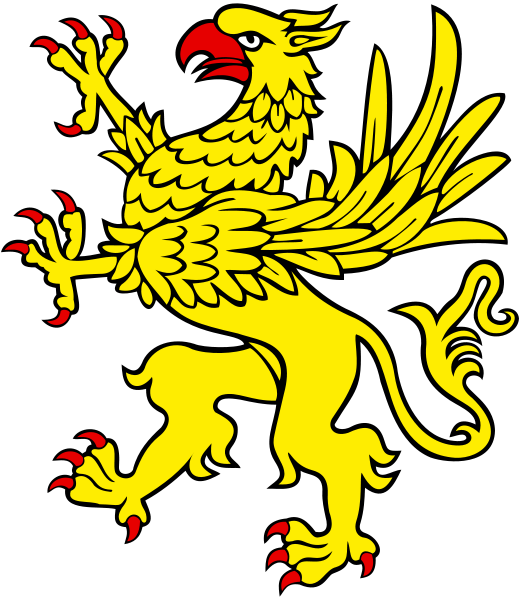
This legendary animal (also spelled gryphon or griffon) is a combination of an eagle and a lion, thus blending the king of the beasts with the king of the birds. How this combination was achieved was a matter to be decided by the artist, but by accepted convention the griffin has the body, tail and hindquarters of a lion, with the head, wings and talons of an eagle, and has prominent pointed ears. The word griffin is derived from the Greek for “hook”, possibly denoting the creature’s hooked beak or curved talons.

Griffins were prominent in the art and design of Ancient Greece, where they were seen as powerful protectors against evil. Greek writers described the griffin as native to mountainous areas of Asia, sacred to the sun, and a hoarder of gold. Other ancient legends tell of the griffin’s prodigious strength and intelligence, its hatred of horses, and wars against the Amazons. The griffin seems to be a symbol of good, of light, and of the masculine principle.

You will sometimes see griffins carved into old churches and cathedrals, because during the medieval era, the griffin was considered a symbol of Christ, who, like the griffin, has dominion over both the heavens and the earth. It was also thought that the winged cherubim mentioned in the Bible could have been griffins, as they are described as having the face of a lion and an eagle (although this ignores the fact cherubim also have the face of a man and an ox). It is possible that the legends of cherubim and griffins had the same source – the winged beasts of ancient Middle Eastern art.

Just to confuse things, the griffin was also associated with Satan, probably in the belief that anything so fierce must be up to no good (the hoarding of gold might have looked sinfully avaricious as well). This miserable idea doesn’t seem to have persisted, probably because it doesn’t make sense, since griffins were always noble, majestic, and on the side of good.

Griffins are a popular symbol in heraldry, with the first known person to have a griffin on his coat of arms being Richard de Redvers, the Earl of Exeter, in 1167 (the coat of arms was much older than that). A symbol of strength and vigilance, the griffin is said to be the perfect emblem for a hero in battle. For some reason, male griffins are always shown in heraldry without wings, but adorned with spikes denoting the sun’s rays. They are less common than winged female griffins. Canberra doesn’t have any griffins on its coat of arms, which I think would have been an appropriate choice.

Griffins are often found in fantasy literature, and the first one appears to be Lewis Carroll’s Alice’s Adventures in Wonderland. You may also read stories that involve griffins in the works of Frank Stockton, Diana Wynne Jones, Tamora Pierce, Neil Gaiman, Mercedes Lackey, Patricia A. McKillip and Rick Riordan. Readers of the Harry Potter series will remember that Harry’s house at school was Gryffindor. These fantasy novels had a noble forerunner, because the poet Dante sees Beatrice in a chariot drawn by a griffin in The Divine Comedy.

Griffin is a strong, handsome and very masculine name which can either be taken as Celtic or English. The legendary creature gives it many layers of mystical associations, nearly all of them extremely positive. You could use either Griff or Finn as nicknames.

POLL RESULT: Griffin received a worthy approval rating of 77%. People saw the name Griffin as strong and handsome (33%), cool (18%), noble and chivalrous (13%), and cute and brainy (13%). However, 9% thought the connection to mythological griffins made the name seen ridiculous – half as many as those who thought the mythological connection made the name cool.

(Picture shows a heraldic griffin)

Interview with Cristina from Once Upon a Time Baby Names

03 Sunday Mar 2013

Posted by A.O. in Blog Reviews

≈ 2 Comments

Tags

A Baby Name Per Day, created names, Facebook, fictional namesakes, Little House Well Done, name advice, nicknames, Once Upon a Time Baby Names, popular names, rare names, virtue names

castle 1Cristina began her successful blog A Baby Name Per Day in 2011, and recently rebooted it as Once Upon a Time Baby Names. Her blog is devoted to rare, unusual and beautiful names, and each entry for a name gives a detailed description of its meaning, history and level of usage. There is also plenty of naming advice, and if you are searching for a less common name, or even a one-of-a-kind name, this is an essential blog to follow.

What is your name?

Cristina Mariane.

Your blog celebrates unusual names, but your own name isn’t that rare. How do you feel towards it?

I liked my name up until I was about ten years old. Around that age I discovered the meaning of my name, and I haven’t liked it since, due to the religious meaning. I think I was also jealous of the girls who didn’t share their name with another girl (or more) in the same class. Now I’ve come to accept that this is the name which was meaningful to my parents, and it was picked out of the family tree. But it does go against most of the criteria I’d use for my own children.

Have you ever wished you had a different name?

I would briefly wish I had been named something more exotic (imagine when I went to Italy and met a girl my age named Chiara). I pushed hard for people to call me Nina in high school, which was a play on the last syllable of my name and my grandmother’s nickname, Marianina, and it stuck with everyone but my family. I still prefer Nina, but I introduce myself to strangers as Cristina. I also wished my parents had gone with Elena or Domenica from our family tree instead.

Would you ever consider changing your name in the future?

No, I’m too old now, and I’ve already gone through one legal name change to get married.

When did you first start getting interested in names?

I began writing stories for fun in middle school [approximately grades 6-8], and reading became an important hobby. I would get inspired by the names in my favorite books, like Zenobia in Ethan Frome [by Edith Wharton]. Having to come up with names for my own stories, I started buying baby name books and researching names online.

What inspired you to begin a name blog?

The blog was a spur of the moment decision, , mostly out of frustration. When you go to big name sites, you expect their information to be accurate and detailed. So when I found information that wasn’t correct and almost never any statistics for names outside the top 1000, I thought maybe I could do it better. Unfortunately, I’m still light years away from my goal of covering 20,000+ names the way those big sites do.

You’ve recently changed your blog’s name, and given it a makeover (which looks fantastic, by the way). What was the reason behind that?

Thank you! I had been writing A Baby Name Per Day for about two years, but not writing every day as the titled suggested. The title also didn’t hint at what I was covering, which was mostly unusual, forgotten names. While looking at my most popular post, names from the TV show Once Upon a Time, the new title of my site was right there, and it felt perfect. “Once Upon a Time” suggests the names are from long ago, but it can also suggest the beginning of a story, as in a baby’s story, or a writer’s story.

Do you have a favourite blog entry on Once Upon a Time, or one that you are especially proud of?

There’s a few names that I’m really proud of for highlighting that really deserved more attention, like Belphoebe, Plumeria, Gwyneira and Samhain. Zenobia is still probably my favourite though.

Do you have any other blogs?

I have a Facebook page for Once Upon a Time Baby Names, but I also write a home decorating blog called Little House Well Done.

Do you have any pet naming peeves?

Oh gosh yes. While the boy-names-on-girls (specifically -son names) has been bothering me less, it still bugs me when parents choose a spelling that is completely unlike the original name. There’s no reason to spell Elizabeth as Alyzybith. It sets the kid up for a lifetime of “No, it’s spelled like this.” I’m also not a fan of names that are too cutesy, like Princess, Baby or Sugar, because babies turn into adults, and adults have to get serious jobs.

What are your favourite names?

Some of my favourites at the moment (that I would actually consider for my kids) are Auriella, Sabina, Jilliana, Calixta, Ursulina/Ursula, Calluna, Calliandra, Attalia, and Umbrielle. I obviously have a thing for frilly names and the letter U. For boys, I’ve had a top three for years and very little interest in anything else, but Casper, Alasdair, Archer, Cyprian and Hadrian have caught my eye.

What names do you dislike?

It’s a long list, but it mainly boils down to names that weren’t given much thought. Names taken off celebrities, celebrity babies, out of movies (Renesmee), copy-cat names (the sea of Bellas), made up, mis-spelled, spelled backwards, and those that are overly aspirational, like Destiny, Passion and Sincere.

Are there any names you love, but can’t use?

My last name makes B names impossible, and anything with a Z or a soft G. Which is unfortunate, because I really love Ginevra, Geneva, Zenira, Benicia, and Bohemia. I also like some names that I would have a hard time using, such as Crystalina and Jemima (thank you, Aunt Jemima [a syrup company in the US]).

What is your favourite name in the US Top 1000? What about the Top 100?

I like quite a few names in the top 1000, most of the time because I grew up with people with those names. I really like Emma, Raina, Gemma, Tabitha, Sophie, Gabrielle, and Jennifer. For boys, I like average Joe names (including Joe) such as Andrew, Sam, Tony, and Ryan. But I also like Blake, Orion, Stefan, Archer and Flynn. Honestly, I can’t pick a favourite.

Do you have names picked out for your future children?

I have a static top three for boys: Evander, Caspian, Alaric. For girls, my style is really frilly, whimsical, and a bit clunky. I like exotic and forgotten names. My long time love is Caspera (going on six years), but new finds Auriella and Sabina are making me reconsider.

Does your husband have compatible tastes in names, or do you sometimes clash over baby names?

My husband does not like my taste in girl’s names. He says they’re strange or too foreign. He’s used to traditional, simple names like Amanda, Caitlin, and Stephanie. Thankfully we’re on the same page with my top three boys names and he’s okay with me picking any girl’s name I like.

What is something we don’t know about you?

I plan on going to graveyards this summer to hunt down rare names from the past.

What advice would you give to someone choosing a baby name?

I think parents should research names they’re interested in. Find out how many kids were given a name in the past year, ten years, etc. I hear so many people say If I had known how many kids she’d meet with the same name, I would have thought twice. Don’t be afraid to get obsessive, exhaust every possibility, search endlessly for “the one”.

Finding a Sibling Name for Bugsy

02 Saturday Mar 2013

Posted by A.O. in Naming Assistance

≈ 11 Comments

Tags

animal names, celebrity baby names, celebrity sibsets, choosing baby names, flower names, gemstone names, names from movies, nature names, nicknames, plant names, sibsets, surname names

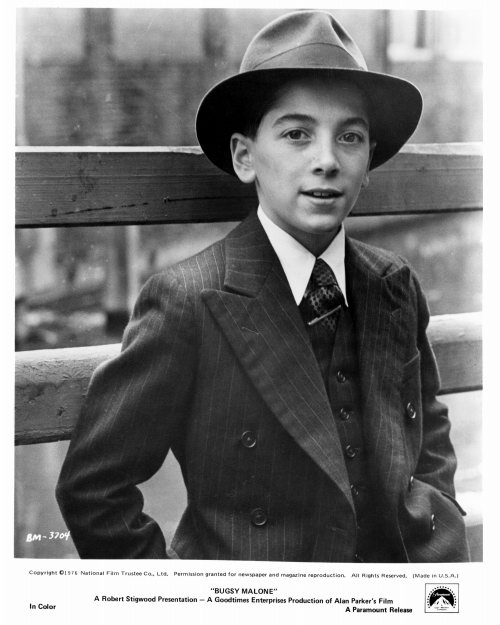
180351.1020.AMia and Lachlan are expecting their second child in about ten weeks, who will be a baby sister or brother to their son Bugsy.

Lachlan chose Bugsy’s name, in a tribute to the film Bugsy Malone, which has special significance to him. Mia wasn’t at all sure about the name, and pushed for Bugsy to be used in the middle instead. However, once their son was born, Bugsy suited him so perfectly that he couldn’t be called anything else; Mia absolutely loves his name.

It is now Mia’s turn to choose the second child’s name, and she feels utterly stumped. Nothing seems to match the name Bugsy, and everything she has come up with seems wrong. She’s made a name list for each sex, but isn’t completely happy with any of them.

Mia’s Name Lists

Boys

  • Penn
  • Hugo
  • Finley
  • Otto
  • Tristan

Girls

  • Poppy
  • Nellie
  • Scout
  • Clover
  • Marigold
  • Tilda
  • Maisie

Names Already Crossed Off the List

Harrison, Luca, Max and Ryder (boys); Emerson, Emme and Sadie (girls)

Mia’s getting increasingly stressed as her due date grows ever closer, and feels ready to contemplate almost any name.

~ ~ ~ ~ ~ ~ ~ ~

Mia, this is a good demonstration of one of the pitfalls of the “I’ll pick the first name and you pick the next one” baby name compromise. It sounds very fair, but in fact it’s a far more difficult task for the parent who goes second, and the parent who goes first rarely stops to think about what their choice might mean in regard to subsequent sibling names.

I feel that while it’s a nice idea to have your childrens’ names sound good together, it should be a preference (even a very strong preference) rather than a requirement when choosing names.

Look at the way Bugsy’s name was chosen. It is meaningful, both parents love it, and it fits him perfectly. I think your second child deserves to have a name that’s equally meaningful and fitting, and loved just as much. It shouldn’t just be an accessory to “match” Bugsy (although if the two names do sound great together, then that’s a bonus).

You don’t seem to have really fallen in love with any names yet, and I wonder if that’s because you are constantly judging them against Bugsy? When you start off a baby name search with an absolute in mind (must start with J, must be three syllables long, must match with Bugsy), it makes it hard to properly consider any other potential names.

And something like “must match with Bugsy” is much more complex than “must start with J” because it’s a subjective matter rather than an objective one. We all agree on what the letter J is – we may not all agree on what matches Bugsy. One person may think Bugsy and Daisy is adorable; another may think the names sound horribly twee together. The same person may swing in both these directions, unable to make up their mind one way or another.

Rather than tie yourself into knots finding a name which sounds good with Bugsy, I would start out by eliminating names which sound terrible with Bugsy. So when you are considering baby names you like, ask yourself, “Will this sound awful with Bugsy, and make both names look ridiculous?” If it fails your test, cross it off; if it doesn’t sound too dreadful, I would give it a chance.

For example, Bugsy and Elmer sound ridiculous together, because of Bugs Bunny and Elmer Fudd, and makes your children’s names seem like a joke. On the other hand, Bugsy and James may not be the most amazing sibset in history, but I don’t think that it’s absolutely terrible either.

I think it would be a mistake to think that you can’t use a mainstream or popular name as a sibling for Bugsy. I imagine you get a lot of people saying, “Bugsy? That’s different”, or “What an unusual name”, but although Bugsy is definitely a very uncommon name, it isn’t really that unusual. It’s a vintage American-style nickname with a movie reference context, so to get you started, here’s some ideas of other names similar to that which I don’t think sound too bad with Bugsy.

Names From Movies

The first one that comes to mind is Rocky, which is another name from the movies of the 1970s; however I think they are too much alike as brothers. I could see Rhett or Scarlett though, from Gone with the Wind, or Atticus or Scout from To Kill a Mockingbird. You have Scout on your girl’s list, and I think Bugsy and Scout sound fantastic together.

The Cutesy Factor

Bugsy sounds quite similar to the name Buddy, and Jamie Oliver’s son Buddy has sisters named Poppy, Daisy and Petal. I’ve noticed you have some pretty cute names on your girl’s list, such as Poppy, Nellie, Tilda and Maisie, and I think any of these would make an adorable sister for Bugsy. Cute names are fun and likeable, just like Bugsy.

Tough Guy Nicknames

Another name which reminds me of Bugsy is Buster, and I’ve noticed that parents of Busters tend to give their other sons tough guy nicknames, like Jake or Dan. However, this doesn’t really seem to be your style for boys names.

Names from the 1920s and ’30s

Because of its vintage style, I can see a boy named Bugsy matching with another name from that era, such as Coco, Etta, Lulu, Mabel or Zelda for girls, or Arlo, Dashiell, Django, Lenny or Roy for boys.

Gemstones

Gemstone names were very fashionable in the 1920s, and besides the popular ones like Ruby and Pearl, less common ones like Emerald, Sapphire and Opal were just as cool. Gemstone names for boys such as Jasper, Garnet and Diamond were also stylish.

Nature

When you think of it, Bugsy is kind of a nature name as well. You have Clover and Marigold on your list, and I think either of those would sound great with Bugsy. I think boy’s nature names seem a bit more problematic with Bugsy, as they tend to sound quite soft, except animal ones like Fox or Bear – and these probably underline the “bug” part of Bugsy too heavily.

Surnames

I admit that I have had much more success finding girls’ names to go with Bugsy than boys’ names (and really I think all the names on your girls list sound fine with Bugsy). But one of the appealing things about surname names is that they harmonise with many different styles of names. You have Penn at the top of your boys list, and I think Bugsy and Penn sound awesome together. They’re both a little off-beat in different ways, and they don’t seem to either clash or be too matchy. Other surname names that I get a similar vibe from are Arlen, Cash, Dexter, Gray, Knox, Reid, and Weston.

Mia, I hope this has given you a few ideas of how Bugsy can be matched with a sibling name. Once your baby name lists have firmed up a bit, write in again and we’ll have another look at naming a brother or sister to Bugsy.

NOTE: The baby’s name was Jem Richmond!

POLL RESULTS: One third of respondents thought that a name from the 1920s or ’30s would be the best match with a brother named Bugsy.

(Photo shows Scott Baio as Bugsy Malone)

Sibling Names and Sibsets

24 Sunday Feb 2013

Posted by A.O. in Your Questions Answered

≈ 15 Comments

Tags

Australiana, Biblical names, classic names, english names, fictional namesakes, fictional sibsets, flower names, Google, nature names, nicknames, plant names, popular names, Scottish names, sibsets, vintage names, virtue names

sibling1wide-420x0These are questions on sibling names that people have Googled to reach my blog. I did have fun dreaming up matching sibsets.

OPINIONS ON SIBSETS

Isobel and Bella, names too close [as siblings]?

I think they are, since they are variations of the same name.

Arlo and Ezra [as] sibling names; [do they] go [together]?

They both begin and end with vowels, they both have two syllables, and they are both not-quite-unisex-but-not-quite-not-either. This makes them alike enough to go together without being super matchy, and this is a hip brotherly sibset.

Is Lucy a good sibling name for Arabella?

I think it’s an excellent sibling name. Arabella and Lucy sound very elegant together, like something from an 18th century novel.

Are Lachlan and Callum too similar names [as siblings]?

No, I think they make a nice Scottish sibset of popular names. I can only think that their sister will be Isla.

Olivia and Sophia as siblings

They sound almost too pretty together: actually Olivia and Sophia are the sisters in Oliver Goldsmith’s novel The Vicar of Wakefield. In the book, their names are both chosen from romantic novels that their mother is reading.

Reuben and Isaac as a sibset

Great! They are both Old Testament names that are patiently climbing the popularity charts, and go together really well.

Millie and Elsie – sibling names

I’d say this is a perfect match of cute vintage nicknames rising rapidly in popularity. It might be a little hard to add another sister without breaking the pattern or sending the cute factor through the roof though.

Stanley and Evelyn – sibset

I actually love them as siblings – they are both classic English names that are becoming more fashionable, but don’t sound matchy together. There’s just enough of a clash to seem interesting.

Are Lola and Iona too close girl’s names [as siblings]?

I’m not sure whether they are too close, but to me they are a slight mismatch. Iona seems a bit too serious for cute Lola, and I’d probably anticipate something like Ruby or Zoe to match her. However, these unexpected sibsets can be refreshing.

SIBSET SUGGESTIONS

Siblings for Layla (asked more than once)

Sisters: Evie, Grace, Jasmine, Sophie, Willow, Zara

Brothers: Connor, Fabian, Gabriel, Rylan, Samuel, Tighe

Matchy names to go with Poppy

I don’t think you can get any more matchy than other flower names, such as Daisy and Rose. Floral sibsets including Poppy seem quite popular.

Virtue names to go with Wyatt

Sisters: Amity, Blythe, Ever, Faith, Liberty, Temperance

Brothers: Justice, Lucky, Maverick, Pax, True, Zeal

Brother to Violet

Arthur, Caspian, Dexter, Edward, Henry, Sebastian

Names to go with Henry and Barnaby

General advice: I’d steer clear of another name ending in an -ee sound, or you’ll end up with a sibset that sounds like it’s from a cartoon (check nicknames also). For fun, try a four syllable name like Nathaniel or Octavia so that each name increases by one syllable.

Sisters: Alice, Cordelia, Eleanor, Florence, Jemima, Mabel

Brothers: Casper, Felix, Maxwell, Otis, Rupert, Wilfred

Siblings for Jude [using] popular names

Sisters: Abigail, Eden, Hannah, Lily, Piper, Scarlett

Brothers: Ashton, Elijah, Leo, Oliver, Toby, Zac

Biblical and Australian boy names to go with Matilda

If you want a Biblical name which reminds me strongly of Australia, it would be James, after James Cook. And I think Matilda and James do sound nice together.

Siblings to match Edgar

Sisters: Audrey, Beatrice, Cecilia, Daphne, Harriet, Penelope

Brothers: Albert, Charles, Giles, Hugo, Theodore, Vincent

Baby boy name to match Harper, Flynn and William

Angus, Patrick, or Riley.

Sibling names for Clementine

Sisters: Aurelia, Beatrix, Eloise, Genevieve, Isadora, Lucinda

Brothers: Alistair, Hugo, Jasper, Lysander, Miles, Rafe

Sister to go with sibset Robert and Matthew

I’m thinking another sensible classic, like Catherine, Elizabeth, Josephine, Louisa, Sarah or Victoria.

Do you have your own sibling suggestions for any of these, or can you think of something that would be a better match?

Colourful Names of Real Australians

23 Saturday Feb 2013

Posted by A.O. in Historical Records

≈ 10 Comments

Tags

aliases, colour names, english names, historical records, name combinations, nicknames, pseudonyms, vocabulary names

colourful-paints-colors-24236829-1920-1312I love poring over names in historical records, and I even made a Category for historical records, without ever adding much to it. It’s time this was remedied, and here is the first list I have drawn up for the series. Last Sunday I covered the fascinating name Orange, and here are some more interesting colour names from the records.

Black, White and Grey

  • Taupe Amon (emigrated 1883 to Sydney, New South Wales)
  • Brunette Black (resided 1903 in Brisbane, Queensland)
  • Doris Jet Black (born 1900 in Maclean, New South Wales)
  • Brighty Sable Bowden (born 1883 in Clarence, Tasmania)
  • Ivory Rose Fitzgerald (died 1903 in Queensland)
  • Prosper Ivory Gough (born 1878 in Sydney, New South Wales)
  • Victor Grey Green (born 1905 in Mersey, Tasmania)
  • Blanche Blonde Officer (born 1881 in Tower Hill, Victoria)

Blue and Green

  • Robert William True Blue Ainsworth (born 1884 in Will, Victoria)
  • Blue Fish (cited as the father on a gravestone dated 1939 in Sydney, NSW)
  • Olive Green (born 1878 in Adelaide, South Australia)
  • Verdant Green (born 1861 in Sydney, New South Wales)
  • Cyan Hook (migrated 1924 to Melbourne, Victoria)
  • Azure Josephine Marguerite McCasker (born 1927 in Queensland)
  • Emily Aqua Sparrow (born 1902, Mount Torrens, South Australia)
  • Blue Stockings (died 1875 in Queensland)
  • Teal Wang (died 1953 in Perth, Western Australia)

Purple

  • Laura Lavender Blue Boyce (died 1937 in Sydney, New South Wales)
  • Theodore Lavender Bunting (died 1942 in Geelong, Victoria)
  • Maroon Day (born 1893 in Sydney, New South Wales)
  • Mauve Dulaghan (emigrated 1958 to Sydney, New South Wales)
  • Tyrian Gibbon – married name (resided 1954 in Brisbane, Queensland)
  • Clethra Erubescent Lavender Nicholls (born 1891 in Redhill, South Australia)
  • Puce Pavell (emigrated 1875 to Sydney, New South Wales)
  • Lilac Pearl Luxford Virgo (born 1895 in Balaclava, South Australia)

Red and Pink

  • Ruby Coral Bandt (born about 1907 in South Australia)
  • Coral Ivy Pearl Blizzard (born about 1894, died in Wynard, Tasmania)
  • Miri Red Summerson Crossley (born 1887 in Melbourne, Victoria)
  • Frederick Red Rover Hardy (born 1866 in Queensland)
  • Magenta Chiffon Hensley (born 1904)
  • Percival Red Hood (born 1891 in Victoria)
  • Valentine Cerise Marsh (born 1910 in Queensland)
  • Red Archibald Jerome Ohea (born 1896 in Briton, Victoria)
  • Pink Penny (born 1896 in Warracknabeal, Victoria)
  • Carmine Rose (born 1889 in Sydney, New South Wales)
  • Burgundy Severance (emigrated 1912 to Fremantle, Western Australia)
  • Joseph Pink Starr (born 1872 in Athelstone, South Australia)
  • John Red Honeysuckle Yorkie Wilks (born 1885 in East Wellington, South Australia)

Yellow and Orange

  • “Yellow Dick” – criminal alias (born about 1812, arrested in New South Wales)
  • Saffron Gay (no date given, Western Australia)
  • Loyal Orange Hore (born 1897 in Zeehan, Tasmania)
  • “Ginger” Lawless – real name Ray Lawless (born 1949, died in Kingsborough, Tasmania)

Brown

  • Auburn Brown (born 1885 in Sydney, New South Wales)
  • Auburn Hair (born 1895 in Sydney, New South Wales)
  • Chocolate Lilywhite (resided 1930 in Sydney, New South Wales)
  • Caramel Sultana (migrated 1952 to Adelaide, South Australia)
  • Rust Wake (born about 1907, died in Northampton, Western Australia)

Gold and Silver

  • Hurtle Milford Gold Biggs (died 1966 in South Australia)
  • Daniel Gold Boon (born about 1895, died in Melbourne, Victoria)
  • Adelaide Gold Burner (born 1886 in Unley, South Australia)
  • Silver Bell Eddy (born 1899 in Zeehan, Tasmania)
  • May Silver Thorne Flower (born 1896 in Melbourne, Victoria)
  • Rose Ann Silver Fox (married 1911 in Queensland)
  • John Gold Hunter (died 1894)
  • Silver Price (born 1886 in Dubbo, New South Wales)
  • William Alexander Gold Steel (died 1928 in Queensland)
  • Silver Hope Tonks (born about 1903 in Hobart, Tasmania)
  • Ellen Silver Virtue (born about 1904, died in Longford, Tasmania)
  • Argent Wing (born about 1916, died in Ulverstone, Tasmania)

Requested Name: Dimity

20 Wednesday Feb 2013

Posted by A.O. in Requested Names

≈ 10 Comments

Tags

english names, fabric names, famous namesakes, fictional namesakes, historical records, name history, name meaning, nicknames, rare names, Russian names, vocabulary names

il_fullxfull.248146234

Dimity is a type of corded fabric, which since the 18th century has been made with cotton. The name was applied to two different types of corded cotton – one a heavy material used for bedcovers and curtains, and the other a lightweight, sheer fabric, often white with gingham checks, used for women’s dresses, skirts, blouses and lingerie. People usually think of the second meaning when they talk about dimity. The word comes from the medieval Latin dimitum, derived from the Greek dimitos, meaning “double thread”.

There is a great daintiness and femininity to the fabric, but at the same time it is surprisingly tough because of its double weave. These days, dimity is often part of vintage fashion and considered a lovely “old-fashioned” textile.

Its image in the past was twofold. On the one hand, it was seen as very ladylike and respectable, so that in her diaries, the novelist Virginia Woolf used the word in the sense of “niminy-piminy”, to indicate an overly refined and fussy femininity. On the other, it had rather a saucy side, because in Victorian tableau vivants of an erotic nature, the women wore body stockings and were draped in see-through dimity to preserve their modesty.

Information on the history of Dimity as a girl’s name is rather thin, but it seems to be much more common in Britain and Australian than elsewhere, and to be a name from the 20th century. The earliest Dimity I could find in the records dates to World War I, with an apparent peak in the years after World War II, from the late 1940s to the early 1960s.

Although the name can be found in records from the United States, it’s a bit confusing, because there the name seems to have been used as a short form of the Russian name Dimitrya. I can’t even tell if the women were actually called Dimity in real life, or if this is used as a shorthand for Dimitrya by the people writing  the records. So although the English name Dimity might have a history of use in the US, it is not possible for me to be sure.

The whimsical and lightly tripping sound of the name Dimity has made it very suitable for fiction, with Australian children’s author Bob Graham penning Dimity Dumpty, about the sister of Humpty Dumpty, and American children’s author Jane Yolen writing of Dimity Duck, the friend of Frumity Frog.

Another American author, Nancy Atherton, has an entire series about an Aunt Dimity who manages to solve mysteries from beyond the grave. Interestingly, Ms Atherton’s novels are set in Britain rather than her homeland, and she also has to explain to her readers how to pronounce the name Dimity (DIM-uh-tee). This lends weight to the notion that the name Dimity is less familiar in the United States.

I get the impression that in times past, Dimity was seen as rather upper-class, and like Verity, had the image of being a Head Girl/Debating Team Captain/Pony Club Champion sort of a name. These days I think it seems much more accessible, with the number of successful women named Dimity in the public eye giving it greater exposure. I suspect that the popularity of the similar-sounding Trinity may also broaden its appeal.

Famous namesakes include news reporter Dimity Clancey, opera singer Dimity Shepherd, ballerina Dimity Azoury, violinist Dimity Hall, United Nations Women Australia board member Dimity Hodge, and speech pathologist Dr Dimity Dornan, who has been honoured for her lifetime working with deaf and hearing-impaired children. There seems to be many successful women called Dimity, considering that the name is apparently quite rare.

Dimity is a dainty, feminine name with a hint of whimsy, but not one to be underestimated. Like the fabric it is named after, there is a strength to delicate Dimity. Although it is an uncommon name, it isn’t unfamiliar in Australia, and has many high-achieving namesakes.

Thank you to Brooke for suggesting Dimity as a featured name.

POLL RESULT: Dimity received an approval rating of 69%. People saw it as poetic and whimsical (20%), delightful (19%), delicate but strong (15%) and dainty and demure (10%). However, its detractors thought it was too odd and eccentric (10%), or even “frightful” (8%). Nobody thought Dimity was a lower-class name.

(Picture is of a 1930s-style white dimity dress)

Does This Baby Name Have Too Much Baggage?

16 Saturday Feb 2013

Posted by A.O. in Naming Assistance

≈ 3 Comments

Tags

choosing baby names, controversial names, name combinations, nicknames

Baby kneeling, packing the suitcaseKylie is pregnant with her second child, and doesn’t yet know the sex, so she is making name lists for both boys and girls.

She would love to add Azaria to her girls’ list, but isn’t quite sure. She wonders if it is still too soon to use the name Azaria, because of Azaria Chamberlain, and worries that she would be condemning her daughter to a lifetime of dingo jokes.

Kylie also likes the names Gaia and Juniper, but not nearly as much as Azaria.

The full name would be Azaria Lucienne, and the nickname would be Azra. Kylie isn’t interested in giving the name an unusual spelling in order to make it seem different to the original.

~ ~ ~ ~ ~ ~ ~

Kylie, this is a very interesting question, because it touches on that sensitive issue of whether some names are too controversial, or have too much baggage to be usable.

Nearly all of us feel that that there are least some names that should be “off limits”, and many people can get quite worked up at the thought of such names being given to a child. The trouble is that we don’t all agree on what these “off limits” names are!

There’s no right or wrong answer to this one, because different people are going to have different opinions. That’s really all I can give you – an opinion.

It is more than a generation since Azaria Chamberlain died, and last year the long drawn-out legal case finally came to an end. I tend to feel that by now, enough time has gone by and enough closure has been gained that we should be ready to move on. There must be a few people who agree with this, because some parents have already chosen this pretty name for their daughters in recent years.

I don’t think someone named Azaria would have a lifetime of dingo jokes ahead of her. For one thing, I haven’t actually heard a dingo joke since the 1990s. For another, the children being born now, your child’s peers, won’t know about Azaria Chamberlain, and when (or if) they learn of it, they won’t find it funny at all.

And while I can easily believe there are adults moronic enough to find a dingo joke funny, I have trouble imagining one so utterly bereft of brain cells that they would find it amusing to repeat it to a little girl named Azaria, or her parents.

I do think some older people might find the name Azaria a bit confronting at first, but I also think that if they actually knew a child called Azaria, they would soon stop associating the name with the Chamberlain case, and associate it with the child they know.

However, it doesn’t really matter what I think. What’s important is what you think. Do you feel that enough time has gone by? Do you feel comfortable using the name Azaria? And how does your partner feel about it?

Being practical, you don’t even know if you’re having a girl yet, and are just making lists of names that you like. You love the name Azaria, and it fits beautifully with the middle name you have chosen. I would leave it on the list at least until you know the sex of the baby. Give yourself more time to think this over before you decide.

NAME UPDATE: The baby was a boy, and his name is Kaelan!

POLL RESULTS
78% of people were generally okay with the idea of a baby named Azaria. 39% thought that it would be a little strange at first, but that people would soon get used to the idea, while another 39% couldn’t see anything wrong with it at all.

22% people weren’t in favour. 11% thought the name wasn’t usable yet, but might be in another 25 years, while 3% thought that just another 5 years could make all the difference to the name’s fortunes. A pessimistic 3% didn’t think the name could ever be used again, while 5% just weren’t sure whether it was a good idea or not.

Requested Famous Name: Banjo

14 Thursday Feb 2013

Posted by A.O. in Famous Names, Requested Names

≈ 10 Comments

Tags

aliases, Australian Aboriginal names, Australian names, Australian slang terms, english names, famous namesakes, historical records, musical instruments, name history, name meaning, names of horses, nicknames, patriotic names, pen names, pseudonyms, vocabulary names

146168-banjp-paterson-grapphicOn Sunday February 17 this year it will be the 149th birthday of Andrew Barton Paterson, affectionately known as “Banjo” Paterson. To celebrate, The Orange and District Historical Society will be throwing him a birthday party, with a car rally, picnic lunch in Banjo Paterson Park, poetry readings, stories of Banjo’s life, and walk around the historic property where he was born.

Because this is a name blog, I feel obliged to explain that Paterson was named Andrew after his Scottish-born father, and his middle name Barton was a family name from his mother’s side; he was related to Edmund Barton, who would later become Australia’s first prime minister. Because he and his dad had the same name, Paterson went by his middle name, and was always known as Barty to his friends and family.

Paterson lived with his grandmother while he was attending the prestigious Sydney Grammar School, and she encouraged in him a love of poetry. He was 21 when he first began submitting poems to The Bulletin, under the pseudonym of “The Banjo” (sometimes shortened to a simple “B”). Full of fierce nationalism and a desire for a fairer society, he had some aspirations to write fiery polemic, and had even written a political pamphlet. However, The Bulletin had other ideas.

In the late 19th century, there was a movement towards the British colonies of Australia becoming one country, a feeling that Australia should be a united nation, and Australians a united people. In the effort to provide Australia with a unifying mythology that would instil nationalistic pride, it seemed that the Australian bush and outback would be the symbol to draw everyone together.

The Bulletin suggested that Banjo Paterson try his hand at bush poetry in line with its nationalist editorial policy. Banjo had been born in the Central West, but spent most of his childhood and youth growing up on the family property near Yass, north of Canberra. It was here he learned to ride, and watched the horsemen from the Murrumbidgee River and Snowy Mountains country play polo and take part in picnic races. He gained a great love of horses, and an admiration for horsemanship.

When he wrote The Man from Snowy River, it was a poem of reckless horse-riding heroism which immediately captured the nation’s imagination, and which still has our heart. It made his name, and his first poetry collection, under the title The Man from Snowy River, is the most-sold collection of Australian bush poetry ever, and is still reprinted today. During his lifetime, Banjo Paterson was second only to Rudyard Kipling in popularity among living poets writing in English.

Banjo Paterson was a colleague and friend of Henry Lawson, but had a very different way of seeing the bush. In Banjo Paterson poems, the bush is a place of adventure, romance and beauty, populated by heroes who live in freedom amongst the gum trees, honest freckle-faced youths, and characters with funny names and odd yarns about them.

Australia is the Outback, and pioneers, and songs around the campfire under the starry sky, and swagmen camped by billabongs. It’s a country of warmth and humour, and although it never quite existed, like all good mythology it lives in our hearts and minds. Banjo Paterson gave us a dream of Australia – one from which we have never truly awakened.

When it comes to names from history, often times there is a tinge of tragedy to them; some sadness attached to the real person who bore them, or even a whiff of scandal. There is no darkness to the name Banjo – Paterson was a decent, highly intelligent man who cared very much about the less fortunate, but he was essentially a happy person who was popular and sociable, and liked sport and the outdoors.

He wore his fame easily, remained modest about his talents, and never had any scandal attached to him. He was able to fulfil many of his dreams, and those that were denied him didn’t set him back. He enjoyed the ordinary love of friends and family, as well as the extraordinary love and devotion given to him by his nation. He is the model of what we hope for and expect from our celebrities.

The equine-loving Paterson took his pen name name of The Banjo from that of a horse owned by his family. This always seems to be described as “a favourite horse”, or even “his favourite horse”, but I cannot find any original source for this. Paterson himself simply describes it, no doubt with affection, as a “so-called racehorse“.

The origin of the horse’s name is apparently lost to history, but the word banjo has a history as a slang word in Australia. Slang dictionaries suggest as possible meanings “frying pan”, and “shoulder of mutton”. Another meaning was “shovel used for mining”, which during World War I, became used for any military entrenching tool – in other words, there are some correlations between the slang terms banjo and digger!

A banjo is military slang for a bacon and egg roll, because the motion of constantly dealing with crumbs while eating is reminiscent of someone playing the banjo. And Banjo Paterson himself has added another slang term – a banjo is a $10 note, because Paterson’s picture is on it, along with the words to The Man from Snowy River (Henry Lawson was on the old $10 note).

The banjo is the descendant of musical instruments brought to Colonial America by African slaves, and long seen as a staple of country music, the music of the poor and downtrodden (the kind of people that Banjo Paterson cared about). It is not known where the word banjo comes from, but the most likely source is West Africa, where it may be the same word they used for bamboo.

There are quite a few men named Banjo in Australian records, with the name most common as a nickname or alias. Many must have been named in honour of the poet, with some families named Paterson apparently finding it hard to resist having their own “Banjo Paterson”. The name isn’t unusual in Aboriginal communities, where it is given as a nickname.

The name Banjo gained fresh impetus when actress Rachel Griffiths named her son Banjo Patrick in 2003; since then the name has received more use, with 12 baby boys named Banjo last year in Victoria alone.

Banjo is an uniquely Australian name; one which seems strange in other countries, yet cosy and familiar in our own. It’s patriotic and honours one of our most beloved national poets. It’s cute, cool, and has a very Aussie nickname too – Joey.

Thank you to Brooke for suggesting Banjo as a featured name.

POLL RESULT: Banjo received an approval rating of 86%, making it one of the most highly esteemed names of the year. It was seen as uniquely Australian and patriotic (36%), cool and different (30%), and cute and spunky (20%). The remaining 14% of people thought it was over the top, weird, or ridiculous.

(Picture shows Banjo Paterson with the score to Waltzing Matilda)

Underused Names for Boys

10 Sunday Feb 2013

Posted by A.O. in Name Themes and Lists

≈ 14 Comments

Tags

Anglo-Saxon names, Arthurian legends, Arthurian names, band names, Biblical names, British names, celebrity baby names, Celtic names, Cornish names, english names, famous namesakes, fictional namesakes, French names, German names, Gothic names, Greek names, hebrew names, Jakob Grimm, Latin names, locational names, mythological names, name history, name meaning, nicknames, Old English names, Old French names, Roman names, royal names, Sabine names, saints names, Scottish names, Shakespearean names, Sir Walter Scott, surname names, unisex names, William Shakespeare

Time-For-Bed-Said-ZebedeeThis follows on from last week’s Underused Names for Girls; to briefly recap, they are names which aren’t common here (used less than six times in the 2012 Victorian data, have never charted in Australia), but still have a history of use in Australia (can be found in historical records).

Alaric

Alaric is from the Gothic name Alareiks, meaning “ruler over all”. Alaric I was the king of the Visigoths who sacked Rome in 410, and his great-grandson, Alaric II, was ruler of the Visigothic kingdom, covering most of Spain and the south of France. Another Alaric was a legendary king of Sweden, skilled in battle and sport, and a masterful horseman. He had a brother Eric, and for some unknown reason, the pair of them killed each other with their horses’ bridles, which seems an awfully strange choice of weapon. The name Alaric is far commoner in fiction than in real life, where it tends to be either chosen for comedies, in the belief that the name Alaric sounds amusingly high-faluting, or science-fiction/fantasy, in the belief that it sounds geekily exotic. In the TV series, The Vampire Diaries, there is a character named Alaric; he says his name uh-LAHR-ik, although most sources say the name is pronounced AL-uh-rik. Powerful and commanding, this is unusual, but sounds similar to familiar names like Alan and Eric.

Blaise

In Arthurian legend, Blaise was the priest who baptised the wizard Merlin, became his tutor and friend, then took the trouble to write down all Merlin’s deeds for posterity. There is a Saint Blaise, who is a saint of healing, as he cures sore throats (the saint was a doctor as well as a bishop). He seems to have been quite popular in England, perhaps because his feast day of February 3 is right after the Celtic festival of Imbolc and the Christian feast of Candlemas, and often marked by bonfires. Blaise sounds like the word blaze, so a pleasing coincidence for fire-lovers. The most famous namesake is Blaise Pascal, the French theologian and philosopher. The meaning could be from either Latin or Greek. If Latin, it means “stuttering, lisping”; if Greek it means “bow-legged”, so either way it’s not flattering. Saint Blaise was Greek, but the Blaise of Arthurian legend is probably meant to be Roman or Romanised, so you can take your pick. It’s a name loved for its sound, namesakes and associations rather than its meaning.

Corin

Corin is a French surname derived from Quirinus; Saint Quirinus was part of a Roman missionary group sent to convert Gaul, and legend has attached to this popular saint all the standard saintly stories, such as killing a dragon and going for a stroll after getting his head chopped off. The original Quirinus was an early Roman god, probably a Sabine war deity. The Sabines had an altar to Quirinus on the Quirinal Hill, one of the Seven Hills of Rome. The Romans considered him to be a deified Romulus, and in the early days he was a major god, although they gradually lost interest in worshipping him. However, even after the fall of Rome, the Quirinal Hill remained a place of power, so that it was chosen as the seat of royalty, and later the residence of the Presidents of the Italian Republic. The name is linked to the name of the Sabine town Cures, and may come from the Sabine word for “spear”. There is a shepherd named Corin in Shakespeare’s As You Like It, and a Prince Corin in C.S. Lewis’ The Horse and His Boy. You can also see this name from another perspective, for in British legend, Corineus was a great warrior and giant-killer who founded Cornwall; his name may be an echo of Cernunnos, the Celtic god, whose name is usually translated as “horn”, or “horned one”. There are several place names in Cornwall apparently derived from Cernunnos (including Cornwall itself), and the name Corin enjoyed early popularity in Cornwall and Devon – so you can see this as a British name just as much as a French one. This packs a double mythological punch, and doesn’t seem much different than names such as Corey or Colin.

Edgar

Edgar is an Old English name meaning “rich spear”. Saint Edgar the Peaceful was a king of England; a Scottish King Edgar was a son of Saint Margaret. The name became rare after the Norman Conquest, but had a revival in the 19th century, after Sir Walter Scott’s historical novel, The Bride of Lammermoor, told the story of tragic lovers Lucy and Edgar – a tale which ends in madness, murder and quicksand. Edgar is also a character in William Shakespeare’s King Lear; disinherited by his father, he wanders the heath disguised as a babbling madman. Noble and clever, he is also enigmatic with a touch of darkness; he enjoys playing the crazy beggar just a little too much. The most famous person named Edgar is probably the American writer, Edgar Allen Poe, said to have been named after Shakespeare’s character. Poe’s works are also quite dark and enigmatic, dealing with topics such as grief, guilt, mystery, murder, madness, doom, death, drugs, and being buried alive. Edgar is related to the other Ed- names, such as Edward and Edwin, but seems more vintage, a bit edgier, and a touch more Gothic. This name might be uncommon, but it’s also traditional and comes with all the usual Ed and Eddie nicknames.

Giles

This is based on the Latin name Aegidius, derived from the Greek for “young goat”. Aegidius was a 7th century hermit from Athens who lived in the south of France with a tame deer; in Old French his name became Gidie, then Gide, and finally Gilles; when the Normans took his name to Britain, it became Giles. A noted miracle worker, Saint Giles was very popular in the Middle Ages, and his name became common; it was also given quietly but steadily to girls (even into the 20th century). Although we often think of Giles as a terribly “English” name, Saint Giles is the patron saint of Edinburgh, and the name Giles is traditional in Scotland; many Gileses in Australian records have Scottish surnames. The English haven’t done this name many favours, as it’s a favourite in English books and TV shows for good-natured upper class twits. However, this doesn’t reflect the reality of the name, or the Australian experience of it, and I think it’s possible to see Giles in quite a different light. I can see Giles as a solid country-style name, a brother to Archie and Will, or slightly hipster, a brother to Hugo and Barnaby. If you crossed Gus with Miles, you might end up with something that looks a little like Giles …

Huxley

Huxley is an English surname. The Huxley family were Normans who came to Britain after the Conquest and settled in Cheshire, taking their name from a village near Chester, which was originally named Holdesieia, and corrupted into Huxley. The original name may be from the Anglo-Saxon for “sloping land”, and Huxley is believed to mean’s “Hucc’s wood”, with Hucc being an Anglo-Saxon nickname meaning “insult, taunt”. Huxley has been used as a personal name since the 18th century, and early examples are from the Cheshire area, suggesting they may have been named directly after the village. The Huxley family have produced an astonishing number of brilliant thinkers, from the biologist T.H. Huxley, supporter of Charles Darwin, to the author Aldous Huxley, who wrote Brave New World. T.H. Huxley came to Australia as a young man, and did such excellent work in natural history that he was made an immediate Fellow of the Royal Society on his return (Mount Huxley in Tasmania is named in his honour). T.H. Huxley’s distant cousin, Sir Leonard Huxley, migrated to Australia in childhood, and became one of our most distinguished physicists. With its fashionable X and intellectual pedigree, this name seems very hip, and comes with the nicknames Huck or Hux.

Jethro

Jethro is translated as “excellence, abundance” in Hebrew, and in the Old Testament, Jethro is the father-in-law of Moses, and a priest (it is never made clear in what religion he was a priest, but by the end he accepted Yahweh as his God). Jethro is revered as a prophet in Islam, and is held in the highest regard by the Druzes. The most famous person with this name is Jethro Tull, an English agricultural pioneer who helped bring about the British Agricultural Revolution which formed the basis of modern farming practices. The rock band Jethro Tull is named after him. You may also remember the dull-witted Jethro Bodine from The Beverly Hillbillies. Jethro is a little bit hick and a whole lot hip – it’s hickster.

Rufus

Rufus started life as a Roman nickname, but afterwards became a family name; it’s from the Latin for “red haired”. There are many famous men with the surname Rufus, including the Stoic philosopher Gaius Musonius Rufus. His views on philosophy were moderate and practical, encouraging all men and women to follow a philosophical life, and giving advice on all manner of topics, including diet (vegetarian, raw) and hairstyles (long, beardy). He was so highly-regarded that when all other philosophers were expelled from Rome by the Emperor Vespasian, Rufus was allowed to stay. There are at least ten saints named Rufus, one of whom is mentioned in the New Testament as a disciple of St. Paul; his father was the man who carried the cross for Jesus on the way to Calvary. There is also the Gaelic saint Mael Ruba, whose name is Anglicised as either Maree or Rufus. King William II of England was nicknamed “Rufus” for his ruddy complexion. Famous people named Rufus include the Canadian-American singer Rufus Wainwright, and the British actor Rufus Sewell; Roger Taylor from Queen has a son named Rufus Tiger. With names ending in -us becoming fashionable, Rufus looks set to become the new Atticus.

Wolfgang

Wolfgang is a German name meaning “wolf path, wolf journey”, and interpreted by folklorist Jakob Grimm as being the name of a hero who follows in the wake of the “wolf of victory”. It has two heavy-duty namesakes: composer Wolfgang Amadeus Mozart, and writer Johann Wolfgang von Goethe; there is also a Saint Wolfgang, one of the patrons of Germany. Eddie Van Halen chose this name for his son. Nearly all Wolfgangs in Australian records have German surnames, and although this would make a striking heritage choice, it could work even if you don’t have a scrap of German ancestry. Wolfgang is one of those names that people seem to either love or loathe, so it attracts some extreme reactions. The usual nicknames are Wolf or Wolfie.

Zebedee

In the New Testament, Zebedee was a fisherman, and the father of the Apostles John and James. He is mentioned as being left behind in the boat when Jesus called the brothers to “become fishers of men”; we never learn whether he was supportive of his sons’ career change, or thought they should have remained fishers of fish. Zebedee’s wife was one of the women present at the crucifixion. The name Zebedee is the Greek form of the Hebrew name Zebadiah, meaning “Yahweh has bestowed”, and nearly always interpreted as “gift of God”. There is an English painter named Zebedee Jones and an English newsreader named Zebedee Soanes; both these Zebedees were born in the 1970s, when the cult children’s show, The Magic Roundabout, was first on television. In the show, Zebedee was a jack-in-the-box who is popularly recalled as ended the show by bouncing down out of nowhere and intoning, “Time for bed, children” (although I’m not sure how often this occurred). With Old Testament names for boys becoming a bit old hat, it could be time to consider some of the more unusual New Testament names. This one is full of zest, and the nickname Zeb is as cowboy cool as Zeke and Jed.

POLL RESULT: People’s favourite names were Huxley, Alaric, and Corin, and their least favourite were Wolfgang, Zebedee, and Giles.

(Picture shows Zebedee from The Magic Roundabout)

Famous Name: Miriam

06 Wednesday Feb 2013

Posted by A.O. in Famous Names

≈ 10 Comments

Tags

Ancient Egyptian names, Biblical names, classic names, famous namesakes, hebrew names, mythological names, name history, name meaning, name popularity, names in songs, nicknames, underused classics

4485672-3x2-940x627On Australia Day this year, more than 17 000 people from 145 countries took the pledge and became Australian citizens. Prime Minister Julia Gillard, presiding over a ceremony in Canberra, told the crowd that the first citizenship ceremony was in 1949, and since then more than 4 million people had sworn loyalty to Australia. In fact, Ms Gillard was one of them – she was born in Wales and moved to South Australia as a child.

Amongst the 17 000-odd people becoming Australian citizens was British-born actress, Miriam Margolyes. Miriam has long been a mainstay in film, television and theatre, delighting audiences in such favourites as Blackadder, Little Dorrit, Babe, the Harry Potter films (she played Professor Sprout), and Wicked. A massive Charles Dickens tragic, Miriam has taken her one-woman show, Dickens’ Women, all over the world.

Miriam apparently got a bit of a crush on Australia when she was only a child, and kept on meeting wonderful Australian people, until at last, in 1968, she met her Australian partner Heather, which cemented the deal for good and all. She bought a house in the southern highlands of New South Wales around the time she was in Babe, and for many years now has been based in Australia.

Miriam promised that she hasn’t become Australian just for the beach and barbies, she wants to make a contribution to Australian society. Although she loves her country, she plans to use her democratic right to protest and speak out against things that need to change, and also wants to learn more about disadvantaged Australians. In other words, she will be a fantastic Aussie citizen.

Miriam is the original name on which the familiar Mary is based. In the Old Testament, Miriam is the older sister of Moses, and it is she who came up with the clever plan to save her baby brother’s life. Because Pharoah had decreed that newborn Hebrew boys were to be killed, she took Moses and hid him by the side of a river. She secretly watched as Pharoah’s daughter found and adopted him, then suggested that the princess use Miriam’s mother as a wet nurse, so that Moses was cared for in his infancy by his own family.

The Old Testament depicts Miriam as a strong, outspoken woman, and a leader amongst the Hebrews. One of the oldest parts of the Bible tells how she led the women in triumphant song and dance after the crossing of the Red Sea, the female chorus echoing the men, who were led by Moses. She was a prophetess, with the Bible implying that God spoke to her through dreams; the Bible speaks of the prophets Moses, Aaron and Miriam as if all three of them played vital roles in the Hebrews’ escape from Egypt.

According to Jewish tradition, the Hebrews were blessed by a well which followed them through the desert due to Miriam’s righteousness. When she died and was buried (in present-day Syria), God caused a spring of abundant fresh water to open up for the people. The spring was called Meribah, which means “quarrelling”, as everyone was grumpy from thirst. This story is very similar to another where the Hebrews were suffering from severe water shortage, only to find a well filled with bitter water. Moses turned the brackish water sweet with a particular tree, but the well was still called Marah – “bitterness”.

These two stories probably help to explain two suggested Hebrew etymologies for the name Miriam – “rebellious”, and “bitterness”. These are generally thought to be unpleasant meanings for a girl’s name, but as you can see, the stories were positive ones, although they don’t actually have anything to do with Miriam. In fact, it’s unlikely that Miriam’s name was Hebrew at all – she was born and raised in Egypt, and it is believed that both her brothers’ names were of Egyptian origin.

Miriam may be derived from the Ancient Egyptian word for “love” or “beloved”, or it could be a form of the Ancient Egyptian name Meritamen which means “beloved of Amun” – Amun was the chief god of the Ancient Egyptians, and his name means “hidden”. For this reason you will sometimes see Miriam and Mary translated as “beloved by God”, even though it doesn’t mean the God of the Abrahamic religions.

Miriam has never disappeared from the charts, but never been in the Top 100. It was #133 in the 1900s, which is the highest point it ever reached; its current rank of #458 is the lowest it has ever reached. After climbing steeply in 2009, the name Miriam fell dramatically in 2011 – although in real terms, that equates to just ten fewer babies called Miriam than there were in 2009.

I think the name Miriam has much to recommend it. It’s an underused classic, which means it’s familiar to everyone, yet rarely encountered. It is feminine, strong, sounds quite intellectual, and suits any age. In Jewish tradition Miriam was associated with water, and I do think Miriam has a liquid feel to it – cool and deep. It has a range of possible nicknames, including Mim, Mimi, Mima, Minnie, Mirri, Mirra, Mira, Mia, Mitzi and Remi.

Even a murderous Norah Jones sang that Miriam was “such a pretty name“. When your most vengeful enemy admits you’ve got a nice name, that takes some beating.

POLL RESULT: Miriam received an astounding 91% approval rating, making it one of the highest-rated names of the year. Miriam was praised for being strong and intelligent (45%), pretty and feminine (23%), having great nickname options (15%), and a desirable level of popularity (8%). However, 8% thought the name was too old-fashioned. Nobody thought that the name Miriam was “too Jewish”.

(Photo shows Miriam Margolyes receiving her citizenship certificate from Prime Minister Gillard)

← Older posts
Newer posts →

Enter your email address to follow this blog

Categories

Archives

Recent Comments

A.O.'s avatarwaltzingmorethanmati… on Zarah Zaynab and Wolfgang…
Madelyn's avatarMadelyn on Zarah Zaynab and Wolfgang…
JD's avatardrperegrine on Can Phoebe Complete This …
A.O.'s avatarwaltzingmorethanmati… on Rua and Rhoa
redrover23's avatarredrover23 on Rua and Rhoa

Blogroll

  • Appellation Mountain
  • Baby Name Pondering
  • Babynamelover's Blog
  • British Baby Names
  • Clare's Name News
  • For Real Baby Names
  • Geek Baby Names
  • Name Candy
  • Nameberry
  • Nancy's Baby Names
  • Ren's Baby Name Blog
  • Sancta Nomina
  • Swistle: Baby Names
  • The Art of Naming
  • The Baby Name Wizard
  • The Beauty of Names
  • Tulip By Any Name

RSS Feed

  • RSS - Posts

RSS Posts

  • Celebrity Baby News: Melanie Vallejo and Matt Kingston
  • Names from the TV Show “Cleverman”
  • Can Phoebe Complete This Sibset?
  • Zarah Zaynab and Wolfgang Winter
  • Baby, How Did You Get That Name?
  • Celebrity Baby News: Media Babies
  • Celebrity Baby News: Adelaide Crows Babies
  • Celebrity Baby News: Chris and Rebecca Judd
  • Names at Work: Name News From the World of Business and Employment
  • Celebrity Baby News: Sporting Round Up

Currently Popular

  • Celebrity Baby News: Bernard Fanning and Andrea Moreno
  • Celebrity Baby News: Toby Allen and Darren Weller
  • Celebrity Baby News: NRL Babies
  • Famous Name: Humphrey
  • The Top 100 Names of the 1940s in New South Wales

Tags

celebrity baby names celebrity sibsets english names famous namesakes fictional namesakes honouring locational names middle names name combinations name history name meaning name popularity name trends nicknames popular names saints names sibsets surname names twin sets unisex names

Blog at WordPress.com.

Privacy & Cookies: This site uses cookies. By continuing to use this website, you agree to their use.
To find out more, including how to control cookies, see here: Cookie Policy
  • Subscribe Subscribed
    • Waltzing More Than Matilda
    • Join 517 other subscribers
    • Already have a WordPress.com account? Log in now.
    • Waltzing More Than Matilda
    • Subscribe Subscribed
    • Sign up
    • Log in
    • Report this content
    • View site in Reader
    • Manage subscriptions
    • Collapse this bar
 

Loading Comments...