• About
  • Best Baby Names
  • Celebrity Baby Names
  • Celebrity Baby Names – Current
  • Celebrity Baby Names – Past
  • Featured Boys Names
  • Featured Girls Names
  • Featured Unisex Names
  • Links to Name Data
  • Waltzing on the Web

Waltzing More Than Matilda

~ Names with an Australian Bias of Democratic Temper

Waltzing More Than Matilda

Tag Archives: nature names

Waltzing With … Taiga

20 Sunday Nov 2011

Posted by A.O. in Waltzing with ...

≈ 9 Comments

Tags

fictional namesakes, Japanese name popularity, Japanese names, nature names, Russian names, unisex names

This post was first published on November 20 2011, and heavily edited and reposted on November 25 2015.

It’s been a little more than eight months since Japan was hit by the terrible earthquake off its eastern coastline – with a magnitude of 9.0, it was the strongest earthquake to ever hit Japan, and one of the five most powerful in the world since modern record-keeping began in 1900.

The earthquake triggered a massive tsunami, with waves reaching more than 40 metres (133 feet) high; as well as bringing destruction to life and property, the tsunami caused a number of nuclear accidents, which meant that hundreds of thousands of people had to be evacuated.

This could not help but evoke a response from people all around the world. We were shocked and appalled as we saw it unfold on our TV screens, and deeply moved by the plight of the Japanese people, who reacted so calmly and bravely to their national tragedy.

We had recently suffered a summer of terrible cyclones and floods, and the disaster in Japan put our own problems in perspective; suddenly things didn’t seem quite so terrible, suddenly we realised that things could have been a lot worse for us. Australia was one of the many countries who went to Japan’s assistance during the crisis, and one of the few that Japan specifically asked for help from.

Things are still pretty bad in the coastal regions of Japan which suffered the worst during the catastrophe. There are whole towns that have been evacuated, and it may be years before it is safe for people to return. Nuclear contamination is still a major issue, and people worry about whether food is safe to eat or not. There are many farming districts in the nuclear-affected areas of Japan, and it’s been devastating for the agricultural economy there.

Taiga is a name I heard of from Japanese families who had fled the disaster zone to live in Australia, although later on I met an Australian family with a small boy named Taiga in memory of an extended visit to Japan.

Note: Since 2011, the areas of Japan worst affected by the tsunami are still struggling to rebuild, and the path to recovery looks likely to be a very long and painful one.

Name Information
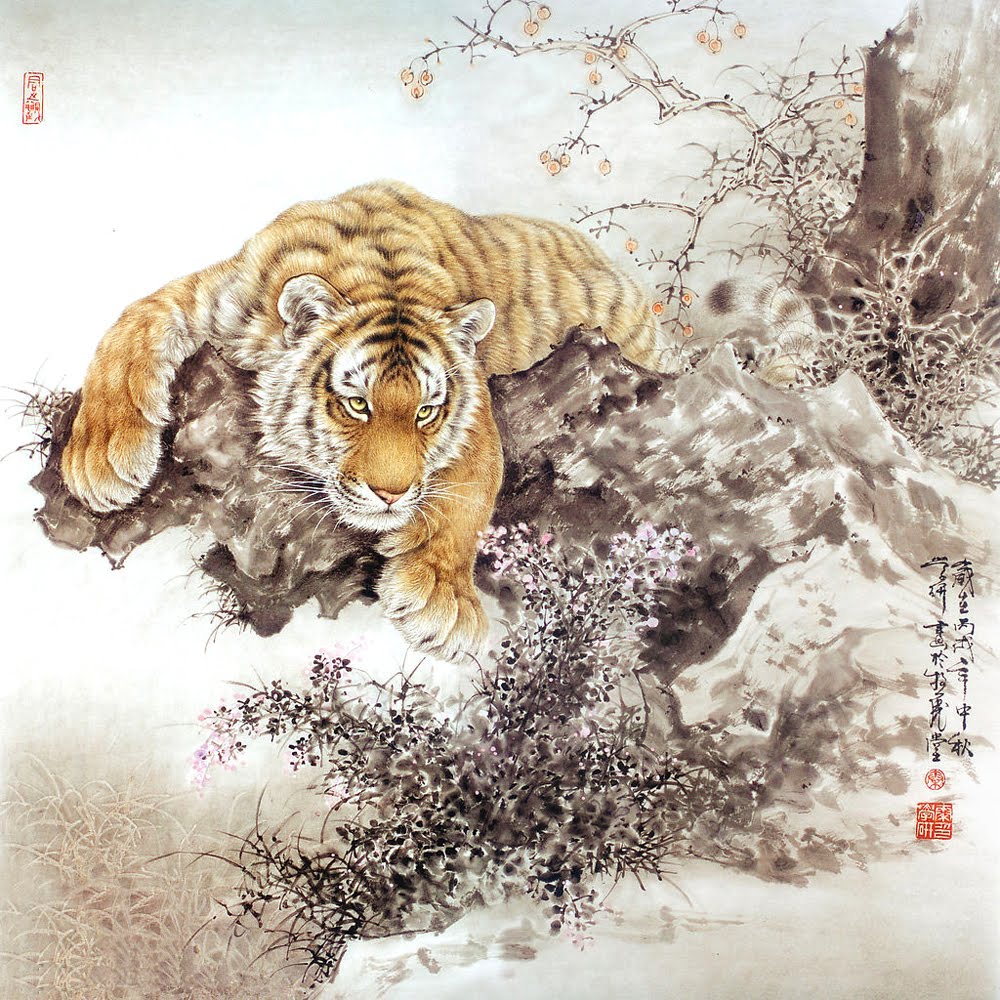
Taiga is a common name for boys in Japan. In Japanese, Taiga is pronounced TAH-ee-gah, but in English it is said TIE-gah. The Japanese are aware that it sounds similar to the English word tiger, and this may even be an attraction for some.

Depending on the kanji used, the name can be given a range of meanings, but the most commonly given is “large and graceful”, or “big and gracious”. It can also be translated as “big river”, and is the Romanised form of “tiger”. Despite these different meanings, when you put them together the overall impression is of something large and powerful, yet with all the majestic beauty and grace of a great river or a tiger.

By coincidence, taiga is also a word for the large coniferous forest areas which cover the far north of the planet, in Alaska, northern Canada, Russia, Poland, Scandinavia, northern Kazakhstan, northern Mongolia, and even the far north of Japan. The word for this is Russian, and ultimately from Turkic or Mongolian. Sometimes taiga is specifically used to designate the more barren part of the forested area. It’s pronounced TIE-guh.

I’m not sure how many Japanese girls are named Taiga, but there is a manga series for young readers called Toradora! where the lead female is a junior high school girl named Taiga. Beautiful yet very short, clumsy and socially maladept, her name is given to her in the sense of the word tiger – lovely, but very fierce!

This gives it a slight chance as a unisex name – if used as the Japanese transliteration of the word tiger, this makes it a different name than the Japanese boy’s name Taiga. And there’s no reason why a girl can’t be named after the forest area anyway, as forests are not intrinsically male or female in nature.

Taiga seems a very usable name – it sounds similar to an English word, and even references that word without actually being that word. Taiga can be a way to get the same sound and even the same meaning from a different spelling and origin.

I think Taiga is a far more interesting name than Tiger, as it has so many layers of meaning. It reminds me of the popular name Kai, which similarly has a European and a Japanese origin, although Taiga manages to bring the two cultures closer together.

Taiga gives the nickname Tai, which links it with other popular boy’s names like Tyson and Tyler; Taiga is unusual, yet a Tai in the playground will blend right in with the other boys named Ty and Tye.

POLL RESULTS
Taiga received an approval rating of 82%, making it one of the most highly-regarded names of 2011. 41% of respondents thought it was okay, and only 6% of people disliked it. The number of people who loved or hated it was exactly the same – 12%.

Waltzing With … Daisy

16 Sunday Oct 2011

Posted by A.O. in Waltzing with ...

≈ Comments Off on Waltzing With … Daisy

Tags

Aboriginal names, english names, famous namesakes, floral names, name history, name meaning, name popularity, names from songs, nature names, nicknames, plant names, retro names, UK name popularity, US name popularity

76610

This blog post was first published on October 16 2011, and completely rewritten on October 15 2015.   

Famous Namesake
Today it is the 152nd birthday of ethnographer Daisy Bates, who was born October 16 1859. Daisy migrated to Australia from Ireland as a young woman, and like many other immigrants, took the opportunity to reinvent herself. Her story was that she was born as Daisy O’Dwyer into a wealthy Irish Protestant family, and after being orphaned, was brought up to be a “lady” by her grandmother. Adopted by an aristocratic family, she seemed destined to lead a life of leisure, until a brush with TB sent her to Australia in order to recover her health.

In fact she was Margaret Dwyer, born into a poor Irish Catholic family, and brought up in an orphanage, where she was educated to be a governess. It may have been a sexual scandal that sent her across the world to Australia, and she seems to have been keen to seek a husband. Good looking with lovely dark eyes, a lively manner, and the gift of the gab, Daisy had little trouble attracting men, and she married three of them in rapid succession, including “Breaker” Morant (she didn’t bother getting divorced, so she was a serial bigamist). She took the surname of her second husband, Bates.

An unplanned pregnancy resulted in her son, and the process was so traumatic that she ever after had only distant relations with her husband and child. Her husband became even more estranged from her when she developed what was considered a bizarre interest in Aboriginal culture, and she finally left him to take up what was to be her life’s work.

Daisy spent forty years studying Aboriginal language, history, rituals, beliefs, and customs, and for much of that time lived in isolated areas, apparently always dressed in heavy dark Edwardian clothing. The usefulness (and even truthfulness) of her anthropological work has been much debated, but she was a pioneer in the field, being one of the first to live among the people she was studying and observe them at first hand, without trying to “educate” them or convert them to her own beliefs.

Although she was never sentimental or high-minded in any way about it (she was brutally frank that her interest in Aboriginal culture was a sport more than anything else), she did work towards Aboriginal welfare. She wrote with great feeling of their suffering at the hands of Europeans, and was able to identify that much of their misery was compounded by a lack of cultural awareness towards them.

She helped pave the way for greater attention to Indigenous health, and was prepared to defend Aboriginal women from sexual exploitation by white males, with a gun if necessary. She could be kind and generous towards Aboriginal people, paying for their needs from her own limited funds. Most importantly, her work has been an invaluable resource for those seeking Native Title claims.

In her lifetime, Daisy Bates was famous, but also seen as a stubborn, publicity-seeking eccentric, and remains a deeply controversial figure to this day. Many of her ideas about Indigenous Australians were paternalistic – one of her books is titled My Natives and I. She also saw Aborigines as a doomed race, and had an appalling hatred of people with mixed black and white ancestry, believing them to be completely worthless.

A staunch monarchist and imperialist, and a social-climbing, gossipy old snob, she loathed feminists, socialists, Catholics, and Germans – her views, not abnormal for her time, are now so out of fashion that they have alienated many, and this has helped lead to her neglect.

An interesting question is what the Aboriginal people themselves thought of her. She claimed that they called her Kabbarli, a word that can be translated as “grandmother”, to suggest a relationship that was both affectionate and respectful. It can also be translated as “crazy old bat”.

Name Information
Daisies are members of the aster family which grows widely over the world – everywhere except the polar regions. The word daisy comes from the Old English for “day’s eye”, as the English Daisy (Bellis perennis) opens when the sun rises, and closes in the evening. An English saying is that spring has not arrived until you can set your foot on a dozen daisies, while a Celtic tradition says that daisies are formed whenever a child dies so that they might comfort their grieving parents.

A well known divination is to discover if someone truly loves you by plucking daisy petals: he loves me, he loves me not, he loves me! Daisies were the flower of the love goddesses Freya and Venus, and it may not be a coincidence that daisies and daisy chains have long been gifts between sweethearts. In Roman legend, the wood nymph Belides transformed herself into a daisy to escape the attentions of Vertumnus, the god of seasons and plants, so that daisies are associated with chastity.

A Christian legend says daisies sprung from the tears wept by Mary Magdalene when she was forgiven of her sins. In Christian iconography, daisies symbolise the Virgin Mary; they were a favourite in medieval paintings and tapestries of the Virgin. Later they were used to symbolise the Christ Child. The purity of the Virgin Mary and the passion of Venus often seem to combine in medieval literature, so that daisies were used to symbolise the “good woman” who was equally sweet and sensual.

Daisy has been used as an independent girl’s name since at least the 17th century, and became popular in the 19th, along with other floral names. It is also used as a nickname for Margaret, because the French name for the Ox-eye Daisy is the marguerite. Because of this, it was used as a royal device by Marguerite de Navarre, the sister of Francis I of France, Margaret of Anjou, the wife of Henry VI, and Margaret Beaufort, the mother of Henry VII. King Louis IX of France wore a daisy engraved on his ring as a tribute to his wife, Marguerite of Provence.

Daisy was quite a popular nickname among the upper classes during the Edwardian era, as evidenced by Princess Margaret “Daisy” of Connaught, who became the queen of Sweden; society beauty Mary “Daisy”, Princess of Pless; fashion icon and heiress Marguerite “Daisy” Fellowes; and Frances “Daisy” Greville, the mistress of the Prince of Wales (later Edward VII), whose love for the bicycle craze of the 1890s is popularly believed to have inspired the music hall song about Daisy with a bicycle built for two.

Literary Daisys include Daisy Buchanan who arouses a life-long obsession in F. Scott Fitzgerald’s The Great Gatsby, and the enigmatic Annie “Daisy” Miller, from Henry James’ novella. Sweet Meg from Little Women is sometimes called Daisy, and when she has a daughter named Margaret, she is known as Daisy to differentiate her from her mother. All these fictional Daisys are American, and two more American sweethearts are Disney’s Daisy Duck and sassy Southern belle Daisy Duke, from the Dukes of Hazzard.

The name Daisy was #58 in the 1900s, and left the Top 100 in the 1920s. It dropped from the charts in the 1940s, made a minor come-back in the 1950s, then dropped out again the following decade. Daisy returned to the charts in the 1980s at #646, and climbed fairly steadily. It rejoined the Top 100 in 2013 at #90, making it one of the fastest-rising names of that year. Last year it left the national Top 100, although it still made the Top 100 in Queensland and Tasmania.

Daisy is most popular in the UK. It was in the Top 100 there from 1880 until the 1930s, then made a comeback in the 1990s, peaking in 2010 at #15. Currently it is #24. In the US, Daisy has never left the Top 1000. It was in the Top 100 from 1880 to 1908, and reached its lowest point in 1972 at #629. It is currently #180. Australia’s Daisy popularity may be closer to New Zealand, where Daisy has made the bottom of the Top 100 a few times without any signs of climbing.

Daisy is a wholesome retro name which manages to sound both pure and innocent, and cute and spunky. There is something demure about little Daisy, but also rather sexy: Venus has given her a certain sweetness that blows like a fresh spring breeze across the fields. Daisies may be common flowers, but the name Daisy is not overused, and shows no signs of shooting up in popularity. You may use Daisy as a nickname, but it is just fine as a name in its own right.

POLL RESULT
Daisy received an approval rating of 88%, making it one of the highest-rated names of 2011. 37% of people loved the name Daisy, and only one person hated it.

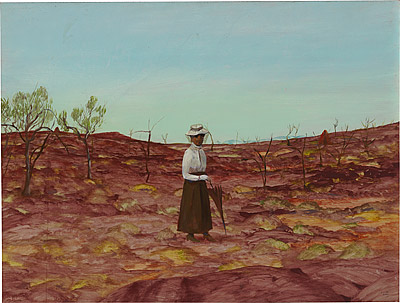
(Painting is Daisy Bates at Ooldea, by Sidney Nolan, 1950)

Unique Boys Names from Tasmania, 2010

09 Sunday Oct 2011

Posted by A.O. in Name Themes and Lists

≈ 12 Comments

Tags

astronomical names, Australian Aboriginal names, celebrity baby names, created names, Danish names, famous namesakes, fictional namesakes, German names, Greek names, hebrew names, Irish names, Latin names, Maori names, mythological names, name history, name meaning, nature names, Old English names, place names, popular culture, saints names, surname names, Tibetan names, unique names, vocabulary names

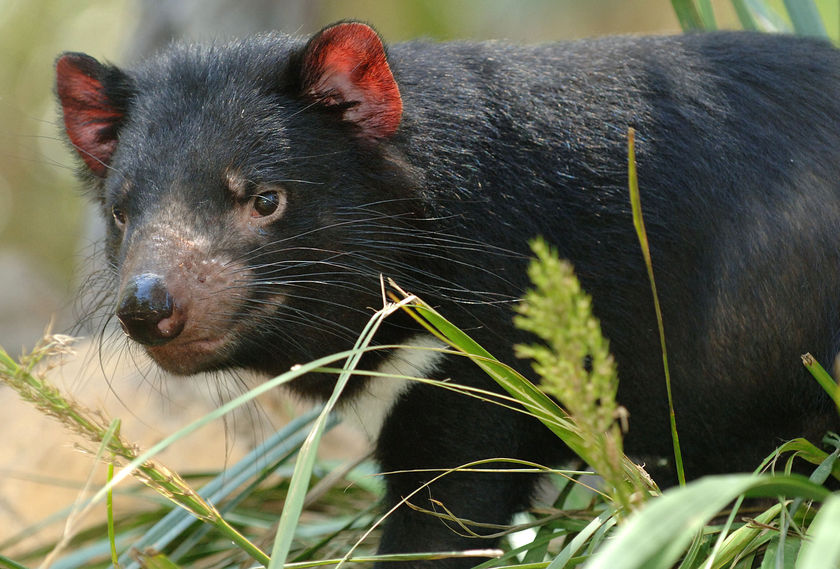
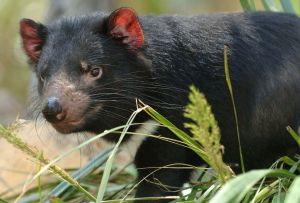
This follows on the previous list, Unique Girls Names from Tasmania, 2010. Please read the notes attached to that to see how names were chosen. Although there were fewer unique names for boys, they were much more likely to be genuine names, and not just variant spellings of common names. Whether you like these names or not, it’s nice to know that not everyone calls their children by names from the Top 100. There’s a lot of variety out there once you start looking. (If you are unsure what the animal in the photo is, it is a Tasmanian devil). 

Ambrose

This is the English form of a Latin name derived from the Greek, meaning “immortal”. It is connected linguistically to ambrosia, the food or drink of the gods in mythology, and is said to not only taste delicious, but to have a delightful aroma. In fact, it has been argued that ambrosia means “fragrant”, rather than “immortal”. If ambrosia had any basis in reality, it may be describing a honey product, although another theory is that it refers to the hallucinogenic mushroom, Amanita muscaria. The most famous namesake is probably Saint Ambrose of Milan, a 4th century Doctor of the Church who converted Saint Augustine. Interestingly, according to legend, bees swarmed on Ambrose’s face as a baby, leaving behind a drop of honey; this does seem to link the saint with the mythical ambrosia. An old-fashioned name, this fits in with the antique name revival, and the S/Z-ending for boys names. The meaning, and its associations with divine sweetness, is also hard to resist.

Other Latin names: Adrian, Augustus, Cassius, Ignatius, Maxmilian, Roman, Rufus, Silas, Sylvester

Anakin

This is the name of a Jedi knight in the Star Wars movies, father of Luke and Leia Skywalker, who crossed over to the Dark Side, and went on to become the heavy-breathing evil villain known as Darth Vader. Annikkin Starkiller was the name that George Lucas has originally chosen for Luke Skywalker, and when there was a major plot change and Darth Vader became Luke’s dad, a slight change of spelling meant that Darthy could have Luke’s old name. It’s sometimes claimed that George Lucas took Anakin’s name from his friend, Brtish film director Ken Annakin, but Lucas denies this. Although it’s tempting to give this name all number of foreboding meanings, we should remember it was originally planned as the hero’s name. It wasn’t clear in the beginning what kind of person the protagonist was going to be, and in one version it was an old man, and in another, a woman, so the name predates the character and the plot. Most likely, George Lucas just made it up.

Other sci-fi names: Auron, Draven, Grayson, Jango, Lex, Navi, Neo, Obi, Quillam

Bon

This is the name of the Scottish-born Australian rock musician, Bon Scott, who was the lyricist and lead singer for AC/DC, until his death in 1980, aged 34. AC/DC dedicated their next album, Back in Black, to him, which is the best-selling rock album of all time. Bon Scott is regarded as one of the greatest lead vocalists, has been inducted posthumously into the Rock and Roll Hall of Fame, and been honoured in both his home town of Fremantle, Western Australia, and his birthplace of Kirriemuir, Scotland. Bon was born Ronald Belford Scott, and his nickname was given to him in primary school. As there was already a classmate called Ronald, and as Scott had recently emigrated from “Bonnie Scotland”, he was dubbed Bon. The Scottish word bonnie means “beautiful, fair, fine”, and is taken from the French word bon, meaning “good”. Not only honouring a rock legend, this name seems similar to Beau in meaning and origin.

Other celebrity names: Cadel, Cassidy, Denzel, Dre, Elvis, Hammond, Joaquin, Keanu, Leland, Maddox, Makaveli, Orlando, Otis, Sylvain, Tander, Tex, Ziggie Other Scottish names: Dougal, Jock

Clancy

This is from an Irish surname meaning “son of Flannchadh”, with Flannchadh being a Gaelic name meaning “red warrior”. The name is well known in Australia, because of the poem Clancy of The Overflow, by Banjo Paterson; The Overflow is the name of a station where Clancy, a drover, works. It’s based on the true story of Paterson, a lawyer, sending a letter to Thomas Gerald Clancy of The Overflow, and imagining Clancy’s enviable life in the bush, under the “glory of the everlasting stars”. The reply that he received to his letter – “Clancy’s gone to Queensland droving and we don’t know where he are” – delighted Paterson, and was included in the poem. Clancy also appears briefly in The Man from Snowy River, and when that poem was made into a movie, the role of Clancy was played by Jack Thompson. Clancy of the Overflow is a romanticised image of bush life as dreamed of by the city dweller, and probably seems a patriotic choice as a name.

Other Irish names: Fionbharr, Niall, Rafferty, Ronan, Sullivan

Diesel

This is the name for the fuel used in diesel engines, which are named after their inventor, French-born Rudolf Diesel. His German surname is said to be based on a short form of either Matthias or Dietrich. As it sounds quite tough and butch, and has connotations of being able to keep going like a mechanical engine, it’s been a popular nickname or assumed name, for celebrities such as American actor Vin Diesel, Australian rock singer Diesel, American basketball player Shaquille “The Diesel” O’Neill, and AFL player Greg “Diesel” Williams. Diesel is also a popular name for dogs, and with “dog names” for boys in style, Diesel seems very usable. US Olympian softabller, Jennie Finch, called her second son Diesel Dean Daigle, so now it’s a celebrity baby name as well.

Other vocabulary names: Ace, Buddy, Gray, Spike Other car-related names: Holden, Jag

Esmond

An Old English name meaning “gracious protection”, this fell out of use after the Norman Conquest, and became best known as a surname. Thackery’s History of Henry Esmond is a historical novel set in the time of Queen Anne, where the hero spends the whole book in love with his foster-sister and cousin, but marries his foster-mother instead (also his cousin). This surname is part of Australian history, because James Esmond was an Irish-Australian who was one of the first people to find gold during the Victorian goldrush. He was also politically prominent in the miner’s organisation, and commanded a section of miners in the Eureka Stockade rebellion. It’s tempting to wonder if baby Esmond is a descendant of James, or whether the name was chosen in honour of this famous rebel.

Other Old English names: Bede, Edgar, Edwin, Winston

Iluka

This is a small coastal town on the Clarence River in New South Wales, and its name is derived from an Aboriginal word meaning “by the sea”. It is pronounced eye-LOO-ka. Iluka is a popular tourist destination, blessed with beaches and rainforest, and people who live in the chilly southern parts of Australia may enjoy spending their winters here. Maybe the parents of Iluka spent a happy holiday in the town? It’s easy to see the appeal of it as a name, because it is so similiar to the popular Luka, but has a distinctive Australian meaning.

Other place names: Carlisle, Clyde, Griffith, Hamilton, Maitland, Memphis, Meredith, Nelson, Preston, Ripley, Weston, Wilson, Windsor Other Aboriginal names: Wirra

Manuka

This is the name of a small tree or shrub native to New Zealand and south-east Australia – including, of course, Tasmania. It’s scientific name is Leptospermum scoparium, and it’s also called tea tree (not the same tea tree that tea tree oil is made from). The name manuka is Maori, and comes from history, where one of the sea-going canoes that brought the Maoris to New Zealand is said to have been called Mānuka. It’s pronounced mahn-OO-ka. Manuka honey is not only delicious, but recently it’s been discovered to have powerful antibacterial properties, and you can now buy medical-grade manuka honey to apply to wounds. There is a town in Tasmania near Hobart called Tea Tree, which may be named after this useful plant.

Other nature names: Aspen, Brae, Nullah, Reef, Stone, Sunny, Tiger Other Polynesian names: Loti, Kalani, Tavita

Namkha

Meaning “sky, heaven” in Tibetan, a namkha is a yarn or thread cross used in Buddhism as a sacred weaving, used in ritual or placed on an altar. “Thread” is the literal translation of the word tantra, and the threads of the mankha symbolise the warp and weft of time and space. A famous bearer is Tibetan Buddhist teacher, Rigdzin Namkha Gyatso Rinpoche.

Other Asian names: Anshuman, Arjuna, Ba, Dravid, Khan, Omita, Yang, Yasir, Zusong

Shem

One of Noah’s sons in the Old Testament, Shem is Hebrew for “name”. It can refer to someone’s fame and reputation, and also to their essential nature and being. While Noah is one of the most popular boy’s names, the names of his sons, Shem, Ham and Japeth, have had only occasional use. This may be because from early on, these three men were seen as the progenitors of the various races (as that vague and inaccurate word was understood at the time). Different writers have claimed Shem as the source of either the “Semitic” peoples, all Europeans, Germans, Greeks, Persians, or Indians; some texts even say that God made Shem brown skinned, Japeth fair skinned and Ham dark skinned. These ideas on race and ethnicity now look rather embarrassing, or even offensive; at the very least, we know them to be scientifically wrong. In the Bible, Shem is said to be an ancestor of Abram, who founded the Abrahamic religions. The name is pronounced SHAYM, and although uncommon, sounds not unlike familiar names such as Sean, Sheamus and Shane.

Other Biblical names: Abel, Amos, Elihu, Gideon, Hezekiah, Jairus, Jotham, Matthias, Raphael, Simeon

Soren

This is an anglicised form of the Danish name Søren, which is a form of the Roman name family Severinus, derived from the personal name Severus, meaning “stern” in Latin. Certain Harry Potter fans may see this as a way of using the name of grim Potions Master, Professor Snape, without actually calling their son Severus. The name has been used several times in recent popular culture; most notably the vampire Soren in the Underworld films. In the Charlie and Lola books and TV series, Soren Lorensen is little Lola’s imaginary friend. If these namesakes seem a bit lightweight, Søren Kierkegaard was a 19th century philosopher and theologian who has been enormously influential in shaping our ideas of the self and subjectivity. It’s pronounced SOH-ren.

Other Scandinavian names: Anders, Thor

Titan

According to Greek mythology, the Titans were a race of gods that ruled in the legendary Golden Age. They were the Elder Gods who were overthrown by the Olympians; this myth of a “war in heaven”, where one group of gods replaces another, exists in many cultures across Europe and the Middle East. The meaning of their name is uncertain, but is often intepreteted as “to stretch”; the Greek poet Hesiod refers to them as “the Stretchers”, because they stretched out their power. Other scholars believe it comes from the Greek for “white earth, white clay, gypsum”; they believe that this white dust was used in ancient shamanistic rituals, and it is from these almost-forgotten rites that the myth of the Titans grew. The name has been given to a moon of Saturn, and inspired the name of the element, titanium. The Titans, often imagined as gigantic figures, are part of popular culture, and you may find Titans in comic books, science fiction movies, and video games, as well as sports teams – including the Gold Coast Titans. Although the name may seem too big for a little boy, it sounds similar to names such as Tate, Tyrone and Titus.

Other Greek names: Constandinos, Eugene, Leonidas, Orion
Unique Girls Names from Tasmania, 2010

02 Sunday Oct 2011

Posted by A.O. in Name Themes and Lists

≈ 18 Comments

Tags

astronomical names, Australian Aboriginal names, english names, famous namesakes, fictional namesakes, Flemish names, Greek names, Irish names, Latin names, locational names, musical names, mythological names, name history, name meaning, name popularity, nature names, Nook of Names, Old Norse names, popular culture, royal names, Sanskrit names, surname names, unique names, virtue names, vocabulary names

Many parents say that they are looking for a “unique” name, but what they mean by that seems to differ from person to person. Some say it’s a name you don’t see every day; others define it as any name not in the Top 100; and still others refuse to say what it means to them, but will “know it when they see it”. According to the dictionary, “unique” means that only one person possesses it, and names of which the world holds but one example are few and far between. However, names do not have to be particularly strange or rare to be unique in a certain context. For example, the name Savannah is unique within the British royal family. Here are some names from baby girls born in Tasmania last year; in each case, only one child was given these names. For their state, and in the year they were born, these girls possess unique names. I usually do ten names per list, but this time there was so much choice I did twelve; I’ve also listed other unique names from the same state and year that are similar in some way to the main entry.

Bird

Not only referring to our feathered friends, a “bird” is English slang for a woman, although in the 19th century it was slang for a man, which makes it seem unisex. Another slang term is to “give someone the bird”, meaning to raise the middle finger in an obscene gesture; this has been a favoured way of insulting others since the time of the Ancient Greeks, at least. Being a bird-lover, I find this name simple and homely, and it does remind me of birdsong.

Other nature names: Acacia, Autumn, Clover, Fern, Honey, Maple, Misty, Opal, Pearl, Rosemary, Sage, Storm

Capri

This is the name of an island off the coast off Naples, famous for its stunning natural beauty. Inhabited since prehistoric times, it was a pleasure resort during the days of the Roman Empire, but the first modern tourist didn’t arrive until the 17th century. It was a popular place for artists and writers in the 19th century, and also a haven for gay men and women who formed a community where they could feel more open. A popular 1930s romantic song was The Isle of Capri, which was covered by The Gaylords, aptly enough. Capri pants were all in the rage in the 1950s as cool beachwear suitable for this resort island. No doubt the Ford Capri was also meant to suggest insouciant summer fun. The name of the island may mean either “wild boar” (from Greek) or “goats” (from Latin); there’s even a tiny possibility it means “rocky” (from Etruscan). But clearly it’s the history and associations of the name that are more important than the meaning. It’s a name that spells beauty, romance, art, fashion and freedom.

Other place names: Arizona, Baltimore, Bethany, Cheyenne, Florence, Ireland, Israel, Italia, London, Olympia, Petra, Sierra

Faithful

The virtue name Faith is familiar, but the adjective Faithful is one new to me as a name for a real person. Faithful is a (male) character in John Bunyan’s classic work, The Pilgrim’s Progress. He’s a friend of the protagonist who is executed as a martyr. He is meant to be represent those Christians who remain faithful to their beliefs, even should that lead to death. The Latin for “I am faithful” is Fido, traditionally given to dogs – apparently after Abraham Lincoln gave this name to his canine companion. As a child, I read the YA novel, Cinnamon and Nutmeg, by Anne de Roo, about a young girl growing up on a farm. The heroine wrote a story for school called “Old Faithful” about the touching death of her beloved dog. Unfortunately, she spelled “Faithful” as Fatful, and the teacher read her story mockingly to the class, with every “faithful” replaced by fatful, so that the children screamed with laughter at the tale of her dog dying. As a youngster, this struck me as the epitome of cruelty, and today makes me hope that nobody mis-spells little Faithful’s name.

Other adjective name: Innocent

Fritha

This is an Old Norse name often translated as “love, peace”, but more accurately it refers to the harmonious social order which leads to peace. It was a rare name during the Viking era, and only seems to have become commonly used in Scandinavia after the coming of Christianity – which suggests that it was connected to Christian ideals of peace and brotherhood. Fritha is a main character in the novella, The Snow Goose, by American author Paul Gallico; a sentimental tale of friendship blooming against the backdrop of World War II which was very popular in England. There was a British actress called Fritha Goodey who you may have caught a glimpse of in the movie About a Boy, starring Hugh Grant. Sadly, she died a few years ago in tragic circumstances while still quite young. There’s also a musician, Fritha Jenkins, who played with UK pagan heavy metal band, Skyclad. Because of these associations, Fritha seems like a very “English” name, despite its origins, and also quite artsy.

Other Scandinavian name: Inka

Halle

This is famous for being the name of gorgeous award-winning Hollywood actress, Halle Berry. Ms Berry’s birth name was Maria Halle Berry, but legally switched around to Halle Maria Berry when she was five. Her parents chose the name Halle from Halle Brother’s department store, a local landmark at that time in her home town of Cleveland, Ohio. Founded in the 19th century by Samuel and Salmon Halle, it became an upmarket emporium, but was liquidated in the 1980s. The brothers’ surname is originally Flemish, and is after the village of Halle in Belgium. Of Old Norse origin, Halle means “manorial hall”, and is the equivalent of the English surname Hall. Pronounced HAL-ee, it sounds the same as the girl’s name Hallie, a short form of Harriet.

Other celebrity names: Angelina, Gwyneth, Jolie, Shakira

Justice

This can either be seen as an occupational surname meaning “judge”, or an English vocabulary word. Some people see this name as a Christian virtue name, referring to God’s righteousness; others connect it with social justice; others see it as simply describing the person as fair-minded and honourable. I remember Kay at Nook of Names got rather alarmed at Australian naming laws and thought the name Justice wouldn’t be permitted here, so I wanted to reassure her that it definitely is, even though not a common name.

Other virtue names: Constance, Honor, Prudence, Temperance, Verity

Namaha

This is a Sanskrit word which is an element of sacred Vedic mantras. It means “to surrender with love”, and literally, “to bow (in a gesture of homage and respect)”. It is a negation of one’s ego, and an affirmation of the greater Self becoming one with the Cosmic Soul. It is pronounced nah-ma-hah, with unstressed syllables.

Other Asian names: Jaya, Megumi, Mika, Nilu, Palpasa, Sakura

Nerida

This Australian Aboriginal name means “waterlily”, and features in a legend from Victoria. Nerida and Berwain are two young lovers, about to marry. Wahwee, the spirit of thunder who lives in the mud pool where the couple meet to gather mussels, develops an overpowering desire for Nerida. Because she will not give herself to him, he transforms her into a waterlily, and her lover Berwain into rushes. A superstition is that if you pick a waterlily, you must also pick the rushes growing nearby so that Nerida and Berwain never be divided in death. The waterlily is used as a food source by Aborigines as a traditional bush food; the roots can be roasted, and the stem and seeds eaten raw. Nerida was used as a female name by Aborigines, and also by Europeans, who may have been charmed by the fact it is so similar to Nereida, the name of a nymph in Greek mythology (the scientific name for waterlily is Nymphaea, another pleasing coincidence). Pronounced NEHR-uh-duh, it’s a bit old-fashioned now, but clearly still in use.

Pallas

The epithet of the Greek goddess Athena, this may mean “maiden”. The original Pallas was the daughter of sea-god Triton, and foster-sister to Athena. During a friendly fight between the two goddesses, Athena received divine protection from her father Zeus, but she mortally wounded Pallas. Out of her deep sadness, she created the palladium, a statue made in the likeness of Pallas, which was given to the city of Troy to act as its protector and guardian. This sacred statue was stolen by the Greeks during the Trojan War, otherwise they could never have conquered it. Some stories say that the palladium became the property of Rome, and there are rumours that it was transferred to Constantinople. Pallas is also one of the largest asteroids, and the name of one of the Moon’s craters. Sailor Pallas is a character in the Sailor Moon manga who is named after the asteroid as well the Greek goddess, so it is an astronomical name and one from popular culture.

Other classical names: Athena, Camilla, Cassandra, Lucia, Melanie, Melissa, Octavia, Olympia, Penelope, Sylvia, Valentine, Veronica, Xanthe, Zephyr

Saoirse

This modern Irish name means “freedom”, and came into use in Northern Ireland during the 1920s as a Republican political slogan. Depending on your accent, you can pronounce it SEER-sha, SAIR-sha or SOR-sha, with SEER-sha being the Northern Irish way of saying it, and therefore (some would argue) the “correct” one. Although spelling and pronunciation may be an issue for some, the name sounds enough like names such as Sasha and Sarah to not seem out of place. Its recent use probably owes a lot to young actress Saoirse Ronan, who has impressed critics with her sensitive performances in movies such as Atonement and The Lovely Bones. Saoirse Ronan pronounces her name SUR-sha, just to confuse things further. I suspect the political and religious implications of this name have not been considered much outside Ireland.

Other Irish and British names: Arwen, Ciara, Cordelia, Fiona, Maeve, Sabrina, Shona, Sian, Una

Satanica

This is the Latinised feminine form of the word “satanic”, which can either literally mean giving veneration to Satan, or more generally, suggestive of being diabolical in nature. Satan is from the Hebrew, meaning “the adversary, the opposer, the obstructor”, and in the Hebrew portion of the Bible, Satan is an agent of God whose thankless task it is to tempt humankind and then accuse it before Heaven. In Christianity, he is seen as the Devil, the personification of all evil. Satanica is often used in black metal music as a title, and there is band with this name. There is also a manga series called La Satanica, so it can be seen as a name from popular culture. Satanica cannot help but be controversial as a baby name, and I think it is a heavy burden to place on a child; this name even made me feel depressed just thinking about it, which almost never happens.

Other Latinate names: Amanda, Clementine, Felicia, Mirabella

Tango

This is a dance which arose in the working class neighbourhoods of Buenos Aires, Argentina, in the mid-19th century. It is claimed that the tango is a mixture of South American popular dances influenced by the African community, and by European immigrants. Although the word tango could be Spanish in origin, it may very well come from Nigeria, where temgu means “to dance” in the Ibibio language. The tango arrived in Paris early in the twentieth century, and soon spread to other world capitals, where it was thought to be shockingly intimate (as nearly all new dances seem to be thought). Another tango reference is the scandalously erotic film, Last Tango in Paris, starring Marlon Brando. Even though tango, as a dance form, is dark and sensual, the name Tango isn’t – it sounds chipper and bouncy, and I’m sure has been given as a name to more animals than humans.

Other musical names: Allegra, Aria, Melody Other verb names: Cherish, Treasure Other O-enders: Indigo, Marlo

NOTE: I didn’t count variant spellings of more common names as unique, and I also disqualified double names, as well as names that had also been given to boys.

Girls Names That Only Chart in Australia

24 Sunday Jul 2011

Posted by A.O. in Name Themes and Lists

≈ 29 Comments

Tags

African names, Arabic names, Australian Aboriginal names, celebrity baby names, colour names, created names, english names, famous namesakes, fictional namesakes, Greek names, hebrew names, holiday names, Indian names, Irish names, Latin names, locational names, Mer de Noms, mythological names, name data, name history, name meaning, name popularity, nature names, nicknames, plant names, popular culture, popular names, saints names, Sanskrit names, surname names, Swahili names, unisex names, vocabulary names

Recently, Lou at Mer de Noms has had a couple of articles on names that are in the UK Top 150, but fail to make the US Top 500. It’s an interesting look at differences in name popularity between the two countries. I thought about doing the same thing from an Australian perspective, but found the list became too long for my purposes. So I made my conditions a bit tighter – these are names that are on a Top 100 list in Australia, but don’t make the Top 100 in any other country, and aren’t on the US Top 1000.

Asha

Asha has two different origins and meanings. It can be seen as an Indian name from the Sanskrit for “hope, wish, desire”, or an East African name from the Swahili word for “life”. Either way it has a beautiful meaning, and both Indian and Swahili names are becoming fashionable in Australia. It fits in well with other popular Ash- names, such as Ashley, Ash, Asher and Ashton. There’s an attractive TV presenter in Australia called Asha Kuerten (pictured), which has probably helped it gain momentum here. Asha is currently #89 in Victoria, #77 in South Australia, and #68 in the ACT. It’s never been higher than #794 on the US Top 1000 (in 1989), and hasn’t charted there since 2003.

Bridie

This is a pet form of the Irish name Brighid or its anglicised form, Bridget, which means “exalted one”. In Irish mythology, Brighid was the goddess of fire, poetry and wisdom. There was a 5th century Irish saint called Brigid, who is the patron saint of Ireland, and whose feast day on February 1 coincides with the pagan festival of Imbolc (possibly this day was sacred to the goddess of the same name). As around 30% of Australians claim Irish heritage, the name Bridie isn’t too unusual here, and there are several well-known women with this name, including Bridie Carter, a popular soap actress. Bridie is #70 in Tasmania, which has a particularly strong Irish community. It doesn’t chart in any other country.

Ebony

This is from the English word for the valuable black wood which comes from the ebony tree; different species are native to India, Sri Lanka, Indonesia, Mauritius, and West Africa. Although Ebony is often said to be used mostly by African-Americans in the United States, in Australia it is not connected to a person’s skin tone and is just seen as another colour name, like Ruby, Jade or Amber, or a plant name, like Rose or Holly. The exoticism of this name seems to have possessed a strange fascination for Australian parents, and it has been a Top 100 name since the early 1980s. Perhaps popular songs from that decade, such as Ebony Eyes and Ebony and Ivory, helped give it a boost. It’s #63 in South Australia and #55 in Tasmania. In the United States, Ebony got as high as #132 in 1982, and hasn’t been on the Top 1000 since 2005.

Indiana

The name of an American state, it means “land of the Indians”, because of the high Native American population in the area at the beginning of the 19th century (unfortunately, not to last). Indiana was used as a girl’s name (at least in fiction) before the American state was founded: Fanny Burney’s 1795 classic novel, Camilla, features a beautiful but shallow character called Indiana Lynmere. Possibly the name was intended as an elaboration of India, then part of the British Empire. French author George Sand also gave a character this name in her first novel, Indiana (1832). In this book, Indiana is a beautiful, romantic Creole from Reunion, of part-Indian descent. Here, there is a young TV actress called Indiana Rose Evans, and early this year, former NRL player Glenn Hall had a daughter named Indiana Maree. This name has only been Top 100 since last year, and it’s #98 in Victoria. Indiana has not been on the US Top 1000 since the late 19th century.

Jorja

The name Georgia, also an American state name (the state is named after King George II), is more popular in Australia than anywhere else in the world, hovering around the #20 mark on most lists, and Top 100 since the early 1980s. The phonetic spelling Jorja has also proved popular here. It’s currently #88 in Tasmania. Jorja has only been on the US Top 1000 once, in 2006, when it was at #976.

Lucinda

This is an elaboration of the Latin name Lucia, meaning “light”. Always a rather literary name, it was created by Miguel de Cervantes for his 1605 novel, Don Quixote for a character in a farcical romantic subplot. The 17th century Spanish poet Lope de Vega wrote love sonnets to a woman he called “Lucinda” to protect her identity. In more recent fiction, Lucinda is the rather silly fairy godmother in the children’s novel Ella Enchanted, later made into a movie. Australian novelist Peter Carey’s Oscar and Lucinda won the 1988 Booker Prize, and was made into a film directed by Gillian Anderson. Another Australian connection is that Lucinda is the name of a small coastal town in Queensland. As Lucy is so popular, Lucinda seems like a pretty alternative which will allow Lucy/Lucie as a nickname. It was chosen for the name of lifesaver and reality TV star Dean Gladstone’s daughter Lucinda May. It’s # 67 in Tasmania. Lucinda hasn’t been on the US Top 1000 since 1987, and peaked in 1881 at #153.

Tahlia

The name Talia can come from a range of origins. It’s a variant of the Hebrew name Talya, which means “dew from God”; it’s the Italian form of Greek Thalia, which means “to blossom” (Thalia was one of the nine Muses); and it can also be a short form of Natalia, a Latin name which means “Christmas Day”. However, In Australia, Talia is often taken as coming from an Aboriginal word meaning “near water”. Talia has become hugely popular in many parts of Australia; it has a certain patriotic flavour, and is pleasingly multicultural, suiting a variety of backgrounds. Yet it is not found consistently on the Top 100 because it has so many variant spellings. Tahlia is the most common of these variants, and is beginning to overtake Talia because it makes the favoured pronunciation more clear. It’s #47 in New South Wales, #41 in Victoria, #39 in South Australia, #35 in Western Australia, #84 in Tasmania, and #52 in the ACT. Tahlia has never charted in any other country.

Tayla

A specifically feminine form of the popular unisex name Taylor, this may have been coined in imitation of Kayla and related names. However, I can’t help thinking it’s taking off in Australia partly because it looks similar to Talia and Tahlia. It’s #68 in South Australia, #40 in Western Australia, and #94 in Tasmania. Tayla has only been on the US Top 1000 twice – in 1998 and 2006, and was never higher than #924.

Zahra

This is an Arabic name usually translated as “radiance”. The meaning is gorgeous, and Arabic names are becoming increasingly fashionable here with our growing Islamic population. However, almost certainly the reason for its popularity in Australia is due to its similarity to the name Zara. Zara has been used in Britain since the 18th century, where it is the English form of the French name Zaïre, created by the author Voltaire in 1732 for his hugely successful play of the same name, and possibly based on the name Zahra. The drama was soon translated as Zara: A Tragedy, and proved a big hit with English audiences too, being staged well into the 19th century. For some reason, Zara has been a favourite in Australia for over a century, and there are several famous women from Australian history called Zara, including the glamorous wife of former Prime Minister Harold Holt. Zara is more popular in Australia than in any other country, and Zahra is rising on the basis of its success. It’s #82 in the ACT. Zahra has never charted in the United States.

Also Qualifying

Bronte and Lara, which were covered on earlier Name Lists – Bronte in Sydney Suburbs That Can Be Used as Girls Names, and Lara in Girls Names from Video Games. Bronte is #68 in Tasmania. Lara is #43 in New South Wales, #80 in Victoria, #79 in Tasmania and #52 in the ACT. Neither has ever charted in another country.

Close But No Cigar

These names don’t make the top 1000 in the United States, but do chart in countries besides Australia

Freya – #19 in Scotland, #21 in England/Wales, #68 in Ireland, #70 in N. Ireland

Harriet – #89 in England/Wales

Imogen – #32 in England/Wales, #77 in Scotland

Maisie – #34 in England/Wales, #36 in Scotland

Milla – #48 in Norway

Poppy – #22 in England/Wales, #47 in Scotland, #60 in N. Ireland

NOTE

There are some serious statistical issues facing anyone doing comparisons between countries. Australia doesn’t produce a national Top 100, states and territories have different population sizes, not all states and territories provide their Top 100, and one has refused to divulge any of its name data. Countries don’t all release their popularity charts for the year at the same time, so we are still waiting for the ones from England/Wales, for example, and I had to use the one for 2009. I used popularity charts from Behind the Name, and sometimes they are slow in updating their data as well. Not only that, but there is no data available for many countries.

So rather than getting into a mathematical tangle, this is only intended to be of general interest and show a few broad trends.

Girls Names from the Top 100 of the 1930s

19 Sunday Jun 2011

Posted by A.O. in Name Themes and Lists

≈ 37 Comments

Tags

Anglo-Saxon names, Biblical names, celebrity baby names, Christmas names, classic names, english names, European name popularity, famous namesakes, fictional namesakes, flower names, French names, Greek names, honouring, Italian names, Latin names, locational names, middle names, military events, mythological names, name history, name meaning, name popularity, name trends, names from movies, names from songs, nature names, nicknames, plant names, popular names, retro names, Roman names, royal names, saints names, Scottish names, Shakespearean names, Tatar names, unisex names, virtue names, vocabulary names

This blog post was first published on June 19 2011, and revised and updated on June 12 2015.

Alma
May be derived from the Latin almus, meaning “nourishing” – an epithet given to several Roman goddesses, including Ceres. Alma mater, meaning “nurturing mother”, is a Latin term often used to refer to one’s college or university: it was originally a title given to mother goddesses, and later to the Virgin Mary. The obscure 4th century Romano-British saint Alma Pompea, married to the semi-legendary King Hoel of Brittany, is an early example of the name. The name was given a boost after being used in Sir Edmund Spenser’s 1590 poem, The Faerie Queen; he seems to have been influenced by the Renaissance Italian word alma, meaning “soul”. The name became popular in the 19th century, after the Crimean War began with the Battle of Alma, when Anglo-French forces defeated the Russians near the River Alma – the river’s name is from a Tatar word meaning “wild apple”. After this date, babies of both sexes (but mostly girls) were named Alma in honour of the military victory. Alma was #24 in the 1900s, and #97 in the 1930s, leaving the Top 100 the following decade, and the charts in the 1960s. Alma made a mild comeback in 2011, and seems very contemporary, as it has been used in Brokeback Mountain and The Hunger Games. Already popular in Europe, Alma would make an interesting alternative to names such as Amelia, Anna, or Emma.

Audrey
Pet form of the Anglo-Saxon name Etheldreda, meaning “noble strength”; it was the name of a 7th century English princess and saint whose feast day is June 23. It became less common after the Middle Ages, because St Audrey Day Fairs sold low-quality necklaces that were disparagingly called tawdries – which is where we get the word for something cheap and tacky from. Audrey was revived in the 19th century when the Victorians rediscovered many Anglo-Saxon names. The name was already familiar, as Audrey is the simple but honest country girl in Shakespeare’s As You Like It. The Victorians were also in the middle of a Shakespeare revival, so Audrey was a dead cert for a comeback. Audrey was #156 in the 1900s, and peaked in the 1920s at #32. The name was #36 in the 1930s, but plummeted so that it was off the Top 100 by the following decade. It fell to a low of 0 in the 1980s, but climbed after the death of Audrey Hepburn until it reached the Top 100 again in 2008. Once tawdry Audrey now seems charming and stylish, and is currently #44 and climbing.

Elsie
Often said to be a pet form of Elizabeth, but technically a pet form of Elspeth, the Scottish form of the name, and was originally Elspie. The name Elsie can be found in songs and poems dating to the 17th century, and became a 19th century favourite. Elsie was #7 in the 1900s, #59 in the 1930s, and left the Top 100 in the 1940s. Elsie left the charts in the 1970s, but returned in the early 2000s at #731. It joined the Top 100 in 2013 at #91, and last year rose 26 places to #65 – an impressive performance. Sweet and unpretentious, Elsie is very much back in the game.

Hazel
Named for the hedgerow tree or shrub which produces edible nuts; the Celts equated hazelnuts with wisdom and poetic inspiration, and the Druids made staffs from hazel branches. It was considered to be one of the trees belonging to the fairies, and folk tales tell of its ability to protect from evil. Hazel has been used as a personal name since the 17th century, mostly for girls, and became popular in the 19th century when plant names were fashionable. Hazel was #45 in the 1900s, and peaked in the 1910s at #18; by the 1930s it was #55. Hazel left the Top 100 in the 1940s, and the charts by the 1970s, making a return in the late 2000s at #477, after Julia Roberts named her daughter Hazel. Last year Hazel had an outstanding debut as the fastest-rising name of 2014, rising #63 places to #88. One factor must surely be the romantic film The Fault in Our Stars, with its heartbreaking heroine Hazel Lancaster, although there have also been Hazels in the Heroes of Olympus series, and Gossip Girl.

Iris
Greek personification of the rainbow who served as messenger to the gods, and linked them to humanity. The name literally means “rainbow”, which is where the colourful iris flower got its name from – and the colourful irises in our eyes. Irises were used in the Middle Ages as a symbol of monarchy, as the fleur-de-lis pattern depicts. Religious pictures from the medieval period show the Virgin Mary holding an iris to symbolise purity and chastity. Filled with meaning and associations, the name was used by the 19th century British aristocracy for both females and males (because the Greeks called the iris flower a “hyacinth”, and Hyacinth was a male name), but quickly became used by all classes, and nearly always for girls. Iris was #62 in the 1900s, and peaked in the 1910s at #31; it was #72 by the 1930s. Iris left the Top 100 in the 1940s, and left the charts in the 1970s, although it returned in the 1980s at #748. Off the charts in the 1990s, Iris came back in the early 2000s at #551, and is now around the mid-200s and apparently stable. Almost always on the charts, Iris manages to be a “normal” name that is still underused. Hip and artistic, it has slightly dark or even punk undertones. It’s a floral name with a bit of bite.

Josephine
Anglicised form of Joséphine, a pet form of Joséphe, a French feminine form of Joseph; by the 19th century Joséphine had become the standard form of the name. It has been used by several of the royal houses of Europe, and is famous as the first wife of Napoleon Bonaparte, and thus the first Empress of the French. Joséphine was born Marie Joséphe, so it was the pet form of her middle name. Classic Josephine has always been on the charts. It was #86 in the 1900s, peaked in the 1910s at #76, and by the 1930s was #78. It left the Top 100 in the 1940s, and sunk to its lowest level in 2011 at #199, so it has never been out of the 200s. In 2012 it made an appearance again in the Top 100 at #93 after the birth of Princess Josephine, the daughter of Australian-born Princess Mary of Denmark, but has since stabilised into its usual place around the mid-100s. Josephine is a solid stayer with royal blood whose nicknames range from the sensible Jo to the cute Josie to the tomboy Joey to the froufrou Fifi to the cool Joss.

Joy
Refers to the emotion of extreme happiness and gladness. It was originally a Puritan virtue name dating from the 16th century, referring to rejoicing for the salvation of God – perhaps most famous from the hymn, Joy to the World, now often used as a Christmas carol. In fact, joy and Christmas have become so entwined that you could even see Joy as a name suitable for a baby born around late December. However, the name Joy has become secularised, and often linked to the joyful experience of welcoming a child into the world: babies have even been called “bundles of joy”. Joy entered the charts in the 1910s at #205, and was in the Top 100 by the following decade. It peaked in the 1930s and ’40s at #60, and left the Top 100 in the 1960s. Joy reached its lowest point in the 1990s at #802, but then increased slightly in popularity, and was stable in the 500s for some time. Its current position is not known for sure, but is in at least occasional use. Quite common in the middle position, Joy is a strong, simple name with a beautiful meaning, and the current trend for virtue names mean that it would be refreshing to see it up front.

Lillian
Most likely a pet form of Elizabeth dating to the Middle Ages: there is a medieval Scottish ballad about a lady named Lillian. The name became greatly more popular in the 19th century, to the point where it could be seen as another Victorian revival of a medieval name, and may have been understood as an elaboration of Lily, which also became fashionable in the 19th century as a flower name. Lillian is a classic name which has never left the charts. It was #35 in the 1900s, reached #86 by the 1930s, and left the Top 100 in the 1940s. It reached its lowest point in the 1970s at #562, and then climbed steeply, following in the footsteps of Lily, until it reached the Top 100 again in 2008 at #81. It is currently #86, so its position is stable. However, the high number of Lilys and Lillys (not to mention the Laylas and Lolas) mean that lovely Lillian may feel almost too on trend for some.

Marie
French form of Maria: in France it has sometimes used for males, especially as a middle name, but in English-speaking countries is almost always feminine. The name often reminds people of Queen Marie Antoinette, whose first two baptismal names were Maria Antonia – she was Austrian by birth. In the Middle Ages, Marie was commonly used in England, and predates the use of Mary. The medieval poet Marie de France lived and worked in England, possibly at the court of King Henry II – it is even thought that she may have been Henry’s own half-sister. The traditional English pronunciation of the name was MAH-ree (still used in the 20th century), but it is now usually said muh-REE. A name never out of common use for centuries, Marie was #71 in the 1900s, and peaked in the 1930s at #11 – perhaps Irving Berling’s hit song Marie, sung by Rudy Vallee, was an influence on its success at this time. Marie left the Top 100 in the 1960s, and fell off the charts in 2011. It is now only in occasional use, although a common middle name. Marie is still popular in Europe, and this is a pretty, traditional name that still seems very wearable.

Olive
English form of the Roman name Oliva, which refers to both the olive tree and its fruit. There is a legendary Italian martyr called Saint Oliva, known as Blessed Olive. The Crusaders introduced the name Olive to England in the 12th century; returning from the Holy Land, they often gave their children names of Biblical import in honour of their religious duty. Olives play a major role in the Bible, from the dove bringing an olive branch to Noah after the Flood, to Christ ascending to Heaven from the Mount of Olives. It was a name used for both males and females, and in fact I have seen a baby boy named Olive in the past few years – but overall Olive has been more common for girls. Olive became popular in the 19th century, along with other plant names. Olive was #26 in the 1900s, and was #73 by the 1930s. It left the Top 100 in the 1940s, and was off the charts by the 1960s. It returned in the late 2000s, after Australian actress Isla Fisher chose the name Olive for her eldest daughter. After a smooth rise, Olive joined the Top 100 in 2012, debuting at #94. It is currently #76, so rising sedately rather than steeply. Buoyed by the success of Olivia and Oliver, and with a V in the middle like other popular names, Olive should continue to do well.

POLL RESULTS
People’s favourite names were Hazel, Iris and Josephine, and their least favourites were Joy, Marie and Alma.

(Painting is Moira Madden, later Moira Hallenstein by Arthur Challen (1937); from the State Library of Victoria.

Sydney Suburbs That Could Be Used as Girl’s Names

15 Sunday May 2011

Posted by A.O. in Name Themes and Lists

≈ 15 Comments

Tags

animal names, aristocratic titles, astronomical names, Australian Aboriginal names, english names, famous namesakes, fruit names, Greek names, honouring, Latin names, locational names, mythological names, name history, name meaning, name popularity, names of houses, nature names, nicknames, Old English names, Old Norse names, saints names, surname names, unisex names, Welsh names

Bronte-Beach-6

This blog post was first published on May 15 2011, and revised on May 7 2015.

Arcadia
Arcadia is a semi-rural suburb in the Hornsby shire, first opened up into a settlement by timber cutters in 1817. It is named after a region of Greece that in legend was seen as an idyllic pastoral area. The name of the Greek region means “bear”, and is after a son of Zeus from Greek mythology called Arcas, whose mother Callisto was turned into a bear. He and his mother were made into the constellations of Ursa Major and Ursa Minor – the great and little bear. Because commercial development is severely restricted in the suburb of Arcadia, it has retained an image as a rustic retreat which fits its name. The name Arcadia is a feminine form of the Greek name Arcadius, meaning “from Arcadia”. There are a couple of saints named Arcadius, and there was also an Emperor Arcadius, whose daughter was named Arcadia after him. This name, which has been more often used in continental Europe and Latin American than in English-speaking countries, feels rather exotic, and quite Utopian. It is pronounced ar-KAY-dee-uh, and you could use Arkie, Kay, or Kaydee as a nickname.

Avalon
Avalon is a suburb in the Northern Beaches region famous for its surf culture. An episode of Baywatch was filmed here in the 1990s, and must have impressed, as the show’s producers decided to shoot the rest of the series at Avalon Beach. However, residents complained until Baywatch went to Hawaii instead. Woot, people power! The first land grant in the area was in 1827, but it didn’t receive its name until 1921. It is named after the paradisical island of Celtic myth, where it is said King Arthur received his final resting place. It is thought the name of the island comes from the Welsh word for “apple”, as it is pictured in myth as being blessed by an abundance of fruit. Avalon has been used as a personal name since the 19th century, when anything Arthurian was fashionable, and has more often been given to girls. Fitting in with popular names such as Ava, it seems like a more mystical version of Eden or Heaven.

Bronte
Bronte [pictured] is an upmarket beach-side suburb close to the city centre, with scenic cliff-top walking paths to popular locations such as Cooge and Bondi. This is another suburb with a keen surf culture, and the Bronte surf life saving club, founded in 1903, claims to be the oldest in the world. It has made notable residents over the years, including Peter McCormick, who wrote the national anthem. Robert Lowe, later Viscount Sherbrook, bought 42 acres here in the 1830s. His house was completed in 1845 and named Bronte House in honour of admiral Horatio Nelson, who was the Duke of Bronte. Bronte is a place in Sicily, Italy, near Mount Etna. Its name, pronounced BRON-tee, means “the thunderer”, and as it is right near a volcano, it is easy to see how it got its name. Bronte first joined the charts in the 1990s, and was in the Top 100 by 1997, making #98. It joined the very bottom of Top 100 twice more, in 2000 and 2001, never getting higher than #93, and is now around the 400s. Only in Australia has Bronte attained even mild popularity, and no doubt Bronte Beach helps explain why.

Elanora
Elanora is another Northern Beaches suburb; it is located on a hill overlooking a lagoon and the sea. The northern and south-western sides adjoin national parks, and native wildlife abounds in the area. It’s a suburb of large houses with a country club, and is popular with tourists. Originally a coal mining camp, it came into existence as a residential area in 1929, named Elanora Heights Estate. The name Elanora is derived from an Aboriginal word which means “home by the sea” or “home by the water”. It’s easy to see the appeal of this name – it sounds exactly like the elegant Eleanora, yet has an indigenous origin and pleasant meaning. You could use popular Ella or hip Nora as nicknames.

Eveleigh
Eveleigh is an inner-city suburb, and an area of of great historical importance, because it was here that the first steam locomotives were built in Australia in the railway workshops. The Eveleigh site was also used to manufacture munitions in both world wars, and is significant in the history of unionism. In 1892, unions first successfully negotiated a six-day working week in Eveleigh, and in 917 the General Strike began there. Unlike some of the other suburbs, this isn’t just a swanky address with a nice beach, but a place with working class roots that helped forge our nation. The name Eveleigh is taken from the name of an English estate. It’s a surname that is a variant of Everly, and means “wild boar’s wood”: despite the spelling, it’s pronounced EV-uh-lee, not like Eve + Lee. Similar to popular Evelyn, this spelling may seem more feminine than Everly.

Jannali
Jannali is in Sutherland shire, south of Sydney. The railway was built in 1885, but few people lived in the area until the 1910s. In 1927 the township was named Jannali after a railway signal box that had been there since the beginning. During the Depression, the population of Jannali increased dramatically as people were forced to sell up and move out of the city, and it became known as a place for “battlers” who were doing it tough during the economic hardships of the 1930s. Today Jannali is an unpretentious commuter suburb. When the name Jannali was chosen, it was reported that it was an Aboriginal name from the Northern Territory, meaning “the moon”. Indigenous Australians already used it as a name, and it does have occasional use. Pronounced juh-NAL-ee, the appeal of this name is its vague similarity to names derived from Jane, such as Jan and Janelle, while having an attractive meaning and indigenous origin. It would make a bold alternative to Selena or Luna.

Kareela
Kareela is also in Sutherland shire, and the next suburb to Jannali. Located on the banks of the Georges River, it was first established in 1968. Its name is derived from an Aboriginal word which is said to mean either “place of trees and water” or “south wind”. It was the second meaning that the Geographical Names Board probably had in mind, as the area is known for its strong southerly breezes. Pronounced kuh-RHEEL-ya, Kareela sounds feminine and begins with the popular K sound. People who like Cara and Cordelia may also like the sound of Kareela.

Rosebery
Rosebery is in south-eastern Sydney, near the city centre, and is the seat of local government. In the 1960s it was developed for industry and government housing, and became home to many migrants, especially Greeks and Italians. Rosebery was named after Archibald Primrose, Earl of Rosebery, British Prime Minister in 1894-95. The suburb was named in his honour after a visit he made to Australia in 1883-84. Rosebery is a variant of the place name Roseberry, on the Yorkshire Moors. James Cook once helped his father run a farm here, and climbing the high peaks gave him a taste for adventure which led him to become a sea captain and brought him to Australian shores. It looks like a nature name and sounds like Rose + Bree (ROZE-bree), but Roseberry is a corruption of the Old Norse for “Odin’s rock or crag”. Many of the place names of this area were given by the Vikings. Rosebery is deceptive – it has the air of a fairytale princess, yet its origins are ancient, powerful, and masculine. You may be intrigued by it if you would like an unusual girly name with a surprising amount of grunt.

Rozelle
Rozelle is an inner-city suburb to the west of Sydney’s centre; Rozelle Bay surrounds the container port Glebe Island. Once a colourful working-class district, this attractive village is now fashionable and quirky. The area where Rozelle is now was part of a 1800 land grant to colonial surgeon Dr William Balmain. The land was settled in 1836, and by 1861 was divided into the suburbs of Balmain and Balmain West. By 1900, Balmain West, now a thriving suburb in its own right, became known as Rozelle, after Rozelle Bay. Rozelle Bay (often marked as “Rozella Bay” on old maps), was called after the Australian parrot, the rosella. These beautiful crimson birds were first seen at Rose Hill, the first suburb of Sydney to be established. The parrots were commonly known as “Rose Hill parrots”, then “Rose Hillers”, and finally, “rosellas”. By coincidence, there is an Italian name Rosella, and Rozelle (roe-ZEL), gives it a twist that seems quite cool. It has occasionally been used as a girl’s name.

Sylvania
Sylvania is another southern suburb from Sutherland shire, next to Kareela. It is mostly residential, but also contains areas of native bushland. The traditional owners of this area are the Dharawal people, and their middens, burial sites and rock art remain in sheltered caves along the Georges River. After European settlement, it was acquired as a land grant by John Connell Laycock, and then shortly afterwards by politician Thomas Holt. Holt built Sutherland House on the foreshore in 1818, and a village grew here from 1881 onwards. The name Sylvania is Latin for “wooded area”, and must have been chosen because of its bush setting, but who chose it and why has been lost to history. Sylvania is already a girl’s name, a form of Silvana. However, the suburb’s name is pronounced sil-VAYN-yah and may sound too much like Pennsylvania and Transylvania for some.

POLL RESULTS
Peoples’ favourite names were Bronte, Avalon, and Elanora, and their least favourites were Kareela, Jannali, and Sylvania.

Boys Names from Video Games

17 Sunday Apr 2011

Posted by A.O. in Name Themes and Lists

≈ 10 Comments

Tags

Anglo-Saxon names, animal names, Arabic names, aristocratic titles, astronomical names, bird names, celebrity baby names, controversial names, english names, famous namesakes, fictional namesakes, Greek names, hebrew names, Irish names, Japanese names, Latin names, mythological names, name history, name meaning, name trends, names from video games, nature names, nicknames, Roman names, slang terms, Spanish names, surname names, tree names, unisex names, vocabulary names

This post was first published on April 17 2011, and heavily edited on April 23 2015.

Altair
Altaïr Ibn-La’Ahad is the protagonist of the first game in the Assassin’s Creed series. Born in the Holy Land in 1165 to an Arabic Muslim father and Italian Christian mother, he joins the medieval secret society of the Assassins. Due to his superior abilities, he quickly gains the title of Master Assassin, but Altaïr becomes overconfident and arrogant, and must be taken down a peg or two. He goes on to have further adventures in later games. Mysteriously cloaked and hooded, he is dark, rather handsome, and has an intense expression. Altair is Arabic for “the flying eagle”, and it is the name of the brightest star in the Aquila constellation. It is pronounced al-TAH-yir, but English-speakers will probably prefer al-TARE instead, and this pronunciation is accepted by astronomers as equally correct. Not only an extremely popular name for people and places in video games, Altair is commonly used to name aeroplanes and rockets too, adding to its flighty, space-age image.

Ash
Ash Ketchum is the main protagonist of the Pokémon (“Pocket Monsters”) series; a ten-year old boy with shaggy dark hair covered by a baseball cap, brown eyes, and a snub nose. A true Pokémon obsessive, he always has a fanatical look in his eyes. He has no other interests apart from Pokémon, and only makes friends with children and adults who share his hobby. His original Japanese name was Satoshi (“clear-thinking, wise”), after creator Satoshi Tajiri. The character is based on Tajiri’s memories of himself as a child, when he was a keen insect collector. The English name Ash was taken from one of the possible default names that can be chosen in the original Pokémon game. Ash can be short for names such as Ashley, Asher, or Ashton, a vocabulary name for the residue of something burned, or a nature name after the ash tree. As the Professors in the Pokémon universe all have tree names (Oak, Juniper, Rowan etc), I think the game-makers probably had the last option in mind. This is a simple, attractive nature name, and although it is technically unisex, I have only seen it on boys so far.

Kain
Kain is an arrogant nobleman who becomes a vampire lord in the Legacy of Kain series, an anti-hero who is morally ambivalent at best, yet provides his world’s only hope. There has been a trend in popular culture to present male vampires as romantically desirable, but Kain is not a pretty-boy vamp, but the stuff of nightmares, and not suitable for taking to senior prom. Kain is the Greek form of the Hebrew name Cain, which is used in the Greek version of the Old Testament. In the Old Testament, Cain was a son of Adam and Eve, and committed the first murder by killing his brother Abel in a fit of furious jealousy. This theme also plays a role in the Legacy of Kain story. In the Bible the name Cain is interpreted as “begotten, acquired”, but modern etymologists think it is most likely from an ancient South Arabian word for “metalsmith”. In the Bible, Cain is said to have been the ancestor of a nation who became the first metalworkers, so that does mesh with the Biblical narrative. Although Cain is a controversial character, this name fits in so well with current name trends that it has had reasonable use over the years: a big help is that it’s a homophone of Kane, the Anglicised form of Irish Cathan, meaning “battle”. Famous Australian namesakes include fantasy writer Kain Massin, and actor Kain O’Keefe.

Link
Link is the hero of The Legend of Zelda game series [pictured]. Usually he is young with fair hair and blue eyes, and he is always dressed in green tights and tunic, and has pointed ears. Link is humble, polite and brave, as befits a true hero, and is possessed with a burning sense of justice. He travels through the land, defeating creatures, evil forces, and baddies in order to save Princess Zelda and her kingdom. Despite having minimal facial expression and speaking mostly in grunts, Link is one of the most popular video game characters of all time. Creator Shigeru Miyamato wanted to call him Chris or Christo after his godfather, but this was changed by Nintendo (I wonder if it seemed too Messianic for them?). Instead Link was chosen, because the character is the player’s link to the world of the video game. You might also think of a baby Link as being the link that brings your family together. The name Link doesn’t seem that unusual, because it is already used as a short form of Lincoln.

Maximo
In the Maximo duology, Maximo is a gallant knight who goes out into the world leaving his castle and kingdom in the care of a trusted friend. Unfortunately, little does he know that his pal is, in fact, an evil super-villain. While Maximo tools around in blissful ignorance, this dastardly creep takes over Maximo’s kingdom, and forces Maximo’s girlfriend, Princess Sophia, into marriage with him. Maximo returns home to find his kingdom and his life in ruins. It’s a completely awful day for him, but rather than sit at home crying and eating chocolate, he bravely goes in search of his lost love.
Maximo is the Spanish form of the Roman family name Maximus, from the Latin for “greatest”. Although the Spanish pronunciation is MAHK-see-mo, I’m guessing most English-speakers would say it MAKS-uh-mo, and use the popular Max as a nickname. A Spanish heritage choice that puts a cool spin on fashionable Maximus.

Raiden
Raiden is a thunder god in the Mortal Kombat series, an immortal with many supernatural abilities, and a distinctly hands-on approach. He looks like an enormous, muscular man with eyes filled with lightning and long iron-grey hair. Raiden is a variant of Raijin, the name for the god of thunder and storms in the Shinto religion and Japanese mythology. His name means “thunder god”. He is a popular folk figure who appears in many stories, and his name has been used in several other Japanese video games. The name is pronounced RAH-ee-den, but in English, is meant to be said RY-den. However, the temptation to pronounce it RAY-den, to fit in with the trend for Aiden, Braden, Caden and Hayden type names, is often too strong to resist. I have seen this name used quite a bit on boys in Australia, and mostly their parents have gone with the RAY-den pronunciation.

Ryu
Ryu is the lead character of the Street Fighter series, and an enormously strong Japanese martial artist. Powerful and uber-masculine with huge muscles, his karate outfit is casually tattered. During the game series, it turns out that Ryu has a touch of evil in his psychological make-up which can be exploited by the bad guys. However, Ryu is mentally strong enough to fight off their brainwashing attempts. What a trouper. Naturally he is far too butch to hang out with girls or anything wet like that, but he does have a rather super chum called Ken. Ryu is Japanese for “dragon”, and it is also a suffix to denote a particular school of thought, usually used for martial arts. It’s a popular name in Japanese video games. Ryu is difficult for English-speakers to pronounce correctly. It’s said as one-syllable – RYOO. I have seen this name used on several Australian boys in honour of the game character, but they have either been called RY-oo or ROO (like a kangaroo). This does fit in with familiar names such as Ryan and Reuben.

Snow
Snow Villiers is the leader of an anti-government rebel group in Final Fantasy XIII who gets engaged to a cute pink-haired girl. Their wedding plans are put on ice once his fiancée is turned into a block of crystal. He has to save the world and his sweetheart, while trying to convince his future sister-in-law he’s a decent bloke. Snow is a Nordic giant – 6 foot 7 with a powerful physique, fair skin, pale blond hair, blue eyes, and a light stubble beard. Despite his wintry appearance, he is warm-hearted, fiery-tempered, and optimistic. In the game, the name Snow denotes the character’s affinity for water and ice spells. Snow is a nature name and surname in use as a personal name since the 16th century, and is one of those rare names that has been almost equally given to boys and girls over time. Names connected with the winter and cold are currently on trend, and this one works for both sexes, and as either a first or middle name. It’s a hip alternative to fashionable Winter, but a possible drawback is that it is also a slang term for cocaine.

Sparrow
In Fable II, Sparrow is a poor orphan child who finds out they are descended from a heroic line. Sparrow can be played as either a male or female character, so the name is deliberately unisex. The name Sparrow is after the small brown bird, one of the most familiar birds in the world. Sparrows are often used to denote something common, or of low value, and they are the emblem of the London Cockneys. The New Testament tells us that God cares even for the worthless sparrow, so we know the most insignificant person is valued and worthy of divine love, and Saint Francis preached sermons to these birds. According to the ancient Greeks, sparrows were sacred to the goddess Aphrodite and a symbol of enduring love, while in Christian legend, the sparrow was the only bird who witnessed the Crucifixion. Sparrow has been used as a name since the 17th century, and is historically more common for boys; Pirates of the Caribbean has given it a swashbuckling air. It became a celebrity baby name when Nicole Richie and Joel Madden had a son called Sparrow in 2009. A humble name that’s on trend, and has more behind it than at first glance.

Thane
In Mass Effect 2, Thane Krios is a member of an alien species who are humanoid with reptilian features. An expert assassin dying of an incurable lung disease, he joins an apparent suicide mission to give purpose to what’s left of his life and atone for all the murder he’s committed. Despite his chosen profession, he is a deeply spiritual man following a polytheistic religion. The name Thane is an Anglo-Saxon title of nobility, and is from the Old English thegn meaning “servant, retainer”. A thane was an attendant to a king or noble lord who had military duties as part of their service (similar to a knight). In medieval Scotland it was the name for a hereditary tenant of the Crown; Macbeth held this title in Shakespeare’s play. The name has been used since the 16th century, and a famous namesake is English actor and dancer Thane Bettany, father-in-law to Jennifer Connolly, and step-uncle to Sophie Rhys-Jones, the wife of Prince Edward. This is one of those rare names that have a strong history, and don’t sound strange, being similar to familiar names like Dane and Zane.

POLL RESULTS
People’s favourite names were Ash, Sparrow, and Link, and their least favourite were Kain, Raiden, and Ryu.

Girls Names from Video Games

10 Sunday Apr 2011

Posted by A.O. in Name Themes and Lists

≈ 10 Comments

Tags

Arabic names, Australian name trends, celebrity baby names, code names, created names, dog names, english names, ethnonyms, famous namesakes, fictional namesakes, flower names, food names, French names, Greek names, hebrew names, Japanese names, locational names, mythological names, name history, name meaning, name popularity, names from movies, names from songs, names from video games, nature names, nicknames, Persian names, popular names, rare names, Russian names, saints names, scandinavian names, stage names, surname names, tree names, unisex names, vintage names, Welsh names, Yiddish names

This blog post was originally published on April 10 2011, and heavily edited and updated on April 16 2015.

Ayame
Ayame is a female ninja in the Tenchu series; she appears petite and feminine, but is possessed of a sharp tongue, and is a cunning and aggressive fighter. Her real name is Omon, so Ayame is her professional or code name. Ayame is the Japanese word for the iris flower. It is used as a girl’s name in Japan, and has a long history, for five generations of kabuki actors, beginning in the 17th century, adopted it as a stage name while playing female roles. The name has become a favourite for Japanese video games, anime, and manga. Pronounced ah-YAH-me, I have seen two girls in Australia with this name, and heard of another. The soft sound and floral meaning make this name an attractive choice which fits in with names like Aya and Ayla.

Coco
Coco is the smart, fearless younger sister of Crash Bandicoot in the Crash Bandicoot series, set in Australia. Coco is a nickname for any name with a CO sound in it, or given because of its similarity to the word cocoa. Its most famous namesake is French fashion designer Gabrielle “Coco” Chanel, who got her nickname from her days as a cabaret singer. It may have been an allusion to either one of her signature songs: Ko Ko Ri Ko (“Cock-a-doodle-doo”), or Qui qu’a vu Coco (“Who Has Seen Coco?” – Coco was a lost male dog). Another theory is that it was based on the French word coquette, used as a slang term for a kept woman or a mistress. Coco the Clown (born Nikolai Poliakoff) is one reminder of its use for males as well. Coco became a celebrity baby name when it was chosen by actress Courtney Cox for her daughter in 2004. Australian journalist Mia Freedman named her daughter Coco the next year, actress Diane Farr called one of her twin daughters Coco in 2008, and Tony Kanal from No Doubt welcomed a daughter with this name in 2011. This is a cute, flirty, yet stylish name that is still underused.

Elika
Prince of Persia is set in ancient Persia and inspired by the religion of Zoroastrianism. Elika is a runaway barefoot princess who must help the hero by systematically travelling the area, and magically healing particular sectors of ground called Fertile Lands; unfortunately each time she does this her life force becomes weaker. In appearance, Elika is beautiful with tousled dark chestnut hair, enigmatic hazel eyes, and a slender, fragile figure; her personality is guarded and serious. She is much greater than she appears, for she holds many secrets, and almost has the status of a demi-goddess. Elika is a name which is found in many different cultures, but I have seen the Persian name Elika translated as being derived from ela or ellka, the Sanskrit for “cardamon”, a fragrant spice tree. In the game Elikas’s name is pronounced ELL-eh-kuh, but eh-LAY-kuh is more traditional. This pretty name fits in with popular names like Ella and Layla, and is not too different from fashionable Elke.

Kairi
Kingdom Hearts is a collaboration between the makers of Final Fantasy and Disney, whereby Disney settings are crossed-over into a fictional universe, and characters from Final Fantasy interact with the player and popular Disney characters. Kairi is one of the hero’s best friends, and also one of the seven Princesses of Hearts – pure maidens whose hearts are free of all darkness. The name Kairi was invented for the game and according to creator Tetsuya Nomura, her name is derived from the Japanese word for “sea”, just as the other two main characters’ names mean “sky” and “land”. The name has become quite popular for use in use other Japanese video games, anime, and manga. It is pronounced KY-rhee, and is similar in sound to familiar names such as Kara, Kyra and Kylie. There is an Australian Aboriginal tribe called the Kairi, whose name has been given to a small town in Far North Queensland, so the name does not even have a particularly foreign sound to Australian ears. Kai can be used as a unisex nickname.

Lara
Lara Croft is the beautiful and intelligent heroine of the Tomb Raider series, an archaeologist travelling the world in search of adventure [pictured]. Lara is a Russian short form of Larissa. In Greek mythology, Larissa is a nymph, and it was also a common name for ancient Greek cities, as the name means “citadel”. Saint Larissa was a 4th century Goth who was martyred in the Crimea; her name is otherwise recorded as Baren or Beride. She is recognised as a saint in the Eastern Orthodox church, and the name Larissa is traditional in Russia and Slavic countries. The name Lara became known in the English-speaking world from Larissa, nicknamed Lara, in Boris Pasternak’s 1957 epic novel, Doctor Zhivago, which was banned in the Soviet Union but popular in the West. It was made into a successful Hollywood movie in 1965, with Julie Christie playing Lara; the piece Lara’s Theme from the film has become a favourite. Lara has charted in Australia since the 1960s, when the film was released, debuting at #337. It reached the Top 100 in the late 1990s, and peaked at #27 in 2002. In 2013 it was #54. Romantic and exotic, Lara is a softer alternative to names such as Laura, Laurel, and Lauren.

Rinoa
Rinoa Heartlilly is the main female character in Final Fantasy VIII, and the love interest of the hero. She is a cute friendly teenager who is member of a resistance faction seeking to liberate a small nation from occupation, and also has magical abilities which render her a “berserker” during warfare. Although it hasn’t been confirmed, game experts believe that the name Rinoa is supposed to be a Japanese rendition of Lenore, a short form of Eleanor. Lenore has a long history as a literary Gothic name, appearing in a Gothic German ballad as well as a poem by Edgar Allen Poe; it is possible that this dark side was intended as part of the character of Rinoa. As there is no spoken pronunciation of her name, you can say it however you like, but RINN-oh-uh seems to be the most commonly used. The nickname Noa gives this a unisex option.

Tira
Tira is a character in the Soulcalibur series. She is a very disturbed person who has been raised since childhood by a group of assassins, and has an uncontrollable urge to kill. A split personality, she has pledged herself to the powers of evil. Tira’s appearance reflects her madness, with rag-doll hair, tattered clothing and bizarre make-up. As her weapon of choice is a ring-blade which looks like a hula-hoop, she resembles a mental patient who has run away to join the circus. The name Tira is most likely an Anglicisation of the Scandinavian name Thyra, which means something like “strength of Thor”. It is pronounced TEE-ra, and people have told me that they love the sound of the name Thyra, but don’t like the look of it, or worry that others would pronounce it like TY-ra or THY-ra. The Tira spelling does solve that problem, and this name fits in well with Australian trends in girls names. I don’t know if it’s because of the video game (which is a slightly worrying thought), but I have seen and heard about quite a few babies called Tira. It seems to be popular to use it in a double name such as Tira-Lee or Tira-Rose.

Wynne
Wynne is a character in Dragon Age: Origins, a prominent mage and powerful spirit healer. Wise, dutiful and virtuous, she could have had a successful political career, but refuses power in order to fight demons and aid the innocent. A tall, handsome, middle-aged woman with an intelligent face, she takes a motherly role, and is blessed with common sense and a dry sense of humour. Wynne is a Welsh surname based on the male name Wyn, meaning “blessed, white, fair”. Although Wynne can be used for both sexes, it is often understood as a specifically feminine form of Wyn. It is the middle name of famous children’s fantasy author Diana Wynne Jones, which may have been a factor in the game makers choosing it. Simple and clean, this resembles the fashionable Winnie.

Zafina
Zafina is a character in the Tekken series who is born into an ancient bloodline which fights evil. The protector of a royal tomb, Zafina uses her spiritual powers to gain omens from the stars. Of Middle Eastern appearance, the game makers believe she is most likely Egyptian. Zafina is an Arabic name, which I have seen translated as “victorious, triumphant”. Pretty and usable, it makes an exotic alternative to Victoria, and sounds enough like familiar names such as Zara, Sophia and Seraphina to be easily accepted.

Zelda
The Legend of Zelda is the longest-running video game series so far. The eponymous Zelda is an elfin princess, usually slender and blonde with dark blue eyes, and often with magical powers. Zelda is a feminine form of the Yiddish name Selig, meaning “blessed, happy”, although it can be also be used as a short form of names such as Griselda. One of its most famous namesakes is Zelda Fitzgerald, wife and muse of American novelist F. Scott Fitzgerald. Beautiful, glamorous and daring, she was an icon of the Jazz Age, until her intensity and high spirits descended into obsession and mental illness. Zelda’s mother named her after characters in two romantic stories; in both of them, Zelda is a beautiful gypsy. The creator of The Legend of Zelda has said that Princess Zelda’s name was inspired by Zelda Fitzgerald. In turn, Princess Zelda has inspired a celebrity baby name, because actor Robin Williams named his daughter Zelda in 1989 because of his love for the video game series. Zelda can be found in Australian records in the late 19th and early 20th centuries, and this is a zippy vintage name that feels clunky cool and fit for a princess.

POLL RESULTS
People’s favourite names were Lara, Zelda, and Wynne, and their least favourites were Elika, Tira, and Rinoa.

Waltzing With … Autumn

20 Sunday Mar 2011

Posted by A.O. in Waltzing with ...

≈ 4 Comments

Tags

American names, birth notices, Canadian name popularity, english names, famous namesakes, name combinations, name history, name meaning, name popularity, nature names, royal names, season names, UK name popularity, US name popularity, US name trends, vocabulary names

This post was originally published on March 20 2011, and almost entirely rewritten on March 26 2015.

Tomorrow is the Autumn Equinox, ushering in my favourite season of the year. The searing heat of summer finally retreats, leaving us with a long stretch of sunny days with blue skies, white fluffy clouds, and invigorating fresh breezes, coupled with cool nights where we can finally turn off the fan and pull the covers over us for a deep, refreshing sleep at last.

After a blazing heatwave or a devastating cyclone season, the cool air of autumn comes as a relief. Following a dry summer, autumn rain can be a blessing. I love watching the leaves of the deciduous trees turn red and gold, the clear blue skies and mellow warm days followed by crisp doona-snuggling nights. And then later, the thick grey mists, sparkling frosts, and drifts of brown leaves brought down by the cold wind.

Not all of Australia experiences autumn, with the tropics having just a Wet Season and a Dry, and only a small portion of south-eastern Australia having the classic picture postcard four seasons, crisply demarcated from each other.

Indigenous Australians had their own seasons, which differed from region to region, and which began and ended, not with a particular date on the calendar, but according to observations of the natural world. In the area which is now the Greater Sydney Basin, the Illawarra, and the Southern Highlands, the D’harawal people (who had seven seasons in all) marked the beginning of Marrai’gang around this time of year when the marrai’gang (quoll) began mating and the lilly-pilly fruit started to ripen on the trees.

Other countries may have more spectacular autumns than Australia, with more brilliant colours, but so often there is a melancholy that goes with it, a feeling that the natural world is winding down for the year, and corresponding brooding thoughts of our own mortality.

Here there is no tinge of sadness, and far from the woods bearing “bare ruined choirs”, our native trees almost never lose their leaves. Many native plants begin flowering in the autumn, so that the bush is filled with the bright colours of banksia, grevillea, and correa, as well as the purple lilly-pilly. Some species of bird migrate from the mountains to the coast during autumn, with flocks of thousands making an amazing sight. The loveliness of an Australian autumn is quiet and subtle.

While other seasons have their own beauty, they also seem to have their drawbacks. Winter – too cold! Summer – too hot! Spring – too changeable! Only autumn seems perfectly balanced, with the right amount of warm days and cool days, delightfully dry days and welcome wet days, each marching smoothly and evenly from the blues and golds of March, through the browns and yellows of April, to the greys and greens of May.

Name Information
The word autumn is from the French automne, taken from the Latin autumnus. This is derived from the Etruscan, relating to the passing of the year, ultimately from an ancient root meaning “cold”.

North Americans have two words for the season – autumn and fall. The reason is because the words autumn and fall both came into common use in the 16th and 17th centuries, and as English people began successfully migrating to North America in the early 17th century, they took both words with them. While the word fall for the season aptly fell out of use in Britain, it became the dominant word in the United States.

While autumn is from French, fall is from Old English, and refers to the falling of leaves, as well as the year falling away. It’s a word that makes a lot of linguistic sense, because it’s the exact opposite of spring in meaning (thus North Americans get the handy little mnemonic for the start and end of daylight saving time – spring forward and fall back an hour).

North Americans use autumn and fall interchangeably, and can do so even within the same sentence. However, although personal preference plays a part, in general they seem to use fall in a more practical way, while autumn is literary and formal. So children go back to school in the fall, but fashions come in autumn tones; TV networks bring out their fall schedules, but beloved grandfathers enter their autumn years. In other words, autumn is not just the word for the season, but a poetic or elegant description of the season.

The interesting thing is why there are two words for autumn anyway – it’s not as if winter and summer have other names. The truth is, autumn is a modern concept. In the medieval period, the year was divided into just two seasons, winter and summer. The time of year closest to what we call autumn was known as harvest, and it seems to have corresponded with late summer/early autumn.

By the 16th century, people had begun moving away from a rural way of life, and harvest was no longer an appropriate name for the time of year. I guess people felt awkward clattering up the cobbled streets of London, dodging carriages and chamber pots, telling each other that they would catch up next harvest. Both autumn and fall were tried out as descriptions of the transition from the heat of summer to the cold of winter, and by the 18th century they had both superseded the rustic word harvest. However, by the 19th, fall was no longer used in Britain, and it became seen as American usage only.

(This explains why fall never became part of the Australian vocabulary – as we weren’t settled by the British until the late 18th century, autumn was already the accepted word for the season. It would have been a very inappropriate name on this continent anyway, as there are few native trees here whose leaves fall in the autumn, or ever.)

So even though we might think of the season of autumn as ancient, timeless, and natural, it is in fact not just a modern construct, but a specifically urban one.

Knowing the history of the word autumn, it will not come as any surprise that use of Autumn as a personal name for girls is quite recent, dating back only to the 19th century. Nor will it seem at all strange that its use was in the beginning almost entirely North American, because on that continent autumn was not the standard word for the season, but one imbued with a certain archaic charm.

This trend continues, because in the US, Autumn has been in the Top 1000 since 1969, giving it a “hippie name” vibe. Currently it is in the Top 100 and gently rising, being #69 in 2011 and #65 in 2013. It is also a Top 100 name in some Canadian provinces.

In England/Wales, Autumn was in the 500s until Princess Anne’s son Peter Phillips began dating a Canadian named Autumn Kelly in 2002, upon which the name Autumn began climbing in the UK, with a steeper ascent after Autumn and Peter’s wedding in 2008. After peaking at #179 in 2011, just after Autumn Phillips had given birth to her first child Savannah, the name has since levelled off and is now #197.

In Australia, the name Autumn is rarely found in historical records, and it has never charted here. In 2013, 3 baby girls were named Autumn in South Australia, in 2012, 9 baby girls were given the name Autumn in Victoria, and in Tasmania in 2010 there was only one baby called Autumn. The royal connection does not seem to have helped it here, as it has in the UK, and I only see it occasionally in Australian birth notices.

Autumn is a modern nature name for girls that is pretty without being frilly, and may appeal to some Australian parents by dint of being underused here. It celebrates a beautiful time of year, and could suit a child born in autumn, or with autumn-toned colouring. With Autumn, you get that attractive combination of a name that is completely “normal” and familiar, while not being at all common. That alone makes Autumn seem like a pretty awesome choice!

POLL RESULT
Autumn received an extraordinary approval rating of 92%, making it one of the highest rated names of the year. 38% of people loved the name Autumn, while not a single person hated it.

(Photo shows an autumn leaf in the Aurora Valley of Bangalow, New South Wales)

← Older posts
Newer posts →

Enter your email address to follow this blog

Categories

Archives

Recent Comments

A.O.'s avatarwaltzingmorethanmati… on Zarah Zaynab and Wolfgang…
Madelyn's avatarMadelyn on Zarah Zaynab and Wolfgang…
JD's avatardrperegrine on Can Phoebe Complete This …
A.O.'s avatarwaltzingmorethanmati… on Rua and Rhoa
redrover23's avatarredrover23 on Rua and Rhoa

Blogroll

  • Appellation Mountain
  • Baby Name Pondering
  • Babynamelover's Blog
  • British Baby Names
  • Clare's Name News
  • For Real Baby Names
  • Geek Baby Names
  • Name Candy
  • Nameberry
  • Nancy's Baby Names
  • Ren's Baby Name Blog
  • Sancta Nomina
  • Swistle: Baby Names
  • The Art of Naming
  • The Baby Name Wizard
  • The Beauty of Names
  • Tulip By Any Name

RSS Feed

  • RSS - Posts

RSS Posts

  • Celebrity Baby News: Melanie Vallejo and Matt Kingston
  • Names from the TV Show “Cleverman”
  • Can Phoebe Complete This Sibset?
  • Zarah Zaynab and Wolfgang Winter
  • Baby, How Did You Get That Name?
  • Celebrity Baby News: Media Babies
  • Celebrity Baby News: Adelaide Crows Babies
  • Celebrity Baby News: Chris and Rebecca Judd
  • Names at Work: Name News From the World of Business and Employment
  • Celebrity Baby News: Sporting Round Up

Currently Popular

  • Celebrity Baby News: Toby Allen and Darren Weller
  • Girls Names From Native Australian Flowers
  • Girls Names of Australian Aboriginal Origin
  • The Top 100 Names of the 1920s in New South Wales
  • Rare Boys Names From the 1950s

Tags

celebrity baby names celebrity sibsets english names famous namesakes fictional namesakes honouring locational names middle names name combinations name history name meaning name popularity name trends nicknames popular names saints names sibsets surname names twin sets unisex names

Create a free website or blog at WordPress.com.

Privacy & Cookies: This site uses cookies. By continuing to use this website, you agree to their use.
To find out more, including how to control cookies, see here: Cookie Policy
  • Subscribe Subscribed
    • Waltzing More Than Matilda
    • Join 517 other subscribers
    • Already have a WordPress.com account? Log in now.
    • Waltzing More Than Matilda
    • Subscribe Subscribed
    • Sign up
    • Log in
    • Report this content
    • View site in Reader
    • Manage subscriptions
    • Collapse this bar
 

Loading Comments...