• About
  • Best Baby Names
  • Celebrity Baby Names
  • Celebrity Baby Names – Current
  • Celebrity Baby Names – Past
  • Featured Boys Names
  • Featured Girls Names
  • Featured Unisex Names
  • Links to Name Data
  • Waltzing on the Web

Waltzing More Than Matilda

~ Names with an Australian Bias of Democratic Temper

Waltzing More Than Matilda

Tag Archives: name trends

The Top 100 Baby Names in New South Wales for 2013

08 Tuesday Apr 2014

Posted by A.O. in Name Data

≈ 7 Comments

Tags

name popularity, name trends, popular names


GIRLS

  1. Charlotte
  2. Olivia
  3. Amelia
  4. Chloe
  5. Mia
  6. Emily
  7. Isabella
  8. Ava
  9. Sophie
  10. Ruby
  11. Sophia
  12. Ella
  13. Sienna
  14. Grace
  15. Lily
  16. Ivy
  17. Zoe
  18. Matilda
  19. Isla
  20. Emma
  21. Evie
  22. Hannah
  23. Harper
  24. Scarlett
  25. Lucy
  26. Eva
  27. Zara
  28. Abigail
  29. Layla
  30. Georgia
  31. Sofia
  32. Isabelle
  33. Willow
  34. Imogen
  35. Annabelle
  36. Savannah
  37. Sarah
  38. Maddison
  39. Jasmine
  40. Jessica
  41. Audrey
  42. Madison
  43. Elizabeth
  44. Evelyn
  45. Stella
  46. Chelsea
  47. Alexis
  48. Mackenzie
  49. Ellie
  50. Alice
  51. Bella
  52. Mila
  53. Summer
  54. Lara
  55. Addison
  56. Lilly
  57. Victoria
  58. Violet
  59. Poppy
  60. Anna
  61. Claire
  62. Phoebe
  63. Lola
  64. Alyssa
  65. Maya
  66. Aria
  67. Madeleine
  68. Eloise
  69. Eliza
  70. Alexandra
  71. Holly
  72. Eden
  73. Indiana
  74. Aaliyah
  75. Molly
  76. Rose
  77. Piper
  78. Caitlin
  79. Elsie
  80. Isabel
  81. Penelope
  82. Mikayla
  83. Samantha
  84. Lillian
  85. Hayley
  86. Paige
  87. Amelie
  88. Olive
  89. Gabriella
  90. Ariana
  91. Emilia
  92. Skye
  93. Leah
  94. Ayla
  95. Jade
  96. Daisy
  97. Harriet
  98. Zahra
  99. Eve
  100. Indie
BOYS

  1. William
  2. Oliver
  3. Jack
  4. Noah
  5. James
  6. Lucas
  7. Thomas
  8. Lachlan
  9. Cooper
  10. Liam
  11. Ethan
  12. Jacob
  13. Alexander
  14. Isaac
  15. Joshua
  16. Samuel
  17. Harrison
  18. Benjamin
  19. Mason
  20. Max
  21. Charlie
  22. Jayden
  23. Henry
  24. Daniel
  25. Hunter
  26. Ryan
  27. Oscar
  28. Levi
  29. Xavier
  30. Harry
  31. Riley
  32. Flynn
  33. Logan
  34. Sebastian
  35. Elijah
  36. Jackson
  37. Tyler
  38. Leo
  39. Archie
  40. Joseph
  41. Matthew
  42. Michael
  43. Zachary
  44. Adam
  45. Aiden
  46. Nicholas
  47. Patrick
  48. Hudson
  49. Jaxon
  50. Jake
  51. Braxton
  52. Christian
  53. Edward
  54. George
  55. Luke
  56. Hugo
  57. Eli
  58. Luca
  59. Nathan
  60. Chase
  61. Ashton
  62. Beau
  63. Blake
  64. Lincoln
  65. Dylan
  66. Marcus
  67. Hayden
  68. Finn
  69. Kai
  70. Archer
  71. Caleb
  72. Nate
  73. Toby
  74. Connor
  75. Ali
  76. Anthony
  77. Austin
  78. Louis
  79. Muhammad
  80. Jonathan
  81. Charles
  82. Angus
  83. Jordan
  84. Nathaniel
  85. Felix
  86. John
  87. Jasper
  88. Mitchell
  89. Dominic
  90. Owen
  91. Alex
  92. Ryder
  93. Aaron
  94. David
  95. Jett
  96. Darcy
  97. Bailey
  98. Gabriel
  99. Jesse
  100. Christopher

GIRLS NAME TRENDS

Biggest Risers
Lola (+23), Elsie (+22 at least), Imogen (+22), Ellie (+21), Penelope (+20 at least), Evelyn (+20), Aria (+19), Alexandra (+18), Lillian (+17 at least)

Biggest Fallers
Hayley (-34), Tahlia (-23 at least), Rose (-21), Kayla (-20 at least), Gabriella and Holly (-18)

New: Ariana, Ayla, Daisy, Elsie, Emilia, Harriet, Indie, Lillian, Penelope, Skye, Zahra

Gone: Amy, Angelina, Charlie, Elise, Heidi, Josephine, Kayla, Lauren, Mariam, Milla, Tahlia

Comment: Penelope hits the ground running to join yet another Top 100. Josephine’s great leap forward of 2012 turns out to be a statistical anomaly, while Lauren could not sustain her Olympian comeback.

BOYS NAME TRENDS

Biggest Risers
Hudson (+26), Louis (+23 at least), Archer (+22), Austin and Muhammad (+20), Nathaniel (+17 at least), Ashton (+17), Felix (+16 at least)

Biggest Fallers
Dylan (-33), Beau (-22), Andrew (-21 at least), Angus (-21), Blake (-18)

New: Aaron, Felix, Jett, Louis, Nathaniel, Ryder

Gone: Andrew, Callum, Cameron, Hamish, Zac

Comment: Cooper and Liam inch their way up to join the Top 10, while Scottish names take a definite tumble. Fun royal baby name fact: George, Alexander, and Louis all rose in popularity!


Requested Name: Eva

02 Wednesday Apr 2014

Posted by A.O. in Requested Names

≈ 9 Comments

Tags

Biblical names, classic names, European name popularity, famous namesakes, fictional namesakes, hebrew names, historical events, honouring, Irish names, Latinate names, name history, name meaning, name popularity, name trends, names of aeroplanes, New Zealand name popularity, nicknames, popular names, saints names, UK name popularity


Front1Eva is the Latinate form of Eve, a Hebrew name translated as “breath, life”. Eve is famous as the first woman in the Bible, and the companion of the first man, Adam. She shared Adam’s fate of being cast out of the Garden of Eden, and is regarded in the Bible as the mother of all humanity. Apart from the biblical figure, there is also a saint named Blessed Eva of Liege, a medieval holy recluse.

Eva is the most usual form of the name Eve in many countries around the world, and in Ireland and Scotland, can be used to Anglicise the Irish name Aoife, meaning “beauty”. In Australia, Eva has historically been often used by European immigrants, particularly amongst Catholics and Jews. This gives it considerable scope as a potential heritage choice.

Amongst English-speakers, the name received a boost of popularity in the 19th century after the publication of Harriet Beecher Stowe’s 1852 anti-slavery novel, Uncle Tom’s Cabin. In the book, Evangeline St. Clare, or “Little Eva” is an angelic little girl who inspires love in even the most heart-hardened, and in her final throes, converts all the slaves to Christianity with some locks of her hair. It is the pure goodness of Little Eva which changes the lives of all around her.

Uncle Tom’s Cabin created a wave of pro-slavery novels to combat its views, and one of them was Little Eva: the Flower of the South, in 1853. Quick to cash in on the Little Eva phenomenon, it features yet another angelic little girl called Little Eva, equally loving and lacking in prejudice – only in this book, Eva is so kind-hearted that when the slaves are set free, they elect to remain with her of their own free will. This idealistic dream of voluntary slavery never came to pass on a large scale.

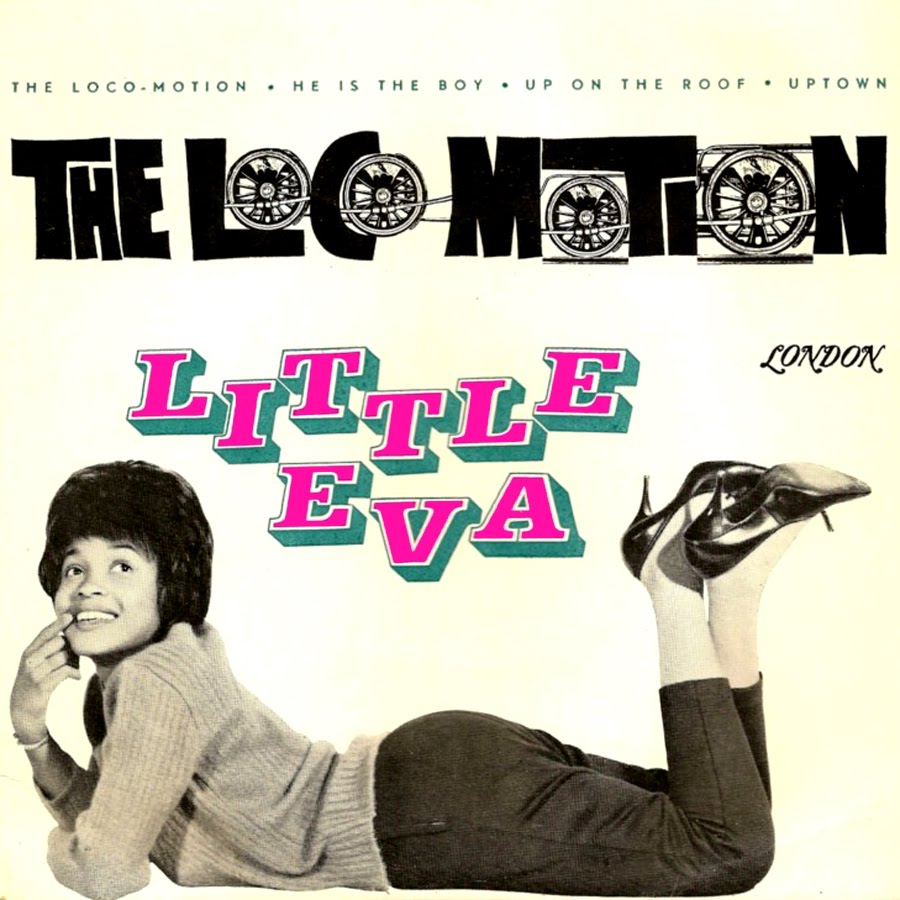
A real life Little Eva was the 1960s pop singer, born Eva Narcissus Boyd. She didn’t receive her moniker from either of these literary characters, but was called Little Eva by her family to distinguish her from her aunt, also named Eva. Little Eva is most famous for singing The Locomotion, later covered by Australian pop star Kylie Minogue. Little Eva apparently wasn’t too impressed by Kylie’s version.

Another Australian connection to Little Eva comes from World War II, when an American Air Force plane named the Little Eva got lost and crashed after a bombing mission in an isolated region of the Gulf of Carpentaria in Queensland. What happened to the survivors of the crash, and their desperate struggle against the dangers of the Australian outback, was made into a documentary called Aeroplane Dance, and is being developed into a feature film scheduled for release this year.

Eva is a classic name in Australia which has never left the charts. It was #37 in the 1900s, sinking until it left the Top 100 in the 1930s. It reached its lowest point in the 1980s at #425, then rose steeply during the 1990s to make the Top 100 for the late 2000s. Currently it is #24 nationally, #26 in New South Wales, #30 in Victoria, #31 in Queensland, #66 in Tasmania, and #27 in the Australian Capital Territory.

Eva is a very international name, being popular in all English-speaking countries, and all over Europe, including Eastern Europe and Scandinavia. It is most popular in Slovenia, at #2, and its popularity in Britain and New Zealand is almost identical to that in Australia.

Eva’s position in the Top 100 is stable, and it is now at its highest level of popularity ever. This makes it a Contemporary Classic – a traditional classic name which manages to feel modern and up-to-date. Because it is still rising, albeit gradually, it is also an Up and Coming Classic, so that it still seems rather fresh and stylish.

This all helps to make Eva an attractive choice. Furthermore, it fits in with the trend for short names ending in -a, such as Isla and Ella, and the V names, such as Ava, Ivy, Evie and Evelyn. This means that while Eva doesn’t stand out amongst its peers, neither does it sound particularly distinctive.

However, for those who care about such things, Eva has the advantage of being a classic, unlike Isla, Ella, Ava, Ivy and Evie, and also began rising before them, so that it cannot be accused of being a copycat. Eva is closest to the name Evelyn, which is also a classic that began rising in the 1990s – although Evelyn has yet to reach the popularity it enjoyed in the 1900s.

Eva is a beautiful classic name that is feminine without being frilly. Eva sounds intelligent as well as pretty, and it’s a name which ages well. It is easy to spell and pronounce, and is popular without being either extremely common or faddish. That makes it a baby name which might tick a lot of boxes on many people’s lists. The usual nicknames are Eve or Evie, but it is so short and simple that it doesn’t really need a nickname.

POLL RESULT
Eva received an excellent approval rating of 83%, making it one of the highest-rated names of 2014. People saw the name Eva as a stylish classic (23%), feminine yet not frilly (19%), beautiful or pretty (18%), and easy to spell and pronounce (17%). However, 6% thought it was too popular. Nobody thought the name Eva sounded too much like the word evil.

Thank you to Brooke for suggesting the name Eva be featured on Waltzing More Than Matilda

Top 20 Baby Names in the Northern Territory for 2013

01 Tuesday Apr 2014

Posted by A.O. in Name Data

≈ 1 Comment

Tags

name popularity, name trends, popular names


GIRLS

  1. Charlotte
  2. Olivia
  3. Amelia
  4. Ruby
  5. Chloe
  6. Matilda
  7. Mia
  8. Sophie
  9. Emily
  10. Evelyn
  11. Grace
  12. Isabella
  13. Jasmine
  14. Zoe
  15. Lily
  16. Madison
  17. Ava
  18. Ella
  19. Isla
  20. Savannah

BOYS

  1. William
  2. Cooper
  3. Oliver
  4. Lucas
  5. John
  6. Mason
  7. Noah
  8. Thomas
  9. Alexander
  10. Jack
  11. Michael
  12. Ethan
  13. Jaxon
  14. Logan
  15. Riley
  16. Xavier
  17. Isaac
  18. Jackson
  19. James
  20. Lachlan

GIRLS NAME TRENDS

Biggest Riser: Evelyn (+11 at least)

Biggest Faller: Sophia (-13 at least)

New: Evelyn, Isla, Lily, Madison, Savannah

Gone: Alice, Hannah, Layla, Maddison, Sophia


BOYS NAME TRENDS

Biggest Riser: Oliver (+18 at least)

Biggest Faller: James (-17)

New: Alexander, Isaac, Jaxon, John, Logan, Noah, Oliver, Xavier

Gone: Charlie, Daniel, Harrison, Henry, Levi, Liam, Ryan, Samuel, Tyler

NOTE: The Northern Territory only releases a Top 20 each year due to its very small population size.

Top Baby Names in Tasmania for 2013

20 Thursday Mar 2014

Posted by A.O. in Name Data

≈ 7 Comments

Tags

modern names, name popularity, name trends, popular names, retro names, royal names

GIRLS

  1. Charlotte
  2. Ruby
  3. Amelia
  4. Ella
  5. Mia
  6. Lucy
  7. Sophie
  8. Zoe
  9. Grace
  10. Matilda
  11. Chloe
  12. Isla
  13. Isabella
  14. Olivia
  15. Ivy
  16. Lily
  17. Ava
  18. Emily
  19. Willow
  20. Stella
  21. Layla
  22. Sophia
  23. Evelyn
  24. Bella
  25. Evie
  26. Isabelle
  27. Maddison
  28. Sienna
  29. Violet
  30. Alice
  31. Ellie
  32. Addison
  33. Esther
  34. Savannah
  35. Scarlett
  36. Amber
  37. Phoebe
  38. Emma
  39. Imogen
  40. Bonnie
  41. Mackenzie
  42. Molly
  43. Paige
  44. Harper
  45. Heidi
  46. Holly
  47. Madison
  48. Maggie
  49. Millie
  50. Alexis
  51. Audrey
  52. Elsie
  53. Lacey
  54. Poppy
  55. Stephanie
  56. Summer
  57. Chelsea
  58. Florence
  59. Hannah
  60. Maya
  61. Annabelle
  62. April
  63. Brooke
  64. Eleanor
  65. Elizabeth
  66. Eva
  67. Georgia
  68. Jasmine
  69. Lillian
  70. Lilly
  71. Madeleine
  72. Madeline
  73. Mila
  74. Abigail
  75. Bronte
  76. Daisy
  77. Eden
  78. Eliza
  79. Harriet
  80. Hayley
  81. Mabel
  82. Nevaeh
  83. Olive
  84. Piper
  85. Rubi
  86. Sarah
  87. Zara
  88. Charli
  89. Claire
  90. Ebony
  91. Indy
  92. Jessica
  93. Kaylee
  94. Lola
  95. Abbie
  96. Abby
  97. Amy
  98. Annabel
  99. Charlie
  100. Dakota
  101. Eloise
  102. Estelle
  103. Eve
  104. Gabrielle
  105. Indiana
  106. Indianna
  107. Isabel
  108. Josie
  109. Lauren
  110. Macey
  111. Nina
  112. Peyton
  113. Tilly
  114. Trinity
BOYS

  1. Oliver
  2. Jack
  3. William
  4. Noah
  5. Thomas
  6. Hunter
  7. Charlie
  8. Mason
  9. Cooper
  10. Lucas
  11. Hamish
  12. Henry
  13. Lachlan
  14. Alexander
  15. Archie
  16. Harrison
  17. James
  18. Xavier
  19. Oscar
  20. Riley
  21. Hudson
  22. Jasper
  23. Logan
  24. Max
  25. Samuel
  26. Elijah
  27. Benjamin
  28. Ethan
  29. Flynn
  30. Edward
  31. Toby
  32. Jacob
  33. Joshua
  34. Liam
  35. Tyler
  36. Eli
  37. Harry
  38. Ryan
  39. Angus
  40. Connor
  41. Isaac
  42. Lewis
  43. George
  44. Jackson
  45. Levi
  46. Nate
  47. Owen
  48. Louis
  49. Daniel
  50. Fletcher
  51. Joseph
  52. Bentley
  53. Charles
  54. Jaxon
  55. Lincoln
  56. Luke
  57. Alex
  58. Archer
  59. Beau
  60. Blake
  61. Caleb
  62. Chase
  63. Jobe
  64. Jordan
  65. Michael
  66. Ryder
  67. Sebastian
  68. Tyson
  69. Zachary
  70. Hayden
  71. Jayden
  72. Mitchell
  73. Parker
  74. Ari
  75. Bailey
  76. Braxton
  77. Darcy
  78. Dylan
  79. Jake
  80. Jett
  81. Joel
  82. Koby
  83. Matthew
  84. Adam
  85. Campbell
  86. Declan
  87. Felix
  88. Jesse
  89. Leo
  90. Nicholas
  91. Reuben
  92. Seth
  93. Zane
  94. Elliot
  95. Heath
  96. Hugo
  97. Kai
  98. Kaiden
  99. Louie
  100. Luca
  101. Malachi
  102. Marcus
  103. Maxwell
  104. Nathaniel
  105. Rocco
  106. Spencer
  107. Theo

GIRLS NAME TRENDS

Biggest Risers

Violet (+86), Paige (+66), Evelyn (+63), Maggie and Savannah (+60)

Biggest Fallers

Jessica (-60), Hannah (-44), Zara (-38)

New: Abby, Annabel, Bronte, Daisy, Dakota, Elsie, Estelle, Florence, Indy, Josie, Kaylee, Lauren, Mabel, Macey, Nevaeh, Nina, Peyton, Rubi, Stephanie, Summer, Tilly, Trinity

Gone: Adele, Anna, Ayla, Faith, Freya, Gracie, Hailey, Indie, Isobel, Josephine, Kate, Leah, Lydia, Macy, Milla, Pippa, Rose, Rosie, Sofia, Tayla, Victoria, Zoey

Comment: Tasmania seems to embrace both the new and the retro with equal warmth. Where else can you see Mabel and Nevaeh side by side, or Maggie and Savannah growing at the same rate?

BOYS NAME TRENDS

Biggest Risers

Owen (+53), Hudson (+46), Lewis (+39), Ryder (+36), Caleb (+35)

Biggest Fallers

Seth (-54), Leo (-46), Jake and Jett (-38)

New: Ari, Charles, Heath, Jobe, Joel, Kai, Kaiden, Koby, Louie, Malachi, Marcus, Michael, Parker, Zane

Gone: Aaron, Aiden, Andrew, Ashton, Billy, Brax, Brock, Callum, Cameron, Finn, Gabriel, Jax, Patrick, Saxon, Vincent, Zac

Comments: Fun royal baby name fact – George, Alexander and Louis all rose in popularity in 2013!

NOTE: Because of its small population size, Tasmania’s top names are its complete name data. For the same reason, its charts are highly volatile.

Famous Name: Harmony

19 Wednesday Mar 2014

Posted by A.O. in Famous Names

≈ 4 Comments

Tags

english names, Greek names, holiday names, locational names, musical names, mythological names, name history, name meaning, name popularity, name trends, US name popularity, virtue names

harmony-day

This Friday, March 21, it will be Harmony Day. Harmony Day is a government initiative which began in 1999, inspired by the United Nation’s International Day for the Elimination of Racial Discrimination, which takes place every March 21 around the world. It is a public holiday in South Africa, commemorating those who lost their lives in the struggle against apartheid.

On Harmony Day, primary schools, workplaces and communities come together to celebrate diversity and learn respect for each other. The message of Harmony Day is Everyone Belongs, and people are encouraged to dress in orange or wear orange ribbons to show their support. Harmony Day is managed by the Department of Social Services, and is part of Diversity Week.

Australia is one of the most multicultural countries in the world, with people from more than 200 countries and more than 150 languages represented. More than a quarter of the population are migrants, and clearly we all need to learn to get along. Although studies find that Australia is a generally tolerant society, and most migrants feel that they are accepted as part of the community, that isn’t the same as a society where diversity is welcomed, and more needs to be done.

The English word harmony can mean either “agreement, accord” (as Our views on child rearing were in complete harmony), or “a pleasing combination of elements” (as in The harmony of colours in her decorating scheme gave the house a relaxed feel). It is especially connected with music, where harmony is the use of simultaneous notes or chords.

The word is from Old French harmonie, from the Latin harmonia, based on the Ancient Greek harmozo, meaning “to fit together, to join”. In former times, the word harmony was used to mean music itself.

Harmonia was the Greek goddess of harmony and concord. She was seen as the personification of harmonious love between all people, of social order and civic unity. She was married to the Phoenician prince Cadmus, the founder of the city Thebes, and is famous because of a magic gold necklace she received as a wedding present, in the shape of two serpents. Although the necklace made any woman who wore it eternally beautiful and youthful, it had the unpleasant feature of bringing grave misfortune to its owners.

The necklace was wrought by Hephaestus, the god of metalwork, who became enraged when he discovered his wife Aphrodite having an affair with Ares, the god of war. He vowed to wreak revenge by cursing the lineage of any children arising from the affair: Harmonia was the result, and so she was given the jewellery of doom. Harmonia and Cadmus were transformed into dragons as part of the curse, and all Harmonia’s female descendants had horrible times because of the necklace. One of her descendants was Queen Jocasta, the mother of Oedipus – a famous example of family life going terribly wrong.

Eventually, after generations of misery, someone stole the necklace to give to his mistress, upon which her son went mad and set fire to her house, killing her and mercifully burning all that she had possessed, including the necklace. Why no one thought to destroy the thing earlier is a mystery – I suppose looking eternally young and beautiful was too hard to give up.

Harmony has been used as a girls name since the 18th century; although originating in England, it quickly gained more use in the American colonies, and to this day is more popular in the United States than elsewhere. An American connection to the name is the Harmony Society, an esoteric Christian sect which came to the United States from Germany in the early 19th century, named their first commune Harmonie, and built several towns with the name Harmony.

A statue of the goddess Harmonia is in the Harmony Society Gardens in the Old Economy Village in Pennsylvania, showing the high esteem they held for the virtue of harmony – as I think all communes must do, otherwise communal life would soon become intolerable. However, when they built New Harmony in Indiana, they included a shrubbery maze, to indicate that the path to harmony was not easy.

Harmony is a misunderstood virtue: it is perhaps too easy to dismiss those aiming for harmony as submissive, or passive-aggressive, or to see harmony as stifling, controlling, dull, or even totalitarian. Maybe when we think of harmony, we imagine everyone repressing their individuality to conform, being insincerely “nice” to each other, and minimising differences between people.

But in a truly harmonious society, people would recognise and value each other’s individuality, taking pleasure in their differences. Harmony isn’t about us all shutting up so we can fit in, but allowing each other to express ourselves, so that the entire range of the notes of the human chord can be heard together.

In music, harmony occurs when there is a balance between tense moments and relaxed moments – and that’s good in harmonious relationships too. Harmony doesn’t mean that things are always mild, pleasant and bland: it means that there is a healthy balance between dissonance and concurrence, between conflict and peace. Of course, harmony is very subjective, with each of us having our own idea of what this healthy balance looks like: no wonder harmony is so difficult to attain!

Harmony is a pretty name, and extols an unusual virtue, which is secular rather than spiritual, and communal rather than personal in nature. It’s also a musical name, more fashionable than Melody, but less trendy than Cadence, and so a nice harmonious balance between them. It fits in with choices such as Harper and Harlow, and in Victoria is a similar popularity to Harlow, in the 200s.

POLL RESULT
Harmony received an excellent approval rating of 75%, making it one of the highest-rated names of 2014. People saw the name Harmony as pretty and sweet (29%), and a beautiful musical name (25%). However, 16% thought the name seemed unprofessional or lower class.

Famous Name: Henrietta

05 Wednesday Mar 2014

Posted by A.O. in Famous Names

≈ 6 Comments

Tags

birth notices, famous namesakes, French names, germanic names, honouring, name history, name popularity, name trends, nicknames, royal names, UK name popularity, US name popularity, vintage names

henrietta_dugdale-australian-feminist-suffrageThis Saturday, March 8, marks International Women’s Day. I haven’t covered a name specifically for Women’s Day before, but thought it would be a good opportunity to look at one of Australia’s early feminists.

Henrietta Dugdale was originally from London, and arrived in Melbourne in the early 1850s, becoming a pioneer of the women’s movement in Victoria in 1869, after separating from her second husband. She formed the Victorian Suffrage Society in 1884, and became its president; this was the first Australian organisation to work towards voting equality for women. By this time, women could vote on Norfolk Island, and South Australia had brought in limited female suffrage.

(It should be remembered that male suffrage was only introduced during the 1850s, so women weren’t so far behind, although obviously they didn’t want to be behind at all).

Henrietta was confident, passionate and quick-witted in her quest for an equal society, and believed in the possibility of a Utopian future which could be achieved through the use of reason, and co-operation between the sexes. She fought for female suffrage as an essential step towards female emancipation, and bitterly spoke against the Victorian courts, and their failure to protect women from violent crimes. She noted that women’s anger was compounded by the fact that those who inflicted violence on women had a share in making the laws, while their victims did not.

Henrietta believed that women’s lives could be improved through gaining access to the professions, sensible clothing, birth control, and harsh penalties for sexual assault. She was a proponent of temperance, universal education, a more equal distribution of wealth, and the eight hour day as means towards improving the lives of the working class. A member of the Secular Association, she saw Christianity as an oppressive force in women’s lives, and also opposed monarchy and imperialism.

In her private life, she was a wife, and mother to three sons. She made her own clothes, grew her own vegetables, was a skilled carpenter, and an excellent chess player. She outlived three husbands and was over 90 when she died – a good advertisement for teetotalism and fresh vegetables!

Henrietta was recognised as a pioneer of female suffrage when the Commonwealth gave women the vote in 1902, shortly after Federation. Australia was the second country in the world to grant women equal voting rights, after New Zealand, in 1893; however we were the first in the world to allow women to stand for parliament. Henrietta’s own state of Victoria was the last to grant women the vote, in 1908.

When you look at modern Australian society, there must be much of which Henrietta Dugdale would approve. Women can vote, and be elected to power; they can enter the professions, have access to birth control, and don’t have to wear corsets. Presumably she would give the thumbs up to state school education, Dry July, Family Planning clinics, the fall of the Empire, and the rise of secularism.

However, the fight against violence towards women still has a long way to go. 57% of Australian women have experienced physical or sexual violence. One in three will suffer violence in an intimate relationship. The incidence of sexual violence against women in this country is more than double the global average. In Victoria, domestic violence is the leading contributor of death, injury and illness amongst women aged 15-44. Almost every week, a woman will die at the hands of her spouse or partner.

The Dugdale Trust for Women & Girls in Victoria was set up last year to to reduce violence against women and girls, with women and men working to address the root causes of violence. It is proudly named in honour of Henrietta Dugdale, and I am sure she would applaud this initiative.

Henrietta is a feminine form of the Germanic Henry. Although a traditional name amongst European royalty, the name only became widely used in England after the marriage of Charles I to Henriette-Marie of France, the youngest sister of the future King Louis XIII. In England, her name was Anglicised to Henrietta Maria; the king called her Maria, and the English public thought of her as Queen Mary.

Henriette-Marie wasn’t a popular queen, due to her Frenchness, which included staunch Catholicism, and failure to learn English very well. Nonetheless her name made an impact, and she bestowed it on her daughter Princess Henrietta of England, who married the son of Louis XIII, Phillipe I, Duke of Orleans. Unlike her mother, Henrietta seemed popular in her adopted country, although she died young, possibly from poisoning.

Another (semi) royal Henrietta was the illegitimate daughter of King James II, an ancestor of Diana, Princess of Wales, and her sons William and Henry (Harry). The name Henrietta became commonly used amongst the English nobility, and still has a rather aristocratic air. It isn’t particularly common in English-speaking countries, and has been less popular in Australia than in either the United States, where it left the charts in the 1960s, or in England/Wales, where it has remained fairly stable since the 1990s, and is currently in the 500s.

In New South Wales, Henrietta was #158 in the 1900s, and fell in popularity so that it had left the charts altogether by the 1930s. You could call it a dated name, as it hasn’t charted for more than 80 years, but as it was never popular, I prefer to think of it as a vintage name. In Victoria, there were 7 babies named Henrietta in 2012.

Although Henrietta could never be accused of trendiness, it feels like a great time to give your daughter this name. Vintage and retro names are in style, four-syllable names for girls are popular, and there is a fresh appreciation for names associated with royalty. Princess Mary of Denmark has a daughter whose second name is Henrietta: not named for a queen or princess, but for Mary’s mother, Henrietta Donaldson.

This is a lovely dignified vintage name with a royal history and the attraction of never having become popular. The short form Etta is very fashionable (Henrietta Donaldson’s nickname), Hettie would be adorable, Hennie is sweet, and I have even seen a little girl named Henri in a birth notice.

POLL RESULT
Henrietta received an excellent approval rating of 77%, making it one of the highest-rated names of 2014. People saw the name Henrietta as strong and intelligent (21%), classy and dignified (17%), beautiful and charming (16%), and a vintage name ready for revival (16%). However, 7% of people thought it was ugly and frumpish.

International Names for Girls

23 Sunday Feb 2014

Posted by A.O. in Name Themes and Lists

≈ 19 Comments

Tags

American names, Arabic names, aristocratic titles, birth notices, brand names, Catalan names, celebrity baby names, Chinese names, created names, english names, Etruscan names, European name popularity, famous namesakes, fictional namesakes, French names, Gaelic names, Greek names, hebrew names, historical records, Hungarian names, International Baby Names for Australian Parents, international naming laws, Latin names, middle names, mythological names, name history, name meaning, name trends, names from movies, names from television, Old Norse names, Persian names, Provencal names, royal names, saints names, scandinavian names, Slavic names, Spanish names, surname names, UK name popularity, unisex names, US name popularity, virtue names, Visigothic names

juno

These are names chosen from my e-book, International Baby Names for Australian Parents – names which are familiar in other countries, but rarely used here. I chose ten that I particularly like, or find interesting, or think very usable. If you haven’t read the book, it gives you an idea as to what’s inside, and if you have read it, it’s a chance for me to provide more information than is possible in a book.

Anais

Identified as a French form of the Persian name Anahita, meaning “pure, immaculate”; Aredvi Sura Anahita is an Indo-Iranian goddess of fertility and wisdom. To get around French naming regulations, it was explained as a Catalan or Provençal form of Anna or Anne. The name is strongly associated with the American writer Anaïs Nin, whose first name was Angela, but always went by her second name. Anaïs was born in France and was of Spanish, Cuban, French and Danish descent. She is principally known as a diarist, where she intimately explored the complexities of her personal life, and as a writer of female erotica. Her name was the inspiration for the Cacharel perfume, Anais Anais, and in Australia we have the children’s clothing label, Aden + Anais. The name is pronounced a-na-EES. Feminine and exotic, Anais is very popular in France and Chile, and charts in the UK.

Bo

This short spunky name has different origins. It is a Chinese name for both boys and girls which means “wave”, as in a wave on water (especially the sea). It is a rare Chinese surname too, and an aristocratic title translated as the equivalent of a Count. It is also a Scandinavian boy’s name derived from the Old Norse name Búi, meaning “to live”. As a girl’s name, its most famous namesake is American actress and sex symbol Bo Derek, born Mary Collins. Ms Derek doesn’t know why she chose the name Bo: it just seemed “grown up” and “unusual” to her. A fictional girl Bo is the nursery rhyme shepherdess Bo Peep – her name comes from a slang term for being in a pillory, presumably because the person “peeped” through the head holes. Radio host Tim Blackwell named his daughter Bo last year, and since then there seems to be a few girl babies with the name in Australian birth notices. To show the gender divide in regard to this name, Bo is rising in the UK charts as a girl’s name, and rising in the US as boy’s name (probably a variant spelling of Beau). In the Netherlands, it charts for both sexes, but is only popular for girls.

Cora

The American author James Fenimore Cooper is credited with the creation of this name, in his 1826 historical novel, The Last of the Mohicans. The novel’s heroine is Cora Munro; dark, intelligent, and serious, she is a distant descendant of African-American slaves who forms a relationship with the son of a Native American chief – the titular “last of the Mohicans”. Her story ends tragically. There are actually many people named Cora in the records prior to the book’s publication, dating back to the late 16th century, but it is difficult to tell if they are abbreviations for longer names, like Cordelia. The name Cora is often theorised to be based on the Greek name Kore, meaning “maiden”; it was the common name of the goddess Persephone. If invented by Cooper, this makes sense, as there are a number of names with this derivation, such as Corinna. However, if its use goes back to the 16th century, it would pre-date the use of these “Kore” names, and may be based on the Latin cor, meaning “heart”. Cora is also used to Anglicise the Gaelic name Coira, meaning “seething pool”. Cora is a Downton Abbey name (the character is American-born), and fits in with the trend for simple, graceful names like Clara and Isla. It charts in both the US and UK, and is popular in Northern Ireland.

Elvira

Spanish form of an unknown Visigothic name whose meaning is much debated. It was traditional amongst medieval Spanish royalty, and became a favourite in fiction. The vengeful scorned lover Elvira of Mozart’s Don Giovanni is just one example of the many characters of this name in operas, plays, novels and films. Another is the title character of Noel Coward’s supernatural comedy Blithe Spirit, a hauntingly beautiful former wife who arrives in the least convenient fashion. Elvira is the name of Donald Duck’s grandmother, and many will remember the campy, cleavage-enhanced Elvira, Mistress of the Dark, played by Cassandra Peterson. A famous person with the name is Elvira Madigan (born Hedvig Jensen), a 19th century Danish circus performer who had a tragic love affair. Her story has been turned into several films and songs. English-speakers can pronounce this romantic name either el-VEER-ah or el-VY-ra (I prefer the first, as the second reminds me of virus), and it fits in with popular names such as Ella and Ava. Elvira charts in The Netherlands and is popular in Sweden.

Hermione

Derived from Hermes, the Greek god of transitions and boundaries, who was the messenger of the gods, and patron of travellers, herdsmen, thieves, public speakers, comedians, writers, poets, athletes, inventors, and merchants. Most scholars understand his name as meaning “stone, roadside shrine, boundary marker” – these were dedicated to Hermes as the god of boundaries and travellers. It may be related to the Greek for “the interpreter” to reflect the god’s role as divine messenger. In Greek myth, Hermione was the daughter of the lovely Helen of Troy, and had relationship troubles of her own involving Trojans. There is a Saint Hermione, an early Christian martyr who was the daughter of Saint Philip, identified as a prophetess in the church. In literature, Hermione is a beautiful queen accused of infidelity in Shakespeare’s play, The Winter’s Tale, and Harry Potter’s best female friend, the book-smart Hermione Granger. An Australian character of this name is Hermione the Modern Girl, the cartoon creation of Kaz Cooke. A famous namesake is British actress Hermione Norriss, from television shows Cold Feet and Wire in the Blood. This elegant name is pronounced her-MY-oh-nee, and charts in the UK.

Ilona

Hungarian name of uncertain meaning. It is usually said to be a form of Helen, although this may be folk etymology. In Magyar folklore, Ilona is the traditional name of the Queen of the Fairies. She is very beautiful, but also mischevious, and at times, dangerous! Archduchess Ilona of Austria was a Hungarian member of the Hapsburgs, one of the great royal houses of Europe; she passed away a few years ago. This pretty name is usually pronounced ih-LOH-na, and has Loni as the obvious nickname. It charts in France.

Juno

The Roman goddess of marriage and childbirth, and the queen of the gods, besides being the patron and protector of the Roman state. She was seen as eternally youthful, filled with forceful vitality, and a fertility figure, yet also warlike. Juno was the sister and wife of the sky god Jupiter, and the divine couple are two of the oldest known Roman gods. Like her husband, Juno had the power to throw thunderbolts, and the couple’s relationship could be stormy at times. The Romans believed that each woman had a protective guardian spirit called a juno, and this was given offerings on the woman’s birthday. The goddess’ name may mean “youth”, with the suggestion of vitality and fertility, but it is also possible that it is related to that of the Etruscan mother goddess Uni, meaning “she who gives”. The Romans connected her name to the waxing and waning of the moon – perhaps with the idea that, like the moon, she constantly renewed herself. The month of June is named in Juno’s honour, and when a woman is described as junoesque, it means she is beautiful, tall and shapely in a stately, imposing way. A famous person with the name is British actress Juno Temple, who has been in The Other Boleyn Girl, and The Dark Kight Rises. The movie Juno, starring Ellen Page, has helped give this name recent exposure, and it fits in with the trend for names ending with O. You may recall that New Zealand name blogger Anna Hamilton has a little girl named Juno. Juno charts in the UK, where it is rising.

Patience

Patience is the ability to endure difficult circumstances, persevering without exhibiting negativity such as irritation or anger, and being able to deal with strain or frustration during long-term difficulties. It is considered one of the highest virtues in several religions, such as Islam, Buddhism and Hinduism, and in Christianity is one of the Seven Heavenly Virtues. Modern psychology sees patience as a sign of self-control and maturity, and it is a secular virtue as well. The word patience is ultimately from the Latin for “suffering”, and it was introduced as a virtue name by the Puritans in the late 16th century. A famous Australian namesake is Patience Hodgson, a member of indie rock band The Grates. Virtue names are back in fashion, and this one seems both admirable and attractive – a name that someone can grow with. Patience charts in the US.

Safiya

Variant of Safiyya, feminine form of the Arabic name Safi, meaning “pure”. The name is important in Islam because Safiyaa bint Huyayy was a Jewish woman captured from a nomadic Arabian tribe at the age of 17 who was chosen by Muhammad for his own. Previously, she had dreamed that the moon fell from the heavens into her lap, and this was interpreted as a miraculous sign she would marry Muhammad. She converted to Islam and became one of the Prophet’s wives, and after his death gained quite a bit of power and influence. Safiya is pronounced sa-FEE-ah, and is an Arabic heritage choice which fits in with current trends, as it is not dissimilar to popular Sophia. It charts in both the UK and France.

Ziva

Slavic name meaning “living, being, existing”. In Slavic mythology, Živa was a goddess of life and fertility who was worshipped throughout what is now Poland, the Czech Republic, Slovakia, Slovenia, and Germany before the coming of Christianity. She was depicted as a beautiful woman, and people prayed to her for good health and long life. She seems to have been connected with the harvest of both fruit and grains, and one story is that she was able to turn herself into a cuckoo bird. Ziva is also a feminine form of the Hebrew name Ziv, meaning “bright, radiant”. In the television drama series NCIS, Ziva David is an Israeli-American agent portrayed by Cote de Pablo. Pronounced ZEE-vah, Ziva fits in with popular names such as Ava and Zoe. It charts in The Netherlands, and the UK, where it is rising, and is popular in Slovenia.

POLL RESULTS
The public’s favourite names were Cora, Juno and Hermione, and their least favourite were Safiya, Patience and Elvira.

(Photo shows Ellen Page as Juno MacGuff in Juno)

Interview with Zeffy from Baby Names from Yesteryear

16 Sunday Feb 2014

Posted by A.O. in Blog Reviews

≈ 3 Comments

Tags

Baby Names from Yesteryear, name history, name trends, naming advice, nicknames, popular names, rare names

Winterhalter_Eugenie_1855Zeffy is the enthusiastic blogger at Baby Names from Yesteryear, which features wonderful, winning, and sometimes slightly wacky names from history. Whether you enjoy names of English gentlemen, ladies from antiquity, or contemporary British royals, you will find many beautiful names which are elegant, elaborate and eccentric. You will also find names from South America, and names from Zeffy’s own family tree. One of my favourites of Zeffy’s posts is an extremely sweet story about one of her sentimental favourites – I dare you to read it without either smiling tenderly or getting a tear in your eye. Zeffy has been away from blogging for a year, but she’s back (hooray!!!), and this is a chance to catch up with her and find out what Zeffy is short for.

What is your name? 
Sephora. I go by Zeffy online, a nickname given to me by my loopy, but incredibly sweet, university professor.

Have you ever wished you had a different name?
Have I ever! I’ve disliked my name for most of my life. As a child, all I wanted was a nice common name, something like Jessica or Rebecca, so I could blend in. I was a bit shy as a child so I hated being different from everyone else. It was only when I got to my late teens that I realised my name was quite nice and fitted my personality very well. I would never consider changing it now – having such an unusual name is a big part of my identity.

How did you become interested in names?
It goes back to having an unusual name. I’ve always wanted to know where my name came from, what it meant, how it came to be used. My curiosity stemmed from having absolutely no clue about my name’s origins. I guess my interest in names in general dates back to when I started school and noticed that I was the only one whose name wasn’t “normal”. Since then I’ve always loved reading about names and looking up meanings. There hasn’t been a time when I haven’t been interested in names and their stories.

How did you become interested in names from the past?
I’m obsessed with history. I’ve always been interested in the history of people’s lives, particularly focusing on the social and private life of early 19th century English aristocrats. There’s something very fascinating about discovering the small details of what people 200 years ago ate for breakfast, where they bought their boots from, why they married who they did, and what they named their children. That’s what attracts me to names from the past – it’s a glimpse into the personal and private life of someone who lived hundreds of years ago.

What inspired you to begin a name blog?
I came across The Gentleman’s Magazine during my last year of university. I was meant to be researching contemporary reviews for Thomas Paine’s Rights of Man, but I kept flipping back and having a look through all the wedding announcements. Once I left university, I had a heck of a lot of time on my hands, and I really don’t deal well with boredom. I had to find a project to do before I completely lost my sanity. I thought about all the lovely names I’d read and decided to share them. I knew there had to be someone out there who was equally as interested in Georgian era names as I was. I couldn’t be the only one who oohed and ahhed over them!

Do you have a favourite blog entry on Baby Names from Yesteryear?
I really enjoyed writing about The Patronesses of Almack’s and Popular Names of the Georgian Era. They hit on my favourite time period in history so I can’t help but have a soft spot for them. Having said that, the posts I tend to like the most are those which required me to really do research, to look through a number of sources before hitting name gold. I’m such a geek, I know.

Do you have a pet peeve in regard to names? 
When people think that many of the current trends are a modern concept. People have been naming their children all sorts of weird and wonderful things for hundreds, even thousands, of years. Masculine names on girls, surnames used as first names, nature names, unusual names … it’s all been done before, so let’s not get in a tizzy about them now.

There’s also something about the word “unique” which I find unrealistic. The chance of any name being unique is truly slim, and I don’t think it’s a good idea to change spellings in search for uniqueness.

What are some of your favourite names? 
A few of my current favourites are Minerva, Emmeline, Margaux, Josephine and Magdalene. For boys, Alexander, Lucien, Mikael and Hart are long time favourites. I think Noa is absolutely darling. Tierney, Seren, Clover, Lyra, Orion and Shia are just a few that are on my favourites list.

What names do you dislike?
I’ve never been a fan of overly “cute” names, on girls or boys, for a number of reasons. Children don’t need cute names to be cute. A lot of names that fall into that category for me have really taken off in England and Wales where there is currently a trend for over-the-top cuteness, especially on the girls’ side. There’s a message behind that trend which I’m not comfortable with.

I’m also not at all keen on the Mae/May/Mai hyphenated names which are very popular over here. It feels like half the female population under the age of 5 answers to Something-Mae. Don’t get me wrong, I don’t dislike Mae or May. Just please, please stop hyphenating it!

Are there any names you love, but could never use?
So, so many. Hyacinth is always in the back of my mind, but I think of Hyacinth Bucket [from sit-com Keeping Up Appearances]and it’s over. Millicent is another. I really love how it sounds, but not how it looks. Ptolemy is probably the biggest one. Why does the P have to be silent?! I so wish it wasn’t; it would be a serious contender then.

What are your favourite names in the UK Top 100?
Eleanor (#63) and Alexander (#27).

What are your favourite names that have never charted in the UK?
Sanceline and Holland.

Do you have any names picked out for your future children? 
Not really. Children haven’t crossed my mind yet so it’s all up in the air. If, however, I were to have a baby at this exact moment, I guess it would be something like Emmeline Clover, Emmeline Jane Noa, or Noa Emmeline Jane. I adore Jane. I know it has in the past been overused in the middle spot, but it’s lovely and I can’t help myself. For a boy, it would be Alexander Lucien or Shia Alexander. I think when it comes down to it, I won’t be as tame in my choices. It’s fun having a name on the unusual side so I think I’ll go down that path. But who knows?!

What is something we don’t know about you?
I’m incapable or remaining serious for very long. Trying to answer your questions without making silly and inappropriate jokes hasn’t been easy! Also, I love exclamation marks 🙂

What advice would you give someone who was choosing a baby name?
I wouldn’t. I don’t have any children so I don’t know anything about how hard the naming process is or the pressures of it. I only wish all parents would put as much time as possible into choosing their child’s name. Your child has to live with their name every single day. That’s a big thing. Take it seriously! (Yay, got to use an exclamation mark again.)

(Painting shown is Eugenie, Empress of the French and Her Ladies by Franz Xaver Winterhalter; 1855 – one of the many lovely illustrations on Zeffy’s blog)

Is Ivy Too Trendy?

15 Saturday Feb 2014

Posted by A.O. in Naming Assistance

≈ 6 Comments

Tags

celebrity baby names, choosing baby names, honouring, name popularity, name trends, names from television, popular names, retro names

Wedding-hair-ivy

Ferrice and her husband are expecting a baby girl, and she always wanted to use the name Ivy for her daughter, which is the middle name of a dear departed family member. However, she now worries that the name might have become too popular. The level of popularity doesn’t worry her so much as the idea that the name might be too “trendy”; however, there is a great deal of sentiment attached to the name Ivy.

Ferrice and her husband have a son named Bernie (a family name), and their surname begins with W and ends with R eg Webster.

Other Names Considered

  • Tess (another family name)
  • Layla (not sure it suits surname, as it ends with a similar sound)
  • Imogen (good friends just used it, so it’s ruled out)
  • Bronte (not sure it sounds right with brother Bernie)
  • May (a family name)
  • Alice (husband not convinced)
  • Poppy

However, they aren’t in love with any of these names, except Tess, and Ferrice’s husband isn’t quite on board with it at this stage.

Ferrice would love to know what blog readers think of the name Ivy, and whether it’s too popular. She’d also be open to hearing name suggestions from anyone who thinks there’s another name they might like better.

* * * * * * * * * *

As a name blogger, my heart sinks whenever I hear someone say they are worried that a name they love is now “too popular” to consider. I can’t help wondering if I am contributing to the problem by providing information on name popularity, and I hate the thought that I might be unwittingly putting parents off using perfectly nice names.

Ivy is a popular name, and fits in with the trend for simple, pretty names with a V, such as Ava and Evie, and for non-floral plant names, such as Olive and Willow. It’s also a Downton Abbey name, which has helped give it widespread attention, and a celebrity baby name, after it was chosen as the middle name of pop star baby Blue Carter. No wonder the name has become popular!

However, it may be popular and on trend, but to me it isn’t a “trendy” name. Ivy isn’t a classic, but it is a traditional name with quite a bit of history, and was very popular in the 19th century (more popular than it is now). It has been climbing since the 1980s, so it hasn’t come out of nowhere, and its biggest burst of popularity was in 2009, before the television show and Blue Ivy.

You may be somewhat reassured to know that Ivy isn’t shooting up crazily in popularity – it was one of the fastest-rising girls names of 2012, but from the 2013 data that has come in so far, it seems to be still rising, but at a more modest pace. In 2012 it was #22, and it went up 18 places to reach that position.

For what it’s worth, I think Ivy is a lovely name – simple, charming, retro, fresh and green sounding, and somehow more piquant and distinctive (even seductive) than many other popular “old fashioned” plant names like Lily and Daisy. I completely understand why so many parents have chosen it.

I tend to feel that when it comes to honouring someone, sentiment far outweighs any other factor. This is the name of someone you love, and must miss every day. I can’t help thinking that you might regret giving up this name for a reason such as popularity – especially knowing that your reasons for loving the name Ivy have nothing to do with how popular it is.

However, popularity genuinely does bother some people, and if you really feel that the name is too popular for you, then using it in the middle position seems like the obvious solution. The trouble is, you don’t have too many candidates for a first name at this point. Most of the names you’ve considered are similar to Ivy in regard to popularity, and you admit that you don’t really love them.

Tess seems like the most likely proposition. This is a cute name which has never become popular, and is very fashionable – and it is a family name. Bernie and Tess sound pretty adorable together too. How do you feel about Tess Ivy? You did say your husband is not really convinced about Tess though, which puts a bit of a question mark over it.

If you’d like to try out some other names that have a similar level of popularity to Tess, and sound okay with Ivy in the middle, and with your surname, you might consider:

  • Caroline Ivy
  • Juliette Ivy
  • Mabel Ivy
  • Miriam Ivy
  • Millicent Ivy “Millie”
  • Gwendolyn Ivy “Gwen”

I hope I’ve been able to provide you with at least some help, and perhaps when you talk it over with your husband, your choice will feel clearer. Please feel free to write in for further assistance if other names become possibilities for you.

UPDATE: Unfortunately Ferrice never got back to me, but a little bird tells me that she did indeed name her daughter Ivy.

POLL RESULTS: 95% of people thought Ferrice should choose the name Ivy, with 35% saying that popularity shouldn’t be considered at all when it comes to the name you love best, and 25% believing that as this was a family name, the popularity didn’t matter.

(Photo of ivy hair comb from etsy)

Celebrity Baby News: Melissa George and Jean-David Blanc

12 Wednesday Feb 2014

Posted by A.O. in Celebrity Baby News

≈ 1 Comment

Tags

celebrity baby names, French name popularity, name trends, popular names

120270-mellissa-george

Actress Melissa George, and her boyfriend Jean-David Blanc, welcomed their first child on February 11, and have named their son Raphaël. Raphaël Blanc was born at the American Hospital in Paris.

Melissa began modelling in her early teens, and in 1992 was named Western Australia’s Teenage Model of the Year. At the age of 16, she was cast as Angel Parrish on Home and Away, and won two Logies for the role. She had a regular role on the fantasy drama series Roar, opposite Heath Ledger, before moving to Hollywood. Melissa had a number of minor film roles before scoring her first starring role in a feature film in the 2005 version of The Amityville Horror. She has starred in several other films and appeared in television series such as Friends, Charmed, Alias, Monk, Lie to Me and Grey’s Anatomy. In 2012 she appeared in the critically-acclaimed Australian drama series, The Slap. Recently she has had a recurring role in The Good Wife, and stars in Sam Hunter, the follow-up to British spy series The Hunter. Melissa is the inventor of Style Snaps, which alter the hems of pants without sewing, and says that she has earned more money as an inventor than as an actress. Melissa became a naturalised American citizen in 2008.

Jean-David is a French entrepreneur, founder of AlloCiné, which provides information on French cinema and television. He and Melissa began dating in 2012, after meeting at a BAFTA after-party,and live together in France.

Raphaël is a highly popular boy’s name in France, and also very much on trend in Australia.

← Older posts
Newer posts →

Enter your email address to follow this blog

Categories

Archives

Recent Comments

A.O.'s avatarwaltzingmorethanmati… on Zarah Zaynab and Wolfgang…
Madelyn's avatarMadelyn on Zarah Zaynab and Wolfgang…
JD's avatardrperegrine on Can Phoebe Complete This …
A.O.'s avatarwaltzingmorethanmati… on Rua and Rhoa
redrover23's avatarredrover23 on Rua and Rhoa

Blogroll

  • Appellation Mountain
  • Baby Name Pondering
  • Babynamelover's Blog
  • British Baby Names
  • Clare's Name News
  • For Real Baby Names
  • Geek Baby Names
  • Name Candy
  • Nameberry
  • Nancy's Baby Names
  • Ren's Baby Name Blog
  • Sancta Nomina
  • Swistle: Baby Names
  • The Art of Naming
  • The Baby Name Wizard
  • The Beauty of Names
  • Tulip By Any Name

RSS Feed

  • RSS - Posts

RSS Posts

  • Celebrity Baby News: Melanie Vallejo and Matt Kingston
  • Names from the TV Show “Cleverman”
  • Can Phoebe Complete This Sibset?
  • Zarah Zaynab and Wolfgang Winter
  • Baby, How Did You Get That Name?
  • Celebrity Baby News: Media Babies
  • Celebrity Baby News: Adelaide Crows Babies
  • Celebrity Baby News: Chris and Rebecca Judd
  • Names at Work: Name News From the World of Business and Employment
  • Celebrity Baby News: Sporting Round Up

Currently Popular

  • Rare Boys Names From the 1950s
  • The Top 100 Names of the 1900s in New South Wales
  • The Top 100 Names of the 1940s in New South Wales
  • Arlo Robert Galafassi: A Son for Toni Collette and Dave Galafassi, a Brother for Sage Florence
  • The Top 100 Names of the 1930s in New South Wales

Tags

celebrity baby names celebrity sibsets english names famous namesakes fictional namesakes honouring locational names middle names name combinations name history name meaning name popularity name trends nicknames popular names saints names sibsets surname names twin sets unisex names

Create a free website or blog at WordPress.com.

Privacy & Cookies: This site uses cookies. By continuing to use this website, you agree to their use.
To find out more, including how to control cookies, see here: Cookie Policy
  • Subscribe Subscribed
    • Waltzing More Than Matilda
    • Join 517 other subscribers
    • Already have a WordPress.com account? Log in now.
    • Waltzing More Than Matilda
    • Subscribe Subscribed
    • Sign up
    • Log in
    • Report this content
    • View site in Reader
    • Manage subscriptions
    • Collapse this bar
 

Loading Comments...