• About
  • Best Baby Names
  • Celebrity Baby Names
  • Celebrity Baby Names – Current
  • Celebrity Baby Names – Past
  • Featured Boys Names
  • Featured Girls Names
  • Featured Unisex Names
  • Links to Name Data
  • Waltzing on the Web

Waltzing More Than Matilda

~ Names with an Australian Bias of Democratic Temper

Waltzing More Than Matilda

Tag Archives: name popularity

Names of Australian Prime Ministers’ Wives

25 Sunday Jan 2015

Posted by A.O. in Name Themes and Lists

≈ 5 Comments

Tags

Anglo-Saxon names, Aramaic names, Biblical names, celebrity baby names, classic names, dated names, Etruscan names, famous namesakes, fictional namesakes, Finnish names, French names, gemstone names, German names, Greek names, hebrew names, Hindi names, honouring, Hungarian names, Indian names, Italian names, middle names, name history, name meaning, name popularity, names from movies, names from songs, nicknames, Old French names, rare names, Roman names, royal names, Russian names, saints names, Scottish names, Shakespearean names, UK name popularity, underused modern classics, unisex names, vintage names
a1200_l96496_tcm13-22475

It is Australia Day tomorrow, and for our patriotic lists, I thought it must be about time to have names of our prime ministers and their spouses. Ladies first!

Antonia
Antonia Watson (nee Dowlan) was the second wife of Chris Watson; she was a 23 year old waitress and he was 58. Antonia is the feminine form of the Roman family name Antonius. The Antonia was a very old family who claimed descent from Anton, a son of Hercules – Anton seems to have been invented, and the name may be Etruscan in origin. The most famous of the Antonii was Marcus Antonius (Mark Antony), made famous by Shakespeare’s play Antony and Cleopatra. Mark Antony’s first wife was his cousin Antonia, and he had three daughters, all named Antonia. The youngest Antonia was famed for her beauty and virtue, and became the mother of the Emperor Claudius, and grandmother of Caligula. There is a Saint Antonia who seems to be Saint Theodora under another name, and the name has been used amongst continental royalty – it was a middle name of Maria Antonia, otherwise known as Marie Antoinette. Antonia has charted since the 1950s, when it debuted at #346, and it peaked in the early 2000s at #279. Currently it is around the 400s, so this elegant name is an underused modern classic.

Bettina
Lady Bettina Gorton (nee Brown) was the wife of John Gorton. Bettina was an American student at the Sorbonne who met John while on holiday in Spain; he was a student at Oxford. After marrying in England, they moved to his family’s farm in Australia, and Bettina supported her husband in his political career. On an official visit to Sarawak, Bettina became interested in Asian languages and culture; she later graduated with honours in Oriental Studies from ANU and worked on the English-Malay dictionary. When John became prime minister, her knowledge of South East Asian languages made her a great asset when travelling overseas, and she established a native garden at The Lodge which is named in her honour. The name Bettina can have two possible origins. If German, it is a pet form of Elisabeth, while if Italian, it is a pet form of Benedetta, the feminine form of Benedetto, the Italian form of Benedict. One of the world’s first supermodels was Simone Bodin, who worked under the professional name “Bettina” in the 1940s and ’50s. The French model gave the name Bettina a little boost in the postwar era, but it’s never been common.

Blanche
(Josephine) Blanche d’Alpuget is the second wife of Bob Hawke; she was named after her great-aunt Blanche d’Alpuget, a pioneering journalist. Blanche lived in South East Asia for several years, and after returning to Australia, began writing about her experiences, winning a number of literary awards for both fiction and non-fiction. She later became Bob Hawke’s biographer: his wife tolerated their open relationship for many years, and after retiring from politics he divorced to marry Blanche. Blanche was originally an Old French nickname meaning “white”, to suggest “pure”. The name became common in the Middle Ages, perhaps because very fair skin was considered beautiful and aristocratic. It was popularised by Blanche of Navarre, who had a French mother; as she became Queen of Castile, the name was traditional in her royal family. A famous namesake is Blanche of Lancaster, the mother of King Henry IV, said to be pretty and fair. Blanche was #125 in the 1900s, and left the charts in the 1940s. This is a vintage name which works well in the middle; it might remind you of The Golden Girls or A Streetcar Named Desire.

Ethel
Ethel Bruce (nee Anderson) was the wife of Stanley Bruce. She and Stanley were a devoted couple, and the first to live at The Lodge. Ethel is a short form of names starting with Ethel-, such as Ethelinde. The Old English word ethel meant “noble”, and it was a common name element in royal and aristocratic names. The Victorians were mad keen on Anglo-Saxon names, and began using Ethel as a name in its own right; usually for girls, but occasionally for boys, as there were plenty of male names starting with Ethel-, such as Ethelred. The name was popularised by two 1850s novel – The Newcombes, by W.M. Thackery and The Daisy Chain by C.M. Yonge. Ethel was #14 in the 1900s, and left the top 100 in the 1940s before dropping off the charts in the 1960s. It recently became a celebrity baby name, when pop singer Lily Allen named her first child Ethel, and would appeal to someone looking for an old-fashioned alernative to the current crop of fashionable E names, such as Esther and Eloise.

Ilma
Ilma Fadden (nee Thornber) was the wife of Arthur Fadden. Ilma was a supportive political wife who campaigned for her husband and accompanied him on official visits overseas. The name Ilma can be a short form of Wilhelmina, as well as a Finnish name meaning “air”; I have also seen it listed as a Hungarian form of Amelia. I suspect that in everyday usage, it was often given as a variant of Elma – a name of obscure origin, possibly sometimes created from other names, such as Elizabeth and Mary. Ilma was #176 in the 1900s, and fell until it left the charts in the 1940s – it was a minor trend of the early twentieth century and almost a twin in popularity of Elma. Now this vintage name seems like an interesting multicultural choice not much different to Isla and Emma.

Jean
Lady Jean Page (nee Thomas) was the second wife of Earle Page, and originally his secretary. Like Joan and Jane, Jean is a medieval form of the Old French name Jehanne, introduced by the Normans, and a popular choice in both England and Scotland during the Middle Ages. In England, Jean was eventually surpassed in popularity by Jane, but continued being used in Scotland. In the 19th century, the name was re-introduced back to England, where it now seemed a Scottish name choice. Jean is also a man’s name, the French form of Old French Jehan, and thus the French equivalent of John. Jean first charted in Australia as a unisex name, peaking in the 1910s and ’20s (in the Top 50 if most of the Jeans were girls). In the 1950s, Jean joined the charts as a specifically feminine name, where it peaked at #140, and left the charts altogether in the 1990s. Never popular in the postwar era, it remains very well used as a middle name.

Margaret
Margaret Whitlam (nee Dovey) was the wife of Gough Whitlam. A former champion swimmer, Margaret was a social worker who seemed the perfect match for her husband, and the couple were deeply in love. Margaret was an outspoken advocate for women’s rights, a regular guest on radio and television, and a columnist for Woman’s Day. She died just two years before her husband, acknowledged as one of Australia’s National Treasures. Margaret is derived from the Greek for “pearl”. The name came into common use because of Saint Margaret of Antioch, a legendary saint who was tortured for her faith. She was supposedly swallowed by Satan in the form of a dragon but escaped unharmed, which made her enormously popular. Margaret has been used by European royalty since medieval times. Queen Margaret of Scotland was an Englishwoman married to Malcolm III canonised as a saint: the name has particularly strong associations with Scotland. Princess Margaret was the younger sister of Queen Elizabeth; her grandfather was a Scottish peer. Margaret is a classic name which has never left the charts. It was #6 in the 1900s, and the #1 name of the 1930s and ’40s. It left the Top 100 in the 1980s, and is currently in the 400s, where it has remained fairly stable for decades. An intelligent, dignified classic with tons of nicknames, including Daisy, Greta, Maggie, Maisie, Margot, Meg, Meta, Peggy, and Rita.

Martha
(Elizabeth) Martha “Pattie” Deakin (nee Browne) was the wife of Alfred Deakin. Alfred was a lifelong spiritualist, and Pattie shared his faith; their marriage was long and happy. Martha is the Latin form of the Aramaic name Marta, meaning “lady, mistress”. In the New Testament, Martha was the sister of Lazarus and Mary of Bethany. Many remember the story when Martha was busy in the kitchen cooking for the disciples, while her sister Mary sat listening to Jesus. Worried and distracted, Martha asked Jesus to rebuke her sister for not helping her, but Jesus said that Mary had chosen the better path (tough advice for those who wear themselves out working for others). Practical and caring, Saint Martha is a role model for those seeking an active helping role in the spiritual life. Martha was #92 in the 1900s, and left the Top 100 the following decade, dropping off the charts briefly in the 1940s, and again in the 1990s. It had a minor comeback in the late 2000s, and is already a Top 100 name in the UK, and climbing. A strong, capable, and attractive name which has never been very popular.

Sonia
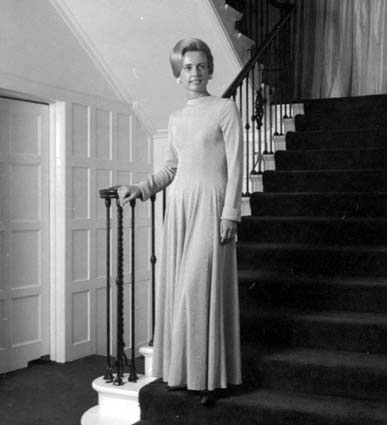
Lady Sonia McMahon (nee Hopkins) was the wife of William McMahon. The grand-daughter of one of Australia’s wealthiest men, she was an occupational therapist before her marriage. Glamorous and charming, Sonia made international headlines when she wore a revealing dress to a dinner at the White House, showing more leg than was usual. Sonia is a variant of Sonya, Russian pet form of the name Sophia, from the Greek for “wisdom”; Sonja is another common variant. Sonia is also an Indian name, meaning “golden” in Hindi. The name was popularised in the English speaking world through a 1917 best-selling novel called Sonia: Between Two Worlds by Stephen McKenna. The title character is an upper class English girl with big brown eyes and a face like a Sistine Madonna. Sonia first entered the charts in the 1920s, debuting at #309. It entered the Top 100 in 1967, around the time Sonia McMahon came into the public eye, and peaked in 1971 at #52 – the year she wore “that dress”. Leaving the Top 100 in the 1980s, it hasn’t charted since the early 2000s, having been well and truly taken over by popular Sophia.

Tamara
Tamara “Tamie” Fraser (nee Beggs) is the wife of Malcolm Fraser. Ambivalent about being in the public eye, she proved an excellent political campaigner, and was the first prime ministerial wife to employ her own secretary; Tamie also oversaw extensive renovations in The Lodge. She continues to be active in community affairs. Tamara is the Russian form of Tamar, a Hebrew name meaning “date palm”. The name became better known in the English speaking world because of Russian ballerina Tamara Karsavina, who moved to London as a ballet teacher in the 1930s. Tamara first joined the charts in the 1950s, debuting at #522. Its rise in the 1950s seems to be as a formal option for the name Tammy, which became popular because of a Debbie Reynolds romantic comedy called Tammy and the Bachelor: the song Tammy from the film became a smash hit. Tamara joined the Top 100 in 1975, when Tamie Fraser came into the public eye, and peaked in 1989 at #56, leaving the Top 100 in the early 2000s. Currently it is around the 300s, and shows some signs of a slight recovery.

POLL RESULTS
People’s favourite names were Margaret, Antonia and Martha, and their least favourite were Blanche, Ethel and Ilma.

(Photo shows Sonia McMahon in the entrance hall of The Lodge, 1971)

Famous Name: Richard

21 Wednesday Jan 2015

Posted by A.O. in Famous Names

≈ 3 Comments

Tags

aristocratic names, classic names, European name popularity, famous namesakes, fictional namesakes, germanic names, medieval nicknames, name history, name meaning, name popularity, nicknames, royal names, saints names, Shakespearean names, surnames, UK name popularity, US name popularity

450245-1b3cb7a2-9613-11e4-9bd9-740a91fb6db7

Famous Namesake
I seem to end up doing names connected with cricket every January, and this year my choice was inspired by seeing The Richies in the stands on Day 2 of the Sydney test against India early in the month – otherwise known as known as Richie Day, which takes place the day before Jane McGrath Day.

The Richies are a group of cricket enthusiasts who dress up as iconic cricket commentator Richard “Richie” Benaud, complete with trademark silver hair, cream jacket, sunglasses, and oversized Channel Nine microphone (it is law that a Richie can only speak on Richie Day if they talk into their microphone).

The Richies were founded in 2010 by Michael Hennessy as a homage to Richie Benaud, who had just announced his retirement from full-time commentating. The first year there were ten Richies, this year there were 350; next year they hope to fill a whole bay, which means 680 Richies.

The group were inspired by comedian Billy Birmingham, who has gained fame for his cricket parodies under the name The Twelfth Man, where he often impersonated Richie Benaud’s distinctive voice. This year Billy Birmingham put The Richies through their paces, and revealed his own sons had dressed as Richie Benaud for the 2013 Test.

As for Richie Benaud himself? He wasn’t just a much-loved commentator, but a great all-rounder who debuted in the 1950s, and was captain for 28 tests between 1958 and 1962 without losing a series. He was the first player to complete the test double of 200 wickets and 2000 runs, and has been inducted into the Australian Cricket Hall of Fame and the ICC Cricket Hall of Fame.

Now 84 and battling skin cancer, Richie Benaud will appear with Billy Birmingham in advertisements for Australia Day this year – but don’t expect Richie to fully endorse his comedy double.

Name Information
Richard is a Germanic name which comes from ric (“power, rule”) and hard (“brave, hardy”), usually translated as “brave ruler”. It was introduced to Britain by the Normans, and has become one of the stock of standard English names, while also well known in other European countries.

Richard has been commonly used by English royalty and aristocracy. One of the best known is Richard I, known as Richard the Lionheart. Said to be tall, elegant, and extremely handsome with red-gold hair, he had a reputation as a great military leader, and remains an enduring figure of romance.

The last English king with the name was Richard III, whose reputation was so tarnished after his death that the name has never been used for a British monarch since (the child who would have been Richard IV was one of the “princes in the Tower” who disappeared in a sinister way, which didn’t help its fortunes as a royal name).

Richard III is infamous from Shakespeare’s play of the same name, where he is portrayed as a deformed, murderous, power-hungry villain. Recently, Richard III has been back in the news after his skeleton was dug up in a Leicester car park, with signs of many injuries from his death at the Battle of Bosworth Fields. Although the skeleton did have scoliosis, so that one shoulder would have been higher than the other, facial reconstruction shows him as looking young and quite pleasant rather than a hideous monster, and modern historians have been kinder towards him.

There are a number of British saints named Richard, including Saint Richard of Chichester, the patron saint of Sussex. There is a Saxon saint named Saint Richard the Pilgrim, but details of his life are sketchy, and Richard doesn’t seem to have been his real name. There are also several Saint Richards who were martyred for their faith in the 16th century.

Because the name has remained in common use for so many years, it is easy to think of famous men named Richard. You might think of composers Richard Strauss and Richard Wagner, singers “Little Richard” (Richard Penniman) and Richard Ashcroft, Beatles drummer Richard Starkey “Ringo Starr”, comedians Richard Pryor and Rich Hall, actors Richard Burton, Richard Attenborough, Richard Gere, Richard Harris, Richard E. Grant, Richard Wilson, and Richard Dean Anderson, presenter Richard Hammond, scientist Richard Dawkins, charismatic entrepreneur Richard Branson, and disgraced former US President Richard Nixon, who was named after Richard the Lionheart.

Richard is a classic name which has never left the charts. It was #26 in the 1900s, and reached its peak in the 1940s at #15. It didn’t leave the Top 100 until the early 2000s, and has gently declined so it is now around the mid-200s. Despite being at its lowest point so far, the name is still in reasonable use and relatively stable. Its popularity is about the same in the UK, and in the US is around the mid 100s. Richard is most popular in the Czech Republic.

Richard has many nicknames, but one thing not helpful to the name is that most of them seem rather dated. Dick, once so common that we could say every Tom, Dick and Harry to mean “every man”, is now frowned upon as an embarrassment, while Dicky reminds older people of “Tricky Dicky” Nixon. Rick and Ricky both peaked in the 1960s, and while I quite like Rich, Richie and Ritchie, Richie Rich, Richie Cunningham, and Ritchie Valens might give them a 1950-ish feel.

You can find medieval short forms of Richard through the English surnames they have inspired. Hick and Hitch led to Hitchens, Higg to Higgins, while Ditch led to Deek and Deex. Dickon was King Richard III’s nickname – also a character in The Secret Garden. Dickon was transformed into names such as Diggin and Diggle, which are quite a lot like fashionable Digby, and make Digger or Digs seem like reasonable vintage-style short forms of Richard. Dix is also a possibility, in line with names such as Max.

With Richard, you get a solid classic name that has never been out of the 200s; a name good enough for kings and saints and celebrities, as well as all manner of ordinary men. It’s a name which matures well, and looks professional on a CV. In fact, as Richie Benaud would say, you might think this name is perfectly “marvellous”!

POLL RESULTS
Richard received an approval rating of 44%. 22% of people were really bothered by the possibility of Dick being given as the nickname for Richard, while 19% saw the name as dated and old-fashioned. However, 14% thought Richard was a name with a solid meaning and history behind it. 3% disagreed with the majority, and thought it was silly and immature to believe there was anything wrong with the nickname Dick.

Famous Name: Duke

14 Wednesday Jan 2015

Posted by A.O. in Famous Names

≈ Comments Off on Famous Name: Duke

Tags

aristocratic titles, famous namesakes, historical records, honouring, Irish names, middle names, name history, name meaning, name popularity, naming laws, nicknames, screen names, slang terms, stage personae, surname names, UK name popularity, US name popularity, vintage names

Front page only -Dukes_Day_A4_Jack McCoy 27 June

Famous Namesake
Last weekend there was a festival at Freshwater, on Sydney’s northern beaches, in honour of Hawaiian surfer Duke Kahanamoku. A century ago, Duke introduced surfing to Australia, riding a board he fashioned from Sydney timber on Christmas Eve, 1914. It was so popular that he gave a second demonstration on January 10 1915.

It was Australian swimmer Cecil Healy who brought Duke here. Cecil was one of Australia’s greatest competitive swimmers at the turn of the twentieth century, saving numerous people from drowning as a surf lifesaver, touring Europe to demonstrate the daring new “crawl” stroke, and competing in the earliest modern Olympic Games.

At the 1912 Games in Stockholm, Cecil and Duke both qualified for the semi-finals in the 100 metre event, but because the American team missed the bus, none of the US swimmers qualified for the finals. Cecil intervened, and helped the Americans appeal: because of his assistance, the Americans were allowed to swim another race, and Duke qualified for the finals. In the final, Duke won easily, and Cecil came second.

His good sportsmanship had cost Cecil a gold medal, but it gained him a friend. When Cecil invited Duke to come to Australia and give swimming and surfing exhibitions, he could hardly refuse. Just two years after introducing surfing to California, Duke was at Freshwater to demonstrate the Hawaiian sport. The crowd went wild, and in a heartbeat, Australia’s love affair with surfing had begun.

Today Freshwater boasts the title Home of Australian Surfing. Duke’s board is on display at the Freshwater Surf Life Saving Club, and there is a bronze statue of Duke Kahanamoku on the headland at Freshwater. Freshwater is a sister city to Waikiki in Honolulu, and every year it celebrates Duke’s Day, to honour the Hawaiian athlete who made such a huge contribution to Australian culture.

Duke Kahanamoku continued to win Olympic medals, and later became a Hollywood actor. In 1940, he married Nadine Alexander, an American dancer whose mother had been an opera singer from South Australia. Sadly, Cecil Healy was killed on the Somme in 1918, the only Australian gold medal-winning Olympian to die in battle.

Name Information
Duke is an aristocratic title, traditionally the highest rank of the nobility, just below a monarch. Dukes can also rule their own countries as monarchs, but today there is only one ruling duke – His Royal Highness Henri, Grand Duke of Luxembourg. Although we usually think of dukes as being male, Queen Elizabeth is both Duke of Normandy and Duke of Lancaster.

The word comes from the Latin dux, meaning “leader”. It could be given to a military commander, and also governors of provinces. Later it meant the highest-ranking military officer in a province.

As a slang term, the dukes are the fists, and thus “to duke it out” means to settle a score using your fists. This is probably from Cockney rhyming slang, where Duke of York means “fork”; fork is Cockney slang for “hand”, because they have a similar shape.

The surname Duke could have been given to someone who worked in a duke’s household or was part of his entourage, and as medieval dukes tended to have other nobles around them, many of the early Dukes were of aristocratic origins. The surname can also be derived from the Irish name Marmaduke, meaning “follower of Saint Maedoc”, and it has a long history in Ireland, especially Northern Ireland.

Just as with the surname, Duke can be used as a nickname for the first name Marmaduke, however it is often bestowed or self-chosen as an honorific nickname. Jazz legend Edward “Duke” Ellington was given his nickname in childhood from his elegant manners. Hollywood star John Wayne (born Marion Morrison) also became known as Duke in childhood, because he was always in the company of his dog, Duke. Understandably he preferred Duke to his given name Marion, and when he started out as an actor tried using Duke Morrison as his screen name, but the producers preferred John Wayne. The Thin White Duke was one of David Bowie’s stage personae.

Duke has been used as a personal name since at least the 16th century, and although it originated in England, has historically been more common in the United States. In case you were wondering, Duke Kahanamoku was named after his father, and Duke Kahanamoku Senior was given his name in honour of Prince Alfred, Duke of Edinburgh, who was visiting Hawaii in 1869.

Duke has been on and off the US Top 1000 since 1880, and after a break of more than forty years, it returned in 2013 and is currently #718. In England/Wales, there were 21 baby boys named Duke last year.

Duke can be found as a personal name in Australian historical records from the late 19th century onwards. It is much more common as a middle name, and as it was sometimes given to girls in this position, suggests it was inspired by the surname in many cases. It is often found as a common law nickname, and in one case at least, the baby was christened rather humorously, as his name was Duke Wellington.

The name became problematic in Australia during the 1990s when name laws were introduced, because titles as names were not permitted. This wasn’t much of an issue at the time, as the numbers of parents wanting to call their sons Duke were few and far between – flourishing at the turn of the twentieth century, the name Duke was very much out of fashion back then.

However, things have changed. Not only are vintage names firmly back in style, there have been a number of recent fictional Dukes to raise interest in the name, including Duke from GI Joe (played by Channing Tatum in the movies), Duke Crocker from supernatural drama Haven, Duke Nukem from the video games, and maybe even the Dukes of Hazzard, who got a big-screen outing.

As a result, some parents have begun to chafe against this restriction, and in New South Wales, the name Duke was successfully challenged in 2009, so that it is now permitted in this state. Queensland has revealed that it has registered Duke as a baby name, and in South Australia the name Duke was registered 4 times last year. In Victoria, the name Duke was registered 8 times in 2012, and in Tasmania, Duke was registered twice in 2010.

Some parents may still be avoiding the name in the belief it is outlawed (I have seen babies named Juke and Djuke in a possible attempt to circumvent the name laws), but all signs point to it being an accepted choice. So if you want to use this rather cool vintage name for your son – go for it!

POLL RESULTS
Duke received an approval rating of 52%. 22% of people thought the name Duke was strong and masculine, but 12% thought it was inappropriate because it was a title.

Famous Name: Jasper

07 Wednesday Jan 2015

Posted by A.O. in Famous Names

≈ 5 Comments

Tags

American slang terms, Banjo Paterson, Chaldean names, Christmas names, english names, English slang terms, European name popularity, gemstone names, locational names, name history, name meaning, name popularity, New Zealand, Pashto names, popular names, royal names, saints names, unisex names, William Shakespeare

1024px-Edward_Burne-Jones_-_The_Adoration_of_the_Magi_-_Google_Art_Project

Name Story
Yesterday was Epiphany, which commemorates the Adoration of the Magi in western Christianity. According to The Gospel of Matthew, the magi were learned men from the East who followed a mysterious star to kneel before the baby Jesus, bearing gifts of gold, frankincense, and myrrh.

Although the Bible does not specify a number, it is usually assumed there were three, because there were three gifts. The Magi were Zoroastrian priests from Persia, and the word magi has been traditionally translated as “wise men”, although modern translations of the Bible use the word “astrologers”, as Zoroastrians studied the stars.

Christian legend sometimes calls them the “three kings”, due to a Psalm which says May all kings fall before him. In some countries, January 6 is known as the Feast of Kings, and it is most famous from the Epiphany carol, We Three Kings of Orient Are.

The date of January 6 is purely symbolic – the Magi are supposed to have arrived some time in the two years after the birth of Jesus, and although they are often included in Nativity scenes, the Bible says they visited Mary at her house, not in the stable. Tradition says that after the Magi returned home, they became Christians and were martyred: they are thus regarded as saints.

The Bible being so short on details, legend has filled in the blanks with imaginative flair. The Magi are given names, usually said to be Gaspar, Melchior, and Balthasar. Gaspar is identified as a middle-aged brown-skinned Indian who brings the frankincense; Melchior as an elderly white-skinned Persian who carries the gold; and Balthasar as a young black-skinned Arabian who bears the gift of myrrh.

Perhaps you think it is far-fetched that a group of men would cross the desert (a difficult journey of many months) in order to worship a foreigner of a religion that isn’t even theirs. However, history records that it did happen, at least once.

King Tiridates of Armenia, a Zoroastrian priest of Armenian, Greek, and Persian ancestry, travelled to Rome in 66 AD on a visit to the Emperor Nero with a huge retinue of followers, including his magi. As his tribute king, Tiridates knelt before Nero, proclaiming that he worshipped him as a god (this was mere diplomacy; Tiribates was apparently disgusted by Nero). Unlike the Bible story, it was Nero who gave gifts to Tiridates, and paid for all his travel expenses.

It has been suggested that this state visit may have provided the inspiration for the Adoration of the Magi in the Gospel of Matthew. However, it’s also evidence that the journey of the Magi as described in the Bible has some degree of plausibility.

Epiphany is the traditional date for the end of the Twelve Days of Christmas, and in the past, its eve was celebrated as Twelfth Night, with much feasting and tomfoolery. William Shakespeare wrote his comedy Twelfth Night as an entertainment for the end of the Christmas season: its theme of cross-dressing is appropriate, for it was the rule that everything had to be topsy-turvy. If you went to a Christmas pantomime, you’ll know this tradition continues.

Most people say your Christmas decorations have to come down by Epiphany, and many people will go back to work by this date. I’m not back at work yet – but I am back at blogging! Hope you had a great Christmas and New Year.

Name Meaning, History and Popularity
Jasper is the English form of Gaspar, derived from the ancient Chaldean word gizbar, meaning “treasurer”; the modern Hebrew word for treasurer is still gizbar. These days the word treasurer doesn’t sound too glamorous (if you’ve ever been treasurer of your local tennis club or something, you’ll know it’s essentially a boring, thankless job), so the name is sometimes translated as “master of the treasure house”.

The traditional names for the three Magi date back to at least the 6th century, and Gaspar is the only one whose name may be inspired by a real person. The apocryphal Acts of Thomas mentions a Zoroastrian king named Gudnaphar, and Gondophares was a traditional name and title in the House of Suren – they were kings of Iranian background who ruled in the area around northern India.

According to tradition, Saint Thomas the Apostle travelled to India as a missionary. Gondophares was identified in medieval texts as the Indian king who brought incense to the baby Jesus as one of the Magi, and was converted to Christianity by Saint Thomas. Gondophares is the Greek form of the Pashto name Gandapur, meaning “may he find glory”.

Jasper is also the word for a gemstone which is usually red, yellow, brown or green in colour. The word comes from the Old French for “spotted stone, speckled stone”, and may be Semitic in origin. It was a favourite gemstone in ancient times, especially the green variety, although the ancients probably called many different minerals “jasper”; it is mentioned in the Bible. Because of the gemstone, Jasper has occasionally been used as a name for girls.

Jasper has been used as an English name since the Middle Ages, in honour of the saint, although it was never highly popular. It has also been used as a slang term – in England, it is an old country term for a wasp (because it sounds a bit similar), and in America, it has been used as slang for a simpleton or hick (perhaps because it sounded a backwoodsy sort of name there).

There is a Lake Jasper in south-west Western Australia; it has very clear fresh water and is popular for picnics. It’s named in honour of Jasper Bussell, who died in infacy, and was the brother of the famous Grace Bussell, who we met earlier. Its use by the wealthy and prominent Bussells suggests a rather upper class image in the 19th century.

There is also a small village in the mountains of New South Wales named Wee Jasper, where Banjo Paterson once had a country home. Folklore relates the village got its name due a Scottish settler who came home with a “wee jasper” in his pocket, the gemstone found in some stream amongst the hills.

Jasper has ranked in Australia since the 1990s, when it debuted at #237. It joined the Top 100 in 2009, at #98, and since then has remained around the bottom of the Top 100. Currently it is #82 nationally, #87 in New South Wales, #77 in Victoria, #87 in Queensland, #22 in Tasmania, and #80 in the Australian Capital Territory.

In the English-speaking world, Jasper is most popular in Australia, as it is not yet Top 100 in the US or UK, although rising, and has just joined the New Zealand Top 100 at #85. It isn’t popular in many other countries, but ranks highest in Belgium, at #55.

Jasper is a handsome and sophisticated choice related to gifts, gems, and treasure that will please many parents for not being overused. It isn’t highly popular anywhere in the world, and in Australia has never been higher than the bottom quarter of the Top 100; nor does it show signs of rising alarmingly. The name has its detractors, due to some image problems from popular culture, but no doubt that’s one of the factors keeping use down. I think it helps make Jasper seem a bit quirkier.

And the name commemorates one of the most beautiful Christmas stories – who could resist the magic of a star guiding your way?

POLL RESULTS
Jasper received an excellent approval rating of 89%, making it the most highly-rated boy’s name in the Famous Name category for 2015. People saw the name Jasper as hip and quirky (29%), handsome or cute (22%), and cool and sophisticated (19%). However, 3% thought the name seemed creepy and evil. Only one person thought Jasper was too old-fashioned, and just one thought it was too posh.

(Picture shows The Adoration of the Magi, an 1890 tapestry by Edward Burne-Jones)

Famous Name: Ava

17 Wednesday Dec 2014

Posted by A.O. in Famous Names

≈ 3 Comments

Tags

celebrity baby names, english names, famous namesakes, germanic names, modern classics, name history, name meaning, name popularity, name trends, Persian names, royal names, saints names, US name popularity

Poster - On the Beach (1959)_11

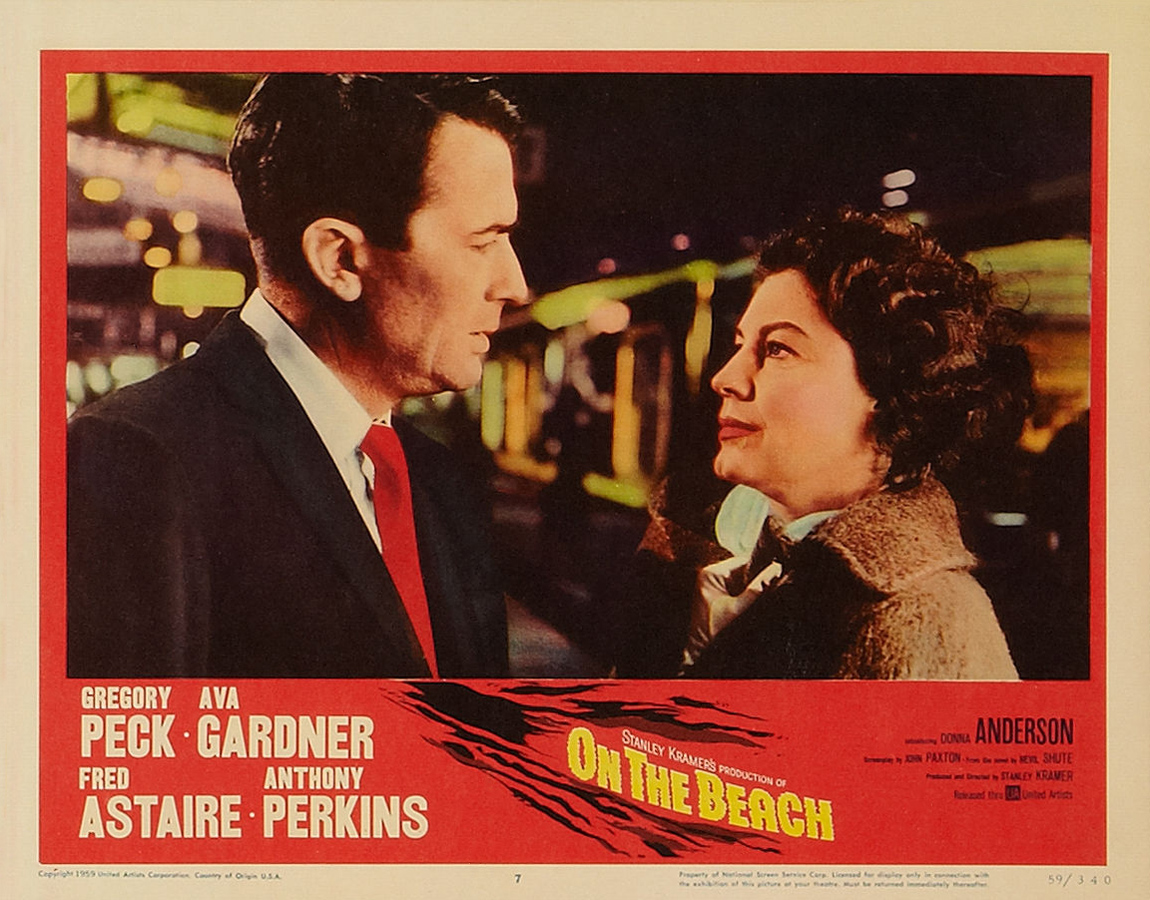
Today is the 55th anniversary of the release of Stanley Kramer’s On the Beach, starring Ava Gardner and Gregory Peck. Based on the novel by Nevil Shute, the film depicts the aftermath of a nuclear war, set in the near-future of the 1960s. With most of the world’s population dead, the film centres on a small group of people in Melbourne waiting for the lethal fallout to reach them.

Most of On the Beach was filmed on location, and a piece of local folklore is that Ava Gardner described Melbourne as “the perfect place to make a film about the end of the world”. Melbourne was a quiet little place in the 1950s, the first day of filming was abominably hot, and the media was horrible to Ava Gardner, so you could forgive her for being a bit grumpy. However, the quote was actually invented by a Sydney journalist with his tongue in cheek – whatever Ms Gardner’s thoughts about Melbourne, she was too professional to broadcast them publicly.

On the Beach made a financial loss, but was praised by critics, and has become a (slightly neglected) classic. The film created a ruckus in Melbourne, which went so crazy over seeing big Hollywood stars in their little city that they positively frightened most of the cast. Even the Australians cast as extras were mobbed as if they were A-listers. The film’s grim message was considered so traumatic that the Salvation Army, who play a small but significant role in the film, were on hand to provide counselling to people in cinemas.

Another of the film’s achievements was to bring attention to Waltzing Matilda, which is used to great effect during the closing scenes of On the Beach. It also opens the film, used to immediately signify an Australian setting. Waltzing Matilda became more popular after the film – not just in Australia, but overseas as well.

I read On the Beach as a young teenager, and found the story utterly compelling because for once the scenes of horror are set in Australia. The book has sometimes been criticised for showing the end of the world happening so quietly, and the characters going about their daily lives as calmly as possible. But I thought it made the story far more chilling, and far more real; many years later, the story is still vivid in my memory.

Ava was a medieval girl’s name, pronounced AH-vuh. It seems to have been a feminine form of the Germanic name Avo, originally a short form of names starting with Avi-. The meaning of it is much debated, but with no agreement reached. One theory is that it meant “desired”, to indicate a long wished-for child, but other ideas are that it came from aval, meaning “strength, power”, or from alfi, meaning “elf”.

In Norman English, the name produced Aveline, which evolved into Evelina, and is the basis for the surname Evelyn, also used as a first name. Another variant was Avis or Avice, which although it looks like the Latin for “bird”, is an elaboration of Ava. Av- names were quite fashionable in medieval times, thanks to Ava.

Two famous medieval Avas are Saint Ava, a Frankish princess who became a nun after being miraculously cured of blindness, and Ava of Melk, an anchorite and religious poet who was the first known female writer in the German language.

While Ava is still said AH-vuh in Germany and most European countries, in modern English it is usually pronounced AY-vuh. Some people see AY-vuh as a modern continuation of the medieval AH-vuh, while others see it as a completely separate modern English name, perhaps a variant of Eva.

While Ava may well have been understood as a form of Eva by some English-speakers, in continental Europe Ava was often understood as related to the Latin word Ave (said AH-veh), meaning “hail, greeting”, as in Ave Maria, or to similar words and names in modern languages. If we discount the English Ava (AY-vuh) on those grounds, then the European Ava (AH-vuh) must also be brought into question.

I don’t think it’s any coincidence that Ava has historically been more common in the United States than other English-speaking countries, because America has had significant immigration from Germany and Scandinavia. You could see the English pronunciation of Ava as the American pronunciation of the name. You’ve probably noticed that Americans tend to pronounce AY sounds rather than AH ones – for example, they often say the name Dana as DAY-nuh instead of DAH-nuh.

Just to add another layer, Ava is also a common Persian name for girls, meaning “voice, sound, call”, and said AH-vuh, making this a very multicultural name.

The name Ava was popularised in the United States in the 19th century by the Philadelphia socialite Ava Lowle Willing, who married John Astor IV (called Jack), from the prominent Astor family. They named their daughter Ava Alice Muriel Astor (born 1902), making this an early celebrity baby name. The Astors divorced, and not long after, Jack Astor was drowned during the Titanic disaster, making him the richest person to sail on the Titanic, and probably the richest person in the world at the time.

Ava Alice Muriel Astor married Prince Serge Obolensky (an admirer of Australian beauty Sheila Chisholm, and her husband’s cousin), and their wedding was the social event of the London season. Ava Astor went on to divorce and marry several more times in both England and the United States; pretty, supremely wealthy, and a patron of the arts, her name was well known on both sides of the Atlantic.

The actress Ava Gardner was born at the end of 1922, not long after Ava Astor had been photographed visiting Tutankhamen’s tomb in Egypt with her fiancé, Prince Obolensky. Unlike many other film stars, Ava Gardner never had to change her name to something more screen-worthy: it was already perfect – glamorous, fashionable, upper-class sounding, and not too common.

Ava Gardner’s film career did not make Ava a popular name in her lifetime. Continuously on the US Top 1000 since the late 19th century, and #751 in 1941 when Gardner first began getting parts in films, it peaked at #376 during the 1950s, at the height of Gardner’s success.

Ava left the US Top 1000 during the 1970s, when Gardner’s career had waned, but returned in the 1980s, after Ava Gardner suffered two strokes and became bedridden. Her serious health problems were widely publicised, putting her name back in the news, and no doubt there was genuine shock and sympathy for the Hollywood star’s condition.

The name Ava began rising after Ava Gardner’s death in 1990, and its popularity was further hastened by celebrities choosing it as a baby name, including Aidan Quinn, Heather Locklear, and Reese Witherspoon – in the last case at least, as a conscious tribute to the late Ava Gardner.

In Australia, the name Ava first ranked in the 1990s at #465, and rose so rapidly that it was in the Top 100 by 2003, debuting at #70. Bad luck to all those parents who called their baby girl Ava in the 1990s because they saw it an an underused name! Or maybe good luck that they jumped on the trend nice and early.

In 2005, Ava made a massive leap forward to #22, as this was the same year Hugh Jackman and his wife Deborra-Lee Furness welcomed their daughter Ava. In 2011 the name Ava joined the Top 10 at #9, the year after Lleyton Hewitt and Bec Cartright welcomed their youngest daughter and named her Ava.

Currently Ava is #3 nationally, #8 in New South Wales, #2 in Victoria, #8 in Queensland, #3 in Western Australia, #17 in Tasmania, #17 in the Northern Territory, and #2 in the Australian Capital Territory. It was one of the fastest-rising names at Baby Center Australia last year.

Ava is highly popular throughout the English-speaking world, being a Top 10 name in the United States, Canada, England/Wales, Ireland, Scotland, and New Zealand. However, it is slightly more popular in Australia than anywhere else, and has so far peaked higher here than in any other country.

Yes, Ava is very popular – so much so that some parents may be wary of choosing it. But it is also boosting the fortunes of other names, such as sound-alikes Ada, Avery, Aria, Arya and Ayla, and has risen in tandem with Eva, Evie, Evelyn and Ivy.

This modern classic has been very influential on contemporary girls’ name trends. Maybe you won’t use Ava because it is too popular, but you might use one of her style-sisters, like Isla or Maeve. Or perhaps something unusual like Alba, Avalon, Avril or Aveley now seems like a good choice, or an older name like Ida or Maida no longer seems fusty, but pretty and fresh.

The power of Ava is such that we will be hearing her echoes for many, many years to come.

POLL RESULTS
Ava received a respectable approval rating of 64%. 25% of people saw it as simple and elegant, but 19% thought it was too popular. Nobody thought the name Ava was ugly or tacky.

Famous Names: Heston and Tex

10 Wednesday Dec 2014

Posted by A.O. in Famous Names

≈ Comments Off on Famous Names: Heston and Tex

Tags

American names, birth notices, code names, controversial names, english names, famous namesakes, historical records, locational names, middle names, name history, name meaning, name popularity, name trends, names of American states, Native American names, nicknames, Old English names, rare names, screen names, surname names, UK name popularity, unisex names, US name popularity

653922-f8a752f2-67cc-11e4-b8fc-0b9f02c7ac0d

In 2014 Melbourne was named the world’s most liveable city by the Economist Intelligence Unit for the fourth year in a row. Their annual survey rates 140 cities out of 100 in healthcare, education, stability, culture and environment, and infrastructure, and Melbourne received 97.5 overall, with perfect scores in healthcare, education, and infrastructure.

To celebrate Melbourne’s continuing success, I thought we’d look at two names that have recently made the news there. Melbourne is not only a very cultured city, it’s also rather quirky, so I picked a couple of cultured, quirky guys.

HESTON
Heston Blumenthal is a multi award-winning British chef at the forefront of the “New Cookery”. Inspired by the playful nature of historic British cuisine, he follows a rigorously scientific approach to cooking, and has unleashed on an appreciative public such delicacies as snail porridge, chocolate wine, and bacon and egg ice cream.

Well known from his television shows, Heston has also been a celebrity chef on MasterChef Australia, been a guest at food festivals in Australia, and you can also buy his products through Coles (maybe you have already purchased one of his Christmas puddings). A great admirer of Australia, Heston has told Britons of Aussie food trends they should copy, including charcoal chicken, Tim Tams, quality beef, street food, and good coffee [article expired].

Early this year it was announced his triple Michelin-starred restaurant The Fat Duck, recognised as the best in Britain, will be temporarily relocated to Melbourne’s Crown Casino next February. He made a savvy move taking The Fat Duck to Melbourne, which has a marvellous foodie culture. The tasting menu is $525 per person (not including drinks), making The Fat Duck the most expensive eatery in Melbourne, more than twice as pricey as its current premier restaurant, Shannon Bennett‘s Vue du Monde.

Despite this hefty price tag, demand was so strong that a ballot system was introduced, with potential patrons having to register before the end of October. Unfortunately some scammers managed to hack into the ballot system, and are now scalping reservations for up to $1000 (you still have to pay for your food on top of that). However, never fear people with more than $1500 to spend on one meal, after six months the restaurant will morph into Dinner by Heston Blumenthal.

Heston is an English surname which comes from a place name; originally a Saxon village, Heston is now a suburb of west London. One of its claims to fame is that British prime minister Neville Chamberlain flew from Heston Aerodrome to Germany in 1938 for uselessly appeasing talks with Adolf Hitler. Naturalist Sir Joseph Banks, who discovered so many species of Australian plants and has the banksia flower named after him, is buried at St Leonards church in Heston.

Heston is usually thought to mean “enclosed settlement” in Old English, because it was part of an area surrounded by forest and woodland. For the same reason, another theory is that it meant “brushwood farm”.

The surname is strongly associated with Hollywood legend Charlton Heston, who starred in films such as The Ten Commandments, Ben-Hur, and Planet of the Apes. Born John Charles Carter, and known as Chuck or Charlie, he created his screen name by combining his mother’s maiden name, Charlton, with his stepfather’s surname.

Heston Blumenthal (who wasn’t rapt with his name as a child) asked his mother if he had been named after Charlton Heston, but she replied that she simply liked the name. When asked about the origins of his name, Blumenthal joked that perhaps his parents had a night out in London and parked at Heston Services (a motorway service station). The headline on the front cover of The Times was Top Chef Named After Parents’ Love of Motorway Services, requiring many apologies from Heston to his mum and dad.

Heston may be unusual, but it is by no means unique, being found thousands of times in historical records going back to the 16th century. There are a few examples of Heston being used as a first name in Australian records, although it is more common in the middle.

It’s a surname name for boys which is is rare yet on trend, and seems pretty cool, although I do think it will instantly remind everyone of the chef. Just like Mrs Blumenthal, you may be required to repeat that you just liked the name. Heston has also highlighted another issue with his name – American actress Tina Fey told him it translates as “shit on you” in Greek, so this is a name which does not travel well, at least not to Greece.

TEX
Tex Perkins is an Australian rock star, best known for fronting The Beasts of Bourbon and The Cruel Sea, but part of many other innovative musical acts. Recently he threw his hat in the ring as an independent candidate for the marginal seat of Albert Park in last month’s state election. His single policy? To get funding for the Palais Theatre in St. Kilda, a heritage-listed concert venue which needs a $40 million refurbishment.

Having gained the sitting Labor candidate’s promise of partial funding if he was elected, Tex directed his preferences to the ALP, then told people not to vote for him, but for Labor instead, and on election day, his How to Vote card instructed them to place the ALP first on the ballot paper. That’s taking self-effacement to a new level. His plan worked – Labor was elected, both in Albert Park and across the state. Let’s hope they honour their promise to the Palais. (Tex still got more than 1000 votes).

Tex is a nickname which is short for Texas, the US state. The state’s name comes from a Native American word in the Caddo language, tejas, meaning “friends, allies”. It was the name the Spanish called the Caddo, and the land they lived on, in today’s East Texas.

There is a Texas in Australia too, a town in southern Queensland. It is said that the name came about because of a territorial dispute between the owners of the land and some squatters – once the legalities were sorted out, the owners humorously called their land Texas because the United States and Mexico had a dispute over Texas, settled by the Mexican-American war. The town of Texas has featured in several country music songs, including one by James Blundell, who has spent quite a bit of time there.

The nickname Tex can be given to someone from the state of Texas, but can also be taken as a code name, and is a favourite for people with a cowboy, country, or Western persona, such as country music stars, cowboy actors, and rodeo promoters.

British soldier Keith “Tex” Banwell was the son of an Australian soldier, and lived in Australia for a few years as a child. A World War II hero who acted as General Montgomery’s double, he helped the Dutch Resistance, and was taken prisoner a few times, spending several months in Auschwitz after refusing to betray his friends. A character straight out of an adventure novel, Tex was his wartime code name.

Tex Morton (born Robert Lane) was a country music pioneer in New Zealand and Australia, and had a career that lasted from the 1930s to the 1970s. Dubbed the Singing Cowboy Sensation, the New Zealand-born yodelling whipcracker and sharpshooter performed at the Grand Old Opry and was a major contributor to the Australian country music scene. Tex Perkins (born Gregory Perkins) followed this lead, as he began in cowpunk, and has taken a Johnny Cash tribute show on the road.

Tex was in the US Top 1000 around the 1940s, but is now a rare name – only 11 boys were named Tex last year, although a further 11 were named Texas, perhaps called Tex on an everyday basis. It’s even less common in the UK, where less than three boys (maybe none) have ever been named Tex, although 19 girls (a meteoric rise) were named Texas, and maybe have Tex as a nickname.

In Victoria, 6 boys were named Tex in 2012, and it’s a name I see fairly regularly in birth notices; to me it seems as if the numbers might even have risen. Perhaps Tex Perkins is helping the name along, although I don’t know if any have actually been named in honour of the rock star. Tex is a great little nickname name, with a cool X-ending like Max, Rex, or Fox. It has a bit of a cowboy feel to it, although Tex Perkins makes it seem a bit rockstar too.

Two cool, charismatic boys names that are a little out of the ordinary – but which one do you prefer?

POLL RESULTS
Both Heston and Tex received approval ratings of 40%, but more people loved the name Tex.

(Picture shows Tex Perkins outside the Palais Theatre; photo from the Herald Sun)

Famous Name: Owen

26 Wednesday Nov 2014

Posted by A.O. in Famous Names

≈ 6 Comments

Tags

Arthurian names, classic names, famous namesakes, Frankish names, French names, Greek names, Irish names, name history, name meaning, name popularity, popular names, royal names, saints names, Shakespearean names, Welsh names

P08567.002

Owen Glendower Howell-Price was one of a family of brothers from the greater Sydney region who served with distinction during World War I. Owen was studying agriculture when war broke out, and he was commissioned second lieutenant in the 3rd Battalion of the Australian Imperial Forces.

Appointed assistant adjutant, he was immediately promoted when the adjutant was killed on the first day of the Gallipoli landing. Promoted to captain, he won the Military Cross for his fighting at Lone Pine, and due to heavy casualties, was temporarily in charge of the whole battalion. A fine trainer and organiser, he continued fighting even when wounded.

After the evacuation from Gallipoli, Owen was sent to northern France where his courage set a magnificent example during those bloody battles, always placing himself in the most dangerous positions. He was awarded a Distinguished Service Order for his leadership abilities, and promoted to lieutenant-colonel.

In 1916 Owen was shot in the head, and died the following day; his last words were: “Give my love to the battalion”. The young officer, just 26 when he died, was perhaps too serious and responsible for real popularity, but behind his stern manner lay a deep loyalty to his men, and his final thoughts were for them.

Owen’s brothers Philip and Richmond were also killed in France, so of their six boys, five of whom served overseas during World War I, the Howell-Prices lost half.

Owen is the modern form of the medieval Welsh name Owain. One of the most famous of its namesakes is Owain mab Urien, a 6th century prince from one of the kingdoms of northern Britain who fought valiantly against the Angles, and was killed in battle, thus ending any hope that the kingdom could continue.

So celebrated were the victories of he and his father, King Urien, that they were given a place in Arthurian mythology as Knights of the Round Table, despite being more than a generation too late to be contemporaries of any historical King Arthur. In Arthurian legend, Owain is often said to be King Arthur’s nephew, and the son of Morgan le Fay.

There have been several other British and Welsh kings and princes named Owain. Owain ap Gruffudd was known as Owain the Great, and the first to be known as Prince of Wales. Owen of the Red Hand was a Welsh soldier who fought with the French against the English during the Hundred Years War, and was a claimant of the title Prince of Wales until his assassination. Like King Arthur, he is supposed to be merely sleeping until he can become king of the Britons.

Owen Glyndŵr (or Glendower) was the last native Welshman to hold the title of Prince of Wales, and instigated the Welsh revolt against Henry IV. His uprising was fiercely fought, long-running, and initially quite successful, but ultimately the Welsh were defeated. Owen Glyndŵr evaded capture, ignoring offers of a royal pardon from Henry V, and was never betrayed, despite having a large reward on his head.

He features in William Shakespeare’s Henry IV, Part 1, and is an important figure in Welsh nationalism, on par with King Arthur, and has the same familiar theme of simply waiting until Wales is threatened so that he can once again rise to its defence. It was this Welsh national hero that Owen Howell-Price was named for: his father was born in Wales, and his mother was of Welsh heritage.

Owen Tudor, a courtier of Henry IV whose father had been one of Owen Glendower’s rebels, fought for the English at Agincourt. He secretly married Queen Catherine Valois, the widow of Henry V, and became the founder of the Tudor dynasty, which included the powerhouse Henry VIII, and reached its final flowering in Elizabeth I.

There is a 7th century Saint Owen, a man of high rank who became a Benedictine monk in England, and a French Saint Owen, or more correctly Ouen, who was a Frankish bishop of Rouen. Ouen is based on the Frankish name Audoin, perhaps based on a Germanic name such as Odwin. Yvain is the usual way of transliterating Sir Owain’s name in medieval French chronicles.

The origin of the name Owain is not known for sure. It is often said to be a Welsh form of the Greek name Eugenius or Eugene, but another theory is that it is a Welsh form of the medieval Irish name Éoġan (modernised as Eoghan), which is said exactly the same as Owen. Unfortunately, it is not quite sure what this means either – some say it means “born from the yew tree”, although others are of the opinion that this is also a form of Eugenius, bringing us back full circle.

Although etymologists cannot agree among themselves, what is clear is that Owain shares a similar sound with several other names, like Eoghan and Eoin, and may have been understood as their Welsh equivalent, even if of a different origin.

Owen is a classic name which has never left the charts in Australia. It was #112 in the 1900s, and joined the Top 100 the following decade, remaining there until the 1950s. It reached its lowest point in the 1990s at #166, then began climbing steeply. It reached the Top 100 again in 1997 at #85, then returned in 2003 at the same level. Currently it is #73 nationally, #90 in New South Wales, #81 in Victoria, #86 in Queensland, #46 in Western Australia, #47 in Tasmania, where it was the fastest-rising boys’ name last year, and #67 in the Australian Capital Territory.

This is a handsome, solid classic which has never been out of the Top 200. It has a rich royal history which has become intertwined with romantic legend, yet it feels very modern. Rising gently in the charts, it is now at its highest level of popularity, and fits in perfectly with contemporary name trends. It’s a softer-sounding boys’ name that is still very masculine, and even heroic, which might make it easy for parents to agree upon it. It is certainly a very easy name to own, and if you choose it, you will be owin’ nobody an explanation. Oh, when it’s time to pick a baby name, it’s Owen for the win!

POLL RESULTS
Owen received an outstanding approval rating of 85%, making it one of the highest-rated names of 2014. People saw the name Owen as cute on a little boy but dignified on a grown man (28%), handsome and classic (23%), and strong and masculine (14%), while 12% loved its connection to Arthurian myth and Welsh legend. However, 6% thought it was too popular. Nobody thought the name Owen was cutesy or wussy.

(Picture shows the officers of the 3rd Battalion; Owen Howell-Price is second from the right in the second row from the front. Of these 26 men, 14 of them were killed in battle. Photo from the Australian War Memorial).

Waltzing With … Constance

09 Sunday Nov 2014

Posted by A.O. in Waltzing with ...

≈ 3 Comments

Tags

aristocratic names, famous namesakes, fictional namesakes, French name popularity, Latin names, name history, name meaning, name popularity, nicknames, Old French names, Puritan names, rare names, Roman names, royal names, Shakespearean names, UK name popularity, US name popularity, virtue names

9-2508527-bun230914key1c_fct667x500x4.0x98.0_t620

This Tuesday is Remembrance Day, so today we will remember a World War I heroine. The Australian nurses who served in World War I have not always received the full recognition they deserve, but the award-winning television miniseries Anzac Girls, based on their stories, has brought these “other Anzacs” attention this year.

More than 5000 Australian nurses served during World War I, many of them in the sort of unofficial capacity that meant they are barely remembered today. They worked under gruelling conditions, underpaid, under-resourced, and often forced to improvise. They shared many of the soldiers’ hardships, including illness, physical danger, and psychological trauma.

Nurses were a vital part of the war effort, taking care of wounded soldiers, and offering comfort and cheer, giving them the courage to go back to the battlefield. No matter what horrors they saw, nurses had to remain cheerful, because the men depended on them. Many nurses became friends with their patients, meaning that losing one in battle brought deeper emotional strain. The Allied soldiers often commented that Australian nurses were amongst the kindest and most caring, and their professional standards were high.

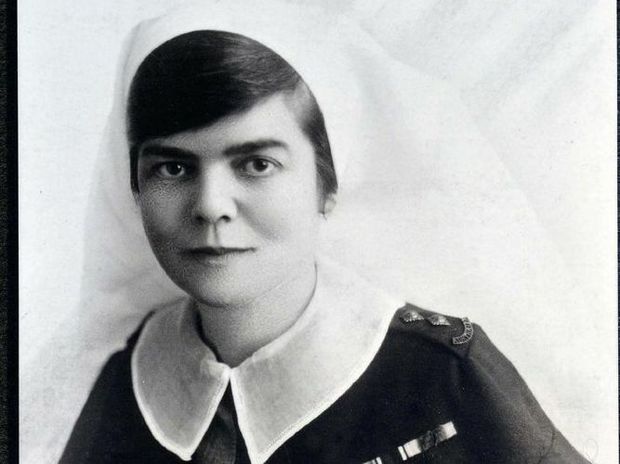
Sister Constance Keys has been on the blog twice before – she was amongst a group of nurses whose photo was used for Girls Names from the 1910s, and a quote from one of her letters was used for the entry on Gallipoli. Constance Keys was a Brisbane nurse who enlisted in the Australian Army Nursing Service in 1914, serving in Egypt, England, France, and Belgium.

Constance treated casualties from Gallipoli, and for most of 1918 was right near the front line in northern France, where her nursing station was heavily bombed more than once. Conditions were wet and cold, greatly increasing the suffering of her patients, and making movement difficult. She and her staff treated those who had been gassed, coped with influenza outbreaks, and had many casualties who suffered from exhaustion as well as wounds.

Sister Keys was discharged from the AIF in 1920 as one of the most highly decorated nurses in the AANS. Twice mentioned in dispatches for bravery, she received the Royal Red Cross, first and second class, and was awarded the Médaille des Epidémies in recognition of her work for French refugees. After the war, she became a hospital matron, and married a Gallipoli veteran; during World War II she trained Red Cross volunteers and entertained soldiers.

After her death, her wartime diaries and letters came to light, as well as her autograph book, in which she managed to get the signature of King George V. They give a clear picture of a young woman who was not only courageous and compassionate, but determined to remain in good spirits.

Under fire, Constance was “only afraid of being afraid”, and in the English fogs, “apart from the constant feeling of loss, quite well”. She writes of her little troubles, such as not having enough food, her hair falling out, and being a “bushwhacker” in regard to fashion, all in bright and amusing terms. She was a caring nurse who wrote letters and postcards to soldiers with no mail, felt guilty that she could only afford to shout ten men to lemonade and not everyone, and took time to make mud pies with a “little French kid”.

Connie also enjoyed those moments of pleasure and fun that came her way, such as buying a lovely pair of buttoned boots in England, seeing exquisite Oriental artefacts in Cairo shop windows, a mess room in Belgium with a sweet-toned piano for her to play, going on leave in Cannes to wake up to eucalypts and wattles outside her window. But she always remained a Queensland girl who had forgotten the taste of mango, and longed for a slice of passionfruit cake.

Constance is the medieval Old French form of the Roman name Constantia, the feminine form of Constantius, derived from the name Constans. This Latin name means “constant, steadfast”, referring to someone steady and faithful in their purpose or feelings. It is the basis for the English word constancy.

Traditional amongst European royalty and nobility, this name literally came over with the Conqueror, because Constance was one of the children of William I, said to have been the most gifted of his daughters. Princess Constance was her mother’s favourite child, so she wasn’t offered in marriage until she was positively ancient by medieval standards – in her mid to late twenties. She married a duke of Brittany, but died not long afterwards, reputedly poisoned by her servants.

Constance has often been used by the British aristocracy. One example is Lady Constance Bulwer-Lytton, a suffragette who went by the alias Jane Warton so she wouldn’t receive special treatment. A vegetarian, campaigner for birth control, prison reformist, and supporter of Morris dancing, she never married, as her mother would not allow her to marry a man from a lower social class. She died from a heart attack and series of strokes in her fifties; it is thought from the force-feedings she endured while hunger-striking in prison.

Other upper-class Constances include the pacifist writer Lady Constance Malleson, who performed as an actress under the name Colette O’Niel, Lady Constance Gaskell, Lady in Waiting to Princess Marina, and (Constance) Gwladys Robinson, Marchioness of Ripon, a patron of the arts and friend of celebrities such as Oscar Wilde and Nellie Melba. This reminds me that Oscar Wilde’s wife was named Constance too.

Constance is a favourite choice for aristocrats in English fiction, such as P.G. Wodehouse’s imposing Lady Constance Keeble, and Lady Constance Chatterley who forms a close connection with her husband’s gamekeeper in D.H. Lawrence’s Lady Chatterley’s Lover. It is also a Shakespearean name, because the historical character Constance, Duchess of Brittany, who married a son of Henry II, appears in King John.

But Constance was not just a name for dames, duchesses, and dowagers. Being a virtue name, it was appreciated by the Puritans, and Constance Hopkins was a teenaged girl who sailed on the Mayflower as a pilgrim: she was a sister of the baby boy Oceanus who was born on the voyage, and often mentioned in name blogs. Constance married and had twelve children, who provided her with seventy four grand-children; she has many living descendents. So the name Constance has plenty of history in America too.

Constance left the US Top 1000 in 2000, is still falling, and last year there were 103 baby girls named Constance – the same number as those called Arwen. It is much more popular in the UK, where Constance is #267 and stable. Constance is most popular in France, where it is just outside the Top 100 and rising.

In Australia, Constance was #83 in the 1900s, and peaked in the 1920s at #76, before leaving the Top 100 in the 1930s. It dropped off the charts in the 1960s, and made a minor come-back in the 1990s at #751. I rarely see a baby named Constance, but it does get a bit of use as a middle name, where it makes a wonderful alternative to the popular Grace.

Constance is a beautiful, elegant traditional name; a strong, brave name for a woman, yet also modest and sensible. It’s in rare use now, but that may be a drawcard for those parents wanting a familiar name that isn’t common. The nickname Connie sounds dated, which probably helps explain its lack of popularity, but you could use something more modern, like Coco or Tansy. However, Constance doesn’t need a nickname in my opinion – it’s lovely all on its own.

POLL RESULT
Constance received an outstanding approval rating of 88%, making it the highest-rated of the featured names of the “Waltzing” category in 2014. 34% of people liked the name Constance, while 30% didn’t mind it. Only 1% (1 person) hated the name the Constance.

(Photo of Sister Constance “Connie” Keys from the Bundaberg News Mail)

Girls Names From Native Australian Flowers

26 Sunday Oct 2014

Posted by A.O. in Name Themes and Lists

≈ 16 Comments

Tags

colour names, english names, famous namesakes, fictional namesakes, flower names, French names, Greek names, historical records, honouring, Latin names, locational names, middle names, mythological names, name history, name meaning, name popularity, name trends, names from television, nature names, nicknames, plant names, popular names, Portuguese names, rare names, retro names, Roman names, scientific names, Scottish names, surname names, vocabulary names

BoroniaHeterophyllaLipstickCu600

Now that it’s spring, I have been taking advantage of the warmer weather and lighter evenings to get out into the garden more. I love the spring flowers, which make me think of floral names, so here are some from our native blooms.

Boronia
Boronia (bor-OH-nee-uh) is a native shrub whose cup-shaped, pink or red-hued flowers give off the most exquisite sweet scent; boronias are related to citrus trees, and the fragrance of boronia is slightly lemony. It is a popular ingredient for perfumes and scented oils, but oddly enough, quite a few people are unable to smell boronia at all. Boronias grow in many parts of Australia, but the Brown Boronia, considered to have the most magnificent scent of all, is from Western Australia. Many people find boronia difficult to grow, and might enjoy this plant more by walking through the bush in spring. The plant has given its name to a pleasant suburb of Melbourne, while Boronia Heights is a suburb of Logan. The boronia is named after Francesco Borone, who was the servant of botanist Sir James Smith, but became his talented and valued field assistant. Francesco died in a bizarre accident when he sleep-walked out the window while recovering from illness. When Sir James discovered the boronia several years later, he named it in Borone’s memory. There are quite a few people with the name Boronia in Australian historical records, mostly as a middle name. Bo would make a charming nickname.

Correa
Correa (KOR-ree-uh) is a small shrub related to the boronia, but its bell-shaped flowers have no fragrance; instead it is the leaves which have a fruity smell when crushed. Correa reflexa is known as Native Fuchsia, because of its long tubular petals which are often a dusky pink colour, although correa can come in a range of colours. Correa grows all over Australia, and is an easy garden plant to grow; it blooms in autumn and winter, making it a great plant to brighten up your garden during the cold months. Correa is named in honour of the Portuguese botanist José Correia da Serra; the Correia part of his name is a common Portuguese surname meaning “leather strap”, originally given to those who worked in the leather trade. Correa is a rare find in Australian historical records, and would make a distinctively Australian alternative to names such as Cora.

Daisy
Daisies are simple little picture-book flowers common all over the world; they are symbolic of childhood innocence. There are many types of daisy native to Australia; one of the most popular is the Paper Daisy, called the Everlasting in Western Australia. Small with crisp, papery petals, they are pink and white, and very easy to grow. The word daisy comes from the Old English for “day’s eye”, as English Daisies open when the sun rises and close in the evening. Daisy has been used as a girl’s name since the 16th century, and became popular in the 19th, along with other floral names. It is also used as a nickname for Margaret, because the French name for the Ox-eye Daisy is the Marguerite. The name Daisy was #58 in the 1900s, and left the Top 100 in the 1920s. It dropped from the charts in the 1940s, made a minor come-back in the 1950s, then dropped out again the following decade. Daisy returned to the charts in the 1980s at #646, and climbed fairly steadily. It rejoined the Top 100 last year at #90, making it one of the fastest-rising names of 2013. Wholesome yet also sexy, retro Daisy still sounds fresh … as a fresh a daisy!

Dianella
Dianella is commonly known as Blue Flax-lily, found in all states of Australia. These woodland plants grow in clumps with small, deep blue flowers that bloom in spring and summer; they are popular garden plants being hardy as well as decorative. The Perth suburb of Dianella was named after the flower, which grew in abundance there before development. Dianella is named after the Roman goddess Diana, goddess of the hunt, because she is associated with woodlands; the name Diana may mean “heavenly, divine”. Dianella seems like an interesting way to honour a Diana or Diane, while giving a nod to native flora, and offering popular Ella as the nickname. The name Dianella shows up several times in Australian historical records, always in South Australia for some reason.

Laurina
Hakea laurina, also known as Pincushion Hakea, is a large upright shrub or small tree from south-west Western Australia. The flowers are very striking, being deep pink or red, and shaped like globes with cream spikes coming out of them; they have a mild fragrance, but are best known for producing nectar, which is very attractive to birds. Hakea laurina blooms in autumn and winter, and this popular garden plant is easy to grow, being both drought-tolerant and frost-hardy. Laurina is simply based on the Latin Laurus, as its leaves are similar to those of the laurel tree. The name Laurina dates to the 18th century, and is an elaboration of the name Laura. It has recently been brought to attention through “Melbourne princess” Laurina Fleure, who was a contestant on this season of The Bachelor: although portrayed as a villain by the show’s producers, she gained a fan following and has been dubbed “Australia’s Carrie Bradshaw”.

Lilac
Lilac (Syringa vulgaris) is a small tree native to the Balkans, famous for its pale purple flowers, which have a beautiful sweet fragrance. Australia has a plant which is sometimes called Native Lilac, or Lilac Vine, and that is Hardenbergia violacea, also known as Purple Coral Pea, as it is member of the pea family. It is a hardy and vigorous climbing vine, capable of growing twenty feet; some varieties are low-growing shrubs. In winter it produces masses of showy violet pea-flower blooms, and is an easy to grow garden plant, popular for training over fences and pergolas. Lilac is a word from the French, which ultimately goes back to the Sanskrit for “dark blue”; it has been used as a girl’s name since the 19th century, when other flower names came into fashion. Lilac has never been a common name, but it is very pretty, and would be right on trend, fitting in with popular Lily and Lila, while having its own distinctive sound. It would also make a lovely middle name to match all those girls’ names ending with -a or an EE sound.

Lotus
The lotus flower (Nelumbo nucifera), sometimes known as Sacred Lotus, Red Lily, or Lotus Lily, is an aquatic plant native to Tropical Asia and Northern Australia; it is thought that the plants were brought to Australia many centuries before European settlement. There are many different varieties and cultivars, with one of them being the Waltzing Matilda Lotus, which is small with pink flowers. Lotus flowers can be easily grown all over Australia, but the native lotus will only be happy in warm areas. The Lotus is a very symbolic plant – as it is a stunning flower which grows out of slimy mud, you can see it as a message that life can be beautiful no matter what your origins or circumstances. In Hinduism, a lotus is often used to indicate divine beauty and spiritual growth; in Buddhism it represents purity and non-attachment to the material world. Asian literature sees the lotus as the ideal of feminine grace, beauty, and elegance. The lotus is also a peace symbol, and Aboriginal people from the Top End held up lotus leaves to strangers to show they meant no harm. With so many wonderful meanings for this lovely flower, it’s surprising how little Lotus has been used as an English name. Many will see it as having a hippie vibe, while others may see it as a car name.

Orchid
Orchids are extremely diverse plants found almost everywhere in the world except on glaciers; they grow in the Arctic, and on Macquarie Island near Antarctica. There are hundreds of types of orchids native to Australia. Orchids are grown for their often beautiful flowers, and excite a passion in those who cultivate and collect them that amounts to an obsession. The Cooktown Orchid (Dendrobium phalaenopsis) is the state emblem of Queensland, and grows naturally in the state’s tropical far north. It is considered to be Australia’s showiest orchid, with beautiful mauve flowers that bloom in the dry season. With care, it can be grown outdoors as far south as Brisbane; any lower than that and you need a glasshouse. Orchid has been used as a girl’s name since the 19th century, and despite the beauty of the orchid flower, it has remained in rare use. This may be because the ORK sound at the start is not considered attractive, or because the flower’s name comes from the Greek for “testicle”. Orchid is an unusual, sophisticated floral choice that starts with the fashionable O, but sounds quite distinct from today’s popular names.

Pandorea
Pandorea (pan-DOR-ee-uh) are climbing vines native to Australasia. Pandorea pandorana, otherwise known as Wonga-wonga Vine, is a popular garden plant, being an easy to grow vigorous climber with glossy leaves. The flowers are bell-shaped, bloom profusely in spring, and are naturally creamy-white with maroon markings, but cultivars come in a very wide range of colours. Hardy and adaptable, Wonga-wonga Vine grows all down the east coast, as well as in the central deserts, and is also native to several Pacific Islands. The wood of the vine was used by Aborigines of central Australia to make spears, and it appears in their mythology as a group of women with very thin and flexible bodies. The plant’s scientific name is after Pandora from Greek mythology, who legend says had a container filled with all the world’s evils, which she opened out of curiosity. It is usually thought the name came about because the Pandorea vine grows a pod which opens to reveal a multitude of seeds; supposedly the plant’s namer was reminded of “Pandora’s box” by the seed pod. The name Pandora has a lovely meaning – “all gifts”. If you are attracted to the name Pandora, but have doubts about the myth, or worry it’s too Avatar, or don’t like the -dora sound at the end, why not consider Pandorea as a floral alternative?

Violet
Violets are small violet-blue flowers, which symbolise modesty – we call a shy person a “shrinking violet”, and connect the flowers with pure femininity. They are associated with death and resurrection in Greek myth, and can be used to denote death which comes too soon, such as for Ophelia in Shakespeare’s Hamlet. Violet Day was commemorated in Australia to remember those who died during World War I; the last Violet Day was held in 1970. There are a few species of violet native to Australia – a favourite for gardeners is Viola banksii, which grows naturally in New South Wales. It has striking purple and white flowers, and is very easy to grow, forming an attractive groundcover. The word violet comes by way of the Latin viola, and simply refers to the colour. Violet has been used as a name since the 16th century in Scotland, influenced by the French name Violette. Violet was #22 in the 1900s, and left the Top 100 in the 1940s, before dropping off the charts in the 1960s. It didn’t return until the early 2000s, when it was #569; this follows the publication of Lemony Snicket’s Series of Unfortunate Events, starring pretty teen inventor Violet Baudelaire. After becoming a celebrity favourite, and having a staggeringly swift rise, it made the Top 100 in 2009 at #85, and was #51 last year, being the fastest-rising name in both Western Australia and Tasmania. This is a dainty retro name that has a dark side: its similarity to the words violence and violate act as a counterweight to its maidenly timidity.

POLL RESULTS
The public’s favourite names were Violet, Daisy and Lilac, and their least favourite were Orchid, Boronia and Pandorea.

(Photo shows a Pink Boronia (Boronia heterophylla), Pink Lipstick variety)

Famous Names: Buddy and Sonny

22 Wednesday Oct 2014

Posted by A.O. in Famous Names

≈ 4 Comments

Tags

birth notices, British name trends, celebrity baby names, celebrity sibsets, english names, famous namesakes, historical records, honouring, name history, name meaning, name popularity, nicknames, rare names, slang terms, UK name popularity, US name popularity, vocabulary names

928474-lance-franklin

It’s spring, which means that football season is definitely over now. If you’re a sad case like me, the second the Grand Final is over, you begin looking forward to next season, which is about five months away. You might also spend time looking back on the season which has just passed.

“Buddy” Franklin and “Sonny Bill” Williams are two footballing names I heard repeatedly throughout the 2014 season; every time I watched a sports update on television, or heard it on radio, it seemed as if either Buddy or Sonny would be mentioned at some point.

Lance “Buddy” Franklin is an AFL star, and the brother of netballer Bianca Giteau, who has been featured on the blog twice as a celebrity mum. Not only a leading goal-kicker and multiple medallist, Buddy has tons of celebrity glamour, due to dating Miss Universe Australia winner and model Jesinta Campbell.

The big story that had him constantly in the sporting news was that he swapped clubs, from Hawthorn to the Sydney Swans, and proved one of the Swan’s best players. In a nail-biting finish, Hawthorn and Sydney played each other in the Grand Final – could Hawthorn win without their star player?

Sonny William Williams, or Sonny Bill Williams, is a New Zealand rugby player and former boxer who has code-swapped into rugby league at times. He also has glamour for his many endorsements from fashion labels, and is one of Australia’s most marketable athletes. Last year he signed with the Sydney Roosters for two seasons, and helped take the Roosters to Premiership victory. Could he once again become a premiership winner in his last NRL season?

In the end, all the hype ended in a bit of a fizzle – the Sydney Swans lost, and although the Roosters were the Minor Premiers, they were knocked out during the finals and did not make it to another Grand Final.

Buddy is a slang word meaning “friend, companion” – the equivalent of the Australian favourite, mate. It may be an affectionate alteration of the word brother, but there is an 18th and 19th century English and Welsh dialect word butty, meaning “work-mate”, which was used by coal-miners, which seems more likely. This goes back to the 16th century term booty fellow, given to a partner that you share your booty or plunder with; booty of course means “gains, prizes”, often with connotations of being ill-gotten. Interestingly, we still sometimes jokingly introduce a friend as our partner in crime.

Buddy has been used as a (mostly male) personal name since at least the 18th century, and seems to have historically been much more popular in America. It isn’t always possible to tell from historic records whether Buddy was the person’s name, or a common-law nickname, but in at least several cases, it was the name they were christened with. There are a number of Buddys in Australian historical records, but in most (maybe all?) cases it seems to be either a nickname or a middle name.

Famous people named Buddy nearly always have it as a nickname, such as rock and roll pioneer Charles “Buddy” Holly, or NRL player Yileen “Buddy” Gordon. Fictional Buddys include Buddy Hobbes, the man who thought he was one of Santa’s elves in the Christmas comedy Elf, and Buddy Love, the arrogant alter ego in The Nutty Professor.

Buddy has been chosen as a baby name by two TV chefs – Bartolo “Buddy” Valastro from American show Cake Boss has a son named Buddy after his own nickname, and British chef Jamie Oliver welcomed his son Buddy Bear Maurice in 2010 (the name chosen by Jamie’s model wife Jools). Buddy Oliver still manages to make the occasional “crazy celebrity baby name list”, although his sisters Poppy Honey Rosie, Daisy Boo Pamela and Petal Blossom Rainbow are usually thrown in as a sort of package deal. Australian cricketer Michael Hogan has a son named Buddy.

Buddy has never charted in Australia, but I do see it in birth notices fairly often, mostly from Victoria. In the United States, Buddy peaked at #202 in the 1930s and left the charts in 1989; last year just 21 boys were named Buddy – the same number as those called Trigger. But in 2013, Buddy was #356 in England/Wales; the numbers began climbing the same year Buddy Oliver was born, although it seems to have slackened off slightly.

Sonny is even more straightforward as a slang term than Buddy, as it is a casual or affectionate way to address a young boy, from the word son. As a baby name, you could see Sonny meaning “my son”, or even as another form of Junior.

Sonny has been used as a boy’s name since at least the 17th century, and as with Buddy, it isn’t always possible to know whether it was the person’s given name or their nickname, but it does seem to have been the name they were christened with in many cases. There are many more Sonnys in Australian historical records than Buddys, and often it was a common-law nickname. This seems to have been given humorously in the case of a Thomas Fogg, who was dubbed Sonny Fogg. Sonny Day and Sonny Love may have been real names, however.

Sonny is a popular nickname amongst famous musicians, such as jazz legend Theodore “Sonny” Rollins, rapper Paul “Sonny” Sandoval from Christian metal band P.O.D., and Flower Child era pop singer Salvatore “Sonny” Bono, who was half of Sonny & Cher before becoming a conservative politician. However, Sonny is the real name of blues guitarist Sonny Landreth, and DJ Sonny Moore, who performs under the stage name Skrillex. Even in fiction, Sonny has a musical heritage, because James Baldwin’s story Sonny’s Blues centres on a young jazz musician.

Sonny has been chosen as a baby name by Sophie Ellis-Bextor from English rock band The Feeling, and by Noel Gallagher, from Britpop band Oasis. American actor Jason Lee also has a little boy named Sonny. Australian comedian Hamish Blake welcomed his son Sonny Donald last year, and NRL player Todd Lowrie welcomed son Sonny in 2011.

Sonny is not an unusual name in Australia, being around the mid-100s. In the United States, Sonny has been solidly on the Top 1000 since the 1920s, and peaked at #428 in the 1970s (perhaps under the influence of Sonny Bono, as Sonny & Cher became household names in this decade due to their successful variety shows on television). Currently Sonny is #842 in the US, and relatively stable. In England/Wales, Sonny became a Top 100 name last year, debuting at #90. It is possible it could also make the Top 100 here one day.

These are two cute, friendly, upbeat, boyish nicknamey names that have gained celebrity support and are very much in line with British trends. Some may see the names as a little too snuggly and huggable, but I think they could also seem cool, or even a bit bad boy.

POLL RESULTS
Buddy received an approval rating of 21%, while Sonny was better received with an approval rating of 53%.

(Picture shows Lance Franklin; photo from the Herald Sun)


← Older posts
Newer posts →

Enter your email address to follow this blog

Categories

Archives

Recent Comments

A.O.'s avatarwaltzingmorethanmati… on Zarah Zaynab and Wolfgang…
Madelyn's avatarMadelyn on Zarah Zaynab and Wolfgang…
JD's avatardrperegrine on Can Phoebe Complete This …
A.O.'s avatarwaltzingmorethanmati… on Rua and Rhoa
redrover23's avatarredrover23 on Rua and Rhoa

Blogroll

  • Appellation Mountain
  • Baby Name Pondering
  • Babynamelover's Blog
  • British Baby Names
  • Clare's Name News
  • For Real Baby Names
  • Geek Baby Names
  • Name Candy
  • Nameberry
  • Nancy's Baby Names
  • Ren's Baby Name Blog
  • Sancta Nomina
  • Swistle: Baby Names
  • The Art of Naming
  • The Baby Name Wizard
  • The Beauty of Names
  • Tulip By Any Name

RSS Feed

  • RSS - Posts

RSS Posts

  • Celebrity Baby News: Melanie Vallejo and Matt Kingston
  • Names from the TV Show “Cleverman”
  • Can Phoebe Complete This Sibset?
  • Zarah Zaynab and Wolfgang Winter
  • Baby, How Did You Get That Name?
  • Celebrity Baby News: Media Babies
  • Celebrity Baby News: Adelaide Crows Babies
  • Celebrity Baby News: Chris and Rebecca Judd
  • Names at Work: Name News From the World of Business and Employment
  • Celebrity Baby News: Sporting Round Up

Currently Popular

  • Girls Names From Native Australian Flowers
  • Girls Names of Australian Aboriginal Origin
  • Celebrity Baby News: Victoria Samba and Mitch Hoare
  • Celebrity Baby News: Katie Underwood and Darren McCoy
  • Flynn Christopher Bloom: A Son for Miranda Kerr and Orlando Bloom

Tags

celebrity baby names celebrity sibsets english names famous namesakes fictional namesakes honouring locational names middle names name combinations name history name meaning name popularity name trends nicknames popular names saints names sibsets surname names twin sets unisex names

Create a free website or blog at WordPress.com.

Privacy & Cookies: This site uses cookies. By continuing to use this website, you agree to their use.
To find out more, including how to control cookies, see here: Cookie Policy
  • Subscribe Subscribed
    • Waltzing More Than Matilda
    • Join 517 other subscribers
    • Already have a WordPress.com account? Log in now.
    • Waltzing More Than Matilda
    • Subscribe Subscribed
    • Sign up
    • Log in
    • Report this content
    • View site in Reader
    • Manage subscriptions
    • Collapse this bar
 

Loading Comments...