• About
  • Best Baby Names
  • Celebrity Baby Names
  • Celebrity Baby Names – Current
  • Celebrity Baby Names – Past
  • Featured Boys Names
  • Featured Girls Names
  • Featured Unisex Names
  • Links to Name Data
  • Waltzing on the Web

Waltzing More Than Matilda

~ Names with an Australian Bias of Democratic Temper

Waltzing More Than Matilda

Tag Archives: name popularity

Waltzing With … Winter

22 Sunday Jun 2014

Posted by A.O. in Waltzing with ...

≈ 6 Comments

Tags

birth notices, english names, Gaelic names, German-Jewish names, historical records, Irish names, middle names, name history, name meaning, name popularity, nature names, season names, surname names, UK name trends, unisex names, US name trends, vocabulary names
flat,550x550,075,f (1)

Yesterday was the winter solstice, so we are now embarking on the coldest part of the year. In Hobart they celebrated the winter solstice with an icy nude swim at sunrise, and declared that being half frozen to death was quite exhilarating.

It’s been a fairly mild winter so far (hopefully in Hobart too), although winter still came as a shock to me as we’d had such a warm autumn. There’s lots to enjoy about winter: the grass which was dry and brown in summer is now a lush green; the sunshine is warm, but doesn’t burn; the clear blue skies of winter are more beautiful than in summer.

I look forward to making soup, walking for miles without getting hot and sweaty, footy season, weekends ski-ing, and cold nights at home by the fire. I love the eerie look of trees looming through fog, waking up to find a glitter of ice on the lawn, snow capping the mountains, or falling softly on the house like icing sugar.

Of course, I also hate going to work in the pitch dark, finding the frost has killed all the vegetables in the garden, everyone tracking mud and dead leaf mush into the house, and miserable grey days where the sun doesn’t appear until 3.30 pm, then sets at 4. But on a sunny winter Sunday, it’s easy to forget all that.

I planned to do the name Winter today back in January, but yesterday a blog reader considered the name Winter for one of her twin daughters, and on Friday there was a boy with Winter as one of his middle names, so what with the winter solstice, this does seem like the weekend for Winter.

Winter is an English word derived from Ancient Germanic. The original meaning is not known for sure: it may come from an ancient word for “water”, possibly to denote “wet season”.

The English surname Winter started out as a nickname for someone who was of a cold or miserable “wintry” temperament – not very flattering! As an Irish surname, Winter can be an Anglicisation of the Gaelic Mac Giolla Gheimhridh, meaning “son of the servant of Gheimhridh”, with the personal name Gheimhridh meaning “winter”. Winter can also be a German-Jewish surname after the season. The surname is frequently spelled Wynter, making this a variant spelling with a long history.

Winter has been used as a first name since at least the 16th century, and according to early records, most people named Winter were born during the winter months. Later records don’t seem to show much correlation between the name Winter being chosen and the season of birth.

Winter is historically much more common as a male name, suggesting that the surname was more influential than the season. These days, Winter is more often thought of as a female name, and it charts in the United States as a girl’s name only, where it is rising. In the UK, Winter is more common for girls (more than three times as many Winters are girls), but is rising steeply for both sexes. Interestingly, the less common spelling Wynter has been much more evenly given to both sexes through history (although still more common for males).

Winter was in the 200s in Victoria in 2012 – there were almost as many baby girls named Winter just in this state as in the whole of the UK. I see Winter used mostly as a girl’s name in Australian birth notices, but it seems more common as a boy’s name in the middle position, showing its great versatility.

Even though Winter is currently more common as a girl’s name, it still seems very usable for boys. It sounds similar to Winston, is a surname, and the season of winter isn’t generally thought of as particularly feminine. It is sometimes personalised as Old Man Winter or Father Winter, and another “winter character” of folklore is Jack Frost. This always reminds me of the Australian bird, the Jacky Winter – another boyish-sounding winter connection.

I can think of two famous female characters connected to winter, and they are both from the fairy tales of Hans Christian Anderson. One of them is the beautiful yet deadly Ice-Maiden, and the other is the Snow Queen. Although the Snow Queen is a seemingly malevolent character, she is an attractive one: beautiful, strong, and intelligent, she is a “queen bee”. Because of these two characters, we call an alluring yet frosty woman an “ice maiden” or “snow queen”, and rumour has it that Anderson based both these characters on the opera singer Jenny Lind, and her rejection of him.

The Snow Queen recently received a reboot in the Disney film Frozen, with a completely different plot and characters from Anderson’s fairy tale. The stranger-danger theme of a beautiful cold woman in a sleigh seducing, abducting, and imprisoning a little boy had already been co-opted by C.S. Lewis for The Lion, the Witch and the Wardrobe, so something different was necessary.

Frozen has been a huge hit, with its appealing characters, fun dialogue, heart-warming coming-of-age story, and catchy songs. As Ebony from Babynameobsessed has pointed out, that has had an effect on the naming world. The name Elsa is becoming more popular, Arendelle suddenly seems usable as a baby name, and perhaps we can expect more winter-inspired names such as Snow, Frost, Ivy, June … and Winter.

Winter is a clean-sounding name that conjures up the purity of virgin snow, mysterious fog descending on the earth like a white blanket, the crisp sparkle of morning frost. Or maybe it reminds you of invigorating hikes in the cold air, and the thrill of downhill ski-ing, or of hot cocoa drunk before a blazing fire, and snuggling under the quilts at night while listening to a storm roaring outside.

When I think of stories connected with winter, apart from ice maidens, snow queens, white witches and frost fairies, I think of the white bear in the tale East o’ the Sun and West o’ the Moon, of the frost giants of Norse legend, of William Shakespeare’s comedy The Winter’s Tale, with its frozen queen, and Mark Helprin’s New York fantasy, Winter’s Tale.

There are so many fantasy stories about winter, perfect for recounting before the fire on cold nights, that there seems something magical it. Anything is possible in a winter wonderland – it’s a season of miracles.

POLL RESULT
Winter received an extremely good approval rating of 78%. 28% of people loved the name, while a further 24% liked it. Less than 10% of people hated the name.

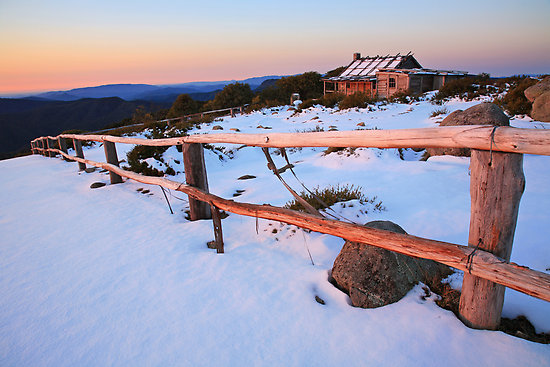
(Picture shows Craig’s Hut at Thredbo, New South Wales; photo from Red Bubble)
Famous Name: Isaac

18 Wednesday Jun 2014

Posted by A.O. in Famous Names

≈ 8 Comments

Tags

Biblical names, famous namesakes, hebrew names, name history, name meaning, name popularity, nicknames, popular names, retro names, saints names, slang terms

SirIsaacIsaacs

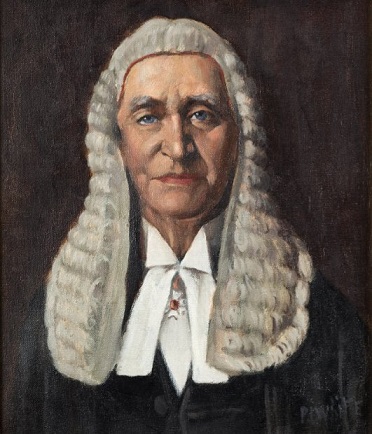
On June 6 it was the 159th birthday of Sir Isaac Isaacs, who is famous for being the first Australian-born Governor-General of Australia. He is also our first Jewish Governor-General.

The appointment of Sir Isaac Isaacs in 1930 by Prime Minister James Scullin was a controversial one at the time, because it was fiercely opposed by the British government. They didn’t have anything much against Sir Isaacs personally (apart from being a bit old and unknown to them), but were greatly offended by the idea of an Australian representing the British monarch. However, Scullin stuck to his guns and eventually King George V agreed to the appointment with great reluctance.

This landmark moment led to the Statute of Westminster 1931 and the formal separation of the Crowns of the Dominions. From now on, the monarch would be bound by constitutional convention to accept the advice of the Australian Prime Minister on Australian constitutional matters.

Despite the stain of his Australianness, Sir Isaac Isaacs did everything he could to make himself agreeable. He was an ardent monarchist and, although very proud to be an Australian, a strong supporter of the British Empire. He agreed to accept a lower salary, and conducted himself very frugally, which went down well during the Great Depression. He was the first Governor-General to live permanently at Government House in Canberra, and the public approved of this, as well as his general air of austere dignity, while following his duties with obvious enjoyment.

I’d like to be able to say that after Sir Isaacs, all Governor-Generals were Australian, but conservative governments immediately reverted to appointing British Governor-Generals. There was only one more Australian-born Governor-General until 1965 – since then, they have all been Australian-born, except Sir Ninian Stephen, who emigrated here as a child.

Isaac has one of the better known name stories in the Bible, and is one of the few characters in the Bible to be named directly by God.

When the patriarch and prophet Abraham was ninety-nine years old, God made a covenant with him, that he would be a “father of many nations”, and that his descendants would possess the land of Canaan forever. As Abraham and his wife Sarah did not have any children, God promised he would bless them, so that Sarah would soon bear a son.

Abraham laughed when he heard that, for by the time the baby was due to be born, he would be one hundred years old, and Sarah would be ninety. Sarah secretly listened to this prophecy, and had a good chuckle to herself at the idea that a very old couple would be able to conceive a child together, and a woman long past her child-bearing years could give birth.

Despite their scepticism, the prophecy was fulfilled, and Abraham and Sarah had a son together. They gave him the name that God had chosen, which was Yitzhak, meaning “laughter” in Hebrew. In English the name is Isaac.

The other key story about Isaac is that during his childhood, God commanded Abraham to build an altar in the wilderness and sacrifice his son on it. However, just at the point the knife was raised above Isaac, an angel appeared and told Abraham that it had just been a test of his faith, and that he should sacrifice a ram which happened to be around at the time instead. Because of Abraham’s show of faith, and Isaac’s obedient willingness to be sacrificed, God blessed them both many times over.

Christians have tended to see Isaac as a forerunner of Christ, and both Jews and Christians see him as a model for the martyr, who goes willingly to the slaughter for his faith. Isaac is venerated as a saint in Catholicism, and revered by Muslims as a prophet of Islam.

The story of Abraham and Isaac has made Biblical commentators uncomfortable enough that they feel it needed to be explained. Some Jewish writers felt that human sacrifice was so revolting that God couldn’t possibly have requested it even as a test, and suggested that it must have been a delusion of Abraham’s imagination, or even some trickery by Satan. Others thought that Isaac was in fact sacrificed, but that God had resurrected him straight away.

Modern philosophers don’t seem to feel that the story shows God in a very attractive light. Some scholars believe that it preserves an ancient memory of a tradition of child sacrifice, with the “happy ending” tacked on later, when such sacrifice was viewed with abhorrence and needed to be explained away.

Isaac has been used as an English name in the Middle Ages, and became more common after the Protestant Reformation. One of its most famous namesakes is Sir Isaac Newton, the mathematician and scientific genius. This gives Isaac a rather brainy image – and Sir Isaac Isaacs was very intelligent too.

For many years, the name Isaac was particularly associated with Jewish people – to such an extent that even in the twentieth century, Jews were referred to in a derogatory way as ike or ikey (short for Isaac), in the same way that Catholics were called micks (short for Michael).

Isaac was #147 in the 1900s, and left the charts in the 1920s. It didn’t return until the 1970s, when its position was #326. It climbed very steeply in the 1980s, and joined the Top 100 in 1991 at #86. After pottering along in the bottom third of the Top 100, it suddenly gave a massive jump in 1997, when it made #25. Is it a coincidence that the teen pop band Hanson, with singer Isaac Hanson as the singer, had their biggest success in 1997? Hmm! Or should I say MMMBop?

After this Hanson-led surge of popularity, Isaac settled down, but remained in the Top 50; it has been fairly steadily climbing since 2005. It is currently #19 nationally, #14 in New South Wales, #28 in Victoria, #34 in Queensland, #23 in Western Australia, #41 in Tasmania, #17 in the Northern Territory, and #31 in the Australian Capital Territory.

In a rather cheeky post, I suggested that if Isaac kept climbing, it could be the #1 name by 2028. I’m not sure if it will, but it is a good strong name, and many people find the meaning of “laughter” attractive. In the Bible, Isaac was a true “miracle baby”, born to two people very late in life who never expected to be parents, making it an excellent choice for couples blessed with a surprise or against-the-odds baby. As well as the traditional Ike or Ikey, you could also use Iggy or Zac as the nickname, should you want one.

POLL RESULT
Isaac received an excellent approval rating of 84%, making it one of the highest-rated names of 2014. People saw the name Isaac as cute on a boy, but solid on a man (29%), strong and handsome (20%), intelligent and professional (16%), and having a very attractive meaning (12%). However, 8% were put off the name by the Bible story of Abraham and Isaac. Nobody thought the name Isaac sounded creepy or evil.

(Picture shows a portrait of Sir Isaac Isaacs from the Victorian Bar’s collection)

Irish Names for Boys

15 Sunday Jun 2014

Posted by A.O. in Name Themes and Lists

≈ 8 Comments

Tags

animal names, celebrity baby names, ethnonyms, famous namesakes, Gaelic names, hebrew names, Irish name popularity, Irish names, Latin names, modern classic names, mythological names, name history, name meaning, name popularity, name trends, names of political organisations, nicknames, Old Irish names, popular names, retro names, royal names, saints names, underused names, Welsh names

a07442ad-b5ca-4bfe-8a64-ab471fc44a87

It was very hard to choose just ten Irish boys’ names, as there are so many commonly used Irish names for boys in Australia, especially if you include Irish surnames. It’s not surprising when you consider our strong Irish heritage, and because the Irish were here from the beginning of European settlement, they were never marginalised as happened in other countries.

Famous Australians with Irish heritage include bushranger Ned Kelly, Peter Lalor who led the Eureka Rebellion, actor Erroll Flynn, artist Sidney Nolan, rock singer Doc Neeson, philanthropist Daisy Bates, and our greatest prime minister, Ben Chifley. Those alive today include Governor-General Peter Cosgrove, Nicole Kidman, Kylie Minogue, surfer Mick Fanning, Socceroo Lucas Neill, author Tom Keneally, and former prime ministers Paul Keating and Kevin Rudd.

A reminder I haven’t included any names with fadas (accent marks), as they aren’t permitted in all states and territories.

Aidan
Anglicised form of Aodhán, a pet form of Aodh or Áed, meaning “fire” in Old Irish; there are many characters from Irish mythology named Aodh. St Aidan of Lindisfarne was an Irish-born monk known as the Apostle of Northumbria; he was famous for converting people by simply walking from village to village, politely chatting with people and introducing them to Christian beliefs by helping them in their daily lives. The name Aidan first ranked in the 1970s at #533, and by the 1980s was already #177. Aidan joined the Top 100 in 1993 at #92, and peaked in 2008 at #51. Currently Aidan is #99 in Victoria and #102 in the Australian Capital Territory. The Aiden spelling is more popular: this first charted in the 1980s at #368, joined the Top 100 in 1997 at #62 and peaked in 2009 at #35. Currently Aiden is #41 nationally, #45 in New South Wales, #45 in Victoria, #65 in Queensland, #47 in Western Australia, and #39 in the Australian Capital Territory. Even combining spellings, Aidan/Aiden is only #51 nationally. This doesn’t seem as if Aidan is very popular, yet it still has a reputation as an “overused” name because of the massive trend for sound-alike names, such as Hayden, Brayden, Caden, Jayden, Zayden etc. Aidan is #50 in Ireland and #43 in Northern Ireland.

Cian
In Irish mythology, Cian was a god and father of the hero Lugh of the Long Hand. According to folk tales, Cian possessed a magical cow which produced a superabundance of milk. During a quest to recover his cow after she had been stolen, he seduced a princess who had been locked up in a tower (it was the princess’ father who had stolen the cow). The tale sounds very much like the Greek myth of Danae, and the princess was imprisoned for the same reason – a prophecy said that the princess’ father would be killed by his grandson. Lugh the Longhand was born from this union, and eventually the prophecy was fulfilled when Lugh killed his grandfather in revenge for locking his mother in a tower. The name Cian means “long, enduring, far, distant” in Gaelic, and is pronounced KEE-in. It is often anglicised to Kian, which is in the 400s in Victoria. Cian is #15 in Ireland.

Connor
Variant of Conor, Anglicised form of the Gaelic name Conchobhar, meaning “lover of hounds”. There have been several real life Irish kings with this name, including a High King, and also the legendary Conchobhar mac Nessa, who was unsuccessfully married to both Queen Medb and Deirdre, but had many other wives. The name is the basis for the Irish surname O’Connor, meaning “grandson of Conchobhar”, and the Clan O’Conchubhair is a royal Irish dynasty whose lineage has provided one hundred kings of Connacht, and two High Kings of Ireland: some members of the noble O’Conor family of Ireland are the living descendants of the last High King of Ireland. Connor is a truly royal name, which must have an influence on its use. The name Connor has charted since the 1980s, debuting at #418. It joined the Top 100 in 1994 at #83, and peaked at #21 in 2003. Currently it is #43 nationally, #74 in New South Wales, #61 in Victoria, #33 in Queensland, #31 in Western Australia, #40 in Tasmania, and #69 in the Australian Capital Territory. Connor is #97 in Northern Ireland; Conor is #5 in Ireland and #17 in Northern Ireland.

Darragh
Variant of Dara, derived from from the Gaelic for “oak grove”. The oak was sacred to the Celts, and the word druid is directly related to the word for oak. The city of Derry in Northern Ireland has the same meaning. Darragh can also be an Anglicisation of the Old Irish name Dáire, meaning “fertile, fruitful, virile, sexually aroused”, but also “agitated, raging, violent, tumultuous”. It’s a very explicit meaning in regard to masculine sexuality, suggesting a sort of bestial lust. The Darini were an ancient peoples from Northern Ireland, and it would seem that Dáire was their ancestor or ancestral god. Several Irish noble families and Scottish clans claim descent from the Darini, as do the current British royal family. There are many kings and heroes from Irish legend named Dáire, but folklorists believe they are ultimately versions of the same mythological figure, who may have been a god of the battlefield. Darragh can be pronounced DAH-ruh, or DA-ra, and may seem like an updated Darren to Australians. Darragh is #20 in Ireland and #30 in Northern Ireland; Dara is #86 in Ireland, and Dáire is #88 in Northern Ireland.

Finn
Both the older Irish and Anglicised form of Fionn, meaning “blond, fair, white, bright”. Its most famous namesake is the mythical warrior and giant Find mac Cumail, transcribed in English as Finn McCool. Finn was a nickname – his real name was Deimne, meaning “sureness, certainty”, and gained his nickname after his hair turned prematurely white. Finn was brought up by a warrior woman who trained him in war and hunting, then he studied under a poet and druid. One day Finn was cooking a mystical salmon for his master which would give him all the knowledge in the world: he burned his thumb in the process, and instinctively put his thumb in his mouth to cool it, swallowing a piece of salmon skin. This gave Finn the wisdom of the salmon, and whenever he needed to draw on its power, he needed only to suck his thumb. Finn’s followers were called the Fianna, and it is from them the Fenian Brotherhood gained their name. According to legend, Finn is sleeping in a cave beneath Ireland, and will one day awake to defend Ireland in her hour of greatest need. Finn first charted in the 1990s at #287, and by 1997 was already in the Top 100 at #88. Currently it is #62 nationally, #68 in New South Wales, #60 in Victoria, #76 in Queensland, #40 in Western Australia, and #30 in the Australian Capital Territory. This is a handsome popular name that has helped drive the popularity of names such as Flynn and Finlay. Finn in #38 in Ireland and #56 in Northern Ireland; Fionn is #27 in Ireland and #70 in Northern Ireland.

Lorcan
Anglicised form of Lorcán, derived from the Irish Gaelic word for “fierce”. There have two been ancient Irish kings named Lorcán, and a medieval saint Lorcán Ua Tuathail whose name is Anglicised to Lawrence O’Toole. St. Lorcán was of royal blood, and became Archbishop of Dublin. He played a prominent role in the religious reform of the 12th century, spearheading a movement of spiritual renewal while bringing the church in Ireland closer to Rome. He was admired by both members of the church and the secular community for his many acts of charity to the poor – much needed at the time due to a severe famine. This is a cool Irish name which could be an alternative to names as Lachlan, Liam, or Declan. Lorcán is #67 in Northern Ireland.

Malachy
Anglicised form of Máel Sechlainn, meaning “follower of St. Seachnall”. St. Seachnall is an obscure 5th century Irish bishop who seems to have been of Italian origin; his name may be an Irish form of the Latin name Secundus, meaning “second (born)”, as he is also known as St. Secundius. The modern spelling of Malachy has been influenced by the Hebrew name Malachi, meaning “my messenger”, and therefore understood as “my angel”. However, Malachy is pronounced MAL-uh-kee, not MAL-uh-kie. There have two medieval High Kings of Ireland named Malachy, and also a St. Malachy, who was the first native-born Irish saint to be canonised. The saint’s name is an Anglicisation of Máel Máedóc, meaning “follower of St. Madoc”; Madoc was a 7th century Irish monk, and his name may come from the Welsh for “fortunate”. Malachy is an attractive name in occasional use, and AFL footballer Liam Picken has a young son named Malachy.

Oscar
Believed to mean “deer friend”. In Irish mythology, Oscar was the son of the warrior Oisin (“young deer”) and the fairy queen Niamh; he was the grandson of Finn McCool, and one of his warriors. Oscar was killed by a member of the increasingly corrupt Fianna, and upon his death, Finn wept for the first time in his life. The name Oscar was popularised in the 18th century by the poems of James McPherson; Napoleon was a great admirer of McPherson and gave his godson Oscar as one of his middle names. Later Napoleon’s godson became Oscar I of Sweden, and the name Oscar became traditional in Scandinavia. The Irish writer Oscar Wilde may have received his name because his mother collected Irish folk tales, but perhaps also because his father had travelled in Sweden, where he received honours from King Carl XV – Carl had a son named Oscar, born two years before Oscar Wilde, and sadly the little prince died just months before Oscar Wilde’s birth. Oscar was #103 for the 1900s, and sank before leaving the charts in the 1940s. It returned in the 1970s at #478, joined the Top 100 in 1998 at #98, and the Top 50 in 2004 at #47. Currently Oscar is #24 nationally, #27 in New South Wales, #20 in Victoria, #39 in Queensland, #34 in Western Australia, #19 in Tasmania, and #20 in the Australian Capital Territory. This tough, masculine yet snuggly retro name is more popular than it has ever been. Oscar is #61 in Ireland and #64 in Northern Ireland.

Ronan
Anglicised form of Rónán. Irish and Scottish legend tells of selkies, who swim in the sea as seals, but can shed their sealskin and become human on land. Male selkies were handsome and seductive; female selkies were said to make excellent wives, but could never forget their true home, and would gaze longingly out to sea – selkie tales are nearly always romantic tragedies. The children born of selkie women were called ronans, or “little seals”. The lovely film The Secret of Roan Inish, set in Ireland, is about the selkie legend, and an Irish animated movie is due to come out this year on the same topic. St. Ronan was an educated Irish bishop who sought exile in Brittany and a peaceful life as a hermit. A magical fairytale name that sounds smooth and handsome, Ronan could replace popular Ryan; it will remind many of Irish singer Ronan Keating from The X-Factor. Ronan is #52 in Ireland and #40 in Northern Ireland.

Rory
Anglicised form of the Irish Gaelic name Ruaidhrí or Ruairí. The name means “red king”, referring to fox-coloured hair. There have been many Irish kings named Ruaidhrí, including Ruaidrí Ua Conchobair, the last High King of Ireland before the Norman invasion. Rory has charted since the 1950s, debuting at #289; after a bumpy start (when it sank to #420 in the 1960s) it began climbing steadily, and peaked in the late 2000s at #125. Currently it’s in the mid 100s, and this is a rare example of a modern classic which has never become popular. Not only underused, Rory is cute but with a “tough boy” vibe, and could be an alternative to popular Riley, or fashionable Remy. Rory is #42 in Ireland and #44 in Northern Ireland; Ruairí is #81 in Ireland and #74 in Northern Ireland.

POLL RESULTS
The public’s favourite names were Finn, Rory and Oscar, and their least favourite were Lorcan, Cian and Darragh.

(Picture of a Harbour Seal or Common Seal from the Belfast Telegraph)

Irish Names For Girls

08 Sunday Jun 2014

Posted by A.O. in Name Themes and Lists

≈ 10 Comments

Tags

classic names, famous namesakes, fictional namesakes, French names, Gaelic names, Irish Gaelic names, Irish name popularity, Irish names, Italian names, middle names, modern classics, mythological names, name history, name meaning, name popularity, nicknames, Old Irish names, popular names, royal names, saints names, underused classics, unisex names, vintage names

3478061055_c7f655e9d0

Irish people have played an important role in Australia’s history, with many arriving in the 18th century as convicts or free settlers. By the late 19th century, a third of Australia’s population was Irish, and today around 30% of us claim some Irish ancestry. It is said that Australia is the most Irish country in the world outside Ireland.

The Irish have made an indelible mark on our history, culture, religion, sport and perhaps most especially, our politics – six of our prime ministers have had Irish ancestors. They have also helped create much of our national character: both the good bits, like our dry sense of humour and love of language, and the bad bits, like our pessimism and thin-skinned “touchiness”. When I did Italian names, I said that I could imagine an Australian without an Italian history, I just didn’t care to, but it’s impossible to imagine Australia without an Irish history.

Here’s ten Irish girls’ names, some of which have become popular here, and others which are less common. Just a heads up that I haven’t included any fadas (accent marks) on any of the names, since they are not legal in all states.

Aisling
Modern name meaning “dream, vision” in Irish Gaelic. It can be seen as a literary name, because the aisling is a poetic genre developed in 17th century Ireland, where a woman appears in a vision and predicts a turn for the better in Ireland’s fortunes. Earlier, the dream-woman was young and beautiful, and didn’t have a political message, but symbolised nature or love. Aisling can be pronounced ASH-ling or ASH-leen, and to English-speakers, seems like a fresh alternative to Ashley; it has also spawned variants such as Ashlynn. Aisling is #41 in Ireland.

Aoife
From the Gaelic for “beauty, radiance”. In Irish legend, Aífe is a warrior woman, and rival of her (possible) sister Scáthach. Legend tells that she fought the hero Cú Chulainn, but he overcame her with trickery, and promised to spare her life if she stopped fighting with Scáthach, spent a night with him, and bore him a son. She fulfilled her side of the bargain, but the story didn’t end happily. In the tale of The Children of Lir, Aoife is the wicked queen who transformed her stepchildren into swans; she was cursed by being turned into a demon by her own father as punishment. Despite this unpleasant namesake, Aoife was used by medieval Irish nobility, with a notable example being Aoife MacMurrough. This 12th century Irish princess conducted battles on behalf of her husband, and is an ancestor of the current British royal family. Aoife is pronounced like EE-fuh; although complex to spell, it sounds rather like popular Eva, and has a lovely meaning. Aoife is #11 in Ireland and #10 in Northern Ireland.

Bridget
Anglicised form of the Old Irish name Brigit, meaning “high, exalted”. In Irish mythology, Brigit is a goddess; her name is derived from the word for “fire” and most likely her title. Brigit was a poet, and the inventor of keening – the lament over a body at a burial that is a mixture of singing and weeping. She is also patron of healing, smithing, arts and crafts, cattle and livestock, sacred wells, and serpents. She ruled all things high-reaching, as well as lofty attributes, such as intelligence, wisdom, excellence, knowledge, and skill. Brigit is associated with the home and hearth, and with early spring. Her special day is Imbolc, on February 1. She has become fused with St Brigid of Kildare, one of the patron saints of Ireland – probably an attempt to Christianise the goddess. St Brigid is patron of smiths, cattle, poets and scholars, and her feast day is February 1. In Ireland, the name Bridget was too sacred to use until the 17th century, but later became extremely popular – so much so that an Irishwoman was called a “Biddy“, just as an Irishman was called “Paddy”. Bridget was #104 in the 1900s, and dropped to its lowest ranking in the 1950s, at 0. It hit a minor peak in the early 2000s at #166, and is currently in the 200s in Victoria and the 400s in New South Wales. Bridget is an underused classic which has remained on the charts while never becoming popular.

Caitlin
Anglicised form of Caitlín, Irish form of Cateline, Old French pet form of Catherine. While the Irish say it something like kat-LEEN, English-speakers say KAYT-lin, and turn the Irish pronunciation into another name, Kathleen. Caitlin has been used in Ireland since the 19th century, and became well known in the 20th. In Australia, Caitlin has ranked since the 1970s, making its debut at #554, and soaring until it entered the Top 100 in 1987 at #86. By 1990 it was in the Top 50 at #38; by 1994 it was in the Top 20 at #15. It peaked in the late 1990s at #12, and since then has declined. Currently Caitlin is #99 nationally, #78 in New South Wales, and #103 in the Australian Capital Territory. Last year Caitlin was one of the names that fell the most in popularity, suggesting its day is coming to a close (although its many variant spellings would significantly boost its ranking). Caitlin is #64 in Ireland and #33 in Northern Ireland.

Ciara
Feminine form of Ciar, meaning “black”. There is a 6th century St Ciara and a 7th century one, or else just one long-lived St Ciara. According to legend, St Ciara was of royal blood, and founded an abbey; another story says that she (unless it is a different St Ciara) saved a town from a noxious fire through her prayers. Ciara is pronounced KEER-uh, and must be one of the most heavily Anglicised Irish names, for you rarely see it with its native spelling, but more often Keira or Kira. Although to me the Ciara spelling looks more elegant, it risks being confused with the Italian Chiara. Ciara fits in with Australian’s love of names such as Kirrily and Kirra, and has a native sound to our ears. Ciara is #32 in Ireland.

Deirdre
Deirdre of the Sorrows is a tragic heroine from Irish mythology. The daughter of King Conchobar’s bard, when she was a baby a druid predicted she would be very beautiful, but that much blood would be shed for her sake. Conchobar decided he wanted this beauty for himself, and had her brought up in seclusion. As an adult, Deirdre was as stunning as the druid had foreseen, and she fell in love with a handsome warrior named Naoise. The couple eloped, and were blissfully happy until the furious Conchobar tracked them down. In the ensuing battle, Naoise was amongst those killed. Conchobar triumphantly took his gorgeous wife home, but was angry that she remained cold and depressed. To teach her a lesson, he told her that he would give her to the man who had murdered Naoise – the man she hated above all others. On the journey to deliver her, the unhappy Deirdre threw herself from the chariot and split her head open. In some versions of the story, she simply wastes away with grief. Deidre is derived from the Gaelic name Derdriu, whose meaning is debated, but is implied in the original story as meaning “noise, murmuring”, related to the word for “storm”. It could thus be understood as “weeping, wailing, storm of tears”, and is often glossed as “sorrow”. Deirdre came into use as a girl’s name in the 19th century, and became more common in the 20th, when there had been many popular re-tellings of the legend. Deirdre first ranked in the 1930s at #183, peaked in the 1940s at #180, and hasn’t charted since the 1970s. This is a vintage name which has had very little use, so hasn’t become dated. It is rather lovely, although very sad.

Erin
Derived from Éirinn, from the Irish word for Ireland, Éire. Erin was used as a poetic and nationalistic name for Ireland, or the feminine personification of Ireland. According to folklore, the country’s name comes from Ériu, the mother goddess of Irish mythology, and a symbol of Irish sovereignty. Her name is believed to come from an ancient root meaning “fat”, to indicate that Ireland was a land of abundance. Erin came into common use as an Irish name in the 19th century. It has sometimes been given to boys, perhaps because it sounds like Aaron and Eric, but has only charted for girls. The name Erin first charted in the 1950s, debuting at #457, and reached the Top 100 in 1978, at #71. By 1980 it was in the Top 50 at #46, the following year it was in the Top 20 at #17, and it peaked in 1984 at #12. Erin has been a long-time favourite, and only left the Top 100 in 2012. This modern classic is no longer popular, but still getting a reasonable level of use. It is #39 in Ireland and #19 in Northern Ireland.

Maeve
Anglicised form of the Gaelic name Medb, meaning “intoxicating”, and related to the English word mead (a fermented honey drink). In Irish legend, Queen Medb was a powerful and seductive queen known for taking a succession of husbands as her consorts. She was once married to King Conchobar, from the story about Deirdre. Medb couldn’t stick him either and walked out; she ended up defeating Conchobar and ruling in his place. She demanded that her wealth be at least equal to her husbands’, and insisted her consorts be without fear, meanness, and jealousy – the last was very important, because Medb also took lovers to supplement her husbands. Folklorists believe that Queen Medb was originally a sovereignty goddess in a matrinlineal society who the king would symbolically “marry” in order to gain power over the land. This explains her many husbands. In modern times, she has become a feminist symbol of women’s power and female sexuality. This is a sweet, spunky name which fits in with the trend for names with a V in them, like Ava, and makes a great middle name. Maeve is in the 100s in Victoria, so not particularly unusual, while it is #100 in Ireland.

Orla
Anglicised form of Órfhlaith or Órlaith, meaning “golden princess”. Órlaith was a very popular name in medieval Ireland, and there are several queens and princesses from Irish history with this name. The famous High King of Ireland Brian Boru had a sister named Órlaith who married another High King (she unfortunately came to a sticky end after getting over-involved with her stepson), and Brian also had a daughter and a grand-niece named Órlaith. For some reason, Orla is a man in The Poems of Ossian by James McPherson, a young warrior and chieftain of Lochlin who falls in battle. In Scandinavia, Orla is used as a male name, and that might be because of McPherson’s poetry, which was very popular in Scandinavia. Orla is simple to spell and pronounce, and the princessy meaning would be attractive to many parents. Orla is #82 in Ireland.

Sinead
Anglicised form of Sinéad, the Irish form of Jeanette, the pet form of the French name Jeanne. It is the equivalent of the English name Janet, which is a pet form of Joan. In practice, Sinead is often understood as the Irish form of Jane or Jean; it has even been used as an Irish form of Jennifer since Jenny is an old pet form of Jane. The name is pronounced shi-NAYD. A famous Irish namesake is Sinéad de Valera, the wife of the Rebublican leader and Ireland’s third president, Éamon de Valera. A teacher of the Irish language, Mrs de Valera was named Jane by her parents, but changed her name to Sinéad not long after she was married. Sinéad de Valera was a successful children’s writer, who wrote in both English and Irish. She helped to popularise the name in Ireland, and the Irish singer-songwriter Sinéad O’Connor was named after her. Sinéad has lost popularity in Ireland in recent years, and has never charted in Australia, although still seen occasionally.

POLL RESULTS
The public’s favourite names were Maeve, Bridget and Aoife, and their least favourite were Ciara, Deirdre and Sinead.

(Picture shows detail from an Irish pound note, which bears the likeness of Queen Medb or Maeve; the pound hasn’t been used in Ireland since 2002 when the euro was introduced)

Famous Name: Harvey

28 Wednesday May 2014

Posted by A.O. in Famous Names, Requested Names

≈ 7 Comments

Tags

birth notices, Breton names, english names, famous namesakes, French names, Gaelic names, Gallic names, Irish names, mythological names, name history, name meaning, name popularity, Old Breton names, popular names, retro names, saints names, surname names, UK name trends, US name trends


world-no-tobacco-day-rose-graphicFamous Namesake
On May 31 it will be World No Tobacco Day, encouraging smokers to abstain from tobacco for just 24 hours. World No Tobacco Day was started by the UN’s World Health Organization in 1987, and each year there is a new theme: this year it is “Raise taxes on tobacco”. Should you wish to celebrate No Tobacco Day by giving up smoking, information and support can be gained from a number of government and community services.

The number of Australian smokers has dropped dramatically since World War II. In 1945, about three-quarters of men and a quarter of women smoked every day. Today it’s 16% of men and 13% of women, with numbers continuing to fall, making us one of the most successful countries at reducing smoking in the English-speaking world. That can be attributed to vigorous public anti-tobacco campaigns running since the 1980s.

Australia’s campaign against smoking began with William Harvey, a distinguished thoracic physician who devoted his lengthy career to the study and treatment of tuberculosis after his father (also a doctor) contracted the disease. Harvey had the satisfaction of seeing TB become less common, due to better testing and treatment, but over time he became concerned at the growing incidence of lung cancer.

In 1965 he helped found the Australian Council on Smoking and Health as part of his campaign against smoking, and was its president from 1966 to 1975. This didn’t make him popular with some, especially tobacco companies, who continued to deny there was any link between smoking and disease. However, William Harvey had been a POW during World War II who continued caring for his patients even as disease threatened his own life. He didn’t believe in giving up.

He visited schools and sporting bodies, he wrote to the newspapers, and he persuaded other doctors and medical organisations to join him in his campaign against tobacco. One of his achievements was the banning of cigarette vending machines in hospitals. Progress seemed slow, but he persisted, saying that he had great faith in “the inevitability of gradualness”. A devoted family man, Harvey was a keen gardener and surfer into his twilight years, and played golf, tennis and bowls. He passed away suddenly in 1981 at the age of 84 – a good advertisement for a life of healthy non-smoking.

William Harvey didn’t live to see the big government campaigns against smoking of the 1980s, but their existence and determination owe a great debt to his dedication and energy. And if I can reveal my hand, I have friends and family members who have given up smoking, and as a result I have got to spend many more years with them, or seen them live happier, healthier lives. Every one of them was convinced to give up by anti-smoking campaigns, so from the bottom of my heart, I thank you William Harvey.

Name Information
Harvey is an English surname, and one of the earliest recorded. It is derived from the Breton personal name Huiarnuiu derived from the Old Breton name Huiarnviu, meaning “blazing iron”. The Gallic form of the name is Hervé, and St Hervé (or St Harvey) is one of Brittany’s most popular saints.

Hervé was born blind, and was a 6th century hermit and bard known for his humility. According to legend, he had the power to cure animals, and was always accompanied by a wolf. The story goes the wolf had eaten the ox that the saint used for ploughing, and St Hervé made such an eloquent sermon that the wolf volunteered to pull the plough instead, in penitence.

One of the followers of William the Conqueror during the Conquest was named Hereueu, another form of the Breton name. Use of the name as a surname followed almost immediately after the arrival of men with the first name, and is first found in Norfolk, where the Harvey family were granted lands for their services at the Battle of Hastings.

In Ireland, Harvey was used to Anglicise the Gaelic surname O’hAirmheadhaigh, meaning “grandson of Airmed”. Airmed is a goddess from Irish mythology, known for being a healer during a great battle. As she wept over the grave of her brother, who had been slain by her father, all the healing herbs of the world sprang up, watered by her tears. Airmed gathered them into her cloak, but her father scattered the herbs, so that no person can ever know all the secrets of herbalism – only Airmed. Her name is identical to a word meaning “a measure of grain”, although I’m not sure if that is the origin of the name.

Harvey was also used to Anglicise the Gaelic surname Ó hEarchaidh, meaning “son of Earchadh”. Earchadh is an Irish name that I have seen translated as “noble warrior”. By the way, William Harvey was very proud of his Irish Protestant heritage, so his surname was Irish, although most likely of English origin rather than Gaelic.

The name Harvey was #167 in the 1900s, and peaked in the 1940s at #141 – perhaps because of a family of cricketers from Victoria with the surname Harvey who flourished around this time. Harvey disappeared from the charts from the 1960s to the 1980s, but made a comeback in the 1990s when it ranked at #581.

Interestingly, this was the time when retail chain Harvey Norman, co-founded by maverick businessman Gerry Harvey, became a “superstore” business, with massive expansion. The name Harvey zoomed up the charts to make #314 for the early 2000s and #243 for the late 2000s. Harvey peaked in 2010 at #149, and then began dipping the next year – this coincides with Gerry Harvey’s unpopular campaign to make consumers pay Goods and Services Tax on items bought online from overseas websites.

Although Harvey is in the 100s in New South Wales, it is a Top 100 name in Victoria. Harvey entered the Victorian Top 100 in 2010, debuting at #100, and last year made #64. If you are in Victoria you probably think of Harvey as a popular and rising name, while in other states, Harvey may seem fashionable but underused. It is not clear at present if other states will follow Victoria’s lead, but as Harvey is Top 100 in the UK, and rising in the US, international trends suggest Harvey’s popularity here may be increasing.

Harvey is a cute, spunky name for boy, but there’s also something strong and masculine about it. This retro name has been underused for most of its history, and is now making a comeback – in at least one state, it is more popular now than at any other time. This may give some parents the jitters. Although it has only ever charted as a boy’s name, I have seen Harvey on a few girls in birth notices, and the Irish goddess does give this some legitimacy as a name for both genders.

POLL RESULT
Harvey received an excellent approval rating of 75%, making it one of the highest-rated names for 2014. People saw the name Harvey as strong and manly (20%), cute and boyish (16%), and traditional without being stuffy (13%). However, 11% were reminded too strongly of Harvey Norman stores. There was a strong preference for Harvey being reserved for boys only, with 18% saying it was only suitable for boys, and just 2% believing it could be used for both genders.

Thank you to Vanessa for suggesting the name Harvey be featured on Waltzing More Than Matilda.

Popular Names in Regional Australia for 2013

25 Sunday May 2014

Posted by A.O. in Naming Issues

≈ 4 Comments

Tags

birth notices, birth registries, name popularity, popular names, regional popularity

7mudgee1M_m

All the birth data from 2013 is in, both national and state, but what about the names that are popular in your particular city or region? For most of you, I can’t really help out. But in those few cases where local papers published some statistics, they provided some interesting comparisons with the data overall.

In only a few cases does the information come from birth registries. Most of it is taken from birth notices, and you have to remember that not everyone puts a birth notice in the paper when they have a baby – these days many people prefer to use social media, or even just send everyone a text. It is also becoming less common for local papers to have a section in the paper for birth notices.

Information from hospitals can be incomplete too, because (apart from people having home births) parents haven’t always chosen a baby name in advance to give the paper. I notice from viewing baby photos released from hospitals that people from other cultures usually don’t give a name when they are photographed, and I’m not sure whether that’s because it’s usual to choose the name some time after birth, or whether it isn’t customary to tell strangers the name of a new baby.

So by no means official, but still worth a read, especially if you are from one of these areas.

In the Newcastle area, in the Hunter Valley region, the most popular boy’s name was William, and the most popular girl’s name was Olivia. Other popular boys’ names were Lachlan at #2, Charlie at #3, and Cooper and Darcy at #4 and #5. For girls, it was Lilly at #2, Lucy #3, Mia #4 and Ruby #5. During the year, I looked through all the baby photos released by Newcastle hospitals, and was surprised at how few Jacks and Charlottes there were, while Stellas and Calebs abounded.

The NSW birth registry revealed that the most popular names for babies in the Clarence Valley region around the city of Grafton were Harrison and Ruby, and there was an equal number of babies with either of these names.

In Tamworth, in the New England region, Lachlan and Matilda were the most popular names, and for boys, William and Liam were the next-most popular boys’ names. Popular girls’ names included Chloe, Elizabeth, Indi and Willow. There were significantly more boys in the paper than girls – 93 to 57.

In Orange, in New South Wales’ Central West region, the most popular baby names were James, Amelia and Annabelle. Other popular boys’ names were Isaac, William, Thomas and George, while popular girls’ included Isabella, Isabelle, and Lara.

In Mudgee, also in the Central West, the most popular baby name was Charlie as a boy’s name, with Archer, David, Logan and Liam all appearing more than once. There don’t seem to have been any girls’ names which appeared more than once.

I saw all the baby photos released from the hospital in the city of Queanbeyan, in the Eden-Monaro region, and the #1 baby name overall was Henry – 30% of all babies bore this name, with about two-thirds of the boys called Henry.

In Wagga Wagga, in the Riverina region, the most popular boy’s name was Brock (not in the Top 100), and the most popular girl’s name was Evie. Charlie, Darcy, Isaac, Jacob, Mason and Tom came second for boys, with Ivy the second-most popular girl’s name, and Matilda and Georgie tieing for third spot. There was no third place winners for boys.

In Albury and Wodonga, which straddle the border between New South Wales and Victoria, the most popular boy’s name was Jack, and the most popular girls’ names were Grace and Lily. Harry and Oliver were second for the boys, and Chloe for the girls. Patrick and William were third for the boys, while there was no clear winner for third place amongst the girls, with nine names receiving the same amount of use – Ella, Elsie, Evie, Imogen, Isla, Lara, Mia, Pippa and Scarlett.

In Ballarat, in Victoria’s Central Highlands, the most popular names for boys were Jack or Jackson #1, Tom or Thomas #2, Hudson and William #3, Cooper #4, and Harrison, Harry or Henry #5. For girls it was Charlotte and Ruby #1, Emily #2, Ella #3, Annabelle, Isabelle, Mila, Mia and Sophie at #4, and Ava, Isabella, Indianna, Matilda and Madison at #5. It was noted how the number of birth notices had dwindled over the years, with the rise of Facebook and other social media.

In Warrnambool, on Victoria’s south-west coast, William and Liam were the most popular boys’ names, with Matilda most popular for girls. Jackson, in all its spelling variants, was second for boys, and Charlotte second for girls.

In Hamilton in western Victoria, the most popular baby names were William and Mia, with other popular names for boys being Aiden and Thomas, while Amelia, Ava, Beatrice, Emma, Fiona, Grace, Lucy, Olivia, Jessica, Matilda, Ruby and Sophie were popular for girls. Hamilton also counts middle name usage, with Grace the most common middle name overall.

In the Wimmera region around the city of Horsham in western Victoria, the most popular boy’s name was Jack, and there was no clear winner for girls’ names, although Evie, Holly, Layla, Mia, Pippa, Zara and Zoe were all used more than once. There were more birth notices for boys – 107 boys to 80 girls.

In Queensland, birth registries made some note of regional popularity. Lachlan was the #1 name in Townsville, and tied with Jack for first place in Cairns and the Rockhampton area. Cooper was the most popular boy’s name name in Ipswich, while Hunter came first in the Wide Bay region. Mia was #1 in both the Gold Coast and Sunshine Coast regions, Olivia was #1 for girls in Ispwich, and Ruby was #1 for girls in Cairns.

Hospitals in Mackay in Central Queensland revealed that the top names for boys were Braxton and Nate, while for girls they were Lilly and Seanna (which has never charted – is this a misprint for Sienna?).

In Port Lincoln, on the Eyre Peninsula in South Australia, the most popular names for boys were Noah, Levi and Hunter, while Ella, Olive and Mila were most popular for girls. The paper noted that two out of three of the Ellas had the same middle name – they were both Ella Michelle. The most popular middle name for girls was Rose, and William and James were the most popular middle names for boys.

(Photo is of the town of Mudgee)

Is Margot the Next Big Thing?

24 Saturday May 2014

Posted by A.O. in Naming Assistance

≈ 8 Comments

Tags

choosing baby names, famous namesakes, French names, Latin names, name popularity, name trends, nicknames, popular names, sibsets, UK name trends, underused names, US name trends


Margot-Robbie-Wallpapers-14-624x630Melissa and Luke have a little girl named Audrey, and are expecting their second child in a few months. Audrey doesn’t have a middle name, since they have a hyphenated surname, and this will be the case for the new baby as well, whether it’s a boy or a girl.

Mel and Luke have quite compatible naming styles, with both preferring traditional or slightly retro names. Mel likes the idea of older names which are familiar, but not overly common; however, a popular name isn’t an issue unless it seems “trendy”.

Mel and Luke’s Name List
Girls – Genevieve, Margot, Eliza (not in order)
Boys – Elliot is the front runner, but Mel can’t seem to let go of Theo, Sonny, and Remy. These last three names were possibilities for Audrey’s name if she had been a boy, and went on and off the list during the last pregnancy too. Mel thinks that the reason she feels uncertain about them is because they feel too “nicknamey”.

Luke’s preference for a girl’s name is Genevieve, but Mel worries it’s slightly too clunky, and doesn’t much like the nickname Jenny/Genny. Mel’s preference is for Margot, which she thinks is quite spunky, but every time Luke sees actress Margot Robbie in a magazine, he says that he’s concerned that Margot is going to be the next celebrity-inspired trendy name. Mel thinks that it’s celebrity baby names which are more likely to become trendy, not the names of celebrities themselves.

Mel wants to know whether a celebrity name like Margot might really become too trendy as a baby name, and would be especially interested to know what we think of their boys names? In particular, what about Sonny? Is it a “proper” name?

* * * * * * * * * *

I love all the girls names you are considering. I must say, I never thought of Genevieve as clunky before – it’s so elegant, but with real substance. Jenny was the usual nickname for Genevieve during the loooong period that Jennifer was popular, but these days I think Evie is the more obvious short form.

Margot is simply gorgeous, and so stylish. I think one thing Margot Robbie has done for the name is give it more oomph, because I didn’t really think of it as a “sexy” name before (in fact it seemed quite cool and intellectual to me).

That’s an interesting question about whether celebrities or their children are more likely to influence popular names. I had a look at the Top 50 girls names, and I noticed that a few names do seem to have been influenced by celebrities.

Mia first charted in the 1960s, at the same time as Mia Farrow became known from soap opera Peyton Place, but didn’t reach the Top 100 until the 1990s. Olivia first ranked after Olivia Newton-John’s career started, and appeared in the Top 100 in the late 1970s. Sienna has ranked since the 1990s, but suddenly took off in the 2000s when Sienna Miller began her career, and reached the Top 100 almost instantly. The name Isla only began charting in the 1990s, when Isla Fisher joined the cast of Home and Away, and it became a Top 100 name in the late 2000s.

So I can see where Luke’s concerns come from – he’s thinking, “Sienna Miller and Isla Fisher were pretty young women in the magazines a decade or so ago, and now there’s thousands of Siennas and Islas. What if the same thing happens with Margot?”

Well, for a start, there can be quite a wait before the name becomes popular – Mia took thirty years! And even if it happens relatively quickly, as with Olivia, Sienna and Isla, there might still be 10-15 years between the names beginning to be known, and becoming popular. To me it feels as if celebrity baby names have a more immediate effect on name popularity.

And there’s another thing to consider: Mia, Olivia, Sienna, and Isla were “new” names, in that they had never been in the charts before. Margot has already been in the charts – which in my view, saves it from being a “trendy name”. It charted from the 1930s to the 1970s, coinciding with the career of ballerina Margot Fonteyn, and it never became popular – the highest it got was #218.

At the moment there’s not really any sign of an imminent Margot revival, although in 2012 six babies were named Margot in Victoria (where Margot Robbie began her career); just enough to show up in official data. So, while anything is possible (and Margot is rising in both the UK and US), it still seems a safe choice, as far as trendiness goes.

I rather hope one of you will convince the other to choose either of these names, as they are both so lovely. Otherwise, there’s always Eliza, which both of you like, and which makes a wonderful match with Audrey.

Elliot is a great choice for a boy, and I think it’s brilliant as a brother to Audrey, although I suppose it does make having an Eliza later a bit less likely. However, there’s those three names you just can’t quit …. I’ve had that experience too, of those names you just can’t give up, even though you keep tossing them off the list, and I know family and friends who have been through the same thing.

In my experience, two things might cause this issue:

  • The name you keep being drawn to is the right name, and your head just keeps over-ruling your heart by coming up with excuses like, “Too nicknamey”.
  • The name is one that you genuinely love, but a more sensible part of you knows that no matter how desirable the name is, it’s not really right for you. (This is the part of your brain that stops you from buying a stunning evening gown that you know you will only wear once, or from going trekking in Nepal with five children under the age of six).

I can see that part of the reason you can’t really say Yes or No to the names is that you originally picked them for your first child. If you had had a boy first, you could have taken these names with you to the hospital, and one might have been a perfect fit and you would have called your son Sonny (or Remy, or Theo). Or you might have realised they weren’t for you after all, and your son would have been Elliot (or Leon or Hugh or something else). But instead you had Audrey, so you never got a chance to try them out for size in the real world.

I think you should stop throwing them off your list, and grant them amnesty. Wait until the baby is born, because you might be bringing Audrey home a sister rather than a brother anyway, and once again the names could end up in the Maybe One Day category of baby names.

But if you do have a son, this will be your chance to try the names out on a real live little boy. Maybe Remy (or Theo or Sonny) will be so completely his name that you will finally understand why your heart could never let that name go. Or maybe you’ll think they are lovely names, but not quite right after all.

They don’t really seem to be traditional or retro, which you said was your style, but then again, neither is Elliot, exactly. I wonder if your style is actually traditional or retro for girls, and something more modern for boys? I’ve noticed that we Australians often seem to like girls to have fairly conservative names, but will choose contemporary names for our boys. Theo, Remy and Sonny are cute and modern-sounding, although Remy is not a “nickname” name – it’s French for the Latin name Remigius. I think they’re all adorable, and very cool.

As to whether Sonny is a “proper” name: to me if you are allowed to put a name on the birth certificate, it’s a “proper” name. Yes, its origins are definitely nicknamey and affectionate, like Buddy and Buster, but that doesn’t mean it’s not a real name. It’s been in use since the 16th century, so it has a surprisingly long history, and it’s actually in the Top 100 and rising in the UK, while in the US it has charted consistently since the 1920s. So not only is it a “proper” name, it isn’t even very new or very uncommon.

What do you think, readers? Will Margot Robbie make the name Margot trendy? Is Sonny a proper name? And what do you think of the names Mel and Luke have chosen?

UPDATE: The baby was a girl, and her name is Margot!

POLL RESULTS: A majority of people felt that Margot was a safe choice, with 34% thinking it probably wasn’t coming to become trendy, and 22% saying that it couldn’t become trendy, as it was already an established name. However, there were still plenty of people who weren’t convinced of this, with 27% believing it probably would become trendy, and 8% absolutely sure it would become trendy. A cautious 9% weren’t sure what the future held for Margot.

A majority also thought that Sonny was a proper name, with 40% saying it wasn’t exactly a traditional name, but still acceptable, and 16% deciding that it definitely was a proper name. A tolerant 4% believed that all names were “proper names”. However 32% thought Sonny was more of a nickname, and 8% were adamant that Sonny wasn’t a real name at all.

Margot was the clear favourite for a girl’s name, with 50% of the vote going to Margot, 28% to Eliza, and 22% to Genevieve.

Elliot was the favourite for a boy’s name, with 39% of the vote going to Elliot, 33% to Theo, 18% to Remy, and 10% to Sonny.

(Photo is of Margot Robbie)

Famous Name: Grace

21 Wednesday May 2014

Posted by A.O. in Famous Names

≈ 6 Comments

Tags

British name popularity, classic names, colour names, contemporary classics, english names, famous namesakes, germanic names, Latin names, middle names, mythological names, name history, name meaning, name popularity, New Zealand name popularity, nicknames, popular names, royal names, saints names, theological names, virtue names, vocabulary names

Thumbnail_320

Last month it was the 121st birthday of Grace Cossington Smith, one of the most important Australian artists of the 20th century, and a contemporary of Clarice Beckett.

Grace was born in Sydney, and studied under Antonio Dattilo Rubbo, an inspiring and extremely supportive art teacher who encouraged his students to experiment; he affectionately called Grace “Mrs Van Gogh”. Her painting The Sock Knitter, showing her sister knitting socks for the war effort, is considered to be Australia’s first post-Impressionist painting, and she exhibited in galleries from 1915.

Her paintings are notable for their bright patterns and vibrant energy, using careful square brushstrokes to create images of colour shimmering through sunlight. She painted scenes of Sydney, and is famous for her iconic representations of the Harbour Bridge, showing the bridge’s construction. Grace’s Sydney was bustling, busy, exciting; filled with crowds, colour and sunshine. Later in life, she became known for her still lifes and interiors.

Art museums began buying Grace’s work in the 1940s, but she did not become famous until the 1960s, and in 1973 was appointed an Order of the British Empire as an exhibition of her work toured with the Art Gallery of New South Wales. Grace was 81, and let it be known that she would have welcomed recognition a little earlier. She received her OBE while in a nursing home, and by then was too frail to paint any more.

Grace is an English word which can be understood in several different ways. We might think of grace in terms of physical elegance and poise, but there is also social grace, where a person is charming and well-mannered.

The theological concept of Divine Grace is present in several religions. In Christianity, it means the undeserved love and mercy given to us by God – a gift that allows us a share in divinity. Although there are many theological disagreements, nearly all Christians believe that the grace of God is necessary for salvation, and that it is through divine grace that we are able to resist sin.

The word grace comes from the Latin gratia, meaning “kindness, favour, esteem”, ultimately from an ancient root which means “praise, welcome”. The word is related to grateful. Both the secular and spiritual senses of the word grace have connotations of effortlessness – no matter how many lessons in physical movement or etiquette you might have, you can only appear graceful if it seems natural and easy for you. And the grace of God comes not through our own efforts, but is a gift that we are freely given without earning it.

The English name Grace was not originally linked to either of these meanings, but from a Germanic name Grece, meaning “grey”, and pronounced like Grace. However, it quickly became associated with the Latin Gratia or Gracia, to suggest “charming, pleasant”, and it is thought that women with these names would have been known as Grece or Grace in everyday life.

St Gracia of Lerida may have been an influence on the name’s development; she was the daughter of a Spanish Muslim caliph who converted to Christianity and was martyred in the 12th century. Born Zaida, she took Gracia as her Christian name, and is sometimes known as St Grace. There is also an obscure pre-Norman English saint named Grace connected with St Probus of Cornwall; some speculate that she was his wife, and others that she was a great lady who supported him in his ministry. There doesn’t seem to be any evidence that she ever existed.

In Greek mythology, the Graces are goddesses of charm, beauty, nature, creativity, and fertility, patronesses of amusements and festivities. Despite this seemingly frivolous purview, in some mysterious way they were connected to the Underworld and the secrets of the afterlife – perhaps a taste of the joys which might await us on the other side. In Renaissance art, they are usually depicted as three beautiful young women who are either naked or lightly draped in diaphanous garments, and often embracing each other or clasping hands.

These attractive figures might have influenced the choice of the name Grace from the late Middle Ages, but it is usually thought that after the Reformation, Grace would have been given by Puritans as a virtue name, with the religious meaning in mind.

Grace is a classic name which has never left the charts. It was #29 in the 1900s, left the Top 100 in the 1940s, and reached its lowest point in the 1970s at #373. It then began climbing steeply, around the time of Princess Grace of Monaco’s death, and reached the Top 100 in 1988 at #89.

By 1991, Grace was in the Top 50 at #45, and in the Top 20 by 1998 at #13 – the highest point it had ever gained historically. Grace reached the Top 10 in 2002 at #9, however it did not stay there long, and stabilised just outside the Top 10, where it remains today.

Currently Grace is #12 nationally, #11 in Victoria, #14 in New South Wales, #12 in Queensland, #11 in Western Australia, #9 in Tasmania, #11 in the Northern Territory and #10 in the Australian Capital Territory. Highly popular in all states and territories, it is also a Top 100 name in other English-speaking countries, and is most popular in Northern Ireland and Ireland at #3 and #4 respectively. Its popularity in Britain and New Zealand is much the same as here.

Grace is a true timeless classic; a solid choice as an English name which has never gone out of fashion or fallen into disuse in nearly a thousand years. Yet it is more popular now that it has been at any other time in Australia’s history, making it a contemporary classic which feels both traditional and up-to-date.

Grace is a beautiful name with simple elegance; sophisticated and unpretentious, and even more popular as a middle name. It’s a saint, a princess, a goddess, and millions upon millions of ordinary women throughout the ages. There may be many little girls named Grace, but that’s no reason why your daughter cannot join their ranks. Gracie is a common pet form, and quite a few parents are choosing this as the name on the birth certificate.

POLL RESULT
Grace received an excellent approval rating of 83%, making it one of the highest-rated names of 2014. People saw the name Grace as a beautiful timeless classic (29%), simple yet sophisticated (18%), suitable for all ages (18%), and intelligent and professional (11%). However, 6% thought it was too popular. Nobody thought the name Grace was harsh or ugly.

(Picture shows Church Interior by Grace Cossington Smith, c 1941)


Famous Name: Jessica

14 Wednesday May 2014

Posted by A.O. in Famous Names

≈ 2 Comments

Tags

Biblical names, created names, english names, fictional namesakes, hebrew names, Italianate names, modern classics, name history, name meaning, name popularity, nicknames, popular names, Shakespearean names

788699-2f9579b0-d709-11e3-95ae-9151c7cd2575

The final of this year’s Eurovision Song Contest took place on May 10, with Austria’s Conchita Wurst winning with the Bondesque power ballad Rise Like a Phoenix – the first time Austria has won since 1966.

Australia has a peculiar fascination with and affection for Eurovision, which began with Swedish band ABBA, who won in 1974 with Waterloo, as we were the first country outside Sweden to really appreciate them. European migration to Australia also played a big role, as did the gay community, and there is something about the kitschy campiness of Eurovision which appeals to the Australian sense of humour. Either way, it’s time to get yourself to Eurovision party dressed as a Swiss yodeller, eat spanakopita, and play overly ironic drinking games.

Not content with this vicarious enjoyment, for many years now Australia has been demanding to take part in Eurovision as well – hopefully as contestants, but failing that, maybe some sort of guest hosting gig. Australia being in Eurovision isn’t a practical idea: we’re not members of the European Broadcasting Union but only Associate Members, and we’re thousands of miles away in a completely different time zone. Nonetheless, we haven’t given up hope.

Sick of our constant nagging, host country Denmark, probably feeling some sense of obligation since Crown Princess Mary is from Australia, gave us a chance to perform an interval act as a tribute to our love of Eurovision. So we sent pop star Jessica Mauboy (who starred in The Sapphires) over to sing her anthem Sea of Flags to millions of viewers – she did a great job, and sent ratings for Eurovision in Australia soaring. Jessica has sung for Oprah and President Barack Obama, but Eurovision was a thrill on a whole other level, and she is using this as an opportunity to launch a European tour.

Jessica is a name created by William Shakespeare for his play, The Merchant of Venice. In the play, Jessica is the daughter of the Jewish moneylender Shylock, who demands a pound of flesh from his rival Antonio, who has insulted and spat upon him. Jessica, who describes life with her father as hell, falls in love with Antonio’s friend Lorenzo and becomes a Christian, further enraging Shylock.

It is thought that Shakespeare based the name on Iscah, meaning “foresight”. In the Bible, Iscah is a niece of the prophet Abraham who is mentioned only briefly in the book of Genesis. In Shakespeare’s time, the name would have been written Jescha, and pronounced like Jesca. As Jessica is a Jewish girl from Venice, Shakespare might have been trying to make her name look like an Italian form of a Hebrew name.

The Merchant of Venice was written around 1596, and by 1600 had been performed many times. Yet the name Jessica only appears in the records in the mid-18th century, when The Merchant of Venice had become a popular stage play. It also post-dates the Jews’ return to England in the 17th century, after being banished during the Middle Ages (Shakespeare’s play about a vengeful Jewish moneylender was written in an England without a Jewish community). One of the reasons why Jessica probably seemed like a usable English name is because Jessie was already a pet form of Jane and Jean.

Jessica first ranked in the 1960s at #437. Why the 1960s? My guess is because Jennifer had peaked in the 1950s at #1 in Victoria and #2 in New South Wales, and by the 1960s had only fallen one place in each state. The raging success of Jennifer paved the way for Jessica the successor.

Jessica joined the Top 100 in 1976 at #97, and by 1979 was in the Top 50, at #34. By 1981 it was in the Top 20 at #18, and by 1982 had joined the Top 10 at #7. The following year it was Top 5, at #3, and by 1984 was the #1 name; a position it maintained until 1998.

Jessica is currently #35 nationally (410 babies named Jessica in 2013), #40 in New South Wales, #39 in Victoria, #41 in Queensland, #24 in Western Australia, #92 in Tasmania, and #39 in the Australian Capital Territory. In mainland Australia, Jessica is on a slow descent, and still a Top 50 name.

Jessica is now in its fifth decade of popularity, and still in the top half of the Top 100 – if its staying power mirrors Jennifer, it would have another thirty years of popularity left. You can understand why, because Jessica is a pretty modern classic whose literary origins help make it seem traditional rather than trendy. After all these years, Jessica cannot be seen as a fresh or original choice, but it is still a very good one.

POLL RESULT
Jessica received an approval rating of 35%. People thought the name Jessica was too common and boring (19%), and already seeming dated (16%). However, 12% saw it as a pretty or beautiful modern classic.

(Photo shows Jessica performing at Eurovision)


Boys Names from the Top 100 of the 1920s

11 Sunday May 2014

Posted by A.O. in Name Themes and Lists

≈ 7 Comments

Tags

Anglo-Saxon names, aristocratic surnames, classic names, dated names, english names, epithets, famous namesakes, Gaelic names, germanic names, Irish names, locational names, middle names, name history, name meaning, name popularity, name trends, nicknames, Norman-French names, Old English names, Old Norse names, retro names, Roman names, royal names, saints names, Scottish names, surname names, unisex names, Welsh names

161695_medium

Happy Mother’s Day! One of my mum’s favourite hobbies is browsing in antique shops and vintage stores: sometimes you find the most wonderful items in these places, and marvel that we ever stopped making such beauties. On the other hand, sometimes there’s nothing but junk in them. But either way, you get to lose yourself in the past for a while. Here are ten boys names from the 1920s, and I will let you decide whether I have dug up something worthwhile, or whether they should be allowed to lie under dust sheets for a few years longer. 

Athol
Based on the place name Atholl, a district of the Scottish Highlands which means “New Ireland” in Gaelic. One of its towns is named Blair Atholl, and the Duke of Atholl is a member of the Scottish peerage – the only person in Europe legally commanding his own private army, the Atholl Highlanders. Both Sydney and Adelaide have suburbs named Blair Athol; the one in Sydney is named after a historic house. A famous Australian namesake is Athol Guy, from folk group The Seekers – he’s the one with glasses. Athol has been used as a first name since the 18th century, and originates from the Atholl region of Scotland. Athol was #86 in the 1900s, and peaked in the 1910s at #70; by the 1920s it was #72. It left the Top 100 in the 1940s, and hasn’t ranked since the 1950s. Athol unfortunately sounds a lot like the female name Ethel, and can be mispronounced to sound like a rude word (I went to primary school with an Athol, and can testify to this). It might be better suited as a middle name.

Bernard
Germanic name translated as “brave as a bear”. It was brought to England by the Normans, where it replaced the Old English equivalent, Beornheard. There are several saints named Bernard, including St Bernard of Mentone, founder of a famous refuge for pilgrims in the French Alps; the St Bernard dogs used to rescue people are named after him. Another is St Bernard of Clairvaux, who founded the Cistercian Order and is a Doctor of the Church, famed for his eloquence. Two Australian celebrities demonstrate the different ways this name can be pronounced: Bernard Fanning from Powderfinger says his name with the accent on the first syllable, while tennis player Bernard Tomic has his name pronounced with the emphasis on the second. Bernard was #62 in the 1900s, and peaked in the 1920s at #53. It didn’t leave the Top 100 until the 1970s, and last ranked in the 1990s. With more than sixty years in the Top 100, yet never in the Top 50, Bernard seems very usable. It’s a strong, masculine name that is quite funky, and comes with cute nicknames like Bernie, Barney, and Bear.

Herbert
Germanic name translated as “bright army”, and found very early in the form Charibert, who was King of the Franks in the 6th century; his daughter married a king of Kent. The Anglo-Saxons had their own form of the name, Hereberht, and there is a 7th century saint with this name, as well as an obscure French St Herbert. When the Normans conquered England, they brought the name with them, and it replaced the Old English form. Unlike many other medieval names, Herbert managed to remain in use because it is an aristocratic surname – the Herbert family have been Earls of Pembroke in an unbroken line since 1501. The first Earl of Pembroke was a courtier married to the sister of Catherine Parr, one of Henry VIII’s wives, and the present Earl still lives on the estate built by the first Earl. The name Herbert became popular during the 19th century, when Sidney Herbert, the 14th Earl, was a distinguished politician famous for being the most handsome MP of his day. Herbert was #23 in the1900s, and #48 by the 1920s. It left the Top 100 in the 1940s, and hasn’t ranked since the 1960s. I have seen one or two small children named Herbert, and this is one for the serious lover of vintage names, with the nicknames Herb, Herbie, and Bertie.

Ian
Anglicised form of Iain, a modern Scottish Gaelic form of John, derived from the medieval Irish name Eoin. Both Iain and Ian date from the 19th century, and it is not impossible that Iain was an attempt to Gaelicise English Ian. Ian was #128 in the 1900s, and joined the Top 100 the following decade. It was #57 in the 1920s, and peaked in the 1950s at #10. It didn’t leave the Top 100 until the 1990s, and is currently stable in the mid-200s. This makes Ian a very safe choice – it’s a classic which was popular for eighty years, and is still in reasonable use.

Lloyd
English form of the Welsh Llwyd, commonly translated as “grey”, which in practice referred to various shades of brown in different contexts, and white, in the sense of grey hair being white. Although Llwyd was sometimes used as a personal name, it became better known as an epithet, which came to describe someone with mouse-brown hair, and then developed into a surname. By this stage, the original meaning of “grey” was pretty much lost, and it was understood as “brown-haired”. The word llwyd could also be understood as meaning “holy, blessed”, although this doesn’t seem to have contributed to the surname. In Britain, Lloyd has some heavy-duty business clout, due to Lloyds Bank, and the insurance market Lloyd’s of London. Use of the name may have been boosted by David Lloyd George, Britain’s only Welsh Prime Minister. Lloyd was #148 in the 1900s, and peaked in the 1910s at #80. By the 1920s it was #91, and it left the Top 100 the following decade. However, the name Lloyd continued to chart until the late 2000s. It’s still in occasional use, and I see it quite often as a middle name in birth notices. Lloyd may be a little clunky, but it’s not an outrageous choice.

Ross
A region in north-west Scotland, said to mean “headland” in Gaelic, perhaps referring to the Black Isle, a peninsula in the Scottish Highlands. Another possibility is that it means “horse island” in Old Norse, in reference to the island of Orkney. The Scottish surname Ross originates from this area. However, the surname has English roots too, because there are places in England named Ross, with the meaning “headland”, and Rozzo was an Anglo-Saxon name meaning “fame” (related to the name Rose). The Rosses were a large Yorkshire family who came over with William the Conqueror from the village of Ros in Normandy (the name means “red’); in the Middle Ages they bought up large tracts of Ayrshire, so their surname also became Scottish. Ross has been used as a personal name since at least the 16th century, and first used in England rather than Scotland. Ross was #203 for the 1900s, and hit the Top 100 in the 1920s at #75. It peaked in the 1950s at #37, didn’t leave the Top 100 until the 1980s, and still ranked in the late 2000s. Ross is fairly common in the middle, and wouldn’t be too surprising up front.

Roy
Anglicised form of Ruadh, a Gaelic name meaning “red”, often used as a nickname for someone with red hair. One of the most famous bearers is Scottish outlaw Raibeart Ruadh MacGriogair, known in English as Rob Roy MacGregor. His story was turned into a best-selling novel by Sir Walter Scott, and Liam Neeson starred in a film about him. The name can also be derived from the surname, which can be from Ruadh, but also from Norman-French Roi, meaning “king”. This could be used as a nickname, but was a medieval personal name as well. Roy was #25 in the 1900s, and #34 by the 1920s. It left the Top 100 in the 1950s, and reached its lowest point in 2010 with a ranking of 0. Since then, Roy has begun to pick up steam, and has become rather fashionable, along with similar names like Royce, Elroy and Leroy. This classic is once again on trend.

Sidney
Aristocratic surname which probably comes from a place name meaning “at the water-meadows” in Old English. However, folk etymology derives it from the French Saint-Denis, a suburb of Paris named after the city’s first bishop. The Sidney family became prominent during the Tudor period; Sir William Sidney was squire to Henry VIII. Sir William’s grandson was poet Sir Philip Sidney, famous for creating the name Stella. The story goes he had a noble and gallant death, for as he lay dying in battle, he gave his water to another wounded soldier, with the words, “Thy necessity is yet greater than mine”. Sir Philip’s great-nephew was Algernon Sidney, a 17th century republican executed for treason, and afterwards revered as a heroic patriot and martyr. Although Sidney had been used as a first name since the 16th century, it became much more popular in the United States during the 18th and 19th, because Algernon Sidney’s anti-monarchist views were highly influential to the American conception of liberty. Although it has charted for both sexes in the US, in Australia Sidney has only charted as a male name. Sidney was #48 in the 1900s, and peaked in the 1910s at #47; by the 1920s it was #63. It left the Top 100 in the 1940s, and dropped from the charts in the 1980s. However, it ranked again in the late 2000s at #450, and has been gently increasing. This retro name is back in style, along with its short form, Sid.

Terence
English form of the Roman family name Terentius, of unknown meaning. The Roman comic playwright we call Terence was named Publius Terentius Afer, and he was a slave (probably from Libya) of a Roman senator from the Terentius family, who educated him, and later freed him; he adopted the name Terentius after gaining his freedom. There are several saints we call Terence, although most of them were named things like Terentianus, Terentian, or Tertius. Terence has been used as an English name since the 17th century, and in Ireland was used to Anglicise the name Toirdhealbhach, meaning “instigator”. Terence was #141 for the 1900s, and joined the Top 100 in the 1920s at #71. It peaked in the 1940s at #30, and left the Top 100 in the 1960s. It hasn’t ranked since the 1990s, but Terence still seems usable, and could be seen as either a “posh” choice or an Irish one.

Wallace
English surname derived from the Norman French waleis, meaning “foreigner”. Although often translated as “Welsh”, the word waleis could refer to someone from Wales, or from the English counties bordering Wales, or to Cornish Celts, or to Bretons who came to England after the Norman Conquest and settled in East Anglia. The surname became associated with Scotland because of the early medieval Kingdom of Strathclyde, which straddled northern England and southern Scotland. The people of Strathclyde spoke Cumbric, a British language closely related to Old Welsh, and were known as walensis. Even after becoming part of Scotland, it remained a distinctive area into the 12th century. The surname is famous because of Sir William Wallace, a commander during the 13th century Wars of Scottish Independence who has become an iconic Scottish national hero. There have been many books and poems written about Wallace’s exploits, and he features in the film Braveheart, played by Mel Gibson. Wallace has been used as a first name since the 17th century, and originates from Scotland. Wallace was #74 for the 1900s, and peaked in the 1920s at #68. It left the Top 100 in the 1940s, and hasn’t ranked since the 1950s. Wallace really deserves to make a comeback, and the nicknames Wally and Wal are cute.

POLL RESULTS
The public’s favourite names were Sidney, Wallace and Ian, and their least favourite were Terence, Athol and Herbert.

(Picture shows two boys riding their tricycles amongst grape vines in Mildura, Victoria in the 1920s; photo from Museum Victoria)

← Older posts
Newer posts →

Enter your email address to follow this blog

Categories

Archives

Recent Comments

A.O.'s avatarwaltzingmorethanmati… on Zarah Zaynab and Wolfgang…
Madelyn's avatarMadelyn on Zarah Zaynab and Wolfgang…
JD's avatardrperegrine on Can Phoebe Complete This …
A.O.'s avatarwaltzingmorethanmati… on Rua and Rhoa
redrover23's avatarredrover23 on Rua and Rhoa

Blogroll

  • Appellation Mountain
  • Baby Name Pondering
  • Babynamelover's Blog
  • British Baby Names
  • Clare's Name News
  • For Real Baby Names
  • Geek Baby Names
  • Name Candy
  • Nameberry
  • Nancy's Baby Names
  • Ren's Baby Name Blog
  • Sancta Nomina
  • Swistle: Baby Names
  • The Art of Naming
  • The Baby Name Wizard
  • The Beauty of Names
  • Tulip By Any Name

RSS Feed

  • RSS - Posts

RSS Posts

  • Celebrity Baby News: Melanie Vallejo and Matt Kingston
  • Names from the TV Show “Cleverman”
  • Can Phoebe Complete This Sibset?
  • Zarah Zaynab and Wolfgang Winter
  • Baby, How Did You Get That Name?
  • Celebrity Baby News: Media Babies
  • Celebrity Baby News: Adelaide Crows Babies
  • Celebrity Baby News: Chris and Rebecca Judd
  • Names at Work: Name News From the World of Business and Employment
  • Celebrity Baby News: Sporting Round Up

Currently Popular

  • Celebrity Baby News: Toby Allen and Darren Weller
  • Girls Names From Native Australian Flowers
  • Girls Names of Australian Aboriginal Origin
  • Celebrity Baby News: Victoria Samba and Mitch Hoare
  • Celebrity Baby News: Katie Underwood and Darren McCoy

Tags

celebrity baby names celebrity sibsets english names famous namesakes fictional namesakes honouring locational names middle names name combinations name history name meaning name popularity name trends nicknames popular names saints names sibsets surname names twin sets unisex names

Blog at WordPress.com.

Privacy & Cookies: This site uses cookies. By continuing to use this website, you agree to their use.
To find out more, including how to control cookies, see here: Cookie Policy
  • Subscribe Subscribed
    • Waltzing More Than Matilda
    • Join 517 other subscribers
    • Already have a WordPress.com account? Log in now.
    • Waltzing More Than Matilda
    • Subscribe Subscribed
    • Sign up
    • Log in
    • Report this content
    • View site in Reader
    • Manage subscriptions
    • Collapse this bar
 

Loading Comments...