• About
  • Best Baby Names
  • Celebrity Baby Names
  • Celebrity Baby Names – Current
  • Celebrity Baby Names – Past
  • Featured Boys Names
  • Featured Girls Names
  • Featured Unisex Names
  • Links to Name Data
  • Waltzing on the Web

Waltzing More Than Matilda

~ Names with an Australian Bias of Democratic Temper

Waltzing More Than Matilda

Tag Archives: name meaning

Celebrity Baby News: Cadel Evans and Chiara Passerini

28 Saturday Jan 2012

Posted by A.O. in Celebrity Baby News

≈ 1 Comment

Tags

African names, Amharic names, celebrity baby names, Ethiopian names, name meaning


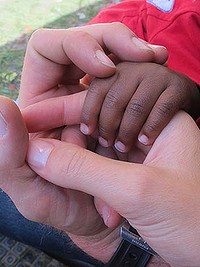
Champion cyclist, Cadel Evans, and his wife, Chiara Passerini, welcomed their first child last month. After two years of trying to adopt, last month they were awarded custody of a fifteen month old baby boy named Robel. Robel had been abandoned in the streets of Shashamane in Ethiopia at the age of six months.

Cadel was the first Famous Name on the blog, after winning the 2011 Tour de France. Since then, he has become a sporting hero and a household name in Australia. Chiara is originally from Italy, and is a pianist, gospel choir singer and music teacher. Cadel and Chiara live in the Swiss village of Stabio, near the Italian border; they also have a home in Australia outside Melbourne. They were married in Italy in 2005.

Robel is a common Ethiopian name. I have seen it translated as meaning “my joy”, but also used as an Amharic form of the name Reuben.

(Story and photos from the Sydney Morning Herald, January 28 2012)

Famous Name: Australia

26 Thursday Jan 2012

Posted by A.O. in Famous Names

≈ 17 Comments

Tags

english names, holiday names, Latin names, locational names, name history, name meaning, rare names, unisex names

FAMOUS PLACE
Today is Australia Day, which commemorates the landing of the First Fleet in Sydney Cove on January 26 1788. The date was first celebrated by emancipated convicts and their families, who had grown to love their new land, and identified themselves as Australian rather than British. It was the popular Governor Lachlan Macquarie who first declared it an official holiday in New South Wales.

When you think about it, it’s a funny date to choose for our national public holiday, because the landing of the First Fleet wasn’t the foundation of Australia, or even the foundation of Sydney or New South Wales (which took place on February 7 1788). It would be more logical to celebrate Federation Day, the day in 1901 when all the colonies were united, and we were given the right to self-govern – our Independence Day, in fact.

Unfortunately, the worthy bureaucrats who helped forge us into one nation chose the most bureaucratically sensible day to begin our independence – January 1. Apparently they never thought we might have something else to celebrate on that date: a little thing called New Year’s Day.

Despite other days being suggested, in the end we stuck with January 26, and by 1935, it had been called Australia Day. It wasn’t until 1994 that it was accepted by all state and been made a national public holiday.

It’s the biggest celebration in Australia, but is also a controversial one, as it is a celebration of European arrival in Australia – a narrative which ignores our Indigenous history and culture. Let’s hope we can find a way to make Australia Day a holiday to bring us all together and include all Australians.

NAME INFORMATION
Even before anyone knew Australia existed, there was Terra Australis Incognita (Latin for “unknown southern land”). The ancients hypothesised that there must be a land mass in the south to balance all the land in the north.

This idea persisted into the Renaissance, and it began showing up on maps as Terra Australis or Australia, even though it was fictitious. Travellers’ tales of actually reaching this land, or at least seeing it in the distance or hearing about it down the pub, resulted in the British government ordering Captain James Cook to investigate.

It was discovered that this mammoth land-mass, envisaged as stretching from South America and including Antarctica, just didn’t exist. There were lots of small countries and islands, and there was Australia, which is biggish, but by no means a great super-continent covering most of the southern hemisphere. Being the biggest thing they managed to find, it was decided the place we live now must be Terra Australis, or at least be given the name of that legendary land.

It was explorer Matthew Flinders who pushed for the name Australia as early as 1804, and in his charts, notes that the sound of Australia “is more agreeable to the ear”. The term gradually caught on, and once again the enlightened Lachlan Macquarie stepped in, and recommended that the name be formally adopted, which the British Admiralty agreed to in 1824. (You can see why the name Lachlan has prospered).

Australia has been occasionally used as a personal name since the 19th century, and has been nearly always given to girls – as a middle name it is more gender-flexible. It is very rarely given to babies today, even in the middle.

In Australia the name would have been bestowed for patriotic reasons, while in other nations it is not possible to be certain that the name had anything to do with the country at all. In Latin America, for example, the name could have been given simply from the Spanish or Portuguese for “southern”, while in the US it could have at least sometimes been from the Latin for “south”.

Australia is probably the most patriotic name you could choose, and it certainly makes a statement. It’s a part of history – not just our history, but world history and ancient history. It was chosen by Lachlan Macquarie and judged aurally pleasing by Matthew Flinders. It has classical etymology, and it’s a name for a nation that rose out of legend.

Names of Convicts on the Second Fleet

22 Sunday Jan 2012

Posted by A.O. in Name Themes and Lists

≈ 8 Comments

Tags

angel names, astronomical names, Biblical names, celebrity baby names, famous namesakes, germanic names, Greek names, hebrew names, Irish names, Italian names, literary namesakes, mythological names, name history, name meaning, name popularity, popular names, Provencal names, Roman names, royal names, saints names, Shakespearean names, surname names, virtue names, vocabulary names

The Second Fleet arrived in Sydney in June 1790, and proved something of a disaster. The colony founded by the First Fleet was already struggling and in the grip of starvation, and the Second Fleet was sent partly to aid them with further supplies. The first ship to arrive was the Lady Juliana, which contained female convicts. It took such a leisurely route that although it left months before the other ships, it arrived only a couple of weeks before them.

The convicts on the Lady Juliana provided Australia with its first sex scandal, because the women and ship’s crew consorted freely together, some of the women sold themselves for money or alcohol, and whenever the ship made a port of call, the women entertained men from other ships. Several gave birth on the ship, and many were pregnant by the time they reached Australia.

The women were well treated on board, but on arriving in Sydney, the Lady Juliana was called “a floating brothel”, and its female occupants “damned whores”. A cargo of more than 200 women when provisions were wanted, the ladies couldn’t have been more unwelcome.

Worse was to follow. While the First Fleet had been an effort of the British government, and generally well-organised, the Second had been handed over to private contractors. They had little concern for the convicts’ welfare, and although only a small number died on the first voyage (the unfortunate Ishmael Colman being the exception rather than the rule), the mortality rate on the second was 40%. The ship carrying the majority of the supplies, such as livestock, hit an iceberg en route and was wrecked.

When the remaining convicts reached Sydney, the colonists were horrified to see that the new batch was in terrible condition – starved, filthy, sick with scurvy, covered in lice, and bearing the marks of cruelty on their emaciated bodies. Instead of being the saviours of the colony, the people of the Second Fleet were instead a great drain on its resources. A Third Fleet had to be sent (amazingly, they chose to use the same private contractors again).

More than 165 000 convicts were sent to Australia over eighty years. This is a tiny number compared to the number of free settlers. For many years, convict ancestry was something of which people were deeply ashamed, and it was hidden from the family histories. These days, people are proud of their convict ancestors, and there’s a wealth of information available to them.

WOMEN

Dorcas (Talbot)

At the age of 39, Dorcas was convicted at the Old Bailey of stealing sixty yards of material from a shop, and sentenced to seven years transportation. Dorcas was sent to the penal colony on Norfolk Island, a place of untold horror and abject misery. In 1804 she married John Hatcher, who had arrived on the First Fleet. She died on Norfolk Island in 1811. The name Dorcas is a Greek translation of the Aramaic name Tabitha, meaning “gazelle”. In the New Testament, Dorcas (or Tabitha) was one of the disciples of Jesus; the Bible makes her seem important, and she may have been a leader in the early church. It is said that she was a widow who did charitable works, and Dorcas Aid International is an organisation which raises money for the poor and needy. Dorcas is regarded as a saint in some denominations. Often used in fiction, Dorcas is a shepherdess in Shakespeare’s The Winter’s Tale. She has also given her name to a species of gazelle – the dorcas gazelle, meaning “gazelle gazelle”.

Isabella (Manson, aka Isabella Smith)

At the age of 28, Isabella was convicted at the Old Bailey for stealing clothes and sentenced to 7 years transportation; she seemed to have a male partner, but took full responsibility for the crime. She married John Rowe in Sydney in 1790. John had arrived on the First Fleet, and there was a scheme of marrying off the “best” Second Fleet convict women to the “best” remaining First Fleet men and giving them farmland to work. John and Isabella ran a farm together without much success, and had three children named John, Joseph and Sarah, and possibly another named Mary. They have many living descendants. Isabella died a widow in Gosford in 1847. The name Isabella is the Latinate form of Isabel, a medieval Provencal form of Elizabeth. It was commonly used by royalty, and is the name of Princess Mary of Denmark’s eldest daughter. Isabella has been on the charts since 1900, dropping from it in the 1950s and ’70s. In 1900 it was #75, and today it is #1; its big jump in popularity occurred in the 1990s, although rising since the 1980s. Nicole Kidman and Tom Cruise naming their daughter Isabella in 1992 may have assisted.

Phoebe (Williams)

At the age of 41, Phoebe was convicted at the Old Bailey of stealing 5 yards of cloth and sentenced to seven years transportation. She married Edward MacLean, a First Fleeter, in 1790, and they ran a farm together in Parramatta. Edward died in 1794 and Phoebe died in Parramatta in 1798. The name Phoebe is from the Greek for “bright, shining”. In mythology, Phoebe is one of the Titans, a moon goddess who was the grandmother of Artemis; her name was given to one of the moons of Saturn. Phoebe was also one of Artemis’ titles, and there are several Phoebes in legend, including an Amazon, and the sister of the beautiful Helen of Troy. In the New Testament, Phoebe was a deacon in the early church regarded as a saint by several denominations. It was used by Shakespeare for another of his shepherdesses in As You Like It. Phoebe was #148 in the 1900s and by the 1930s was off the charts altogether. It made a comeback in the 1960s, and climbed at such a rate that it was in the Top 100 by the 2000s. It is maintaining its position around the #50 mark.

Rosamond (Dale, aka Rosina Dale, aka Mary Woods)

At the age of 22, Rosamond was convicted at the court in Lincoln, and sentenced to seven years transportation. She married James Davis from the First Fleet, and they were sent to the penal colony on Norfolk Island, where she died. The name Rosamond is a variant of Rosamund, a Germanic name meaning “horse protection” which was introduced to England by the Normans. From early on, the name was associated with the Latin phrases rosa munda (“pure rose”) and rosa mundi (“rose of the world”), referring to the Virgin Mary. Rosa mundi was transferred from the cult of the goddess Isis who was worshipped throughout the Roman Empire; roses were sacred to her, as they became for Mary as well. There is a heritage rose called the Rosa Mundi which has existed since the 1500s. One of the old Gallica roses, it has red and white striped petals.

Violetta (Atkins)

Violetta was a servant. She was convicted of stealing from her employer at the Old Bailey and sentenced to seven years transportation. I think Violetta must have either died on the voyage, or soon after her arrival in Sydney. Violetta is the Italian form of Violet. Violetta Valéry is the main character in Verdi’s 1853 opera La Traviata, based on the play adapted from the novel La Dame aux camélias by Alexandre Dumas, fils. It’s a romantic and emotionally wrought tale of a courtesan who finds true love, but tragically dies of tuberculosis.

MEN

Ephraim (Lindsay)

Ephraim was convicted by the court in Northampton and sentenced to seven years transportation. In the Old Testament, Ephraim was a son of Joseph, born during his years in Egypt. Ephraim’s mother was a priest’s daughter named Asenath; their marriage was arranged by the Pharaoh. A Christian story is that she converted from paganism to the worship of Yahweh; it’s a fanciful tale involving an angel and some magical bees. According to Jewish tradition, she was actually Joseph’s half-niece, conceived in rape. How she got to Egypt involves yet another angel who leaves her under a bush wearing a necklace inscribed with an explanation of her origins; the priest finds and adopts her. You can see there is some discomfort with the idea of Joseph’s bloodline being “besmirched” by an Egyptian. Ephraim can be pronounced several ways, including EE-free-im and EE-fruhm. It seems like a good alternative to popular Ethan.

Janus (Everard)

Janus was convicted at the Middlesex Guild Hall and sentenced to transportation for life. Janus was the Roman god of beginnings, and thus all points of transition, such as gates and doors. He is famously depicted as having two faces, to indicate that he looks forward to the future and backward to the past simultaneously – a rather neat visualisation of the flow of time, which Janus oversees. The Latin name for “door”, janua, is named after him, and thus doorkeepers and caretakers of building are sometimes known as janitors. Janus was an important deity, and when the Roman calendar was regulated, the first month of the year was called Januarius in his honour. We still start the year off in January, making Janus suited to this month.

Ormond (Burcham)

Ormond was convicted of stealing five bushels of barley and sentenced to death by the court of Norfolk. This was commuted to seven years transportation. Ormond is an Irish surname named after the ancient Irish kingdom in Munster. It simply means “east Munster”, and was a hereditary title within the Irish aristocracy. It may also have become (perhaps deliberately) confused with the Irish surname O’Ruadh, meaning “son of the red one”. Francis Ormond was a philanthropist who founded the college which later became the Royal Melbourne Institute of Technology, as well as endowing Ormond College at the University of Melbourne. There is a 6th century French abbot named Saint Ormond, however, this is an Anglicisation of Armand, the French form of Herman.

Traverse (Spileye)

Traverse was convicted of attempting to steal five dozen tallow candles by the court in Nottingham and sentenced to seven years transportation. This may be a Puritan virtue name, very interesting if so, because they are rarely found in Australia compared to the United States. As the word traverse means to travel, it could refer to pilgrimage, or the soul’s journey through life, or perhaps even the Israelites traversing the desert for forty years. However, I can’t help wondering if it is just a variant of the surname Travers, coming from the French for “to cross”; it was an occupational name for someone who collected tolls at crossing places such as city gates and river fords. There is a Puritan connection with this surname, because Walter Travers was an English Puritan theologian.

Uriel (Barrah, aka Uziel Baruch)

Uriel was a Jewish butcher with a long history of being convicted for debt and theft, although he had also been a constable. His wife’s name was Judith. He was convicted of theft by the Old Bailey and sentenced to seven years transportation. He was originally going to be sent to a penal colony in Africa, an idea the British tried which didn’t work out, so he was sent to Australia instead. When he completed his sentence he returned to England; a relative seems to have taken over his butcher shop during his absence. Uriel is one of the archangels in Jewish and Christian tradition; he isn’t mentioned in the scriptures. He is given several interesting roles, one of which is to guard the gates of Eden with a flaming sword so that none living may enter; he is said to have buried Adam and Abel there. In Jewish mystical tradition, he is called the Angel of Poetry. Uriel appears several times in literature, including Milton’s Paradise Lost. His name means “light of God”.

Names of Convicts on the First Fleet

15 Sunday Jan 2012

Posted by A.O. in Name Themes and Lists

≈ 31 Comments

Tags

Aramaic names, Biblical names, english names, famous namesakes, fictional namesakes, germanic names, Greek names, hebrew names, Latin names, locational names, mythological names, name history, name meaning, name popularity, popular names, royal names, saints names, Shakespearean names, Spanish names, surname names

It is Australia Day next week, and so my name lists for January are names of convicts from the First and Second Fleets.

Convicts were the prisoners who filled overcrowded British prisons in the 18th and early 19th centuries. Because the death penalty was applied even to what we would consider minor offences, people were sent to prison for what we would consider to be misdemeanours, such as petty theft, or not crimes at all, such as being in debt.

Many convicts were disposed of by sending them to the colonies as cheap labour – nearly always North America – until the term is now understood as those prisoners sent to the colonies. The American War of Independence putting an end to America as a colony, another place had to be thought up to send convicts, and the east coast of Australia seemed a likely spot.

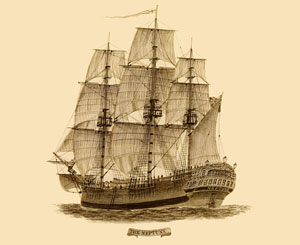
The First Fleet sailed from Portsmouth, Hampshire on May 13 1787, and consisted of eleven ships, led by Captain Arthur Phillips. Aboard were around 1487 people, including 778 convicts (192 women, 586 men). They travelled 24 000 km (15 000 miles) across the sea for 252 days.

On January 26 1788, the ships sailed into Port Jackson, which Phillips called “the finest harbour in the world” – an opinion many have shared since. They anchored in a sheltered place they called Sydney Cove, after British Home Secretary, Lord Sydney.

Life was very difficult in the new colony, and punishments could be extremely harsh. Convicts were basically slaves, mostly used on public works, but also assigned to individuals as a personal labour force.

The names of the convicts were those common in Britain in the 18th century, with names from the Bible being often used. Rather than cover historically famous convicts, I chose people for their names, giving a rather random selection of ordinary people and their unremarkable fates.

[All convicts’ names can be found here. Information on convicts from the First Fleet Database].

WOMEN

Deborah (Elam/Ellam/Elias)

At the age of 20, Deborah was found guilty of stealing 36 shillings worth of clothing, and sentenced by the court in Chester to seven years transportation. She sailed to Australia on the Prince of Wales. She married a fellow convict and brought a complaint against him; it was judged to be “trivial” and she received 25 lashes in punishment. The couple had seven children and have many descendants. Deborah died in 1819, “universally respected by her numerous friends and acquaintances”. The name Deborah means “bee” in Hebrew, and in the Old Testament Deborah was a prophetess, judge, advisor and warrior. The Song of Deborah, which she is said to have composed, may be the earliest Hebrew poetry we know of. Deborah didn’t rank in Australia until the 1940s, and peaked in the 1960s at #12. It left the Top 100 in the 1980s and hasn’t ranked since the 1990s.

Dorothy (Handland aka Dorothy Gray)

Dorothy made her living as a dealer in old clothes. In her early 60s, she was found guilty of perjury at the Old Bailey and sentenced to 7 years transportation. She sailed to Australia on the Lady Penrhyn. Dorothy is believed to be the oldest convict, and despite her age, she survived the voyage and returned to England when she had completed her sentence. Dorothy is the English form of Dorothea, from the Greek meaning “gift of God”. There are three saints named Dorothea, one of whom we call Saint Dorothy. A legendary virgin martyr of the 4th century, said to be of surpassing beauty, her cult spread across Europe in the Middle Ages. The name Dorothy was #2 in the 1900s and 1910s, and remained Top 100 until the 1950s. It has been unranked since the 1980s.

Flora (Lara/Larah, aka Laura Zarah)

Flora is thought to have been Jewish. She was found guilty of stealing a mahogany tea chest and money to the value of 5 shillings, and sentenced by the court in Westminster to seven years transportation. She sailed to Australia on the Prince of Wales. She was described in the court records as being of an evil disposition; she married in Australia and left the colony in 1801. Flora was the Roman goddess of spring, married to the west wind, Zephyr; her name is from the Latin for “flower”. Flora is the scientific term for all plant life. Flora was first used as a personal name in France, and it’s especially famous in Scotland, because of Jacobite heroine Flora MacDonald. Flora has never been Top 100 in Australia – it peaked at #112 in the 1900s, and left the charts in the 1950s.

Lydia (Munro, aka Letitia Munro)

At the age of 17 Lydia was found guilty of stealing material to the value of 20 shillings. She was sentenced to death by the court in Kingston-upon-Thames, which was later commuted to 14 years transportation. She sailed to Australia on the Prince of Wales. The convict records show that she was the victim of a sexual assault and attempted rape by another convict. She married, and she and her husband went to Tasmania where they raised a family of eleven children; they have numerous descendants. She died in 1856. Lydia of Thyatira is a character in the New Testament, regarded as the first convert to Christianity in Europe. She was a successful merchant who was baptised by St Paul and became a deacon in the early church; she is considered a saint by several denominations. Her Greek name is after the place name Lydia, an area of the ancient world now part of modern Turkey. Lydia has charted almost continually without ever hitting the Top 100. It peaked in the 1900s at #137, disappeared from the rankings in the 1930s and ’40s, and is currently #322.

Rachel (Earley/Early/HurleyHarley/Arrly)

At the age of 25 Rachel was found guilty of stealing tea and silk worth 3 shillings, and sentenced by the court in Reading to seven years transportation. She sailed to Australia on The Friendship, and spent time in irons onboard, for the twin crimes of “theft and dirtyness”. As a convict, she once received 10 lashes for not obeying orders. She married twice, and had a daughter, but was left by both husbands; she has living descendants. She died in Tasmania in 1842. In the Old Testament, Rachel was one of the wives of Jacob. Her name is Hebrew for “ewe”, perhaps with connotations of purity and submissiveness, although in the Bible Rachel did literally take care of her father’s sheep. Rachel is said to have been of overwhelming beauty, and Jacob loved her best of his wives. She was plagued by infertility issues, but managed to give birth to Joseph and Benjamin, her husband’s favourite children. Unfortunately, she died in childbirth, and her tomb is still a place of pilgrimage. The name Rachel has charted almost continually since 1900, dropping from the rankings during the 1940s. It peaked in the 1970s at #19, and is currently #118.

MEN

Barnaby (Denison/Dennison/Deneson)

At the age of 28 Barnaby was found guilty of “intent to rob”, and sentenced by the court in Bristol to seven years transportation. He sailed to Australia on the Alexander. According to the convict records, he was once sentenced to 50 lashes for “singing loudly at an improper time”, and became a night watchman. He died in 1811. The name Barnaby is a medieval English form of Barnabas. In the New Testament, Barnabas was a companion of St Paul and fellow missionary. His name was Joseph, but when he converted from Judaism to Christianity he was given the name Barnabas, which is a Greek form of Aramaic, and can be translated as “son of prophecy” or “son of encouragement”. There are many literary characters named Barnaby, most notably Dickens’ eponymous Barnaby Rudge.

Cooper (Handy/Handley/Henley)

Cooper made his living as a weaver. At the age of 33 he was found guilty of assault and highway robbery to the value of 20 shillings and sentenced to death by the court in Salisbury. This was commuted to seven years transportation, and he sailed to Australia on the Friendship. Cooper was held in a hulk at Dunkirk before he left, and at one point managed to escape during an uprising, but was recaptured. His report says that he behaved “remarkably well” otherwise. Not long after his arrival in Australia, Cooper was killed by Aborigines while gathering greens. Cooper is an English surname referring to someone who makes barrels as their occupation. Apart from being a popular name, Cooper is well known in Australia as the surname of the family who owns Cooper’s Brewery in South Australia. The name Cooper first joined the charts in the 1990s and peaked in 2009 at #4. It’s currently #7.

Ferdinand (Dowland/Dowlan/Doolan)

Ferdinand was a dustman. At the age of 32 he was found guilty of stealing a horse worth 30 shillings. He was sentenced to death at the Old Bailey, commuted to seven year’s transportation, and sailed to Australia on the Scarborough. He died in 1827. The name Ferdinand is from the Spanish form of a Germanic name meaning “daring journey”. Brought to Spain by the Visigoths, it was used amongst the royal houses of Spain and Portugal, and through them became common in the Hapsburg family, rulers of the Holy Roman Empire. One of its most famous namesakes is Ferdinand Magellan, a Portuguese explorer whose expedition was the first to circumnavigate the globe (although Ferdinand himself did not survive the voyage). Ferdinand is also a character in Shakespeare’s play The Tempest; a prince who is shipwrecked on Propsero’s island, and falls in love with his daughter Miranda.

Ishmael (Colman)

At the age of 32 Ishmael was found guilty of stealing woollen blankets worth 14 shillings, and sentenced to seven years transportation by the court in Dorchester. Ishmael was held in a hulk at Dunkirk before sailing, where he was described as “decent and orderly”. He died after only 16 days at sea on the Charlotte; the report from the ship’s doctor says that his death was brought about through his long confinement before the trip, which had brought about “low spirits and debility”. Ishmael is a name from the Bible which is translated as “God has heard”. In the Old Testament, Ishmael was the son of Abraham and his wife’s handmaiden, Hagar; Ishmael and his mother are two Biblical characters who get a raw deal, being cast into the wilderness to fend for themselves and not receiving any inheritance from Abraham. According to tradition, he is the father of the Arabic people, and is considered such in Islam, Judaism and Christianity, although this isn’t historically accurate. The prophet Muhammad traced his bloodline from Ishmael, and he is one of the prophets of Islam. In literature, Ishmael is the brooding narrator of Herman Melville’s famous novel, Moby Dick.

Job (Hollister)

At the age of 21 Job was found guilty of stealing tobacco and sentenced to seven years transportation by the court in Gloucester. He sailed to Australia on the Alexander. When he completed his sentence, Job left the colony and migrated to Vancouver Island in Canada. Job is another Old Testament character who has a miserable time. A righteous man, God allows Satan to take away his wealth, his children and his health in an effort to tempt him to curse his Creator. He never does so, although he is aggrieved by the process, and spends a lot of time wondering why all these dreadful things keep happening to him. The story ends happily, with God rewarding him many times over, but with no reasonable explanation for his treatment. Although the tale bears all the hallmarks of an allegory on the human condition, Job is regarded as a prophet in Judaism and Islam, and is given a saint’s day in several Christian denominations. In line with the narrative, Job’s name is translated as “hated, persecuted”.

Image is of The First Fleet in Sydney Cove, January 27, 1788 by John Allcott (1938). Painting held by the National Library of Australia.


Famous Name: Elvis

14 Saturday Jan 2012

Posted by A.O. in Famous Names

≈ 12 Comments

Tags

famous namesakes, honouring, Irish names, Latin names, mythological names, name history, name meaning, saints names, surname names, UK name popularity, unisex names, US name popularity

This article was first published on January 14 2012, and substantially revised and re-posted on September 14 2016.

Famous Festival
On January 11, the 20th annual Elvis Festival kicked off in the country town of Parkes, west of Sydney – an annual celebration of Elvis Presley’s life and music. For five days in the second week of January, the population of Parkes is swelled by Elvis impersonators, women with big hair, and people wearing blue suede shoes. There are parades, contests, dancing, singing, hip swivelling, and a mass renewal of wedding vows performed by a celebrant in an Elvis costume.

The festival began in 1992, when a small group of local Elvis fans decided to hold a festival on the day of the star’s birthday, January 8.  The next year the festival attracted 200 people from around the country; by 2005 they came in their thousands, by 2007 it had been extended to five days, and now there are more than a hundred events, and the town’s population of 10 000 more than doubles during the Elvis Festival.

The townspeople were originally lukewarm on the Elvis Festival idea. Parkes is the proud owner of an observatory, which has at times assisted NASA on space missions (as fictionalised in the movie The Dish), and had always seen itself as devoted to science and research. An Elvis Festival seemed a bit frivolous.

However by now Parkes has fully embraced the festival, and the whole town gets into the fun by dressing up and decorating the buildings. It’s one of the mayor’s roles to dress as an Elvis impersonator and meet the train from Sydney, where all the similarly-attired fans have travelled together.

People flock here from all over the globe to come to the self-proclaimed Elvis Capital of the World. It injects millions into the economy of the town, and in 2007 they set a record for the most number of Elvis impersonators in one place.

In 2017 the Festival will celebrate its 25th birthday and the theme will be Viva Las Vegas.

Name Information
Elvis Presley was one of those performers lucky enough to have been given such a distinctive name that he had no need to choose a stage name. He was named for his father Vernon, whose middle name was Elvis.

Elvis is an Anglicisation of the Irish name Ailbhe, said like Alva: the meaning is not known for sure, but may derive from the Gaelic albho, meaning “white” – it is also Anglicised as Albus, the Latin for “white”. The name Ailbhe could be given to either sex, and in Irish legend there is a female warrior and follower of Finn McCool named Ailbhe.

A male example of the name is Saint Ailbhe, nearly always known as Saint Elvis. He was a 6th century bishop venerated as one of the four great patron saints of Ireland. Saint Ailbe’s legend is quite fairy-tale – cast out by his royal father (like Oedipus), he was raised by a she-wolf (like Romulus and Remus), and at the end of his life voyaged by ship to the Otherworld (like King Arthur going to Avalon). There is a Welsh village named St Elvis in the saint’s honour, as he is said to have baptised Saint David, the patron of Wales, in this area.

The English surname Elvis does not seem to be derived from the Irish name, and is probably a variant of the surname Elwes, which comes from the female name Heloise or Eloise.

Elvis has been used as a name since perhaps the 18th century, and in Ireland seems to have been used as a female name, although it wasn’t common (today Ailbhe is a popular name for girls in Ireland). However in England the name was mostly masculine, suggesting that there the surname was the primary influence.

The name Elvis went on to become most commonly used in the United States, and was usually a boy’s name. Despite the feminine origin of the surname, it probably sounded like male names such as Alvis and Alvin, giving it a masculine feel.

In Australian records Elvis was nearly always given to girls in the late 19th and early 20th centuries which makes sense considering our strong Irish heritage. It also fit in with turn-of-the-century name trends for girls, such as Alva and Elva. Once Elvis Presley became famous in the 1950s, the name virtually disappeared from records as a girl’s name.

In the US, the name Elvis has charted on and off in the Top 1000 for boys since the late 19th century, becoming more established there around 1910. Before Elvis Presley became famous, its highest peak was #584 in 1919, and it was #900 in 1935, the year Elvis Presley was born.

The name Elvis went off the charts around the time Elvis Presley began his career in 1954, but returned in 1955, so the star did affect the name’s popularity. Elvis peaked in 1957 at #312, the year after Presley released number one hits such as Heartbreak Hotel and made his film debut in Love Me Tender – female fans screamed with excitement non-stop during the movie, even though it had quite a serious plot and a sad ending.

The name Elvis last charted in the US Top 1000 in 2011. Last year in the US there were 180 baby boys given the name Elvis, and numbers are fairly stable.

In the UK, the name Elvis has charted since the 1990s, and the name made the Top 1000 in the early 2000s, peaking at #761 in 2003, and again in 2008 when it made #943. It rose steeply last year, and was back on the Top 1000 at #873.

In Australia, Elvis is not a common name, but I generally see two or three examples of it as a baby name per year – enough to convince me it isn’t a rare name either, and probably has a similar popularity to the UK. A famous Australian with the name is former mixed martial artist Elvis Sinosic.

Elvis has two other musical namesakes. One is British star Elvis Costello, who was born Declan MacManus, and the other is American folk singer Elvis Perkins, the son of actor Anthony Perkins (Elvis Perkins was born the year before Elvis Presley died). Costello’s manager chose the stage name Elvis in reference to Presley, while Anthony Perkins was an Elvis fan.

Elvis, if you forget about its most famous namesake for a moment, sounds like a vintage name ready for revival, complete with fashionable V. And yet it never can be separated from Mr Elvis Aaron Presley. The name will always conjure images of white satin bodysuits covered in rhinestones, brilliantined dark hair, and a heart-stopping smile.

Even though Elvis is not a rare or unusual name, it’s still something of a bold choice as it’s likely to elicit some strong opinions. But you’ll have to tell the naysayers you’d like a little less conversation about it, because you can’t help falling in love with the name Elvis. It’s a truly royal name because it belongs to the one and only king, baby!

POLL RESULTS
Elvis received an approval rating of 42%. 35% of people thought the name was too closely associated with Elvis Presley, although 9% thought it was either handsome or cute. Only one person thought the name Elvis sounded redneck.

(Picture shows Elvis impersonators at the Parkes Elvis Festival, with the Observatory in the background)

Famous Names: Tully and Yasi

07 Saturday Jan 2012

Posted by A.O. in Famous Names

≈ 8 Comments

Tags

Australian name trends, created names, cyclone names, famous namesakes, Fijian names, Game of Thrones names, Irish names, locational names, name history, name meaning, names of rivers, nature names, pen names, rare names, Roman names, surname names, tree names, UK name popularity, unisex names, US name popularity

This blog entry was first posted on January 7 2012, and revised and republished on August 31 2016.

TULLY
On January 3, the town of Tully in Queensland celebrated the upgrade of its famous Golden Gumboot, which was damaged by Cyclone Yasi nearly a year ago. The tourist attraction is a 7.9 metre (26 feet) high gumboot, painted gold, built to commemorate the town’s 1950 highest recorded annual rainfall level of 7.9 metres (310 inches), earning Tully the distinction of being Australia’s wettest town.

When the Golden Gumboot was re-opened, it had received a fresh coat of paint and a new viewing platform. Fittingly, it rained heavily throughout the ceremony.

The town of Tully is named after the nearby Tully River, which received its name from Surveyor-General William Alcock Tully. William Tully was originally from Dublin, and arrived in Hobart as religious instructor on a convict ship in 1850 before embarking on a career of conscientious public service.

Tully is an Anglicised form of an Irish surname, originally MacTully, and having a host of variants, which is often derived from tuile, the Gaelic word for “flood”. Another theory is that it has been mistranslated from toile, meaning “will” (as in the will to keep going). However, some Tullys are so convinced of the first interpretation that they have hyper-Anglicised their surname to Flood.

The meaning of “flood” is very appropriate for the name of a river, and a town famous for its sogginess. In Game of Thrones, the Tully family is one of the Great Houses and as it is the principal house in the Riverlands and their ancestral home is Riverrun, perhaps George R.R. Martin also had the Irish surname and meaning in mind.

Tully has been used as a personal name since the late 18th century. Although the name can be found in early records from Ireland, it seems to have been more frequently used in the United States.

One inspiration for it may have been the Founding Father Alexander Hamilton, who wrote patriotic pamphlets under the pen name Tully – in his case, a reference to the Roman philosopher Marcus Tullius Cicero, whose name was occasionally Anglicised to Tully. The Tullia took their surname from the legendary Roman king Servius Tullius; the name is so ancient we do not know its meaning.

Tully has never been a common name. Last year in the US there were 8 boys named Tully with no girls listed with the name since 2013. In the UK the name has been in sporadic use, and in 2014 there were 4 baby boys named Tully. No girls are listed as having been given the name since 2009.

In Australia I have seen a roughly equal number of boys and girls with this name, and the name may be more evenly unisex here than elsewhere. One boost to the name for girls is women’s basketball champion Tully Bevilaqua, and after the attractive but controversial Tully Smyth competed on Big Brother in 2013, I heard many Australian parents refer to Tully as a “girl’s name”. Perhaps more importantly, it fits with the Australian trend for female names with a T-L pattern, such as Talia, Tilly, and Tallina.

YASI
The town of Tully was one of the worst affected by Cyclone Yasi, which hit the coast of northern Queensland early in the morning on February 3 2011. The town suffered extensive damage to its main street, and the area’s banana crops were completely flattened. Because Cyclone Yasi originated in Fiji, it was a Fijian cyclone forecaster called Misaeli Funaki who chose its name.

If you think naming a baby is difficult, spare a thought for the meteorologists who name cyclones. The cyclone had to start with Y, and nobody could think of an appropriate name for either gender.

So Mr Funaki suggested Yasi, which is the Fijian word for “sandalwood”. It didn’t have a history as a personal name in Fiji, but with no other candidates, his nomination was accepted by the ruling UN body. And so a new name was created.

Sandalwood is a tree with fragrant wood native to Asia and the Pacific. Australia has a sandalwood industry; the tree’s oil is used to make incense, soaps and cosmetics. Its antibacterial properties make it excellent as a skin cleanser, and Australian Aborigines eat its fruit as a bush food. Sandalwood is also used in the rituals of several eastern religions.

Yasi is neither used for boys or girls in Fiji. The cyclone forecasters were looking for a male name when they chose it, but they often resort to unisex names, and probably meant Yasi to be one. It’s commonly said to rhyme with Darcy, but seems to be more correctly pronounced YAH-zee.

During Cyclone Yasi, one doctor was apparently very keen for all babies born during the cyclone to be named Yasi, but there is no record of anyone following his advice. However you can find people around the world with the name Yasi, mostly female – perhaps a short form of names such Yasmin.

These are two short unisex names important to Australia’s history, especially connected with Queensland, rain, and storms. Tully is uncommon, but not unheard of, while Yasi is a true rarity, but not unusable.

POLL RESULTS
Tully received a very good approval rating of 70%. 46% of people thought it was a good name, while not one person hated it. Yasi was far less popular, with an approval rating of 22%. 53% of people weren’t keen on the name, and only one person loved it.

(Photo shows the Golden Gumboot in Tully, Queensland)


Waltzing with … Sunniva

25 Sunday Dec 2011

Posted by A.O. in Waltzing with ...

≈ 13 Comments

Tags

Anglo-Saxon names, Christmas names, name history, name meaning, name popularity, nicknames, saints names, scandinavian names

This blog post was originally published on December 25 2011, and revised and re-posted on December 23 2015.

From the very start I knew that I would have a name profile due on Christmas Day, and began thinking of suitable names for girls. Because Christmas is just after the Summer Solstice in Australia, and because Christmas is on a Sunday this year, I kept coming back to one name: Sunniva.

This lovely name is the Scandinavian form of the Anglo-Saxon Sunngifu, which means “gift of the sun”. As Christmas is a time for sharing gifts, and Australian Christmases can often be hot and sunny, and Christmas 2011 is on the Sun’s own day, it seemed perfect.

The story of Sunniva is one fraught with drama and high adventure. According to legend, there was once a 10th century Irish princess called Sunngifu, a virgin and very devout Christian. When her land was invaded by a pagan king who wished to marry her, she made a brave and rather desperate decision to escape. Along with a group of loyal companions, amongst them her brother Alban, she fled in a ship without oars or sails, trusting their destination to God.

After a few hairy encounters with Vikings, the pious company settled on the island of Selje, off the coast of Norway. They moved into an empty cave, and supported themselves with fishing and gathering wild foods, living a life of austerity and holiness. If you live in a comfortable house with a supermarket just down the road, this might sound a bit eccentric or at least cold and dismal, but Irish saints had a long and rich tradition of taking themselves off to remote windswept islands to worship in peace, so Sunniva and her crew were pretty normal by the standards of their time and place.

Unfortunately, the locals on the mainland believed these peaceful cave-dwellers were rustling their sheep and chowing down on ill-gotten roast mutton rather than the simple viands of nature. They came after them, intending to murder them as payback. Sunngifu and her company prayed to God to save them from the angry Norsemen. When the armed band arrived on the island, they found nobody there, and the cave sealed by a landslide. None of the exiles were ever seen alive again.

(This story may remind Australian readers both of Waltzing Matilda, with the accused sheep-thief preferring death to punishment by the authorities, and Picnic at Hanging Rock, which also ends with a mysterious disappearance in a cave which seals itself.)

Many years later, after reports of an unearthly light and heavenly fragrance in the area, King Olaf Tryggvason ordered that the cave be opened. Sunngifu’s body was found unharmed by the landslide and incorrupted, and as this was a clear sign of sainthood, King Olaf had a church built in her honour. Her relics were moved to Bergen Cathedral, where they performed another miracle by halting a fire (these useful relics disappeared at some point, unfortunately).

She became known in Scandinavia as Saint Sunniva, and is Norway’s first female saint. Saint Sunniva is the patron of Bergen, and the west coast of Norway. Her feast day is July 8 – appropriately enough, at the height of the northern hemisphere summer. The island of Selje is a place of pilgrimage, and you may see there the ruins of a Benedictine monastery dedicated to the saint, called Selje Abbey.

Sunniva has been well used as a girl’s name in Scandinavia, and is currently #68 in Norway, although falling in popularity, as it peaked at #32 in 2000.

Sunniva is pronounced SOON-ee-vah, but some people prefer to say it SUN-ee-va. Other popular pronunciations are soon-EE-va and sun-EE-va. You could also pronounce it soon-IE-va or sun-IE-va.

Sunniva has a happy meaning, well suited to summer and a land of sunshine.  It provides good ties with our English, Irish and Norwegian heritages (we have several popular celebrities of Norwegian ancestry, and bush poet Henry Lawson’s father was from Norway). It’s an unusual name in Australia, but doesn’t sound particularly strange, and isn’t hard to spell or pronounce, once you work out which pronunciation you’d like.

Attractive nicknames for Sunniva include Sue, Susie, Sunny, Eve, Eva, Evie, Neva, Neve, and Zuzu.

POLL RESULT
Sunniva received an approval rating of 81%, making it one of the highest-rated names of 2011. 30% of people loved the name Sunniva, while only one person hated it.

(Picture is from the cover of Emma’s Secret by Steena Holmes)

Boys Names from Stars and Constellations

18 Sunday Dec 2011

Posted by A.O. in Name Themes and Lists

≈ 21 Comments

Tags

Akkadian names, Arabic names, astronomical names, Chinese names, colour names, english names, fictional namesakes, gemstone names, Greek names, Latin names, locational names, mythological names, name history, name meaning, popular culture, popular names, surname names, unisex names, vocabulary names

It is only a few days until the Christmas holidays, or the holidays have already begun. Although the stars seem more crisp and vivid in winter, and some constellations of spring and autumn are spectacular, it is summer I connect with star-gazing. The warm nights and long lazy Christmas holidays seem to go with lying in your backyard looking upwards, or watching the night sky glittering above you on camping trips. Little wonder that the stars of summer are often the first we learn to identify, and the first we yearn towards as we gaze into infinitude.

This is the companion list to Girls Names from Stars and Constellations, and should be read in conjunction with it. Need a super quick guide to the southern skies? Go here! The picture used is a Christmas card created by Thomas Le, a refugee from Vietnam. He donated this artwork to help other migrants, and it is on show at the Museum of Victoria.

Altair

Altair is the common name for Alpha Aquila, the brightest star in the constellation Aquila (“The Eagle”), and one of the brightest overall. Altair is a translation of the Arabic for “the flying eagle”, and the identification of the star with an eagle goes back to the Babylonians and Sumerians, who called Altair “The Eagle Star”. The Kulin people of central Victoria also saw the star as an eagle; it is Bunjil, their creator, who was blown into the sky by a great wind and became a star. Other peoples of southern Australia saw Altair as a hunter; it is his Boomerang thrown across the sky which became the constellation in which Gemma can be found. This cool star name can either be said al-TAH-yir, or al-TARE, and is also on the list Boys Names from Video Games. You can see Altair from Australia in winter and spring, and it’s in the north of the Milky Way.

Asterion

Asterion is the common name for Beta Canes Venatici, the second-brightest star in the constellation Canes Ventatici. This constellation began as the club of the constellation Boötes (“The Herdsman, The Ploughman”). However, due to a number of errors in translation from Greek to Arabic to Latin, “club” became “dogs”. Having invented these dogs, astronomers had a good squint and decided that the constellation looked like two greyhounds. It’s never explained why a herdsman would have hunting dogs rather than herding dogs. Astronomers named one star Chara (“dear”) and the other Asterion (“starry”) – then they swapped the names around to create further confusion. In Greek mythology, Asterion was the personal name of the Minotaur, a bull-headed monster who was the product of an unnatural coupling between a queen of Crete and a bull. It’s a flamboyant name, but it is actually a star name with a starry meaning; it’s said as-TEH-ri-on. Canes Ventatici is visible in the autumn from Australia, but its stars are not bright or easy to see.

Atlas

Atlas is the common name for 27 Tauri, a triple-star system in the constellation Taurus and part of the Pleiades cluster. As well as the Seven Sisters, which include Maia, the Pleiades cluster contains their parents, Atlas and Pleione. Atlas was one of the Titans, and after warring against the Olympians, he was sentenced to hold up the heavens on his shoulders (before this, the Sky and the Earth, parents of the Titans, were free to lie together in a lingering embrace, so Atlas is basically being used as a birth control device for deities). He has come to be a symbol of superhuman strength and stoic endurance. The name is so ancient that its meaning is very uncertain, but it may mean “endure”, “support”, or “sea”. Atlas has given his name to the Atlas Mountains in North Africa, and the Atlantic Ocean, as well as the word for a book filled with maps. The name is starting to have a mild vogue here. You will be able to see Atlas in the Pleiades during summer in Australia.

Garnet

The star Mu Cephei is commonly known as Herschel’s Garnet Star, because when astronomer William Herschel described it, he wrote that it was “a very fine deep garnet colour”. Indeed it is, being a red supergiant that is one of the largest in the Milky Way. It’s in the constellation Cepheus, which represents Andromeda’s father. Without doubt he is the dullest creature in the whole Andromeda drama, but I guess since they put the sea monster in the sky, it would have seemed rude to leave him out. You may recall that the aliens in TV comedy 3rd Rock From The Sun came from a planet in a galaxy on the Cepheus border. Unfortunately, Cepheus is only visible in the northern hemisphere, so we cannot see the Garnet Star from here. The colour garnet is named for the red gemstone; its name is said to be derived from the (also red) pomegranate fruit which means “seeded apple”. It’s a unisex name, but historically better known as masculine in Australia.

Keid

Keid is a common name for Omicron2 Eridani, or 40 Eridani, a triple star system in the constellation Eridanus consisting of two red dwarfs and a white dwarf. Eridanus represents a great river, and is meant to be the water pouring from the jar of the Water Bearer, the constellation Aquarius. In ancient times, it was said to be the path of souls. Eridanus can be easily seen from Australia; it is virtually overhead during the summer months. You can see one of the red dwarf stars in Keid with the naked eye; however the other two stars can only be viewed through a telescope. In the TV series Star Trek, 40 Eridani is the location of the planet Vulcan, home of Mr Spock. Eridanus is also a system of planets in the video game Halo, so it’s got sci-fi credentials galore. Keid is from the Arabic word for “eggshells”, and can be pronounced KYED or KEED. I prefer KEED, but KYED sounds like popular Kai (maybe too much, as people will no doubt confuse the two names).

Kio

Kio (KEE-oh) is the ancient Chinese name for Spica, the common name for Alpha Virginis, a blue giant binary star and the brightest in the constellation Virgo. While Spica means “ear of wheat” in Latin, Kio comes from the Chinese for “horn, spike”, as it was seen as “the horn of Jupiter”. Spica was the star used to discover the precession of the equinoxes, and the constellation Virgo contains the spring equinox point (autumn equinox in the northern hemisphere). The constellation has represented a goddess holding sheaves of grain from the earliest beginnings of astronomy in Babylonia. Not only is Kio one of those perky three-letter names that appeal to many people, but the Chinese saw Spica as a “lucky star” – what could be more positive than being named after a lucky star? The constellation Virgo can be seen throughout autumn and winter in Australia, and the very brightness of Spica makes it easy to find.

Leo

Leo is a familiar constellation, because it is one of those in the zodiac. It’s already in the list Boys Names From the Top 100 of the 1930s, however I think it is worth revisiting from an astronomical viewpoint. The constellation’s name means “lion”, and seems to have been pictured as a lion by many ancient civilisations. I’m not sure if there was a single original Lion in mythology, but the Babylonians had many leonine protective gods, and a winged lion was the symbol for the city of Babylon. The Ancient Greeks identified it with the Nemean lion, a monstrous beast, both fierce and cunning, which was killed by Heracles as the first of his twelve labours. Its hide was impervious to attack, so Heracles wore it as his armour. The constellation Leo is truly majestic, and contains many bright stars. The chief of these is Regulus, also called The King Star, and The Heart of the Lion. Leo can be seen for most of the year, but is easiest to view in late summer to early autumn from Australia.

Nash

Nash is a common name for Gamma Sagitarrii, an orange giant binary star in the constellation Sagittarius. Sagittarius depicts a centaur, said to represent the wise teacher and healer Chiron. The Milky Way is at its densest in Sagittarius, as this is where the centre of the galaxy lies, so it contains many star clusters and nebulae. In Australia this impressive constellation is easy to find, and we also get the best view of it, being able to see the Milky Way so much more clearly. Look in the west part of the sky in the early evening, halfway between the horizon and the point directly overhead. Its brightest stars form a recognisable shape which is called The Teapot; Nash is the spout of this teapot. Sagittarius is most visible in the middle of winter, and bright enough that you can see it even if there is a moon. The name Nash is from the Arabic for “arrowhead”, for this star is the tip of the archer’s arrow, which points toward the star Antares, in Scorpius. It’s also a surname derived from the word for “ash tree”.

Orion

Orion is a constellation representing a character from Greek mythology. This gigantic hunter seems to be a bawdy folk hero – larger than life and twice as natural. It is lusty Orion who pursued the Pleiades, so that Zeus had to turn them to stars for their protection. One version of his ending is that Orion boasted of being able to kill any animal on Earth, and so the Earth goddess, in her displeasure, created the Scorpion to sting him to death. Both Orion and the Scorpion were placed in the sky as constellations. Orion contains many brilliant stars, such as Betelgeuse, Rigel and Bellatrix, and even the astronomical novice can locate the three stars forming Orion’s Belt; I was taught these were The Three Sisters (a South African name). Orion is clearly visible in the summer from Australia, and because it is positioned differently in the southern hemisphere, we sometimes call this constellation The Saucepan. The name Orion is from the Akkadian for “heaven’s light”.

Perseus

Perseus is a constellation representing a character from Greek mythology; he was a hero, the son of Zeus and a mortal princess. Perseus led an extremely exciting life, part fairytale, part soap opera, but he is probably best known for killing the Gorgon Medusa, a woman who had snakes on her head, and thus had a permanent bad hair day of epic proportions. Perseus had nifty flying sandals to zip around on, although much later people liked to imagine him riding the flying horse Pegasus (this never actually happened in the legends). Perseus rescued and married Princess Andromeda, and the constellation has his hand reaching up to Andromeda’s foot, to show the moment of deliverance. The star Algol in Perseus is called The Demon Star, and represents the head of Medusa. We can see the constellation in late spring and summer from Australia, and the meaning of Perseus is not certain; it may mean “to destroy”. Percy is the obvious nickname, and the one used in the novel series Percy Jackson and the Olympians by Rick Riordan.

Phoenix

Phoenix is a minor constellation in the southern sky named after the mythical bird. The Phoenix can be found in the mythologies of many lands, from Egypt to China to Russia, and is famous for being able to renew itself in fire, which made it a popular symbol of resurrection in Christianity. Its name is from the Greek for “crimson”. Phoenix has become a popular name lately; it’s unisex, but used more for boys. It’s hard not to connect it to The Order of the Phoenix in the Harry Potter books; Fawkes the phoenix is the loyal pet of Albus Dumbledore. A phoenix is also a major character in the children’s book The Phoenix and the Carpet by Edith Nesbit. The constellation Phoenix can be seen from Australia during the summer, however it is faint and only possesses two stars bright enough to be seen with the naked eye.

Sirius

Sirius is the common name for Alpha Canis Majoris, a binary star which is the brightest in the constellation Canis Major (“Great Dog”), and the brightest in the sky, being almost twice as bright as Canopus, the second-brightest. Canis Major is seen as one of the dogs following the hunter Orion, with Sirius representing its doggy nose. However, Sirius was considered to be a dog in his own right, and is called The Dog Star. In the northern hemisphere, Sirius rises in summer, and so the very hottest time of year is called “the dog days”. Although Sirius rises in the winter here, we don’t call the coldest time of year the dog days, although strictly speaking, we should! In July, you can see Sirius both evening and morning. Almost every culture in the world has connected Sirius with dogs or wolves, but the Boorong people of Victoria saw it as part of a constellation representing the Wedge-Tailed Eagle – one of the most important of the spirit elders. The Sirius was also the flagship for the First Fleet to Australia, giving it another Australian connection. Its name comes from the Greek for “burning, scorching”.

Girls Names From Stars and Constellations

11 Sunday Dec 2011

Posted by A.O. in Name Themes and Lists

≈ 32 Comments

Tags

Arabic names, Aramaic names, astronomical names, Biblical names, British Baby Names, celebrity baby names, famous namesakes, flower names, Greek names, Latin names, literary namesakes, locational names, mythological names, name history, name meaning, nature names, popular culture, popular names, Sanskrit names, Slavic names, Spanish names, surname names

Christmas is a time for stars – we put stars on our Christmas trees, sing about stars in carols, send cards with glittering stars on them, and cut gingerbread in the shape of stars. Elea at British Baby Names has a post on starry names up on her lovely Advent calendar; she also had a post on astronomical names back in October, which contains many star names. If you name your child after a star, you will want to show them “their” star when they get older, so I’ve given a few hints as to the best time to view the star from Australia; to learn more, two great resources are the Skynotes newsletter from the Melbourne Planetarium (includes video), and the Beginner’s Guide to the Night Sky at ABC Science. I normally do ten names per list, but because it’s the last set for the year I’ve done twelve – besides, stars naturally seem to go in groups of twelve, don’t they?

Alya

Alya is a common name for the yellow binary star Theta Serpentis in the constellation Serpens (“The Serpent”). Its name comes from the Arabic word alyah, meaning “fat tail of the sheep”. Arab astronomers saw this part of the sky as a pasture, with Alya representing a sheep’s tail. The Arabs have cooked with the rich fat from a sheep’s tail for centuries, and it is still considered a delicious comfort food. It might seem like calling your daughter Lard, but it fits in with the popular Aaliyah variants, while being simpler to pronounce and spell. You can always tell people the baby is named after a star that represents a sheep gambolling in a field; however vegetarians may not be able to get past the fact that the Arabs were looking up at the star and thinking, “Yum yum yum”. Serpens is visible in Australia in the middle of winter, and its stars are not easy to see.

Andromeda

Andromeda is a constellation named after a character from Greek mythology. This princess was chained naked to a rock for a sea monster to gobble, thanks to her rather stupid mother’s boasting of her beauty. The hero Perseus, on his way home from other heroic deeds, saw her in distress, and did the traditional hero’s rescue-and-marry-damsel manoeuvre. An awkward detail was that Andromeda was already engaged to her uncle, but Perseus turned him into stone, which got rid of him nicely. The name is pronounced an-DROHM-eh-da, and is said to mean “to think as a man” in Greek, interpreted as meaning to be as intelligent or brave as a man – which sounds a bit sexist, but the story isn’t exactly a feminist fairytale, and it’s clearly meant to be complimentary. Andromeda is a stunning name which can easily be shortened to Andie, Annie, Meda, Mia or Romy; it will remind people of the Andromeda Galaxy, which you can see best in November from Australia, along with the constellation.

Capella

Capella is a common name for the yellow star Alpha Aurigae, the brightest in the constellation Auriga (“The Charioteer”). It means “little she-goat” in Latin, and represents the divine goat Amalthea from Roman mythology. Amalthea was the foster-mother of the god Jupiter, and provided him with milk. When Jupiter broke off one of her horns, it became the ‘”horn of plenty”, which provided its owner with whatever food they desired. For the Boorong people of Victoria, this star was Purra, a kangaroo who is chased and killed by the twins in the constellation of Gemini; the tracks of Purra form the bed of the Wimmera River. Capella is a small town in central Queensland named after the star, so it’s a surprisingly Australian choice as a star name. It’s a fresh twist on Capri or Caprice, with the popular -ella ending. You can see Capella on the northern horizon during summer in Australia, and it’s bright enough to be clearly visible.

Carina

Carina is a constellation of the southern hemisphere; its name is Latin for “keel”, and it represents part of the ship, the Argo, sailed by Jason and the Argonauts in Greek legend. The most prominent star in the constellation is Canopus, the brightest star of southern skies, clearly visible and high in the sky. If you live in the far south of Australia, Canopus will never set. The Bibbulum people of south-western Australia saw Canopus as their ancestor Waa Wahn, the trickster crow. The Maoris called it Atutahi, or “Stand Alone”, because of its brightness. Carina also has meteor showers which peak around Australia Day, and contains the Diamond Cross, sister to the Southern Cross. Considering that the winged keel on Australia II is said to have won us the America’s Cup in 1983, Carina adds up to being a patriotic star name (and suitable for boaties). As Carina is also a name related to either Cara or Katherine, it has the added advantage of sounding like a “regular name”.

Gemma

Gemma is a common name for the binary star Alpha Coronae Borealis, the brightest in the constellation Corona Borealis (“The Northern Crown”). In Greek mythology, Corona Borealis represents a crown worn by Ariadne when she married the wine god Dionysus; Gemma is Latin for “jewel”, so it’s “the jewel in the crown”. Australian Aborigines called this constellation The Boomerang, because of its shape (being in the southern hemisphere, we see the constellation upside-down). Gemma is a popular name in Australia, and the star association helps give it another layer of meaning, while also showing that you don’t need to have a strange or rare name to be named after a star. The constellation is best viewed in winter from Australia, and its difficult to see without practice.

Lucy

In the constellation Centaurus (“The Centaur”) is a tiny white dwarf star, smaller than the Earth, with the boring name of BPM 37093. Its carbon atoms are believed to have formed a crystalline structure, and because diamonds are also carbon arranged in crystalline formation, astronomers have nicknamed this star Lucy – as in Lucy in the Sky with Diamonds. It’s a fun star and song reference for a very popular name, and as you probably know, Lucy means “light”, which seems apt for a star. Because of its size, you can only see Lucy with a telescope; however the constellation Centaurus is the most magnificent in the southern hemisphere, with two of the brightest stars, Alpha and Beta Centauri. You can see a great portion of the Milky Way in Centaurus, and on a moonless autumn night, it will be easy enough to point at Lucy’s general location. Does it matter if it cannot be seen? The Little Prince told us that what is essential is invisible to the eye …

Lyra

Lyra is a small constellation whose name is Greek for “lyre”. It is associated with the myth of Orpheus, a legendary musician, poet and prophet who is best known for his descent into the Underworld in search of his wife, Eurydice. According to some accounts, he died being ripped apart by savage Bacchantes, the female worshippers of the god Dionysus; the Muses gave him a proper burial, and he was finally reunited with his beloved. The Muses took his lyre to heaven and placed it amongst the stars in his honour. In Australia, you can see Lyra low in the northern sky during winter. The name has become well known since Lyra Belacqua is the young heroine of Philip Pullman’s His Dark Materials Trilogy. English model Sophie Dahl named her daughter Lyra in May this year.

Maia

Maia is the common name for 20 Tauri, a blue giant in the constellation Taurus, and the fourth-brightest star in the Pleiades cluster. In Greek mythology, the Pleiades were seven beautiful nymphs who were sisters. They were pursued by the hunter Orion, and Zeus changed them first into doves, and then into stars – where they are still chased by the constellation Orion. The Pleiades are often called the Seven Sisters, and you can see them clearly in summer from Australia. The Aborigines have several legends about the Pleiades, and one involves seven sisters being pursued by a man, just like the Greek myth. Maia was the eldest of the Pleiades, and the mother of the god Hermes. The meaning of the name is uncertain; it may be a respectful title for a mature lady. Maia the star appears as a character in Mary Poppins by P.L. Travers – an Australian writer who clearly loved stars, because the Mary Poppins books are filled with them. Maia is said like the popular Maya (MY-ah), but seems more elegant and literary.

Mimosa

Mimosa is a common name for the yellow binary star Beta Crucis, the second-brightest in the constellation Crux (“Cross”). Crux is the smallest of the constellations, but very significant in Australia, as it is our dear Southern Cross, represented on the national flag as well as the Eureka flag (Mimosa is the left-hand arm of the Cross). Various Aboriginal peoples saw the Cross as an eagle’s footprint, a stingray, a possum in a tree, or two brothers cooking a fish on their campfire. The Aborigines of Eastern Australia called it Mirrabooka; Mirrabooka was a kind and clever man who was placed in the sky by the creator Biami so he could watch over the earth. Because the Southern Cross is always visible here, Mirrabooka never leaves us. The Maoris call it The Anchor; it anchors the Milky Way. The star Mimosa received its name because of its colour; the mimosa is another name for the silver wattle. The name is from the Greek for “mimic”. It’s an extravagant name that’s very patriotic; you could use Mim, Mimi, Mia or Mo as nicknames.

Mira

Mira is the common name for Omicron Ceti, the most notable star in the constellation Cetus. It’s a binary star consisting of a red giant and a white dwarf; the closest symbiotic pair of stars to the Sun. Mira is a variable star; like other red giants, its surface oscillates so that its brightness increases and decreases. Mira was the first variable star ever observed in modern times, and so it gained its name, for Mira means “wonderful, astonishing” in Latin, and is said MEE-rah. The constellation Cetus depicts the sea monster that was going to eat Andromeda: for some reason it has also been immortalised in the stars, and placed worrying close to its intended victim. It’s a large constellation, but not very bright or easy to see; it’s best viewed in Australia in November. At its brightest, you can see Mira with the naked eye; at its dimmest, you will need powerful binoculars to view it. Mira is also a Sanskrit name meaning “ocean”, and a Slavic name possibly meaning “peace”.

Talitha

Talitha is one of the common names for Iota Ursae Majoris, a yellow and purple star system in the constellation Ursa Major consisting of two binary stars orbiting around each other. The name is Arabic, and means “the third leap”, referring to a gazelle jumping about, which is how Arab astronomers saw this portion of the sky. Talitha is also the Aramaic for “little girl”, and is taken from the New Testament when Jesus raises a child from the dead by saying Talitha cumi (“Little girl, get up”). Talitha is pretty, and fits in with popular names like Talia and Taia; it’s pronounced TAH-lith-ah. Ursa Major, or the Great Bear, is one of the best known and loved constellations of the northern hemisphere, but in Australia it can only be viewed in April/May, and is so low on the northern horizon we see only part of it; we cannot see Talitha at all.

Vega

Vega is the common name for Alpha Lyrae, the brightest star in the constellation Lyra, and fifth-brightest star in the sky. The name is from Arabic, and means “falling” or “landing”, referring to the constellation Arab astronomers called The Alighting Vulture. Lyra was seen as a descending vulture; an idea dating back to ancient Egypt and ancient India. Even when the Greeks said it was a lyre, it was still often pictured as a vulture or eagle holding the instrument in its talons. The Boorong people saw Vega as a Mallee Fowl, and knew that once the star disappeared in October, it was time to collect that bird’s eggs. Vega is also a Spanish surname meaning “meadow-dweller”; it’s familiar from the Spanish playwright Lope de Vega, and folk singer Suzanne Vega. Vega is a glamorous-sounding name that’s strongly associated with its star. Once you learn to find Lyra, it will be easy to spot Vega because of its luminosity.

Famous Name: Douglas

03 Saturday Dec 2011

Posted by A.O. in Famous Names

≈ 22 Comments

Tags

aristocratic surnames, famous namesakes, locational names, name history, name meaning, name popularity, name trends, names of rivers, nicknames, Scottish names, surname names, UK name popularity, unisex names, US name popularity

doulass

This blog post was first published on December 3 2011, and substantially revised and reposted on December 10 2015.

Famous Namesake
Yesterday marked one hundred years since the Australasian Antarctic Expedition set sail from Hobart in the SY Aurora on December 2, 1911. It arrived at an unexplored region of Antarctica on January 8, 1912, and set up base camp. The site proved to be unrelentingly windy, with constant blizzards that made things hellish for the intrepid explorers.

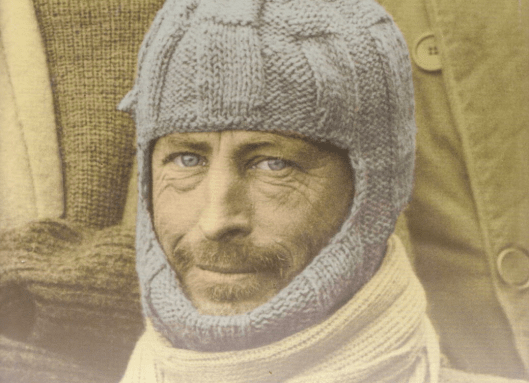
Douglas Mawson was one of the leaders on the expedition. A geologist and lecturer from the University of Adelaide, he had been asked to join Robert Scott’s British expedition to find the South Pole (Scott was famously beaten to the punch by Norwegian Roald Amundsen). Mawson turned him down, as he thought it would be better to take his own team, and lead an expedition to the unexplored bits of Antarctica, which was most of it.

Douglas was part of a three-man sledging team called the Far-Eastern Party, which included Belgrave Ninnis, the son of a British arctic explorer, and Swiss mountaineer Xavier Mertz.

The group was making excellent progress when Ninnis fell into a snow-covered crevasse that the other two men crossed without incident; he took with him six huskies, a tent, most of the food and other essential supplies, and was never seen again. The glacier they were traversing is now called Ninnis Glacier in his honour.

Mawson and Mertz continued their frozen nightmare, forced to eat their huskies to supplement their scant rations. Although both men were unwell, Mertz became seriously ill and died in less than a week. It is thought that he may have died of an overdose of Vitamin A from eating husky liver, which Mawson solicitously fed him, in the fond belief that he was giving Mertz the best of the provisions.

Other theories are that Mertz died from hypothermia, from the shock of eating meat after being a vegetarian, or from the psychological stresses of the journey – especially the death of Ninnis, as the two men had been exceptionally good friends.

In the days before he died, Mertz became weak, exhausted, dizzy and delirious, even biting off the tip of one of his own fingers. He had dysentery, nausea, and stomach pain; his skin peeled away and his hair fell out – not surprisingly, another of his symptoms was depression. Whatever he died from, his demise caused him terrible suffering.

Douglas Mawson sledged the last 100 miles alone, falling into a crevasse on the way and having to climb out using the harness, only to see the boat he was to have returned on disappearing over the horizon. He had to spend another year in Antarctica.

Douglas was knighted in 1914 and The American Geographical Society awarded him a medal in 1916. The work he did was ground-breaking, and led to Australia getting its own portion of Antarctica, from where we still do important research.

For decades Sir Douglas Mawson was regarded unquestioningly as a hero, and his image is on the snow-white Australian $100 note. More recently his part in the expedition has been scrutinised, and attracted criticism. However there is no doubting his strength, courage, and determination to survive against all odds. He is remembered as an enthusiastic and kind man who never boasted of his remarkable exploits.

Name Information
Douglas is an Anglicisation of Scottish surname Dubhghlas meaning “dark river”. It originally belonged to the Douglas Water, which is a river in South Lanarkshire in southern Scotland. On its shores is a village named Douglas after the river, and the Douglas family took the village’s name as their surname when they moved here in the 12th century.

The Clan Douglas was one of the most powerful families of Scotland in the Middle Ages, often holding the real power behind the throne. The heads of the House of Douglas held the titles of the Earl of Douglas and the Earl of Angus, sometimes known as the Black Douglas and the Red Douglas. Their family estate was Castle Douglas, which Sir Walter Scott fictionalised as Castle Dangerous in his novel of the same name.

The Douglases are said to be descended from a Flemish knight, and fought with William Wallace and Rober the Bruce in the Wars of Independence. Sir James Douglas was the first to be labelled the Black Douglas by the English for what they considered his dark deeds: it was a title taken up with pride. The Douglases intermarried with the House of Stuart, gaining a royal connection.

The Douglases became so powerful they were seen as a threat. In 1440 the teenaged William Douglas, the 16th Earl of Douglas, and his younger brother were invited to dine with the ten-year-old King James I of Scotland. While they ate, a black bull’s head – symbol of death – was placed before the young earl. The Douglas boys were then dragged outside, given a mock trial and beheaded, so Clan Douglas lay siege to Edinburgh Castle. Called the Black Dinner, it is the inspiration for the Red Wedding in Game of Thrones.

Douglas has been used as a personal name at least since the 16th century, and seemingly originates in England rather than Scotland. It was originally a unisex name, given equally to boys and girls, and by the 17th century was primarily a female name. A famous example is Douglas Sheffield, Baroness Sheffield, who had an affair with Robert Dudley, the favourite of Queen Elizabeth I, and had a son by him. In the 18th century Douglas became more common for males than females, so this is an example of a name that went from the girls to the boys.

The name is a traditional one in the Hamilton family, which married into the Douglases in the 17th century; although the Hamiltons’ surname is now Hamilton-Douglas, they are actually Douglases by descent. The head of Clan Douglas today is the Duke of Hamilton, Alexander Douglas Douglas-Hamilton.

Douglas was #59 in the 1900s, and peaked in the 1920s at #28, during the career peak of actor Douglas Fairbanks, known as The King of Hollywood in that era. It remained on the Top 100 until the 1970s, and disappeared from the charts in 2010, although returning the following year. It is apparently now in rare use.

In the US Douglas has always been on the Top 1000. It was on the Top 100 from the end of the 1920s to the end of the 1980s. It peaked in 1942 at #23 – two wartime namesakes are General Douglas Macarthur, and Douglas Fairbanks son, Douglas Fairbanks Jr, who became a highly decorated naval officer. It is currently #598 and falling.

In the UK, Douglas was on the Top 100 from the 1880s to the 1970s, peaking in the 1920s. Although it got as low as 508 in 2008, it has been climbing ever since, and is now #276. A current famous namesake is the handsome British actor Douglas Booth.

Douglas is a strong and rugged sounding classic name that is no longer in fashion, but still in use. British trends suggest that it is due for a comeback, and thanks to Douglas Booth, perhaps we can once again see Douglas as a romantic, dashing name, as it was in the 1920s because of Douglas Fairbanks. The nickname Doug seems very dated, but Dougie is cute, and even Gus seems possible.

POLL RESULTS
Douglas received an approval rating of 49%. 22% of people thought it wasn’t ready for a comeback, and 15% saw it as dorky and nerdy, although 17% saw it as strong and rugged. In contrast, 10% of people thought it was ready for a comeback, and saw it as a hip choice most parents weren’t clued into yet.

← Older posts
Newer posts →

Enter your email address to follow this blog

Categories

Archives

Recent Comments

A.O.'s avatarwaltzingmorethanmati… on Zarah Zaynab and Wolfgang…
Madelyn's avatarMadelyn on Zarah Zaynab and Wolfgang…
JD's avatardrperegrine on Can Phoebe Complete This …
A.O.'s avatarwaltzingmorethanmati… on Rua and Rhoa
redrover23's avatarredrover23 on Rua and Rhoa

Blogroll

  • Appellation Mountain
  • Baby Name Pondering
  • Babynamelover's Blog
  • British Baby Names
  • Clare's Name News
  • For Real Baby Names
  • Geek Baby Names
  • Name Candy
  • Nameberry
  • Nancy's Baby Names
  • Ren's Baby Name Blog
  • Sancta Nomina
  • Swistle: Baby Names
  • The Art of Naming
  • The Baby Name Wizard
  • The Beauty of Names
  • Tulip By Any Name

RSS Feed

  • RSS - Posts

RSS Posts

  • Celebrity Baby News: Melanie Vallejo and Matt Kingston
  • Names from the TV Show “Cleverman”
  • Can Phoebe Complete This Sibset?
  • Zarah Zaynab and Wolfgang Winter
  • Baby, How Did You Get That Name?
  • Celebrity Baby News: Media Babies
  • Celebrity Baby News: Adelaide Crows Babies
  • Celebrity Baby News: Chris and Rebecca Judd
  • Names at Work: Name News From the World of Business and Employment
  • Celebrity Baby News: Sporting Round Up

Currently Popular

  • Celebrity Baby News: Bernard Fanning and Andrea Moreno
  • Celebrity Baby News: Toby Allen and Darren Weller
  • Celebrity Baby News: NRL Babies
  • Famous Name: Humphrey
  • The Top 100 Names of the 1940s in New South Wales

Tags

celebrity baby names celebrity sibsets english names famous namesakes fictional namesakes honouring locational names middle names name combinations name history name meaning name popularity name trends nicknames popular names saints names sibsets surname names twin sets unisex names

Blog at WordPress.com.

Privacy & Cookies: This site uses cookies. By continuing to use this website, you agree to their use.
To find out more, including how to control cookies, see here: Cookie Policy
  • Subscribe Subscribed
    • Waltzing More Than Matilda
    • Join 517 other subscribers
    • Already have a WordPress.com account? Log in now.
    • Waltzing More Than Matilda
    • Subscribe Subscribed
    • Sign up
    • Log in
    • Report this content
    • View site in Reader
    • Manage subscriptions
    • Collapse this bar
 

Loading Comments...