• About
  • Best Baby Names
  • Celebrity Baby Names
  • Celebrity Baby Names – Current
  • Celebrity Baby Names – Past
  • Featured Boys Names
  • Featured Girls Names
  • Featured Unisex Names
  • Links to Name Data
  • Waltzing on the Web

Waltzing More Than Matilda

~ Names with an Australian Bias of Democratic Temper

Waltzing More Than Matilda

Tag Archives: name meaning

Famous Name: Patrick

16 Wednesday Mar 2016

Posted by A.O. in Famous Names

≈ Comments Off on Famous Name: Patrick

Tags

British names, classic names, english names, Irish names, name history, name meaning, name popularity, popular names, Roman names, saints names, Scots Gaelic names, UK name popularity, US name popularity, Welsh names
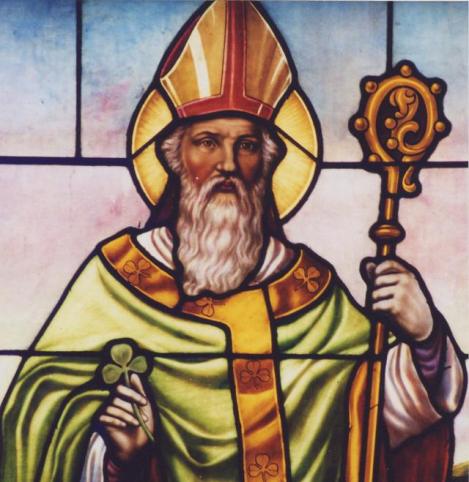
SaintPatrickShamrock

Tomorrow is St Patrick’s Day, a worldwide celebration of Irish culture. With such a strong Irish heritage in Australia, you would think that St Patrick’s Day would be special here, and you would be right. As early as 1795, Irish convicts were celebrating March 17 in raucous fashion, and these later became more respectable dinners held by colonials of Irish descent. Parades began to be organised in the 1800s, and had become established institutions by the 1920s.

St Patrick is the patron saint of Ireland, and people are sometimes surprised to learn he wasn’t Irish; he was a 5th century Romanised Briton from an aristocratic family on the west coast of Britain. Although his father was a deacon and his grandfather a priest in the Christian church, as a youngster Patrick wasn’t very interested in religion.

According to his own testimony, when he was a teenager he was kidnapped by pirates and taken as a slave to Ireland, where he worked taking care of farm animals in what he describes as a very cold and wet climate. During this time he learned the Irish language and converted to Christianity; after six years he managed to escape and return to his family.

Patrick wrote that a few years after his return, he had a vision of the Irish people begging him to help them. After training as a priest, he went as a missionary to Ireland and became a bishop. Here he converted many people, not only slaves and the poor, but also noblemen and women who became monks and nuns (this may not seem very liberating to us, but the church provided an attractive career path for educated medieval women).

Very little is actually known about Patrick’s life and work, and doubt has even been cast upon his claim of enslavement in Ireland. He wasn’t the first missionary to Ireland – that was St Palladius. Some of the details of Palladius’ Irish mission seem to have got mixed up with Patrick’s story, and Palladius’ role in Ireland may have been minimised to give Patrick the spotlight.

However where facts are thin on the ground, myths and legends flourish. A favourite is that St Patrick used the three-leafed shamrock to illustrate the Trinity, so that the shamrock is a popular symbol on St Patrick’s Day. Another is that St Patrick banished all the snakes from Ireland – an incredibly easy miracle to perform, as they were never there. It is even said that he introduced whiskey to Ireland, and used the drink as a teaching aid: thus drinking alcohol is traditional on St Patrick’s Day.

St Patrick overcame his slightly boring saintliness to become a colourful figure of folklore, and over the centuries a symbol of Irish identity and culture that transcends Catholicism, and even Christianity. And that’s why we all feel just a little bit Irish on St Patrick’s Day!

Name Information
In his autobiography, St Patrick always refers to himself as Patricius, a Roman name meaning “nobleman” (it is the source of the word patrician). It is possible that he chose this himself, because the name is linked with the Latin for “father” – pater – to suggest he was the father of his people. However, Patricius was in regular use among the Romans, and in fact the name of St Augustine’s dad.

It is often said that Patrick’s birth name was Maewyn Succat, a British translation of the Roman name Magonus Succetus, and translated with great optimism as “famous war god”. (Succetus was supposedly a Celtic god of war, although nobody seems to have heard of him, which doesn’t help the translation overmuch).

This already seems like something his followers might have invented, and looks even less convincing as it appears that the name comes from British and means “servant swine-herd” – a clear reference to Patrick’s period of slavery. If St Patrick had another name as a child, we do not know it.

Patrick is the Anglicised form of Patricius, with the Irish form being Pádraig, the Scots Gaelic Phádraig, and the Welsh Padrig. Due to the fame of St Patrick, Patrick was used in Britain by the Middle Ages (sometimes with Patricius as the official name), where it was especially popular in the north of England. It was also taken up with enthusiasm in the west of Scotland, where it was seen as a form of Peter.

Although we think of Patrick as a typically Irish name, it did not come into common use in Ireland until the 17th or perhaps even 18th century, when it was introduced by Scots immigrants to northern Ireland. Before this, the Irish felt that the name of their national saint was far too sacred to be given as a baby name, although they did use names such as Gilla Pátraic, meaning “servant of St Patrick”.

However, once the Irish gave in to peer pressure and decided Patrick was okay to use, it became a great favourite. Patrick was so popular as a boy’s name in Ireland by the 19th century that the nickname Paddy became a (rather disparaging) term for an Irishman.

With strong Irish immigration to Australia, there have been many Australian Patricks. Some examples include the Nobel Prize-winning author Patrick White; pioneering farmer Patrick Durack, who founded the famous Durack dynasty; Patrick Hannan, whose discovery of gold sparked the gold rush in Western Australia; Presbyterian minister Patrick Murdoch, progenitor of the famous Murdoch dynasty; and Patrick Sullivan, creator of Felix the cartoon cat.

It thus comes as little surprise that the name Patrick is a solid classic in Australia, never out of the Top 100, and rarely out of the Top 50. It was #36 in the 1900s, and reached its lowest point in 1978 at #71. Its peak was in 1994, when it reached #30. It is now stable around the lower end of the Top 50.

Currently it is #40 nationally, #51 in New South Wales, #26 in Victoria, #46 in Queensland, #36 in South Australia, #46 in Western Australia, #46 in Tasmania, and #29 in the Australian Capital Territory. In 2014 it was the fastest-rising name in Tasmania, and one of the fastest-rising in South Australia.

In the US, Patrick has constantly charted on the Top 1000, and never been lower than #166, which it reached in 1919. It was a Top 100 name at the turn of the 20th century, and again from 1936 to 2003, peaking at #30 in the 1960s. Currently it is #153 and fairly stable.

In the UK, Patrick has likewise been a long-time favourite. It was in the Top 100 from the mid-19th century until 2006, and is now #115 and stable. Patrick is a Top 100 name in New Zealand, and in Northern Ireland, where its popularity is similar to Australia’s. It is most popular in Ireland, where it is in the Top 20, and very stable.

Patrick is a strong, handsome name that is a timeless classic while remaining stylish. It’s popular, but has always been so, and its position on the charts is is extremely stable. It’s a traditional name with ties to Irish history and culture, and in Australia often considered a rather upper class choice. Traditional nicknames like Pat, Patsy and Patty are out of favour, but Paddy is still going strong, and Patch perhaps deserving of a mention.

POLL RESULTS

Patrick received an approval rating of 79%, making it one of the highest-rated names of 2016. People saw the name as handsome and charming (24%), a stylish classic (21%), and a name which ages well (17%). However 9% thought it was too common and boring. Only 1 person thought Patrick from Spongebob Squarepants made the name too embarrassing to use.
Waltzing With … Mars

13 Sunday Mar 2016

Posted by A.O. in Waltzing with ...

≈ Comments Off on Waltzing With … Mars

Tags

astronomical names, celebrity baby names, fictional namesakes, mythological names, name history, name meaning, names from songs, names of businesses, rare names, surname name, unisex names, US name popularity

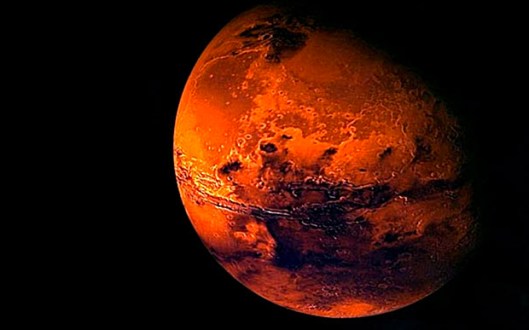
mars1_3493132b

Music legend David Bowie passed away early this year, with fans both grief-stricken and shocked at the news, as he had kept his final illness private. I covered the name Bowie last year because of his touring exhibition, which we now know was his way of saying goodbye.

At the time, there were many tributes to David Bowie taking place, with radio and TV stations taking the opportunity to play his music (my local radio station kept playing Starman non-stop, as if this was the only Bowie record they owned).

My favourite was from Weatherzone, who put out a weather report for the planet Mars, so that we could see what “life on Mars” was actually like.

Having already covered Ziggy and Bowie, there was no choice but to cover the name Mars in the month named after it.

Name Information
In Roman mythology, Mars was the god of war, and second only to Jupiter in importance. He represented military power as a method towards peace, rather than a destructive force, and was a father to and guardian of the Roman people themselves. His worship was central to Roman society, and he was an important symbol of the Roman Empire.

Mars was also an agricultural deity. Masculine, aggressive, and virile by nature, he was equally adept at defending soldiers from attack, and protecting crops. He is described as wild and savage, with a connection to woodlands, and may originally have been a god of the wilderness that needed to be mollified lest he destroy farmland. The animals sacred to Mars were wild ones, like the wolf, bear, and woodpecker, but the list also includes the domestic goose.

In art, Mars was either depicted as a youthful warrior, or as a handsome mature man with a beard, the dignified general who has won many victories. He is often nude or semi-nude to show that he is brave enough to enter battle with little to protect him. Mars is nearly always shown with a helmet and a spear, to symbolise warfare. However, when his military victory brings peace, his spear is draped with laurel.

The origin and meaning of the name Mars has been debated, with no agreement being reached. Two suggestions are that it is related to the Etruscan god Maris, or to the Hindu gods the Marutas, but both sides rubbish the opposing theory. We know that the worship of Mars was very ancient, because one of his hymns was in such archaic language that the Romans could no longer understand it, so it is safe to say that the meaning of the name Mars is lost in antiquity.

More certain are the words derived from Mars, such as martial, meaning “of war”, the month of March, which was sacred to Mars, and names such as Marcus and Martin.

The Romans named the fourth planet from the Sun after Mars: they were not the first to associate the planet with a god of war, which had been traditional ever since the Babylonians. It is speculated that the red colour of Mars brought to mind bloodshed – if so, the ancients were not far wrong, because the iron oxide that gives Mars its distinctive colour is the same thing which makes our blood red.

The planet Mars has captured the human imagination for years, and as soon as we had telescopes able to view the surface of it, we began seeing things. Astronomers thought they could see regular channels on the planet’s surface, which were called canals, and inspired a belief in intelligent life on the planet. Sceptics correctly identified this as an optical illusion caused by using a 19th century telescope which wasn’t good enough – nobody can see the “channels” today using modern instruments.

Astronomers of the 19th and early 20th centuries also thought they might have received radio signals from Mars, and even a mysterious bright light appearing to emanate from the planet was considered to be some sort of message. The idea that there were intelligent Martians, and they wished to contact us, was an idea humans had trouble shaking.

In science fiction, Mars is sometimes a Utopia, and sometimes a source of menace (most notably in H.G. Wells’ War of the Worlds). It is often a place of adventure and exploration, such as in the John Carter stories by Edgar Rice Burroughs. Later on, when it was accepted that Mars was uninhabited, sci-fi focused on the possibility of Mars becoming colonised by Earth, so that the Martian population was actually human.

Mars has been used as an English name since the 18th century. When director Spike Lee chose the name Mars for his character in She’s Gotta Have It, he took it from his own family history – Mars was the name of his great-great-grandfather, a freed slave and successful farmer. Mars was the kind of mythological name often given to slaves in America, but records show both white and black people with the name Mars.

In some cases it may not necessarily have been inspired by the god or the planet. Mars is also an English surname, a variant of Marsh: it’s most famous from Frank Mars who developed the chocolate Mars bar, which is still owned by the Mars family. The singer Bruno Mars (born Peter Hernandez) took his stage name as a symbol of being “different”. The name Mars has been more commonly used in Scandinavia and Central Europe, a variant or contraction of the name Marius.

Despite the ultra-masculine vibe of the god Mars (the symbol for the planet ♂ is the same as the one for male), Mars was sometimes given to girls, right from the start. Perhaps the surname was more influential, although girls are also given Mars-type names, such as Martina and Marcella – Mars even looks as if it might be short for Marsia or Marsha.

Recently two American celebrities have given Mars publicity as a girl’s name. Singer Erykah Badu welcomed a daughter named Mars in 2009, and comedian Blake Anderson in 2014. Two pop culture aids to seeing this as a girl’s name are TV girl detective Veronica Mars, and Sailor Mars from the Sailor Moon anime series (in the show, Sailor Mars is named after the planet and associated with fire and passion, as the planet Mars is in Japanese culture).

This is, and has always been, a rare name. In the US in 2014, 34 boys were given the name Mars, and less than 5 girls (we know there must have been at least one!). In the UK Mars does not show up in the data at all as a baby name.

Mars is an out of this world baby name, but it has millenia of history, taking in a god of protection and a red planet that has loomed in our imagination since time immemorial. Granted, there’s some teasing potential due to the Mars bar, and the fact your child would literally be a Martian, but there could be life in this name yet (in the middle for those worried about the curiosity factor). At least Mars is distinctive and will be easy to recall. Totally.

POLL RESULTS

Mars received an approval rating of 57%. 31% of people thought it was okay, although only 6% actually loved the name.

Cyclone Names for Boys

06 Sunday Mar 2016

Posted by A.O. in Name Themes and Lists

≈ 3 Comments

Tags

Anglo-Saxon names, Arabic names, Biblical names, classic names, cyclone names, Egyptian names, english names, famous namesakes, fictional namesakes, germanic names, hebrew names, Irish names, Latin names, locational names, modern classics, mythological names, name history, name meaning, name popularity, name trends, nicknames, Old English names, pen names, popular names, rare names, Roman names, royal names, saints names, Slavic names, stage names, surname names, underused modern classics, unisex names, vintage names

925357-vance-palmer

Dominic
There was a Cyclone Dominic in 1982 and another in 2009; both were quite severe and did significant damage. Dominic is from the Latin name Dominicus, meaning “of the Lord”, and often translated as “belonging to God”. It began as a specifically Christian name, and there are several saints named Dominic. The most famous is the medieval Spanish priest who founded the Dominican Order; he was named after St Dominic of Silos, who answered the prayer of the second St Dominic’s mother that she might become pregnant. As part of that joking folk etymology that religion is so fond of, the Dominicans are said to be named from the Latin for “dog of God” (Domini canis), as a sign of St Dominic’s dogged faithfulness. Dominic has charted since the 1950s, when it debuted at #236. It reached the Top 100 in the 1990s, and has mostly stayed around the bottom quarter of the Top 100, or fallen just below it. Currently it is #88. This is a sleekly handsome modern classic that’s never been highly popular, and comes with the nicknames Dom, Nic, or Nico.

Iggy
Cyclone Iggy was off the coast of Western Australia in 2012: grave fears were held as its power intensified, but by the time it made landfall it had waned considerably. Iggy is traditionally used as a short form of Ignatius, but rocker Iggy Pop (born James Osterberg) took his stage name from his high school band, The Iguanas. Another musical Iggy is Australian rapper Iggy Azalea (born Amethyst Kelly): her stage name Iggy is from her childhood dog, possibly named after Mr Pop. In the Maximum Ride YA series by James Patterson, Iggy is an extremely handsome blind boy whose real name is James Griffiths. This name might feel like “nickname only” territory, but a few people have Iggy as their full legal name. While Ignatius is elegant, Iggy is in-your-face cyberpunk nuttiness, and will appeal to parents wanting something fun and different.

Marcus
Marcus is on the current list of cyclone names. Marcus is a Roman name believed to be derived from Mars, the Roman god of war, and was one of the most popular names in ancient Rome. Famous Romans with the name include the general Marcus Antonius, otherwise known as Mark Antony; the emperor Marcus Aurelius; Marcus Junius Brutus, usually known to us as Brutus, the assassin of Julius Caesar; and the philosopher Marcus Tullius Cicero. Marcus has been used as an English name since the Middle Ages, but widely used on the Continent and in Latin America as well. It’s currently popular in Scandinavia, as well as Australia and New Zealand. Marcus is a classic name which has been almost continuously on the charts. It was #190 in the 1900s, and fell to nothing during the 1930s. After that it continued growing and made the Top 100 by the 1970s. Popularity dipped, but it was back again in the 1990s, and peaked at #51 in 2003. It is currently #82. A popular classic never higher than the bottom half of the Top 100, Marcus combines historical gravitas with European style.

Miles
Cyclone Miles was off the coast of Queensland in 1977. Miles is the English form of the Germanic name Milo, whose meaning is unclear. It may be from an ancient Germanic word meaning “mild”, but it has been argued that it is related to those Slavic names meaning “dear, gracious”, such as Mila and Milan. From early on, folk etymology connected it to the Latin word miles, meaning soldier – in Roman comedies, a foolish stock character was Miles Gloriosus, meaning “bragging soldier”. The name has been in use since the Middle Ages, introduced by the Normans, and is often thought of as rather aristocratic. A famous namesake is Miles Coverdale, who was the first person to translate the Bible into English in 1535. Miles has charted since the 1950s, when jazz legend Miles Davis gave the name an injection of cool; it debuted at #323. Since then, the name has increased in popularity, but never become popular, so this is an underused modern classic. It’s around the 100s currently. Rising in both the US and UK, this is a hip choice with a smooth sound.

Oswald
Cyclone Oswald hit Queensland and New South Wales in 2013, causing widespread storms and floods. A natural disaster was declared, and due to the severity of the cyclone, the name Oswald has now been retired. Oswald is an Old English name meaning “godly ruler, divine ruler”. There are two English saints named Oswald; Oswald of Northumbria was an Anglo-Saxon king, and the most powerful ruler in Britain during his time. The name Oswald became less common after the Middle Ages, but was revived in the 19th century as part of the Victorian fascination with ancient British names. Oswald was #75 in the 1900s and left the Top 100 in the 1920s. It left the charts in the 1940s and had unfortunate wartime namesakes – Nazi officer Oswald Pohl, who oversaw the concentration camps, and British Fascist, Sir Oswald Moseley, a friend of Adolf Hitler. In fiction, Oswalds are usually villains or comic characters, but Oswald Bastable from the Treasure Seeker series by E. Nesbit has been claimed as a revolutionary hero name in the Nomad of Time Streams works of Michael Moorcock, and the name is sometimes used in sci fi. A bold vintage choice with a steam punk vibe.

Paddy
Cyclone Paddy was near Cocos Island in May 1981, extremely late in the season. Paddy is an Irish nickname for the name Patrick, or its Irish forms Padraig and Padraic. It was once so commonly used that Paddy became a derogatory term for any Irishman. With such strong immigration from Ireland, the name has a long history in Australia with several famous namesakes, with Paddy either short for Patrick, their full name, or a nickname unrelated to their name. Some examples are: Paddy Hannan, the gold prospector who set off the gold rush in Kalgoorlie; Indigenous artist Paddy Bedford; colourful politician Paddy Crick; Aboriginal elder Paddy Roe; and pioneering bushwalker Paddy Pallin, who founded the chain of outdoor equipment stores. Paddy is also occasionally used as a girl’s name, a variant of Patty; an example is Australian author Paddy O’Reilly. Paddy is around the 500s in Australia, and fits in with the trend for nicknames as full name. Great Irish heritage choice with an Australian flavour.

Rusty
Cyclone Rusty hit the coast of northern Western Australia in 2013. Hurricane-force winds and heavy rain caused flooding and significant damage. Due to the severity of the cyclone, the name Rusty has now been retired. Rusty can be a nickname for either the first name or surname Russell, or a nickname given to someone with red or reddish-brown hair. It is not commonly given as a full name, but after Cyclone Rusty there was a reported increase in the number of baby boys named Rusty, so this is one cyclone at least which influenced local name trends. A rough-and-tumble boyish name in the style of Buster and Sunny: not recommended if your surname is Naylor, Bucket or Lidd.

Seth
Seth is on the current list of cyclone names. In the Old Testament, Seth was the third son of Adam and Eve, born after Abel was murdered by Cain. According to the Bible, Seth was the progenitor of the human race as it exists today, as only his descendants survived the Great Flood. The Bible is coy as to how Seth had children for us to be descended from, but the Apocrypha provides the obvious solution by having him marry his sister. Although the Bible tells us nothing more about Seth, according to tradition he was virtuous and wise; he is regarded as a saint in Christianity, and revered as a prophet in Islam. The name doesn’t seem to have been common for Jews, although in the New Testament the High Priest is said to be the son of a Seth. According to the Bible, the name Seth means “appointed”, to suggest that God appointed Seth as a replacement for Abel. Seth is also the Greek form of the Egyptian god Set, deity of storms and chaos, and murderer of his brother Osiris. The name has a strong New Age resonance due to the supposed chanelled messages of a being named Seth, highly influential to later writers. Seth has been used as an English name at least since the 16th century, and became more common during the 18th. Seth has charted since the 1970s, debuting at #539, and joined the Top 100 in the 2000s. It left the Top 100 in 2014, but cannot be far below it. An Old Testament name that women in particular seem to love as both soft and gentle, and dangerously sexy.

Vance
Cyclone Vance hit Western Australia in 1999, bringing gale-force winds and severe storms, and causing significant damage, particularly in Exmouth. Vance is an English surname that comes from the Old English for “fen”, describing someone who lived near a flat wetlands area or marsh. The surname has a particular association with Scotland, and the Scottish Vances believe their name is Norman, from Vaux in France, meaning “valley”. Vance has been used as a personal name since the 18th century, and was strongly connected with Scotland and Ireland. Vance Drummond was a New Zealand-born officer in the RAAF, much decorated for his gallantry in the Vietnam War. The famous writer Vance Palmer was born Edward, with Vance short for his middle name, Vivian. Not only a great contributor to Australian literature, he and his wife Nettie were part of the social movement that promoted Australian egalitarianism. The indie pop singer Vance Joy’s real name is James Keogh – he took his stage name from a minor character in Peter Carey’s novel Bliss. A vintage name ripe for revival with a strong connection to Australian culture.

Zane
Cyclone Zane was off the coast of Queensland in 2013, but by the time it made landfall it had dissipated to almost nothing. The name Zane was popularised by the American western novelist Zane Grey: he was born Pearl Grey (apparently in tribute to Queen Victoria’s mourning dress, which seems a strange way to name a child, especially a boy). Grey used his middle name Zane for his pen name; it was his mother’s maiden name. The Zanes were a famous American pioneering family, and Zane Grey himself was born in Zanesville, Ohio, named after his ancestor, Ebenezer Zane. The Zanes were descended from Devon Quakers, but the name’s origin is a mystery. It has been claimed that the family had either Danish or Italian ancestry, but neither theory has been proven. Sometimes presumed to be a form of John, as Zane is an unusual short form of Giovanni; it can also be a female name, short for Suzannah or Zuzannah. Zane has charted since the 1970s, debuting at #397 – Zane Grey was still a bestseller then, and another namesake for the era was bodybuilder Frank Zane, multiple Mr Olympia winner. It was in the Top 100 during the 2000s, peaking at #83 in 2005, and is probably around the 100s now. Not at all zany, Zane has become a modern standard conflated with the Arabic name Zain or Zayn, meaning “beauty, grace”.

POLL RESULTS

The public’s favourite names were Dominic, Miles and Seth, while their least favourites were Oswald, Paddy and Rusty.

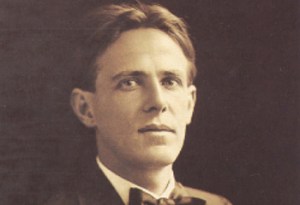
(Photo is of Australian literary powerhouse, Vance Palmer)

Famous Name: Asha

02 Wednesday Mar 2016

Posted by A.O. in Famous Names

≈ 1 Comment

Tags

African names, Anglo-Saxon names, Arabic names, Avestan names, famous namesakes, hebrew names, Hindi names, Indian names, Iranian names, name history, name meaning, Nigerian names, Persian names, UK name popularity, unisex names, US name popularity, Yoruba names

BABY ASHA HOSPITAL PROTEST

Even though this blog discusses baby names, real life babies, names of famous people, and names of famous people’s babies, this is the first time I have looked at the name of a real life famous baby. Unfortunately, when a baby is able to grab the headlines in their own right, it is nearly always a tragic story, and this is no exception.

The baby girl known as “Asha” was born in Australia at the start of 2015 to refugees who had arrived by boat: her parents are Nepalese Christians. Under Australia’s Migration Act, any person who arrives by boat without papers is declared an “unauthorised maritime arrival” (UMA) and is transferred to an offshore processing centre. These are not pleasant places, and the waiting times for processing can be extremely long.

You would think that anybody born in Australia would be an Australian citizen by birth, but that changed in 2014 when the Migration Act was amended retrospectively to say that any child born in Australia to a UMA is also a UMA.

In June last year baby Asha became the first Australian-born child to be transferred to a detention centre on Nauru with her parents. Although a thriving baby when she arrived, she had a less than ideal life sleeping on a wet mattress in a leaky tent in the middle of a phosphate mine surrounded by rats and mosquitoes. Her parents quickly became suicidal, and her mother unable to feed her. Asha’s health deteriorated.

Doctors and nurses at the detention centre said that it amounted to child abuse: the government decided to do something about that by changing the Border Force Act to say that any health worker who spoke up about the dangerous conditions on Nauru could be imprisoned for two years. A social media campaign started to Bring Back Asha, and the other babies kept in detention.

On Australia Day this year, baby Asha was taken to Brisbane’s Lady Cilento Hospital to be treated for burns, having been accidentally scalded with hot water. Even after she had been effectively treated and her condition stabilised, doctors refused to release her from hospital, as they feared that sending her back to Nauru would be detrimental to her physical and mental health. Hundreds rallied outside the hospital in support of staff, with Let Asha Stay banners.

The Immigration Minister suggested that Asha had been burned on purpose so that she could come to Australia for treatment. There was no evidence to support this, and it is unclear how it would have made a difference anyway: if a baby is hurt deliberately, it needs the same health care as if it had been hurt by accident.

The stand off between the Federal Government and doctors continued. After almost a month in hospital, baby Asha and her parents were released into community detention instead of being sent back to Nauru. The Immigration Minister insists this is not a back-flip on policy, but exactly what would have happened all along, and that the baby and parents will eventually be returned to Nauru.

The location of baby Asha and her family is currently secret, and their fate is unclear. The other babies and children on Nauru remain in detention, their situation unchanged. It is not really a happy ending to the story.

But at least we know now that Australians are ready to stand up for children against their government, because there was widespread community support for the hospital staff and for the protesters. That is the ray of light in an otherwise very dark chapter.

Name Information
Asha is a Hindi name for girls, from the Sanskrit word āśā, meaning “hope”. A famous namesake from India is Asha Bhosle, who has done playback singing for thousands of Bollywood movies; she is immortalised in the song Brimful of Asha, by British band Cornershop, and still touring the world as a concert singer.

The name Asha is also used in East Africa, an apparent form of the Arabic name Aisha, translated as “life, alive, she who lives”. The name is commonly used among Muslims, because Aisha was the name of the prophet Muhammad’s third wife. A famous namesake is Asha Abdalla, a Somali politician and activist who has been recognised globally for her efforts towards promoting peace and women’s rights.

Another African connection is the award-winning Nigerian-French singer-songwriter Aṣa, her name pronounced the same way as Asha. Born Bukola Elemide, she took her stage name from the Yoruba word for “hawk”: I have seen her name transliterated as Asha, even on official merchandise. Like Asha Bhosle, she has performed in Australia.

There is a male association for the name Asha as well. In Zoroastrianism, Asha Vahishta is a deity of Truth and Righteousness. Asha is translated as meaning “truth” in the Avestan language, but it also means “existing”, in the sense of bringing something into being. Asha can also be translated as “natural order, acting correctly, righteous”, in the sense of cosmic harmony under natural law.

Asha is strongly connected with divine fire, and this is not only the spark of life which brings creation into being, but also a fire which can pass judgement, finding out the truth, and burning away the lie. Fire protects Asha Vahishta, and in later times he is identified as a god of the household hearth. It is interesting for an Anglophone that Asha is connected with fire, which produces ash. Asha is used as a male name in Iran, but is more common as a name element.

Despite all these origins for the name, Asha has been used in the English-speaking world since the 18th century, given to both sexes. It might have been used as a variant spelling of the biblical name Asher, or seen as a specifically feminine spelling. (Asher is translated as “happy, lucky”, but you can read more about its etymology in the entry for this name).

Asha also makes sense as a name to an English-speaking person because of the word ash. This can mean the residue of a fire, and ashes are often seen as holy and protective. The other meaning of ash is an ash tree, which has the same etymology as ashes – ash trees were also seen as protective and healthy.

Although ash trees do make excellent firewood, the Old English word for ash and spear were the same, aesc. Aesc was a popular element in Anglo-Saxon names, and both men and women were called Aesca (said Asha). Even today, popular names such as Ashley (“ash meadow”) and Ashton (“ash town”) are derived from the ash tree, so Asha does not feel alien to us.

Asha is a fairly common name for girls in Australia, and has become conflated with the name Asher, which is used for girls as well as boys here, thanks to actress Asher Keddie. If Asha and Asher were combined together, the name would be in the Top 100, or only just outside it.

In the UK, the name Asha is #940 for girls, and falling in popularity from a peak of #313 in 2003 (Asha has rarely been given to boys, and Asher only occasionally given to girls in Britain). In the US in 2014, 200 girls were given the name Asha, and 74 called Asher (no boys are registered as having the name Asha, while Asher is a Top 100 name for boys).

Asha is an attractive name that has a long history, but feels contemporary. Simple to spell and pronounce, it works multiculturally without seeming particularly exotic. One of its most appealing attributes must be the multiplicity of meanings, all of which are positive. Although common in Australia compared to other English-speaking countries, it could very well be confused with Asher.

I hope the baby Asha story does not put parents off the name: not only is Asha just a name used by the press to protect her identity, but the meaning of “hope” seems so apt. Hope not only for Asha, but for all babies who need our care and compassion.

POLL RESULTS

Asha received an outstanding approval rating of 90%, making it the most popular of all the Famous Names for 2016. People saw the name Asha as pretty or beautiful (23%), working well multiculturally while still fitting in (23%), strong and independent (22%), and having many positive meanings (17%). However, 4% thought it would be too easily confused with the name Asher. Only one person thought the name would be connected with the Baby Asha case, and nobody thought it would be confused with names like Ashley and Ashlyn.

(Photo of protesters supporting Asha from SBS).

Cyclone Names for Girls

28 Sunday Feb 2016

Posted by A.O. in Name Themes and Lists

≈ 4 Comments

Tags

Arabic names, aristocratic names, Biblical names, celebrity baby names, Christmas names, classic names, created names, cyclone names, epithets, European name popularity, famous namesakes, fictional namesakes, French names, germanic names, Greek names, hebrew names, Italian names, literary names, modern classics, mythological names, name history, name meaning, name popularity, name trends, names from television, names of bears, names of mountains, nicknames, retro names, Roman names, royal names, saints names, Scottish names, Spanish names, underused classics

Delilah_Henry_Clive

Summer is cyclone season, and here are ten girls’ names from the official list used to name Australian cyclones. Information on cyclones from the Bureau of Meteorology.

Adele
Cyclone Adele was off the east coast of Australia in 1969. Adele is the Anglicised form of Adèle, the French form of the Germanic name Adela, meaning “noble”, and the basis for familiar English names such as Adelaide, Adeline, and Alice. Adèle has been in use since the Middle Ages, and as with its related names, was a favourite with the nobility; it is still a popular name in France. Adele has been used all over the world, and has recently been placed in the spotlight by the popular British singer. In fact there’s quite a few singers called Adele so it’s a good name for songbirds – there is also an Adele in Johann Strauss II’s operetta Die Fledermaus. Adele was #272 in the 1900s and peaked in the 1940s at #198; it’s never been off the charts, yet never been popular. It’s risen sharply since 2011, when Adele’s second album went to #1, and is probably somewhere in the 100s. Pretty and substantial with a high-profile namesake, there is much to recommend this underused classic, and it might be right for someone like you!

Clara
There have been several cyclones named Clara in the north of Australia. Clara is the feminine form of the Roman name Clarus, meaning “bright, clear, famous”. It was used in ancient Rome, but became well known in the Middle Ages due to St Clare of Assisi, one of the first followers of St Francis of Assisi. She was born Chiara Offreduccio to a noble family, and her Italian name can be translated as Clara or Clare. Clara is familiar throughout the world, and a popular name in Europe. You might think of this as a Christmas name because Clara is the little girl in Tchaikovsky’s ballet The Nutcracker. A more contemporary fictional namesake is Clara Oswald, companion to Dr Who, played by Jenna Coleman; she also has a Christmas connection. Clara was #57 in the 1900s and left the Top 100 the following decade; it was off the charts by the 1950s. It made a comeback in the 1980s, perhaps because of friend Clara in the Heidi movies and TV shows. Since then it has been climbing steadily, and is probably not far outside the Top 100. A stylish retro name rapidly recapturing its former heights.

Cynthia
Cyclone Cynthia hit the Gulf of Carpentaria in 1967, bringing strong winds and heavy rain. Cynthia is a Greek name meaning “from Mount Cynthus”. Mount Cynthus is in the middle of the island of Delos, and according to Greek mythology the twin deities Apollo and Artemis were born on the mountain. Because of this, Cynthia was an epithet of Artemis, goddess of the moon and hunting. In modern times, Mount Cynthus is a popular tourist destination, offering superb views. Cynthia has been used as an English name since around the 16th century, but was better known in literature. Richard Barnfield wrote a series of sonnets to Cynthia, while Ben Jonson wrote a comedy called Cynthia’s Revels, where the goddess Artemis represents Elizabeth I. The name became much more common in the 18th century, with usage concentrated in America. Cynthia has been almost continually on the charts, making #284 in the 1910s and peaking in the 1940s at #133. It may be around the 500s now; I am seeing more of this underused classic. An elegant literary name from the mountain of the moon goddess: its short form Cindy is coming back into fashion, with Thia another possibility.

Delilah
There was a Cyclone Delilah in 1966 and another in 1988. In the Old Testament, Delilah is the lover of Samson; the Bible implies she is a prostitute or courtesan. Delilah was heavily bribed to discover the source of Samson’s supernatural strength, and through nagging/emotional blackmail, eventually brought him down and betrayed him. Unusually, the Bible never punishes Delilah, but her name became synonomous with treachery and feminine wiles. The name Delilah is said to be from the Hebrew for “poor, weak”, perhaps with connotations of “she who makes weak”, as Delilah sapped Samson’s strength. It can also be translated as “flowering or fruitful vine or branch”, which Bible commentators have tended to associate with sexual availability. However, the name is written to connect it with the word for “night” – layela; Bible writers probably wanted to give the name a feeling of dangerous sensuality. The name was in common use by the 18th century, particularly in the American South, so parents weren’t put off by the Bible story. Its use is rapidly growing in the English-speaking world, and is probably around the 100s, thanks to its similarity to popular Lila. Delightfully pretty and wickedly sexy, it’s a bad girl name celebrated in a slew of popular songs.

Elise
There was a Cyclone Elise in 1966 and another in 1986. Elise is a short form of Elisabeth which has been in use as an independent name since at least the 16th century, and is popular in Europe. A favourite musical association is Beethoven’s Für Elise (“For Elise”), not published until many years after the composer’s death. Who Elise was remains a mystery – there are several possibilities of the time known by this name. One of them was a teenage musical prodigy, and it’s nice to think of this piece being dedicated to a young girl. Elise has charted since the 1960s, debuting at #634, and although it has hovered just below the Top 100 a few times, it’s only once been on it: in 2014, when it made #97. This is an underused modern classic that’s been overtaken by more fashionable names such as Eloise and Elsie. Its spelling variants tend to be confused with those for Alice, making it harder for sweet Elise to be noticed in the data. A good choice for those wanting something contemporary but not trendy.

Ines
Ines was a severe cyclone affecting the north coast of Australia in November 1973, bringing heavy rains and gale force winds; so far, this is the earliest in the season a cyclone has ever hit. Ines is based on Inés, the Spanish form of Agnes, originally used in honour of Saint Agnes. It gained a romantic medieval namesake in Inês de Castro, a noblewoman who had a secret relationship with Peter I of Portugal with tragic results – this story of forbidden love has often been turned into operas and ballets. The name Ines has a long history in Spain, Portugal, and Latin America, and spread early to the English-speaking world. It’s popular in many European countries, including in Scandinavia and Eastern Europe, and is most popular in France. This stylish name is being used more often in Australia, where it is known from the daughter of chef Bill Granger. Pronunciations vary, but it’s usually said ee-NEZ or ee-NESS – gentle correction is probably necessary. Sometimes confused with Scottish Innes, but familiarity will make things easier as the number of girls named Ines grows.

Selma
Cyclone Selma hovered around Darwin in December 1974, then changed course and disappeared – a harbinger of rampaging Tracy who would infamously do all the damage later that month. The origin of Selma is unsure. It may be a short form of Anselma, a Germanic name meaning “helmet of God, protection of God”. However, it only came into common use in the 18th century, after the publication of the Ossian poems by James McPherson, where Selma is a royal castle. McPherson created the name from the Scottish Gaelic for “good view”, translated as “beautiful to behold”. Just to confuse things, the name Selima also became known in 18th century Britain, thanks to a mock elegy by Thomas Gray about a cat called Selima who accidentally drowned. It was based on a real life incident: Selima was the pet of Gray’s friend, the writer Horace Walpole. The name – an apparent variant of the Arabic name Salima, meaning “peace” – took off, and Selma may be a variant. Currently popular in Norway and Sweden, this name has gained publicity from actress Selma Blair, and the film Selma, about the Civil Rights marches in Selma, Alabama. Rising in both the US and UK, this would have a real chance if people could forget about Selma Bouvier from The Simpsons.

Vida
Cyclone Vida was off the south west coast of Western Australia in 1975, bringing gale force winds and strong squalls which did about a million dollars worth of damage. The name Vida has several possible origins. It can be a feminine form of the Germanic name Wido, meaning “wood”, or of the Roman name Vitus, meaning “life” (a variant of Vita). In Portuguese and Spanish-speaking countries, it can be understood as a vocabulary name meaning “life”, from the Latin vita. It can also be used as a short form of Davida, a feminine form of David particularly associated with Scotland. In Australia, the name may be known from feminist Vida Goldstein, who campaigned for female suffrage in the late 19th and early 20th century; she was the first woman in the British Empire to stand for election in a national parliament. Her left-wing pacifist views made it almost impossible for her to be elected during World War I, but she was an extremely popular speaker. Vida was #129 in the 1900s, and off the charts by the 1940s. Little seen today, vivacious vintage Vida fits in well with popular names like Olivia and Ava, and seems very usable.

Winnie
Winnie was a severe cyclone that hit the north-west of Australia in 1975, with powerful winds. Winnie is traditionally used as a short form of Winifred, but in practice can be a nickname for anything that sounds similar, such as Wynne, Wilhelmina, Winter, Winsome, Gwendolyn, Guinevere, or Edwina (Appellation Mountain has an article on long forms for Winnie). Jimmy Fallon’s daughter Winnie was named in honour of Lake Winnipesaukee, a favourite holiday spot. A famous male with the name is Winston Churchill, known affectionately by the public as Winnie. Another is Winnie-the-Pooh, from the books by A.A. Milne. Winnie-the-Pooh was a real life teddy, and the first part of his name was after a Canadian bear at London Zoo, named Winnipeg. Of course, Winnie is fabulous as a name all on its own, and has been in common use as an independent name since the 18th century: it was especially associated with Ireland. This sweet and spunky short form is very fashionable, and rising in popularity in both the UK and US.

Zoe
Cyclone Zoe hit the coast at Coolangatta in 1974, causing extensive flooding in southern Queensland and northern New South Wales. Zoe is a Greek name meaning “life”. Early Christians chose the name in allusion to life everlasting, and there are two saints and martyrs named Zoe. The name was also traditional for Byzantine Empresses. Greek-speaking Jews used the name to Hellenise the Hebrew name Chava, which also means “life” (its English form is Eve). Zoe came into use in modern times in the 19th century, and was especially associated with France. Zoe had a flurry of activity in the 1920s, when it reached #305; a famous namesake of this era was silent film star Zoe Palmer. It returned in the 1960s at #499; a possible inspiration is Australian actress Zoe Caldwell, who made several international TV appearances in this decade. It was in the Top 100 by the 1980s, and is currently #18 and stable (it is among the most popular names for Jewish baby girls in Australia, so remains a Jewish favourite). Zoe is popular in Europe and the English-speaking world, and this retro name will appeal to parents wanting something long-familiar, yet still faintly exotic.

POLL RESULTS
People’s favourite names were Clara, Zoe and Elise, while their least favourites were Ines, Vida and Selma.

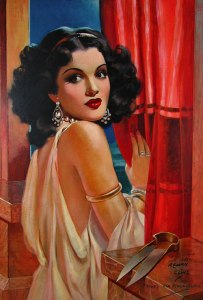
(Painting is Delilah, by Australian artist Henry Clive, 1948; the model is Broadway beauty Beryl Wallace)

Famous Names: Lleyton and Daria

18 Thursday Feb 2016

Posted by A.O. in Famous Names

≈ 2 Comments

Tags

East European names, english names, famous namesakes, locational names, modern names, mythological names, name history, name meaning, names of rivers, Persian names, Russian names, saints names, surname names, UK name popularity, US name popularity

BRISBANE, AUSTRALIA - JANUARY 02:  Lleyton Hewitt of Australia celebrates winning his match against Feliciano Lopez of Spain during day five of the 2014 Brisbane International at Queensland Tennis Centre on January 2, 2014 in Brisbane, Australia.  (Photo by Chris Hyde/Getty Images)

January is the great month for tennis in Australia. There’s the Australian Open and Kooyong Classic in Melbourne, the Hopman Cup in Perth, the Brisbane International, and the Sydney International, as well one-off events and exhibition matches around the country. I have to watch all of them, because my husband is a tennis fan who started playing as soon as he could hold a racket without falling over from the weight of it.

This year one Australian champion bowed out of competition, while a young player began competing under the Australian flag for the first time.

Lleyton Hewitt retired after making his twentieth appearance at the Australian Open, a former world number 1 and youngest ever male to make number 1, at the age of 20. Not only remembered as someone who was once at the top of the game for several years, he never lost his fighting spirit, and catchphrase warcry of “C’mon!”. He has been an inspiration for many young tennis players, and made the Australia Day honours list year.

Daria Gavrilova is a Russian-born tennis player who was the world number 1 junior, winning gold at the 2010 Youth Olympics. She emigrated to Australia last year, as her boyfriend is Australian player Luke Saville, and became an Australian citizen. Last month she won the mixed doubles at the Hopman Cup with partner Nick Kyrgios, and is the number 2 Australian player in women’s tennis.

LLEYTON
Lleyton is a variant spelling of Leyton. This English surname is derived from several places in the UK called Leyton, Layton, or Leighton. Depending on regional accent they can either be said LAY-ton, LIGH-ton, LEE-ton, or even LAW-ton, but the first is by far the most common.

Leyton in north London means “farm on the River Lea”; the River Lea’s name may come from the Celtic meaning “light, bright”, and possibly refers to the god Lugus. Layton in Lancashire comes from the Old English meaning “farm near water channels” – Layton is part of Blackpool, which had a drainage system of channels running over its peat bog. However, most places with these names are derived from the Old English for “leek farm”.

As a first name Layton and Leighton are the earliest spellings, in use since at least the 16th century. Most people with the names have been male, although from the beginning they were sometimes given to girls too. The names had early associations with Shropshire and Warwickshire, suggesting the inspiration may often have been the village of Leighton in Shropshire.

Leyton has been used as a first name since the 18th century, nearly always given to boys. Also strongly associated with Shropshire and Warwickshire, Leyton shows up in the Leyton area near London. For reasons I have been unable to identify, the name Leyton is also associated with south Wales, and there are several well-known Welshmen with the name Leyton or Leighton.

Lleyton seems to be a modern innovation, and to be found quite rarely. It is interesting to speculate whether the double L is an attempt to make the name seem more Welsh, in the style of names like Lloyd and Llewellyn. The name has become more common in the 21st century, perhaps due to Lleyton Hewitt himself.

In the UK, the spelling Layton has charted in the Top 1000 since the mid-1990s, and rose until a peak in 2011 at #161. It is currently #175 and stable. The spelling Layton has been on and off the US Top 1000 since the 19th century, with its most recent burst starting in 2001 – the year after Lleyton Hewitt won his first Grand Slam title at the US Open. It is currently #643 and fairly stable.

In the UK, the spelling Leighton has charted in the Top 400 since the mid-1990s. It hit a peak of #150 in 2013, and is now #154. It has occasionally been given to girls in the UK. In the US, Leighton has been on the Top 1000 for boys a few times since the 19th century, and made #892 in 2014. Since 2009 it has regularly made the Top 1000 for girls, and is currently #540 and gradually rising. The American actress Leighton Meester from TV show Gossip Girl has recently made this spelling of the name seem feminine.

In the UK, Leyton has charted in the Top 1000 since the mid-1990s, and peaked in 2007 at #345; it is now #434. In the US in 2014, there were 131 boys and 27 girls names Leyton, so it is much less common than in the UK.

Lleyton has shown up in the UK data since 2000, the start of Lleyton Hewitt’s career and his first Grand Slam win. The name peaked in 2005 at #747, and in 2014 there were 15 baby boys given the name Lleyton. In the US, 34 boys were named Lleyton and no girls, so if nothing else, this spelling seems to be only one which is currently male-only.

I see this name quite often in Australian birth announcements, with such a variety of spellings that no single variant would ever show up in data. It is sometimes used for girls here, but in these cases is invariably spelled Leighton, perhaps because of Leighton Meester.

This is a contemporary unisex name with a perhaps confusing array of spellings – but only Lleyton will always seem male, and remind people of the famous tennis player.

DARIA
Daria is the feminine form of Darius, a Romanised form of the Greek form of the Persian name Dārayavahush, meaning something like “possessing goodness, holding onto goodness”. In modern Persian, the name Darya coincides with the word for “sea”.

St Daria is a legendary saint. According to legend, she was a Roman Vestal Virgin married off to an early Christian nobleman named Chrysanthus. He converted her to Christianity, and persuaded her to live with him in a state of chastity (which helpfully agreed with her vows as a Vestal Virgin). The pair of them went around converting loads of other Romans, and eventually they were tortured and executed.

The story (written centuries after the supposed events) goes against everything we know about the status of Vestal Virgins in ancient Rome – they weren’t allowed to marry before the completion of their vows, and at one point, Daria’s punishments include being placed in a brothel as a common prostitute, an act of sacrilege which simply could not have occurred.

However, the story must have been appealing as they became quite popular saints. Three cities claim to have the remains of Chrysanthus and Daria, and the ones in Italy have been been confirmed as a male and female in their late teens, dating to roughly the correct era, so they at least got some believable bones.

St Daria was especially venerated in the Orthodox faith, and the name Daria is much more common in Central and Eastern Europe than elsewhere, although also used in Spain and Latin America. It is popular in Poland and Romania.

Daria has been used in the English-speaking world since the 18th century, without ever becoming very common. It’s been on the US Top 1000 a smattering of times, and in 2014 there were 104 baby girls named Daria – the same number as those called Arwen and Memphis. In the UK the name Daria is #439 and rising: a reflection of high immigration from Poland and Russia.

The name Daria isn’t common in Australia. It may be familiar to some because of Daria Gavrilova and Australian gymnast Daria Joura – although perhaps best known from the sardonic teenage cartoon character Daria Morgendorffer.

Daria has several possible nicknames – Dasha, Dasia, Danya, Darinka, and Dolly are a few in use. Both Daria Gavrilova and Daria Joura are known as Dasha (said like DAH-shah, not like Dasher the reindeer), and this makes Dash another possible nickname.

Darius is becoming better used, and the fame of the Australian tennis player could give more publicity to its feminine form. Strong and attractive, Daria would work well multiculturally.

POLL RESULTS

Lleyton received an approval rating of 33%. 52% of people weren’t keen on the name, and only 6% loved it. Daria did better with an approval rating of 54%. Although 41% of people weren’t keen on it, only 6% thought it was a terrible name.

(Photo shows Lleyton Hewitt at the 2014 Brisbane International)

Requested Name: Iden

03 Wednesday Feb 2016

Posted by A.O. in Requested Names

≈ 6 Comments

Tags

english names, famous namesakes, locational names, mythological names, name history, name meaning, names from television, Norse names, rare names, Shakespearean names, surname names, UK name popularity, unisex names, US name popularity

13augbales-052

Iden is an English surname which comes from the village of Iden near Rye in East Sussex, whose name in Old English means “woodland pasture where yew trees grow”. The Iden family were once Lords of the Manor in this village, Anglo-Normans who took their surname from the village.

A famous member of the Iden family is Alexander Iden, a medieval High Sheriff of Kent. He is a character in William Shakespeare’s historical play Henry IV, where he puts down a rebellion almost by accident and is knighted for his good deed.

Iden has been used as a first name since the Middle Ages, and was strongly associated with Sussex and Kent (where there is a hamlet named Iden Green). It was originally almost entirely feminine in usage, most likely because it looks and sounds very much like the name Idunn.

This is the name of a Norse goddess of spring, whose name is conjectured to mean something like “one who rejuvenates”, to indicate immortality and ever-youthfulness. In medieval England, the name was Anglicised to Idonae, Idony, and Idonea (the last one coinciding with the Latin for “suitable”). You could therefore see Iden as another attempt to Anglicise the name.

The gender ratio of Iden gradually evened up, and by the 18th century was significantly more common as a boy’s name, although still given to both sexes. It’s interesting that even in the 19th century, births of Idens in England were still strongly tied to Sussex and Kent, showing a local appeal to the name.

Probably the most famous person with the name is the Shakespearean actor and director B. Iden Payne. He went to the United States just before the First World War, and had a successful career as a director and drama teacher, working on Broadway and in the academic world. He finished his career at the University of Texas, and they have a theatre and acting award named in his honour.

Iden has been used as a character name on Star Trek. In the series Iden, played by Jeff Yagher, is a highly intelligent hologram who tries to defend and save his fellow holograms. In the process, he develops a Messiah complex, which leads to his downfall.

Another science fiction connection is the popular time-travelling cyborg novel In the Garden of Iden, by Kage Baker. In the story, the garden of the title belongs to Sir Robert Iden, a 16th century owner of a country manor house.

Nineteenth century English author Richard Jeffries also had a “garden of Iden” in his novel Amaryllis at the Fair. In it, Mr Iden turns his garden into a miniature paradise, with his daughter Amaryllis as its loveliest bloom. The rich prose and detailed descriptions make this a treasure for garden lovers.

The name Iden has never been common, and in Australia just a few examples can be found in historical records, mostly in the middle. I only saw it as a man’s name, but one or two women had it as a middle name.

The name is in occasional use in the UK, and in 2014 5 boys were named Iden. In the US, 42 boys were named Iden in 2014, and numbers appear to be increasing. The name does not seem to be in use for girls in the English-speaking world, despite the name starting out as feminine. Yet another example which shows that names do not always go from male to female when they switch gender.

Iden isn’t a common name, but neither is it bizarre or unfamiliar, and it has a significant history as a first name. Even for people who aren’t aware of the name Iden, it sounds enough like commoner names such as Aiden, Eden, and Arden not to sound too strange (there’s also Idan, a Hebrew name for boys).

On the flipside, its similarity to other names mean that it might be confused with them. Likewise, its deceptively easy pronunciation (IE-den, so the first syllable sounds like the word eye) will no doubt cause a certain amount of misunderstandings.

Short and simple, Iden is a medieval name that sounds completely modern and even space-age. It travels well, and works cross-culturally, because the name Iden is used in several other languages and countries.

I’ve seen quite a few people considering the name Iden, and can see it increasing in use, especially if it becomes more of a favourite in popular culture.

Thank you to V for requesting the name Iden be featured on Waltzing More Than Matilda.

POLL RESULTS

Iden received an approval rating of 54%. People saw the name as handsome or attractive (23%) and uncommon without being strange (19%). However 16% thought it was too much like other names, and would get confused with them. Only 5% of people thought the name Iden was ugly.

(Photo shows a view of countryside near Iden, East Sussex)

The Girls Called Max and Mason, or, Why are Celebrities Giving Their Daughters Masculine Names?

21 Monday Dec 2015

Posted by A.O. in Your Questions Answered

≈ 4 Comments

Tags

celebrity baby names, historical records, Name Candy, name meaning, name trends, nicknames, Roman names, unisex names

Screen-Shot-2015-12-10-at-3.17.57-PM

A blog reader has written in to say that she has heard of yet another celebrity couple giving their daughter a masculine name – Mark Zuckerberg and his wife, who call their baby girl Max. She is curious why parents choose obviously male names for their daughters when there are so many other options, and wants to know what I think.

Oh poor old celebrities and their baby names – if they aren’t using their psychic powers to steal our favourite baby names and make them popular, they’re either choosing crazy names for their children which will scar them for life, or giving their daughters boys’ names.

In this case, you will perhaps be relieved to know that the straw which has broken your particular camel’s back is not quite accurate. Mark Zuckerberg’s daughter is named Maxima, the feminine form of the Roman name Maximus, meaning, “greatest”. They call her Max, which is the most obvious nickname. My aunt has a former colleague, now retired, named Maxine, and she is also called Max or Maxie as an affectionate nickname, so it’s not a new idea.

Although it must seem that tons of celebrities are giving their daughters boyish or unisex names, this isn’t really correct. If you look through the celebrity baby names at Name Candy, there are plenty of girls with names like Elsie, Georgia, Jane, Mia, and Scarlett.

In fact, celebrity baby names don’t look that much different from anyone else’s. There are popular names, vintage names, nature names, modern names, created names, unisex names, and the occasional very unusual name – much like any suburban daycare centre with a reasonably diverse clientele.

I think one of the things that concerns parents is the idea that if a big enough celebrity chooses a “masculine” name for their daughter, the name will “go girl” and become unusable for boys – hence goodbye Max and James as possible choices for their future sons.

I am happy to say that there is little evidence that this takes place in any significant way. In 2013, Kristen Bell named her daughter Lincoln. In that same year, there were 61 baby girls named Lincoln and 4024 boys. Last year, there was a “Kristen effect” with 127 girls named Lincoln compared to 4785 boys.

So Lincoln rose much more steeply for girls, but there were overall many more boys given the name than the previous year. Although the name has increased feminine usage, there is no evidence that the name has become “feminine”, as Lincoln is a Top 100 boys name in the US, and has been rising every year for the past five years. Kristen Bell’s daughter did not stop it rising again.

And if we go further back in time to see what happens on a longer-term basis, Kelsey Grammer named a daughter Spencer in 1983, and another of his daughters Mason in 2001. Both Spencer and Mason continued rising for boys, Spencer reaching the US Top 100 in the 1990s and Mason reaching the Top 10 in 2011.

In fact I can’t find even one example of a celebrity changing the usage of a name from masculine to feminine through their particular name choice. Maxwell, Arlo, Owen, and Casper have been given as names to celebrity baby girls, and Maxwell, Arlo, Owen, and Casper continue to be overwhelmingly more common for boys.

It’s nice to know that parents of boys are not so foolish and easily panicked that they will immediately abandon all their name plans based on the actions of one celebrity. I’m not sure why we have the belief that they will, as nobody seems to think that parents of daughters will abandon a more “feminine” name choice once a celebrity chooses it for their son.

It’s a very strange phenomenon, but once Ryan Reynolds calls his daughter James, or Mila Kunis chooses the name Wyatt for her little girl, hand-wringing articles appear saying that this will create serious issues for parents expecting a baby boy, as the name James or Wyatt will now be “ruined” for boys by even ONE well-known girl with the name (and not well-known for her own achievements, but just for having famous parents).

Yet Liv Tyler can name her son Sailor (198 girls 23 boys), both Chris Hemsworth and Shakira can name their sons Sasha (535 girls, 20 boys), and Alicia Keys can have a little boy named Genesis (4144 girls, 63 boys), and nobody seems too concerned at all. There is no widespread fear that Sailor, Genesis, and Sasha will “go boy” , or cause undue angst among parents of girls.

It’s telling, and rather horrible, that we believe just one girl can taint a name with her hideous femininity, like the proverbial bad apple in a barrel, while boys can be named safely and with impunity whatever we desire, and the name will remain clean and fresh. Like so many myths of female impurity (such as menstruating women making food spoil), this one is simply not true.

It might seem like a new trend for girls to be given “masculine” names, but if you look through the records, there are tens of thousands of women named James. In the 18th century, there were many girls named Maxwell, especially in Scotland and on the Scottish border. In the 19th century, there were women named Arlo. None of this caused civilisation to fall, nor has it stopped these names being predominalty masculine today.

Of course sometimes names do swap gender – Lauren and Piper were once masculine names, while Christian and Emmett were once female. I guess that begs the question: just what exactly makes a name feminine or masculine, when gender usage can be fluid and changing?

Maybe the answer is that each of us, whether rich and famous or poor and obscure, is free to decide for ourselves. Perhaps even more shocking, our decision might not even make very much difference.

Thank you to Clare for asking for this issue to be covered on Waltzing More Than Matilda.

POLL RESULTS
34% of people were strongly against celebrities giving their daughters “masculine” names, with 2% feeling seriously angered, worried, or stressed about it. 23% of people were in favour of it, with 21% thinking it was fantastic, and believing we should all be allowed to choose whatever names we liked. 42% of people weren’t concerned about it, with 22% not caring since it was none of their business, and 20% believing the issue had been blown out of proportion. One person said that they were not aware of this issue.

The poll was very even on whether people would change their mind about a potential baby name if a celebrity chose it for a child of the opposite sex. 51% of people said no, while 16% said yes, and 33% said maybe. That means around half of all people would at least think about changing their minds about a name on their name list if a celebrity chose it for an opposite sex child. That’s despite more than 40% of people not being concerned about the names that celebrities choose, so the numbers don’t quite add up there!

(Photo shows the Zuckerberg family with some light bedtime reading for their daughter Max)

Famous Name: Ariel

16 Wednesday Dec 2015

Posted by A.O. in Famous Names

≈ 1 Comment

Tags

angel names, Biblical names, Christmas names, Disney names, Disney princesses, famous namesakes, fictional namesakes, hebrew names, international name popularity, locational names, name history, name meaning, name trends, names of horses, nicknames, Shakespearean names, UK name popularity, unisex names, US name popularity

the-little-mermaid

As we head towards Christmas holidays and hot weather, you might be planning to put The Little Mermaid on for the kids, or take them to the beach so they can swim like fish. I know lots of people (big and small) who love the spirited redhead Ariel from the Disney film, so I am covering the name as a summery choice.

Name Information
Ariel is a Hebrew name that means “lion of God”. Although it mentioned in the Old Testament as the name of several men, it is best known as a designation for the city of Jerusalem, and was also used in reference to the altar of the city’s temple (in this context, perhaps best understand as “hearth of God”).

In Jewish, Christian and Gnostic mysticism, Ariel is also the name of an angel. It is something of a mystery where the name came from, but it may be influenced by the archangel Uriel, or the Zoroastrian destructive spirit Ahriman. In several sources, Ariel is shown as an angel with power over Hell, and for this reason John Milton makes him one of the rebel angels who fight on Satan’s side in Paradise Lost.

Another image of Ariel is that it is the name for the Creator God, and in mysticism was often depicted as a lion-headed deity with power over the Earth. Others call him the Spirit of Air, the Angel of the Waters, or Wielder of Fire.

You can see the attraction of Ariel for writers: he is morally ambiguous, and has enormous yet extremely vague powers. In Shakespeare’s play The Tempest, Ariel is a spirit of the air under the control of the magician Prospero. It is not clear whether he is a good sprite, but because he refused to work for an evil sorceress, he is at least not demonic. The angel Ariel may have been as inspiration, or perhaps Shakespeare chose the name because it is similar to the word aerial, meaning “of the air”.

It is through Ariel’s magical agency, by the command of Prospero, that the action of the play progresses and reaches its conclusion. Because of this, it is very easy to see him as a metaphor for creativity – artists are all Prosperos, who work magic by bringing under their control that elusive and puckish spirit of inspiration.

In Alexander Pope’s poem The Rape of the Lock, Ariel is the guardian sylph of the heroine: a spirit of air who watches over young maidens. Pope edited the works of Shakespeare, and must have taken the name from The Tempest. Percy Bysshe Shelley identified Ariel as a symbol of the poet, and his songs with poetry. Poor poets – enslaved by the Prospero of their own creative genius!

T.S. Eliot published The Ariel Poems, and Sylvia Plath has a collection titled Ariel. In Plath’s case, although Ariel was literally a horse she rode, the poem Ariel is about her identity as a poet, and she takes the Shelley-approved “tortured soul oppressed by own genius” line. Although the Ariel of the poem is a stallion, Plath refers to herself as “God’s lioness”, feminising the meaning of the name.

The name of the mermaid Ariel in the Disney film is inspired by the ending of the fairy tale by Hans Christian Anderson. Although it does not form part of the movie’s plot, the original little mermaid becomes one of the Daughters of Air who may gain a human soul after 300 years of good deeds, and gain entrance to heaven. Like Ariel in The Tempest, the mermaid becomes a spirit of the air – but one whose goodness is quite obvious.

In the Old Testament, Ariel is a man’s name, with its feminine form transliterated as Ariela, Ariella, or Arielle. However, you can see quite a bit of gender ambiguity in the name. Even in the Old Testament, it was used to denote the city of Jerusalem and the temple altar, which already begins to disassociate it from its original context.

Then as the name of an angel it begins to seem further removed from being strictly male, since angels cannot have gender, and once Shakespeare used it for a spirit of the air, this trend continued.

The role of Ariel in The Tempest was almost always taken by female actors from the 1600s until the 1930s; since then it has been played by both men and women, but often with an androgynous slant. This must have made a difference to how people saw the name, and the connection with poetry heightens its feminine image.

Famous men named Ariel include former Israeli prime minister Ariel Sharon; Brazilian model Ariel Donida; writer and activist Ariel Dorfman; American music-producer Ariel Rechtshaid who has worked with big names like Adele and Madonna; and American film-maker Ariel “Rel” Schulman, best known for the Catfish documentary and TV series.

Famous women named Ariel include American actress Ariel Winter, from Modern Family; American model Ariel Meredith, and Australian actress Ariel Kaplan, who is on Neighbours. Russian-born American historian Ariel Durant, the wife and writing partner of historian Will Durant, was born Chaya Kaufman (Ada or Ida her English name), but was called Ariel as a pet name, and eventually she changed it legally.

Ariel has been used as a male name in Europe since at least the 16th century. It didn’t come into common use in the English-speaking world until the 18th century, when The Tempest became a theatre staple: it was used for both sexes, but much more often given to boys. By the 19th century, it was fairly evenly unisex.

Ariel has been on the US Top 1000 for boys since the late 1960s, shortly after the posthumous publication of Sylvia Plath’s Ariel. It has been on the US Top 100 for girls since the late 1970s, just after Ariel Durant and her husband won the Presidential Medal of Freedom. It made the Top 100 for girls in 1990, a year after The Little Mermaid, and peaked for both sexes in 1991, a year after The Little Mermaid was released on video. It reached #361 for boys, and #66 for girls. Currently it is #133 for girls and #738 for boys, and last year made small gains for both sexes.

In the UK, Ariel shows up in the data as a name for both boys and girls, although it has performed more consistently as a male name. Last year there were 32 girls and 20 boys named Ariel, and the name is rising for both sexes, but more steeply as a boy’s name. Ariel is popular for boys in Israel and Latin America.

In Victoria in 2012, Ariel was almost equally given to both sexes – 11 girls and 12 boys. However that may not be typical, because in South Australia in 2013 there were 2 girls named Ariel and no boys, and in Tasmania in 2010, 1 girl Ariel and no boys.

In Australia, the spelling Arielle seems more common for girls, in contrast to the UK, where numbers of female Ariels and Arielles are roughly even, and the US, where Ariel is a much more common girl’s name than Arielle. It’s possible that some Australian parents feel that Ariel, even if not strictly a boy’s name, does not seem quite feminine either.

Strong and attractive, with a wonderful meaning, Ariel is on trend for names with a strong AR sound, and you would think should be rising, along with fashionable choices like Arlo and Aria. Although suitable for both sexes, some parents may prefer the feminised spelling Arielle for a girl, which helps disassociate it from its mermaid namesake. Pronunciation is an issue, as people say this name AR-ee-el, AH-ree-el, and AIR-ee-el (the third one makes me think of TV antennas). Possible nicknames include Ari, Arik, Elle, Ellie, and Rel/Relle.

You might be wondering why I’m covering Ariel at the end of the year – shouldn’t I be doing Noel, or Joy, or something equally festive? The reason is because of the poet T.S. Eliot, who I mentioned as the author of the Ariel Poems.

Ariel was a series of illustrated poetry pamphlets from Faber and Faber, named after the airy sprite from The Tempest (perhaps they were suggesting they were putting their poets to work, as Prospero made the enslaved Ariel toil for him). Put out at the end of the year, they were sold as fancy Christmas cards.

In line with the theme, Eliot wrote poems for Ariel on the subject of Christmas, including The Journey of the Magi. Later they were collected as The Ariel Poems, and another added: The Cultivation of Christmas Trees.

So I’m suggesting Ariel as an unexpected name for the Christmas season, tied to its literary namesake, and connected to the beauty and magic of poetry – didn’t someone once say that every baby is a poem? They are certainly our most wondrous creations.

POLL RESULTS
As a girl’s name, Ariel received an approval rating of 46%. 30% of people were put off the name because of the connection to the Disney movie, but 28% thought Ariel was either pretty or beautiful. Only one person thought Ariel was too masculine for a girl.

As a boy’s name, Ariel received a lower approval rating of 28%. 35% of people thought the Disney film made the name seem too feminine for a boy, and 22% preferred the name Ari. 9% of people thought Ariel was only suitable for Jewish and Hispanic boys. However, 8% of people thought Ariel was a handsome name for a boy.

69% of people thought Ariel was more suitable as a name for girls, and 18% said it was equally suitable for both sexes. 13% saw it as more suitable for boys.

(Picture shows Ariel from The Little Mermaid)

Uncommon Vocabulary Names For Boys

13 Sunday Dec 2015

Posted by A.O. in Name Themes and Lists

≈ 1 Comment

Tags

animal names, celebrity baby names, dog names, english names, famous namesakes, fictional namesakes, imperial titles, Japanese names, locational names, modern names, musical names, name history, name meaning, name trends, names of animals, names of rivers, nature names, nicknames, philosophical terms, plant names, rare names, slang terms, surname names, title names, virtue names, vocabulary names, weapon names

bear-grylls

Just as with the girls names, these are ten names I saw given to real life baby boys in 2015 – but only once.

Bear
Bears have been important to humans since prehistoric times, hunted for their meat and fur, and sometimes worshipped as a totem animal or deity. Bears have a starring role in our subconscious: there are legends of saints taming bears, and they feature in folk and fairy tales. One of the best known is Goldilocks and the Three Bears, and Winnie-the-Pooh and Yogi Bear show that bears continue to appeal to us. There are bear-related names, such as Bernard, Ursula and Orson, so that Bear as a name does not seem out of place. Bear has been used as an English name since around the 17th century, in some cases possibly from the surname, or used to translate bear names from other countries such as Ber and Bjorn. It has often been used as a nickname, a famous example being British adventurer Edward “Bear” Grylls. The boys’ name Bear showed up in UK and US name data after Grylls’ popular TV series Born Survivor (Man vs Wild elsewhere), and is rising in both countries, on trend with other animal names. It has been chosen as a baby name by celebrities such as Kate Winslet and Alicia Silverstone, while Jamie Oliver’s son has Bear as one of his middle names. Bear is strong and masculine in a shaggy, rough-and-tumble way, yet also sweet and cuddly – like a bear hug!

Courage
Courage is another word for bravery or fortitude; it comes from French, and is ultimately derived from the Latin for “heart”. It is not mere fearlessness, but having the moral strength to perservere and keep going under difficult circumstances. Courage was regarded as one of the highest virtues by the ancient Greeks and Romans, and in some Christian traditions is seen as one of the gifts of the Holy Spirit. It is also given high praise in Islam, Hinduism, and Eastern philosophies, while we think of people of courage as the true heroes. Unlike some other virtue names, Courage has only been used as a name since the 19th century and has always been rare, more often given to boys. A good choice for a baby facing an uphill battle, or for families in crisis.

Edge
An edge is the extreme of a margin, or the cutting side of a blade. To have the edge on someone means to be at an advantage, while if you are straight edge, you are a hardcore punk living a clean life. The word edge comes from an ancient root meaning “sharp”. There are names related to the word edge, such as Egbert, and Edge- is part of several English surnames, such as Edgely and Edgeworth. As a personal name, Edge originated in Cheshire in the 17th century – edge is a local term for an escarpment, and there are villages in Cheshire called Edge, or known as The Edge. The name Edge has never been common and is sometimes used as a nickname or professional name. A famous example is the musician named The Edge from U2 (apparently the nickname comes from his sharp features and mind). The name Edge might make you feel a bit edgy, or perhaps you’ll think that it’s right at the cutting edge of fashion.

Kaiser
Kaiser is the German word for “emperor”, derived from the Roman title of Caesar. This comes straight from the surname of Julius Caesar, believed to simply mean “hairy” (perhaps the first Caesar had lovely locks, or it could be a joke name for someone bald). The Holy Roman Emperors were the first to use the title Kaiser, in the belief that they were continuing the role of the Roman Empire. Even after the Holy Roman Empire was dissolved, the title of Kaiser continued to be used by the House of Hapsburg. Thanks to high school history class, we tend to connect the title with Kaiser Wilhelm II, head of the German Empire during World War I. Kaiser has been used as a personal name since perhaps the 19th century, although it some cases it may have been a nickname given to a German immigrant. Kaiser was chosen as a baby name last year on the reality TV show Teen Mom 2, and since then the name has been rising in both the US and UK. One possible inspiration is British band the Kaiser Chiefs. Title names are on trend, and this one can be shortened to popular Kai.

Pilot
The word pilot originally referred only to someone who steered a ship, and even now a pilot is one who knows a harbour or coastline well, and is hired to help navigate a vessel: it is one of the world’s oldest professions. More generally, a pilot can be any sort of guide through an unknown area, and pilots are used in road transport as well. However, most people connect the word with airline pilots, air travel having overtaken sea travel in importance. The word is from French, and may ultimately be from the ancient Greek for “oar”. Pilot has been in rare use as a personal name since the 19th century, and was probably once best known as a dog name – in Jane Eyre, Mr Rochester has a magnificent Landseer Newfoundland named Pilot. Actor Jason Lee named his son Pilot in 2003, and since then the name has been occasionally used for boys in the US, but with no sign of growth. Occupational names like Mason and Cooper are common for boys, but this one is still an attention-grabber.

Reef
A reef is a sandbar, or a chain of rocks or coral lying near the surface of the water. In Australia, a reef also means a vein of gold-bearing quartz, so it is connected with mining, while sailors will know it as the part of the sail which is rolled up. The word comes ultimately from an ancient root meaning “arch, ceiling”. Reef has been used as a boys’ name since the 19th century, although never very common. In Australia, the name is often connected with the Great Barrier Reef in Queensland, the world’s largest coral reef system. Not only important to Indigenous Australians, the Great Barrier Reef is a major tourist attraction. It has recently been in the limelight as it is the subject of a documentary by David Attenborough funded by Tourism Australia. He warns that the reef is in imminent danger from climate change, although pollution is also a major threat. A masculine counterpoint to Coral, and favourite choice of the surfer crowd, Reef has strong conservation credentials. A possible issue is that it is also slang for marijuana.

Rhythm
Rhythm refers to the beat or tempo of music, and more generally to the flow and regular variations in any task or situation. The word has been in use since the 16th century, and is derived from the ancient Greek meaning “flow, run, stream, gush”. Rhythm is a very modern name, dating only to the 20th century, and has been given to both boys and girls, although currently more common as a boys name (and only a boys name in the UK). A rare musical name that recalls natural life cycles as well. One issue is that it may remind people of the rhythm method of birth control, perhaps ironically.

Rye
Rye is a type of grass related to wheat which has been grown domestically since the Stone Age. Native to Turkey and surrounding areas, it has been a staple crop in Central and Eastern Europe since the Middle Ages. One of the most valuable things about it is that it will grow in even poor soil, and during very cold weather. The English word dates to the 8th century, and the surname Rye may be after the grain, or from places such as Rye in East Sussex, its name meaning “at the island”, or the River Rye in Yorkshire, from the Celtic meaning “river”. (Rye in Melbourne is named after the Sussex town). The word may remind you of the Robert Burns ballad Comin’ Thro’ the Rye; as a misremembered quotation, it forms the title of the classic novel Catcher in the Rye. Rye has been used as a personal name since at least the 16th century, and is more often a boys name. Although rare, it fits in well with familiar names such as Riley, Ryan and Ryder, and seems like a short form for these names (such as the guitarist Ryland “Ry” Cooder).

Warrior
A warrior is one involved in combat; the word is from Anglo-Norman, and is derived from the Latin guerra, meaning “war” (related to guerilla). We tend to connect the word to tribal or ancient societies, and professional military forces formed the basis for warrior castes or classes, such as knights in medieval Europe, or the samurai of feudal Japan. Such castes generally had an idealistic moral code, stressing bravery, loyalty, and service to others, so that a warrior is not just a thug for hire, but has an element of nobility. We might also call anyone fighting for a cause a warrior, as Steve Irwin was the Wildlife Warrior, while using the word in a sneering way towards trolling keyboard warriors who are very brave as long as nobody knows who they are. Warrior has been used as a boy’s since the 19th century, and is very rare. It sounds a little like names such as Warren and Warwick, giving it some familiarity, although its similarity to the word worrier isn’t a help.

Zen
Zen is a school of Buddhism which originated in China during the 7th century, and spread to Vietnam, Korea, and Japan. It emphasises rigorous meditation practices, and favours direct personal understanding rather than knowledge of doctrine. The word is the Japanese pronunciation of the Chinese word Chán, which is derived from the Sanskrit word dhyāna, meaning “absorption, meditative state”. Such meditation is a way to gain liberation through calmness and awareness. Zen became known in the West in the late 19th century, and it flowered during the 1950s and ’60s – not only because of philosophers such as Alan Watts, but through the writings of beat poets such as Allen Ginsberg. That makes Zen seem cool on several different levels. Zen does have a history as a name in Japan, and has been used as an English name since the end of the 19th century. It is not very common, but the name is increasing in use. Simple yet meaningful, with a quirky letter Z to add interest, there is much to appreciate about tranquil Zen.

POLL RESULTS
People’s favourite names were Bear, Rye and Reef, and their least favourite were Kaiser, Rhythm and Warrior.

(Photo shows wilderness warrior Bear Grylls having a quiet Zen moment as he contemplates whether to eat bugs or climb inside an animal carcase for the night)

← Older posts
Newer posts →

Enter your email address to follow this blog

Categories

Archives

Recent Comments

A.O.'s avatarwaltzingmorethanmati… on Zarah Zaynab and Wolfgang…
Madelyn's avatarMadelyn on Zarah Zaynab and Wolfgang…
JD's avatardrperegrine on Can Phoebe Complete This …
A.O.'s avatarwaltzingmorethanmati… on Rua and Rhoa
redrover23's avatarredrover23 on Rua and Rhoa

Blogroll

  • Appellation Mountain
  • Baby Name Pondering
  • Babynamelover's Blog
  • British Baby Names
  • Clare's Name News
  • For Real Baby Names
  • Geek Baby Names
  • Name Candy
  • Nameberry
  • Nancy's Baby Names
  • Ren's Baby Name Blog
  • Sancta Nomina
  • Swistle: Baby Names
  • The Art of Naming
  • The Baby Name Wizard
  • The Beauty of Names
  • Tulip By Any Name

RSS Feed

  • RSS - Posts

RSS Posts

  • Celebrity Baby News: Melanie Vallejo and Matt Kingston
  • Names from the TV Show “Cleverman”
  • Can Phoebe Complete This Sibset?
  • Zarah Zaynab and Wolfgang Winter
  • Baby, How Did You Get That Name?
  • Celebrity Baby News: Media Babies
  • Celebrity Baby News: Adelaide Crows Babies
  • Celebrity Baby News: Chris and Rebecca Judd
  • Names at Work: Name News From the World of Business and Employment
  • Celebrity Baby News: Sporting Round Up

Currently Popular

  • Celebrity Baby News: Jacinta Allan and Yorick Piper
  • Celebrity Baby News: Jacinta Allan and Yorick Piper
  • Celebrity Baby News: Craig Thomson and Zoe Arnold
  • The Top 100 Names of the 1940s in New South Wales
  • Celebrity Baby News: Ed Husic and Bridget Tilley

Tags

celebrity baby names celebrity sibsets english names famous namesakes fictional namesakes honouring locational names middle names name combinations name history name meaning name popularity name trends nicknames popular names saints names sibsets surname names twin sets unisex names

Create a free website or blog at WordPress.com.

Privacy & Cookies: This site uses cookies. By continuing to use this website, you agree to their use.
To find out more, including how to control cookies, see here: Cookie Policy
  • Subscribe Subscribed
    • Waltzing More Than Matilda
    • Join 517 other subscribers
    • Already have a WordPress.com account? Log in now.
    • Waltzing More Than Matilda
    • Subscribe Subscribed
    • Sign up
    • Log in
    • Report this content
    • View site in Reader
    • Manage subscriptions
    • Collapse this bar
 

Loading Comments...