• About
  • Best Baby Names
  • Celebrity Baby Names
  • Celebrity Baby Names – Current
  • Celebrity Baby Names – Past
  • Featured Boys Names
  • Featured Girls Names
  • Featured Unisex Names
  • Links to Name Data
  • Waltzing on the Web

Waltzing More Than Matilda

~ Names with an Australian Bias of Democratic Temper

Waltzing More Than Matilda

Tag Archives: name history

Famous Name: Eleanor

16 Wednesday Sep 2015

Posted by A.O. in Famous Names

≈ 3 Comments

Tags

aristocratic names, British Baby Names, classic names, created names, Eleanor Nickerson, famous namesakes, flower names, French names, germanic names, Greek names, honouring, name history, name meaning, name popularity, popular names, Provencal names, royal names, Sanskrit names, Sindarin names, UK name popularity, US name popularity

dsc04745

Famous Namesakes
Last month was the 114th birthday of author Eleanor Dark, who was born August 26 1901. Her most famous novel is The Timeless Land, published in 1941, the first in a trilogy about early European settlement. Sympathetic towards Aboriginal people and meticulously researched, the book was part of the high school curriculum for many years and is now considered an Australian classic. It even inspired the famous historian Manning Clark. It was turned into a successful TV series in 1980.

When Eleanor married Eric Dark, a widowed doctor, she asked for three things: an equal partnership, a child, and the freedom to write. Eleanor got a studio in the garden where she could write in peace, a maid to help with the housework, and emotional support and encouragement for her writing. Her other wish was granted when she and Eric had a son named Michael; they already had a son named John, from Eric’s first marriage.

Thoughtful and generous, the Darks shared progressive ideals. An active member of the Labor left, Eric wrote political books and pamphlets which attracted attention from the anti-communist Menzies government and ASIO, and the entire Dark family was probably under surveillance. Although she considered herself apolitical, Eleanor’s socialist and feminist views permeate her work, and she was a scathing critic of middle-class suburbia.

The Darks moved to Katoomba in the Blue Mountains in 1923, and enjoyed bush walking, camping, climbing, and exploring. Eleanor was one of the first gardeners to grow Australian native plants as well as exotics. In her novels, the Australian landscape is not just a backdrop but almost another character. She believed that as people change the environment, the environment also changes us, and that we are part of the country in both mind and body. In her books are some of the most beautiful and loving evocations of the bush; its scents and sounds, its silence and spirit.

After Eleanor died in 1985, her son Michael gave the Dark family home in Katoomba to the Eleanor Dark Foundation. Named Varuna after the Hindu god of the ocean, the night sky, and the underworld, the house sits on a ridge overlooking the valleys of the Blue Mountains. Varuna is now a residential retreat, where authors can find a room of their own, and uninterrupted writing time; Eleanor’s studio is still in use. It was a wonderful gift for Eleanor as an author, and now for many others too.

Name Information
Eleanor is the modern form of Éléonore, the Old French form of the Provençal name Aliénor. Eleanor of Aquitaine (born around 1122) is often identified as the first bearer of the name Aliénor, and a popular story is that her name came about because she was christened Aénor, and as her mother’s name was also Aénor, she was known as alia Aénor, meaning “the other Aénor”. This suggestion was labelled “ridiculous” by a French scholar in the 17th century, but is still going strong.

There were earlier women with similar names – Eleanor of Aquitaine’s own great-grandmother is listed as Aleanor. However, the records for these early Eleanors post-date Eleanor of Aquitaine, so their names could have been conveniently translated into Eleanor (or Alienor or Aleanor) by later writers.

Eleanor of Aquitaine’s great-grandmother’s name seems to have been more like Adenorde, sometimes written as Ainor. It would be a reasonable assumption that Aénor was a variant of this name, and Aliénor was too. The origin of Adenorde is obscure, but looks to be Germanic.

Eleanor “Elea” Nickerson from British Baby Names suggests it could be from the Germanic name element adal, meaning “noble”, or from ald, meaning “old, mature, grown up”. The norde looks like the Germanic for “north. Another of Eleanor Nickerson’s suggestions is that it could be related to those Germanic names starting with aud-, meaning “wealth, riches”.

Another popular theory is that Eleanor is a Provençal form of Helen, Ellen, or Elena – also of ancient and obscure origin. Helen is usually said to be from the Greek for “light, bright”, although it may be ultimately from Sanskrit and mean “running, swift” (quite suitable for a runaway bride like Helen of Troy!). The reason for the Eleanor = Helen idea is probably because Eleanor of Aquitaine had her name Latinised as Helienordis. At the very least it is possible that the name Eleanor was influenced by the various Helen names, becoming fused (or confused?).

At least everyone agrees that Eleanor of Aquitaine popularised the name Eleanor. One of the wealthiest and most influential women of the Middle Ages, Eleanor was Duchess of Aquitaine in her own right, making her such an eligible bride that she was snapped up by both Louis VII and Henry II, so she became a queen of France, then of England. She was the mother of Richard the Lionheart and King John, and one of her daughters was named after her – Eleanor who became queen of Castile, and was a similarly powerful figure.

Eleanor of Aquitaine was clever, charming, sophisticated, and high-spirited, and contemporary sources all agree that she was very beautiful. She survived into her eighties, and outlived both husbands and most of her children. She was perhaps more woman than most medieval men could handle, and she was let go by her first husband, and imprisoned for years by her second.

The name Eleanor became common amongst both French and English royalty and nobility. King John named one of his daughters Eleanor after his mother, and French noblewoman Eleanor of Provence married Henry III, becoming the mother of Edward I. Edward married Eleanor of Castile, who was named after her great-grandmother, the daughter of Eleanor of Aquitaine. In turn, Edward I named his eldest daughter Eleanor, and her daughter was given the name Eleanor; Edward II also named a daughter Eleanor after Eleanor of Aquitaine.

Eleanor is a classic name which has never left the charts. It was #98 in the 1900s, and reached its lowest point in the 1960s at #454. It climbed steadily until the 1990s, after which it levelled off for many years, remaining stable in the 100s. Eleanor joined the Top 100 for the first time since the 1900s last year, climbing 31 places to reach #84, the second-highest rise in rank after Ariana. It is #82 in New South Wales, where it was one of the fastest-rising names for the year, #77 in Queensland, where it was one of the fastest-rising names, #54 in Tasmania, and #45 in the Australian Capital Territory.

Eleanor also joined the US Top 100 last year, and is #78 there. It was popular in the US from the end of the 19th century until World War II, and peaked in 1920 at #25. Long-serving First Lady Eleanor Roosevelt gave it a lot of publicity; her first name was Anna, but she went by her middle name. Eleanor was popular in the UK from the middle of the 19th century until the 1930s, and returned to the Top 100 in the 1980s. It peaked at #18 in 1999, and is currently #60 in England/Wales.

Up until this year, I would have said that Eleanor was a perfect, classic, underused choice. It was too perfect and classic to remain underused forever, as it has now become a Top 100 name. You can understand why, as it has both strength and elegance, a marvellous royal namesake, and the option of nicknames such as Elle, Ella, Ellie, Elea, Nell, Nellie, and Nora.

Spelling variants such as Elinor and Ellanore are not unusual; the name Elanor is from The Lord of the Rings and means “sun star” in the invented Sindarin language – in Tolkien’s universe, an elanor was a small yellow pimpernel-like flower, and the name was given to Sam Gamgee’s golden-haired daughter. In Australia, Eleanor is usually said EL-uh-nawr, similar to the American pronunciation, although you will sometimes hear a British pronunciation here, which is more like EL-en-uh.

POLL RESULTS
Eleanor received an outstanding approval rating of 91%, making it the highest-rated Famous Name for girls in 2015, and the highest-rated Famous Name overall. People saw the name Eleanor as elegant and refined (28%), dignified and intellectual (23%), and beautiful or attractive (17%). However 5% thought it was too popular. Only one person thought Eleanor seemed snobbish or elitist, and likewise just one was bothered by the number of spellings and pronunciations.

(Photo of the Blue Mountains near Varuna from Hook to Book by Christine Bell; Christine gives a wonderful insight into what life is like as a writer at Varuna).
Famous Name: Howard

10 Thursday Sep 2015

Posted by A.O. in Famous Names

≈ 2 Comments

Tags

aristocratic surnames, dated names, english names, famous namesakes, fictional namesakes, germanic names, name history, name meaning, name popularity, names from films, names from television, nicknames, Old English names, Old Norse names, saints names, surname names, UK name popularity, US name popularity, vintage names

62-tvrrevbbc

Famous Namesakes
On September 24 it will be the 117th birthday of Howard Florey, the Australian scientist who was part of the team which developed penicillin for medical use. Although it was Sir Alexander Fleming who discovered the antibiotic properties of penicillin in 1928, it was Howard Florey and his research team who actually made penicillin into an effective medication.

While Professor of Pathology at Oxford, Howard and his team treated their first patient with penicillin in 1941. A police constable named Albert Alexander had been accidentally scratched with a rose thorn in his mouth, and was now suffering from severe infection, to such an extent that one of his eyes had to be removed. Within a day of receiving penicillin Albert began to recover, but due to the difficulties of making enough penicillin to continue treating him, he relapsed and died.

Let’s just take a moment to think about that. When did you ever hear of someone you knew who died from a scratch from a rose thorn? That was what the world was like before antibiotics – simple things like cuts, abrasions, and burns could kill you in prolonged, painful, and particularly nasty ways. If you somehow survived, you might be left chronically ill, crippled, or missing an eye or a limb.

It was too late to save Albert Alexander, but he hadn’t died in vain. Howard interested pharmaceutical companies in the United States in mass-producing quantities of penicillin, and the first patient was successfully treated for septicemia in 1942. By the end of World War II, penicillin had made a significant difference in saving the lives of wounded Allied forces, and Australia was the first country to make penicillin available for civilian use after the war.

In 1944 Howard was made a Knight Bachelor, and in 1945 shared the Nobel Prize for Physiology and Medicine with his fellow researcher Sir Ernst Chain, and with Sir Alexander Fleming. That same year he received the Lister Medal for contributions to surgical science, and in 1948 the US awarded him the Medal of Merit. Elected to the Royal Society in 1941, he became its president in 1958. In 1962 he became provost of Queen’s College at Oxford, and the college’s residential Florey Building was named in his honour.

In 1965 he was appointed a life peer, and became Baron Florey, as well as being appointed a Member of the Order of Merit. From that year until his death three years later, he was Chancellor of the Australian National University, and after he died he was given a memorial service at Westminster Abbey. The one thing that his discoveries didn’t bring him was money – he never patented penicillin, being advised that it would be unethical.

The discoveries of Howard Florey, along with Alexander Fleming and Ernst Chain, are estimated to have saved more than 82 million lives. Long-serving Australian Prime Minister Sir Robert Menzies said: In terms of world well-being, Florey was the most important man ever born in Australia.

I have particular reason to be grateful to Howard Florey, as one of that club with 82 million members. When I was a child, I contracted a serious lung infection, and only just pulled through, even with the assistance of modern antibiotics. Without them, I would have been toast. So if you enjoy reading this blog, give thanks to Howard Florey! It couldn’t exist without him.

Name Information
The English surname Howard could be derived from Huard or Heward: related to the name Hugh, it combines the Germanic elements hug, meaning “mind, heart, spirit” and hard, meaning “brave, tough”. It could thus be translated as “brave heart”. Another possibility is that it is from Haward, an English form of the Old Norse Hávarðr, meaning “high guardian, chief guardian”. The surname Howard is first found in Norfolk.

The Howards are an aristocratic family which have been in the English Peerage since the 15th century, and remain the Premier Dukes of the Realm. The Howard family holds the Dukedom of Norfolk, as well as numerous earldoms and baronies. They hold the title of Earl Marshal, the highest hereditary position in the United Kingdom outside the Royal Family, responsible for organising coronations, state funerals, and the State Opening of Parliament.

The family’s founder was John Howard, 1st Duke of Norfolk: on his father’s side he was descended from King John, and on his mother’s from King Edward I. John Howard was the great-grandfather of two English queens: Anne Boleyn and Catherine Howard, both married to King Henry VIII. Queen Elizabeth I was the first English monarch to be descended from John Howard, and Queen Elizabeth II the first British monarch to be one of his descendants.

After the English Reformation, many of the Howards remained in the Catholic faith, and they are still the highest profile Catholic family in England. Philip Howard, 20th Earl of Arundel, has been canonised as a saint and martyr: he was imprisoned for ten years by his second cousin Queen Elizabeth I, and died in the Tower of London. Philip’s grandson William Howard, 1st Viscount Stafford, was falsely implicated in a fictitious conspiracy to assassinate King Charles II, and executed: he has been beatified as a Catholic martyr.

The Howards dubiously claim descent from Hereward the Wake, a semi-legendary hero who led a resistance against the Normans after the Conquest. Hereward is an Old English name meaning “guardian of the army”. A possibly dodgy old pedigree says the Howards are descended from the Howarth family of Yorkshire – this surname means either “homestead on the hill” or “homestead with hawthorn hedges”. Howard has been used as a boy’s name since at least the 16th century, most likely due to the aristocratic family.

Famous namesakes include Howard Carter, the British archaeologist who discovered Tutankhamen’s tomb; classic film director Howard Hawks; and eccentric tycoon Howard Hughes. Fictional Howards tends to be dads (such as Howard Cunningham on Happy Days, Howard “Ward” Cleaver from Leave it to Beaver, and Howard Stark, the father of Iron Man superhero Tony Stark), or offbeat (like Howard the Duck, Howard Wolowitz from The Big Bang Theory, and Howard Moon from The Mighty Boosh).

In Australia, Howard was #122 in the 1900s, and peaked in the 1940s at #101; it hasn’t charted since the 1980s. In the UK, Howard was in the Top 100 from the late 19th century until the 1920s, but never got very high; in 2013 there were 16 babies named Howard born in England/Wales. The name has been much more popular in the United States: it was in the Top 100 from the late 19th century to 1958, peaked during World War I at #25, and has only been off the Top 1000 once, in 2013; it returned last year and is currently #986.

Howard is a dated name, although it has never been popular and might more properly be described as vintage. It sounds sturdy and dependable, has a good meaning, and can be shortened to either Howie or Ward. An issue in Australia is that it’s strongly associated with former conservative Prime Minister John Howard, whose term was from 1996 to 2007, often called the Howard Years or Howard Era; it may not be pure coincidence that the name disappeared from the charts in the 1980s when John Howard was Federal Treasurer.

POLL RESULTS
Howard received an approval rating of 51%. 18% of people thought the name Howard was too dated, while 16% were put off the name by former prime minister John Howard. However, 14% saw it as old-fashioned yet charming.

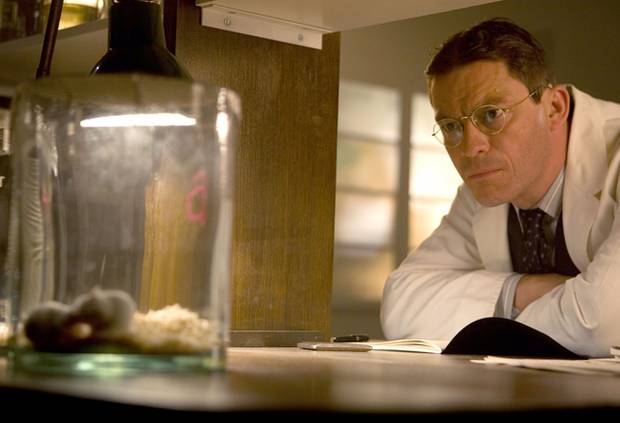
(Picture shows a scene from the 2009 film Breaking the Mould, with Dominic West as Howard Florey)

Waltzing With … Lachlan

06 Sunday Sep 2015

Posted by A.O. in Waltzing with ...

≈ 4 Comments

Tags

aristocratic names, celebrity baby names, classic names, famous namesakes, Gaelic names, name history, name meaning, New Zealand name popularity, nicknames, patriotic names, popular names, Scottish names, UK name popularity, US name popularity

2010-australia-post-booklet-governor-lachlan-macquarie-stamp-packs-and-booklets-a3440-1500x700

Famous Namesakes
The name Lachlan has a long history in Australia because of Lachlan Macquarie, a British military officer born in the Hebrides who served as the fifth and last Governor of New South Wales. While still a teenager, he served during the American War of Independence, and saw active service in India and Egypt, eventually being promoted to the rank of Major-General.

Lachlan served his term as Governor from 1810-1821, and he had plenty to cope with, as the colony was disorderly following the Rum Rebellion against the former Governor, William Bligh. There was also a severe drought during his term, which brought about a financial depression, and the end of the Napoleonic Wars in 1815 led to a huge increase in Australia’s population from both settlers and convicts. Despite these challenges, Lachlan loved Sydney’s climate and setting, and saw the colony in very positive terms.

This was the period of Australia’s history where it was in transition from a penal colony to a free settlement. Lachlan held liberal views towards convicts, pardoning them as often as possible. He scandalised settlers by accepting freed convicts into society, and appointing them to government positions – even as magistrates. He sponsored massive exploration, and established Bathurst, the first inland city.

He spent lavishly on public works, which the British government strongly opposed, as they still saw Australia as a dumping ground for convicts, to be run as cheaply as possible. Sydney’s layout is based on Lachlan’s street plan for the central city, and the colony’s most prestigious buildings were on Macquarie Street. He designed the Georgian-style Rum Hospital, which today is the state’s Parliament House, while its stables house the Sydney Conservatorium of Music. He also designed the city centre of Hobart in Tasmania.

So much of the modern Australia we know was first begun by Governor Macquarie. He established the British system of justice, and the first Supreme Court. He encouraged the creation of the colony’s first bank, The Bank of New South Wales (now Westpac), and produced Australia’s first official currency. Towards the end of his term, he decreed that all traffic should keep to the left in New South Wales in line with British custom.

Perhaps the most important change he made was a symbolic one – he recommended that the name Australia be formally adopted, giving the seal of approval to Matthew Flinders’ choice. Little wonder that on Lachlan Macquarie’s tomb on the Island of Mull in Scotland he is called The Father of Australia.

Happy Father’s Day! And Happy Father’s Day to Lachlan Macquarie, the father of our country.

Name Information
Lachlan is a Scottish name from the Highlands. It is from the Gaelic Lochlann, meaning “land of the lochs” (land of the lakes). It was originally given as a nickname for someone from Norway: Norway has almost half a million freshwater lakes, so it well deserves this epithet. The name is pronounced LOK-lun.

The word Lochlann was first used to indicate “a Viking, a raider”, but gradually came to mean anyone of Norse descent. There was a strong link between the neighbouring lands of Norway and Scotland during the Middle Ages, as both battled for control of the Western Isles of Scotland. As part of the effort to improve the Scotland-Norway relationship, there were diplomatic missions between the two nations, and even intermarriage between the royal houses.

The name Lachlan (or Lochlann) was commonly used amongst the noble families of Scotland, who were often of part Norse descent. The name was traditional in the Clan Maclean, an old Highland clan who owned land in Argyllshire and the Hebrides. (Lachlan Macquarie’s mother was the daughter of the chieftain of the Clan Maclaine, another spelling of Mclean, and his father was the chieftain’s cousin). The current chief of Clan Maclean is Sir Lachlan Maclean of Duart and Morven, 12th Baronet of Nova Scotia.

The name Lachlan is only popular in Australia and New Zealand (it is #27 in New Zealand). In the UK Lachlan was #546 in 2013, while Lochlan was #709; the name is fairly stable there. In the US, the name Lachlan first joined the Top 1000 in 2013, and is currently #902 – a long way off being popular, but gaining in popularity. In the US, the name was given to 14 girls last year, which seems very wrong from an Australian viewpoint!

The name Lachlan was #173 in the 1900s, and went off the charts altogether during the 1920s and ’30s. It returned in the 1940s at #220, and gradually increased in popularity. There was a surge in popularity during the 1970s, most likely because media magnate Rupert Murdoch named his eldest son Lachlan in 1971. Rupert’s grandfather was from Scotland, and the choice of Lachlan’s name may have been inspired by his Scottish heritage as much as a tribute to Lachlan Macquarie.

Lachlan first joined the Top 100 in 1982 at #96, joined the Top 50 in 1989, and the Top 25 in 1996 – fairly brisk progress up the charts. It suddenly leapt into the Top 5 in 1997, the year after Lachlan Murdoch joined the board of Newscorp. However, it never made #1, peaking at #2 in 2002 and 2005, and has now left the Top 10. Currently it #11 nationally, #15 in New South Wales, #10 in Victoria, #12 in Queensland, #7 in South Australia, #12 in Western Australia, #6 in Tasmania, #8 in the Northern Territory, and #4 in the Australian Capital Territory.

This is a strong handsome Australian classic with a connection to Australian colonial history. A popular name for many years, it is by no means fresh or original, but still a worthy choice.

POLL RESULT
Lachlan received an outstanding approval rating of 91%, making it one of the highest-rated names of 2015. 39% of people loved the name Lachlan, and only one person hated it.

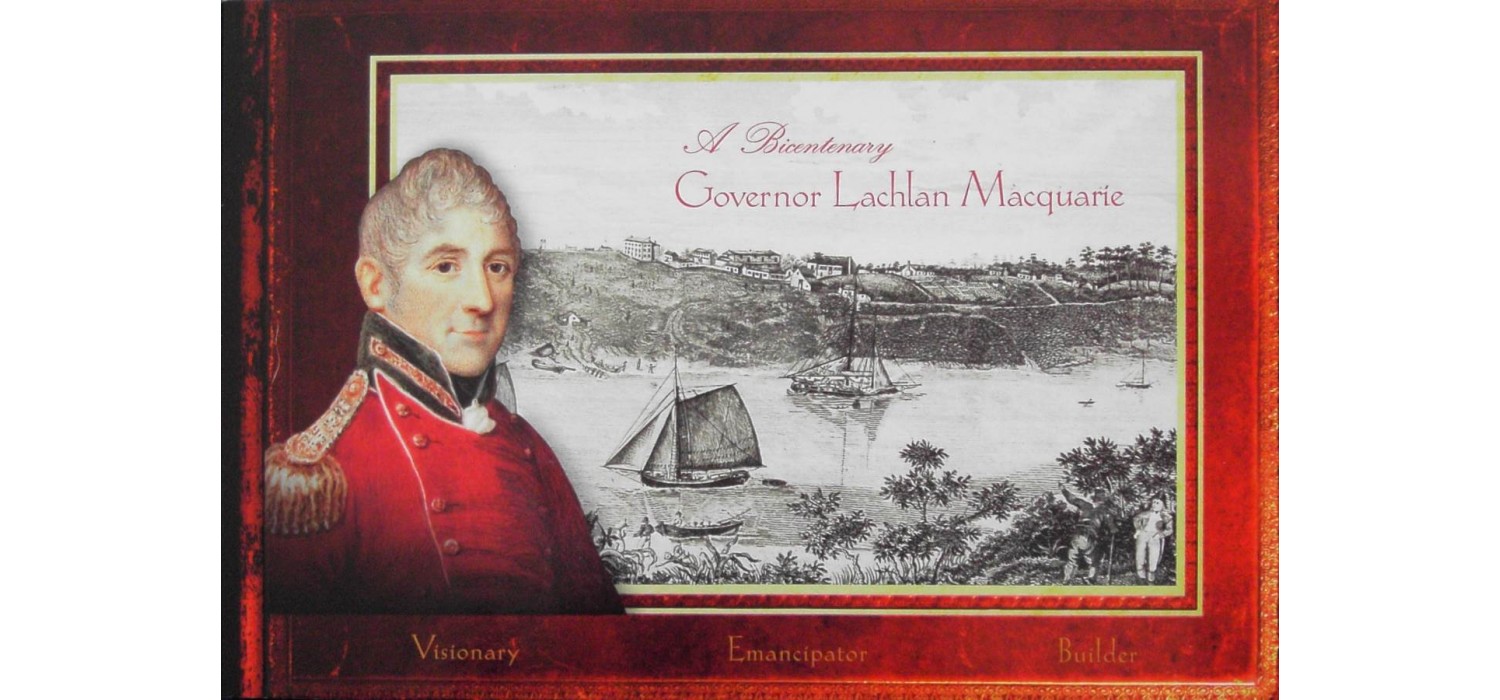
(Picture shows a 2010 stamp booklet issued in honour of Lachlan Macquarie’s bicentenary as governor)

Famous Name: Ceridwen

02 Wednesday Sep 2015

Posted by A.O. in Famous Names

≈ 1 Comment

Tags

Arthurian names, famous namesakes, fictional namesakes, mythological names, name history, name meaning, nicknames, rare names, Welsh names

194057-97833464-59ad-11e4-bb41-d2d878d2a380

Famous Namesake
Author Ceridwen Dovey was born in South Africa, raised both there and Australia, and was educated at Harvard University, doing postgraduate work at New York University. Living in Sydney, Ceridwen says Australia feels like home, but South Africa remains part of her, and she has ties to the United States as well.

Ceridwen’s book Only the Animals was published last year, has just come out in the UK, and will be released in the US later this month. It’s very unusual, with the souls of ten animals who have died in human conflicts telling their own stories. Each beast also pays tribute to a particular writer who has written about animals, from Henry Lawson to Virginia Woolf to Ted Hughes, and these can be playful as well as moving (imagine a mussell’s journey to Pearl Harbour in the style of Jack Kerouac, for example).

Only the Animals has been shortlisted for numerous awards, and won the Steele Rudd Award for a short story collection at the 2014 Queensland Literary Awards. It’s a beautiful, wise book which really gets under your skin and remains with you, long after you turn the last page. Hopefully it will be appreciated overseas as well.

Name Information
In Welsh legend, Ceridwen was an enchantress. According to a medieval tale, Ceridwen had a son named Morfran who was hideously ugly, and she sought to make him wise since he was never going to coast along on his looks.

She mixed up a magical potion in her cauldron which would give the gift of wisdom and poetic inspiration, and a long drawn-out process it was. The potion had to be boiled for a year and a day, and she outsourced the workload, having the fire tended by a blind man while a young boy named Gwion kept stirring it. Only the first three drops of the potion would confer wisdom: all the rest was deadly poison.

Three drops of the hot potion spilled onto Gwion’s hand as he stirred, and instinctively he put his thumb in his mouth to cool the burning. As soon as he did, he gained all the wisdom and knowledge that had been meant for Morfran. The first piece of knowledge he gained was that he’d better scram as Ceridwen was going to be peeved beyond belief. Correct! She was furious.

Gwion turned himself into a hare so he could run fast, but Ceridwen became a greyhound and ran even faster. He jumped into a river to swim away as a fish, but she transformed into an otter. When he turned into a bird to fly away, as quick as thought she was an eagle chasing after him.

Finally he turned himself into a grain of wheat. I know what you’re thinking: all the wisdom in the world, and the best he can come up with is wheat? I mean, come on, at least turn invisible or something. For some reason, Ceridwen turned herself into a chicken and ate the wheat. Not sure why she had to be a chicken to eat wheat; probably showing off.

When Ceridwen became pregnant, she knew it was that crafty little Gwion growing inside her. (I know wheat doesn’t go into your uterus when you eat it; you have to throw all rational thought out the window, because magic). Ceridwen planned to kill the baby as soon it was born, but he was so beautiful that she just couldn’t do it. Due to her wonderful nurturing instincts, she chucked him into the ocean instead, wrapped in a bag.

The bag washed up on shore, and a prince who was fishing caught him instead of a salmon, and took him home. He knew the kid was something special, because he recited poetry all the way back to the castle. He named him Taliesin, and Taliesin became the greatest of the Welsh bards, and later the chief bard at King Arthur’s court.

Ceridwen never bothered making another potion for Morfran, but if you’ve been worried about him all this time, don’t be. He became one of King Arthur’s warriors, had a beautiful white horse, and survived Arthur’s final battle because he was so hideous that people thought he must be a demon, and ran away in panic.

The oldest known version of the name is Cyrridven, translated as “crooked woman”, because cyrrid means “crooked, bent, hooked”, and ben or ven means “woman, female”. A popular theory is that the name is a corruption of cerdd, meaning “poetry, music”, and gwyn, meaning “white, blessed”, to be understood as “sacred poetry”. I find this etymology too convenient to modern sensibilities to be convincing.

In many ancient traditions, travelling in a crooked or winding path is considered a powerfully magical thing to do (think of labyrinths, for example), so “crooked woman” might be understood as meaning “woman of magic power” – spot on for an enchantress.

Ceridwen is a very magical figure, and her story has several ties to mythology. The thumb sucking leading to great, yet unlooked for, wisdom, reminds us of the Irish hero Finn McCool, who sucked hot oil off his thumb while cooking the Salmon of Knowledge. Is it just coincidence that the prince caught Taliesin while fishing instead of a salmon?

Another is the magical duel, where two sorcerers turn themselves into a succession of creatures until one takes a form the other cannot defeat. There is a faint echo of shamanism here, and it might remind you of the Irish legend of Fintan the Wise, who was able to turn himself into a salmon in order to escape the Great Flood. Another connection to salmon and wisdom!

Ceridwen really appealed to people’s imaginations, and she became seen as not just an enchantress but a goddess of poetry and wisdom. The Victorians identified her as an early pagan goddess, and in modern Paganism she is a goddess of rebirth, knowledge, and inspiration. This is a meaningful modern mythology for Ceridwen, although Welsh scholars tend to get a bit sniffy about it as a 19th century invention.

While the character was known in medieval literature, the name was not used in everyday life, and the form Ceridwen dates to the 16th century. Ceridwen has only been in use since the 19th century revival of old British names, and originated in Wales.

The name Ceridwen features is the novel How Green Was My Valley; Ceridwen is the narrator’s sister. The book is set in the Victorian era, and it is barely possible that a Welsh girl of that time would be called Ceridwen, as it was just coming into use. The author Ceridwen Dovey is named after the literary character.

Ceridwen is in sporadic use as a baby name in the UK, and in 2013 less than three babies were given the name Ceridwen. In the US last year, less than five babies were named Ceridwen.

Ceridwen is a genuine but rare name, and something of a contradiction, as it has medieval origins but is essentially modern – something which causes no end of trouble for the Renaissance Fair crowd, or at least the bodies which approve their names.

To me it seems like a “cool mum” name, which sounds wild and artistic on someone of around my generation, but is hard for me to imagine on a new baby. Perhaps it’s because it fits in so well with the name trends of the 1960s and ’70s, as it sounds rather like a cross between Kerry and Bronwen.

However, this is a name from Welsh legend which will appeal to those wanting a strong, unusual girl’s name which is magical and imaginative. The pronunciation is ker-ID-wen, but English-speakers may prefer KER-id-wen, which gives the obvious nickname Ceri.

POLL RESULTS
Ceridwen received a very good approval rating of 70%. 18% of people thought the pronunciation of Ceridwen was too much of an issue, but 17% saw it as wild and magical, 15% as powerful yet feminine, and a further 15% as a great Welsh heritage choice.

(Photo of Ceridwen Dovey from The Australian)

German Names For Boys

30 Sunday Aug 2015

Posted by A.O. in Name Themes and Lists

≈ 3 Comments

Tags

Ancient Germanic names, animal names, aristocratic names, Biblical names, birth notices, European name popularity, famous namesakes, fictional namesakes, German name popularity, German names, Greek names, hebrew names, imperial names, Latin names, name history, name meaning, name popularity, names from songs, nature names, rare names, Roman names, royal names, saints names

Wolf_Howling

Andreas
Latinised form of the Greek form of Andrew, meaning “manly”. Saint Andreas of Alexandria was an early martyr. The name has been used in Germany since the Middle Ages; a famous medieval namesake is Andreas Osiander, a Lutheran mystic and theologian, while a contemporary one is the German opera singer Andreas Scholl. The name Andreas was used in Britain too, although probably the name was still pronounced the same way as Andrew in everyday life. There is an Old English poem called Andreas about Saint Andrew, which turns him into an Old English warrior, battling the forces of evil. Another English literary connection is the 12th century author Andreas Capellanus (Andrew the Chaplain), who wrote a satirical treatise on the courtly love. Just outside the Top 100 in Germany, Andreas is a popular name in Austria and Scandinavia. It’s not often seen here, perhaps because of fears it will be be confused with its feminine counterpart, Andrea. Pronounced something like ahn-DRAY-ahs in Germany, this German classic seems like a fresh update to flagging Andrew, and has recently had some publicity from the disaster movie San Andreas.

Anton
The equivalent of Antony, used throughout Europe since the Middle Ages, and a traditional name amongst European nobility and royalty. Famous namesakes include the Austrian composer Anton Bruckner, and Russian writer Anton Chekhov. A famous Australian namesake is SBS journalist and anchorman Anton Enus, who was born in South Africa. Antons in fiction tend to be baddies, which isn’t a help to the name’s image. One exception is the American children’s book Summer of My German Soldier, where Anton is an escaped German POW who befriends a little Jewish girl. Anton is a popular name in Germany, and around the 400s here. A suave multicultural choice – and even the many villainous Antons in fiction give it a bit of an edge.

Florian
From from the Roman name Florianus, derived from Florus, which is from the Latin for “flower”. Florianus, or Florian, was one of the Roman emperors, and the noble von Blumenthal family from Brandenburg claimed descent from him via an imaginative legend whereby his sons fled to northern Germany, and taught everyone how to make wine. Saint Florian was a Roman soldier whose duties included organising fire brigades; he was martyred by drowning in a river which is now in Austria, and he is a favourite saint in central Europe. Saint Florian is the patron of Poland, and the city of Linz in Austria, and in Austria and Germany, Florian is used as a call sign for fire engines and stations. With such imperial, noble, saintly, patriotic, and rather butch firefighting associations, it’s little wonder Florian is a common name in Germany, and still on the Top 100. It’s rare here, but the rise of Florence in some ways gives it more familiarity, and I have seen an Australian baby named Florian. It seems hip and elegant.

Johannes
Latin form of Ioannes, the Greek form of the Hebrew name Yochanan, which in English is John. Famous German namesakes are seriously heavy duty achievers. Johannes Gutenberg, who introduced the printing press to 15th century Europe – it began a cultural revolution which changed the world and is largely responsible for most of us being able to read. Astronomer Johannes Kepler, a key figure in the 17th century scientific revolution whose works provided the foundations for the theory of gravitational force. Johannes Brahms, one of the great composers of the 19th century, honoured in the German hall of fame. A famous Australian namesakes is former Queensland premier Sir Johannes “Joh” Bjelke-Petersen, husband to Florence, and a force in conservative politics; he was of Danish descent. Popular in central Europe and Scandinavia, Johannes is #56 in Germany. It doesn’t chart here, but I do see it sometimes in birth notices. In Germany it’s pronounced yo-HAHN-nes, while here it may be pronounced in order to give the nickname Joe. A strong, handsome, intelligent classic.

Justus
Latin name meaning “just”. A Christian named Jesus Justus is mentioned by St Paul in the New Testament, while Joseph Justus is a disciple of Christ considered as a possibility to become an Apostle to replace Judas – he is venerated as St Justus of Eleutheropolis. There are quite a number of saints named Justus, including a Pope and an Archbishop of Canterbury. One of the most influential is a legendary one named Justus of Beauvais, who was beheaded as a child and went for a stroll holding his head: one of those fashionable saintly miracles which sent you straight to the top of the medieval pops for some reason. A famous German namesake is Justus Perthes, an 18th century publisher who founded the Almanach de Gotha, a directory of European royalty and nobility. An Australian namesake is Justus Jorgensen, who founded an artist’s colony in Melbourne called Montsalvat which is still open. Justus is #99 in Germany, and is on the US Top 1000. It seems like a solid alternative to the English virtue name Justice, although pronounced quite differently in Germany.

Karsten
German form of Christian. It is more common as a surname than a first name in Germany, and is rare here as well, but I do see it occasionally in birth notices, and one of the athletes we sent to the 2012 Olympics was named Karsten. That makes it seem unusual but normal, and it’s very much like familiar names such as Carson and Carter.

Klaus
Short form of Nikolaus, a German form of Nicholas. The patron saint of Switzerland is Saint Nicholas of Flüe, affectionately known as Brother Klaus. There are many famous German people with this name, including Klaus Neumann, Luftwaffe flying ace, artist and musician Klaus Voormann, who designed album covers for bands like The Beatles, Klaus Badelt, who composed the film score to the 2003 version of Ned Kelly, singer Klaus Meine from The Scorpions, and actor Klaus Kinski, father to Natassja Kinski. There are famous fictional characters with this name too, such as teen bookworm Klaus Bauldelaire from A Series of Unfortunate Events, vampire-werewolf hybrid Klaus Mikaelson from The Vampire Diaries, and Olympian athlete-cum-goldfish Klaus Heissler from American Dad. Slightly dated in Germany, this charming name is very rare in English-speaking countries, probably because it reminds people of Santa Claus. Klaus is said to rhyme with house though.

Otto
Modern form of the ancient Germanic name Audo or Odo, originally short forms of names beginning with aud-, meaning “wealth, riches, fortune”. A name in common use by German royalty and nobility, there have been four Holy Roman Emperors named Otto. Otto I, or Otto the Great, was the son of Saint Matilda, and married an English princess. Otto IV was the son of Matilda of England, the daughter of Henry II. Two famous writers had dads named Otto: Anne Frank and Sylvia Plath. The name might also remind you of statesman Otto von Bismarck or film director Otto Preminger. In fiction, Otto has often been used as a comedic or joke name, but “Big Otto” Delaney from Sons of Anarchy is an example of it being both serious and powerful. Currently #320 in Germany, Otto is popular in Scandinavia and gaining popularity in both the US and UK. It’s around the 200s here, and seems hip and rather quirky.

Rudolf
Modern form of the ancient Germanic name Hrodulf, translated as “famous wolf”. It was commonly used by German royalty and nobility, and Rudolf II was a Holy Roman Emperor. Although not generally considered a successful ruler, his patronage of the arts made him a key player in the Renaissance, while his interest in the occult and alchemy helped bring about the scientific revolution – there would be no chemists without alchemists! A famous namesake of modern times is the great ballet dancer Rudolf Nureyev, who partnered Margot Fonteyn. Another is the Austrian philosopher Rudolf Steiner, who sought to find a system of thought which would be both scientific and spiritual in nature. Anthony Hope’s novel, The Prisoner of Zenda, is about two men named Rudolf – one a European king, the other his distant cousin visiting from England who must impersonate him. Despite all these interesting Rudolfs, the name is rarely used here as it reminds people of the Christmas song, Rudolph the Red Nosed Reindeer. Rather a shame, as this name is strong and rather charismatic. I do know someone named Rudolf who has never been bothered by the song though.

Wolf
Short form of names such as Wolfgang (“wolf path) and Wolfram (“wolf raven”), sometimes used as an independent name. A famous Australian namesake is Wolf Blass, a German immigrant who founded the famous winery in South Australia; his name was short for Wolfgang. The word wolf is the same in English and German (although pronounced differently), and you can also see this as a vocabulary name referring to the animal. Humans have always been fascinated by wolves, and in various mythologies they can be symbols of both danger (such as in the fairy tale Red Riding Hood) and nurturing (like the wolf mother who suckled the twins Romulus and Remus). A common thread in many legends from around the world is that of humans descended from wolves, or humans in wolf form, including werewolves. The power of the wolf makes this an attractive name, and it’s right on trend along with other animal names.

POLL RESULTS
People’s favourite names were Otto, Wolf and Anton, and their least favourite were Justus, Johannes and Rudolf.

Requested Famous Name: Obelia

26 Wednesday Aug 2015

Posted by A.O. in Famous Names, Requested Names

≈ 5 Comments

Tags

animal names, fictional namesakes, Greek names, historical records, name history, name meaning, nature names, rare names

tumblr_loadw9U9UE1qmho1lo1_500

We have already covered the classic children’s writer and illustrator, May Gibbs, and her adorable floral creation, Little Ragged Blossom. This is another of her characters in the Snugglepot and Cuddlepie series, who can be found in the 1921 picture book Little Obelia.

Instead of being set in the Australian bush amongst the gum trees, Little Obelia continues the undersea adventures first encountered in the previous book of the series, Little Ragged Blossom.

May Gibbs wrote: I always had an absolute love for the underwater things …. I used to look into the clear water from the boats … we used to do a lot of boating in Perth … And one day I thought how lovely it would be to have a little town under the water.

So just as the gumnut babies were born from her childhood experiences in the Western Australian bush, Little Obelia was inspired by boating in Perth. It’s probably not a coincidence that she saw the undersea world as a “town”, and thought of it while in the city.

In the stories, the undersea world is in stark contrast to the bush. While the bush folk, like our gum-nut trio, are generally simple and egalitarian, the world of the sea is one of class difference. It is not long before we encounter a “grand affair” where one may meet Lord Giant Boarfish, the aristocratic Long Tom, the Honourable Mrs Rock Whiting, and Lady Garfish.

In other words, the bush stands in for the country or suburbia, while the sea is the city … glittering, exotic, a carefully structured society in an environment which is ever-shifting and sometimes hard to navigate.

There are many mysteries regarding the sea (one of them is how the gum-nuts manage to easily breathe underwater), and Little Obelia a rather mysterious figure.

Obelia is apparently a type of gum-nut baby too, but instead of growing up in the bush she lay sleeping in a pearl at the bottom of the sea for “years and years”. As she slept, her mind became imbued with great wisdom, although she physically did not age a day, remaining a tiny baby.

One day the pearl burst open into a beautiful white flower, which was found by Ragged Blossom and Snugglepot. After that, Obelia grew very quickly until she was the same size as Ragged Blossom, but so wise that even the cleverest of the Fish Folk would travel many miles to seek her advice.

As you can see, there are a lot of unanswered questions here! How does a baby get inside a pearl? How does sleeping for years and years make you wise? How long is years and years – ten years or ten thousand? How does a pearl blossom into a flower? And so forth.

Like all great oracles, there is much about Obelia which is veiled in mystery and secrets, until she almost takes on the mantle of a nymph or marine goddess.

Obelia’s name comes from the “beautiful Obelia seaweeds” which grew all around her pearl as she lay sleeping. Obelia are not really seaweeds or even plants: they are a genus of simple animals, related to jellyfish and coral, and extremely ancient. They do however grow in colonies which resemble seaweed, with fragile stems and branches.

Obelia are common around the world, and only live in shallow coastal water such as in rockpools, often forming a delicate growth upon rocks and jetties. May Gibbs must have often seen them at the beach – part of that clear underwater world she viewed from boats. Obelia don’t live in the deep sea, so we know that Little Obelia’s pearl must have been in quite shallow water, close to shore.

The name Obelia is from the ancient Greek obelas, meaning “a round loaf or cake”, I guess because colonies of Obelia can form a big mound. The cake’s name is from obelos, meaning “a spit, a spike, a nail”, because they were toasted on spits.

This is also the origin of the word obelisk, those tall tapered pillars ending in a pyramid made by the ancient Egyptians, who called them tekhenu. The Greeks must have seen them and thought they looked like sharp spits.

Obelisks symbolised the sun god Ra, and were so impressive that several countries had Egyptian obelisks shipped over for public display (Rome went slightly obelisk crazy, and you can see the world’s largest obelisk in the Piazza di San Giovanni). Possibly the most famous is Cleopatra’s Needle on London’s Victoria’s Embankment, although of course it is far older than Queen Cleopatra. The obelisk shape is still a favourite design for war memorials.

I’m not sure whether Obelia was used as a woman’s name in ancient Greece, but it’s been in uncommon use as a girl’s name in the English speaking world since the 18th century, and overwhelmingly more common in the United States. It appears likely that the obelisk was the inspiration behind the name, with connotations of both strength and slenderness. The name remains rare, with no sightings of Obelia in either UK or US name data for 2014.

I found only a very few women named Obelia in Australian records, but the Australian writer Drusilla Modjeska has a stepdaughter named Obelia, and there is an architect named Obelia Tait, and a designer called Obelia McCormack. I have also come across several women and girls in Australia with the name, and I’m guessing most, if not all, were named with Little Obelia in mind. I also found Obelia on this lady’s name list, to give you an idea of what other names might be in Obelia’s style.

This is an intelligent, elegant and even hip literary name which is very unusual, but not unfamiliar, and doesn’t seem bizarre in Australia. It doesn’t seem too markedly different from popular names like Olivia, Amelia, and Isabella, and I think would make a good choice for someone who loved the sound of Ophelia, but worried about Ophelia’s unhappy fate. Even the literal meaning of Little Obelia’s name is not a problem, as it doesn’t seem much different from the name Coral. A great way to celebrate both Australian literature and Australia’s love of the sea.

POLL RESULTS
Obelia received a decent approval rating of 65%. People saw the name Obelia as magical and mysterious (25%), beautiful and elegant (13%), and hip and highbrow (11%). However 11% thought it was an ugly name, and another 11% viewed it as too weird.

Thank you to Siobhan for requesting the name Obelia be featured on Waltzing More Than Matilda

(Picture shows an illustration from Little Obelia by May Gibbs)

German Names for Girls

23 Sunday Aug 2015

Posted by A.O. in Name Themes and Lists

≈ 9 Comments

Tags

Arabic names, aristocratic names, celebrity baby names, famous namesakes, fictional namesakes, German name popularity, German names, germanic names, honouring, international name trends, name history, name meaning, name popularity, name trends, names from fairy tales, names of boats, nicknames, pet names, royal names, saints names, screen names, stage names, vintage names

tumblr_loe3tdMJXq1qj5qvfo1_500

Germans have lived in Australia since the beginning of European settlement in 1788, and at least 73 of the convicts were German. Many more came to Australia as free settlers during the 19th century, often fleeing revolution or increased militarism in their homeland. By 1900, Germans were the fourth largest ethnic group in Australia, behind English, Irish, and Scots. Today almost a million Australians classify themselves as having German ancestry, about 4.5% of the population. That’s only a little less than the number of Australians with Italian ancestry, yet it is far more common to see Italian names in birth notices than German ones. Two world wars didn’t help, and neither does the clunkiness of some traditional German names, which are out of date in their country of origin. Yet here clunky is beginning to be cool again, and there are many cute and spunky German short forms that are right on trend.

Amalia
Latinised form of the name Amala, a short form of names beginning with the German element amal, meaning “vigour, courage”, with connotations of hard work and fertility. It is thus an older or more obviously German variant of Amelia. The name was traditional among German aristocracy and royalty, and is still used by modern European royals: Prince Felix of Luxembourg had a daughter named Princess Amalia last year. Although a popular name in Continental Europe since the Middle Ages, Amalia only became commonly used in Britain in the 18th century once Amelia had been introduced by the Hanoverian rulers. Amalia is around the 300s and seems to be gaining more use; it’s not only an alternative to popular Amelia, but is boosted by the trend for names such as Mahli and Mahlia. Rising in the US, Amalia is only just outside the Top 100 in Germany, and feels as if it is going places. It’s said the same way in Germany as here: ah-MAH-lee-uh.

Anneliese
Combination of the names Anna and Liese, a short form of Elisabeth. It’s been in use since the 18th century in Germany, and came into common use in the English-speaking world in the 20th century. A famous Australian namesake is the model Anneliese Seubert, who was born in Germany and moved here as a child; Anneliese has been a celebrity mum on the blog. Anneliese doesn’t chart in Australia, with parents preferring Annalise, which is around the 300s – the same spelling as the Australian model Annalise Braakensiek. The name has numerous spelling variants, including the name of the famous wartime diarist Annelies “Anne” Frank. This name is very pretty, and would be a good alternative to popular names like Anna and Annabelle, while also suitable for honouring an Anne and an Elizabeth at the same time. Germans say this name ah-na-LEE-zuh, but Australians may prefer AN-uh-lees or AN-uh-leez.

Gretel
Pet form of Grete, short for Margarete, a German form of Margaret. It’s probably best known from the Grimm’s fairy tale Hansel and Gretel. In the story, Hansel and Gretel are brother and sister whose impoverished father and stepmother abandon them in the woods. The hungry children are caught by a witch once they start nibbling her yummy-looking gingerbread house, and Gretel rescues her brother from being eaten with cleverness and courage. There’s been a recent reboot in the horror movie Hansel & Gretel: Witch Hunters, with Gemma Arteron as Gretel. A famous Australian namesake is heiress Gretel Packer, the sister of James Packer; Gretel is named after her grandmother, wife of media mogul Sir Frank Packer (Sir Frank entered yachts named Gretel in the America’s Cup in his wife’s honour). Another namesake is television presenter Gretel Killeen, who writes children’s books. Gretel seems like a cute yet sophisticated choice.

Leni
Short form of Helene or Magdalena. A famous namesake is the pioneering German film director Helene “Leni” Riefenstahl who made propaganda films for the Nazis during the 1930s. German supermodel Heidi Klum has a young daughter named Helene, who is called Leni. Leni is a popular name in Germany, and around the 300s here. It’s very much on trend, fitting in with cute short names like Evie, and L names like Layla. English-speakers tend to pronounce the name LAY-nee, which isn’t too different to how Germans say it: Laney and Lainey are variant spellings. It can be used as a nickname for names such as Eleni and Elena. Some parents pronounce it LEN-ee, and treat it as a feminine form of the male name Lenny.

Lulu
Pet form of Luise, the German form of Louise. It’s also an Arabic name meaning “pearls”, which may be written Lu’lu and is sometimes given as a nickname. Lulu is the main character in two plays by German playwright Frank Wedekind often combined into one called Lulu; they inspired the silent film Pandora’s Box with Louise Brooks as Lulu, the opera Lulu by Alban Berg, and was made into a film again in Germany in the 1960s. In the stories, Lulu is a prostitute and femme fatale. Lulu is often chosen as a stage name, such as the Scottish singer Lulu (born Marie Lawrie), or a nickname, such as Australian china painter Lucie “Lulu” Shorter. However, singer-songwriter Lulu Simon, daughter of Paul Simon, has Lulu as her full name. Lulu is around the 200s here – a cute, sexy, hip little name that gives Lola a run for its money. Can be used as a nickname for any name with a LU sound in it, from Lucinda to Eloise.

Mitzi
Pet form of Maria. Famous namesakes include Hollywood star Mitzi Gaynor (born Francesca Gerber), and child star Mitzi Green (born Elizabeth Keno), who was in the 1932 version of Little Orphan Annie. A famous Australian namesake is teenage actress Mitzi Ruhlmann from Home and Away and Dance Academy. Although in Germany Mitzi is more popular for cats and dogs than humans, itsy-bitsy Mitzi is a bright vintage charmer that will appeal to those wanting something a little different while still fitting in with current trends.

Ottilie
Modern form of the ancient Germanic name Odilia. This is often said to be a feminine form of Otto, but may actually be from the Germanic odal, meaning “fatherland”. There is a medieval Saint Odilia (one of those long-suffering young girl saints who are given a disturbingly hard time by their horrible fathers), and Ottilie was a traditional name among the German aristocracy during the Middle Ages. The name has been something of a favourite in fiction, being chosen by the authors Goethe, Truman Capote, John Wyndham, and Robert Louis Stevenson – in all these works, the woman named Ottilie is an object of desire in some way. You can say Ottilie in various ways, but OT-uh-lee and o-TILL-ee are probably the most common in Australia, and Tilly is a favoured nickname here. The German pronunciation is more like o-TEE-lee-uh.

Thea
Short form of Dorothea or Theodora. Famous German namesakes include Thea von Harbou, who wrote the screenplay for the silent film classic Metropolis, and Thea Rasche, Germany’s first female aerobatics pilot. Famous Australian namesakes include author Thea Astley, and artist Althea “Thea” Proctor, both distinguished in their respective fields. You might also know of Thea Slatyer, a retired footballer who played for the Matildas, and Dame Thea Muldoon, wife of New Zealand prime minister Sir Robert Muldoon. Simple yet substantial, Thea is gaining in popularity around the world. Just outside the Top 100 in Germany, Thea is popular in Scandinavia and New Zealand, and rising sharply elsewhere in the English-speaking world. It has been boosted here by a celebrity baby, daughter of model Kelly Landry. Usually said THEE-uh in Australia, but the German pronunciation is TEE-uh.

Wilhelmina
Feminine form of Wilhelm, the German equivalent of William. In the form Wilhelmine this was a traditional name amongst German royalty. A famous Australian namesake is Wilhelmina “Mina” Wylie, one of Australia’s first two female swimmers in the Olympics; she won silver in 1912, and received 115 swimming champion titles in all. Another is Wilhelmina “Mina” Rawson, who wrote books on cooking and household management, and was also the first swimming teacher in central Queensland. A great name for swimmers! For many years this name has been seen as too clunky, but popular Willow helps make it seem a lot more usable. Dignified yet quirky, Wilhelmina has a host of adorable nicknames, including Billie, Willa, Mina, Minnie, and Minka. This is a favourite name of Ebony from Babynameobsessed, and as she is a teenage name enthusiast, it bodes well for Wilhelmina’s future.

Zella
Short form of Marcella, a feminine form of the name Marcus. There are several famous musical namesakes from America: singer-songwriter Zella Day, country singer Zella Lehr, and gospel singer Zella Jackson Price. In the late 19th century, Zella fitted in with other names from that era, such as Zelda and Zelie; today it sounds like Zoe + Ella, or perhaps Zahli + Stella. A vintage name which now blends in seamlessly with current trends.

POLL RESULTS
People’s favourite names were Thea, Ottilie and Anneliese, and their least favourite were Gretel, Lulu and Mitzi.

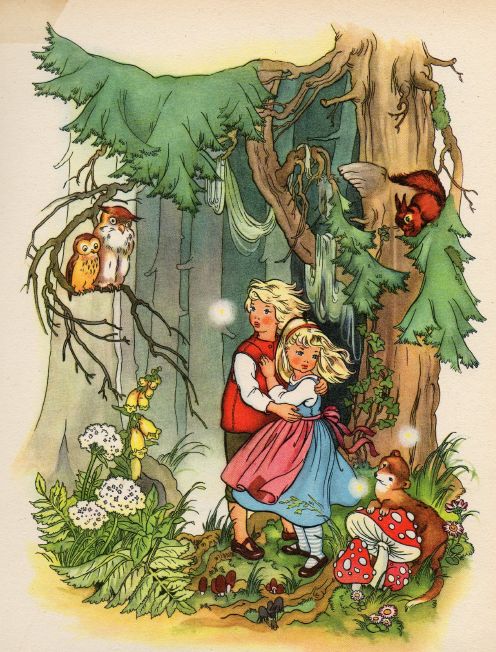
(Picture shows an illustration from Hansel and Gretel by Felicitas Kuhn-Klapschy)

Famous Name: Darcy

12 Wednesday Aug 2015

Posted by A.O. in Famous Names

≈ 3 Comments

Tags

animal names, aristocratic surnames, english names, famous namesakes, Gaelic names, Irish names, locational names, name history, name meaning, name popularity, names from songs, popular names, scientific names, surname names, UK name popularity, unisex names, US name popularity

colin

Famous Namesakes
This month it will be the 95th birthday of Darcy Dugan, who was born in Sydney on August 29 1920. Although Darcy was a career criminal who committed many armed hold-ups, he gained folk hero status as the most notorious prison escape artist in New South Wales.

Darcy spent 44 years in prison, with a death sentence commuted to life imprisonment, and made six escapes from custody in all. Legend has it that his trademark was to scrawl Gone to Gowings on his cell wall before each escape – Gowings was a popular department store, and in the slang of the time, to go to Gowings meant “to leave in haste”.

Dugan’s experience of prison brutality and police corruption led him to become a campaigner for prison reform: after being released he worked towards the rehabilitation of ex-prisoners. Darcy died in 1991, and his memoir Bloodhouse was published a few years ago, the manuscript only to be released once he and all his enemies were dead.

Another literary namesake is the author D’Arcy Niland, who wrote numerous short stories, and several successful novels, including The Shiralee, about a swagman on the road with his little girl, Buster. Niland knew this subject well, for he had wandered around rural New South Wales with his father during the Great Depression.

The writer was born Darcy Niland in 1917, and named after the Australian boxer Les Darcy, who had died the year Niland was born. D’Arcy Niland, a keen boxer himself, began researching a book about Les Darcy, which was eventually completed by his widow Ruth Park, and son-in-law Rafe Champion, both successful writers. As Darcy Dugan was only a few years younger than Niland, I suspect he was probably named after the boxer as well.

Name Information
Darcy can be a variant of D’Arcy, an English surname of French origin: it comes from the village of Arcy in Normandy, which means “bear town”. In Ireland, the name Darcy is usually from the same source, brought over by the Normans. Occasionally it is an anglicisation of the Gaelic name O’Dorchaidhe, meaning “son of the dark one”, although this is generally anglicised to Dorsey.

Darcy is an aristocratic name, with the Darcy family of Yorkshire holding noble titles since the 17th century, although the family had been prominent since the Middle Ages. The 4th and final Earl of Holdernesse was Robert Darcy, an 18th century diplomat: he was said to have been the last direct descendant of the Norman barons still in the Peerage.

His daughter Lady Amelia married “Mad Jack” Byron, the father of poet Lord Byron. Their daughter Augusta Leigh is supposed to have been in a relationship with her half-brother, and bore him a child called by her middle name Medora, after a character in one of Byron’s poems.

Many readers will be reminded of a purely fictional aristocrat: Mr Fitzwilliam Darcy from Jane Austen’s Pride and Prejudice. Tall, dark, handsome, rich, and aloof, he both attracts and irritates the spirited heroine Elizabeth Bennet, but she learns that Darcy can be generous and noble-spirited (and has a gorgeous estate).

Mr Darcy has entranced generations of women, been depicted on screen by actors such as Sir Laurence Olivier and Colin Firth, and inspired modern works of fiction, including Lost in Austen and Bridget Jones’ Diary. Scientists have even named a male sex pheromone Darcin in honour of the romantic hero (it attracts female mice, not witty damsels).

Jane Austen is believed to have named Fitzwilliam Darcy after both Robert Darcy and William Fitzwilliam, 4th Earl of Fitzwilliam, an important 18th century statesman and one of the richest people in Britain. Perhaps she saw her hero as continuing the line of Norman barons, while also claiming some distant share of royal blood through his Fitzwilliam ancestry.

She was presumably not to know the scandalous direction the Darcy connection would take: it may amuse some readers to know that when Medora Leigh was born a year after Pride and Prejudice was published, she was baptised Elizabeth. This is just possibly not a coincidence – Augusta Leigh was a Jane Austen fan, and Lord Byron owned a copy of Pride and Prejudice.

Darcy has been used as a personal name at least since the 17th century, and originated in Yorkshire, influenced by the aristocratic Darcy family. It was originally nearly always given to boys, but overall, Darcy has more often been a girls’ name.

Australia is apparently the only country where Darcy is primarily a male name. From the 1900s, it is listed on the charts as a unisex name, and first charted as a boys’ name in the 1950s at #319 – around the time Darcy Dugan became famous.

It went off the charts altogether in the 1960s and ’70s, returning in the 1980s at #434, when Darcy Dugan was released from prison, and D’Arcy Niland’s The Shiralee was made into a mini-series. It then climbed steeply, making the Top 100 for the first time in 1997 at #77 (not long after the Pride and Prejudice mini-series). It never got any higher than its initial position, remaining in the bottom quarter of the Top 100.

Last year it dropped off the national Top 100, and the Top 100 in Victoria, Queensland and the Australian Capital Territory. It is currently #97 in New South Wales and #87 in Tasmania. Darcy is around the 400s as a girls’ name, but if you included variants such as Darci and Darcie would be somewhat higher.

Darcy joined the UK Top 100 for the first time in 2013; it is #93 for girls and rising. In the UK, 28 baby boys were named Darcy as opposed to 588 baby girls. Darcey is even more popular for girls in the UK, at #84 and rising – the ballerina Darcey Bussell (born Marnie Crittle) has been a major influence on the name. Darcey is one of her middle names, while Bussell is the surname of her Australian adoptive stepfather – her biological father was the Australian designer John Crittle, descended from the first free settler to Australia. Spelling variants make this name even more common for girls in Britain.

In the US, Darcy has not charted since the mid 1990s. It peaked for girls at #349 and for boys at #869, both in 1968 (the song Darcy Farrow was released in 1967 by George Hamilton IV, about a girl named Darcy; the same year the sci-fi novel Too Many Magicians was published, featuring a detective named Lord Darcy, so it was on the radar for both genders). Last year in the US there were 183 baby girls named Darcy and 12 boys, but if you include spelling variants it is even more overwhelmingly a female name.

With such manly namesakes as Les Darcy, Darcy Dugan, and D’Arcy Niland, you can see how this unisex name became all-boy in Australia. But is it possible for it to follow international trends and become a girls’ name in the future? In a word, yes. It is currently falling in use for boys while climbing for girls, and has never peaked higher than #77. Ashley peaked at #60 for boys, and became far more common as a girls’ name, so it’s happened before. In the meantime, this is a name that seems just right for either a Mister Darcy or a Miss Darcy.

POLL RESULTS
Darcy received a creditable approval rating of 70%. People saw Darcy as cute and spunky (15%), cool and classy (12%), and romantic and dreamy (10%). However, 7% thought it seemed downmarket and lower class – as opposed to the 6% who saw it as yuppy and snobbish!

72% of people thought Darcy was better as a boy’s name, while 28% preferred it as a name for girls.

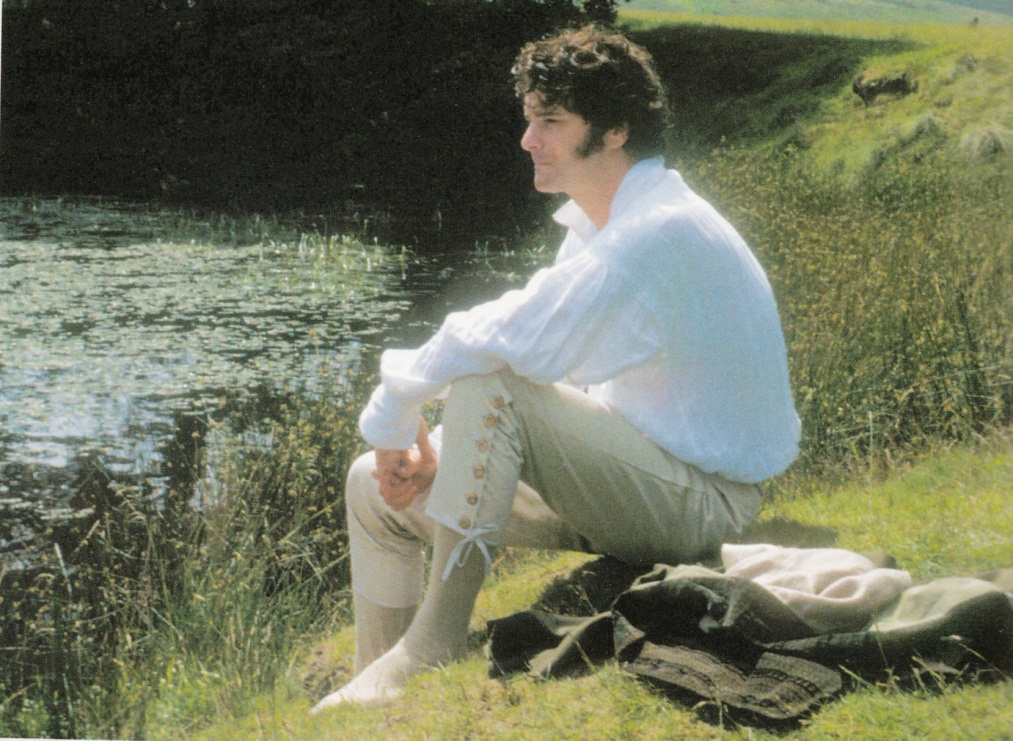
(Photo shows Colin Firth as Mr Darcy in the 1995 TV mini-series of Pride and Prejudice)

Famous Names: Bronwyn and Dolores

05 Wednesday Aug 2015

Posted by A.O. in Famous Names

≈ 5 Comments

Tags

controversial names, dated names, famous namesakes, fictional namesakes, Harry Potter names, Marian titles, modern names, name history, name meaning, name popularity, name trends, names from films, nicknames, Spanish names, UK name popularity, US name popularity, Welsh names

BronwynBishopDolores

Famous Namesake
Bronwyn Bishop resigned as Speaker of the House two days ago, after a furore over her use of travel allowances. Usually when someone is caught out abusing the system they quickly hand in their notice and quietly slip away before too many questions can be raised. However Ms Bishop refused to admit she had done anything wrong and resisted all pressure to resign for three weeks, which meant we had plenty of time to hear about her extravagant travel expenses.

They included a $6000 private flight from Sydney to Nowra for a Liberal party fundraiser, and more than $1000 on a limo so she could attend a theatre premiere in her home city. There was also the $600 return flight to attend colleague Sophie Mirabella’s wedding in Albury, and $130 000 spent on overseas travel to Europe and Asia, including $1000 a day on private limos.

The one that really left people gobsmacked was a $5000 chartered helicopter to take her from Melbourne to a Liberal party fundraiser in Geelong and back – a trip which takes only about an hour each way by road. Referred to as Choppergate, this was the scandal that brought Ms Bishop down. She wasn’t a first-timer at this: in the 1980s she once hired a helicopter at taxpayer’s expense to transport her from a fete to a dog show.

Ironically, back in the 1990s Bronwyn Bishop rose to fame as the face of public accountability when she was on the Senate estimates and joint public accounts committee. This sounds dull and usually was – an assessment of government departments and where they spent their appropriations. Under Bishop, committee meetings became virtual show trials where senior public servants were routinely interrogated, hectored, and taunted for their spending habits.

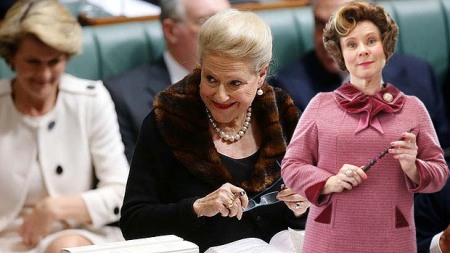
When Bronwyn Bishop was appointed Speaker in 2013, the Opposition described her as Dolores Umbridge, after the infamous headmistress from the Harry Potter series. This didn’t refer to a penchant for hair ribbons or interest in fluffy kittens, but indicated a fear she was to be a corrupt tool of government. This turned out to be not unfounded, for in her term of office Ms Bishop showed considerable bias, ejecting 393 Opposition members from the house, but only 7 of her own party.

Bronwyn Bishop was appointed to the role of Speaker by the Prime Minister, who describes her as a close personal friend, and himself as her ideological love child. This has turned out to be yet another damaging captain’s call, and no doubt the next Speaker will be the choice of his party.

It’s been a spectacular fall from grace for the longest-serving woman in Parliament, who once boasted she would be a future Prime Minister. Now the Prime Minister admits her parliamentary career is at an end.

BRONWYN
Bronwyn is a variant of Bronwen, a modern Welsh name meaning “white breasted, fair breasted”. The meaning is possibly less important than the fact it is very similar to the medieval Welsh name Branwen, meaning “fair raven”; in Welsh legend, Branwen was the sister of Brân the Blessed. Both Bronwen and Bronwyn have been used since the 19th century.

There is a popular notion that Bronwyn is the masculine form of Bronwen, since in Welsh the suffix -wyn is usually attached to masculine names. In fact, you can get into some quite nasty arguments about it on baby name forums, with angry people telling you that you have ignorantly given your daughter Bronwyn a specifically male name.

However if you look at the records, Bronwyn was always used as a girl’s name in Wales right from the start, with the -wyn spelling just a variant, not an indication of gender. Interestingly, the few examples of men named Bronwyn I found, dating from the 20th century, were all from outside Wales. I suspect their parents read up on the Welsh language and “corrected” Bronwyn from feminine to masculine, possibly being a bit too clever in the process and giving their sons a traditionally female name.

While Bronwen was originally by far the more common spelling in the 19th century, Bronwyn overtook it in the 20th. It was popularised by the 1941 film How Green Was My Valley, with Anna Lee in the role of Bronwyn, the narrator’s sister-in-law that he loves. The film is based on the 1939 novel by author Richard Llewellyn, and is set in a Welsh mining village. In the book the sister-in-law’s name is Bronwen, and I’m not sure why Hollywood decided to spell her name with a Y. Perhaps they thought it looked more feminine.

The name Bronwyn first joined the charts in the 1940s, coinciding with the release of the film; it made its debut at #143. (Bronwyn Bishop was born in 1942, the year after the film came out). By the 1950s it had joined the Top 100 and peaked in 1964 at #53. It left the Top 100 in 1980, and hasn’t charted since the late 2000s.

For some reason, Bronwyn has only been popular in Australia: it doesn’t seem to have ever been a Top 100 name in the UK, and has never even charted in the US. In 2013, there were 23 baby girls named Bronwyn in England/Wales, and last year there were 49 baby girls named Bronwyn in the US. Numbers of Bronwyns seem fairly stable in both countries.

Bronwen has never charted in Australia. In the UK in 2013 Bronwens and Bronwyns were roughly equal (21 babies named Bronwen), while in the US there were 6 Bronwens, a lot less popular than Bronwyn.

Although Bronwyn is now a dated name, the sound of it seems to have led to the popularity of similar-sounding Bronte, which joined the Top 100 just as Bronwyn slipped off the charts. Perhaps even the rise of Bonnie owe something to Bronwyn, since a common nickname for Bronwyn is Bronnie.

DOLORES
Dolores is a Spanish name meaning “pain, sorrow”. It is taken from one of the titles of the Virgin Mary, Nuestra Senora de Dolores, or Our Lady of Sorrows. The title refers to the Seven Sorrows of Mary, which are seven sad events in Mary’s life connected with her son Jesus. They begin with his Presentation in the Temple, and the prophecies made about him, and end with his body being placed in the tomb.

The feast day for Our Lady of Sorrows began in the Middle Ages, and was originally the third Sunday after Easter; today it is September 15. It’s possible that the name Dolores was first given to girls born around this feast day, although I can’t find any evidence for this.

The feast was rarely celebrated until the 16th century, and by the 17th century Dolores had become a common name in Spanish-speaking countries, although occasionally also used by Catholics in other countries. It came into common use in the English-speaking world in the 19th century, and was a particular favourite with Irish Catholics.

Dolores has never charted in Australia. In the United States, Dolores joined the Top 100 during the 1920s, the era when Mexican actress Dolores del Rio flourished as a Hollywood star. The first Latin American actress to become famous internationally, Dolores was exquisite, elegant, and gracious.

The name left the US Top 100 in the 1940s, after Dolores de Rio was accused of Communism during the McCarthy era, and continued her career in her homeland. The name left the charts in the 1980s, after Dolores del Rio’s death, but Dolores is still remembered as one of the classic Hollywood beauties, and a great lady.

During Ms del Rio’s heyday this name must have been exotic and glamorous, but now seems dated and frumpy. The evil Dolores Umbridge from Harry Potter has not helped its image: her name was chosen because it sounds similar to the English word dolorous, which can be understood as “causing pain or grief” (it has the same Latin source as the name Dolores). However, Lola is a popular pet form of Dolores, and I can see Lolita, Dolly and Lolly becoming fashionable in the future.

Two names connected with Hollywood beauties which have fallen from favour, but are probably more influential on current trends that we give them credit for. Which one will score higher, I wonder?

POLL RESULTS
Bronwyn received an approval rating of 44%. 39% of people weren’t keen on the name Bronwyn, while 18% loved it.

Dolores received an even lower approval rating of 28%. 40% of people weren’t keen on the name Dolores, while 10% loved it.

(Photo from the ABC website)

Waltzing With … Felix

02 Sunday Aug 2015

Posted by A.O. in Waltzing with ...

≈ 3 Comments

Tags

Biblical names, European name popularity, famous namesakes, fictional namesakes, Greek names, historical records, imperial titles, Latin names, middle names, mythological names, name history, name meaning, name popularity, names of cats, New Zealand name popularity, nicknames, papal names, patriotic names, popular names, retro names, saints names, UK name popularity, US name popularity

3092894-6735042798-Knml3

Famous Namesake
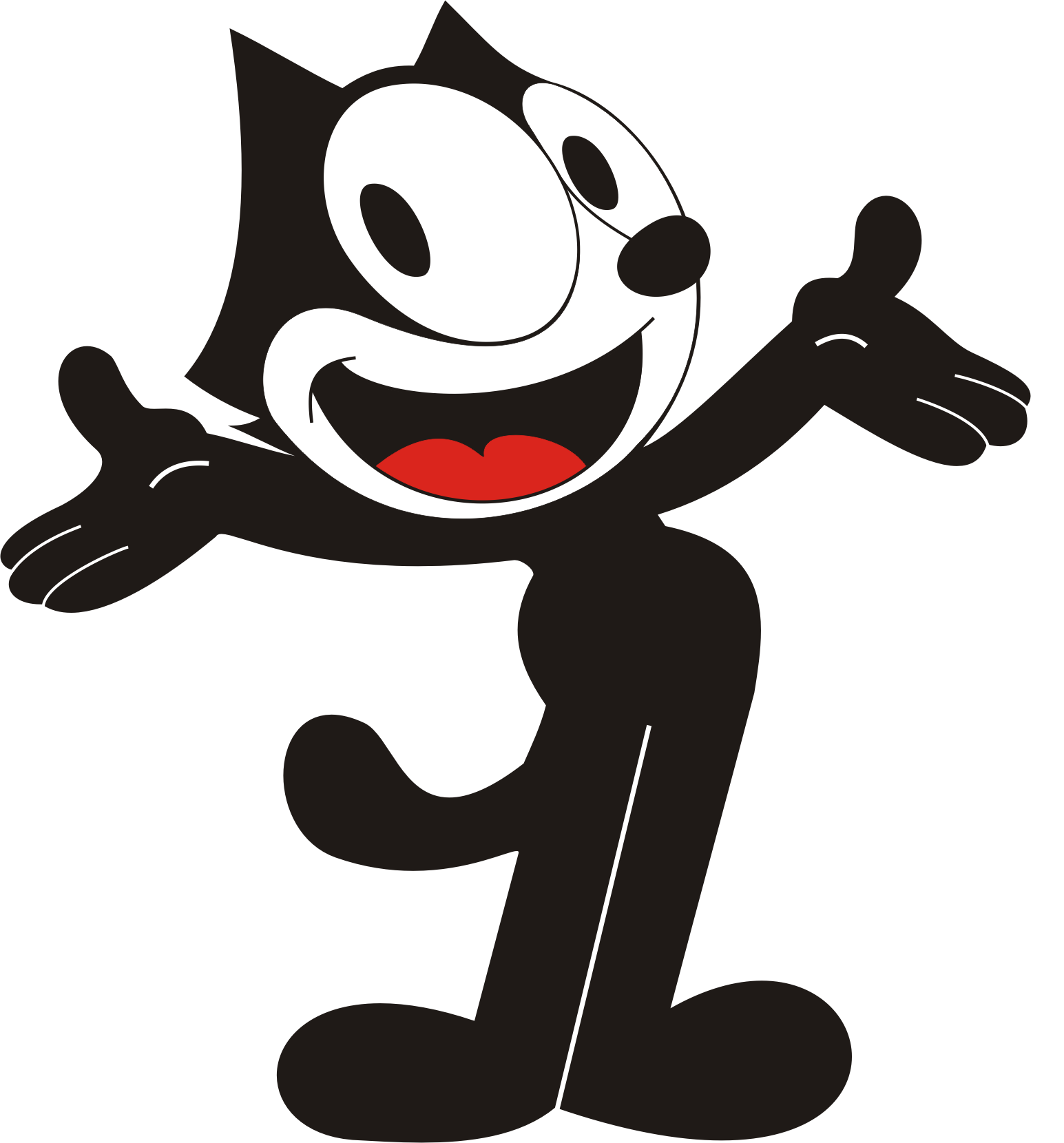
I think many Australians would readily associate this name with Felix the Cat, the silent film era cartoon. One of the most recognisable cartoon characters in film history, he was the first animated character to become popular enough to attract a cinema audience.

Felix the Cat was created by Sydney-born Pat O’Sullivan, who arrived in the United States in 1910 and began working as a cartoonist. By 1916, he had opened his own cartoon studio, and around 1917 he created Felix the Cat, inspired by a cat his wife Marjorie brought into the office. Under contract to provide one cartoon a month to cinemas, by 1921 Felix was in sixty percent of North American cinemas.

Pat O’Sullivan was fiercely protective of his creation, successfully gained royalties from pirated merchandise, and took action when Walt Disney made a Felix carbon-copy called Julius. Unfortunately for Felix, Disney then went on to create a certain Mickey Mouse, who starred in early talkie Steamboat Willie in 1928. This spelled the beginning of the end for Felix, and by 1931 it was obvious that Walt Disney was going to be the big success story of cartooning.

After Pat O’Sullivan’s death in 1933, his lead animator Otto Messmer took credit for the creation of Felix. Messmer’s claim is still accepted in the United States, even though O’Sullivan was acknowledged as Felix’s creator during his lifetime. Australian film curators have pointed out that it is O’Sullivan’s handwriting on the early Felix sketches, and that kittens in an early film are given Australian accents, saying ‘lo, Mum! ‘lo Ma!

The cartoon cat that Felix was based on was called Thomas or Tom (a fairly obviously cat-related name), but Pat O’Sullivan changed his name to Felix. Apparently this was after the Australian boxer Peter Felix, who was born in the West Indies, and won the heavyweight title in the 1890s – he often wore black and was a flashy dresser. Pat had seen Peter Felix in his last big fight in 1908, shortly before he left Australia. O’Sullivan had a strong interest in boxing, and when he first arrived in New York he himself boxed for prize money.

The name Felix was a very Australian choice, because in 1836 Scottish explorer Thomas Mitchell called the lush pastureland of western Victoria Australia Felix, meaning “happy Australia, fortunate Australia”. In 1845 English travel writer Richard Howitt’s lively Impressions of Australia Felix was published, and in 1849 the Australia Felix magazine was founded.

After the colony was named Victoria in 1850, the name Australia Felix gradually dropped out of use. However, 19th century Victorian politician Jonas Australia Felix Levien provides an example of it being used as a name, and he wasn’t born until the 1870s. (I have also found someone named Australia Felix Drake in historical records).

Despite all these Australian references, I can’t help wondering if Pat O’Sullivan was also thinking of Felis, the scientific name for the cat genus, from the Latin word feles, meaning “cat”.

Pat O’Sullivan gave Felix a lucky name, and the cat brought Pat luck and success. He did not have a very happy end to his life though. His marriage became increasingly strained (it probably got off to a rocky start, as they wed while he was on bail for raping a teenage girl; he was subsequently imprisoned for 9 months), and Marjorie fell to her death from their second floor apartment in 1932. O’Sullivan’s mental faculties deteriorated due to syphilis, and he died of alcoholism a year after his wife’s death.

Name Information
Felix is a Latin name meaning “lucky, fortunate”. It was first given as a nickname to the 1st century BC Roman general and statesman Lucius Cornelius Sulla, a free translation of the Greek nickname he acquired during his military campaigns – Epaphroditos, meaning “beloved of Aphrodite”.

Whether the goddess Aphrodite was taking care of him or not, Sulla was very successful, holding the position of consul twice, and being awarded the Grass Crown, the rarest and most prestigious Roman military honour, given only to those whose actions saved an entire legion or the whole army. Like Alexander the Great, he achieved many of his victories before his thirtieth birthday, and provided the model for later Roman leaders to gain power by force.

After him, the nickname became a common one for Roman leaders to take, and several emperors adopted it as a title. The Roman procurator Marcus Antonius Felix is mentioned in the New Testament, although not in a positive way – he imprisoned Saint Paul.

Felix was a favourite name amongst early Christians, as the name can imply being in the favour of God, or blessed by God. There are masses of saints named Felix, including quite a few martyrs, and three popes with the name. Saint Felix of Burgundy was sent as a missionary to East Anglia in the 7th century, and there are several churches dedicated to him in Yorkshire and East Anglia. The village of Felixkirk in Yorkshire is named after him, and so might be Felixstowe in Suffolk.

Although more common in Continental Europe, Felix has been in use as an English name since the Middle Ages, in honour of these various saints. It is particularly associated with East Anglia and south-eastern England in general, showing the legacy of Felix of Burgundy.

Felix was #172 in the 1900s, and left the charts in the 1920s (Felix the Cat didn’t do it any good). It returned in the 1980s at #396 and climbed steadily; it’s been on and off the Top 100 since 2011. Currently it is #89 nationally, #86 in New South Wales, #78 in Victoria, #36 in Tasmania, and #54 in the Australian Capital Territory. It was one of the fastest-rising names in Tasmania and Victoria last year, and one of the nationally fastest-rising names of 2013.

In the US, Felix is #267 and rising steeply, while the UK has a similar popularity to Australia, at #91 and rising. Felix is #66 in New Zealand and fairly stable – the highest popularity of any English-speaking country. Felix is well used in Western Europe and Scandinavia, and is most popular in Austria at #4.

Handsome, intelligent, and upbeat, Felix is a name with an irresistibly positive meaning and strong Australian associations. Once seen as rather hipster, this retro name is growing in popularity, and fittingly it’s rather a favourite in the state of Victoria.

POLL RESULT
Felix received an outstanding approval rating of 93%, making it the highest-rated boys name in the Waltzing With … category for 2015. 45% of people loved the name Felix, and only 3% hated it.

← Older posts
Newer posts →

Enter your email address to follow this blog

Categories

Archives

Recent Comments

A.O.'s avatarwaltzingmorethanmati… on Zarah Zaynab and Wolfgang…
Madelyn's avatarMadelyn on Zarah Zaynab and Wolfgang…
JD's avatardrperegrine on Can Phoebe Complete This …
A.O.'s avatarwaltzingmorethanmati… on Rua and Rhoa
redrover23's avatarredrover23 on Rua and Rhoa

Blogroll

  • Appellation Mountain
  • Baby Name Pondering
  • Babynamelover's Blog
  • British Baby Names
  • Clare's Name News
  • For Real Baby Names
  • Geek Baby Names
  • Name Candy
  • Nameberry
  • Nancy's Baby Names
  • Ren's Baby Name Blog
  • Sancta Nomina
  • Swistle: Baby Names
  • The Art of Naming
  • The Baby Name Wizard
  • The Beauty of Names
  • Tulip By Any Name

RSS Feed

  • RSS - Posts

RSS Posts

  • Celebrity Baby News: Melanie Vallejo and Matt Kingston
  • Names from the TV Show “Cleverman”
  • Can Phoebe Complete This Sibset?
  • Zarah Zaynab and Wolfgang Winter
  • Baby, How Did You Get That Name?
  • Celebrity Baby News: Media Babies
  • Celebrity Baby News: Adelaide Crows Babies
  • Celebrity Baby News: Chris and Rebecca Judd
  • Names at Work: Name News From the World of Business and Employment
  • Celebrity Baby News: Sporting Round Up

Currently Popular

  • Rare Boys Names From the 1950s
  • Celebrity Baby News: Toby Allen and Darren Weller
  • The Top 100 Names of the 1930s in New South Wales
  • Celebrity Baby News: Jason Morrison and Heidi Tiltins
  • The Top 100 Names of the 1920s in New South Wales

Tags

celebrity baby names celebrity sibsets english names famous namesakes fictional namesakes honouring locational names middle names name combinations name history name meaning name popularity name trends nicknames popular names saints names sibsets surname names twin sets unisex names

Blog at WordPress.com.

Privacy & Cookies: This site uses cookies. By continuing to use this website, you agree to their use.
To find out more, including how to control cookies, see here: Cookie Policy
  • Subscribe Subscribed
    • Waltzing More Than Matilda
    • Join 517 other subscribers
    • Already have a WordPress.com account? Log in now.
    • Waltzing More Than Matilda
    • Subscribe Subscribed
    • Sign up
    • Log in
    • Report this content
    • View site in Reader
    • Manage subscriptions
    • Collapse this bar
 

Loading Comments...