• About
  • Best Baby Names
  • Celebrity Baby Names
  • Celebrity Baby Names – Current
  • Celebrity Baby Names – Past
  • Featured Boys Names
  • Featured Girls Names
  • Featured Unisex Names
  • Links to Name Data
  • Waltzing on the Web

Waltzing More Than Matilda

~ Names with an Australian Bias of Democratic Temper

Waltzing More Than Matilda

Tag Archives: Greek names

Waltzing With … Paris

22 Sunday Nov 2015

Posted by A.O. in Waltzing with ...

≈ 1 Comment

Tags

Celtic names, english names, ethnonyms, famous namesakes, fictional namesakes, French names, Greek names, locational names, Luwian names, mythological names, name history, name meaning, names from television, saints names, Shakespearean names, surname names, UK name popularity, unisex names, US name popularity

_86800302_paris1

Like everyone else, I watched in horror and disbelief as the news unfolded in Paris last week. A place where I had briefly lived as a student, my heart went out to my Parisian friends, and to all those in this beautiful but troubled city.

Abby from Appellation Mountain wrote how it sometimes feels almost wrong to write about baby names when the world is torn by tragedy. How can I keep blogging about celebrity babies, birth announcements, birth data, and so on in the face of human suffering?

Not only would it fail to help anyone if I gave up blogging, I believe it is our duty to continue our normal routine as much as possible during dark times. This goes for my own private tragedies as well, having lost a loved one just days before the Paris attacks.

Babies will keep being born, and named, and I will keep writing about it as my small effort towards hope and healing. As memorials all over Paris say – la vie continue. Life goes on.

Paris – The Legend
Before Paris was the name of a city, it was the name of a person. In Greek legend, Paris was a prince of Troy, infamous for starting the Trojan War by abducting the beautiful Helen away from the king of Sparta. There was plenty of warning, because before Paris was born, his mother was told in a dream that he would cause the downfall of Troy.

He was supposed to be killed to avoid this fate, but the king and queen were unable to do it, and handed the job over to their cowherd. Rather like the plot of Snow White, the cowherd reared him as his own, and Paris became an organiser of bull-fights (bulls fighting other bulls, not people).

He impressed the gods with his sporting honesty enough that he was asked to judge a beauty contest between Hera, Athena, and Aphrodite. Paris chose Aphrodite, and his prize was the most beautiful woman in the world, Helen. Aphrodite neglected to mention that Helen was already married, and that’s when all the trouble began.

The meaning of Paris‘ name isn’t known. It’s thought to be a Greek rendition of the Luwian name Pari-zitis, which has been found as the name of a scribe. The meaning of the first part isn’t understood, but the –zitis part means “man”.

Legend gives Paris the nickname of Alexander, meaning “defender of men” – he gained this while still a child, by saving his foster-father’s cattle from thieves. It’s tempting to wonder if Pari-zitis has a similar meaning to Alexander, such as “protecting man” or “guardian man”, and the Greek authors looked for a name which was a close equivalent.

The Greeks explained Paris’ name as being from the backpack that the cowherd brought him home in – the Greek word for the bag is pḗra. However, this is just folk etymology.

The Paris of legend is described as intelligent and extremely handsome, but he isn’t a very attractive character. He seduced another man’s wife, brought about the destruction of his homeland, and wasn’t a gallant or skilful warrior. Mind you, he was tricked by Aphrodite, and as he was doomed to die by his city you can’t blame him for his lack of patriotism, while being brought up by a cowherd would hardly equip him with courtly manners or battle skills. Nonetheless, he’s generally thought of as rather weak and selfish.

This did not stop people from naming their sons Paris, and there is even a Saint Paris listed as a 4th century bishop of Teano, near Naples. According to legend, he was born in Greece and performed that well known saintly show-stopper of killing a dragon. Another famous Paris was a 1st century actor in Rome who became enormously popular and influential. Unfortunately he followed the legendary Paris too closely by having an affair with the emperor’s wife: he was murdered, and the emperor killed anyone who mourned his death, and even someone who looked like Paris.

Paris is a Shakespearean name, as Count Paris is Juliet’s unwanted fiance in Romeo and Juliet. Handsome, wealthy, and well-connected, Paris is an eminently suitable husband, and little wonder Juliet’s parents are thrilled at this opportunity. Of course any audience member worth their salt is barracking for Juliet’s choice of romantic Romeo, and almost no one sheds a tear for poor Paris at the end.

Paris – The City
The place where Paris is today was settled by a Gaulish people called the Parisii – it is their tribe that the city is named for. The city’s original Latin name was Lutetia Parisiorum, which probably means “swamp or marshland of the Parisii”. The tribal name Parisii could be from the ancient Celtic word par, meaning “boat” – as the Parisii lived on the River Seine, it would make sense for them to be skilled in using boats. Other ideas are that their name means “commanders”, “”fighters”, “workers, artisans”, or “cauldron, kettle”. In other words, nobody really knows.

Interestingly, there was a British tribe with the similar name of the Parisi in Yorkshire. It is unclear whether there was any connection with the Parisii in Gaul, but there is just enough vague evidence to support it that it can’t be ruled out.

Situated between trade routes on land and water, the Parisii had a thriving town on one of the islands of the Seine. After being conquered by the Romans, Lutetia Parisiorum became a prosperous Roman city with a military camp on the island, but the main part of the city where the Left Bank is now. The city became known as Parisius, and in French, Paris.

Paris was claimed as their centre of operations by both the Frankish kings, and the first king of France (the islands were good for defence), and by the Middle Ages Paris was not only the capital of France, but the largest city in the western world. Now we know it as the City of Light, the City of Love; famous for art, fashion and food, its monuments become icons. A cultural centre which remains, even after tragedy, a beacon of light.

The city of Paris provided another inspiration for the name. It is generally felt that when Paris is a boy’s name it is after the legendary character, while girls called Paris are named after the city connected with romance and fashion. However, in practice it is not possible to be so cut-and-dried (the surname Paris makes it even more complicated).

Girls have been named Paris since at least the 18th century, and although Paris was already a fashion capital by then, the French Revolution may have been an inspiration for American parents in particular.

In the US, Paris has charted as a boys name on the Top 1000 intermittently since the late 19th century. Its longest continuous stretch was from 1979 to 2000, and its highest peak in the 20th century was in 1991 at #592. It hasn’t charted as a boys name this century, but last year 96 boys were named Paris in the US, with numbers continuing to fall.

Paris has been on the US Top 1000 as a girls name since 1985. It peaked in 2004 at #157 when socialite Paris Hilton was in the reality TV show, The Simple Life. Paris Hilton’s own name was just ahead of the curve, as she was born in 1981 – although the name Paris had been gradually rising for girls for some time. Incidentally, Paris Hilton was once engaged to a man named Paris – Greek shipping heir Paris Latsis. Currently the name Paris is #269 and relatively stable.

In the UK, Paris has charted for both sexes since the mid-1990s, peaking for boys and girls in 2004 during The Simple Life. At that point, it was #119 for girls, and #717 for boys. Currently it is #463 for girls, while last year just 3 baby boys in the UK were given the name Paris.

Paris has been a Top 100 name for girls in Australia and New Zealand, the only countries where the name has ever been popular. The name was on the Top 100 from 2002 to 2004, peaking in 2003 at #58 when The Simple Life was first on air. In New Zealand it peaked in that fateful year of 2004 at #35, making it the most Paris-loving place on earth. Currently Paris is around the 500s for girls in Australia, while it doesn’t chart for boys.

It is a strange fact that tragedy can help inspire baby names – I reflect on this knowing that the name Boston became more popular outside the US after the bombings at the Boston Marathon. Could an even larger set of terror attacks in another beloved city cause an uptick in the number of babies named Paris?

POLL RESULTS
As a boy’s name, Paris received an approval rating of 52%. 32% of people disliked it, and 11% loved it.

It did slightly better as a girl’s name, receiving an approval rating of 55%. 27% of people thought it was okay, while only 6% loved it.

(Photo of Paris street memorial from the BBC)

Fresh Names For Boys

01 Sunday Nov 2015

Posted by A.O. in Name Themes and Lists

≈ 5 Comments

Tags

American names, angel names, Aramaic names, Biblical names, celebrity baby names, english names, European name popularity, famous namesakes, fictional namesakes, Greek names, hebrew names, imperial names, Latin names, literary names, locational names, modern names, mythological names, name history, name meaning, name popularity, name trends, names from films, names from television, names of bands, New Zealand name popularity, nicknames, papal names, Puritan names, Romani names, saints names, Spanish names, surname names, UK name popularity, US name popularity

DjangoUnchained_poster2

An audit of Featured Names on the site has revealed there are less boys names than girls, so I’m going to cover two lots of boys names this month to give them a chance to catch up. These names seem “fresh” because they don’t have a history of charting in Australia, aren’t popular, and are rising in other countries. They are ones to keep an eye on!

Arlo
May be a variant of the surname Arlow, a corruption of Harlow. Arlo is the Anglicised form of Aherlow, and the Glen of Aherlow is a picture-postcard valley in Ireland. Its name comes from the Irish eathralach, meaning “between two highlands”, as the valley is nestled between major peaks in the Galtee Mountains. The name became part of English literature when Edmund Spenser used Arlo Hill as a place name in his poem The Faerie Queene; Spenser’s estate in Ireland was near the Glen of Aherlow. Arlo has been used as a boy’s name since the 18th century, and originated in the United States: I think probably from Arlow, used at the same time, and in a couple of records the person is listed as both Arlow and Arlo. One of the its most famous namesakes is folk singer Arlo Guthrie, although you may also think of street skater Arlo Eisenberg, and agent Arlo Glass from TV series 24. Around the 200s in Australia, Arlo is climbing steeply in both the US and UK, and is already popular in New Zealand. Arlo fits in with the trends for an AR sound and O-ending, and being chosen for their sons by both Toni Colette and Kasey Chambers can only have helped.

Bodhi
In Buddhism, bodhi is the deep understanding gained about the true nature of reality; this understanding is part of the Buddha’s liberation on the path to Nirvana. It literally means “awakened” in Sanskrit and Pali, but is often translated as “enlightenment”. The great spiritual teacher Gautama Buddha is said to have attained bodhi while sitting under a sacred fig tree in India, now known as the Bodhi Tree, and Bodhi Day is celebrated by Buddhists on December 8. Bodhi has been used as a personal name since the 20th century, with a surge of interest in the 1970s, when all things Eastern became trendy. The name received a notable outing in the 1991 cult film Point Break, with Patrick Swayve as a rebel surf leader named Bodhi. The film ends at Bells Beach in Victoria, which may help explain why Bodhi is such a favourite in Australia, and around the 200s. It is much rarer in other countries, but climbing steeply in both the UK and US. Apart from the spiritual meaning, Bodhi fits in with names like Beau and Brody. Chosen for his son by actor Cameron Daddo, this is a relaxed surf-friendly name.

Casper
A form of the name Jasper, which has a huge number of European spelling variants. It’s been in use since the Middle Ages, when it was most common in Central Europe. Today Casper is a popular name in The Netherlands and Scandinavia, and rising briskly in the UK, where it is in the 200s. It is around the 400s here, and would make a great alternative to popular Jasper – especially as Casper the Friendly Ghost is no longer much of an issue.

Djanjo
Nickname of the great French jazz guitarist, born Jean Reinhardt. Reinhardt was of Romani descent, and his nickname means “I awake” in the Romani language”: it is pronounced JANG-go. There was a revival of interest in his “gypsy jazz”sound in the 1960s, and Django’s musical influence can barely be overstated; he has been an inspiration to generations of guitarists. His music has been used in movie soundtracks, and Djanjo himself is a character in Martin Scorcese’s Hugo, while being referenced in other films. Djanjo is the main character in a popular series of spaghetti Westerns, and got a reboot in Quentin Tarantino’s Django Unchained, with Jamie Foxx as freed slave Djanjo Freeman. Django isn’t common in any country, but has been rising in the UK since Tarantino’s 2012 film. Cool and on trend, this is a musical name with a cowboy vibe.

Ezra
In the Old Testament, Ezra was a scribe and priest, and according to Jewish tradition is credited with introducing several of the main aspects of Jewish law and teachings. This makes him a greatly respected figure in Judaism, and also in Islam and Christianity. His name is translated as “help”, although it may be a contraction of the Hebrew name Azaryahu, meaning “God helps”. Ezra has been in use as an English name since since at least the 16th century, and has been more common in the US; a famous namesake is the American poet Ezra Pound, and it’s referenced in the name of rock band Better Than Ezra. Ezra is around the 300s here, but is rising steeply in the US and UK; it is only just outside the US Top 100. This is becoming an increasingly hip choice.

Micah
In the Old Testament, Micah was a prophet of Israel. His name looks a lot like Michael, and has a similar meaning: “who is like Yahweh?”, while Michael means “who is like God?” (in both cases, it it is rhetorical, as nobody is God’s equal). Micah’s prophecies became especially relevant to Christians, as one was interpreted as meaning the Messiah would be born in Bethlehem, and Jesus referred to the Book of Micah several times in his teachings. Because of this, the prophet is regarded as a saint, and the name Micah has been used since the 17th century, introduced by the Puritans. Micah is around the 100s here, and is even more popular in the US, although not so common in the UK. The name has become a favourite in horror and fantasy works, and will appeal to people who like Michael, but want something with a more contemporary feel.

Rafael
From the Hebrew name Rafa’el meaning “God heals”; the name is often spelled Raphael, with Rafael most common in Spanish-speaking countries. In Jewish tradition, Raphael is one of the seven archangels, and mentioned in the Old Testament. He is an angel of healing and protection from demons, and venerated in Christianity and Islam as well as Judaism. Regarded as a saint in Catholicism, St Raphael is the patron of pilgrims and travellers, as well as of medical workers. The name Rafael has been in use since the Middle Ages and was common in Spain. A well-known contemporary namesake is Spanish tennis champion Rafael Nadal. Rafael is around the 100s here, and in the 200s in the US and UK. It is a popular name in Europe, especially in Portugal, and is rising in France and Switzerland. Romantic and with strong, positive associations, this comes with the obvious nicknames Raf and Rafe.

Roman
Derived from the Latin name Romanus, which simply means “a Roman” to signify a man from Rome or a citizen of the Roman Empire. There are a number of saints named Romanus, including an early martyr, as well as a pope and several Byzantine emperors. The name is particularly associated with Russia and Eastern Europe, as there were quite a few Russian, Romanian, and Bulgarian leaders named Roman. However use of the name was internationally quite widespread, and can be found in Spain, Germany, and England from early on. There are two famous film directors with this name: Roman Polanski and Roman Coppola, the son of Francis Ford Coppola. Roman is around the 200s here, and is rising very steeply in the US and UK, only just outside the Top 100 in both countries. Rom- names are on trend, and this is a stylish multicultural choice which was selected for her middle son by Cate Blanchett.

Silas
In the New Testament, Silas was an early Christian leader chosen to be a companion of St Paul. The pair were briefly imprisoned together, until a convenient earthquake broke their chains and burst the prison doors open. Paul refers to him by the Roman name Silvanus, which is from the Latin silva meaning “forest”; in Roman mythology, Silvanus was the god of forests. This would identify Silas as the same person as Saint Silvanus, who was one of the disciples of Jesus; tradition says he became a bishop and died a martyr. If so, Silas could be a nickname, or understood as a Greek form of Silvanus. However, Silas is a Greek form of the Hebrew name Saul, meaning “asked for, prayed for”, which was also Saint Paul’s birth name. Whether Silas was two people or one is a question for the scholars, but Silas became an English name by at least the 16th century because of this character. Here the name Silas is around the 500s, but it is far more popular in the US, and rising in the UK. In popular culture, it has become associated with villains – the creepy albino monk from The Da Vinci Code, and serial killer Silas Blisset in British soap Hollyoaks. The wicked factor has actually boosted the name’s popularity.

Thaddeus
In the New Testament, the Apostle Jude is usually identified as being the same person as the Apostle Judas Thaddeus, called so to differentiate him from Judas Iscariot. Thaddeus (said THAD-ee-us) seems to be derived from tadda, the Aramaic word for “breast, heart”, perhaps an affectionate nickname in the same way we might say dear heart or bosom buddy. It could also mean “hearty”, to suggest someone strong-hearted or warm-hearted. Perhaps the closest thing in English is the familiar piratical address my hearty, which has connotations of strength and courage, but also loyalty and camaraderie. Sometimes the name is given as Lebbeus, which could come from leb, the Hebrew word for “heart”, and thus be a translation of Thaddeus. Another theory is that it is from Todos, an Aramaic form of the name Theodore, although this fails to explain why the Bible also translates it as Lebbeus. It is unclear whether Judas Thaddeus is the same person as St Thaddeus, said to be one of the disciples of Jesus who was a missionary in Syria. In use as an English name since the 17th century, and given impetus by American Puritans, Thaddeus has a strong history in the United States. It is in the US Top 1000 and rising, and has been rising steeply in the UK since 2013. It’s very rare in Australia, but this is a handsome traditional name with a great meaning – Thad, Tad, Ted, and Teddy are obvious nicknames.

POLL RESULTS
People’s favourite names were Arlo, Rafael and Casper, and their least favourite were Bodhi, Thaddeus and Djanjo.

(Picture shows a poster for the movie Django Unchained, with helpful pronunciation guide)

Famous Name: Eleanor

16 Wednesday Sep 2015

Posted by A.O. in Famous Names

≈ 3 Comments

Tags

aristocratic names, British Baby Names, classic names, created names, Eleanor Nickerson, famous namesakes, flower names, French names, germanic names, Greek names, honouring, name history, name meaning, name popularity, popular names, Provencal names, royal names, Sanskrit names, Sindarin names, UK name popularity, US name popularity

dsc04745

Famous Namesakes
Last month was the 114th birthday of author Eleanor Dark, who was born August 26 1901. Her most famous novel is The Timeless Land, published in 1941, the first in a trilogy about early European settlement. Sympathetic towards Aboriginal people and meticulously researched, the book was part of the high school curriculum for many years and is now considered an Australian classic. It even inspired the famous historian Manning Clark. It was turned into a successful TV series in 1980.

When Eleanor married Eric Dark, a widowed doctor, she asked for three things: an equal partnership, a child, and the freedom to write. Eleanor got a studio in the garden where she could write in peace, a maid to help with the housework, and emotional support and encouragement for her writing. Her other wish was granted when she and Eric had a son named Michael; they already had a son named John, from Eric’s first marriage.

Thoughtful and generous, the Darks shared progressive ideals. An active member of the Labor left, Eric wrote political books and pamphlets which attracted attention from the anti-communist Menzies government and ASIO, and the entire Dark family was probably under surveillance. Although she considered herself apolitical, Eleanor’s socialist and feminist views permeate her work, and she was a scathing critic of middle-class suburbia.

The Darks moved to Katoomba in the Blue Mountains in 1923, and enjoyed bush walking, camping, climbing, and exploring. Eleanor was one of the first gardeners to grow Australian native plants as well as exotics. In her novels, the Australian landscape is not just a backdrop but almost another character. She believed that as people change the environment, the environment also changes us, and that we are part of the country in both mind and body. In her books are some of the most beautiful and loving evocations of the bush; its scents and sounds, its silence and spirit.

After Eleanor died in 1985, her son Michael gave the Dark family home in Katoomba to the Eleanor Dark Foundation. Named Varuna after the Hindu god of the ocean, the night sky, and the underworld, the house sits on a ridge overlooking the valleys of the Blue Mountains. Varuna is now a residential retreat, where authors can find a room of their own, and uninterrupted writing time; Eleanor’s studio is still in use. It was a wonderful gift for Eleanor as an author, and now for many others too.

Name Information
Eleanor is the modern form of Éléonore, the Old French form of the Provençal name Aliénor. Eleanor of Aquitaine (born around 1122) is often identified as the first bearer of the name Aliénor, and a popular story is that her name came about because she was christened Aénor, and as her mother’s name was also Aénor, she was known as alia Aénor, meaning “the other Aénor”. This suggestion was labelled “ridiculous” by a French scholar in the 17th century, but is still going strong.

There were earlier women with similar names – Eleanor of Aquitaine’s own great-grandmother is listed as Aleanor. However, the records for these early Eleanors post-date Eleanor of Aquitaine, so their names could have been conveniently translated into Eleanor (or Alienor or Aleanor) by later writers.

Eleanor of Aquitaine’s great-grandmother’s name seems to have been more like Adenorde, sometimes written as Ainor. It would be a reasonable assumption that Aénor was a variant of this name, and Aliénor was too. The origin of Adenorde is obscure, but looks to be Germanic.

Eleanor “Elea” Nickerson from British Baby Names suggests it could be from the Germanic name element adal, meaning “noble”, or from ald, meaning “old, mature, grown up”. The norde looks like the Germanic for “north. Another of Eleanor Nickerson’s suggestions is that it could be related to those Germanic names starting with aud-, meaning “wealth, riches”.

Another popular theory is that Eleanor is a Provençal form of Helen, Ellen, or Elena – also of ancient and obscure origin. Helen is usually said to be from the Greek for “light, bright”, although it may be ultimately from Sanskrit and mean “running, swift” (quite suitable for a runaway bride like Helen of Troy!). The reason for the Eleanor = Helen idea is probably because Eleanor of Aquitaine had her name Latinised as Helienordis. At the very least it is possible that the name Eleanor was influenced by the various Helen names, becoming fused (or confused?).

At least everyone agrees that Eleanor of Aquitaine popularised the name Eleanor. One of the wealthiest and most influential women of the Middle Ages, Eleanor was Duchess of Aquitaine in her own right, making her such an eligible bride that she was snapped up by both Louis VII and Henry II, so she became a queen of France, then of England. She was the mother of Richard the Lionheart and King John, and one of her daughters was named after her – Eleanor who became queen of Castile, and was a similarly powerful figure.

Eleanor of Aquitaine was clever, charming, sophisticated, and high-spirited, and contemporary sources all agree that she was very beautiful. She survived into her eighties, and outlived both husbands and most of her children. She was perhaps more woman than most medieval men could handle, and she was let go by her first husband, and imprisoned for years by her second.

The name Eleanor became common amongst both French and English royalty and nobility. King John named one of his daughters Eleanor after his mother, and French noblewoman Eleanor of Provence married Henry III, becoming the mother of Edward I. Edward married Eleanor of Castile, who was named after her great-grandmother, the daughter of Eleanor of Aquitaine. In turn, Edward I named his eldest daughter Eleanor, and her daughter was given the name Eleanor; Edward II also named a daughter Eleanor after Eleanor of Aquitaine.

Eleanor is a classic name which has never left the charts. It was #98 in the 1900s, and reached its lowest point in the 1960s at #454. It climbed steadily until the 1990s, after which it levelled off for many years, remaining stable in the 100s. Eleanor joined the Top 100 for the first time since the 1900s last year, climbing 31 places to reach #84, the second-highest rise in rank after Ariana. It is #82 in New South Wales, where it was one of the fastest-rising names for the year, #77 in Queensland, where it was one of the fastest-rising names, #54 in Tasmania, and #45 in the Australian Capital Territory.

Eleanor also joined the US Top 100 last year, and is #78 there. It was popular in the US from the end of the 19th century until World War II, and peaked in 1920 at #25. Long-serving First Lady Eleanor Roosevelt gave it a lot of publicity; her first name was Anna, but she went by her middle name. Eleanor was popular in the UK from the middle of the 19th century until the 1930s, and returned to the Top 100 in the 1980s. It peaked at #18 in 1999, and is currently #60 in England/Wales.

Up until this year, I would have said that Eleanor was a perfect, classic, underused choice. It was too perfect and classic to remain underused forever, as it has now become a Top 100 name. You can understand why, as it has both strength and elegance, a marvellous royal namesake, and the option of nicknames such as Elle, Ella, Ellie, Elea, Nell, Nellie, and Nora.

Spelling variants such as Elinor and Ellanore are not unusual; the name Elanor is from The Lord of the Rings and means “sun star” in the invented Sindarin language – in Tolkien’s universe, an elanor was a small yellow pimpernel-like flower, and the name was given to Sam Gamgee’s golden-haired daughter. In Australia, Eleanor is usually said EL-uh-nawr, similar to the American pronunciation, although you will sometimes hear a British pronunciation here, which is more like EL-en-uh.

POLL RESULTS
Eleanor received an outstanding approval rating of 91%, making it the highest-rated Famous Name for girls in 2015, and the highest-rated Famous Name overall. People saw the name Eleanor as elegant and refined (28%), dignified and intellectual (23%), and beautiful or attractive (17%). However 5% thought it was too popular. Only one person thought Eleanor seemed snobbish or elitist, and likewise just one was bothered by the number of spellings and pronunciations.

(Photo of the Blue Mountains near Varuna from Hook to Book by Christine Bell; Christine gives a wonderful insight into what life is like as a writer at Varuna).

German Names For Boys

30 Sunday Aug 2015

Posted by A.O. in Name Themes and Lists

≈ 3 Comments

Tags

Ancient Germanic names, animal names, aristocratic names, Biblical names, birth notices, European name popularity, famous namesakes, fictional namesakes, German name popularity, German names, Greek names, hebrew names, imperial names, Latin names, name history, name meaning, name popularity, names from songs, nature names, rare names, Roman names, royal names, saints names

Wolf_Howling

Andreas
Latinised form of the Greek form of Andrew, meaning “manly”. Saint Andreas of Alexandria was an early martyr. The name has been used in Germany since the Middle Ages; a famous medieval namesake is Andreas Osiander, a Lutheran mystic and theologian, while a contemporary one is the German opera singer Andreas Scholl. The name Andreas was used in Britain too, although probably the name was still pronounced the same way as Andrew in everyday life. There is an Old English poem called Andreas about Saint Andrew, which turns him into an Old English warrior, battling the forces of evil. Another English literary connection is the 12th century author Andreas Capellanus (Andrew the Chaplain), who wrote a satirical treatise on the courtly love. Just outside the Top 100 in Germany, Andreas is a popular name in Austria and Scandinavia. It’s not often seen here, perhaps because of fears it will be be confused with its feminine counterpart, Andrea. Pronounced something like ahn-DRAY-ahs in Germany, this German classic seems like a fresh update to flagging Andrew, and has recently had some publicity from the disaster movie San Andreas.

Anton
The equivalent of Antony, used throughout Europe since the Middle Ages, and a traditional name amongst European nobility and royalty. Famous namesakes include the Austrian composer Anton Bruckner, and Russian writer Anton Chekhov. A famous Australian namesake is SBS journalist and anchorman Anton Enus, who was born in South Africa. Antons in fiction tend to be baddies, which isn’t a help to the name’s image. One exception is the American children’s book Summer of My German Soldier, where Anton is an escaped German POW who befriends a little Jewish girl. Anton is a popular name in Germany, and around the 400s here. A suave multicultural choice – and even the many villainous Antons in fiction give it a bit of an edge.

Florian
From from the Roman name Florianus, derived from Florus, which is from the Latin for “flower”. Florianus, or Florian, was one of the Roman emperors, and the noble von Blumenthal family from Brandenburg claimed descent from him via an imaginative legend whereby his sons fled to northern Germany, and taught everyone how to make wine. Saint Florian was a Roman soldier whose duties included organising fire brigades; he was martyred by drowning in a river which is now in Austria, and he is a favourite saint in central Europe. Saint Florian is the patron of Poland, and the city of Linz in Austria, and in Austria and Germany, Florian is used as a call sign for fire engines and stations. With such imperial, noble, saintly, patriotic, and rather butch firefighting associations, it’s little wonder Florian is a common name in Germany, and still on the Top 100. It’s rare here, but the rise of Florence in some ways gives it more familiarity, and I have seen an Australian baby named Florian. It seems hip and elegant.

Johannes
Latin form of Ioannes, the Greek form of the Hebrew name Yochanan, which in English is John. Famous German namesakes are seriously heavy duty achievers. Johannes Gutenberg, who introduced the printing press to 15th century Europe – it began a cultural revolution which changed the world and is largely responsible for most of us being able to read. Astronomer Johannes Kepler, a key figure in the 17th century scientific revolution whose works provided the foundations for the theory of gravitational force. Johannes Brahms, one of the great composers of the 19th century, honoured in the German hall of fame. A famous Australian namesakes is former Queensland premier Sir Johannes “Joh” Bjelke-Petersen, husband to Florence, and a force in conservative politics; he was of Danish descent. Popular in central Europe and Scandinavia, Johannes is #56 in Germany. It doesn’t chart here, but I do see it sometimes in birth notices. In Germany it’s pronounced yo-HAHN-nes, while here it may be pronounced in order to give the nickname Joe. A strong, handsome, intelligent classic.

Justus
Latin name meaning “just”. A Christian named Jesus Justus is mentioned by St Paul in the New Testament, while Joseph Justus is a disciple of Christ considered as a possibility to become an Apostle to replace Judas – he is venerated as St Justus of Eleutheropolis. There are quite a number of saints named Justus, including a Pope and an Archbishop of Canterbury. One of the most influential is a legendary one named Justus of Beauvais, who was beheaded as a child and went for a stroll holding his head: one of those fashionable saintly miracles which sent you straight to the top of the medieval pops for some reason. A famous German namesake is Justus Perthes, an 18th century publisher who founded the Almanach de Gotha, a directory of European royalty and nobility. An Australian namesake is Justus Jorgensen, who founded an artist’s colony in Melbourne called Montsalvat which is still open. Justus is #99 in Germany, and is on the US Top 1000. It seems like a solid alternative to the English virtue name Justice, although pronounced quite differently in Germany.

Karsten
German form of Christian. It is more common as a surname than a first name in Germany, and is rare here as well, but I do see it occasionally in birth notices, and one of the athletes we sent to the 2012 Olympics was named Karsten. That makes it seem unusual but normal, and it’s very much like familiar names such as Carson and Carter.

Klaus
Short form of Nikolaus, a German form of Nicholas. The patron saint of Switzerland is Saint Nicholas of Flüe, affectionately known as Brother Klaus. There are many famous German people with this name, including Klaus Neumann, Luftwaffe flying ace, artist and musician Klaus Voormann, who designed album covers for bands like The Beatles, Klaus Badelt, who composed the film score to the 2003 version of Ned Kelly, singer Klaus Meine from The Scorpions, and actor Klaus Kinski, father to Natassja Kinski. There are famous fictional characters with this name too, such as teen bookworm Klaus Bauldelaire from A Series of Unfortunate Events, vampire-werewolf hybrid Klaus Mikaelson from The Vampire Diaries, and Olympian athlete-cum-goldfish Klaus Heissler from American Dad. Slightly dated in Germany, this charming name is very rare in English-speaking countries, probably because it reminds people of Santa Claus. Klaus is said to rhyme with house though.

Otto
Modern form of the ancient Germanic name Audo or Odo, originally short forms of names beginning with aud-, meaning “wealth, riches, fortune”. A name in common use by German royalty and nobility, there have been four Holy Roman Emperors named Otto. Otto I, or Otto the Great, was the son of Saint Matilda, and married an English princess. Otto IV was the son of Matilda of England, the daughter of Henry II. Two famous writers had dads named Otto: Anne Frank and Sylvia Plath. The name might also remind you of statesman Otto von Bismarck or film director Otto Preminger. In fiction, Otto has often been used as a comedic or joke name, but “Big Otto” Delaney from Sons of Anarchy is an example of it being both serious and powerful. Currently #320 in Germany, Otto is popular in Scandinavia and gaining popularity in both the US and UK. It’s around the 200s here, and seems hip and rather quirky.

Rudolf
Modern form of the ancient Germanic name Hrodulf, translated as “famous wolf”. It was commonly used by German royalty and nobility, and Rudolf II was a Holy Roman Emperor. Although not generally considered a successful ruler, his patronage of the arts made him a key player in the Renaissance, while his interest in the occult and alchemy helped bring about the scientific revolution – there would be no chemists without alchemists! A famous namesake of modern times is the great ballet dancer Rudolf Nureyev, who partnered Margot Fonteyn. Another is the Austrian philosopher Rudolf Steiner, who sought to find a system of thought which would be both scientific and spiritual in nature. Anthony Hope’s novel, The Prisoner of Zenda, is about two men named Rudolf – one a European king, the other his distant cousin visiting from England who must impersonate him. Despite all these interesting Rudolfs, the name is rarely used here as it reminds people of the Christmas song, Rudolph the Red Nosed Reindeer. Rather a shame, as this name is strong and rather charismatic. I do know someone named Rudolf who has never been bothered by the song though.

Wolf
Short form of names such as Wolfgang (“wolf path) and Wolfram (“wolf raven”), sometimes used as an independent name. A famous Australian namesake is Wolf Blass, a German immigrant who founded the famous winery in South Australia; his name was short for Wolfgang. The word wolf is the same in English and German (although pronounced differently), and you can also see this as a vocabulary name referring to the animal. Humans have always been fascinated by wolves, and in various mythologies they can be symbols of both danger (such as in the fairy tale Red Riding Hood) and nurturing (like the wolf mother who suckled the twins Romulus and Remus). A common thread in many legends from around the world is that of humans descended from wolves, or humans in wolf form, including werewolves. The power of the wolf makes this an attractive name, and it’s right on trend along with other animal names.

POLL RESULTS
People’s favourite names were Otto, Wolf and Anton, and their least favourite were Justus, Johannes and Rudolf.

Requested Famous Name: Obelia

26 Wednesday Aug 2015

Posted by A.O. in Famous Names, Requested Names

≈ 5 Comments

Tags

animal names, fictional namesakes, Greek names, historical records, name history, name meaning, nature names, rare names

tumblr_loadw9U9UE1qmho1lo1_500

We have already covered the classic children’s writer and illustrator, May Gibbs, and her adorable floral creation, Little Ragged Blossom. This is another of her characters in the Snugglepot and Cuddlepie series, who can be found in the 1921 picture book Little Obelia.

Instead of being set in the Australian bush amongst the gum trees, Little Obelia continues the undersea adventures first encountered in the previous book of the series, Little Ragged Blossom.

May Gibbs wrote: I always had an absolute love for the underwater things …. I used to look into the clear water from the boats … we used to do a lot of boating in Perth … And one day I thought how lovely it would be to have a little town under the water.

So just as the gumnut babies were born from her childhood experiences in the Western Australian bush, Little Obelia was inspired by boating in Perth. It’s probably not a coincidence that she saw the undersea world as a “town”, and thought of it while in the city.

In the stories, the undersea world is in stark contrast to the bush. While the bush folk, like our gum-nut trio, are generally simple and egalitarian, the world of the sea is one of class difference. It is not long before we encounter a “grand affair” where one may meet Lord Giant Boarfish, the aristocratic Long Tom, the Honourable Mrs Rock Whiting, and Lady Garfish.

In other words, the bush stands in for the country or suburbia, while the sea is the city … glittering, exotic, a carefully structured society in an environment which is ever-shifting and sometimes hard to navigate.

There are many mysteries regarding the sea (one of them is how the gum-nuts manage to easily breathe underwater), and Little Obelia a rather mysterious figure.

Obelia is apparently a type of gum-nut baby too, but instead of growing up in the bush she lay sleeping in a pearl at the bottom of the sea for “years and years”. As she slept, her mind became imbued with great wisdom, although she physically did not age a day, remaining a tiny baby.

One day the pearl burst open into a beautiful white flower, which was found by Ragged Blossom and Snugglepot. After that, Obelia grew very quickly until she was the same size as Ragged Blossom, but so wise that even the cleverest of the Fish Folk would travel many miles to seek her advice.

As you can see, there are a lot of unanswered questions here! How does a baby get inside a pearl? How does sleeping for years and years make you wise? How long is years and years – ten years or ten thousand? How does a pearl blossom into a flower? And so forth.

Like all great oracles, there is much about Obelia which is veiled in mystery and secrets, until she almost takes on the mantle of a nymph or marine goddess.

Obelia’s name comes from the “beautiful Obelia seaweeds” which grew all around her pearl as she lay sleeping. Obelia are not really seaweeds or even plants: they are a genus of simple animals, related to jellyfish and coral, and extremely ancient. They do however grow in colonies which resemble seaweed, with fragile stems and branches.

Obelia are common around the world, and only live in shallow coastal water such as in rockpools, often forming a delicate growth upon rocks and jetties. May Gibbs must have often seen them at the beach – part of that clear underwater world she viewed from boats. Obelia don’t live in the deep sea, so we know that Little Obelia’s pearl must have been in quite shallow water, close to shore.

The name Obelia is from the ancient Greek obelas, meaning “a round loaf or cake”, I guess because colonies of Obelia can form a big mound. The cake’s name is from obelos, meaning “a spit, a spike, a nail”, because they were toasted on spits.

This is also the origin of the word obelisk, those tall tapered pillars ending in a pyramid made by the ancient Egyptians, who called them tekhenu. The Greeks must have seen them and thought they looked like sharp spits.

Obelisks symbolised the sun god Ra, and were so impressive that several countries had Egyptian obelisks shipped over for public display (Rome went slightly obelisk crazy, and you can see the world’s largest obelisk in the Piazza di San Giovanni). Possibly the most famous is Cleopatra’s Needle on London’s Victoria’s Embankment, although of course it is far older than Queen Cleopatra. The obelisk shape is still a favourite design for war memorials.

I’m not sure whether Obelia was used as a woman’s name in ancient Greece, but it’s been in uncommon use as a girl’s name in the English speaking world since the 18th century, and overwhelmingly more common in the United States. It appears likely that the obelisk was the inspiration behind the name, with connotations of both strength and slenderness. The name remains rare, with no sightings of Obelia in either UK or US name data for 2014.

I found only a very few women named Obelia in Australian records, but the Australian writer Drusilla Modjeska has a stepdaughter named Obelia, and there is an architect named Obelia Tait, and a designer called Obelia McCormack. I have also come across several women and girls in Australia with the name, and I’m guessing most, if not all, were named with Little Obelia in mind. I also found Obelia on this lady’s name list, to give you an idea of what other names might be in Obelia’s style.

This is an intelligent, elegant and even hip literary name which is very unusual, but not unfamiliar, and doesn’t seem bizarre in Australia. It doesn’t seem too markedly different from popular names like Olivia, Amelia, and Isabella, and I think would make a good choice for someone who loved the sound of Ophelia, but worried about Ophelia’s unhappy fate. Even the literal meaning of Little Obelia’s name is not a problem, as it doesn’t seem much different from the name Coral. A great way to celebrate both Australian literature and Australia’s love of the sea.

POLL RESULTS
Obelia received a decent approval rating of 65%. People saw the name Obelia as magical and mysterious (25%), beautiful and elegant (13%), and hip and highbrow (11%). However 11% thought it was an ugly name, and another 11% viewed it as too weird.

Thank you to Siobhan for requesting the name Obelia be featured on Waltzing More Than Matilda

(Picture shows an illustration from Little Obelia by May Gibbs)

Famous Names: Bowie and Pluto

20 Thursday Aug 2015

Posted by A.O. in Famous Names

≈ 2 Comments

Tags

astronomical names, Disney names, dog names, english names, famous namesakes, Gaelic names, Greek names, historical records, Irish names, middle names, mythological names, name trends, names of weapons, nicknames, rare names, Scottish names, slave names, stage names, surname names, UK name popularity, unisex names, US name popularity

get-ready-for-david-bowie-to-take-over-melbourne-1432194284

Names in the News
On July 14 this year NASA’s New Horizons space probe made its closest encounter with the dwarf planet Pluto. Australia was the first place on Earth to receive images of Pluto from New Horizons, at the CSIRO’s Canberra Deep Space Communication Complex at Tidbinbilla. The CDSCC has been tracking New Horizons since it was launched in 2006, and it will take more than a year to receive all the data.

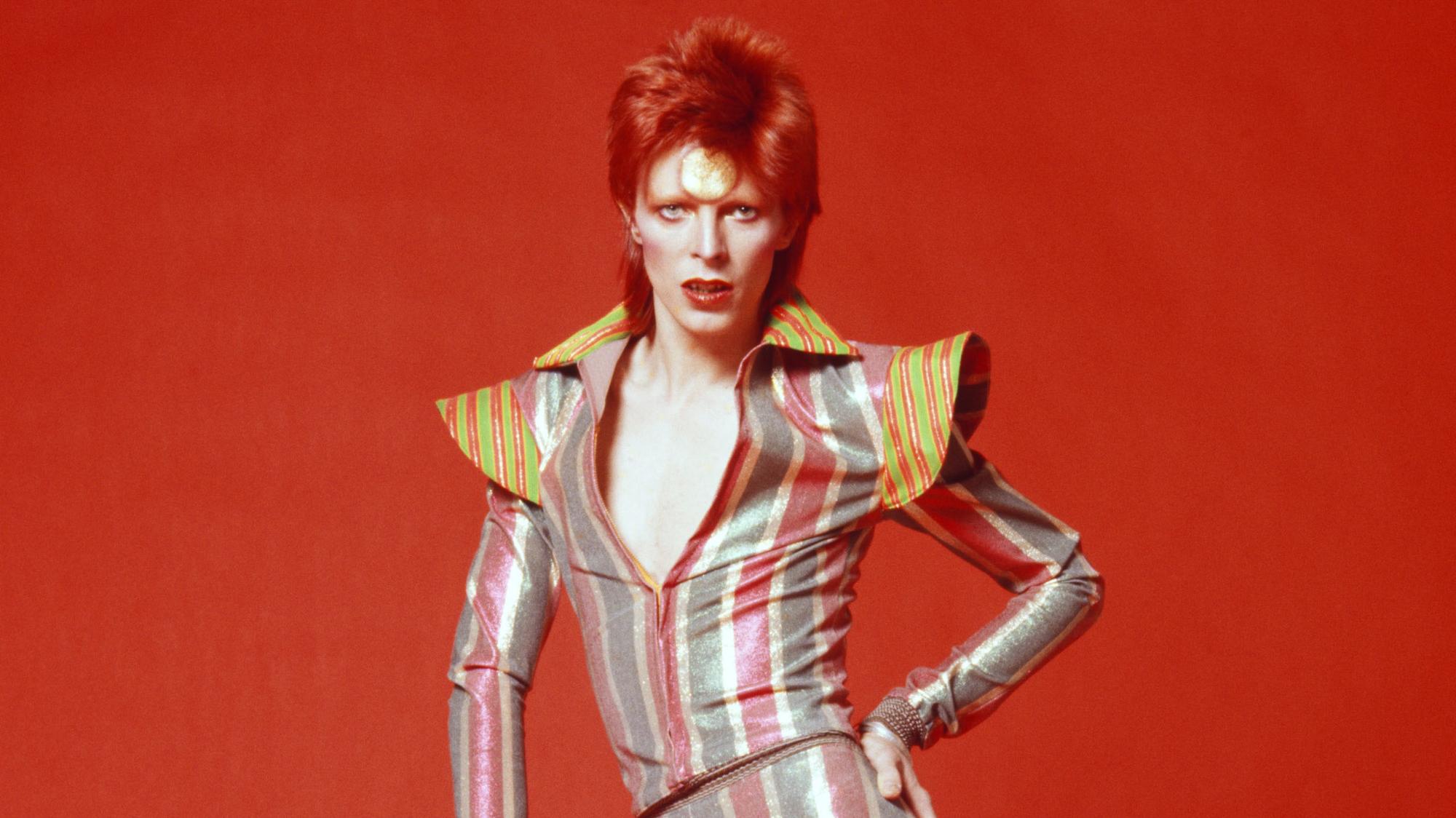
Two days later, the David Bowie Is touring exhibition opened at Melbourne’s Australian Centre for the Moving Image, and broke all records for ticket sales before anyone stepped inside the doors. First staged at the Victoria and Albert Museum in London, it has already been seen by more than 1 million people around the world. The show includes costumes, video, photographs, and items from Bowie’s own collection, including notes and sketches.

David Bowie has a special significance in Melbourne. His first Australian tour was in 1978, and the biggest concert of his career to that point was at the Melbourne Cricket Ground. People queued for three weeks to buy tickets, and the fact that it poured with rain did nothing to dampen the spirits of 40 000 fans. His experiences in Australia in the 1970s inspired the music video for Let’s Dance, filmed in Sydney and outback Carinda).

Besides having key Australian events at around the same time, there isn’t an obvious connection between Bowie and Pluto. Except that Bowie has had so many references to space in his music – Space Oddity, Ashes to Ashes, Ziggy Stardust, Moonage Daydream, The Stars (Are Out Tonight), Life on Mars?, Star Man – that it doesn’t seem too much of a stretch to cover these names together.

BOWIE
Scottish surname derived from the Gaelic nickname Buidhe, meaning “yellow”, to denote someone blond or fair haired. It has also been used to Anglicise the Irish surname Ó Buadhaigh, meaning “son of Buadhach”, with Buadhach meaning “victorious”, although more commonly that’s Anglicised to Boyce. In rare cases it may be a variant of the English surname Bye, from the Old English for “bend”, referring to someone who lived on a river bend.

The Bowie surname originates from Kintyre in western Scotland, and the Bowie family were early colonists to America, with John Bowie Snr one of the founders of Maryland in the early 18th century. He was the grandfather of James “Jim” Bowie, who played a prominent role during the Texas Revolution, and died at the Battle of the Alamo in 1836.

The thick heavy blade known as a Bowie knife is named after Jim, who carried a hunting knife with him and had a reputation as a skilled knife fighter. His brother Rezin Bowie is supposed to have been the creator of the Bowie knife, although Bowie family history relates that it was Rezin’s blacksmith who created the knife.

David Bowie was born David Jones, and first performed as Davie Jones, which risked being confused with Davy Jones from The Monkees. He chose his stage name after seeing the movie The Alamo in 1963, with Richard Widmark as Jim Bowie; allegedly he wanted a name with a “cutting” feel to it, like Mick Jagger’s, and the Bowie knife gave it some edge. He deliberately chose the name of a famous American, as American music and culture had first inspired him.

Bowie has been used as a personal name since the 18th century, and originated in Scotland. Mostly used as a middle name, it was first given as a family name, but in 19th century America increasingly given to honour Jim Bowie: it was particularly found in the southern states. The name Bowie has been given to both sexes, but mostly to boys.

Jagger, Lennon, and Hendrix are reasonably common names, but even with the fame of David Bowie, the name Bowie is in rare use. It doesn’t chart in Australia, while in the UK there has been a smattering of Bowies on the charts since 2003; in 2013 there were 5 baby boys named Bowie. In the US last year, there were 59 baby boys named Bowie and 30 baby girls (numbers rose considerably for boys, but fell for girls).

It is slightly puzzling why Bowie isn’t used more. It sounds like familiar names like Beau, Bohdi, and Brodie, is a counterpoint to popular Archer, and as a knife it fits the trend for weaponry names like Blade.

One issue is that the pronunciation is slightly confused. In the US, Bowie tends to be said BOO-ee, the usual pronunciation of the surname and the Bowie knife. The British sometimes say the first syllable of David Bowie’s surname like the bough of a tree, whereas Bowie himself says it like bow and arrows.

PLUTO
In Greek mythology, Pluto is the god of the Underworld and the afterlife. His earlier name was Hades, but gradually this was used to mean the Underworld itself. Pluto is the Latinised form of the Greek Plouton, meaning “wealth, riches”, and the name is sometimes glossed as “giver of wealth”.

It makes sense that Pluto should be associated with wealth, because he has dominion over all the precious metals, gems, and resources under the earth, and all crops planted in soil. He was a god of abundance, and from early on was associated with agricultural fertility – which is why he was the natural husband for the agricultural goddess Persephone. Pluto and Persephone were revered as a divine couple with knowledge of the mysteries of birth and rebirth.

In the Christian era, there was often a horror of gods of death and the Underworld, who tended to be associated with Satan or demons. Pluto’s image, never a particularly cheerful one, became positively macabre, with Hades a place of torment. In Dante’s Inferno, Pluto rules the fourth circle of Hell, where those who have squandered their wealth are sent. Medieval English writers sometimes conflated Hades with Fairyland, giving Pluto a magical elf-king quality.

The dwarf planet Pluto was discovered in 1930 by a young astronomer named Clyde Tombaugh who had just started working at the Lowell Observatory in Arizona. It was named by an eleven-year-old Oxford schoolgirl named Venetia Burney. She made the suggestion to her grandfather Falconer Madan, retired from the University of Oxford’s Bodleian Library. He had the connections to ensure that Venetia’s idea got to the right people, they unanimously agreed, and Venetia was paid £5 (around $450 in today’s money). A big help was that the first two letters were PL – the initials of Percival Lowell, who had founded the observatory.

When Walt Disney studios created a pet dog for Mickey Mouse in 1930, he was named Pluto – apparently after the planet, although nobody is able to confirm that. So Pluto went from being a god name to a dog name!

Pluto is a gloomy god, a dwarf planet, a cartoon dog … but the name has also been rarely used for humans. The name is first found in colonial America in the 18th century, as a slave name. Pluto can be found in Australian historical records (Pluto Riches and Pluto Surprise are two interesting finds), and was also given to Aboriginal servants. Overall, Pluto has mostly been used in the United States. Use of the name, always low, fell after 1930 and never recovered, although it isn’t clear whether parents were put off by the astronomical body or the Disney character.

Pluto is probably too much of a space oddity to use as a first name, but would make a memorable middle.

Two rare names from the stars: which one will rate better?

POLL RESULTS
The name Bowie received an approval rating of 50%. 42% of people weren’t keen on it, although 17% loved it.

The name Pluto was much less popular, with an approval rating of 15%. 46% of people weren’t keen on it, and only 7% thought it was a good name.

(Picture of David Bowie in 1973 by Masayoshi Sukita; photo from Urban Walkabout)

Waltzing With … Felix

02 Sunday Aug 2015

Posted by A.O. in Waltzing with ...

≈ 3 Comments

Tags

Biblical names, European name popularity, famous namesakes, fictional namesakes, Greek names, historical records, imperial titles, Latin names, middle names, mythological names, name history, name meaning, name popularity, names of cats, New Zealand name popularity, nicknames, papal names, patriotic names, popular names, retro names, saints names, UK name popularity, US name popularity

3092894-6735042798-Knml3

Famous Namesake
I think many Australians would readily associate this name with Felix the Cat, the silent film era cartoon. One of the most recognisable cartoon characters in film history, he was the first animated character to become popular enough to attract a cinema audience.

Felix the Cat was created by Sydney-born Pat O’Sullivan, who arrived in the United States in 1910 and began working as a cartoonist. By 1916, he had opened his own cartoon studio, and around 1917 he created Felix the Cat, inspired by a cat his wife Marjorie brought into the office. Under contract to provide one cartoon a month to cinemas, by 1921 Felix was in sixty percent of North American cinemas.

Pat O’Sullivan was fiercely protective of his creation, successfully gained royalties from pirated merchandise, and took action when Walt Disney made a Felix carbon-copy called Julius. Unfortunately for Felix, Disney then went on to create a certain Mickey Mouse, who starred in early talkie Steamboat Willie in 1928. This spelled the beginning of the end for Felix, and by 1931 it was obvious that Walt Disney was going to be the big success story of cartooning.

After Pat O’Sullivan’s death in 1933, his lead animator Otto Messmer took credit for the creation of Felix. Messmer’s claim is still accepted in the United States, even though O’Sullivan was acknowledged as Felix’s creator during his lifetime. Australian film curators have pointed out that it is O’Sullivan’s handwriting on the early Felix sketches, and that kittens in an early film are given Australian accents, saying ‘lo, Mum! ‘lo Ma!

The cartoon cat that Felix was based on was called Thomas or Tom (a fairly obviously cat-related name), but Pat O’Sullivan changed his name to Felix. Apparently this was after the Australian boxer Peter Felix, who was born in the West Indies, and won the heavyweight title in the 1890s – he often wore black and was a flashy dresser. Pat had seen Peter Felix in his last big fight in 1908, shortly before he left Australia. O’Sullivan had a strong interest in boxing, and when he first arrived in New York he himself boxed for prize money.

The name Felix was a very Australian choice, because in 1836 Scottish explorer Thomas Mitchell called the lush pastureland of western Victoria Australia Felix, meaning “happy Australia, fortunate Australia”. In 1845 English travel writer Richard Howitt’s lively Impressions of Australia Felix was published, and in 1849 the Australia Felix magazine was founded.

After the colony was named Victoria in 1850, the name Australia Felix gradually dropped out of use. However, 19th century Victorian politician Jonas Australia Felix Levien provides an example of it being used as a name, and he wasn’t born until the 1870s. (I have also found someone named Australia Felix Drake in historical records).

Despite all these Australian references, I can’t help wondering if Pat O’Sullivan was also thinking of Felis, the scientific name for the cat genus, from the Latin word feles, meaning “cat”.

Pat O’Sullivan gave Felix a lucky name, and the cat brought Pat luck and success. He did not have a very happy end to his life though. His marriage became increasingly strained (it probably got off to a rocky start, as they wed while he was on bail for raping a teenage girl; he was subsequently imprisoned for 9 months), and Marjorie fell to her death from their second floor apartment in 1932. O’Sullivan’s mental faculties deteriorated due to syphilis, and he died of alcoholism a year after his wife’s death.

Name Information
Felix is a Latin name meaning “lucky, fortunate”. It was first given as a nickname to the 1st century BC Roman general and statesman Lucius Cornelius Sulla, a free translation of the Greek nickname he acquired during his military campaigns – Epaphroditos, meaning “beloved of Aphrodite”.

Whether the goddess Aphrodite was taking care of him or not, Sulla was very successful, holding the position of consul twice, and being awarded the Grass Crown, the rarest and most prestigious Roman military honour, given only to those whose actions saved an entire legion or the whole army. Like Alexander the Great, he achieved many of his victories before his thirtieth birthday, and provided the model for later Roman leaders to gain power by force.

After him, the nickname became a common one for Roman leaders to take, and several emperors adopted it as a title. The Roman procurator Marcus Antonius Felix is mentioned in the New Testament, although not in a positive way – he imprisoned Saint Paul.

Felix was a favourite name amongst early Christians, as the name can imply being in the favour of God, or blessed by God. There are masses of saints named Felix, including quite a few martyrs, and three popes with the name. Saint Felix of Burgundy was sent as a missionary to East Anglia in the 7th century, and there are several churches dedicated to him in Yorkshire and East Anglia. The village of Felixkirk in Yorkshire is named after him, and so might be Felixstowe in Suffolk.

Although more common in Continental Europe, Felix has been in use as an English name since the Middle Ages, in honour of these various saints. It is particularly associated with East Anglia and south-eastern England in general, showing the legacy of Felix of Burgundy.

Felix was #172 in the 1900s, and left the charts in the 1920s (Felix the Cat didn’t do it any good). It returned in the 1980s at #396 and climbed steadily; it’s been on and off the Top 100 since 2011. Currently it is #89 nationally, #86 in New South Wales, #78 in Victoria, #36 in Tasmania, and #54 in the Australian Capital Territory. It was one of the fastest-rising names in Tasmania and Victoria last year, and one of the nationally fastest-rising names of 2013.

In the US, Felix is #267 and rising steeply, while the UK has a similar popularity to Australia, at #91 and rising. Felix is #66 in New Zealand and fairly stable – the highest popularity of any English-speaking country. Felix is well used in Western Europe and Scandinavia, and is most popular in Austria at #4.

Handsome, intelligent, and upbeat, Felix is a name with an irresistibly positive meaning and strong Australian associations. Once seen as rather hipster, this retro name is growing in popularity, and fittingly it’s rather a favourite in the state of Victoria.

POLL RESULT
Felix received an outstanding approval rating of 93%, making it the highest-rated boys name in the Waltzing With … category for 2015. 45% of people loved the name Felix, and only 3% hated it.

Famous Name: Atlas

01 Wednesday Jul 2015

Posted by A.O. in Famous Names

≈ 1 Comment

Tags

astronomical names, Berber names, famous namesakes, Greek names, historical records, locational names, mythological names, name history, name meaning, name popularity, names of mountains, scientific names, UK name popularity, US name popularity

961765-1c41258c-1892-11e5-8706-97259cdfe878

Name in the News
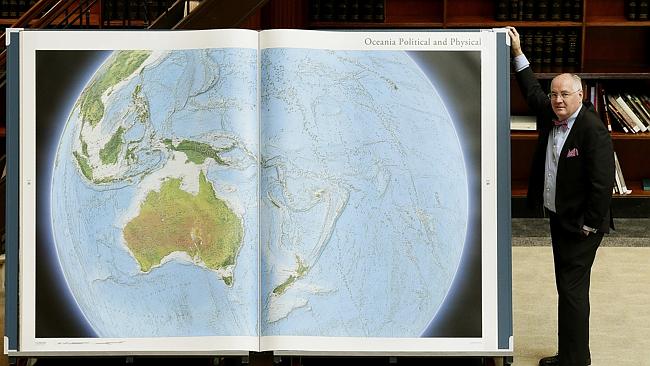
A Sydney publisher has put Australia (and the rest of the world) on the map after bringing out the world’s largest atlas. The happily-named Gordon Cheers first dreamed up the atlas 25 years ago, after seeing the huge Klencke Atlas at the British Library, presented to King Charles II in 1660.

The Earth Platinum atlas weighs 150 kg, is 1.8 metres tall and 2.7 metres across when it is open; it is 128 pages long, and each page needs two people to turn it. There are 61 pages of maps compiled by a team of 88 cartographers, showing maps of the continents and oceans, and very detailed regional maps.

As well as a double-page layout of the world’s flags, there are 27 photographic image of famous locations. One of them also broke the record for the world’s largest image in a book – it’s a picture of the Shanghai skyline made from over 12 000 photos. Last year the Earth Platinum atlas was recognised by the International Map Industry Association, and it has also entered the Guinness Book of World Records.

Only 31 copies of the limited edition atlas were produced, each one costing $100 000. One copy belongs to the British Library, who plans to exhibit it for six days each year. Officially launched on June 26, the only copy of Earth Platinum in Australia can be seen at the State Library of New South Wales until July 19.

Name Information
In Greek mythology, Atlas was one of the Titans, the ancient gods who preceded the Olympians, and who were the children and grandchildren of the earth goddess Gaia, and the sky god Uranus. The younger generation of gods, led by Zeus, waged war against their elders, and eventually prevailed, gaining dominion over the world.

Atlas was one of the leaders of the Titans during the war, and was given a special punishment – for all eternity, he was condemned to stand at the western edge of the earth (Gaia) and hold up the heavens (Uranus) on his shoulders, so that the twain should never meet.

Once the sky was able to lie upon the earth each night and mate with her, and from these couplings were born the Titans: now Zeus demanded that Atlas keep them separated forever, so that they could conceive no further gods. In other words, Atlas was to be used as a contraceptive device for deities.

Another tale tells of a giant named Atlas who tried to drive away the hero Perseus, fearing that he would steal the golden apples from Atlas’ garden. For this he was turned to stone by the head of the Medusa, becoming the Atlas Mountains in northern Africa.

This contradicts another story, where the hero Heracles had to fetch the golden apples from Hera’s garden, which was tended by Atlas’ daughters, the nymphs called the Hesperides. Heracles asked Atlas to fetch him the apples, offering to hold the sky up while he ran the errand. Atlas tried to trick Heracles into taking on the job permanently, but Heracles asked Atlas if he could just hold up the sky for a few minutes while he arranged his cloak as padding for his shoulders. Once Atlas took the heavens again, Heracles grabbed the golden apples and hoofed it, leaving Atlas holding the baby.

There is a nicer ending to the story, where Heracles built the Pillars of Hercules, the peaks flanking the Strait of Gibraltar near Spain; one of the pillars is the Rock of Gibraltar. Heracles told Atlas that from now on, the Pillars would hold up the heavens, liberating Atlas from his burdensome task.

It is not certain what the name Atlas means. The Roman poet Virgil translated it as related to “enduring”, possibly because he knew that a local name for the Atlas Mountains was Douris. Etymologists tend to interpret it as meaning “uphold, support”, although the name may actually be pre-Greek. The name of the Atlas Mountains is thought to be derived from a Berber word simply meaning “mountain”.

The Atlantic Ocean is named after Atlas, because it was seen as the western edge of the world. The mythical doomed Atlantis, vaguely located beyond the Pillars of Hercules in the Atlantic Ocean, means “island of Atlas”.

Plato says that the first king of Atlantis was named Atlas (not the Titan, but a son of Poseidon), and some believe that he based him on a legendary North African king named Atlas, a skilled astronomer and inventor of the first celestial globe, which mapped the constellations. The connection with North Africa and the heavens suggests the legendary king was inspired by the Titan.

It was 16th century geographer and cartographer Gerardus Mercator who first used the word atlas to mean a collection of maps, dedicating his own atlas to honour King Atlas, the legendary African astronomer. However, he conflated the king with the Titan Atlas, and even before that it had become traditional to show Atlas holding up the celestial spehere on early maps. Because of the connection with maps, we sometimes think of Atlas as holding up a globe of the world, although it is a puzzle how Atlas could stand on the earth while holding up the world.

Atlas has further connections to the heavens, because it is a star system in the constellation of the Pleiades, which is often called the Seven Sisters. The Titan Atlas was the father of seven sea-nymphs, and after he was sent off to carry the heavens, there was nobody around to take care of his daughters. The girls were pursued by the hunter Orion, so Zeus first turned them into doves, and then into stars so their father might see them in the sky and be comforted.

Another story is that the sisters committed suicide in despair at their father’s fate, and were immortalised as stars. Because astronomy places Atlas in the constellation as well, it seems he truly was liberated by Heracles, and can now be with his daughters for all time, protecting them from Orion, who you may still see pursuing the sisters across the night sky.

One of Saturn’s moons is named Atlas, because it appears to hold up the rings of Saturn, as if carrying them on its shoulders. It was decided that the major moons of Saturn would be given the names of Titans, as Saturn is the Roman name for Cronos, the head of the Titans. The name Atlas has also been given to one of the craters on our own moon (it’s right near Hercules).

Atlas has been used as a personal name since the 18th century, and became more common in the 19th century, especially in the United States. There are quite a few Atlases in Australian records, both male and female, and used as a first and middle name fairly equally.

Atlas made a couple of appearances on the US Top 1000 in the 19th century, and began charting again in 2013; it is currently #646 and rising. Actress Anne Heche welcomed a son Atlas in 2009, which seems to have increased interest in the name. In 2013, 12 baby boys were named Atlas in the UK, the name rising steeply since 2011. There is evidence that the name Atlas is growing in popularity in Australia too, although like the UK, still in rare use.

Atlas is a powerful, indeed a Titanic name, reminding us of famous strongman Charles Atlas. It suggests the brawn to hold up the heavens, and the fortitude to carry a load on his shoulders without complaining. However, not only are mythological names on trend, we are more comfortable now bestowing big names on little babies, and giving them something to aspire to.

And Atlas isn’t just a dumb muscle man – he’s a philosopher king who studied the cosmos, and glittering stars in one of the most familiar of our summer constellations. The name Atlas has also been chosen for several comic book and video game characters, giving it a bit of geek chic.

In short, if you are among the growing number of parents who are drawn to Atlas, you will be getting a strong yet simple name with a mountain of history, a world of legend, and an ocean of science behind it. Not to mention one heck of a lot of geography!

POLL RESULTS
Atlas received a decent approval rating of 65%. 17% of people thought it was too closely associated with the book of maps, but 16% saw it as strong and powerful, and another 16% as cool and different.

Famous Name: Milo

17 Wednesday Jun 2015

Posted by A.O. in Famous Names

≈ 6 Comments

Tags

animal names, brand names, European name popularity, famous namesakes, food names, germanic names, Greek names, locational names, name history, name meaning, names from films, rare names, UK name popularity, US name popularity

10432144_888450784521840_5322624102103057321_n

Famous Namesake
The formula for Milo was changed recently, leading to an outpouring of complaints to the company – but only in New Zealand. Apparently they’ve had the vanilla removed, and this doesn’t affect Australia, as we didn’t have any vanilla to start with. I knew that Milo was sold all over the world (it’s very big in Malaysia, I’ve heard), but didn’t realise that every country gets their own formulation of Milo.

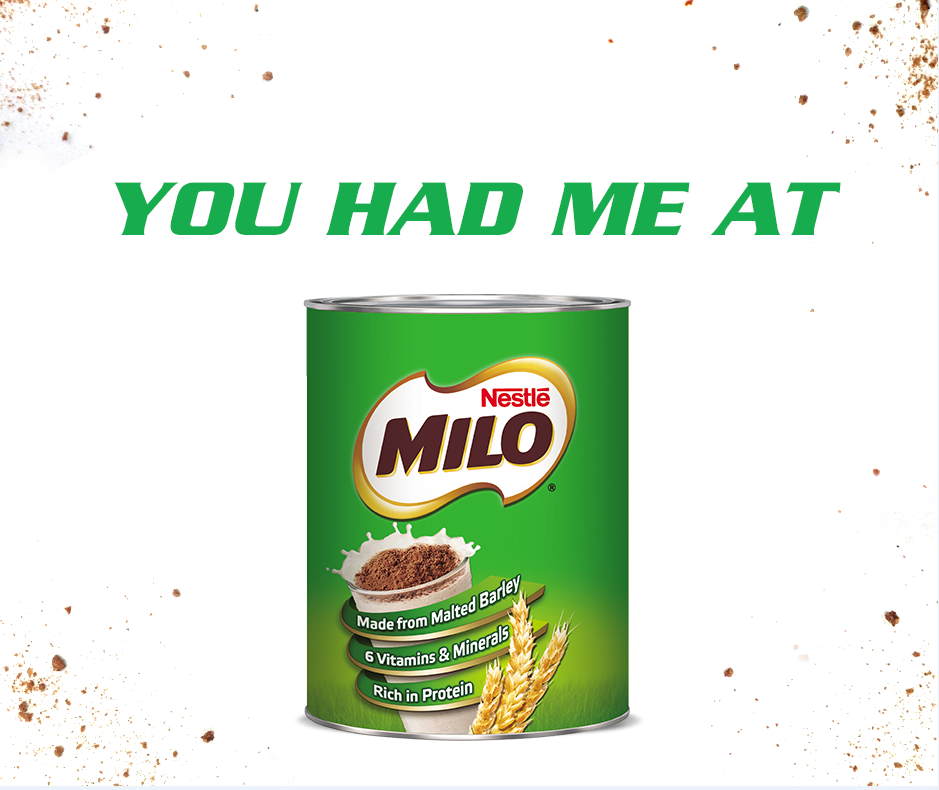
Milo is a cocoa powder and malt drink sold in a bright green tin. It was created by Australian inventor Thomas Mayne and launched at the 1934 Royal Easter Show, in an attempt to improve the diets of Australian children. Rich in carbohydrates and an easy way to add calories, Milo has a host of vitamins added to it – a boon to Depression-era parents worried about their malnourished tots.

Even though our diets are no longer very deficient in calories, carbohydrates and vitamins, Milo is still popular, and marketed as a nutritious energy drink. You can also buy Milo chocolate bars and Milo breakfast cereal, rather less convincingly flogged to parents as a healthy option that will fill your kids with the sort of powerful energy needed to win sporting events sponsored by Milo.

Milo has an appealing crunchy texture which Thomas Mayne tried very hard to eradicate, until he discovered that people liked it. Instead of dissolving completely in milk, Milo will sit on top, forming a crust that can be eaten – in Australia, chocolate milkshakes are already crunchy …. You can use Milo to cook with (Milo banana bread is pretty good), although a favourite way to enjoy Milo is sprinkled on top of vanilla ice cream.

Milo is named after Milo of Croton, an ancient Greek wrestling champion who won six times at the Olympic Games, and numerous other titles. His hometown of Croton, in Sicily, was famous for producing great athletes. A legend in his own lifetime, he was said to be of superhuman strength, and likened to the demigod Hercules – he supposedly took part in a great military victory dressed in a lion-skin.

Just as Milo of Croton was a sporting hero who performed mighty feats of endurance, so too are you supposed to become strong and athletic by drinking Milo. However, its real strength is as a cultural icon that generations of us have grown up drinking. Rather than shuffling into slippers and becoming a nostalgic comfort food, 81-year-old Milo continues to pull on its running shoes and go and go and go!

Name Information
The ancient Greek name Milo, as held by Milo of Croton, and the inspiration for the chocolate drink, is believed to be from milou, a pre-Hellenic word for “sheep”. Could you get a name meaning more appropriate for an Australian or New Zealand child, as sheep farming has been so important to both countries? In modern Greek, Milo means “apple”, and you will sometimes see the name translated that way.

Even if you haven’t heard of Milo of Croton, you must surely have heard of the Venus de Milo, the 2nd century marble statue of Aphrodite which was found on the island of Milos (also called Milo and Melos) in the 19th century. It is now in the Louvre in Paris, admired as the height of feminine grace and beauty, although without any arms.

There are many folk tales as to how the Greek island received its name. One is that it was named after Milos, the son of a river god, who colonised the island under the direction of the goddess Aphrodite. He was so handsome that three goddesses vied for his affection, and he was eventually rewarded with the apple that Paris of Troy awarded to Aphrodite as the most beautiful of all. Another is that he was a handsome young man who was a close friend of the god Adonis: when Adonis died, he hung himself on an apple tree in despair. These both sound like the modern “apple” meaning has influenced the stories.

Another has a feminine source for the name, telling of a Cretan maiden named Melis who threw herself into the sea to escape an unwanted lover. She drowned, but the waves carried her to the island of Milos, where she was worshipped as a nymph. Her name comes from the ancient Greek for “bee”, the source of Melissa: bee goddesses were worshipped on Crete.

Despite these romantic etymologies offered for the island, sheep were a vital part of the island’s economy even in prehistoric times, and a ram was the island’s symbol, used on coins. It is far more likely that the island was named after these important animals. It is unclear to me if people named Milo were named after the island, but given the apparent antiquity of its name, it doesn’t seem implausible.

Milo is also a Germanic name, of uncertain meaning. It may come from an ancient Germanic root meaning “mild, gentle”, or is possibly even related to those Slavic names formed from the root milu, meaning “grace, favour”, or “dear”. The name was introduced to England by the Normans in the form Miles, which was Latinised back to Milo – although a person documented as Milo would presumably have been known as Miles in everyday life.

Milo is #311 and rising in the US, and #159 and rising in the UK. Also rising in France and the Netherlands, it is a popular name in Sweden at #58.

The name Milo is rare in Australia because of the chocolate-flavoured drink, even though there’s nothing negative about the drink Milo, and Coco is a hip name which sounds exactly like cocoa. A straw poll I conducted suggested that many people still connect it with the classic children’s movie, Milo and Otis – not only was that a long time ago now, but Otis is in reasonable use, and very fashionable!

Milo is a boy’s name that sounds rather cute, but has a powerfully masculine namesake, suggesting it could work well on both a little boy and a grown man. I think it makes a hip choice, and suspect that if it wasn’t for the drink in the familiar green tin, it would be rising in line with international trends. Anyone worried about the drink might prefer to give it a more European pronunciation – MEE-lo.

POLL RESULTS
Milo received a decent approval rating of 66%. 24% of people thought Milo was hip and cool, and 21% saw it as a name that was adorable on a little boy and handsome on a grown man. However, 15% believed it was too closely associated with the chocolate drink and associated products. Only one person thought it was strong and sexy, only one thought it was nerdy, and just one thought it didn’t seem masculine enough for a boy’s name.

(Photo from Milo’s Facebook page)

Uncommon Girls Names from the Birth Announcements of 2011-12

14 Sunday Jun 2015

Posted by A.O. in Name Themes and Lists

≈ 3 Comments

Tags

animal names, Arabic names, Australian Aboriginal names, birth notices, celebrity baby names, Celtic names, Chinese names, Cornish names, created names, english names, famous namesakes, fictional namesakes, French names, Gaelic names, German names, Greek names, honouring, Irish names, Japanese names, Latin names, literary names, locational names, middle names, mythological names, name history, name meaning, names from films, names from video games, names of businesses, nicknames, rare names, surname names, UK name popularity, unisex names, vocabulary names, Welsh names

satine (1)

Althea
Variant of the ancient Greek name Althaea, perhaps derived from the Greek word althos, meaning “healing”. In mythology, Althaea was a queen with a son named Melager. When Melager was a baby, the Three Fates turned up, rather like the fairy godmothers in a certain tale. One said he would be noble, the second that he would be brave, but the third did the usual grumpy godmother routine, and said his life would last only as long as a certain piece of wood burning on the fire. Althaea immediately took the wood and blew it out, burying it secretly so that none should ever find it again. When Melager was grown into the brave and noble prince predicted by The Fates, he got into a quarrel while hunting, and killed his uncles. When Althaea discovered Melager had murdered her brothers, she took revenge by setting fire to the piece of wood, so that her son died. Afterwards she committed suicide. This isn’t the happiest name story ever, but the poet Richard Lovelace wrote To Althea, From Prison while imprisoned for a political protest. The famous poem is very romantic, and the name Althea has been used since the 17th century because of it, while never being very common. One attraction of this literary name is the potential to use fashionable Thea as a nickname.

Carys
Modern Welsh name derived from caru, meaning “to love”, and given the common -ys ending found in Welsh names, such as Gladys and Glenys. It has been in use since the early 20th century, and is currently #328 in England/Wales, although falling in popularity. The name gained interest as a celebrity baby name, when Welsh-born actress Catherine Zeta Jones chose it for her daughter. It is meant to be pronounced KAH-ris, but the few people called Carys I know in Australia all say their name to rhyme with Paris, and this pronunciation is even used in Wales sometimes (kuh-REES is really pushing it though). Leaving aside possible pronunciation pitfalls, this is a modern name that is feminine without being frilly.

Isolde
In medieval romance, Isolde the Fair is a stunningly beautiful golden-haired Irish princess with a gift for healing, who is married off to King Mark of Cornwall. Due to a mix-up with a love potion, Isolde falls passionately in love with Tristan, her husband’s nephew and adopted son, with tragic consequences. Tristan actually ends up married to a different Isolde, a Breton princess called Isolde of the White Hands, who he weds for the curious reason that she has the same name as his true love. Their marriage is never consummated, and fed up and jealous, Isolde of the White Hands eventually takes her revenge. The stories originally had nothing to do with Arthurian legends, but became part of them. Adapted by Gottfried von Strassberg in the 12th century, Isolde is a German translation of Iseult, used in French versions of the tale. The Welsh form of the name is Esyllt, and although there are many arguments over the name’s meaning, the most convincing theory is that it is from the Celtic for “she who is gazed upon”, to suggest an overwhelming beauty. The name Isolde has been used since the Middle Ages due to the Tristan and Isolde legend, without ever becoming common: the composer Richard Wagner, who wrote the opera Tristan and Isolde, had an illegitimate daughter named Isolde. A romantic literary name fit for a fairytale princess, you can say Isolde almost any way you like, but common pronunciations would be i-SOL-duh or i-ZOL-duh.

Jamilla
Variant of the Arabic name Jamila, the feminine form of Jamil, meaning “beautiful”. The name became better known in the English-speaking world in 1944 through the romantic fantasy film Kismet, starring Marlene Dietrich as Lady Jamilla, a captive queen who falls in love with a rascally beggar. Set in an Arabian Nightsy type world, at one point, Dietrich does an erotic dance with her legs painted gold, so the name got a rather sexy image. Jamilla works well cross-culturally, and is easy to explain to people, as it is said like Camilla with a J. The popular short form Milla is an added attraction.

Lowenna
Modern Cornish name meaning “joy”, used since the early 20th century, and in rare but fairly steady use in England/Wales. The name is something of a favourite in fiction, even being chosen for historical novels set in Cornwall hundreds of years ago, when it is unlikely the name was in use. Lowenna can be found in the US in the 19th century, where it may be a variant of Louanna, or other names based on Louisa. It was used in the stage version of Rip Van Winkle, written in 1859 (Lowenna is Rip’s daughter; in the original story, his daughter was called Judith). A drawcard is that the name is very similar to the Indigenous name Lowanna, meaning “girl, woman”, giving this name a rather Australian feel.

Lux
Latin for “light”. Lux was used as a male name in medieval Germany, as a short form of Lukas, or a corruption of the German nickname Luchs, meaning “lynx” – this is the origin of the Lux surname. Lux began to be used as an English name by the 17th century, when it was used for girls: in general, English-speakers have preferred it as a female name, although it has been used as a male name too, particularly in North America, which has a history of high immigration from central Europe. The name may be used in a Christian sense, as Fiat lux means “Let there be light”, a famous quote from Genesis to show the beginnings of creation, or even a specifically Catholic context as Lux Aeterna (“eternal light”) is used in Latin prayers to refer to heaven. However, the meaning of light is positive to almost everyone, and the name also has a science-fiction feel to it, because lux is a scientific measurement of luminosity (there is a video game character named Lux, Lady of Luminosity). The name has had publicity from the film The Virgin Suicides, with Kristen Dunst as Lux Lisbon, and from the daughter of One Direction’s stylist – once known in the press as Baby Lux, and almost a celebrity in her own right. A short, cool, luxurious-sounding name that also works well in the middle.

Posy
Can be used as a short form of other names, or with the meaning “a small bouquet of flowers” in mind. The word posy comes from poesy, meaning “poetry”, and has been used to mean a bunch of flowers since the late 16th century – a slightly earlier definition of the word was a motto inscribed inside a ring. Posy has been used as a personal name since the 18th century, and although it sounds very dainty and feminine, it has quite often been given to boys. The reason is because Posy is also a surname, after the town of Pusey in Oxfordshire, meaning “pea island”. Although the name Posy has never been very common, there are a few Posys in fiction to give it some publicity. Posy Fossil is one of the main characters in Noel Streatfeild’s Ballet Shoes, a brilliant young dancer filled with ambition. More recently, Posy Hawthorne is a sweet little sister in The Hunger Games, and in the romantic comedy About Time, Posy Lake is the protagonist’s eldest daughter. Although Posy began as a short form of Josephine, you could use it for a wide variety of names, including Sophia and Penelope – British cartoonist Posy Simmonds, from The Guardian, is named Rosemary.

Satine
In the 2001 movie Moulin Rouge!, Nicole Kidman plays the role of Satine, a Parisian cabaret star and courtesan who has never known love until she falls for a poor English writer. Satine, which is presumably a professional or stage name, is French for satin, the familiar glossy fabric – its name comes from the Chinese city of Quanzhou (once a major shipping port for silk), which was called by the Arabic name of Zayton during the Middle Ages. Zayton is the Arabic word for “olive”, to symbolise peace, perhaps due to the mix of cultures living and working in the city. This makes Satin or Satine a possible honour name for Olive, weirdly enough. Satine has been used as a name since the 19th century, and although it is not a traditional French name, it has sometimes been used as a baby name in France since the film came out. A soft, exotic-sounding name with an Australian connection.

Shiseido
The name of a highly successful Japanese cosmetics company, and one of the oldest in the world, being founded in 1872. The company’s name is taken from the classic Chinese text, the I Ching (Book of Changes), and can be translated as “How wonderful is the virtue of the earth, from which all things are born!”. The company believes that this embodies its resolve to create new products that will enhance clients’ well being, and also helps to promote an image which is healthy and environmentally sound. Although there are many brand names used as personal names (such as Chanel and Armani), and some existing personal names used for brands (such as Mercedes and Nike), I have only ever seen one baby given the name Shiseido. That makes it very unusual, but it’s rather attractive, and has a lovely, carefully-crafted meaning. Pronounced shi-SAY-doh, you could use Sadie as a short form, although the baby I saw had Sass as her nickname.

Sorcha
Gaelic name meaning “brightness, radiance”. It can be found in medieval Irish documents, so it has a long history. In Ireland it is sometimes Anglicised as Sarah, because of the similar sound, while in Scotland it is more often Anglicised as Clara, which has the same meaning. The Irish actress Sorcha Cusack, who came to prominence in the 1970s as Jane Eyre, and is still on TV now as the housekeeper in Father Brown, has given it publicity in recent decades, and the name isn’t uncommon in Ireland. The correct pronunciation is SAWR-kuh or SAWR-i-kuh, but in practice a wide variety of pronunciations is tolerated in Ireland and Scotland, including SAWR-sha, which is probably easier for English-speakers, and sounds like familiar Sasha (although liable to be confused with another Irish name, Saoirse). An unusual yet very usable name.

POLL RESULTS
People’s favourite names were Carys, Isolde and Posy, and their least favourite were Lowenna, Jamilla and Shiseido.

(Picture shows Nicole Kidman as Satine in Moulin Rouge!)

← Older posts
Newer posts →

Enter your email address to follow this blog

Categories

Archives

Recent Comments

A.O.'s avatarwaltzingmorethanmati… on Zarah Zaynab and Wolfgang…
Madelyn's avatarMadelyn on Zarah Zaynab and Wolfgang…
JD's avatardrperegrine on Can Phoebe Complete This …
A.O.'s avatarwaltzingmorethanmati… on Rua and Rhoa
redrover23's avatarredrover23 on Rua and Rhoa

Blogroll

  • Appellation Mountain
  • Baby Name Pondering
  • Babynamelover's Blog
  • British Baby Names
  • Clare's Name News
  • For Real Baby Names
  • Geek Baby Names
  • Name Candy
  • Nameberry
  • Nancy's Baby Names
  • Ren's Baby Name Blog
  • Sancta Nomina
  • Swistle: Baby Names
  • The Art of Naming
  • The Baby Name Wizard
  • The Beauty of Names
  • Tulip By Any Name

RSS Feed

  • RSS - Posts

RSS Posts

  • Celebrity Baby News: Melanie Vallejo and Matt Kingston
  • Names from the TV Show “Cleverman”
  • Can Phoebe Complete This Sibset?
  • Zarah Zaynab and Wolfgang Winter
  • Baby, How Did You Get That Name?
  • Celebrity Baby News: Media Babies
  • Celebrity Baby News: Adelaide Crows Babies
  • Celebrity Baby News: Chris and Rebecca Judd
  • Names at Work: Name News From the World of Business and Employment
  • Celebrity Baby News: Sporting Round Up

Currently Popular

  • Celebrity Baby News: Jacinta Allan and Yorick Piper
  • Celebrity Baby News: Jacinta Allan and Yorick Piper
  • Celebrity Baby News: Craig Thomson and Zoe Arnold
  • The Top 100 Names of the 1940s in New South Wales
  • Celebrity Baby News: Ed Husic and Bridget Tilley

Tags

celebrity baby names celebrity sibsets english names famous namesakes fictional namesakes honouring locational names middle names name combinations name history name meaning name popularity name trends nicknames popular names saints names sibsets surname names twin sets unisex names

Create a free website or blog at WordPress.com.

Privacy & Cookies: This site uses cookies. By continuing to use this website, you agree to their use.
To find out more, including how to control cookies, see here: Cookie Policy
  • Subscribe Subscribed
    • Waltzing More Than Matilda
    • Join 517 other subscribers
    • Already have a WordPress.com account? Log in now.
    • Waltzing More Than Matilda
    • Subscribe Subscribed
    • Sign up
    • Log in
    • Report this content
    • View site in Reader
    • Manage subscriptions
    • Collapse this bar
 

Loading Comments...