• About
  • Best Baby Names
  • Celebrity Baby Names
  • Celebrity Baby Names – Current
  • Celebrity Baby Names – Past
  • Featured Boys Names
  • Featured Girls Names
  • Featured Unisex Names
  • Links to Name Data
  • Waltzing on the Web

Waltzing More Than Matilda

~ Names with an Australian Bias of Democratic Temper

Waltzing More Than Matilda

Tag Archives: gemstone names

True Blue Names for Girls

19 Sunday Jan 2014

Posted by A.O. in Name Themes and Lists

≈ 6 Comments

Tags

animal names, Australian idioms, Biblical names, bird names, celebrity baby names, colour names, english names, fictional namesakes, flower names, French names, gemstone names, German names, Greek names, middle names, modern classic names, name history, name meaning, name popularity, name trends, names from movies, nature names, nicknames, Norman-French names, Persian names, plant names, popular names, surname names, unisex names

bluewren-male

It will be Australia Day in a week’s time, and rather than cover just one name, I am suggesting names with a “blue” theme, in honour of Australia, where the phrase “true blue” has taken on its own patriotic meaning.

Azura

The name Azura is an elaboration of the colour name Azure. Azure is an intense light blue, the colour of a clear sky on a hot summer’s day. In the patriotic Song of Australia, the lyrics describe how all about is azure bright, and the bird called the azure kingfisher is native to Australia. The English word azure comes from French azur, and is taken from the blue mineral lapis lazuli – lapis means “stone” in Latin, while lazuli is from lāžaward: the Persian name for the mineral, derived from Lazhward, a place where it was mined. According to Jewish tradition, Azura was one of the daughters of Adam and Eve, and the wife of her brother Seth. Azura is a popular name in science fiction and fantasy, most notably in Skyrim, where Azura is the Lady of Twilight who rules over the realm of Moonshadow. Last year, NRL star Anthony Minichiello, and designer Terry Biviano, welcomed their daughter Azura. This is pretty and exotic while still similar to names like Arya and Zara.

Bluebell

The bluebell is a type of hyacinth; a spring bulb which grows wild in the woodlands of Europe and is also a popular garden plant. Its name comes from its violet-blue colour, and mass of bell-like petals. Several other unrelated flowers around the world are named bluebell, and in Australia we have the Royal Bluebell (Wahlenbergia gloriosa). This deep violet wildflower grows abundantly in the Australian Alps, and is the floral emblem of the Australian Capital Territory. Summer flowering, it is hardy and easily grown in the garden; however, it is protected in the wild, and cannot be picked or collected. Bluebell came into use as a girls name during the 19th century, along with other flower names, but doesn’t have a Victorian vintage vibe – it seems hip and funky. I have seen this a few times as a middle name, but would love to see it boldly upfront.

Delphine

Delphine is the French form of Delphina, which can be understood as meaning “from Delphi”. However, the name reminds me of dolphins, whose scientific family name is Delphinidae, from the Greek delphus, meaning “womb”, to indicate that although they look fish-like, as mammals, they bear live young. The Greek town of Delphi, the home of the famous Delphic Oracle in ancient times, is also said to mean “womb”, as it was meant to be the navel of the earth goddess Gaia. The grey-blue colouring of the dolphin suggested this name to me, and there are several species of dolphin which live in, or migrate to, the waters surrounding Australia. Since ancient times, people have been fascinated by dolphins, and there are many stories of wild dolphins rescuing people, helping surfers and swimmers in trouble, or even protecting humans from shark attacks. Their high intelligence and playful behaviour make them appealing companions, and there are several places in Australia where you can swim with and interact with wild dolphins. Delphine is a pretty dolphin-related name for anyone who loves these free-spirited sea creatures, and has Dell and Fifi as potential nicknames.

Indigo

Indigo is one of the seven colours of the rainbow, a dark shade of blue. It was Sir Isaac Newton who introduced indigo as one of the colours of the spectrum, because in the mid-17th century, when he began his work with prisms, the East India Company had begun importing indigo dye to Britain, where it was used to colour clothing a deep blue. Indigo dye comes from the plant Indigofera tinctoria, native to tropical Asia, and the word indigo comes from the Greek, meaning “Indian dye”. Indigo is a rather controversial colour, because Sir Isaac Newton decided there had to be seven colours to match the seven notes of a scale and seven days of the week, and scientists question whether indigo is really a colour of the spectrum, or just the point where blue deepens. Even more confusingly, Sir Isaac Newton seems to have used the word indigo to mean the colour we call blue. Indigo has strong New Age associations, because it is seen as a particularly spiritual colour connected to psychic power. Indigo is a rather trendy girls name in Australia, a favourite choice of celebrities; rising with other Ind- names, it is #137 in Victoria.

Jasmine

I would not have considered this for a list of Blue Names, except that while writing it, Australian actress Cate Blanchett won a Golden Globe for her role in the film Blue Jasmine. There are about twelve species of jasmine native to Australia; these climbing vines come from tropical and subtropical areas of Queensland and northern New South Wales. The flowers are delicate and white, and have a sweet, intoxicating scent; they are both fragile and strong. The word jasmine comes from the Latinised Persian yasamen, meaning “gift from God” – there really is something quite heavenly about jasmine. The name Jasmine is a modern classic which has charted here since the 1960s, and soared during the 1970s to make the Top 100 for the 1980s. It peaked in the early 2000s at #14, and is still stable in the Top 100. It is #36 nationally, #33 in New South Wales, #28 in Victoria, #41 in Queensland, #31 in South Australia, #24 in Western Australia, #59 in Tasmania, #15 in the Northern Territory and #20 in the Australian Capital Territory.

Sailor

This name occurred to me because the Royal Australian Navy winter uniform is dark blue (and the summer uniform has dark blue trim); Sailor could be used as a name to honour a family naval tradition. Sailor has been used as a first name since at least the 19th century, and was used for both sexes, although more common for boys. It received greater recognition in the 1990s, when American model Christie Brinkley gave the name to her daughter, and since then has been overwhelmingly seen as a girls name – perhaps partly because it fits in so well with the trend for names such as Kayla, Layla and Tayla. Weatherman Grant Denyer named his daughter Sailor in 2011, his wife Cheryl a fan of the name ever since Christie Brinkley’s choice. The name Sailor probably came originally from the occupational surname, in which case it can be from the German seiler, and mean “ropemaker”, or English, where it means “dancer, acrobat”, from the Norman French sailleor, meaning “dancer, leaper”. The German origin seems to be more common, and as sailors once worked with ropes, still seems to fit as a sailing name.

Sapphira

A Greek name meaning “sapphire”, which simply means “blue stone”. However, it is likely that the ancient Greeks were referring to lapis lazuli when they used the word – it comes from the Hebrew sappir, meaning “lapis lazuli”. In the New Testament, Sapphira was an early Christian who, along with her husband, was struck dead for concealing money from the church and lying about it. It’s hard not to think that they were executed, although the Biblical account is vague on the details. It’s one of the creepier and more troubling parts of the Bible, and doesn’t really show the early church in a good light. A more pleasant connection is the intelligent and loyal blue dragon named Saphira in Christopher Paolini’s Inheritance series of fantasy novels. Crime novelist Tara Moss chose the name Sapphira for her baby daughter in 2011, apparently because she had blue eyes. Sapphira is an exceptionally beautiful and elegant name which can also reference the sapphire mining trade in Australia.

Sky

The atmosphere as it appears from Earth; the word comes from the Norse word for “cloud” (you can see our ancestors came from a place where skies tended to be cloudy!). On a clear day the sky appears blue because air scatters blue sunlight more than it scatters red. Because of this, we give as a truism that the sky is blue, even though it appears in a range of colours depending on the conditions, and there is a colour named sky blue because of that. Blue skies are symbolic of happiness and good times ahead, and blue skying is to think creatively – to think that the sky is the limit, to reach for the sky. Although there are blue skies all over the world, in Australia the strong sunlight and lack of cloudiness mean we see a lot of blue sky, and intensely blue skies – the patriotic song Awake! Awake, Australia! mentions our “bright blue skies”. Sky is a unisex name which has never charted in Australia, but its similarity to Skye and Skyla will make it seem feminine here.

True

An English word which can be understood as meaning “genuine, trusty, faithful”, ultimately from an ancient root meaning “steady, firm”. A common saying in Australia is to describe someone as a true blue Aussie, as featured in the John Williamson song, True Blue. The phrase true blue goes back to medieval times, when the colour blue symbolised faith and constancy. Although theories abound as why this was so, the most likely explanation is that it’s from the blue-dyed cloth produced in the town of Coventry, famous for not fading with washing, and thus remaining “true”. Later on, the phrase became associated with the Presybterian Church, and later still, the Tory Party, and their “true blue supporters”. In Australia, far from “true blue” having these conservative associations, in the 19th century it was used to describe those working class men who remained true to their labour principles, and was thus a left-wing term. Gradually, true blue came to mean anyone loyal to Australia and its values. True can be used as a name for either sex; on a girl, it seems as if it could be short for Trudy and similar names.

Wren

Australian wrens are similar in appearance, but unrelated to the wrens of Europe and the Americas. In some species, such as the Superb Fairywren and Splendid Fairywren, the breeding male has a very distinctive and beautiful blue plumage in contrast to the grey-brown tones of the females and juniors. In other species and subspecies, both males and females are bright blue, or have blue patches. Because they are tiny, pretty, and have an attractive range of birdsongs, we love it when fairywrens visit our gardens. Seeing a group of colourful wrens flutter through the bushes is the closest thing to having fairies in the garden that most people will experience. Another charming fairywren fact is that the male will present brightly coloured flower petals when courting a female, which to human eyes looks like bringing a bouquet of flowers. Wren has been used as a first name since the 17th century, and from the beginning was unisex, given roughly equally to both sexes, and possibly influenced by the surname, which comes directly from the bird. Today it is usually thought of a girls name, and although I can see it on a boy, the fairywren seems to render it more feminine than masculine. Elsewhere Wren might seem a humble choice as a name, while here I think it’s much brighter and more cheerful.

POLL RESULTS
The public’s favourite names were Wren, Indigo and Delphine, and their least favourite were Sailor, True and Sky.

Famous Name: Diamantina

04 Wednesday Dec 2013

Posted by A.O. in Famous Names

≈ 2 Comments

Tags

famous namesakes, gemstone names, Greek names, honouring, Italian names, locational names, middle names, nicknames

Ancher-Mortlock-Woolley-joins-Conrad-Gargett-Riddel-415086-xl

On December 10, it will mark 154 years since Lady Diamantina Bowen arrived in Queensland. Lady Bowen was the wife of Queensland’s first governor, Sir George Bowen, whose history and surname we looked at in Brisbane Suburbs That Could Be Used as Boys Names.

Lady Bowen was born in the beautiful Ionian Islands of Greece as the Contessa Diamantina di Roma, one of a large aristocratic family descended from Venetians who had occupied the Ionian Islands for centuries as part of the Republic of Venice. Diamantina’s father was President of the Ionian Senate, and had been appointed Poet Laureate of the islands by Queen Victoria, as the Ionian Islands were then a British Protectorate.

Diamantina grew up in a privileged world, was well-educated, and familiar with government, politics and diplomacy. She was described as pretty, slender and graceful, with an attractiveness which came from her expression rather than her features. She was softly-spoken, and had a slight accent when speaking in English; in private, she spoke Italian. Despite their Italian origins, the di Roma family were members of the Greek Orthodox faith.

Diamantina married Sir George Bowen, government secretary to the islands, in 1856, and came to Brisbane three years later with her husband and baby daughter. The Bowens were met by a crowd of 4000 people, waving both the Union Jack and the Greek flag in welcome. Brisbane was enormously excited by their arrival, and there was a 21-gun salute, triumphal arch, fireworks, and days and days of speeches, proclamations, and general celebrations in their honour.

One of the ladies who presented Diamantina with a bouquet described her as a “beautiful Greek fairy princess … stepped out of a poetry book”. The poor fairy princess had endured agonising sea sickness to get there, and being pregnant, possibly morning sickness as well; it must have been an ordeal for her to stand there in the heat and humidity through all the official events.

Brisbane itself must have been something of a culture shock to Diamantina, because although it was a prosperous and thriving community, it was also a pioneering one, and would have seemed rough and dusty, with lumpy roads, and an unreliable water supply.

However, Lady Bowen fulfilled her duties as Queensland’s first lady admirably. She became a celebrated hostess,  and her balls and dinner parties were the highlight of the social scene. She held a weekly salon, and her graciousness is credited with raising the general tone of Brisbane society.

Diamantina was an accomplished pianist and singer, and her interest in music led to her to become a patroness of the arts. When their official residence was ready, the Bowens had an elegant and spacious sandstone mansion to entertain in. Diamantina personally supervised the layout of the grounds, and assisted with the development of the surrounding Royal Botanic Gardens.

Diamantina was also a tireless worker for charity. She started the first Sunday School for children, and helped found the Lady Bowen Lying-In Hospital, Brisbane’s first maternity hospital, and forerunner to the Royal Brisbane Women’s Hospital. She was also a patron of an orphanage, and of a hospital for the incurably ill. At a time marked by religious bias, Lady Bowen befriended the Sisters of Mercy, and became a patroness of their fund-raising efforts.

Diamantina was greatly admired in Brisbane, and became a great favourite. She was dignified without being aloof, and reserved without being cold, but most of all kind-hearted and compassionate, with a genuine desire to be accessible. I suspect it was because of his wife that Sir George was asked to stay on a further two years after his term of office ended.

When the Bowens finally left after eight years, 120 of Brisbane’s married women presented Diamantina with a diamond necklace, and 120 of its single women gave her a gold bracelet studded with emeralds. Diamantina must have made several close personal connections in Brisbane, because we are told that she wept bitterly as she left, becoming so distraught that she had to be carried to the ship to New Zealand, where Sir George had been appointed governor-general.

Diamantina had many namesakes in Queensland – not only Roma Street and Lady Bowen Park in Brisbane, but the town of Roma, the Diamantina River, and Diamantina Island are just a few that come to mind.

Diamantina returned to Australia when Sir George became governor of Victoria. Now in her mid-life, Diamantina’s manner had become impressively regal, and she was seen as exotic, fascinating, and elegant. A Melbourne gossip columnist noted her dazzling black eyes, flawless creamy complexion, and lovely figure. She inspired awe and respect, but never again did she seem quite so loved as she had been in Queensland, where she was a figure of poetry and romance.  

Diamantina is a variation of the Greek name Diamanto, meaning “diamond”. The name is used in both Greece and Italy, and can be pronounced dee-uh-man-TEE-nuh or dy-uh-man-TEE-nuh. The obvious nicknames are Di, Dee and Tina, although Diamond, Mandy and Monti seem possible as well. Lady Bowen’s eldest daughter had Diamantina as her middle name, and she went by Nina, which appeals to me most of all.

Diamantina is a pretty and elaborate girl’s name which belonged to one of the most charming ladies to grace our shores. Diamantina was a heroine to the Greek community in Queensland, and this could be a Greek heritage choice, or a Queensland heritage choice. If the name Diamond seems too hard or crude, Diamantina may seem softer and more elegant.

POLL RESULT: Diamantina received an approval rating of 42%. 36% of people thought it was too fussy and frilly, although 21% saw it as romantic and fairytale.

(Picture shows the governor’s official residence, now Old Government House, in the grounds of Queensland University of Technology, where it is used for functions)

Famous Name: Ruby

29 Wednesday May 2013

Posted by A.O. in Famous Names

≈ 7 Comments

Tags

english names, famous namesakes, fictional namesakes, gemstone names, Latin names, locational names, name history, name meaning, name popularity, names from television, nature names, nicknames, Norman-French names, Old Norse names, popular names, retro names, stage names, surname names, unisex names

6da7f547404dd4d8481fbb78ea9b6745Yesterday was the birthday of Ruby Payne-Scott, who was born 101 years ago in 1912, and a pioneer in radio physics and radio astronomy, as well as an advocate for women’s rights. Her extraordinary scientific mind became obvious early in life, when she entered the University of Sydney aged just 16, where she graduated with double first-class honours in mathematics and physics, and won the mathematics prize, as well as gaining a scholarship in physics. She was the third female graduate in physics at the university.

The Depression wasn’t a good time to be job-searching, but Ruby found work at the Cancer Research Institute where she completed her masters thesis on radiation. After a brief stint of teaching, she applied to Australian Wireless Amalgamated, a huge company that ran all the wireless services, and was the first woman they hired in a research capacity. AWA weren’t keen on hiring women at all, even as cleaners or typists, but they took Ruby on as librarian; she was soon a full-time research physicist.

During World War II, she was one of a group of young engineers from AWA hired by the government to conduct research on a secret new defensive weapons system – radar. She came into close contact with group leader Joseph Pawsey, and both became fascinated with reports of extra-terrestrial radio signals; they conducted the first experiment in radio astronomy in the southern hemisphere in 1944. After the war, she was one of a team at the CSIR (later the CSIRO) formed to survey “cosmic static” from astronomical objects. As a result, Australia became a global leader in radio astronomy, with Ruby the first female radio astronomer in the world.

Ruby was feisty and self-confident, very outspoken about her political views, which were that women should be equal to men, and scientific research should be independent. This got her labelled a communist, and “loud and unstable”, but she continued to press for equal treatment.

One thing she kept quiet was that she had married a telephone mechanic named Bill Hall in 1944, because until 1966, married women were expected to resign from the public service, and could not be employed on a permanent basis. When news of her marriage got out in 1950, she was reduced to temporary status and lost her pension and other benefits. She was forced to resign in 1951 when she became pregnant with her first child, and with no maternity leave or childcare, her brilliant career ended at the age of 39.

By the standards of her day, Ruby had it all. A highly-paid and rewarding scientific career, outside interests which included bushwalking and home renovation, a happy marriage, two children (who grew up to be a renowned mathematician and a distinguished artist), and, when her children were older, a return to teaching, where she was greatly admired by students who had no idea of her earlier achievements.

In her honour, the CSIRO initiated the Payne-Scott Awards to support researchers who need to take time off after the birth of a child. She was a bright star in her field, and because of Ruby and women like her, it’s possible to want equal pay, and the choice to work and have a family without being called a loud, unstable communist.

Ruby is a precious gemstone which is a variety of the mineral corundum, and comes in a range of red colours (when corundum is blue, it is called Sapphire). Its name comes from ruber, the Latin for “red”, and the most valuable rubies have the deepest red colour with a hint of blue. For centuries the main source of rubies was Myanmar (Burma), and today most rubies are either from Burma or Thailand. Rubies have always been especially valued in Asia, where they are seen as bringing good fortune.

Ruby has been used as a girl’s name since at least the 17th century, but was used as a pet form of Reuben since the Middle Ages. When Ruby was established as a girl’s name, it was sometimes given to boys, perhaps after the surname, which can come from the town of Roubaix in Normandy; its name means “stream on the plain”. Another possibility for the surname is that it is from the town of Roby in Lancashire, meaning “settlement by the boundary marker” in Old Norse. Ruby became popular for girls in the 19th century, when other gemstone names were fashionable.

Ruby was #21 in the 1900s, and had left the Top 100 by the 1930s. It disappeared from the charts between the 1950s and the 1970s, but came back in the 1980s at #548. One of the 1980s-born Rubys is model and TV host Ruby Rose, born Ruby Rose Lagenheim.

Ruby zoomed up the charts at such a dizzying speed that by 1996 it was already in the Top 100, debuting at #75. By 1998 it was in the Top 50 at #44, and by 2003 it was #20. Ruby made her Top 10 début in 2010, at #2, and last year she was #1. According to this article, Ruby is particularly popular on the Central Coast and in Newcastle.

Currently Ruby is #1 in New South Wales, #3 in Victoria, #3 in Queensland, #2 in South Australia, #3 in Western Australia, #1 in Tasmania, #4 in the Northern Territory and #2 in the Australian Capital Territory. Nationally Ruby is #2.

When a new baby was added to the Rafter family on popular family drama, Packed to the Rafters, she was named Ruby, and one of the babies portraying the character is also named Ruby. In fiction and real life, Ruby is big news.

Last year, Ruby was the name most commonly searched for to reach my blog, and no wonder people love it, because it’s a warm, vibrant name that is womanly yet spunky. However, it’s certainly had some detractors along the road to massive popularity.

It’s been called an old lady name, a hooker name, a trashy name … but the one that irritates me the most is when people refer to Ruby as a “dumb girl” name. I even saw one online pundit prophesy that your daughter would not get a degree if she was named Ruby!

Ruby Scott-Payne is proof that you can be named Ruby, and get as many degrees as you want. A Ruby can be brainy, bright, brilliant, strong, smart, sassy … and she can reach for the stars.

More information on Ruby Payne-Scott can be gained by reading her in-depth biography – Under the Radar: The First Woman in Radio Astronomy, Ruby Payne-Scott by William Miller Goss and Richard X. McGee

POLL RESULT: Ruby received an approval rating of 66%. People saw the name Ruby as cute and spunky (25%), but also thought it was too popular (20%). Nobody thought the name Ruby sounded like a “stripper name”.

(Picture is a detail from a poster featuring Ruby Payne-Scott designed by Amy Blue; by clicking on this link, you can “appreciate” the picture, or “like” it on Facebook etc)

Celebrity Baby News: Ebbeny Faranda and Omar Varinda

11 Thursday Apr 2013

Posted by A.O. in Celebrity Baby News

≈ Comments Off on Celebrity Baby News: Ebbeny Faranda and Omar Varinda

Tags

celebrity baby names, gemstone names, rare names

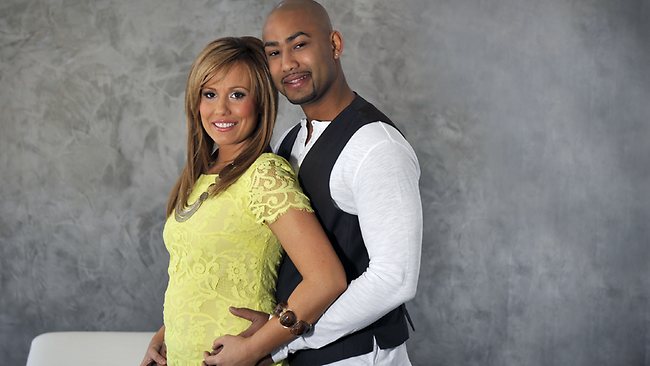
682957-ebbeny-farandaNews presenter Ebbeny Faranda, and her husband Omar Varinda, welcomed their first child on April 9 and have named their son Onyx. Onyx Varinda was born on 9.04 am, weighed 3.6 kg (7lb 15oz), and measured 51.5 cm in length.

Ebbeny presents the news on a local Western Australian edition of Channel Nine’s afternoon news. She has also filled in on the Perth evening news edition, and A Current Affair. Her husband Omar is a bank manager.

Onyx is a name that Ebbeny and Omar both love, and they always knew this would be their baby’s name if it was a boy. Ebbeny says that it is strong and a bit different, and gives their son the same initials as his father. It also has connotations of being dark and precious, like Ebbeny’s own name (onyx isn’t always black, but this is its most common colouring).


Finding a Sibling Name for Bugsy

02 Saturday Mar 2013

Posted by A.O. in Naming Assistance

≈ 11 Comments

Tags

animal names, celebrity baby names, celebrity sibsets, choosing baby names, flower names, gemstone names, names from movies, nature names, nicknames, plant names, sibsets, surname names

180351.1020.AMia and Lachlan are expecting their second child in about ten weeks, who will be a baby sister or brother to their son Bugsy.

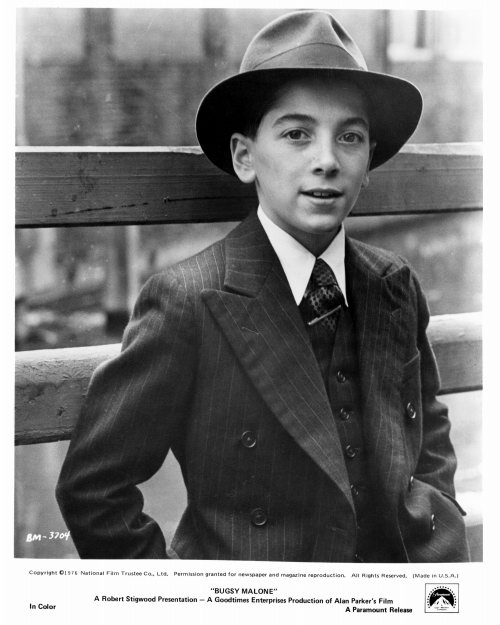
Lachlan chose Bugsy’s name, in a tribute to the film Bugsy Malone, which has special significance to him. Mia wasn’t at all sure about the name, and pushed for Bugsy to be used in the middle instead. However, once their son was born, Bugsy suited him so perfectly that he couldn’t be called anything else; Mia absolutely loves his name.

It is now Mia’s turn to choose the second child’s name, and she feels utterly stumped. Nothing seems to match the name Bugsy, and everything she has come up with seems wrong. She’s made a name list for each sex, but isn’t completely happy with any of them.

Mia’s Name Lists

Boys

  • Penn
  • Hugo
  • Finley
  • Otto
  • Tristan

Girls

  • Poppy
  • Nellie
  • Scout
  • Clover
  • Marigold
  • Tilda
  • Maisie

Names Already Crossed Off the List

Harrison, Luca, Max and Ryder (boys); Emerson, Emme and Sadie (girls)

Mia’s getting increasingly stressed as her due date grows ever closer, and feels ready to contemplate almost any name.

~ ~ ~ ~ ~ ~ ~ ~

Mia, this is a good demonstration of one of the pitfalls of the “I’ll pick the first name and you pick the next one” baby name compromise. It sounds very fair, but in fact it’s a far more difficult task for the parent who goes second, and the parent who goes first rarely stops to think about what their choice might mean in regard to subsequent sibling names.

I feel that while it’s a nice idea to have your childrens’ names sound good together, it should be a preference (even a very strong preference) rather than a requirement when choosing names.

Look at the way Bugsy’s name was chosen. It is meaningful, both parents love it, and it fits him perfectly. I think your second child deserves to have a name that’s equally meaningful and fitting, and loved just as much. It shouldn’t just be an accessory to “match” Bugsy (although if the two names do sound great together, then that’s a bonus).

You don’t seem to have really fallen in love with any names yet, and I wonder if that’s because you are constantly judging them against Bugsy? When you start off a baby name search with an absolute in mind (must start with J, must be three syllables long, must match with Bugsy), it makes it hard to properly consider any other potential names.

And something like “must match with Bugsy” is much more complex than “must start with J” because it’s a subjective matter rather than an objective one. We all agree on what the letter J is – we may not all agree on what matches Bugsy. One person may think Bugsy and Daisy is adorable; another may think the names sound horribly twee together. The same person may swing in both these directions, unable to make up their mind one way or another.

Rather than tie yourself into knots finding a name which sounds good with Bugsy, I would start out by eliminating names which sound terrible with Bugsy. So when you are considering baby names you like, ask yourself, “Will this sound awful with Bugsy, and make both names look ridiculous?” If it fails your test, cross it off; if it doesn’t sound too dreadful, I would give it a chance.

For example, Bugsy and Elmer sound ridiculous together, because of Bugs Bunny and Elmer Fudd, and makes your children’s names seem like a joke. On the other hand, Bugsy and James may not be the most amazing sibset in history, but I don’t think that it’s absolutely terrible either.

I think it would be a mistake to think that you can’t use a mainstream or popular name as a sibling for Bugsy. I imagine you get a lot of people saying, “Bugsy? That’s different”, or “What an unusual name”, but although Bugsy is definitely a very uncommon name, it isn’t really that unusual. It’s a vintage American-style nickname with a movie reference context, so to get you started, here’s some ideas of other names similar to that which I don’t think sound too bad with Bugsy.

Names From Movies

The first one that comes to mind is Rocky, which is another name from the movies of the 1970s; however I think they are too much alike as brothers. I could see Rhett or Scarlett though, from Gone with the Wind, or Atticus or Scout from To Kill a Mockingbird. You have Scout on your girl’s list, and I think Bugsy and Scout sound fantastic together.

The Cutesy Factor

Bugsy sounds quite similar to the name Buddy, and Jamie Oliver’s son Buddy has sisters named Poppy, Daisy and Petal. I’ve noticed you have some pretty cute names on your girl’s list, such as Poppy, Nellie, Tilda and Maisie, and I think any of these would make an adorable sister for Bugsy. Cute names are fun and likeable, just like Bugsy.

Tough Guy Nicknames

Another name which reminds me of Bugsy is Buster, and I’ve noticed that parents of Busters tend to give their other sons tough guy nicknames, like Jake or Dan. However, this doesn’t really seem to be your style for boys names.

Names from the 1920s and ’30s

Because of its vintage style, I can see a boy named Bugsy matching with another name from that era, such as Coco, Etta, Lulu, Mabel or Zelda for girls, or Arlo, Dashiell, Django, Lenny or Roy for boys.

Gemstones

Gemstone names were very fashionable in the 1920s, and besides the popular ones like Ruby and Pearl, less common ones like Emerald, Sapphire and Opal were just as cool. Gemstone names for boys such as Jasper, Garnet and Diamond were also stylish.

Nature

When you think of it, Bugsy is kind of a nature name as well. You have Clover and Marigold on your list, and I think either of those would sound great with Bugsy. I think boy’s nature names seem a bit more problematic with Bugsy, as they tend to sound quite soft, except animal ones like Fox or Bear – and these probably underline the “bug” part of Bugsy too heavily.

Surnames

I admit that I have had much more success finding girls’ names to go with Bugsy than boys’ names (and really I think all the names on your girls list sound fine with Bugsy). But one of the appealing things about surname names is that they harmonise with many different styles of names. You have Penn at the top of your boys list, and I think Bugsy and Penn sound awesome together. They’re both a little off-beat in different ways, and they don’t seem to either clash or be too matchy. Other surname names that I get a similar vibe from are Arlen, Cash, Dexter, Gray, Knox, Reid, and Weston.

Mia, I hope this has given you a few ideas of how Bugsy can be matched with a sibling name. Once your baby name lists have firmed up a bit, write in again and we’ll have another look at naming a brother or sister to Bugsy.

NOTE: The baby’s name was Jem Richmond!

POLL RESULTS: One third of respondents thought that a name from the 1920s or ’30s would be the best match with a brother named Bugsy.

(Photo shows Scott Baio as Bugsy Malone)

Names Spotted at Home and Abroad (Spring Edition)

22 Saturday Dec 2012

Posted by A.O. in Names Spotted at Home and Abroad

≈ 12 Comments

Tags

adult name changes, backwards names, brand names, car names, choosing baby names, classic names, controversial names, created names, english names, famous namesakes, fictional namesakes, French names, gemstone names, Greek names, guinea pig names, honouring, linguistic terms, Maori names, meteorological names, name combinations, name meaning, name sociology, names from movies, names of art styles, names of musical styles, names of pets, names of wines, naming traditions, nature names, plant names, saints names, Sanskrit names, sibsets, tree names, Twitter, unisex names, virtue names, vocabuary names

528324_419521648119669_1365182918_nA nurse saved the life of her daughter’s guinea pig Snowflake by giving it mouth-to-mouth. Her little girl is named Fauve, which in French literally means “wild beast”. In the early twentieth century, les Fauves were avant-garde artists whose style was characterised by wild brushstrokes and vibrant colours. Fauve as a name is as bold as the art it is named after, but still seems on trend.

A bittersweet baby story. Nei Nei Anderson, daughter of Pippin, is just about to have her first Christmas, but she never got to meet her father Jahminn, who died from cancer before she was born. Nei Nei is named after her Maori grandmother; neinei is the Maori word for a New Zealand tree whose Latin name is Dracophyllum traversii. These small trees can live up to 500-600 years.

Elvina Robson [pictured] was born very prematurely, and her little life hung in the balance for a while, but she is ready for her first Christmas too. Elvina’s mum and dad are Emma and Brendan, and her siblings are Marguerite, 16, Gilbert, 12, Lucy, 10, Walter, 4, Angelique, 3 and Stella (deceased). A very lovely and original sibset.

A baby who arrived in a great hurry was named Patience Mezzino. Her name was chosen before her birth, and turned out to be rather ironic.

I have been hoping to see a baby Diamond born in the Queen’s Diamond Jubilee Year, and finally I have. Diamond Andre Thomas Thompson arrived very unexpectedly, but that did not stop his mum Regine from attending her graduation ceremony the next day. Regine now has a Masters in Maritime and Logistics Management. Diamond’s dad is named Paul, and his big sister is Herleen, aged 3.

Hermione Quinn Penning was born just outside the local rubbish tip. Not the most glamorous start to life, but what a beautiful name parents Kelly and Travis picked out. Hermione’s older sister is Elena, aged 3.

Kellie-Anne, and her ex-partner Trent Ford, came up with their son’s name when they saw the back of of a Holden Commodore ute with Storm written on the back of it. They couldn’t afford the ute, but they could name their son after it, so they named him Storme Hunter Ford. Storme’s younger brother is Levi Ryder, who was named after a pair of jeans. Name inspiration can be found everywhere!

A gym for babies aged 2 months and over has opened on the Sunshine Coast. One of its first clients was a baby boy named Horizen Earle. The name seems to ask that he reach for the horizon – but in a totally Zen way. It somehow seems very Sunshine Coast!

A couple who each run their own winery have welcomed their first child, and their daughter is named Peggy Mignonne. Mignonne is French for “cute”, and I think this is an adorable name combination. Charles Mignon is a famous brand of French champagne, and Peggy’s Hill is a wine produced in Australia, but I don’t know whether they put two wine names together or not.

A gorgeous sibset I saw in the paper – Sebastian, Raphael and Augustine, sons of Emily and Mark Wolfenden. Emily and Mark have both donated kidneys to save Sebastian and Raphael’s lives; unfortunately Augustine did not survive.

Names of Adults

Peter Drouyn was a champion surfer in the 1960s and 1970s, but always felt different. Today she is Westerly Windina – she chose her new name because she had such happy memories of surfing in westerly winds. Ms Windina is now a lawyer.

Supreme Court Judge, Justice Emilios Kyrou, has a name which came as a shock to his parents. Born in a small Greek village, it was tradition there that the godparent would choose the baby name and have it baptised, and the name would be kept secret from the parents until announced by the local priest. Traditionally, the first-born son would be named after his paternal grandfather. However, Emilios’ godmother had other ideas, and named him after the hero of a best-selling romantic novel. Parents not pleased. His younger brother, now a doctor, was named Theodoros after grand-dad instead.

Names from Television

Did you watch Life at 7 on the ABC? The series has been following a group of children since they were babies, and now in this series they are seven years old, and for the first time, speak for themselves to us as they learn to navigate the world. The boys are Wyatt, Declan, Joshua, Jara’na and Daniel, and the girls are Haleema, Shine, Anastasia, Sofia and Loulou.

On the news, there was a young man who was the unfortunate victim of some white collar crime. He was called Armand d’Armagnac, and he was as romantic and exotic-looking as his name – but his Australian accent made it clear he probably wasn’t a French count after all.

Another news story: it was announced that the new head of Swimming Australia was a businessman named Barclay Nettlefold. His first name is said BARK-lee, like the British bank founder. I feel that just by telling you his name, you automatically know he is from a prominent family and a keen yachtsman.

Names from Real Life

I was persuaded to escort two young ladies to a posh hotel which throws children’s high tea parties each afternoon during the school holidays. I was informed by some mummy blog or other that only the hippest mothers and their progeny would be there (fathers, and most sons, seem to give it a miss). I was interested to see what the cool people are naming their kids; mostly they just seemed to have the same names as everyone else. However, I did manage to overhear a Bee/Bea, an Aspen, and a pair of sisters named Cleo/Clio and Isis. A rare and very small boy was named Roland.

Two brothers I met elsewhere were called Ziggy and Dash, which struck me as pleasingly zippy.

I also encountered a baby boy named Urban; I was too shy to ask his parents if he was named after the popes, or the cityscape, or the musical style, or Keith Urban.

Do some baby names seem controversial to you? I met a little boy named Aryan, which simply means “noble”, and is related to the Sanskrit name Arya. It refers to the Indo-Iranian languages, which together have one billion speakers, stretching from Russia to Sri Lanka. It really shouldn’t be any different from calling your daughter India or Persia. And yet …

I did part of my Christmas shopping with my friend Claire, who is in her 30s. As we joined the queue to pay, we heard someone talking to their baby girl in her stroller – the baby’s name was Claire. The plump grey-haired lady who served us had a name badge that said “Claire”. When I got home, I switched on the news and a pretty young reporter named Claire was covering the story. And the name Claire suited ALL of them perfectly! Go classic names.

On Twitter, Name Sociology mentioned the name Evolet, which is a character from the movie 10, 000 BC, and is “t(h)e love” written backwards. It reminded me of a woman I used to work with whose name was Evol, which is Love backwards. Sounds like a nice idea, except that until I saw her name written down, I thought she was called Evil.

Names of Babies Born to People I Know or Know Of:

Girls: Mary, Phoebe, Roma, Sanna

Boys: Boaz, Castel, Phoenix

If you are able to read this, it means the world probably hasn’t ended, yay! However, something has started – Christmas holidays – and I won’t be around much until January 7. Have a very merry Christmas season, and a happy New Year!

(Photo from The Blue Mountains Gazette Facebook page)

Names of Australian Female Paralympic Medalists

21 Sunday Oct 2012

Posted by A.O. in Name Themes and Lists

≈ 8 Comments

Tags

Arabic names, Arthurian legends, Arthurian names, astronomical names, Biblical names, english names, ethnonyms, famous namesakes, fictional namesakes, French names, gemstone names, germanic names, Greek names, hebrew names, honouring, Indian names, Irish names, Latin names, locational names, military events, mythological names, name history, name meaning, name popularity, names of dolls, nature names, nicknames, Norman-French names, Old French names, popular names, royal names, saints names, Sanskrit names, street names, surname names, unisex names, vocabulary names

Amber (Merritt)

Amber Meritt was born with a club foot, and is originally from England; she came to Australia as a child (she’s now 19). She started playing wheelchair basketball in 2007, and won silver at the London Games. Amber is fossilised tree resin, and since prehistoric times has been valued as a gemstone. The word amber is derived from Arabic, and means ambergris, the waxy substance regurgitated by the sperm whale; it was only later realised these were different substances. Amber has been used as a girl’s name since the 17th century, but wasn’t popular until the 20th. The name became notorious in 1944, when the racy historical romance, Forever Amber, was published, with its heroine the sleep-her-way-to-the-top Amber St. Clare. Despite being condemned, and even banned here until 1958, the book was a bestseller, and made into a film. Amber was in rare use in the 1950s, and during the 1960s made #647 (about one Amber per year). It absolutely skyrocketed during the 1970s up to #135, peaked in the early 2000s at #49, and is now #91. This pretty gemstone name is still popular, and it’s all thanks to a “dirty” book! If looking for a nickname, Miss Merritt goes by Bambi.

Danae (Sweetapple)

Danae Sweetapple was blind from birth, and started swimming in 1990. She won a silver and two bronzes at the 1992 Paralympics. In Greek mythology, Danaë was a Greek princess and the mother of the hero Perseus. Her father shut her up in a bronze tower due to a prophecy that he would be killed by her son, but she was impregnated by Zeus, who came to her in the form of golden rain. The king had Danaë and Perseus cast into the sea, and they washed ashore onto an island, where a kind fisherman raised Perseus as his own son (as an adult, the prophecy was fulfilled when Perseus did kill his grandfather). Getting it on with a godly shower of gold was either supremely satisfying or very traumatising for Danaë, as she had no interest in mortal men afterwards, and never married or had further children. Her name is derived from the Danaans, one of the names the Greeks used for themselves, with the idea that they were partly descended from Danaus, a mythical prince of Egypt. I’m not sure how the Greeks would have said her name (nobody seems to agree), but not like the way it is usually said in Australia, which is dan-AY.

Elaine (Schreiber)

Elaine Schreiber won a bronze in table tennis, a gold in club throw, and a silver in javelin at the 1964 Paralympics, and a silver in table tennis at the 1968 Games. Elaine is a name shared by several characters in Arthurian legend, who are occasionally confused with each other. One of the most famous is the fair Elaine of Astolat, who dies of unrequited love for Sir Lancelot. The story inspired Tennyson’s poem, The Lady of Shalott, and it was only after the popularity of his poem that Elaine became a commonly-used English name. Elaine is an Old French variant of Helen. Elaine was #254 in 1900, joined the Top 100 in the 1920s, and peaked in the 1930s at #18. It left the Top 100 in the 1960s, and reached its lowest point in the late 2000s, when it was in rare use. Since then, it has been very gently rising, and is currently #457.

Gloria (Pascoe)

Gloria Pascoe developed epilepsy at the age of 9, and became totally blind by 55. At 61, she attended the 1980 Paralympics, where she took gold in lawn bowls. Gloria is the Latin for “glory, fame, renown”, and in Christian tradition it denotes the manifestation of God’s presence, often associated with a divine light. The name Gloria has been in use since at least the 16th century, but received a boost in popularity in the 19th from two literary works. One was Gloria, a romantic novel by popular American novelist E.D.E.N. Southworth in 1891; the other was George Bernard Shaw’s 1897 comedy of errors, You Never Can Tell. Both these works feature very attractive heroines who seem to have done the name more good than all of God’s glory. Gloria was #257 in 1900, Top 100 by the 1920s, and peaked in the 1930s at #23. It left the Top 100 in the 1960s, and hit its lowest point in 2009 when it was in rare use. Since then it has risen again, and is currently #427. If you’ve been paying attention, you will see this makes it the virtual twin of Elaine in terms of popularity.

Jemima (Moore)

Jemima Moore became paraplegic at the age of 6 from a virus, and is now 20. She won a silver medal in the 100 metres relay at the 2008 Paralympics, and attended the London Games. In the Bible, Jemima was the eldest of Job’s three daughters, and she and her sisters are described as being the fairest in the land. The name Jemima literally means “warm” in Hebrew, and can be translated as “day”. The name could actually be derived from Arabic, as there is an ancient land in Arabia who had a queen called Jemama; if so, Jemima from the Bible could be inspired by the queen of Arabic folklore. This does fit in with the Biblical story, because Job and his family were said to be from an Arabic country. The name Jemama means “turtledove”. It first charted in the 1960s, the same decade children’s show Playschool first broadcast, which has a rag doll named Jemima. Never in the Top 100, it peaked at #196 in the late 2000s and is currently #254 and stable. This is a fashionable name which has never gained popularity or lost cachet.

Lorraine (Dodd)

Lorraine Dodd became paraplegic at the age of 13, after contracting transverse myelitis. She attended the 1968 Paralympic Games, where she won three golds for swimming, and a silver and a bronze in athletics. Lorraine is a region in north-eastern France; its name comes from an earlier kingdom named Lotharingia, meaning “Lothar’s kingdom. Lothar I was a Frankish king and a great-grandson of Charlemagne; his name is Germanic and means “famous army”. As a personal name, Lorraine has been used since the 18th century, a century in which Lorraine first became part of France. It’s sometimes said to be a Catholic name, since St Joan of Arc was also known as The Maid of Lorraine. There was a World War I Battle of Lorraine, which probably boosted numbers, and the area’s importance during World War II reflects a peak in popularity at this time. Lorraine was in rare use in the 1900s, and reached the Top 100 in the 1930s. Peaking in the 1940s, it left the Top 100 in the 1970s, and hasn’t charted since the 1990s. You can see how Lorraine helped Lauren appear feminine, and Lauren also seems to have replaced Lorraine.

Madison (de Rozario)

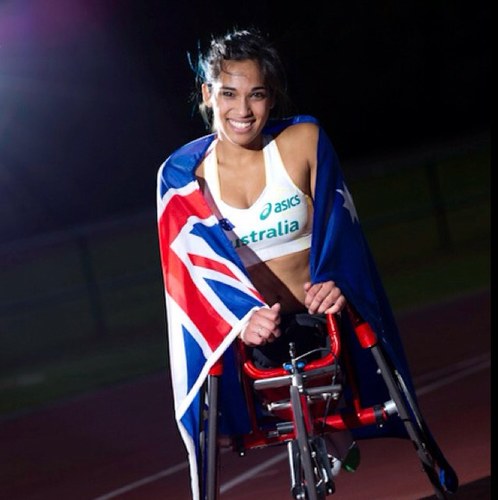
Madison de Rozario became paralysed by a rare neurological condition at the age of 3 and is now 18. She won silver in 2008 as the youngest Paralympian on the team, and was also at the London Games. Madison is a surname meaning “son of Matthew“, although in some rare cases it may be derived from “son of Maddy”, with Maddy being a pet form of Maud. It’s been used as a personal name since the 18th century, and seems to have been given almost exclusively to boys in the beginning. Although certainly used in England, it was much more common in America, where it may often have been given in honour of James Madison, the fourth president of the United States (I only found one man named Madison in Australian records). Madison is famous in baby name circles for only becoming popular, and only becoming common for girls, after the movie Splash in 1984. This romantic fantasy, a rewrite of The Little Mermaid, stars Daryl Hannah as the mermaid, who chooses her “human name” from a street sign for Madison Avenue in New York City, named after the former president – although Tom Hanks’ character tells her this isn’t a “real name”. Madison was #606 for the 1980s, with about three born each year. It then absolutely screeched up the charts to make #52 for the 1990s, and peaked in the early 2000s at #22. It sunk to #44 in 2010, then rose last year to make #41. It’s been a real success story, with its nickname Maddie fitting in with Madeline.

Priya (Cooper)

Priya Cooper was born with cerebral palsy, and spends most of her time in a wheelchair. She began swimming competitively while still at school, and is one of our greatest disabled swimmers, winning nine gold medals and breaking world records at the 1992, 1996 and 2000 Paralympics. She was twice team co-captain, and twice a flag-bearer at closing ceremonies. She has received many honours, and since retiring has become a spokesperson and fundraiser for several charities. Priya is an Indian girl’s name which means “dear, beloved” in Sanskrit. In Hindu legend, Priya was one of the daughters of King Daksha, a son of the god Brahma. The name is pronounced PREE-yuh, and has been rather a favourite in Australia for many years.

Siobhan (Paton)

Siobhan Paton is an intellectually disabled swimmer who holds thirteen world records, and won six gold medals at the 2000 Olympics. She was named Paralympian of the Year in 2000, and also received an Order of Australia. Siobhán is the Irish form of the Norman-French name Jehanne, a variant of Jeanne. There were several medieval queens named Siobhán. It is said that the twentieth century popularity of Siobhan owes a great deal to the actress Siobhán McKenna, who was born in Belfast. She was most famous as a stage actress, but also appeared in King of Kings (playing Mary), Of Human Bondage, and Dr Zhivago. Ms McKenna’s son, Donnacha O’Dea, was an Olympic swimmer for Ireland in 1968. Siobhan first charted in the 1950s, and during the 1960s was #571, which represents about one Siobhan a year. Use of the name increased sharply during the 1970s and ’80s, and it peaked in the 1990s at #211. It hasn’t charted since 2009, so this is another attractive name which has never made the Top 100. Pronunciation is an issue, because the usual Irish pronunciation is SHIV-on, but in Australia it’s usually said shi-VAWN.

Ursula (King)

Usula King was a swimmer who won a silver and two bronze at the 1984 Paralympics. The name Ursula means “little she-bear”, derived from the Latin ursa (which we know from constellations Ursa Major and Minor – the Great and Little Bears). According to legend, Saint Ursula was a Romano-British princess who was sent by her father to marry the pagan governor of Armorica (Brittany). Possibly to stall proceedings, she got all bridezilla and declared that before the wedding she must go all over Europe on a pilgrimage, taking an unbelievable 11 000 virgins with her as her handmaids. On their way to Cologne, they were besieged by Huns, who had a busy day beheading the lot of them. The story doesn’t fit with any known historic facts, and one theory is that Ursula is a Christianised form of the goddess Freya. However, Cologne has a magnificent basilica dedicated to St Ursula and her companions, and a little village in Wales also has a church in their honour, in the belief that Ursula was originally from Wales (in the legend, she is from the West Country). Because of the saint, the name came into use in medieval times, and got a little boost in the 20th century from beautiful Swedish actress Ursula Andress, who was the first Bond girl, in Dr No. It’s clunky by contemporary standards, but strangely alluring.

(Photo of Madison de Rozario from her Twitter account)

Famous Name: Sapphire

05 Wednesday Sep 2012

Posted by A.O. in Famous Names

≈ 4 Comments

Tags

celebrity baby names, english names, gemstone names, Greek names, historical records, name history, name meaning, name popularity, nature names, nicknames, opinions on names, popular culture, popular names, rare names, stripper names

The Australian movie The Sapphires was released here on August 9, after making it’s premiere at the Cannes Film Festival in May, where it received a resounding ten-minute standing ovation. The film is set in 1968, and the plot involves four sisters from a remote Aboriginal mission who are given the opportunity to go to Vietnam as entertainers to the troops – billed as The Sapphires. It’s based on a true story, with the screenwriter’s mum and auntie serving as the inspiration, as they performed as part of a quartet during the war. The “original Sapphires” are thrilled by the film’s portrayal of them, and the movie is making the Indigenous community they work in proud of their achievements.

The Sapphires has received mostly warm reviews from critics, and became the highest-earning Australian film on its opening weekend. I can see why it’s winning the hearts of audiences, because it’s charmingly unpolished, and is one of those feel-good movies where you end up laughing, crying, singing and tapping your feet. Serious topics such as racial prejudice are touched on (in fact are essential to the plot), but they don’t overshadow what is basically a light-hearted comedy-drama. Chris O’Dowd is hilarious, Jessica Mauboy’s singing fantastic, and Deborah Mailman is, as always, luminously charismatic.

If you are a fan of these warm-hearted underdogs-put-on-a-show stories and also love soul music, I urge you to check this movie out when it comes to your own part of the world. It’s being compared to Dreamgirls, but I can’t actually see they have much in common – the movie is probably closer to The Commitments. Of course what I spent most of the movie doing (in between laughing, crying, singing, tapping my feet, and trying to make sure no major popcorn disasters took place) was wondering how Sapphire could work as a name.

The name Sapphire is after the gemstone, which comes from the Greek meaning “blue stone”. However, the Greeks were most likely referring to lapis lazuli. Sapphires can actually come in a range of colours, but never red – red sapphires are called rubies.

In ancient Persia, sapphires were said to be a manifestation of heaven, and there is a tradition that the original Ten Commandments given to Moses by God were written on sapphire (although the Bible itself merely says that God could be seen standing on something that looked like a pavement of “clear sapphire”). In the Middle Ages, sapphires were said to have healing properties, and they have long been popular as royal jewels. Sapphires are favourites amongst the British royal family for their personal jewellery, as well as the Crown Jewels; Princess Anne and Princess Diana both had sapphire engagement rings, and Diana’s was inherited by Catherine, Duchess of Cambridge.

Sapphires have been mined in Australia for over a century, and commercially for more than fifty years. Australia was once the leading source of gem-quality sapphires, but we were overtaken by Madagascar; even today, many sapphires sold as coming from Asia are actually from Australia. Many Australian sapphire mines are in central Queensland, and indeed there is a mining town in that state named Sapphire, although the best are said to be found in the New England region of New South Wales. You can also have a go fossicking for your own sapphires – in New South Wales, you don’t even need a license to do so.

Sapphire has been used as an uncommon personal name for centuries, and got a boost in popularity around the early twentieth century, when other gemstone names such as Ruby and Emerald became fashionable. Not surprisingly, records show that most Australians named Sapphire came from New England or central Queensland, so here it seems to have local significance connected to the mining trade.

If you look online for opinions on the name Sapphire, you are almost certain to find the phrase “stripper name” attached to it. Granted, there are strippers with the stage name Sapphire – then again, there are strippers named Ruby, Lola, Angie, Madison, Abby, Victoria, Lucy, Alicia, Katie, Sarah, Rebecca, Elizabeth and basically any vaguely “girly” contemporary name you can think of. There are strippers using my own name, and nobody has ever assumed I simply must be a stripper with a sexy name like Anna, or shoved money down my bra and asked me to dance around a pole.

In fact, when Ruby became fashionable a few years ago, some of the most common complaints about it was that it sounded “trashy”, “stripperish”, and “too sexy”. Well, guess what? Ruby is now one of the most popular name for girls, being in the Top 10 of every state, and #1 in several states; it’s also been used as a baby name by several celebrities. It seems more like a cute little girl name that a sexy one, and the chances of all those thousands of young Rubys growing up to become strippers is statistically improbable.

If you love Ruby, but worry it’s too popular, you might might want to consider this beautiful gemstone name. Whether you have an attachment to Indigenous culture, Australian film, soul music, the gemstone trade, fossicking, sapphire mining areas, the Sapphire Coast in southern New South Wales, or simply love these deep blue jewels, Sapphire makes a lovely and unusual choice. Some may like Saffy as a nickname.

NOTE: Information on stripper’s names from Australian businesses online.

The Triplets Waltz In!

28 Saturday Jul 2012

Posted by A.O. in Name Updates

≈ 6 Comments

Tags

colour names, gemstone names, holiday names, name combinations, nature names, plant names, tree names, triplet sets

Back in May, I was contacted by ex-pat Gabbi who was looking for a subtly Australian-inspired name for one of her triplets. I suggested ten different names that I thought might suit her son, and fit in with the names already chosen for his brother and sister.

The triplets were born July 21 at 33 weeks, each weighing around the 5 lb mark (a bit over 2 kg). All the triplets, and Gabbi, are in good health.

The names of the triplets are (drum roll)

JASPER BEAR

CLOVER MARCH

and …………… (wait for it)

ASH MILLER!!!

Ash was one of the names I suggested, and Gabbi liked it because it was a nature-themed name like Jasper and Clover, and also suggested a colour (pale grey), to match the red of a jasper gemstone and green clover. Jasper and Clover are also linked with special days of the year – Jasper with Epiphany (January 6), as Jasper is the English name of one of the three wise men, and clover is a symbol of Saint Patrick’s Day (March 17). Ash is connected with Ash Wednesday, the first day of Lent.

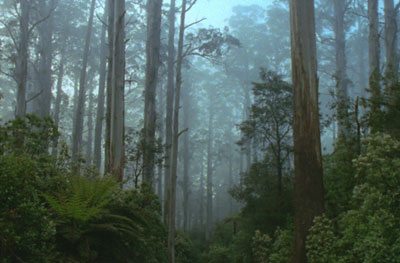
In Australia, the Ash Wednesday bushfires of 1983 became a symbol of the fragility of nature, and demonstrated how the strength of community spirit can rise from ashes. Another Australian connection is the native mountain ash tree (Eucalyptus regnans), which is the tallest tree in Australia, one of the tallest in the world, and is the tallest flowering plant. Specimens can grow to hundreds of feet high.

The middle name, Miller, is one that Gabbi absolutely loved, but was bothered by the Miller Brewing Company in the United States (where she lives). Ironically, since she announced the name, everyone has said that they would never have connected the name to the beer without prompting. However, she and her husband love the name Ash and don’t want to reverse the names.

Both Ash and Miller are names featured on the blog. Ash was one of the Boys Names from Video Games, after Ash Ketchum from Pokémon, and Miller was one of the Names of Sydney Suburbs Which Could Be Used as Boys Names.

Congratulations to Gabbi and her husband, and as they now have nine children, including a new set of triplets, I think they will have their hands full for a while. The triplets have gorgeous names, and I love the name Ash for a boy.

(Photo shows mountain ash trees in the Australian bush; image from the ABC)

Melbourne Suburbs That Could Be Used as Girl’s Names

08 Sunday Jul 2012

Posted by A.O. in Name Themes and Lists

≈ 12 Comments

Tags

astronomical names, Australian Aboriginal names, bird names, Brazilian names, Bunurong names, created names, english names, famous namesakes, Gaelic names, gemstone names, germanic names, Greek names, Irish names, Latin names, literary namesakes, locational names, mythological names, name history, name meaning, name popularity, nature names, Old Norse names, Palawa names, plant names flower names, popular culture, Portuguese names, Scottish names, Spanish names, tree names, unisex names, Visigothic names, vocabulary names

Cardinia

Cardinia is an outer suburb of Melbourne, in the shire of the same name. The name Cardinia is taken from the local Bunurong phrase Kar Din Yarr, meaning “to look towards the rising sun”. I’ve always thought this would make a great girl’s name, with an interesting sound and an inspiring meaning. To me it sounds like a cross between Caroline and Gardenia, and is a native alternative to Dawn and Aurora.

Clematis

Clematis is another outer suburb in the Shire of Cardinia, leading into the Dandenong Ranges. It’s a tiny village dating to the turn of the century, with a few basic amenities. Its fire brigade formed in 1936, takes about 100 emergency calls per year, and has fought many major blazes in Victoria and New South Wales. The suburb is named after the climbing plant, which looks wonderful in the garden and has large, beautiful flowers. The plant’s name is Ancient Greek, and probably referred originally to the periwinkle (the plant we call clematis is from Asia, and related to the buttercup). Clematis is an elegant name filled with Edwardian charm; it’s more unexpected and alluring than Clementine.

Doreen

The name Doreen looks like an elaboration of the name Dora, perhaps influenced by Kathleen, and is said to have been invented by English author Edna Lyall, who published a novel called Doreen in 1894. The Doreen in her story was an Irish singer, and possibly Lyall had heard of the Irish name Dáiríne, which is pronounced daw-REEN-uh, and means “fertile”. Although this outer suburb of Melbourne had been settled since 1844, it was renamed Doreen in 1895, just a year after Lyall’s novel. Perhaps someone was a big fan of the book? Doreen plays a role in Australian literature too, for poet C.J. Dennis wrote a famous verse-novel called Songs of a Sentimental Bloke (1915), in which larrikin Bill meets, courts and marries his sweetheart. This is a girl who works in a pickle factory called Doreen, and she turns Bill from a Melbourne gang-member into a contented husband and father. It’s been made into two movies, a musical, a TV show and a ballet. Doreen was #83 in the 1900s, and peaked in the 1920s at #21, no doubt influenced by the rhymes of C.J. Dennis. It hasn’t charted since the 1970s.

Emerald

Emerald is a town and semi-rural area in the Shire of Cardinia, and its post office first opened in 1899. It’s a popular tourist destination, because it has the Puffing Billy steam train railway which opened in 1900, and enjoyed its heyday in the 1920s. The town also holds a number of festivals through the year. Emeralds have been mined on a small scale in New South Wales and Western Australia; there is a town in Queensland named Emerald; and David Williamson’s play Emerald City is a classic of modern theatre – the title a reference to The Wizard of Oz. Emerald is a name that I’ve seen in occasional use, and the popularity of Ruby is almost certainly making other gemstone names for girls seem more usable. It also has a connection to Ireland, because this country is known as The Emerald Isle. The name is ultimately from the Greek, meaning “green gem”. Perhaps the town got its name because it is set in the forest like a green jewel – although Gembrook is just up the road.

Iona

Iona is a rural area in the Shire of Cardinia; its post office opened in 1898, and it received its current name in 1905. It is named after an island in the Hebrides, off the coast of Scotland. According to tradition, Saint Columba founded a monastery there in the 6th century, and it played a vital role in converting the Picts of Scotland and the Anglo-Saxons of northern England to Celtic Christianity. A renowned centre of learning for four hundred years, Viking raiders plundered it, and the monastery was abandoned. Today it has an ecumenical Christian community, active since the 1930s; they worship in the restored medieval Iona Abbey. The island’s name is thought to come from the Gaelic for “place of yew trees”, but may also be from the Old Norse for “island of the bear cave, island of the animal den”. It is still a popular name in Scotland, and seems like a good alternative to the popular Isla with the fashionable OH sound in it (it’s said ie-OH-na).

Jacana

The suburb of Jacana was originally farmland owned by Duncan Kennedy in the 1840s, and its streets were laid out in 1923 after the land was sold. During the 1950s to 1970s, the land was developed by the government Housing Commission, who built most of the houses. They also re-named some of the early streets, which had been given jocular names such as Emu Parade and Sunset Boulevard. Being developed as a Housing Commission suburb, it is a lower-middle and working-class area with good amenities. The suburb is apparently named after Jacana Avenue, which is in the next suburb of Broadmeadows; other streets nearby also have bird names, such as Ortolan and Dacelo. Jacanas are tropical birds that live on lily lakes in wetlands and found world-wide; in Australia we have the Comb-Crested Jacana. Its name is Brazilian-Portuguese, and pronunciation is very diverse around the globe. The Australian way to pronounce it is juh-KAH-nuh, although the original is more like ZHAH-suh-NUH. I think this is a pretty and unusual bird name that sounds similar to Jacqueline, Jana and Jacinta, but with its own “feel”.

Kallista

Kallista is in the outer suburbs, and the first European inhabitants were loggers in the 1850s; gradually farmers began settling in the area as the forest was cleared. From early on, the government preserved a section of it as state forest, and once the roads were completed, Melburnians began using it for weekenders and holiday homes. During the Depression, many people could not afford the luxury of a second home for holidays, and they were bought up cheaply by those hoping to support themselves by living off the land. The suburb gained its name in 1925, from the Ancient Greek Kalliste, meaning “most beautiful”. In Greek mythology, Callisto or Kallisto was one of the nymphs of Artemis, although Kalliste was one of the epithets of the goddess herself, and the stories of the nymph were probably originally about Artemis. Callisto was seduced by Zeus, and gave birth to a son named Arcas, who became the king of Arcadia. Jealous Hera turned Callisto into a bear, and when a teenaged Arcas was hunting in the woods, he almost shot his own bear-mother. Zeus placed them in the sky as the constellations Ursa Major and Ursa Minor to protect them. A very pretty “star” name.

Olinda

The outer suburb of Olinda began as a logging settlement, but began growing in the early 1900s as land became available for market gardening. It is famous as the home of artist Sir Arthur Streeton, and today is an artsy-craftsy sort of suburb, studded with antique shops and galleries. Olinda is named after Olinda Creek, which has its source in the suburb, and the creek was named after Alice Olinda Hodgkinson, the daughter of Victoria’s acting surveyor-general in 1859. Her unusual middle name is something of a mystery to me – I have seen it defined as a German name meaning “defender of the land”, which became used in Spain thanks to the Visigoths. However in English, this name is said to be derived from the place Olynthus in Greece, meaning “fruit of the wild fig tree”. Olinda’s Adventures was the first novel of a precocious teenage writer in the 17th century called Catherine Trotter. It fits in with other literary names of that period, such as Orinda and Belinda. It sounds like retro Linda, dressed up with the fashionable OH sound, and still seems exotic and poetic.

Sassafras

Sassafras is in the outer suburbs, and lies between Olinda and Kallista. It was opened to farming in the 1890s, and a small township developed. Around the turn of the 20th century, it began to attract tourists, and still caters for them, with boutique stores, cafes serving Devonshire teas, and garden nurseries. Sassafras has very fertile volcanic soil, which makes it ideal for growing plants. Aptly enough, it is named after the sassafras tree, found growing there in profusion. These are not true sassafras, which are native to North America and Asia, but Southern Sassafras, an ancient tree from the southern hemisphere, with several species native to Australia. The one in Victoria is Atherosperma moschatum, and it grows in cool temperate rainforest. An evergreen, it flowers in winter with white petals, and its springy timber is in demand for speciality woodwork. The word sassafras is thought to be a corruption of saxifrage, an unrelated genus of tough alpine plants; their name is from the Latin for “stone breaker”. I have seen this once in a birth notice for a baby girl; it’s an unusual plant name which gives the nicknames Sass and Sassy.

Sunshine

This inner-city suburb has been a township since the late 19th century, and is an important part of our industrial history, because the Sunshine Harvester Works were moved here in 1906 by H.V. McKay, and became the largest manufacturing plant in Australia. It was after this that the suburb was given its present name; it is believed that McKay chose Sunshine for the name of his business after hearing a sermon by visiting American evangelist Rev. Thomas de Witt Talmage. The word sunshine seems to have been frequently used in Talmage’s writings, as a symbol of happiness and God’s blessings. McKay planned Sunshine on Garden City principles, and workers flocked there to live. The manufacturing plant was demolished in the early 1990s, but there is still plenty of industry, and it has attracted many migrants, especially from Malta and Vietnam. Skier Lydia Lassila grew up here, as did singer Bon Scott; Prince Philip lived here briefly. This cheerful, friendly name isn’t just from nature – it’s one connected to our manufacturing history, and also has idealistic Christian roots. Although unisex, the film Little Miss Sunshine helps give it a feminine edge. Sunny makes a cute nickname.

Truganina

This suburb is named after Truganini, considered to be the last “full blood” Palawa (Tasmanian Aborigine). Truganini was a chieftain’s daughter born in 1812 on Bruny Island, described as a vivacious and intelligent woman by contemporary sources. Her mother was killed by whalers, her two sisters were abducted and taken as slaves, her fiance died saving her from being abducted herself. Efforts at conciliation meant that Truganini and the last surviving Palawa people were moved around, including a short time in Melbourne, which is how the suburb received its name. By 1873, Truganini was the last Palawa left, and she died three years later. Her final request, that her ashes be scattered in the D’Entrecasteaux Channel near her island home, was ignored; she was buried in a convict workhouse in Hobart. Two years later, her skeleton was exhumed, and put on display by the Royal Society of Tasmania. In 1976, a century after her death, her last wish was finally fulfilled. Her name is the Palawa word for the tough plant we call grey saltbush (Atriplex cinerea), and can be spelled a number of ways. This could make an interesting heritage choice, although its namesake is a tragic symbol of Indigenous genocide. The correct pronunciation is not known, but Truganina could be said to give the nicknames True and Nina.

(Picture shows the Puffing Billy steam railway in Emerald)

← Older posts
Newer posts →

Enter your email address to follow this blog

Categories

Archives

Recent Comments

A.O.'s avatarwaltzingmorethanmati… on Zarah Zaynab and Wolfgang…
Madelyn's avatarMadelyn on Zarah Zaynab and Wolfgang…
JD's avatardrperegrine on Can Phoebe Complete This …
A.O.'s avatarwaltzingmorethanmati… on Rua and Rhoa
redrover23's avatarredrover23 on Rua and Rhoa

Blogroll

  • Appellation Mountain
  • Baby Name Pondering
  • Babynamelover's Blog
  • British Baby Names
  • Clare's Name News
  • For Real Baby Names
  • Geek Baby Names
  • Name Candy
  • Nameberry
  • Nancy's Baby Names
  • Ren's Baby Name Blog
  • Sancta Nomina
  • Swistle: Baby Names
  • The Art of Naming
  • The Baby Name Wizard
  • The Beauty of Names
  • Tulip By Any Name

RSS Feed

  • RSS - Posts

RSS Posts

  • Celebrity Baby News: Melanie Vallejo and Matt Kingston
  • Names from the TV Show “Cleverman”
  • Can Phoebe Complete This Sibset?
  • Zarah Zaynab and Wolfgang Winter
  • Baby, How Did You Get That Name?
  • Celebrity Baby News: Media Babies
  • Celebrity Baby News: Adelaide Crows Babies
  • Celebrity Baby News: Chris and Rebecca Judd
  • Names at Work: Name News From the World of Business and Employment
  • Celebrity Baby News: Sporting Round Up

Currently Popular

  • Celebrity Baby News: Jacinta Allan and Yorick Piper
  • Celebrity Baby News: Jacinta Allan and Yorick Piper
  • Celebrity Baby News: Craig Thomson and Zoe Arnold
  • Celebrity Baby News: Ed Husic and Bridget Tilley
  • The Top 100 Names of the 1940s in New South Wales

Tags

celebrity baby names celebrity sibsets english names famous namesakes fictional namesakes honouring locational names middle names name combinations name history name meaning name popularity name trends nicknames popular names saints names sibsets surname names twin sets unisex names

Create a free website or blog at WordPress.com.

Privacy & Cookies: This site uses cookies. By continuing to use this website, you agree to their use.
To find out more, including how to control cookies, see here: Cookie Policy
  • Subscribe Subscribed
    • Waltzing More Than Matilda
    • Join 517 other subscribers
    • Already have a WordPress.com account? Log in now.
    • Waltzing More Than Matilda
    • Subscribe Subscribed
    • Sign up
    • Log in
    • Report this content
    • View site in Reader
    • Manage subscriptions
    • Collapse this bar
 

Loading Comments...