• About
  • Best Baby Names
  • Celebrity Baby Names
  • Celebrity Baby Names – Current
  • Celebrity Baby Names – Past
  • Featured Boys Names
  • Featured Girls Names
  • Featured Unisex Names
  • Links to Name Data
  • Waltzing on the Web

Waltzing More Than Matilda

~ Names with an Australian Bias of Democratic Temper

Waltzing More Than Matilda

Tag Archives: english names

Waltzing With … Winter

22 Sunday Jun 2014

Posted by A.O. in Waltzing with ...

≈ 6 Comments

Tags

birth notices, english names, Gaelic names, German-Jewish names, historical records, Irish names, middle names, name history, name meaning, name popularity, nature names, season names, surname names, UK name trends, unisex names, US name trends, vocabulary names
flat,550x550,075,f (1)

Yesterday was the winter solstice, so we are now embarking on the coldest part of the year. In Hobart they celebrated the winter solstice with an icy nude swim at sunrise, and declared that being half frozen to death was quite exhilarating.

It’s been a fairly mild winter so far (hopefully in Hobart too), although winter still came as a shock to me as we’d had such a warm autumn. There’s lots to enjoy about winter: the grass which was dry and brown in summer is now a lush green; the sunshine is warm, but doesn’t burn; the clear blue skies of winter are more beautiful than in summer.

I look forward to making soup, walking for miles without getting hot and sweaty, footy season, weekends ski-ing, and cold nights at home by the fire. I love the eerie look of trees looming through fog, waking up to find a glitter of ice on the lawn, snow capping the mountains, or falling softly on the house like icing sugar.

Of course, I also hate going to work in the pitch dark, finding the frost has killed all the vegetables in the garden, everyone tracking mud and dead leaf mush into the house, and miserable grey days where the sun doesn’t appear until 3.30 pm, then sets at 4. But on a sunny winter Sunday, it’s easy to forget all that.

I planned to do the name Winter today back in January, but yesterday a blog reader considered the name Winter for one of her twin daughters, and on Friday there was a boy with Winter as one of his middle names, so what with the winter solstice, this does seem like the weekend for Winter.

Winter is an English word derived from Ancient Germanic. The original meaning is not known for sure: it may come from an ancient word for “water”, possibly to denote “wet season”.

The English surname Winter started out as a nickname for someone who was of a cold or miserable “wintry” temperament – not very flattering! As an Irish surname, Winter can be an Anglicisation of the Gaelic Mac Giolla Gheimhridh, meaning “son of the servant of Gheimhridh”, with the personal name Gheimhridh meaning “winter”. Winter can also be a German-Jewish surname after the season. The surname is frequently spelled Wynter, making this a variant spelling with a long history.

Winter has been used as a first name since at least the 16th century, and according to early records, most people named Winter were born during the winter months. Later records don’t seem to show much correlation between the name Winter being chosen and the season of birth.

Winter is historically much more common as a male name, suggesting that the surname was more influential than the season. These days, Winter is more often thought of as a female name, and it charts in the United States as a girl’s name only, where it is rising. In the UK, Winter is more common for girls (more than three times as many Winters are girls), but is rising steeply for both sexes. Interestingly, the less common spelling Wynter has been much more evenly given to both sexes through history (although still more common for males).

Winter was in the 200s in Victoria in 2012 – there were almost as many baby girls named Winter just in this state as in the whole of the UK. I see Winter used mostly as a girl’s name in Australian birth notices, but it seems more common as a boy’s name in the middle position, showing its great versatility.

Even though Winter is currently more common as a girl’s name, it still seems very usable for boys. It sounds similar to Winston, is a surname, and the season of winter isn’t generally thought of as particularly feminine. It is sometimes personalised as Old Man Winter or Father Winter, and another “winter character” of folklore is Jack Frost. This always reminds me of the Australian bird, the Jacky Winter – another boyish-sounding winter connection.

I can think of two famous female characters connected to winter, and they are both from the fairy tales of Hans Christian Anderson. One of them is the beautiful yet deadly Ice-Maiden, and the other is the Snow Queen. Although the Snow Queen is a seemingly malevolent character, she is an attractive one: beautiful, strong, and intelligent, she is a “queen bee”. Because of these two characters, we call an alluring yet frosty woman an “ice maiden” or “snow queen”, and rumour has it that Anderson based both these characters on the opera singer Jenny Lind, and her rejection of him.

The Snow Queen recently received a reboot in the Disney film Frozen, with a completely different plot and characters from Anderson’s fairy tale. The stranger-danger theme of a beautiful cold woman in a sleigh seducing, abducting, and imprisoning a little boy had already been co-opted by C.S. Lewis for The Lion, the Witch and the Wardrobe, so something different was necessary.

Frozen has been a huge hit, with its appealing characters, fun dialogue, heart-warming coming-of-age story, and catchy songs. As Ebony from Babynameobsessed has pointed out, that has had an effect on the naming world. The name Elsa is becoming more popular, Arendelle suddenly seems usable as a baby name, and perhaps we can expect more winter-inspired names such as Snow, Frost, Ivy, June … and Winter.

Winter is a clean-sounding name that conjures up the purity of virgin snow, mysterious fog descending on the earth like a white blanket, the crisp sparkle of morning frost. Or maybe it reminds you of invigorating hikes in the cold air, and the thrill of downhill ski-ing, or of hot cocoa drunk before a blazing fire, and snuggling under the quilts at night while listening to a storm roaring outside.

When I think of stories connected with winter, apart from ice maidens, snow queens, white witches and frost fairies, I think of the white bear in the tale East o’ the Sun and West o’ the Moon, of the frost giants of Norse legend, of William Shakespeare’s comedy The Winter’s Tale, with its frozen queen, and Mark Helprin’s New York fantasy, Winter’s Tale.

There are so many fantasy stories about winter, perfect for recounting before the fire on cold nights, that there seems something magical it. Anything is possible in a winter wonderland – it’s a season of miracles.

POLL RESULT
Winter received an extremely good approval rating of 78%. 28% of people loved the name, while a further 24% liked it. Less than 10% of people hated the name.

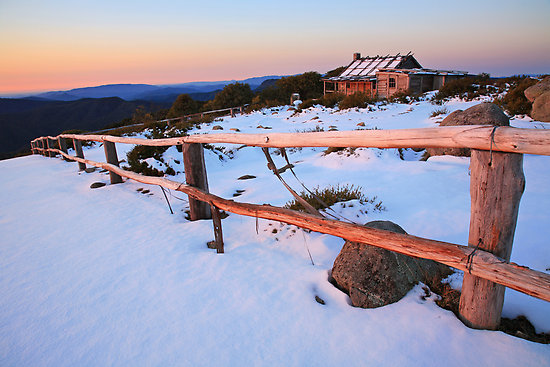
(Picture shows Craig’s Hut at Thredbo, New South Wales; photo from Red Bubble)

Famous Names: Azalea and Amethyst

04 Wednesday Jun 2014

Posted by A.O. in Famous Names

≈ 16 Comments

Tags

Anne of Green Gables, birth notices, dog names, english names, famous namesakes, flower names, gemstone names, Greek names, locational names, name history, name meaning, nature names, pet names, plant names, rap names, screen names, stage names, street names, US name trends

May-purpleazalea

Australian rapper and model Iggy Azalea has been in the news recently, as she performed at the Billboard Music Awards last month. Her song Fancy recently reached #1 on the Billboard Top 100 in the same week that Ariana Grande’s Problem, which features Azalea, made #2. This makes Iggy Azalea the first act to reach #1 and #2 simultaneously since the Beatles did it in 1964 with I Wanna Hold Your Hand, and She Loves You.

Iggy grew up in the hippie town of Mullumbimby in northern New South Wales, and began rapping at the age of fourteen after developing an obsession with Tupac when she was eleven. Unsuccessful and unpopular at school, Iggy dropped out. Shortly before her sixteenth birthday, she left for a “holiday” in the United States, during which she phoned her parents and broke it to them that she wasn’t coming home, but going to seek her fortune as a professional rapper. She lived in the southern states, and developed a southern American accent for professional purposes.

As a rapper in America, Iggy was at first unsuccessful and unpopular, but Mullumbimby had accustomed her to this, and it didn’t faze her. Later she moved to Los Angeles, and began uploading her own videos to YouTube: her career began to grow when her first official music video, for her song Pu$$y, went viral. Her first studio album, The New Classic, was released in April this year and debuted at #3 on the Billboard charts, also making #1 on Billboard’s Top R&B/Hip-Hop albums, and Top Rap Albums. She is the first non-American female rapper to reach the summit of these charts.

We are told that screen names are no longer necessary in Hollywood, but stage names are still common in the world of rap and hip-hop. Iggy Azalea invented hers using the old chestnut of combining her pet dog’s name with the name of the street she grew up on (her family still lives on Azalea Street in Mullumbimby). While some people might use this method and end up with something uninspiring, like Pickles Main or Mr. Bunny Wunny Commercial Estate, Iggy Azalea got pretty lucky with hers, although her real name of Amethyst Kelly seems marketable enough.

I have been seeing quite a few Azaleas and Amethysts in birth notices in the past few years, and wonder whether Amethyst Kelly aka Iggy Azalea has had an effect? I haven’t seen any girls named Iggy though.

The azalea is a flowering ornamental shrub native to Asia, Europe and North America; it is a member of the rhododendron family. Azaleas bloom in the spring, and have beautiful frilly flowers in shades of pink, purple, and white.

Its name comes from the Greek for “dry”, because it grows in dry soil and is tough enough to thrive in harsh conditions. In Chinese culture, azaleas are a symbol of womanhood and love for the home. Azalea festivals are held in Japan, China, Korea, and in many cities of the United States; the azalea is the state wildflower of Georgia in the US.

Azalea has been used as a girl’s name since the 18th century, originating in both Britain and the US. Although there is some dispute as to when azaleas were introduced to England from the Americas, they were definitely imported by the early 18th century. Azalea first turns up in Ohio in the US, where there is a small town named Azalea, so it can be seen as a place name. The name Azalea is currently rising in popularity in the United States.

As a name, Azalea seems flouncy and feminine, and also quite tough – the “dry” meaning seems very appropriate in Australia. It can be pronounced either uh-ZAY-lee-uh or uh-ZAYL-yuh, and fits in with trendy names such as Zalia and Zahlia, so that it seems a little exotic but doesn’t sound particularly strange. Zay or Zaylie could be used as short forms.

An amethyst is a semi-precious gemstone which is a violet-shaded quartz, ranging from a pinkish colour to a deep purple. The name comes from Greek, and means “not intoxicated”, due to a belief that amethysts were a protection against drunkenness.

The ancient Greeks and Romans drank wine from cups made from amethyst, thinking this would stop them being affected by alcohol. In medieval times, amethyst amulets were worn in battle, in the belief that they had healing properties, and kept the wearer cool-headed; they are supposed to have the ability to dispel illusions.

Amethysts are mined all over the world, with the highest quality coming from Brazil and Sri Lanka. You can fossick for amethysts yourself in Australia, with the most promising locations being in northern Queensland. You can also find “desert amethysts” – very old glass bottles which have baked in the sun until they turn a pretty violet colour.

Amethysts seem to capture the imagination of writers, and there are many stories and poems about them, even in ancient times. If you have read the Anne of Green Gables books by L.M. Montgomery, you will remember that as a child, Anne thought that diamonds would be “purply-sparkling” like amethysts and was disappointed to find they were colourless. One of her fancies was that amethysts were the souls of good violets.

Amethyst has been used as a personal name since the 19th century, when other gemstone names were fashionable; it can be shortened to Amy. Although amethysts are not rare or valuable, there is something pure and wholesome about them, even spiritual. As Anne says: “I think amethysts are just sweet”.

Two pretty nature names starting with A, both belonging to the same person. Which one do you prefer?

POLL RESULT
Azalea received a very good approval rating of 74%, but people were less enthusiastic about Amethyst, which had an approval rating of 43%.

azalea-st

(Top photo shows purple azalea flowers; bottom photo shows Azalea Street in Mullumbimby)

Famous Name: Harvey

28 Wednesday May 2014

Posted by A.O. in Famous Names, Requested Names

≈ 7 Comments

Tags

birth notices, Breton names, english names, famous namesakes, French names, Gaelic names, Gallic names, Irish names, mythological names, name history, name meaning, name popularity, Old Breton names, popular names, retro names, saints names, surname names, UK name trends, US name trends


world-no-tobacco-day-rose-graphicFamous Namesake
On May 31 it will be World No Tobacco Day, encouraging smokers to abstain from tobacco for just 24 hours. World No Tobacco Day was started by the UN’s World Health Organization in 1987, and each year there is a new theme: this year it is “Raise taxes on tobacco”. Should you wish to celebrate No Tobacco Day by giving up smoking, information and support can be gained from a number of government and community services.

The number of Australian smokers has dropped dramatically since World War II. In 1945, about three-quarters of men and a quarter of women smoked every day. Today it’s 16% of men and 13% of women, with numbers continuing to fall, making us one of the most successful countries at reducing smoking in the English-speaking world. That can be attributed to vigorous public anti-tobacco campaigns running since the 1980s.

Australia’s campaign against smoking began with William Harvey, a distinguished thoracic physician who devoted his lengthy career to the study and treatment of tuberculosis after his father (also a doctor) contracted the disease. Harvey had the satisfaction of seeing TB become less common, due to better testing and treatment, but over time he became concerned at the growing incidence of lung cancer.

In 1965 he helped found the Australian Council on Smoking and Health as part of his campaign against smoking, and was its president from 1966 to 1975. This didn’t make him popular with some, especially tobacco companies, who continued to deny there was any link between smoking and disease. However, William Harvey had been a POW during World War II who continued caring for his patients even as disease threatened his own life. He didn’t believe in giving up.

He visited schools and sporting bodies, he wrote to the newspapers, and he persuaded other doctors and medical organisations to join him in his campaign against tobacco. One of his achievements was the banning of cigarette vending machines in hospitals. Progress seemed slow, but he persisted, saying that he had great faith in “the inevitability of gradualness”. A devoted family man, Harvey was a keen gardener and surfer into his twilight years, and played golf, tennis and bowls. He passed away suddenly in 1981 at the age of 84 – a good advertisement for a life of healthy non-smoking.

William Harvey didn’t live to see the big government campaigns against smoking of the 1980s, but their existence and determination owe a great debt to his dedication and energy. And if I can reveal my hand, I have friends and family members who have given up smoking, and as a result I have got to spend many more years with them, or seen them live happier, healthier lives. Every one of them was convinced to give up by anti-smoking campaigns, so from the bottom of my heart, I thank you William Harvey.

Name Information
Harvey is an English surname, and one of the earliest recorded. It is derived from the Breton personal name Huiarnuiu derived from the Old Breton name Huiarnviu, meaning “blazing iron”. The Gallic form of the name is Hervé, and St Hervé (or St Harvey) is one of Brittany’s most popular saints.

Hervé was born blind, and was a 6th century hermit and bard known for his humility. According to legend, he had the power to cure animals, and was always accompanied by a wolf. The story goes the wolf had eaten the ox that the saint used for ploughing, and St Hervé made such an eloquent sermon that the wolf volunteered to pull the plough instead, in penitence.

One of the followers of William the Conqueror during the Conquest was named Hereueu, another form of the Breton name. Use of the name as a surname followed almost immediately after the arrival of men with the first name, and is first found in Norfolk, where the Harvey family were granted lands for their services at the Battle of Hastings.

In Ireland, Harvey was used to Anglicise the Gaelic surname O’hAirmheadhaigh, meaning “grandson of Airmed”. Airmed is a goddess from Irish mythology, known for being a healer during a great battle. As she wept over the grave of her brother, who had been slain by her father, all the healing herbs of the world sprang up, watered by her tears. Airmed gathered them into her cloak, but her father scattered the herbs, so that no person can ever know all the secrets of herbalism – only Airmed. Her name is identical to a word meaning “a measure of grain”, although I’m not sure if that is the origin of the name.

Harvey was also used to Anglicise the Gaelic surname Ó hEarchaidh, meaning “son of Earchadh”. Earchadh is an Irish name that I have seen translated as “noble warrior”. By the way, William Harvey was very proud of his Irish Protestant heritage, so his surname was Irish, although most likely of English origin rather than Gaelic.

The name Harvey was #167 in the 1900s, and peaked in the 1940s at #141 – perhaps because of a family of cricketers from Victoria with the surname Harvey who flourished around this time. Harvey disappeared from the charts from the 1960s to the 1980s, but made a comeback in the 1990s when it ranked at #581.

Interestingly, this was the time when retail chain Harvey Norman, co-founded by maverick businessman Gerry Harvey, became a “superstore” business, with massive expansion. The name Harvey zoomed up the charts to make #314 for the early 2000s and #243 for the late 2000s. Harvey peaked in 2010 at #149, and then began dipping the next year – this coincides with Gerry Harvey’s unpopular campaign to make consumers pay Goods and Services Tax on items bought online from overseas websites.

Although Harvey is in the 100s in New South Wales, it is a Top 100 name in Victoria. Harvey entered the Victorian Top 100 in 2010, debuting at #100, and last year made #64. If you are in Victoria you probably think of Harvey as a popular and rising name, while in other states, Harvey may seem fashionable but underused. It is not clear at present if other states will follow Victoria’s lead, but as Harvey is Top 100 in the UK, and rising in the US, international trends suggest Harvey’s popularity here may be increasing.

Harvey is a cute, spunky name for boy, but there’s also something strong and masculine about it. This retro name has been underused for most of its history, and is now making a comeback – in at least one state, it is more popular now than at any other time. This may give some parents the jitters. Although it has only ever charted as a boy’s name, I have seen Harvey on a few girls in birth notices, and the Irish goddess does give this some legitimacy as a name for both genders.

POLL RESULT
Harvey received an excellent approval rating of 75%, making it one of the highest-rated names for 2014. People saw the name Harvey as strong and manly (20%), cute and boyish (16%), and traditional without being stuffy (13%). However, 11% were reminded too strongly of Harvey Norman stores. There was a strong preference for Harvey being reserved for boys only, with 18% saying it was only suitable for boys, and just 2% believing it could be used for both genders.

Thank you to Vanessa for suggesting the name Harvey be featured on Waltzing More Than Matilda.

Famous Name: Grace

21 Wednesday May 2014

Posted by A.O. in Famous Names

≈ 6 Comments

Tags

British name popularity, classic names, colour names, contemporary classics, english names, famous namesakes, germanic names, Latin names, middle names, mythological names, name history, name meaning, name popularity, New Zealand name popularity, nicknames, popular names, royal names, saints names, theological names, virtue names, vocabulary names

Thumbnail_320

Last month it was the 121st birthday of Grace Cossington Smith, one of the most important Australian artists of the 20th century, and a contemporary of Clarice Beckett.

Grace was born in Sydney, and studied under Antonio Dattilo Rubbo, an inspiring and extremely supportive art teacher who encouraged his students to experiment; he affectionately called Grace “Mrs Van Gogh”. Her painting The Sock Knitter, showing her sister knitting socks for the war effort, is considered to be Australia’s first post-Impressionist painting, and she exhibited in galleries from 1915.

Her paintings are notable for their bright patterns and vibrant energy, using careful square brushstrokes to create images of colour shimmering through sunlight. She painted scenes of Sydney, and is famous for her iconic representations of the Harbour Bridge, showing the bridge’s construction. Grace’s Sydney was bustling, busy, exciting; filled with crowds, colour and sunshine. Later in life, she became known for her still lifes and interiors.

Art museums began buying Grace’s work in the 1940s, but she did not become famous until the 1960s, and in 1973 was appointed an Order of the British Empire as an exhibition of her work toured with the Art Gallery of New South Wales. Grace was 81, and let it be known that she would have welcomed recognition a little earlier. She received her OBE while in a nursing home, and by then was too frail to paint any more.

Grace is an English word which can be understood in several different ways. We might think of grace in terms of physical elegance and poise, but there is also social grace, where a person is charming and well-mannered.

The theological concept of Divine Grace is present in several religions. In Christianity, it means the undeserved love and mercy given to us by God – a gift that allows us a share in divinity. Although there are many theological disagreements, nearly all Christians believe that the grace of God is necessary for salvation, and that it is through divine grace that we are able to resist sin.

The word grace comes from the Latin gratia, meaning “kindness, favour, esteem”, ultimately from an ancient root which means “praise, welcome”. The word is related to grateful. Both the secular and spiritual senses of the word grace have connotations of effortlessness – no matter how many lessons in physical movement or etiquette you might have, you can only appear graceful if it seems natural and easy for you. And the grace of God comes not through our own efforts, but is a gift that we are freely given without earning it.

The English name Grace was not originally linked to either of these meanings, but from a Germanic name Grece, meaning “grey”, and pronounced like Grace. However, it quickly became associated with the Latin Gratia or Gracia, to suggest “charming, pleasant”, and it is thought that women with these names would have been known as Grece or Grace in everyday life.

St Gracia of Lerida may have been an influence on the name’s development; she was the daughter of a Spanish Muslim caliph who converted to Christianity and was martyred in the 12th century. Born Zaida, she took Gracia as her Christian name, and is sometimes known as St Grace. There is also an obscure pre-Norman English saint named Grace connected with St Probus of Cornwall; some speculate that she was his wife, and others that she was a great lady who supported him in his ministry. There doesn’t seem to be any evidence that she ever existed.

In Greek mythology, the Graces are goddesses of charm, beauty, nature, creativity, and fertility, patronesses of amusements and festivities. Despite this seemingly frivolous purview, in some mysterious way they were connected to the Underworld and the secrets of the afterlife – perhaps a taste of the joys which might await us on the other side. In Renaissance art, they are usually depicted as three beautiful young women who are either naked or lightly draped in diaphanous garments, and often embracing each other or clasping hands.

These attractive figures might have influenced the choice of the name Grace from the late Middle Ages, but it is usually thought that after the Reformation, Grace would have been given by Puritans as a virtue name, with the religious meaning in mind.

Grace is a classic name which has never left the charts. It was #29 in the 1900s, left the Top 100 in the 1940s, and reached its lowest point in the 1970s at #373. It then began climbing steeply, around the time of Princess Grace of Monaco’s death, and reached the Top 100 in 1988 at #89.

By 1991, Grace was in the Top 50 at #45, and in the Top 20 by 1998 at #13 – the highest point it had ever gained historically. Grace reached the Top 10 in 2002 at #9, however it did not stay there long, and stabilised just outside the Top 10, where it remains today.

Currently Grace is #12 nationally, #11 in Victoria, #14 in New South Wales, #12 in Queensland, #11 in Western Australia, #9 in Tasmania, #11 in the Northern Territory and #10 in the Australian Capital Territory. Highly popular in all states and territories, it is also a Top 100 name in other English-speaking countries, and is most popular in Northern Ireland and Ireland at #3 and #4 respectively. Its popularity in Britain and New Zealand is much the same as here.

Grace is a true timeless classic; a solid choice as an English name which has never gone out of fashion or fallen into disuse in nearly a thousand years. Yet it is more popular now that it has been at any other time in Australia’s history, making it a contemporary classic which feels both traditional and up-to-date.

Grace is a beautiful name with simple elegance; sophisticated and unpretentious, and even more popular as a middle name. It’s a saint, a princess, a goddess, and millions upon millions of ordinary women throughout the ages. There may be many little girls named Grace, but that’s no reason why your daughter cannot join their ranks. Gracie is a common pet form, and quite a few parents are choosing this as the name on the birth certificate.

POLL RESULT
Grace received an excellent approval rating of 83%, making it one of the highest-rated names of 2014. People saw the name Grace as a beautiful timeless classic (29%), simple yet sophisticated (18%), suitable for all ages (18%), and intelligent and professional (11%). However, 6% thought it was too popular. Nobody thought the name Grace was harsh or ugly.

(Picture shows Church Interior by Grace Cossington Smith, c 1941)


Waltzing with … Forrest

18 Sunday May 2014

Posted by A.O. in Waltzing with ...

≈ 3 Comments

Tags

english names, famous namesakes, fictional namesakes, name history, name meaning, nature names, rare names, Scottish names, surname names

OLYMPUS DIGITAL CAMERA

The name Forrest has been so often in the newspapers lately that I thought it must be time to cover it. The reason it’s in the papers is because of mining magnate Andrew “Twiggy” Forrest, the 9th richest person in the country, with a fortune of $3.66 billion.

The head of the Fortescue Metals Group, Andrew has recently bought massive pastoral holdings in the Pilbara, making him one of Western Australia’s biggest landowners. He also recently bought Harvey Beef, the biggest beef exporter in Western Australia, and the only one which exports to China.

Andrew is a prominent philanthropist; he and his wife Nicola are the first Australians to pledge half their wealth to charity while living. He has made large contributions to Indigenous employment, charities for children and the homeless, disaster relief, and his alma mater Hale School – the oldest private boy’s school in Western Australia, whose Forrest Library is named in Andrew’s honour.

Last October, Andrew announced he would donate $65 million towards higher education in Western Australia – one of the nation’s highest philanthropic donations. He has also become known for his fight against modern slavery, launching a global campaign with the support of the Pope, Archbishop of Canterbury, and Grand Imam of al-Azhar.

Andrew likes to be seen as apolitical, but has friends on both sides of politics, and has made donations to the WA Labor Party. He has also been vehement in his opposition to the mining tax, and urged the Federal Government to strip welfare payments from teenagers if they are not in school, work, or training. This week’s budget demonstrated the power of his political influence.

Andrew Forrest is the great-great nephew of Sir John Forrest, an explorer and who became the first premier of Western Australia; he was the first professional politician in Western Australia and never lost an election. Sir John has many sites named after him, including John Forrest National Park, Western Australia’s oldest national park. This must be a rare example of a forested area named after someone named Forrest.

John’s brother Alexander was also an explorer and politician, with significant investments in land and mining. Their brother David was Andrew Forrest’s great-grandfather. David was the first manager of Minderoo Station in the Pilbara, which was bought by the Forrest brothers in 1878, and owned by them until it was sold by Andrew’s father Donald in 1998 due to drought and debt. Andrew, who had once worked as a jackaroo at the station, bought back the family property in 2009.

Forrest is a surname which is easy to translate, as it comes from the Old French word forest. Today we might see Forest as a tranquil nature name, perhaps even slightly hippy. In a time when national forests are protected, they seem a haven where we can all enjoy their natural beauty.

However, the original meaning of forest in Norman England was quite different. The word referred to large tracts of heath and woodland reserved for the sole use of the king and, by invitation, the aristocracy. At the height of afforestation in the Middle Ages, a third of southern England was set aside, with a certain amount of ordinary people getting booted out of their homes to make way for these forests.

Forests were not for communing with nature and tree-hugging, they were for royals and nobles to hunt wild animals, and there could be harsh penalties for anyone else who entered them, especially if they were there to poach game. The word forest comes from the Latin for “outside” – not because forests are outdoors, but because they were outside the laws of the land, and the law offered you no protection if you were caught in one. That’s why outlaws (such as fictional Robin Hood) lived in the forest, and why they were taking such a daring risk in doing so.

The surname Forrest would have been held by someone who lived near a royal forest, or someone who worked in one, perhaps as a gamekeeper or warden (a lot of security staff was needed to protect the game). Although widely used in Britain, the surname became particularly associated with Scotland because of the Clan Forrester, which originated in the Edinburgh region. Sir John Forrests’ parents were emigrants from Scotland, who came to Australia as servants of a prominent colonial physician.

Forrest has been used as a first name as early as the 16th century, and originated in England rather than Scotland. It has been most used in the United States, but the name isn’t uncommon in Australian records, and Forrests from Western Australia may have been named after (or been part of) the famous Forrest family.

The most famous fictional Forrest is surely Forrest Gump, from the book and movie of the same name. In the story, Gump is named after his ancestor Nathan Bedford Forrest, a popular yet highly controversial Confederate General who was accused of war crimes and became one of the early members of the Ku Klux Klan. Unlike his rather wily and unscrupulous ancestor, Forrest Gump is naive and good-hearted.

Forrest has never charted in Australia, but its meaning and history almost make it seem traditional: this is a good example of a name that is very unusual, yet not in the slightest bit strange or confusing. The Forrest dynasty gives it depth and dignity, while the modern understanding of forests resonates with Australians, thanks to our mythology of the bush.

Forests may remind us of freedom and toughness, and the literal meaning of “outside the law” of wild bushrangers. They might also remind us of the fight to save our native forests, a struggle which seems more vital now than ever.

POLL RESULT
Forrest received an extremely good approval rating of 78%. 31% of people said they didn’t mind it, while 25% thought it was a good name. Less than 10% of people hated the name.

(Photo shows a view through wandoo trees in John Forrest National Park, overlooking Perth)

Famous Name: Jessica

14 Wednesday May 2014

Posted by A.O. in Famous Names

≈ 2 Comments

Tags

Biblical names, created names, english names, fictional namesakes, hebrew names, Italianate names, modern classics, name history, name meaning, name popularity, nicknames, popular names, Shakespearean names

788699-2f9579b0-d709-11e3-95ae-9151c7cd2575

The final of this year’s Eurovision Song Contest took place on May 10, with Austria’s Conchita Wurst winning with the Bondesque power ballad Rise Like a Phoenix – the first time Austria has won since 1966.

Australia has a peculiar fascination with and affection for Eurovision, which began with Swedish band ABBA, who won in 1974 with Waterloo, as we were the first country outside Sweden to really appreciate them. European migration to Australia also played a big role, as did the gay community, and there is something about the kitschy campiness of Eurovision which appeals to the Australian sense of humour. Either way, it’s time to get yourself to Eurovision party dressed as a Swiss yodeller, eat spanakopita, and play overly ironic drinking games.

Not content with this vicarious enjoyment, for many years now Australia has been demanding to take part in Eurovision as well – hopefully as contestants, but failing that, maybe some sort of guest hosting gig. Australia being in Eurovision isn’t a practical idea: we’re not members of the European Broadcasting Union but only Associate Members, and we’re thousands of miles away in a completely different time zone. Nonetheless, we haven’t given up hope.

Sick of our constant nagging, host country Denmark, probably feeling some sense of obligation since Crown Princess Mary is from Australia, gave us a chance to perform an interval act as a tribute to our love of Eurovision. So we sent pop star Jessica Mauboy (who starred in The Sapphires) over to sing her anthem Sea of Flags to millions of viewers – she did a great job, and sent ratings for Eurovision in Australia soaring. Jessica has sung for Oprah and President Barack Obama, but Eurovision was a thrill on a whole other level, and she is using this as an opportunity to launch a European tour.

Jessica is a name created by William Shakespeare for his play, The Merchant of Venice. In the play, Jessica is the daughter of the Jewish moneylender Shylock, who demands a pound of flesh from his rival Antonio, who has insulted and spat upon him. Jessica, who describes life with her father as hell, falls in love with Antonio’s friend Lorenzo and becomes a Christian, further enraging Shylock.

It is thought that Shakespeare based the name on Iscah, meaning “foresight”. In the Bible, Iscah is a niece of the prophet Abraham who is mentioned only briefly in the book of Genesis. In Shakespeare’s time, the name would have been written Jescha, and pronounced like Jesca. As Jessica is a Jewish girl from Venice, Shakespare might have been trying to make her name look like an Italian form of a Hebrew name.

The Merchant of Venice was written around 1596, and by 1600 had been performed many times. Yet the name Jessica only appears in the records in the mid-18th century, when The Merchant of Venice had become a popular stage play. It also post-dates the Jews’ return to England in the 17th century, after being banished during the Middle Ages (Shakespeare’s play about a vengeful Jewish moneylender was written in an England without a Jewish community). One of the reasons why Jessica probably seemed like a usable English name is because Jessie was already a pet form of Jane and Jean.

Jessica first ranked in the 1960s at #437. Why the 1960s? My guess is because Jennifer had peaked in the 1950s at #1 in Victoria and #2 in New South Wales, and by the 1960s had only fallen one place in each state. The raging success of Jennifer paved the way for Jessica the successor.

Jessica joined the Top 100 in 1976 at #97, and by 1979 was in the Top 50, at #34. By 1981 it was in the Top 20 at #18, and by 1982 had joined the Top 10 at #7. The following year it was Top 5, at #3, and by 1984 was the #1 name; a position it maintained until 1998.

Jessica is currently #35 nationally (410 babies named Jessica in 2013), #40 in New South Wales, #39 in Victoria, #41 in Queensland, #24 in Western Australia, #92 in Tasmania, and #39 in the Australian Capital Territory. In mainland Australia, Jessica is on a slow descent, and still a Top 50 name.

Jessica is now in its fifth decade of popularity, and still in the top half of the Top 100 – if its staying power mirrors Jennifer, it would have another thirty years of popularity left. You can understand why, because Jessica is a pretty modern classic whose literary origins help make it seem traditional rather than trendy. After all these years, Jessica cannot be seen as a fresh or original choice, but it is still a very good one.

POLL RESULT
Jessica received an approval rating of 35%. People thought the name Jessica was too common and boring (19%), and already seeming dated (16%). However, 12% saw it as a pretty or beautiful modern classic.

(Photo shows Jessica performing at Eurovision)


Boys Names from the Top 100 of the 1920s

11 Sunday May 2014

Posted by A.O. in Name Themes and Lists

≈ 7 Comments

Tags

Anglo-Saxon names, aristocratic surnames, classic names, dated names, english names, epithets, famous namesakes, Gaelic names, germanic names, Irish names, locational names, middle names, name history, name meaning, name popularity, name trends, nicknames, Norman-French names, Old English names, Old Norse names, retro names, Roman names, royal names, saints names, Scottish names, surname names, unisex names, Welsh names

161695_medium

Happy Mother’s Day! One of my mum’s favourite hobbies is browsing in antique shops and vintage stores: sometimes you find the most wonderful items in these places, and marvel that we ever stopped making such beauties. On the other hand, sometimes there’s nothing but junk in them. But either way, you get to lose yourself in the past for a while. Here are ten boys names from the 1920s, and I will let you decide whether I have dug up something worthwhile, or whether they should be allowed to lie under dust sheets for a few years longer. 

Athol
Based on the place name Atholl, a district of the Scottish Highlands which means “New Ireland” in Gaelic. One of its towns is named Blair Atholl, and the Duke of Atholl is a member of the Scottish peerage – the only person in Europe legally commanding his own private army, the Atholl Highlanders. Both Sydney and Adelaide have suburbs named Blair Athol; the one in Sydney is named after a historic house. A famous Australian namesake is Athol Guy, from folk group The Seekers – he’s the one with glasses. Athol has been used as a first name since the 18th century, and originates from the Atholl region of Scotland. Athol was #86 in the 1900s, and peaked in the 1910s at #70; by the 1920s it was #72. It left the Top 100 in the 1940s, and hasn’t ranked since the 1950s. Athol unfortunately sounds a lot like the female name Ethel, and can be mispronounced to sound like a rude word (I went to primary school with an Athol, and can testify to this). It might be better suited as a middle name.

Bernard
Germanic name translated as “brave as a bear”. It was brought to England by the Normans, where it replaced the Old English equivalent, Beornheard. There are several saints named Bernard, including St Bernard of Mentone, founder of a famous refuge for pilgrims in the French Alps; the St Bernard dogs used to rescue people are named after him. Another is St Bernard of Clairvaux, who founded the Cistercian Order and is a Doctor of the Church, famed for his eloquence. Two Australian celebrities demonstrate the different ways this name can be pronounced: Bernard Fanning from Powderfinger says his name with the accent on the first syllable, while tennis player Bernard Tomic has his name pronounced with the emphasis on the second. Bernard was #62 in the 1900s, and peaked in the 1920s at #53. It didn’t leave the Top 100 until the 1970s, and last ranked in the 1990s. With more than sixty years in the Top 100, yet never in the Top 50, Bernard seems very usable. It’s a strong, masculine name that is quite funky, and comes with cute nicknames like Bernie, Barney, and Bear.

Herbert
Germanic name translated as “bright army”, and found very early in the form Charibert, who was King of the Franks in the 6th century; his daughter married a king of Kent. The Anglo-Saxons had their own form of the name, Hereberht, and there is a 7th century saint with this name, as well as an obscure French St Herbert. When the Normans conquered England, they brought the name with them, and it replaced the Old English form. Unlike many other medieval names, Herbert managed to remain in use because it is an aristocratic surname – the Herbert family have been Earls of Pembroke in an unbroken line since 1501. The first Earl of Pembroke was a courtier married to the sister of Catherine Parr, one of Henry VIII’s wives, and the present Earl still lives on the estate built by the first Earl. The name Herbert became popular during the 19th century, when Sidney Herbert, the 14th Earl, was a distinguished politician famous for being the most handsome MP of his day. Herbert was #23 in the1900s, and #48 by the 1920s. It left the Top 100 in the 1940s, and hasn’t ranked since the 1960s. I have seen one or two small children named Herbert, and this is one for the serious lover of vintage names, with the nicknames Herb, Herbie, and Bertie.

Ian
Anglicised form of Iain, a modern Scottish Gaelic form of John, derived from the medieval Irish name Eoin. Both Iain and Ian date from the 19th century, and it is not impossible that Iain was an attempt to Gaelicise English Ian. Ian was #128 in the 1900s, and joined the Top 100 the following decade. It was #57 in the 1920s, and peaked in the 1950s at #10. It didn’t leave the Top 100 until the 1990s, and is currently stable in the mid-200s. This makes Ian a very safe choice – it’s a classic which was popular for eighty years, and is still in reasonable use.

Lloyd
English form of the Welsh Llwyd, commonly translated as “grey”, which in practice referred to various shades of brown in different contexts, and white, in the sense of grey hair being white. Although Llwyd was sometimes used as a personal name, it became better known as an epithet, which came to describe someone with mouse-brown hair, and then developed into a surname. By this stage, the original meaning of “grey” was pretty much lost, and it was understood as “brown-haired”. The word llwyd could also be understood as meaning “holy, blessed”, although this doesn’t seem to have contributed to the surname. In Britain, Lloyd has some heavy-duty business clout, due to Lloyds Bank, and the insurance market Lloyd’s of London. Use of the name may have been boosted by David Lloyd George, Britain’s only Welsh Prime Minister. Lloyd was #148 in the 1900s, and peaked in the 1910s at #80. By the 1920s it was #91, and it left the Top 100 the following decade. However, the name Lloyd continued to chart until the late 2000s. It’s still in occasional use, and I see it quite often as a middle name in birth notices. Lloyd may be a little clunky, but it’s not an outrageous choice.

Ross
A region in north-west Scotland, said to mean “headland” in Gaelic, perhaps referring to the Black Isle, a peninsula in the Scottish Highlands. Another possibility is that it means “horse island” in Old Norse, in reference to the island of Orkney. The Scottish surname Ross originates from this area. However, the surname has English roots too, because there are places in England named Ross, with the meaning “headland”, and Rozzo was an Anglo-Saxon name meaning “fame” (related to the name Rose). The Rosses were a large Yorkshire family who came over with William the Conqueror from the village of Ros in Normandy (the name means “red’); in the Middle Ages they bought up large tracts of Ayrshire, so their surname also became Scottish. Ross has been used as a personal name since at least the 16th century, and first used in England rather than Scotland. Ross was #203 for the 1900s, and hit the Top 100 in the 1920s at #75. It peaked in the 1950s at #37, didn’t leave the Top 100 until the 1980s, and still ranked in the late 2000s. Ross is fairly common in the middle, and wouldn’t be too surprising up front.

Roy
Anglicised form of Ruadh, a Gaelic name meaning “red”, often used as a nickname for someone with red hair. One of the most famous bearers is Scottish outlaw Raibeart Ruadh MacGriogair, known in English as Rob Roy MacGregor. His story was turned into a best-selling novel by Sir Walter Scott, and Liam Neeson starred in a film about him. The name can also be derived from the surname, which can be from Ruadh, but also from Norman-French Roi, meaning “king”. This could be used as a nickname, but was a medieval personal name as well. Roy was #25 in the 1900s, and #34 by the 1920s. It left the Top 100 in the 1950s, and reached its lowest point in 2010 with a ranking of 0. Since then, Roy has begun to pick up steam, and has become rather fashionable, along with similar names like Royce, Elroy and Leroy. This classic is once again on trend.

Sidney
Aristocratic surname which probably comes from a place name meaning “at the water-meadows” in Old English. However, folk etymology derives it from the French Saint-Denis, a suburb of Paris named after the city’s first bishop. The Sidney family became prominent during the Tudor period; Sir William Sidney was squire to Henry VIII. Sir William’s grandson was poet Sir Philip Sidney, famous for creating the name Stella. The story goes he had a noble and gallant death, for as he lay dying in battle, he gave his water to another wounded soldier, with the words, “Thy necessity is yet greater than mine”. Sir Philip’s great-nephew was Algernon Sidney, a 17th century republican executed for treason, and afterwards revered as a heroic patriot and martyr. Although Sidney had been used as a first name since the 16th century, it became much more popular in the United States during the 18th and 19th, because Algernon Sidney’s anti-monarchist views were highly influential to the American conception of liberty. Although it has charted for both sexes in the US, in Australia Sidney has only charted as a male name. Sidney was #48 in the 1900s, and peaked in the 1910s at #47; by the 1920s it was #63. It left the Top 100 in the 1940s, and dropped from the charts in the 1980s. However, it ranked again in the late 2000s at #450, and has been gently increasing. This retro name is back in style, along with its short form, Sid.

Terence
English form of the Roman family name Terentius, of unknown meaning. The Roman comic playwright we call Terence was named Publius Terentius Afer, and he was a slave (probably from Libya) of a Roman senator from the Terentius family, who educated him, and later freed him; he adopted the name Terentius after gaining his freedom. There are several saints we call Terence, although most of them were named things like Terentianus, Terentian, or Tertius. Terence has been used as an English name since the 17th century, and in Ireland was used to Anglicise the name Toirdhealbhach, meaning “instigator”. Terence was #141 for the 1900s, and joined the Top 100 in the 1920s at #71. It peaked in the 1940s at #30, and left the Top 100 in the 1960s. It hasn’t ranked since the 1990s, but Terence still seems usable, and could be seen as either a “posh” choice or an Irish one.

Wallace
English surname derived from the Norman French waleis, meaning “foreigner”. Although often translated as “Welsh”, the word waleis could refer to someone from Wales, or from the English counties bordering Wales, or to Cornish Celts, or to Bretons who came to England after the Norman Conquest and settled in East Anglia. The surname became associated with Scotland because of the early medieval Kingdom of Strathclyde, which straddled northern England and southern Scotland. The people of Strathclyde spoke Cumbric, a British language closely related to Old Welsh, and were known as walensis. Even after becoming part of Scotland, it remained a distinctive area into the 12th century. The surname is famous because of Sir William Wallace, a commander during the 13th century Wars of Scottish Independence who has become an iconic Scottish national hero. There have been many books and poems written about Wallace’s exploits, and he features in the film Braveheart, played by Mel Gibson. Wallace has been used as a first name since the 17th century, and originates from Scotland. Wallace was #74 for the 1900s, and peaked in the 1920s at #68. It left the Top 100 in the 1940s, and hasn’t ranked since the 1950s. Wallace really deserves to make a comeback, and the nicknames Wally and Wal are cute.

POLL RESULTS
The public’s favourite names were Sidney, Wallace and Ian, and their least favourite were Terence, Athol and Herbert.

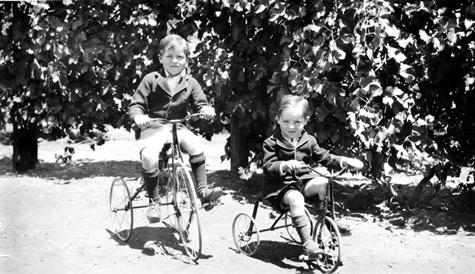
(Picture shows two boys riding their tricycles amongst grape vines in Mildura, Victoria in the 1920s; photo from Museum Victoria)

Girls Names From the Top 100 of the 1920s

04 Sunday May 2014

Posted by A.O. in Name Themes and Lists

≈ 5 Comments

Tags

African names, animal names, Arthurian names, Berber names, British names, celebrity baby names, classic names, created names, dated names, Egyptian names, english names, European name popularity, fictional namesakes, gemstone names, germanic names, Greek names, Irish names, Latin names, Libyan names, locational names, mythological names, name history, name meaning, name popularity, names from movies, names from television, nature names, nicknames, Old English names, Old French names, Old Irish names, retro names, saints names, Sanskrit names, scandinavian names, surname names, underused classics, unisex names, Welsh names, Yiddish names

palm-beach-sydney-1920s

The data on popular names are all in, but maybe none of the current Top 100 names interest you. Or perhaps you are dismayed at how much your favourite names went up in popularity last year. If so, why not look at the popular names of ninety years ago, to see if there are some gems from times gone by that are ready to shine again?

Agnes
Agnes of Rome was a 3rd century child martyr. According to tradition, she was a member of the Roman nobility, raised in a Christian family, and a very beautiful young girl. She is said to have been only twelve or thirteen when she died, and like Saint Catherine, is one of the patrons of young girls; the eve of her feast day was a time for girls to perform rituals to discover their future husbands. The name Agnes was very popular in the Middle Ages; one of its attractions was probably that in medieval English it was softened into Annis, so that it sounded as it was related to Anne. The name Agnes is from the Greek for “pure”, but because it sounds similar to the Latin for “lamb”, agnus, Saint Agnes is often depicted holding a lamb. Agnes was #28 for the 1900s, and by the 1920s had fallen to #77. It left the Top 100 in the 1930s, and hasn’t ranked since the 1940s, but is now getting some use again. This soft, elegant name has been chosen for their daughter by several celebrities, including Jennifer Connolly. It is the name of a little girl in the movie Despicable Me, and currently popular in Scandinavia. It feels as if Agnes is already making a comeback.

Beryl
Gemstone name; beryls are stones which in pure form are colourless, but usually tinted by impurities in a variety of shades. Green beryls are called emeralds, and light blue ones are aquamarines, but all colours of beryl have their own name. The word beryl is ultimately from Sanskrit, probably derived from the town of Belur in southern India. Beryl has been used as a first name since the 17th century, but only became popular during the 19th, along with other gemstone names. Historically, it has been used as a male name too, mostly in the United States, perhaps as a variant of the surname Berrill (an occupational name from the wool trade), and the Yiddish name Berel (pet form of Ber, “bear”). Beryl was #61 in the 1900s, and peaked in the 1920s at #8. It left the Top 100 in the 1950s and hasn’t ranked since the 1960s. Beryl is the bossy cook in Downton Abbey, and the evil queen in the Sailor Moon cartoons. This would make a daring gemstone revival, and offers the nickname Berry.

Elva
Variant of the Scandinavian girl’s name Alva, or an Anglicised form of the Irish unisex name Ailbhe, pronounced like Alva, and one of the influences on the name Elvis. You could see Elva as a specifically feminine form of Elvis, and the Irish origin seems most likely in Australia. Elva was #160 for the 1900s, and peaked in the 1920s at #97, before falling steeply; it last ranked in the 1950s. Elva was a “trendy” name in its day, but its relative obscurity has saved it from seeming dated. I have seen several babies named Elva recently, and it doesn’t seem out of place amongst the Evas and Avas.

Gwendoline
Variant of the Welsh name Gwendolen, first used for a legendary queen of Britain by Geoffrey of Monmouth in his History of the Kings of Britain. According to this legend, Gwendolen was the daughter of King Corineus of Cornwall. She defeated her husband after he repudiated her in favour of his mistress; he was killed in battle, and Gwendolen had the mistress drowned. She then took the throne as the first independent queen of the Britons, and ruled for fifteen peaceful years. Gwendolen appears in Edmund Spenser’s The Faerie Queene, and in the poems of William Blake, as a symbol of British sovereignty. Gwendolen has been translated as “white ring, white bow”, although it may have been an attempt to Latinise another Welsh name. Geoffrey re-used the name Gwendolen for the name of Merlin’s wife in his Life of Merlin. Gwendolen and Gwendoline were revived in the Victoria era as part of the fascination with Arthurian names, and names from British legend. Gwendoline was #68 in the 1900s, and peaked in the 1920s at #35. It left the Top 100 in the 1940s, and hasn’t ranked since the 1950s. It still receives occasional use, and has an upper-class British feel to it, while giving Gwen and Winnie as nicknames.

Hilda
Originated as a short form of Germanic names with hild in them, meaning “battle”. Hilda of Whitby was a 7th century saint from Northumberland, and her name in Old English is Hild. Born into royalty, she was baptised as part of the mission by Pope Gregory the Great to convert the English to Christianity. Hilda became a nun, then founded a monastery at Whitby (it was in the Celtic style, where men and women lived separately, but worshipped together). Hilda is described as a woman of great intelligence and energy, a fine abbess and teacher, so wise that rulers came to her for advice, yet caring towards ordinary people. Hilda was #27 in the 1900s, and #71 by the 1920s; it left the Top 100 by the 1930s, and hasn’t ranked since the 1940s. Hilda is a popular name in Sweden, giving this name a sexy Scandinavian feel as well as a sturdy English one; it doesn’t seem radically different from Heidi, and is even slightly like Matilda. It would be an unusual choice, but by no means a strange one.

Kathleen
Anglicised form of Cáitlin, the Irish form of Catelin, the Old French form of Catherine. The Irish Cáitlin can be said kat-LEEN, so it’s just a step to Kathleen. This name has a very Irish association, for Kathleen Ni Houlihan is an emblem of Irish nationalism representing the country of Ireland. She is usually depicted as an old woman who has lost her home and her lands, needing young men willing to fight and die for her. Once she has been rejuvenated by their martyrdom, she appears young and beautiful, and proud as a queen. It combines myths of both paganism and Christianity, and Kathleen Ni Houlihan has appeared in folk songs and poems, and the literary works of William Butler Yeats, Lady Augusta Gregory, Sean O’Casey, and James Joyce, amongst others. The name Kathleen was #10 in the 1900s, peaked in the 1910s at #5, and was #11 by the 1920s. A long time favourite, it didn’t leave the Top 100 until the 1990s, but hasn’t ranked since the late 2000s. Despite being out of fashion, this name was popular for more than eighty years, and still seems fresh and wholesome, with a hint of Irish charm.

Mabel
Short form of Amabel, from the Latin name Amibilis, meaning “lovable”. There were both male and female saints named Amabilis, and the female one is often known as Saint Mable to prevent confusion. Mabel was a popular name in the Middle Ages, and is found in a range of variant spellings; it is thought that it was originally said MAB-ell rather than the current MAY-bel. Mabel became rare in England, but remained in use in Ireland, where it was used to Anglicise the name Maeve. It was revived in the 19th century when Charlotte M. Yonge used it in her best-selling romance, The Heir of Reclyffe, for a character with an Irish background. Mabel was #30 in the 1900s, and had fallen to #90 by the 1920s, leaving the Top 100 the following decade. Mabel left the charts in the 1950s, but returned in the late 2000s. This retro name has plenty of spunk, and although it isn’t popular yet, don’t be surprised if it is again some day.

Monica
Saint Monica was the mother of Augustine of Hippo. A devout Christian, it was her dearest wish for her pagan son to become one as well, and after seventeen years her prayers were answered when he was converted by Saint Ambrose. Of course Augustine went the whole hog and ended up a saint, and a doctor of the church as well. Saint Monica was rather neglected after her death, but her cult became popular during the Middle Ages. Monica was from Libya and her name a Berber one that was common at the time; it is derived from the Libyan god Mon, a form of Amon, one of the most important of the Egyptian gods. In the Middle Ages, the origins of her name being unknown, it was decided that it must come from monere, Latin for “to advise, to warn”. Although this neatly tied in with Saint Monica’s story, it was etymologically incorrect. Monica was #141 in the 1900s, and peaked in the 1920s at #91; it had a minor peak in the 1990s at #127, coinciding with the sitcom Friends, which had the character of Monica Geller. Monica has never left the charts, but never been higher than the bottom of the Top 100, making it a genuine underused classic. It still sounds slightly exotic, and makes a pretty, sophisticated choice that’s never been common.

Peggy
Short form of Margaret, meaning “pearl”. It’s a variant of Meggy which has been in use since medieval times. Peggy first ranked in the 1910s at #189, and peaked in the 1920s at #63. It fell sharply, leaving the Top 100 by the following decade, and hasn’t ranked since the 1980s. Peggy is now staging a comeback, as it fits in perfectly with the trend for vintage and retro short forms. The ambitious career woman Peggy Olsen from Mad Men is a feminist icon, and this name has been chosen as a celebrity baby name by both MP Jacinta Allan, and media personality Chrissie Swan.

Una
Anglicised form of Úna, a medieval Irish name believed to come from the Old Irish for “lamb”. In Irish mythology, Úna was a fairy queen, wife of Finnbheara, the high king of the fairies. It is pronounced OO-na, and was sometimes Anglicised to Agnes, because of the lamb connection, as well as Winnie or Juno, based on similar sounds. Una is also a name created by Edmund Spenser for his epic poem, The Faerie Queene. In the allegory, Una represents the “True Church” (Protestantism), and defeats the representation of the “False Church” (Catholicism). Spenser seems to have based her name on the Latin for “one” (to reference unity and a single choice of faith); the name is said YOO-na. However, Spenser wrote his poem while living in Ireland, and it is hard not to wonder if he had been influenced by the Irish name. Una was #94 in the 1900s, and peaked in the 1920s at #69, leaving the Top 100 the following decade. It hasn’t ranked since the 1940s, but this name is really quite beautiful, and with its clear simplicity, doesn’t seem odd next to Ava and Mia.

POLL RESULTS
The public’s favourite names were Mabel, Gwendoline and Agnes, and their least favourite were Monica, Hilda and Beryl.

(Picture shows women holidaying at Palm Beach in Sydney in the 1920s; photo from the State Library of New South Wales)

Famous Name: Digger

30 Wednesday Apr 2014

Posted by A.O. in Famous Names

≈ 5 Comments

Tags

Australian slang terms, birth notices, birth registries, choosing baby names, controversial names, english names, historical records, middle names, military terms, name history, name meaning, nicknames, vocabulary names


4120733_origLast Friday it was Anzac Day, marking 99 years since the landing at Anzac Cove for the Gallipoli Campaign. One of the enduring military terms from the conflict, still very much in use today, is Digger, to refer to an Australian soldier who has seen active service. More than that, the word is patriotic, symbolising a particular type of Australian-ness that is rugged, resilient, and resourceful.

The word Digger has a relatively long history in Australia, dating to the goldfields of the 1850s to refer to miners. Already it had an aura to it, for the Diggers of the Eureka Stockade were a powerful symbol of grass-roots democracy. A Digger was not only tough enough to thrive in the harsh conditions of the goldfields, he was ready to stand up for his mates and resist oppressive authority. Furthermore, the blue work clothes of the miners which were used to make the Eureka Flag were part of the inspiration for the phrase “true blue Australian” – the working man who fought for his rights.

How the word became used for the Anzacs is a matter of some debate. It is documented that British commander General Ian Hamilton urged the Anzac leader William Birdwood, You have got through the difficult business [of landing], now you have only to dig, dig, dig until you are safe. This advice was handed down through the ranks, and official war historian Charles Bean believed that it was the troop’s dry sense of humour which led them to refer to themselves as Diggers.

Another view is that the word came into use even before Australians reached Gallipoli. A former soldier recalled an occasion when Birdwood addressed the men of the 11th Battalion near Cairo, in preparation for the landings on Gallipoli. Birdwood warned the troops that they had to be good diggers and good soldiers. The soldier insisted that the term caught on from that point, and it seems likely that the impetus to dig and tunnel at Gallipoli made the term more widespread.

Australians must have gained a reputation for their digging, because in 1915 it was reported of Australian soldiers in Gallipoli, They are the best trench diggers in the [British] Army. They work like bullocks, fight like tigers … yet are so cheerful and work together like old pals.

Although Digger may have originated as a military term at Gallipoli, it first came into prominence in 1916 on the Western Front, possibly following a speech by Brigadier James Cannan, commander of the 11th Brigade, about the digging prowess of the 44th Battalion in the trenches of northern France, who were then derisively labelled the diggers. Many of these men had been miners in the Western Australian goldfields before enlisting, so these miners-turned-soldiers may be a direct connection between the use of Digger for miners, and for soldiers.

By mid-1917, Digger was in wide use amongst Australian soldiers, and became the accepted mode of address for the Anzacs. While Australian and New Zealand soldiers called each other Digger, the British called only the Australians Diggers, and the New Zealanders Kiwis. (One soldier wrote home from France: … the name Digger came from the Tommies [British], who think we Australians are all miners or cowboys.)

Digger was already recognised in Australia as a term for miners, and already part of the Australian image. This might explain why Australians so warmly embraced the word, and why it became such a vital part of the Anzac identity.

After the war, the word Digger became part of the Anzac legend, embodying the qualities of endurance, courage, ingenuity, good humour, and mateship. Many Australians who had served in the war were nicknamed Digger, and Prime Minister Billy Hughes was proud that he had been called “The Little Digger” by the troops. There was an entertainment troupe of Australian and New Zealander World War I veterans called The Diggers. They went on to make several “Digger” films, which received poor reviews from the critics, but were popular with audiences, especially in rural areas. It was even suggested in Parliament that that the rank of Private in the Australian Army should be re-named Digger.

Digger can often be found as a name in Australian records, yet rarely as an official baby name. Digger has been commonly used as a nickname, not only by returned servicemen, but on children as well. Despite this, I could only find Digger on a very few birth records, and each time only as a middle name. (There was a baby in the Birth Announcements with Digger as his middle name too).

It’s interesting that while we are apparently very happy to call men and boys Digger, there doesn’t seem much evidence of us putting it down on the birth certificate as a first name. I wonder if parents worry it will seem disrespectful to Australian soldiers or the Anzacs, or if they have even been dissuaded at the birth registry. A little while ago, I received an e-mail from someone who was considering the name Digger for her baby – did they choose the name in the end?

I think Digger seems cute yet masculine as a name, and it shouldn’t be forgotten that it can be used as an endearment, like mate or cobber – nor that the word was in use even before World War I. Some may find the name quite heavily value-laden in Australian society, perhaps too heavily.

I have read this definition of the Digger: “A man for whom freedom, comradeship, a wide tolerance, and a strong sense of the innate worth of man, count for more than all the kingdoms of the world, and the glory in them.” That’s quite a big meaning for a name to carry, but what a magnificent meaning for your son’s name to hold.

POLL RESULT
Digger received an approval rating of 35%. 28% of people thought it was only suitable as a nickname, but 21% saw it as uniquely Australian.

(Photo shows Western Australian miners who enlisted in 1916).

Waltzing With … Sunday

13 Sunday Apr 2014

Posted by A.O. in Waltzing with ...

≈ 2 Comments

Tags

baby name stealing, celebrity baby names, celebrity sibsets, days of the week names, Easter names, english names, famous namesakes, holiday names, name history, name meaning, name popularity, nicknames, Old English names, rare names, slave names, unisex names

Heide_1_at_Heide_Gallery

In a week it will be Easter, which is always on the first Sunday after the full moon following March 21. This computation was agreed upon in the 4th century, although it was apparently already an old tradition in Rome. The Gospels tell us that the Resurrection of Christ took place on a Sunday, and from then on the day had special significance for Christians.

In the New Testament Sunday is called the Lord’s Day, and early Christians gathered for worship then. This was formalised in the 4th century, and may have been easier to implement because Sunday was already a public holiday in the Roman Empire. It is because of Christianity, and in particular because of Easter, that Sunday is regarded as a holiday – technically every Sunday of the Christian year is “Easter”, because it commemorates the Resurrection.

The English word Sunday comes from Old English, and simply means “sun’s day”. It is derived from the Germanic translation of the Latin term dies solis, meaning “day of the sun”, and in turn, this translates the Ancient Greek, heméra helíou.

The Ancient Greeks named each day of the week after the sun, the moon, and the five known planets, which were associated with gods; an idea they got from the Egyptians. The Romans followed this pattern, as did the Germanic peoples. It seems to be an Indo-European custom, because in most Indian languages, the word for Sunday is also linked with sun gods. So although Sunday has strong Christian associations, the English word has a long pagan history.

Sunday has been used as a personal name since at least the 18th century, and was possibly used for babies born on a Sunday. The first American named Sunday I can find was African-American, and in her case it may have been a slave name. The name Sunday was originally given fairly evenly to boys and girls, although today Sunday is usually thought of as a female name. Its unisex status is still active – in 2012 we had a celebrity baby boy called Sunday.

Sunday has become a celebrity baby name in Australia, since radio host Kate Langbroek chose it for her eldest daughter, Sunday Lil Lewis, in 2005. Kate’s daughter was named after celebrated art patron Sunday Reed, born Lelda Sunday Baillieau. She was from a wealthy and privileged background, and her second husband was John Reed. Together the couple gave both friendship and financial support to modern artists such as Sidney Nolan and Charles Blackman. Sidney Nolan became Sunday’s lover, and he painted his famous Ned Kelly series in the Reeds’ dining room.

The Reeds’ home near Heidelberg was named Heide, and it later became the Heide Museum of Modern Art. There was a kitchen garden at Heide, and many years later, Kate Langbroek ate from a rockmelon which Sunday Reed had planted there. It seems to have been something of an epiphanous moment for Kate, and served as the inspiration for her daughter’s name.

In 2008, actress Nicole Kidman and her husband, country music star Keith Urban, named their eldest daughter Sunday Rose. This caused Kate Langbroek a certain amount of consternation, who declared that the Kidman-Urbans had “stolen” her baby name.

What may have made it more irritating for Kate was that news sources reported that Sunday Rose had also been named after Sunday Reed. Nicole’s father Dr Antony Kidman was quoted as saying that he and Nicole’s mother had suggested the name Sunday after reading about Sunday Reed.

Meanwhile, baby name conspiracy theorists believed that the name Sunday had been chosen for its Christian significance. They saw the choice of the name Sunday as a declaration of Nicole Kidman’s Catholic faith, and a public rejection of her ex-husband’s devotion to the Church of Scientology.

By Nicole Kidman’s testimony, neither of these stories was correct, and they simply liked the name Sunday. Furthermore, what made the name special to them was that Sunday was the couple’s day to spend together – it was a name that symbolised love and the end of loneliness. It was also the day of the week they got married.

Although some people still see Sunday as a religious name, it’s important to remember that Sundays have secular significance too. Sunday is a holiday, a day of freedom from work, a day for sports and games, for beaches and barbecues, for friends and family. A great day for visiting art museums, too!

When the name of Nicole and Keith’s daughter was announced, I was surprised to see how many people online thought of it as a “wacky celebrity baby name”, like Audio Science or Pilot Inspektor. There often seemed to be disdain or even hostility towards it. In Australia, most people seem to like the name, except those who think that Sunday Rose sounds too much like “Sunday roast”.

Now Canadian comedian Mike Myers has a daughter named Sunday – Sunday Molly. However, Mike’s son is named Spike, which may just cement the idea that Sunday is the sort of crazy baby name that parents who like the name Spike might choose.

The name Sunday has only been on the US Top 1000 once, in the 1960s, and is extremely rare in the UK. Sunday has never charted in Australia, and between 2002 and 2007 there were 36 babies named Sunday born in Victoria. While Kate Langbroek hasn’t managed to keep the name to herself, her fear was that after the birth of Sunday Rose, the popularity of the name would snowball and there would be a “plague of Sundays”. Her baby name nightmare hasn’t eventuated – yet it does feel as if the name Sunday is slowly gathering momentum.

Sunday is a rare name, but still in occasional use, and you must not expect to be the only parent in the world, or even the state, with a little Sunday. It’s a day of the week with a simple meaning, and many layers of associations that are pagan, Christian and secular, but overall tied to the light and life from the sun – a name of warmth and happiness. Sunny or Sunnie is the obvious nickname, which brings the name right back to its origins.

POLL RESULT
Sunday received an excellent approval rating of 80%. 31% of people thought it was a good name, while 28% thought it was a great name. Less than 5% of people hated the name Sunday.

(Photo shows the original 19th farmhouse at the Heide Museum of Modern Art in Melbourne, which became a focal point for progressive art and culture: the Reeds made it their home from 1935 to 1967)

← Older posts
Newer posts →

Enter your email address to follow this blog

Categories

Archives

Recent Comments

A.O.'s avatarwaltzingmorethanmati… on Zarah Zaynab and Wolfgang…
Madelyn's avatarMadelyn on Zarah Zaynab and Wolfgang…
JD's avatardrperegrine on Can Phoebe Complete This …
A.O.'s avatarwaltzingmorethanmati… on Rua and Rhoa
redrover23's avatarredrover23 on Rua and Rhoa

Blogroll

  • Appellation Mountain
  • Baby Name Pondering
  • Babynamelover's Blog
  • British Baby Names
  • Clare's Name News
  • For Real Baby Names
  • Geek Baby Names
  • Name Candy
  • Nameberry
  • Nancy's Baby Names
  • Ren's Baby Name Blog
  • Sancta Nomina
  • Swistle: Baby Names
  • The Art of Naming
  • The Baby Name Wizard
  • The Beauty of Names
  • Tulip By Any Name

RSS Feed

  • RSS - Posts

RSS Posts

  • Celebrity Baby News: Melanie Vallejo and Matt Kingston
  • Names from the TV Show “Cleverman”
  • Can Phoebe Complete This Sibset?
  • Zarah Zaynab and Wolfgang Winter
  • Baby, How Did You Get That Name?
  • Celebrity Baby News: Media Babies
  • Celebrity Baby News: Adelaide Crows Babies
  • Celebrity Baby News: Chris and Rebecca Judd
  • Names at Work: Name News From the World of Business and Employment
  • Celebrity Baby News: Sporting Round Up

Currently Popular

  • Celebrity Baby News: Alisa Camplin and Oliver Warner
  • Rare Boys Names From the 1950s
  • Sad Celebrity Baby News (contents may cause distress)
  • Celebrity Baby News: Jacinta Allan and Yorick Piper
  • Celebrity Baby News: Nicki Gemmell and Andrew Sholl

Tags

celebrity baby names celebrity sibsets english names famous namesakes fictional namesakes honouring locational names middle names name combinations name history name meaning name popularity name trends nicknames popular names saints names sibsets surname names twin sets unisex names

Blog at WordPress.com.

Privacy & Cookies: This site uses cookies. By continuing to use this website, you agree to their use.
To find out more, including how to control cookies, see here: Cookie Policy
  • Subscribe Subscribed
    • Waltzing More Than Matilda
    • Join 517 other subscribers
    • Already have a WordPress.com account? Log in now.
    • Waltzing More Than Matilda
    • Subscribe Subscribed
    • Sign up
    • Log in
    • Report this content
    • View site in Reader
    • Manage subscriptions
    • Collapse this bar
 

Loading Comments...