• About
  • Best Baby Names
  • Celebrity Baby Names
  • Celebrity Baby Names – Current
  • Celebrity Baby Names – Past
  • Featured Boys Names
  • Featured Girls Names
  • Featured Unisex Names
  • Links to Name Data
  • Waltzing on the Web

Waltzing More Than Matilda

~ Names with an Australian Bias of Democratic Temper

Waltzing More Than Matilda

Tag Archives: colour names

Waltzing with … Orange

17 Sunday Feb 2013

Posted by A.O. in Waltzing with ...

≈ 2 Comments

Tags

Banjo Paterson, Celtic names, colour names, Devon names, english names, famous namesakes, French names, fruit names, historical records, locational names, middle names, mythological names, name combinations, name history, name meaning, name trends, nature names, patriotic names, plant names, rare names, royal names, Sanskrit names, sibsets, surname names, tree names, unisex names, vocabulary names

Orange jacket Postcard autumn leavesToday is Banjo Paterson’s birthday, and as we have already covered his name, I thought it would be interesting to look at the name of his birthplace.

At the time of Paterson’s birth, his parents were living at Buckinbah Station, near the town of Yeoval (then known as Buckinbah). Because of the station’s isolation, Banjo’s mother Rose went to stay with her aunt and uncle, Rose and John Templer, at their homestead Narrambla, and it was here that she gave birth to her son. Narrambla is about 2 miles from the centre of Orange, and today lies on the city’s outskirts. Rose herself was born on a homestead near Orange, so it was rather a family tradition.

Orange is a city in the Central West region of New South Wales. It was founded in the early 1820s as a convict settlement, and farmers began settling in the area in 1829. The first discovery of gold in Australia was made in 1851 near Orange, leading to the gold rush. Orange became a trading centre for gold, and continued growing due to its good position for agriculture. It was declared a city in 1946. Orange is known for its fruit growing, especially apples, pears and stone fruits; ironically it is too cool to grow oranges in Orange. It is also a thriving wine making area, and has both gold and copper mining. It is a sister city to Orange in California.

Orange was first called Blackman’s Swamp, after John Blackman, the guide who brought the first explorers there. The name was changed to Orange by the Surveyor-General Sir Thomas Mitchell, in honour of William, Prince of Orange. Mitchell and the Prince had both been aides-de-camp to the Duke of Wellington during the Peninsular War in Spain in the early 19th century. The Prince of Orange later became the first King of the Netherlands.

The Prince’s title originally came from the Principality of Orange in the south of France. It began life as a settlement called Arausio, named after a local Celtic water god; the god’s name is said to mean “temple”, meaning the temples that are on the forehead, not a temple as in a building for worship.

The town’s name was corrupted into Orange, and by the Middle Ages, conflated with the word orange, which comes from the Sanskrit for “orange tree”, naranga. The colour was named after the fruit, and first used this way in the 16th century.

As a personal name, Orange has a longer history than you might imagine, for the girl’s names Orenge and Orengia are found in the 13th century. As this predates the name for the fruit, their etymology is extremely uncertain, and possibly has the same source as the French town, which first became a principality of the Holy Roman Empire in the 12th century.

The surname Orange is either from the place name, or derived from the female name, and when the English name Orange appears in the early 17th century, it may have been after the surname. The name first arises in Devon, and in the beginning was exclusively given to girls, although the name became unisex after William III of England, or William of Orange, gave it a masculine feel.

As a first name, Orange is extremely rare in Australian records, and given to only a few girls, but as a middle name is much more common, and given to boys in almost equal numbers as girls (the middle name Orange was sometimes combined with William in the case of boys, showing that William of Orange still had some naming clout).

Colour names for girls are popular at the moment, with many little girls named Scarlet or Jade; tree names such as Olive and Willow are in the girls’ Top 100, surnames such as Marlowe and Quinn are fashionable for girls, and it’s not unusual to see baby girls named after European cities, such as London or Vienna. Orange seems a more vibrant continuation of these trends. Indeed, you could see it as a hyper juiced-up Clementine.

Orange is such a bright, outgoing, fun colour that it seems very cheerful as a person’s name, but it also has a more serious side, because orange is connected to religion and spirituality. There’s a real yin/yang, East/West dichotomy with the name Orange. Is it as crazy as a clown’s wig? Or as serene as a meditating Buddhist monk?

Orange fruit gains its colour from carotenes, the same thing which makes deciduous leaves turn orange. By chance, the city of Orange is known for its spectacular displays of autumn leaves, and it is therefore known as “The Colour City” (also a play on its name). You might see Orange as a name that evokes the changing of the seasons, and the turn of the year.

Although Orange started life as a girl’s name, it did become unisex, and is so rare that it could be worn by either boys or girls. If you are shy about using this vivid name, it would make an eye-catching middle.

Orange is a bold choice as a baby name, though not without shades of subtlety, and it celebrates Australian geography and history. I think Orange is one of the more distinctive of the patriotic names, and has a real tang to it.

Name Combinations for Orange

Orange Beatrice, Orange Eliza, Orange Lily, Orange May, Orange Ruby, Orange Victoria

Brothers for Orange

Eden, Hartley, Fitzroy, Paterson, Sunny, Tennyson

Sisters for Orange

Audley, Breeza, Corindi, Junee, Kendall, Marinna

Note: Name combinations from historical documents; just for fun, sibsets include names of other towns in New South Wales

POLL RESULT: Orange received an approval rating of only 27% – the lowest-rated featured name of 2013, and the only one to score less than 50%. 40% of people hated the name Orange, and nobody loved it.

(Picture shows a postcard from the city of Orange)

Famous Names: Sandy and Sable

28 Wednesday Nov 2012

Posted by A.O. in Famous Names

≈ 2 Comments

Tags

African-American names, animal names, colour names, english names, French names, French vocabulary words, Google Earth, Google Maps, historical records, Hurricane Sandy, Mer de Noms, name combinations, name history, name meaning, name trends, names of hurricanes, names of ships, nature names, nicknames, Paradise Lost, rare names, Southern Surveyor, The New York Times, Times Atlas of the World, unisex names, University of Sydney, US National Geophysical Data Center, vocabulary names, Wikipedia

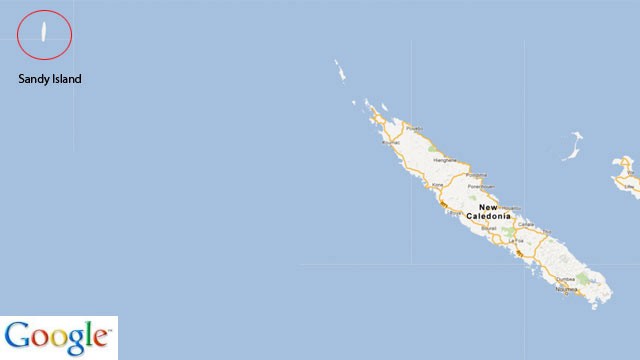
A group of Australian scientists from the University of Sydney have undiscovered an island that was supposed to be in between Australia and New Caledonia.

Sandy Island showed up on Google Earth and Google Maps, as well as marine and scientific maps all over the world, including the US National Geophysical Data Center. According to the maps, Sandy Island was about 16 miles long and 3 miles wide – just slightly bigger than Manhattan.

Geologists on the Southern Surveyor, an Australian maritime research vessel, were puzzled by the island which appeared on their weather maps, yet navigation charts showed that the water in that area was very deep – 1400 metres (4620 feet). They decided that they had to go check it out, and found nothing there except sea. The scientists recorded the information so that maps can be changed.

According to the Wikipedia article on Sandy Island, the island was erased from Google Maps on November 26, but although the name Sandy Island doesn’t show up in the search bar, when I looked in the Coral Sea I found the phantom island quite easily, but there was no name attached to it.

If I zoomed in on the island, it simply disappeared, and if I switched to satellite, the island showed up as a black streak surrounded by blue streaks, looking remarkably like someone had scribbled on it with two different felt-tip pens.

Interestingly, if Sandy Island had existed, it would have been in French territorial waters – and the island is not on any recent French government charts. Perhaps because of this, the Times Atlas of the World deleted Sandy Island from its maps after 1999.

The history of the discovery of Australia involved – indeed, was dependent on – faulty maps, necessitating voyages to check out what was here or not, so it makes a strange sort of sense that now Australians must voyage forth to check faulty maps for themselves.

The episode shows that this part of the world is still not well known, and incompletely charted. It’s not quite a matter of Here be dragons, but the reply from most of the map-providers when the error was pointed out was along the lines of, Well it is in the middle of nowhere …

Tens of thousands of years of human occupation, and centuries since the first mapping, and we’re still close to the middle of nowhere. Which is rather exciting – what else in our region is still waiting to be discovered, or undiscovered?

Apart from the Pythonesque nuttiness of this story (no wonder the geologists got the giggles as they sailed through the invisible island), the thing that got my attention was the name Sandy, which has been in the news internationally since Hurricane Sandy hit the north-east coast of the United States in late October, after devastating the Caribbean.

According to this article in The New York Times, names of hurricanes can help to influence the way we name our babies. It’s not as simple as everyone suddenly choosing Sandy as a baby name, but it seems that once we hear a word or a name many times, we instinctively like names that sound similar to it. So experts are expecting a spike in the numbers of babies of 2012 whose names begin with an S, as well as those with an and sound in them, and ones that end in -ee.

There was a story in the Australian press, about an expat couple in New York, whose baby arrived at the height of Sandy’s fury. The parents did consider calling their new daughter Sandy, but in the end chose Sophie. The analysts would be rubbing their hands, because they chose a two-syllable name that starts with S and ends with an -ee sound, just like Sandy.

Sandy is a unisex name which is short for Alexander or Alexandra, but also for any name related to them, such as Alistair, Sander, Alessandra, Sanette, Sandrine, or Sandra. You could use it as a short form of Cassandra, Santos, Sanford, Sandon, Santiago or any similar name. Sandy is a traditional pet name for people with reddish or sandy-blonde hair, and you could see it as a vocabulary, colour, and nature name meaning “sand-coloured, like sand, covered in sand”.

However, another possibility occurred to me while reading about The Case of the Non-Existent Island. On a French chart from 1875, the island is called Île de Sables, which is French for Sandy Island. Because of this, The Times Atlas of the World partly Anglicised the name back again to Sable Island.

While in French, sable means “sand”, the same word in English means something quite different. (I feel that I must be channelling Lou from Mer de Noms, who quite often finds name inspiration in French words). I should point out that the two words are said differently: in French, SAH-bluh; in English, SAY-buhl.

A sable is a species of marten (a relative of minks, weasels and ferrets) which is found mostly in Eurasia and still hunted in Russia. The pelt of the animal has been highly valued since medieval times, because the fur of the sable feels soft whichever way you stroke you; it’s not possible to “go against the grain”.

Because of the animal’s colour, the word sable is also a literary way to say “black”, such as when John Milton refers to “a sable cloud” in Paradise Lost. It amuses me that sandy and sable are opposites as colours, with one signifying a pale shade and the other one that is very dark.

Sable can also be used as a personal name, with the first one I can find in the records dating to the 17th century. It’s used for both boys and girls, although from the beginning more often a female name – maybe because it seems like it could be short for names such as Isabel or Sabella.

Sable is more common in the United States, where it has sometimes been used amongst African-Americans as a positive and beautiful word to denote darkness (similar to the name Ebony, which doesn’t have that connotation here).

In Australia, it appears rarely in the records, nearly always as a female name. One of my favourite combinations for this name was Brightie Sable. It also belonged to a 1900s French immigrant to Australia, who had the French form – Sablé.

So if you feel subconsciously influenced to use a name similar to Sandy, or would like to be part of a name trend, then Sable or Sablé seem like possibilities to choose from, and may please trend analysts immensely.

(Satellite image from Google Maps)

The Triplets Waltz In!

28 Saturday Jul 2012

Posted by A.O. in Name Updates

≈ 6 Comments

Tags

colour names, gemstone names, holiday names, name combinations, nature names, plant names, tree names, triplet sets

Back in May, I was contacted by ex-pat Gabbi who was looking for a subtly Australian-inspired name for one of her triplets. I suggested ten different names that I thought might suit her son, and fit in with the names already chosen for his brother and sister.

The triplets were born July 21 at 33 weeks, each weighing around the 5 lb mark (a bit over 2 kg). All the triplets, and Gabbi, are in good health.

The names of the triplets are (drum roll)

JASPER BEAR

CLOVER MARCH

and …………… (wait for it)

ASH MILLER!!!

Ash was one of the names I suggested, and Gabbi liked it because it was a nature-themed name like Jasper and Clover, and also suggested a colour (pale grey), to match the red of a jasper gemstone and green clover. Jasper and Clover are also linked with special days of the year – Jasper with Epiphany (January 6), as Jasper is the English name of one of the three wise men, and clover is a symbol of Saint Patrick’s Day (March 17). Ash is connected with Ash Wednesday, the first day of Lent.

In Australia, the Ash Wednesday bushfires of 1983 became a symbol of the fragility of nature, and demonstrated how the strength of community spirit can rise from ashes. Another Australian connection is the native mountain ash tree (Eucalyptus regnans), which is the tallest tree in Australia, one of the tallest in the world, and is the tallest flowering plant. Specimens can grow to hundreds of feet high.

The middle name, Miller, is one that Gabbi absolutely loved, but was bothered by the Miller Brewing Company in the United States (where she lives). Ironically, since she announced the name, everyone has said that they would never have connected the name to the beer without prompting. However, she and her husband love the name Ash and don’t want to reverse the names.

Both Ash and Miller are names featured on the blog. Ash was one of the Boys Names from Video Games, after Ash Ketchum from Pokémon, and Miller was one of the Names of Sydney Suburbs Which Could Be Used as Boys Names.

Congratulations to Gabbi and her husband, and as they now have nine children, including a new set of triplets, I think they will have their hands full for a while. The triplets have gorgeous names, and I love the name Ash for a boy.

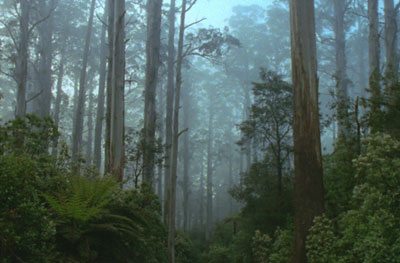
(Photo shows mountain ash trees in the Australian bush; image from the ABC)

The Top Ten Girls Names of 2028

20 Sunday May 2012

Posted by A.O. in Your Questions Answered

≈ 9 Comments

Tags

classic names, colour names, famous namesakes, French names, future trends, Google, K.M. Sheard, Laura Wattenberg, name data, name popularity, name trends, Nook of Names, place names, popular culture, popular names, retro names, surname names, The Name Wizard, unisex names, US name trends

A couple of weeks ago as I was checking my stats, I saw that the release of all the 2011 name data had influenced someone to Google me a rather interesting question: What names will be popular in the future? Now if someone had asked me that a year ago, I would have been very much perplexed as how to answer. Even Laura Wattenberg from The Name Wizard suggests that guesswork is pretty much all we have to go on.

However, last October Kay from Nook of Names brought out her Top Ten for 2035, based on the US data. Kay’s method was simple, yet inspired – she looked at where the currently popular names were in 1985, and then found a name which is in a similar position today, in order to extrapolate them to their 2035 position. I thought I’d give her method a go, but also see check to see where each name was a decade previously to see if each name was following a similar trajectory. (I think Kay probably did this too).

I went into it very optimistically, but found it brought me a certain degree of angst, because it’s actually pretty difficult to find two names that follow the exact same path to success. However, I persevered, and found the closest possible matches available. In case you’re wondering why I hit on 2028, it’s because the New South Wales Top 100 goes back to 1995, so I went ahead 17 years from last year’s data. Of course, if you’ve just had a baby, 17 years will see it verging on adulthood – another reason it seemed like a good time period to evaluate.

Now, do I really think this is the New South Wales Top Ten for the year 2028? Well no, that’s just a sensationalist headline designed to grab your attention. Frankly I will be staggered (and slightly scared) if all these names simultaneously turn up in the Top Ten of the same year, let alone in this order! However, based on their current performance, I am tipping most of these names to increase in popularity – in some cases, to dramatically increase.

Current Top Ten

  • Chloe #22 in ’95, and #72 for the 1980s (a steady rise up the Top 100)
  • Ruby #107 for the 1990s, and #560 for the 1980s (a skyrocket from nowhere)
  • Olivia #26 in ’95, and #117 for the 1980s (a steady rise into the Top 100)
  • Isabella #34 in ’95, and #509 for the 1980s (a skyrocket from nowhere)
  • Mia #138 for the 1990s, and #320 for the 1980s (a steep rise)
  • Charlotte #87 in ’95, and #180 for the 1980s (a steady rise into the Top 100)
  • Sophie #25 in ’95, and #74 for the 1980s (a steady rise up the Top 100)
  • Sienna #402 for the 1990s, and barely in use in the 1980s (a new name, climbing exponentially)
  • Ava #466 for the 1990s, and barely in use in the 1980s (a new name, climbing exponentially)
  • Amelia #52 in ’95, and #118 for the 1980s (a steady rise into the Top 100)

FUTURE TOP TEN

1. ABIGAIL

Abigail is currently #27, and ten years ago she was #88. I thought that made her a good match with Chloe. Abigail is already a Top Ten name in the US, and although we’ve been lagging behind, by 2028 I think we’ll be well and truly caught up. I hesitated before nominating Abigail as the #1 name, but it does make sense, because of the rampant popularity of her many short forms.

2. OLIVE

Currently, Olive is probably somewhere in the 120s-130s, and a decade ago she was barely in use. That pattern doesn’t exactly match Ruby’s, but it isn’t too different either. If you’re looking for a meteoric rise to echo that of Ruby, Olive fits the bill better than any other candidate. I also like the idea of Ruby’s replacement being another vintage colour name. Even today, when Ruby is so hugely popular, there are grandparents meeting their new grand-daughter and saying, “But Ruby is an ugly old lady name!”. I predict similar reactions to all the baby Olives who will be born in the future.

3. EVA

Eva is currently #21, and a decade before she was somewhere in the 150s. Her climb has been steeper than Olivia’s, but she’s the best match I could find. That steeper climb may mean she peaks sooner than Olivia, but she’s also a classic name which has never left the charts, which I’m hoping will give her some ballast. She does almost seem like a shorter, snappier form of Olivia.

4. ISLA

Isla is currently #22, and ten years ago she was #445 for the early 2000s. This wasn’t a close enough match to please me, but no matter how I wrestled with the data, Isla was the closest equivalent, and did have a similar zoom up the charts, as well as looking like an updated Isabella. I can’t see any reason why Isla won’t continue to go higher, quite possibly to #1, and both Isabella and Isla have been chosen for royal babies. Of course, a major book and movie series with a main character called Isla wouldn’t hurt either, just for that extra buzz factor.

5. FREYA

Freya is currently around the 130s, and was #269 for the early 2000s. That’s not quite as steep a rise as Mia had, but it’s pretty darn close. Not only do Mia and Freya both have a northern European feel to them, but both are are associated with actresses as well – Mia with Mia Farrow, and Freya with Freya Stafford. I can see Freya doing very well indeed, and can easily picture her going to #1.

6. ELOISE

Eloise is currently #96, and a decade ago she was #140 for the early 2000s. I think that’s a fairly good match with Charlotte, which also went from the 100s into the lower portion of the Top 100 in ten years. Eloise seems a worthy successor to Charlotte, for both are elegant French names which manage to sound both strong and feminine. Eloise isn’t climbing as steeply as Charlotte, so we’ll have to see how far she manages to get in 17 years, but I think she will do well.

7. ZARA

In 2011, Zara was #26, and a decade ago in 2011 she was #83. This seems similar to Sophie’s steady rise from the bottom third of the Top 100 into the Top 20. Both Sophie and Zara have a French origin, with just a touch of the Middle East about them. I’m not sure whether Zara will keep climbing or if she’s peaked already and will begin a gentle decline; however, I have similar doubts about Sophie as well. If you’ve really been paying attention, you will see I could have easily swapped Abigail and Zara around, and after much deliberation, I decided Abigail seemed more likely to go to #1.

8. HAVANA

Now this is the part where my fortune-telling gets really sticky, because in 1995, Sienna was only used about 11 times per year in New South Wales. In other words, she may show up on the data now, but that’s only because of her success – in 1995 she wouldn’t have even been a blip on the radar, and in 1985, she was barely known. That means I had to come up with a name that is still little used, but feels as if it might be going somewhere. I wanted to pick a name similar to Sienna; I wanted a modern name just coming into use, and I hoped to find one that was also a place name. Quite a tall order, but eventually I decided upon Havana. Of course it’s a huge gamble picking a name so far in advance, but Havana seems like a pretty good bet. She’s similar to Heaven, Haven, Ava, Anna, Hannah, Savannah, Vanna and Ivana – in other words, she sound like a whole bunch of familiar words and names while having a very clear identity of her own. She doesn’t look out of place on this hypothetical Top Ten either, as she shares a V sound with Eva and Olive. Sienna only whizzed up the charts after Sienna Miller began her career, but in 17 years, it’s possible that a young model named Havana will be ready to take the world by storm. It could happen.

9. HARLOW

When it came to picking another Ava for the future, although I was looking for a name even rarer than Havana, I really had a much easier time of it. Ava was a name that we gained from America, so I simply went to the US Top 1000 for 1995 and saw where Ava was, then tried to find today’s equivalent. Of course, I was looking for one which was climbing like Ava, and if possible, had a similar feel to it. In 1995, Ava was #737, and ten years earlier, she wasn’t on the Top 1000, but just scraped in the year before. After much internal debate, I decided upon Harlow, which was #621 last year, and not on the Top 1000 in 2001. Although Harlow is climbing far more rapidly than Ava, she seemed the most likely candidate. Like Ava, she is a name redolant of Hollywood glamour, and she has the OH sound found in Eloise, while beginning with H like Havana. She fits on the list. At the moment, Harlow is very little used in Australia, and newspaper articles even discuss the strange unpopularity of Harlow. Like Ava, she may well fly under the radar, until one day we all wake up and suddenly realise Harlow is in the Top 100 and climbing. (Cue parental handwringing).

10. ROSE

Rose is currently #65, and she was #119 for the early 2000s. Not only does this look quite similar to Amelia’s pattern, but both these names are classic, pretty and wholesome. Rose is by no means shooting up the charts, but she is ascending in a calm and ladylike fashion, just like Amelia. Rose doesn’t have all the nickname options that Amelia does, so I’m not sure whether she will be Top 10 by 2028, but I am tipping her to continue rising.

My Tips for Coming Trends

  • OH sounds, as found in Eloise, Harlow and Rose
  • V sounds, as found in Olive, Eva and Havana
  • Short brisk names ending in -A, such as Eva, Isla, Freya and Zara (the new Mias)
  • Stronger influence from the UK than from the US, but with the US influence being far more spectacular in nature (much like today)
  • A nice balance between “old-fashioned names” like Olive and Rose, and modern inventions like Havana and Harlow (just like today).
  • Most popular girl’s names will be definitely feminine, but Harlow may show the potential for unisex names and surname names to break into the Top Ten for girls.

Boys Top Ten for 2028 will be next week!

Only Natural – Nature Names from the Bonds Baby Search

22 Thursday Mar 2012

Posted by A.O. in Baby Contests

≈ 3 Comments

Tags

animal names, astronomical names, Australian Aboriginal names, colour names, english names, flower names, food names, French names, fruit names, gemstone names, geographic names, nature names, plant names, season names, Thai names, tree names, vocabulary names, weather names

GIRLS

Acacia

Anise

Autumn

Azalea

Berry

Briar

Cedar

Cherry

Clover

Crystal

Cypress

Dahlia

Dawn

Dusty

Ember

Emerald

Honey

Indigo

Ivory

Jacaranda (this South American tree is so popular, it is often assumed to be native)

Jewel

Juniper

Mallee (a native tree; name of Australian Aboriginal origin)

Magenta

Misty

Ocean

Opal

Peaches

Pearl

Pepper

Rain

Raven

Saffron

Sage

Sapphire

Scarlet

Season

Soleil (French word for the sun)

Star

Sunshine

Swai (Thai word for the iridescent shark)

Tigerlily

Tulip

Winter


BOYS

Ash

Aspen

Baye

Bear

Bryne

Clay

Cove

Fin

Flint

Fox

Heath

Jarrah (a very tall and strong native tree; name of Australian Aboriginal origin)

Layke

Onyx

Reed

Reef

River

Rock

Rowan

Rye

Silvan

Sky

Storm

Sunny

Talon

Teal

Tiger

Tyde

Wolf

(Photo of Mother Cummings Peak Track, Tasmania from There’s Nothing Like Australia website).

Boys Names from Stars and Constellations

18 Sunday Dec 2011

Posted by A.O. in Name Themes and Lists

≈ 21 Comments

Tags

Akkadian names, Arabic names, astronomical names, Chinese names, colour names, english names, fictional namesakes, gemstone names, Greek names, Latin names, locational names, mythological names, name history, name meaning, popular culture, popular names, surname names, unisex names, vocabulary names

It is only a few days until the Christmas holidays, or the holidays have already begun. Although the stars seem more crisp and vivid in winter, and some constellations of spring and autumn are spectacular, it is summer I connect with star-gazing. The warm nights and long lazy Christmas holidays seem to go with lying in your backyard looking upwards, or watching the night sky glittering above you on camping trips. Little wonder that the stars of summer are often the first we learn to identify, and the first we yearn towards as we gaze into infinitude.

This is the companion list to Girls Names from Stars and Constellations, and should be read in conjunction with it. Need a super quick guide to the southern skies? Go here! The picture used is a Christmas card created by Thomas Le, a refugee from Vietnam. He donated this artwork to help other migrants, and it is on show at the Museum of Victoria.

Altair

Altair is the common name for Alpha Aquila, the brightest star in the constellation Aquila (“The Eagle”), and one of the brightest overall. Altair is a translation of the Arabic for “the flying eagle”, and the identification of the star with an eagle goes back to the Babylonians and Sumerians, who called Altair “The Eagle Star”. The Kulin people of central Victoria also saw the star as an eagle; it is Bunjil, their creator, who was blown into the sky by a great wind and became a star. Other peoples of southern Australia saw Altair as a hunter; it is his Boomerang thrown across the sky which became the constellation in which Gemma can be found. This cool star name can either be said al-TAH-yir, or al-TARE, and is also on the list Boys Names from Video Games. You can see Altair from Australia in winter and spring, and it’s in the north of the Milky Way.

Asterion

Asterion is the common name for Beta Canes Venatici, the second-brightest star in the constellation Canes Ventatici. This constellation began as the club of the constellation Boötes (“The Herdsman, The Ploughman”). However, due to a number of errors in translation from Greek to Arabic to Latin, “club” became “dogs”. Having invented these dogs, astronomers had a good squint and decided that the constellation looked like two greyhounds. It’s never explained why a herdsman would have hunting dogs rather than herding dogs. Astronomers named one star Chara (“dear”) and the other Asterion (“starry”) – then they swapped the names around to create further confusion. In Greek mythology, Asterion was the personal name of the Minotaur, a bull-headed monster who was the product of an unnatural coupling between a queen of Crete and a bull. It’s a flamboyant name, but it is actually a star name with a starry meaning; it’s said as-TEH-ri-on. Canes Ventatici is visible in the autumn from Australia, but its stars are not bright or easy to see.

Atlas

Atlas is the common name for 27 Tauri, a triple-star system in the constellation Taurus and part of the Pleiades cluster. As well as the Seven Sisters, which include Maia, the Pleiades cluster contains their parents, Atlas and Pleione. Atlas was one of the Titans, and after warring against the Olympians, he was sentenced to hold up the heavens on his shoulders (before this, the Sky and the Earth, parents of the Titans, were free to lie together in a lingering embrace, so Atlas is basically being used as a birth control device for deities). He has come to be a symbol of superhuman strength and stoic endurance. The name is so ancient that its meaning is very uncertain, but it may mean “endure”, “support”, or “sea”. Atlas has given his name to the Atlas Mountains in North Africa, and the Atlantic Ocean, as well as the word for a book filled with maps. The name is starting to have a mild vogue here. You will be able to see Atlas in the Pleiades during summer in Australia.

Garnet

The star Mu Cephei is commonly known as Herschel’s Garnet Star, because when astronomer William Herschel described it, he wrote that it was “a very fine deep garnet colour”. Indeed it is, being a red supergiant that is one of the largest in the Milky Way. It’s in the constellation Cepheus, which represents Andromeda’s father. Without doubt he is the dullest creature in the whole Andromeda drama, but I guess since they put the sea monster in the sky, it would have seemed rude to leave him out. You may recall that the aliens in TV comedy 3rd Rock From The Sun came from a planet in a galaxy on the Cepheus border. Unfortunately, Cepheus is only visible in the northern hemisphere, so we cannot see the Garnet Star from here. The colour garnet is named for the red gemstone; its name is said to be derived from the (also red) pomegranate fruit which means “seeded apple”. It’s a unisex name, but historically better known as masculine in Australia.

Keid

Keid is a common name for Omicron2 Eridani, or 40 Eridani, a triple star system in the constellation Eridanus consisting of two red dwarfs and a white dwarf. Eridanus represents a great river, and is meant to be the water pouring from the jar of the Water Bearer, the constellation Aquarius. In ancient times, it was said to be the path of souls. Eridanus can be easily seen from Australia; it is virtually overhead during the summer months. You can see one of the red dwarf stars in Keid with the naked eye; however the other two stars can only be viewed through a telescope. In the TV series Star Trek, 40 Eridani is the location of the planet Vulcan, home of Mr Spock. Eridanus is also a system of planets in the video game Halo, so it’s got sci-fi credentials galore. Keid is from the Arabic word for “eggshells”, and can be pronounced KYED or KEED. I prefer KEED, but KYED sounds like popular Kai (maybe too much, as people will no doubt confuse the two names).

Kio

Kio (KEE-oh) is the ancient Chinese name for Spica, the common name for Alpha Virginis, a blue giant binary star and the brightest in the constellation Virgo. While Spica means “ear of wheat” in Latin, Kio comes from the Chinese for “horn, spike”, as it was seen as “the horn of Jupiter”. Spica was the star used to discover the precession of the equinoxes, and the constellation Virgo contains the spring equinox point (autumn equinox in the northern hemisphere). The constellation has represented a goddess holding sheaves of grain from the earliest beginnings of astronomy in Babylonia. Not only is Kio one of those perky three-letter names that appeal to many people, but the Chinese saw Spica as a “lucky star” – what could be more positive than being named after a lucky star? The constellation Virgo can be seen throughout autumn and winter in Australia, and the very brightness of Spica makes it easy to find.

Leo

Leo is a familiar constellation, because it is one of those in the zodiac. It’s already in the list Boys Names From the Top 100 of the 1930s, however I think it is worth revisiting from an astronomical viewpoint. The constellation’s name means “lion”, and seems to have been pictured as a lion by many ancient civilisations. I’m not sure if there was a single original Lion in mythology, but the Babylonians had many leonine protective gods, and a winged lion was the symbol for the city of Babylon. The Ancient Greeks identified it with the Nemean lion, a monstrous beast, both fierce and cunning, which was killed by Heracles as the first of his twelve labours. Its hide was impervious to attack, so Heracles wore it as his armour. The constellation Leo is truly majestic, and contains many bright stars. The chief of these is Regulus, also called The King Star, and The Heart of the Lion. Leo can be seen for most of the year, but is easiest to view in late summer to early autumn from Australia.

Nash

Nash is a common name for Gamma Sagitarrii, an orange giant binary star in the constellation Sagittarius. Sagittarius depicts a centaur, said to represent the wise teacher and healer Chiron. The Milky Way is at its densest in Sagittarius, as this is where the centre of the galaxy lies, so it contains many star clusters and nebulae. In Australia this impressive constellation is easy to find, and we also get the best view of it, being able to see the Milky Way so much more clearly. Look in the west part of the sky in the early evening, halfway between the horizon and the point directly overhead. Its brightest stars form a recognisable shape which is called The Teapot; Nash is the spout of this teapot. Sagittarius is most visible in the middle of winter, and bright enough that you can see it even if there is a moon. The name Nash is from the Arabic for “arrowhead”, for this star is the tip of the archer’s arrow, which points toward the star Antares, in Scorpius. It’s also a surname derived from the word for “ash tree”.

Orion

Orion is a constellation representing a character from Greek mythology. This gigantic hunter seems to be a bawdy folk hero – larger than life and twice as natural. It is lusty Orion who pursued the Pleiades, so that Zeus had to turn them to stars for their protection. One version of his ending is that Orion boasted of being able to kill any animal on Earth, and so the Earth goddess, in her displeasure, created the Scorpion to sting him to death. Both Orion and the Scorpion were placed in the sky as constellations. Orion contains many brilliant stars, such as Betelgeuse, Rigel and Bellatrix, and even the astronomical novice can locate the three stars forming Orion’s Belt; I was taught these were The Three Sisters (a South African name). Orion is clearly visible in the summer from Australia, and because it is positioned differently in the southern hemisphere, we sometimes call this constellation The Saucepan. The name Orion is from the Akkadian for “heaven’s light”.

Perseus

Perseus is a constellation representing a character from Greek mythology; he was a hero, the son of Zeus and a mortal princess. Perseus led an extremely exciting life, part fairytale, part soap opera, but he is probably best known for killing the Gorgon Medusa, a woman who had snakes on her head, and thus had a permanent bad hair day of epic proportions. Perseus had nifty flying sandals to zip around on, although much later people liked to imagine him riding the flying horse Pegasus (this never actually happened in the legends). Perseus rescued and married Princess Andromeda, and the constellation has his hand reaching up to Andromeda’s foot, to show the moment of deliverance. The star Algol in Perseus is called The Demon Star, and represents the head of Medusa. We can see the constellation in late spring and summer from Australia, and the meaning of Perseus is not certain; it may mean “to destroy”. Percy is the obvious nickname, and the one used in the novel series Percy Jackson and the Olympians by Rick Riordan.

Phoenix

Phoenix is a minor constellation in the southern sky named after the mythical bird. The Phoenix can be found in the mythologies of many lands, from Egypt to China to Russia, and is famous for being able to renew itself in fire, which made it a popular symbol of resurrection in Christianity. Its name is from the Greek for “crimson”. Phoenix has become a popular name lately; it’s unisex, but used more for boys. It’s hard not to connect it to The Order of the Phoenix in the Harry Potter books; Fawkes the phoenix is the loyal pet of Albus Dumbledore. A phoenix is also a major character in the children’s book The Phoenix and the Carpet by Edith Nesbit. The constellation Phoenix can be seen from Australia during the summer, however it is faint and only possesses two stars bright enough to be seen with the naked eye.

Sirius

Sirius is the common name for Alpha Canis Majoris, a binary star which is the brightest in the constellation Canis Major (“Great Dog”), and the brightest in the sky, being almost twice as bright as Canopus, the second-brightest. Canis Major is seen as one of the dogs following the hunter Orion, with Sirius representing its doggy nose. However, Sirius was considered to be a dog in his own right, and is called The Dog Star. In the northern hemisphere, Sirius rises in summer, and so the very hottest time of year is called “the dog days”. Although Sirius rises in the winter here, we don’t call the coldest time of year the dog days, although strictly speaking, we should! In July, you can see Sirius both evening and morning. Almost every culture in the world has connected Sirius with dogs or wolves, but the Boorong people of Victoria saw it as part of a constellation representing the Wedge-Tailed Eagle – one of the most important of the spirit elders. The Sirius was also the flagship for the First Fleet to Australia, giving it another Australian connection. Its name comes from the Greek for “burning, scorching”.
Girls Names That Only Chart in Australia

24 Sunday Jul 2011

Posted by A.O. in Name Themes and Lists

≈ 29 Comments

Tags

African names, Arabic names, Australian Aboriginal names, celebrity baby names, colour names, created names, english names, famous namesakes, fictional namesakes, Greek names, hebrew names, holiday names, Indian names, Irish names, Latin names, locational names, Mer de Noms, mythological names, name data, name history, name meaning, name popularity, nature names, nicknames, plant names, popular culture, popular names, saints names, Sanskrit names, surname names, Swahili names, unisex names, vocabulary names

Recently, Lou at Mer de Noms has had a couple of articles on names that are in the UK Top 150, but fail to make the US Top 500. It’s an interesting look at differences in name popularity between the two countries. I thought about doing the same thing from an Australian perspective, but found the list became too long for my purposes. So I made my conditions a bit tighter – these are names that are on a Top 100 list in Australia, but don’t make the Top 100 in any other country, and aren’t on the US Top 1000.

Asha

Asha has two different origins and meanings. It can be seen as an Indian name from the Sanskrit for “hope, wish, desire”, or an East African name from the Swahili word for “life”. Either way it has a beautiful meaning, and both Indian and Swahili names are becoming fashionable in Australia. It fits in well with other popular Ash- names, such as Ashley, Ash, Asher and Ashton. There’s an attractive TV presenter in Australia called Asha Kuerten (pictured), which has probably helped it gain momentum here. Asha is currently #89 in Victoria, #77 in South Australia, and #68 in the ACT. It’s never been higher than #794 on the US Top 1000 (in 1989), and hasn’t charted there since 2003.

Bridie

This is a pet form of the Irish name Brighid or its anglicised form, Bridget, which means “exalted one”. In Irish mythology, Brighid was the goddess of fire, poetry and wisdom. There was a 5th century Irish saint called Brigid, who is the patron saint of Ireland, and whose feast day on February 1 coincides with the pagan festival of Imbolc (possibly this day was sacred to the goddess of the same name). As around 30% of Australians claim Irish heritage, the name Bridie isn’t too unusual here, and there are several well-known women with this name, including Bridie Carter, a popular soap actress. Bridie is #70 in Tasmania, which has a particularly strong Irish community. It doesn’t chart in any other country.

Ebony

This is from the English word for the valuable black wood which comes from the ebony tree; different species are native to India, Sri Lanka, Indonesia, Mauritius, and West Africa. Although Ebony is often said to be used mostly by African-Americans in the United States, in Australia it is not connected to a person’s skin tone and is just seen as another colour name, like Ruby, Jade or Amber, or a plant name, like Rose or Holly. The exoticism of this name seems to have possessed a strange fascination for Australian parents, and it has been a Top 100 name since the early 1980s. Perhaps popular songs from that decade, such as Ebony Eyes and Ebony and Ivory, helped give it a boost. It’s #63 in South Australia and #55 in Tasmania. In the United States, Ebony got as high as #132 in 1982, and hasn’t been on the Top 1000 since 2005.

Indiana

The name of an American state, it means “land of the Indians”, because of the high Native American population in the area at the beginning of the 19th century (unfortunately, not to last). Indiana was used as a girl’s name (at least in fiction) before the American state was founded: Fanny Burney’s 1795 classic novel, Camilla, features a beautiful but shallow character called Indiana Lynmere. Possibly the name was intended as an elaboration of India, then part of the British Empire. French author George Sand also gave a character this name in her first novel, Indiana (1832). In this book, Indiana is a beautiful, romantic Creole from Reunion, of part-Indian descent. Here, there is a young TV actress called Indiana Rose Evans, and early this year, former NRL player Glenn Hall had a daughter named Indiana Maree. This name has only been Top 100 since last year, and it’s #98 in Victoria. Indiana has not been on the US Top 1000 since the late 19th century.

Jorja

The name Georgia, also an American state name (the state is named after King George II), is more popular in Australia than anywhere else in the world, hovering around the #20 mark on most lists, and Top 100 since the early 1980s. The phonetic spelling Jorja has also proved popular here. It’s currently #88 in Tasmania. Jorja has only been on the US Top 1000 once, in 2006, when it was at #976.

Lucinda

This is an elaboration of the Latin name Lucia, meaning “light”. Always a rather literary name, it was created by Miguel de Cervantes for his 1605 novel, Don Quixote for a character in a farcical romantic subplot. The 17th century Spanish poet Lope de Vega wrote love sonnets to a woman he called “Lucinda” to protect her identity. In more recent fiction, Lucinda is the rather silly fairy godmother in the children’s novel Ella Enchanted, later made into a movie. Australian novelist Peter Carey’s Oscar and Lucinda won the 1988 Booker Prize, and was made into a film directed by Gillian Anderson. Another Australian connection is that Lucinda is the name of a small coastal town in Queensland. As Lucy is so popular, Lucinda seems like a pretty alternative which will allow Lucy/Lucie as a nickname. It was chosen for the name of lifesaver and reality TV star Dean Gladstone’s daughter Lucinda May. It’s # 67 in Tasmania. Lucinda hasn’t been on the US Top 1000 since 1987, and peaked in 1881 at #153.

Tahlia

The name Talia can come from a range of origins. It’s a variant of the Hebrew name Talya, which means “dew from God”; it’s the Italian form of Greek Thalia, which means “to blossom” (Thalia was one of the nine Muses); and it can also be a short form of Natalia, a Latin name which means “Christmas Day”. However, In Australia, Talia is often taken as coming from an Aboriginal word meaning “near water”. Talia has become hugely popular in many parts of Australia; it has a certain patriotic flavour, and is pleasingly multicultural, suiting a variety of backgrounds. Yet it is not found consistently on the Top 100 because it has so many variant spellings. Tahlia is the most common of these variants, and is beginning to overtake Talia because it makes the favoured pronunciation more clear. It’s #47 in New South Wales, #41 in Victoria, #39 in South Australia, #35 in Western Australia, #84 in Tasmania, and #52 in the ACT. Tahlia has never charted in any other country.

Tayla

A specifically feminine form of the popular unisex name Taylor, this may have been coined in imitation of Kayla and related names. However, I can’t help thinking it’s taking off in Australia partly because it looks similar to Talia and Tahlia. It’s #68 in South Australia, #40 in Western Australia, and #94 in Tasmania. Tayla has only been on the US Top 1000 twice – in 1998 and 2006, and was never higher than #924.

Zahra

This is an Arabic name usually translated as “radiance”. The meaning is gorgeous, and Arabic names are becoming increasingly fashionable here with our growing Islamic population. However, almost certainly the reason for its popularity in Australia is due to its similarity to the name Zara. Zara has been used in Britain since the 18th century, where it is the English form of the French name Zaïre, created by the author Voltaire in 1732 for his hugely successful play of the same name, and possibly based on the name Zahra. The drama was soon translated as Zara: A Tragedy, and proved a big hit with English audiences too, being staged well into the 19th century. For some reason, Zara has been a favourite in Australia for over a century, and there are several famous women from Australian history called Zara, including the glamorous wife of former Prime Minister Harold Holt. Zara is more popular in Australia than in any other country, and Zahra is rising on the basis of its success. It’s #82 in the ACT. Zahra has never charted in the United States.

Also Qualifying

Bronte and Lara, which were covered on earlier Name Lists – Bronte in Sydney Suburbs That Can Be Used as Girls Names, and Lara in Girls Names from Video Games. Bronte is #68 in Tasmania. Lara is #43 in New South Wales, #80 in Victoria, #79 in Tasmania and #52 in the ACT. Neither has ever charted in another country.

Close But No Cigar

These names don’t make the top 1000 in the United States, but do chart in countries besides Australia

Freya – #19 in Scotland, #21 in England/Wales, #68 in Ireland, #70 in N. Ireland

Harriet – #89 in England/Wales

Imogen – #32 in England/Wales, #77 in Scotland

Maisie – #34 in England/Wales, #36 in Scotland

Milla – #48 in Norway

Poppy – #22 in England/Wales, #47 in Scotland, #60 in N. Ireland

NOTE

There are some serious statistical issues facing anyone doing comparisons between countries. Australia doesn’t produce a national Top 100, states and territories have different population sizes, not all states and territories provide their Top 100, and one has refused to divulge any of its name data. Countries don’t all release their popularity charts for the year at the same time, so we are still waiting for the ones from England/Wales, for example, and I had to use the one for 2009. I used popularity charts from Behind the Name, and sometimes they are slow in updating their data as well. Not only that, but there is no data available for many countries.

So rather than getting into a mathematical tangle, this is only intended to be of general interest and show a few broad trends.

Hazel, What’s With the Retro Name?

11 Monday Jul 2011

Posted by A.O. in Guest Bloggers

≈ 13 Comments

Tags

celebrity baby names, colour names, famous namesakes, fictional namesakes, gemstone names, Hazel Edwards, plant names, retro names, vocabulary names

Best known for There’s a Hippopotamus on Our Roof Eating Cake, which was recently translated into Chinese, Hazel Edwards writes across media, for adults and children. Pocket Bonfire Production’s Hippo film premiered at St Kilda Film festival for the 30th anniversary, and is screening internationally at Edinburgh Film Festival and beyond. As ambassador, Hazel is involved with the 2012 National Year of Reading, and the Victorian Premier’s Reading Challenge.Hazel has two grandsons, for whom she writes stories each birthday. Her latest books include ‘Sir Edward ‘Weary Dunlop’ (Aussie Heroes series) and ‘f2m:the boy within.

(This was first written in 2004/05 and read on ABC Radio LifeMatters)

My name is Hazel.

Until now, I’ve been in a fairly select name grouping. Ex-PM’s wife Hazel Hawke and I have been a minority with the name Hazel. But there are a couple of other authors called Hazel Edwards; one writes Mills & Boon romance novels, and another is an English historian. There’s also a Hazel Edwards’ gravestone image on Google. And I’ve been “dead” a couple of times.

To quote from news of actor Julia Roberts’ twins being called Hazel and Phinnaeus:

“…Hazel is retro by at least a couple of generations. The world stopped having Hazels around the time it stopped having Berthas and Gladyses and Mildreds. The last time Hazel was heard from was 1961, when Shirley Booth played a busybody maid of that name in a sitcom of that name, based on a cartoon strip of that name. Phinnaeus is even more retro, as in Old Testament retro, and more obscure than such OT running mates as Methuselah and Obadiah.

But that’s probably the point. Celebrity baby names these days are very … different. We say this not to pass judgment, but to point out one more way celebrities are not like the rest of us….”

I’ve never thought of myself as retro nor a celebrity. I was named after my mother who was Hazel Grace, but known as Grace. My father suggested they use one of her names for their only daughter, so I became Hazel. That was lucky because I’m NOT graceful but neither was my mother. Names are not always accurate.

As a children’s author, I’m conscious of names for my characters, and tend to choose either symbolic ones, or those which are common with the age group and that they can pronounce. Ironically, Grace is the most popular girls’ name with the under-fives. My Hand Me Down Hippo character called Mini was illustrated by Mini Goss, who has a young daughter called Hazel, so that’s another coincidence and a “young” Hazel.

My neighbour alerted me to the Happy Hazel Society which meets annually at Hervey Bay, and these Hazels are mainly in their 70s, married to Rons, and sing I’m a Happy Hazel to the tune of I’m a Little Teapot. I don’t fit that group either, nor the shortened version Haze which sounds like a fog.

My husband Garnet is named after an uncle, and his name is a semi precious stone. Recently I spoke with a dentist mother of five daughters who had named each after a stone, and intended giving the appropriate jewel on each daughter’s 21st birthday. Garnet was one of her daughters. Opal, Ruby, Emerald and Topaz were the others. Being given hazelnuts on a significant birthday doesn’t have quite the same flair.

Also it was pointed out that Garnet and Hazel were both colours, a fact which had escaped us for decades.

I’ve always loved the name Quentin, but my husband doesn’t agree, so my character “Bad Luck Quentin” scored that one. It was a trade-off so our daughter would NOT be called Brunhilda after Wagner’s opera. But our son gained the real middle name Quest.

While I was a guest on ABC National talkback on the ‘Hazel’ issue of names, a caller rang with the following anecdote.

At the christening, the Irish priest asked the parents for the baby’s name.

“Hazel,” they said.

The priest’s reply was, “With 365 saints names available for each day of the year, you have to call your daughter after a nut?”

P.S.

    • In the newspaper babies’ names of 2005, Hazel was very popular and grouped with other colours like Ruby and Scarlet. I didn’t anticipate that.
    • In 2007, my mature aged College of Advanced Education students “exies” gave me a “Hazelnuts Roast” which was a satirical afternoon of fun, the name taken from an earlier student publication, A Bunch of Hazelnuts. We drank hazelnut coffee.

My view is that you should ‘lease’ your parent- given name until 21, and then be allowed to trade it in for your own choice. But after 21, that would be your label for life. But I do have a shared pseudonym, A.K. Aye, for crime writing.

Hazel Edwards

Email: hazel@hazeledwards.com

Website: www.hazeledwards.com

Newer posts →

Enter your email address to follow this blog

Categories

Archives

Recent Comments

A.O.'s avatarwaltzingmorethanmati… on Zarah Zaynab and Wolfgang…
Madelyn's avatarMadelyn on Zarah Zaynab and Wolfgang…
JD's avatardrperegrine on Can Phoebe Complete This …
A.O.'s avatarwaltzingmorethanmati… on Rua and Rhoa
redrover23's avatarredrover23 on Rua and Rhoa

Blogroll

  • Appellation Mountain
  • Baby Name Pondering
  • Babynamelover's Blog
  • British Baby Names
  • Clare's Name News
  • For Real Baby Names
  • Geek Baby Names
  • Name Candy
  • Nameberry
  • Nancy's Baby Names
  • Ren's Baby Name Blog
  • Sancta Nomina
  • Swistle: Baby Names
  • The Art of Naming
  • The Baby Name Wizard
  • The Beauty of Names
  • Tulip By Any Name

RSS Feed

  • RSS - Posts

RSS Posts

  • Celebrity Baby News: Melanie Vallejo and Matt Kingston
  • Names from the TV Show “Cleverman”
  • Can Phoebe Complete This Sibset?
  • Zarah Zaynab and Wolfgang Winter
  • Baby, How Did You Get That Name?
  • Celebrity Baby News: Media Babies
  • Celebrity Baby News: Adelaide Crows Babies
  • Celebrity Baby News: Chris and Rebecca Judd
  • Names at Work: Name News From the World of Business and Employment
  • Celebrity Baby News: Sporting Round Up

Currently Popular

  • Rare Boys Names From the 1950s
  • The Top 100 Names of the 1930s in New South Wales
  • Celebrity Baby News: Toby Allen and Darren Weller
  • Celebrity Baby News: Jason Morrison and Heidi Tiltins
  • The Top 100 Names of the 1920s in New South Wales

Tags

celebrity baby names celebrity sibsets english names famous namesakes fictional namesakes honouring locational names middle names name combinations name history name meaning name popularity name trends nicknames popular names saints names sibsets surname names twin sets unisex names

Create a free website or blog at WordPress.com.

Privacy & Cookies: This site uses cookies. By continuing to use this website, you agree to their use.
To find out more, including how to control cookies, see here: Cookie Policy
  • Subscribe Subscribed
    • Waltzing More Than Matilda
    • Join 517 other subscribers
    • Already have a WordPress.com account? Log in now.
    • Waltzing More Than Matilda
    • Subscribe Subscribed
    • Sign up
    • Log in
    • Report this content
    • View site in Reader
    • Manage subscriptions
    • Collapse this bar
 

Loading Comments...