Misty Lee and Saffron Autumn

Tags

, ,

Autumn-mistTwins

Jieze Jamie and Juzzi Jason (Jysen, Jaith, Jodin)


Girls

Aluka Kadek (Koa)

Amelia Winsome

Anya Helia (Zak)

Betsy Rose (Lily, Fern, Alice)

Etta Jane (Opal, Declan)

Greta Lucy (Annabel)

Indii Elle Gigi (Cooper)

Kerry Patricia (Brooke, Micka, Jack)

Lydie Louise

Marlow Elise (Warner)

Maud Queenie Joyce Elva May (Jaya, Kael, Lila)

Misty Lee (Willow)

Saffron Autumn (Clover)

Saraid Kate

Violet Amabel (Findlay, Archer)


Boys

Billy Archer

Dougie Christopher (Mitchell, Elisha, Nicholas)

Campbell Stuart (Jasmine, Patrick)

George Miroljub

Gordon John Douglas

Harry Romuald (Evelyn)

James Roland

Jensen Johannes (Poppy)

Marcello Peter

Monty William (Florence)

Ned Robert (Banjo)

Quinn Thomas (Liam, Reegan)

Stirling Claude Alexander (Izabella)

Theodore Louis

Tory David (Millar, Bryn)


Most popular names this week

Girls: Mia

Boys: Harrison

(Photo shows autumn mist in Armidale, New South Wales)

Famous Name: Chelsea

Tags

, , , , , , , , , , , , , ,

article-2327391-19E40B7A000005DC-627_964x610Australian horticultural team, Flemings, have made history by taking out the top prize at the prestigious Chelsea Flower Show this year. It is the first time anyone from Australia has ever won Best in Show.

The winning garden is a landscape showing a gorge with giant boulders, ferns, wildflowers, and a billabong fed by a series of waterfalls. Overlooking it is a studio in the shape of a giant waratah flower, and the accompanying soundtrack is a chorus of Australian frogs. The garden promotes sustainability by collecting rainwater run-off and being powered by solar panels.

The judges were unanimous in voting for Flemings’ Trailfinders Australian Garden, designed by Phillip Johnson, and it was praised for its lush greenery, exuberant spirit and environmental message. Flemings will go out on a high, as this is their last year at Chelsea.

2013 is the centenary year of the Royal Horticultural Society Chelsea Flower Show (although the Society have been holding spring flower shows since the 1830s). More than a hundred thousand people visit the Chelsea Flower Show each year, with many chances of celebrity-spotting, and royal-spotting, as the royal family are patrons of the Show.

Chelsea is a district of West London which began as a Saxon village some miles from the town of London. The name of the area is from the Old English for “chalk wharf”, indicating a landing place for boats on the River Thames, and suggesting that it was used for the shipment of chalk.

The Manor of Chelsea is first mentioned in the Domesday Book as being a gift to the Abbot of Westminster during Anglo-Saxon times. King Henry VIII acquired the manor, and two of his wives lived at the manor house, as well as his daughter Elizabeth, destined to be Queen Elizabeth I. By the 17th century, it was a popular locale for the ultra-wealthy, and called “a village of palaces”, but still rural in nature, serving London as a market garden until the 19th century.

Chelsea gained a bohemian reputation in the 19th century, when it was an artist’s colony for painters such as Dante Gabriel Rossetti and poets such as Leigh Hunt. The area around around Cheyne Walk was the heart of the Pre-Raphaelite movement. Right into the first decades of the twentieth century, it was a place for radicals, artists, poets and bohemians.

Oscar Wilde began his career living in an artistic boarding house in Chelsea and feminist activist Sylvia Pankhurst had a house on Cheyne Walk. The occult Order of the Golden Dawn had members active in the area, including Pamela Colman Smith, who painted the designs for the Rider-Waite tarot cards.

However, it was the era of Swinging London in the 1960s and 1970s that really put Chelsea in the public consciousness as a cool place to be. This was centred around the King’s Road, where you could find groovy psychedelic fashion boutiques that catered to super-slim model Twiggy and the Rolling Stones.

The Chelsea Drugstore was a hip hangout that combined a pharmacy with a record store and a soda fountain; it features in the lyrics of Rolling Stones hit, You Can’t Always Get What You Want. In the 1970s, Vivienne Westwood and Malcolm McLaren ran their boutique SEX, which became a focal point for the punk movement; habitués of the store were formed by McLaren into punk band The Sex Pistols.

The hipness of Chelsea rapidly faded. Today it is inhabited by more investment bankers than avant-garde painters, you’re more likely to shop at The Gap in the King’s Road than a crazy boutique, and The Chelsea Drugstore has been replaced by a McDonalds.

Chelsea is first found as a personal name in the United States during the late 18th century, and was given equally to boys and girls. There is a city near Boston named Chelsea (named after the place in London), and the Battle of Chelsea Creek was fought here in 1775 during the American Revolution. American forces made one of their first captures of a British ship, which was a great boost to their morale. Perhaps Chelsea was originally given as a name in honour of this battle.

During the 19th century, Chelsea was much more commonly given to boys and in the first half of the 20th century, numbers of boys and girls named Chelsea became more even. It was in the 1960s, at the height of (London) Chelsea’s chicness, that the pendulum swung and Chelsea became overwhelmingly feminine.

In 1969, Chelsea made the US charts, debuting at #707. This was the same year that Joni Mitchell released Chelsea Morning – this time inspired by Chelsea in New York City, also named after Chelsea in London.

The song describes Mitchell’s room in Chelsea, with light filtering through a stained glass mobile. As the song has the phrase Wake up pretty baby in it, it probably helped cement Chelsea as feminine, although the name had been heading there anyway. Bill and Hillary Clinton named their daughter Chelsea after Mitchell’s song.

Chelsea first charted in Australia in the 1970s, debuting at #337. By the 1990s it was in the Top 100, where it remains to this day. Chelsea peaked in 2009 at #26, and since then has been gradually declining. Currently it is #34 in New South Wales, #47 in Victoria, #29 in Queensland, #42 in South Australia, #33 in Western Australia, #42 in Tasmania and #48 in the Australian Capital Territory, so it has yet to move out of the Top 50 in any state.

Australians have had an enduring affection for Chelsea unmatched by any other country, for it left the US Top 100 in 1999, and the UK Top 100 in 2005. (In both countries, it quickly fell, and is now around the #200 mark).

I’m not sure why, but for some reason, Chelsea seems to suit Australian conditions. Perhaps the -sea on the end subconsciously reminds us of the beach? There is a Chelsea in Australia too – a seaside suburb of Melbourne which does happen to have a beach.

Like the district of London, the name Chelsea has moved firmly into the mainstream and become a modern classic. It’s a simple, friendly and unpretentious choice which isn’t frilly or fussy.

POLL RESULT: Chelsea received an approval rating of 41%. People saw Chelsea as downmarket (21%), but also pretty or cute (15%). 13% of people could not shake the association with Chelsea Football Club and/or Chelsea buns. Only one person thought Chelsea could still be used as a boys name.

(Picture shows the winning garden at the Chelsea Flower Show; photo from The Daily Mail)

Celebrity Baby News: Natalie Bassingthwaighte and Cam McGlinchey

Tags

, , ,

NatBassArticleMainSinger and actress Natalie Bassingthwaighte, and her husband Cam McGlinchey, welcomed their second child yesterday, May 21, and have named their son Hendrix John Hickson. Hendrix McGlinchey was born in a Melbourne hospital, and joins big sister Harper, aged 2.

Natalie was the lead singer of pop band Rogue Traders until she went solo in 2008. Rogue Traders had many successful singles, and their album Here Comes the Drums went platinum four times over. After leaving Rogue Traders, Natalie performed songs and duets for several compilation albums, then released her first solo album, 1000 Stars. It debuted at #1 and was certified gold; her single Love Like This was used to raise awareness by the Aids Council of New South Wales. Natalie has also had a successful career as an actress, appearing in TV shows such as All Saints, Neighbours and Stupid, Stupid Man. She has hosted So You Think You Can Dance Australia, and is currently a judge on The X Factor. Natalie has also co-written a book with her sister for young girls on self-esteem issues: Sistahood: A Journal of Self-Discovery. Natalie is often known to fans as Nat Bass.

Cameron or “Cam” was the drummer for Rogue Traders until he left in 2008. Since then, he has become involved with White Lion ROAR, an early intervention program working with at risk young people. He and Natalie started dating in 2006, and were married in 2011.

Hendrix seems like a great music-related choice for a singer and a musician, and a good match with music-themed sister, Harper.

(Photo of Nat, Cam and Harper from OK Magazine)

Name Update: No Need for Change

Tags

560439_301491526625203_581050121_nA few months ago, Laura wrote in to the blog asking if she should change the spelling of her baby daughter’s name, which is Lijsbeth, pronounced LEES-bet. People had trouble pronouncing it, and Laura was getting so tired of correcting everyone that she wondered if changing the spelling might help.

After giving the matter a lot of thought, Laura decided not to change the spelling after all. They live in an area where there are many children with unusual names, and she didn’t think Lijsbeth’s name would really stand out in their neighbourhood.

Laura also talked to family and friends about the issue, and most of them said they liked Lijsbeth’s name, and didn’t want the spelling changed. Since then, they are making more effort to pronounce Lijsbeth’s name correctly.

Laura would be happy to change the name or the spelling if Lijsbeth herself has problems with it in the future, but she is going to leave that decision up to her daughter.

I think Laura has made a very wise decision, and also did the right thing to communicate with others that it was bothering her. It’s a good reminder to us to always try a bit harder if a child we know has a difficult-to-pronounce name, because as you can see, it can really stress parents out when we keep getting it wrong.

Girls Names from the Top 100 of the 1910s

Tags

, , , , , , , , , , , , , , , , , , , , , , , , , , , , , , , , , , , , , , , , , , , , ,

P04233.001Amy

Amy is the English form of the Old French name Amée, meaning “beloved”; it’s a form of the Latin name Amata. It was in use in the Middle Ages, and revived in the 19th century. Amy was #32 in the 1900s, and by the following decade had sunk to #58, leaving the Top 100 in the 1920s. Amy disappeared from the charts between 1940 and 1960, but soared in popularity to make the Top 100 in the 1970s, and peaked in the 1980s at #8; by the 1990s it had only dropped one place. Amy had a very gentle decline, and left the Top 100 in 2011, but last year rallied and made #89, showing that there is life in this name yet. No wonder Amy has remained such a favourite – it’s a simple, unpretentious name with a nice meaning, and possesses appealing fictional namesakes from Little Women‘s Amy March to Doctor Who‘s Amelia “Amy” Pond.

Enid

Enid is a Welsh name meaning “soul”. In medieval Welsh legend, Enid is the wife of Geraint, a warrior king who is one of King Arthur’s men. Due to a silly misunderstanding, Geraint believes Enid has been unfaithful, and drags her off on a dangerous journey where she is not allowed to speak to him. Sensible Enid ignores this request, as she often has to warn him of approaching danger. Somehow this road trip from hell doesn’t put Enid off her husband, and in the end the two lovebirds are reconciled. Lord Tennyson turned the legend into two poems for his Idylls of the King, which brought the name to the attention of literature-loving Victorians. Enid was #64 in the 1900s, #49 for the 1910s, and peaked in the 1920s at #40. It left the Top 100 in the 1940s, and hasn’t charted since the 1950s. The most famous Australian Enid is Dame Enid Lyons, the first woman elected to the House of Representatives. Strong yet sweet, and sounding like an anagram of Eden, this is a clunky old-style name which deserves revival.

Gertrude

Gertrude is a Germanic name meaning “spear of strength”. It was used amongst medieval German nobility and royalty, and Saint Gertrude was one of the great mystics of the 13th century. The name probably didn’t become well known in Britain until the 15th century, due to immigration from the Netherlands. Shakespeare used it for the Danish queen in Hamlet, giving it a stamp of approval as an English name. The name seems to have been more common in Australia amongst Catholics, due to its saintly namesake. Gertrude was #54 in the 1900s, #87 in the 1910s, and had left the Top 100 by the 1920s. It hasn’t charted since the 1930s – a very steep decline. However, I feel that this dignified name could have a slight revival, and would make a very hip and cutting-edge choice. The nicknames Gertie and Trudy seem cute and usable.

Helen

Helen is a name of Greek derivation whose meaning has been much debated. Often translated as “light”, “torch” or “the shining one”, the name may be related to a Sanskrit name meaning “swift”. The name is forever connected to its original namesake, Helen of Troy, a woman of staggering beauty. In Greek mythology, Helen was the daughter of Zeus, who came to her mother Leda in the guise of a swan, so that Helen was born from an egg. Married to King Menelaus of Sparta, she was carried off by Prince Paris of Troy, sparking the Trojan War to avenge her abduction, causing no end of trouble for all involved. Famous Helens include singer Helen Reddy, novelist Helen Garner, and opera star Dame Helen “Nellie” Melba. Helen has never left the charts; #77 in the 1900s, it was #71 in the 1910s and peaked in the 1940s at #4. A long-time favourite, it didn’t leave the Top 100 until the 1980s. It reached its lowest point in 2009 at #554, and since then has taken a slight upward turn, making #355 in 2011. With names such as Eleanor and Elena gaining rapidly in popularity, and retro nicknames Nell and Nellie becoming fashionable, classic Helen looks like it has plenty of room for growth.

Joan

Joan is the English form of the Old French name Johanne, a feminine form of Johannes, which is the Latin form of the Greek name Ioannes, from the Hebrew name Yehochanan, meaning “Yahweh is gracious”. The English form of Johannes is John, and Joan is also a Spanish form of John. Joan was introduced to Britain by the Normans, and it was used amongst royalty and the nobility during the Middle Ages. Later it became less common, and had a revival in the 19th century. It is well known from Saint Joan of Arc, the visionary military leader, whose French name is Jeanne d’Arc. Famous Joans include Joan Lindsay, who wrote Picnic at Hanging Rock and opera star Dame Joan Sutherland. Joan was #152 for the 1900s, shot up to make #28 for the 1910s, and peaked in the 1920s at #2. It didn’t leave the Top 100 until the 1960s, and hasn’t been on the charts since the 1970s. For many years, Joan’s image was stout and sensible, but since Mad Men came to our TV screens, Joan Holloway has given it a stylish and sassy edge.

Mavis

Mavis is an English dialect word meaning “song thrush”; it is related to the French word mauvis and appears in literature as a poetic word for the bird. The word was in rare use as a girl’s name, but massively popularised by its use in Marie Corelli’s 1895 novel, The Sorrows of Satan. Although panned by the critics, it is considered the world’s first best-seller. Mavis was #85 in the 1900s, #16 by the 1910s, and peaked in the 1920s at #14. It left the Top 100 in the 1940s, and hasn’t charted since the 1950s. Mavis seems to have been a real Australian favourite, because it was more popular here than in Britain, and much more popular than in the US. In the 1960s, pioneering TV series, The Mavis Bramston Show, set the tone for Australian sketch comedy (a “Mavis Bramston” was theatre slang for an actress who was a pain in the backside). Australian band The Mavis’s were named after a cat. Mavis was a fresh, pretty name in the 1910s, and I think it can be again. It sounds very much like Maeve, and its associations with spring time and bird song are lovely.

Minnie

Minnie can be used as a short form of many different names – Mary, Amelia, Wilhelmina, Minerva, Hermione, or anything similar – and has long been used as an independent name. Famous fictional Minnies include Disney sweetheart Minnie Mouse, the Beano‘s tomboyish Minnie the Minx, and Cab Calloway’s jazzy Minnie the Moocher. These lively vintage creations make Minnie seem appealing, mischievous and off-beat; you can’t imagine a Minnie being tame or dull. Minnie was #56 in the 1900s, and by the 1910s was #100; it hasn’t ranked since the 1940s. With other vintage nicknames like Millie in vogue, piquant Minnie seems more than ready for a comeback.

Olga

Olga is the Russian form of the Scandinavian name Helga, meaning “holy, blessed”. Saint Olga was a 10th century Russian saint and princess, and the first Russian ruler to convert to Christianity. She didn’t convert until she was quite elderly, and before that she was a fierce ruler and brutal military leader. The name Olga was used by the Russian imperial family, and Mount Olga in the Northern Territory is named after Queen Olga of Württemberg, a daughter of Nicholas I of Russia. Olga was #88 in the 1900s, and peaked in the 1910s at #60. It left the Top 100 in the 1930s, and last charted in the 1980s. I am not sure why Olga became such a trend in this decade; I can only think it had something to do with the Russian Imperial Family, who would have often been in the news during World War I, and who were overthrown in 1917. Today we might connect the name to actress Olga Kurylenko, who played Bond girl Camille in Quantum of Solace and recently appeared in Oblivion. On Nancy’s Baby Names, people debated whether Olga was a “horrid” name; although some find it ugly, others could find it clunky and hip. This would be a bold choice which still seems exotic.

Stella

Stella is the Latin for “star”, and it was created as a name by 16th century poet Sir Philip Sydney in his sonnet sequence Astrophel and Stella. It is believed that Stella was inspired by real-life noblewoman Lady Penelope Rich, so endowed with dark-eyed, golden-haired beauty that it was practically mandatory for the poets of the day to fall in love with her (or pretend to), and dash off poems in her honour. Apparently unmoved by their literary efforts, she instead chose as her lover a handsome, wealthy and ruthless baron. Perhaps Sydney saw Lady Rich like a distant star – beautiful, glittering, cold, and unattainable. Stella wouldn’t have seemed too crazy as a name, because the Old French name Estelle is based on the Latin stella, and had been in use since the Middle Ages, and the Virgin Mary had for centuries been known as Stella Maris (“Star of the Sea”). Stella is a classic name in Australia. It was #48 in the 1900s, and #70 in the 1910s; by the 1920s it had left the Top 100. It reached its lowest point in the 1980s at #563, and since then has mostly climbed, reaching the Top 100 in the late 2000s. It is currently #52 in New South Wales, and still rising. You can understand why parents continue to use this pretty, star-like name, which fits in with the trend for -ella names.

Veronica

Veronica is a Latin form of the Greek name Berenice, which means “bringing victory”; the spelling was altered to make it seem as if it was based on the Latin phrase vera icon, meaning “true icon”. Saint Veronica is a legendary saint who is said to have been so moved to pity when she saw Jesus on his way to Calvary that she wiped his face with her veil. By a miracle, the image of his face was impressed upon it, and this cloth could then be used to heal the sick, or even bring the dead back to life. This legend, which comes from the Eastern church, was very popular in the Middle Ages, and several of these veils were venerated as holy relics until their cult was suppressed. Veronica was first used as a girl’s name in Italy, and spread from there. In Australia, Veronica was #63 for the 1900s and #69 for the 1910s; it didn’t leave the Top 100 until the 1950s. It has never stopped charting, and is currently at its lowest point yet – #356. Veronica has something of a glamorous image. Hollywood femme fatale Veronica Lake lent her name to Veronica Lodge from the Archie comics, with the comics themselves suggesting that “a Veronica” was a stunning high-maintenance girl. This was picked up by 1980s mean girls cult flick Heathers, with Winona Ryder as Veronica, and Australian girl band The Veronicas called themselves after Ryder’s character. This is an underused classic which seems sophisticated, with dark undertones.

POLL RESULT: People’s favourite names were Stella, Helen, and Minnie, and their least favourite were Gertrude, Joan, and Olga.  

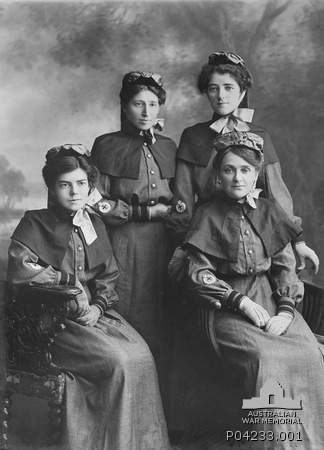
(Photo is of Australian World War I nurses; standing at the back on the right is Sister Constance Keys, who was mentioned in the post on Gallipoli. These nurses received military decorations for their heroism, and all made it back to Australia at the end of the war)

Will Olive Become Too Popular?

Tags

, , , , , , , ,

OlivesSophie and Michael are expecting their second child in a couple of months, who will be a brother or sister to their daughter Mary. If it’s a boy, he will be named Harry, which is a family name, but girls names have proved harder to decide upon. Sophie and Michael’s surname begins with a hard C and ends in an OH sound eg Carrow, and they are hoping to use family name May in the middle, but for the right name they could change it.

Sophie and Michael’s Name List

  • Olive – this is their first choice, but Sophie is worried it could become too popular in the future
  • Alice – a name both of them like
  • Tabitha – Lucy’s choice
  • Gertrude – Lucy’s choice; a family name
  • Annabelle – Michael’s choice

Names Rejected

  • Matilda and Millicent – don’t want another name starting with M
  • Cate – really like it, but doesn’t match with surname

Sophie is very concerned about popularity, and definitely wouldn’t consider any name in the Top 20. She loves that she has has never met another little Mary. They are looking for a name which is original, but not too “out there”; ideally an under-the-radar classic which is clunky, currently under-used, and enduring. They prefer shorter names which can’t be abbreviated to a diminutive form.

~ ~ ~ ~ ~ ~ ~ ~ ~ ~

Your Name List

Olive

This is a spunky little name which sounds nice with your surname and would make an adorable sister for Mary. No wonder it’s your favourite choice! Realistically, if you had an Olive she would be statistically unlikely to share her classroom with anyone else of that name, but I can see you might be worried about future popularity.

Alice

A pretty classic which isn’t even in the Top 50 in your area, and rising sedately in popularity. I’m crazy about Mary and Alice as sisters, and if you decided that Olive was too “risky” a choice for you, despite being more popular, Alice would probably be safer.

Tabitha

Very cute name which I think would be an excellent choice. If popularity is a real concern, then Tabitha is very under-used, and likely to remain so.

Gertrude

I think Gertrude would be quite a hip choice, and Mary and Gertrude definitely make an old-style name set. Gertrude is easily shortened to Gertie or Trudy though.

Annabelle

Very pretty and feminine, and now losing popularity rather than gaining. I would prefer the Scottish Annabel spelling with your surname though, and Mary and Annabel somehow feels a better match than Mary and Annabelle. I read on Nameberry somewhere that men prefer Annabelle though!

Other Names You Might Like

Vera

A simple vintage name which has just rejoined the charts, and has the same V sound as Olive. If Olive has gone from hip to fashionable, Vera still feels like it’s at the hip phase.

Florence

A similar sound and feel to Alice, but more fashionable and much less popular (although rising nicely). I like Mary and Florence together, and I think this sounds fantastic with your surname. Florence does lend itself to several nicknames though.

Jemima

Reminds me of Tabitha – both three-syllable clunky-stylish Biblical names with animal-related meanings that joined the charts in the 1960s and have never made the Top 100. Neither of them have an obvious nickname either.

Greta

Has the same clunky sound as Gertrude, yet while Gertrude is at the proto-hip stage, Greta has been hip seemingly forever. On and off the charts, it’s often in use, but never come anywhere near being popular.

Lydia

Lydia has that quirky upper-class feel of Annabelle and is from the New Testament like Tabitha. This name is a genuine underused classic, having never left the charts while never joining the Top 100.

June

Simple, pretty vintage name with a fashionable OO sound, and a great match as a sister to Mary. You couldn’t use May as the middle name, but June Annabelle is cute.

Willa

Has never charted in Australia, but fast becoming a hip name choice. I could see this as the Olive of the future … a nice long time in the future!

~ ~ ~ ~ ~ ~ ~ ~ ~ ~

I wonder if you would have already decided on Olive if you weren’t worried about its future popularity? Olive didn’t even make the Top 100 in your area last year, but that’s probably not much comfort. It’s a fashionable name, has got a celebrity “buzz” around it, and you’ve already seen little Olives appearing in your neighbourhood. You may have even read my article where I note that Olive is currently on the same trajectory that Ruby was 15 years ago.

I think you have to ask yourself exactly how upset you would be if Olive became popular down the track, and exactly why it would bother you. This is something far more likely to bug you than your daughter. Children usually like their own name, and often bond with others who share it.

I’ve noticed that girls who were given a name rising in popularity nearly always love their name, probably because they are receiving constant subtle reminders that others value it. Your own name is more popular now than it would have been when you were born – has that really been a problem for you?

You also have to ask yourself – what happens if you don’t pick Olive, and the name never does become that popular? Would you be regretful that you didn’t go with your first choice, based on something that might happen?

At the very least, if you did go with Olive, you would be doing so with your eyes open, knowing that it could become popular in time, and resigned to that happening.

In my experience, savvy parents who choose the name they love best even while foreseeing future popularity don’t end up with many regrets. There might be an occasional twinge of annoyance at meeting yet another baby with their child’s name, or an eye roll when the name data comes out, but in general they are happy they went with their favourite name, and glad that they got to pick it while it was still fresh.

You don’t need to make a choice now – you don’t even know if you’re having a girl, and you already have a great list of names up your sleeve if you ultimately decide that Olive isn’t right for you.

Good luck, and let us know what name you went with!

UPDATE: The baby’s name is Olive!

POLL RESULT: People preferred the second choice of Alice for Mary’s sister, at 21% of the vote, but Olive wasn’t far behind in the #2 position at 18%.


Rayne and Sunny

Tags

, ,

1b67a634-3ad1-4ea1-94fd-4a9c134db662Twins

Tiger Lily and Jarrah (girl/boy)


Girls

Charlotte Sigrid

Claudia Rochelle

Eleanor June

Indi Coco (Nell, Monty)

Lucy Ethel

Neve Simone (Matilda, Juliet)

Olivia Sunday

Rayne Alexandra

Sunny Martha

Thea Margaret (Hamish)


Boys

Baxter Eric-Heinz (Zack, Logan, Carter, Finley)

Bede Cornelius

Cash Grant (Scarlett)

Eeli Shane Onni

Fionn Dara (Mali)

Jago Leigh

Jethro Henri (Isaac)

Joaquin Frederick Casey

Koa Osmond

Tom Yani (Luka)


Most popular names this week

Girls: Charlotte

Boys: Jack and Thomas

(Photo shows storm clouds gathering over Thunder Point on the Victorian coast this week)

Popular Australian Names and Their US Chart Positions

Tags

, , ,

The flipside to the previous article.

GIRLS

Already Left the Top 100

  • #84 Amber – #260 (last on Top 100 in 2004)
  • #68 Amy – #144 (last on Top 100 in 1998)
  • #95 Angelina – #132 (last on Top 100 in 2010)
  • #85 Caitlin – #442 (last on Top 100 in 2001)
  • #31 Chelsea – #233 (last on Top 100 in 1998)
  • #76 Heidi – #334 (last on Top 100 in 1983)
  • #48 Holly – #424 (last on Top 100 in 1992)
  • #69 Jade – #112 (last on Top 100 in 2002)
  • #33 Jessica – #138 (last on Top 100 in 2010)
  • #70 Mikayla – #238 (last on Top 100 in 1999)
  • #54 Paige – #105 (last on Top 100 in 2010)

Still Rising Toward the Top 100

  • #52 Charlie – #305
  • #73 Eden – #164
  • #96 Elise – #151
  • #86 Eloise – #364
  • #93 Josephine – #160
  • #18 Isla – #230
  • #22 Ivy – #187
  • #59 Mila – #115
  • #90 Olive – #368
  • #58 Phoebe – #303
  • #2 Ruby – #106
  • #44 Willow – #171

Possibly Rising Toward the Top 100

  • #91 Amelie – #631
  • #71 Eliza – #224
  • #23 Evie – #602
  • #37 Georgia – #298
  • #72 Lola – #848
  • #75 Lara – #231
  • #66 Madeleine – #288
  • #94 Mariam – #620
  • #21 Matilda – #658
  • #63 Rose – #261
  • #92 Skye – #448
  • #32 Zara – #556

Falling Without Reaching the Top 100

  • #82 Eve – #558
  • #49 Hayley – #463
  • #98 Lacey – #493
  • #30 Lilly – #110
  • #27 Maddison – #350
  • #13 Sienna – #241
  • #29 Summer – #176

In Rare Use

  • #97 Ebony – 93 births (last charted 2005)
  • #45 Imogen – 111 births (never charted)
  • #64 Indiana – 33 births (last charted in 1893)
  • ? Milla – 135 births (never charted)
  • #57 Poppy – 171 births (never charted)
  • #77 Tahlia – 108 births (never charted)

BOYS

Already Left the Top 100

  • #80 Ashton – #141(last on Top 100 in 2004)
  • #68 Edward – #157 (last on Top 100 in 1997)
  • #71 George – #166 (last on Top 100 in 1992)
  • #52 Hayden – #109 (last on Top 100 in 2011)
  • #39 Jake – #153 (last on Top 100 in 2004)
  • #91 Jesse – #151 (last on Top 100 in 2005)
  • #73 Marcus – #149 (last on Top 100 in 2000)
  • #17 Max – #105 (last on Top 100 in 2011)
  • #45 Mitchell – #463 (last on Top 100 in 1997)
  • #42 Patrick – #142 (last on Top 100 in 2004)
  • #16 Riley – #133 (last on Top 100 in 2002 – still Top 100 for girls)

Still Rising Toward the Top 100

  • #62 Archer – #404
  • #58 Beau – #311
  • #31 Braxton – #125
  • #19 Charlie – #233
  • #84 Declan – #143
  • #65 Finn – #291
  • #22 Harrison – #181
  • #77 Jasper – #264
  • #61 Kai – #195
  • #54 Leo – #134
  • #67 Lincoln – #132
  • #74 Luca – #223
  • #100 Muhammad – #467

Possibly Rising Toward the Top 100

  • #97 Ali – #358
  • #94 Callum – #810
  • #41 Flynn – #692
  • #76 Hugo – #436
  • #78 Toby – #672

Falling Without Reaching the Top 100

  • #30 Harry– #718
  • #21 Oscar – #177

In Rare Use

  • #57 Angus – 83 births (last charted 1948)
  • #46 Archie – 93 births (last charted 1988)
  • #75 Bailey – 121 births (last charted 2009, Top 100 for girls)
  • #85 Darcy – 9 births (last charted for boys 1970, more common for girls)
  • #72 Hamish – 15 births (never charted)
  • #10 Lachlan – 183 births (never charted)
  • #56 Nate – 101 births (never charted)
  • #90 Zac – 73 births (never charted)

Famous Names: Asher and Hamish

Tags

, , , , , , , , , , , , , , , ,

4615398-16x9-512x288Last month the Logie Awards were held to honour those deemed most excellent or most popular in the TV industry (the public votes on the “popular” categories via the TV Week website). The Gold Logie for most popular personality on Australian television overall went to actress Asher Keddie, for her work in popular thirty-something drama Offspring (she also won Most Popular Actress).

Comedian Hamish Blake won the Gold Logie last year, but this year had to be satisfied with Most Popular TV Presenter, for Hamish and Andy’s Euro Gap Year and Hamish and Andy’s Caravan of Courage: Australia vs New Zealand.

We’ve already seen Asher Keddie and Hamish Blake on the blog before – Asher for her award-winning role playing Ita Buttrose, and we covered Hamish’s surname, Blake, a year ago. So this seemed like a good opportunity to cover both their first names.

In the Bible, Asher is one of the sons of Jacob and the founder of one of the twelve tribes of Israel. Because Asher’s mother is said to be one of Jacob’s handmaids, rather than one of his wives, some scholars believe this means the tribe of Asher had non-Israelite origins, of which there is some evidence from outside sources.

The tribe of Asher was believed to be especially blessed, for they were very wealthy, produced an abundance of sons and beautiful daughters, and had a reputation for great wisdom. This fits very well with the Hebrew meaning of Asher given in the Bible: “happy, blessed, fortunate”.

However, meanings of names given in the Old Testament are nearly always just folk etymology, and Asher may be named after Asherah, the Semitic mother goddess; she was worshipped as the consort of Yahweh before the Israelites became monotheistic. Her ancient name may mean “straight, upright”, with reference to trees, or “holy place, shrine”, or perhaps “lady”. It is pronounced uh-SHEER-uh.

Another possibility is that Asher is after the East Semitic god Ashur, which means “the whole of heaven”. He was the major Assyrian deity, and seems to have been a god of the weather – both sunshine and tempests.

An interesting theory put forward is that the tribe of Asher descended from the Uash people, one of the mysterious Peoples of the Sea who were seafaring raiders. As nobody is quite sure where the Uash people came from (they may have been Trojans), I doubt that the meaning of their name is even known.

So quite a range of attractive meanings to choose from, and quite possibly the real meaning is so ancient and mysterious as to be unknowable.

Although usually listed as a boy’s name, in Australia the name Asher is unisex, and in Victoria at least (Asher Keddie’s home state), is given fairly equally to boys and girls (it is #168 for boys and #195 for girls).

Apart from Ms Keddie herself, another reason for its unisex status here is that in an Australian accent, this is said the same way as the girl’s Asha. And if you believe the name Asher is related to Asherah, then it has a feminine meaning.

Hamish is an Anglicised form of Seumas, the Scottish form of James, and obviously based on the Irish form of the name, Séamas. The Scottish pronunciation SHAY-mas is similar to how Hamish is said – HAY-mish. (Hamish shouldn’t remind you of ham any more than James reminds you of jam).

Apart from all the famous Hamishes (on the blog alone we have already had Hamish Blake, Hamish Rosser and Hamish McLachlan) there are several Hamishes in fiction, including Hamish Campbell in Braveheart, and TV detective Hamish Macbeth, played by Robert Carlyle. Another detective connection is that Hamish is the middle name of Dr. John Watson, Sherlock Holmes’ sidekick.

Hamish first charted in Australia in the 1950s, and from the 1980s onwards, rose steadily to make the Top 100 in the early 2000s. It peaked in 2010 at #60, and since then has been on a decline. Currently it is #85 in New South Wales, #58 in Victoria, #77 in Queensland, #28 in Tasmania and #67 in the Australian Capital Territory.

Apart from its obvious Scottish heritage associations, Hamish is often seen as a rather upper class name in Australia. It’s still popular, and outside New South Wales at least, is probably set to have a fairly gentle decline.

POLL RESULT: Hamish received an approval rating of 81%, and Asher a slightly higher approval rating of 83%. This makes Hamish and Asher two of the most highly-rated names of the year.

(Photo is of Asher Keddie with her Logie)

Popular US Names and Their Australian Chart Positions

Tags

, , ,

You probably noticed in the previous article there were a lot of names from the US Top 100 which can’t be found on the Australian Top 100. Here’s where the “missing” names from the United States appear on the Australian charts, and their popularity status.

BOYS

Already Left Top 100

  • #51 Aaron – just left Top 100 in NSW, #97 in Vic
  • #60 Adrian – #157 in NSW, #160 in Vic (last on Top 100 in early 2000s)
  • #56 Brandon – #183 in NSW, #207 in Vic (last on Top 100 in early 2000s)
  • #39 Brayden – #140 in NSW, #205 in Vic (last on Top 100 in 2008)
  • #97 Damian – #426 in NSW, #435 in Vic (last on Top 100 in 1970s)
  • #40 Gavin – #537 in NSW, #533 in Vic (last on Top 100 in 1980s)
  • #78 Ian – #262 in NSW, #274 in Vic (last on Top 100 in 1980s)
  • #76 Jason – #133 in NSW, #132 in Vic (last on Top 100 in early 2000s)
  • #74 Justin – #102 in NSW, #146 in Vic (last on Top 100 in 2010)
  • #67 Kevin – #174 in NSW, #180 in Vic (last on Top 100 in 1990s)
  • #61 Robert – #107 in NSW, #182 in Vic (last on Top 100 in early 2000s)
  • #89 Tristan – #123 in NSW, #158 in Vic (last on Top 100 in 2008)

Still Rising Toward the Top 100

  • #42 Isaiah – #129 in NSW, #136 in Vic
  • #52 Jeremiah – #221 in NSW, #539 in Vic
  • #79 Josiah – #233 in NSW, #349 in Vic
  • #53 Julian – #114 in NSW, #102 in Vic
  • #84 Nathaniel – #122 in NSW, #113 in Vic

Falling Without Reaching the Top 100

  • #69 Ayden – #172 in NSW, #174 in Vic
  • #91 Brody – #144 in NSW, #169 in Vic
  • #47 Evan – #130 in NSW, #127 in Vic

Possibly Rising

  • #75 Bentley – #185 in Vic
  • #36 Carter – #140 in Vic
  • #99 Kayden – #194 in Vic
  • #80 Parker – #189 in Vic
  • #41 Wyatt – #252 in Vic

In Rare Use

  • #95 Carlos – #519 in Vic
  • #65 Colton – #384 in Vic
  • #86 Jace – #489 in Vic
  • #34 Landon – #543 in Vic
  • #90 Luis – #618 in Vic

Never Charted in Australia

  • #57 Angel (only charts as a girl’s name)
  • #94 Bryson
  • #87 Carson
  • #96 Easton
  • #72 Jose
  • #92 Juan
  • #88 Nolan

GIRLS

Already Left Top 100

  • #38 Allison – uncharted in NSW, #401 in Vic (last on Top 100 in 1970s)
  • #50 Ashley – just left the Top 100 in NSW, #158 in Vic
  • #51 Brianna – #173 in NSW, #222 in Vic (last on Top 100 in late 2000s)
  • #80 Caroline – #495 in NSW, #330 in Vic (last on Top 100 in 1970s)
  • #65 Julia – #211 in NSW, #153 in Vic (last on Top 100 in early 2000s)
  • #64 Katherine – #168 in NSW, #207 in Vic (last on Top 100 in 1990s)
  • #59 Kylie – uncharted in NSW and Vic (last on Top 100 in 1980s)
  • #96 Madeline – just left Top 100 in NSW, #82 in Vic
  • #77 Melanie #473 in NSW, #491 in Vic (last on Top 100 in 1990s)
  • #81 Naomi – #152 in NSW, #169 in Vic (last on Top 100 in 1990s)
  • #17 Natalie – just left Top 100 in NSW, #91 in Vic
  • #46 Taylor – #108 in NSW, #163 in Vic (last on Top 100 in 2010)

Still Rising Toward the Top 100

  • #75 Faith – #125 in NSW, #146 in Vic
  • #34 Kaylee – #167 in NSW, #208 in Vic

Never Reached Top 100

  • #99 Andrea – #331 in NSW, #362 in Vic
  • #92 Jocelyn – #536 in NSW, uncharted in Vic
  • #88 Kimberly – uncharted in NSW and Vic
  • #95 Lydia – #282 in NSW, #227 in Vic
  • #69 Makayla – #128 in NSW, uncharted in Vic

Possibly Rising

  • #57 Alexa – #173 in Vic
  • #74 Ariana – #145 in Vic
  • #29 Brooklyn – #281 in Vic
  • #32 Hailey – #188 in Vic
  • #55 Khloe – #261 in Vic
  • #39 Nevaeh – #149 in Vic
  • #53 Peyton – #217 in Vic
  • #93 Trinity – #250 in Vic
  • #20 Zoey – #186 in Vic

In Rare Use

  • #15 Aubrey – #604 in Vic
  • #68 Autumn – #511 in Vic
  • #13 Avery – #443 in Vic
  • #79 Bailey – #316 in Vic (in Top 100 for boys)
  • #94 London – #456 in Vic
  • #67 Madelyn – #380 in Vic
  • #82 Morgan – #465 in Vic (more popular for boys)
  • #47 Riley – #539 in Vic (in Top 100 for boys)
  • #78 Sydney – #593 in Vic

Never Charted in Australia

  • #49 Arianna
  • #60 Aubree
  • #48 Camila
  • #56 Genesis
  • #73 Gianna
  • #83 Kennedy
  • #97 Reagan
  • #58 Serenity
  • #87 Skylar