Celebrity Baby News: Zed and Ros Seselja

Tags

,

LI-art-wd-zed-baby-20130903221645534957-620x349

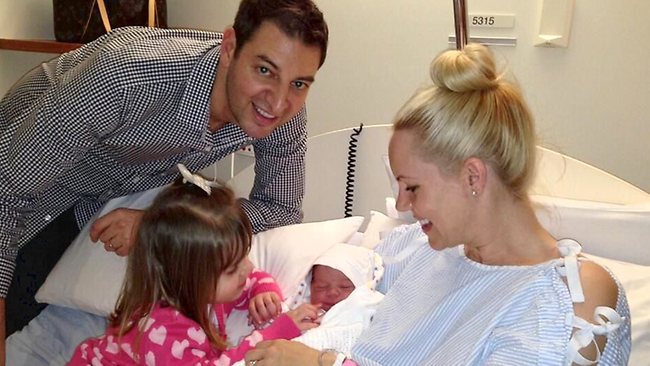
Liberal party candidate, Zed Seselja, and his wife Ros, welcomed their daughter Grace on September 2. Grace Seselja was born at 11:15 am weighing 4.5 kg (9lb 15oz), and she joins older siblings Michael, Tommy, William and Olivia. Grace is thirteen years younger than her eldest brother.

Zdenko or “Zed” was a member of the Australian Capital Territory Legislative Assembly from 2004 to 2013, and was Opposition Leader from 2007 to 2013. He won the electorate of Brindabella in last year’s territory elections, but this year he stood down as party leader to run for the senate in this year’s Federal Election, which is on September 7.

Zed’s campaigning duties have been scaled back because of Grace’s birth, and he is visiting the hospital several times a day. Ros and Grace will be leaving hospital soon.

Popular Here and There: Comparing the Shared Top 100 Names of England/Wales and Australia

Tags

, , ,

In May I compared the popular names Australia shares with the US, and now that the data for England/Wales has come out, I’m going to do the same with them. I think it’s interesting to see not only see how we compare with England/Wales, but to compare our results with the earlier ones for the United States. I used the Top 100 charts drawn up by Elea at British Baby Names.

BOYS

Similar Level of Popularity (within 10 places of each other)

Alexander, Ethan, Henry, Isaac, Jack, Jacob, Jake, James, Jayden, Joshua, Kai, Logan, Luke, Matthew, Max, Michael, Nathan, Oliver, Owen, Riley, Sebastian, Thomas, Tyler, William

More Popular in Australia (11-40 places higher)

Aiden, Bailey, Benjamin, Blake, Caleb, Connor, Elijah, Harrison, Hugo, Liam, Lucas, Mason, Noah, Ryan, Samuel

Much More Popular in Australia (more than 40 places higher)

No results

More Popular in England/Wales (11-40 places higher)

Adam, Aidan, Alex, Archie, Cameron, Charles, Charlie, Daniel, David, Dylan, Edward, Gabriel, Harry, Leo, Luca, Oscar, Toby, Zachary

Much More Popular in England/Wales (more than 40 places higher)

Callum, George, Joseph, Muhammad

GIRLS

Similar Level of Popularity (within 10 places of each other)

Amelia, Amy, Anna, Ava, Bella, Eliza, Elizabeth, Ella, Emily, Eva, Evelyn, Grace, Heidi, Imogen, Isabella, Isla, Jasmine, Layla, Lilly, Lily, Lucy, Maya, Mia, Olivia, Ruby, Scarlett, Skye, Sophia, Sophie

More Popular in Australia (11-40 places higher)

Abigail, Annabelle, Caitlin, Charlotte, Chloe, Emma, Georgia, Hannah, Matilda, Paige, Rose, Sienna, Summer, Violet, Willow, Zara

Much More Popular in Australia (more than 40 places higher)

Ivy, Maddison, Madison, Sarah, Zoe

More Popular in England/Wales (11-40 places higher)

Alice, Amber, Amelie, Ellie, Evie, Holly, Isabel, Isabelle, Jessica, Leah, Molly, Phoebe, Sofia

Much More Popular in England/Wales (more than 40 places higher)

Lacey, Lola, Poppy

Australia shares 62 boys names with the US, and 61 with England/Wales, which is pretty even. But we share 13 boys names of very similar popularity with the US, and 24 with England/Wales. You can see how hard it is to decide whether our boys names are more “American” or more “English”! Interestingly, we shared more boys names with Wales than with England, so perhaps our boys names are more “Welsh” than anything else.

Australia shares 54 girls names with the US, with 19 of those at a similar level of popularity, and 67 girls names with England/Wales, with 29 of them at a similar level of popularity – in several cases, they had exactly the same popularity ranking. This is a much more clear-cut situation – our girls names are significantly closer to those in England/Wales than to the United States.

Rare Royal Names for Girls

Tags

, , , , , , , , , , , , , , , , , , , , , , , , ,

Berengaria

Royal babies have been on everyone’s mind lately, and we recently saw two babies born in the royal family within less than a month of each other.

Not only have been people been doing web searches for Prince George and Maud Windsor, they’ve been searching for royal baby names in general, uncommon royal names, and royal names that nobody else is using.

So here is a list of queens and princesses connected to English royal houses by either birth or marriage, whose names aren’t popular or common in Australia (although I can’t promise nobody else will use them).

Adeliza

Adeliza of Louvain married Henry I, and became queen of England. She was considered pretty, but didn’t manage to produce any royal heirs. However, after Henry’s death she re-married, and had seven children; she is an ancestor of many of the noble English families. William the Conqueror had a daughter called Adeliza, named after his sister – the name wasn’t uncommon amongst Norman-French aristocracy. Adeliza is a medieval English form of Adelais, a short form of Adelheidis, the original old Germanic form of Adelaide. It’s pronounced ad-uh-LEE-za. Although it doesn’t have any connection to the name Elizabeth, it looks like a combination of Adele and Eliza, and might feel like a way to honour relatives who have variants of these names. It’s rare, but doesn’t seem unfamiliar.

Berengaria

Berengaria of Navarre was Queen of England through her marriage to Richard I, “the Lionheart”. She is the only English queen never to set foot in the country, since she only visited England after her husband’s death, when she was no longer queen. Richard himself spent only a few months in England during his marriage, as he was busy Crusading. Richard and Berengaria never had any children, and it is not known if their marriage was ever consummated, as they spent so much time apart. Richard’s family seem to have liked her, and there are a few other royal English Berengarias, perhaps named after her. Berengaria was a traditional name amongst Spanish royalty, and is the feminine form of Berengar, an ancient Germanic name meaning “bear spear”. It is pronounced behr-en-GAR-ee-uh, and the name has been bestowed upon a planet in the Star Trek universe inhabited by dragon-like creatures. This doesn’t sound like any currently popular names, and the nickname Berry is appealing.

Christabel

Christabel was the middle name of Princess Alice, wife of Prince Henry, Duke of Gloucester, a son of George V. Princess Alice was born into the aristocracy on both sides of her family, and was a direct descendant of Charles II, through an illegitimate line. She is related to Sarah, Duchess of York, the wife of Alice’s great-nephew, Prince Andrew. Just after the Second World War, Prince Henry was appointed Governor-General of Australia, and he and Princess Alice lived in Canberra for two years. The name Christabel is a combination of Christina with a -bel suffix, but Princess Alice was given this name because was born on December 25, and the name suggests Christmas bells. Her niece Princess Alexandra was also born on Christmas Day, and shares the middle name Christabel. Apart from the Christmas connection, this pretty name might seem like a good way to honour a Christine and an Isobel (for example) simultaneously.

Elfreda

Elfreda was one of the wives of Edgar I, and she was the first king’s wife to be crowned and anointed as Queen of England. Beautiful and powerful, she was unfortunately linked with the murder of her stepson Saint Edward the Martyr, and ever after appears in medieval history in the role of evil stepmother. Her own son, replacement to the martyred Edward, was Ethelred the Unready, only a child when he took the throne. Elfreda was a traditional name amongst Anglo-Saxon royalty, and Alfred the Great of Wessex had a daughter named Elfreda, an ancestor of Queen Matilda, the wife of William the Conqueror; through Matilda, the monarchs of England are descendants of the House of Wessex. There is a Saint Elfreda, an Anglo-Saxon princess. Elfreda is a modern spelling of the Anglo-Saxon name Ælfþryð, meaning “elf strength”. The name went out of use after the Norman Conquest, but was revived in the 19th century, although it never became popular. Freda would make a good nickname – unfortunately, sweet Elfie would probably be misheard as Alfie, leading to confusion.

Eugenie

Eugenie was the second name of Victoria Eugenie, a grand-daughter of Queen Victoria who married Alfonso XIII and became Queen of Spain. Her grandson Juan Carlos I is the current king of Spain. Unfortunately, her marriage to Alfonso wasn’t particularly happy, and she didn’t enjoy great popularity with the Spanish people – she was greeted with an assassination attempt on her wedding day. After the Republicans gained power, Victoria Eugenie went into exile with the rest of the Spanish royal family. Queen Victoria Eugenie’s middle name was in honour of her godmother, Maria Eugenia “Eugénie” de Montijo, empress consort to Napoleon III. Eugénie was a member of the Spanish nobility, and after the defeat of the Second French Empire, she lived in England, where she became friendly with the British royal family. The name remains well-known because of Princess Eugenie of York, daughter of Prince Andrew, who was named after Victoria Eugenie. Eugenie is the Anglicisation of Eugénie, the French form of Eugenia, which is the feminine form of Greek Eugenius, meaning “well born, of noble birth”. This elegant name is said yoo-JEE-nee, and Gina or Genie could be used as nicknames.

Marina

Princess Marina of Greece and Denmark was a cousin of Prince Philip. Like her cousin, she married into the British royal family when she wed Prince George, the Duke of Kent, an uncle of Queen Elizabeth II; she was the last foreign-born princess to marry into the British royal family. Princess Marina was attractive and stylish, earning her a place in the International Best Dressed List Hall of Fame, and her favourite shade of blue-green became known as “Marina blue”. Princess Marina’s mother was the grand-daughter of Tsar Alexander II of Russia, and Marina may have been named after Princess Marina of Russia. Princess Marina and the Duke of Kent were married in 1934, and a year later, Swiss water-ski champ Marina Doria was born, which looks more than coincidental. Oddly enough, Marina Doria also became Princess Marina, when she married a prince of Naples. Marina’s name has been passed down to her grand-daughter, Maud Elizabeth Daphne Marina Windsor, and I have seen a birth announcement for a Scarlett Marina this week. Marina is the feminine form of the Roman name Marinus, which may be from the Latin for “of the sea”. There are two saints named Marina, and it’s also the name Saint Margaret is known by in the Orthodox church. Marina is a very beautiful name, and familiar in Australia due to entertainer Marina Prior.

Melita

Princess Victoria Melita was a grand-daughter of both Queen Victoria and Tsar Alexander II, making her Princess Marina’s great-aunt. Her love life was one of great turmoil, because she fell in love with her cousin Kirill, Grand Duke of Russia, but was forced to marry her cousin Ernest, Grand Duke of Hesse instead. The marriage wasn’t a success, as Victoria Melita preferred Kirill, and Ernest preferred young boys. Soon after Victoria and Ernest ‘s divorce, Kirill was almost killed during the Russo-Japanese War, and this brush with death made him realise that nothing was more important than being with his true love. He defied his family, and married Victoria Melita, much to his parents’ rage and disgust. Although their marriage and family life was happy, the Russian Revolution and subsequent exile was a setback, and the couple rather naively supported the Nazi Party. More emotional pain followed for Victoria when Kirill was unfaithful to her, which she never got over. Her life contained some bitterness, but Victoria Melita’s middle name has a sweet meaning. Melita is the Latin name for the island of Malta, thought to come from its Greek name, Melite, meaning “sweet as honey”; Malta was famous for its honey production. This doesn’t sound out of place next to popular names like Mila and Layla, and would be a great way to honour Maltese ancestry; you could use Millie or Lita as nicknames.

Sibylla

Princess Sibylla (born Sibylle) was a great-granddaughter of Queen Victoria who married her second-cousin Prince Gustaf Adolf (known as “Edmund”) of Sweden; her son Carl XVI Gustaf is the current king of Sweden. The couple don’t seem to have been very popular in Sweden, being plagued by rumours of Nazi sympathising, of which there is no proof. Unfortunately, Sibylla did have quite a few relatives in the Nazi Party in Germany, who threw her a big fat Nazi wedding, and this can’t have been a help at soothing suspicions. The name Sibylla (or Sybilla) has been used amongst European royalty and nobility since the Middle Ages, and has been connected with the British royal family from early on. William the Conqueror’s son Robert was married to a Sybilla, and Henry I had an illegitimate daughter named Sybilla, who married Alexander I of Scotland. Sibylla is from the Greek word for a female prophet of the ancient world who uttered divine revelations in a state of frenzy; the word became sibyl in English. During the Middle Ages, it was thought that the Greek and Romans sybils had been precursors to Christian prophecy, and therefore gained respectability as a Christian concept and name. This name (and its variants), though uncommon, is quite trendy in Australia, being known from actress Sibylla Budd, and the heroine of My Brilliant Career, Sybylla Melvyn, whose name inspired feminist publishing house, Sybylla Press.

Sigrid

The splendidly-named Sigrid the Haughty was supposedly the wife of Sweyn Forkbeard, who ruled England before the Conquest, in the days when the Danish royal house held the throne. It’s not clear if Sigrid was her real name, because it seems that Sweyn’s wife was actually Polish rather than Scandinavian, and in fact we can’t be sure if “Sigrid the Haughty” even existed. She may well be a fictional character, but her story is compelling. Beautiful and proud, Sigrid was a woman of great political power, who tended to wreak terrible revenge on those who annoyed her, and is supposed to have burned two of her suitors to death to discourage others. It could be that this fascinating lady of legend was tacked on to a real Polish woman who married Sweyn, and became the mother of King Canute the Great. Sigrid is from the Old Norse name Sigríðr, meaning “beautiful victory”. This is another name familiar in Australia because of an actress – the very famous Sigrid Thornton. The usual nicknames are Siri and Sigi.

Thyra

Thyra was the daughter of Sigrid and Sweyn Forkbeard, the sister of Canute the Great. She was married to Godwin, the first Earl of Essex, the father of King Harold who fell at the Battle of Hastings. She didn’t live very long, and she and Godwin didn’t have any children together, so she’s rather a footnote in the history books. She may have been named after Thyra, the wife of King Gorm the Old of Denmark; they were the parents of Harald Bluetooth, the father of Sweyn Forkbeard. According to at least one source, Queen Thyra was English, the daughter of King Ethelred of Wessex. She was said to be a smart and sensible woman who led an army against the Germans, and was described as the “pride of Denmark”. According to legend, one of Thyra’s daughters was captured by trolls and carried off to their kingdom in the far north. Thyra is from the Old Norse name Þýri, derived from the name of the god Thor, and possibly meaning “Thor’s war”. The name is pronounced TEE-rah, and I think it’s attractive and contemporary-sounding, although pronunciation may be an issue, with people trying to say it THY-rah.

POLL RESULT: People’s favourite names were Marina, Adeliza, and Christabel, and their least favourite were Elfreda, Thyra, and Berengaria.

(Picture is a drawing of Queen Berengaria)

Northerly Names

Tags

,

capeyork_main

On Wednesday, we looked at the directions North and West as personal names, and I mentioned that there were many examples of both in Australian historical records. I thought it might be interesting to take a look at a selection of real life Australian names which contain either North or Northern in them.

North and Northern First Names

North Dorothy Alley (resided 1972 in Henty, Victoria)

North Victoria Allwinton (resided 1916 in North Perth)

Rev. North Ash (resided 1900 in North Sydney)

North Hildegard Bartholomew (resided 1937 in Sydney)

North Barter (born 1907 in Sydney)

North Veronica Best (resided 1972 in Corangamite, Victoria)

North Seabrook Bigg (born 1874 in Swan Hill, Victoria)

North Queensland Brady (resided 1925 in North Ipswich, Queensland; later moved to North Pine)

North Winifred Carter (born 1903 in Sydney)

North Chives (emigrated from the United Kingdom in 1932)

North Easton Cox (resided 1980 in Sydney)

North Adelaide Daly (born circa 1917 in South Australia)

North Overy Draggett (born circa 1872, died in Perth)

North Flood (born 1877 in Coonabarraban, New South Wales)

North Freeman Garnett (died in Western Australia)

North Gatehouse (died circa 1808)

North Minioa Graham (resided 1925 in Fremantle, Western Australia)

North Agnes Hayes (resided 1931 in East Melbourne)

North Catherine Howard (married 1925 in Queensland)

Mary Head North Kemp (emigrated 1951 from United Kingdom)

North Kite (died 1950 in Perth)

North Bethel Larry (resided 1977 in Somerset, Queensland)

North Matilda Lewis (resided 1930 in Sydney)

North Lone (died 1938 in Perth)

North Dalrymple Sutherland Macintosh (married 1890 in South Australia)

North Arm Ness (resided 1954 in Richdmond, New South Wales)

North Norman Richardson (resided 1949 in Melbourne)

North Pratt (died 1919 in Queensland)

North Australia Rose (born 1856)

North Sainty (married 1890 in Sydney)

North West Tennant (born circa 1829, died in Melbourne)

North O Toole (died 1926 in North Sydney)

Northern Monarch Charles Catterole (resided 1909 in Nhil, Victoria)


North and Northern as Middle Names

Agnes North Ambler (resided 1936 in Ballarat, Victoria)

Alice Cecilia North Newenham (died 1887 in Melbourne)

Arthur Ernest North Flower (born 1873 in Melbourne)

Constance North Booth (resided 1949 in Earlwood, New South Wales)

Daniel North Rice (married 1875 in Queensland)

Denis North Eastern Hogan (resided 1937 in Euroa, Victoria)

Dudley Francis North Fitzgerald (born 1891 in Melbourne)

Earl North Kourt Dempsey (born 1892 in Port Augusta, South Australia)

Edward North Stack (born 1871 in Sydney)

Eric North North (resided 1936 in Wilmot, Tasmania)

Ernest North Weston (died 1966 in Perth)

Ethel North Street (born 1881 in Melbourne)

Fanny North Bucknell (resided 1948 in Griffith, Queensland)

Florence North Bell (born 1870 in Muswellbrook, New South Wales)

Frederick Harold North Bowman (resided 1937 in Parkes, New South Wales)

Gertrude North Coffey (resided 1930 in Sydney)

Hini Moana North Wright (died 1982 in Ocea, Victoria)

Honora Assumpta North Clair (resided 1958 in Fitzroy, Queensland)

Juliann North East Bell (married 1891 in Victoria)

Lavinia North Noy (born 1880 in Melbourne)

Loreene North Goldfinch (born 1889 in Thebarton, South Australia)

Lovell North Thomas White (born 1900)

Mira North Sully (born 1910 in Queensland)

Morkalla North Croft (resided 1942 in Mildura, Victoria)

Nellie North Causby (born 1887 in Moonta, South Australia)

Pearlie North Louis Bissett (resided 1943 in East Sydney)

Richard North Whale (resided 1930 in Sydney)

Ruben Clarence North Fraser (born 1907 in Northcote, Victoria)

Tudor North Davies (resided 1963 in Hume, New South Wales)

Ulysses North Bagot (born circa 1820, died in North Adelaide)

Walter North Cocks (resided 1963 in Sydney)

William North Balnaguith Sorrel (born 1857 in Victoria)

Zaida Eva North Daley (resided 1949 in Melbourne)

Zillah North Goulding (born 1864 in Bulla, Victoria)

Benjamin Northern Monarch Burridge (resided 1958 in Brisbane)

Kilmont Northern Webb (resided 1968 in Darwin)

Margaret Northern Jones (born 1868 in Milang, South Australia)

Sarah Jane Northern Light Rann (married 1882 in North Adelaide)

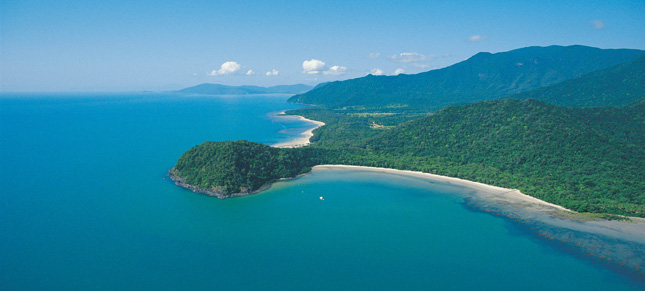
(Photo is of Cape York, the most northerly point of mainland Australia)

Orly and Crixus

Tags

, ,

surferanddolphins

Twins

Matthew Horace and Laura Gwyneth

Patrick David and Luis Alberto (Andrea)

Zahra Alison and Madinah Kishwar


Girls

Anastasia Juliet (Annabelle)

Annabelle Daphne

Briar Lily

Crystal Angel (Angel)

Frances Eleanor (Harriet)

Freyja Margaret (Luana, Bethanie)

Greta Harriet May (Isaac, Eve)

Harlow Nikeea-Clair

Lesi’eli Palu

Lollie Erica (Max, Harry)

Lucy May June

Luna Maree

Mayumi Liliana

Mirridhi Kandelka

Nevada Monica

Orly Alice

Rubi Anjali

Scarlett Marina

Tara Sinead (Erin, Sean Patrick, Megan, Liam, Keira, Ronan)

Vanita Letizia (Marco, Sierra-Rose)

Verity Grace


Boys

Ambrose John (Xavier, Fabian, Lucia)

Andronicus

Austin Jet

Axel Mark

Baxter Myles

Crixus Maxwell

Digby Peter

Flynn Nimrod (Tia, Indi)

Francis Ian “Frankie” (Spencer, Ned)

Larry Alan

Lennox Soul (Rhys)

Maverick Bayden

Parker Madden (MacKenzie)

Preston Drake

Rossi Ronald Bruce (Brayden, Connor, Jet)

Ryder Manix

Sandy Keith (Brooklyn)

Tarik Geoffrey

Tasman Jay

Thomas Ridley

Zen Maurice Donald


Most popular names this week

Girls: Ruby

Boys: Thomas

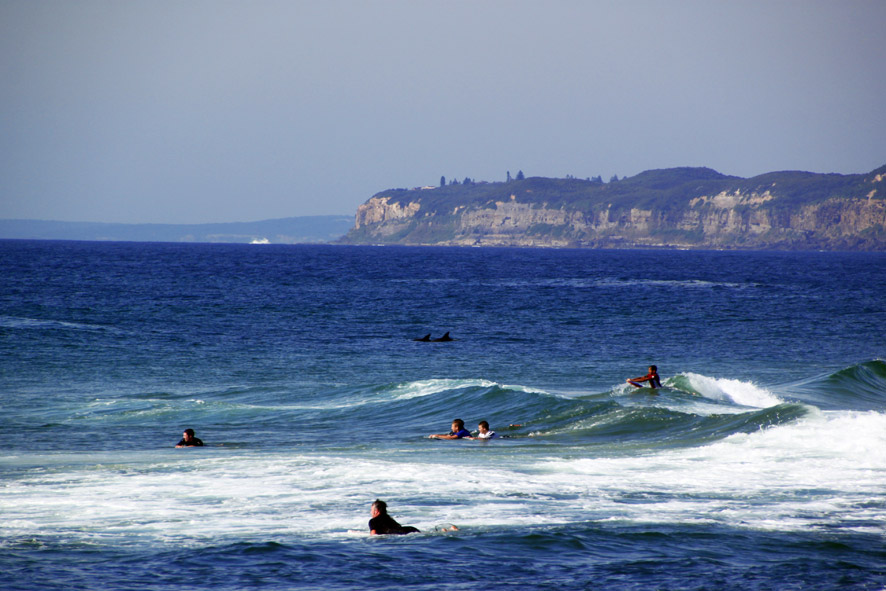
(Picture shows surfing with dolphins during winter in Newcastle, New South Wales)

Celebrity Baby News: Nathan and Leann Hines

Tags

, , ,

c5c07591f1f36a7ce18dde919e8715f7_resized

Rugby union player Nathan Hines, and his wife Leann, welcomed twins named Lachlan and Chloe on June 4, a brother and sister for Joshua, aged 4. The twins’ birth was announced on Twitter.

Nathan started out in rugby league, playing for the North Sydney Bears in 1997, before switching to rugby union at Manly Rugby Union Football Club the following year. Since then, he has played for rugby union teams in Scotland, Ireland and France, as well as being selected for Scotland’s national team, and the British and Irish Lions. He is currently with French team ASM Clermont Auvergne.

Chloe is a very popular name in France, and Joshua is rising in popularity there, but Lachlan’s name seems as if it will stand out in his country of birth.

(Photo shows Nathan, Leann and Joshua)

Celebrity Baby News: Jason Gann and Alejandra Varela

Tags

, , , ,

Premiere Screening Of FX's "American Horror Story: Asylum" - Arrivals

Actor and comedy writer Jason Gann, and his wife Alejandra Varela, welcomed their first child on August 13, and have named their son Xano William. Xano is a Brazilian short form of Alexandro, a masculine form of Alejandra’s name, while William is Jason’s own middle name. The name is pronounced SHAH-no.

Jason first gained national attention when his short film Wilfred won Best Comedy and the People’s Choice Award at Tropfest in 2002, while Jason himself gained Best Actor in that year and the next. He went on to write and star in 52 episodes of TV sketch show The Wedge, as well its spin-off show, Mark Loves Sharon.

In 2007 he wrote and starred in the TV series Wilfred, based on his short film. Both seasons won awards at Tropfest, and he received AFI Awards for Best Comedy and Best Screenplay in a Television Series. In 2010, Wilfred was sold to a US TV network and redeveloped for the American market, with Jason co-starring with Elijah Wood.

Alejandra is a Spanish-born actress and model; she and Jason were married in February this year.

Celebrity Baby News: Celebrity Baby Round Up

Tags

, , ,

465981-basil-zempilas-baby

Media personality Basil Zempilas, and his wife Amy, welcomed their daughter Chloe Margaret on August 29. The middle name is in honour of Amy’s grandmother, Margaret. Chloe Zempilas weighed 3.17 kg (7 lb), and measured 50 cm long; she joins big sister Ava, aged 2. Ava’s birth was announced on the blog. ~ Thanks to Ebony for this celebrity baby tip!

Golfer Marc Leishman, and his wife Audrey, welcomed their son Oliver on August 18, a brother for Harvey. Marc currently plays on the PGA Tour, and in 2009 he became the first Australian to win the Rookie of the Year award. He won his first tournament last year at the Traveler’s Championship, becoming the second Australian to win after Greg Norman in 1995.

Tennis player Casey Dellacqua, and her partner Amanda, welcomed their son Blake Benjamin a few weeks ago. Blake’s birth was announced at the US Open, which was also the first public acknowledgement that Casey is gay and has a partner. Casey has ranked as high as 39 in the world, and won her first Grand Slam Title at the French Open in 2011, playing mixed doubles.

Soccer coach Michael Brown, and his wife Louise, welcomed their son Tyler not long ago. Michael is a coach at the Ipswich Knights.

Reality TV contestants Josh Maldenis and Andi Thomas welcomed their son Harry Joshua on August 6. Josh and Andi entered the last season of cooking show My Kitchen Rules, and withdrew from the competition when they discovered that Andi was pregnant. Tagged on the show as “dating hipsters”, Josh is a business development manager and Andi is a fashion buyer.

NRL player David Gower, and his wife Erika, recently welcomed their daughter Amelia. Amelia’s birth was announced on The Footy Show, when David and Erika took part in the “Perfect Partners” quiz segment. David has been playing rugby league professionally since 2006, and has been with the Manly Sea Eagles since this season. He has also played rugby league in England.

NRL player Craig Gower, and his wife Amanda Flynn, welcomed their daughter Freya Rose on July 23, a sister to Lola, aged 4. Freya was born just a few hours after Prince George, but because of the time zone difference, they don’t share a birthday. Craig has been playing professional rugby league since 1996, and is currently with the Newcastle Knights. He has been selected for the national squad, New South Wales, and City. Craig has also played rugby union in France and Italy. Amanda is a model, media personality, and former Penrith Panthers cheerleader. Craig and David Gower are not related, as far as I know.

NRL player Josh Hoffman, and his wife Emma, welcomed their daughter Leilani Grace in July. The middle name is in honour of Josh’s mother, Grace, who passed away unexpectedly in 2009. Josh has played for the Brisbane Broncos since 2008, and has also been selected for the New Zealand national team. He is related to retired rugby league star Wendell Sailor, and to Dane Gagai and Travis Waddell, who play for the Newcastle Knights. Emma is a registered nurse.

Cricketer Sarah Elliott, and her husband Rob, welcomed their son Samuel, known as “Sam“, about nine months ago. Sarah made her debut for Victoria Spirit during the 2000-01 season, and made her debut on the women’s national team in 2005, against England. During the Women’s Ashes series this month in England, Sarah became the first Australian mother to make a century. Rob is a cricket coach at the Northern Territory Institute of Sport, and accompanied Sarah and Sam on tour.


Famous Name: North West

Tags

, , , , , , , , , , , , , , , ,

1

The Hills Shire is in the north-west region of Sydney. Big news in The Hills at the moment is the North West Rail Link, which will connect Rouse Hill to Epping, and involve the construction of eight new railway stations. To assist with the necessary disruptions, The Hills Shire council has put out a pamphlet: Is your business north-west rail ready? The pamphlet suggests you may want to stagger your work times, or work from home until the North West Rail Link is complete.

The North West Rail Link is the “baby” of the Hills Shire council, and as often happens, their baby name was “stolen” when Kanye West and Kim Kardashian called their daughter North West. However, in this case New South Wales has precedence, because they came up with the name North West in 1998. Why it takes 15 years between the proposal and sending out pamphlets is a question only local government can explain. (If you’re really curious, Wiki it). There is no date set for ending the project, which may not occur until 2020. Hope you’re north-west rail ready!

North is one of the four major compass points, and in Western culture, it is considered the primary direction, and the one from which all other directions are taken. By convention, north is placed at the top of globes and maps, although the word comes from an ancient Germanic root which means “down, under”. This may come from an ancient root meaning “left, below”, because north is to the left when you face the rising sun.

For people in the northern hemisphere, north is the direction towards the Arctic, and when they think of “northern lands”, they probably envisage ice and snow, or at least cooler temperatures. In many fantasy tales, dangerous or evil creatures come out of the north, such as Hans Anderson’s Snow Queen, and the dragon in Tolkien’s The Hobbit. However, the ancient Greeks believed that in the far north lay the country of the happy Hypoboreans, who lived in a land of eternal sunshine (kind of on the right track due to the Midnight Sun).

In the southern hemisphere, north is the direction of the Equator, and we may think of northern places as hot and dry, or steamy and tropical. In Australia, the northern part of the country Australia has a certain mystique as vast, hot, empty of people, and rich in natural resources.

North is also an English surname. The aristocratic North family hold the title of Earls of Guildford, and Frederick North, the second Earl, was Prime Minister of Great Britain during the American War of Independence. Frederic Dudley North, descended from the British Prime Minister, emigrated to Western Australia in the 19th century and undertook several important posts, including representing the state during Queen Victoria’s Jubilee.

The origin of the surname is unclear – it could refer to someone who lived to the north of a particular town, or possibly someone with Norse ancestry, or who looked as if they might have.

West is another major compass point, conventionally placed on the left side of maps, and lying in the direction of the setting sun. It seems to be from an ancient root which means “downward”, referring to sundown, and is closely related to the word evening.

Because the west points toward the sunset, in many cultures it represents death (to go west, means “to die”). The ancient Celts imagined the Otherworld could be found far out in the western sea, while the ancient Greeks believed the paradisaical Fortunate Isles were located in the western ocean. The island of Atlantis was also thought of as being to the west, far out in the Atlantic.

In Britain, the West End is the posh part of London, while Westminster is the seat of power, and the West Country the land of legends and fairy tales. Westward Ho!, by Charles Kingsley, is set in the West Country and deals with adventures in the West Indies. Its title is the same as a Jacobean satire by Dekker and Webster on west London, taken from the call of Thames watermen. The playwrights later wrote Northward Ho!, set in north London.

In the United States, the western frontier lands in the 19th century symbolised freedom, adventure, opportunity and progress, as in the famous phrase, Go west young man. The Old West is not so much a time and a place as part of the American psyche, and the American West helped inspire imaginative works as diverse as Little House on the Prairie, Star Wars, The Great Gatsby, On The Road, Breaking Bad, and The Wizard of Oz (which has a Wicked Witch of the West).

The iconic Wild West played a major role in the development of the Australian myth of The Bush, and there is much we can identify with, as we have our own frontier country, the Outback. Here the west is Western Australia, the largest state, and the most geologically ancient part of the country, at over 4 billion years old. The oldest life forms on Earth, the stromatolites, can be found in Shark Bay, and the world’s oldest fossil, 3.4 billion year old bacteria, was discovered in Port Hedland.

The West also refers to Western civilisation, an idea which goes back to the ancient Greeks. Today it has political connotations, with people believing that “the West” stands for any number of values they might like or dislike. It is political rather than geographic, because “western” countries are all over the world.

The English surname West denotes someone who lived to the west of a town, or someone who had moved to the area from the west. It turns up early on in Essex, the most easterly part of England. This is another aristocratic surname, for the Wests were an old family originally from Devon, in the West Country.

North and West have both been used as personal names since at least the 16th century, with West much more common overall. Most Norths and Wests have been male, although the first North I can find in the records was a girl, and there are many female examples of both names. A larger proportion of Wests have been female, compared to Norths. There are thousands of Norths and Wests of both sexes in Australian records, although most of these are middle names.

North and West are names which sound a little out of the ordinary, and yet are straightforward and instantly recognisable. Everyone can spell and pronounce them, and they’re easy to explain: “North, like the North Pole”, “West, like the Wild West”.

They seem modern, but have surprisingly long histories, and layers of meanings, of which you are free to choose the ones which appeal to you the most. Kanye and Kim reportedly chose North because they saw it as meaning “the furthest up”, and therefore the pinnacle of their relationship, which strikes me as very northern-centric, and making a second child’s name problematic. If the first child’s name marks the pinnacle of your relationship, what’s left for Number 2?

POLL RESULTS: North received an approval rating of 40%, and West a rating of 35%. Most people preferred the names North and West on a boy rather than a girl. 98% of people thought the name North West was more suitable for a railway than a human.

(Picture shows an artist’s impression of a station on the North West Rail Link)

An Interview with Linda Rosenkrantz from Nameberry

Tags

, , , , , , , , , , , , , ,

pamlinda8486

The baby name world changed forever when Pamela Redmond Satran and Linda Rosenkrantz penned their seminal work, Beyond Jennifer & Jason, back in the 1980s. Many more books were to follow, and along the way they educated a generation of parents on naming babies, and made it possible to admit to being interested in names – even obsessed with them. Now they have the Nameberry website, which provides a massive amount of information and opinion on names, creates a space for name nerds everywhere to meet up with other devotees, and inspires many a name blogger. Pam and Linda are the fairy godmothers of the baby name community, and you can link with them on Facebook and Twitter too.

Linda has been kind enough to take some time from her busy schedule to be interviewed on names, writing Jennifer & Jason, creating Nameberry, and how their love of names changed all our lives.

What is your name? 

Linda Rosenkrantz aka Linda Ruth Rosenkrantz Finch.

Have you ever changed your name?

This is a story that I’ve told in a Nameberry blog. It’s about how I was give a name at birth, but never called by that name. I was so traumatised when I began kindergarten and was called by that unfamiliar name that my wise mother allowed me to pick a new one for myself at the age of 5 or 6.

When did you first become interested in baby names?

I would say names in general rather than just baby names have always been a passion of mine from a very early age – a shrink might say it dates back to that kindergarten experience. And being a compulsive list-maker, I was constantly making lists of names, including names for fictional characters, names of prospective husbands, and of course, future children.

How did you and Pam meet?

A mutual friend brought her over for dinner to where I was then living, in Greenwich Village [in New York City], and we hit it off immediately – bonding, in part, over our mutual love for and attitudes towards names. Strangely enough, that was one of the few times we lived in the same city – she later moved to England, then the Bay area [of San Francisco], and then New Jersey. I settled in Los Angeles.

What made you decide to write Beyond Jennifer & Jason together, and how did the process of writing and publishing go?

Pam had been frustrated at the fact that there were no good name books around when she was naming her first child, Rory, and I had the idea of writing an article about the subject for Glamour magazine where Pam was an editor. We both realized that this had the makings of a book that would be a perfect project for a collaboration.

We wrote a very short outline of Beyond Jennifer & Jason and brought it to an agent, who thought it was so original – no one had ever looked at names this way, taking in their contemporary social context and categorising them – that he was sure he could sell it. It was bought by St. Martin’s Press, who published all ten of our name books, all edited by the excellent Hope Dellon.

Over the years, we have gone from communicating via thermal faxes to the internet – I’d say we email an average of 25 times a day, plus phone confabs and New York meeting several times a year. Responsibilities have been divided along the lines of our various strengths. But when it comes to working on some large project, we might split the boys and girls, then switch and edit each others’ efforts. It’s been a remarkably congenial, long-term marriage.

How did the success of your first book change your lives? Did you wake up one morning and discover you were now international baby name gurus?

First of all, here’s Pam’s answer to this question:

The first book changed my life in that it allowed me to quit my full-time job as an editor at “Glamour”, work at home as a writer full-time, and spend more time with my children – at that time, my oldest was only three years old. Although “Beyond Jennifer & Jason” was a big hit, we didn’t feel like international baby name gurus. Just writing books, you have so much less relationship with your readers, and it was difficult for us to tell how much influence our work really had. Our books were not published outside the US until the early 2000s, so we certainly didn’t feel like we were having an international impact overnight … or for a really long time.

Yes, it was a gradual process – and, although our books were successful in the UK, it wasn’t until the internet hit that we expanded into international “gurus”. Cumulatively, it has changed my life completely – widening my world in all sorts of ways, providing immense gratification. And it’s also been VERY HARD WORK.

When did you and Pam start the Nameberry website?

We started off with a smaller site, based on our book The Baby Name Bible. (We were fortunate enough to retain the digital rights to all our books – which is a very unusual situation). Nameberry began in 2008; we were excited to expand the word to a larger audience. We had no idea at the time that such a huge community of name lovers would form around the forums and blogs – an incredible group of informed, helpful people – now reaching two million people a month!

Do you have a favourite blog post that you have written for Nameberry?

Hard to come up with one post, but I especially enjoy those that require a lot of research, and feel good when I can come up with a topic that hasn’t been touched on before. (Which gets harder and harder with all the input we’re now getting from our great Berry Juice bloggers.)

There’s been some new developments on the site recently – what else is in the pipeline?

We are working on some new features, but we’re most excited about two new e-books – best girls’ names and best boys’ names.

What are some of your favourite names?

Pam and I did a slideshow of our faves on Nameberry, which includes several names I never tire of – Barnaby, Mirabella, Dinah, Duncan, and Araminta.

What names do you dislike?

Herman and Sherman.

Are there any names you love that don’t seem practical in real life?

That area is definitely narrowing. Some of the multi-syllabic and exotic names that once seemed too heavy for a baby to carry now seem perfectly wearable – like Persephone, Peregrine, Zinnia, Amaryllis and Peridot. The baby-naming climate is so much more “anything goes” than it was when Pam and I started.

What are your favourite names in the US Top 100?

Girls: Amelia, Lydia and Violet. Boys: Josiah, Julian and Lucas.

What are your favourite names in the rest of the US Top 1000?

Girls: Ivy, Maeve, Paloma and Arabella. Boys: Declan, Edison, Finnegan and Jedidiah.

What are your favourite names that have never been in the US 1000?

Verity, Boaz and Barnaby.

What is your child’s name?

Chloe Samantha (the Samantha was for my father, Samuel, who had recently died).

Did you and your husband agree easily on a baby name together?

Since my husband is British, we had some varying perceptions of names, especially boys names – and in fact never did find a boy’s name we both really loved. But when we hit on Chloe, there was instant agreement.

What is something that we may not know about you?

That I’ve written books on subjects ranging from Old Hollywood to collectibles to the history of telegrams to animation art to memoir to fiction. And Pam is a New York Times best-selling writer of fiction and humorous books.

(Photo of Linda and Pam from Nameberry; Linda is on the left)