Name News Round Up

Tags

, , , , , , , , , , , , , , ,

News

Baby Center Australia has released its most popular names for 2013, with Oliver and Charlotte taking the #1 positions. Names with a strong V featured prominently, including Ava, Evie and Ivy, and X, with Jaxon and Jaxson included along with Jackson. Less common names from the site: Blue, Chevy, Blip and Daxx.

Meanwhile, News Limited looked at data from birth registries all over Australia to see how popular culture is affecting name choices. Some names from Game of Thrones, Breaking Bad, Dexter, Downton Abbey, Mad Men, NCIS, How I Met Your Mother, and The Big Bang Theory are up, or appearing for the first time. There’s some rubbery figures, with whole groups of names being counted together, and even quite common names like Abby and Catelyn being counted as “pop culture”. Numbers are statistically significant, but overall very low, so no need to panic in regard to popularity. Most interesting factoid: Dexter peaked in 2010 at 67 births, so the chances of this name hitting the Top 100 are slipping away. Also the fairly ridiculous assertion that “popular culture” names will put your child in hospital … Health Department, please release a health warning on names!

Sabrina Rogers-Anderson from Kidspot is French Canadian by origin, and wanted a French middle name for her daughter, so she and her husband chose Fée – French for “fairy”, and pronounced FAY. Unfortunately, when they went to register the baby’s name in New South Wales, they were told that all accents and diacritical marks were forbidden. Rather than name their baby Arabella Fee, they changed the spelling and went with Fae. However, Sabrina believes that the rule is culturally insensitive, as it disallows valid names and spellings from other countries.

Rebel Wylie from Kidspot is expecting baby number three, a boy, and finds that all is not going well in choosing the name. In her tongue-in-cheek article, she claims her husband Andy is not playing fair in the baby name discussions, because he rejects every name she comes up with, but never suggests anything himself. After moaning about it to her girlfriends, it turns out The Sisterhood believes that the mother gets automatic naming rights as the one bonus of an otherwise miserable pregnancy. Rebel enthusiastically becomes a supporter of this theory, and chooses the name herself. She says Andy only gets a say-so if he can come up with something (she likes) better. A lot of angry comments from people who didn’t find it funny, but some interesting ones too.

Starts at Sixty website looked at the top baby names of 1950, with Jennifer and Peter leading the pack. The author of the article opines that in the past, parents were much more interested in tradition and the meanings of names, and chose accordingly, while today parents choose names from favourite places, TV stars, and brand names. I’m not convinced that parents don’t care about name meaning today – I get so many search terms from people looking for a name with a particular meaning. Lots of interesting comments from the 60+ crowd on how their names were chosen – including a Julie who had her name picked out of a hat (meaning and tradition?!) There were also plenty named after film stars, showing that celebrity name inspiration is no new phenomenon.

The Logan Reporter mourns the days when Sally, Jane, David and Brian were popular names. Newsflash from Logan – the 1960s are over. They’re still coping with the time-lag, including some problems with multicultural Australia. Oh dear.

Urgent Name Help Needed: Their New Baby Has No Name

Tags

, , , , , ,

152911349818323320DGWrSn6tc

Nina and Hamish welcomed a daughter six weeks ago. They love her dearly, and she is a constant delight to them. However, they still haven’t chosen a name for her, and the registration date is getting alarmingly close.

Nina picked out four names she liked for the baby – Annie, Meg, Peggy, and Georgie. She assumed that when the time came, Hamish would choose one of these names from her list, and that would be the baby’s name. However, while they were actually at the hospital, Hamish brought up for the first time that he would like the baby to be called Sarah after his mother (who always goes by Sally). Nina isn’t keen on the name Sarah.

They have been too busy with a new baby to have the time to sit down together and properly discuss the name, and because it is taking so long to decide, friends and relatives are weighing in with their own opinions, which is slowing the process down further.

Nina and Hamish already have a daughter named Edie, whose name was chosen by Hamish, and a son named Alistair, called “Mac” – Nina chose his name, but Hamish chose the nickname which they use every day.

Nina’s Requirements in a Girl’s Name

  • Cannot be a unisex name, because their surname is a popular name for boys
  • Must be obviously a girl’s name – sometimes Edie’s name is mistakenly read as Eddie
  • Must be short
  • Must be spelled in a conventional way
  • Must be easy to pronounce – especially in regard to the letter R, so no Audrey or Flora for example
  • The name on the birth certificate should be the name that they call her – Nina doesn’t want another Alistair-but-called-Mac situation
  • No name that will be an easy target for teasing

Hamish’s Requirements in a Girl’s Name

  • Would prefer that it be a Scottish name
  • Doesn’t want a name that is highly common or popular
  • Can’t start with the letter E as he doesn’t want two daughters with the same initials
  • Prefers a name that can be shortened into a nickname, for shouting on the sporting field

Names They Have Already Considered

  • Isla – Hamish doesn’t like the silent S, and it doesn’t have a nickname
  • Anna – Doesn’t pass the “shout from the sidelines” test
  • Elizabeth nn Betsy
  • Emma
  • Margaret nn Meg/Peg/Pegs/Peggy – Hamish said he would call her Maggie, but Nina doesn’t want a Mac and a Maggie
  • Rose
  • Tilly
  • Daisy (family name)
  • Martha (family name) – Nina doesn’t like the nickname Marty
  • Helen (family name) – Nina likes the nickname Nell/Nellie, but a friend called Kelly told her to avoid anything rhyming with “smelly”, “belly”, or “jelly” because of the teasing
  • Lydia nn Liddy/Diddy – Nina went off this after she learned Saint Lydia is the patron saint of sexually transmitted diseases; the name also rhymes with chlamydia
  • Annabel
  • Billie – too unisex
  • Kate (family name)
  • Jane (family name)
  • Nancy (family name) – Nina’s mother said this is a word to describe an effeminate man, but it doesn’t put Nina off
  • Kenzy – Hamish absolutely loves this name, but Nina thinks Mac and Kenzy are ridiculous as siblings (just discussing why this name couldn’t be used took up two weeks!)

Nina is rather enjoying the protracted name-choosing experience, but no matter how many names she considers, she keeps coming back to just one name she loves – Annie. She now feels that when Hamish eventually agrees to a name, she will be very disappointed unless he agrees to Annie.

~ ~ ~ ~ ~ ~ ~ ~ ~ ~

It sounds as if you’ve been having a lot of fun naming your third child, but registration is due very soon, and although you can get extensions, they’re intended for people who’ve been trapped by floodwater or in a coma. Unless you come up with a name quickly, you will have to pay a fine, and possibly face some annoying extra bureaucratic paperwork.

I think it’s time to put away the name books and name lists, and politely let friends and relatives know that they’ve been great, but their assistance is no longer required. In short, it’s time to stop faffing about and actually pick a name.

The good news is, it sounds as if you’ve already chosen a name – Annie. This appears to be the name you love above all others, fits all your requirements, and in fact, any other name would be a disappointment to you. It sounds as if you went with something else, you would experience serious name regret, and possibly even have to change the name later.

Hamish has already got to choose the names Edie and Mac for your first two children, so I really think it is time that you got your turn picking out a name you really love.

Luckily, Annie fits most of Hamish’s requirements too:

  • Annie is commonly used in Scotland, and there is even a famous Scottish ballad called Annie Laurie
  • Annie isn’t common; it’s only #203 in your state (25 babies named Annie last year)
  • It doesn’t start with E
  • It doesn’t shorten particularly well, but I think Hamish would be able to cope

I think that you need to stop having, “What will we name the baby?” discussions, and start a “I want to name our daughter Annie” conversation. You need to find time so you and Hamish can talk, and explain to him that this may be the last daughter you will ever have, and you really have your heart set on the name Annie. It may not have occurred to Hamish that he’s got to pick all the childrens’ names so far, and that it really would be fair for you to have your turn (yes, you picked Alistair, but that hardly counts when Hamish’s choice of name is what you actually call him).

If you love the name Annie, I would be prepared to dig in and fight for it. I think if you are persistent, and keep explaining how well Annie works for your family (Edie, Mac and Annie sound great together), how much you love it, and how miserable you will be if another name is chosen, Hamish is quite likely to eventually agree with your choice. He hasn’t really come up with a viable alternative to Annie, and there’s nothing about it that he has objected to. Then it’s just a matter of getting to the registration office and putting it down on the dotted line.

Nina, I have never been more interested to know what a couple will decide to name their baby. We absolutely must know what your choice is, whether you end up picking Annie, Sarah, or something else entirely – and whether you get to the registration office in time!

Readers, have you ever persuaded a reluctant partner to accept your favourite baby name? Have you got any tips for Nina?

NAME UPDATE: The baby’s name was Anne!

The People’s Choice of Girls Names – 2

Tags

, , , , , , , , , , , , , , , , , , , , , , , , , , , , , , , , , , , , , , , , , , , , , , , , ,

Queensland_Ballet_presents_Giselle

Here are ten names for girls which have been often searched for to reach my blog. I chose names that aren’t in the Top 100, and come from a range of origins.

Anouk

Dutch and French short form of Anna. A famous namesake is celebrated French actress Anouk Aimée; she was born Françoise Dreyfus, and took the name Anouk from the first character she portrayed on film. The name became better known in the English-speaking world after the publication of the award-winning 1999 novel Chocolat, by British author Joanne Harris, in which there is a little girl named Anouk. The character of Anouk is based on the author’s daughter Anouchka, whose name is another pet form of Anna. The book was made into a movie in 2000. Actor and author Andrew Daddo has a daughter named Anouk, born a year after the film was released. Pronounced a-NOOK or an-ook, this exotic name doesn’t have an obviously “French” sound to it, and seems quite sophisticated.

Blythe

Variant of Blithe, an English virtue name meaning “cheerful, merry” which is first found in 16th century Norfolk, stronghold of the Puritans. Although the name began as a girls name, it has been given to boys as well, particularly in the United States, and overall is fairly evenly divided between the sexes, although more common for girls. In the case of boys, the name probably comes from the surname, which is derived from any of the places called Bligh, Blyth or Blythe; they get their name from the River Blyth in Northumberland, the River Blythe in Warwickshire, or the River Blithe in Staffordsire. The names of the rivers simply come from the word blithe, so in either case the name has the same pleasant meaning. A famous namesake is American actress Blythe Danner, mother of Gwyneth Paltrow; her name is a middle name of Gwyneth’s daughter, Apple. This is a fresh, sprightly name which has a modern feel despite its long history.

Cordelia

Cordelia is a princess in William Shakespeare’s King Lear, a loyal daughter who is disowned by her father because she will not make flattering speeches to him, with tragic results. The character is based on Queen Cordeilla, a legendary queen of the Britons who appears in Geoffrey of Monmouth’s History of Britain. According to Geoffrey, Cordelia ruled Britain as queen, but came to grief because the rule of a woman was deemed unacceptable. Cordelia is also mentioned in Edmund Spenser’s epic poem, The Fairie Queene, where her role as heroic British queen was probably a compliment to Queen Elizabeth I. The first Cordelias were born around the time The Faerie Queene was published, and were from upper-class families. There is a popular but unsubstantiated theory that Geoffrey of Monmouth based the name Cordeilla on that of Creiddylad (said cree-THIL-ahd), a character in Welsh Arthurian legends who was the daughter of the god Lud, and considered the most beautiful girl in Britain. Another idea is that Geoffrey may have based the name on that of Saint Cordula, a legendary companion of Saint Ursula whose name is from the Latin for “heart” (Cordeilla is also found spelled Cordoyla, which offers this some support). Still another is that it may be derived from the Roman name Cordus, meaning “late born”, with the implication that as Cordelia was King Lear’s youngest daughter, he had her late in life. Although all these suggestions are attractive, the last one may appeal most to older parents. If you are a fan of L.M. Montgomery’s Anne books, you will remember that the heroine wished her name was Cordelia – because it is “perfectly elegant”. This literary name still seems refined, and can be pronounced cor-DEE-lee-uh, or cor-DEEL-yuh.

Giselle

Derived from the Germanic name Gisela, meaning “pledge, hostage”. Although the word hostage has rather alarming associations today, in the past it was common for political treaties to be accompanied by the exchange of political hostages, as a guarantee of good faith and to maintain peace. Often the children of the ruling classes, even princes and princesses, would be handed over to be raised and educated by a foreign court, with hopes of greater cultural understanding between nations. Gisela and Gisèle (the French form) were popular names amongst medieval nobility and royalty. The name received a huge boost in the 19th century, because of the romantic ballet, Giselle. It tells of an innocent village girl named Giselle who dies of a broken heart after being betrayed by her lover. However, as a sign of her forgiving nature, after her death she protects the man she loves from the spirits of vengeance, and saves his life. Another fictional Giselle is the sweet peasant girl who makes a happy-ever-after transition from cartoon fantasy land to gritty real world in the Disney film, Enchanted. Graceful and fairytale, Giselle is usually pronounced ji-ZEL in Australia, and is #161 in Victoria.

Ingrid

Derived from the Old Norse name Ingríðr, meaning something like “beloved of Ing, beauty of Ing, delight of Ing”. Ing is an older name for the Norse god Freyr – perhaps his true name, because Freyr means “lord” and is his title. Freyr was a phallic fertility god who brought peace and pleasure, and was associated with sacred kingship, male sexuality, prosperity, and sunshine. In Norse legend, Ing is the god followed by the Germanic peoples of the area which is now Denmark and its surrounds, and he is claimed as the first king of Sweden, as well as the progenitor of the Anglian kings. Ingrid is a traditional name amongst Scandinavian royalty and nobility, and there is a young Princess Ingrid of Norway, who is expected to one day be queen. A famous namesake is beautiful Swedish-born movie star Ingrid Bergman, who starred in many Hollywood movies, including Casablanca. Ingrid has a strong and chiselled beauty, and is #481 in Victoria.

Piata

Maori name meaning “shine, glisten”. It isn’t unusual in New Zealand, and is still given to girls today; it can also be found as a surname. It’s not common in Australia, but I think it would work well here, and has a pleasingly cross-cultural feel, since it is similar to Italian Pia and Pieta. I believe it is pronounced pee-AH-ta.

Soraya

Persian form of the Arabic name Thurayya, meaning “the Pleiades”. The Pleiades is the familiar group of stars in the constellation Taurus, sometimes known as The Seven Sisters. The name became better known in the west because of two royal Sorayas. Soraya Tarzi was a liberal Muslim and feminist who married into the monarchy of Afghanistan and became queen; she appeared in public alongside her husband as an equal and together they tried to modernise their country. Afghanistan wasn’t quite ready for it, and the couple went into exile in Rome in 1929. Even more influential was Soraya Esfandiary-Bakhtiari, who was Queen of Iran as the second wife of the last Shah. Very attractive and western-educated, Soraya and her husband were forced to divorce in 1958 because she was apparently infertile. She also went into exile, under the name Princess Soraya, and lived in France, where her story evoked much sympathy. Her divorce inspired a song, I Want to Cry Like Soraya, and a variety of sunflower was named in her honour. A beautiful star name, Soraya is similar to familiar names like Sarah and Zara, and in Australia is usually pronounced soh-RAY-uh.

Tallulah

A place name of Native American origin, this probably means “town” in the Creek language. Tallulah Falls is a small town in Georgia, in the United States, which has attracted tourists since the late 19th century. Parts of the film Deliverance were filmed there, so you may even have seen it on screen. Tallulah has been used as a girls name since the 19th century, and records show that the name originated in the southern states, with most Tallulahs born in Georgia. The most famous namesake is flamboyant actress and party girl Tallulah Bankhead, who was from Alabama, and named after her grandmother. Despite being a name of American origin, Tallulah has never charted in the US, and is far more popular in the UK. Tallulah Bankhead was a huge celebrity in 1920s London, and her name is very fashionable in England, chosen as a baby name by the upper classes and minor royals. Spunky, sexy and fun to say, this fits in with familiar names such as Tully and Tahlia, and comes with cute nicknames like Lula and Lulu.

Uma

This Indian name is one of the epithets of the benevolent mother goddess Parvati, the wife of Shiva. Its original meaning is “mother (goddess, wife of) Shiva”. Because Parvati is a goddess of light, the name Uma also came to be understood as meaning “light, radiance”. In a previous incarnation, the goddess (then called Sati) committed suicide by throwing herself on a sacrificial fire, and her ashes became the sacred spice turmeric; because of this the name Uma came to be understood as meaning “turmeric”. The meaning of Uma is also glossed as “O child, do not (practice austerities)!”, because as a young girl Parvati’s mother chided her for the extreme ascetisim she practicised in order to please her future husband, Shiva. By coincidence, uma is literally translated as “flax” in Sanskrit, although this doesn’t seem to have any connection to the goddess. The most famous namesake is American actress Uma Thurman, whose name is said to have a different origin. Uma’s father was the first westerner to become a Buddhist monk, and the term uma chenpo means “Great Middle Way” in Tibetan – one of the guiding principles of Buddhism. In modern Hebrew, uma means “nation”, and in Israel Uma is a patriotic unisex name. In the Tiv language of West Africa, the name Uma means “life”, and can be used for both sexes. Simple yet multi-layered, this is a fascinating cross-cultural name which isn’t common in any country of the world.

Xanthe

Ancient Greek name meaning “yellow, yellow-brown”, often translated as “blonde, fair-haired”. There are several figures from Greek mythology with the name. Xanthe was one of the Oceanides, the three thousand daughters of the Titan sea gods Oceanus and Tethys. The Oceanides were nymph-like goddesses who were responsible for the world’s fresh water, and were often pictured married to river gods. In some sources, Xanthe is imagined as presiding over the yellow clouds that can be sometimes be seen at sunrise or sunset. Xanthe is also given as the name of one of the Amazon warriors, and Hesiod mentions Xanthe as being the mortal wife of Asclepius, the god of medicine. Actress Madeleine West welcomed a daughter named Xanthe last year. This quirky, stylish name is usually pronounced ZAN-thee in Australia, and comes with the cool nickname Xan or Zan. The name is #469 in Victoria.

POLL RESULT: People’s favourite names Blythe, Cordelia and Xanthe, and their least favourite were Giselle, Piata and Uma.

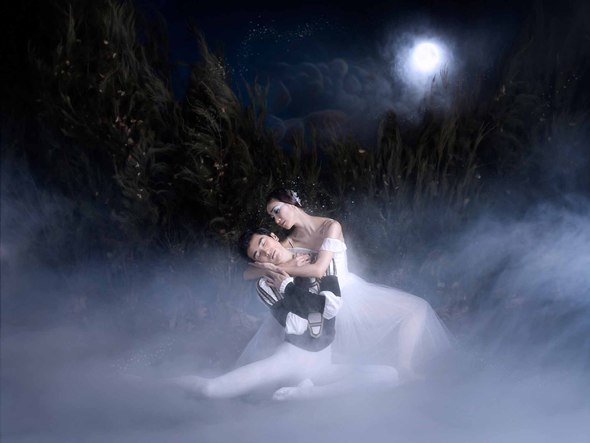
(Photo shows a scene from the ballet Giselle, performed by the Queensland Ballet)

My Favourite Boys Names from “The Nameberry Guide to the Best Names for Boys”

Tags

, , , ,

boybooktaller_grande


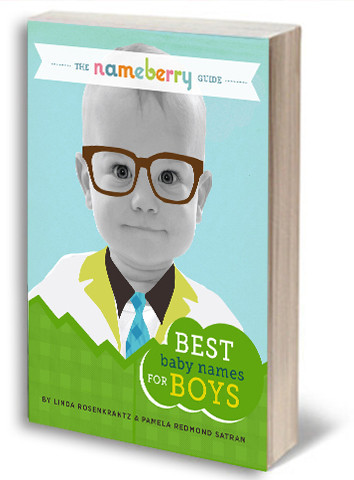
After I posted a list of some of my favourite girls names from Linda Rosenkrantz and Pamela Redmond Satran’s Nameberry Guide to the Best Names for Girls, a blog reader made the reasonable request that I do the same for the boys names – which I didn’t do the first time.

So here are thirty of my favourite boys names from The Nameberry Guide to the Best Names for Boys. Once again, I have avoided the names already chosen by Brooke at Baby Name Pondering – which caused quite a bit of anguish at times!

Thank you to Mia for suggesting this post.

Arwen and Calliope

Tags

,

Brisbane-christmas-tree

Girls

Adelaide Letitia May

Arwen Jennifer (Lowenna)

Ava Maria

Beau Brenda Ruthie

Calliope Joanna Helen

Charlotte Flora (Skye, Gavin)

Cleo Grace (Diesel, Jett)

Daisy Harriet Shirleen (Annabella, Oscar)

Georgia Marilyn Pamela (Henry, Arabella)

Isla Joey

Jai’lah Inia Francis (TJ, Tahanni)

Letty Rose

Meihana Jean Gloria

Olivia Zuidy (Corey, Harrison)

Patricia

Peggy Dawn (George, Mabel)

Pia Isabel (Henry)

Rose Beth (Emily)

Su Young Jamie

Valentina Rose


Boys

Arlo William

Braxton Ryder

Christian Mema

Dream (Nathan)

Edward Kennedy

Fergus Frederick Timothy

Flinn Macauley (Arlo, Willa)

Franklin Oliver (Oscar)

Jakob Reitz (Zac)

Jayan Jash (Tanishq, Aryan)

Jetta Edward

Lenny Vincent (Jackson, Harvey)

Nolan Gordon Allan

Percival Leslie

Quintin William (Lincoln)

Reece Athol

Sebastian Bertie

Tate Sidney

Tennyson James (Riley, Piper)

Zephyr Sinclair (Cleo, Cruz)


Most popular names this week

Girls: Charlotte

Boys: Samuel

(Picture shows the Brisbane City Christmas tree, the largest solar-powered tree in the world)

Famous Name: Orry

Tags

, ,

Annex-Kelly-Gene-An-American-in-Paris_02

Lots of movies get released just before Christmas – are you looking forward to seeing any? This puts me in mind of one of Australia’s Hollywood success stories, who was born on New Year’s Eve 116 years ago.

Orry Kelly (known as Jack) was from Kiama, in the Illawarra region of New South Wales, the son of a gentleman’s tailor. After studying art in Sydney, he worked as a tailor’s apprentice and window dresser before sailing to New York. Kelly got his start painting murals in nightclubs, which led to a job illustrating titles for Twentieth Century Fox, and designing costumes and sets for Broadway shows, but at times he ran speakeasies, designed bathrooms, and sold hand-painted ties to make a buck.

He also fell in love with a young British vaudeville actor named Archie Leach. Jack and Archie lived together in a Manhattan apartment for about five years, and they both moved to Los Angeles at the start of the 1930s to further their careers. Things went well for each of them. Archie changed his name to something more debonair, and became one of Hollywood’s leading men, while Jack worked for all the major Hollwood studios as a designer, under the professional name Orry-Kelly.

Orry-Kelly designed costumes for famous actresses such as Bette Davis, Rosalind Russell, Katharine Hepburn, Marilyn Monroe, and Ava Gardner. He worked on almost 300 films during the Golden Age of Hollywood, with classic movies like 42nd Street, The Maltese Falcon, Casablanca, and Oklahoma! on his CV. He won three Academy Awards for Best Costume Design – for An American in Paris, Cole Porter’s Les Girls, and Some Like It Hot. That makes him our biggest Oscar winner ever.

Kelly was a great wit, very outspoken, and had little respect for authority. Unlike many in Hollywood at the time, he made no secret of his homosexuality. It’s said that people either loved or hated Jack Kelly: a lot of the hate was because he was an alcoholic, and a mean drunk. The drinking eventually killed him, and the pallbearers at his funeral included Tony Curtis, Billy Wilder, and Cary Grant – otherwise known as his old flat-mate Archie.

Intriguingly, Kelly wrote a memoir towards the end of his life, titled Women I’ve Undressed. While publishers apparently loved the book, it never reached print – allegedly because of legal issues. Rumour has it that Cary Grant’s estate put a stop to it. The whereabouts of this book is now unknown, and just one chapter survives, filled with amusing anecdotes and sharp observations about the famous ladies he worked with.

Earlier this year, Orry-Kelly featured as part of the Australian Centre for the Moving Image (ACMI) Hollywood Costume exhibition in Melbourne, together with a programme of classic films featuring his costumes. Director Gillian Armstrong, who has made films based on famous Australians such as Florence Broadhurst and Nancy Wake, is planning a cinema documentary about his life. It won’t be out for Christmas, but I’m very much looking forward to it.

Orry Kelly’s father, William, was originally from the Isle of Man, and he gave his son a name from the island’s history.

Godred Crovan was a medieval Norse-Gaelic ruler of Dublin, and King of the Isles. He invaded the Isle of Man three times before he took it, and the last time used a certain amount of trickery. He hid 300 men in the woods overnight, and when the men of Man rose at dawn, ready to do battle against Godred’s forces, 300 men charged out of the woods and ambushed them. Godred later took Dublin as well, but was driven out at some medievally vague date, and the next year died of a medievally vague ailment – pestilence.

Godred is derived from Old Norse names which combine the word for either god or good with the word for peace, so that the name can be understood as “god’s peace” or “good peace”. The modern English form of the name is Godfrey. In Manx, the name is Goree or Gorry, and then became Orry.

The legend of King Orry survives in Manx folk songs, and they call the Milky Way “the great track of King Orry” in his honour. A Stone Age barrow is known locally as King Orry’s grave, although Godred was apparently buried on the island of Islay, in Scotland. According to legend, King Orry was the founder of the Tynwald, the ancient Norse-based Parliament of the Isle of Man, which has existed for over a thousand years, and thus claims to be the oldest continuous parliament in Europe.

Just to confuse things, the name Godred was traditional amongst Norse nobility, and the “King Orry” of Manx legend may very well be a much earlier Godred, although traditionally Godred Crovan is considered to be the “real” King Orry. If you are starting to get the impression that King Orry’s existence is more in the realm of fiction than of fact, mentally hand yourself a kewpie doll and a stuffed animal.

The name Orry commemorates a fascinating character from Manx folklore, and has a nicknamey feel that doesn’t seem out of step with current trends. If you squint a little, it doesn’t seem too different from familiar names like Harry and Ollie. There’s something about it I can’t help liking – it seems cheerful and rugged, and even rather cuddly. And if your son doesn’t like being called Orry, he can always go by Jack.

POLL RESULT: Orry received a surprisingly high approval rating of 75%. People saw the name Orry as cute (29%), an interesting part of Manx history and culture (20%), and not much different to familiar nicknames like Ollie (17%). However, 9% thought the name was ugly, and a further 9% considered it weird. Only one person preferred either Godred or Godfrey.

(Photo shows Gene Kelly and Leslie Caron wearing Orry-Kelly’s Oscar-winning costumes in An American in Paris)

Celebrity Baby News: Hayden Ballantyne and Alyssa Hennessy

Tags

,

152625-hayden-ballantyne

AFL footballer Hayden Ballantyne, and his partner Alyssa Hennessy, welcomed their daughter Avery on December 8. Alyssa has a young daughter named Avarna from a previous relationship.

Hayden started his career in the WAFL, playing for Peel Thunder, and has played for the Fremantle Dockers in the AFL since 2009. He is chiefly known for his ability to pester and annoy his opponents. Hayden dad Graeme is a horse trainer, and the winner of the 2013 Perth Cup, Talent Show, was trained by Graeme and part-owned by Hayden.

Alyssa and Hayden have known each other since primary school, and began dating three years ago.

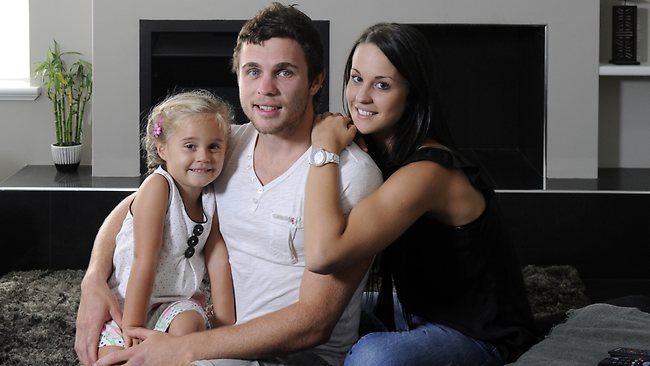
(Photo shows Hayden, Alyssa and Avarna, from Perth Now)

The Nameberry Guide to the Best Baby Names for Girls

Tags

, , , , , , ,

girls-shadow_large

Linda Rosenkrantz and Pamela Redmond Satran have brought out a companion piece to their e-book The Nameberry Guide to the Best Baby Names for Boys, this time focusing on the best names for girls.

The Nameberry Guide to the Best Baby Names for Girls is just as good as the boys’ name edition, and in fact you get 650 girls names – fifty more than the boys. To me it seems as if the girls names are slightly more daring than the boys overall, and also more in tune with what’s on trend here. Because of this, I would probably recommend the girl’s name guide even more highly.

The biggest brow-raiser for an Australian reader is the occasional suggestion of names for girls that have only charted for boys here, such as Campbell, Riley and Elliot – although this may well appeal to certain parents as something a bit out of the ordinary.

To give you a taste of what’s inside, I will share some of my favourite names from the guide that have never been common in Australia. (Brooke at Baby Name Pondering also shared some of her favourites, so I will make a conscious effort not to duplicate what she says, even though I love nearly all her suggestions).

  • Amabel
  • Anais
  • Arden
  • Blythe
  • Carys
  • Clea
  • Damaris
  • Elodie
  • Fiorella
  • Guinevere
  • Hermione
  • Isadora
  • Jessamine
  • Juno
  • Kerensa
  • Lilou
  • Melisande
  • Orla
  • Paloma
  • Posy
  • Romy
  • Saskia
  • Seren
  • Tallulah
  • Thisbe
  • Vesper
  • Viveca
  • Winnie
  • Zelda
  • Zenobia

You can buy The Nameberry Guide to the Best Baby Names for Girls from the Nameberry store, or from Amazon.

Review of The Baby Name Wizard

Tags

, , , , , , , , , , , , ,

BabyNameWizardLogo

Laura Wattenberg is the author of The Baby Name Wizard: A Magical Method for Finding the Perfect Name for Your Baby, first published in 2005. If you recall, this is Swistle’s favourite baby naming book, which is a very high recommendation. The Baby Name Wizard is described as a “field guide to American baby names”, in that it doesn’t give definitions or histories of names, but provides lists of names by style, has a popularity graph, and also makes sibset suggestions.

The Baby Name Wizard website was started in 2004 – I guess to promote the book, and create a place where its readers could discuss names.

There is a weekly blog entry from Laura, where she discusses name trends and often does some interesting things with name data and statistics. For example, last month she looked at the name Cressida, and concluded that it already seemed dated, because of the SS sound in the middle, shared with Vanessa and Melissa. Earlier she examined which were the most American and most British names of 2012, noting that the British Alfie and Archie were cuter than the American Landon and Gavin, while American girls Harper and Addison were more androgynous than the British Imogen and Florence.

This seems like a good moment to mention that The Baby Name Wizard is very much about American name trends, and American perceptions of names. For example, she categorises Jenson (a fast-rising name in Britain thanks to Jenson Button), as a “semi-androgynous name”. Yep, Jenson is apparently half-ready to hand over to the girls. Or maybe all-ready to hand over to half of the girls? Or maybe just the Jen half of it is androgynous? (I confess to not really knowing what a semi-androgynous name is).

Another rather glaring example that I hope will suitably rile up my Australian readers is one of Laura’s early blog entries, where she very sensibly defended the celebrity baby name Apple, and pointed out that other celebrities had much sillier baby names … among them, Rachel Griffiths, who had chosen the name Banjo for her child. Pause for patriotic display of righteous indignation.

The entries on statistics are probably my favourites, but I also love her name myth examination and debunking, such as looking at the massive popularity of celebrity name Shirley in the 1930s, how Biblical names are in steep decline, where the name Bree came from, and how there aren’t really twins named Lemonjello and Orangejello.

The Baby Name Wizard is essential for anyone even slightly interested in name trends – and most of these are international trends. Learn about trends such as the “Biblical-sounding” names, the “raindrop names“, and the “huggable names“. But also listen to Laura’s sage baby naming advice not to be a slave to trends. This might sound slightly contradictory, but you have to identify trends in order to not follow them.

The Baby Name Wizard got a forum last year so you can ask questions about baby names, including taking part in baby name games and asking about character names. You will get helpful advice for your naming dilemmas, given with candour but not meanness. In my opinion, the forum was very much needed, as people were using the blog comments to ask for baby name help. (Some still haven’t got the memo).

There are other cool tools as well. The Name Voyager is an excellent popularity graph of names in the United States, which has been copied by England/Wales and New South Wales. There is also a Namipedia to look for more information on a particular name, and a Name Finder to help you find names that suit your requirements. I’ve had a go using this, and found it brings up quite a few names that didn’t fit my requirements.

For example, I asked it to exclude anything very unusual, and it suggested Lovely – a name which has never ranked in the US. It was also quite insistent about me using Hispanic boys’ names, for some reason. However, it did offer some good names too, although I felt that if it was up to the Name Finder, my next child’s name would be either Vorgell or Lorenzo. Lots of fun if you don’t take it too seriously.

You can also sign up and pay for the Expert Name Tools, which are reasonably priced. As these are based on American popularity rankings and perceptions, I really don’t think these are worth it for Australians, except for interest, or if you are doing name research (or moving to America).

The Baby Name Wizard and Nameberry are both websites set up by the authors of baby name books, and I’m guessing most name enthusiasts would belong to both sites, even if they prefer one over the other. It would be insulting to compare them, except to say that they are different enough that you can follow and enjoy both of them, and never feel that you are covering the same ground.

Historical Sibset: The Children of George and Diamantina Bowen

Tags

, ,

bowens_lge_01

We haven’t had a historical sibset in a while, and as we looked at Diamantina Bowen’s name on Wednesday, I thought it might be interesting to see the names of Sir George and Lady Bowen’s children.

Adelaide DiamantinaNina” – born 1858 in the Ionian Islands, Greece

Zoe Caroline – born 1860 in Brisbane, Australia

Agnes Herbert – born 1862 in Brisbane, Australia

George William Howard – born 1864 in Brisbane, Australia

Alfreda Ernestina Albertina – born 1869 in Auckland, New Zealand

The Bowens also had a son who was born in the Ionian Islands, and died after just twelve days.

Nina Bowen married a Queensland grazier named Allan Campbell, but they lived in London, not Australia. Nina’s daughter was named Diamantina Isabella, so Lady Bowen had a granddaughter named in her honour. Isabella was the name of Allan Campbell’s mother.

Diamantina Campbell was born in 1881, twelve years before Diamantina Bowen passed away.

POLL RESULTS

People’s favourite names of the Bowen siblings were Adelaide Diamantina “Nina” and Zoe Caroline, which each got 40% of the vote. The least favourite name was Agnes Herbert, which only one person voted for.

(Picture of the Bowens from Old Government House)