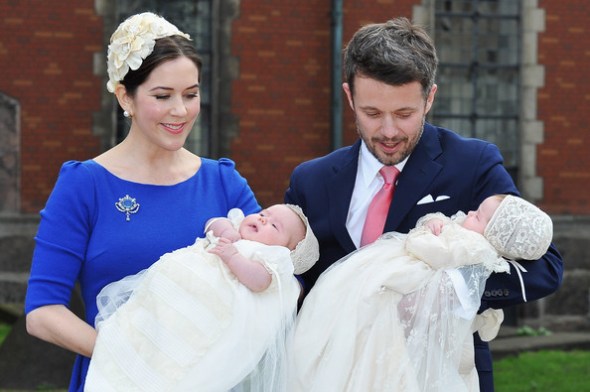
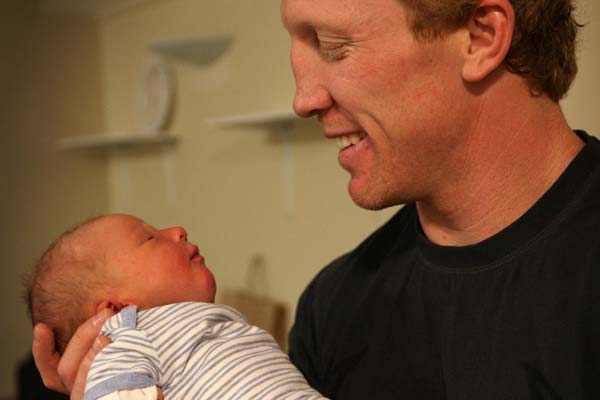
Prince Vincent and Princess Josephine: Twins for Princess Mary and Prince Frederik of Denmark, a brother and sister for Prince Christian and Princess Isabella

Tags

, , , , , , , ,

We are still recovering from the royal wedding of Prince William to Catherine Middleton (now the Duchess of Cambridge), but it only seems a few years since Australia had the excitement of seeing Mary Elizabeth Donaldson from Hobart marry Crown Prince Frederik of Denmark. I don’t think we’ve got over the thrill of that yet, and the birth of the royal twins this year has been greeted with great interest and enthusiasm.

The unlikely relationship began on September 16 2000, when Frederik was visiting Sydney with the Danish sailing team during the Summer Olympics. He and Mary met at the Slip Inn Bar, where he was enjoying a casual beer and pizza night with his royal cousins; Mary was one of the locals who had been invited to join the party through friends of friends. There must have been something about Mary, because Prince Frederik introduced himself to her at once, and they immediately bonded over sport and horses.

When the media eventually learned of this first meeting, they played up the “prince meets commoner” angle to the hilt, and the fact that the Crown Prince had hit on someone working in real estate down the pub just seemed so beautifully down-to-earth. The media made it sound as if any attractive girl with an office job and a bit of luck could become royalty. The Slip Inn now advertises itself as being fit for royalty, and apparently is still popular with mid-twenties semi-sophisticates who hang around the bar sipping cocktails in slightly desperate hopes of meeting a prince of their own. It seems unlikely that lightning will strike twice though.

Mary and Frederik were able to keep their long-distance relationship secret for over a year, until the Danish press named her as the prince’s girlfriend in November 2001. The following month, Mary moved to Paris where she was able to visit Frederik, and in 2002 she went to live in Denmark permanently. During their courtship, the women’s magazines were bristling with excitement at the prospect of an Australian-born Danish princess, and when the couple became officially engaged in October 2003, they went into hyperdrive. It all culminated in the glorious royal wedding on May 14 2004, upon which the magazines exploded in a paroxysm of frenzied delirium and the Australian public went slightly ga-ga. It was seen as a modern-day fairytale – a simple Tasmanian girl meeting her European Prince Charming and moving into her own palace.

After the thrill of the wedding, there were royal children to look forward to. Mary and Frederik obliged by producing first Prince Christian Valdemar Henri John on October 15 2005, and then Princess Isabella Henrietta Ingrid Margrethe on April 21 2007. Christian of course is Frederik’s heir, while Isabella was the first princess to be born in the Danish royal family since 1946.

In August 2010, it was announced that Mary was pregnant with twins, and on January 8 2011, she gave birth to a baby boy at 10:30 am, and then a girl 26 minutes later. By tradition, the names of royal babies are not made public until their christening ceremony, so we all had a few months to speculate what the names might be. As they were born on Elvis Presley’s birthday, Prince Frederik joked that the boy would be called Elvis, but did suggest that they might slip an Australian name in there somewhere.

Guessing the royal baby names became a national idle pastime for both countries, and some suggestions were Banjo and Matilda, Frederik and Marie, Christopher and Mathilda, and William and Mathilde. A Danish poll found Sophie, Adelaide, Caroline, Louise, Charlotte, Astrid and Alexandrine were popular choices for the baby princess, and Magnus, Erik, Harald, Sven, Knud, Axel and Christoffer for the little prince. Australians tended to make silly suggestions like Shane and Kylie, or Serenity and Grayson (not all of them were joking, I’m afraid).

At last the twins’ christening day arrived on April 14 and the long wait was over. It was revealed that Frederik and Mary’s twin son was called Prince Vincent Frederik Minik Alexander, and their twin daughter Princess Josephine Sophia Ivalo Mathilda. It seems that all the guesses that Matilda/Mathilda/Mathilde would be included were on the money, Sophia was much like the Dane’s popular choice Sophie, Alexandrine turned out to be Alexander instead, and Frederik being included was a bit of a no-brainer.

Vincent was an unusual choice, and came as a surprise to both Danes and Australians, as it is considered a rather old-fashioned name in both countries (I’m sure that will change now). Frederik after his father is a royal custom and was to be expected. The interesting name Minik is North Greenlandic, and honours the country of Greenland as part of the Kingdom of Denmark. I have seen Minik translated as “blubber”, “earwax” and “oil used for sealing skin boats”, but Professor Minik Rosing, who attended the christening, gives an alternative definition of “silent snowfall”. That is a much more attractive meaning, and very appropriate for a baby born in mid-winter. The name is pronounced meen-EEK. Alexander is a popular name in both Denmark and Australia, and has been used in the royal family, and by Mary’s family as well – Alexander is the name of her nephew.

Princess Josephine shares her name with one of her godmothers, an Australian friend of Mary’s called Josephine Rechner. However, I am unable to confirm whether Princess Josephine was named in her honour, or whether it is simply a coincidence. Sophia is another popular name, and has been used in the Danish royal family. Ivalo is a North Greenlandic name which means “tendon”, “thread” or “sinew”; it is pronounced EE-vah-lo. Mathilda has been used in the Danish royal family, and is a nod to Mary’s origins – the Australian name we were promised by Frederik.

From polling and surveying conducted online, the majority of people were approving of Vincent and Josephine as a twinset, with most liking the name Josephine more than the name Vincent. Nearly everyone agreed that they sounded great with siblings Christian and Isabella. People have generally been intrigued by the Greenlandic names, and Danish royal watchers have expressed satisfaction at their inclusion. They are two beautiful and carefully chosen royal names for the Danish royal family, which seem to have come as a pleasant surprise to everyone.

Congratulations to the Crown Prince and Princess on their twins, and happy Mother’s Day to all mothers, everywhere! Whether a royal or a commoner, I hope all mothers are treated like a princess today.

NOTES: Translations of Ivalo and Minik from Wikipedia and Behind the Name; Professor Rosing’s definition of Minik was reported in the Danish press.

If you would like to watch the royal twins being christened, you can see it here:
Celebrity Baby News: Ed Phillips and Jaynie Seal

Tags

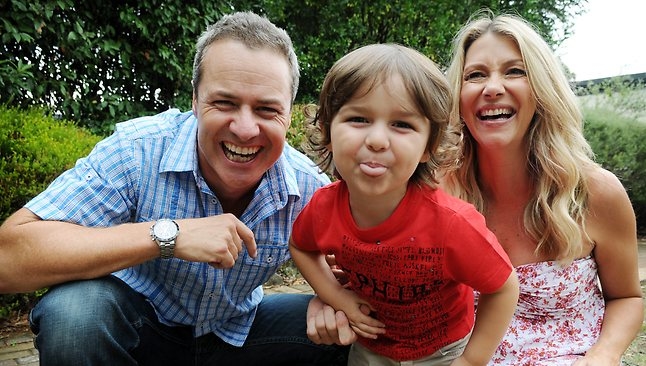
Roving reporter for morning show The Circle, Ed Phillips, and his wife, Channel 9 weather presenter Jaynie Seal, welcomed a baby son called Remy Raymond Phillips on May 3. Remy was 51 cm long and weighed 3.5 kg. Remy joins big brother Hayden William (age 3).

(Picture shows Ed, Jaynie and Hayden).

Celebrity Baby News: Sam and Lyndall Mitchell

Tags

More sporting baby news today – this time from the Australian rules football code.

Hawthorn star Sam Mitchell, and his wife Lyndall, have had twin girls called Scarlett and Emmerson. Although the twins were born in March, their births have only just been formally announced in the newspapers as Scarlett developed severe medical problems after her birth. It’s been a tough time for Sam and Lyndall, but they have received an outpouring of support from the club, and Scarlett was allowed to leave hospital last week. Sam and Lyndall had a son called Smith in April last year, so they became parents of three infants in less than a year!

Celebrity Baby News: Alan and Katie Tongue

Tags

A keen National Rugby League fan has just sent me a news clipping about a baby born last month that I seem to have missed.

Canberra Raiders co-captain Alan Tongue, and his wife Katie, had a baby boy weighing 3.78 kg on Tuesday April 12 at 3.20 am at Calvary Hospital.

It’s sometimes said that as soon as you see your new-born baby, you instinctively know what to call them. That prophecy may not always work out, but in this case, it did. Alan took one look at his first-born son, and immediately knew what to call him – Gem.

”When I saw him, I thought that’s what he is, a little Gem,” said Alan.

”We didn’t get it from anywhere, it was just something that came up when you go looking through baby names.

”It was something that we liked and was pretty unique, so we just thought let’s go with it.

”We loved it.”

Gem Tongue joins big sisters Becky (aged 5), and Heidi (age 3).

Tongues in Canberra are already wagging about the choice of Gem on a boy, and how the name Gem Tongue will be received in the school yard.

Celebrity Baby News: Toni Collette and David Galafassi

Tags

Hollywood actress Toni Collette and her husband, musician David Galafassi, welcomed their son Arlo Robert to the world on Good Friday, April 22. Arlo joins big sister Sage Florence (age 3).

Although Toni Collette has relocated to the United States to concentrate on her career, she is currently in Australia to work on the P.J. Hogan film project, Mental, so Arlo was born on Australian soil.

This could well prove another boost for boy’s names ending in O!

Would you like to have your baby’s name announced on the blog? Contact me and your baby could be getting the star treatment!

Waltzing With … Pasco

Tags

, , , , , , , , , ,

This blog post was first published on April 24 2011, and revised on April 9 2015.

Today is Easter Sunday, the beginning of the Paschal season, also known as Eastertide. The word Paschal is the Latinised form of the Hebrew Pesach, which refers to the Jewish festival of Passover, commemorating the liberation of the Israelites from Egypt. Because the events celebrated by Christians as Easter took place during Passover, the same word is used for both Easter and Passover in languages derived from Latin. (As many of you will know, the famous Last Supper that Christ held with his Apostles was their Passover feast).

I have chosen a Cornish name to celebrate this Easter, because people of Cornish descent have made a valuable contribution to Australian culture, right from the start of British discovery and settlement.

There has been a long tradition of Cornishmen in the British Navy, and the first Cornish people to reach Australia were naval officers sailing with Captain James Cook. Cook’s second-in-command was Cornishman Zachary Hicks, who spotted the east coast of Australia at first light on April 19 1770 (just a few days after Easter), so that the most south-eastern tip of Australia is called Point Hicks in his honour. Zachary Hicks was the first of the party to set foot on Australian soil when they landed at Botany Bay.

Although some 600 convicts came from Cornwall, it was after the 1840s that emigration from Cornwall sharply increased, since there was a potato famine and slump in the mining industry in Cornwall at that time. There was a vigorous campaign to attract Cornish people to Australia, with free passage to South Australia offered to Cornish miners.

As a result, a thriving Cornish community sprung up on the Yorke Peninsula in South Australia, which became known as “Little Cornwall”. The Yorke Peninsula is still intensely proud of its Cornish heritage, and the Cornish cultural festival held in the area is the largest of its kind in the world.

During the gold rush era, Cornish miners were naturally drawn to gold mining towns in Victoria, New South Wales and Western Australia. Cornish miners founded the first trade unions in Australia, and were instrumental in forming the Australian Labor Party. Two of Australia’s most well-known Prime Ministers, Robert Menzies and Bob Hawke, have Cornish ancestry, while numerous politicians have been of Cornish descent.

Leggo’s foods and Fletcher Jones menswear are two successful businesses founded by people from Cornish families in Australia. (Leggo is often wrongly thought to be an Italian name rather than a Cornish one). It is even said that our chant of Aussie Aussie Aussie, oi oi oi comes from the Cornish Oggy oggy oggy, oi oi oi. An oggy is a Cornish pastie, in case you were wondering.

Happy Easter everyone – or, in Cornish, Pask Lowen oll!

Name Information
The surname Pasco is a variant of Pascoe, a Cornish form of Pascal, meaning “relating to Easter”. Because Easter is the most sacred and joyous period of the Christian calendar, from early on Christians chose names such as Paschalis, Paschal, or Pascal for boys born between Easter Sunday and Pentecost. There have been two popes named Paschal, and a 16th century Saint Paschal, a mystic born in Spain on Pentecost.

The personal name and surname Pascal was introduced to England by the Normans, and the surname Pascoe has been used in Cornwall since the Middle Ages. Now the 6th most common surname in Cornwall, Pascoe has the spelling variants Pasco, Pascho, Pascow, and Pascowe. Pasco has been used as a personal name since at least the 16th century, originating in Cornwall and Devon.

A famous member of the Pasco family is Rear-Admiral John Pasco, who served on the Victory at the Battle of Trafalgar, and sent the well known signal from Lord Nelson: England expects that every man will do his duty. After being injured during the battle, he spent some time in New South Wales with his family, and his son Crawford Pasco sailed to Australia on the third voyage of HMS Beagle; the Pasco Islands near Tasmania are named after him, as are several other features. He retired to Victoria and became a police magistrate.

Around 4% of Australians claim Cornish ancestry, making Cornish the fourth-largest Anglo-Celtic group in the country, after English, Irish, and Scottish, and the fifth-largest ethnic group overall. However, 10% of South Australians claim Cornish ancestry, and six of the top ten surnames in the state are Cornish in origin. In 2011, there was a campaign to encourage Australians filling in their census forms to report their Cornish ethnicity, and encouraging Cornish pride in general, hence this blog post.

Many Australians are proud of their ethnic origins, and will choose baby names to reflect that. I often see birth notices where babies are given names to reflect their parents’ cultural heritage, yet I rarely see Cornish names. Fitting in with the trend for boys’ names ending in -o, Pasco would be a great Cornish heritage choice, especially for a boy born during the Easter season.

POLL RESULT
Pasco received an approval rating of 66%. 29% of people disliked it, but only 6% hated it.

Celebrity Baby News: Danish Royals; Suzie Wilks; Dean Gladstone

Tags

Princess Mary and Prince Frederik of Denmark have released the name of their twins, born January 8 2011 and christened April 14 2011. Their new son is called Prince Vincent Frederik Minik Alexander, and their new daughter is called Josephine Sophia Ivalo Mathilda. Prince Vincent and Princess Josephine join siblings Prince Christian Valdemar Henri John (age 5) and Princess Isabella Henrietta Ingrid Margrethe (age 3). There will be a full report about the royal twins on the blog for Mother’s Day.

Media personality Suzie Wilks and her husband, businessman Nick O’Halloran, had their first baby on April 9; a girl called Ruby Ann O’Halloran. Ruby weighed 4.08kg (9lb) and was 54cm long. Suzie and Nick married last August.

Lifeguard from reality TV series Bondi Rescue Dean “Deano” Gladstone and his wife, former champion ironwoman Lilli, had their first baby recently; a girl called Lucinda May Gladstone. Lucinda’s birth was officially announced in the April 18 edition of New Idea magazine.

Boys Names from Video Games

Tags

, , , , , , , , , , , , , , , , , , , , , , , , , , , , ,

This post was first published on April 17 2011, and heavily edited on April 23 2015.

Altair
Altaïr Ibn-La’Ahad is the protagonist of the first game in the Assassin’s Creed series. Born in the Holy Land in 1165 to an Arabic Muslim father and Italian Christian mother, he joins the medieval secret society of the Assassins. Due to his superior abilities, he quickly gains the title of Master Assassin, but Altaïr becomes overconfident and arrogant, and must be taken down a peg or two. He goes on to have further adventures in later games. Mysteriously cloaked and hooded, he is dark, rather handsome, and has an intense expression. Altair is Arabic for “the flying eagle”, and it is the name of the brightest star in the Aquila constellation. It is pronounced al-TAH-yir, but English-speakers will probably prefer al-TARE instead, and this pronunciation is accepted by astronomers as equally correct. Not only an extremely popular name for people and places in video games, Altair is commonly used to name aeroplanes and rockets too, adding to its flighty, space-age image.

Ash
Ash Ketchum is the main protagonist of the Pokémon (“Pocket Monsters”) series; a ten-year old boy with shaggy dark hair covered by a baseball cap, brown eyes, and a snub nose. A true Pokémon obsessive, he always has a fanatical look in his eyes. He has no other interests apart from Pokémon, and only makes friends with children and adults who share his hobby. His original Japanese name was Satoshi (“clear-thinking, wise”), after creator Satoshi Tajiri. The character is based on Tajiri’s memories of himself as a child, when he was a keen insect collector. The English name Ash was taken from one of the possible default names that can be chosen in the original Pokémon game. Ash can be short for names such as Ashley, Asher, or Ashton, a vocabulary name for the residue of something burned, or a nature name after the ash tree. As the Professors in the Pokémon universe all have tree names (Oak, Juniper, Rowan etc), I think the game-makers probably had the last option in mind. This is a simple, attractive nature name, and although it is technically unisex, I have only seen it on boys so far.

Kain
Kain is an arrogant nobleman who becomes a vampire lord in the Legacy of Kain series, an anti-hero who is morally ambivalent at best, yet provides his world’s only hope. There has been a trend in popular culture to present male vampires as romantically desirable, but Kain is not a pretty-boy vamp, but the stuff of nightmares, and not suitable for taking to senior prom. Kain is the Greek form of the Hebrew name Cain, which is used in the Greek version of the Old Testament. In the Old Testament, Cain was a son of Adam and Eve, and committed the first murder by killing his brother Abel in a fit of furious jealousy. This theme also plays a role in the Legacy of Kain story. In the Bible the name Cain is interpreted as “begotten, acquired”, but modern etymologists think it is most likely from an ancient South Arabian word for “metalsmith”. In the Bible, Cain is said to have been the ancestor of a nation who became the first metalworkers, so that does mesh with the Biblical narrative. Although Cain is a controversial character, this name fits in so well with current name trends that it has had reasonable use over the years: a big help is that it’s a homophone of Kane, the Anglicised form of Irish Cathan, meaning “battle”. Famous Australian namesakes include fantasy writer Kain Massin, and actor Kain O’Keefe.

Link
Link is the hero of The Legend of Zelda game series [pictured]. Usually he is young with fair hair and blue eyes, and he is always dressed in green tights and tunic, and has pointed ears. Link is humble, polite and brave, as befits a true hero, and is possessed with a burning sense of justice. He travels through the land, defeating creatures, evil forces, and baddies in order to save Princess Zelda and her kingdom. Despite having minimal facial expression and speaking mostly in grunts, Link is one of the most popular video game characters of all time. Creator Shigeru Miyamato wanted to call him Chris or Christo after his godfather, but this was changed by Nintendo (I wonder if it seemed too Messianic for them?). Instead Link was chosen, because the character is the player’s link to the world of the video game. You might also think of a baby Link as being the link that brings your family together. The name Link doesn’t seem that unusual, because it is already used as a short form of Lincoln.

Maximo
In the Maximo duology, Maximo is a gallant knight who goes out into the world leaving his castle and kingdom in the care of a trusted friend. Unfortunately, little does he know that his pal is, in fact, an evil super-villain. While Maximo tools around in blissful ignorance, this dastardly creep takes over Maximo’s kingdom, and forces Maximo’s girlfriend, Princess Sophia, into marriage with him. Maximo returns home to find his kingdom and his life in ruins. It’s a completely awful day for him, but rather than sit at home crying and eating chocolate, he bravely goes in search of his lost love.
Maximo is the Spanish form of the Roman family name Maximus, from the Latin for “greatest”. Although the Spanish pronunciation is MAHK-see-mo, I’m guessing most English-speakers would say it MAKS-uh-mo, and use the popular Max as a nickname. A Spanish heritage choice that puts a cool spin on fashionable Maximus.

Raiden
Raiden is a thunder god in the Mortal Kombat series, an immortal with many supernatural abilities, and a distinctly hands-on approach. He looks like an enormous, muscular man with eyes filled with lightning and long iron-grey hair. Raiden is a variant of Raijin, the name for the god of thunder and storms in the Shinto religion and Japanese mythology. His name means “thunder god”. He is a popular folk figure who appears in many stories, and his name has been used in several other Japanese video games. The name is pronounced RAH-ee-den, but in English, is meant to be said RY-den. However, the temptation to pronounce it RAY-den, to fit in with the trend for Aiden, Braden, Caden and Hayden type names, is often too strong to resist. I have seen this name used quite a bit on boys in Australia, and mostly their parents have gone with the RAY-den pronunciation.

Ryu
Ryu is the lead character of the Street Fighter series, and an enormously strong Japanese martial artist. Powerful and uber-masculine with huge muscles, his karate outfit is casually tattered. During the game series, it turns out that Ryu has a touch of evil in his psychological make-up which can be exploited by the bad guys. However, Ryu is mentally strong enough to fight off their brainwashing attempts. What a trouper. Naturally he is far too butch to hang out with girls or anything wet like that, but he does have a rather super chum called Ken. Ryu is Japanese for “dragon”, and it is also a suffix to denote a particular school of thought, usually used for martial arts. It’s a popular name in Japanese video games. Ryu is difficult for English-speakers to pronounce correctly. It’s said as one-syllable – RYOO. I have seen this name used on several Australian boys in honour of the game character, but they have either been called RY-oo or ROO (like a kangaroo). This does fit in with familiar names such as Ryan and Reuben.

Snow
Snow Villiers is the leader of an anti-government rebel group in Final Fantasy XIII who gets engaged to a cute pink-haired girl. Their wedding plans are put on ice once his fiancée is turned into a block of crystal. He has to save the world and his sweetheart, while trying to convince his future sister-in-law he’s a decent bloke. Snow is a Nordic giant – 6 foot 7 with a powerful physique, fair skin, pale blond hair, blue eyes, and a light stubble beard. Despite his wintry appearance, he is warm-hearted, fiery-tempered, and optimistic. In the game, the name Snow denotes the character’s affinity for water and ice spells. Snow is a nature name and surname in use as a personal name since the 16th century, and is one of those rare names that has been almost equally given to boys and girls over time. Names connected with the winter and cold are currently on trend, and this one works for both sexes, and as either a first or middle name. It’s a hip alternative to fashionable Winter, but a possible drawback is that it is also a slang term for cocaine.

Sparrow
In Fable II, Sparrow is a poor orphan child who finds out they are descended from a heroic line. Sparrow can be played as either a male or female character, so the name is deliberately unisex. The name Sparrow is after the small brown bird, one of the most familiar birds in the world. Sparrows are often used to denote something common, or of low value, and they are the emblem of the London Cockneys. The New Testament tells us that God cares even for the worthless sparrow, so we know the most insignificant person is valued and worthy of divine love, and Saint Francis preached sermons to these birds. According to the ancient Greeks, sparrows were sacred to the goddess Aphrodite and a symbol of enduring love, while in Christian legend, the sparrow was the only bird who witnessed the Crucifixion. Sparrow has been used as a name since the 17th century, and is historically more common for boys; Pirates of the Caribbean has given it a swashbuckling air. It became a celebrity baby name when Nicole Richie and Joel Madden had a son called Sparrow in 2009. A humble name that’s on trend, and has more behind it than at first glance.

Thane
In Mass Effect 2, Thane Krios is a member of an alien species who are humanoid with reptilian features. An expert assassin dying of an incurable lung disease, he joins an apparent suicide mission to give purpose to what’s left of his life and atone for all the murder he’s committed. Despite his chosen profession, he is a deeply spiritual man following a polytheistic religion. The name Thane is an Anglo-Saxon title of nobility, and is from the Old English thegn meaning “servant, retainer”. A thane was an attendant to a king or noble lord who had military duties as part of their service (similar to a knight). In medieval Scotland it was the name for a hereditary tenant of the Crown; Macbeth held this title in Shakespeare’s play. The name has been used since the 16th century, and a famous namesake is English actor and dancer Thane Bettany, father-in-law to Jennifer Connolly, and step-uncle to Sophie Rhys-Jones, the wife of Prince Edward. This is one of those rare names that have a strong history, and don’t sound strange, being similar to familiar names like Dane and Zane.

POLL RESULTS
People’s favourite names were Ash, Sparrow, and Link, and their least favourite were Kain, Raiden, and Ryu.

Girls Names from Video Games

Tags

, , , , , , , , , , , , , , , , , , , , , , , , , , , , , , , , , , , , , ,

This blog post was originally published on April 10 2011, and heavily edited and updated on April 16 2015.

Ayame
Ayame is a female ninja in the Tenchu series; she appears petite and feminine, but is possessed of a sharp tongue, and is a cunning and aggressive fighter. Her real name is Omon, so Ayame is her professional or code name. Ayame is the Japanese word for the iris flower. It is used as a girl’s name in Japan, and has a long history, for five generations of kabuki actors, beginning in the 17th century, adopted it as a stage name while playing female roles. The name has become a favourite for Japanese video games, anime, and manga. Pronounced ah-YAH-me, I have seen two girls in Australia with this name, and heard of another. The soft sound and floral meaning make this name an attractive choice which fits in with names like Aya and Ayla.

Coco
Coco is the smart, fearless younger sister of Crash Bandicoot in the Crash Bandicoot series, set in Australia. Coco is a nickname for any name with a CO sound in it, or given because of its similarity to the word cocoa. Its most famous namesake is French fashion designer Gabrielle “Coco” Chanel, who got her nickname from her days as a cabaret singer. It may have been an allusion to either one of her signature songs: Ko Ko Ri Ko (“Cock-a-doodle-doo”), or Qui qu’a vu Coco (“Who Has Seen Coco?” – Coco was a lost male dog). Another theory is that it was based on the French word coquette, used as a slang term for a kept woman or a mistress. Coco the Clown (born Nikolai Poliakoff) is one reminder of its use for males as well. Coco became a celebrity baby name when it was chosen by actress Courtney Cox for her daughter in 2004. Australian journalist Mia Freedman named her daughter Coco the next year, actress Diane Farr called one of her twin daughters Coco in 2008, and Tony Kanal from No Doubt welcomed a daughter with this name in 2011. This is a cute, flirty, yet stylish name that is still underused.

Elika
Prince of Persia is set in ancient Persia and inspired by the religion of Zoroastrianism. Elika is a runaway barefoot princess who must help the hero by systematically travelling the area, and magically healing particular sectors of ground called Fertile Lands; unfortunately each time she does this her life force becomes weaker. In appearance, Elika is beautiful with tousled dark chestnut hair, enigmatic hazel eyes, and a slender, fragile figure; her personality is guarded and serious. She is much greater than she appears, for she holds many secrets, and almost has the status of a demi-goddess. Elika is a name which is found in many different cultures, but I have seen the Persian name Elika translated as being derived from ela or ellka, the Sanskrit for “cardamon”, a fragrant spice tree. In the game Elikas’s name is pronounced ELL-eh-kuh, but eh-LAY-kuh is more traditional. This pretty name fits in with popular names like Ella and Layla, and is not too different from fashionable Elke.

Kairi
Kingdom Hearts is a collaboration between the makers of Final Fantasy and Disney, whereby Disney settings are crossed-over into a fictional universe, and characters from Final Fantasy interact with the player and popular Disney characters. Kairi is one of the hero’s best friends, and also one of the seven Princesses of Hearts – pure maidens whose hearts are free of all darkness. The name Kairi was invented for the game and according to creator Tetsuya Nomura, her name is derived from the Japanese word for “sea”, just as the other two main characters’ names mean “sky” and “land”. The name has become quite popular for use in use other Japanese video games, anime, and manga. It is pronounced KY-rhee, and is similar in sound to familiar names such as Kara, Kyra and Kylie. There is an Australian Aboriginal tribe called the Kairi, whose name has been given to a small town in Far North Queensland, so the name does not even have a particularly foreign sound to Australian ears. Kai can be used as a unisex nickname.

Lara
Lara Croft is the beautiful and intelligent heroine of the Tomb Raider series, an archaeologist travelling the world in search of adventure [pictured]. Lara is a Russian short form of Larissa. In Greek mythology, Larissa is a nymph, and it was also a common name for ancient Greek cities, as the name means “citadel”. Saint Larissa was a 4th century Goth who was martyred in the Crimea; her name is otherwise recorded as Baren or Beride. She is recognised as a saint in the Eastern Orthodox church, and the name Larissa is traditional in Russia and Slavic countries. The name Lara became known in the English-speaking world from Larissa, nicknamed Lara, in Boris Pasternak’s 1957 epic novel, Doctor Zhivago, which was banned in the Soviet Union but popular in the West. It was made into a successful Hollywood movie in 1965, with Julie Christie playing Lara; the piece Lara’s Theme from the film has become a favourite. Lara has charted in Australia since the 1960s, when the film was released, debuting at #337. It reached the Top 100 in the late 1990s, and peaked at #27 in 2002. In 2013 it was #54. Romantic and exotic, Lara is a softer alternative to names such as Laura, Laurel, and Lauren.

Rinoa
Rinoa Heartlilly is the main female character in Final Fantasy VIII, and the love interest of the hero. She is a cute friendly teenager who is member of a resistance faction seeking to liberate a small nation from occupation, and also has magical abilities which render her a “berserker” during warfare. Although it hasn’t been confirmed, game experts believe that the name Rinoa is supposed to be a Japanese rendition of Lenore, a short form of Eleanor. Lenore has a long history as a literary Gothic name, appearing in a Gothic German ballad as well as a poem by Edgar Allen Poe; it is possible that this dark side was intended as part of the character of Rinoa. As there is no spoken pronunciation of her name, you can say it however you like, but RINN-oh-uh seems to be the most commonly used. The nickname Noa gives this a unisex option.

Tira
Tira is a character in the Soulcalibur series. She is a very disturbed person who has been raised since childhood by a group of assassins, and has an uncontrollable urge to kill. A split personality, she has pledged herself to the powers of evil. Tira’s appearance reflects her madness, with rag-doll hair, tattered clothing and bizarre make-up. As her weapon of choice is a ring-blade which looks like a hula-hoop, she resembles a mental patient who has run away to join the circus. The name Tira is most likely an Anglicisation of the Scandinavian name Thyra, which means something like “strength of Thor”. It is pronounced TEE-ra, and people have told me that they love the sound of the name Thyra, but don’t like the look of it, or worry that others would pronounce it like TY-ra or THY-ra. The Tira spelling does solve that problem, and this name fits in well with Australian trends in girls names. I don’t know if it’s because of the video game (which is a slightly worrying thought), but I have seen and heard about quite a few babies called Tira. It seems to be popular to use it in a double name such as Tira-Lee or Tira-Rose.

Wynne
Wynne is a character in Dragon Age: Origins, a prominent mage and powerful spirit healer. Wise, dutiful and virtuous, she could have had a successful political career, but refuses power in order to fight demons and aid the innocent. A tall, handsome, middle-aged woman with an intelligent face, she takes a motherly role, and is blessed with common sense and a dry sense of humour. Wynne is a Welsh surname based on the male name Wyn, meaning “blessed, white, fair”. Although Wynne can be used for both sexes, it is often understood as a specifically feminine form of Wyn. It is the middle name of famous children’s fantasy author Diana Wynne Jones, which may have been a factor in the game makers choosing it. Simple and clean, this resembles the fashionable Winnie.

Zafina
Zafina is a character in the Tekken series who is born into an ancient bloodline which fights evil. The protector of a royal tomb, Zafina uses her spiritual powers to gain omens from the stars. Of Middle Eastern appearance, the game makers believe she is most likely Egyptian. Zafina is an Arabic name, which I have seen translated as “victorious, triumphant”. Pretty and usable, it makes an exotic alternative to Victoria, and sounds enough like familiar names such as Zara, Sophia and Seraphina to be easily accepted.

Zelda
The Legend of Zelda is the longest-running video game series so far. The eponymous Zelda is an elfin princess, usually slender and blonde with dark blue eyes, and often with magical powers. Zelda is a feminine form of the Yiddish name Selig, meaning “blessed, happy”, although it can be also be used as a short form of names such as Griselda. One of its most famous namesakes is Zelda Fitzgerald, wife and muse of American novelist F. Scott Fitzgerald. Beautiful, glamorous and daring, she was an icon of the Jazz Age, until her intensity and high spirits descended into obsession and mental illness. Zelda’s mother named her after characters in two romantic stories; in both of them, Zelda is a beautiful gypsy. The creator of The Legend of Zelda has said that Princess Zelda’s name was inspired by Zelda Fitzgerald. In turn, Princess Zelda has inspired a celebrity baby name, because actor Robin Williams named his daughter Zelda in 1989 because of his love for the video game series. Zelda can be found in Australian records in the late 19th and early 20th centuries, and this is a zippy vintage name that feels clunky cool and fit for a princess.

POLL RESULTS
People’s favourite names were Lara, Zelda, and Wynne, and their least favourites were Elika, Tira, and Rinoa.

Faith Margaret Kidman Urban: A Daughter for Nicole Kidman and Keith Urban, a Sister for Sunday Rose

Tags

, , , , ,

Faith Urban is the most surprising celebrity baby of 2011, because until she had actually arrived, we didn’t know of her existence.

Her mother, red-haired Hollywood actress Nicole Kidman, has a well-known history of medical problems related to fertility and childbirth. Married to high-profile American actor Tom Cruise for ten years, Nicole suffered an ectopic pregnancy early in her marriage, and then miscarried soon after her separation from Tom in 2001. During Nicole and Tom’s marriage, they adopted two children – Isabella Jane and Connor Anthony – who still live with their father.

Nicole married New Zealand-born country singer Keith Urban in 2006, after meeting him at a G’day LA event the previous year. (G’day LA is an event where Australian celebrities are honoured in Los Angeles around Australia Day).

In July 2008, Nicole gave birth to their daughter, Sunday Rose, at the age of 41. According to an interview in The Australian Women’s Weekly magazine, she never expected to become pregnant or have a baby, and described Sunday’s birth as a “miracle”. She attributed her pregnancy to the mystical properties of the waters at Kunnunurra in far-north Western Australia, where she swam while making the Baz Luhrman film, Australia. Apparently seven women working on the movie conceived after swimming in the waterfalls, and of the babies subsequently born, six were girls. Sceptics pointed out that Sunday’s birth might have had a little to do with the IVF programme the Urbans were reportedly using, although that doesn’t explain the other six pregnancies.

They chose Sunday Rose’s name with care. Sunday is the day of the week that Nicole and Keith were married on, and Sunday is also the day the week that they consider their “special” day, when they spend time as a couple away from their busy work schedules. Rose is the name of Keith Urban’s late grandmother.

While the public may have assumed that the Urbans’ family was now complete, Keith and Nicole had other plans, but kept them a secret from outsiders. Keith may have dropped a tiny hint when he released his latest album, Get Closer, in November last year.

In the dedication, he wrote: “I continue to be brought to my knees by this love of ours … I am in awe of how this blessed family we are creating stretches and fearlessly opens my vulnerable heart … and I just want to be a better man, for you, and father for our heavenly Sunday Rose and have you go to sleep every night knowing that no one has ever, or will ever, love you as much as I do … and all we need is faith.” (my italics).

If this dedication was intended as a private allusion to their soon-to-be-born baby between he and his wife, it probably indicates that they had already chosen Faith’s name at least six weeks before her birth.

Faith Margaret was born on December 28 2010 at Centennial Women’s Hospital in Nashville, Tennessee. On January 17 2011, her birth was announced on Keith Urban’s website:

“Our family is truly blessed, and just so thankful, to have been given the gift of baby Faith Margaret. No words can adequately convey the incredible gratitude that we feel for everyone who was so supportive throughout this process, in particular our gestational carrier”.

When Sunday Rose was born, the media was intrigued by her name and why her parents had chosen it. However, at the news of Faith Margaret’s birth, all anyone could talk about was the method by which she had been born.

They wondered what genetic relation she was to Keith and Nicole (she is their biological child, but carried and delivered by a third party). They wondered who organised the baby’s conception and birth (The Center for Surrogate Parenting, in Los Angeles). They wondered what Faith Margaret had cost them ($150 000, with 20% going to the woman who gave birth to her). They wondered who the surrogate had been (strictly confidential). They wondered why the Urbans used the term “gestational carrier” rather than the usual “surrogate mother” (probably because it’s a term common in the US, where the surrogacy and birth were arranged).

Australia has a long and not-very-proud tradition of criticising Nicole Kidman. Everything from her appearance (too thin, too pale, hair too difficult) to her lifestyle choices (too American, too much Botox, married a Scientologist with a reputation for weirdness). For the past few years, criticism had died down to a low rumble, but Faith Margaret’s birth reignited it as a storm of controversy raged over the method of her birth.

In general, there has been a lot of disapproval directed at the Urbans. Much of it is because paid surrogacy is illegal in Australia. Altruistic surrogacy is permitted in most states, but only medical expenses can be paid to the surrogate. In Nicole Kidman’s home state of New South Wales, recent legislation has been passed that also makes it illegal for residents to procure paid surrogacy overseas. The penalty for breaking the law will be a $100 000 fine and up to two years in prison. The law will not be retrospective, so the Urban family do not need to worry about being charged over Faith’s birth.

Many people have also expressed shock, outrage or even horror at the term “gestational carrier”, which to them seems degrading, too much like legalese, or just plain creepy. Others think it distasteful and unethical for a wealthy movie star to rent another woman’s uterus for her own convenience, and some believe the whole process to be unnatural, and reminiscent of Brave New World. However, there are also many people sympathetic to her desire for another child who feel it is her right to have one by whatever means she chooses, and a few who believe that our surrogacy laws are too strict.

Although Faith’s birth has re-opened the surrogacy debate in Australia, thankfully those issues are outside the scope of this blog, so I don’t need to offer any opinions or suggest any solutions, and can get back to discussing her name.

Nicole Kidman gave a brief interview to E! News Online at the 17th Screen Actors Guild Awards on January 30 2011, where she explained how Faith’s name was chosen.

Her name is Faith because Keith and Nicole needed to maintain their faith throughout the entire pregnancy, and because they never gave up faith that they would have another child together, even though that seemed unlikely because of Nicole’s age and medical history. After Sunday’s birth, Nicole told People magazine that they would have more children if it was part of God’s plan. So Faith’s name refers not only to their personal confidence that they could have another child, but also to the trust they placed in God as part of that process.

The middle name Margaret honours Nicole’s grandmother, who gave birth to her last child at the age of 49. “She’s my inspiration,” says Nicole at the end of the interview. (Keith used the SAG Awards as an opportunity to proudly show off pictures of baby Faith on his mobile phone).

You can see that Faith Margaret’s parents used the same naming formula they used for her sister: vocabulary name with personal meaning + name of relative.

From polling and suveying people online, most baby name enthusiasts thought that Faith was a nice name, and Margaret a lovely classic one. There was less enthusiasm for the combination of the two, with respondents almost evenly divided between people who thought it was a good sensible name, and those who thought it dull and plain. However, almost nobody really disliked it.

I don’t think that Faith Margaret is the prettiest name in the world; to my mind there is something slightly frumpy about it. But I think it is a good name, because it was chosen with a personal meaning in mind, and connected to the name of a beloved or even “inspirational” relative. Both Sunday Rose and Faith Margaret have names with a story attached to them, and that makes them more special than just picking a name that is “cute” or “sounds nice”.

Because of that, I’m giving Faith Margaret Urban thumbs up, and congratulations to her parents, who always knew that you’ve got to have faith.

ACKNOWLEDGEMENTS

Information on how the surrogacy was arranged from Adelaide Now 23/1/11

http://www.adelaidenow.com.au/ipad/nics-150000-bundle-of-joy/story-fn6bqphm-1225992969053

Information on current surrogacy laws in Australia from The Australian 19/1/11

http://www.theaustralian.com.au/news/nation/nic-and-keiths-baby-news-sparks-surrogacy-debate/story-e6frg6nf-1225990575722

Suggestion that Faith was secretly mentioned on Keith Urban’s latest album from Herald Sun 8/3/11

http://www.heraldsun.com.au/ipad/first-pictures-of-keith-urban-and-nicole-kidmans-surrogate-baby-faith/story-fn6bn80a-1226017890670

Interview from E! Online 31/1/11

http://au.eonline.com/uberblog/b223446_Nicole_Kidman_Spills_on__quot_Secret_quot__Baby_No__2.html