Celebrity Baby News: Andrew and Rayne Embley

Tags

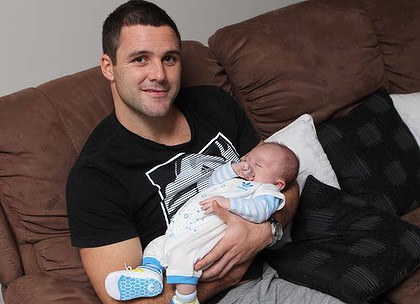
AFL star Andrew Embley, who plays for the West Coast Eagles, and his wife Rayne, welcome their first son, Lux Edward. Lux Embley was born 7.30 pm last night, June 3, at Perth’s St John of God hospital, and weighed 7 lb 6 oz (3.35 kg).

Lux joins big sister Autumn Claire, who will turn two in September. Readers may remember that Autumn Claire has already appeared in this blog, as a celebrity baby name in the Waltzing with … Autumn entry.

Naming Lux did cause the Embleys some disagreement; Andrew favoured the name Eddie, but Rayne was attracted to the idea of a three-letter name that couldn’t be shortened into a nickname, and fell in love with the name Lux. Eventually they compromised, with Andrew’s choice being relegated to the middle name position. So no Eddie Embley.

From the point of view Australian Rules fans, Lux’s timely arrival means that Andrew will be free to play against the Gold Coast Suns tomorrow.

Celebrity Baby News: Michael Gordon and Terriceta Rose

Tags


Penrith Panthers star, Michael Gordon, and his partner, Terriceta Rose, welcomed their son Cruz a few weeks ago. Michael was there for the birth, but had to leave for an away game against the New Zealand Warriors, and then the City vs Country Origin Match on May 6.

Michael has recently had a serious knee injury which means that he cannot play rugby league for the rest of the season, and missed out on the chance to be considered for State of Origin. He underwent a knee reconstruction on May 23.

One positive thing for Michael about his injury is that it has given him a chance to bond with Cruz.

”It’s a blessing in disguise – I get a lot more time with him,” Michael said. ”I’ve got someone to sit on the couch with me all day.

”He’s been a really good baby – born a touch under eight pounds [3.6 kilograms]. He eats and sleeps really good – he hasn’t been keeping us up much.”

Michael plans to be playing for Penrith again in the 2012 season.

Waltzing With … Florence

Tags

, , , , , , , , , , , , , , ,

This blog post was first published on May 29 2011, and almost completely rewritten on May 28 2015.

Famous Namesake
Autumn is the traditional time of year for farm produce fairs, and on the last Sunday in May is held the Goomeri Pumpkin Festival. Goomeri is a small country town in southern Queensland; quiet and pleasant, it is known for its gourmet food industries.

The highlight of the Goomeri calendar is its Pumpkin Festival, in which they do almost everything to pumpkins, including eat them. There is the pumpkin shot-put, a pumpkin beer brewing competition, pumpkin judging contests, and the Great Australian Pumpkin Roll, in which up to 1000 pumpkins are rolled down Policeman’s Hill. There will of course be cooking demonstrations, food stalls, and all kinds of pumpkin-related culinary delights, including that old favourite, pumpkin scones.

Wen you see “pumpkin scones” and “Queensland” in the same paragraph, the name of only one person can come to mind – Florence Bjelke-Petersen. The widow of Queensland’s longest-serving Premier, Lady Florence Bjelke-Petersen has been a force in conservative politics, a part of Queensland history, and an Australian icon.

Florence was the wife of peanut farmer and Country Party member Johannes “Joh” Bjelke-Petersen, and after Joh became Premier of Queensland in 1968, Florence began to take on a bigger public role. The Queensland National Party increasingly promoted a Bjelke-Petersen “personality cult”, and Florence was a vital part of that.

Her down-to-earth sayings and common-sense attitudes became widely quoted by the media, and she published a cookbook which contained a recipe for her famous pumpkin scones. She was a Senator from 1981-1993; she worked for issues that affected Queensland and was popular with both sides of politics. When Joh Bjelke-Petersen was knighted in 1984, she became Lady Bjelke-Petersen – affectionately known as Lady Flo.

Lady Bjelke-Petersen is now in her nineties and still going strong. Although she no longer makes pumpkin scones, she reads the newspapers every day and has strong opinions on politics, as well as attending church every Sunday, and playing the organ each week for a local nursing home. In her youth, she always vowed she would be known by her full name, Florence, as she hated the short name Flo, but history intervened, and as often happens, she didn’t get much say in it.

Name Information
Florence began as the medieval English form of the Latin name Florentius, from florens, “flowering, flourishing, prospering”. There are several saints named Florentius, with the earliest being a 3rd century Roman soldier who was martyred in Italy. Florence could also be used as a French form of the female name Florentia; St Florentia was a 4th century hermit who was martyred in France.

In the Middle Ages, Florence was used as a name for both males and females, but by the 16th century had become overwhelmingly feminine in usage. Its connection with “flowering”, and similarity to the female name Flora were probably responsible.

Although the name Florence was already in reasonable use, it received a huge boost in the mid nineteenth century because of Florence Nightingale, the founder of modern nursing. Florence Nightingale came to prominence during the Crimean War of 1853-56, when she was hailed as a ministering angel, and called The Lady with the Lamp. It is notable that during the 1850s, the name Florence, which was steadily increasing in popularity at the time, suddenly skyrocketed, and continued rising for the rest of the century.

Florence Nightingale was born in the city of Florence, in Italy, and named after her birthplace. It was something of a family pattern, because her older sister, Frances Parthenope, was similarly named after the place of her birth, Parthenopolis, now part of Naples.

The city of Florence was established by the Romans, and originally named Fluentia, meaning “flowing” in Latin, because it was situated between two rivers – the Arno and the Greve. Later its name was corrupted to Florentia, meaning, as we already know, “flowering, flourishing”. Its new name suited it, because the city did indeed flourish and prosper, and by the 15th century was one of the largest and wealthiest cities of Europe. It is considered to be the birthplace of the Renaissance, and called “The Athens of the Middle Ages”; a beautiful city rich in history and culture, famous for its Renaissance art and architecture.

The name Florence was #5 in the 1900s, and fell until it left the Top 100 in the 1940s. It disappeared from the charts in the 1960s, making a minor comeback in the 1990s at #800, before dropping off the charts again in the early 2000s. In the late 2000s, Florence returned at #528 – this was the time that British indie band Florence + the Machine began its career, headed by flame-haired lead vocalist Florence Welch (Florence’s mother is a Professor of Renaissance Studies, so perhaps she was named with the Italian city in mind).

Since then, Florence has continued to rise, and is now in the 100s, almost certainly headed for the Top 100; it joined the New Zealand Top 100 in 2013. In the UK, Florence is even more popular, rising steadily through the 1990s to join the Top 100 in 2008, and is currently #29 and still rising. In the US, Florence hasn’t charted since the early 1980s; however the name is steadily rising, and last year 182 baby girls were given the name Florence.

Fashionable Florence is rising under the influence of British trends, and making friends everywhere – even people who profess to detest place names on people will forgivingly make an exception for Florence. As lovely as a Renaissance statue and as wholesome as pumpkin scones fresh from the oven, this retro name makes a stylish choice, and little wonder parents are eagerly snapping it up while it’s still hot.

POLL RESULTS
Florence received an approval rating of 80% from the public, making it one of the highest-rated names of the year. 40% of people loved the name Florence, while only 6% hated it.

(Photo of pumpkin scones from The Daily Telegraph)

Celebrity Baby News: Steve Jacobs and Rose Kelly

Tags

It’s clearly weather presenter baby season this May, because on Wednesday May 25, Channel 9’s Today show weather presenter, Steve Jacobs, and his wife Rose Kelly, a presenter on The Weather Channel, welcomed a baby girl called Isabella Anthonette.

He explained to Today‘s Georgie Gardner that they chose the name Isabella because when they heard it, both their hearts “melted”, and they knew it was the perfect name for her. They interpret the name as meaning “beautiful”. The middle name is the Dutch form of Antoinette, and it was Steve’s mother’s name; he became teary-eyed thinking about his daughter carrying on her grandmother’s name. According to the text message he sent from the hospital, Isabella’s nickname will be Issy.

Isabella Jacobs was born at Prince of Wales Hospital; she weighed 2.24 kg, and was 49 cm long. Steve and Rose were married in May last year.

You can watch a video of the Steve, Rose and Isabella on the Today show by clicking here.

Celebrity Baby News: Grant Denyer and Cheryl Rogers

Tags

Sunrise weather presenter and motor racing driver Grant Denyer, and his wife, TV producer Cheryl Rogers, welcomed their first baby on Saturday May 7, the day before Mother’s Day, at 3.17 am at Sydney’s Prince of Wales private hospital.

Their daughter’s name is Sailor Shelley, and they were fortunate enough to have very little difficulty choosing it. Cheryl has wanted a daughter called Sailor ever since she was a teenager, when American model Christie Brinkley had a baby girl called Sailor Lee in 1998. Meanwhile, Grant has been a fan of the name Sailor since he met a little girl with that name on Hamilton Island some years ago.

“Nobody I’d ever known, except Grant, had ever liked that name or even heard of it before. So the minute she was born, we knew what to call her,” says Cheryl.

It just goes to show that your teenage baby name dreams can come true, if you are lucky enough to marry the right man!

Sailor’s middle name is Shelley after Cheryl’s mother, and after the couple’s good friend, TV host Shelley Craft.

Sailor Shelley Denyer weighed 3.5 kg and was 50 cm long at her birth, and she was born with strawberry blonde hair.

The full story and pictures can be found in the May 30 issue of New Idea magazine.

Sydney Suburbs That Could Be Used as Boy’s Names

Tags

, , , , , , , , , , , , , , , , , , , , , , , , , , , , , ,

KyleBay

This blog post was first published on May 22 2011, and substantially revised and updated on May 14 2015.

Auburn
Auburn is in Sydney’s western suburbs. The commercial district contains many Middle Eastern and Asian shops and restaurants, and is a focal point for migrant groups. Auburn has the oldest Hindu temple in Australia, which opened in 1977, and one of its busiest mosques – the Auburn Gallipoli Mosque, built by the Turkish community in honour of the Gallipoli conflict of 1915. Auburn is named after an Irish village in Oliver Goldsmith’s poem The Deserted Village; the first line of the poem is, Sweet Auburn, loveliest village of the plain. Auburn was a tiny place near Athlone in Westmeath, and doesn’t seem to exist any more – perhaps it was too deserted. Auburn simply means “red-brown”, and usually refers to dark red hair colours. Auburn has been used as a personal name since the 17th century, more often given to boys. It sounds similar to Aubrey, Aubin, and Auberon, and seems quite distinguished, while its literary ancestor gives it a sentimental air.

Bexley
Bexley is a suburb in Sydney’s south, in the St George area. It was originally a land grant to Thomas Sylvester in the 1810s, who sold it to James Chandler in 1822. Lydham Hall, the oldest residence in the area, was part of the 1822 sale. Chandler got fed up with the bushrangers, escaped convicts and other undesirables who infested his personal paradise, and sold it to Charles Tindell. By 1856 Tindell was subdividing the land into lots for homes, and by the late 19th century, Bexley was a thriving town. Its best days are behind it, for this suburb has been on the decline since the 1980s. James Chandler named it Bexley after his birthplace in London; the name comes from the Old English, meaning “box tree meadow”. In uncommon use as a personal name since the 16th century, mostly for boys, Bexley has the fashionable X-factor.

Camden
Camden is a historic town in the Macarthur Region, in the far south of Sydney. It’s pretty and semi-rural with a “gentleman farmer” atmosphere. The Camden area originally belonged to the Gandangara people; European explorers first arrived in 1795. In 1805, Governor King rather begrudgingly gave 5000 acres to John Macarthur, who had been promised land by Secretary of State, Lord Camden. (The descendants of John Macarthur still live in their ancestral home at Camden Park). Macarthur’s wool industry was so successful, a town was necessary in order to support it. Founded in 1840, by the 1880s it was a thriving concern. Camden was named after its sponsor, Lord Camden – his title is from a Gloucestershire place name meaning either “enclosed valley” or “valley of encampments” in Old English. In use since the 17th century, Camden sounds like familiar choices such as Cameron and Caden, while retaining a hint of its aristocratic past. It is in the Top 100 in the US, and I am seeing it more frequently in birth notices here.

Carlton
Carlton is the next suburb to Bexley. It is most famous for being the home of the St George Illawarra Dragons National Rugby League team. Carlton was originally heavily timbered, and given as a land grant to Captain John Towson in 1808. When the railway opened in 1884, the land was subdivided and people began moving to the area. Carlton is named after a suburb of Nottingham; I’m not sure why, but assume that it was Captain Towson’s birthplace. The place name Charlton is very common in the UK, and is a linguistic mix of Anglo-Saxon and Old Norse meaning “settlement of free men”. In use since the 17th century, this is a spin on classic Charles, and a variant of Charlton, that I have seen a bit of lately. Like popular Cooper, it is the name of an Australian brewery.

Colebee
Colebee is a fairly new suburb in Sydney’s far west. It is named after an Aboriginal guide, the son of a tribal chief, who assisted William Cox when he surveyed the land across the Blue Mountains. Colebee also tried to bring a peaceful resolution to the years of conflict that existed between Aborigines and white settlers in the area. For his efforts as a geographer and diplomat, he received the first grant of land that the British made to an indigenous person. He received 30 acres on the South Creek; an area which would later become known as Blacktown, and the location of the suburb of Colebee. The meaning of Colebee is not certain, but I have read a theory that it came from the local word for sea eagle (gulbi). Europeans were struck by the fact it sounded exactly like the English name Colby. If you are considering the name Colby, this spelling not only gives the nickname Cole, but is an important part of Sydney’s history.

Kyle
Kyle Bay is a tiny picturesque suburb in Sydney’s south, in the St George area, and takes its name from the bay on the north shore of the Georges River. It is named after local shipbuilder Robert Kyle, who was granted land here in 1853. Kyle is a Scottish surname from the district of Kyle in Ayrshire. The name is from a common place name, usually translated as from the Gaelic word caol, meaning “narrows, channel, strait”. As there are no channels or straits in this district, the name may come instead from the legendary British king Coel Hen (“Coel the Old”), otherwise known as Old King Cole. His name is possibly from the Old Welsh coel, meaning “belief, omen”. In use as a personal name since the 18th century at least, it was originally given to both sexes in its native Scotland, but is now considered to be a male name. Kyle first charted in the 1960s, debuting at #233; its use seems to be heavily influenced by the female name Kylie, which was popular in that decade. Rising swiftly, Kyle was a Top 100 name by 1980, peaked at #27 in 1998, and left the Top 100 in 2006 – the year after obnoxious shock jock Kyle Sandilands became a judge on Australian Idol. It’s now around the 200s, so it’s a modern classic still in reasonable use.

Miller
Miller is a south-west suburb in the Liverpool area. It was part of the Green Valley Housing Estate built in the 1960s, and the suburb was established in 1965. It is named after Peter Miller, an Irish immigrant who was one of the first settlers in the Green Valley area. His surname of Miller is an occupational one, indicating the bearer worked at or managed a corn mill. In use as a first name since at least the 16th century, it has mostly been given to boys, although I have occasionally seen it given to girls because it is a homophone of the popular girls’ name Milla. Miller is around the mid-200s for boys, so not an unusual choice as a name, although not common either, meaning it might very well hit that sweet spot between “too strange” and “too popular”.

Nelson
Nelson is a suburb in the north-west of Sydney, in the affluent Hills District. Governor William Bligh received a land grant in this area, and the suburb is named after Admiral Horatio Nelson, as Bligh served under his command during the Battle of Copenhagen in 1801. Just in case he hadn’t made it clear enough how much he admired Nelson, he called his property Copenhagen Farm in his further honour. Either Nelson had really impressed him, or he was a total crawler. The surname Nelson means “son of Neil” – Neil being from a Gaelic name which may mean either “champion” or “cloud”. It has been in use as a name for boys since at least the 16th century, but Horatio Nelson helped give the name a boost in the 19th. World leader Nelson Mandela and philanthropist Nelson Rockefeller give this heroic name a lot of clout.

Oran
Oran Park is a suburb of Camden, once the colonial estate of John Douglas Campbell, and for many years the home of the Oran Park Raceway, which regularly hosted major motorsport events. Since 2011 it has been developed for residential housing. Oran Park is named after the village of Oran in Scotland; its name comes from the Scottish Gaelic word for “song”. Oran is also an Anglicised form of the Irish boys’ name Odhran, meaning “sallow, pale green”. Saint Odhran was a follower of St Columba, associated with the island of Iona. There is a strange legend which says he willingly allowed himself to be sacrificed by being buried alive, in what sounds like a pagan ceremony to ensure a chapel could be built, and then popped his head out to tell everyone there was no heaven or hell! St Columba hastily covered Odhran more securely in earth before he gave any more alarming information about the afterlife, or lack thereof. Said like Orange without the ge (OR-an), this attractive Scottish or Irish heritage choice may appeal to nostalgic motorsport fans.

Richmond
Richmond is a historic town to the north-west of Sydney, on the Hawkesbury River flats near the foot of the Blue Mountains. The Darug people lived in this area when Europeans arrived in 1788; in 1789 it was explored by the British. The first settlers came to live here in 1794, and by 1799 it was providing half the grain produced in the colony. Because of its long history, Richmond has many heritage-listed buildings, and the University of Western Sydney dates back to 1891. Richmond was named by Governor Phillip, in honour of Charles Lennox, the Duke of Richmond, who was Master General of Ordance in the British government. His title comes from a town in Yorkshire, which was named after the town of Richemont in Normandy; its name simply means “rich hill”. Similar to both Richard and Edmond, this name has a casually expensive feel, and works well in the middle position.

POLL RESULTS
People’s favourite names were Miller, Camden and Nelson, and their least favourites were Colebee, Kyle and Carlton.

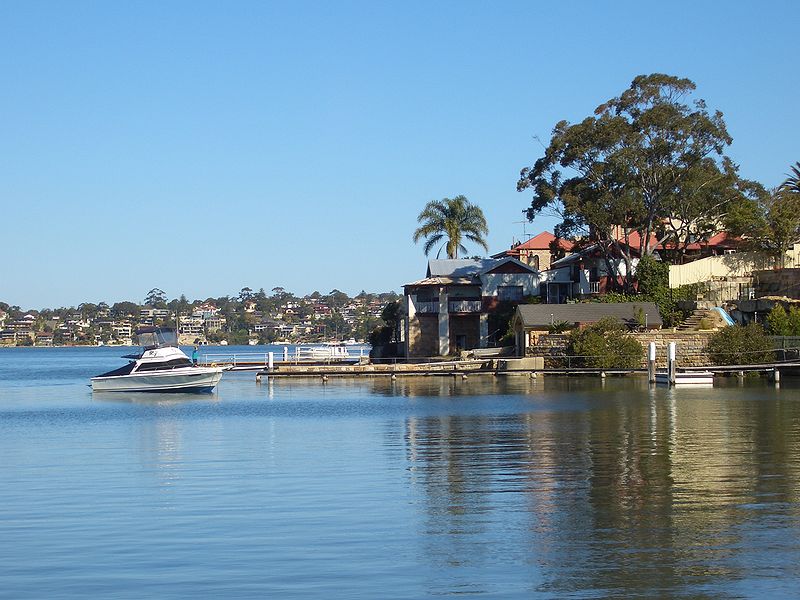
(Photo is of the waterfront at Kyle Bay)

Celebrity Baby News: Paul and Anne Gallen

Tags

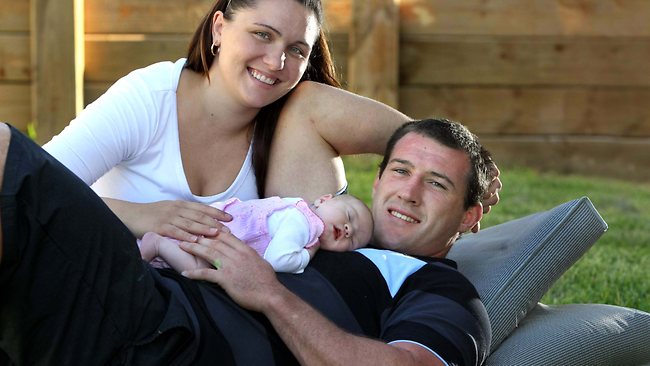
Another NRL baby was born last week. Cronulla Sharks Captain, Paul Gallen, and his fiancée Anne, welcomed a baby boy on May 10. Their son’s name is Kody, and he weighed 9.5 lb at his birth. Paul made no secret of the fact that he was hoping for a boy, and reportedly got pretty emotional when Kody arrived, yelling “It’s a boy! It’s a boy!”. Kody joins big sister Charly (aged 2).

It’s been an amazing time for Paul Gallen. He made Man of the Match in the Australia vs New Zealand ANZAC Test Match on May 6 despite a painful calf injury. His son was born the following Tuesday night, and on Wednesday he fronted up to training as usual. Yesterday the Sharks managed an upset win against the Sydney Roosters, and Gallen was Man of the Match, even though injured. Last night he was the announced as the Skipper of the NSW Blues for State of Origin, starting May 25. He first debuted for Origin in 2006.

(Picture shows Anne, Paul and Charly).

Sydney Suburbs That Could Be Used as Girl’s Names

Tags

, , , , , , , , , , , , , , , , , , , , , , ,

Bronte-Beach-6

This blog post was first published on May 15 2011, and revised on May 7 2015.

Arcadia
Arcadia is a semi-rural suburb in the Hornsby shire, first opened up into a settlement by timber cutters in 1817. It is named after a region of Greece that in legend was seen as an idyllic pastoral area. The name of the Greek region means “bear”, and is after a son of Zeus from Greek mythology called Arcas, whose mother Callisto was turned into a bear. He and his mother were made into the constellations of Ursa Major and Ursa Minor – the great and little bear. Because commercial development is severely restricted in the suburb of Arcadia, it has retained an image as a rustic retreat which fits its name. The name Arcadia is a feminine form of the Greek name Arcadius, meaning “from Arcadia”. There are a couple of saints named Arcadius, and there was also an Emperor Arcadius, whose daughter was named Arcadia after him. This name, which has been more often used in continental Europe and Latin American than in English-speaking countries, feels rather exotic, and quite Utopian. It is pronounced ar-KAY-dee-uh, and you could use Arkie, Kay, or Kaydee as a nickname.

Avalon
Avalon is a suburb in the Northern Beaches region famous for its surf culture. An episode of Baywatch was filmed here in the 1990s, and must have impressed, as the show’s producers decided to shoot the rest of the series at Avalon Beach. However, residents complained until Baywatch went to Hawaii instead. Woot, people power! The first land grant in the area was in 1827, but it didn’t receive its name until 1921. It is named after the paradisical island of Celtic myth, where it is said King Arthur received his final resting place. It is thought the name of the island comes from the Welsh word for “apple”, as it is pictured in myth as being blessed by an abundance of fruit. Avalon has been used as a personal name since the 19th century, when anything Arthurian was fashionable, and has more often been given to girls. Fitting in with popular names such as Ava, it seems like a more mystical version of Eden or Heaven.

Bronte
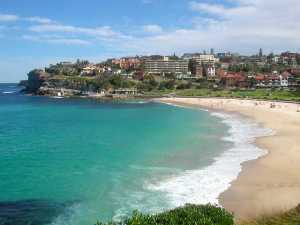
Bronte [pictured] is an upmarket beach-side suburb close to the city centre, with scenic cliff-top walking paths to popular locations such as Cooge and Bondi. This is another suburb with a keen surf culture, and the Bronte surf life saving club, founded in 1903, claims to be the oldest in the world. It has made notable residents over the years, including Peter McCormick, who wrote the national anthem. Robert Lowe, later Viscount Sherbrook, bought 42 acres here in the 1830s. His house was completed in 1845 and named Bronte House in honour of admiral Horatio Nelson, who was the Duke of Bronte. Bronte is a place in Sicily, Italy, near Mount Etna. Its name, pronounced BRON-tee, means “the thunderer”, and as it is right near a volcano, it is easy to see how it got its name. Bronte first joined the charts in the 1990s, and was in the Top 100 by 1997, making #98. It joined the very bottom of Top 100 twice more, in 2000 and 2001, never getting higher than #93, and is now around the 400s. Only in Australia has Bronte attained even mild popularity, and no doubt Bronte Beach helps explain why.

Elanora
Elanora is another Northern Beaches suburb; it is located on a hill overlooking a lagoon and the sea. The northern and south-western sides adjoin national parks, and native wildlife abounds in the area. It’s a suburb of large houses with a country club, and is popular with tourists. Originally a coal mining camp, it came into existence as a residential area in 1929, named Elanora Heights Estate. The name Elanora is derived from an Aboriginal word which means “home by the sea” or “home by the water”. It’s easy to see the appeal of this name – it sounds exactly like the elegant Eleanora, yet has an indigenous origin and pleasant meaning. You could use popular Ella or hip Nora as nicknames.

Eveleigh
Eveleigh is an inner-city suburb, and an area of of great historical importance, because it was here that the first steam locomotives were built in Australia in the railway workshops. The Eveleigh site was also used to manufacture munitions in both world wars, and is significant in the history of unionism. In 1892, unions first successfully negotiated a six-day working week in Eveleigh, and in 917 the General Strike began there. Unlike some of the other suburbs, this isn’t just a swanky address with a nice beach, but a place with working class roots that helped forge our nation. The name Eveleigh is taken from the name of an English estate. It’s a surname that is a variant of Everly, and means “wild boar’s wood”: despite the spelling, it’s pronounced EV-uh-lee, not like Eve + Lee. Similar to popular Evelyn, this spelling may seem more feminine than Everly.

Jannali
Jannali is in Sutherland shire, south of Sydney. The railway was built in 1885, but few people lived in the area until the 1910s. In 1927 the township was named Jannali after a railway signal box that had been there since the beginning. During the Depression, the population of Jannali increased dramatically as people were forced to sell up and move out of the city, and it became known as a place for “battlers” who were doing it tough during the economic hardships of the 1930s. Today Jannali is an unpretentious commuter suburb. When the name Jannali was chosen, it was reported that it was an Aboriginal name from the Northern Territory, meaning “the moon”. Indigenous Australians already used it as a name, and it does have occasional use. Pronounced juh-NAL-ee, the appeal of this name is its vague similarity to names derived from Jane, such as Jan and Janelle, while having an attractive meaning and indigenous origin. It would make a bold alternative to Selena or Luna.

Kareela
Kareela is also in Sutherland shire, and the next suburb to Jannali. Located on the banks of the Georges River, it was first established in 1968. Its name is derived from an Aboriginal word which is said to mean either “place of trees and water” or “south wind”. It was the second meaning that the Geographical Names Board probably had in mind, as the area is known for its strong southerly breezes. Pronounced kuh-RHEEL-ya, Kareela sounds feminine and begins with the popular K sound. People who like Cara and Cordelia may also like the sound of Kareela.

Rosebery
Rosebery is in south-eastern Sydney, near the city centre, and is the seat of local government. In the 1960s it was developed for industry and government housing, and became home to many migrants, especially Greeks and Italians. Rosebery was named after Archibald Primrose, Earl of Rosebery, British Prime Minister in 1894-95. The suburb was named in his honour after a visit he made to Australia in 1883-84. Rosebery is a variant of the place name Roseberry, on the Yorkshire Moors. James Cook once helped his father run a farm here, and climbing the high peaks gave him a taste for adventure which led him to become a sea captain and brought him to Australian shores. It looks like a nature name and sounds like Rose + Bree (ROZE-bree), but Roseberry is a corruption of the Old Norse for “Odin’s rock or crag”. Many of the place names of this area were given by the Vikings. Rosebery is deceptive – it has the air of a fairytale princess, yet its origins are ancient, powerful, and masculine. You may be intrigued by it if you would like an unusual girly name with a surprising amount of grunt.

Rozelle
Rozelle is an inner-city suburb to the west of Sydney’s centre; Rozelle Bay surrounds the container port Glebe Island. Once a colourful working-class district, this attractive village is now fashionable and quirky. The area where Rozelle is now was part of a 1800 land grant to colonial surgeon Dr William Balmain. The land was settled in 1836, and by 1861 was divided into the suburbs of Balmain and Balmain West. By 1900, Balmain West, now a thriving suburb in its own right, became known as Rozelle, after Rozelle Bay. Rozelle Bay (often marked as “Rozella Bay” on old maps), was called after the Australian parrot, the rosella. These beautiful crimson birds were first seen at Rose Hill, the first suburb of Sydney to be established. The parrots were commonly known as “Rose Hill parrots”, then “Rose Hillers”, and finally, “rosellas”. By coincidence, there is an Italian name Rosella, and Rozelle (roe-ZEL), gives it a twist that seems quite cool. It has occasionally been used as a girl’s name.

Sylvania
Sylvania is another southern suburb from Sutherland shire, next to Kareela. It is mostly residential, but also contains areas of native bushland. The traditional owners of this area are the Dharawal people, and their middens, burial sites and rock art remain in sheltered caves along the Georges River. After European settlement, it was acquired as a land grant by John Connell Laycock, and then shortly afterwards by politician Thomas Holt. Holt built Sutherland House on the foreshore in 1818, and a village grew here from 1881 onwards. The name Sylvania is Latin for “wooded area”, and must have been chosen because of its bush setting, but who chose it and why has been lost to history. Sylvania is already a girl’s name, a form of Silvana. However, the suburb’s name is pronounced sil-VAYN-yah and may sound too much like Pennsylvania and Transylvania for some.

POLL RESULTS
Peoples’ favourite names were Bronte, Avalon, and Elanora, and their least favourites were Kareela, Jannali, and Sylvania.

Celebrity Baby News: Todd and Sally Lowrie

Tags

National Rugby League player for Melbourne Storm, Todd Lowrie, and his wife Sally, welcomed their first child on May 11 – a boy named Sonny.

There have been several men named Sonny in NRL, including Sonny Fai, Sonny Tuigamala, and Sonny Bill Williams. It’s also a celebrity baby name, since pop singer Noel Gallagher from Oasis called his son Sonny last year.

Some fans have pointed out that it sounds similar to Darren Lockyer’s son, Sunny James, born April 2010. And one wag pointed out the supposed irony of someone called “Sonny” being associated with a team called “the Storm”.

I’ve seen a few babies called Sonny lately, so this may be a name to watch.

Sonny Lowrie’s birth and name was announced on the Melbourne Storm’s Facebook page.

(Picture shows Todd Lowrie playing for Melbourne Storm; he’s the one holding the ball).

Celebrity Baby News: Peter and Autumn Phillips

Tags

,

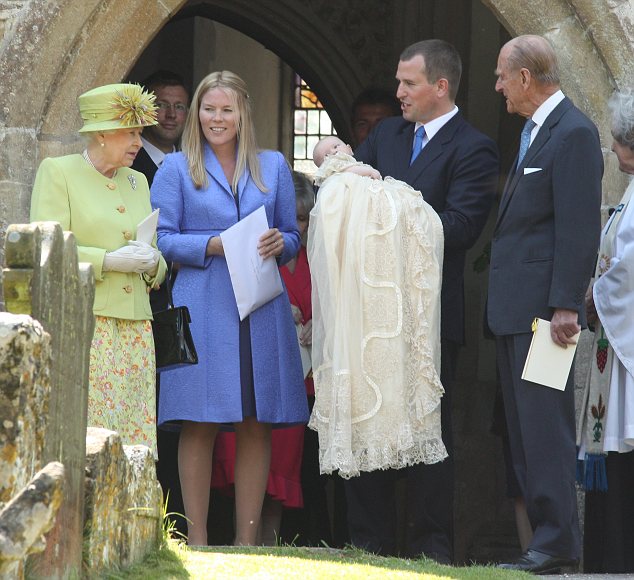
Another royal christening took place on Saturday April 23. The Queen’s first great-grandchild was born on December 29 2010 to Peter Phillips, son of Princess Anne, and his Canadian-born wife, Autumn Phillips.

The names of royal babies are not usually made known to the public until they are christened, but at a church service on January 2 2011, the rector welcomed Peter and Autumn Phillips and their daughter Savannah, and offered a prayer for them.

Savannah Phillips’ christening was held at the Church of the Holy Cross at Avening in Gloucestershire, near the home of Princess Anne. Baby Savannah is 12th in line to the throne.

Savannah isn’t a common name in the United Kingdom, and is unique to the royal family. It is, however, a Top 100 name in the United States and in Canada, the land of Autumn Phillips’ birth. Perhaps now this transatlantic name will become more popular in Britain. It’s a Top 100 name in Australia too, so we might have got a jump on this newly-royal name.

UPDATE: Savannah’s full name is Savannah Anne Kathleen – her middle names are after both her grandmothers.