Waltzing With … Autumn

Tags

, , , , , , , , , , , , , , ,

This post was originally published on March 20 2011, and almost entirely rewritten on March 26 2015.

Tomorrow is the Autumn Equinox, ushering in my favourite season of the year. The searing heat of summer finally retreats, leaving us with a long stretch of sunny days with blue skies, white fluffy clouds, and invigorating fresh breezes, coupled with cool nights where we can finally turn off the fan and pull the covers over us for a deep, refreshing sleep at last.

After a blazing heatwave or a devastating cyclone season, the cool air of autumn comes as a relief. Following a dry summer, autumn rain can be a blessing. I love watching the leaves of the deciduous trees turn red and gold, the clear blue skies and mellow warm days followed by crisp doona-snuggling nights. And then later, the thick grey mists, sparkling frosts, and drifts of brown leaves brought down by the cold wind.

Not all of Australia experiences autumn, with the tropics having just a Wet Season and a Dry, and only a small portion of south-eastern Australia having the classic picture postcard four seasons, crisply demarcated from each other.

Indigenous Australians had their own seasons, which differed from region to region, and which began and ended, not with a particular date on the calendar, but according to observations of the natural world. In the area which is now the Greater Sydney Basin, the Illawarra, and the Southern Highlands, the D’harawal people (who had seven seasons in all) marked the beginning of Marrai’gang around this time of year when the marrai’gang (quoll) began mating and the lilly-pilly fruit started to ripen on the trees.

Other countries may have more spectacular autumns than Australia, with more brilliant colours, but so often there is a melancholy that goes with it, a feeling that the natural world is winding down for the year, and corresponding brooding thoughts of our own mortality.

Here there is no tinge of sadness, and far from the woods bearing “bare ruined choirs”, our native trees almost never lose their leaves. Many native plants begin flowering in the autumn, so that the bush is filled with the bright colours of banksia, grevillea, and correa, as well as the purple lilly-pilly. Some species of bird migrate from the mountains to the coast during autumn, with flocks of thousands making an amazing sight. The loveliness of an Australian autumn is quiet and subtle.

While other seasons have their own beauty, they also seem to have their drawbacks. Winter – too cold! Summer – too hot! Spring – too changeable! Only autumn seems perfectly balanced, with the right amount of warm days and cool days, delightfully dry days and welcome wet days, each marching smoothly and evenly from the blues and golds of March, through the browns and yellows of April, to the greys and greens of May.

Name Information
The word autumn is from the French automne, taken from the Latin autumnus. This is derived from the Etruscan, relating to the passing of the year, ultimately from an ancient root meaning “cold”.

North Americans have two words for the season – autumn and fall. The reason is because the words autumn and fall both came into common use in the 16th and 17th centuries, and as English people began successfully migrating to North America in the early 17th century, they took both words with them. While the word fall for the season aptly fell out of use in Britain, it became the dominant word in the United States.

While autumn is from French, fall is from Old English, and refers to the falling of leaves, as well as the year falling away. It’s a word that makes a lot of linguistic sense, because it’s the exact opposite of spring in meaning (thus North Americans get the handy little mnemonic for the start and end of daylight saving time – spring forward and fall back an hour).

North Americans use autumn and fall interchangeably, and can do so even within the same sentence. However, although personal preference plays a part, in general they seem to use fall in a more practical way, while autumn is literary and formal. So children go back to school in the fall, but fashions come in autumn tones; TV networks bring out their fall schedules, but beloved grandfathers enter their autumn years. In other words, autumn is not just the word for the season, but a poetic or elegant description of the season.

The interesting thing is why there are two words for autumn anyway – it’s not as if winter and summer have other names. The truth is, autumn is a modern concept. In the medieval period, the year was divided into just two seasons, winter and summer. The time of year closest to what we call autumn was known as harvest, and it seems to have corresponded with late summer/early autumn.

By the 16th century, people had begun moving away from a rural way of life, and harvest was no longer an appropriate name for the time of year. I guess people felt awkward clattering up the cobbled streets of London, dodging carriages and chamber pots, telling each other that they would catch up next harvest. Both autumn and fall were tried out as descriptions of the transition from the heat of summer to the cold of winter, and by the 18th century they had both superseded the rustic word harvest. However, by the 19th, fall was no longer used in Britain, and it became seen as American usage only.

(This explains why fall never became part of the Australian vocabulary – as we weren’t settled by the British until the late 18th century, autumn was already the accepted word for the season. It would have been a very inappropriate name on this continent anyway, as there are few native trees here whose leaves fall in the autumn, or ever.)

So even though we might think of the season of autumn as ancient, timeless, and natural, it is in fact not just a modern construct, but a specifically urban one.

Knowing the history of the word autumn, it will not come as any surprise that use of Autumn as a personal name for girls is quite recent, dating back only to the 19th century. Nor will it seem at all strange that its use was in the beginning almost entirely North American, because on that continent autumn was not the standard word for the season, but one imbued with a certain archaic charm.

This trend continues, because in the US, Autumn has been in the Top 1000 since 1969, giving it a “hippie name” vibe. Currently it is in the Top 100 and gently rising, being #69 in 2011 and #65 in 2013. It is also a Top 100 name in some Canadian provinces.

In England/Wales, Autumn was in the 500s until Princess Anne’s son Peter Phillips began dating a Canadian named Autumn Kelly in 2002, upon which the name Autumn began climbing in the UK, with a steeper ascent after Autumn and Peter’s wedding in 2008. After peaking at #179 in 2011, just after Autumn Phillips had given birth to her first child Savannah, the name has since levelled off and is now #197.

In Australia, the name Autumn is rarely found in historical records, and it has never charted here. In 2013, 3 baby girls were named Autumn in South Australia, in 2012, 9 baby girls were given the name Autumn in Victoria, and in Tasmania in 2010 there was only one baby called Autumn. The royal connection does not seem to have helped it here, as it has in the UK, and I only see it occasionally in Australian birth notices.

Autumn is a modern nature name for girls that is pretty without being frilly, and may appeal to some Australian parents by dint of being underused here. It celebrates a beautiful time of year, and could suit a child born in autumn, or with autumn-toned colouring. With Autumn, you get that attractive combination of a name that is completely “normal” and familiar, while not being at all common. That alone makes Autumn seem like a pretty awesome choice!

POLL RESULT
Autumn received an extraordinary approval rating of 92%, making it one of the highest rated names of the year. 38% of people loved the name Autumn, while not a single person hated it.

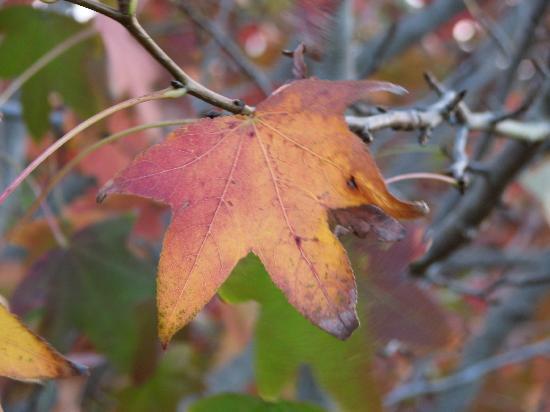
(Photo shows an autumn leaf in the Aurora Valley of Bangalow, New South Wales)

Boys Names From Songs

Tags

, , , , , , , , , , , , , , , , , , , , , , , , , , ,


This blog post was first published on March 13 2011, and heavily edited and updated on March 20 2015. Not being psychic, I did not know then of the vile crimes that Rolf Harris would be imprisoned for, otherwise he would not have been included.

Duncan
Slim Dusty’s country song Duncan is one of his two hits which went to #1.The song describes the great enjoyment experienced drinking at the atmospheric Town and Country pub with his mate Duncan. Although the narrator also drinks with Colin, Kevin, Patrick, and Robert to obtain similar effects, it is Duncan who will always be remembered as the mate Slim would “love to have a beer with”. Duncan is the Anglicised form of the Gaelic name Donnchadh; it may mean either “brown-haired warrior”, or “brown-haired chieftain”. A traditional name amongst Scottish nobility and royalty, there have two medieval Scottish kings named Duncan, with Duncan I the original of William Shakespeare’s King Duncan in Macbeth. Unlike in the play, Duncan was a young king, and not assassinated by his war leader Macbeth, but killed in battle against him. Saint Duncan was of royal blood too, and an abbot of Iona. Duncan was #134 in the 1900s, and peaked in the 1970s at #122. It doesn’t seem to have charted since 2009, so this is a handsome underused Scottish choice.

Erasmus
Erasmus is a 2006 song by alternative rock band You Am I, a nostalgic remembrance of the 1990s. Erasmus is derived from the Greek for “beloved”. Saint Erasmus of Formia was a bishop who, according to tradition, was martyred for his faith in the 4th century. He is more commonly known as Saint Elmo, the old Italian form of his name, and St Elmo’s Fire is named after him – the glowing electrical discharge that can appear around tall, pointed structures during thunderstorms. As it was known for appearing around the masts of ships in the days of sail, Saint Erasmus is a patron of sailors. A famous namesake is Erasmus of Rotterdam, a Catholic priest, theologian, and classical scholar of the Renaissance who is known as “The Prince of Humanists”. Charles Darwin‘s grandfather was Erasmus, named after an ancestor, and Charles’ brother also had the same name. This rare name has geek chic, with history, strength, bags of brain power, and of course, a beautiful meaning. Rasmus and Raz could be used as nicknames.

Harry
Lazy Harry’s, or, The Road to Gundagai is a traditional folk song with a connection to Banjo Paterson, as he was the first to have it published, in 1905. The song tells of two shearers from a Riverina station who set out for Sydney to spend their pay cheques, but get no further than Lazy Harry’s pub between Wagga Wagga and Gundagai before they’ve spent the lot. Harry is a medieval English form of Henry which has never gone out of use. It has also been used as a pet form of Henry and Harold, and more recently, of Harrison. Harry is a classic name which has never left the charts. It was #32 in the 1900s, left the Top 100 in the 1950s, and reached its lowest point in the 1970s at #234. It began rising in the 1980s after the birth of Prince Henry, always known by his nickname Harry, and joined the Top 100 in the early 1990s. It continued rising through the 2000s, along with the popularity of boy wizard Harry Potter, and peaked in 2010 at #27, although by 2013 it had only dropped one place, to #26. Classic Harry is royal and magical, yet also friendly and casual.

Henry
Henry Lee is Nick Cave & The Bad Seeds’s 1996 version of an English folk song called Young Hunting, which in the United States is usually titled Love Henry or Henry Lee. It is a macabre tale of sexual jealousy; a man tells his mistress that he is leaving her for another woman, and while offering him a farewell kiss, she stabs him and throws his body in a well. P.J. Harvey sings the woman’s part of this eerie duet. Henry is from the Germanic name Heimrich, meaning “home ruler”. It has been commonly used amongst European royalty, and there are many rulers of Germany, France, Spain and Portugal named Henry, or one of its equivalents. There have also been six Holy Roman Emperors named Henry, one of them a saint. Henry is a traditional name in the British royal family, and there have been eight English kings named Henry. Henry is a classic name which has never left the charts. It was #11 in the 1900s, and left the Top 100 in the 1950s, hitting its lowest point in the 1970s at #265. It was back on the Top 100 by the 1990s, and had reached #23 by 2013. Henry is a handsome classic which is slowly rising in popularity.

Jack
Adam Harvey’s 2001 country song The House That Jack Built went to #1. It’s inspired by the nursery rhymes The House That Jack Built and Jack and Jill, while giving them a modern twist. Jack is a short form of Jackin, which began as Jankin, a medieval pet form of John. It has been used as an independent name since the Middle Ages, and was so popular in that era that it became a slang word to mean “man, male”. Jack is a fairytale hero, such as Jack and the Beanstalk and Jack the Giant Killer, and a trickster figure, like a jack-in-the-box and the knave in a deck of cards. Jack has a particularly British association, because of the Union Jack which is on our flag. Suffice to say I could talk about Jack until you were completely jack of it! Jack is a classic name which has never left the charts. It was #24 in the 1900s, and left the Top 100 in the 1940s. It hit its lowest point in the 1960s at #277, and was Top 100 again by the 1980s. It hit its peak in the 2000s at #1 name, when there were many heroes on film and TV named Jack. By 2013 it had only fallen two places, to #3, so it has been extremely stable as well as extremely popular. Jack the lad is an everyman name, and a nickname with its own rich history.

Jake
Jake the Peg is a 1965 novelty song by Rolf Harris, based on the Dutch-Canadian song Ben van der Steen. It’s a simple tale of an unfortunate man born with three legs, and Harris performed it onstage with a theatrical prop which left the audience guessing as to which of the three legs was fake. It has been voted one of the best Australian singles of all time. Jake is a medieval variant of Jack, but today is often used as a short form of popular Jacob. Jake first joined the charts in the 1970s at #392, the same decade as Jacob, and just after the song’s release. It joined the Top 100 in the 1980s and peaked in the 1990s at #6. In 2013 it was #43. More boyish than Jacob, more rakish than Jack, this name lets you know that everything is “jake”.

Jessie
Rick Springfield’s pop song Jessie Girl was an instant hit, reaching #1 on the Billboard Hot 100 of 1981, and winning a Grammy. According to Springfield, Jessie’s Girl was inspired by a real-life admiration he had for his friend Gary’s girlfriend. He considered using Gary’s real name, until he saw a girl wearing a softball jersey with the name Jessie on it. The song has been featured in movies and TV shows, and named one of the best songs of the 1980s. As a boy’s name, Jessie is a variant of the Hebrew name Jesse, which may mean “gift”. It’s also a girl’s name which was originally a Scottish pet form of Jean, but also used as a pet form of Jane, and more recently, of Jessica. In Australia, Jessie charted as a unisex name until the 1950s, but since the 1970s and the rise of Jessica, has only charted for girls. It made the Top 100 in the 1990s, when Jessica was the #1 name, and is currently in the 300s. Still usable for boys, although the popular Jessica has given it a pink vibe.

Johnny
Men at Work’s 1982 rock song Be Good Johnny is an obvious reference to Chuck Berry’s Johnny B. Goode. The song is about a young boy, a seemingly troubled daydreamer who can’t relate to or listen to adult authority. It could be the anthem for ADHD kids, and in fact a cover version of the song is the theme tune to the reality TV series Supernanny. Johnny is a pet form of John, long used as an independent name. There’s been heaps of famous Johnnys in Australia – Johnny Diesel, Johnny O’Keefe, Johnny Young, Johnny Lewis and Johnny Warren, to name a few. Johnny has charted since the 1950s, when it debuted at #265. It has not yet become popular, and is currently in the 200s. Modern classic Johnny seems like it has a lot of potential to go further.

Normie
Rak Off Normie was written as a sequel to comedian Bob Hudson’s satirical narrative, The Newcastle Song, which was at #1 for four weeks in 1975. The Newcastle Song is about a young man called Normie looking for a date, and pokes fun at the working class youth culture in the city of Newcastle. Eager for further success, Bob Hudson rapidly penned Rak Off Normie from the point of view of the girl Normie is attracted to, and Maureen Elkner was chosen to sing it. The song reached #6 on the charts. Normie is a pet form of Norman, used as an independent name since the 19th century. It is well known in Australia from 1960s pop star Normie Rowe, and will probably only make a comeback if Norman does.

Sam
Olivia Newton-John’s Sam reached #1 on the Billboard Easy Listening chart of 1977. It’s a song about two people who have been (apparently deservedly) dumped by their respective lovers and are now lonely; the song implies that the two of them may get together in order to comfort each other. Sam can be used as a short form of names such as Samuel or Samson, and as short for the female name Samantha. It is also a Persian name meaning “very dark”, and is familiar from Frodo’s companion in The Lord of the Rings, whose name is short for Samwise (samwise is the Old English for “half-wise, half-wit”). Sam has long been used as an independent name, overwhelmingly given to boys. Sam first joined the charts in the 1950s at #301, and was Top 100 by 1986. It peaked at #62 in 1991, left the Top 100 in 2011, and is still only just outside the Top 100. Well known from Welsh children’s TV show Fireman Sam, which has an Australian rescue pilot in it, this is a modern classic with boyish charm.

POLL RESULTS
People’s favourite names were Jack, Harry, and Duncan, and their least favourite were Johnny, Jake, and Normie.

Girls Names from Songs

Tags

, , , , , , , , , , , , , , , , , , , , , , , , , , , , , , , , , , ,


This list was first published on March 6 2011, and substantially revised and updated on March 12 2015.

Astrid
Goodbye (Astrid Goodbye) was a 1979 single for popular rock band Cold Chisel, written as an energetic set finisher. Songwriter Don Walker didn’t know anyone named Astrid, and thinks he probably heard of the name because of Bill Wyman’s partner, Astrid Lundstrom. Astrid is the modern form of Ástríðr, an Old Norse name which can be translated as “beloved of God”, or more freely as “divine beauty”. A traditional name amongst Scandinavian royalty since medieval times, it was the name of Canute the Great’s sister, giving it a slender English connection. It became well known in the English-speaking world because of popular Swedish children’s novelist Astrid Lindgren, the author of the Pippi Longstocking books, and has received fresh attention from Astrid Hofferson in the film How to Train Your Dragon. The name is often understood as being related to the word “star”, because it sounds like the Greek aster, which was exploited in a Dr Who special where Kylie Minogue played star-loving Astrid Peth. This attractive name is currently around the 500s.

Ayla
Ayla was a 1987 single for New Wave duo Flash and the Pan, comprised of music industry powerhouses and ex-Easybeats, Harry Vanda and George Young. The name Ayla has several possible origins. It can be a variant of the Hebrew name Elah, meaning “terebinth tree”, pronounced eh-LAH, or a Turkish name meaning “halo of light around the moon”, and often translated as “moonlight”. In Turkey, it is pronounced to sound like the name Isla. The name Ayla was also used for a beautiful, inventive, and spiritually gifted palaeolithic superwoman in the popular Earth Children  novel series by Jean M. Auel. In the books, Ayla is a Neanderthal attempt at the character’s real name, which isn’t given, but much longer; it is said like Kayla without the K. The name Ayla first joined the US Top 1000 in 1987, a year after Auel’s Clan of the Cave Bear was made into a film, starring Daryl Hannah. Despite being a flop, it seems to have catapulted Ayla to #593, and to have helped inspire the Flash and the Pan song. In Australia, Ayla joined the Top 100 in 2013, fitting in with popular names like Layla and Ava.

Clementine
Col Joye’s 1959 #1 hit single (Rockin’ Rollin’) Clementine is a hip retelling of the folk ballad, My Darling Clementine. In this version, the miner’s daughter Clementine is a jeep-driving “real down chick” who meets up with a “cat from the city” in a jumping joint where she hops, bops, and “digs that crazy rhythm”. Clementine is a French form of Clementina, the feminine form of Clement, from the Latin name Clemens, meaning “merciful, gentle”. Clement is a saint’s name, so Clementine would originally have been given with this in mind, and the name dates to the Middle Ages. It has a rather aristocratic image, with several French princesses named Clémentine, and Sir Winston Churchill’s wife was also called Clementine. A clementine is a small citrus fruit, but that isn’t an issue in Australia, where they are nearly always sold as mandarins. Clementine was quite a popular name in Australia in the 19th century, but has never been in the charts since Federation. There has been renewed interest in the name recently, with the quirky Clementine children’s book series by Sara Pennypacker, Clementine the moral compass in The Walking Dead video game, and free spirit Clementine in the film, Eternal Sunshine of the Spotless Mind. Expect to see more of this elegant vintage name in the future.

Evie
Stevie Wright is the former lead singer of legendary 1960s rock band The Easybeats. Australia’s first international pop star, he was the first forced to deal with the pressures of being famous and beautiful at a very young age, and the first to blaze, burn out, and come crashing down in spectacular fashion. Evie is his 1974 rock ballad of young love and new life blossoming, blooming, and then going appallingly wrong, and is the only 11-minute song to become a #1 hit. Evie is a pet form of Eve, or a short form of names like Evelyn. It’s been used as an independent name since the 18th century in America, and may have a Dutch influence. Evie first joined the charts in the early 2000s, after the song was covered by one-off supergroup The Wrights in 2004. It climbed so steeply that it was in the Top 100 by the late 2000s, and was #22 in 2013. It’s even more popular in the UK, so you can see this as part of the British nicknamey trend, as much as a tribute to an Australian classic.

Georgy
The Seekers were a folk group, and the first Australian band to achieve major success in the UK and US. Georgy Girl was the title song to the 1966 British movie of the same name, a Swinging Sixties coming-of-age tale about a naïve, frumpy young girl and her unconventional love affairs. The song went to #1 in Australia, and was The Seekers’ highest-charting single in the US, where it got to #2 and was used to advertise mineral water. Georgy can be used as a pet form of either the male name George, or the female names Georgia, Georgette, or Georgiana – the “Georgy Girl”in the song is named Georgina. Although Georgy has a long history of use for both sexes, it is far less common that the variant Georgie, which has charted for girls since the 1990s and is rising steeply in the 200s.

Leilani
Leilani, released 1982, was the début single by quirky rock group Le Hoodoo Gurus (later Hoodoo Gurus). The song’s narrative is loosely based on the plot of 1951 B-grade movie Bird of Paradise, and combines an exotic South Pacific setting with an oddly suburban mindset, and a fun faux-Polynesian chorus filled with Australian place names. Leilani is a Hawaiian name meaning “heavenly garland of flowers”, but often understood as “heavenly child”, pronounced lay-LAH-nee. It fits in with the trend for L-l names, such as Lillian, and is currently around the 300s. A very pretty Polynesian heritage choice which has the fashionable nickname Lani.

Matilda
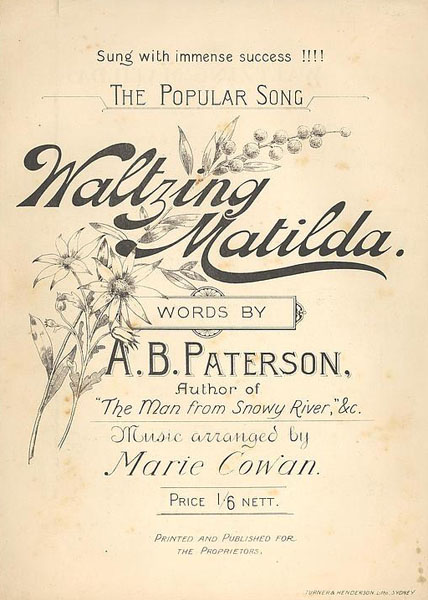
Waltzing Matilda was written by Banjo Paterson in 1895. The Matilda in the song isn’t a dancing girl, but is what swagmen called the bundle that they carried; to “waltz Matilda” is to walk while carrying a bundle. It is said that the swagman in the song was a real person called Samuel Hoffmeister who was involved in the Shearer’s Strike of that year, so it’s a political protest song (unintentionally). Waltzing Matilda is our unofficial national song and the lyrics are written on every Australian passport. Matilda is a Germanic name meaning “mighty in battle”. A traditional name amongst European royalty, it was literally brought over with the Conqueror to England, as it was the name of William I’s wife, the mother of William II and Henry I. Her grand-daughter was named after her, and she was married to a Holy Roman Emperor, so was the Empress Matilda. She tried to claim the throne of England as her father’s heir, but was never crowned queen, being named Lady of the English – her son instead became King Henry II. Saint Matilda was a medieval German queen whose son became a Holy Roman Emperor; she is the patron saint of large families. Matilda was #144 in the 1900s, and disappeared from the charts in the 1930s. It made a comeback in the 1980s, after Matilda the Kangaroo was chosen as the mascot for the 1982 Commonwealth Games, held in Brisbane and won by Australia. Matilda joined the Top 100 in the early 2000s, peaked in 2009 at #16, and by 2013 had only fallen to #18. A patriotic retro name choice that is extremely stable in the charts.

Rosie
Founded by the brothers of one of the Easybeats, AC/DC is Australia’s most successful rock band, and one of the most successful world-wide. Whole Lotta Rosie is their cheeky 1978 single, allegedly based on Bon Scott’s real life encounter with an obese Tasmanian woman. Rosie is a pet form of Rose which has a long history as an independent name; it can be used as a short form of any Rose- name, such as Rosalie, Rosamund, Rosetta, or Rosemary. Rosie was #229 in the 1900s, and left the charts in the 1930s. It made a come-back in the 1980s, reaching #749 and climbing steeply. It was in the mid-100s in Victoria in 2012. A sweet, fresh-faced retro name that is already Top 100 in Britain.

Ruby
Ruby Wednesday is an early song by rock band Eskimo Joe, released in 1999. A whimsical re-take on the Rolling Stones’ Ruby Tuesday, it made the Triple J Hottest 100 the year it came out. Ruby is a precious gemstone, whose name comes from the Latin for “red”. It’s been used as a girl’s name since the 17th century, but became popular in the 19th, when gemstone names became fashionable. Ruby was #21 in the 1900s, and had left the Top 100 by the 1930s. It disappeared from the charts in the 1950s, but came back in the 1980s at #548. It reached the Top 100 in 1996, peaked at #1 in 2012, and and by 2013 was #2. A spunky retro choice which has already reached maximum popularity, and is therefore expected to gradually fall.

Sadie
Sadie (The Cleaning Lady) was a 1967 novelty song and the first solo single for pop idol Johnny Farnham; it hit #1 and was the biggest-selling single by an Australian artist in the 1960s. Sadie is a pet form of Sarah, which seems to have originated in 18th century America. The name gained an especially Jewish image in 19th century England, where in Yiddish slang, a Sadie was a low status Jewish girl, sometimes with connotations of prostitution. It’s interesting how often Sadie is linked with that profession, such as Sadie Thompson in the W. Somerset Maughan’s Rain, while The Beatles’ Sadie adds another “sexy” image to the name. Sadie was #145 in the 1900s, and left the charts in the 1940s. It returned in the late 2000s at #566, and in Victoria is in the mid-100s, a similar popularity to that in the UK, while it is already a Top 100 name in the US. This sassy retro name looks set to go places.

POLL RESULTS
People’s favourite names were Evie, Matilda, and Clementine, and their least favourite were Ayla, Leilani, and Georgy.

Flynn Christopher Bloom: A Son for Miranda Kerr and Orlando Bloom

Tags

, , , , ,

From the moment we knew of his existence, he was the most eagerly-awaited celebrity baby of 2011. How could he not be, with the parents that he had?

Miranda Kerr was our country town girl made good due to her girl-next-door dimpled beauty. A supermodel who wore undies and flogged face cream for a living, and also managed to be intelligent, politically caring and spiritually aware, she won hearts with her down-to-earth personality. Last June she became engaged to Orlando Bloom, a good-looking English movie star who shares her Buddhist ideals and has vague ties with Australia, which seemed eminently suitable.

They married with suspicious haste only a month later, provoking much speculation that the couple were already expecting a baby. By August, it was confirmed that Miranda was pregnant and due in a few months. Baby name obsessives were soon feverishly wondering what name they would choose for it. Would it be an Australian name? An English name? A Hollywood name? A fashion name? A Buddhist name? Or would it be something romantic, literary and Latinate like Miranda and Orlando’s own names?

We all awaited the presence of Johnny Sparrow Legolas or Lotus Pearl Victoria with bated breath.

Baby Bloom entered the world on January 6 2011 and it was a boy! It was a natural birth, and Miranda endeared herself to the female public further by saying that giving birth to a 10 pound baby without drugs is an extremely painful, protracted and difficult process. This was refreshing after uber-model Gisele Bündchen’s smug and unconvincing claim that natural birth “didn’t hurt in the slightest” (cue 99% of mothers all foaming at the mouth simultaneously).

We waited to hear what name they had chosen for him … and waited … and waited. Miranda’s mum explained that they had a long list of names and were still trying to decide which one to use. Even in the midst of our impatience, it seemed touching that despite their beauty, wealth, fame and spiritual enlightenment, the Blooms had the same “heck the baby’s arrived and we still don’t know what to call him” issues shared by many other couples.

On January 19, Miranda revealed the baby’s name to be Flynn on her blog. It was a name that was Australian and Hollywood and fashion world, for it is the surname of Australian actor Erroll Flynn – the star of 1930s/40s swashbuckling derring-do flicks very much like the Pirates of the Caribbean movies that Orlando himself has starred in. Erroll Flynn was born in Tasmania, the state in which Orlando Bloom’s maternal grandparents lived at one time. In addition, another Australian supermodel, Elle McPherson, has named one of her sons Arpad Flynn Alexander.

Just possibly, he was named after a more recent Hollywood connection – Flynn Rider is the (assumed) name of the handsome prince in the Disney animated musical Tangled, which came out about six weeks before Flynn Bloom’s birth. There has been a recent fad for naming girl babies after Disney princesses – could the Blooms be the start of a new trend for calling boys after Disney princes?

The names of the other Disney princes are Ferdinand, Charming, Philip, Eric, Aladdin, John, Shang and Naveen – hmm, maybe it’s the start of a new trend of Disney providing prince names we may actually want to use! Mind you, Flynn Rider’s real name is Eugene – perhaps the Disney princes could all start choosing cool fake names for themselves.

It was only a couple of weeks ago that Flynn Bloom’s middle name became known: Christopher. Miranda explained on Facebook that they had chosen his middle name to honour her first boyfriend, who had been killed in a car accident when he was still a teenager.

Many people will say that naming a baby in honour of an ex is absolutely not on, but I think this is really touching, and clearly Orlando Bloom is far too mature and secure to worry about his son sharing a name with his wife’s dead ex.

I must confess to having a great affection for the name Flynn, which I think is simple, cute and spunky. It’s also just dropped off the Top 100 in Australia, and Miranda and Orlando’s choice could very well bring it back up there again.

However, I’m not sure it really goes that well with the surname Bloom. Both names are one syllable and end with a N/M sound, so they are a little too similar to mesh well, in my opinion. Also, to me the name sounds as if it is saying “in bloom” – although I can’t decide is that is a problem or not! Being in bloom is such a positive thing, after all.

From polling and surveying people at a couple of sites, I get the impression most people think that Flynn Bloom is a bit too short and abrupt, and share my concerns about the awkwardness of the full name, although in general they liked the name Flynn itself.

Overall, I give Flynn Christopher Bloom a thumbs up and a warm welcome to the world. You’re in like Flynn, Baby Bloom!


You Can’t Call It That: What the Law Says About Naming Your Baby

Tags

, , ,

Every once in a while you meet someone with a name where you think, “Surely that name shouldn’t have been allowed.” And quite often the newspapers will publish names that have been denied by the registrar that seem relatively inoffensive. Recently, I wondered what exactly the law says on what names you can and cannot name your baby.

As the nation’s capital and the place where most laws are passed, I decided to start in Canberra at the Australian Capital Territory Registrar-General’s Office’s website. By clicking on a likely link, it took me to the Office of Regulatory Services in the Department of Justice and Community Safety, which handles the registration of births, deaths and marriages as well as other important things, such as parking and rental bonds.

I rang the number on the Contact page, in the naïve hope that the laws on baby names might be printed out for public use – perhaps in a little pamphlet called Beware Parents: Names Forbidden by the Government, or more playfully, Naughty, Naughty Names You Needn’t Think of Using. In my hopeful imagination, this little pamphlet could then be posted to me at the taxpayer’s expense.

No such luck. First there was an amusing problem getting hold of them as my phone system automatically cuts me off if I’m left on hold for more than 40 seconds, and then once I managed to speak to someone, they very kindly pointed me to the website which has all the legislation on it for me to look it up for myself.

Now I must say that the laws are written in a very simple, clear, comprehensible way that anyone of average intelligence with a high school education should be able to follow. The trouble is, I am obviously a moron because I could NOT find the section where it tells you which names are prohibited.

I rang the Births, Deaths and Marriages Office again, and an extremely helpful lady talked me through it and then patiently directed me to the exact part of the legislation where a prohibited name is defined. Amazingly, it was exactly where I had been told it would be. I still don’t understand why it has to be at the end in a glossary – why can’t it have its own heading in the law?

As I read through the list of six things you can’t call your baby, I couldn’t help but be struck by part e) or is, in the registrar-general’s opinion, undesirable. It seemed awfully, well, subjective.

“But doesn’t that mean the registrar-general could ban any name? I mean, what if he didn’t like the name Mary because all the people he knew called Mary were horrible?” I asked my patient helper.

However, it turned out that although a register-general COULD do that, they probably wouldn’t, as they have to back it up with some pretty substantial evidence in the court of appeal. I presume if a registrar-general kept losing cases in the court of appeal it wouldn’t look very good, so they use their apparently limitless powers in a judicious manner.

I asked hopefully if all the states had the same naming laws, but to my disappointment was told that, no, they tended to differ slightly, and I’d have to look up each state and territory one by one. I said goodbye to the Births, Deaths and Marriages staff member, no doubt to her immense relief.

And so it was off to New South Wales Births, Deaths and Marriages, where I discovered that my phone system also cuts me off if I’m left talking to an automated phone message for more than 40 seconds.

Eventually I was put through to a charming girl called, I believe, Mikayla. Mikayla also helped me navigate the complexities of the NSW legislation page, and when the necessary Act refused to appear when I hit “search” gave me the obvious advice, which was to Google it. Of course! Why hadn’t I though of that? Because I’m a dullard who needs everything explained patiently and slowly, it would seem. Even when I Googled, and got to the right document, I could NOT find the place where it defines a prohibited name. Mikayla found it for me, and I still have no idea how she did it. Clearly our tax dollars are being well spent.

The NSW only had four things you couldn’t call your baby; two less than the ACT. But once again (d) is contrary to the public interest for some other reason seemed almost wilfully vague. Asking Mikayla for some more guidance on this issue, I asked her what kinds of names might be banned under point d). “For example, what if you wanted to call your baby … um, Watermelon?” I asked, plucking a hypothetical name out of the air.

In Mikayla’s opinion, Watermelon could very well end up being reviewed. “That’s a pretty degrading name to give a child,” she said disapprovingly. This surprised me – Watermelon didn’t seem that crazy; since Gwyneth Paltrow called her daughter Apple, I figured that fruit names are now acceptable. Maybe not. Personally I thought that Watermelon’s parents might have a case if it went to appeal, but Mikayla was quick to add that she wasn’t a lawyer (and therefore her personal opinions should not be taken as legal statements). Feeling immensely pleased that we live in a society where government workers are free to give their personal opinions, I said farewell to anti-Watermelon Mikayla.

And next time you talk to a government employee on the phone and they’re a wee bit tetchy with you – remember that they may have just spent the last half hour talking to an idiotic nuisance like me.

Rather than frazzle any more of them, I just went to each state and territory’s legislation website, since I knew what I was looking for now. Each state and territory had the same basic standards, but some did seem to be slightly stricter – the ACT and Queensland appeared to have the most amount of rules on what names must be avoided. And here they are:

ALL STATES

* Names which are an obscene or offensive word

* Names which are impractical to use because they are too long (I don’t know what defines “too long”, but I presume it means it doesn’t fit into the number of boxes on government forms)

* Names which are impractical to use because they contain characters with no phonetic significance eg J @ yne, Jasm!ne, J00lia, J*nn*f*r or Je$$ica

* Names which are impractical to use for some other reason (in NSW, a blank space, a Medicare number and the number 7 have all been denied; in one case the name X was knocked back, but A and B have been allowed in WA)

* Names which include or resemble an official rank or title eg Lord, Lady, Princess, Queen, Sir, Doctor (However, a NSW couple successfully won the right to call their son Duke in 2009, so in some cases these might win on appeal)

* Names which are contrary to the public interest for some other reason

The last one leaves a margin for interpretation. In NSW, the names Jesus Christ and Ned Kelly have been rejected as inappropriate, yet the names God Bless and Fully Hektic Sik have been deemed officially acceptable (God Bless? Really? I mean the child’s first name is actually God ….) In New Zealand, parents have been unsuccessful in their attempts to call their children Adolf Hitler and Satan. No word on whether it’s happened here, but WA registrar Alan Andersson has said that Adolf Hitler and Satan would definitely be on the naughty list here as well. I’m now thinking Watermelon would almost certainly get through. Surely it’s better than Fully Hektik Sik.

QUEENSLAND

The first and middle names cannot form a sentence or a statement. The examples that the legislation gives are Save Mother Earth or Down With Capitalism, but would also cover Chocolate Is Yummy and that other New Zealand reject, Tallulah Does The Hula In Hawaii. However, these names could be banned in other states under the vague reason of “contrary to the public interest”.

ACT

* The name cannot sound similar to the name of a body or organisation. So no Redd Kross or Salvation-Armi, I presume.

* The part about “contrary to the public interest” is replaced with “in the registrar-general’s opinion, undesirable”. I don’t know whether this makes any difference, nor do I know whether this means the ACT is more conservative or more liberal in its views.

There you have it – that’s what the law says about choosing a name for your child. By the way, if you are thinking to yourself, “But my great-grandmother’s name was Princess,” or “My neighbour’s parents were hippies, and his name is Dolphins Are People Too,” the legislation was only introduced in the 1990s.

So if you’re worried that the name you’ve chosen may be “too weird” – relax. Because if it gets through the birth registration process, and they rubber stamp it, it’s officially not too weird.

And when you meet a child or teenager and you think the name their parents chose is “too weird” – remember that their name has already been scrutinised under the law, and if they were allowed to register it, then by the standards of our nation, their name has already been judged to be “not too weird”. Yes, even A, B, God and Fully Hektic Sik.

Acknowledgements: Thank you to the Registries of Births, Deaths and Marriages in the ACT and NSW for their valuable assistance. Information on names which have been rejected and accepted in certain states comes from articles in The Sunday Telegraph and Perth Now. The couple who successfully appealed to call their son Duke were featured on Channel 7’s “Today Tonight”.

Waltzing With … Valentine

Tags

, , , , , , , , , , , , , , , , , , , , ,

great-barrier-reef

Name Story
As tomorrow is St. Valentine’s Day, I thought I would focus on the name connected with this day for lovers.

The history of how the name became associated with a day for sweethearts is rather murky. The feast of Saint Valentine was first established in 496 by Pope Gelasius I, and he freely admitted that nobody had a clue who Valentine was or what he had done apart from give up his life for his faith and been buried on February 14; traditionally in 269.

There were so many martyrs called Valentine that the compilers of hagiographies didn’t know which Valentine Gelasius meant – hardly surprising as he didn’t either – but managed to whittle it down to two candidates: a bishop and a priest. Saint Valentine seemed doomed to be relegated to the ranks of the obscure minor saints.

Then the Italian archbishop and chronicler Jacobus de Voragine compiled The Golden Legend around 1260. This bestseller of the Middle Ages gave the reader a little story about each saint on the liturgical calendar. It included a brief biography of Saint Valentine which portrayed him as a priest who refused to deny Christ before the Emperor Claudius in the year 280.

Before he was decapitated for his obstinacy, he restored the sight of his gaoler’s blind daughter as a show of Christ’s power. (The daughter was also deaf, but The Golden Legend remains mute as to whether that was similarly healed). This legend became more and more romantically embroidered until Saint Valentine was a priest imprisoned for marrying Christian couples, was in love with the blind daughter he healed, and sent her a card signed, “From your Valentine.”

A popular notion is that the church introduced Valentine’s Day as a Christian substitute for the pagan festival of Lupercalia. You will read this all over the place as if it is an established fact. Actually it has pretty much zero evidence to support it, and was first suggested by two 18th century antiquarians (one a priest).

The idea that Saint Valentine’s Day was a day set aside for lovers dates back to a poem written by Geoffrey Chaucer in 1382, in which he pretended it was an ancient tradition. Fake ancient traditions being all the rage in medieval Europe, it quickly became fashionable to write poems and perform other romantic acts for your beloved on February 14.

Older Australians sometimes grumble about the Americanisation of Valentine’s Day, but if that means you get a card, flowers, and a box of chokkies instead of nothing, then hurray for Americanisation say I! The big event that happened here on Valentine’s Day was the decimalisation of our currency in 1966 – mm, romantic.

I wish you all a happy Saint Valentine’s Day, for although the whole thing turns out to be as fake as a decimalised three dollar bill, it’s as real as really real to everyone who gets a flutter in their heart when they receive a poem, card or SMS signed, From your Valentine.

Name Information
Valentine is from the Roman name Valentinus, derived from the Latin valens, meaning “strong, vigorous, healthy, powerful.” The name was popular in ancient Rome; you can tell how common it was from the fact that there are eleven saints called Valentine, and three called Valens. There has also been a Pope Valentine, a member of the Roman nobility who died just five weeks after being consecrated.

The medieval romance Valentine and Orson tells of twin brothers who are abandoned in the woods as babies. While Valentine is brought up as a knight at a royal court, Orson is raised by bears and becomes a wild man of the woods, until he is tamed by Valentine, and becomes his servant. There are two Valentines in the plays of William Shakespare: one a main character in Two Gentlemen of Verona, the other a bit part in Twelfth Night. Valentine is the sort of romantic, fairy-tale name which has seen it chosen for sci-fi, fantasy, and video games.

In use as an English name since the Middle Ages, Valentine is more often given to boys, although girls named Valentine are relatively common (relative to the number of overall Valentines, I mean). In France, Valentine is a girl’s name, the feminine form of Valentinus, said with the accent on the last syllable instead of the first. It is a Top 100 girl’s name in France, and may have been given a boost from the character named Valentine, a student and model, in the film Three Colours: Red.

Valentine was on the US Top 1000 for boys from 1880, and didn’t leave it permanently until the mid-1950s. It’s only charted twice for girls – once in 1885, and once in 1917. In 2013, there were 32 baby girls given the name Valentine, and 35 boys, making the name almost evenly unisex in the United States. The same situation exists in the UK, where there were 9 girls and 8 boys named Valentine in 2013.

Valentine has never charted in Australia, and is in rare use (the Italian form Valentino is far more common), but I do see it as a middle name for both sexes in birth notices, especially around Valentine’s Day. There are thousands of Valentines in Australian historical records, mostly male, although as a middle name more evenly given to both sexes. The name seems fairly multicultral, given to men with British, Italian, German, and Jewish surnames.

Some romantic name combinations from Australia which took my eye were Valentine Orson, Valentine Giovanni, Cecil Endymion Valentine, Percival Valentine, Capel Arthur Valentine, Lemuel Reginald Valentine Fitzgerald, Ethelbert Valentine, Valentine Aubrey Hamilton, and Saint Valentine, and for girls Evangeline Valentine, Delice Frances Valentine, Lila Valentine, Fairy Valentine, Queenie Valentine, and Valentine Lovely.

Famous Australians named Valentine include war hero Valentine Stacy, scientist Valentine Anderson, and radio and TV pioneer Valentine McDowall (born on Valentine’s Day). Convict Valentine Marshall was transported to Tasmania as a teenager for taking part in political riots, but sadly for romance, he later got in trouble for spouse abuse.

More recently, Valentine Trainor invented the sport of Ironman, and Valentine Jones was the guitarist for Billy Thorpe and the Aztecs. Of course, you will see the name of a famous Valentine every time you go the movies at a Hoyts cinema – Val Morgan, the head of Val Morgan Advertising. He handed his name down to his son, William Valentine Morgan.

The suburb of Valentine in Lake Macquare is named after Henry Valentine Joseph Geary, a property developer and mine owner in the area. Meanwhile Valentine Creek in the Snowy Mountains may have been discovered on a Valentine’s Day – the Valentine Hut nearby was originally painted red with white hearts, a motif which even went as far as the toilet seat.

A famous female Valentine was Valentine Leeper, an eccentric teacher born in Melbourne on February 14 in 1900. She became known for writing influential letters on subjects such as education, the ordination of women, international politics and indigenous affairs. She had her own radio show for many years, where she shared little-known facts and her own opinions in equal measure, and if alive today, would surely be a busy blogger and tireless tweeter.

Ms Leeper’s birth date is important in Australian cultural history, because Valentine’s Day in 1900 is the date on which the main events occur in Joan Lindsay’s 1967 novel, Picnic at Hanging Rock. An unsolved mystery about the disappearance of three schoolgirls and their eccentric teacher at Hanging Rock in Victoria, it was made into a successful and much-loved film by Peter Weir. Much later, Lindsay published the final chapter which was to explain everything, although it is still an ambiguous ending, open to interpretation.

Valentine is a name that has a strong meaning, but an elegant and slightly fanciful image. It is a name that will always be associated with love and romance, and would be a perfect choice for a baby born on or near Valentine’s Day. It can be given to both boys and girls, and many parents would probably prefer it tucked away in the middle. Nicknames include Val, Valley or Valli, Nina, and Tina, although the fashionable Lenny also seems possible.

POLL RESULT
Valentine received an excellent approval rating of 84%, making it one of the highest-rated names of the year. 31% of people thought it was a great name, and only 6% of people hated it.

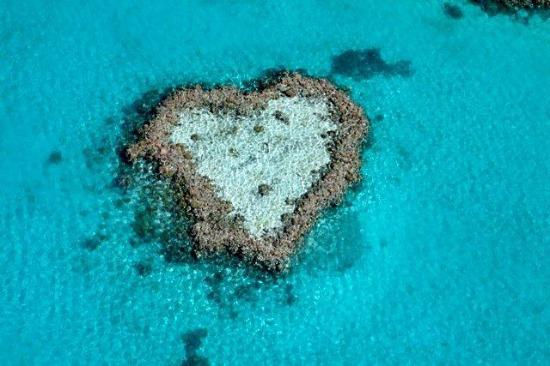
(Photo shows Heart Reef in the Whitsunday Islands)