• About
  • Best Baby Names
  • Celebrity Baby Names
  • Celebrity Baby Names – Current
  • Celebrity Baby Names – Past
  • Featured Boys Names
  • Featured Girls Names
  • Featured Unisex Names
  • Links to Name Data
  • Waltzing on the Web

Waltzing More Than Matilda

~ Names with an Australian Bias of Democratic Temper

Waltzing More Than Matilda

Tag Archives: unisex names

Waltzing with … Skyler

29 Sunday Jan 2012

Posted by A.O. in Waltzing with ...

≈ 5 Comments

Tags

American names, celebrity baby names, Dutch names, famous namesakes, fictional namesakes, name combinations, name history, name meaning, name popularity, name trends, nicknames, sibsets, surname names, UK name popularity, unisex names, US name popularity, US name trends

4c86fe452cad39ae2f1075e407eda5e1

This post was first published on January 29 2012, and heavily revised on February 10 2016.

Tomorrow school goes back in three different states and territories (Queensland has already been back a week), which means that the summer holidays are drawing to a close. I chose this name as suitable for the start of term, thanks to its educational meaning.

Name Information
Skyler is a variant of Schuyler; a Dutch surname of German origin meaning “scholar”, said SKIE-luh. This name was brought to what is now the United States by Dutch colonists, who settled in the east during the 17th century.

The Schuylers were a prominent New York family. Pieter Schuyler was the first mayor of Albany in New York, and a commander of the British forces at the Battle of La Prairie, near Montreal. His descendants were numerous and distinguished, including his grand-nephew Philip Schuyler, who was a general in the American Revolution and Senator for the state of New York. It is said that the first use of the names Schuyler and Skyler was in honour of this family.

Schuyler has only appeared on the US Top 1000 a smattering of times. It shows up first at the beginning of the twentieth century, and then again between the mid 1980s and mid 1990s, only charting as a male name, and never getting higher than the bottom of the Top 1000. Currently Schuyler is almost equally given to both sexes in the US – 17 girls and 15 boys last year.

Famous people with the name include Schuyler Colefax, the 17th US Vice-President, who was a distant cousin of Philip Schuyler, and Schuyler Wheeler, inventor of the electric fan. Schuyler has been chosen as a baby name by actors Michael J. Fox and Sissy Spacek – both times for daughters. The name is barely used outside the United States, and pronunciation would be a puzzle to most.

During the 1940s and 1950s there was a popular American radio and television series called Sky King, about an Arizona rancher and pilot called Schuyler “Sky” King. During the 1950s, the spelling variant Skyler begins showing up in the data. It’s tempting to imagine that people tuned into the show, and began spelling the name as it sounded, or in such a way as to make the nickname Sky more obvious.

Skyler joined the US Top 1000 in 1981 for boys, and for girls in 1990 – it began showing up in data as a girls name in the late 1970s, so it had a brisk rise as a girls name. Skyler peaked for boys in 1996 at #217, and is currently #351. For girls, it peaked in 2000 at #250, and is currently #302.

Famous Skylers include Skyler Green, a footballer who played for the Dallas Cowboys in the NFL, and actress Skyler Samuels, who played Gigi on Wizards of Waverley Place. A fictional Skyler is Skyler White from the TV series Breaking Bad, played by Anna Gunn. Fashion stylist Rachel Zoe has a son named Skyler.

In the UK, Skyler has charted for boys and girls since the late 1990s. Currently it is #406 for girls, while in 2014, there were 13 boys named Skyler. It is rising rapidly for both sexes.

Rising alongside Skyler is the variant Skylar. While it has never been higher for boys in the US than the 300s, and is currently #635, it is Top 100 for girls, being #48 and rising. A famous namesake is American singer and songwriter Skylar Grey, born Holly Hafermann – her stage name a reference to mysterious “grey skies”.

In the UK, Skylar is #212 for girls and rising steeply. It is occasionally used for boys, and in 2014 there were 5 baby boys named Skylar.

There are also spelling variants of Skyler/Skylar which are specifically feminine. Skyla is #531 in the US, #156 and rising in the UK, and in 2012 made the Top 100 in New Zealand. It is much more popular than Skylah, but that is rising rapidly as well.

Skyla and Skylah are much more common in Australia than any other spellings of Skyler, and the numbers in the UK and New Zealand suggest that this spelling makes the most sense for someone with a British/Commonwealth accent. I estimate that if Skyla and Skylah were added together, the name would be in the Australian Top 100 by now, or very close to it, while other spelling variants are extremely rare for either sex.

You can see that if all the different spellings of Skyler were added up, it would be an extremely common name in the English speaking world. So Skyla or Skylah may not be an original choice for girl, but a boy named Skyler would stand out in Australia. Some of the other spelling variants would be worth considering, although I think Schuyler will cause more problems than it is worth.

By now this name has become almost completely divorced from its true meaning, and we now connect it with such things as clear or cloudy skies, free-wheeling flight, and the wild blue yonder. The obvious nicknames are Sky and Skye, and it fits in with names like Shyla, Myla, Kayla, Kai, and Tyler. Its sound is at least part of the reason for its success.

POLL RESULTS
As a girl’s name Skyler received an approval rating of 52%. 38% of people thought it seemed okay, although only 5% of people actually loved it.

Skyler had a lower approval rating as a boy’s name, at 46%. 28% disliked Skyler on a boy, and only 4% loved it.

The favoured spelling of the name was Skyler, with 37% of the vote, although Schuyler was not far behind on 33%. The least popular was Skyla, which only one person voted for.

(Photo is of the NSW Schoolhouse Museum of Education in Sydney)

Famous Name: Australia

26 Thursday Jan 2012

Posted by A.O. in Famous Names

≈ 17 Comments

Tags

english names, holiday names, Latin names, locational names, name history, name meaning, rare names, unisex names

FAMOUS PLACE
Today is Australia Day, which commemorates the landing of the First Fleet in Sydney Cove on January 26 1788. The date was first celebrated by emancipated convicts and their families, who had grown to love their new land, and identified themselves as Australian rather than British. It was the popular Governor Lachlan Macquarie who first declared it an official holiday in New South Wales.

When you think about it, it’s a funny date to choose for our national public holiday, because the landing of the First Fleet wasn’t the foundation of Australia, or even the foundation of Sydney or New South Wales (which took place on February 7 1788). It would be more logical to celebrate Federation Day, the day in 1901 when all the colonies were united, and we were given the right to self-govern – our Independence Day, in fact.

Unfortunately, the worthy bureaucrats who helped forge us into one nation chose the most bureaucratically sensible day to begin our independence – January 1. Apparently they never thought we might have something else to celebrate on that date: a little thing called New Year’s Day.

Despite other days being suggested, in the end we stuck with January 26, and by 1935, it had been called Australia Day. It wasn’t until 1994 that it was accepted by all state and been made a national public holiday.

It’s the biggest celebration in Australia, but is also a controversial one, as it is a celebration of European arrival in Australia – a narrative which ignores our Indigenous history and culture. Let’s hope we can find a way to make Australia Day a holiday to bring us all together and include all Australians.

NAME INFORMATION
Even before anyone knew Australia existed, there was Terra Australis Incognita (Latin for “unknown southern land”). The ancients hypothesised that there must be a land mass in the south to balance all the land in the north.

This idea persisted into the Renaissance, and it began showing up on maps as Terra Australis or Australia, even though it was fictitious. Travellers’ tales of actually reaching this land, or at least seeing it in the distance or hearing about it down the pub, resulted in the British government ordering Captain James Cook to investigate.

It was discovered that this mammoth land-mass, envisaged as stretching from South America and including Antarctica, just didn’t exist. There were lots of small countries and islands, and there was Australia, which is biggish, but by no means a great super-continent covering most of the southern hemisphere. Being the biggest thing they managed to find, it was decided the place we live now must be Terra Australis, or at least be given the name of that legendary land.

It was explorer Matthew Flinders who pushed for the name Australia as early as 1804, and in his charts, notes that the sound of Australia “is more agreeable to the ear”. The term gradually caught on, and once again the enlightened Lachlan Macquarie stepped in, and recommended that the name be formally adopted, which the British Admiralty agreed to in 1824. (You can see why the name Lachlan has prospered).

Australia has been occasionally used as a personal name since the 19th century, and has been nearly always given to girls – as a middle name it is more gender-flexible. It is very rarely given to babies today, even in the middle.

In Australia the name would have been bestowed for patriotic reasons, while in other nations it is not possible to be certain that the name had anything to do with the country at all. In Latin America, for example, the name could have been given simply from the Spanish or Portuguese for “southern”, while in the US it could have at least sometimes been from the Latin for “south”.

Australia is probably the most patriotic name you could choose, and it certainly makes a statement. It’s a part of history – not just our history, but world history and ancient history. It was chosen by Lachlan Macquarie and judged aurally pleasing by Matthew Flinders. It has classical etymology, and it’s a name for a nation that rose out of legend.

Famous Name: Elvis

14 Saturday Jan 2012

Posted by A.O. in Famous Names

≈ 12 Comments

Tags

famous namesakes, honouring, Irish names, Latin names, mythological names, name history, name meaning, saints names, surname names, UK name popularity, unisex names, US name popularity

This article was first published on January 14 2012, and substantially revised and re-posted on September 14 2016.

Famous Festival
On January 11, the 20th annual Elvis Festival kicked off in the country town of Parkes, west of Sydney – an annual celebration of Elvis Presley’s life and music. For five days in the second week of January, the population of Parkes is swelled by Elvis impersonators, women with big hair, and people wearing blue suede shoes. There are parades, contests, dancing, singing, hip swivelling, and a mass renewal of wedding vows performed by a celebrant in an Elvis costume.

The festival began in 1992, when a small group of local Elvis fans decided to hold a festival on the day of the star’s birthday, January 8.  The next year the festival attracted 200 people from around the country; by 2005 they came in their thousands, by 2007 it had been extended to five days, and now there are more than a hundred events, and the town’s population of 10 000 more than doubles during the Elvis Festival.

The townspeople were originally lukewarm on the Elvis Festival idea. Parkes is the proud owner of an observatory, which has at times assisted NASA on space missions (as fictionalised in the movie The Dish), and had always seen itself as devoted to science and research. An Elvis Festival seemed a bit frivolous.

However by now Parkes has fully embraced the festival, and the whole town gets into the fun by dressing up and decorating the buildings. It’s one of the mayor’s roles to dress as an Elvis impersonator and meet the train from Sydney, where all the similarly-attired fans have travelled together.

People flock here from all over the globe to come to the self-proclaimed Elvis Capital of the World. It injects millions into the economy of the town, and in 2007 they set a record for the most number of Elvis impersonators in one place.

In 2017 the Festival will celebrate its 25th birthday and the theme will be Viva Las Vegas.

Name Information
Elvis Presley was one of those performers lucky enough to have been given such a distinctive name that he had no need to choose a stage name. He was named for his father Vernon, whose middle name was Elvis.

Elvis is an Anglicisation of the Irish name Ailbhe, said like Alva: the meaning is not known for sure, but may derive from the Gaelic albho, meaning “white” – it is also Anglicised as Albus, the Latin for “white”. The name Ailbhe could be given to either sex, and in Irish legend there is a female warrior and follower of Finn McCool named Ailbhe.

A male example of the name is Saint Ailbhe, nearly always known as Saint Elvis. He was a 6th century bishop venerated as one of the four great patron saints of Ireland. Saint Ailbe’s legend is quite fairy-tale – cast out by his royal father (like Oedipus), he was raised by a she-wolf (like Romulus and Remus), and at the end of his life voyaged by ship to the Otherworld (like King Arthur going to Avalon). There is a Welsh village named St Elvis in the saint’s honour, as he is said to have baptised Saint David, the patron of Wales, in this area.

The English surname Elvis does not seem to be derived from the Irish name, and is probably a variant of the surname Elwes, which comes from the female name Heloise or Eloise.

Elvis has been used as a name since perhaps the 18th century, and in Ireland seems to have been used as a female name, although it wasn’t common (today Ailbhe is a popular name for girls in Ireland). However in England the name was mostly masculine, suggesting that there the surname was the primary influence.

The name Elvis went on to become most commonly used in the United States, and was usually a boy’s name. Despite the feminine origin of the surname, it probably sounded like male names such as Alvis and Alvin, giving it a masculine feel.

In Australian records Elvis was nearly always given to girls in the late 19th and early 20th centuries which makes sense considering our strong Irish heritage. It also fit in with turn-of-the-century name trends for girls, such as Alva and Elva. Once Elvis Presley became famous in the 1950s, the name virtually disappeared from records as a girl’s name.

In the US, the name Elvis has charted on and off in the Top 1000 for boys since the late 19th century, becoming more established there around 1910. Before Elvis Presley became famous, its highest peak was #584 in 1919, and it was #900 in 1935, the year Elvis Presley was born.

The name Elvis went off the charts around the time Elvis Presley began his career in 1954, but returned in 1955, so the star did affect the name’s popularity. Elvis peaked in 1957 at #312, the year after Presley released number one hits such as Heartbreak Hotel and made his film debut in Love Me Tender – female fans screamed with excitement non-stop during the movie, even though it had quite a serious plot and a sad ending.

The name Elvis last charted in the US Top 1000 in 2011. Last year in the US there were 180 baby boys given the name Elvis, and numbers are fairly stable.

In the UK, the name Elvis has charted since the 1990s, and the name made the Top 1000 in the early 2000s, peaking at #761 in 2003, and again in 2008 when it made #943. It rose steeply last year, and was back on the Top 1000 at #873.

In Australia, Elvis is not a common name, but I generally see two or three examples of it as a baby name per year – enough to convince me it isn’t a rare name either, and probably has a similar popularity to the UK. A famous Australian with the name is former mixed martial artist Elvis Sinosic.

Elvis has two other musical namesakes. One is British star Elvis Costello, who was born Declan MacManus, and the other is American folk singer Elvis Perkins, the son of actor Anthony Perkins (Elvis Perkins was born the year before Elvis Presley died). Costello’s manager chose the stage name Elvis in reference to Presley, while Anthony Perkins was an Elvis fan.

Elvis, if you forget about its most famous namesake for a moment, sounds like a vintage name ready for revival, complete with fashionable V. And yet it never can be separated from Mr Elvis Aaron Presley. The name will always conjure images of white satin bodysuits covered in rhinestones, brilliantined dark hair, and a heart-stopping smile.

Even though Elvis is not a rare or unusual name, it’s still something of a bold choice as it’s likely to elicit some strong opinions. But you’ll have to tell the naysayers you’d like a little less conversation about it, because you can’t help falling in love with the name Elvis. It’s a truly royal name because it belongs to the one and only king, baby!

POLL RESULTS
Elvis received an approval rating of 42%. 35% of people thought the name was too closely associated with Elvis Presley, although 9% thought it was either handsome or cute. Only one person thought the name Elvis sounded redneck.

(Picture shows Elvis impersonators at the Parkes Elvis Festival, with the Observatory in the background)

Famous Names: Tully and Yasi

07 Saturday Jan 2012

Posted by A.O. in Famous Names

≈ 8 Comments

Tags

Australian name trends, created names, cyclone names, famous namesakes, Fijian names, Game of Thrones names, Irish names, locational names, name history, name meaning, names of rivers, nature names, pen names, rare names, Roman names, surname names, tree names, UK name popularity, unisex names, US name popularity

This blog entry was first posted on January 7 2012, and revised and republished on August 31 2016.

TULLY
On January 3, the town of Tully in Queensland celebrated the upgrade of its famous Golden Gumboot, which was damaged by Cyclone Yasi nearly a year ago. The tourist attraction is a 7.9 metre (26 feet) high gumboot, painted gold, built to commemorate the town’s 1950 highest recorded annual rainfall level of 7.9 metres (310 inches), earning Tully the distinction of being Australia’s wettest town.

When the Golden Gumboot was re-opened, it had received a fresh coat of paint and a new viewing platform. Fittingly, it rained heavily throughout the ceremony.

The town of Tully is named after the nearby Tully River, which received its name from Surveyor-General William Alcock Tully. William Tully was originally from Dublin, and arrived in Hobart as religious instructor on a convict ship in 1850 before embarking on a career of conscientious public service.

Tully is an Anglicised form of an Irish surname, originally MacTully, and having a host of variants, which is often derived from tuile, the Gaelic word for “flood”. Another theory is that it has been mistranslated from toile, meaning “will” (as in the will to keep going). However, some Tullys are so convinced of the first interpretation that they have hyper-Anglicised their surname to Flood.

The meaning of “flood” is very appropriate for the name of a river, and a town famous for its sogginess. In Game of Thrones, the Tully family is one of the Great Houses and as it is the principal house in the Riverlands and their ancestral home is Riverrun, perhaps George R.R. Martin also had the Irish surname and meaning in mind.

Tully has been used as a personal name since the late 18th century. Although the name can be found in early records from Ireland, it seems to have been more frequently used in the United States.

One inspiration for it may have been the Founding Father Alexander Hamilton, who wrote patriotic pamphlets under the pen name Tully – in his case, a reference to the Roman philosopher Marcus Tullius Cicero, whose name was occasionally Anglicised to Tully. The Tullia took their surname from the legendary Roman king Servius Tullius; the name is so ancient we do not know its meaning.

Tully has never been a common name. Last year in the US there were 8 boys named Tully with no girls listed with the name since 2013. In the UK the name has been in sporadic use, and in 2014 there were 4 baby boys named Tully. No girls are listed as having been given the name since 2009.

In Australia I have seen a roughly equal number of boys and girls with this name, and the name may be more evenly unisex here than elsewhere. One boost to the name for girls is women’s basketball champion Tully Bevilaqua, and after the attractive but controversial Tully Smyth competed on Big Brother in 2013, I heard many Australian parents refer to Tully as a “girl’s name”. Perhaps more importantly, it fits with the Australian trend for female names with a T-L pattern, such as Talia, Tilly, and Tallina.

YASI
The town of Tully was one of the worst affected by Cyclone Yasi, which hit the coast of northern Queensland early in the morning on February 3 2011. The town suffered extensive damage to its main street, and the area’s banana crops were completely flattened. Because Cyclone Yasi originated in Fiji, it was a Fijian cyclone forecaster called Misaeli Funaki who chose its name.

If you think naming a baby is difficult, spare a thought for the meteorologists who name cyclones. The cyclone had to start with Y, and nobody could think of an appropriate name for either gender.

So Mr Funaki suggested Yasi, which is the Fijian word for “sandalwood”. It didn’t have a history as a personal name in Fiji, but with no other candidates, his nomination was accepted by the ruling UN body. And so a new name was created.

Sandalwood is a tree with fragrant wood native to Asia and the Pacific. Australia has a sandalwood industry; the tree’s oil is used to make incense, soaps and cosmetics. Its antibacterial properties make it excellent as a skin cleanser, and Australian Aborigines eat its fruit as a bush food. Sandalwood is also used in the rituals of several eastern religions.

Yasi is neither used for boys or girls in Fiji. The cyclone forecasters were looking for a male name when they chose it, but they often resort to unisex names, and probably meant Yasi to be one. It’s commonly said to rhyme with Darcy, but seems to be more correctly pronounced YAH-zee.

During Cyclone Yasi, one doctor was apparently very keen for all babies born during the cyclone to be named Yasi, but there is no record of anyone following his advice. However you can find people around the world with the name Yasi, mostly female – perhaps a short form of names such Yasmin.

These are two short unisex names important to Australia’s history, especially connected with Queensland, rain, and storms. Tully is uncommon, but not unheard of, while Yasi is a true rarity, but not unusable.

POLL RESULTS
Tully received a very good approval rating of 70%. 46% of people thought it was a good name, while not one person hated it. Yasi was far less popular, with an approval rating of 22%. 53% of people weren’t keen on the name, and only one person loved it.

(Photo shows the Golden Gumboot in Tully, Queensland)


Boys Names from Stars and Constellations

18 Sunday Dec 2011

Posted by A.O. in Name Themes and Lists

≈ 21 Comments

Tags

Akkadian names, Arabic names, astronomical names, Chinese names, colour names, english names, fictional namesakes, gemstone names, Greek names, Latin names, locational names, mythological names, name history, name meaning, popular culture, popular names, surname names, unisex names, vocabulary names

It is only a few days until the Christmas holidays, or the holidays have already begun. Although the stars seem more crisp and vivid in winter, and some constellations of spring and autumn are spectacular, it is summer I connect with star-gazing. The warm nights and long lazy Christmas holidays seem to go with lying in your backyard looking upwards, or watching the night sky glittering above you on camping trips. Little wonder that the stars of summer are often the first we learn to identify, and the first we yearn towards as we gaze into infinitude.

This is the companion list to Girls Names from Stars and Constellations, and should be read in conjunction with it. Need a super quick guide to the southern skies? Go here! The picture used is a Christmas card created by Thomas Le, a refugee from Vietnam. He donated this artwork to help other migrants, and it is on show at the Museum of Victoria.

Altair

Altair is the common name for Alpha Aquila, the brightest star in the constellation Aquila (“The Eagle”), and one of the brightest overall. Altair is a translation of the Arabic for “the flying eagle”, and the identification of the star with an eagle goes back to the Babylonians and Sumerians, who called Altair “The Eagle Star”. The Kulin people of central Victoria also saw the star as an eagle; it is Bunjil, their creator, who was blown into the sky by a great wind and became a star. Other peoples of southern Australia saw Altair as a hunter; it is his Boomerang thrown across the sky which became the constellation in which Gemma can be found. This cool star name can either be said al-TAH-yir, or al-TARE, and is also on the list Boys Names from Video Games. You can see Altair from Australia in winter and spring, and it’s in the north of the Milky Way.

Asterion

Asterion is the common name for Beta Canes Venatici, the second-brightest star in the constellation Canes Ventatici. This constellation began as the club of the constellation Boötes (“The Herdsman, The Ploughman”). However, due to a number of errors in translation from Greek to Arabic to Latin, “club” became “dogs”. Having invented these dogs, astronomers had a good squint and decided that the constellation looked like two greyhounds. It’s never explained why a herdsman would have hunting dogs rather than herding dogs. Astronomers named one star Chara (“dear”) and the other Asterion (“starry”) – then they swapped the names around to create further confusion. In Greek mythology, Asterion was the personal name of the Minotaur, a bull-headed monster who was the product of an unnatural coupling between a queen of Crete and a bull. It’s a flamboyant name, but it is actually a star name with a starry meaning; it’s said as-TEH-ri-on. Canes Ventatici is visible in the autumn from Australia, but its stars are not bright or easy to see.

Atlas

Atlas is the common name for 27 Tauri, a triple-star system in the constellation Taurus and part of the Pleiades cluster. As well as the Seven Sisters, which include Maia, the Pleiades cluster contains their parents, Atlas and Pleione. Atlas was one of the Titans, and after warring against the Olympians, he was sentenced to hold up the heavens on his shoulders (before this, the Sky and the Earth, parents of the Titans, were free to lie together in a lingering embrace, so Atlas is basically being used as a birth control device for deities). He has come to be a symbol of superhuman strength and stoic endurance. The name is so ancient that its meaning is very uncertain, but it may mean “endure”, “support”, or “sea”. Atlas has given his name to the Atlas Mountains in North Africa, and the Atlantic Ocean, as well as the word for a book filled with maps. The name is starting to have a mild vogue here. You will be able to see Atlas in the Pleiades during summer in Australia.

Garnet

The star Mu Cephei is commonly known as Herschel’s Garnet Star, because when astronomer William Herschel described it, he wrote that it was “a very fine deep garnet colour”. Indeed it is, being a red supergiant that is one of the largest in the Milky Way. It’s in the constellation Cepheus, which represents Andromeda’s father. Without doubt he is the dullest creature in the whole Andromeda drama, but I guess since they put the sea monster in the sky, it would have seemed rude to leave him out. You may recall that the aliens in TV comedy 3rd Rock From The Sun came from a planet in a galaxy on the Cepheus border. Unfortunately, Cepheus is only visible in the northern hemisphere, so we cannot see the Garnet Star from here. The colour garnet is named for the red gemstone; its name is said to be derived from the (also red) pomegranate fruit which means “seeded apple”. It’s a unisex name, but historically better known as masculine in Australia.

Keid

Keid is a common name for Omicron2 Eridani, or 40 Eridani, a triple star system in the constellation Eridanus consisting of two red dwarfs and a white dwarf. Eridanus represents a great river, and is meant to be the water pouring from the jar of the Water Bearer, the constellation Aquarius. In ancient times, it was said to be the path of souls. Eridanus can be easily seen from Australia; it is virtually overhead during the summer months. You can see one of the red dwarf stars in Keid with the naked eye; however the other two stars can only be viewed through a telescope. In the TV series Star Trek, 40 Eridani is the location of the planet Vulcan, home of Mr Spock. Eridanus is also a system of planets in the video game Halo, so it’s got sci-fi credentials galore. Keid is from the Arabic word for “eggshells”, and can be pronounced KYED or KEED. I prefer KEED, but KYED sounds like popular Kai (maybe too much, as people will no doubt confuse the two names).

Kio

Kio (KEE-oh) is the ancient Chinese name for Spica, the common name for Alpha Virginis, a blue giant binary star and the brightest in the constellation Virgo. While Spica means “ear of wheat” in Latin, Kio comes from the Chinese for “horn, spike”, as it was seen as “the horn of Jupiter”. Spica was the star used to discover the precession of the equinoxes, and the constellation Virgo contains the spring equinox point (autumn equinox in the northern hemisphere). The constellation has represented a goddess holding sheaves of grain from the earliest beginnings of astronomy in Babylonia. Not only is Kio one of those perky three-letter names that appeal to many people, but the Chinese saw Spica as a “lucky star” – what could be more positive than being named after a lucky star? The constellation Virgo can be seen throughout autumn and winter in Australia, and the very brightness of Spica makes it easy to find.

Leo

Leo is a familiar constellation, because it is one of those in the zodiac. It’s already in the list Boys Names From the Top 100 of the 1930s, however I think it is worth revisiting from an astronomical viewpoint. The constellation’s name means “lion”, and seems to have been pictured as a lion by many ancient civilisations. I’m not sure if there was a single original Lion in mythology, but the Babylonians had many leonine protective gods, and a winged lion was the symbol for the city of Babylon. The Ancient Greeks identified it with the Nemean lion, a monstrous beast, both fierce and cunning, which was killed by Heracles as the first of his twelve labours. Its hide was impervious to attack, so Heracles wore it as his armour. The constellation Leo is truly majestic, and contains many bright stars. The chief of these is Regulus, also called The King Star, and The Heart of the Lion. Leo can be seen for most of the year, but is easiest to view in late summer to early autumn from Australia.

Nash

Nash is a common name for Gamma Sagitarrii, an orange giant binary star in the constellation Sagittarius. Sagittarius depicts a centaur, said to represent the wise teacher and healer Chiron. The Milky Way is at its densest in Sagittarius, as this is where the centre of the galaxy lies, so it contains many star clusters and nebulae. In Australia this impressive constellation is easy to find, and we also get the best view of it, being able to see the Milky Way so much more clearly. Look in the west part of the sky in the early evening, halfway between the horizon and the point directly overhead. Its brightest stars form a recognisable shape which is called The Teapot; Nash is the spout of this teapot. Sagittarius is most visible in the middle of winter, and bright enough that you can see it even if there is a moon. The name Nash is from the Arabic for “arrowhead”, for this star is the tip of the archer’s arrow, which points toward the star Antares, in Scorpius. It’s also a surname derived from the word for “ash tree”.

Orion

Orion is a constellation representing a character from Greek mythology. This gigantic hunter seems to be a bawdy folk hero – larger than life and twice as natural. It is lusty Orion who pursued the Pleiades, so that Zeus had to turn them to stars for their protection. One version of his ending is that Orion boasted of being able to kill any animal on Earth, and so the Earth goddess, in her displeasure, created the Scorpion to sting him to death. Both Orion and the Scorpion were placed in the sky as constellations. Orion contains many brilliant stars, such as Betelgeuse, Rigel and Bellatrix, and even the astronomical novice can locate the three stars forming Orion’s Belt; I was taught these were The Three Sisters (a South African name). Orion is clearly visible in the summer from Australia, and because it is positioned differently in the southern hemisphere, we sometimes call this constellation The Saucepan. The name Orion is from the Akkadian for “heaven’s light”.

Perseus

Perseus is a constellation representing a character from Greek mythology; he was a hero, the son of Zeus and a mortal princess. Perseus led an extremely exciting life, part fairytale, part soap opera, but he is probably best known for killing the Gorgon Medusa, a woman who had snakes on her head, and thus had a permanent bad hair day of epic proportions. Perseus had nifty flying sandals to zip around on, although much later people liked to imagine him riding the flying horse Pegasus (this never actually happened in the legends). Perseus rescued and married Princess Andromeda, and the constellation has his hand reaching up to Andromeda’s foot, to show the moment of deliverance. The star Algol in Perseus is called The Demon Star, and represents the head of Medusa. We can see the constellation in late spring and summer from Australia, and the meaning of Perseus is not certain; it may mean “to destroy”. Percy is the obvious nickname, and the one used in the novel series Percy Jackson and the Olympians by Rick Riordan.

Phoenix

Phoenix is a minor constellation in the southern sky named after the mythical bird. The Phoenix can be found in the mythologies of many lands, from Egypt to China to Russia, and is famous for being able to renew itself in fire, which made it a popular symbol of resurrection in Christianity. Its name is from the Greek for “crimson”. Phoenix has become a popular name lately; it’s unisex, but used more for boys. It’s hard not to connect it to The Order of the Phoenix in the Harry Potter books; Fawkes the phoenix is the loyal pet of Albus Dumbledore. A phoenix is also a major character in the children’s book The Phoenix and the Carpet by Edith Nesbit. The constellation Phoenix can be seen from Australia during the summer, however it is faint and only possesses two stars bright enough to be seen with the naked eye.

Sirius

Sirius is the common name for Alpha Canis Majoris, a binary star which is the brightest in the constellation Canis Major (“Great Dog”), and the brightest in the sky, being almost twice as bright as Canopus, the second-brightest. Canis Major is seen as one of the dogs following the hunter Orion, with Sirius representing its doggy nose. However, Sirius was considered to be a dog in his own right, and is called The Dog Star. In the northern hemisphere, Sirius rises in summer, and so the very hottest time of year is called “the dog days”. Although Sirius rises in the winter here, we don’t call the coldest time of year the dog days, although strictly speaking, we should! In July, you can see Sirius both evening and morning. Almost every culture in the world has connected Sirius with dogs or wolves, but the Boorong people of Victoria saw it as part of a constellation representing the Wedge-Tailed Eagle – one of the most important of the spirit elders. The Sirius was also the flagship for the First Fleet to Australia, giving it another Australian connection. Its name comes from the Greek for “burning, scorching”.
Baby Center Australia Releases Its Name List for 2011

10 Saturday Dec 2011

Posted by A.O. in Name Data

≈ 6 Comments

Tags

Baby Center Australia, Biblical names, famous namesakes, fictional namesakes, name data, name popularity, name trends, nature names, nicknames, popular culture, popular names, royal names, unique names, unisex names

There have been several stories in the press about how babycenter.au has revealed the top names of 2011. What they don’t say is that this isn’t based on birth data from registries, but just on names chosen and made public by the members of the website.

Baby Center also combines spelling of names, which in some ways gives a more accurate impression of the most popular names; on the other hand, it won’t necessarily gel with what the official data says. So yes, take notice of these trends (especially as they are the closest thing we have to a national survey) but they are not the final word on the subject by any means.

Most Popular Girls’ Names

  1. Chloe
  2. Sophie
  3. Ruby
  4. Charlotte
  5. Olivia
  6. Lily
  7. Ava
  8. Ella
  9. Emily
  10. Mia
  11. Sienna
  12. Amelia
  13. Isabella
  14. Lucy
  15. Zoe
  16. Grace
  17. Isabelle
  18. Maddison
  19. Emma
  20. Charlie (tied with Hannah)

Most Popular Boys’ Names

  1. Oliver
  2. Noah
  3. William
  4. Lachlan
  5. Ethan
  6. Jack
  7. Lucas
  8. Charlie
  9. Joshua
  10. Thomas
  11. Max
  12. Riley
  13. Jacob
  14. Aiden
  15. Liam
  16. Jackson
  17. Cooper
  18. Alexander
  19. Xavier
  20. Benjamin

Trends in Boys Names

Jack declines in popularity, and loses his position at #1 to Oliver. Old Testament names for boys continue to increase in popularity; big risers include Jacob, Noah and Joshua. William went to #3, which they attribute to the Royal Wedding, although William has been extremely popular for many years.

Dropping from the list are James, Samuel and Ryan, to be replaced by Alexander, Xavier and Benjamin. If Ryan really does drop significantly it will be interesting, as it has remained stable for around two decades.

Trends in Girls Names

Chloe moves into the #1 spot, while Lily declines in popularity. Isabella falls further down the charts, which Baby Center assures us is due to the Twilight series coming to an end. I’m not sure how they make this tally with the fact that Isabella was popular in the 1990s, while the first Twilight novel wasn’t published until 2005. Nor does this explain the increasing popularity of Jacob, which is also a name from Twilight.

Baby Center places Charlie for girls in the Top 20, because they combine it with the spellings for Charli. Although I think Charlie will be in the Girls Top 100 for 2011, I don’t think it will be Top Twenty. Baby Center also assures us most girls named Charlotte (#4) will be called Charlie in everyday life. I’m not sure where they have gained this information from.

Matilda and Georgia have dropped off the list altogether.

Unique Names

So if these are the popular names, what about the names that were given to only one baby on the website?

Boys: Audi, Brisbane, Fonzie, Harlem, Hawk, Haze, Hendrix, Hercules, Matisse, Rocky, Rome, Spirit, Toohey, Voltaire, Westin

Girls: Breeze, Clover, Deep, Halo, Justice, Lake, Oceana, Rain, Rainbow, Sailor, Serenity, Spring, Star, Storm, Vanilla, Zen

I somehow think that more than one baby received at least some of these names this year, although I expect all of them will be rare.

Famous Name: Douglas

03 Saturday Dec 2011

Posted by A.O. in Famous Names

≈ 22 Comments

Tags

aristocratic surnames, famous namesakes, locational names, name history, name meaning, name popularity, name trends, names of rivers, nicknames, Scottish names, surname names, UK name popularity, unisex names, US name popularity

doulass

This blog post was first published on December 3 2011, and substantially revised and reposted on December 10 2015.

Famous Namesake
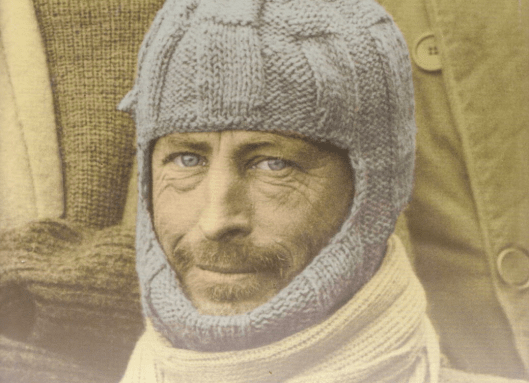
Yesterday marked one hundred years since the Australasian Antarctic Expedition set sail from Hobart in the SY Aurora on December 2, 1911. It arrived at an unexplored region of Antarctica on January 8, 1912, and set up base camp. The site proved to be unrelentingly windy, with constant blizzards that made things hellish for the intrepid explorers.

Douglas Mawson was one of the leaders on the expedition. A geologist and lecturer from the University of Adelaide, he had been asked to join Robert Scott’s British expedition to find the South Pole (Scott was famously beaten to the punch by Norwegian Roald Amundsen). Mawson turned him down, as he thought it would be better to take his own team, and lead an expedition to the unexplored bits of Antarctica, which was most of it.

Douglas was part of a three-man sledging team called the Far-Eastern Party, which included Belgrave Ninnis, the son of a British arctic explorer, and Swiss mountaineer Xavier Mertz.

The group was making excellent progress when Ninnis fell into a snow-covered crevasse that the other two men crossed without incident; he took with him six huskies, a tent, most of the food and other essential supplies, and was never seen again. The glacier they were traversing is now called Ninnis Glacier in his honour.

Mawson and Mertz continued their frozen nightmare, forced to eat their huskies to supplement their scant rations. Although both men were unwell, Mertz became seriously ill and died in less than a week. It is thought that he may have died of an overdose of Vitamin A from eating husky liver, which Mawson solicitously fed him, in the fond belief that he was giving Mertz the best of the provisions.

Other theories are that Mertz died from hypothermia, from the shock of eating meat after being a vegetarian, or from the psychological stresses of the journey – especially the death of Ninnis, as the two men had been exceptionally good friends.

In the days before he died, Mertz became weak, exhausted, dizzy and delirious, even biting off the tip of one of his own fingers. He had dysentery, nausea, and stomach pain; his skin peeled away and his hair fell out – not surprisingly, another of his symptoms was depression. Whatever he died from, his demise caused him terrible suffering.

Douglas Mawson sledged the last 100 miles alone, falling into a crevasse on the way and having to climb out using the harness, only to see the boat he was to have returned on disappearing over the horizon. He had to spend another year in Antarctica.

Douglas was knighted in 1914 and The American Geographical Society awarded him a medal in 1916. The work he did was ground-breaking, and led to Australia getting its own portion of Antarctica, from where we still do important research.

For decades Sir Douglas Mawson was regarded unquestioningly as a hero, and his image is on the snow-white Australian $100 note. More recently his part in the expedition has been scrutinised, and attracted criticism. However there is no doubting his strength, courage, and determination to survive against all odds. He is remembered as an enthusiastic and kind man who never boasted of his remarkable exploits.

Name Information
Douglas is an Anglicisation of Scottish surname Dubhghlas meaning “dark river”. It originally belonged to the Douglas Water, which is a river in South Lanarkshire in southern Scotland. On its shores is a village named Douglas after the river, and the Douglas family took the village’s name as their surname when they moved here in the 12th century.

The Clan Douglas was one of the most powerful families of Scotland in the Middle Ages, often holding the real power behind the throne. The heads of the House of Douglas held the titles of the Earl of Douglas and the Earl of Angus, sometimes known as the Black Douglas and the Red Douglas. Their family estate was Castle Douglas, which Sir Walter Scott fictionalised as Castle Dangerous in his novel of the same name.

The Douglases are said to be descended from a Flemish knight, and fought with William Wallace and Rober the Bruce in the Wars of Independence. Sir James Douglas was the first to be labelled the Black Douglas by the English for what they considered his dark deeds: it was a title taken up with pride. The Douglases intermarried with the House of Stuart, gaining a royal connection.

The Douglases became so powerful they were seen as a threat. In 1440 the teenaged William Douglas, the 16th Earl of Douglas, and his younger brother were invited to dine with the ten-year-old King James I of Scotland. While they ate, a black bull’s head – symbol of death – was placed before the young earl. The Douglas boys were then dragged outside, given a mock trial and beheaded, so Clan Douglas lay siege to Edinburgh Castle. Called the Black Dinner, it is the inspiration for the Red Wedding in Game of Thrones.

Douglas has been used as a personal name at least since the 16th century, and seemingly originates in England rather than Scotland. It was originally a unisex name, given equally to boys and girls, and by the 17th century was primarily a female name. A famous example is Douglas Sheffield, Baroness Sheffield, who had an affair with Robert Dudley, the favourite of Queen Elizabeth I, and had a son by him. In the 18th century Douglas became more common for males than females, so this is an example of a name that went from the girls to the boys.

The name is a traditional one in the Hamilton family, which married into the Douglases in the 17th century; although the Hamiltons’ surname is now Hamilton-Douglas, they are actually Douglases by descent. The head of Clan Douglas today is the Duke of Hamilton, Alexander Douglas Douglas-Hamilton.

Douglas was #59 in the 1900s, and peaked in the 1920s at #28, during the career peak of actor Douglas Fairbanks, known as The King of Hollywood in that era. It remained on the Top 100 until the 1970s, and disappeared from the charts in 2010, although returning the following year. It is apparently now in rare use.

In the US Douglas has always been on the Top 1000. It was on the Top 100 from the end of the 1920s to the end of the 1980s. It peaked in 1942 at #23 – two wartime namesakes are General Douglas Macarthur, and Douglas Fairbanks son, Douglas Fairbanks Jr, who became a highly decorated naval officer. It is currently #598 and falling.

In the UK, Douglas was on the Top 100 from the 1880s to the 1970s, peaking in the 1920s. Although it got as low as 508 in 2008, it has been climbing ever since, and is now #276. A current famous namesake is the handsome British actor Douglas Booth.

Douglas is a strong and rugged sounding classic name that is no longer in fashion, but still in use. British trends suggest that it is due for a comeback, and thanks to Douglas Booth, perhaps we can once again see Douglas as a romantic, dashing name, as it was in the 1920s because of Douglas Fairbanks. The nickname Doug seems very dated, but Dougie is cute, and even Gus seems possible.

POLL RESULTS
Douglas received an approval rating of 49%. 22% of people thought it wasn’t ready for a comeback, and 15% saw it as dorky and nerdy, although 17% saw it as strong and rugged. In contrast, 10% of people thought it was ready for a comeback, and saw it as a hip choice most parents weren’t clued into yet.

Waltzing With … Taiga

20 Sunday Nov 2011

Posted by A.O. in Waltzing with ...

≈ 9 Comments

Tags

fictional namesakes, Japanese name popularity, Japanese names, nature names, Russian names, unisex names

This post was first published on November 20 2011, and heavily edited and reposted on November 25 2015.

It’s been a little more than eight months since Japan was hit by the terrible earthquake off its eastern coastline – with a magnitude of 9.0, it was the strongest earthquake to ever hit Japan, and one of the five most powerful in the world since modern record-keeping began in 1900.

The earthquake triggered a massive tsunami, with waves reaching more than 40 metres (133 feet) high; as well as bringing destruction to life and property, the tsunami caused a number of nuclear accidents, which meant that hundreds of thousands of people had to be evacuated.

This could not help but evoke a response from people all around the world. We were shocked and appalled as we saw it unfold on our TV screens, and deeply moved by the plight of the Japanese people, who reacted so calmly and bravely to their national tragedy.

We had recently suffered a summer of terrible cyclones and floods, and the disaster in Japan put our own problems in perspective; suddenly things didn’t seem quite so terrible, suddenly we realised that things could have been a lot worse for us. Australia was one of the many countries who went to Japan’s assistance during the crisis, and one of the few that Japan specifically asked for help from.

Things are still pretty bad in the coastal regions of Japan which suffered the worst during the catastrophe. There are whole towns that have been evacuated, and it may be years before it is safe for people to return. Nuclear contamination is still a major issue, and people worry about whether food is safe to eat or not. There are many farming districts in the nuclear-affected areas of Japan, and it’s been devastating for the agricultural economy there.

Taiga is a name I heard of from Japanese families who had fled the disaster zone to live in Australia, although later on I met an Australian family with a small boy named Taiga in memory of an extended visit to Japan.

Note: Since 2011, the areas of Japan worst affected by the tsunami are still struggling to rebuild, and the path to recovery looks likely to be a very long and painful one.

Name Information
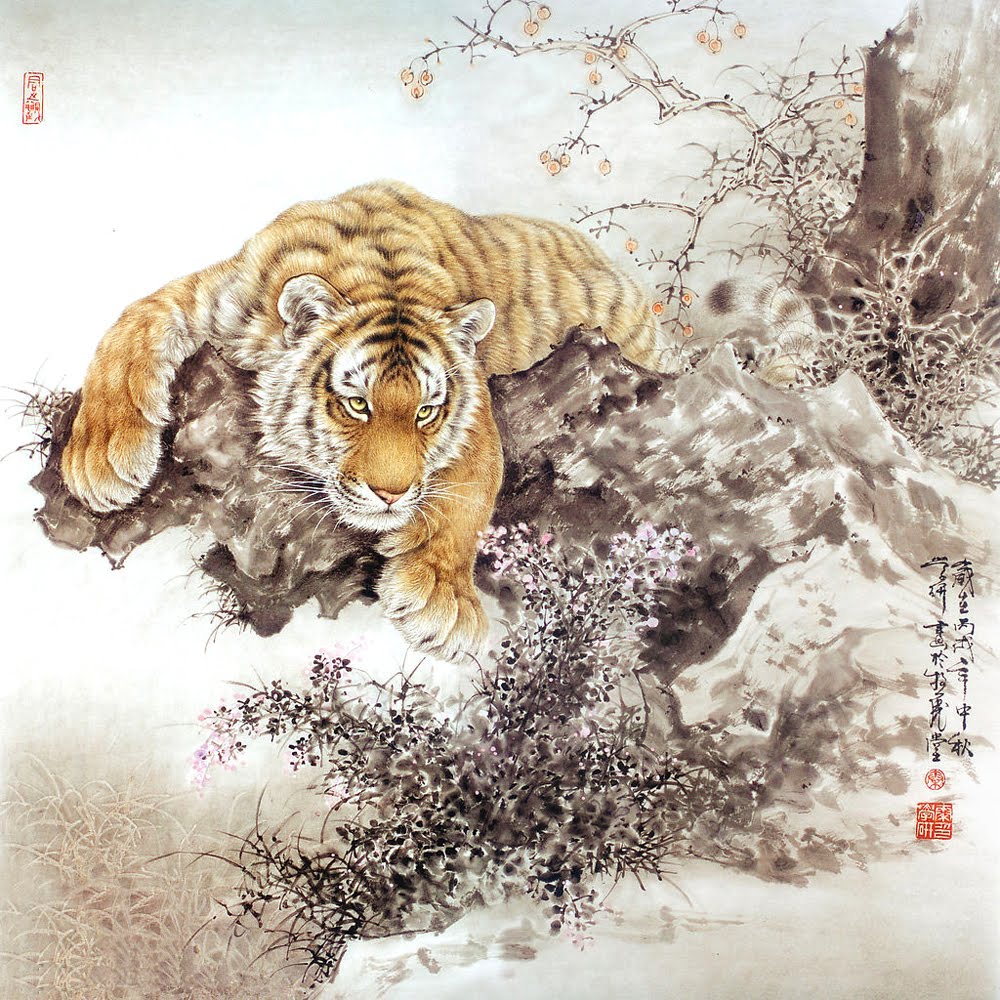
Taiga is a common name for boys in Japan. In Japanese, Taiga is pronounced TAH-ee-gah, but in English it is said TIE-gah. The Japanese are aware that it sounds similar to the English word tiger, and this may even be an attraction for some.

Depending on the kanji used, the name can be given a range of meanings, but the most commonly given is “large and graceful”, or “big and gracious”. It can also be translated as “big river”, and is the Romanised form of “tiger”. Despite these different meanings, when you put them together the overall impression is of something large and powerful, yet with all the majestic beauty and grace of a great river or a tiger.

By coincidence, taiga is also a word for the large coniferous forest areas which cover the far north of the planet, in Alaska, northern Canada, Russia, Poland, Scandinavia, northern Kazakhstan, northern Mongolia, and even the far north of Japan. The word for this is Russian, and ultimately from Turkic or Mongolian. Sometimes taiga is specifically used to designate the more barren part of the forested area. It’s pronounced TIE-guh.

I’m not sure how many Japanese girls are named Taiga, but there is a manga series for young readers called Toradora! where the lead female is a junior high school girl named Taiga. Beautiful yet very short, clumsy and socially maladept, her name is given to her in the sense of the word tiger – lovely, but very fierce!

This gives it a slight chance as a unisex name – if used as the Japanese transliteration of the word tiger, this makes it a different name than the Japanese boy’s name Taiga. And there’s no reason why a girl can’t be named after the forest area anyway, as forests are not intrinsically male or female in nature.

Taiga seems a very usable name – it sounds similar to an English word, and even references that word without actually being that word. Taiga can be a way to get the same sound and even the same meaning from a different spelling and origin.

I think Taiga is a far more interesting name than Tiger, as it has so many layers of meaning. It reminds me of the popular name Kai, which similarly has a European and a Japanese origin, although Taiga manages to bring the two cultures closer together.

Taiga gives the nickname Tai, which links it with other popular boy’s names like Tyson and Tyler; Taiga is unusual, yet a Tai in the playground will blend right in with the other boys named Ty and Tye.

POLL RESULTS
Taiga received an approval rating of 82%, making it one of the most highly-regarded names of 2011. 41% of respondents thought it was okay, and only 6% of people disliked it. The number of people who loved or hated it was exactly the same – 12%.

Names of Australian Fashion Designers

13 Sunday Nov 2011

Posted by A.O. in Name Themes and Lists

≈ 19 Comments

Tags

African names, Australian Aboriginal names, Biblical names, created names, Etruscan names, famous namesakes, French names, Gaelic names, Greek names, hebrew names, Korean names, Latin names, literary names, locational names, Maori names, mythological names, name history, name meaning, nicknames, Scottish names, surname names, unisex names, Zulu names

Last week we began our gender re-balancing with the names of some beautiful Australian models. Yet without the clever and creative designers, models would have nothing to wear. Here are ten female fashion designers whose names I found interesting in some way.

Arabella (Ramsay)

Arabella Ramsay grew up on a sheep farm in country Victoria; her family are all very creative, and she was encouraged to become a fashion designer. She did a course in textile design at RMIT, then spent a year in Paris studying fashion before opening her first store in Melbourne in 2006. This year, Arabella welcomed her first child, a daughter named Marlowe. The name Arabella originated in medieval Scotland, and it is thought that it is probably a variant of Annabel, meaning “lovable”. However, it is found in old documents in the forms Orable and Orabella, and from early on seems to have been influenced by the Latin word orabilis (also used as a name in the Middle Ages). This means “invokeable”, in the sense that a saint can be invoked by prayer. Arabella has never been a common name in Australia, despite our love of names from Scotland; I think it has seemed too old-fashioned or perhaps too upper-class. However, with -bella names all the rage, this looks like the perfect time for Arabella to shine.

Camilla (Franks)

Camilla Franks was a theatre actress who loved to design and make her own costumes, and formed her own fashion label in 2004. She is known as the “kaftan queen” because of her signature flowing lines in colourful prints, and hosts her own fashion shows in exotic locations around the world. Camilla sells internationally, and her designs are worn by celebrities such as Kate Hudson, Lily Allen, Beyonce and Oprah. In Roman mythology, Camilla was a virgin warrior queen of the Volscian tribe who was bound to be a votary of the goddess Diana since infancy. It is said that she was so fleet of foot that she could race across a field without bending a blade of grass, and could even run across water without getting her feet wet. We are told by the Romans that she was named Camilla because this is what the Etruscans called all their young priestesses (the male form is Camillus); if so, it seems to be more a title than a personal name. Queen Camilla’s mother’s name was Casmilla, and this seems significant. Once a favourite in literature, it’s best known today as the name of the Duchess of Cornwall. Milla and Millie are so popular at the moment that this may give Camilla more of a chance.

Collette (Dinnigan)

Collette Dinnigan was born in South Africa and moved to New Zealand as a child. After studying fashion design at Wellington Polytechnic, she moved to Sydney and worked for the Australian Broadcasting Corporation’s costume department. She opened her first store in 1992 and exported her fashions to New York, London and Hong Kong; she was the first Australian to launch a ready-to-wear collection in Paris. Her clothing lines sell in major department stores, and many Australian women will have at least one Collette Dinnigan piece in their wardrobes. The Australian government sent a Collette Dinnigan cardigan as their gift to French president Nicolas Sarkozy’s baby daughter, Giulia. Collette is a variant spelling of Colette, a French pet form of the name Nicole. The name Collette is well known as Australia as the stage name of lycra bike shorts-wearing pop singer Collette Roberts, who sang Ring My Bell, as well as the surname of actress Toni Collette. French names are very fashionable at the moment, but I wonder whether Collette is still sounding a bit dated. I think Nicollette might do better, maybe with Collette as the nickname.

Clea (Garrick)

Clea Garrick is originally from the Northern Territory, studied design in Brisbane, then moved to Melbourne where she set up the Limedrop label in 2005 with Nathan Price, who handles the marketing side of things. Limedrop has won a major award, sells around the world, and recently broke into the Tokyo market. Clea is a Greek name meaning “glorious”, and was the name of one of the Delphic oracles, who held the title of Pythia. These priestesses foretold the future at the town of Delphi in a temple dedicated to the god Apollo; it seems that some kind of shamanistic trance was used to foresee the future, and it has been speculated that hallucinogenic gases were involved. We are told by the ancients that these predictions tended to be ambiguously phrased, but usually gave good advice, and that the prophetic process was physically demanding on the Pythia – sometimes to the point where it killed her. We don’t know whether Clea was this priestess’ real name, or a name she adopted. I think Clea has a lot of potential – it’s underused, sounds similar to Claire and Leah, and is perhaps more feminine than its sister Cleo.

Elke (Kramer)

Elke Kramer is a Sydney-based jewellery designer known for her bold, chunky pendants and bracelets. She launched her label in 2004, and has a range of other creative pursuits, including art and illustration. Elke is the feminine form of the Hebrew name Elkanah, which is translated as “God has purchased”, and often interpreted as “belonging to God”, or “in God’s possession”. There are several men named Elkanah in the Old Testament, most notably the husband of Hannah, the father of the prophet Samuel. (Elkanah had another wife called Penninah, meaning “pearl”, but she was mean and jealous, so he didn’t like her as much as Hannah, even though Penninah gave him more children.) Elke is said EL-kuh, and it fits with popular names like Ella and the trend for EL sounds in girl’s names, but may possibly remind people of that large deer, the elk.

Jolet (Ucchino)

Jolet Ucchino is an independent fashion designer from Melbourne who launched her own label in 2008. She is committed to supporting local industry and using high-quality natural fabrics. It has been suggested that Jolet was originally a male name, derived from the French word joli, meaning “attractive”. It’s more common as a surname, but is still used as a personal name by both genders. Jolet Ucchino pronounces her name yo-LET. This is an unusual French name that’s a little like Yolande and a little like Juliet, and a fresh alternative to the name Jolie.

Kirrily (Johnston)

Kirrily Johnston studied at the Melbourne Institute of Textiles, and began her career in 1999 before moving to Sydney. She founded her own label in 2004, and was immediately met by rave reviews. Kirrily Johnston clothes sell in boutiques and department stores in Australia, the USA, UK, Asia and New Zealand, and are worn by stars such as Miranda Kerr, Nicole Kidman, Reese Witherspoon and Diane Kruger. This year Kirrily became a judge on Project Runway Australia. Kirrily is a much liked name here, and seems to be uniquely Australian. The origin is very uncertain. It could be a variant of the Maori name Kiri, which means “fruit skin, bark”, and is well known as the name of opera star Dame Kiri Te Tanawa. Kirri is the Maori word for “wild dog” and the South African word for “stick”, and also looks similar to kirra, an Aboriginal word meaning “leaf”, and Kirribilli, a Sydney suburb meaning “good fishing spot” in the local language. Most likely it came into use because it sounded similar to popular names of the 1960s and 1970s, such as Kylie, Kerry and Kelly. It has helped influence a new generation of soundalike names, such as Kirra-Lee, Keira-Leigh, Kirri-Li and Kyralee, of which you can find many examples given to recent babies and toddlers.

Lorna (Clarkson)

Lorna Jane Clarkson began her career as a dental therapist, but moved into fitness instruction. Finding the existing range of women’s activewear limited, she started making her own line of fashionable gym clothing. In 1990 she opened her own store, and today there are 122 Lorna Jane stores. The name Lorna was created by novelist R.D. Blackmore for his historical romance, Lorna Doone (1869). He may have based it on the Scottish place name Lorne, which is in a region once named Lorna, and is possibly based on the male name Loarn – Loarn mac Eirc was a legendary king who was one of the sons of the first Gael to arrive in Scotland from Ireland. Loarn may be from the Gaelic word latharn, meaning “fox”; perhaps a tribal totem. Lorna Doone is an exciting tale of a long-lost heiress, forbidden marriages, unexpected changes in fortune, and all manner of adventures. It was the favourite novel of Australian bushranger Ned Kelly, and he may even have got the idea of wearing armour from the book, as the outlaw Doone family are said to wear “iron plates on breast and head”. Lorna was an “old grandma” name when I was a little girl, which means another generation has gone by and maybe now it seems more usable. It really doesn’t sound much different to currently popular names such as Laura and Lauren, and has a surprisingly Australian significance.

Thulie (Ellis)

Thulie Ellis is an emerging fashion designer who was born in the Transkei Zulu region of South Africa, raised in New Zealand, and educated in Australia, studying at Sydney’s premier fashion school FBI. She debuted her first collection in 2009 and opened her online store the same year. Thulie is pleased that many of her clients are from the United States, as she has been in love with America since a trip there as a teenager. She hopes to expand further into the US market. Thulie’s name may be a pet form of Nokuthula, a common Zulu name meaning “peace and tranquillity”, although the word Thula (“peace”) is also used as a name, with Thuli or Thulie as the short form. Thulie is pronounced TYOO-lee; the first syllable is said like the word tulle, or the beginning of tulip. Exotic, yet simple, I can imagine many people being drawn to this pretty name.

Yeojin (Bae)

Yeojin Bae was born in Korea, and wanted to be a fashion designer when she was two years old; her grandfather was a designer, and both her parents worked in the industry. With their full support, she attended art school from the age of 4, and became the youngest student at the Whitehouse Institute of Fashion in Melbourne at the age of 14; she graduated when she was 17. She has done internships in New York with Marc Jacobs and Anna Sui, won the 2007 Tiffany and Co Young Designer of the Year Award, and in 2009 was nominated for the Prix de Marie Claire Designer of the Year Award. Her collections sell in major department stores in Australia, the UK, the USA and the UAE. Yeojin’s name means “beautiful treasure” in Korean. Her name is pronounced yo-jhin – at least in an Australian accent. I’ve included a short interview with Yeojin so you can hear her name said aloud.

(Photo of Thulie Ellis with one of her garments at Rosemount Fashion Week from Southern Courier, May 10 2010)

Waltzing With … Cruz

11 Sunday Sep 2011

Posted by A.O. in Waltzing with ...

≈ 8 Comments

Tags

car names, celebrity baby names, name combinations, name history, name meaning, name popularity, Spanish names, surname names, UK name popularity, unisex names, US name popularity

This blog post was first published on September 11 2011, and substantially revised and updated on September 18 2015.

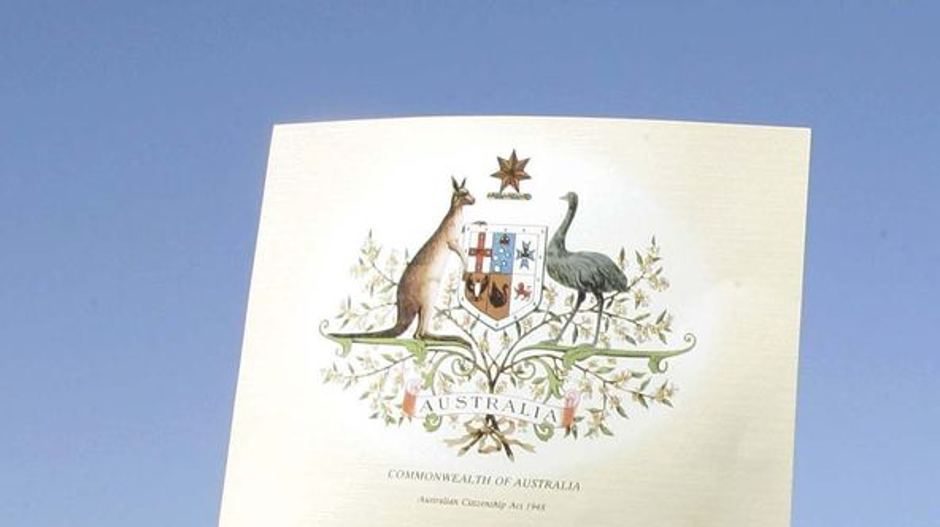
On Saturday September 17, Australia celebrates Australian Citizenship Day. The date was chosen because September 17 was the day that the Nationality and Citizenship Act 1948 was renamed, in 1973, The Australian Citizenship Act 1948. We have been celebrating Australian Citizenship Day since 2001, and it is organised by the Department of Immigration and Citizenship.

Australian Citizenship Day is one to think about what unites as Australians, to take pride in our national citizenship, and to celebrate our democratic values and commitment to a fair go, equality, and respect for each other. Local councils are encouraged to hold citizenship ceremonies and affirmation ceremonies, where you affirm your loyalty to Australia, just it case it had started waning in the interim.

Citizenship Day is one to remember that we are all Australian citizens, whether you were born here 80 years ago, or just took out citizenship. It seems like a great opportunity to look at a name that has only recently come to Australia from another land, and although many names have been welcomed to our shores, this one stood out as a success.

Name Information
Cruz is a common Spanish surname which means “cross”, coming from the Latin word crucis; it originated in Castile. Many places throughout Europe got their name from a prominent cross used as a marker; perhaps for a public meeting place or a market. This is the origin of the surname, and as there are people called Cruz in Spain, there are Crosses in Britain, Groses in France, Kreuzes in Germany, and so on. In the Christian era, the name took on religious significance, and in some cases the surname Cruz might have been bestowed on someone who carried a crucifix at festivals.

Cruz has been used as a personal name in Spain since the Middle Ages. You can often find it in name combinations such as Santa Cruz (“holy cross”) or Vera Cruz (“true cross”), to underline its Christian significance. In early records, it seems to have been commonly given to babies born during the Lenten and Easter seasons. The other key date for the name is around mid-September – The Feast of the Holy Cross is on September 14.

The name was originally given mostly, but not exclusively, to girls. However overall the name has been given fairly evenly to both sexes in Spain, but with females still ahead. In Latin America, records show it as unisex, but with males slightly ahead of females. The name isn’t popular in Spanish-speaking countries, and is often seen as rather dated for either gender.

The United States is the only English-speaking country where Cruz has much of a history, thanks to its significant Hispanic population. It has been on and off the US Top 1000 since records began in 1880, and has been continually on the charts for boys since 1980. It charted as a girl’s name a few times in the years leading up to World War II. Currently Cruz is #290 in the US, and fairly stable.

In the UK, the name Cruz gained publicity after English football star David Beckham chose it for his third son. Although it is presumed the Beckhams chose a Spanish name to honour David Beckham’s football team at the time, Real Madrid, and perhaps as a nod toward the tattoo of a cross David got in 2004, (apparently for vaguely religious reasons), Cruz seems much more of an “American-style” name, like his siblings Brooklyn and Harper, than one used in Spain. The name began charting in the UK after Cruz Beckham’s birth in 2005, and it is currently #381 and rising.

In Australia, Cruz is a celebrity baby name as well, as tennis champion Lleyton Hewitt, and his wife, actress Bec Cartwright, called their son Cruz in 2008. It seems to be a name which appeals to male sportsmen, because there are several other Australian athletes with sons named Cruz. Cruz shows up a few times in Australian historical records, always on people of Hispanic heritage, and often from countries such as the Philippines or islands such as Guam. In 2012, the name Cruz was #115 in Victoria, and would have been in the Top 100 if combined with the spelling Cruze.

Apart from the obvious star-factor of the name Cruz, I think it’s doing well in Australia because it’s short, simple, sounds very boyish to our ears, and the z-ending seems to give it a little pizzazz. It’s almost a “car” name in Australia, as we have the Holden Cruze, so this connection with sports and cars probably makes it seem blokey.

Perhaps it also reminds parents of the slang words cruise and cruisey, which seem to sum up our relaxed attitude and way of life. If anyone looks up the meaning and sees that it means “cross”, it will of remind them of our own Southern Cross, twinkling down at us from the night sky, and appearing on our national flag. In other words, it seems like a name well suited to Australian conditions, and is almost verging on the patriotic.

Cruz had been inducted as a citizen of Australia, affirmed his loyalties to our way of life, and proudly hung his certificate on the wall. Welcome to Australia, mate.

POLL RESULTS
Cruz received an approval rating of 58%. 29% of people disliked it, while only 9% loved it.

← Older posts
Newer posts →

Enter your email address to follow this blog

Categories

Archives

Recent Comments

A.O.'s avatarwaltzingmorethanmati… on Zarah Zaynab and Wolfgang…
Madelyn's avatarMadelyn on Zarah Zaynab and Wolfgang…
JD's avatardrperegrine on Can Phoebe Complete This …
A.O.'s avatarwaltzingmorethanmati… on Rua and Rhoa
redrover23's avatarredrover23 on Rua and Rhoa

Blogroll

  • Appellation Mountain
  • Baby Name Pondering
  • Babynamelover's Blog
  • British Baby Names
  • Clare's Name News
  • For Real Baby Names
  • Geek Baby Names
  • Name Candy
  • Nameberry
  • Nancy's Baby Names
  • Ren's Baby Name Blog
  • Sancta Nomina
  • Swistle: Baby Names
  • The Art of Naming
  • The Baby Name Wizard
  • The Beauty of Names
  • Tulip By Any Name

RSS Feed

  • RSS - Posts

RSS Posts

  • Celebrity Baby News: Melanie Vallejo and Matt Kingston
  • Names from the TV Show “Cleverman”
  • Can Phoebe Complete This Sibset?
  • Zarah Zaynab and Wolfgang Winter
  • Baby, How Did You Get That Name?
  • Celebrity Baby News: Media Babies
  • Celebrity Baby News: Adelaide Crows Babies
  • Celebrity Baby News: Chris and Rebecca Judd
  • Names at Work: Name News From the World of Business and Employment
  • Celebrity Baby News: Sporting Round Up

Currently Popular

  • The Top 100 Names of the 1930s in New South Wales
  • Rare Boys Names From the 1950s
  • The Top 100 Names of the 1940s in New South Wales
  • Girls Names From Stars and Constellations
  • Celebrity Baby News: Alisa Camplin and Oliver Warner

Tags

celebrity baby names celebrity sibsets english names famous namesakes fictional namesakes honouring locational names middle names name combinations name history name meaning name popularity name trends nicknames popular names saints names sibsets surname names twin sets unisex names

Blog at WordPress.com.

Privacy & Cookies: This site uses cookies. By continuing to use this website, you agree to their use.
To find out more, including how to control cookies, see here: Cookie Policy
  • Subscribe Subscribed
    • Waltzing More Than Matilda
    • Join 517 other subscribers
    • Already have a WordPress.com account? Log in now.
    • Waltzing More Than Matilda
    • Subscribe Subscribed
    • Sign up
    • Log in
    • Report this content
    • View site in Reader
    • Manage subscriptions
    • Collapse this bar
 

Loading Comments...