• About
  • Best Baby Names
  • Celebrity Baby Names
  • Celebrity Baby Names – Current
  • Celebrity Baby Names – Past
  • Featured Boys Names
  • Featured Girls Names
  • Featured Unisex Names
  • Links to Name Data
  • Waltzing on the Web

Waltzing More Than Matilda

~ Names with an Australian Bias of Democratic Temper

Waltzing More Than Matilda

Tag Archives: surname names

The Winning Baby With a Famous Dad

04 Thursday Aug 2011

Posted by A.O. in Babies in the News

≈ 4 Comments

Tags

celebrity baby names, famous namesakes, Spanish names, surname names, unisex names

Universal Royalty is a Texas-based company which runs glitz-style beauty pageants for children, and is familar from the reality TV series, Toddlers and Tiaras. When it was announced that Universal Royalty were bringing their glitzy pageantry to Australia, it caused an enormous controversy here, and prompted the Pull the Pin campaign on social media as a bid to stop them.

Those against child beauty pageants say they are exploitative and potentially psychologically damaging. Those in favour say that they are harmless fun, and promote self-esteem. Ironically, the huge media furore ensured that the pageants received many more contestants than they otherwise would have.

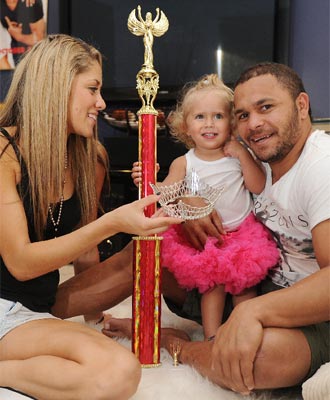
The pageant in Melbourne was held at the end of July, and people must have brought their tots far and wide to compete. The winner for the 13-23 months division was Diaz Bowen, the daughter of Queensland NRL star Matt Bowen.

Matt was brought up on an Aboriginal mission on Cape York in the far north of Queensland, played rugby league for his school, and was signed by the North Queensland Cowboys while still a teenager. He plays fullback, and this year broke the record for most games played with the Cowboys.

Matt’s partner, Rudie Doyle, says she entered Diaz in the beauty pageant because she loves playing dress up, and Rudie was looking for something relaxing they could do together in order to bond as mother and daughter. She says that there were no pushy mothers at the pageant, and that Diaz had a lot of fun being on stage.

Diaz is a common Spanish surname that means “son of Diego”. Diego is thought to be a short form of Santiago, meaning “St James”; Saint James the Greater is said to have preached in Iberia, and is the patron saint of Spain. In the Middle Ages, Diego was Latinised as Didacus to make it look as though it was derived from the Greek for “wise, learned”.

Diaz is probably best known to us as the surname of Hollywood actress Cameron Diaz, and I imagine that this was the inspiration behind Matt and Rudie picking this unusual name for their daughter.

(Story and picture from The Townsville Bulletin, August 2 2011).

Boys Names That Only Chart in Australia

31 Sunday Jul 2011

Posted by A.O. in Name Themes and Lists

≈ 28 Comments

Tags

Arabic names, Biblical names, celebrity baby names, english names, famous namesakes, Gaelic names, hebrew names, honouring, Irish names, literary namesakes, locational names, name data, name history, name meaning, name popularity, nicknames, popular names, Scottish names, surname names

Campbell

This is a Scottish surname, which was originally a Gaelic nickname, Caimbeul, meaning “wry, twisted or crooked mouth”. A p was later added to the spelling in the belief the name was from the French for “beautiful field”. I suppose that meaning seemed a lot more appealing. The Clan Campbell was one of the largest and most powerful of the Highland clans, and the chief of the clan became Duke of Argyll. There are many prominent Australians with this surname. Campbell is #60 in Tasmania, which is very proud of its Scottish heritage, and has a historic town called Campbell. Campbell is on the US Top Top 1000, but only as a girl’s name. As a boy’s name, it has appeared only sporadically, peaked in 1885 at #700, and hasn’t been seen there since 2005.

Darcy

An English surname, from a French place name meaning “town of the bear”, which was introduced by the Normans as the surname of one of William the Conqueror’s barons. It can also be interpreted as an anglicised form of a Gaelic surname meaning “son of the dark one”, and this is a more likely origin in Australia. Although romantics cannot help connecting this to Mr Fitzwilliam Darcy from Jane Austen’s Pride and Prejudice, the most famous Australian with this surname is probably Les Darcy, the folk hero boxer. There are a number of notable Australian men called Darcy, including D’Arcy Niland, the roving novelist, Darcy Ward, the motorcyclist, Darcy Lussick, the rugby league player, and Darcy Dugan, the notorious bank robber. As you can see, although Darcy is unisex, it’s a very manly name here, and only Top 100 for boys. It’s #94 in New South Wales, #57 in Victoria, #97 in South Australia, #75 in Tasmania and #54 in the ACT. Darcy as a male name hasn’t been on the US Top 1000 since 1970, and it peaked in 1968 at #868.

Eamon

The Irish form of Edmund, this is pronounced AY-muhn. It’s use today is probably influenced by the sprint swimmer Eamon Sullivan (pictured). An Olympic athlete, Eamon is not only a good-looking underwear model, he also proved he was a fantastic cook by winning Celebrity Master Chef. Little wonder that he then went on to claim Cleo‘s Bachelor of the Year Contest. It’s #71 in the ACT, and has never charted in another country.

Flynn

An Irish surname meaning “son of Flann”; the name Flann means “red” and was the name of a 9th century Irish king. In Australia, it’s most strongly associated with the Tasmanian-born Hollywood film legend, Erroll Flynn. His name was bestowed upon Disney prince Flynn Rider in honour of Erroll Flynn, as the character has much in common with the actor. As this name has been given to Miranda Kerr and Orlando’s Bloom’s son, Flynn Christopher Bloom, I can see it gaining further in popularity. It’s #94 in Victoria, #79 in Tasmania and #80 in the ACT. It’s never charted in another country.

Hamish

This is the anglicised form of Seumas, which is the Scottish form of James; it’s pronounced HAY-mish. Its current popularity is almost certainly due to a well-known comedian who stars on both radio and television, called Hamish Blake. Multi-award winning, he was recently voted the most recognisable celebrity, and will be included in this year’s issue of Who’s Who. The name is #60 in New South Wales, #49 in Victoria, #45 in South Australia, #28 in Tasmania and #34 in the ACT. Hamish only just made it onto the list – it’s only recently left the Top 100 for Scotland.

Jai

A Hindi name which means “victory”, it can apparently be pronounced either JAY or JY. Jai has been in use in Australia since the 1970s. Jai Abberton is a former pro surfer who is a member of the notorious Bra Boys Gang. Jai Koutrae is an actor who’s appeared in several popular soap operas. Jai Ayoub plays rugby for Western Harbour. Jai Larkan is the lead singer of folk-rock band, The Wishing Well. Jai Taurima is a retired athlete who won silver at the 1998 Commonwealth Games. Lots of guys called Jai! It’s currently #98 in Victoria and #95 in South Australia. It only ever seems to have charted in Australia.

Jed

The short form of the Hebrew name Jedidiah, which means “beloved of Yahweh”. In the Bible, this was a term of endearment given to King Solomon by the prophet Nathan. In use in Australia since the 1980s, there are a number of athletes with this name, including AFL player Jed Adcock (who this year welcomed a daughter named Lily Rose). There’s also some rock singers with the name Jed, including Jed Kurzel, who did the music for the film Snowtown. It’s #99 in Tasmania, whose rural population seems suited to the rustic charms of this name. Jed was on the US Top 1000 from 1947-1989; it peaked in 1978 at #481.

Lachlan

This is a Highland Scottish name from the Gaelic Lochlann, which was used as a nickname for someone from Norway – “the land of the lochs (lakes)”. It’s pronounced LOHK-luhn. There was a strong relationship between the neighbouring lands of Norway and Scotland during the Middle Ages, as both battled for control of the Western Isles of Scotland. There were diplomatic missions between the two nations, and even intermarriage between the royal houses. The name Lachlan has a long history in Australia, owing much to Lachlan Macquarie, a British military officer from the Hebrides who served as Governor of New South Wales from 1810-21, in the period when it was transitioning from a penal colony to a free settlement. He therefore played a major role in the shaping of Australian society, and his liberal views toward ex-convicts and lavish expenditure on public works had a great impact on New South Wales. There are 30 places in Australia named after him, and 6 named after his wife, Elizabeth; on his tomb in Scotland he is called “The Father of Australia”. (American readers may be interested to know that he fought very successfully during the American War of Independence – on the British side of course). When media magnate Rupert Murdoch chose Lachlan as his eldest son’s name, he was perhaps drawing on his own Scottish heritage and honouring a great man from Australian history. Forty years later, this name is still going strong, and there is another generation of well-known Lachlans giving it new impetus, such as soap actor Lachlan Buchanan, and fullback for the Penrith panthers, Lachlan Coote. The name is #6 in New South Wales, #13 in Victoria, #5 in South Australia, #5 in Queensland, #12 in Tasmania and #3 in the ACT. It’s never charted in any other country.

Nate

A short form of Nathan, which is a Hebrew name from the verb “to give”; it can be interpreted as “given”, in the sense that God has given a child. Less persnickety baby name sites often interpret it as meaning “gift”, or “gift from God”, which is a more user-friendly way of putting it. The short form has proved very popular here recently, and I can’t help wondering if that’s partly because Australian baby name sites sometimes list Nate as meaning “little gift”, which I think is taking looseness of interpretation a bit far! Nate has a similar level of popularity to Nathan, and if you’re wondering why I don’t mention Nathaniel as a source of Nate, that’s because it’s not well enough known here to have a nickname yet. A famous Nate is Nate Myles, who plays for the Sydney Roosters in the NRL. It’s #60 in Victoria, #52 in South Australia, #44 in Western Australia, #58 in Tasmania and #50 in the ACT. It’s never charted in any other country.

Taj

An Arabic name meaning “crown”, it’s probably best known from the Taj Mahal in India, the name meaning “crown of buildings”. Taj Burrow is an Australian surfer, and as he’s from Western Australia, it’s not surprising that the name is #42 in that state. Taj has only been on the US Top 1000 twice, in 1976 and 1998, and never got higher than #951.

Zac

The short form of Zachary, the English form of Hebrew name Zechariah, meaning “Yahweh remembers”. In the New Testament, Zechariah is the father of John the Baptist. This seems to have done particularly well as a full name here. It’s been around long enough to have some famous Zacs already, such as Zac Dawson, who plays for St Kilda in the AFL, and Zac Drayson, an actor on the popular soap opera, Home and Away. American actor Zac Efron probably isn’t doing it any harm either. Early this year, V8 ute racer Craig Dontas named his second son Zac Michael. It’s #76 in New South Wales, #52 in Victoria, #77 in South Australia and #80 in Tasmania. It hasn’t charted in any other country.

Close But No Cigar

These names don’t make the top 1000 in the United States, but do chart in countries besides Australia

Angus – #75 in Scotland

Archie – #24 in England/Wales, #43 in Scotland

Reuben – #67 in N. Ireland, #71 in England/Wales

Tom – #10 in France, #18 in Belgium, #38 in Netherlands, #62 in Ireland, #93 in N Ireland

Harvey – #47 in England/Wales

NOTE

Please also read Girls Names That Only Chart in Australia, as it contains information relevant to this blog entry. Since then, the 2010 list for England/Wales has been released.

Famous Name: Cadel

25 Monday Jul 2011

Posted by A.O. in Famous Names

≈ 15 Comments

Tags

famous namesakes, fictional namesakes, name history, name meaning, name popularity, rare names, Roman names, surname names, UK name popularity, US name popularity, Welsh names

This blog post was first published on July 25 2011, and revised and updated on July 23 2015.

Famous Namesake
On July 25 2011, Cadel Evans became the first Australian to win the Tour de France in the race’s 108-year history, only the second non-European to officially win it, and at 34, the oldest winner since World War II.

This gruelling 3 600 km (2 200 miles) cycle race lasts for three weeks, and finishes in Paris, with the climax of the final stage along the Avenue des Champs-Élysées. Traditionally the overall winner wears a ceremonial yellow jersey.

This was a great moment in our sporting history, and in Cadel’s home state of Victoria, everyone was urged to wear yellow to work as a show of support. When Cadel returned to Australia in August, there was a huge homecoming parade for him in Melbourne’s Federation Square, with tens of thousands of people dressed in yellow or waving yellow flags. He was also honoured with a state reception.

Cadel was made a Member of the Order of Australia in 2013, and has also been featured on the blog as a celebrity dad. In February 2015, he took part in the inaugural Cadel Evans Great Ocean Road Race and finished fifth, announcing his retirement as soon as the race finished. He is currently Global Ambassador for the BMC Racing Team.

Name Information
As you can probably tell from Cadel’s surname, he is of Welsh ancestry – his great-grandfather was from Wales. Cadel is a variant of the Welsh name Cadell, which is based on cad, the Welsh word for “battle”; there are several related names, such as Cadwalader, meaning “battle leader”. There is a recent fancy that the name is a Welsh form of the Roman name Catallus, although there doesn’t seem to be much evidence to support it.

There were several medieval Welsh kings and princes called Cadell. Cadell Ddyrnllwg was driven from his father’s kingdom by Irish pirates during the chaos of the 5th century. He lived amongst the peasants until a visit from Saint Germanus changed his fortunes. Saint Germanus laid siege to the capital, as it was held by Irish pagans, and Cadell offered the saint his humble hospitality. Saint Germanus had a premonition of disaster, and warned Cadell and his friends to get out of the city. That night the palace was struck by lightning and the resulting fire burned everyone alive, so without any annoying questions from insurance investigators, Cadell was able to regain his throne.

There is a famous explorer in Australian history with the surname Cadell – a Scotsman called Francis Cadell who was the first to explore and navigate the Murray River by steamship. A man who lived a life of adventure, he took part in the New Zealand land wars, where he staged a mutiny against his captain, and also was one of the first to explore the Northern Territory (where Cadel Evans was born), where the Cadell Strait bears his name. Later in life, he took up whaling, pearling, and trading in the East Indies, and was murdered near New Guinea; a fittingly violent end to an exciting life.

A fictional namesake is Cadel Piggot, the protagonist of the Evil Genius series of young adult books by Australian author Catherine Jinks. It’s about a boy who is very small with curly blonde hair and baby blue eyes, and an evil genius with a passion for IT. The series follows his exploits from the ages of 7 to 15 as he gradually develops a sense of right and wrong.

Since Cadel Evans’ historic win at the Tour de France, I have seen quite a few baby boys named Cadel, although the name is still rare in Australia. In the UK, there were 4 baby boys named Cadel in 2013, the name apparently rising slightly after Cadel Evans’ victory. In the US, there were 10 baby boys named Cadel in the US in 2014, down from 19 in 2012 and 17 in 2011. It seems that Cadel Evans did give the name a boost in the US after the 2011 Tour de France, but it has faded, as the name Cadel is now less used than it was in 2010, when there were 12 boys named Cadel.

Cadel fits in quite well with current trends in boy names, looking similar to Caden and Cade. Although at the start of his career, Cadel Evans had his name mispronounced as KAY-del, to sound like cradle without the R, I think by now everyone knows he says his name kuh-DEL (like Adele with a K at the front). This isn’t the British pronunciation, which is more like KAD-el. However, now that Evans has retired, it is unclear whether the name Cadel will continue gathering steam, or run out of puff.

POLL RESULTS
Cadel received an approval rating of 60%. 16% of people thought it was handsome or attractive, but an equal number believed it was too closely associated with Cadel Evans, and felt like a “one person name”. Few were willing to predict the name’s fortunes – 2% thought the name Cadel would continue growing in popularity, while 5% were fairly sure the name was a flash in the pan that would soon be forgotten.

Girls Names That Only Chart in Australia

24 Sunday Jul 2011

Posted by A.O. in Name Themes and Lists

≈ 29 Comments

Tags

African names, Arabic names, Australian Aboriginal names, celebrity baby names, colour names, created names, english names, famous namesakes, fictional namesakes, Greek names, hebrew names, holiday names, Indian names, Irish names, Latin names, locational names, Mer de Noms, mythological names, name data, name history, name meaning, name popularity, nature names, nicknames, plant names, popular culture, popular names, saints names, Sanskrit names, surname names, Swahili names, unisex names, vocabulary names

Recently, Lou at Mer de Noms has had a couple of articles on names that are in the UK Top 150, but fail to make the US Top 500. It’s an interesting look at differences in name popularity between the two countries. I thought about doing the same thing from an Australian perspective, but found the list became too long for my purposes. So I made my conditions a bit tighter – these are names that are on a Top 100 list in Australia, but don’t make the Top 100 in any other country, and aren’t on the US Top 1000.

Asha

Asha has two different origins and meanings. It can be seen as an Indian name from the Sanskrit for “hope, wish, desire”, or an East African name from the Swahili word for “life”. Either way it has a beautiful meaning, and both Indian and Swahili names are becoming fashionable in Australia. It fits in well with other popular Ash- names, such as Ashley, Ash, Asher and Ashton. There’s an attractive TV presenter in Australia called Asha Kuerten (pictured), which has probably helped it gain momentum here. Asha is currently #89 in Victoria, #77 in South Australia, and #68 in the ACT. It’s never been higher than #794 on the US Top 1000 (in 1989), and hasn’t charted there since 2003.

Bridie

This is a pet form of the Irish name Brighid or its anglicised form, Bridget, which means “exalted one”. In Irish mythology, Brighid was the goddess of fire, poetry and wisdom. There was a 5th century Irish saint called Brigid, who is the patron saint of Ireland, and whose feast day on February 1 coincides with the pagan festival of Imbolc (possibly this day was sacred to the goddess of the same name). As around 30% of Australians claim Irish heritage, the name Bridie isn’t too unusual here, and there are several well-known women with this name, including Bridie Carter, a popular soap actress. Bridie is #70 in Tasmania, which has a particularly strong Irish community. It doesn’t chart in any other country.

Ebony

This is from the English word for the valuable black wood which comes from the ebony tree; different species are native to India, Sri Lanka, Indonesia, Mauritius, and West Africa. Although Ebony is often said to be used mostly by African-Americans in the United States, in Australia it is not connected to a person’s skin tone and is just seen as another colour name, like Ruby, Jade or Amber, or a plant name, like Rose or Holly. The exoticism of this name seems to have possessed a strange fascination for Australian parents, and it has been a Top 100 name since the early 1980s. Perhaps popular songs from that decade, such as Ebony Eyes and Ebony and Ivory, helped give it a boost. It’s #63 in South Australia and #55 in Tasmania. In the United States, Ebony got as high as #132 in 1982, and hasn’t been on the Top 1000 since 2005.

Indiana

The name of an American state, it means “land of the Indians”, because of the high Native American population in the area at the beginning of the 19th century (unfortunately, not to last). Indiana was used as a girl’s name (at least in fiction) before the American state was founded: Fanny Burney’s 1795 classic novel, Camilla, features a beautiful but shallow character called Indiana Lynmere. Possibly the name was intended as an elaboration of India, then part of the British Empire. French author George Sand also gave a character this name in her first novel, Indiana (1832). In this book, Indiana is a beautiful, romantic Creole from Reunion, of part-Indian descent. Here, there is a young TV actress called Indiana Rose Evans, and early this year, former NRL player Glenn Hall had a daughter named Indiana Maree. This name has only been Top 100 since last year, and it’s #98 in Victoria. Indiana has not been on the US Top 1000 since the late 19th century.

Jorja

The name Georgia, also an American state name (the state is named after King George II), is more popular in Australia than anywhere else in the world, hovering around the #20 mark on most lists, and Top 100 since the early 1980s. The phonetic spelling Jorja has also proved popular here. It’s currently #88 in Tasmania. Jorja has only been on the US Top 1000 once, in 2006, when it was at #976.

Lucinda

This is an elaboration of the Latin name Lucia, meaning “light”. Always a rather literary name, it was created by Miguel de Cervantes for his 1605 novel, Don Quixote for a character in a farcical romantic subplot. The 17th century Spanish poet Lope de Vega wrote love sonnets to a woman he called “Lucinda” to protect her identity. In more recent fiction, Lucinda is the rather silly fairy godmother in the children’s novel Ella Enchanted, later made into a movie. Australian novelist Peter Carey’s Oscar and Lucinda won the 1988 Booker Prize, and was made into a film directed by Gillian Anderson. Another Australian connection is that Lucinda is the name of a small coastal town in Queensland. As Lucy is so popular, Lucinda seems like a pretty alternative which will allow Lucy/Lucie as a nickname. It was chosen for the name of lifesaver and reality TV star Dean Gladstone’s daughter Lucinda May. It’s # 67 in Tasmania. Lucinda hasn’t been on the US Top 1000 since 1987, and peaked in 1881 at #153.

Tahlia

The name Talia can come from a range of origins. It’s a variant of the Hebrew name Talya, which means “dew from God”; it’s the Italian form of Greek Thalia, which means “to blossom” (Thalia was one of the nine Muses); and it can also be a short form of Natalia, a Latin name which means “Christmas Day”. However, In Australia, Talia is often taken as coming from an Aboriginal word meaning “near water”. Talia has become hugely popular in many parts of Australia; it has a certain patriotic flavour, and is pleasingly multicultural, suiting a variety of backgrounds. Yet it is not found consistently on the Top 100 because it has so many variant spellings. Tahlia is the most common of these variants, and is beginning to overtake Talia because it makes the favoured pronunciation more clear. It’s #47 in New South Wales, #41 in Victoria, #39 in South Australia, #35 in Western Australia, #84 in Tasmania, and #52 in the ACT. Tahlia has never charted in any other country.

Tayla

A specifically feminine form of the popular unisex name Taylor, this may have been coined in imitation of Kayla and related names. However, I can’t help thinking it’s taking off in Australia partly because it looks similar to Talia and Tahlia. It’s #68 in South Australia, #40 in Western Australia, and #94 in Tasmania. Tayla has only been on the US Top 1000 twice – in 1998 and 2006, and was never higher than #924.

Zahra

This is an Arabic name usually translated as “radiance”. The meaning is gorgeous, and Arabic names are becoming increasingly fashionable here with our growing Islamic population. However, almost certainly the reason for its popularity in Australia is due to its similarity to the name Zara. Zara has been used in Britain since the 18th century, where it is the English form of the French name Zaïre, created by the author Voltaire in 1732 for his hugely successful play of the same name, and possibly based on the name Zahra. The drama was soon translated as Zara: A Tragedy, and proved a big hit with English audiences too, being staged well into the 19th century. For some reason, Zara has been a favourite in Australia for over a century, and there are several famous women from Australian history called Zara, including the glamorous wife of former Prime Minister Harold Holt. Zara is more popular in Australia than in any other country, and Zahra is rising on the basis of its success. It’s #82 in the ACT. Zahra has never charted in the United States.

Also Qualifying

Bronte and Lara, which were covered on earlier Name Lists – Bronte in Sydney Suburbs That Can Be Used as Girls Names, and Lara in Girls Names from Video Games. Bronte is #68 in Tasmania. Lara is #43 in New South Wales, #80 in Victoria, #79 in Tasmania and #52 in the ACT. Neither has ever charted in another country.

Close But No Cigar

These names don’t make the top 1000 in the United States, but do chart in countries besides Australia

Freya – #19 in Scotland, #21 in England/Wales, #68 in Ireland, #70 in N. Ireland

Harriet – #89 in England/Wales

Imogen – #32 in England/Wales, #77 in Scotland

Maisie – #34 in England/Wales, #36 in Scotland

Milla – #48 in Norway

Poppy – #22 in England/Wales, #47 in Scotland, #60 in N. Ireland

NOTE

There are some serious statistical issues facing anyone doing comparisons between countries. Australia doesn’t produce a national Top 100, states and territories have different population sizes, not all states and territories provide their Top 100, and one has refused to divulge any of its name data. Countries don’t all release their popularity charts for the year at the same time, so we are still waiting for the ones from England/Wales, for example, and I had to use the one for 2009. I used popularity charts from Behind the Name, and sometimes they are slow in updating their data as well. Not only that, but there is no data available for many countries.

So rather than getting into a mathematical tangle, this is only intended to be of general interest and show a few broad trends.
Bonds Baby Search 2011 – Names from the Shortlist

22 Friday Jul 2011

Posted by A.O. in Baby Contests

≈ 16 Comments

Tags

Arabic names, Celtic names, famous namesakes, French names, Gaelic names, germanic names, Hawaiian names, Irish names, Japanese names, locational names, name combinations, nicknames, Persian names, polynesian names, Roman names, saints names, Sanskrit names, scandinavian names, surname names, Swedish names, unisex names

Girls

Alexandra

Alira

Annabella

Anika

Ava Lily

Brooke

Claire

Daisy

Drisana

Grace

Gwyneth Chloe

Harvey

Ke’ala

Keela

Isabella

Mia

Mikayla

Montanna

Paige

Tully Belle

Boys

Beau

Bodie

Chace Tyler

Charles

Eskander

Isaac

James

Jensen

Jeremiah

Kooper

Leo

Maximus

Mekai

Oliver

Oscar

Remy

Riley

Sandon

Shaun

Taj

Tommy

Tyler

Zachariah/Zakkariah

Not sure (hard to tell on a bub!)

Marley (boy?)

Milan (girl?)

Osh (boy?)

Bonds Baby Search 2011 – Winners 0-9 Months Category

21 Thursday Jul 2011

Posted by A.O. in Baby Contests

≈ 5 Comments

Tags

Arabic names, Aramaic names, Biblical names, created names, english names, fictional namesakes, French names, Greek names, mythological names, name history, name meaning, name popularity, nicknames, popular names, saints names, surname names, unisex names

Each year, the Bonds underwear label has run a huge annual campaign to find the perfect babies to model for them. Although the prizes aren’t lavish, $250 worth of Bonds merchandise and a free photo, the fame and prestige must be enough of a drawcard, because it is the biggest baby contest in the country, attracting thousands of entrants. Bonds are careful not to identify it as a “cute baby contest”, and say any baby can win, as long as they fit into Bonds baby sizes and interact well with the camera.

I thought we’d look at the names of the winning babies, as an indication of names used recently.

Phoenix Nate

Isabelle

Xanden

Zia

Thomas James (People’s Choice)

Midweek Sibset: The Gender-Neutral Sibset

06 Wednesday Jul 2011

Posted by A.O. in Sibsets in the News

≈ 5 Comments

Tags

english names, Estonian names, famous namesakes, fictional namesakes, locational names, mythological names, name history, name meaning, Nigerian names, surname names, unisex names

There has been an international brouhaha over the decision by Canadian couple Kathy Witterick and David Stocker not to reveal the sex of their baby, Storm. As brother Jazz enjoys wearing pink dresses and pigtails, Kathy and David decided it would be better if their child’s sex remained private to their family to avoid any more societal gender issues.

This story got plenty of media time in Australia, as in other countries, and mostly people were very much against the idea of raising a “genderless baby”. This opinion piece in the The Age says that the parents are selfishly putting their own ideological agenda before their child’s welfare, while more forthright articles suggested the parents’ idea was just absurd.

However, Emma Jane in The Australian was one of those who took a more sympathetic view. She believes that gender stereotyping of babies and toddlers has reached a ridiculous level, where even new-born infants are dressed in either pink frills or solid workmanlike blue.

She dressed her daughter Alice in boy’s clothes and gender-neutral primary colours as a baby, which was declared to be “child abuse” by a concerned onlooker. Now 4 years old, Alice can make her own choices, which, it turns out, means a wardrobe full of pink and girly outfits.

Sydney couple Jay Black and Scott Collins are supporters of Witterick and Stocker’s choice to raise a “genderless child”. (I think Jay and Scott are a female-male couple). Jay and Scott are trying to raise their sons, Poe, 4, and Ilo, 22 months, without gender stereotypes. Their boys have ambiguous haircuts, play with dolls, and are supported if they choose to wear skirts and dresses.

In line with this lack of gender demarcation, Poe and Ilo have been given unusual unisex names.

Poe is a surname, most famous as that of the American Gothic writer, Edgar Allen Poe. His surname is a variant of the early English name Peacock, which began as a nickname for someone who was vain or dandified, or from someone who bred peacocks. In a few cases, it may have come from a house distinguished by the sign of a peacock. Poe Ballantine is an American novelist, while Poe is the stage name of American rock singer Anne Danielewski. Poe is also a raven character in the TV series Ruby Gloom.

Ilo is such a rare name that information on it is scarce, and I have turned to Appellation Mountain to discover that it’s the name of an Estonian goddess dedicated to feasting whose name may mean “pleasure”, and possibly a Nigerian boy’s name meaning “joy”. Sylvia Plath’s teenage diaries rather fervently describe a blonde Estonian refugee called Ilo Pill; he was male, so even in Estonia the name of the goddess seems to have been used for both boys and girls. In addition, Ilo is a lake in North Dakota, USA, and a port town in Peru, so you may take it as a geographic name as well. It’s so neutral that you can’t even tell which country the name is from, or what it means! It can either be pronounced EYE-low, or EE-loh (I believe).

Waltzing with … Griffith

03 Sunday Jul 2011

Posted by A.O. in Waltzing with ...

≈ 9 Comments

Tags

famous namesakes, name history, name meaning, nicknames, surname names, Welsh names

This blog post was first published on July 3 2011, and revised on July 9 2015.

Famous Namesake
On July 9 it will be Constitution Day, when Australia celebrates the date that our Constitution became law in the year 1900. Well, not so much “celebrates”, as “ignores”. Unlike in many other countries, Constitution Day is not a public holiday here, and only a tiny minority of people know of its existence.

This ignorance is not completely our fault. Constitution Day was only brought into being in 2000, and seems to be have been imagined as a one-off event for the Centenary of the Constitution. However, someone or other must have decided this was a bit slack, and it was revived in 2007, so technically we’ve only had a Constitution Day for a few years.

It is the National Archives of Australia in Canberra who organises events for Constitution Day, which includes ceremonial viewings of the original Constitution document – our nation’s “birth certificate”. It is a good opportunity to educate children and adults about our Constitution, as Australians are often more familiar with elements of America’s constitution.

Sir Samuel Griffith is accepted as the principal author of the Australian Constitution. Born in Wales in 1845, his family emigrated to Queensland when he was eight years old. A lawyer and politician, he became Premier of Queensland, and Chief Justice of the Supreme Court of Queensland.

Always a supporter of Federation, he headed the Queensland delegation to the 1891 Sydney Constitutional Convention, where he was appointed vice-president and took a leading role. “It fell to my lot to draw the Constitution,” he wrote, “after presiding for several days on a Committee, and endeavoring to ascertain the general consensus of opinion.”

Naturally there were several drafts to be submitted to committees, and approved in two referenda by the Australian people. More than half a million people in six colonies voted for the Constitution, the first national constitution anywhere in the world to be put to a popular vote. Finally, it was given royal assent by Queen Victoria on July 9 1900.

Sir Samuel Griffith saw the Constitution he helped write enshrined in law, and the Federation he’d worked toward come into being. He was the obvious choice to be the first Chief Justice of the High Court of Australia, where he served admirably and was awarded several honours. In his spare time, he became the first Australian translator of Dante’s Inferno.

After his death in 1920, his name was commemorated by the naming of a suburb of Canberra after him; as well as Griffith University in Queensland (Griffith in New South Wales is named after Arthur Griffith, the state’s first Minister of Public Works). The Samuel Griffith Society is a conservative organisation dedicated to defending the principles of the Constitution.

The Australian Constitution is often praised internationally, because it isn’t the product of war or revolution, but came out of a democratic process of public debate and agreement. Australia had led the way in constitutional development, but unfortunately, we often think of it as rather boring.

It was not so when it was created, but an object of great pride, the beginnings of Australian independence. And many current issues, such as same-sex marriage, the rights of asylum seekers, and the citizenship of terrorism suspects and our prime minister, require an interest in and knowledge of our Constitution.

It’s not a dry old document at all, but a vital, engaging one which is still growing and evolving.

Name Information
The surname Griffith is an anglicised form of the Welsh name Gruffudd, and this spelling has been in use since the Middle Ages. The meaning of Gruffudd is not certain, but is thought to mean something like “lord with a strong grip”, or “strong lord”.

The name Gruffud was commonly used amongst medieval Welsh royalty, and Gruffudd ap Llywelyn was an 11th-century Welsh ruler who fought against England. (Sir Samuel Griffith, always proud of his Welsh heritage, named his son Llewellyn).

Griffith is a name from our Federation history that’s traditional but still stands out from the crowd. It’s strong, but has a pleasantly soft sound; it looks distinguished and sounds smart, yet doesn’t seem elitist or nerdy. I admit it’s a tiny bit awkward to say, which means Griff as a nickname is almost certain to be used on an everyday basis.

POLL RESULT
Griffith received an approval rating of 78%, making it one of the highest-rated names of 2011. 38% of people thought it was okay, while only 2% hated it.

Arlo Robert Galafassi: A Son for Toni Collette and Dave Galafassi, a Brother for Sage Florence

12 Sunday Jun 2011

Posted by A.O. in Celebrity Baby Names

≈ 2 Comments

Tags

celebrity baby names, created names, famous namesakes, fictional namesakes, Gaelic names, germanic names, honouring, Irish names, Italian names, locational names, Old English names, surname names, unisex names


Toni Collette is that rare creature – a born actress. At the age of 11 she faked appendicitis so convincingly that doctors performed surgery on her, even though medical tests all showed there was nothing wrong. She has a face which effortlessly transmits emotion to an audience, and the instinctive ability to inhabit a character so completely that few people actually know what Toni looks like in real life. (Much prettier than on camera, is the general verdict).

Born and raised in working class Blacktown, Sydney, she dropped out of the National Institute of the Dramatic Arts to work in film and theatre. At 21 she stole our hearts as the plump, naïve, ABBA-loving Muriel Heslop from Porpoise Spit, in P.J. Hogan’s cult film Muriel’s Wedding, and was then catapulted into the world of Hollywood, Broadway, fame, wealth and awards. She went on to star in films such as The Sixth Sense, About a Boy, and Little Miss Sunshine, and since 2009 has played the title role in the Spielberg-produced TV show, The United States of Tara.

In 2002, she met Dave Galafassi, the drummer for Sydney indie band Gelbison, at a barbeque. She describes him as “balanced, patient, and beautiful,” and says she knew straight away that he was “the one”. In January 2003, Toni and Dave were married at her country house in south-coast Broughton, near Berry. They had a Buddhist ceremony which lasted an entire weekend, and featured dancing monks, vegetarian banquets, and a fireworks display.

Their first child, Sage Florence, was born in Sydney on January 9 2008. When she announced her pregnancy the previous July, Toni noted, “It is strange that in the last three films I’ve done [my character has] been pregnant. I’m just like, what is the universe trying to tell me?”

In October last year, Toni and Dave announced they were happy to be expecting a second child, and Arlo Robert Galafassi arrived this Good Friday, April 22. Arlo made it “the greatest Friday”, was the statement from Toni and Dave. Like his sister, he was born in Sydney, where Toni was filming Mental with P.J. Hogan.

I never knew where the name Arlo came from, and after doing a little digging, I found out that nobody else really knows either! Behind the Name lists it as “meaning uncertain”, but notes that it may come from the fictional place name Arlo Hill in Sir Edmund Spenser’s 1590 poem, The Faerie Queen. It is theorised that Spenser created the name from the Irish place name Aherlow, which is Gaelic for “between two hills”. Wikipedia says that it is either a variation of the English surname Harlow, a variant of Harley or Arlene, or an Italian variant of Carlo. It seems to be a name which originated in America.

Toni Collette has confirmed that her son Arlo was named after the folksinger Arlo Guthrie, son of Woody Guthrie, of whom she and Dave are fans. The middle name Robert is after Toni’s father, Bob.

Toni Collette is very popular in Australia – an amazing feat in a country which enjoys despising its famous people. I think it’s because Toni has always seemed like a hard working actress, rather than a glamorous celebrity. She has lived all over the world, but chose to make her home in her native Sydney instead of relocating to Hollywood. Despite the Buddhism, meditation and astrology, she is always described as “down-to-earth”. Although she has had her share of personal problems, such as eating disorders and panic attacks, she doesn’t hawk them around the chat show circuit, or bring out tearfully brave books on “My Battle With X”. In fact, she’d rather not talk about them. She went to therapy, she got over it. End of story. She doesn’t analyse things, yap about herself, or witter on Twitter, and she seems to have a perpetually sunny attitude and toothy grin. You have to admit, that’s pretty refreshing.

Everyone appears to be completely enamored with her baby name choices as well – nearly every article on baby Arlo is followed by enthusiastic comments praising Arlo as a gorgeous name. Many people were quick to point out that they too, had a little Arlo (one female), and a couple said their Arlo was inspired by the character Arlo Glass on TV show 24. Clearly it’s a name doing well at the moment, and no doubt climbing up the charts. Just as Toni Collette manages to be the celebrity who seems like she could be just like you if talent hadn’t driven her determinedly in another direction, she’s won further esteem by choosing a baby name that’s just what everyone else would have chosen.

I don’t know if I’m quite so in love with the name Arlo; I’m not a huge fan of either folk music or 24, and I must confess I have a perverse side to me that quickly goes off names greeted with universal acclaim. However, I think it’s great with the middle name Robert, a brilliant match with sister Sage, and Arlo Galafassi just sounds wonderful. I also find myself intrigued by the possible connection to Edmund Spenser’s Faerie Queen. As context is everything, I hereby award Arlo Robert Galafassi a thumbs up!

Further Reading:

See the entry on Arlo at Appellation Mountain for more information on the name.

Check out Mer de Noms’ blog entry on The Faerie Queen for more Spenserian names.

Sydney Suburbs That Could Be Used as Boy’s Names

22 Sunday May 2011

Posted by A.O. in Name Themes and Lists

≈ 19 Comments

Tags

Anglo-Saxon names, aristocratic titles, Australian Aboriginal names, birth notices, British names, celebrity baby names, english names, famous namesakes, fictional namesakes, French names, Gaelic names, honouring, Irish names, literary names, locational names, modern classics, name history, name meaning, name popularity, names of businesses, nicknames, Old English names, Old Norse names, Old Welsh names, popular culture, saints names, Scottish names, surname names, unisex names, US name popularity, vocabulary names

KyleBay

This blog post was first published on May 22 2011, and substantially revised and updated on May 14 2015.

Auburn
Auburn is in Sydney’s western suburbs. The commercial district contains many Middle Eastern and Asian shops and restaurants, and is a focal point for migrant groups. Auburn has the oldest Hindu temple in Australia, which opened in 1977, and one of its busiest mosques – the Auburn Gallipoli Mosque, built by the Turkish community in honour of the Gallipoli conflict of 1915. Auburn is named after an Irish village in Oliver Goldsmith’s poem The Deserted Village; the first line of the poem is, Sweet Auburn, loveliest village of the plain. Auburn was a tiny place near Athlone in Westmeath, and doesn’t seem to exist any more – perhaps it was too deserted. Auburn simply means “red-brown”, and usually refers to dark red hair colours. Auburn has been used as a personal name since the 17th century, more often given to boys. It sounds similar to Aubrey, Aubin, and Auberon, and seems quite distinguished, while its literary ancestor gives it a sentimental air.

Bexley
Bexley is a suburb in Sydney’s south, in the St George area. It was originally a land grant to Thomas Sylvester in the 1810s, who sold it to James Chandler in 1822. Lydham Hall, the oldest residence in the area, was part of the 1822 sale. Chandler got fed up with the bushrangers, escaped convicts and other undesirables who infested his personal paradise, and sold it to Charles Tindell. By 1856 Tindell was subdividing the land into lots for homes, and by the late 19th century, Bexley was a thriving town. Its best days are behind it, for this suburb has been on the decline since the 1980s. James Chandler named it Bexley after his birthplace in London; the name comes from the Old English, meaning “box tree meadow”. In uncommon use as a personal name since the 16th century, mostly for boys, Bexley has the fashionable X-factor.

Camden
Camden is a historic town in the Macarthur Region, in the far south of Sydney. It’s pretty and semi-rural with a “gentleman farmer” atmosphere. The Camden area originally belonged to the Gandangara people; European explorers first arrived in 1795. In 1805, Governor King rather begrudgingly gave 5000 acres to John Macarthur, who had been promised land by Secretary of State, Lord Camden. (The descendants of John Macarthur still live in their ancestral home at Camden Park). Macarthur’s wool industry was so successful, a town was necessary in order to support it. Founded in 1840, by the 1880s it was a thriving concern. Camden was named after its sponsor, Lord Camden – his title is from a Gloucestershire place name meaning either “enclosed valley” or “valley of encampments” in Old English. In use since the 17th century, Camden sounds like familiar choices such as Cameron and Caden, while retaining a hint of its aristocratic past. It is in the Top 100 in the US, and I am seeing it more frequently in birth notices here.

Carlton
Carlton is the next suburb to Bexley. It is most famous for being the home of the St George Illawarra Dragons National Rugby League team. Carlton was originally heavily timbered, and given as a land grant to Captain John Towson in 1808. When the railway opened in 1884, the land was subdivided and people began moving to the area. Carlton is named after a suburb of Nottingham; I’m not sure why, but assume that it was Captain Towson’s birthplace. The place name Charlton is very common in the UK, and is a linguistic mix of Anglo-Saxon and Old Norse meaning “settlement of free men”. In use since the 17th century, this is a spin on classic Charles, and a variant of Charlton, that I have seen a bit of lately. Like popular Cooper, it is the name of an Australian brewery.

Colebee
Colebee is a fairly new suburb in Sydney’s far west. It is named after an Aboriginal guide, the son of a tribal chief, who assisted William Cox when he surveyed the land across the Blue Mountains. Colebee also tried to bring a peaceful resolution to the years of conflict that existed between Aborigines and white settlers in the area. For his efforts as a geographer and diplomat, he received the first grant of land that the British made to an indigenous person. He received 30 acres on the South Creek; an area which would later become known as Blacktown, and the location of the suburb of Colebee. The meaning of Colebee is not certain, but I have read a theory that it came from the local word for sea eagle (gulbi). Europeans were struck by the fact it sounded exactly like the English name Colby. If you are considering the name Colby, this spelling not only gives the nickname Cole, but is an important part of Sydney’s history.

Kyle
Kyle Bay is a tiny picturesque suburb in Sydney’s south, in the St George area, and takes its name from the bay on the north shore of the Georges River. It is named after local shipbuilder Robert Kyle, who was granted land here in 1853. Kyle is a Scottish surname from the district of Kyle in Ayrshire. The name is from a common place name, usually translated as from the Gaelic word caol, meaning “narrows, channel, strait”. As there are no channels or straits in this district, the name may come instead from the legendary British king Coel Hen (“Coel the Old”), otherwise known as Old King Cole. His name is possibly from the Old Welsh coel, meaning “belief, omen”. In use as a personal name since the 18th century at least, it was originally given to both sexes in its native Scotland, but is now considered to be a male name. Kyle first charted in the 1960s, debuting at #233; its use seems to be heavily influenced by the female name Kylie, which was popular in that decade. Rising swiftly, Kyle was a Top 100 name by 1980, peaked at #27 in 1998, and left the Top 100 in 2006 – the year after obnoxious shock jock Kyle Sandilands became a judge on Australian Idol. It’s now around the 200s, so it’s a modern classic still in reasonable use.

Miller
Miller is a south-west suburb in the Liverpool area. It was part of the Green Valley Housing Estate built in the 1960s, and the suburb was established in 1965. It is named after Peter Miller, an Irish immigrant who was one of the first settlers in the Green Valley area. His surname of Miller is an occupational one, indicating the bearer worked at or managed a corn mill. In use as a first name since at least the 16th century, it has mostly been given to boys, although I have occasionally seen it given to girls because it is a homophone of the popular girls’ name Milla. Miller is around the mid-200s for boys, so not an unusual choice as a name, although not common either, meaning it might very well hit that sweet spot between “too strange” and “too popular”.

Nelson
Nelson is a suburb in the north-west of Sydney, in the affluent Hills District. Governor William Bligh received a land grant in this area, and the suburb is named after Admiral Horatio Nelson, as Bligh served under his command during the Battle of Copenhagen in 1801. Just in case he hadn’t made it clear enough how much he admired Nelson, he called his property Copenhagen Farm in his further honour. Either Nelson had really impressed him, or he was a total crawler. The surname Nelson means “son of Neil” – Neil being from a Gaelic name which may mean either “champion” or “cloud”. It has been in use as a name for boys since at least the 16th century, but Horatio Nelson helped give the name a boost in the 19th. World leader Nelson Mandela and philanthropist Nelson Rockefeller give this heroic name a lot of clout.

Oran
Oran Park is a suburb of Camden, once the colonial estate of John Douglas Campbell, and for many years the home of the Oran Park Raceway, which regularly hosted major motorsport events. Since 2011 it has been developed for residential housing. Oran Park is named after the village of Oran in Scotland; its name comes from the Scottish Gaelic word for “song”. Oran is also an Anglicised form of the Irish boys’ name Odhran, meaning “sallow, pale green”. Saint Odhran was a follower of St Columba, associated with the island of Iona. There is a strange legend which says he willingly allowed himself to be sacrificed by being buried alive, in what sounds like a pagan ceremony to ensure a chapel could be built, and then popped his head out to tell everyone there was no heaven or hell! St Columba hastily covered Odhran more securely in earth before he gave any more alarming information about the afterlife, or lack thereof. Said like Orange without the ge (OR-an), this attractive Scottish or Irish heritage choice may appeal to nostalgic motorsport fans.

Richmond
Richmond is a historic town to the north-west of Sydney, on the Hawkesbury River flats near the foot of the Blue Mountains. The Darug people lived in this area when Europeans arrived in 1788; in 1789 it was explored by the British. The first settlers came to live here in 1794, and by 1799 it was providing half the grain produced in the colony. Because of its long history, Richmond has many heritage-listed buildings, and the University of Western Sydney dates back to 1891. Richmond was named by Governor Phillip, in honour of Charles Lennox, the Duke of Richmond, who was Master General of Ordance in the British government. His title comes from a town in Yorkshire, which was named after the town of Richemont in Normandy; its name simply means “rich hill”. Similar to both Richard and Edmond, this name has a casually expensive feel, and works well in the middle position.

POLL RESULTS
People’s favourite names were Miller, Camden and Nelson, and their least favourites were Colebee, Kyle and Carlton.

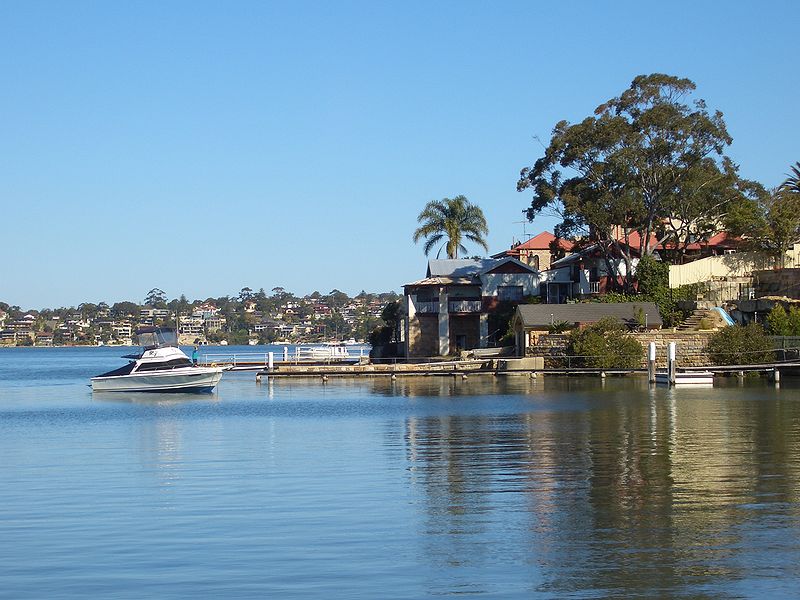
(Photo is of the waterfront at Kyle Bay)

← Older posts
Newer posts →

Enter your email address to follow this blog

Categories

Archives

Recent Comments

A.O.'s avatarwaltzingmorethanmati… on Zarah Zaynab and Wolfgang…
Madelyn's avatarMadelyn on Zarah Zaynab and Wolfgang…
JD's avatardrperegrine on Can Phoebe Complete This …
A.O.'s avatarwaltzingmorethanmati… on Rua and Rhoa
redrover23's avatarredrover23 on Rua and Rhoa

Blogroll

  • Appellation Mountain
  • Baby Name Pondering
  • Babynamelover's Blog
  • British Baby Names
  • Clare's Name News
  • For Real Baby Names
  • Geek Baby Names
  • Name Candy
  • Nameberry
  • Nancy's Baby Names
  • Ren's Baby Name Blog
  • Sancta Nomina
  • Swistle: Baby Names
  • The Art of Naming
  • The Baby Name Wizard
  • The Beauty of Names
  • Tulip By Any Name

RSS Feed

  • RSS - Posts

RSS Posts

  • Celebrity Baby News: Melanie Vallejo and Matt Kingston
  • Names from the TV Show “Cleverman”
  • Can Phoebe Complete This Sibset?
  • Zarah Zaynab and Wolfgang Winter
  • Baby, How Did You Get That Name?
  • Celebrity Baby News: Media Babies
  • Celebrity Baby News: Adelaide Crows Babies
  • Celebrity Baby News: Chris and Rebecca Judd
  • Names at Work: Name News From the World of Business and Employment
  • Celebrity Baby News: Sporting Round Up

Currently Popular

  • Girls Names From Stars and Constellations
  • The Top 100 Names of the 1900s in New South Wales
  • Girls Names of Australian Aboriginal Origin
  • Celebrity Baby News: Ross Stevenson and Sarah Fallshaw
  • The Top 100 Names of the 1940s in New South Wales

Tags

celebrity baby names celebrity sibsets english names famous namesakes fictional namesakes honouring locational names middle names name combinations name history name meaning name popularity name trends nicknames popular names saints names sibsets surname names twin sets unisex names

Create a free website or blog at WordPress.com.

Privacy & Cookies: This site uses cookies. By continuing to use this website, you agree to their use.
To find out more, including how to control cookies, see here: Cookie Policy
  • Subscribe Subscribed
    • Waltzing More Than Matilda
    • Join 517 other subscribers
    • Already have a WordPress.com account? Log in now.
    • Waltzing More Than Matilda
    • Subscribe Subscribed
    • Sign up
    • Log in
    • Report this content
    • View site in Reader
    • Manage subscriptions
    • Collapse this bar
 

Loading Comments...