• About
  • Best Baby Names
  • Celebrity Baby Names
  • Celebrity Baby Names – Current
  • Celebrity Baby Names – Past
  • Featured Boys Names
  • Featured Girls Names
  • Featured Unisex Names
  • Links to Name Data
  • Waltzing on the Web

Waltzing More Than Matilda

~ Names with an Australian Bias of Democratic Temper

Waltzing More Than Matilda

Tag Archives: popular names

Celebrity Baby News: Shelley Craft and Christian Sergiacomi

02 Monday Jul 2012

Posted by A.O. in Celebrity Baby News

≈ 6 Comments

Tags

celebrity baby names, celebrity sibsets, name trends, popular names

Television presenter Shelley Craft, and her husband Christian Sergiacomi, welcomed their daughter Eadie Rose on June 12. Eadie Sergiacomi joins big sister Milla Grace, who is nearly two.

Shelley is a popular presenter who was on Channel 7 for many years, until she moved to Channel 9 in 2008. She currently hosts Australia’s Funniest Home Videos, and is a co-host on Domestic Blitz and The Block. This year’s season of The Block had its final episode last night, with each couple’s renovated house going successfully to auction.

Christian is a cameraman on The Block, and he and Shelley were married in 2009, at their beach house in Byron Bay. He and Shelley have recently started their own business venture together, The Builder App.

You may remember that 2011 celebrity baby Sailor Shelley Denyer gained her middle name in honour of Shelley Craft.

Shelley and Christian proved that they had an eye for baby names when they chose Milla, as it is now Top 100 and still climbing. As Eadie is also on trend, it will be interesting to see how the name fares in the next couple of years.

MYTH: Australian Baby Names are Becoming Increasingly Influenced by American Trends

01 Sunday Jul 2012

Posted by A.O. in Baby Name Mythbusters

≈ 20 Comments

Tags

Australian names, Biblical names, classic names, created names, famous namesakes, fictional namesakes, flower names, French names, germanic names, Greek names, Irish names, Italian names, Mer de Noms, name data, name popularity, name trends, nicknames, Old English names, popular names, saints names, Scottish names, Spanish names, surname names, unisex names, US name trends, US popularity, Welsh names

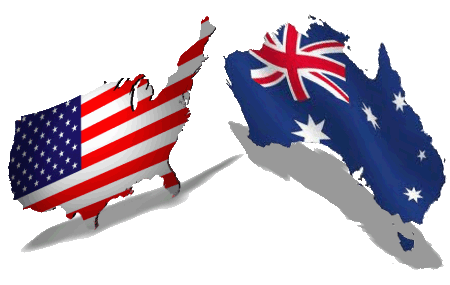
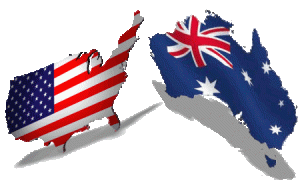
Since I last went mythbusting, the 2011 name data from the United States has been released, and this week it’s American Independence Day. To celebrate both events, I decided to compare Australian and US name data. (Lou at Mer de Noms brought out her own comparison of the data for the United States and England/Wales in May, and did something pretty interesting with it.)

That Australians are becoming increasingly Americanised, including their choice of baby names, is something not debated, but accepted as a truism. It is often mourned by older generations that Australians used to call their children good solid Aussie names like Barry and Sheila, and now give them sleek American-style names like Logan and Scarlett.

It’s a myth which sounds very plausible – I certainly know far more children named Logan and Scarlett than I do Barry and Sheila (actually I don’t know any children called Barry or Sheila). But I thought we should try to get some numbers to back the myth up.

So I decided to look at the Top 100 names from both countries, in the years 1930, 1950, 1970, 1990 and 2011. If the number of names shared by both countries went steadily up, that could help support the theory that Australian names were becoming increasingly “American”. By no means conclusive proof, but it would be a start, and frankly I couldn’t think of any other way of doing it.

As I went through calculating the number of shared names, I also took note of those trends at work in Australia and the United States, where they were the same and where they differed. This gave me a picture of changing trends through the years. (The data is from Victoria, because theirs go back to 1929).

1930

MALE – 65% shared with US Top 100

1930 marked the highest percentage of shared names between the countries. This wasn’t because Australians were more “American” in 1930, but because in every year, the common denominator for both countries were classic names like John, Thomas and William, and these sort of names took up more space of both countries’ Top 100.

Trends noticeable on the Australian Top 100 were names from Ireland, Scotland and Wales, such as Kevin, Malcolm and Trevor, and aristocratic English surnames, such as Neville. Americans preferred prominent surnames of their own citizens, such as Elmer and Lee. Popular names from America we didn’t share were “cowboy” names – Wayne, Earl and Jesse. In America, nicknames for boys were all the rage, including Billy, Bob and Jimmie.

FEMALE – 51% shared with US Top 100

Popular girls names in both countries were homespun names such as Margaret and Dorothy, as well as plant names like Hazel and Rose.

Australian trends for girls included names from Ireland and Wales, such as Sheila and Gweneth, saints names such as Carmel and Veronica, and literary inventions like Doreen and Mavis. American trends were for Germanic names such as Emma and Clara, and the clunky Old English Mildred and Bertha. America’s Hispanic population meant that Delores and Juanita were Top 100 there.

1950

MALE – 59% shared with US Top 100 (down 6%)

American trends for boys we had picked up by 1950 include Gary, after Hollywood star Gary Cooper, and that supposed Australian favourite, Bruce, also popular in the US.

America continued its love of nicknames, with Bobby, Joe and Fred all Top 100. Several of the Irish boys names such as Kevin and Barry were now on the US Top 100 as well, but new Irish-style names such as Shane were still to gain American acceptance. Already in the US you can see a reluctance to use “feminine sounding” or unisex names such as Lindsay and Noel, which were Top 100 in Australia. In Australia, that same 1950s gender-anxiety produced the opposite result, with some unisex names like Leslie becoming male-only.

FEMALE – 47% shared with US Top 100 (down 4%)

The most noticeable shared trends for girls were those glamorous Hollywood names such as Marilyn (Monroe) and Rita (Hayworth). Even when Australians did take a name from America, such as Jennifer from Hollywood star Jennifer Jones, it didn’t always follow that Americans would embrace it as rapidly themselves. Jennifer was a 1950s name in Australia, but didn’t peak in the US until the 1970s.

Australian girls were being given French names like Annette and Jeanette, while Americans girls had Jacqueline. Another popular Australian “French” name was Lorraine, given in honour of St Joan of Arc, sometimes called The Maid of Lorraine. The American love of the nickname meant that names such as Judy and Peggy were Top 100 for girls.

1970

MALE – 56% shared with US Top 100 (down 3%)

Popular 1970 names which we think of as “American style” were in evidence on both charts, such as Bradley, Jason, Glenn, Darren and Craig.

Australian boys names not picked up in the US included Scottish-style names such as Ross, Graham, Stuart and Gavin, and the “feminine sounding” Ashley and Jamie. Differing ethnicities also made their mark, with Spanish Carlos in the US Top 100, and Italian and Greek names like Giovanni and Giorgio in the Australian Top 100. American nicknames powered on, with Larry, Terry and Jerry amongst them.

FEMALE – 51% shared with US Top 100 (up 4%, return to 1930 level)

It was the decade of those 1970s names Sharon and Tracey, although Sharon in particular had been popular in America for some time and we’d only just caught up.

Names such as Samantha and Amanda were already popular in Australia in 1970, but would have to wait until the 1980s to make it big in the US. Conversely, Amy was popular in the US, but wouldn’t be here until the 1980s. French Nicole was in vogue in both countries, and we’d caught up with Jacqueline; however Australia also had Danielle, Louise, Justine, Natalie, Simone and Josephine – typical 1970s girls names that were underused in the US. Scottish and Welsh names like Fiona, Megan and Bronwyn were popular here but didn’t get a look-in in the US. We were proudly using names of Australian origin, like Kylie and Narelle; naturally these were unknown in the US.

1990

MALE – 56% shared with US Top 100 (no change)

Trends from the US we were embracing were Old Testament names, such as Jacob and Zachary; and the new surname names, such as Ryan and Mitchell.

A new generation of “too feminine” boys names that were popular in Australia were ignored in the US, such as Shannon, Tristan and Leigh, as were more Scottish, Welsh and Irish-ish names, such as Lachlan, Rhys and Kane. Hayden and Jayden were already Top 100 in Australia, but not in the US. America had finally gone off nickname names, while Australia now had Jack, Jake and Ricky. American names Beau, Jackson and Tyson were popular then, as now, in Australia; of the three, only Jackson has hit the US Top 100 so far.

FEMALE – 56% the same as the US Top 100 (up 5%)

Names that both countries had in common were those typical 1990s names, like Tiffany, Brittany, Kayla and Caitlin.

Americana we were still to discover included unisex names for girls like Ariel, Shelby and Paige. Although the US had Danielle and Natalie by now, French names such as Monique, Elise, Renee and Madeleine which were popular here had apparently failed to make an impression. Although Welsh Caitlin was all the rage, the US were not on board with Tegan and Rhiannon, as we were. Most notably, Emma, Amelia, Charlotte, Sophie, Chloe and Zoe were missing from the US Top 100 – while American parents who chose these names in 1990 were ahead of the trends, in Australia, parents choosing these names in 1990 were just following the trends.

2011

MALE – 59% shared with US Top 100 (up 3%, return to 1950 level)

Congruence in popularity between the two nations has risen to 1950 levels, with many name trends in common, mostly a fresh crop of Biblical names, such as Elijah, and surname names, such as Mason.

American parents are now avoiding a new generation of Scottish names, such as Angus and Hamish, while Irish names like Declan and Flynn are also neglected in the US. Oddly enough, Kevin is still Top 100 in the US, while it’s considered a bit dated here. The scunner against nicknames continues as Americans shun Australian populars Charlie, Harry, Archie, Sam and Nate. No longer merely  shying away from “feminine sounding” names for boys like Bailey and Riley, parents in the US have actually given these names to their daughters in such numbers that they are now Top 100 for girls, while Top 100 for boys here. Several names we have taken from the US, such as Jett, Hudson and Jasper, are still not popular in America.

FEMALE – 47% shared with US Top 100 (down 9%, return to 1950 level)

Girls names have also returned to 1950s levels. Many names are shared because America has caught up with our popular names from 1990, but Australian parents have also begun to use unisex names for girls like Madison and Addison.

America has abandoned many names as “outdated” such as Amy, Jessica, Holly and Amber that have taken on “modern classic” status here. While America has accepted Lily, it is less keen on our popular plant names Daisy, Ivy, Violet, Willow, Olive and Rose. British-style names such as Isla and Imogen cut no mustard in the States. Meanwhile, popular American virtue names like Genesis, Serenity, Trinity, Nevaeh and Destiny do not resonate here. Perhaps they will in the future.

CONCLUSIONS

I did not manage to bust this myth, but neither did I find much evidence to support it, so I will give its status as MYTH UNCONFIRMED.

As I compared popularity charts from the two countries, I realised more and more that it was a case of apples and oranges. Names took longer to gain popularity in the US, and it was harder for them to stay in the Top 100; name popularity was a competitive environment there. Australia has a much smaller population size, which means that name trends show up faster here. We’re also more likely to hold onto our favourite names once we’ve found them, sometimes for generations.

I don’t think it’s an exaggeration to say that American parents are absolutely obsessed with getting ahead of the current trends, and can watch the slowly rising popularity of their chosen names with almost comical anxiety. This makes some sense, because trending names can take so long to reach the Top 100 that they have a good chance of having ten to twenty years before that happens. In Australia, this behaviour makes no sense at all, because as soon as a name begins to show up in the data, it’s basically already quite popular. As we keep names around for longer, there’s no real rush to “catch” a name on the way up either; we can always wait until it’s a cosy, familiar “classic”.

In any given year, Australia and the US will share around half the names on their respective Tops 100s, and this has not changed across time. We share many name trends, and since at least 1950, Australia has been drawn to names from America. Sometimes it took us a long time to get onto a particular trend from America, and other times we took to it with greater enthusiasm than Americans did themselves.

Both countries also have their own styles of naming. Australia has always been fond of Irish-inspired names, and although Barry and Sheila have fallen by the wayside, we now have Finn and Molly. Scottish names continue to be a growth area, with Angus, Hamish, Callum and Isla seeming rather stylish to us. Through the years, there were many names unique to the Australian popularity charts. Names that I thought of as typical of their period, such as Dulcie in 1930, Glenys in 1950, and Jacinta in 1970 seemed to be unknown in the US.

Americans are slow to adopt Irish names, but often touchingly faithful to them, and are wary of Scottish and Welsh names. They have a deep suspicion of unisex names for boys or anything that even sounds remotely feminine, while comfortable with briskly masculine names for girls. Flower names are not popular there; perhaps they seem too girlish even for girls.

Due to going overboard on nicknames in the past, America has developed almost a horror of them, much in the same way I can no longer stomach gingerbread after overindulging on it a few Christmases ago. As nicknames are currently internationally popular, this has seen them unfairly branded as a bit stuffy on the issue, when they’re really just over the whole thing.

We don’t have to try to follow American trends, and in fact a couple of them would be downright foolish for us to imitate. But the United States has proved a rich source of name inspiration for many decades, and I know it will continue to be so for many decades to come.
The Top Ten Boys Names of 2028

27 Sunday May 2012

Posted by A.O. in Your Questions Answered

≈ 16 Comments

Tags

name data, name popularity, name predictions, name trends, nicknames, popular culture, popular names, surname names, UK name popularity, UK name trends, Upswing Baby Names, US name data, US name popularity, vocabulary names

This follows on from The Top Ten Girls Names of 2028, so if you want to know the methods used, and what this is all about, and whether it’s really the Top 10 of 2028, then go read that first. If you’ve read it, you’ll know I ran into a few frustrations doing the girls names, and if anything, the boys names ended up being even more of a headache.

Angie, the discerning blogger behind Upswing Baby Names, was kind enough to leave me a long and thoughtful comment, which in part wondered whether posting predictions itself could change the future.

For example, a parent worried about a name they like gaining popularity may avoid it, even if the name is currently under-used. Therefore, names tipped to become popular are less likely to actually become popular. (Hmm, if this is true, pick a name that is touted as being popular in the future, because that will scare everyone else off!)

Angie herself, in her article Warning: Your Baby’s Name Could Become #1, notes that the number of popular names is shrinking markedly each decade, and that in effect, the popularity of names is virtually meaningless today. Yet somehow, we worry about it more than ever. Pretty crazy, huh?

Now I didn’t fret myself too much over Angie’s concerns, because I didn’t really imagine many people would read my blog entry, and didn’t think those that did would pay any attention. So I was somewhat disconcerted to see that it had been posted on a parenting forum, in part as an alert that the name a woman had chosen for her daughter, Freya, had been pegged for potential eventual #1 status by yours truly.

Fortunately, at least one of my predictions was proved right, because nobody appeared to pay much attention to me, and several flat-out said I was wrong. (These tended to be the type of people who didn’t think Olivia was popular, because they hardly knew anyone of that name, so their views on name popularity may not be particularly au courant).

The overwhelming advice given was exactly what I would have said myself: Don’t worry about whether a name will be popular in the future, that isn’t something you are able to control, and it would be foolish to avoid using a name you love for fear of what may happen later.

Sage, sane and sensible advice. Follow it!

Current Top Ten

  • William #24 in ’95 and #37 for the 1980s (gradual rise up the Top 50)
  • Lucas #87 in ’95 and #105 for the 1980s (steady rise into the Top 100)
  • Lachlan #26 in ’95 and #75 for the 1980s (steady rise up the Top 100)
  • Ethan #61 in ’95 and #323 for the 1980s (precipitious rise into the Top 100)
  • Oliver #75 in ’95 and #140 for the 1980s (steep rise into the Top 100)
  • Jack #7 in ’95 and #91 for the 1980s (steady rise up the Top 100)
  • Noah #161 for the 1990s and in rare use for the 1980s (new name that skyrockets)
  • Thomas #6 in ’95 and #27 for the 1980s (gradual rise into the Top 10)
  • Joshua #1 in ’95 and #11 for the 1980s (gradual rise to #1)
  • Cooper #125 for the 1990s, in rare use in the 1980s (new name that skyrockets)

1. ISAAC

Isaac is currently #19, and in 2001 he was #40. This is pretty close to William’s stately progress through the Top 50, and as such, I am picking him as the #1 name of the future. It did come as a bit of surprise to me, but it’s the only name that even comes near to matching William’s pattern. When I checked the Top 100 for the US and England/Wales, both of them still have Isaac around where he was for us ten years ago, but making similar progress. The popularity of Isaac may become apparent here earlier due to our smaller population size.

2. KAI

Kai is #83 right now, and he was #105 for the early 2000s. This is an extremely good match with Lucas, almost perfect in fact. Now the question is, will Kai shoot up the Top 100 the way Lucas did? I’m a bit sceptical, because I can’t help feeling that Lucas got quite a big boost from popular culture. I think someone is going to have to produce a TV show with a likeable main character named Kai. Even without such a TV show, it’s clear that Kai is doing very well for himself.

3. LOGAN

Logan is currently #34, and in 2001 he was #78. That’s not quite a good enough match to please me, but it’s the best I could get. Although the two names sound a bit alike, I don’t think Logan is going to be the next Lachlan, because Logan simply doesn’t mean as much in Australia as Lachlan does; it doesn’t have the same history and resonance. As you can see, it hasn’t climbed as high in the same space of time either. However, Logan is a common place name in Australia, and I’m still tipping it to continue rising.

4. CHASE

Chase is currently #85, and he was #407 for the early 2000s. I couldn’t find a name which mimicked Ethan very closely, and Chase was the best I could do. As you can see, he has actually climbed faster than Ethan did, and Ethan was no slouch. If Chase continues at his current rate, he will be Top Ten sooner than 2028. We’ll have to wait and see.

5. HUGO

Hugo is currently #90, and he was #143 for the early 2000s. This is a similar pattern to Oliver, but Hugo hasn’t climbed quite as high as Oliver did in the same space of time. However, you can see that he is still making good progress, and looks set to continue. He also has the fashionable OH sound we saw on the girls’ list – although can anyone really believe in a Top Ten which contains both a Harlow for girls and a Hugo for boys? It boggles the mind.

6. LUCAS

Lucas is currently #2, and ten years ago he was #82. This looks quite similar to Jack’s climb from the bottom of the Top 100 into the Top 10. Jack has of course proved himself a real stayer, and we’ll have to see whether Lucas has similar powers of endurance. I was going to say I doubted it, and then I looked back through the blog and saw I had earlier tipped Lucas to be only just outside the Top 10 in thirty years, based on comparisons with the Top Ten of 1982. So for reasons of consistency, I now feel compelled to say that yes, Lucas will still be in the Top Ten seventeen years later.

7. BENTLEY OR GRAYSON (???)

I knew I was going to hit a horrible snag at some point, and this was the point where that occurred. I needed to find a name that, like Noah in 1995, is around #160 at the moment, but ten years ago, did not even chart. The trouble is, it’s not possible to find that on the present chart, because it’s too new to show up yet. Left struggling in the dark, all I could think of was that since Noah was a name that became popular in the United States before it did here, I would see where Noah was on the US charts in 1995. It had just scraped its way onto the very bottom of the Top 100, after climbing a very brisk 59 places. I had a look at the 2011 US chart to see if there were any names that looked similar to that, which might possibly be around #160 here, and drew a blank. The names on the US Top 100 which climbed the highest last year were Bentley and Grayson, but only 25 places – not even half what Noah managed. Are Bentley and Grayson in the mid-100s here at the moment? I have no idea. If I go down just outside the Top 100, Easton (#102) climbed 43 places, and Jace (#106) climbed 40 places, which comes closer to Noah, but I can’t really see either of them in the mid-100s. I don’t think there is an equivalent to Noah, but without any solid data to draw on, I’m left dangling. Your guess is very much as good (or bad) as mine – and that is all this is, complete guesswork.

8. ETHAN

Ethan is currently #4, and in 2001 he was #17. That isn’t a perfect match with Thomas, but it does show Ethan moving up the Top 50 into the Top 10, like Thomas. I could have chosen either Oliver or Noah, but the idea of having both Olive and Oliver in the Top 10 seemed ludicrous, and I was quite out of patience with poor Noah by this stage. I also saw that I had earlier tipped Ethan to be a real stayer, so once more felt that I had little choice but to choose him again.

9. WILLIAM

William is currently the #1 name, and in 2001 he was #10. This is virtually a perfect match with long-lasting Joshua, who was #1 in 1995, and #11 for the 1980s. Basically if trends in boys’ names continue as they have been, 30% of the Top 10 in seventeen years will consist of names that are in the present Top 10. I feel as if boys’ names are becoming less conservative and there will be greater change coming in the future, but that may just be wishful thinking on my part.

10. ARCHER

With finding an equivalent for Cooper, I was in a similar position to finding an equivalent to Noah (ie there would be no data available at this early stage). However, I felt I had more freedom to choose, because Cooper seems to be a name which is much more popular in Australia than anywhere else. Therefore, there was no need to look through overseas data, or do any number crunching – it was just a matter of thinking of a new name which has grown wildly in popularity over the past few years, yet isn’t in the Top 100 yet. I was also hoping it would be an English surname/vocabulary name like Cooper. It really didn’t take much thought to light upon Archer; after reading birth announcements for months, I can see Archer is a name taking off like wildfire, and anyone can see it will be in the Top 100 within a few years or so. Can I see it reaching the Top 10? Yes, easily. It has better nickname options than Cooper, and a more romantic meaning, so I wouldn’t be surprised if it does better than Cooper.

My Tips for Coming Trends

  • IE sounds, as in Isaac and Kai
  • OH sounds, as in Logan and Hugo
  • Hard K sounds, as in Isaac, Kai and Lucas
  • S-enders, like Chase and Lucas
  • The rise and rise of the surname name for boys
  • Stronger influence from the US than from the UK
  • The names that are popular now still hanging on and becoming standards

The Top Ten Girls Names of 2028

20 Sunday May 2012

Posted by A.O. in Your Questions Answered

≈ 9 Comments

Tags

classic names, colour names, famous namesakes, French names, future trends, Google, K.M. Sheard, Laura Wattenberg, name data, name popularity, name trends, Nook of Names, place names, popular culture, popular names, retro names, surname names, The Name Wizard, unisex names, US name trends

A couple of weeks ago as I was checking my stats, I saw that the release of all the 2011 name data had influenced someone to Google me a rather interesting question: What names will be popular in the future? Now if someone had asked me that a year ago, I would have been very much perplexed as how to answer. Even Laura Wattenberg from The Name Wizard suggests that guesswork is pretty much all we have to go on.

However, last October Kay from Nook of Names brought out her Top Ten for 2035, based on the US data. Kay’s method was simple, yet inspired – she looked at where the currently popular names were in 1985, and then found a name which is in a similar position today, in order to extrapolate them to their 2035 position. I thought I’d give her method a go, but also see check to see where each name was a decade previously to see if each name was following a similar trajectory. (I think Kay probably did this too).

I went into it very optimistically, but found it brought me a certain degree of angst, because it’s actually pretty difficult to find two names that follow the exact same path to success. However, I persevered, and found the closest possible matches available. In case you’re wondering why I hit on 2028, it’s because the New South Wales Top 100 goes back to 1995, so I went ahead 17 years from last year’s data. Of course, if you’ve just had a baby, 17 years will see it verging on adulthood – another reason it seemed like a good time period to evaluate.

Now, do I really think this is the New South Wales Top Ten for the year 2028? Well no, that’s just a sensationalist headline designed to grab your attention. Frankly I will be staggered (and slightly scared) if all these names simultaneously turn up in the Top Ten of the same year, let alone in this order! However, based on their current performance, I am tipping most of these names to increase in popularity – in some cases, to dramatically increase.

Current Top Ten

  • Chloe #22 in ’95, and #72 for the 1980s (a steady rise up the Top 100)
  • Ruby #107 for the 1990s, and #560 for the 1980s (a skyrocket from nowhere)
  • Olivia #26 in ’95, and #117 for the 1980s (a steady rise into the Top 100)
  • Isabella #34 in ’95, and #509 for the 1980s (a skyrocket from nowhere)
  • Mia #138 for the 1990s, and #320 for the 1980s (a steep rise)
  • Charlotte #87 in ’95, and #180 for the 1980s (a steady rise into the Top 100)
  • Sophie #25 in ’95, and #74 for the 1980s (a steady rise up the Top 100)
  • Sienna #402 for the 1990s, and barely in use in the 1980s (a new name, climbing exponentially)
  • Ava #466 for the 1990s, and barely in use in the 1980s (a new name, climbing exponentially)
  • Amelia #52 in ’95, and #118 for the 1980s (a steady rise into the Top 100)

FUTURE TOP TEN

1. ABIGAIL

Abigail is currently #27, and ten years ago she was #88. I thought that made her a good match with Chloe. Abigail is already a Top Ten name in the US, and although we’ve been lagging behind, by 2028 I think we’ll be well and truly caught up. I hesitated before nominating Abigail as the #1 name, but it does make sense, because of the rampant popularity of her many short forms.

2. OLIVE

Currently, Olive is probably somewhere in the 120s-130s, and a decade ago she was barely in use. That pattern doesn’t exactly match Ruby’s, but it isn’t too different either. If you’re looking for a meteoric rise to echo that of Ruby, Olive fits the bill better than any other candidate. I also like the idea of Ruby’s replacement being another vintage colour name. Even today, when Ruby is so hugely popular, there are grandparents meeting their new grand-daughter and saying, “But Ruby is an ugly old lady name!”. I predict similar reactions to all the baby Olives who will be born in the future.

3. EVA

Eva is currently #21, and a decade before she was somewhere in the 150s. Her climb has been steeper than Olivia’s, but she’s the best match I could find. That steeper climb may mean she peaks sooner than Olivia, but she’s also a classic name which has never left the charts, which I’m hoping will give her some ballast. She does almost seem like a shorter, snappier form of Olivia.

4. ISLA

Isla is currently #22, and ten years ago she was #445 for the early 2000s. This wasn’t a close enough match to please me, but no matter how I wrestled with the data, Isla was the closest equivalent, and did have a similar zoom up the charts, as well as looking like an updated Isabella. I can’t see any reason why Isla won’t continue to go higher, quite possibly to #1, and both Isabella and Isla have been chosen for royal babies. Of course, a major book and movie series with a main character called Isla wouldn’t hurt either, just for that extra buzz factor.

5. FREYA

Freya is currently around the 130s, and was #269 for the early 2000s. That’s not quite as steep a rise as Mia had, but it’s pretty darn close. Not only do Mia and Freya both have a northern European feel to them, but both are are associated with actresses as well – Mia with Mia Farrow, and Freya with Freya Stafford. I can see Freya doing very well indeed, and can easily picture her going to #1.

6. ELOISE

Eloise is currently #96, and a decade ago she was #140 for the early 2000s. I think that’s a fairly good match with Charlotte, which also went from the 100s into the lower portion of the Top 100 in ten years. Eloise seems a worthy successor to Charlotte, for both are elegant French names which manage to sound both strong and feminine. Eloise isn’t climbing as steeply as Charlotte, so we’ll have to see how far she manages to get in 17 years, but I think she will do well.

7. ZARA

In 2011, Zara was #26, and a decade ago in 2011 she was #83. This seems similar to Sophie’s steady rise from the bottom third of the Top 100 into the Top 20. Both Sophie and Zara have a French origin, with just a touch of the Middle East about them. I’m not sure whether Zara will keep climbing or if she’s peaked already and will begin a gentle decline; however, I have similar doubts about Sophie as well. If you’ve really been paying attention, you will see I could have easily swapped Abigail and Zara around, and after much deliberation, I decided Abigail seemed more likely to go to #1.

8. HAVANA

Now this is the part where my fortune-telling gets really sticky, because in 1995, Sienna was only used about 11 times per year in New South Wales. In other words, she may show up on the data now, but that’s only because of her success – in 1995 she wouldn’t have even been a blip on the radar, and in 1985, she was barely known. That means I had to come up with a name that is still little used, but feels as if it might be going somewhere. I wanted to pick a name similar to Sienna; I wanted a modern name just coming into use, and I hoped to find one that was also a place name. Quite a tall order, but eventually I decided upon Havana. Of course it’s a huge gamble picking a name so far in advance, but Havana seems like a pretty good bet. She’s similar to Heaven, Haven, Ava, Anna, Hannah, Savannah, Vanna and Ivana – in other words, she sound like a whole bunch of familiar words and names while having a very clear identity of her own. She doesn’t look out of place on this hypothetical Top Ten either, as she shares a V sound with Eva and Olive. Sienna only whizzed up the charts after Sienna Miller began her career, but in 17 years, it’s possible that a young model named Havana will be ready to take the world by storm. It could happen.

9. HARLOW

When it came to picking another Ava for the future, although I was looking for a name even rarer than Havana, I really had a much easier time of it. Ava was a name that we gained from America, so I simply went to the US Top 1000 for 1995 and saw where Ava was, then tried to find today’s equivalent. Of course, I was looking for one which was climbing like Ava, and if possible, had a similar feel to it. In 1995, Ava was #737, and ten years earlier, she wasn’t on the Top 1000, but just scraped in the year before. After much internal debate, I decided upon Harlow, which was #621 last year, and not on the Top 1000 in 2001. Although Harlow is climbing far more rapidly than Ava, she seemed the most likely candidate. Like Ava, she is a name redolant of Hollywood glamour, and she has the OH sound found in Eloise, while beginning with H like Havana. She fits on the list. At the moment, Harlow is very little used in Australia, and newspaper articles even discuss the strange unpopularity of Harlow. Like Ava, she may well fly under the radar, until one day we all wake up and suddenly realise Harlow is in the Top 100 and climbing. (Cue parental handwringing).

10. ROSE

Rose is currently #65, and she was #119 for the early 2000s. Not only does this look quite similar to Amelia’s pattern, but both these names are classic, pretty and wholesome. Rose is by no means shooting up the charts, but she is ascending in a calm and ladylike fashion, just like Amelia. Rose doesn’t have all the nickname options that Amelia does, so I’m not sure whether she will be Top 10 by 2028, but I am tipping her to continue rising.

My Tips for Coming Trends

  • OH sounds, as found in Eloise, Harlow and Rose
  • V sounds, as found in Olive, Eva and Havana
  • Short brisk names ending in -A, such as Eva, Isla, Freya and Zara (the new Mias)
  • Stronger influence from the UK than from the US, but with the US influence being far more spectacular in nature (much like today)
  • A nice balance between “old-fashioned names” like Olive and Rose, and modern inventions like Havana and Harlow (just like today).
  • Most popular girl’s names will be definitely feminine, but Harlow may show the potential for unisex names and surname names to break into the Top Ten for girls.

Boys Top Ten for 2028 will be next week!

Famous Name: Evelyn

16 Wednesday May 2012

Posted by A.O. in Famous Names

≈ 6 Comments

Tags

classic names, english names, famous namesakes, fictional namesakes, germanic names, Italian names, locational names, name history, name meaning, name popularity, name trends, nicknames, Norman names, Old French names, popular names, rose names, surname names, unisex names

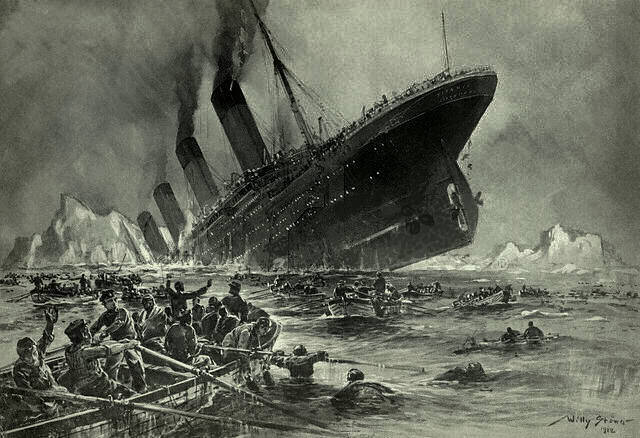
April 15 this year marked one hundred years since the sinking of the RMS Titanic. There were many exhibitions to mark the event, and James Cameron re-released his romantic film Titanic in 3-D form. As I read the many newspaper articles about  the centenary, and watched ceremonies being performed in various countries on television, I wondered whether there were any Australians aboard the ill-fated Titanic, and if so, had any of them survived?

It turned out that there were six Australians who travelled on the Titanic – four crew members, and two passengers. Crew members Donald Campbell, Alfred Nicols and Leonard White were drowned and their bodies never found, while second-class passenger Arthur McCrae also drowned, but his body was recovered and buried in Halifax, Canada. That left two survivors: third-class passenger Charles Dahl, and crew member Evelyn Marsden.

Although Charles had spent thirty years in Australia, he was born in Norway and was actually in the process of making his way back to his home country when he travelled on the Titanic (he eventually made it home and died in Norway many years later). This leaves Evelyn Marsden as the only female Australian survivor, the only surviving Australian crew member, and the only Australian-born survivor. That made me decide to choose Evelyn as my Famous Name to mark the centenary of the sinking of the RMS Titanic.

Evelyn was from country South Australia, and the daughter of a railway worker. As a young girl, she learned to row a boat on the Murray River while staying on a farm, and later trained as a nurse at Adelaide Hospital. She had previously worked on board the Titanic‘s sister-ship, the Olympic, and signed on to work as a stewardess on the Titanic on April 6 1912, aged 28. She also assisted as a nurse for the first class passengers.

During the sinking, Evelyn escaped on board Boat 16, which held about forty people. They were in the life boat all night, from about half past one in the morning until around seven in the morning, when they were picked up by the Carpathia. Evelyn’s rowing skills became necessary, because she helped row the boat, and also took care of a baby.

Shortly after the disaster, she married a doctor named Abel James who had also worked on board ocean liners, and they went to live in South Australia. Evelyn made a point of returning to the farm, and thanked them for teaching her to row. Evelyn and her husband ended up living in Bondi, Sydney, and when they both passed away in the late 1930s, they were buried in Waverley Cemetery. Their grave was unmarked until 2000.

Evelyn is an English surname derived from the female name Aveline. Aveline is the Norman French form of Germanic Avelina, a pet form of Avila. It’s not certain what Avila meant, but it’s generally thought (perhaps hopefully) that it meant “desired”, as in a child that was long hoped for. The name is possibly related to Ava.

Other theories I have heard are that the surname is derived from aveline, the Old French word for “hazelnut” (the word comes from the Italian city of Avella), or after a place in Shropshire, which the Normans are supposed to have named after a village in France, Ivelyn. In early records, the surname is found as both Ivelyn and Avelyn.

Evelyn was first given to boys in the 17th century, since Aveline was no longer in use as a woman’s name. In the 19th century it began to be bestowed on girls as well, quite possibly because Fanny Burney’s novel Evelina reminded everyone that the name had a possible feminine origin (Evelina is the Latinate form of Aveline). If you are a fan of the theory that the surname is after the hazelnut, then you may see the male name Evelyn and the female name Evelyn as having quite separate origins.

The most famous person with the surname Evelyn is probably 17th century English writer John Evelyn, best known for his diaries. He wrote on many other subjects as well, including gardening, and the Evelyn rose is named after him – a beautiful old-fashioned rose with clusters of large pinky-apricot blooms. There is currently a campaign to restore Evelyn’s own garden at Sayes Court, in east London.

Nearly everyone has heard of the male English novelist Evelyn Waugh (whose wife was famously also called Evelyn), and a famous Australian man named Evelyn is Evelyn Owen from Wollongong, who invented the Owen gun. Mr Owen was apparently known by the nickname Evo. A famous Australian woman named Evelyn was Evelyn Tazewell, a champion hockey player in South Australia for many decades. Miss Tazewell went by the nickname Taz.

Evelyn is a classic name which has never been out of the charts. It was Top 100 in the 1900s, and stayed there until the 1950s. It reached its lowest point in the 1980s, at #435, then began climbing again. Last year it joined the Top 100 for the first time since the 1940s, coming in at #67 (an impressive leap). It has never charted as a male name since Federation.

The pronunciation of Evelyn is up for discussion, because it can be said EEV-lin, EEV-uh-lin, EV-lin or EV-uh-lin. I have heard theories that EEV is the British way and EV the American way, but plenty of people in both places say it the other way around. Another theory is that EEV is the masculine pronunciation, and the girl’s name should be said with an EV. This advice sounds plausible to me, but surely rather outdated given that Evelyn hasn’t been a serious contender as a boy’s name for over 120 years?

Most people in Australia go with the EV-uh-lin pronunciation, although EV-lin gets used as well, because it’s a more “Irish” way of saying it (apparently). I must be very odd, because I naturally say EEV-uh-lin, as if the name was related to the name Eve. I don’t recommend following my (no doubt wrong) example, except that it does lead rather neatly into the popular nickname Evie. You could use Evvie for the other pronunciation, although to me that sounds as if you are saying heavy in a Cockney accent.

Classic Evelyn is very much back in fashion, and looks certain to soar. She fits right in with Ava, Eva, Eve, Evie, Eden, Eloise, Madeleine, Madison and Addison, yet has an elegant air all her own.

Famous Names: Blake

09 Wednesday May 2012

Posted by A.O. in Famous Names

≈ 9 Comments

Tags

english names, famous namesakes, fictional namesakes, name history, name meaning, name popularity, nicknames, Old English names, popular names, surname names, unisex names

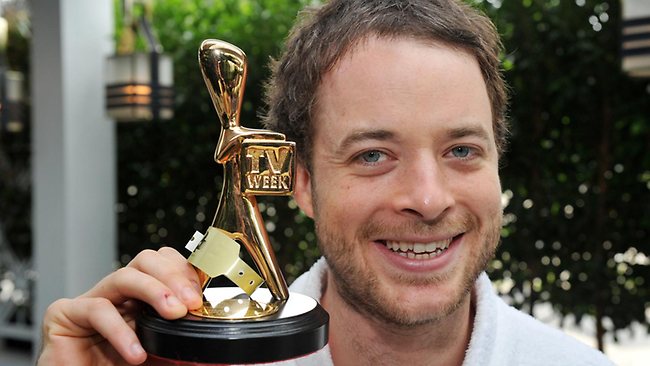
Comedian Hamish Blake has cropped up several times on the blog. His name was included in the post Boys Names That Only Chart in Australia, and we also took a look at how successful his name is. He’s had a dream run in the not-usually-lucrative field of comedy ever since he dropped out of a double degree in Science and Commerce to buddy up with Andy Lee as a comedic duo. Together they have had a ratings winning drivetime radio show filled with prank calls and the like, and several successful TV shows, most recently, Hamish and Andy’s Gap Year. Eventually it all paid off for at least one of them when Hamish won the Gold Logie for being the Most Popular Personality on Australian Television at this year’s Logie Awards.

Blake is an English surname which has two different origins of opposing meanings. Both of them began as nicknames. One is the Old English blæc, meaning “black”, referring to someone with black hair or a dark complexion. The other is from blāc, meaning “pale”, referring to someone with very blond hair or a fair complexion. One theory is that the two nicknames were ethnically based, with the first denoting the dark Celts, and the second denoting the fairer Jutes, who were from Jutland (today it’s Denmark, and the bits of Germany that join on to Denmark).

Although you’ve no doubt twigged that blæc became our English word black, it may not have immediately occurred to you that blāc is related to our English word bleak. Late in the Middle Ages, the two words were merged into blake, moving us closer toward the modern word black, but somehow immersing in it a word meaning the opposite. However, if you consider black and bleak together, they don’t seem quite so contradictory.

The Blakes are an Irish aristocratic family, dating back to the Norman Conquest of Ireland, so you could see the first name Blake as derived from this aristocratic surname. However, those of a literary bent are more likely to see it as honouring William Blake, the visionary English poet and painter who was a seminal influence on the Romantics. If you are something of a sci-fi fan, the name may remind you of Roj Blake, from the popular 1970s and ’80s TV series, Blake’s 7.

Blake reminds me of the much-loved illustrator Quentin Blake, as I was raised reading Roald Dahl‘s books, with the enchanting Mr Blake’s humorous drawings, which convey life and movement so effortlessly. My childish desire was to look as cheerfully plain and lank as the children that Quentin Blake drew; however to my disgust, my parents insisted on lots of fresh air, exercise and home grown produce, so that I remained obstinately tanned, rosy-cheeked and sturdy. Luckily I didn’t know enough about genetics to realise it was also their fault I wasn’t plain!

Another Blake from the era of the 1980s was Blake Carrington from American soap opera, Dynasty. This ruthlessly wealthy oil tycoon, whose life revolved around kidnappings, comas and the search for Nazi gold, seems to have given the name a rather “preppy” image in the United States. We don’t have the word preppy here, but as far as I can work out, it means “offensively middle-class”. Perhaps someone more knowledgeable can enlighten me on this one? I suspect that here its image is a bit more relaxed (although rebel Blake Dean from Home and Away managed to have a rather tortured time in Summer Bay, even without any Nazi gold).

Blake is often listed as a unisex name on international sites, although it is Top 100 for boys, and the only female Blake ever mentioned is actress Blake Lively from Gossip Girl. There is nothing especially boyish about the meaning of the name Blake, but its consonant-vowel-K sound has the same pattern as names such as Jack, Luke and Jake, giving it a masculine intonation (although it is a bit like Brooke, too). Although I could accept it as unisex, it’s seen as a male name in Australia, and you may get some resistance to using it for a girl. The similarity between Blake and the word bloke could well be keeping it in the boy’s club.

Blake first entered the charts in the 1950s, and took off in the 1970s (hmm, Blake’s 7, anyone?), so that it was Top 100 by the 1980s. It reached its peak in the 1990s, just outside the Top 20. Since then, it has fallen in popularity, although it is still in the Top 50 (and more popular in Australia than anywhere else in the world). Perhaps surprisingly, Hamish Blake doesn’t seem to have helped the popularity of the name, even though the name Hamish is doing pretty well for itself in the charts.

Although statistically Blake has passed its prime, to many it fits into that handy category of Popular But Not Too Popular Names, and has many namesakes from popular culture which have garnered it affection. It’s a nice, short, simple name which sounds sporty, surfer and skater, but still has some room for art and poetry. I tend to think its real strength is as a middle name, however.

Popular Names for Boys

06 Sunday May 2012

Posted by A.O. in Name Themes and Lists

≈ 23 Comments

Tags

Aramaic names, band names, Biblical names, car names, celebrity baby names, classic names, english names, famous namesakes, fictional namesakes, French names, germanic names, Greek names, hebrew names, honouring, Latin names, locational names, name history, name meaning, name popularity, nicknames, Old Norse names, popular culture, popular names, royal names, saints names, Scottish names, surname names

Follows on from Popular Names for Girls.

William

William is a solidly classic name which has never left the Top 50. It was the #1 name of the 1900s, and gradually decreased in popularity, hitting its lowest point during the 1970s, at #48. However, its fortunes were soon to recover, because in 1982, heir to the British throne Prince Philip, and his then wife, Diana, Princess of Wales, welcomed their first child and eldest son, William Arthur Philip Louis. Prince William was named after his father’s cousin and personal hero, Prince William of Gloucester, who died in an air crash ten years earlier. Prince William made his first visit to Australia as a baby, and this was an immediate help to the name’s popularity. By the time Prince William began university in 2001, the name was already in the NSW Top 10. It reached #1 in 2009, the year after Catherine Middleton began accompanying Prince William to official functions, and there it has remained. In 2011, Prince William made a much-appreciated visit to flood-affected areas of Australia, and shortly afterwards treated the world to a slap-up royal wedding. It’s likely this princely name will remain at the top for at least another year.

Jack

Jack is a classic name which has never left the charts. Top 100 during the 1900s-30s, it sunk to its lowest point in the 1970s, at #269. However, so rapid was its growth that it joined the Top 100 again during the 1980s – the same decade that pop singer John Farnham released his Whispering Jack album. Whispering Jack went to #1, and is the highest-selling album ever in Australia, having gone platinum 24 times over. By the 1990s, Jack was already Top 10, a decade when Leonardo di Caprio played water-logged lover Jack Dawson in the romantic movie Titanic, and teen heartthrob Daniel Amalam played bad boy Jack Wilson in soapie Home and Away. By the start of the 2000s, Jack was #2. It made #1 by 2004, the year that the TV show LOST began, with its hero Dr. Jack Shephard, and the year after Johnny Depp played Captain Jack Sparrow in the first Pirates of the Caribbean film. Jack remained in first place until 2008, the year that AC/DC released their single Big Jack. Jack the Lad may have had his day, but won’t be going anywhere fast, and is still the #1 name in some states.

Ethan

Ethan is a name from Hebrew which means “solid, enduring”. In the Old Testament, Ethan is said to have been a very wise man who wrote Psalm 89. Ethan first entered the charts in the 1970s, and took off during the 1980s, as film-maker Ethan Coen began his career, working in tandem with his brother Joel. At the end of the 1980s, actor Ethan Hawke got his big break in Dead Poets’ Society. By the 1990s, Ethan was a Top 100 name, and it was in this decade that Tom Cruise first played Ethan Hunt, the hero of the Mission Impossible films, Ethan Philips joined the cast of TV show Star Trek, and Ethan Rayne was introduced as a character on Buffy the Vampire Slayer. It was also during the 1990s that surfing champ Wendy Botha welcomed a son named Ethan. In 2006, Ethan joined the Top 10 – the year after the Ethan Group, an Australian IT company, won the BRW Fast 100. Singer Dannii Minogue, Kylie’s sister, welcomed a son named Ethan in 2010, and that probably won’t hurt the chances of this strong yet gentle-sounding name going higher still.

Oliver

Oliver is the English form of French name Olivier, but it’s unclear whether it’s the Norman form of Germanic Alfher, meaning “elf warrior”, or Old Norse Aleifr, meaning “ancestor’s descendant” (related to Olaf). The spelling was altered to make it seem as if the name came from the Latin oliva, meaning “olive tree”. A classic which has never left the charts, Oliver was Top 100 in the 1900s, but then sank into rare use. It recovered during the 1970s, the decade after the release of Oliver!, the musical based on Dickens’ novel, Oliver Twist. In this decade, actress Goldie Hawn welcomed a son named Oliver. The name gained ground during the 1980s, and was Top 100 during the 1990s. Late in the ’90s, the first Harry Potter book was published, featuring Harry’s Quidditch captain, Oliver Wood. In the 2000s, the books were turned into films, with Oliver Phelps playing the role of George Weasley. By 2006, the debut of TV show Hannah Montana, where Oliver Oken is the best guy-friend of the heroine, it was Top 20, and by 2008 it was Top 10. By 2010 it was Top 5; Oliver may go higher if you want some more.

Lucas

Lucas is the Latin form of Greek Loukas, on which English Luke is based. Lucas first entered the charts in the 1950s. There was noticeable growth during the 1970s, the decade that George Lucas made the first Star Wars movie, and then it remained stable for several decades in the very low 100s. However, in the 2000s it made the Top 100, and at this point it fairly raced up the charts. A possible help to the name was the television drama series, One Tree Hill, in which Chad Michael Murray plays the main protagonist, Lucas Scott. This brooding, blue-eyed, sporty yet bookish hero proved something of a hit with the female demographic. Meanwhile, Lucas Holden on Australian soap Home and Away was also a literary teenager, who ended up having a controversially steamy scene with his onscreen girlfriend. By 2006, the year that soccer star Lucas Neill played for Australia in the World Cup, it was in the Top 50. By 2007 it was Top 20, and by 2010 it was Top 10. The 2000s were kind to Lucas, and at this point, lucky Lucas seems almost certain to go to #1.

Noah

Noah is derived from the Hebrew name Noach, meaning “rest, comfort”. Noah is well known from the Old Testament story, where he builds an ark which saves his family and the animals of all species to survive the Great Flood, sent by God as a one-off punishment to wicked humanity. The name Noah entered the charts in the 1980s, the decade when Noah Hathaway gave an award-winning performance as boy-warrior Atreyu, in the fantasy film, The Neverending Story. Also in the 1980s, Australian actor Noah Taylor made his film debut as the main character in the critically acclaimed The Year My Voice Broke. Noah climbed steadily, then suddenly shot up during the 1990s, the decade that Boris Becker welcomed a son named Noah, so that it was in the Top 50 by the 2000s. Noah joined the Top 20 in 20005, the year after Ryan Gosling played the young version of Noah Calhoun, the devoted lover from romantic film, The Notebook. In 2006, Noah was in the Top 10. However, Noah has remained reasonably stable, with no signs of moving significantly up or down, and we must wait to see whether it sinks or swims.

Lachlan

Lachlan is a Scottish name which began as a nickname for someone from Norway. In Scotland, Norway was known as the “the land of the lochs”, or Lochlann. Lachlan Macquarie was born in the Hebrides, and became Governor of New South Wales in 1809. To the British government of the time, Australia was a penal colony for offloading the dregs of their society; convicts must be treated cruelly, former convicts exploited, and little money spent. The government fretted as Macquarie pardoned convicts, employed freed convicts in important positions, put up beautiful Georgian buildings, and spent lavishly on public works. Eventually the British booted him, but for giving us a future and sticking up for us, he is considered the father of our nation. Lachlan has been almost continuously in the charts, only dropping out in the 1930s, but was in rare use until it began rising in the 1960s. In 1971, media magnate Rupert Murdoch chose this name for his eldest son, and the name rose significantly. It was Top 100 by the 1980s, Top 20 by the 1990s, and Top 5 by the early 2000s. The position of this patriotic favourite has been stable for more than a decade.

Cooper

Cooper is an English surname which means “barrel-maker”. One of the most famous rivers in Australia is Cooper Creek, where doomed explorers Burke and Wills met their end, and Australian racing car driver Jack Brabham drove for the Cooper Car Company. Cooper first entered the charts in the 1980s, and made good ground during the 1990s, a decade when Bill Murray and Hugh Hefner both welcomed sons named Cooper. By the 2001, the name was in the Top 50, and then it soared. It got some serious sporting muscle as Quade Cooper joined the national men’s rugby union team, the Wallabies, and Cooper Cronk joined the national rugby league team. Cronk was also part of the Melbourne Storm team which won five Premierships or Minor Premierships within four years. Originally from Brisbane, he plays for the Queensland state side, which insists on winning the State of Origin series every year. Handsome, athletic and an extremely talented player, Mr Cronk seems like a big part of the reason the name Cooper is #1 in Queensland. Cooper made the Top 10 in 2007, and the Top 5 the following year, but now seems to be falling without reaching the top spot.

Thomas

Thomas is from an Aramaic word meaning “twin”, and in the New Testament, Saint Thomas was one of the Twelve Apostles. Thomas was his nickname; his real name was Judas. Presumably he was the twin of someone in the Biblical stories, or just a lookalike or kindred soul, but frustratingly, the Bible neglects to explain whose “twin” he was. People who like logical explanations for things often cite Thomas as their favourite Apostle, because when he heard that Jesus had been resurrected, he refused to believe it until he could see and touch Jesus for himself – hence the phrase, Doubting Thomas for a sceptical person. Thomas is a classic which has never left the Top 100. In the Top 5 of the 1900s, it gradually declined, and reached its lowest point in the 1970s, at #68. It climbed smoothly through the 1980s, the decade that saw Tom Cruise and Tom Hanks become stars. By the 1990s, it was in the Top 5, and maintained position in the 2000s as Tom Felton played Draco in the Harry Potter films, making many a teen girl switch to Team Slytherin. However, it may be very gradually going down now.

James

James is the Latinised form of Jacob, and must be one of the most successful names from the New Testament. The name of two of the apostles, this doubly saintly name is also a royal one in Britain, where there have been seven Scottish kings called James. The King James Version of the Bible was commissioned by King James I of England (James VI of Scotland), giving it yet another tie to this sacred book. In Australia, the most famous James is Captain James Cook, the explorer who discovered our continent. A classic which has never left the Top 20, James reached its lowest point in the 1960s and ’70s at #19. Recovery was so swift that it was Top 10 in the 1980s, and Top 5 in the 1990s. Since the 1970s, there have been many Jameses in the public eye, real and fictional. Actors James Woods, James Spader, James Marsters, and James Phelps; singers James Blundell, James Morrison and James Blunt (not to mention the band James); Captain James Kirk from Star Trek; and the inimitable James Bond. James is the name of Harry Potter’s father – his mum’s name Lily is also Top 10. Cool James is falling again, at glacial speed.

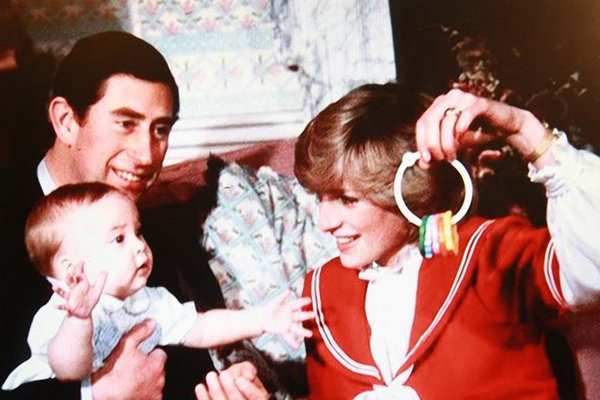
(Picture shows Prince William as a baby with his parents, Prince Philip and Diana, Princess of Wales; image from Royal Wedding)

Famous Name: Molly

02 Wednesday May 2012

Posted by A.O. in Famous Names

≈ 4 Comments

Tags

english names, famous namesakes, fictional namesakes, name history, name meaning, name popularity, nicknames, popular names

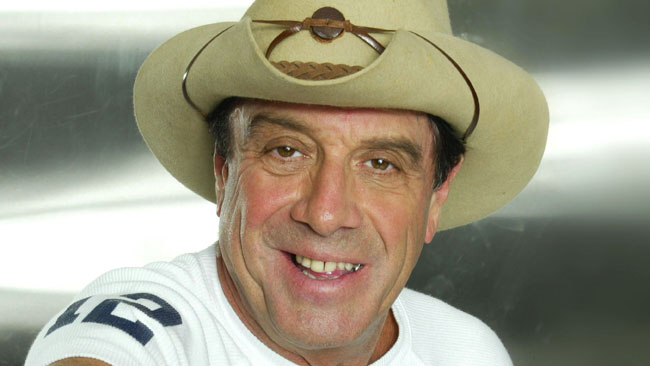
Early in his career, music guru Ian Meldrum was dubbed “Molly” by a DJ who enjoyed giving men female nicknames. Oddly enough, Ian comes from the Mallee district of country Victoria, and his nickname at school had been Malleeroot (a malleeroot is the underground trunk of a mallee tree). He seems to have found the nickname familiar enough to keep, or been too good-natured to reject it.

Shortly before Christmas last year, Australia was shocked to learn that Molly Meldrum had fallen from a ladder while putting up decorations, and been found unconscious. He was taken to Alfred Hospital, where his life hung in the balance. He lay in an induced coma with serious head injuries, a broken shoulder, broken ribs, a punctured lung, and cracked vertebrae.

While Molly lay unconscious in intensive care, there was an outpouring of concern for him – not just from stars like Kylie Minogue, Elton John, Darren Hayes, Russell Morris, Michael Buble, Cher and Madonna, but from thousands of his fans in Australia.

For almost half a century, Molly has been a key figure in the Australian music industry, and for decades, the key figure in the industry. A music journalist, band manager and music producer, he went on to host a seminal and wildly popular music show called Countdown, which a generation grew up watching. He became instantly known for his cowboy hat, rambling discourse, and his catchphrase, “Do yourself a favour”. For viewers, he felt like one of the family – maybe a slightly eccentric uncle whose visits were always fun, if unpredictable.

The wonderful thing about Molly’s career is that he is the epitome of the passionate amateur, who started at the bottom as a roadie, and, being a natural networker, built up a worldwide list of contacts that saw him working at Abbey Road, becoming a media icon, making friends with some of the biggest pop stars in the world, and winning many awards, including an Order of Australia.

As I read through the tributes pouring in on Twitter or to the newspapers, it struck me that he is a person who had touched many people’s lives, and a person with a remarkable talent for engendering love and respect from others. People remembered him from years ago – some of them had only had a single telephone conversation with him, or once sat next to him on a plane, but he had won them over with his unpretentious friendliness. He treated everyone, not just as an equal, but as his best mate.

Others had worked with Molly decades earlier, and recalled with great fondness how kind he had been to them. For someone to charm the rich and famous is no great feat – I’m sure most of us could suck up to celebrities if our careers depended on it. But to consistently show courtesy to everyone, to chat for hours with an elderly lady he would never see again and who had no idea who he was, to be solicitous to people who could not possibly aid his rise to the top – that is something much rarer and more extraordinary.

Molly was moved to a rehabilitation centre just prior to Australia Day, and in March was allowed to go home, while continuing daily rehab as an outpatient. Not long before ANZAC Day, he felt well enough to give his first interview. He appeared hospital-pale, and had the slight slur in his voice common to the brain-injured, but strangely, intensive speech therapy had removed his characteristic umming and aahing in conversation! Thank goodness he still had the hat.

He expressed enormous surprise and gratitude that so many people, friends and strangers alike, had cared for his safety and well-being, and announced that he was giving up drinking. Molly is now convalescing in Thailand, where his partner is from, and hopefully going from strength to strength.

Molly is a pet form of the name Mary which developed from the medieval diminutives Malle and Molle. Molly seems to have existed as an independent name since the 16th century. People often think of it as a very Irish name, because of the folk song Molly Malone, where Molly is a fishmonger from “Dublin’s fair city”. Although Dublin does have a statue of a rather bosomy Molly Malone in honour of this mythical lady, the song seems to have been written in Scotland. Nonetheless, the name Molly is currently more popular in Ireland and Northern Ireland than anywhere else in the British Isles (although not as popular as in Sweden, for some reason).

Molly was in use in the 1900s, although it wasn’t a very common name, and only dropped off the charts completely during the 1960s. The name took off in popularity during the 1990s, and was Top 100 in the early 2000s. It’s currently #53 in New South Wales, and fairly stable.

I can’t help noticing that Molly only became a popular girl’s name once the TV show Countdown had finished, in 1987. Perhaps a weekly reminder that a man could be called Molly was not helpful to the parents of baby girls.

However, if you were going to name your little girl after an elderly gentleman, you really couldn’t find a nicer one than Molly.

Popular Names for Girls

29 Sunday Apr 2012

Posted by A.O. in Name Themes and Lists

≈ 29 Comments

Tags

acronyms, Appellation Mountain, band names, Biblical names, celebrity baby names, created names, english names, Etruscan names, famous namesakes, fictional namesakes, flower names, French names, gemstone names, germanic names, Greek names, Italian names, Latin names, Linda Rosenkrantz, locational names, mythological names, name data, name history, name meaning, name popularity, name trends, Nameberry, nature names, nicknames, Norman names, popular culture, popular names, retro names, royal names, Shakespearean names, ship names, tribal names, vocabulary names

In honour of the name data being released, I thought I’d do lists of the most popular names in Australia for last year. I admit this was something of a last-minute decision, but it seemed like a good opportunity to cover some of the best-loved names.

People often ask how popular names got to be popular. I’m not sure there’s really a good answer to that – clearly people like the sound of them, and they fit in with current trends. Yet there must be many names, equally as nice-sounding and trend-friendly, that lurk around the 200s and don’t seem as if they are going anywhere much.

Although I cannot tell you what events caused these names to become popular, I can tell you some of the events which accompanied their rise. I’m definitely not trying to say that they were the cause of a name’s popularity, just that they coincide with it (and really sometimes it seems more than merely coincidental). Feel free to add other events you can think of, or any theories of your own!

Note: I’ve used data from New South Wales, but it must be broadly accurate for the rest of the nation too.

Lily

Lily seems to have begun as a pet form of Lilian, but must soon have become thought of as a flower name. The lily is sacred to the Virgin Mary, and Jesus urged his followers to “consider the lilies of the field” as a model in trusting Divine Providence. Lily has been almost continuously in the charts, only dropping out during the 1960s. It began rising in the 1980s – a decade when Princess Lily was the main female character in fantasy film Legend, and when Phil Collins and Kevin Costner welcomed daughters named Lily. A Top 100 name in the 1990s, it continued climbing, as Kate Beckinsale welcomed a daughter named Lily, while Johnny Depp named his baby girl Lily-Rose. By the early 2000s, Lily was already a Top 20 name, and during this decade, Lilly was the main character’s best friend in The Princess Diaries movie, Lily Potter was Harry’s mum in the Harry Potter movies, and pop singer Lily Allen released her first hit. Last year Lily was the most popular name for girls, once combined with the spelling Lilly. Delicate and pure, yet with several spunky namesakes, pretty Lily became a favourite.

Ruby

Ruby is named after the precious gemstone, whose name from Latin simply means “red”. Retro Ruby was popular during the 1900s, then dropped out completely during the 1960s and ’70s, despite being a popular name in songs; notably Ruby Tuesday and Ruby Don’t Take Your Love to Town. It began rising in the 1980s, as comedienne Ruby Wax barged her way onto our TV screens, and singer Rod Stewart welcomed a daughter named Ruby. The name climbed steeply during the 1990s, and turned up in more songs: Ruby Soho by Rancid, Thru’ the Eyes of Ruby, by The Smashing Pumpkins, and Ruby Wednesday by Eskimo Joe. By the early 2000s, Ruby was a Top 50 name, and by the late 2000s, it was Top 20. During this decade, the song Ruby was a hit for The Kaiser Chiefs, Renee Zellweger played Ruby in the movie Cold Mountain, and Ruby Buckton was a free spirited teen on popular soap, Home and Away. Charlotte Church, Tobey Maguire, and Harry Kewell all welcomed daughters named Ruby. Last year it was #2 for girls, once combined with the spelling Rubi. Flaunting Ruby sparkles, and is a name worth singing about.

Chloe

Chloe means “young green shoot” in Greek, and was one of the epithets of the earth goddess Demeter. From early on, it was a favoured literary name; Chloe is the heroine of the pastoral romance Daphne and Chloe, by the Ancient Greek writer Longus. The name was also considered suitable for use by the Puritans, because Chloe is an early Christian mentioned in the New Testament. Chloe first appeared on the charts in the 1970s; a decade when an arty French film, re-titled Chloe in the Afternoon, was released to English-speaking audiences. Chloe stormed up the charts and was Top 100 by the 1980s. During this decade, actress Candice Bergen and singer Olivia Newton-John both welcomed daughters named Chloe, and Chloe Jones was one of the characters in long-running soap, A Country Practice. By the 1990s it was Top 20, and Logie-winning actress Kristy Wright played the tragically troubled Chloe Richards on popular soap, Home and Away. Chloe was Top 5 by the early 2000s; it reached #1 in 2006. Fresh and spring-like, Chloe has been recommended at Appellation Mountain, and Linda Rosenkrantz from Nameberry named her daughter Chloe – some serious name-guru approval.

Mia

Mia seems to have become popularly known through actress Mia Farrow, the daughter of Australian film director John Farrow, and Irish actress Maureen O’Sullivan. Mia is short for Ms Farrow’s real name, Maria. Mia first appeared on the charts in the 1960s, after Mia Farrow began her career, but rose in popularity very gradually. An interesting link with another name on the list is that Princess Lily in Legend was played by actress Mia Sara; is it a coincidence that both names began climbing at the same time? It started making significant gains in the 1990s, a decade when Uma Thurman played Mia Wallace in Pulp Fiction. Although not yet Top 100 in the 1990s, by the early 2000s it was already Top 20. In this decade, we met Amelia “Mia” Thermopolis, heroine of The Princess Diaries movie, and Mia Toretto from The Fast and the Furious films. It was chosen as the name for their daughter by actress Bec Cartwright and tennis champion Lleyton Hewitt. Top 10 by the late 2000s, it reached #1 in 2008. Simple and cute, Mia has another Australian connection – it is an acronym for Made in Australia.

Olivia

Olivia is a name invented by William Shakespeare for a character in Twelfth Night. Olivia is a beautiful noble lady in mourning for her brother; through an amusing misunderstanding, she falls in love with a woman named Viola disguised as a man. Through another amusing misunderstanding, she marries Viola’s twin brother Sebastian by mistake, but fortunately he is so much like his sister in looks and personality that she is happy with the outcome. Famous Olivias include actress Olivia de Havilland and Olivia Arias, the widow of Beatle George Harrison. Olivia first appeared on the charts in the 1960s, just as singer Olivia Newton-John began her career, and rose steadily. Her popularity took off in the 1980s (perhaps by coincidence, the era when Ms Newton-John enjoyed her greatest success), and by the 1990s she was already a Top 20 name. During the 1990s, Denzel Washington and Lance Armstrong welcomed daughters named Olivia. In the early 2000s, Mariska Hargitay was playing Olivia Benson on Law and Order: SVU, and by 2005 Olivia had reached #1. Shakespeare had a knack with names, and this one is elegant; I picked it to be the Jessica of our time, and equally resilient.

Isabella

Isabella is a Latinate form of the name Isabel; it was a favourite amongst European royalty from the Middle Ages onwards. Isabella is a stock character in the Italian commedia dell’arte, the flirtatious and alluring female lover that men make fools of themselves over. She is named in honour of the actress, playwright and poet Isabella Andreini, who became famous in the role. Isabella has been on the charts almost continuously, although her last time in the Top 100 was in the 1900s. She dropped out completely during the 1950s, and then again in the 1970s. She made a recovery in the 1980s just as Italian actress Isabella Rosselini became internationally known, and then skyrocketed. Nicole Kidman and Tom Cruise adopted a daughter in the early 1990s and named her Isabella, and the name was comfortably Top 50 for that decade. When Stephenie Meyer’s novel Twilight was published in 2005, its heroine named Isabella “Bella” Swan, Isabella was already #7; Isabella reached #1 in 2009, the year after the Twilight film was released. Ornate and ultra-feminine, it is an Australian royal baby name, as Prince Frederik and Princess Mary of Denmark named their first daughter Isabella.

Charlotte

Charlotte is a French feminine form of Charles; a common name amongst European royalty, it was introduced to Britain in the 17th century by the Hanoverians. The Charlotte was one of the ships of the First Fleet, who reached Australia in 1788. Charlotte has been almost continuously on the charts, only disappearing in the 1950s. She began climbing gradually in the 1960s, a decade when English actress Charlotte Rampling’s film career began. The name grew steeply in the 1980s, a decade in which Charlotte “Charlie” Blackwood, played by Kelly McGillis, is the love interest to Tom Cruise’s Maverick in the movie Top Gun. It made the Top 100 by the 1990s, when actress Sigourney Weaver welcomed a daughter named Charlotte, and when the band Good Charlotte began their career. It was Top 20 in the early 2000s, while we got to know the romantically optimistic Charlotte York in Sex and the City, played by Kristin Davis; by the end of the decade it was Top 10, as as singer Charlotte Church progressed her career from classical to pop. Sophisticated yet sensible, with the option of a tomboy nickname, Charlotte has yet to make #1.

Sophie

Sophie is the French form of Sophia; the name was used in several European royal families. Sophie first entered the charts in the 1950s, and through steady growth, made the Top 100 by the 1980s. It was during this decade that William Styron’s Sophie’s Choice was made into a film; Meryl Streep won an Oscar for her performance as Zofia “Sophie” Zawistowski, the beautiful Polish immigrant with a tragic secret. The same year the film came out, Roald Dahl‘s book, The Big Friendly Giant was published; the heroine is called Sophie, named after Roald Dahl’s grand-daughter (later fashion model Sophie Dahl). During the 1990s Sophie took off, and was a Top 20 name during that decade. It was during the ’90s that the best-selling novel, Sophie’s World, was published, and actress Sophie Lee and singer-actress Sophie Monk both began their careers this decade. At the end of the 1990s, Sophie Rhys-Jones joined the British Royal Family when she married Prince Edward. Sophie was Top 10 by the early 2000s, and many are tipping sweet and simple Sophie to become the #1 name within the next few years.

Sienna

Sienna is the English name for the Italian city of Siena,in Tuscany. As a word, it refers to a type of clay used to make oil paints, and a shade of yellow-brown, after the hue of said clay. The city’s name comes from the Etruscan tribe who originally inhabited the area, the Saina, but the Romans derived it from the Latin for “old” (the same Latin root which gives us the word senile). Sienna first entered the charts in the 1980s, and climbed steeply during the ’90s. I think the name suited the aspirational nature of that era. Italy was very “big”; pizza was becoming a mainstream food, and the adults around me were guzzling Chianti and buying time-shares in Tuscan villas. British model-actress Sienna Miller is not responsible for the name’s popularity, because it had been climbing for some time, but can it be purely coincidental that it first joined the NSW Top 100 in 2002, the year after Ms Miller’s career began? From that point, its climb was so vertiginous that it was Top 10 by 2006. Smooth, modern Sienna seems certain to go higher still.

Ella

Ella is the Norman form of the Germanic name Alia, a short form of names with the element ali, meaning “other”. However, it can also be used as a short form for Eleanor, Ellen, Elizabeth or any name starting with El, and also the many names ending with -ella. It’s hard not to connect this name with jazz great, Ella Fitzgerald. Ella has been on the charts almost continuously, with her last time in the Top 100 in the 1900-10s. She was soon in rare use, although she only disappeared completely during the 1960s. She climbed slowly during the 1980s, and steeply during the 1990s. It was during the ’90s that Ella got a new singing namesake – Ella Hooper from rock band Killing Heidi. Ella was Top 20 by the early 2000s. She received several boosts around this time, for the movie Ella Enchanted was released, a re-telling of the Cinderella story. Warren Beatty, John Travolta, Mark Wahlberg and Ben Stiller all welcomed daughters named Ella, giving the name a distinct celebrity flavour. Top 5 in the second half of last decade, Ella feels as if she may have peaked, and is possibly on her way down again.

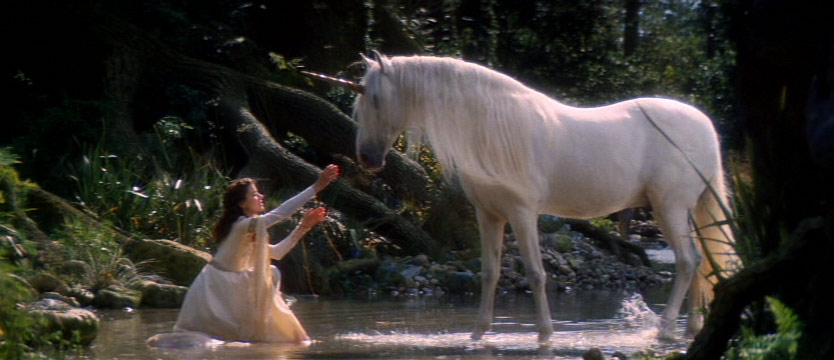
(Picture shows Princess Lily and unicorn, from Ridley Scott’s 1985 cult fantasy film Legend)

Emily and William – #1 in the Northern Territory

26 Thursday Apr 2012

Posted by A.O. in Name Data

≈ Comments Off on Emily and William – #1 in the Northern Territory

Tags

name popularity, name trends, popular names

In 2010, Emily did not even make the Top 20, and last year she made the #1 position. In 2009 she was at #7. Isabella and Olivia were joint winners of 2010, and last year they were bumped down to #9 and #6 respectively.

The biggest riser was Amelia, who went up 7 places. Chloe, Ruby and Lily also rose significantly, while Mia and Sophie made modest gains.

The name which fell the most was Isabella; Charlotte and Olivia also fell several places, while Ava, Hannah and Matilda fell slightly.

Grace and Ella were the only names which remained stable.

There were several new names on the list. Sienna, Bella and Scarlett are Top 20 for the first time, while Zoe was last seen in 2009, and Hayley reappeared after five year’s absence.

Layla, Jessica, Alexis, Lucy, Isla and Jade disappeared from the Top 20.

A familiar pattern for the boys, with Jack being toppled from first place, to be overtaken by William; we’ve seen this in several other states also.

Liam rose the most, at 5 places, with William and Ethan also rising.

Jacob was the anti-Liam, falling 5 places (Jacob and Isabella falling the most! Please insert Twilight theory here!). Lachlan fell slightly.

Much more stability on the boy’s list, with Jack, James, Thomas, Lucas, Noah, Ryan and Cooper remaining stable, and Joshua and Samuel not changing position at all.

Although there were several new names on the list, only Alexander was appearing for the first time. Oliver and Tyler were last seen in 2009, Cameron in 2007 and John and Benjamin all the way back in 2005.

Gone from the list are Charlie, Isaac, Max, Riley, Xavier and Michael. Another area where Riley did poorly; however, the Northern Territory is unusual that Charlie fell here. Could both names now seem too feminine?

The Northern Territory may be the most conservative of all states and territories when it comes to boy’s names, with far less change than on the girl’s list – the opposite to most states and territories, who seem to be hanging onto girls’ names and changing their minds when it comes to boys.

With the publication of the Northern Territory data and the Top 100 for Australia being released, that’s it for the 2011 name data! Now to wait and see what 2012 will bring.

If you are still hungry for name data and want more, the US will release theirs in the next few weeks, I believe.

NOTE: I used absolute positions based on overall births when analysing the data for the Northern Territory, due to the small population and many names sharing position.


← Older posts
Newer posts →

Enter your email address to follow this blog

Categories

Archives

Recent Comments

A.O.'s avatarwaltzingmorethanmati… on Zarah Zaynab and Wolfgang…
Madelyn's avatarMadelyn on Zarah Zaynab and Wolfgang…
JD's avatardrperegrine on Can Phoebe Complete This …
A.O.'s avatarwaltzingmorethanmati… on Rua and Rhoa
redrover23's avatarredrover23 on Rua and Rhoa

Blogroll

  • Appellation Mountain
  • Baby Name Pondering
  • Babynamelover's Blog
  • British Baby Names
  • Clare's Name News
  • For Real Baby Names
  • Geek Baby Names
  • Name Candy
  • Nameberry
  • Nancy's Baby Names
  • Ren's Baby Name Blog
  • Sancta Nomina
  • Swistle: Baby Names
  • The Art of Naming
  • The Baby Name Wizard
  • The Beauty of Names
  • Tulip By Any Name

RSS Feed

  • RSS - Posts

RSS Posts

  • Celebrity Baby News: Melanie Vallejo and Matt Kingston
  • Names from the TV Show “Cleverman”
  • Can Phoebe Complete This Sibset?
  • Zarah Zaynab and Wolfgang Winter
  • Baby, How Did You Get That Name?
  • Celebrity Baby News: Media Babies
  • Celebrity Baby News: Adelaide Crows Babies
  • Celebrity Baby News: Chris and Rebecca Judd
  • Names at Work: Name News From the World of Business and Employment
  • Celebrity Baby News: Sporting Round Up

Currently Popular

  • Rare Boys Names From the 1950s
  • Celebrity Baby News: Bernard Fanning and Andrea Moreno
  • Celebrity Baby News: Toby Allen and Darren Weller
  • Celebrity Baby News: Ed Husic and Bridget Tilley
  • Celebrity Baby News: Michelle Rowland and Michael Chaaya

Tags

celebrity baby names celebrity sibsets english names famous namesakes fictional namesakes honouring locational names middle names name combinations name history name meaning name popularity name trends nicknames popular names saints names sibsets surname names twin sets unisex names

Create a free website or blog at WordPress.com.

Privacy & Cookies: This site uses cookies. By continuing to use this website, you agree to their use.
To find out more, including how to control cookies, see here: Cookie Policy
  • Subscribe Subscribed
    • Waltzing More Than Matilda
    • Join 517 other subscribers
    • Already have a WordPress.com account? Log in now.
    • Waltzing More Than Matilda
    • Subscribe Subscribed
    • Sign up
    • Log in
    • Report this content
    • View site in Reader
    • Manage subscriptions
    • Collapse this bar
 

Loading Comments...