• About
  • Best Baby Names
  • Celebrity Baby Names
  • Celebrity Baby Names – Current
  • Celebrity Baby Names – Past
  • Featured Boys Names
  • Featured Girls Names
  • Featured Unisex Names
  • Links to Name Data
  • Waltzing on the Web

Waltzing More Than Matilda

~ Names with an Australian Bias of Democratic Temper

Waltzing More Than Matilda

Tag Archives: popular names

MYTH: A “Weird” Baby Name Can Ruin Your Child’s Life

18 Sunday Nov 2012

Posted by A.O. in Baby Name Mythbusters

≈ 19 Comments

Tags

African names, alphanumeric names, British Baby Names, celebrity baby names, created names, Dr Martin Ford, Herald Sun, Indian names, Irish names, name image, name popularity, name studies, parenting blogs, popular names, psychology of names, Radio National, rare names, US birth notices, US name data, variant spellings, Vietnamese names, Who's Who, William Shakespeare, Yiddish names

This is an idea you cannot help running across if you frequent baby name forums, attend a few parent group meetings, or just read the papers – that the bestowing of a name considered strange or highly unusual upon a child is a cruel thing to do, and has the potential to impact on their life in negative ways.

A short-lived parenting blog at the Herald Sun which was written by Cheryl Critchley asked, Are Weird Names Child Abuse? It might seem a bit extreme to suggest that calling your son Raiyybanzi is the equivalent of hitting him around the head or locking him in his room for three weeks without food, but Cheryl goes to the child psychologists for further information.

According to child psychologist Dr Michael Carr-Gregg, yes, an unusual name is a form of child abuse, as it will lead to non-stop teasing in the schoolyard. Another psychologist, Dr Janet Hall, said a poor choice of name could lead to the child developing self-esteem problems. A name that others constantly question and mock is a “constant attack on your self-esteem”. It’s all sounding pretty dire for poor little Raiyybanzi.

A dim ray of light shone through when an education psychologist named Dr Helen McGrath suggested that while shy children probably won’t appreciate an unusual name, an extroverted one might enjoy the attention that it brings. She noted that unusual names do tend to change people’s perceptions, and even self-perception. However, there was no research which suggested any negative impact, and that factors such as social skills and family relationships were far more important.

The interesting thing is that Cheryl got her inspiration for the article from the names of AFL footballers she had seen in the newspapers – names such as Ayce, Jarryn, Jarrhan, Cheynee and Sharrod. These horrified her, and yet it would seem that Ayce and friends hadn’t had their lives ruined, but embarked on potentially lucrative and rewarding sporting careers. The photo of Ayce used for the article showed him looking cheerful and confident, with his self-esteem firmly intact.

This article was published a few years ago, but journalistic opinion doesn’t seem to have moved forward very much in the meantime. There’s a good reason for that – if you’ve been following the ‘Twas Ever Thus series at Elea’s blog, British Baby Names, you will see that when it comes to getting worked up over “weird” baby names, the media is pretty much churning out the same stuff they produced in the 19th century. Only the names have been changed, as the saying goes.

On Radio National a few months ago, on their popular Life Matters show, presenter Natasha Mitchell had a programme called You’ve Named Your Baby What?!. Generally light-hearted in tone, the show discussed unusual celebrity baby names (Natasha confessed she rather liked Sparrow), old-fashioned names like Mavis and Alfie, little boys just called H, and little girls named Rach’elle.

Guest Mia Freedman, who runs the successful parenting website Mamamia, while not actually accusing anyone of child abuse, opined that a strange name, especially one spelled strangely, could be a “burden” for a child. A burden in so much as they would be constantly questioned about their name – perhaps not damaging to their self-esteem, but a downright nuisance to them nonetheless.

In these sort of shows/articles, everyone is very careful to explain that when they say “unusual names”, they don’t mean names from other cultures, which to our ears may be difficult to pronounce, or sound like rude words, or appear to be on the “wrong” sex. No, these names are a wonderful sign of our diversity, and people should be proud to possess them as part of their culture, and it would be very wrong indeed to poke fun of them.

To my mind, this is the downfall of their argument, because it’s never explained why it’s not a “burden” to be named Caoilfhionn, even though that must surely involve at least as many requests to explain spelling and pronunciation as Rach’elle does. If it’s not such a terrible burden to be named Caoilfhionn, then I don’t see how Rach’elle is any heavier for a child to bear.

And if we as a society should be able to cope with Caoilfhionn, Purushottama, Oluwakanyinsola, Dudel and Phuc as names, then I don’t see why we cannot also cope with Mavis, Alfie, Sparrow, Ayce, Jarryn, Rach’elle and H. For that matter, how could anyone be confused by the spelling of the name H? Surely the strange-names-as-a-burden club should be heaping praise on H for its unburdensome simplicity? However, for some reason that never happens.

Oddly enough, Mia, who has an extremely simple and popular name, says that she needs to often correct people on the spelling and pronunciation of it. And yet, this burden doesn’t seem to have really been much bother, or held her back in life. From this I deduce that almost everyone has to explain their name at some point (“No, it’s John – J-O-H-N, not Jon – J-O-N”), and that it’s just one of those little things you have to deal with.

To befuddle the argument even further, Mia poked mild fun at “cutesy pet names” for children, singling out Jools Oliver for naming her children Poppy, Daisy, Petal and Buddy. Fun fact: Mia’s daughter is named Coco. I know: go figure.

Although these examples are not the most convincing you’ll come across, and don’t even manage to present a cogent argument, there are no lack of studies which purport to reveal the dreadful consequences of giving your child a strange name.

They tell us that your child will do worse at school, be less popular with their classmates, drop out of tertiary education, and have their resumes ignored by prospective employers (although, after doing so badly at school and flunking university, you’d think a boss would have pretty good grounds for ignoring their resume).

Furthermore, they were more likely to be diagnosed as psychotic and to end up in prison – the bitter conclusion to a life of failure and misery. After reading this terribly sad story, which seems like the stuff of nightmare and soap opera, how could a parent be so heartless as to inflict on their child any name other than one selected by the Chamber of Commerce, heads of all major universities, and a panel of psychiatrists?

However, other researchers crunched the numbers and came up with opposing results. It was noted that men with rare names were over-represented in Who’s Who, suggesting that a life of success was just as possible as one of failure for those with less common names. Other researchers noted that many children with uncommon names came from lower socio-economic backgrounds, and that once this was allowed for, there was no difference in academic outcomes that could be attributed to the person’s name.

One interesting finding by development psychologist Dr. Martin Ford is that everyone tends to attach a particular image or set of expectations to a name – up and until they confronted with a person with that name. People might say that they think of Berthas as being unattractive, but if shown the photo of a beautiful woman and told she is named Bertha, they rate the photo more or less the same as someone told the lovely woman is called Jacqueline or Christine.

In other words, Shakespeare was clearly on the money in regard to roses smelling just as sweet.

So here we have two competing theories: one is that unusual names are little more than child abuse, will damage self-esteem, prove an unnecessary burden, and be a severe handicap in regards to academic and social success. At worst, they may even send your child mad, or force them into a life of crime.

The other is that names, once attached to a real person, become almost meaningless – that what we are judged on is not our names, but our appearance, voice, grooming, hygiene, mannerisms, personality, social skills, motivations, abilities, intelligence, beliefs, income, education, job, family, friends, hobbies, home, influences, aspirations, and indeed the whole “package” that is ourselves.

I’m not sure I am completely convinced by either side – mostly because I am sceptical as to whether any of them have considered genuinely “weird” names. I feel as if they have looked at unpopular or uncommon names, or names judged to be undesirable by others, but that’s not really the same thing.

I mean come on, how sheltered must your life be to think that Ayce and Rach’elle are weird!

From what can I gather, Dr. Ford’s photo experiment was just using “outdated” names of the time like Hazel and Harriet – not only in no way weird, but by now very much back in fashion.

His original name study was done in 1984, on children who would have been born in the early 1970s. Very rare names of people born in 1972 include Atticus, Briar, Bristol, Coco, Darcey, Denzel, Emmeline, Fallon, Heaven, Jaxon, Jorja, Kourtney, Larkin, Lourdes, Marigold, Reeve, Rosamond, Sonnet, Star, Theodoric, and Wilder.

These names aren’t weird any more – some of them look pretty hip, and others seem unsurprising; a couple are even quite dull. In just forty years, a name can go from Woah, what the heck? to Meh. Maybe the rare names of today, such as Cameo and Twain, will seem equally familiar by the early 2050s.

That’s looking at US data of course, but in Australia we know that just twenty years ago Olive was a strange and awkward name to give a baby, and it is now Top 100 in Victoria, and getting there in New South Wales.

If name-weirdness is dependent on time, it is equally so on space. I know that when I look at some names on the American charts, or in American birth notices, they seem odd to me because names such as Legend, Princess, Race, Tinsley,  and Dutch are rarely or never used in Australia. Likewise, Americans look at Australian-used names like Lachlan, Jacinta, Hamish, Bronte and Zali, and think What the dealio?

A normal name can become weird just by crossing the Pacific; conversely, an American boy named Hamish who moves to Australia will blend in instantly. Fun fact: in the US, 8 baby boys were named Hamish last year.

What an individual person believes is weird seems to be almost entirely subjective. To Cheryl it’s Jarryn. To Natasha it’s Apple. To me it’s Race. To 1972 it’s Coco. To a commenter I saw on Mamamia it’s Felix (in the Top 100). To this journalist it’s Becket. To my mother it’s Madison. To you maybe it’s Hamish. Or Metallica. Or Banjo. Or Justus. Or Crew. Or Dudel.

I genuinely thought that this myth would be either BUSTED or CONFIRMED by the time I finished the blog entry, but not only has it not been answered, the very myth itself seems to be retreating over the horizon the closer we get to it, like heat shimmering on a bitumen road in January.

I am becoming less and less convinced that a weird name will ruin anyone’s life, and moreover, I am becoming less and less certain that weird names even exist, in any useful sense of the word “weird”.

Even Raiyybanzi isn’t that strange once you get used to it – it’s really just a juiced-up Raymond.

Famous Name: Poppy

14 Wednesday Nov 2012

Posted by A.O. in Famous Names

≈ 7 Comments

Tags

english names, famous namesakes, flower names, German names, name history, name image, name meaning, name popularity, nature names, nicknames, plant names, popular names, Remembrance Day, surname names, The Wizard of Oz, UK name popularity, unisex names, US name popularity, vocabulary names

Last week I covered the name Bede for Remembrance Day, partly with the idea that it had “been in my Request file for ages”. When I went to cross if off the list, I found it wasn’t there at all – it seems I imagined it. So today I’m going to make up for it by covering a Remembrance Day name that really has been in my Request file for ages (I double checked!).

It has long been tradition to associate November 11 with poppy flowers. During the First World War, red corn poppies (Papaver rhoeas) were among the first plants to spring up on the battlefields of northern France and Belgium, blooming between the trenches and no man’s lands on the Western Front. In soldier’s folklore, the red of the poppies came from the blood of their fallen comrades soaking the ground, and were perhaps a poignant reminder that life went on regardless.

The sight of poppies on the battlefield at Ypres in 1915 inspired Lieutenant Colonel John McCrae, of Canada, to write the poem In Flanders Fields. An American woman named Moina Michael, who worked for the YMCA, read McCrae’s poem just before the Armistice, and was so moved that she wrote a poem in response, and promised to wear a red poppy as a way of keeping faith.

At an international YMCA conference in 1918, Moina spoke about the poem and the poppies, and Anna Guérin, the French YMCA secretary, took the idea further by selling poppies to raise money for widows, orphans, and needy veterans and their families.

The poppy soon became widely accepted throughout the allied nations as the flower of remembrance to be worn on Armistice Day, and the Australian Returned Soldiers and Sailors Imperial League (the forerunner to the RSL) first sold poppies for Armistice Day in 1921, with the money going to children’s charities and the League’s own welfare work. Today you can still buy a poppy pin from the RSL to help veterans of war.

At the Australian War Memorial in Canberra, it is customary on Remembrance Day to place a poppy on the Roll of Honour, as a small personal tribute to the memory of a particular person. Another ritual is to lay a single poppy flower on the Tomb of the Unknown Australian Soldier at the Memorial.

Even before World War I, poppies had a long history as symbols of sleep and death – sleep because poppy seeds have since ancient times been used as sedatives, and death because the colour of poppies reminds people of blood, or possibly because if over-prescribed, a poppy-induced sleep may become permanent. Today, poppies are still grown to obtain opium, morphine and codeine for medicinal use, with Australia being one of the major producers of poppy crops.

In Greek myths, poppies were given as offerings for the dead, with the suggestion that they were also a promise of resurrection in the life to come. The symbol of the mother goddess Demeter, she is depicted carrying both sheaves of wheat and poppies, and it has been theorised that the taking of opium was part of her worship in the sacred Mysteries.

These twin symbols of sleep and death were put to good effect in what must be one of the most famous images of poppies in literature and cinema – the field of scarlet poppies in The Wizard of Oz, the poison scent of which sends Dorothy into such a deep sleep that she is in danger of dying from it.

The English word poppy is ultimately derived from Latin, but the meaning is not known for sure; it may be from the word for “to feed”, because as anyone who has munched a poppy seed muffin or a bread roll topped with poppy seeds can tell you, poppies are yummy.

Poppy can be found as an English name as early as the 18th century, and the first examples are male, taken from the surname. This is derived from a German name Poppo or Boppo, used as a pet form of the name Bodebert, meaning “bright messenger”. However, by the 19th century, it was firmly established as a female name and associated with the flower, coming into common use along with other floral names.

Poppy only entered the Australian popularity charts in the 1980s, and in the 1990s was #602. It skyrocketed during the 2000s to reach the Top 100 by 2009, debuting at #69. Last year it was #79, and with such a brief history behind it, it is far too soon to make any predictions about its future.

Poppy is even more popular in the UK, where it has been Top 100 since the 1990s, and is currently in the Top 20. However, it has never been in the US Top 1000 at all. Last year 130 baby girls were named Poppy in the United States.

I think one of my first clues to how differently names are seen in other countries is that I kept reading in name forums from American contributors advising that Poppy might sound adorable on a little girl, but can you imagine a woman in her thirties named Poppy? Um yes, easily – Australian actress Poppy Montgomery must be in her mid-thirties by now. Poppy seems to suit her equally well as it does a toddler.

Another popular Poppy putdown is The name doesn’t sound serious enough, your daughter will never become a businesswoman, doctor or lawyer if you name her Poppy. Oh really? Then how did Poppy King manage to start her own cosmetics company? How did Doctor Poppy Sindhusake become senior lecturer in the school of medicine at the University of Western Sydney? And how did Poppy Matters start her practice in family law? By what occult means did they crash through this poppy-red ceiling to make the grade? Unless such a ceiling does not exist …

Some complain that the name, with its cheeky sound and link to a flaunting red colour, sounds too cute and flippant for a woman’s name – how will she ever be taken seriously, they fret? My own thought is that with its associations to such a solemn day, its death symbolism, and connection to drugs, it’s a jolly good thing that Poppy sounds so cheerful and light-hearted in order to offset what could otherwise seem rather gloomy.

Poppies are colourful, sturdy little flowers that bloom and blow easily in our gardens and the “pop” sound in their name makes us think of pop music, pop art and pop-up books – things that seem bright and lively and youthful. But beneath it is something dark and ancient and powerful. It stands for death, and life rising again, and the blood of heroes, and eternal flame, and rows of crosses in northern France, and keeping the faith. It is a memory in honour of those who died in foreign fields.

Do not underestimate Poppy. She is spunky and sprightly, but also strong and deep and enigmatic. She can survive almost anywhere, and, not content in being merely decorative, is useful too. She can feed the hungry, she can allay pain, she can understand sacred mysteries. Sometimes she can even be dangerous.

She can run her own business, or become a doctor, or lawyer, or politician, or anything else she wants to be. And she will sound fabulous when she is forty!

(Picture is of poppies growing in the Somme, northern France; photo from Keynsham People)

Team Pink, Team Blue, or Team Lavender?

11 Sunday Nov 2012

Posted by A.O. in Your Questions Answered

≈ 13 Comments

Tags

dog names, english names, famous namesakes, fictional namesakes, French names, Gaelic names, locational names, mythological names, name meaning, name popularity, names for budgies, nature names, nicknames, popular culture, popular names, Sanskrit names, surname names, unisex names, US name popularity, vocabulary names

I wasn’t going to do another one of these, but it turned out the list of questions on unisex names could almost be eliminated if I did just one more, so I couldn’t resist doing an end-of-year clean up.

Some names are easy for most of us to assign to Team Pink or Team Blue – for example, a straw poll would probably show strong support for Amelia as a girl’s name, and Archibald as a more masculine moniker. But there are quite a few others that we have to think about a bit more, and some seem to be both feminine and masculine in such equal measure that we could probably call them Team Lavender.

Of course, for practical purposes, all names are unisex, so this is only designating them according to linguistic meaning, historical use, and current popularity.

I. ARE THESE GIRL NAMES?

Sydney as a girl’s name

Sydney is historically a unisex name in Australia, but hasn’t charted at all since the 1960s. I think it’s up for grabs by either gender, and is a definite member of Team Lavender.

Rory girl name popularity Australia

According to the data at hand, the popularity of Rory as a girl’s name in Australia is zero. It’s charted as a boy’s name since the 1940s and is currently #159; it’s never charted as a girl’s name. This makes it (for the purposes of this question) Team Blue.

Is Indiana a girl’s name? (multiple asks)

Yes, historically it is, for the first people named Indiana in the records are female. It’s only since the Indiana Jones movies that the name has widely been seen as potentially masculine – although the movie’s protagonist is named Dr Henry Walton Jones. From Utah rather than the state of Indiana, we learn in The Last Crusade that he took his nickname from the name of the family dog. I’m not sure whether the dog was male or female. Indiana has only ever charted as a girl’s name, and is currently #78 and climbing steeply. I call Team Pink.

Bodhi as a girl’s name

Bodhi is a Sanskrit word meaning “awakened”, referring to the enlightenment of the Buddha. As men and women are equally capable of spiritual enlightenment, I think this is for both boys and girls and can join Team Lavender.

Can Russell be a female name?

The surname Russell simply means “red” or “reddish”, and there’s nothing specifically masculine about it. However, Russell has a reasonable history of acceptance as a male name. Currently it doesn’t chart for either gender, and I think it could be used for a girl’s name. You could also use the vocabulary word Rustle. Maybe a Deep Indigo?

Is Campbell a girl name?

In Australia it is accepted as a male name, and has charted for boys since the 1950s, being now at #384. In the US it is more common as a female name. The surname means “crooked mouth”, which doesn’t sound at all pretty to me, but isn’t technically masculine. In Australia, I think it’s still Team Blue.

II: ARE THESE BOY NAMES?

Marlo as a boy’s name

Marlo Hoogstraten is a Dutch-born Australian DJ; he works under the name MaRLo. Marlo Stanfield is a character in the TV show, The Wire, who is head of his own drug crew. There seem to be more references to Marlo as a male name than a female one. This may be a pale Blue-Toned Lavender.

Is Riley a boy’s name in Australia?

Yes, it’s charted as a male name only since the 1970s, and is currently #20. Team Blue.

Can Autumn be a boy’s name?

There’s no reason why not, except that it is widely accepted as a female name. In Australia, Autumn is a fairly rare name for either sex, so it might be easier to be a boy named Autumn here than elsewhere. It would be unusual though. A very pale Pink-Toned Lavender.

Boys name Kirra

The town in Queensland is nearly always given as a female name in Australia. Besides sounding similar to girl’s names Keira and Kira, part of the reason may be because in Greek mythology, there are a couple of nymphs named Kirra, giving it a distinctly feminine vibe. I’m assigning this one to Team Pink.

Tahgan boys name

I only know of Taghan as a place name in the Middle East, which sounds unisex to me. It looks similar to boy’s name Teagan and girl’s name Tegan, so I’m calling this for Team Lavender.

Bay as a boy’s name

Although this nature name could be either male or female, in practice I’ve only seen this given to boys in Australia – maybe because it sounds like it could be short for Bailey. I guess it could be seen as Blue-Toned Lavender.

III: ARE THESE BOY OR GIRL NAMES?

Is Lyndall male or female?

Historically, it’s a girl’s name. Lyndall charted as a female name only from the 1930s to the 1990s. It currently doesn’t chart for either sex. Pink, or at least Pinkish.

Jordan – boys name or girls name?

Jordan has charted as a boy’s name since the 1960s, peaked in the 1990s at #23, and is currently #63. It has charted as a girl’s name since the 1980s, peaked in the 1990s at #85, and is currently #389. So it’s both a boy’s name and a girl’s name, but more boyish, since it’s been used longer as a boy’s name, hit a higher peak as a boy’s name, and is still Top 100 for boys. Deep Blue-Toned Lavender.

Is Jagger more a boy or girl name?

I’d say it’s more of a boy name, just by usage. I have seen people use Jagga or Jaggah for girls though. Blue, at present.

Kayley “unisex name”?

I think technically Kayley is two separate names, one unisex or male, and the other one female. The surname Kayley can be from several origins, and if English or  French, it refers to place names (unisex). On the other hand, if Gaelic, it means “son of Caollaidhe” (male). It’s been overwhelmingly used as a girl’s name though, probably with the idea it’s an elaboration of Kay, a pet form of Katherine. There have been a very few men named Kayley. Confusingly, I think this is Pink, Blue and Lavender all at the same time.

IV: ADVICE NEEDED

What boy’s name can Gigi be short for?

There’s a few choices. According to Wikipedia, famous men using Gigi as their nickname have Luigi, Luigino, Gianluigi or George as their full name – although my own first thought was Giglio. Another possibility is that in the story Gigi, the protagonist’s full name was Gilberte, so maybe a boy called Gilbert could be a Gigi.

Will people automatically assume someone called Kelly is a girl?

I would probably assume an adult named Kelly to be a woman, but I could easily adjust if it turned out to be a man instead. For a new baby, I wouldn’t assume it was either a boy or girl.

Are guys put off by women with male names?

There are quite a few studies on what names men and women find sexy, but these name-image polls are useless in real life, when you are confronted with a living breathing human being. I don’t believe any man would turn down a beautiful woman because her name was John; conversely, no matter how alluring and feminine your name, if you look and smell like you’ve been living in a sewer, I don’t think you are going to be besieged by suitors. Just from my own observations, I’ve noticed a lot of guys say they are intrigued by girls who have unisex nicknames, like Jamie, Charlie or Teddie.

A good unisex name for a budgie

You could use a nickname that could be short for either a girl or boy name, such as Charlie, Joey or Sam, otherwise I think a nature name would be nice, such as Ash, Blueberry, Midnight, Sky, Sunny, or Snowflake. You could also use a cutesy sort of name such as Pippet, Peep, Peck, Pixel, Tweety, Chirp, Happy, or Fidget. Apparently budgies can’t say words with a hard G sound in them, so avoid Giggles, Goldy or anything like that if you’re hoping to teach it to talk.

Famous Name: Bede

07 Wednesday Nov 2012

Posted by A.O. in Famous Names

≈ 5 Comments

Tags

Anglo-Saxon names, Australian Dictionary of BIography, birth notices, english names, famous namesakes, historical records, name history, name meaning, name popularity, Old English names, popular names, royal names, saints names

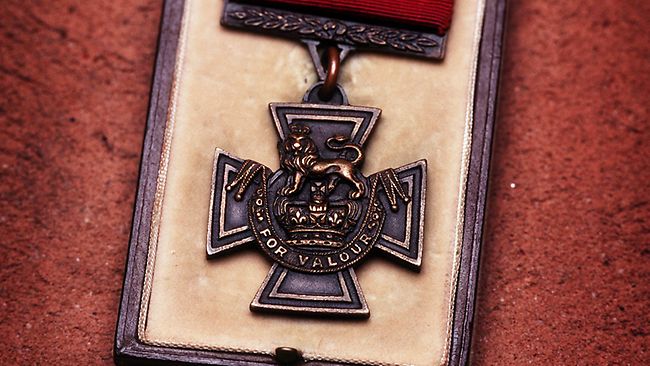
On November 1, Corporal Daniel Keighran became the third Australian soldier serving in Afghanistan to receive the Victoria Cross, the highest military decoration awarded for bravery in Australia. Corporal Keighran is the first member of the Royal Australian Regiment, and the 99th Australian, to receive a VC, and did so with great modesty and humility. Daniel’s wife Kathryn had no idea of the courage her husband had displayed under fire in battle two years ago until she learned he was about to be decorated for it. The Victoria Cross was awarded in a ceremony at Government House in Canberra.

Watching this story on the news reminded me to look at the list of those Australians awarded the Victoria Cross in the past, as I wanted to cover the name of a World War I hero for Armistice Day, which is on Sunday. As I ran my eye down the list, one name stuck out because it has been in my Request file for ages, and I briefly covered it in my article at Nameberry a short time ago. So it was quite an easy choice for me to select Bede as this week’s Famous Name.

Corporal Thomas James Bede Kenny, always known as Bede, was born in Sydney in 1896. The son of a butcher, he had just begun training as a chemist’s assistant when he enlisted with the Australian Imperial Force in 1915. He initially served in Egypt, then was sent to northern France in 1916 to take part in the second phase of the battle of Pozières, in the battalion bombing platoon.

It was in the spring of 1917, as British and Australians captured the outpost villages of the Hindenberg Line, that he performed the acts of valour that were to earn him the Victoria Cross. In the attack on Hermies, his platoon came under heavy fire from a machine-gun post which caused severe casualties. Bede rushed at the enemy single-handed, hurling three bombs, the last of which knocked out the post. He then took the surviving Germans prisoner, his actions contributing significantly to the success of the operation.

Later he was injured in battle and invalided home to Australia, arriving in Sydney to a hero’s welcome a few weeks before the Armistice. He was offered the chance to join the military police, and rejected it immediately, as for some reason he had a great dislike of them.

In civilian life, he worked as a salesman, and was happily married; he is remembered as a popular man with many friends, and a fondness for innocent pranks. He was left partially deaf from the war, and also suffered the effects of trench foot throughout his life. The great tragedy of his life was the deaths of two of his three children, which he never recovered from.

Like Corporal Keighran, Corporal Kenny never talked about his wartime experiences, and the only sign that he was proud of his military service was that he always led the VC winners at the Sydney Anzac Day marches. He died in 1953, and by a cruel irony, his pallbearers were military policemen.

The most famous person with the name Bede is the 7th/8th century English saint, Venerable Bede. Although it is not certain, it is thought that his Anglo-Saxon name, Beda, is from the Old English word bēd, meaning “prayer”. If so, it’s possible that his parents chose a religious life for him from his birth. The name wasn’t a common one, but interestingly, one of the kings of Lindsey, in England’s north, was named Beda; as Venerable Bede was from this area, it’s tempting to wonder if he was named after an ancestor, or a famous local namesake.

Venerable Bede is most famous for his prolific writing career, eventually completing over sixty books, most of which have survived. He wrote on a wide variety of subjects, including science, history, grammar, hagiography and theology; his best known work is An Ecclesiastical History of the English People, which begins with Caesar’s invasion of Britain, and ends with Bede’s own times. His use of AD to refer to events after the birth of Christ helped it become standard. He was also a teacher, a music lover, and was said to be accomplished at singing and poetry recitation, even writing some poetry of his own.

Bede is the only Englishman to be declared a Doctor of the Church; he is also the only Englishman to be mentioned in Dante’s Paradiso, where he appears amongst the theologians and doctors of the church. He is regarded as a saint in both the Catholic and Anglican churches.

If you are thinking that Bede (pronounced BEED) sounds a lot like the word bead, you would be correct. That’s because the Old English word bede, meaning “prayer” is the source of the modern word bead – because beads are used as a means of keeping count of prayers, a practice in Christianity which dates to the 5th century (although prayer beads are ancient and used in many religions). Because of this, you will sometimes see the name Bede interpreted as “bead” or “prayer bead”.

Bede isn’t a common name in Australia; at the same time, it isn’t all that unusual either. There are plenty of Bedes in the records, and if you go to the Australian Dictionary of Biography, you will find quite a few famous Australians with Bede as part of their name. What you primarily notice is that these Bedes tend to be from Catholic backgrounds (and some High Anglicans), and that Bede is usually one of their middle names. It is also the name of Bede Durbidge, who won Surfer of the Year a few years ago, giving the name a more cool laidback image.

I can imagine some people thinking that Bede sounds weird and ungainly; something only a staunchly Catholic family would use; a name best suited to leaving in the middle position. Which sounds perfectly reasonable – except that less than half a century ago, there was another boy’s name that seemed weird and ungainly, was used almost exclusively by Catholics, and generally relegated to the middle position, usually after Francis.

That name was Xavier, which is now #22 and rising. Could Bede be the Xavier of the future?

It’s a very old name with a solid history of use in Australia, part of the Catholic tradition, and with spiritual associations. It’s short yet substantial, clunky yet surprisingly cool. It’s the name of our heroes, our leaders, our intellectuals, our athletes, our artists, our businessmen, and for many of us, our dads and uncles and grandfathers too.

Wherever it might be headed, I see this name often enough in birth notices to know that it is not going away, which gives me a strange feeling of comfort.

(Photo of the Victoria Cross from The Australian)

Waltzing With … Archer

04 Sunday Nov 2012

Posted by A.O. in Waltzing with ...

≈ 8 Comments

Tags

Australian idioms, english names, famous namesakes, fictional namesakes, horse names, name combinations, name history, name meaning, New Zealand name popularity, nicknames, popular names, surname names, UK name popularity, US name popularity, vocabulary names

This article was first posted on November 4 2012, and revised and re-published on June 16 2016.

Famous Namesake
On Tuesday it is Melbourne Cup Day, which, more than any other day on the calendar, holds Australia in thrall. On the second Tuesday in November, at 3 pm, the nation collectively holds its breath while its most famous horse race, the Melbourne Cup, is run at Flemington in Melbourne.

It’s known as “the race that stops a nation”, because at 3 pm you are expected to drop whatever you’re doing to tune in and watch the Melbourne Cup. Workplaces and schools may take the afternoon off to hold Melbourne Cup lunches, or at the very least switch a TV on just before 3 pm. It’s a day when almost everyone will place a bet on the race – even if it’s just putting a dollar on the favourite, or taking part in the office sweep. In Melbourne, the day of the race is a public holiday.

American author Mark Twain went to the 1895 Melbourne Cup and commented, Nowhere in the world have I encountered a festival of people that has such a magnificent appeal to the whole nation. The Cup astonishes me. More than 110 000 people attend the race, and it’s a huge fashion-fest, with ladies frocking up, and gentlemen wearing formal suits. Others relish the opportunity to dress in outrageous costumes. It’s a day to eat, drink, gamble and be merry – a big, bright, boozy, and rather garish carnival.

The Melbourne Cup itself is the jewel in the crown of the Spring Racing Carnival, and is said to be the richest and most prestigious “two mile” handicap in the world. The prize money is over $6 million, and the trophy itself is a hand-crafted golden cup worth $125 000. It’s the biggest prize in any Australian sporting event.

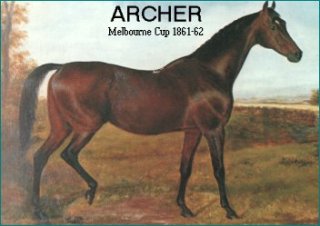
The first Melbourne Cup was run in 1861, and the winner that year was a horse named Archer. Race horses are often named quite logically, and Archer’s sire was William Tell. Born near Braidwood, in country New South Wales, he was trained near Nowra. Archer was a large horse, standing over 16 hands high with a powerful body. He ran badly in his first two races, and was rated poorly, until he won seven races in 1861, and was entered in the Melbourne Cup.

The first Melbourne Cup was action-packed. Three horses fell during the race (two of them died), two jockeys suffered broken bones, and one horse bolted off the course entirely, but the race gamely continued, and Archer won by six lengths in a time of 3 minutes and 52 seconds – the slowest in which a horse has ever won the Melbourne Cup.

He set another record the following year by winning the Melbourne Cup again; until the 1930s, he was the only horse to have won back-to-back Melbourne Cups. He was meant to enter in 1863 as well, but unfortunately there was a mix-up with telegrams and he didn’t manage to make the deadline in time.

Many legends have sprung up around Archer, such as that he had to walk all the way from Sydney to Melbourne in order to take part in the race, and that his jockey, Johnny Cutts, was an Aborigine from the Nowra area. Neither of these stories is true – Archer travelled to the race by steamship and rail, and Johnny Cutts wasn’t Aboriginal, and was from Sydney. The phrase since Archer won the Cup has entered our language, to refer to a long time distant.

Name Information
Archer is an English occupational surname referring to someone who uses a bow and arrows. The surname was introduced to Britain by the Normans, and by the end of the Middle Ages the Norman-French word archer had replaced the English bowman.

People have been hunting and fighting with bow and arrows since the Stone Age, and there are many famous archers in world mythology. During the Middle Ages, professional archers were rare, and most archers during war were recruited from the peasantry so archery was often seen as a lower-class pursuit. However, by the 14th century archers were used effectively in battle, making it a more attractive option. The use of firearms made archers obsolete, and the last recorded use of them in battle in England was in 1642.

The last known person to die from a British archer in battle was in 1940, when a German was killed during the retreat from Dunkirk by a delightfully eccentric officer named Jack Churchill, who insisted on fighting throughout World War II with bow, arrows and a sword; he also played the bagpipes while setting off grenades, to add to the effect. Incredibly brave and highly decorated, Churchill, known as Mad Jack, was later a military instructor in Australia, where he became an enthusiastic surfer. A shame we didn’t manage to keep him, as this man is now my personal hero!

Archer has been used as a personal name since the 17th century, and an early namesake was the British MP Sir Archer Croft, 2nd Baronet – Archer was his mother’s maiden name. Another who had Archer as a family name was the 18th century American politician Archer Mathews, a founder of Lewisburg in Virginia. In the 19th century, escaped slave Archer Alexander served as the model for the Emancipation Memorial in Lincoln Park, built by T.S. Eliot’s grandfather.

Archer joined the Australian Top 100 in 2012, and since then has continued rising. Currently it is #39 nationally, #49 in New South Wales, #27 in Victoria, #33 in Queensland, #29 in South Australia, #51 in Tasmania, and #38 in the Australian Capital Territory. It was one of the fastest rising names in Victoria last year.

Archer was a Top 1000 name in the US in the late 19th century, but spent many years off the charts until it returned in 2009. It has risen steeply since then, and is now #289. In the UK Archer has been in the Top 500 since 2012 and is currently #359. Archer is Top 100 in New Zealand – the only other country besides Australia where Archer is popular, although its popularity is highest in Australia.

No wonder this handsome name is so popular – it feels both vintage and contemporary, and fits in with the trend for names with an AR sound, and names connected with hunting and weaponry. One of its attractions is that it provides a way to get the popular nickname Archie without using Archibald, although Arch is another possibility.

Archer is a name from Australian history which celebrates the biggest sporting event of the year – one that almost everyone will participate in. It’s a name from the hunt and battlefield, but also referencing daring archers, from Robin Hood to the Hunger Games, and perhaps even comedy super-spy Sterling Archer from the animated show.

Could Archer follow its equine namesake and gallop to the #1 position on the charts? The odds are against it, but chances are it will continue cantering along the home stretch.

POLL RESULT
Archer received an outstanding approval rating of 93%, making it one of the most popular names of 2012. 36% of people loved the name Archer, and nobody hated it.

Names of Australian Male Paralympic Medalists

28 Sunday Oct 2012

Posted by A.O. in Name Themes and Lists

≈ 4 Comments

Tags

Anglo-Saxon names, Arabic names, Arthurian legends, Arthurian names, Cornish names, Croatian names, Disney names, english names, epithets, European name popularity, famous namesakes, French names, Gaelic names, germanic names, Irish names, K.M. Sheard, Latin names, locational names, mythological names, name history, name meaning, name popularity, names of organisations, Old Irish names, Old Norse names, Pictish names, popular culture, popular names, Roman names, royal names, saints names, Scottish names, South American name popularity, surname names, Welsh names

Bruno (Moretti)

Bruno Moretti won silver in table-tennis at the 1960 Paralympics, and a gold and two silvers in athletics at the 1964 Paralympics. Bruno is a Germanic name meaning “brown”. The name was used by the nobility in medieval Europe, and there are several saints named Bruno. One of them is Saint Bruno of Cologne, who was the son of Saint Matilda. He was Duke of Lotharingia and Archbishop of Cologne, and his court in Cologne was an intellectual and artistic centre. Bruno was also the given name of two popes – Gregory V and Leo IX. Bruno has a long history of use in Europe, and today is Top 100 in Croatia, Catalonia, Spain, and Chile. It’s also a common surname in Italy, and Giardano Bruno was a Dominican friar, philosopher, mathematician and astronomer, who suggested that the Sun was a star, and the universe had infinite worlds, populated by intelligent beings. He went down very badly with the Spanish Inquisition, who had him burned him at the stake. Today he is regarded as a martyr to science. Bruno is a warm cuddly-sounding name, and seems to be a popular choice for bears, both real and fictional.

Cody (Meakin)

Cody Meakin grew up playing both rugby union and Australian rules football; he broke his back in a rugby scrum, and while still in high school, became quadriplegic after a car accident. He took up wheelchair rugby in 2010, where he became an international champion. He won gold at the London Games this year. Cody is derived from the Gaelic surname Ó Cuidighthigh, meaning “son of Cuidightheach”. Cuidightheach is an Old Irish epithet meaning “helpful”. The most famous person with the surname must be “Buffalo Bill” Cody, an American frontiersman who became a celebrity for his Wild West touring shows; these introduced the concept of the American West to Britain and Europe. Buffalo Bill was a supporter of Native American rights, women’s rights and conservation, making him a very modern namesake, as well as giving the name Cody an “American West” feel. In the 1990 Disney film, The Rescuers Down Under, the boy from the Australian outback is named Cody. Cody first charted in the 1970s, and was top 100 by the 1990s. It peaked in the early 2000s at #59, and only left the Top 100 last year, when it dropped to #124.

Dylan (Alcott)

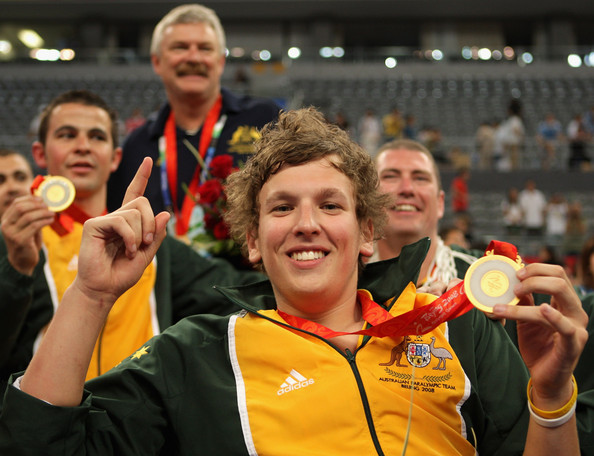
Dylan Alcott has been paraplegic from birth due to a spinal tumour, and began playing wheelchair basketball in 2003. He won gold at the 2008 Paralympics, and silver at this year’s London Games. Dylan is a Welsh name which is difficult to translate exactly, but very roughly means “flood, wave, tide”. In Welsh mythology, Dylan Ail Don was a blond god of the sea, and his epithets were “son of the wave” and “son of the sea”. In the legends, he is killed, and it’s said that the sound of the waves is the sea lamenting his death. The name became well known outside Britain due to the Welsh poet Dylan Thomas, who was named after the god. In Welsh, his name is pronounced DUL-uhn, but Thomas himself preferred the Anglicised pronunciation of DIL-uhn. Thomas’ emotionally powerful yet tightly controlled verse was admired by a young American named Robert Zimmerman, who promptly changed his name to Bob Dylan. As Dylan went on to become a folk balladeer, protest singer and counter-cultural icon, the name Dylan ended up with a double helping of street cred. Dylan first charted in the 1960s and reached the Top 100 in the 1980s. It peaked in the early 2000s at #17, and is currently #41.

Erik (Horrie)

Erik Horrie was left paraplegic after a car accident in 2001, and became involved in wheelchair basketball, but last year switched to canoeing. He won a silver medal at the 2012 London Games, and also welcomed his son Lewis. Erik is derived from Old Norse, and interpreted as “only ruler, eternal ruler, eternal power”. It has been heavily used in the royal houses of Denmark, Norway and Sweden, the most famous to us being Erik the Red, who explored a little-known country, called it Greenland, and became its head chieftain. King Erik IX of Sweden is considered to be a saint, and according to legend was martyred while attending a church service. The name Erik was used in England by the Anglo-Saxons, and settlers from Scandinavia but only became popular in the form Eric in the 19th century, thanks to an earnestly moralising book called Eric, or Little by Little. Other fictional Eriks include the Phantom of the Opera and Erik the Viking from the Monty Python film.

Fabian (Blattman)

Fabian Blattman became paraplegic after a motorcycle accident, and took up wheelchair athletics to improve fitness. One of our most successful Paralympians, he has set several world records. He won a silver and bronze in 1992, a gold and a silver in 1996, and a gold, silver and bronze in 2000. The name Fabian is derived from the Roman family name Fabius, one of the most ancient noble houses of Rome. According to legend, the Fabii claimed descent from Hercules, and were shepherds who followed founding father Remus. Their name is said to be from the Latin word for “broad bean”, a vegetable that the Fabii were supposedly the first to cultivate. The surname Fabianus was given to freed slaves who had been owned by the Fabii, and Fabian is from this name. It was introduced to England by the Normans, but never became as popular there as its equivalents in Continental Europe. There is a 3rd century Saint Fabian, who was elected pope by a dove; despite this unorthodox beginning, he was highly-regarded and worked hard for the early church. The Fabian Society gives this name a left-wing edge; the socialist organisation took its name from the Roman general Fabius Maximus, who wore Hannibal down by attrition rather than engaging in head-on battle.

Jago (Mikulic)

Jago Mikulic was a blind athlete who competed at the 1976 Paralympics, and won a silver in javelin and a bronze in the pentathlon. Jago is a Croatian form of James or Jacob, and is said YAH-go. It can also be a Cornish form of those names, but is pronounced JAY-go in this case. However, the Welsh form Iago is very old and predates the common use of Biblical names in Britain; K.M. Sheard suggests that it may be from the Celtic word for “ice”. If so, this would give Cornish Jago another possible origin.

Kerrod (McGregor)

Kerrod McGregor was a track and field Paralympian who won two golds, three silvers and two bronzes at the 1984 Paralympic Games, one gold in 1988, and one silver in 1996. Kerrod is an English surname that can be derived from the village of Curridge in Berkshire, with the village’s name meaning “Cusa’s ridge”. Cusa was a common Anglo-Saxon name, but what it meant I have been unable to discover. Another possible origin is the hamlet of Kerridge in Cheshire, which means “key ridge” – Kerridge Ridge is one of the foothills of the Pennines. The surname seems to have been most common in Yorkshire. The name Kerrod is well known in Queensland from former NRL star Kerrod Walters, who had a twin brother named Kevin.

Nazim (Erdem)

Nazim Erdem was born in Turkey and came to Australia early in life. As a kid, he practised holding his breath under water as a little game with himself. At the age of 20 he dived into shallow water in an effort to impress some girls; he was underwater for two and a half minutes before being rescued, and his technique of holding his breath saved his life. After the accident, he was quadriplegic. He began playing wheelchair rugby in 1992, and won silver medals at the 200 and 2008 Paralympics, and a gold at the London Games. Nazim is an Arabic boy’s name which means “organiser, convenor”, and as a title, loosely corresponds to the word “mayor” in English. The name isn’t uncommon in Turkey, and Nâzım Hikmet was a charismatic Turkish writer, a leader of the literary avant-garde who was often arrested for his revolutionary political beliefs, and spent much of life in prison or exile. His poetry and his struggles for peace are widely admired in Turkey and outside it; some of his poems have been turned into songs by folk singers such as Joan Baez and Pete Seeger. The name is pronounced NAH-zim.

Rene (Ahrens)

Rene Ahrens won a bronze in discus in 1980 and 1988. René is the French form of the Latin Renatus, meaning “born again, reborn”, referring to the act of baptism, and a popular choice for early Christians. René was a name used by the French aristocracy, and the name is known to us through the philosopher René Descartes (“I think therefore I am”). There is a Saint René Goupil, a French missionary to Canada who is one of the rare North American martyrs. The name is pronounced reh-NAY. Although the feminine form Renee has been popular in Australia,  masculine Rene remains very rare here – no doubt partly because it could easily be confused with the girl’s name.

Tristan (Knowles)

Tristan Knowles lost his leg at the age of 9 as a result of cancer, and also lost a lung at the age of 11. He has been playing wheelchair basketball since 1999, and in 2002 was named the NSW Wheelchair Basketballer of the Year. He won silver in 2004, gold in 2008, and a silver at this year’s Paralympic Games in London. Tristan is a Cornish hero of Celtic folklore who is also one of King Arthur’s knights of the Round Table. He is best known as the lover of the beautiful Irish princess Iseult (or Isolde). Iseult was to marry Tristan’s uncle, King Mark of Cornwall, but she and Tristan accidentally drank a love potion that had been prepared for Mark and his bride to share. The two became hopelessly infatuated with each other and embarked on a passionate affair, until Tristan was banished from Cornwall by an understandably irate Uncle Mark. The story was enormously popular in the Middle Ages, and is one of the forerunners to the story of adulterous lovers Lancelot and Guinevere. The name Tristan was yet another revived in the Victorian era, thanks to Tennyson, and the poems he wrote based on Arthurian legends. In the story, Tristan’s name is supposed to be linked with triste, the French word for “sad”, to fit in with his tragic love life. However, it is a form of the Pictish name Drust, which means “riot, tumult”. Drust was a traditional name amongst the royalty of Scotland, and it’s quite a puzzler as to how a Cornish story ended up with a hero with a Scottish name. Some claim that Tristan was a real person, pointing to a 5th century stone in Cornwall, which is supposed to be the grave marker for someone named Drustanus, the son of Cunomorus. Titillatingly, Cunomorus is said to be King Mark himself, suggesting that Tristan and Iseult’s step-incest was even closer and creepier (although his uncle was also his adoptive father anyway). Tristan and Iseult are two literary characters I’ve never been able to warm to, as their actions are so selfish; perhaps the story is trying to tell us that nobody does very well out of an infatuated love affair, not even the lovers themselves. Tristan first charted in the 1960s, and has managed to reach #100 twice, in the 1980s and late 2000s. It’s currently #123.

(Photo of Dylan Alcott celebrating victory from Zimbio)

Famous Name: Piper

24 Wednesday Oct 2012

Posted by A.O. in Famous Names

≈ 12 Comments

Tags

Anglo-Saxon names, english names, famous namesakes, Hollywood names, locational names, musical names, name history, name meaning, name popularity, popular culture, popular names, surname names, unisex names, US name popularity, vocabulary names

Sydney was recently named the second most expensive city in the world, after Tokyo; luckily it was also revealed that Australians are now the richest people in the world, so we can afford it! The most expensive suburb in Sydney is Point Piper, where the median house value is $7.38 million, and the most expensive privately owned house in Australia, costing $70 million to build, is located here. Point Piper’s Wolsley Road is the tenth most expensive street in the world, with 16% of Australia’s priciest houses on this 1 km stretch.

Point Piper is a little piece of land which juts into Sydney Harbour, a small enclave of just eleven streets and 148 houses. As Sydney’s most exclusive suburb, it is only 4 km from the CBD and offers views of the Harbour Bridge and Opera House. Despite its size, it has two beaches and two yacht clubs. The suburb is named after Captain John Piper, a Scottish-born military officer of Cornish parentage and German descent who arrived in the colony in 1792 and became an immediate social success.

Piper’s career got off to an interesting start when he asked to be posted to the penal settlement in Norfolk Island after a scandalous love affair which ended with an illegitimate daughter in his care. Later he became acting commandment of Norfolk, and ruled it so kindly that even one of the convicts wrote home to say how outstandingly nice he was. While on Norfolk, he took as his mistress a teenage girl who was the daughter of convicts; they eventually married, but not before she had borne him four children (they had nine more).

He became very rich by collecting custom duties and excises, and after being granted land by the governor, built a mansion on the point which is now named after him in 1816 at a cost of £10,000 (about $11 million in today’s money). He continued gathering wealth, real estate and respectability, until he ran into financial difficulties in the 1820s, and was suspended from his position after mismanagement of funds was discovered.

Piper tried to drown himself in Sydney Harbour, but was rescued. He had to sell everything he owned to settle his debts, and moved to Bathurst, where he ran a farm and became a figure of local importance. When he ran into problems there as well, his friends bailed him out and bought him a riverside property, where he and his wife and numerous children could be comfortable. He was just so nice, you see – blithe, unsinkable, amiable, and eminently forgiveable for his lack of business acumen.

Piper is an English surname which refers to someone who played the bagpipes. Although we think of bagpipes as being uniquely Scottish, their origins go back to the ancient world; it’s said that the Roman emperor Nero could play them. Their use spread through Europe in the Middle Ages, with their first explicit mention in Britain being in Chaucer’s Canterbury Tales. However, it was in Scotland that bagpipe music became most sophisticated and highly developed.

The piper was a well-paid and highly-respected professional, who would have been employed by a great lord or chief; it was often a hereditary position. The piper’s job was to entertain his lord at home and while travelling; this sometimes included military service. While traditions of pipers rallying the troops before battle go back centuries, the first documented case is 1549, when they were played by the troops of the Earl of Argyll. Later, pipers could be employed by a town to play each day, as well as at fairs and other events.

There is a myth that in times of old only men were pipers, and one ancient saw is that a woman found playing the bagpipes would have her fingers cut off in punishment, but this simply isn’t true. There are many documented cases of women pipers, and they were employed as teachers in a famous piping school on the Isle of Skye. Today women pipers are still out-numbered by the men, but there are plenty of them, and they are equally good.

The surname Piper goes back to the 13th century, and seems to have historically been most common in Sussex in England. However, the personal name may predate the surname, for the name Pipere has been found in an Anglo-Saxon charter from Sussex, which could make Piper one of the oldest English names – and another possible source for the surname.

Piper, with the modern spelling, comes directly from the surname, and dates to the 18th century, when it was nearly always given to boys (although as a middle name, much more evenly divided between the sexes). The name became seen as a girl’s name when a teenager from Detroit changed her name from Rosetta Jacobs to Piper Laurie and got a contract in Hollywood.

Although Ms Laurie says in her autobiography that she had to change her name because it sounded “too Jewish”, she gives no clues as to where she got the name Piper Laurie from. It almost sounds like a girl’s name – Laurie Piper – backwards.

Piper Laurie was in The Hustler and Carrie, but would have become well-known here for her role in the miniseries The Thorn Birds, based on the best-selling novel by Australian author Colleen McCullough. The Thorn Birds was originally broadcast in 1983, and the name Piper first charts in Australia the same decade.

The name skyrocketed in the 1990s to reach #128 by the early 2000s; I can’t help feeling this has a lot to do with the character of Piper Halliwell in the TV show Charmed. The actress who played Piper, Holly Marie Combs, confessed to having a large and inexplicable fan base in Australia.

Piper made the Top 100 in 2009, and is currently #70 and rising. Although we think of this as an American-style name, it’s only been on the US Top 1000 since 1999, and is still not Top 100, although not far off at #110, so Piper has charted in Australia longer than in the US and is more popular here. Australian parents do seem quick to pick up on Hollywood names.

I saw someone on a name blog say Piper is a name which will please everyone, which seemed going a bit far. However, I do think it has a lot to recommend it. It references luxury real estate, an ancient form of music, a Hollywood star with an Aussie connection, and an appealing namesake with a history unusually free of tragedy.

It’s a very old Anglo-Saxon name, but seems bright and modern. It’s a surname name for girls that doesn’t have any “son of” or male-only occupation issues, or significant prior use as a male name. It’s a vocabulary word which everyone can spell, pronounce and understand, and it’s a popular but not too popular name that still has room for growth.

So while Piper may perhaps not please all people, if Piper pleases you, then you may be pleased enough with Piper to pick it!

(Photo of Point Piper from the Sydney Morning Herald)

Names of Australian Female Paralympic Medalists

21 Sunday Oct 2012

Posted by A.O. in Name Themes and Lists

≈ 8 Comments

Tags

Arabic names, Arthurian legends, Arthurian names, astronomical names, Biblical names, english names, ethnonyms, famous namesakes, fictional namesakes, French names, gemstone names, germanic names, Greek names, hebrew names, honouring, Indian names, Irish names, Latin names, locational names, military events, mythological names, name history, name meaning, name popularity, names of dolls, nature names, nicknames, Norman-French names, Old French names, popular names, royal names, saints names, Sanskrit names, street names, surname names, unisex names, vocabulary names

Amber (Merritt)

Amber Meritt was born with a club foot, and is originally from England; she came to Australia as a child (she’s now 19). She started playing wheelchair basketball in 2007, and won silver at the London Games. Amber is fossilised tree resin, and since prehistoric times has been valued as a gemstone. The word amber is derived from Arabic, and means ambergris, the waxy substance regurgitated by the sperm whale; it was only later realised these were different substances. Amber has been used as a girl’s name since the 17th century, but wasn’t popular until the 20th. The name became notorious in 1944, when the racy historical romance, Forever Amber, was published, with its heroine the sleep-her-way-to-the-top Amber St. Clare. Despite being condemned, and even banned here until 1958, the book was a bestseller, and made into a film. Amber was in rare use in the 1950s, and during the 1960s made #647 (about one Amber per year). It absolutely skyrocketed during the 1970s up to #135, peaked in the early 2000s at #49, and is now #91. This pretty gemstone name is still popular, and it’s all thanks to a “dirty” book! If looking for a nickname, Miss Merritt goes by Bambi.

Danae (Sweetapple)

Danae Sweetapple was blind from birth, and started swimming in 1990. She won a silver and two bronzes at the 1992 Paralympics. In Greek mythology, Danaë was a Greek princess and the mother of the hero Perseus. Her father shut her up in a bronze tower due to a prophecy that he would be killed by her son, but she was impregnated by Zeus, who came to her in the form of golden rain. The king had Danaë and Perseus cast into the sea, and they washed ashore onto an island, where a kind fisherman raised Perseus as his own son (as an adult, the prophecy was fulfilled when Perseus did kill his grandfather). Getting it on with a godly shower of gold was either supremely satisfying or very traumatising for Danaë, as she had no interest in mortal men afterwards, and never married or had further children. Her name is derived from the Danaans, one of the names the Greeks used for themselves, with the idea that they were partly descended from Danaus, a mythical prince of Egypt. I’m not sure how the Greeks would have said her name (nobody seems to agree), but not like the way it is usually said in Australia, which is dan-AY.

Elaine (Schreiber)

Elaine Schreiber won a bronze in table tennis, a gold in club throw, and a silver in javelin at the 1964 Paralympics, and a silver in table tennis at the 1968 Games. Elaine is a name shared by several characters in Arthurian legend, who are occasionally confused with each other. One of the most famous is the fair Elaine of Astolat, who dies of unrequited love for Sir Lancelot. The story inspired Tennyson’s poem, The Lady of Shalott, and it was only after the popularity of his poem that Elaine became a commonly-used English name. Elaine is an Old French variant of Helen. Elaine was #254 in 1900, joined the Top 100 in the 1920s, and peaked in the 1930s at #18. It left the Top 100 in the 1960s, and reached its lowest point in the late 2000s, when it was in rare use. Since then, it has been very gently rising, and is currently #457.

Gloria (Pascoe)

Gloria Pascoe developed epilepsy at the age of 9, and became totally blind by 55. At 61, she attended the 1980 Paralympics, where she took gold in lawn bowls. Gloria is the Latin for “glory, fame, renown”, and in Christian tradition it denotes the manifestation of God’s presence, often associated with a divine light. The name Gloria has been in use since at least the 16th century, but received a boost in popularity in the 19th from two literary works. One was Gloria, a romantic novel by popular American novelist E.D.E.N. Southworth in 1891; the other was George Bernard Shaw’s 1897 comedy of errors, You Never Can Tell. Both these works feature very attractive heroines who seem to have done the name more good than all of God’s glory. Gloria was #257 in 1900, Top 100 by the 1920s, and peaked in the 1930s at #23. It left the Top 100 in the 1960s, and hit its lowest point in 2009 when it was in rare use. Since then it has risen again, and is currently #427. If you’ve been paying attention, you will see this makes it the virtual twin of Elaine in terms of popularity.

Jemima (Moore)

Jemima Moore became paraplegic at the age of 6 from a virus, and is now 20. She won a silver medal in the 100 metres relay at the 2008 Paralympics, and attended the London Games. In the Bible, Jemima was the eldest of Job’s three daughters, and she and her sisters are described as being the fairest in the land. The name Jemima literally means “warm” in Hebrew, and can be translated as “day”. The name could actually be derived from Arabic, as there is an ancient land in Arabia who had a queen called Jemama; if so, Jemima from the Bible could be inspired by the queen of Arabic folklore. This does fit in with the Biblical story, because Job and his family were said to be from an Arabic country. The name Jemama means “turtledove”. It first charted in the 1960s, the same decade children’s show Playschool first broadcast, which has a rag doll named Jemima. Never in the Top 100, it peaked at #196 in the late 2000s and is currently #254 and stable. This is a fashionable name which has never gained popularity or lost cachet.

Lorraine (Dodd)

Lorraine Dodd became paraplegic at the age of 13, after contracting transverse myelitis. She attended the 1968 Paralympic Games, where she won three golds for swimming, and a silver and a bronze in athletics. Lorraine is a region in north-eastern France; its name comes from an earlier kingdom named Lotharingia, meaning “Lothar’s kingdom. Lothar I was a Frankish king and a great-grandson of Charlemagne; his name is Germanic and means “famous army”. As a personal name, Lorraine has been used since the 18th century, a century in which Lorraine first became part of France. It’s sometimes said to be a Catholic name, since St Joan of Arc was also known as The Maid of Lorraine. There was a World War I Battle of Lorraine, which probably boosted numbers, and the area’s importance during World War II reflects a peak in popularity at this time. Lorraine was in rare use in the 1900s, and reached the Top 100 in the 1930s. Peaking in the 1940s, it left the Top 100 in the 1970s, and hasn’t charted since the 1990s. You can see how Lorraine helped Lauren appear feminine, and Lauren also seems to have replaced Lorraine.

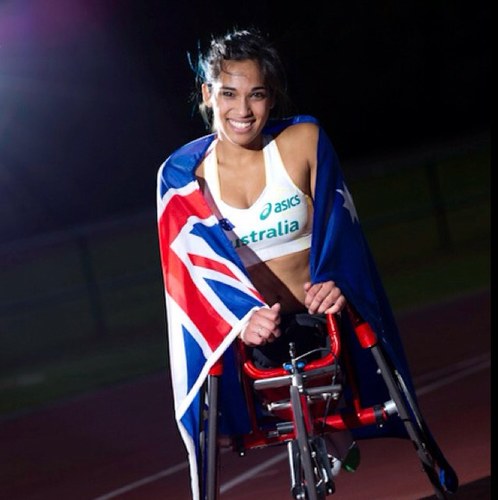
Madison (de Rozario)

Madison de Rozario became paralysed by a rare neurological condition at the age of 3 and is now 18. She won silver in 2008 as the youngest Paralympian on the team, and was also at the London Games. Madison is a surname meaning “son of Matthew“, although in some rare cases it may be derived from “son of Maddy”, with Maddy being a pet form of Maud. It’s been used as a personal name since the 18th century, and seems to have been given almost exclusively to boys in the beginning. Although certainly used in England, it was much more common in America, where it may often have been given in honour of James Madison, the fourth president of the United States (I only found one man named Madison in Australian records). Madison is famous in baby name circles for only becoming popular, and only becoming common for girls, after the movie Splash in 1984. This romantic fantasy, a rewrite of The Little Mermaid, stars Daryl Hannah as the mermaid, who chooses her “human name” from a street sign for Madison Avenue in New York City, named after the former president – although Tom Hanks’ character tells her this isn’t a “real name”. Madison was #606 for the 1980s, with about three born each year. It then absolutely screeched up the charts to make #52 for the 1990s, and peaked in the early 2000s at #22. It sunk to #44 in 2010, then rose last year to make #41. It’s been a real success story, with its nickname Maddie fitting in with Madeline.

Priya (Cooper)

Priya Cooper was born with cerebral palsy, and spends most of her time in a wheelchair. She began swimming competitively while still at school, and is one of our greatest disabled swimmers, winning nine gold medals and breaking world records at the 1992, 1996 and 2000 Paralympics. She was twice team co-captain, and twice a flag-bearer at closing ceremonies. She has received many honours, and since retiring has become a spokesperson and fundraiser for several charities. Priya is an Indian girl’s name which means “dear, beloved” in Sanskrit. In Hindu legend, Priya was one of the daughters of King Daksha, a son of the god Brahma. The name is pronounced PREE-yuh, and has been rather a favourite in Australia for many years.

Siobhan (Paton)

Siobhan Paton is an intellectually disabled swimmer who holds thirteen world records, and won six gold medals at the 2000 Olympics. She was named Paralympian of the Year in 2000, and also received an Order of Australia. Siobhán is the Irish form of the Norman-French name Jehanne, a variant of Jeanne. There were several medieval queens named Siobhán. It is said that the twentieth century popularity of Siobhan owes a great deal to the actress Siobhán McKenna, who was born in Belfast. She was most famous as a stage actress, but also appeared in King of Kings (playing Mary), Of Human Bondage, and Dr Zhivago. Ms McKenna’s son, Donnacha O’Dea, was an Olympic swimmer for Ireland in 1968. Siobhan first charted in the 1950s, and during the 1960s was #571, which represents about one Siobhan a year. Use of the name increased sharply during the 1970s and ’80s, and it peaked in the 1990s at #211. It hasn’t charted since 2009, so this is another attractive name which has never made the Top 100. Pronunciation is an issue, because the usual Irish pronunciation is SHIV-on, but in Australia it’s usually said shi-VAWN.

Ursula (King)

Usula King was a swimmer who won a silver and two bronze at the 1984 Paralympics. The name Ursula means “little she-bear”, derived from the Latin ursa (which we know from constellations Ursa Major and Minor – the Great and Little Bears). According to legend, Saint Ursula was a Romano-British princess who was sent by her father to marry the pagan governor of Armorica (Brittany). Possibly to stall proceedings, she got all bridezilla and declared that before the wedding she must go all over Europe on a pilgrimage, taking an unbelievable 11 000 virgins with her as her handmaids. On their way to Cologne, they were besieged by Huns, who had a busy day beheading the lot of them. The story doesn’t fit with any known historic facts, and one theory is that Ursula is a Christianised form of the goddess Freya. However, Cologne has a magnificent basilica dedicated to St Ursula and her companions, and a little village in Wales also has a church in their honour, in the belief that Ursula was originally from Wales (in the legend, she is from the West Country). Because of the saint, the name came into use in medieval times, and got a little boost in the 20th century from beautiful Swedish actress Ursula Andress, who was the first Bond girl, in Dr No. It’s clunky by contemporary standards, but strangely alluring.

(Photo of Madison de Rozario from her Twitter account)

The Geography of Sydney Baby Names

16 Tuesday Oct 2012

Posted by A.O. in Names in the News

≈ 6 Comments

Tags

classic names, famous namesakes, modern classic names, popular names, retro names, surnames names

A news story I quoted on the weekend said that when it comes to the most popular names, each region of New South Wales tended to be quite similar. This story, on the other hand, says that there are subtle differences between the names chosen in different areas.

At Westmead Hospital in Sydney’s west, the most popular names are Joshua, Ethan and Lucas for boys, and Olivia, Mia and Chloe for girls.

At the Royal Hospital in Randwick in the eastern suburbs, the most popular names for boys are William, Alexander and James, and for girls, Isabella, Sophie and Grace.

On the upper-class north shore, boys were most likely to be called Oliver, Thomas or Jack, and girls Chloe, Charlotte or Emily.

In the southern suburban areas of Sutherland Shire and St. George, the most popular boy’s names are Lucas, Benjamin and Christian, and the most popular girls Olivia, Amelia and Zoe. (Overseas readers may be interested to know that the Australian equivalent of Jersey Shore is set in Sutherland Shire).

The article says that this means that in the west, they choose “Hollywood movie star” names, while in the east, they opt for more “conservative, traditional or Biblical” names. I find this quite confusing, because Joshua, Ethan and Chloe are names from the Bible, and from the other group, only James is Biblical.

And whether a name is “Hollywood” seems rather subjective, because of course there is Will Smith, Alexander Skarsgard, James Dean, Isabella Rosselini, Sophie Monk and Grace Kelly! I couldn’t actually see why the west was more “Hollywood” than the east.

The ones from the eastern suburbs hospital do tend to be names which have charted since 1900, and the ones from the west are all modern classics. So perhaps we can say, very vaguely and generally, that people in more affluent areas of Sydney are more likely to prefer classic and retro names, while working-class areas prefer modern classics.

However, the working-class choice was Sophia, which is a retro name charting since 1900, while affluent choice Sophie is a modern classic, so it’s not cut-and-dried by any means. Both areas liked James, Chloe and Isabella, so there are several name choices which apparently suit all classes.

Away from Sydney, on the Central Coast and in Newcastle, the popular boys were Cooper, Noah, Riley, Lachlan and Tyler, and the most common girls Ruby, Sienna, Ava and Ella. Interestingly, if you live somewhere regional and coastal, you do seem more likely to call your son Cooper or Riley, and the addition of Tyler makes it seem this is where surnames-as-first-names rule.

Rather typically, neither of the articles from Sydney bothers to look at other regions of New South Wales or even acknowledges they exist. I would have been very interested to see the popular names from other regional centres.

Name News Round-Up

13 Saturday Oct 2012

Posted by A.O. in Names in the News

≈ 4 Comments

Tags

Australian Aboriginal names, baby name superstitions, birth records, birth registries, changing a baby's name, choosing baby names, locational names, name changes, name combinations, name meanings, name popularity, name trends, nicknames, popular names, vintage names

I’ve read quite a few odd little snippets abut names in the news, and the holidays seems like a good opportunity to share them.

The same names popular across New South Wales

Data from the NSW Registry of Births, Deaths and Marriages shows that most areas followed the same name trends last year, despite cultural and ethnic differences. One of the major exceptions to the rule was the name Aaliyah, which is #77 across the state, but a Top Ten name in Blacktown, in Sydney’s western suburbs. At the public hospitals of Royal North Shore and Royal Prince Alfred, Oliver and Chloe were the most popular names; Olivia was the favourite name at Westmead, St George and Nepean hospitals, while Isabella topped the girl’s list at Randwick, Blacktown and Liverpool hospitals. Ethan was #1 in Liverpool, while the Central Coast was the only region to appreciate Cooper in significant numbers. Amelia proved an across-the-board favourite in almost every region, only failing to make the Top Ten in Newcastle, St Leonards, Central Coast and Blacktown.

Lismore bucks the trend

Despite this uniformity, up in Lismore in the state’s far north, they pride themselves on doing things a little differently, including baby names. In the Northern Rivers region, the most popular baby names are Riley and Mia (#20 and #5 in the state respectively). Cooper is the #2 boy’s name in Lismore, adding weight to the idea that it is coastal areas which tend to go for this name. Grace is #4 in Lismore, although #14 in the state.

Baby name regret, 1909 style

This is a story sent in by a reader to one of those columns where people send in their odd little stories.

The Unthank family of Somerville welcomed their baby daughter Hazel Ethel in 1909. Today Somerville is a suburb of Melbourne, but back then it was a rural orchard town. In order to register his daughter’s birth, Mr Unthank had to drive 10 km (6 miles) by horse and carriage to Hastings, a bustling seaside town (now another suburb).

On his way to the registry office, he dropped into the local pub to visit his wife’s family, who owned the pub, and share the good news. They all had a few drinks, and decided Hazel Ethel wasn’t suitable after all. They picked a new name, wrote it down on a piece of paper, and Mr Unthank continued his journey.

When Mr Unthank got home, he casually told his wife that he and her sisters had changed the baby’s name, but unfortunately he couldn’t remember what it was, as he had handed the slip of paper to the registrar and thought no more about it.

It was six weeks before they could find the time to visit their relatives again, and in the meantime, they had no idea what their daughter’s name was. They just called her Bubby. Eventually, they discovered her name was Zalie Vivienne Unthank, but for the rest of her life, Zalie was known by her family as Bub.

Perhaps not so strangely, both Hazel and Zalie now sound perfectly suitable as contemporary baby names. Do you think her dad and aunties made the right choice for 1909? And which one sounds better today?

(You can see the birth record for Zalie here, where her name is given as Zalie Vyvian).

Baby name superstitions

In a newspaper article from Tasmania dated 1936, it is claimed that in times gone by, it was considered lucky to choose a baby’s name before it was born. The name had to be chosen in the first nine days after birth, or it would be an unlucky child. The article unfortunately doesn’t say how long ago these superstitions were in effect.

The town that got its name back

This isn’t about baby names, but I checked my blog’s title, and it says it is about Australian names, not just baby or even people names.

The town of Mutchilba in far north Queensland is on the small side, but famed for its mangoes. In 1999, the town was quietly downgraded and removed from the map. The population of Mutchilba was (statistically speaking) moved to swell the ranks of nearby Dimbulah, which has the same postcode.

It’s said that life moves at a slower pace in the tropical heat, and perhaps that explains why the good people of Mutchilba failed to notice the change in status to their little town until July of this year. Perhaps nobody bought any new maps in the interim. Certainly nobody bothered telling them.

However, when the local paper published an article informing them of what had occurred, they were hopping mad, and launched a campaign to get their town back.

I’m happy to say they were successful, and as of October 12 this year, Mutchilba is now officially a town once more. Queensland Natural Resources and Mines Minister Andrew Cripps says the State Government fast-tracked the process, and that he took personal interest in the case, being from the far north himself.

The mayor of Mutchilba is now hoping to re-launch the Mutchilba Mango Mardi Gras, the annual festival celebrating the mango harvest, as a means of highlighting the town’s unique identity.

Mutchilba has a lovely meaning in the local language – “place of many birds”.

← Older posts
Newer posts →

Enter your email address to follow this blog

Categories

Archives

Recent Comments

A.O.'s avatarwaltzingmorethanmati… on Zarah Zaynab and Wolfgang…
Madelyn's avatarMadelyn on Zarah Zaynab and Wolfgang…
JD's avatardrperegrine on Can Phoebe Complete This …
A.O.'s avatarwaltzingmorethanmati… on Rua and Rhoa
redrover23's avatarredrover23 on Rua and Rhoa

Blogroll

  • Appellation Mountain
  • Baby Name Pondering
  • Babynamelover's Blog
  • British Baby Names
  • Clare's Name News
  • For Real Baby Names
  • Geek Baby Names
  • Name Candy
  • Nameberry
  • Nancy's Baby Names
  • Ren's Baby Name Blog
  • Sancta Nomina
  • Swistle: Baby Names
  • The Art of Naming
  • The Baby Name Wizard
  • The Beauty of Names
  • Tulip By Any Name

RSS Feed

  • RSS - Posts

RSS Posts

  • Celebrity Baby News: Melanie Vallejo and Matt Kingston
  • Names from the TV Show “Cleverman”
  • Can Phoebe Complete This Sibset?
  • Zarah Zaynab and Wolfgang Winter
  • Baby, How Did You Get That Name?
  • Celebrity Baby News: Media Babies
  • Celebrity Baby News: Adelaide Crows Babies
  • Celebrity Baby News: Chris and Rebecca Judd
  • Names at Work: Name News From the World of Business and Employment
  • Celebrity Baby News: Sporting Round Up

Currently Popular

  • Rare Boys Names From the 1950s
  • Celebrity Baby News: Toby Allen and Darren Weller
  • Celebrity Baby News: Bernard Fanning and Andrea Moreno
  • Celebrity Baby News: Ed Husic and Bridget Tilley
  • Why Your Child Will Hate Their Name

Tags

celebrity baby names celebrity sibsets english names famous namesakes fictional namesakes honouring locational names middle names name combinations name history name meaning name popularity name trends nicknames popular names saints names sibsets surname names twin sets unisex names

Create a free website or blog at WordPress.com.

Privacy & Cookies: This site uses cookies. By continuing to use this website, you agree to their use.
To find out more, including how to control cookies, see here: Cookie Policy
  • Subscribe Subscribed
    • Waltzing More Than Matilda
    • Join 517 other subscribers
    • Already have a WordPress.com account? Log in now.
    • Waltzing More Than Matilda
    • Subscribe Subscribed
    • Sign up
    • Log in
    • Report this content
    • View site in Reader
    • Manage subscriptions
    • Collapse this bar
 

Loading Comments...