• About
  • Best Baby Names
  • Celebrity Baby Names
  • Celebrity Baby Names – Current
  • Celebrity Baby Names – Past
  • Featured Boys Names
  • Featured Girls Names
  • Featured Unisex Names
  • Links to Name Data
  • Waltzing on the Web

Waltzing More Than Matilda

~ Names with an Australian Bias of Democratic Temper

Waltzing More Than Matilda

Tag Archives: Old English names

MYTH: Australian Baby Names are Becoming Increasingly Influenced by American Trends

01 Sunday Jul 2012

Posted by A.O. in Baby Name Mythbusters

≈ 20 Comments

Tags

Australian names, Biblical names, classic names, created names, famous namesakes, fictional namesakes, flower names, French names, germanic names, Greek names, Irish names, Italian names, Mer de Noms, name data, name popularity, name trends, nicknames, Old English names, popular names, saints names, Scottish names, Spanish names, surname names, unisex names, US name trends, US popularity, Welsh names
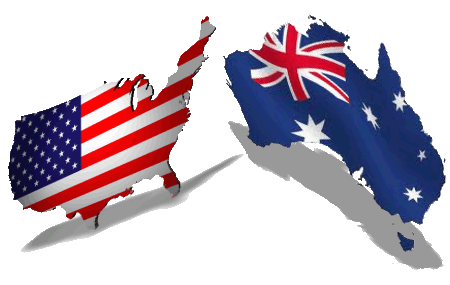
Since I last went mythbusting, the 2011 name data from the United States has been released, and this week it’s American Independence Day. To celebrate both events, I decided to compare Australian and US name data. (Lou at Mer de Noms brought out her own comparison of the data for the United States and England/Wales in May, and did something pretty interesting with it.)

That Australians are becoming increasingly Americanised, including their choice of baby names, is something not debated, but accepted as a truism. It is often mourned by older generations that Australians used to call their children good solid Aussie names like Barry and Sheila, and now give them sleek American-style names like Logan and Scarlett.

It’s a myth which sounds very plausible – I certainly know far more children named Logan and Scarlett than I do Barry and Sheila (actually I don’t know any children called Barry or Sheila). But I thought we should try to get some numbers to back the myth up.

So I decided to look at the Top 100 names from both countries, in the years 1930, 1950, 1970, 1990 and 2011. If the number of names shared by both countries went steadily up, that could help support the theory that Australian names were becoming increasingly “American”. By no means conclusive proof, but it would be a start, and frankly I couldn’t think of any other way of doing it.

As I went through calculating the number of shared names, I also took note of those trends at work in Australia and the United States, where they were the same and where they differed. This gave me a picture of changing trends through the years. (The data is from Victoria, because theirs go back to 1929).

1930

MALE – 65% shared with US Top 100

1930 marked the highest percentage of shared names between the countries. This wasn’t because Australians were more “American” in 1930, but because in every year, the common denominator for both countries were classic names like John, Thomas and William, and these sort of names took up more space of both countries’ Top 100.

Trends noticeable on the Australian Top 100 were names from Ireland, Scotland and Wales, such as Kevin, Malcolm and Trevor, and aristocratic English surnames, such as Neville. Americans preferred prominent surnames of their own citizens, such as Elmer and Lee. Popular names from America we didn’t share were “cowboy” names – Wayne, Earl and Jesse. In America, nicknames for boys were all the rage, including Billy, Bob and Jimmie.

FEMALE – 51% shared with US Top 100

Popular girls names in both countries were homespun names such as Margaret and Dorothy, as well as plant names like Hazel and Rose.

Australian trends for girls included names from Ireland and Wales, such as Sheila and Gweneth, saints names such as Carmel and Veronica, and literary inventions like Doreen and Mavis. American trends were for Germanic names such as Emma and Clara, and the clunky Old English Mildred and Bertha. America’s Hispanic population meant that Delores and Juanita were Top 100 there.

1950

MALE – 59% shared with US Top 100 (down 6%)

American trends for boys we had picked up by 1950 include Gary, after Hollywood star Gary Cooper, and that supposed Australian favourite, Bruce, also popular in the US.

America continued its love of nicknames, with Bobby, Joe and Fred all Top 100. Several of the Irish boys names such as Kevin and Barry were now on the US Top 100 as well, but new Irish-style names such as Shane were still to gain American acceptance. Already in the US you can see a reluctance to use “feminine sounding” or unisex names such as Lindsay and Noel, which were Top 100 in Australia. In Australia, that same 1950s gender-anxiety produced the opposite result, with some unisex names like Leslie becoming male-only.

FEMALE – 47% shared with US Top 100 (down 4%)

The most noticeable shared trends for girls were those glamorous Hollywood names such as Marilyn (Monroe) and Rita (Hayworth). Even when Australians did take a name from America, such as Jennifer from Hollywood star Jennifer Jones, it didn’t always follow that Americans would embrace it as rapidly themselves. Jennifer was a 1950s name in Australia, but didn’t peak in the US until the 1970s.

Australian girls were being given French names like Annette and Jeanette, while Americans girls had Jacqueline. Another popular Australian “French” name was Lorraine, given in honour of St Joan of Arc, sometimes called The Maid of Lorraine. The American love of the nickname meant that names such as Judy and Peggy were Top 100 for girls.

1970

MALE – 56% shared with US Top 100 (down 3%)

Popular 1970 names which we think of as “American style” were in evidence on both charts, such as Bradley, Jason, Glenn, Darren and Craig.

Australian boys names not picked up in the US included Scottish-style names such as Ross, Graham, Stuart and Gavin, and the “feminine sounding” Ashley and Jamie. Differing ethnicities also made their mark, with Spanish Carlos in the US Top 100, and Italian and Greek names like Giovanni and Giorgio in the Australian Top 100. American nicknames powered on, with Larry, Terry and Jerry amongst them.

FEMALE – 51% shared with US Top 100 (up 4%, return to 1930 level)

It was the decade of those 1970s names Sharon and Tracey, although Sharon in particular had been popular in America for some time and we’d only just caught up.

Names such as Samantha and Amanda were already popular in Australia in 1970, but would have to wait until the 1980s to make it big in the US. Conversely, Amy was popular in the US, but wouldn’t be here until the 1980s. French Nicole was in vogue in both countries, and we’d caught up with Jacqueline; however Australia also had Danielle, Louise, Justine, Natalie, Simone and Josephine – typical 1970s girls names that were underused in the US. Scottish and Welsh names like Fiona, Megan and Bronwyn were popular here but didn’t get a look-in in the US. We were proudly using names of Australian origin, like Kylie and Narelle; naturally these were unknown in the US.

1990

MALE – 56% shared with US Top 100 (no change)

Trends from the US we were embracing were Old Testament names, such as Jacob and Zachary; and the new surname names, such as Ryan and Mitchell.

A new generation of “too feminine” boys names that were popular in Australia were ignored in the US, such as Shannon, Tristan and Leigh, as were more Scottish, Welsh and Irish-ish names, such as Lachlan, Rhys and Kane. Hayden and Jayden were already Top 100 in Australia, but not in the US. America had finally gone off nickname names, while Australia now had Jack, Jake and Ricky. American names Beau, Jackson and Tyson were popular then, as now, in Australia; of the three, only Jackson has hit the US Top 100 so far.

FEMALE – 56% the same as the US Top 100 (up 5%)

Names that both countries had in common were those typical 1990s names, like Tiffany, Brittany, Kayla and Caitlin.

Americana we were still to discover included unisex names for girls like Ariel, Shelby and Paige. Although the US had Danielle and Natalie by now, French names such as Monique, Elise, Renee and Madeleine which were popular here had apparently failed to make an impression. Although Welsh Caitlin was all the rage, the US were not on board with Tegan and Rhiannon, as we were. Most notably, Emma, Amelia, Charlotte, Sophie, Chloe and Zoe were missing from the US Top 100 – while American parents who chose these names in 1990 were ahead of the trends, in Australia, parents choosing these names in 1990 were just following the trends.

2011

MALE – 59% shared with US Top 100 (up 3%, return to 1950 level)

Congruence in popularity between the two nations has risen to 1950 levels, with many name trends in common, mostly a fresh crop of Biblical names, such as Elijah, and surname names, such as Mason.

American parents are now avoiding a new generation of Scottish names, such as Angus and Hamish, while Irish names like Declan and Flynn are also neglected in the US. Oddly enough, Kevin is still Top 100 in the US, while it’s considered a bit dated here. The scunner against nicknames continues as Americans shun Australian populars Charlie, Harry, Archie, Sam and Nate. No longer merely  shying away from “feminine sounding” names for boys like Bailey and Riley, parents in the US have actually given these names to their daughters in such numbers that they are now Top 100 for girls, while Top 100 for boys here. Several names we have taken from the US, such as Jett, Hudson and Jasper, are still not popular in America.

FEMALE – 47% shared with US Top 100 (down 9%, return to 1950 level)

Girls names have also returned to 1950s levels. Many names are shared because America has caught up with our popular names from 1990, but Australian parents have also begun to use unisex names for girls like Madison and Addison.

America has abandoned many names as “outdated” such as Amy, Jessica, Holly and Amber that have taken on “modern classic” status here. While America has accepted Lily, it is less keen on our popular plant names Daisy, Ivy, Violet, Willow, Olive and Rose. British-style names such as Isla and Imogen cut no mustard in the States. Meanwhile, popular American virtue names like Genesis, Serenity, Trinity, Nevaeh and Destiny do not resonate here. Perhaps they will in the future.

CONCLUSIONS

I did not manage to bust this myth, but neither did I find much evidence to support it, so I will give its status as MYTH UNCONFIRMED.

As I compared popularity charts from the two countries, I realised more and more that it was a case of apples and oranges. Names took longer to gain popularity in the US, and it was harder for them to stay in the Top 100; name popularity was a competitive environment there. Australia has a much smaller population size, which means that name trends show up faster here. We’re also more likely to hold onto our favourite names once we’ve found them, sometimes for generations.

I don’t think it’s an exaggeration to say that American parents are absolutely obsessed with getting ahead of the current trends, and can watch the slowly rising popularity of their chosen names with almost comical anxiety. This makes some sense, because trending names can take so long to reach the Top 100 that they have a good chance of having ten to twenty years before that happens. In Australia, this behaviour makes no sense at all, because as soon as a name begins to show up in the data, it’s basically already quite popular. As we keep names around for longer, there’s no real rush to “catch” a name on the way up either; we can always wait until it’s a cosy, familiar “classic”.

In any given year, Australia and the US will share around half the names on their respective Tops 100s, and this has not changed across time. We share many name trends, and since at least 1950, Australia has been drawn to names from America. Sometimes it took us a long time to get onto a particular trend from America, and other times we took to it with greater enthusiasm than Americans did themselves.

Both countries also have their own styles of naming. Australia has always been fond of Irish-inspired names, and although Barry and Sheila have fallen by the wayside, we now have Finn and Molly. Scottish names continue to be a growth area, with Angus, Hamish, Callum and Isla seeming rather stylish to us. Through the years, there were many names unique to the Australian popularity charts. Names that I thought of as typical of their period, such as Dulcie in 1930, Glenys in 1950, and Jacinta in 1970 seemed to be unknown in the US.

Americans are slow to adopt Irish names, but often touchingly faithful to them, and are wary of Scottish and Welsh names. They have a deep suspicion of unisex names for boys or anything that even sounds remotely feminine, while comfortable with briskly masculine names for girls. Flower names are not popular there; perhaps they seem too girlish even for girls.

Due to going overboard on nicknames in the past, America has developed almost a horror of them, much in the same way I can no longer stomach gingerbread after overindulging on it a few Christmases ago. As nicknames are currently internationally popular, this has seen them unfairly branded as a bit stuffy on the issue, when they’re really just over the whole thing.

We don’t have to try to follow American trends, and in fact a couple of them would be downright foolish for us to imitate. But the United States has proved a rich source of name inspiration for many decades, and I know it will continue to be so for many decades to come.
Famous Name: Winton

30 Wednesday May 2012

Posted by A.O. in Famous Names

≈ 6 Comments

Tags

Anglo-Saxon names, Banjo Paterson, Bonds Baby Search, British-Roman names, english names, famous namesakes, locational names, name history, name meaning, Old English names, popular culture, surname names, Waltzing Matilda

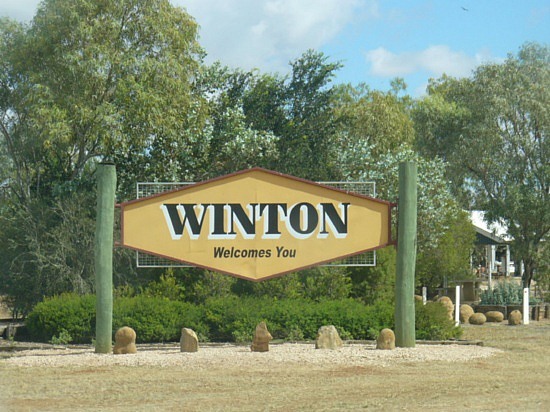
The small town of Winton in outback Queensland has played a pivotal role in Australian literature and the development of an Australian legend, for it was at a cattle station named Dagworth Homestead, just to the north of the town, that A.B. “Banjo” Paterson wrote Waltzing Matilda, and it was set to music (based on a traditional tune) by Christina Macpherson in 1895.

Indeed, the very plot of the song is said to have been inspired by events which took place at Dagworth Homestead during the Great Shearer’s Strike of 1891, when three policemen gave chase to a swagman named Samuel Hoffmeister, who shot and killed himself at the waterhole rather than allow himself to be arrested. It is thought that Christina and her brother Bob told Banjo Paterson the story during his stay at the station.

The folklore of the song and its creation is the pride of Winton, which has its own museum, the Waltzing Matilda Centre. Waltzing Matilda received its first public performance in Winton’s North Gregory Hotel, on April 6 1895, and this year, the town of Winton held its inaugural Waltzing Matilda Day on April 6, to honour and celebrate our national song.

In fact, the town’s mayor, Ed Warren, has asked that Waltzing Matilda Day be declared a public holiday. A worthy notion, but even someone as keen on holidays as me cannot help noticing we already have Easter and Anzac Day that month, so April seems a little full up.

The town of Winton was named by postmaster Robert Allen, supposedly after his birthplace in England, a suburb of the seaside town of Bournemouth in Dorset. The suburb is named after Winton Castle in Scotland, home to the Earl of Winton, a relative of local Dorset family, the Talbots. Winton Castle is near Edinburgh, and was originally owned by one of the oldest families in Scotland, the Setons; it was built in 1480 on lands the family had acquired in 1150. It is now an award-winning hotel and conference centre.

However, as it turns out, Robert Allen was actually born in Winchester in Hampshire, which was also known as Winton. This lovely cathedral town’s name is a mixture of British-Roman and Anglo-Saxon, and means “market town”.

The surname Winton is famous in Australia as belonging to Western Australian novelist Tim Winton. He has won a swag of literary prizes, including the NBC Banjo Award for Cloudstreet. He has been named a Living Treasure by the National Trust, and awarded the Centenary Medal for services to literature and the community.

While writers who have found literary acclaim aren’t always popular with the ordinary reading public, nearly everyone I know who reads at all lists Tim Winton as one of their favourite authors. He manages to combine wonderful storytelling with a uniquely spare prose style

As well as writing and winning awards, Tim also finds time to support the environmental movement. As a patron of the Australian Marine Conservation Society, he has raised awareness about sustainable seafood consumption and campaigned against shark finning; he is also patron of Stop the Toad Foundation and has contributed to The Last Whale website. He has been prominent in the campaigns to save Moreton Bay and Ningaloo Reef.

Mr Winton writes novels for grown ups, and also children’s books, most notably the Lockie Leonard stories, about young surf rat Lockie who moves from the city to the coastal south-west of Western Australia (probably not coincidentally, this is exactly what Tim Winton did when he was twelve). The TV series based on the books is filmed in Albany, where Tim grew up, and has also won a stack of well-deserved awards.

The English surname Winton can come from Winton in Lancashire, whose name means “willow wood farm” – a place where willow trees were farmed for their extremely useful wood. Winton in Westmoreland, however, means “Wina’s pasture”. The name Wina meant “friend” in Old English. It is from this personal name that Winton Castle in Scotland is also named, which seems to have brought us full circle.

I saw the name Winton on a baby boy who competed in the Bonds Baby Search. It’s very similar to the aristocratic Winston, yet with its own connections to the world of Australian literature, the Australian coast and the Australian outback. It seems like an unusual yet stylish choice.

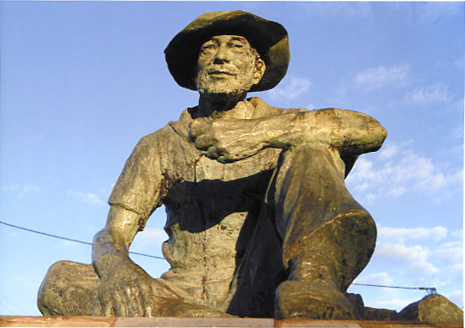
(Photo above shows the statue of the Jolly Swagman in Winton, sculpted by Daphne Mayo)

Famous Names: Blake

09 Wednesday May 2012

Posted by A.O. in Famous Names

≈ 9 Comments

Tags

english names, famous namesakes, fictional namesakes, name history, name meaning, name popularity, nicknames, Old English names, popular names, surname names, unisex names

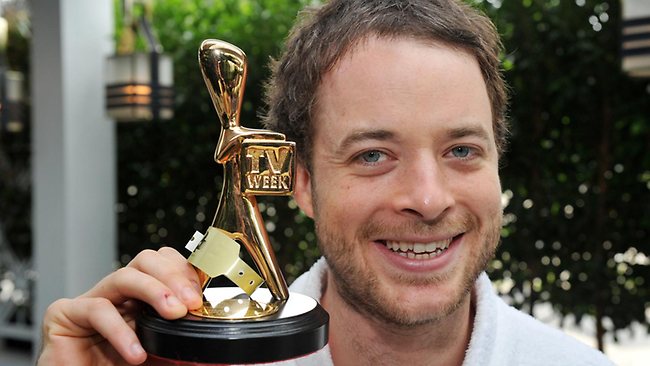
Comedian Hamish Blake has cropped up several times on the blog. His name was included in the post Boys Names That Only Chart in Australia, and we also took a look at how successful his name is. He’s had a dream run in the not-usually-lucrative field of comedy ever since he dropped out of a double degree in Science and Commerce to buddy up with Andy Lee as a comedic duo. Together they have had a ratings winning drivetime radio show filled with prank calls and the like, and several successful TV shows, most recently, Hamish and Andy’s Gap Year. Eventually it all paid off for at least one of them when Hamish won the Gold Logie for being the Most Popular Personality on Australian Television at this year’s Logie Awards.

Blake is an English surname which has two different origins of opposing meanings. Both of them began as nicknames. One is the Old English blæc, meaning “black”, referring to someone with black hair or a dark complexion. The other is from blāc, meaning “pale”, referring to someone with very blond hair or a fair complexion. One theory is that the two nicknames were ethnically based, with the first denoting the dark Celts, and the second denoting the fairer Jutes, who were from Jutland (today it’s Denmark, and the bits of Germany that join on to Denmark).

Although you’ve no doubt twigged that blæc became our English word black, it may not have immediately occurred to you that blāc is related to our English word bleak. Late in the Middle Ages, the two words were merged into blake, moving us closer toward the modern word black, but somehow immersing in it a word meaning the opposite. However, if you consider black and bleak together, they don’t seem quite so contradictory.

The Blakes are an Irish aristocratic family, dating back to the Norman Conquest of Ireland, so you could see the first name Blake as derived from this aristocratic surname. However, those of a literary bent are more likely to see it as honouring William Blake, the visionary English poet and painter who was a seminal influence on the Romantics. If you are something of a sci-fi fan, the name may remind you of Roj Blake, from the popular 1970s and ’80s TV series, Blake’s 7.

Blake reminds me of the much-loved illustrator Quentin Blake, as I was raised reading Roald Dahl‘s books, with the enchanting Mr Blake’s humorous drawings, which convey life and movement so effortlessly. My childish desire was to look as cheerfully plain and lank as the children that Quentin Blake drew; however to my disgust, my parents insisted on lots of fresh air, exercise and home grown produce, so that I remained obstinately tanned, rosy-cheeked and sturdy. Luckily I didn’t know enough about genetics to realise it was also their fault I wasn’t plain!

Another Blake from the era of the 1980s was Blake Carrington from American soap opera, Dynasty. This ruthlessly wealthy oil tycoon, whose life revolved around kidnappings, comas and the search for Nazi gold, seems to have given the name a rather “preppy” image in the United States. We don’t have the word preppy here, but as far as I can work out, it means “offensively middle-class”. Perhaps someone more knowledgeable can enlighten me on this one? I suspect that here its image is a bit more relaxed (although rebel Blake Dean from Home and Away managed to have a rather tortured time in Summer Bay, even without any Nazi gold).

Blake is often listed as a unisex name on international sites, although it is Top 100 for boys, and the only female Blake ever mentioned is actress Blake Lively from Gossip Girl. There is nothing especially boyish about the meaning of the name Blake, but its consonant-vowel-K sound has the same pattern as names such as Jack, Luke and Jake, giving it a masculine intonation (although it is a bit like Brooke, too). Although I could accept it as unisex, it’s seen as a male name in Australia, and you may get some resistance to using it for a girl. The similarity between Blake and the word bloke could well be keeping it in the boy’s club.

Blake first entered the charts in the 1950s, and took off in the 1970s (hmm, Blake’s 7, anyone?), so that it was Top 100 by the 1980s. It reached its peak in the 1990s, just outside the Top 20. Since then, it has fallen in popularity, although it is still in the Top 50 (and more popular in Australia than anywhere else in the world). Perhaps surprisingly, Hamish Blake doesn’t seem to have helped the popularity of the name, even though the name Hamish is doing pretty well for itself in the charts.

Although statistically Blake has passed its prime, to many it fits into that handy category of Popular But Not Too Popular Names, and has many namesakes from popular culture which have garnered it affection. It’s a nice, short, simple name which sounds sporty, surfer and skater, but still has some room for art and poetry. I tend to think its real strength is as a middle name, however.

Boys Names from the Top 100 of the 1900s

01 Sunday Apr 2012

Posted by A.O. in Name Themes and Lists

≈ 12 Comments

Tags

Appellation Mountain, celebrity baby names, classic names, ethnonyms, famous namesakes, fictional namesakes, French names, German names, germanic names, Latin names, locational names, name data, name history, name meaning, name popularity, name trends, nicknames, Norman-French names, Old English names, Old Norse names, popular culture, popular names, Roman names, royal names, Sabine names, saints names, surname names, tribal names

This follows on from Girls Names from the Top 100 of the 1900s. Once again, I’ve tried to get a balance between those names coming back into fashion, and those which haven’t charted for a while; once again, it is based on data from New South Wales. If you are attracted to names like these for boys, you should check out Abby’s two parter at Appellation Mountain – Fetching Names: The Nevilles, as many of her suggestions are very much in tune with this style.

Albert

This is derived from the Germanic name Adalbert, meaning “noble and bright”, which was common amongst German royalty. It was introduced to England by the Normans, where it readily overtook the Old English form, Æðelbeorht. A rare name by the 17th century, it came back in the 19th, as Prince Albert was the name of Queen Victoria’s dearly loved husband, born in Germany. Famous Australians with this name include Albert Matthews, the last Gallipoli veteran to die, in 1997, and popular long-time entertainer, Bert Newton. Albert is a classic name which has never been out of use; it was #12 in the 1900s, and didn’t leave the Top 100 until the 1950s. It’s remained relatively stable for several decades, and is currently in the low 300s. Albert is one of those names which sound slightly “grandpa” while remaining steadily in use. It’s a good reliable choice, and Alby, Bertie and Bert all make cute nicknames.

Aubrey

The Norman-French form of Germanic Alberich, meaning “elf power” or “elf ruler”, which replaced the Old English equivalent, Ælfrīc. The name was used for both sexes during the Middle Ages, especially amongst the aristocracy, but gradually fell out of use. It was revived in the 19th century, possibly influenced by the surname. There have been a few famous men in Australia named Aubrey, including motorcycle racer Aubrey Lawson, and Australian rules footballer, Aubrey Mackenzie. Aubrey was #59 in the 1900s, and left the Top 100 in the 1930s. It hasn’t charted since the 1950s. Aubrey may seem old-fashioned and effete to some people; others may think it sounds feminine, due to the popularity of similar-sounding girls’ name, Audrey. However, this unisex name is certainly in use as a boys’ name, and I have actually seen it on more boys than girls, with parents of girls often preferring specifically feminine spellings such as Aubree or Aubrie. I think it sounds handsome and dashing, and Jack Aubrey from Master and Commander (played by Russell Crowe in the film) even helps give it a nautical air. The usual nickname is Aub or Auby.

Claude

The French form of the Roman family name Claudius. The Claudii interpreted their name as from the Latin claudus, meaning “lame, crippled”, but according to legend, the first of their house was not Roman, but Sabine, and his family name was Clausus or Closus. When he joined the Romans, his name was Latinised. The Claudii were very proud of their Sabine heritage, very powerful, and had a reputation for arrogance and haughtiness. The name Claude became common in France during the Middle Ages due to the 7th century Saint Claude of Besancon, a monk to whom many miracles are ascribed. The name was brought to Britain by the aristocratic Hamilton family of Scotland in the specifically male form Claud; being Scottish they naturally had ties to France. Australian Claude Choules was the last surviving male World War I veteran in the world until his passing last year. Claude was #49 in the 1900s, left the Top 100 in the 1930s, and hasn’t charted since the 1970s. The name still packs a patrician punch, and namesakes such as painter Claude Monet and composer Claude Debussy make it seem quite artistic as well.

Frank

Used as a short form of Francis or Franklin, but is a name in its own right, referring to the Germanic tribe of the Franks. They conquered most of Gaul, which was later named France in their honour. A powerful tribe, they were the ultimate founders of what would later become the Holy Roman Empire, controlling much of Europe. The meaning of their name is disputed; it may mean “javelin” after their weapon of choice (although the weapon might have been named after them, not the other way around). Another theory is that it meant “bold, fierce”; the Romans sometimes addressed or referred to them as “the fierce people”. The English word frank, meaning “free, honest” is named after the Franks, and is not the source of the name. The most well-known Australian called Frank is probably charming comedian Frank Woodley. Frank’s a classic that has never been off the charts; #27 in the 1900s, it didn’t leave the Top 100 until the 1970s. It’s currently having a growth spurt in the low 400s. Brisk, sensible Frank is a worthy choice for someone wanting an old-style replacement for popular Jack. The usual pet form is Franky.

Harold

Derived from the Old English name Hereweald, meaning “army leader”; the Old Norse form Haraldr was also common amongst Scandinavian settlers in England. It was popular amongst the royal houses of Norway and Denmark, and the two kings of England named Harold were of mixed Scandinavian and Anglo-Saxon ancestry. It was Harold II who was defeated and killed at the Battle of Hastings, leading to the Norman Conquest. Not surprisingly, the name died out almost immediately, but was revived by the Victorians. The most famous Australian with this name is former Prime Minister Harold Holt, who disappeared in 1967 at the beach, and is presumed drowned, although many conspiracy theories have existed. Oddly enough, there is a swimming centre named after him. Harold was #13 in the 1900s, peaked in the 1910s, left the Top 100 in the 1940s, and remained in (rare) use until the early 2000s, with a dampener put on it by Mr Holt’s watery demise. Until recently, I would have said Harold made a great way to get the popular nickname Harry – unfortunately, Harry is rapidly falling. It’s got some challenges, but I do like this noble and besieged name.

Reginald

From the Germanic name Raginald, meaning something like “well-advised ruler”. The Normans brought it to Britain in the forms Reinald and Reinold; there were already Old English and Norse forms in use there. Reginald is the Latinised form of all these variants, and is another of those names from the Middle Ages which made a comeback in the Victorian era. There are many well known Australian Reginalds, including popular actor Reg Livermore, and Sir Reginald Ansett, the founder of Ansett Airlines. Reginald was #20 in the 1900s, and left the Top 100 in the 1960s. It hasn’t charted since the 1980s. Reginald may seem very fusty and pompous – then again, that’s exactly what people would have said about Archibald a few years ago, and now it’s quite fashionable as a way to the nickname Archie. I don’t really see what makes Reggie any different from Archie, Alfie or Freddie, which makes Reginald a genuine contender.

Rupert

A German form of Robert, this was introduced to Britain in the 17th century by Prince Rupert of the Rhine, a nephew of King Charles II of England. When still young, he was appointed commander of the Royalist cavalry during the English Civil War; after the Restoration he returned and became a senior naval commander. Prince Rupert was a man of fashion who also was one of the founders of the Royal Society and a patron of the arts – he made the name seem distinctly aristocratic, and perhaps slightly flamboyant. Famous Australians with the name include artist Rupert Bunny and media mogul Sir Rupert Murdoch. Rupert was #97 in the 1900s, and left the Top 100 the following decade; it left the rankings in the 1940s. Very recently, it has entered the charts again, and is currently climbing in the 400s. Rupert seems to be making a comeback – perhaps Rupert Grint from the Harry Potter movies has given it a more likeable, down-to-earth image. It’s certainly handsome, and Ru would make a cute nickname.

Stanley

An English surname meaning “stony meadow”; it comes from the place name Stoneley in Staffordshire. It has quite an aristocratic heritage, for the Stanleys were Earls and Barons, prominent in the Conservative Party, and at times, one of the richest landowning families in Britain. Members of the Stanley family have held high political office, including Prime Minister, been connected to royalty, and generally a force through the pages of British history. Sir Lyulph Stanley was part of this august clan; he was Governor of Victoria and held several other important posts in Australia. Great men called Stanley from our nation include tennis champion Stanley Doust, and legendary cartoonist Stanley Cross; the Stanley Award for cartoonists is named in his honour. A classic which has never left the charts, Stanley was #22 in the 1900s and left the Top 100 in the 1950s. It has remained stable since the 1960s. It’s an oldie but goodie, made to seem quite cool since Dido gave her son this name last year, named after the song Stan, by American rapper Eminen. It seems eminently usable, and sturdy nickname Stan is right on trend.

Vincent

This is from the Roman name Vincentius, derived from the Latin for “to conquer”. Its meaning made it popular amongst early Christians, who no doubt wished to indicate that they were ready to conquer sin, and there are several martyrs of the church with this name. A later saint with this name is the 16th century French priest famous for his works of charity, St Vincent de Paul. Vincent was used in Britain in the Middle Ages, but didn’t become common until the 19th century. Vince Jones is an Australian jazz artist, and Vince Melouney was one of the founding members of Billy Thorpe & The Aztecs, so it’s a very musical name. Handsome and romantic, Vincent is a classic which has never left the charts or been out of the Top 200. It was #47 in the 1900s, and left the Top 100 in the 1950s; the lowest it’s ever been is #179 in the 1970s. It’s usage has been erratic, but generally improving since then, and it’s currently in the mid 100s. Prince Vincent of Denmark, son of Princess Mary, may help it along further. Vin, Vince and Vinnie are all used as nicknames.

William

From the Germanic name Willahelm, meaning something like “willing helmet”, or “strong-minded protection”. William of Gellone was a cousin of Charlemagne, and an 8th century Norman count who defeated an army of Moors and forced them to retreat to Spain; his deeds are immortalised in the epic poem, Chanson de Guillaume (Song of William). In case this didn’t make him famous enough, he founded a monastery, gave it a piece of the True Cross, and became a monk, being declared a saint after his death. This made William a favourite name amongst the Normans, and when a Duke of Normandy called William invaded England in 1066 and was crowned king, it became the most commonly-used name in his kingdom. There have been four kings of England/Britain called William, and if Prince William attains the throne, he will be William V. Australia has had two Prime Ministers named William – Hughes and McMahon. Solid classic William has never left the Top 50; it was the #1 name of the 1900s and is #1 today. This never out fashion name is very versatile, because although William is so dignified, its nicknames Will, Bill and Billy are simple and unpretentious.

(The picture is of a prospector on the gold fields in 1904; image held by Museum Victoria).

Girls Names From the Top 100 of the 1900s

25 Sunday Mar 2012

Posted by A.O. in Name Themes and Lists

≈ 18 Comments

Tags

Anglo-Saxon names, Arabic names, classic names, famous namesakes, fictional namesakes, flower names, gemstone names, germanic names, Google, honouring, Italian names, K.M. Sheard, Latin names, locational names, mythological names, name data, name history, name meaning, name popularity, name trends, nature names, nicknames, Old English names, Old French names, Old Norse names, plant names, popular names, retro names, royal names, saints names, Shakespearean names, Victorian names

There have been many Googled requests for names from the 1900s, so this is my selection of ten girls names that were Top 100 in the 1900s which I think are usable today. I’ve tried to get a balance between names which are currently rising in popularity, and those which haven’t charted for many decades. All the data comes from New South Wales – the only state which has made public its data kept since Federation.

Amelia

A variant of Amalia, the Latinised form of Germanic Amala, a pet form of any name beginning with Amal-, and meaning “work”. This was one of the many names introduced to Britain by the Hanoverians; part of its easy acceptance was that it was considered a variant of the unrelated Emilia, and indeed Princess Amelia of Hanover was called Emily in everyday life. In the 1900s, Amelia was #95, and it had left the Top 100 by the following decade. It has been on the rankings almost continuously, dropping out in the 1940s and ’50s. Rejoining in the the 1960s, it grew steadily in popularity, until it was in the Top 100 by the 1990s. It’s currently stable at #10. Famous Australians named Amelia include Amelia Best, who was one of the first women elected to the Tasmanian House of Assembly, and opera singer Amelia Farrugia. Amelia was under-appreciated for many years, but is now extremely popular, with a host of nicknames such as Amy, Melia, Millie, Mia and Lia. Pretty and unpretentious, it has a ready-to-wear quality that makes it a handy choice.

Bessie

A short form of the name Elizabeth, in use since the 16th century. The name Bessie was #78 in the 1900s, and grew in popularity during the 1910s. It took a nosedive in the 1920s, left the Top 100, and hasn’t been in the rankings since the 1940s. Famous Australians named Bessie include portrait painter Bessie Davidson, who was celebrated in France in the pre-war era, and Bessie Guthrie, a designer of the 1920s who was an ardent feminist and early proponent of solar energy and ecological balance. She founded the Viking publishing house, and in later life was a crusader for the rights of abused children, before finally, in old age, being able to join a movement of feminist political protest she had waited all her life for. Bessie is such a sweet yet spunky name for a girl, and one I saw recently mentioned as having been given to a baby in 2011. I think it’s one which is ready to shed its “old lady” image and be used once more.

Edith

Based on the Old English name Eadgyð, meaning “rich war”, this was popular amongst Anglo-Saxon royalty; Saint Edith was the illegitimate daughter of King Edgar the Peaceful, and Edith of Wessex was the wife of King Edward the Confessor. Unlike many Anglo-Saxon names, it remained in use after the Norman Conquest, and didn’t fall out of favour until the 16th century. It was revived in the 19th century by the Victorians. The most famous Australian with this name was Edith Cowan, the social campaigner and first woman elected to parliament; she was part of the group which helped give women the vote in 1899 (her picture is now on the $50 note). The name Edith was #16 in the 1900s, and remained Top 100 until the 1940s, leaving the rankings in the 1970s. Very recently, it has had a revival, and is now increasing in popularity in the 500s. Strong, patriotic, and still aristocratic-sounding, it’s fast becoming a fashionable favourite. The short form Edie seems to be even more popular.

Ida

This name was introduced to England by the Normans; it may come from the Old Norse word for “work”, or be related to the Norse goddess of youth, Iðunn. Folklorist Jakob Grimm theorised that her name may come from idis, a divine female being in Germanic mythology, meaning “respected woman”. Ida died out in the Middle Ages, but was revived in the 19th century. This may have been partly inspired by Alfred, Lord Tennyson’s poem on female education, The Princess, where the heroine is named Ida. Gilbert and Sullivan parodied the poem in their operetta, Princess Ida. Tennyson probably took the name from Mount Ida; there is one in Crete and one near ancient Troy, and both were sacred to the Mother Goddess Rhea or Cybele. According to K.M. Sheard, the name is from the Greek for “woodland”. Ida was #42 in the 1900s and fell rapidly, leaving the Top 100 in the 1920s. It hasn’t been on the charts since the 1950s. Ida Standley was a pioneering schoolteacher in Central Australia. Ida is similar to popular names such as Ivy, Eva and Ava; it can also be used as a form of the Irish name Ita.

Leila

This variant of the Arabic name Layla was introduced to English-speakers by Lord Byron, who used it in his poems The Giaour and Don Juan. In Don Juan, Leila is a little Turkish girl rescued and adopted by the hero; in The Giaour, Leila is a member of a Turkish harem who falls in love with a non-Muslim, and is punished for adultery by being sent to a watery grave (vampires also get a mention). As such, it seems exotic, romantic, Gothic, and literary. Leila was barely Top 100 in the 1900s at #99, but has remained in continuous use, although very rare in the 1950s and ’60s. It’s never managed to join the Top 100 since, but has been climbing sharply since the 1990s, and is currently only just outside it in the very low 100s. Famous Leilas include Leila Hayes, who was in soap opera Sons and Daughters, and Leila Mackinnon, Channel 9 journalist. Leila fits perfectly with current related favourites Layla and Lila, and I wouldn’t be surprised if it was back in the Top 100 soon. Pronunciations vary, and as far as I’m aware, LAY-luh, LY-la and LEE-la are all considered correct.

Louisa

A Latinate feminine form of Louis, this was another name introduced to Britain in the 18th century by the Hanoverian royal family. The most famous woman named Louisa from Australian history is undoubtedly Louisa Lawson, the mother of national poet, Henry Lawson. A poet and publisher in her own right, Louisa was also a leading feminist who was called The Mother of Suffrage in New South Wales, and helped bring women in her state the vote. It is generally believed that she is the prototype for all the kind, capable, and hard-working country women who appear in Henry Lawson’s stories. Louisa manages to be a classic, remaining constantly on the charts, while being underused, for it has not been Top 100 since the 1900s, when it was #79. It’s currently around the #500 mark. You really can’t go wrong with Louisa – it’s never been in vogue, yet never been out of style either, so it doesn’t sound old-fashioned. It’s pretty and sensible, and honours one of Australia’s heroines. Nicknames can range from brisk Lou, to cutesy Lulu, and anything in between.

Maud

This is another form of Matilda. The Old Germanic Mahtild became Maheud in Old French, and Anglicised as Maud. Matilda was thus the Latin and written form of the name, while Maud was the way the name was said aloud. For example, Matilda of England, the first female ruler of the English kingdom (her reign was brief), was known as Maud in everyday life. Although the name may remind you of the word maudlin, that is actually from the name Madeline (its original pronunciation). Maud became rare at the end of the Middle Ages, but was another old name which Alfred, Lord Tennyson helped revive, due to his tragic and enigmatic love poem, Maud. Maud McCarthy was a nurse who served with distinction during the Boer War and World War I, receiving several medals. Maud was #94 in the 1900s, and slipped off the Top 100 the following decade. It hasn’t charted since the 1930s. It’s a genuine antique, and if you are determined on Maddie as a pet name, Maud would make a far more distinguished “proper name” than Madison.

Myrtle

Myrtles are graceful, fragrant flowering evergreen bushes, which in ancient times were sacred to Aphrodite or Venus, the goddess of love. Perhaps because of this, they are traditionally included in wedding bouquets; they are always used at weddings amongst the British royal family, a custom began by Queen Victoria. Myrtle has been used as a name since the 19th century, when other flower and plant names became the fashion. A famous person with this name is Myrtle White, who wrote books describing her life on a remote outback station. Myrtle was #47 in the 1900s, and had left the Top 100 by the 1930s. It hasn’t charted since the 1950s. I added Myrtle to the list, not only because we have myrtle species native to Australia, but because Baz Luhrman’s remake of The Great Gatsby will be released soon. There is a character named Myrtle in it, and this may give the name a new image than that of Moaning Myrtle from the Harry Potter books and films.

Pearl

Pearls are produced by molluscs such as oysters and mussels; they are essentially calcium carbonate or limestone in crystalline form. Ones occurring naturally in the wild are very rare, so that they are considered extremely valuable gemstones. Pearl became used as a name in the 19th century, when other gemstone names became fashionable. It probably also had religious connotations, because pearls are mentioned in the Bible, and Jesus compares the Kingdom of Heaven to “a pearl of great price”. Australia still has a significant pearling industry in Broome, Western Australia. A famous Australian with this name is Pearl Gibbs, an Aboriginal leader and activist who focused on women’s and children’s rights. Pearl was #87 in the 1900s, and left the Top 100 the following decade. It did not chart in the 1960s and ’70s, but staged a comeback in the 1980s, and has been climbing precipitously in recent years. It’s currently in the mid 200s, and this name from the sea still has plenty of lustre. It’s similar to the more popular Ruby, but seems more delicate and lady-like.

Sylvia

A variant of the Latin Silvia, meaning “of the woods”. The mother of the legendary Romulus and Remus was called Rhea Silvia (Rhea of the woods), because it was supposedly in the woods that she was seduced by the god Mars. Saint Silvia was the mother of Pope Gregory the Great, famous for her great piety; according to her portrait made during her lifetime, she was beautiful with large blue eyes. A common name in Italy, Silvia was introduced to England by Shakespeare, in his play The Two Gentlemen of Verona. Famous Australians with this name include Sylvia Harper, a tennis champion of the 1920s, and Sylvia Breamer, who was a Hollywood actress from the silent film era. Sylvia is a classic which has never left the charts. It was #58 in the 1900s, and didn’t leave the Top 100 until the 1950s. It hit its lowest point in the early 2000s, and is currently gently rising in the 500s. It’s lovely seeing this pretty name gaining in use; it almost seems like a nature name, because of its woodsy meaning and silvery bell-like sound.

(Photo used is of a bride in 1906; image is held by Culture Victoria)

Unique Boys Names from Tasmania, 2010

09 Sunday Oct 2011

Posted by A.O. in Name Themes and Lists

≈ 12 Comments

Tags

astronomical names, Australian Aboriginal names, celebrity baby names, created names, Danish names, famous namesakes, fictional namesakes, German names, Greek names, hebrew names, Irish names, Latin names, Maori names, mythological names, name history, name meaning, nature names, Old English names, place names, popular culture, saints names, surname names, Tibetan names, unique names, vocabulary names

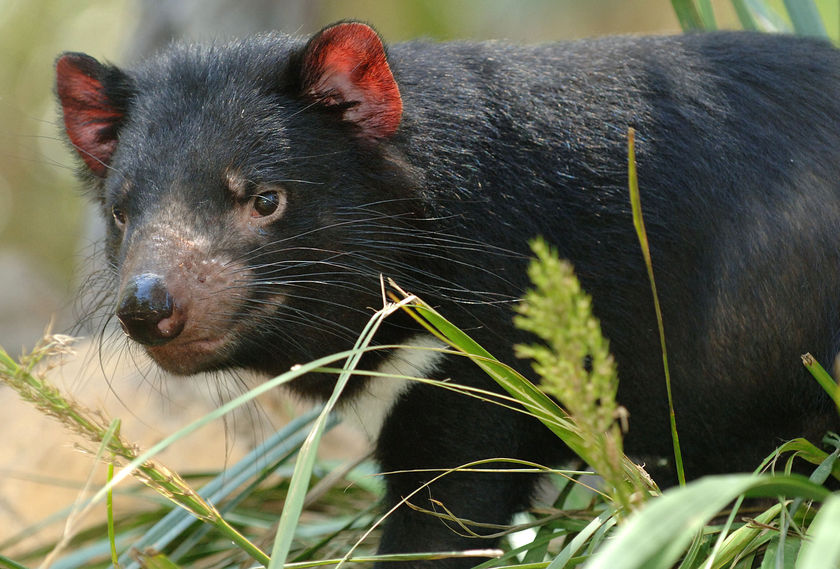
This follows on the previous list, Unique Girls Names from Tasmania, 2010. Please read the notes attached to that to see how names were chosen. Although there were fewer unique names for boys, they were much more likely to be genuine names, and not just variant spellings of common names. Whether you like these names or not, it’s nice to know that not everyone calls their children by names from the Top 100. There’s a lot of variety out there once you start looking. (If you are unsure what the animal in the photo is, it is a Tasmanian devil). 

Ambrose

This is the English form of a Latin name derived from the Greek, meaning “immortal”. It is connected linguistically to ambrosia, the food or drink of the gods in mythology, and is said to not only taste delicious, but to have a delightful aroma. In fact, it has been argued that ambrosia means “fragrant”, rather than “immortal”. If ambrosia had any basis in reality, it may be describing a honey product, although another theory is that it refers to the hallucinogenic mushroom, Amanita muscaria. The most famous namesake is probably Saint Ambrose of Milan, a 4th century Doctor of the Church who converted Saint Augustine. Interestingly, according to legend, bees swarmed on Ambrose’s face as a baby, leaving behind a drop of honey; this does seem to link the saint with the mythical ambrosia. An old-fashioned name, this fits in with the antique name revival, and the S/Z-ending for boys names. The meaning, and its associations with divine sweetness, is also hard to resist.

Other Latin names: Adrian, Augustus, Cassius, Ignatius, Maxmilian, Roman, Rufus, Silas, Sylvester

Anakin

This is the name of a Jedi knight in the Star Wars movies, father of Luke and Leia Skywalker, who crossed over to the Dark Side, and went on to become the heavy-breathing evil villain known as Darth Vader. Annikkin Starkiller was the name that George Lucas has originally chosen for Luke Skywalker, and when there was a major plot change and Darth Vader became Luke’s dad, a slight change of spelling meant that Darthy could have Luke’s old name. It’s sometimes claimed that George Lucas took Anakin’s name from his friend, Brtish film director Ken Annakin, but Lucas denies this. Although it’s tempting to give this name all number of foreboding meanings, we should remember it was originally planned as the hero’s name. It wasn’t clear in the beginning what kind of person the protagonist was going to be, and in one version it was an old man, and in another, a woman, so the name predates the character and the plot. Most likely, George Lucas just made it up.

Other sci-fi names: Auron, Draven, Grayson, Jango, Lex, Navi, Neo, Obi, Quillam

Bon

This is the name of the Scottish-born Australian rock musician, Bon Scott, who was the lyricist and lead singer for AC/DC, until his death in 1980, aged 34. AC/DC dedicated their next album, Back in Black, to him, which is the best-selling rock album of all time. Bon Scott is regarded as one of the greatest lead vocalists, has been inducted posthumously into the Rock and Roll Hall of Fame, and been honoured in both his home town of Fremantle, Western Australia, and his birthplace of Kirriemuir, Scotland. Bon was born Ronald Belford Scott, and his nickname was given to him in primary school. As there was already a classmate called Ronald, and as Scott had recently emigrated from “Bonnie Scotland”, he was dubbed Bon. The Scottish word bonnie means “beautiful, fair, fine”, and is taken from the French word bon, meaning “good”. Not only honouring a rock legend, this name seems similar to Beau in meaning and origin.

Other celebrity names: Cadel, Cassidy, Denzel, Dre, Elvis, Hammond, Joaquin, Keanu, Leland, Maddox, Makaveli, Orlando, Otis, Sylvain, Tander, Tex, Ziggie Other Scottish names: Dougal, Jock

Clancy

This is from an Irish surname meaning “son of Flannchadh”, with Flannchadh being a Gaelic name meaning “red warrior”. The name is well known in Australia, because of the poem Clancy of The Overflow, by Banjo Paterson; The Overflow is the name of a station where Clancy, a drover, works. It’s based on the true story of Paterson, a lawyer, sending a letter to Thomas Gerald Clancy of The Overflow, and imagining Clancy’s enviable life in the bush, under the “glory of the everlasting stars”. The reply that he received to his letter – “Clancy’s gone to Queensland droving and we don’t know where he are” – delighted Paterson, and was included in the poem. Clancy also appears briefly in The Man from Snowy River, and when that poem was made into a movie, the role of Clancy was played by Jack Thompson. Clancy of the Overflow is a romanticised image of bush life as dreamed of by the city dweller, and probably seems a patriotic choice as a name.

Other Irish names: Fionbharr, Niall, Rafferty, Ronan, Sullivan

Diesel

This is the name for the fuel used in diesel engines, which are named after their inventor, French-born Rudolf Diesel. His German surname is said to be based on a short form of either Matthias or Dietrich. As it sounds quite tough and butch, and has connotations of being able to keep going like a mechanical engine, it’s been a popular nickname or assumed name, for celebrities such as American actor Vin Diesel, Australian rock singer Diesel, American basketball player Shaquille “The Diesel” O’Neill, and AFL player Greg “Diesel” Williams. Diesel is also a popular name for dogs, and with “dog names” for boys in style, Diesel seems very usable. US Olympian softabller, Jennie Finch, called her second son Diesel Dean Daigle, so now it’s a celebrity baby name as well.

Other vocabulary names: Ace, Buddy, Gray, Spike Other car-related names: Holden, Jag

Esmond

An Old English name meaning “gracious protection”, this fell out of use after the Norman Conquest, and became best known as a surname. Thackery’s History of Henry Esmond is a historical novel set in the time of Queen Anne, where the hero spends the whole book in love with his foster-sister and cousin, but marries his foster-mother instead (also his cousin). This surname is part of Australian history, because James Esmond was an Irish-Australian who was one of the first people to find gold during the Victorian goldrush. He was also politically prominent in the miner’s organisation, and commanded a section of miners in the Eureka Stockade rebellion. It’s tempting to wonder if baby Esmond is a descendant of James, or whether the name was chosen in honour of this famous rebel.

Other Old English names: Bede, Edgar, Edwin, Winston

Iluka

This is a small coastal town on the Clarence River in New South Wales, and its name is derived from an Aboriginal word meaning “by the sea”. It is pronounced eye-LOO-ka. Iluka is a popular tourist destination, blessed with beaches and rainforest, and people who live in the chilly southern parts of Australia may enjoy spending their winters here. Maybe the parents of Iluka spent a happy holiday in the town? It’s easy to see the appeal of it as a name, because it is so similiar to the popular Luka, but has a distinctive Australian meaning.

Other place names: Carlisle, Clyde, Griffith, Hamilton, Maitland, Memphis, Meredith, Nelson, Preston, Ripley, Weston, Wilson, Windsor Other Aboriginal names: Wirra

Manuka

This is the name of a small tree or shrub native to New Zealand and south-east Australia – including, of course, Tasmania. It’s scientific name is Leptospermum scoparium, and it’s also called tea tree (not the same tea tree that tea tree oil is made from). The name manuka is Maori, and comes from history, where one of the sea-going canoes that brought the Maoris to New Zealand is said to have been called Mānuka. It’s pronounced mahn-OO-ka. Manuka honey is not only delicious, but recently it’s been discovered to have powerful antibacterial properties, and you can now buy medical-grade manuka honey to apply to wounds. There is a town in Tasmania near Hobart called Tea Tree, which may be named after this useful plant.

Other nature names: Aspen, Brae, Nullah, Reef, Stone, Sunny, Tiger Other Polynesian names: Loti, Kalani, Tavita

Namkha

Meaning “sky, heaven” in Tibetan, a namkha is a yarn or thread cross used in Buddhism as a sacred weaving, used in ritual or placed on an altar. “Thread” is the literal translation of the word tantra, and the threads of the mankha symbolise the warp and weft of time and space. A famous bearer is Tibetan Buddhist teacher, Rigdzin Namkha Gyatso Rinpoche.

Other Asian names: Anshuman, Arjuna, Ba, Dravid, Khan, Omita, Yang, Yasir, Zusong

Shem

One of Noah’s sons in the Old Testament, Shem is Hebrew for “name”. It can refer to someone’s fame and reputation, and also to their essential nature and being. While Noah is one of the most popular boy’s names, the names of his sons, Shem, Ham and Japeth, have had only occasional use. This may be because from early on, these three men were seen as the progenitors of the various races (as that vague and inaccurate word was understood at the time). Different writers have claimed Shem as the source of either the “Semitic” peoples, all Europeans, Germans, Greeks, Persians, or Indians; some texts even say that God made Shem brown skinned, Japeth fair skinned and Ham dark skinned. These ideas on race and ethnicity now look rather embarrassing, or even offensive; at the very least, we know them to be scientifically wrong. In the Bible, Shem is said to be an ancestor of Abram, who founded the Abrahamic religions. The name is pronounced SHAYM, and although uncommon, sounds not unlike familiar names such as Sean, Sheamus and Shane.

Other Biblical names: Abel, Amos, Elihu, Gideon, Hezekiah, Jairus, Jotham, Matthias, Raphael, Simeon

Soren

This is an anglicised form of the Danish name Søren, which is a form of the Roman name family Severinus, derived from the personal name Severus, meaning “stern” in Latin. Certain Harry Potter fans may see this as a way of using the name of grim Potions Master, Professor Snape, without actually calling their son Severus. The name has been used several times in recent popular culture; most notably the vampire Soren in the Underworld films. In the Charlie and Lola books and TV series, Soren Lorensen is little Lola’s imaginary friend. If these namesakes seem a bit lightweight, Søren Kierkegaard was a 19th century philosopher and theologian who has been enormously influential in shaping our ideas of the self and subjectivity. It’s pronounced SOH-ren.

Other Scandinavian names: Anders, Thor

Titan

According to Greek mythology, the Titans were a race of gods that ruled in the legendary Golden Age. They were the Elder Gods who were overthrown by the Olympians; this myth of a “war in heaven”, where one group of gods replaces another, exists in many cultures across Europe and the Middle East. The meaning of their name is uncertain, but is often intepreteted as “to stretch”; the Greek poet Hesiod refers to them as “the Stretchers”, because they stretched out their power. Other scholars believe it comes from the Greek for “white earth, white clay, gypsum”; they believe that this white dust was used in ancient shamanistic rituals, and it is from these almost-forgotten rites that the myth of the Titans grew. The name has been given to a moon of Saturn, and inspired the name of the element, titanium. The Titans, often imagined as gigantic figures, are part of popular culture, and you may find Titans in comic books, science fiction movies, and video games, as well as sports teams – including the Gold Coast Titans. Although the name may seem too big for a little boy, it sounds similar to names such as Tate, Tyrone and Titus.

Other Greek names: Constandinos, Eugene, Leonidas, Orion

Boys Names from the Top 100 of the 1930s

26 Sunday Jun 2011

Posted by A.O. in Name Themes and Lists

≈ 18 Comments

Tags

Anglo-Saxon names, animal names, aristocratic names, Arthurian names, Celtic names, classic names, english names, epithets, European name popularity, famous namesakes, fictional namesakes, Gaelic names, German names, germanic names, Greek names, Irish name popularity, Irish names, Latin names, mythological names, name history, name meaning, name popularity, name trends, names from films, names from television, nicknames, Old English names, Old Norse names, retro names, royal names, royal titles, saints names, Scottish names, Slavic names, Spanish names, UK name trends, US name trends, Welsh names

This post was first published on June 26 2011, and substantially revised and updated on June 25 2015.

Alfred
Anglo-Saxon name meaning “elf counsel”. The name became famous due to Alfred the Great, 9th century king of Wessex, who defended England against the Vikings, and was the first to call himself King of the Anglo-Saxons. Renowned for his love of learning, he encouraged education and reformed the legal system. Although not officially a saint, he is regarded as a Christian hero, and has a feast day in the Anglican Church. The name Alfred continued to be used even after the Norman Conquest, when many Anglo-Saxon names were discarded. It dwindled after the Middle Ages, but had a revival in the 19th century, and was chosen as the name of one of Queen Victoria’s sons – an earlier Prince Alfred was the son of King George III, and the current British family trace their ancestry back to Alfred the Great. Alfred is a classic name which has never left the charts. It was #14 in the 1900s, and #50 by the 1930s. Alfred left the Top 100 in the 1950s, and is currently around the 300s, its position apparently fairly stable. Popular in Scandinavia, Alfie, Fred, and Freddie give this venerable classic several cute nickname options.

Brian
Irish name, possibly from the Celtic bre, meaning “hill”, to suggest “high, great, exalted”. In Irish mythology, Brian is one of three brothers who are sent on a worldwide magical quest. In some versions, Brian is the clever one of the three, while his brothers are bumbling and easily pushed around. A famous namesake is Brian Boru, the first High King of Ireland, and founder of the O’Brien dynasty; he made the name common in Ireland. The name Brian was also used in Brittany, and became quite popular in East Anglia, where it was spread by Breton immigrants, and in the north of England, brought over by Scandinavian settlers who had lived in Ireland. It experienced a revival in the early 20th century. Brian is a classic name which has never left the charts. It was #169 in the 1900s, and joined the Top 100 in the 1920s. Peaking in the 1930s and ’40s at #7, Brian didn’t leave the Top 100 until the 1980s – Monty Python’s Life of Brian having turned it into a “joke name” didn’t help its fortunes. However, it’s been reasonably stable for about a decade, and is around the 300s. Brian remains a popular name in Ireland. This is a strong-sounding Irish classic still getting reasonable use.

Colin
Anglicised form of the Scottish name Cailean, meaning “whelp, pup, young dog” in Gaelic. It is also a medieval pet form of Col, short for Nicholas, so it’s an English name as well. Cuilén mac Ildulb was a 10th century King of the Scots, while Sir Colin Campbell (“Colin the Great”) was a 13th century cousin of Robert the Bruce, and one of the earliest known members of the Clan Campbell, ancestor of the Earls of Argyll. The name became traditional in the Campbell family because of him. Colin was #51 in the 1900s, and peaked in the 1930s at #14. It left the Top 100 in the 1980s, and although it stayed in use for many years afterwards, now seems to be quite rare. Colin is a traditional name which has a gentle and slightly poetic feel, and works well in the middle.

Edwin
Modern form of the Anglo-Saxon name Eadwine, meaning “rich friend”. The name was traditional amongst Anglo-Saxon royalty and nobility, with the most famous Edwin being a 7th century king of Northumbria who converted to Christianity; it was said that during his reign, the land was so peaceful that a woman with a new baby could walk across the country without being harmed (it tells you something that this was considered remarkable). He was canonised as a saint after his death. The name Edwin sunk in popularity after the Norman Conquest, but was revived in the 19th century during the Victorian enthusiasm for early English names. Edwin is a classic name which has never left the charts. It was #52 in the 1900s, and #88 by the 1930s. It left the Top 100 in the 1940s, and is currently around the 400s. A good alternative to popular Edward, while still having Eddie, Ed, Ned, and Ted as nicknames.

Frederick
English form of the Germanic name Friduric, translated as “peaceful ruler”; the modern German version is Friedrich. A favourite amongst European royalty, the name was traditional amongst the Holy Roman Emperors, with Frederick I also known as Frederick Barbarossa, meaning “red bearded” in Italian. Descended from two of Germany’s leading royal houses, he is regarded as the greatest of the medieval Holy Roman Emperors. Handsome, charismatic, and courtly, he was ambitious and skilful, greatly increasing Germany’s power base, and bringing back the Roman rule of law. According to medieval legend, he is not dead, but sleeps in a cave, waiting to return Germany to its former greatness. There are also a couple of medieval German saints named Frederick. The name was brought to England by the Normans after the Conquest, but it didn’t catch on. It was revived in the 18th century when the German House of Hanover inherited the British throne; Prince Frederick was the eldest son of King George II. Frederick is a classic name which has never left the charts. It was #8 in the 1900s, and #26 by the 1930s. It left the Top 100 in the 1960s, and sunk to its lowest level in the 1990s, at #459. Since then it has gradually increased in popularity, and is now around the low 200s. A distinguished name with friendly nicknames like Fred and Freddie, Frederick is already popular in the UK.

Ivan
Slavic form of John. A traditional Slavic name, there have been many famous Ivans in history, including six tsars of Russia, and many Croatian and Ukrainian leaders. St Ivan is a legendary hermit from Bohemia, while St Ivan of Rila is the patron saint of Bulgaria. Ivan continues to be a popular name in Eastern Europe, while the Spanish form Iván is popular in Spain and Latin America. Its long-term use in the English-speaking world may come from its similarity to the Welsh form of John, Ifan, so it can be seen as an Anglicised form of the Welsh name. Ivan is a classic name which has never left the charts. It was #117 in the 1900s, peaked in the 1910s at #97, and was #100 in the 1930s. It left the Top 100 in the 1940s and is currently around the low 300s, having been reasonably stable since the 1990s. That makes it a great cross-cultural choice which has remained both familiar and underused.

Lawrence
Variant of Laurence, and the usual surname form of the name. St Lawrence of Rome was a 3rd century Spanish saint who was archdeacon of Rome during a time of Christian persecution. There are many stories and legends about him. One is that he spirited the Holy Grail to Spain, where it remains in Valencia. Another is that the Emperor demanded that Lawrence hand over all the church’s goods. Lawrence hastily distributed everything the poor, then presented the city’s suffering, saying that these were the true treasures of the church. For this act of defiance, he was supposedly martyred by being roasted over a gridiron; after hours of pain, he remarked cheerfully: I’m well done. Turn me over! He is one of the most widely venerated saints, and his tomb a favourite pilgrimage site since the 4th century. Lawrence is a classic name which has never left the charts. It was #67 in the 1900s, peaked at #55 in the 1910s and ’20s, and was #61 in the 1930s. It left the Top 100 in the 1960s, and reached its lowest point in 2010 at #466. Since then it has risen again, and is now in the 200s, outstripping Laurence in popularity. This rugged-sounding classic comes with the nicknames Lawrie and Larry.

Lionel
Medieval pet form of Leon, a Greek name meaning “lion”; it could also be directly from Lion, which was used as a nickname in the Middle Ages. According to Arthurian legend, Sir Lionel was a Breton king, and knight of the Round Table. He features in the Grail Quest, where he is shown to be unworthy of the Grail, and more interested in fighting than the spiritual life. Lionel of Antwerp was a son of King Edward III, and reputedly a giant of a man, almost seven feet tall and of athletic build. It is through him that the House of York claimed the throne of England, and the name was a common one amongst the aristocracy. Lionel was #68 in the 1900s, peaked in the 1910s at #66, and was #73 by the 1930s. It left the Top 100 in the 1950s, and hasn’t charted since the 1980s. The name is rising in both the the UK and US, fitting in well with both popular Leo, and the trend for animal names. Definitely a worthy choice that has too often been overlooked!

Rex
The Latin word for “king”, and the title of the ancient kings of Rome (“Rex Romae“) – according to legend, the first king of Rome was Romulus. The Roman monarchs did not inherit kingship, but were elected to the role, and held absolute power. The word rex is ultimately from an ancient root meaning “to rule”, and it is related to the Sanskrit term Raja, the German word reich, and the English words rich, right, regal, royal, reign, and realm. Rex has been used as a personal name since the 17th century, but only came into common use in the 19th century. Rex was #138 in the 1900s, and entered the Top 100 in the 1920s. Peaking in the 1930s at #74, Rex left the Top 100 in the 1950s. It left the charts in the 1980s, but returned the following decade at #635. It has continued climbing, and is now around the 300s. No wonder Rex is making a comeback – it’s short and snappy, ends in the fashionable X (like Max), and sounds very masculine and confident.

Walter
English form of the ancient Germanic name Walthari, meaning “ruler of the army”. It was brought to England by the Normans and soon replaced its Old English version, Wealdhere. Mythologist Jacob Grimm theorised that the name may have originally been an epithet of one of the Germanic war gods, and be linked to the Norse god Tyr. The name was especially famous in the Middle Ages because of Walter of Aquitaine, a legendary king of the Visigoths; medieval poems tell of his military exploits, fighting one-handed against his foes. He may be based on a 5th century king of Aquitaine, Wallia – his name is probably from the Old Norse for “slaughter”. There is a 12th century English saint called Walter. Walter was #15 in the 1900s, and #46 by the 1930s. It left the Top 100 in the 1950s, and dropped off the charts in the 1990s. However, it made a comeback in 2011 after the hit TV show Breaking Bad aired in Australia, with ailing chemistry teacher turned criminal Walter White played by Bryan Cranston. His name was inspired by the American poet, Walt Whitman, and he is also often known as Walt. His teenage son is Walter White Jr, giving the name a younger image to match Walter Snr’s villainous smarts. Walter is currently around the 500s, and it is yet to be seen whether it continues rising now the show has finished. I hope so, because this retro name now seems fresh and unconventional.

POLL RESULTS
People’s favourite names were Walter, Frederick and Alfred, and their least favourites were Lionel, Ivan and Brian.

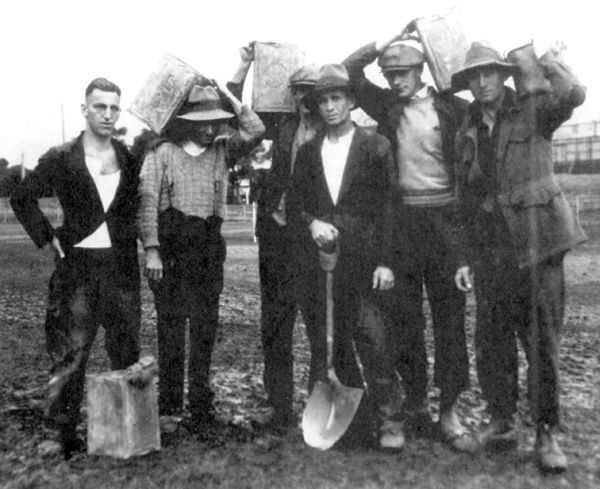
(Photo of men doing relief work during the Great Depression in 1933 from the National Library of Australia)

Arlo Robert Galafassi: A Son for Toni Collette and Dave Galafassi, a Brother for Sage Florence

12 Sunday Jun 2011

Posted by A.O. in Celebrity Baby Names

≈ 2 Comments

Tags

celebrity baby names, created names, famous namesakes, fictional namesakes, Gaelic names, germanic names, honouring, Irish names, Italian names, locational names, Old English names, surname names, unisex names


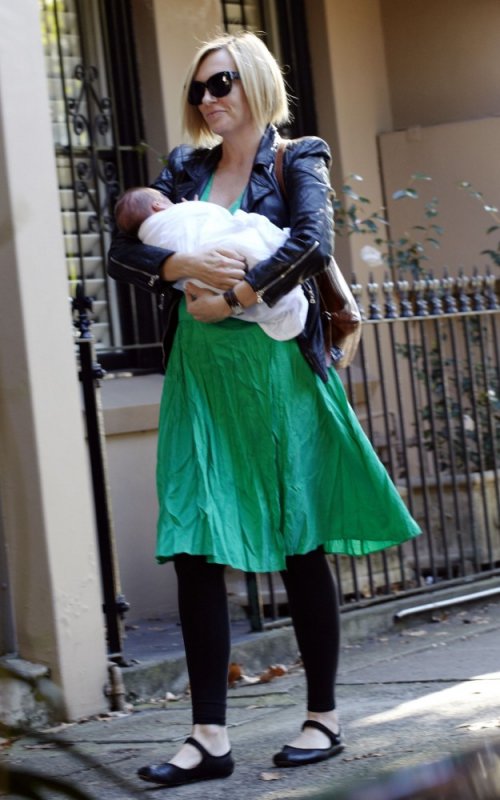
Toni Collette is that rare creature – a born actress. At the age of 11 she faked appendicitis so convincingly that doctors performed surgery on her, even though medical tests all showed there was nothing wrong. She has a face which effortlessly transmits emotion to an audience, and the instinctive ability to inhabit a character so completely that few people actually know what Toni looks like in real life. (Much prettier than on camera, is the general verdict).

Born and raised in working class Blacktown, Sydney, she dropped out of the National Institute of the Dramatic Arts to work in film and theatre. At 21 she stole our hearts as the plump, naïve, ABBA-loving Muriel Heslop from Porpoise Spit, in P.J. Hogan’s cult film Muriel’s Wedding, and was then catapulted into the world of Hollywood, Broadway, fame, wealth and awards. She went on to star in films such as The Sixth Sense, About a Boy, and Little Miss Sunshine, and since 2009 has played the title role in the Spielberg-produced TV show, The United States of Tara.

In 2002, she met Dave Galafassi, the drummer for Sydney indie band Gelbison, at a barbeque. She describes him as “balanced, patient, and beautiful,” and says she knew straight away that he was “the one”. In January 2003, Toni and Dave were married at her country house in south-coast Broughton, near Berry. They had a Buddhist ceremony which lasted an entire weekend, and featured dancing monks, vegetarian banquets, and a fireworks display.

Their first child, Sage Florence, was born in Sydney on January 9 2008. When she announced her pregnancy the previous July, Toni noted, “It is strange that in the last three films I’ve done [my character has] been pregnant. I’m just like, what is the universe trying to tell me?”

In October last year, Toni and Dave announced they were happy to be expecting a second child, and Arlo Robert Galafassi arrived this Good Friday, April 22. Arlo made it “the greatest Friday”, was the statement from Toni and Dave. Like his sister, he was born in Sydney, where Toni was filming Mental with P.J. Hogan.

I never knew where the name Arlo came from, and after doing a little digging, I found out that nobody else really knows either! Behind the Name lists it as “meaning uncertain”, but notes that it may come from the fictional place name Arlo Hill in Sir Edmund Spenser’s 1590 poem, The Faerie Queen. It is theorised that Spenser created the name from the Irish place name Aherlow, which is Gaelic for “between two hills”. Wikipedia says that it is either a variation of the English surname Harlow, a variant of Harley or Arlene, or an Italian variant of Carlo. It seems to be a name which originated in America.

Toni Collette has confirmed that her son Arlo was named after the folksinger Arlo Guthrie, son of Woody Guthrie, of whom she and Dave are fans. The middle name Robert is after Toni’s father, Bob.

Toni Collette is very popular in Australia – an amazing feat in a country which enjoys despising its famous people. I think it’s because Toni has always seemed like a hard working actress, rather than a glamorous celebrity. She has lived all over the world, but chose to make her home in her native Sydney instead of relocating to Hollywood. Despite the Buddhism, meditation and astrology, she is always described as “down-to-earth”. Although she has had her share of personal problems, such as eating disorders and panic attacks, she doesn’t hawk them around the chat show circuit, or bring out tearfully brave books on “My Battle With X”. In fact, she’d rather not talk about them. She went to therapy, she got over it. End of story. She doesn’t analyse things, yap about herself, or witter on Twitter, and she seems to have a perpetually sunny attitude and toothy grin. You have to admit, that’s pretty refreshing.

Everyone appears to be completely enamored with her baby name choices as well – nearly every article on baby Arlo is followed by enthusiastic comments praising Arlo as a gorgeous name. Many people were quick to point out that they too, had a little Arlo (one female), and a couple said their Arlo was inspired by the character Arlo Glass on TV show 24. Clearly it’s a name doing well at the moment, and no doubt climbing up the charts. Just as Toni Collette manages to be the celebrity who seems like she could be just like you if talent hadn’t driven her determinedly in another direction, she’s won further esteem by choosing a baby name that’s just what everyone else would have chosen.

I don’t know if I’m quite so in love with the name Arlo; I’m not a huge fan of either folk music or 24, and I must confess I have a perverse side to me that quickly goes off names greeted with universal acclaim. However, I think it’s great with the middle name Robert, a brilliant match with sister Sage, and Arlo Galafassi just sounds wonderful. I also find myself intrigued by the possible connection to Edmund Spenser’s Faerie Queen. As context is everything, I hereby award Arlo Robert Galafassi a thumbs up!

Further Reading:

See the entry on Arlo at Appellation Mountain for more information on the name.

Check out Mer de Noms’ blog entry on The Faerie Queen for more Spenserian names.

Sydney Suburbs That Could Be Used as Boy’s Names

22 Sunday May 2011

Posted by A.O. in Name Themes and Lists

≈ 19 Comments

Tags

Anglo-Saxon names, aristocratic titles, Australian Aboriginal names, birth notices, British names, celebrity baby names, english names, famous namesakes, fictional namesakes, French names, Gaelic names, honouring, Irish names, literary names, locational names, modern classics, name history, name meaning, name popularity, names of businesses, nicknames, Old English names, Old Norse names, Old Welsh names, popular culture, saints names, Scottish names, surname names, unisex names, US name popularity, vocabulary names

KyleBay

This blog post was first published on May 22 2011, and substantially revised and updated on May 14 2015.

Auburn
Auburn is in Sydney’s western suburbs. The commercial district contains many Middle Eastern and Asian shops and restaurants, and is a focal point for migrant groups. Auburn has the oldest Hindu temple in Australia, which opened in 1977, and one of its busiest mosques – the Auburn Gallipoli Mosque, built by the Turkish community in honour of the Gallipoli conflict of 1915. Auburn is named after an Irish village in Oliver Goldsmith’s poem The Deserted Village; the first line of the poem is, Sweet Auburn, loveliest village of the plain. Auburn was a tiny place near Athlone in Westmeath, and doesn’t seem to exist any more – perhaps it was too deserted. Auburn simply means “red-brown”, and usually refers to dark red hair colours. Auburn has been used as a personal name since the 17th century, more often given to boys. It sounds similar to Aubrey, Aubin, and Auberon, and seems quite distinguished, while its literary ancestor gives it a sentimental air.

Bexley
Bexley is a suburb in Sydney’s south, in the St George area. It was originally a land grant to Thomas Sylvester in the 1810s, who sold it to James Chandler in 1822. Lydham Hall, the oldest residence in the area, was part of the 1822 sale. Chandler got fed up with the bushrangers, escaped convicts and other undesirables who infested his personal paradise, and sold it to Charles Tindell. By 1856 Tindell was subdividing the land into lots for homes, and by the late 19th century, Bexley was a thriving town. Its best days are behind it, for this suburb has been on the decline since the 1980s. James Chandler named it Bexley after his birthplace in London; the name comes from the Old English, meaning “box tree meadow”. In uncommon use as a personal name since the 16th century, mostly for boys, Bexley has the fashionable X-factor.

Camden
Camden is a historic town in the Macarthur Region, in the far south of Sydney. It’s pretty and semi-rural with a “gentleman farmer” atmosphere. The Camden area originally belonged to the Gandangara people; European explorers first arrived in 1795. In 1805, Governor King rather begrudgingly gave 5000 acres to John Macarthur, who had been promised land by Secretary of State, Lord Camden. (The descendants of John Macarthur still live in their ancestral home at Camden Park). Macarthur’s wool industry was so successful, a town was necessary in order to support it. Founded in 1840, by the 1880s it was a thriving concern. Camden was named after its sponsor, Lord Camden – his title is from a Gloucestershire place name meaning either “enclosed valley” or “valley of encampments” in Old English. In use since the 17th century, Camden sounds like familiar choices such as Cameron and Caden, while retaining a hint of its aristocratic past. It is in the Top 100 in the US, and I am seeing it more frequently in birth notices here.

Carlton
Carlton is the next suburb to Bexley. It is most famous for being the home of the St George Illawarra Dragons National Rugby League team. Carlton was originally heavily timbered, and given as a land grant to Captain John Towson in 1808. When the railway opened in 1884, the land was subdivided and people began moving to the area. Carlton is named after a suburb of Nottingham; I’m not sure why, but assume that it was Captain Towson’s birthplace. The place name Charlton is very common in the UK, and is a linguistic mix of Anglo-Saxon and Old Norse meaning “settlement of free men”. In use since the 17th century, this is a spin on classic Charles, and a variant of Charlton, that I have seen a bit of lately. Like popular Cooper, it is the name of an Australian brewery.

Colebee
Colebee is a fairly new suburb in Sydney’s far west. It is named after an Aboriginal guide, the son of a tribal chief, who assisted William Cox when he surveyed the land across the Blue Mountains. Colebee also tried to bring a peaceful resolution to the years of conflict that existed between Aborigines and white settlers in the area. For his efforts as a geographer and diplomat, he received the first grant of land that the British made to an indigenous person. He received 30 acres on the South Creek; an area which would later become known as Blacktown, and the location of the suburb of Colebee. The meaning of Colebee is not certain, but I have read a theory that it came from the local word for sea eagle (gulbi). Europeans were struck by the fact it sounded exactly like the English name Colby. If you are considering the name Colby, this spelling not only gives the nickname Cole, but is an important part of Sydney’s history.

Kyle
Kyle Bay is a tiny picturesque suburb in Sydney’s south, in the St George area, and takes its name from the bay on the north shore of the Georges River. It is named after local shipbuilder Robert Kyle, who was granted land here in 1853. Kyle is a Scottish surname from the district of Kyle in Ayrshire. The name is from a common place name, usually translated as from the Gaelic word caol, meaning “narrows, channel, strait”. As there are no channels or straits in this district, the name may come instead from the legendary British king Coel Hen (“Coel the Old”), otherwise known as Old King Cole. His name is possibly from the Old Welsh coel, meaning “belief, omen”. In use as a personal name since the 18th century at least, it was originally given to both sexes in its native Scotland, but is now considered to be a male name. Kyle first charted in the 1960s, debuting at #233; its use seems to be heavily influenced by the female name Kylie, which was popular in that decade. Rising swiftly, Kyle was a Top 100 name by 1980, peaked at #27 in 1998, and left the Top 100 in 2006 – the year after obnoxious shock jock Kyle Sandilands became a judge on Australian Idol. It’s now around the 200s, so it’s a modern classic still in reasonable use.

Miller
Miller is a south-west suburb in the Liverpool area. It was part of the Green Valley Housing Estate built in the 1960s, and the suburb was established in 1965. It is named after Peter Miller, an Irish immigrant who was one of the first settlers in the Green Valley area. His surname of Miller is an occupational one, indicating the bearer worked at or managed a corn mill. In use as a first name since at least the 16th century, it has mostly been given to boys, although I have occasionally seen it given to girls because it is a homophone of the popular girls’ name Milla. Miller is around the mid-200s for boys, so not an unusual choice as a name, although not common either, meaning it might very well hit that sweet spot between “too strange” and “too popular”.

Nelson
Nelson is a suburb in the north-west of Sydney, in the affluent Hills District. Governor William Bligh received a land grant in this area, and the suburb is named after Admiral Horatio Nelson, as Bligh served under his command during the Battle of Copenhagen in 1801. Just in case he hadn’t made it clear enough how much he admired Nelson, he called his property Copenhagen Farm in his further honour. Either Nelson had really impressed him, or he was a total crawler. The surname Nelson means “son of Neil” – Neil being from a Gaelic name which may mean either “champion” or “cloud”. It has been in use as a name for boys since at least the 16th century, but Horatio Nelson helped give the name a boost in the 19th. World leader Nelson Mandela and philanthropist Nelson Rockefeller give this heroic name a lot of clout.

Oran
Oran Park is a suburb of Camden, once the colonial estate of John Douglas Campbell, and for many years the home of the Oran Park Raceway, which regularly hosted major motorsport events. Since 2011 it has been developed for residential housing. Oran Park is named after the village of Oran in Scotland; its name comes from the Scottish Gaelic word for “song”. Oran is also an Anglicised form of the Irish boys’ name Odhran, meaning “sallow, pale green”. Saint Odhran was a follower of St Columba, associated with the island of Iona. There is a strange legend which says he willingly allowed himself to be sacrificed by being buried alive, in what sounds like a pagan ceremony to ensure a chapel could be built, and then popped his head out to tell everyone there was no heaven or hell! St Columba hastily covered Odhran more securely in earth before he gave any more alarming information about the afterlife, or lack thereof. Said like Orange without the ge (OR-an), this attractive Scottish or Irish heritage choice may appeal to nostalgic motorsport fans.

Richmond
Richmond is a historic town to the north-west of Sydney, on the Hawkesbury River flats near the foot of the Blue Mountains. The Darug people lived in this area when Europeans arrived in 1788; in 1789 it was explored by the British. The first settlers came to live here in 1794, and by 1799 it was providing half the grain produced in the colony. Because of its long history, Richmond has many heritage-listed buildings, and the University of Western Sydney dates back to 1891. Richmond was named by Governor Phillip, in honour of Charles Lennox, the Duke of Richmond, who was Master General of Ordance in the British government. His title comes from a town in Yorkshire, which was named after the town of Richemont in Normandy; its name simply means “rich hill”. Similar to both Richard and Edmond, this name has a casually expensive feel, and works well in the middle position.

POLL RESULTS
People’s favourite names were Miller, Camden and Nelson, and their least favourites were Colebee, Kyle and Carlton.

(Photo is of the waterfront at Kyle Bay)

Sydney Suburbs That Could Be Used as Girl’s Names

15 Sunday May 2011

Posted by A.O. in Name Themes and Lists

≈ 15 Comments

Tags

animal names, aristocratic titles, astronomical names, Australian Aboriginal names, english names, famous namesakes, fruit names, Greek names, honouring, Latin names, locational names, mythological names, name history, name meaning, name popularity, names of houses, nature names, nicknames, Old English names, Old Norse names, saints names, surname names, unisex names, Welsh names

Bronte-Beach-6

This blog post was first published on May 15 2011, and revised on May 7 2015.

Arcadia
Arcadia is a semi-rural suburb in the Hornsby shire, first opened up into a settlement by timber cutters in 1817. It is named after a region of Greece that in legend was seen as an idyllic pastoral area. The name of the Greek region means “bear”, and is after a son of Zeus from Greek mythology called Arcas, whose mother Callisto was turned into a bear. He and his mother were made into the constellations of Ursa Major and Ursa Minor – the great and little bear. Because commercial development is severely restricted in the suburb of Arcadia, it has retained an image as a rustic retreat which fits its name. The name Arcadia is a feminine form of the Greek name Arcadius, meaning “from Arcadia”. There are a couple of saints named Arcadius, and there was also an Emperor Arcadius, whose daughter was named Arcadia after him. This name, which has been more often used in continental Europe and Latin American than in English-speaking countries, feels rather exotic, and quite Utopian. It is pronounced ar-KAY-dee-uh, and you could use Arkie, Kay, or Kaydee as a nickname.

Avalon
Avalon is a suburb in the Northern Beaches region famous for its surf culture. An episode of Baywatch was filmed here in the 1990s, and must have impressed, as the show’s producers decided to shoot the rest of the series at Avalon Beach. However, residents complained until Baywatch went to Hawaii instead. Woot, people power! The first land grant in the area was in 1827, but it didn’t receive its name until 1921. It is named after the paradisical island of Celtic myth, where it is said King Arthur received his final resting place. It is thought the name of the island comes from the Welsh word for “apple”, as it is pictured in myth as being blessed by an abundance of fruit. Avalon has been used as a personal name since the 19th century, when anything Arthurian was fashionable, and has more often been given to girls. Fitting in with popular names such as Ava, it seems like a more mystical version of Eden or Heaven.

Bronte
Bronte [pictured] is an upmarket beach-side suburb close to the city centre, with scenic cliff-top walking paths to popular locations such as Cooge and Bondi. This is another suburb with a keen surf culture, and the Bronte surf life saving club, founded in 1903, claims to be the oldest in the world. It has made notable residents over the years, including Peter McCormick, who wrote the national anthem. Robert Lowe, later Viscount Sherbrook, bought 42 acres here in the 1830s. His house was completed in 1845 and named Bronte House in honour of admiral Horatio Nelson, who was the Duke of Bronte. Bronte is a place in Sicily, Italy, near Mount Etna. Its name, pronounced BRON-tee, means “the thunderer”, and as it is right near a volcano, it is easy to see how it got its name. Bronte first joined the charts in the 1990s, and was in the Top 100 by 1997, making #98. It joined the very bottom of Top 100 twice more, in 2000 and 2001, never getting higher than #93, and is now around the 400s. Only in Australia has Bronte attained even mild popularity, and no doubt Bronte Beach helps explain why.

Elanora
Elanora is another Northern Beaches suburb; it is located on a hill overlooking a lagoon and the sea. The northern and south-western sides adjoin national parks, and native wildlife abounds in the area. It’s a suburb of large houses with a country club, and is popular with tourists. Originally a coal mining camp, it came into existence as a residential area in 1929, named Elanora Heights Estate. The name Elanora is derived from an Aboriginal word which means “home by the sea” or “home by the water”. It’s easy to see the appeal of this name – it sounds exactly like the elegant Eleanora, yet has an indigenous origin and pleasant meaning. You could use popular Ella or hip Nora as nicknames.

Eveleigh
Eveleigh is an inner-city suburb, and an area of of great historical importance, because it was here that the first steam locomotives were built in Australia in the railway workshops. The Eveleigh site was also used to manufacture munitions in both world wars, and is significant in the history of unionism. In 1892, unions first successfully negotiated a six-day working week in Eveleigh, and in 917 the General Strike began there. Unlike some of the other suburbs, this isn’t just a swanky address with a nice beach, but a place with working class roots that helped forge our nation. The name Eveleigh is taken from the name of an English estate. It’s a surname that is a variant of Everly, and means “wild boar’s wood”: despite the spelling, it’s pronounced EV-uh-lee, not like Eve + Lee. Similar to popular Evelyn, this spelling may seem more feminine than Everly.

Jannali
Jannali is in Sutherland shire, south of Sydney. The railway was built in 1885, but few people lived in the area until the 1910s. In 1927 the township was named Jannali after a railway signal box that had been there since the beginning. During the Depression, the population of Jannali increased dramatically as people were forced to sell up and move out of the city, and it became known as a place for “battlers” who were doing it tough during the economic hardships of the 1930s. Today Jannali is an unpretentious commuter suburb. When the name Jannali was chosen, it was reported that it was an Aboriginal name from the Northern Territory, meaning “the moon”. Indigenous Australians already used it as a name, and it does have occasional use. Pronounced juh-NAL-ee, the appeal of this name is its vague similarity to names derived from Jane, such as Jan and Janelle, while having an attractive meaning and indigenous origin. It would make a bold alternative to Selena or Luna.

Kareela
Kareela is also in Sutherland shire, and the next suburb to Jannali. Located on the banks of the Georges River, it was first established in 1968. Its name is derived from an Aboriginal word which is said to mean either “place of trees and water” or “south wind”. It was the second meaning that the Geographical Names Board probably had in mind, as the area is known for its strong southerly breezes. Pronounced kuh-RHEEL-ya, Kareela sounds feminine and begins with the popular K sound. People who like Cara and Cordelia may also like the sound of Kareela.

Rosebery
Rosebery is in south-eastern Sydney, near the city centre, and is the seat of local government. In the 1960s it was developed for industry and government housing, and became home to many migrants, especially Greeks and Italians. Rosebery was named after Archibald Primrose, Earl of Rosebery, British Prime Minister in 1894-95. The suburb was named in his honour after a visit he made to Australia in 1883-84. Rosebery is a variant of the place name Roseberry, on the Yorkshire Moors. James Cook once helped his father run a farm here, and climbing the high peaks gave him a taste for adventure which led him to become a sea captain and brought him to Australian shores. It looks like a nature name and sounds like Rose + Bree (ROZE-bree), but Roseberry is a corruption of the Old Norse for “Odin’s rock or crag”. Many of the place names of this area were given by the Vikings. Rosebery is deceptive – it has the air of a fairytale princess, yet its origins are ancient, powerful, and masculine. You may be intrigued by it if you would like an unusual girly name with a surprising amount of grunt.

Rozelle
Rozelle is an inner-city suburb to the west of Sydney’s centre; Rozelle Bay surrounds the container port Glebe Island. Once a colourful working-class district, this attractive village is now fashionable and quirky. The area where Rozelle is now was part of a 1800 land grant to colonial surgeon Dr William Balmain. The land was settled in 1836, and by 1861 was divided into the suburbs of Balmain and Balmain West. By 1900, Balmain West, now a thriving suburb in its own right, became known as Rozelle, after Rozelle Bay. Rozelle Bay (often marked as “Rozella Bay” on old maps), was called after the Australian parrot, the rosella. These beautiful crimson birds were first seen at Rose Hill, the first suburb of Sydney to be established. The parrots were commonly known as “Rose Hill parrots”, then “Rose Hillers”, and finally, “rosellas”. By coincidence, there is an Italian name Rosella, and Rozelle (roe-ZEL), gives it a twist that seems quite cool. It has occasionally been used as a girl’s name.

Sylvania
Sylvania is another southern suburb from Sutherland shire, next to Kareela. It is mostly residential, but also contains areas of native bushland. The traditional owners of this area are the Dharawal people, and their middens, burial sites and rock art remain in sheltered caves along the Georges River. After European settlement, it was acquired as a land grant by John Connell Laycock, and then shortly afterwards by politician Thomas Holt. Holt built Sutherland House on the foreshore in 1818, and a village grew here from 1881 onwards. The name Sylvania is Latin for “wooded area”, and must have been chosen because of its bush setting, but who chose it and why has been lost to history. Sylvania is already a girl’s name, a form of Silvana. However, the suburb’s name is pronounced sil-VAYN-yah and may sound too much like Pennsylvania and Transylvania for some.

POLL RESULTS
Peoples’ favourite names were Bronte, Avalon, and Elanora, and their least favourites were Kareela, Jannali, and Sylvania.

← Older posts
Newer posts →

Enter your email address to follow this blog

Categories

Archives

Recent Comments

A.O.'s avatarwaltzingmorethanmati… on Zarah Zaynab and Wolfgang…
Madelyn's avatarMadelyn on Zarah Zaynab and Wolfgang…
JD's avatardrperegrine on Can Phoebe Complete This …
A.O.'s avatarwaltzingmorethanmati… on Rua and Rhoa
redrover23's avatarredrover23 on Rua and Rhoa

Blogroll

  • Appellation Mountain
  • Baby Name Pondering
  • Babynamelover's Blog
  • British Baby Names
  • Clare's Name News
  • For Real Baby Names
  • Geek Baby Names
  • Name Candy
  • Nameberry
  • Nancy's Baby Names
  • Ren's Baby Name Blog
  • Sancta Nomina
  • Swistle: Baby Names
  • The Art of Naming
  • The Baby Name Wizard
  • The Beauty of Names
  • Tulip By Any Name

RSS Feed

  • RSS - Posts

RSS Posts

  • Celebrity Baby News: Melanie Vallejo and Matt Kingston
  • Names from the TV Show “Cleverman”
  • Can Phoebe Complete This Sibset?
  • Zarah Zaynab and Wolfgang Winter
  • Baby, How Did You Get That Name?
  • Celebrity Baby News: Media Babies
  • Celebrity Baby News: Adelaide Crows Babies
  • Celebrity Baby News: Chris and Rebecca Judd
  • Names at Work: Name News From the World of Business and Employment
  • Celebrity Baby News: Sporting Round Up

Currently Popular

  • Celebrity Baby News: Alisa Camplin and Oliver Warner
  • Rare Boys Names From the 1950s
  • Sad Celebrity Baby News (contents may cause distress)
  • Celebrity Baby News: Jacinta Allan and Yorick Piper
  • Celebrity Baby News: Nicki Gemmell and Andrew Sholl

Tags

celebrity baby names celebrity sibsets english names famous namesakes fictional namesakes honouring locational names middle names name combinations name history name meaning name popularity name trends nicknames popular names saints names sibsets surname names twin sets unisex names

Create a free website or blog at WordPress.com.

Privacy & Cookies: This site uses cookies. By continuing to use this website, you agree to their use.
To find out more, including how to control cookies, see here: Cookie Policy
  • Subscribe Subscribed
    • Waltzing More Than Matilda
    • Join 517 other subscribers
    • Already have a WordPress.com account? Log in now.
    • Waltzing More Than Matilda
    • Subscribe Subscribed
    • Sign up
    • Log in
    • Report this content
    • View site in Reader
    • Manage subscriptions
    • Collapse this bar
 

Loading Comments...