• About
  • Best Baby Names
  • Celebrity Baby Names
  • Celebrity Baby Names – Current
  • Celebrity Baby Names – Past
  • Featured Boys Names
  • Featured Girls Names
  • Featured Unisex Names
  • Links to Name Data
  • Waltzing on the Web

Waltzing More Than Matilda

~ Names with an Australian Bias of Democratic Temper

Waltzing More Than Matilda

Tag Archives: name trends

What Name For Alfie’s Brother or Sister That’s Both British and Australian?

06 Saturday Feb 2016

Posted by A.O. in Naming Assistance

≈ 7 Comments

Tags

choosing baby names, fictional namesakes, honouring, name combinations, name trends, nicknames, popular names, sibsets, UK name popularity
image_282794.flagshome-400x300

Samantha is originally from the UK, and is married to an Australian named James. Sammie and James are expecting their second child next month, a brother or sister for their son Alfie. They picked a name for their son which is popular in in the UK but not used as much in Australia, which has worked out well (once James’ family recovered).

Sammie would love another older-style name which sounds familiar to British ears, but isn’t too common in Australia. Sammie loves the names Ted and Reggie – however, they have friends with these names, and don’t fancy seeing them on their son as well. At one point they settled on Jude, but when they shared this with Alfie, he kept saying Judy, which put them off.

James is really keen on Clarence, with the nickname Clarry or Clary, but Sammie doesn’t like it at all. This has become something of a sore point, and James is now being very critical of any name Sammie comes up with. As a result, Clarence is still on their baby name list in order not to antagonise James.

Sammie quite likes the name Digby, but James doesn’t think you can have two sons with their names ending in an EE sound.

The middle name for a boy will be either Leonard or George, which are both family names. Sammie liked the idea of combining them as Lenny George, but James says Lenny is a “nerdy” name in Australia.

Girls names will be much easier. They had picked out the name Elsie if their first child was a girl, but now Alfie and Elsie seem a bit much together. Their favourite is Daisy, then Florence and Maisy. Sammie likes Nellie, Betsy and Nora, while James prefers Georgie and Rosie. The middle name will either be Sylvia or Norma, which are both family names.

(Sammie feels that this baby is a boy and hasn’t been too bothered about girls names, but she thought Alfie was a girl, so wasn’t well prepared with boys names last time).

Sammie and James have a surname which ends in -son, like Richardson, so they don’t want a name ending in N, such as Nathan or Hayden.

* * * * * * * * * * * *

Sammie I feel for you, because you have a natural desire to find a boys name similar to Alfie, and it doesn’t seem difficult to do – except all sorts of blocks keep being placed in your path.

The first thing to get out of the way is that the popular names in Australia and the UK aren’t that different, so looking for a name like Alfie, which is very popular in the UK yet not used that much in Australia, gives you a fairly short list of choices.

Other boys’ names which fit this pattern are Freddie, Finley/Finlay, Theo, Arthur, Harley, Reuben, Kian, Stanley, Jenson, Frankie, Teddy, Louie, Bobby, Elliott/Elliot, Dexter, Ollie, Frederick, Albert, Leon, Ronnie, Rory, Jamie, Ellis, Sonny, and Joey.

James doesn’t like the idea of another name ending in EE, so that eliminates Freddie, Finley/Finlay, Harley, Stanley, Frankie, Teddy, Louie, Bobby, Ollie, Ronnie, Rory, Jamie, Sonny, and Joey.

Some of these names seem like such perfect matches with Alfie that I wonder if James could rethink his policy? Alfie and Freddie, Alfie and Sonny, Alfie and Rory, and Alfie and Stanley seem utterly adorable, and quite manly or laddish as well, rather than cutesy.

Both of you don’t want a name ending in N, which would eliminate Reuben, Kian, Jenson, and Leon.

That leaves you with a choice of Theo, Arthur, Elliott/Elliot, Dexter, Frederick, Albert, and Ellis. Albert and Arthur could leave you with Alby or Artie as nicknames, which seem uncomfortably close to Alfie, while Elliot and Ellis have such a similar sound to Alfie that they might even be confused with it (a bit like the Elsie issue).

You’re now down to Theo, Dexter, and Frederick, all of which seem like perfectly reasonable choices. Theo seems like a good choice for someone who liked Ted, but wasn’t able to use it, and Dexter a fair alternative for someone who liked Digby but had had it vetoed.

I’m pretty sure Frederick would be shortened to Fred or Freddie/Freddy, which I think is a lovely match with Alfie. Then again, both Alfie and Freddie are nicknames for Alfred, so you might feel as if you’d given your sons the same name! If so, you now have a choice of just two names that fit your hoped-for pattern.

The other trouble is that your dear old other half is being a bit difficult. I’m wondering if he was as keen on Alfie’s name as you were when you chose it, especially as you said his family had some trouble adjusting to it. As you didn’t discuss boys names too much last time, thinking Alfie was a girl, was it a rushed decision? Did James feel that his views didn’t get enough of an airing?

I just wonder if some lingering resentment is what’s making him rather unreasonable this time around – and let’s face it, he is being unreasonable. Vetoing all boys names ending with an EE sound is extremely restrictive, and doesn’t make any sense considering that you’ve already agreed upon Daisy and Maisy for girls. I just can’t see any logic to this at all, and Digby would be an awesome match with Alfie (although it might make having a Daisy later seem less easy).

He’s also wrong that Lenny is a nerdy name in Australia – it’s not far outside the Top 100, and is a fashionable name. I know a lot of Australians who consider it an unsophisticated choice though, probably because it’s strongly connected with sport. Some prefer it as a nickname for Lennox or something similar.

On the other hand, his championing of Clarence is slightly odd, as this really does seem quite nerdy, in that it’s a vintage name which hasn’t had a comeback as yet (James is ahead of the curve). I think Clarry is rather cute, and doesn’t seem too strange a match with Alfie, but the fact is that you just don’t like it. I think it might be a bit too vintage Australian for you rather than vintage British, and as a Brit, I wonder if Clary reminds you too much of comedian Julian Clary?

Maybe this is James’ point – that Alfie was a very British-style choice, and he is pushing for a more Australian-style choice this time. If so, this isn’t an unreasonable request; he might just be expressing it in an unreasonable way.

I think the two of you need to have a talk about what you both really want. Last year we had an Australian-born woman married to an American write in to the blog who wanted a name which worked in both Australia and the US. Their first son was named Felix, a name more popular in Australia than the US, but still fashionable and rising there. They ended up naming their second son Sage, which is better known in the US than here, so they got a nice mix-and-match.

Perhaps James would also prefer a situation like that, where Alfie’s brother has more of an Australian vibe to his name. James’ love of Clarence/Clarry makes me wonder how he feels about Clancy, which has a wonderful literary history in Australia, as he is a character from a poem by Banjo Paterson. The name is not unusual here, although not common either.

Even though James says he doesn’t want a name ending in EE, he has suggested the name Clarry as a nickname for Clarence. Not only could Clancy work as a nickname for Clarence, but this suggests that James might be one of those people who prefer having a long form of a name on the birth certificate, and a nickname for everyday use.

This means that you might be able to have a cute boyish name after all – just with a longer name attached for formal use. Again, I think this is something you need to have a chat about.

I also can’t see anything wrong with Jude, and wonder if you were put off too easily by Alfie’s attempts to pronounce it. Is it really that big a deal if Alfie calls him Judy for a short while, or are you worried that it’s an unwanted nickname that will stick? Jude is a name popular and rising in both the UK and Australia, so another name like that might be a choice that works well for you.

Names I would suggest you consider, or re-consider:

Clancy possibly nn for Clarence
Frederick nn Freddie, Freddy or Fred
Theodore nn Theo
Jude
Dexter
Digby
Lewis
Rafferty
Fletcher
Campbell
Lennox nn Lenny
Maxwell
Rex
Tobias nn Toby

As for girls, I think you are pretty well set. Daisy, Florence, and Maisy are all great choices that sound wonderful as a sister for Alfie. I especially like the combination Daisy Sylvia. It would be very useful if you were wrong again, and in line to have a baby girl!

UPDATE: The baby was a boy, and his name is Ted!

POLL RESULTS: The public’s choice for the baby’s name was Clancy for a boy (18%), closely followed by Jude (16%), and Daisy for a girl (44%).

Baby, Where Did You Get That Name?

31 Sunday Jan 2016

Posted by A.O. in Names in the News

≈ 1 Comment

Tags

choosing baby names, Disney princesses, famous namesakes, French names, German names, honouring, Latin American names, middle names, name meanings, name trends, names of bands, nicknames, rare names, scandinavian names, sibsets, surname names, triplet sets

OGO_27-05-2015_MILESTONES_01_GLA260515BBY_t620

On January 6 Selene Garton and Brendan Winter, from southern Queensland, welcomed their son in alarming circumstances. He arrived unexpectedly at home with no time to get to a hospital, and was a breech birth, being born feet first. They rang 000, and during a 17 minute phone call, the emergency medical dispatcher gave them soothing instructions on how to deliver the baby until the paramedics arrived. Selene and Brendan have named their son Izaya Gnarly to indicate the “gnarly” start he had in life, but he will be called Gnarly. I think if you want to give your child a very unusual name, that’s a good way to do it – put it in the middle, and then call them by their middle name.

When Kylee and Robbie Wieczorek from central Queensland knew that they were expecting a baby boy, they involved their seven-year-old son Owen in the name choosing process. Owen suggested the fairly awesome Thor Captain America Ironman, but his parents just laughed in a “kids say the darnedest things” sort of way. However, the name stuck, and once the baby arrived, Thor seemed both strong and different, so Owen’s choice prevailed. They dispensed with the suggested middle names, and Thor’s middle name is Cecil, after his great-grandfather. Owen may not mind that his middle name suggestions were ignored, as he is adoring having a baby brother.

Parker Bowman, aged 4, also loves being a big brother to his baby sister, Lennon Adelaide [pictured]. Their mum Marette Kiernan heard someone call out to their child Lennon on a beach in Florida, and decided she liked the name, while Adelaide is after Marette’s grandmother (dad Andrew hated the name Lennon at first, but seems to have come around). Parker has given his sister a cute nickname: Lemonade.

Natalie and Samuel from Terrigal have a baby boy named Iver, named after their favourite band, Bon Iver. They looked the name up and read it was a Scandinavian boy’s name meaning “archer” (which is said AYV-er). However, the American band’s name is French for “good winter”, and the Iver (winter) part is said ee-VAIR. I’m not sure whether Iver’s name is said the Scandinavian way, the French way, or like Ivor.

More unexpected honouring: Sarah and Jarrad Cook from Geelong wanted to name their son after their favourite AFL footballer, Daniel Menzel. Daniel wasn’t distinctive enough, so their baby son is named Menzel, and he has already met his famous namesake. Menzel is a German surname which is a pet form of Menz, short for names such as Herman and Clemens. You might recall the difficulties John Travolta had with the name of the actress Idina Menzel, from Frozen. Let’s hope no one similarly mangles Menzel’s name.

And another name honouring a sporting hero: Cassie and Kris Pyper from Kurnell in Sydney named their son Maximus John John, after the Hawaiian surfer John John Florence, because Kris is a keen surfer himself. Florence’s name is actually just John, but his mother called him John John after John F. Kennedy Jr, the son of JFK. Aptly, John John Florence is renowned for surfing the huge waves of the Banzai Pipeline often just called the Pipe), so there’s a connection with the Pyper surname.

Dimity and Michael Hand from Sydney’s northern beaches have a baby girl named Zaelia. Dimity picked out the name Zaelia when she was a little girl, because her childhood best friend had a wonderful grandmother named Zaelia. Dimity thinks that Zaelia is derived from Azalea and means “little flower”, but it’s actually a Latin American pet form of Rosalia. However, that still gives it a flowery meaning. Dimity also believes Zaelia isn’t influenced by trends, although it’s right on trend because of Zali and Zalia.

Ina and Dave Mills from the Northern Beaches welcomed their third child late last year. They already had a daughter named Ruby and a son named Roki, and hadn’t picked out a name before the birth. However, there was a painting of a caravan called Ruby and Rosie just outside the delivery room, and they took that as a sign, so their daughter is named Rosie Bea. Why Bea? Because she was meant to be, of course!

Carmen and Adrian Longmuir from Gladstone welcomed their sixth child last year and named him Tyz, said to rhyme with rise. Adrian chose the name because Tyz will be their last child, and he “ties up” the family nicely. The meaning has special poignancy because Tyz’s brother Kash passed away a year before.

Quinn and Ivy Palmer from Adelaide may look like twins, but these baby girls are actually triplets – their sister, the smallest triplet, died while still in the womb. Parents Emma-May and Jim named the third triplet Aurora, because she is their “Sleeping Beauty”.

The Top 20 Names in the Northern Territory for 2015

28 Thursday Jan 2016

Posted by A.O. in Name Data

≈ Comments Off on The Top 20 Names in the Northern Territory for 2015

Tags

name trends, popular names

GIRLS

  1. Charlotte
  2. Ava
  3. Ella
  4. Emily
  5. Lucy
  6. Olivia
  7. Isla
  8. Matilda
  9. Sophie
  10. Chloe
  11. Evie
  12. Grace
  13. Isabelle
  14. Lily
  15. Harper
  16. Isabella
  17. Maria (error for Mia?)
  18. Sophia
  19. Zoe
  20. Alice
BOYS

  1. Jack
  2. James
  3. William
  4. Thomas
  5. Levi
  6. Oliver
  7. Ryan
  8. Lucas
  9. Hunter
  10. Isaac
  11. Lachlan
  12. Liam
  13. Samuel
  14. Eli
  15. Harrison
  16. Henry
  17. Mason
  18. Max
  19. Noah
  20. Xavier

GIRLS

Biggest Riser: Ella (+18 at least)

Biggest Faller: Ruby (-11 at least)

New
Ella, Evie, Isabelle, Harper, Isabella, Zoe, Alice, Maria (?)

Gone
Ruby, Scarlett, Hannah, Jasmine, Emma, Savannah, Mia (?)

BOYS

Biggest Riser: Levi (+16 at least)

Biggest Faller: Noah (-17)

New
Levi, Ryan, Lucas , Liam, Eli, Harrison, Henry, Max, Xavier

Gone
Harry, Michael, Alexander, Charlie, Elijah, Jackson, Jacob

Poll Results: What Did Blog Readers Think About Names in 2015?

14 Thursday Jan 2016

Posted by A.O. in Blog News

≈ 1 Comment

Tags

celebrity baby names, choosing baby names, name trends, royal baby names

Will the Name Elsa Continue Growing in Popularity?
Nearly everyone (91%) thought that Elsa would keep becoming more popular. 54% thought it would probably become more popular, while 37% were absolutely sure that it would. 9% thought it probably wouldn’t become more popular, and nobody was definitely sure that it wouldn’t.

Will Harper Lee’s Go Set a Watchman Affect the Popularity of the Name Atticus?
Most people (73%) didn’t think the book would affect the popularity of the name Atticus. 49% of people thought the name Atticus would become less popular for a while, but popularity would recover once the fuss over the book died down. 24% didn’t think it would make any difference, and Atticus would continue growing in popularity at the same rate. Of the 27% of people who thought its popularity would be affected, 23% thought it would steadily become less popular, while 4% believed it would become totally unusable.

Favourite Name Trend for 2016
People’s favourite baby name trend trend for 2016 was names that sound equally good on babies and the elderly, gaining 43% of the vote. Their least favourite was 1950s names, which 11% of people voted for.

Should Grandparents Be Part of the Baby Naming Process?
Most people (62%) thought that grandparents should be free to make baby name suggestions, but with no expectation that they would be followed. However, a significant minority (36%) felt that they should stay out of the baby naming process altogether. 2% thought that grandparents should be allowed to veto a name they hated that was very strange, and one person thought that if grandparents wanted to choose the baby name, they could pay for the privilege. Nobody was in favour of grandparents being given significant input into the baby naming process.

What Should the New Royal Baby Be Called?
People’s favourite choices for a princess were Alice, Victoria, and Eleanor. 10% of people voted for Elizabeth, and 9% voted for Charlotte, the next two most popular choices. Nobody voted for the names Sophie or Maria. 3% of people felt that the royal couple should start a new trend in baby names. If the baby had been a prince instead, people voted to name him Arthur, Frederick, or Alfred, while the names William and Andrew received no votes at all. 4% of people thought the royal couple should start their own trend in baby names.

The Fastest Rising Popular Names of 2014
People’s favourite fastest rising names were Hazel, gaining 38% of the vote, and Maxwell, gaining 27% of the vote (George was close behind on 26%). Hazel and Maxwell were the fastest-rising names of the year, so now you know how names get to rise the fastest! The least favourite were Ariana (7%), and a tie between Harvey and Nate (15%).

The #1 Baby Names of All Time
People’s favourite #1 boy’s name was William, gaining 21% of the vote, and Jack was very close behind on 20%. The least favourite was Michael, which only one person voted for. People’s favourite #1 girl’s name was Charlotte, gaining 20% of the vote. The least favourite was Michelle, which nobody voted for.

Would You Consider Creating A New Surname For Your Child?
Most people (67%) would not consider creating a new surname for their child. 36% approved of the idea, but felt it just wasn’t right for them, while 31% didn’t like the idea. Of the remaining 33%, 25% were interested in the idea, and wouldn’t rule it out, and 7% would seriously consider it. One person said they had already chosen this option.

What Do You Think of Celebrities Giving Their Daughters “Masculine” Names?
34% of people were strongly against this trend, with 2% feeling seriously angered, worried, or stressed about it. 23% of people were in favour, with 21% thinking it was fantastic, and believing we should all be allowed to choose whatever names we liked. 42% of people weren’t concerned about it, with 22% not caring since it was none of their business, and 20% believing the issue had been blown out of proportion. One person said that they were not aware of this issue.

Would You Change Your Mind About a Possible Baby Name If a Celebrity Used it for a Child of the Opposite Sex?
The poll was very even – 51% of people said no, while 16% said yes, and 33% said maybe. That means around half of all people would at least think about changing their minds about a name on their name list if a celebrity chose it for an opposite sex child. That’s despite more than 40% of people not being concerned about the names that celebrities choose, so the numbers don’t quite add up there!

So what does the average blog reader think about names?

They like the fastest-rising names Hazel and Maxwell, but are less thrilled about Ariana, Harvey, and Nate increasing in popularity. They like currently popular names William, Jack, and Charlotte, but don’t think much of 1970s favourites like Michael and Michelle. They know that Elsa will keep going up in popularity, and they’re pretty sure Atticus will as well.

They wish the royal baby could have received a Victorian-era name like Alice or Arthur (but presumably approve the choice of Charlotte). They hope that a new baby name trend for 2016 will be giving children names that age well, but aren’t so impressed with the idea of 1950s names coming back just yet.

They are fairly open to hearing baby name suggestions from their parents, but won’t allow them to dictate to them. They won’t create a new surname for their baby, but don’t mind if other people choose this option. And although they don’t really care what celebrities name their children, there’s a fair chance that it will still influence their own choice of baby name!

The Top 100 Names in Victoria for 2015

11 Monday Jan 2016

Posted by A.O. in Name Data

≈ 2 Comments

Tags

name trends, popular names

GIRLS

  1. Olivia
  2. Charlotte
  3. Amelia
  4. Ava
  5. Mia
  6. Chloe
  7. Zoe
  8. Evie
  9. Sophie
  10. Emily
  11. Ella
  12. Matilda
  13. Grace
  14. Ruby
  15. Isabella
  16. Isla
  17. Ivy
  18. Harper
  19. Sienna
  20. Lily
  21. Scarlett
  22. Emma
  23. Zara
  24. Evelyn
  25. Lucy
  26. Georgia
  27. Willow
  28. Isabelle
  29. Sophia
  30. Alice
  31. Eva
  32. Audrey
  33. Hannah
  34. Mila
  35. Jasmine
  36. Aria
  37. Maddison
  38. Abigail
  39. Sarah
  40. Layla
  41. Poppy
  42. Maya
  43. Summer
  44. Stella
  45. Annabelle
  46. Violet
  47. Imogen
  48. Ellie
  49. Mackenzie
  50. Elizabeth
  51. Sofia
  52. Savannah
  53. Victoria
  54. Milla
  55. Madison
  56. Holly
  57. Billie
  58. Hazel
  59. Eden
  60. Anna
  61. Alyssa
  62. Harriet
  63. Alexis
  64. Sadie
  65. Eve
  66. Lola
  67. Jessica
  68. Alexandra
  69. Indiana
  70. Frankie
  71. Chelsea
  72. Phoebe
  73. Rose
  74. Eleanor
  75. Claire
  76. Molly
  77. Eliza
  78. Addison
  79. Madeleine
  80. Penelope
  81. Eloise
  82. Ariana
  83. Heidi
  84. Isabel
  85. Olive
  86. Charlie
  87. Emilia
  88. Aurora
  89. Piper
  90. Madeline
  91. Elsie
  92. Daisy
  93. Aisha
  94. Natalie
  95. Lexi
  96. Bella
  97. Ayla
  98. Kiara
  99. Samantha
  100. Paige
BOYS

  1. Oliver
  2. Jack
  3. William
  4. Thomas
  5. Noah
  6. Ethan
  7. James
  8. Lucas
  9. Max
  10. Charlie
  11. Mason
  12. Alexander
  13. Oscar
  14. Liam
  15. Lachlan
  16. Henry
  17. Xavier
  18. Leo
  19. Isaac
  20. Benjamin
  21. Samuel
  22. Levi
  23. Harry
  24. Hudson
  25. Patrick
  26. Joshua
  27. Archer
  28. Archie
  29. Hunter
  30. Harrison
  31. Jacob
  32. Cooper
  33. Ryan
  34. Logan
  35. Sebastian
  36. Daniel
  37. Harvey
  38. George
  39. Edward
  40. Jackson
  41. Jayden
  42. Luca
  43. Angus
  44. Louis
  45. Flynn
  46. Hugo
  47. Elijah
  48. Riley
  49. Aiden
  50. Michael
  51. Finn
  52. Tyler
  53. Zachary
  54. Ryder
  55. Hamish
  56. Dylan
  57. Spencer
  58. Jordan
  59. Jake
  60. Luke
  61. Adam
  62. Nate
  63. Owen
  64. Blake
  65. Lincoln
  66. Connor
  67. Nathan
  68. Kai
  69. Eli
  70. Chase
  71. Beau
  72. Austin
  73. Ashton
  74. Matthew
  75. Marcus
  76. Theodore
  77. Muhammad
  78. Jaxon
  79. Gabriel
  80. Maxwell
  81. Joseph
  82. Nicholas
  83. Jett
  84. Jasper
  85. Christian
  86. Nathaniel
  87. Fletcher
  88. Lewis
  89. Mitchell
  90. Charles
  91. Toby
  92. Darcy
  93. Billy
  94. Julian
  95. Felix
  96. Arlo
  97. Alex
  98. Hayden
  99. Ali
  100. Aaron

GIRLS

Biggest Risers
Billie (+40), Hazel (+36), Eleanor (+27 at least), Frankie (+25), Eve and Victoria (+21), Penelope (+18), Aria and Sarah (+15), Aurora (+13 at least)

Biggest Fallers
Paige (-28), Jessica (-23), Ayla (-20), Emilia (-19), Isabel (-18), Indiana (-17), Alexis and Lola (-16), Pippa (-13 at least), Alexandra (-13)

New to List
Eleanor, Aurora, Aisha, Natalie

Gone from List
Sara, Lilly, Millie, Amy

BOYS

Biggest Risers
Beau (+30 at least), Louis (+23), Leo (+19), Jett (+18 at least), Chase (+16), Connor (+15), Finn and Hamish (+14), Lewis (+13 at least), Archer and Theodore (+13)

Biggest Fallers
Jaxon (-36), Caleb (-27 at least), Aaron (-25), Nicholas (-23), Hayden (-18), Felix and Matthew (-17), Blake (-16), Alex (-14), Mitchell (-13)

New to List
Beau, Jett, Lewis, Darcy, Billy, Julian, Arlo

Gone
Caleb, Evan, Bailey, Anthony, Zac, Jude, Lenny

Notes
Aria continues to rise for another year, with Arlo and Aurora the latest names to follow in its wake. (Did the aurora event of 2015 inspire the name Aurora to join the Top 100?). Mitchell continues to fall, and falling Lilly and Zac from 2014 have left the Top 100.

Volatile girls names are Emilia, Indiana, Ayla and Eve; the first three were top risers last year, big fallers this year, while Eve fell last year, but was a top riser for this year.

Volatile boys names are Caleb and Felix, who were top risers last year and big fallers this year (Caleb leaving the Top 100), and Beau and Lewis, who dropped right off the Top 100 last year, but are back with a bang as top risers. Connor fell last year but is a top riser this year.

The Girls Called Max and Mason, or, Why are Celebrities Giving Their Daughters Masculine Names?

21 Monday Dec 2015

Posted by A.O. in Your Questions Answered

≈ 4 Comments

Tags

celebrity baby names, historical records, Name Candy, name meaning, name trends, nicknames, Roman names, unisex names

Screen-Shot-2015-12-10-at-3.17.57-PM

A blog reader has written in to say that she has heard of yet another celebrity couple giving their daughter a masculine name – Mark Zuckerberg and his wife, who call their baby girl Max. She is curious why parents choose obviously male names for their daughters when there are so many other options, and wants to know what I think.

Oh poor old celebrities and their baby names – if they aren’t using their psychic powers to steal our favourite baby names and make them popular, they’re either choosing crazy names for their children which will scar them for life, or giving their daughters boys’ names.

In this case, you will perhaps be relieved to know that the straw which has broken your particular camel’s back is not quite accurate. Mark Zuckerberg’s daughter is named Maxima, the feminine form of the Roman name Maximus, meaning, “greatest”. They call her Max, which is the most obvious nickname. My aunt has a former colleague, now retired, named Maxine, and she is also called Max or Maxie as an affectionate nickname, so it’s not a new idea.

Although it must seem that tons of celebrities are giving their daughters boyish or unisex names, this isn’t really correct. If you look through the celebrity baby names at Name Candy, there are plenty of girls with names like Elsie, Georgia, Jane, Mia, and Scarlett.

In fact, celebrity baby names don’t look that much different from anyone else’s. There are popular names, vintage names, nature names, modern names, created names, unisex names, and the occasional very unusual name – much like any suburban daycare centre with a reasonably diverse clientele.

I think one of the things that concerns parents is the idea that if a big enough celebrity chooses a “masculine” name for their daughter, the name will “go girl” and become unusable for boys – hence goodbye Max and James as possible choices for their future sons.

I am happy to say that there is little evidence that this takes place in any significant way. In 2013, Kristen Bell named her daughter Lincoln. In that same year, there were 61 baby girls named Lincoln and 4024 boys. Last year, there was a “Kristen effect” with 127 girls named Lincoln compared to 4785 boys.

So Lincoln rose much more steeply for girls, but there were overall many more boys given the name than the previous year. Although the name has increased feminine usage, there is no evidence that the name has become “feminine”, as Lincoln is a Top 100 boys name in the US, and has been rising every year for the past five years. Kristen Bell’s daughter did not stop it rising again.

And if we go further back in time to see what happens on a longer-term basis, Kelsey Grammer named a daughter Spencer in 1983, and another of his daughters Mason in 2001. Both Spencer and Mason continued rising for boys, Spencer reaching the US Top 100 in the 1990s and Mason reaching the Top 10 in 2011.

In fact I can’t find even one example of a celebrity changing the usage of a name from masculine to feminine through their particular name choice. Maxwell, Arlo, Owen, and Casper have been given as names to celebrity baby girls, and Maxwell, Arlo, Owen, and Casper continue to be overwhelmingly more common for boys.

It’s nice to know that parents of boys are not so foolish and easily panicked that they will immediately abandon all their name plans based on the actions of one celebrity. I’m not sure why we have the belief that they will, as nobody seems to think that parents of daughters will abandon a more “feminine” name choice once a celebrity chooses it for their son.

It’s a very strange phenomenon, but once Ryan Reynolds calls his daughter James, or Mila Kunis chooses the name Wyatt for her little girl, hand-wringing articles appear saying that this will create serious issues for parents expecting a baby boy, as the name James or Wyatt will now be “ruined” for boys by even ONE well-known girl with the name (and not well-known for her own achievements, but just for having famous parents).

Yet Liv Tyler can name her son Sailor (198 girls 23 boys), both Chris Hemsworth and Shakira can name their sons Sasha (535 girls, 20 boys), and Alicia Keys can have a little boy named Genesis (4144 girls, 63 boys), and nobody seems too concerned at all. There is no widespread fear that Sailor, Genesis, and Sasha will “go boy” , or cause undue angst among parents of girls.

It’s telling, and rather horrible, that we believe just one girl can taint a name with her hideous femininity, like the proverbial bad apple in a barrel, while boys can be named safely and with impunity whatever we desire, and the name will remain clean and fresh. Like so many myths of female impurity (such as menstruating women making food spoil), this one is simply not true.

It might seem like a new trend for girls to be given “masculine” names, but if you look through the records, there are tens of thousands of women named James. In the 18th century, there were many girls named Maxwell, especially in Scotland and on the Scottish border. In the 19th century, there were women named Arlo. None of this caused civilisation to fall, nor has it stopped these names being predominalty masculine today.

Of course sometimes names do swap gender – Lauren and Piper were once masculine names, while Christian and Emmett were once female. I guess that begs the question: just what exactly makes a name feminine or masculine, when gender usage can be fluid and changing?

Maybe the answer is that each of us, whether rich and famous or poor and obscure, is free to decide for ourselves. Perhaps even more shocking, our decision might not even make very much difference.

Thank you to Clare for asking for this issue to be covered on Waltzing More Than Matilda.

POLL RESULTS
34% of people were strongly against celebrities giving their daughters “masculine” names, with 2% feeling seriously angered, worried, or stressed about it. 23% of people were in favour of it, with 21% thinking it was fantastic, and believing we should all be allowed to choose whatever names we liked. 42% of people weren’t concerned about it, with 22% not caring since it was none of their business, and 20% believing the issue had been blown out of proportion. One person said that they were not aware of this issue.

The poll was very even on whether people would change their mind about a potential baby name if a celebrity chose it for a child of the opposite sex. 51% of people said no, while 16% said yes, and 33% said maybe. That means around half of all people would at least think about changing their minds about a name on their name list if a celebrity chose it for an opposite sex child. That’s despite more than 40% of people not being concerned about the names that celebrities choose, so the numbers don’t quite add up there!

(Photo shows the Zuckerberg family with some light bedtime reading for their daughter Max)

Famous Name: Ariel

16 Wednesday Dec 2015

Posted by A.O. in Famous Names

≈ 1 Comment

Tags

angel names, Biblical names, Christmas names, Disney names, Disney princesses, famous namesakes, fictional namesakes, hebrew names, international name popularity, locational names, name history, name meaning, name trends, names of horses, nicknames, Shakespearean names, UK name popularity, unisex names, US name popularity

the-little-mermaid

As we head towards Christmas holidays and hot weather, you might be planning to put The Little Mermaid on for the kids, or take them to the beach so they can swim like fish. I know lots of people (big and small) who love the spirited redhead Ariel from the Disney film, so I am covering the name as a summery choice.

Name Information
Ariel is a Hebrew name that means “lion of God”. Although it mentioned in the Old Testament as the name of several men, it is best known as a designation for the city of Jerusalem, and was also used in reference to the altar of the city’s temple (in this context, perhaps best understand as “hearth of God”).

In Jewish, Christian and Gnostic mysticism, Ariel is also the name of an angel. It is something of a mystery where the name came from, but it may be influenced by the archangel Uriel, or the Zoroastrian destructive spirit Ahriman. In several sources, Ariel is shown as an angel with power over Hell, and for this reason John Milton makes him one of the rebel angels who fight on Satan’s side in Paradise Lost.

Another image of Ariel is that it is the name for the Creator God, and in mysticism was often depicted as a lion-headed deity with power over the Earth. Others call him the Spirit of Air, the Angel of the Waters, or Wielder of Fire.

You can see the attraction of Ariel for writers: he is morally ambiguous, and has enormous yet extremely vague powers. In Shakespeare’s play The Tempest, Ariel is a spirit of the air under the control of the magician Prospero. It is not clear whether he is a good sprite, but because he refused to work for an evil sorceress, he is at least not demonic. The angel Ariel may have been as inspiration, or perhaps Shakespeare chose the name because it is similar to the word aerial, meaning “of the air”.

It is through Ariel’s magical agency, by the command of Prospero, that the action of the play progresses and reaches its conclusion. Because of this, it is very easy to see him as a metaphor for creativity – artists are all Prosperos, who work magic by bringing under their control that elusive and puckish spirit of inspiration.

In Alexander Pope’s poem The Rape of the Lock, Ariel is the guardian sylph of the heroine: a spirit of air who watches over young maidens. Pope edited the works of Shakespeare, and must have taken the name from The Tempest. Percy Bysshe Shelley identified Ariel as a symbol of the poet, and his songs with poetry. Poor poets – enslaved by the Prospero of their own creative genius!

T.S. Eliot published The Ariel Poems, and Sylvia Plath has a collection titled Ariel. In Plath’s case, although Ariel was literally a horse she rode, the poem Ariel is about her identity as a poet, and she takes the Shelley-approved “tortured soul oppressed by own genius” line. Although the Ariel of the poem is a stallion, Plath refers to herself as “God’s lioness”, feminising the meaning of the name.

The name of the mermaid Ariel in the Disney film is inspired by the ending of the fairy tale by Hans Christian Anderson. Although it does not form part of the movie’s plot, the original little mermaid becomes one of the Daughters of Air who may gain a human soul after 300 years of good deeds, and gain entrance to heaven. Like Ariel in The Tempest, the mermaid becomes a spirit of the air – but one whose goodness is quite obvious.

In the Old Testament, Ariel is a man’s name, with its feminine form transliterated as Ariela, Ariella, or Arielle. However, you can see quite a bit of gender ambiguity in the name. Even in the Old Testament, it was used to denote the city of Jerusalem and the temple altar, which already begins to disassociate it from its original context.

Then as the name of an angel it begins to seem further removed from being strictly male, since angels cannot have gender, and once Shakespeare used it for a spirit of the air, this trend continued.

The role of Ariel in The Tempest was almost always taken by female actors from the 1600s until the 1930s; since then it has been played by both men and women, but often with an androgynous slant. This must have made a difference to how people saw the name, and the connection with poetry heightens its feminine image.

Famous men named Ariel include former Israeli prime minister Ariel Sharon; Brazilian model Ariel Donida; writer and activist Ariel Dorfman; American music-producer Ariel Rechtshaid who has worked with big names like Adele and Madonna; and American film-maker Ariel “Rel” Schulman, best known for the Catfish documentary and TV series.

Famous women named Ariel include American actress Ariel Winter, from Modern Family; American model Ariel Meredith, and Australian actress Ariel Kaplan, who is on Neighbours. Russian-born American historian Ariel Durant, the wife and writing partner of historian Will Durant, was born Chaya Kaufman (Ada or Ida her English name), but was called Ariel as a pet name, and eventually she changed it legally.

Ariel has been used as a male name in Europe since at least the 16th century. It didn’t come into common use in the English-speaking world until the 18th century, when The Tempest became a theatre staple: it was used for both sexes, but much more often given to boys. By the 19th century, it was fairly evenly unisex.

Ariel has been on the US Top 1000 for boys since the late 1960s, shortly after the posthumous publication of Sylvia Plath’s Ariel. It has been on the US Top 100 for girls since the late 1970s, just after Ariel Durant and her husband won the Presidential Medal of Freedom. It made the Top 100 for girls in 1990, a year after The Little Mermaid, and peaked for both sexes in 1991, a year after The Little Mermaid was released on video. It reached #361 for boys, and #66 for girls. Currently it is #133 for girls and #738 for boys, and last year made small gains for both sexes.

In the UK, Ariel shows up in the data as a name for both boys and girls, although it has performed more consistently as a male name. Last year there were 32 girls and 20 boys named Ariel, and the name is rising for both sexes, but more steeply as a boy’s name. Ariel is popular for boys in Israel and Latin America.

In Victoria in 2012, Ariel was almost equally given to both sexes – 11 girls and 12 boys. However that may not be typical, because in South Australia in 2013 there were 2 girls named Ariel and no boys, and in Tasmania in 2010, 1 girl Ariel and no boys.

In Australia, the spelling Arielle seems more common for girls, in contrast to the UK, where numbers of female Ariels and Arielles are roughly even, and the US, where Ariel is a much more common girl’s name than Arielle. It’s possible that some Australian parents feel that Ariel, even if not strictly a boy’s name, does not seem quite feminine either.

Strong and attractive, with a wonderful meaning, Ariel is on trend for names with a strong AR sound, and you would think should be rising, along with fashionable choices like Arlo and Aria. Although suitable for both sexes, some parents may prefer the feminised spelling Arielle for a girl, which helps disassociate it from its mermaid namesake. Pronunciation is an issue, as people say this name AR-ee-el, AH-ree-el, and AIR-ee-el (the third one makes me think of TV antennas). Possible nicknames include Ari, Arik, Elle, Ellie, and Rel/Relle.

You might be wondering why I’m covering Ariel at the end of the year – shouldn’t I be doing Noel, or Joy, or something equally festive? The reason is because of the poet T.S. Eliot, who I mentioned as the author of the Ariel Poems.

Ariel was a series of illustrated poetry pamphlets from Faber and Faber, named after the airy sprite from The Tempest (perhaps they were suggesting they were putting their poets to work, as Prospero made the enslaved Ariel toil for him). Put out at the end of the year, they were sold as fancy Christmas cards.

In line with the theme, Eliot wrote poems for Ariel on the subject of Christmas, including The Journey of the Magi. Later they were collected as The Ariel Poems, and another added: The Cultivation of Christmas Trees.

So I’m suggesting Ariel as an unexpected name for the Christmas season, tied to its literary namesake, and connected to the beauty and magic of poetry – didn’t someone once say that every baby is a poem? They are certainly our most wondrous creations.

POLL RESULTS
As a girl’s name, Ariel received an approval rating of 46%. 30% of people were put off the name because of the connection to the Disney movie, but 28% thought Ariel was either pretty or beautiful. Only one person thought Ariel was too masculine for a girl.

As a boy’s name, Ariel received a lower approval rating of 28%. 35% of people thought the Disney film made the name seem too feminine for a boy, and 22% preferred the name Ari. 9% of people thought Ariel was only suitable for Jewish and Hispanic boys. However, 8% of people thought Ariel was a handsome name for a boy.

69% of people thought Ariel was more suitable as a name for girls, and 18% said it was equally suitable for both sexes. 13% saw it as more suitable for boys.

(Picture shows Ariel from The Little Mermaid)

Uncommon Vocabulary Names For Boys

13 Sunday Dec 2015

Posted by A.O. in Name Themes and Lists

≈ 1 Comment

Tags

animal names, celebrity baby names, dog names, english names, famous namesakes, fictional namesakes, imperial titles, Japanese names, locational names, modern names, musical names, name history, name meaning, name trends, names of animals, names of rivers, nature names, nicknames, philosophical terms, plant names, rare names, slang terms, surname names, title names, virtue names, vocabulary names, weapon names

bear-grylls

Just as with the girls names, these are ten names I saw given to real life baby boys in 2015 – but only once.

Bear
Bears have been important to humans since prehistoric times, hunted for their meat and fur, and sometimes worshipped as a totem animal or deity. Bears have a starring role in our subconscious: there are legends of saints taming bears, and they feature in folk and fairy tales. One of the best known is Goldilocks and the Three Bears, and Winnie-the-Pooh and Yogi Bear show that bears continue to appeal to us. There are bear-related names, such as Bernard, Ursula and Orson, so that Bear as a name does not seem out of place. Bear has been used as an English name since around the 17th century, in some cases possibly from the surname, or used to translate bear names from other countries such as Ber and Bjorn. It has often been used as a nickname, a famous example being British adventurer Edward “Bear” Grylls. The boys’ name Bear showed up in UK and US name data after Grylls’ popular TV series Born Survivor (Man vs Wild elsewhere), and is rising in both countries, on trend with other animal names. It has been chosen as a baby name by celebrities such as Kate Winslet and Alicia Silverstone, while Jamie Oliver’s son has Bear as one of his middle names. Bear is strong and masculine in a shaggy, rough-and-tumble way, yet also sweet and cuddly – like a bear hug!

Courage
Courage is another word for bravery or fortitude; it comes from French, and is ultimately derived from the Latin for “heart”. It is not mere fearlessness, but having the moral strength to perservere and keep going under difficult circumstances. Courage was regarded as one of the highest virtues by the ancient Greeks and Romans, and in some Christian traditions is seen as one of the gifts of the Holy Spirit. It is also given high praise in Islam, Hinduism, and Eastern philosophies, while we think of people of courage as the true heroes. Unlike some other virtue names, Courage has only been used as a name since the 19th century and has always been rare, more often given to boys. A good choice for a baby facing an uphill battle, or for families in crisis.

Edge
An edge is the extreme of a margin, or the cutting side of a blade. To have the edge on someone means to be at an advantage, while if you are straight edge, you are a hardcore punk living a clean life. The word edge comes from an ancient root meaning “sharp”. There are names related to the word edge, such as Egbert, and Edge- is part of several English surnames, such as Edgely and Edgeworth. As a personal name, Edge originated in Cheshire in the 17th century – edge is a local term for an escarpment, and there are villages in Cheshire called Edge, or known as The Edge. The name Edge has never been common and is sometimes used as a nickname or professional name. A famous example is the musician named The Edge from U2 (apparently the nickname comes from his sharp features and mind). The name Edge might make you feel a bit edgy, or perhaps you’ll think that it’s right at the cutting edge of fashion.

Kaiser
Kaiser is the German word for “emperor”, derived from the Roman title of Caesar. This comes straight from the surname of Julius Caesar, believed to simply mean “hairy” (perhaps the first Caesar had lovely locks, or it could be a joke name for someone bald). The Holy Roman Emperors were the first to use the title Kaiser, in the belief that they were continuing the role of the Roman Empire. Even after the Holy Roman Empire was dissolved, the title of Kaiser continued to be used by the House of Hapsburg. Thanks to high school history class, we tend to connect the title with Kaiser Wilhelm II, head of the German Empire during World War I. Kaiser has been used as a personal name since perhaps the 19th century, although it some cases it may have been a nickname given to a German immigrant. Kaiser was chosen as a baby name last year on the reality TV show Teen Mom 2, and since then the name has been rising in both the US and UK. One possible inspiration is British band the Kaiser Chiefs. Title names are on trend, and this one can be shortened to popular Kai.

Pilot
The word pilot originally referred only to someone who steered a ship, and even now a pilot is one who knows a harbour or coastline well, and is hired to help navigate a vessel: it is one of the world’s oldest professions. More generally, a pilot can be any sort of guide through an unknown area, and pilots are used in road transport as well. However, most people connect the word with airline pilots, air travel having overtaken sea travel in importance. The word is from French, and may ultimately be from the ancient Greek for “oar”. Pilot has been in rare use as a personal name since the 19th century, and was probably once best known as a dog name – in Jane Eyre, Mr Rochester has a magnificent Landseer Newfoundland named Pilot. Actor Jason Lee named his son Pilot in 2003, and since then the name has been occasionally used for boys in the US, but with no sign of growth. Occupational names like Mason and Cooper are common for boys, but this one is still an attention-grabber.

Reef
A reef is a sandbar, or a chain of rocks or coral lying near the surface of the water. In Australia, a reef also means a vein of gold-bearing quartz, so it is connected with mining, while sailors will know it as the part of the sail which is rolled up. The word comes ultimately from an ancient root meaning “arch, ceiling”. Reef has been used as a boys’ name since the 19th century, although never very common. In Australia, the name is often connected with the Great Barrier Reef in Queensland, the world’s largest coral reef system. Not only important to Indigenous Australians, the Great Barrier Reef is a major tourist attraction. It has recently been in the limelight as it is the subject of a documentary by David Attenborough funded by Tourism Australia. He warns that the reef is in imminent danger from climate change, although pollution is also a major threat. A masculine counterpoint to Coral, and favourite choice of the surfer crowd, Reef has strong conservation credentials. A possible issue is that it is also slang for marijuana.

Rhythm
Rhythm refers to the beat or tempo of music, and more generally to the flow and regular variations in any task or situation. The word has been in use since the 16th century, and is derived from the ancient Greek meaning “flow, run, stream, gush”. Rhythm is a very modern name, dating only to the 20th century, and has been given to both boys and girls, although currently more common as a boys name (and only a boys name in the UK). A rare musical name that recalls natural life cycles as well. One issue is that it may remind people of the rhythm method of birth control, perhaps ironically.

Rye
Rye is a type of grass related to wheat which has been grown domestically since the Stone Age. Native to Turkey and surrounding areas, it has been a staple crop in Central and Eastern Europe since the Middle Ages. One of the most valuable things about it is that it will grow in even poor soil, and during very cold weather. The English word dates to the 8th century, and the surname Rye may be after the grain, or from places such as Rye in East Sussex, its name meaning “at the island”, or the River Rye in Yorkshire, from the Celtic meaning “river”. (Rye in Melbourne is named after the Sussex town). The word may remind you of the Robert Burns ballad Comin’ Thro’ the Rye; as a misremembered quotation, it forms the title of the classic novel Catcher in the Rye. Rye has been used as a personal name since at least the 16th century, and is more often a boys name. Although rare, it fits in well with familiar names such as Riley, Ryan and Ryder, and seems like a short form for these names (such as the guitarist Ryland “Ry” Cooder).

Warrior
A warrior is one involved in combat; the word is from Anglo-Norman, and is derived from the Latin guerra, meaning “war” (related to guerilla). We tend to connect the word to tribal or ancient societies, and professional military forces formed the basis for warrior castes or classes, such as knights in medieval Europe, or the samurai of feudal Japan. Such castes generally had an idealistic moral code, stressing bravery, loyalty, and service to others, so that a warrior is not just a thug for hire, but has an element of nobility. We might also call anyone fighting for a cause a warrior, as Steve Irwin was the Wildlife Warrior, while using the word in a sneering way towards trolling keyboard warriors who are very brave as long as nobody knows who they are. Warrior has been used as a boy’s since the 19th century, and is very rare. It sounds a little like names such as Warren and Warwick, giving it some familiarity, although its similarity to the word worrier isn’t a help.

Zen
Zen is a school of Buddhism which originated in China during the 7th century, and spread to Vietnam, Korea, and Japan. It emphasises rigorous meditation practices, and favours direct personal understanding rather than knowledge of doctrine. The word is the Japanese pronunciation of the Chinese word Chán, which is derived from the Sanskrit word dhyāna, meaning “absorption, meditative state”. Such meditation is a way to gain liberation through calmness and awareness. Zen became known in the West in the late 19th century, and it flowered during the 1950s and ’60s – not only because of philosophers such as Alan Watts, but through the writings of beat poets such as Allen Ginsberg. That makes Zen seem cool on several different levels. Zen does have a history as a name in Japan, and has been used as an English name since the end of the 19th century. It is not very common, but the name is increasing in use. Simple yet meaningful, with a quirky letter Z to add interest, there is much to appreciate about tranquil Zen.

POLL RESULTS
People’s favourite names were Bear, Rye and Reef, and their least favourite were Kaiser, Rhythm and Warrior.

(Photo shows wilderness warrior Bear Grylls having a quiet Zen moment as he contemplates whether to eat bugs or climb inside an animal carcase for the night)

Uncommon Vocabulary Names For Girls

06 Sunday Dec 2015

Posted by A.O. in Name Themes and Lists

≈ 1 Comment

Tags

controversial names, english names, famous namesakes, fictional namesakes, food names, French names, honouring, middle name, name history, name meaning, name trends, names from television, names from video games, names of dances, names of magazines, nature names, nicknames, plant names, rare names, screen names, season names, spice names, tree names, UK name popularity, unisex names, US name popularity, virtue names, vocabulary names, weather names

452full-temperance-brennan

Some vocabulary names are popular, like Poppy and Summer, while others are familiar, like Faith and Melody. Then there’s the vocabulary names which are more unexpected. These are ten names I have seen on Australian babies this year – but only once. They are real names, but comparative rarities.

Breeze
A breeze is a light gentle wind, pleasantly cooling and appreciated on a warm day. We say that anything easy or effortless is a breeze. The word came into use around the early 16th century, borrowed from the Dutch bries. By the following century it was in occasional use as a name. It has always been rare, and overall evenly given to both sexes, but in both the US and UK is more common now for girls. That might be because it’s similar to Bree, and sometimes girls with names like Brianna have Breeze or Breezy as their nickname. The name has a literary namesake, as H.E. Bates wrote a novella called Breeze Anstey; Breeze is a young woman and it’s a love triangle story. The name was chosen for the daughter of Levi Johnston, former fiance to Bristol Palin and father of her son Tripp, in 2012, and Vanilla Ice’s daughter has Breeze as her middle name. For a rare name, cool Breeze seems easy to wear.

Chilli
Chillies are spicy fruit from Central and South America, commonly used in cooking. The word comes from Nahuatl, the language spoken by the Aztecs, and doesn’t have any connection with the name of the country Chile, despite sounding exactly alike. Amusingly for Anglophones, a chilli is exactly the opposite of chilly! Chillies were introduced to Europe and Asia in the 15th century, but Chilli and Chili (the US spelling) have only been used very occasionally as names since the 19th century. It’s easier to find it as a nickname or stage name, such as vintage British actress Chili Bouchier (real name Dorothy). The name has gained some interest as a girl’s name since restaurateur Pete Evans, later TV host and cooking judge, and now Paleo Diet advocate, chose it for his eldest daughter around 2005. I see Chilli every now and again, and this hot name certainly packs a punch.

Halo
A halo is a ring of light; the word comes from the Greek, meaning “disc”. It can be used in science to refer to bands of coloured light around the sun or moon, and to clouds of gas surrounding galaxies. However, it’s probably best known from religious art, where saints and angels are depicted as having an aura of bright light around their heads, called a halo. It was a common artistic device in ancient Greece and Rome for heroes and rulers, and followed in religions such as Hinduism, Buddhism, Christianity, and Islam. The word has been used in English since the 16th century, and in the sacred sense since the 17th; it replaced glory, which was the older term for divine light. Being a modern word, it didn’t become used as a name until around the 19th century. Halo is now mostly given to girls, and has become more common since the Halo video game series was released in 2001. In the games, Halo rings are huge structures used as weapons, but do have a religious connection. A space age virtue name and possible honour name for Gloria.

Harvest
Harvest comes the Old English haerfest, which was used for the name of the month we call August, and referred to the season when harvesting took place, in late summer/early autumn. From the 18th century, people began calling the season autumn or fall, and then harvest specifically meant the process of gathering crops. However, if you come from a farming background, you will know that country people still often use the word harvest to mean the time of year when crops are gathered, as in “We can’t make any plans until after harvest”. Harvest has been occasionally used as a name since the 18th century, and shows up as originally evenly unisex. Overall Harvest has been mostly given to boys, but in the US data for last year, still looks fairly evenly unisex, given to 9 girls and 5 boys. It doesn’t appear in UK data at all. Harvest can be seen as pleasantly archaic, referring to the ancient cycles of rural life; it also has Christian and pagan connotations, celebrating harvest festivals of thanksgiving. Rich and ripe, Harvest fits in with popular names like Harper and Harvey, and is a fresh take on names like Autumn and August.

Ivory
Ivory is a costly substance made from the tusks and teeth of animals. The word comes from abu, the ancient Egyptian word for “elephant”, and although we usually think of ivory as coming from elephants, ivory has also been taken from animals such as hippopotamus, walrus, sperm whale, narwhal, elk, and warthog. Ivory has been used since ancient times to make expensive decorative objects, and at the height of its popularity in the 19th century, thousands of elephants were slaughtered every year for their tusks. Although the sale of ivory is now banned or restricted, poaching of elephants for their ivory is increasing, and wild elephant populations are threatened; in many Asian countries, they are almost extinct. That makes Ivory quite a controversial name, even though it’s been in use since the 17th century. Because it fits in with current name trends and is similar to popular Ivy, use of the name Ivory is increasing in both the US and UK (it was #753 in the US last year). Enjoying the name means forgetting what ivory actually is: something I am unable to do.

Magnolia
Magnolias are beautiful fragrant flowering trees native to south-east Asia and the Americas, with a strong association with the southern states of the US. Magnolias are ancient plants, and despite their rather delicate appearance are quite tough (Steel Magnolias was chosen to depict Southern women as both strong and beautiful, but they could have just gone with Magnolias!). They are named in honour of French botanist Pierre Magnol; his surname is most likely a pet form of the name Magne, French form of Magnus, meaning “great”. Magnolia has been used as a name since the 19th century, when flower names were fashionable, and was most common in the American south. The name Magnolia made the US Top 1000 until 1940, and returned in 2013, although almost unknown in the UK. A lovely exotic name with Maggie as the obvious short form.

Ochre
Ochre is a naturally coloured clay, ranging in tone through yellow, orange, red, purple, and brown; it is iron oxide in the clay which gives it its colour. The word ochre is from ancient Greek, and literally means “pale yellow”. Ochre has been used for art since prehistoric times, and Australian Aborigines have used ochre for painting and body decoration. The very earliest human remains in Australia, many tens of thousands of years old, were buried with ochre. Ochre is an exceedingly rare name, found only a few times since the 19th century, and not showing up in any current data. Yet it means much the same thing as popular Sienna (another clay coloured with iron oxide) and sounds similar to fashionable Oakley. A strong earthy nature name that is both unusual and evocative.

Temperance
Temperance is moderation and restraint; it comes from the Latin meaning “moderation, sobriety”. A temperate person avoids excess of negative emotion, such as anger or grief, and is prudent in their habits, never over-indulging. Temperance was one of the cardinal virtues of the Greek philosophers, and was adopted by Christian thinkers; it is also an essential element of the spiritual path in Buddhism and Hinduism. Modern psychology views the calmness and self-control of temperance as a hallmark of maturity and psychological health. The classic image for Temperance is a woman mixing water with wine, and this is the standard picture on the Temperance tarot card (number XIV). The word is often connected with the temperance movement, which advocated limiting alcohol consumption or abstaining from it altogether. Temperance has been used as a girl’s name since at least the 16th century, and was especially connected with the Puritans. Temperance joined the US Top 1000 in 2011, the name rising since comedy-drama crime show Bones, which stars Emily Deschanel as chic geek Dr Temperance “Bones” Brennan. It showed up in UK data after the TV series began in 2005, and is occasionally seen here too. Virtue names are back on trend, and this one is attracting many fans.

Vogue
Vogue means the fashion or style of the time, or of a particular era. The word came into use in the 16th century, from the French meaning “wave, course of success” – it’s from voguer, meaning “to travel through water, to swim, sail or row”. You can see how what’s in vogue is at the crest of the wave, and how those who follow it are in the swim of things. Ultimately it’s from ancient Germanic meaning “to sway, to fluctuate”, a reminder of fashion’s fickleness. It’s famous as the name of iconic fashion magazine Vogue, and the magazine has inspired a dance called the vogue, brought into the mainstream with Madonna’s song Vogue. Vogue has been in rare use as a personal name, mostly since the 20th century. It doesn’t show up in current US data, but has been rising in the UK since 2013. It’s influenced by Irish model Vogue Williams, briefly married to pop singer Brian McFadden, Australian popstar Delta Goodrem‘s ex-boyfriend: Vogue’s grandmother suggested her name after an encounter with someone named Vogue. I see this name occasionally (Vogue Williams lived here at one point), and vaguely wonder how for long it will be in vogue.

Zinnia
Zinnias are ornamental daisies related to the sunflower and native to the Americas; the best known species are from Mexico. Introduced to Europe at the end of the 18th century, they are named after German botanist Johann Zinn; his surname is an occupational one for someone who worked with pewter. Zinnia has been used as a girl’s name since the 19th century, favoured by that era’s trend for flower names, but has never been common. Nevertheless it has several fictional namesakes, including grieving Zinnia Taylor from young adult novel Chasing Redbird, mischievous Zinnia Larkin (twin sister to Petunia) from the Larkin family books by H.E. Bates, and neglectful mother Zinnia Wormwood from the film Matilda. It’s also a bit of a favourite for animal characters. Last year there were 89 girls in the US named Zinnia, and 12 in the UK, the name rising in both countries. A bright, quirky flower name that seems both aristocratic and exuberant.

POLL RESULTS
People’s favourite names were Magnolia, Zinnia and Temperance, and their least favourite were Ochre, Chilli and Vogue.

(Photo shows Emily Deschanel as Dr Temperance Brennan on Bones)

Requested Name: Jacob

02 Wednesday Dec 2015

Posted by A.O. in Requested Names

≈ Comments Off on Requested Name: Jacob

Tags

baby name book, Biblical names, brand names, European name popularity, famous namesakes, hebrew names, Julia Cresswell, locational names, name history, name meaning, name popularity, name trends, nicknames, saints names, UK name popularity, US name popularity

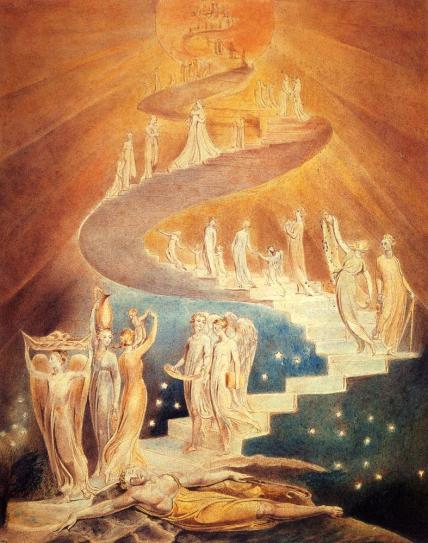
Jacob's Ladder

Biblical Namesake
In the Old Testament, Jacob was the son of Isaac and Rebecca, the grandson of Abraham and Sarah. He had a twin brother named Esau, and it was said that the two of them fought for supremacy even in the womb. Esau was born first, with Jacob following so close behind he was holding his brother’s heel.

As they grew older, the twins developed very different personalities and even appearances – Esau was a hunter and exceptionally hairy, while Jacob was smooth-skinned and home-loving. Esau was Isaac’s favourite son, while Rebecca preferred Jacob.

While he was literally as hungry as a hunter, Esau was convinced by his younger brother to sell him his birthright as eldest for a bowl of red lentil stew. By disguising himself as Esau by covering himself in animal hair, Jacob also obtained a blessing from their blind father Isaac; the blessing made him ruler over his older brother Esau.

To get him away from his now murderously angry brother, Jacob was sent to work for his uncle. On the way, he had a dream or vision of a ladder or staircase reaching into heaven, with angels ascending and descending, while the voice of God blessed and encouraged him.

Jacob worked for his uncle as a shepherd, and married his cousins Leah and Rachel (he just wanted Rachel, but there was a two-for-one offer and he was only allowed Rachel if he took her sister as well). With these two wives, and two concubines, he eventually had twelve sons and at least one daughter.

On the way back home with his family, Jacob had a mysterious encounter with a divine being, who wrestled with him all night, until his hip was dislocated. Jacob demanded a blessing from the being, who did so, and gave him the new name of Israel. It is traditionally said that the being was an angel, although Genesis suggests that Jacob wrestled with God. Jacob always walked with a limp because of the injury to his hip.

Jacob and Esau reconciled with one another, and had an emotional reunion, showing that both had matured over the years. Despite missing out on his birthright and blessing, Esau had become rich and successful, and had a large family of his own; this probably made it easier for him to forgive his twin.

Jacob is regarded as the father of the Israelites, and his twelve sons as the progenitors of the Twelve Tribes of Israel. He is venerated in Judaism as one of the great patriachs, while in Islam Yaqub is one of the prophets, upheld as an example of someone who trusted God completely. In Christianity, Jacob is revered because Jesus spoke of him, and his visions are believed to refer to the coming of Christ. He is regarded as a saint in Catholic tradition.

Name Information
The name Jacob is derived from Iacobus, a Latin form of the Hebrew Ya’akov. The Bible explains the name as meaning “holder of the heel”, as Jacob was born holding his twin brother’s heel, from the Hebrew word aqab, meaning “restrain”, a play on words with the similar iqqbah, “heel”.

The name is often translated as “supplanter”, because Jacob supplanted his older brother in gaining his inheritance. You could take holding a heel as a metaphor for supplanting someone, which is the only way this particular meaning makes even vague sense.

Neither of these is very convincing – the Bible is good at coming up with clever joke explanations of what names mean, but isn’t strong on etymology.

It has been suggested that the name could be short for a hypothetical longer name, such as Ya’aqov’el, meaning “may God protect”. In a baby name book I owned by Oxford philologist Julia Cresswell (now sadly fallen to unrecognisable pieces), she offers the theory that Jacob may ultimately be from Babylonian and mean “God rewards”. Unfortunately, I don’t remember her giving a source for this information.

So we know that Jacob is a name with very old roots, but the exact meaning of it cannot be recovered. It seems more likely to me that the meaning has something to do with God rather than feet, but all theories are only speculative.

Jacob has been used as an English name since the Middle Ages, although not as common as its New Testament form, James. It has often been thought of as being a particularly Jewish choice, although the sheer numbers of Jacobs through history in comparison to the Jewish population make this idea untenable. There is a Saint Jacob, an early Christian martyr from Syria, and the name became rather a favourite in the Eastern church. In the form Jakob, it was commonly used in Central and Eastern Europe, and there are quite a number of medieval saints named Jakob or Jakov.

Famous men from Australian history named Jacob include Jacob Pitman, a South Australian builder and architect who was responsible for spreading the work of his brother Isaac Pitman, the creator of a common form of shorthand. Jacob Nagle was an American-born sailor who arrived here on the First Fleet and left a lively account of early Sydney, while Jacob Mountgarrett was an Irish surgeon to the early colony. Jacob Garrard was a prominent trade unionist, and Jacob Oberdoo an Aboriginal leader.

Notable Jewish Jacobs in Australia include Jacob Montfiore, a highly successful businessman, politician, magistrate, bank director, and community leader – he also wrote plays and an opera. Rabbi Jacob Danglow was senior Jewish chaplain to the army during World War II, and Jacob Bloch was the premier maker of ballet shoes in the mid 20th century (not much of a businessman, but fun-loving and popular). Jacob Goldstein was a Christian charity worker of Jewish heritage.

Jacobs Creek in South Australia’s Barossa Valley is named after an assistant surveyor called William Jacob who settled here in the 1840s. Its main claim to fame is that it has given its name to the Jacobs Creek wine brand.

The name Jacob first charted in Australia in the 1970s, debuting at #163 – part of the trend towards fresh Biblical names for boys, and perhaps influenced by popular Jason. It joined the Top 100 in 1982 at #72, and was in the Top 50 by 1985. In the Top 20 by 1993, Jacob peaked in 2001 at #11, never reaching the Top 10. During the last few years its position has stabilised in the Top 20.

It is #18 nationally, #12 in New South Wales, #25 in Victoria, #26 in Queensland, #16 in South Australia, #10 in Western Australia, #11 in Tasmania, #20 in the Northern Territory, and #32 in the Australian Capital Territory.

In the US Jacob has been constantly on the Top 1000 since the late 19th century, and has never been lower than #368 in 1962. It was popular in the 19th century, and rejoined the Top 100 in the mid 1970s. It reached #1 in 1999 and remained there until 2013; it is now #4.

In the UK, Jacob was a popular name during the 19th century and was in the Top 40 by the mid 1990s. It has been climbing since 2008, and is currently #4. Jacob is most popular in the US and UK, but is popular in all English-speaking countries, and also in Scandinavia. The Jakob spelling is most popular in Slovenia, but also charts in Austria and Scandinavia. (Most countries pronounce the name differently to how we say it).

Jacob is a strong, handsome traditional name on its way to becoming a modern classic. The stability of its popularity makes it a very safe choice, yet it is still quite distinctive. The most common nickname is Jake, but in times past Jack was used, and more recently Coby and Jay.

Thank you to Susan for suggesting the name Jacob be featured on Waltzing More Than Matilda.

POLL RESULTS
Jacob received an approval rating of 58%. 17% of people thought Jacob was a safe choice that was still interesting, but 16% saw it as boring and common, and 15% as too popular. 10% of people loved the nickname Jake, while 5% hated it.

(Painting is of Jacob’s Ladder by William Blake, 1805)

← Older posts
Newer posts →

Enter your email address to follow this blog

Categories

Archives

Recent Comments

A.O.'s avatarwaltzingmorethanmati… on Zarah Zaynab and Wolfgang…
Madelyn's avatarMadelyn on Zarah Zaynab and Wolfgang…
JD's avatardrperegrine on Can Phoebe Complete This …
A.O.'s avatarwaltzingmorethanmati… on Rua and Rhoa
redrover23's avatarredrover23 on Rua and Rhoa

Blogroll

  • Appellation Mountain
  • Baby Name Pondering
  • Babynamelover's Blog
  • British Baby Names
  • Clare's Name News
  • For Real Baby Names
  • Geek Baby Names
  • Name Candy
  • Nameberry
  • Nancy's Baby Names
  • Ren's Baby Name Blog
  • Sancta Nomina
  • Swistle: Baby Names
  • The Art of Naming
  • The Baby Name Wizard
  • The Beauty of Names
  • Tulip By Any Name

RSS Feed

  • RSS - Posts

RSS Posts

  • Celebrity Baby News: Melanie Vallejo and Matt Kingston
  • Names from the TV Show “Cleverman”
  • Can Phoebe Complete This Sibset?
  • Zarah Zaynab and Wolfgang Winter
  • Baby, How Did You Get That Name?
  • Celebrity Baby News: Media Babies
  • Celebrity Baby News: Adelaide Crows Babies
  • Celebrity Baby News: Chris and Rebecca Judd
  • Names at Work: Name News From the World of Business and Employment
  • Celebrity Baby News: Sporting Round Up

Currently Popular

  • Rare Boys Names From the 1950s
  • The Top 100 Names of the 1920s in New South Wales
  • Celebrity Baby News: Ross Stevenson and Sarah Fallshaw
  • The Top 100 Names of the 1940s in New South Wales
  • Arlo Robert Galafassi: A Son for Toni Collette and Dave Galafassi, a Brother for Sage Florence

Tags

celebrity baby names celebrity sibsets english names famous namesakes fictional namesakes honouring locational names middle names name combinations name history name meaning name popularity name trends nicknames popular names saints names sibsets surname names twin sets unisex names

Blog at WordPress.com.

Privacy & Cookies: This site uses cookies. By continuing to use this website, you agree to their use.
To find out more, including how to control cookies, see here: Cookie Policy
  • Subscribe Subscribed
    • Waltzing More Than Matilda
    • Join 517 other subscribers
    • Already have a WordPress.com account? Log in now.
    • Waltzing More Than Matilda
    • Subscribe Subscribed
    • Sign up
    • Log in
    • Report this content
    • View site in Reader
    • Manage subscriptions
    • Collapse this bar
 

Loading Comments...