• About
  • Best Baby Names
  • Celebrity Baby Names
  • Celebrity Baby Names – Current
  • Celebrity Baby Names – Past
  • Featured Boys Names
  • Featured Girls Names
  • Featured Unisex Names
  • Links to Name Data
  • Waltzing on the Web

Waltzing More Than Matilda

~ Names with an Australian Bias of Democratic Temper

Waltzing More Than Matilda

Tag Archives: name trends

Celebrity Baby News: Claire and Jonathan Boan

09 Friday Mar 2012

Posted by A.O. in Celebrity Baby News

≈ Comments Off on Celebrity Baby News: Claire and Jonathan Boan

Tags

astronomical names, celebrity baby names, Indian names, name trends, Sanskrit names, Slavic names

Yet another baby from 2011:

Deputy mayor of Port Adelaide-Enfield Council, Claire Boan, and her husband Jonathan, welcomed a daughter on June 22 last year named Mira.

As part of her deputy mayoral duties, Claire recently publicised a Port Adelaide campaign to convince parents to use cloth nappies instead of disposables. Each year 140 tonnes of disposable nappies are sent to landfill in Claire’s council alone, so it makes ecological sense for the council to provide a subsidised programme to offer parents the opportunity to make the switch. Claire uses cloth nappies herself for Mira, so she knows how simple modern cloth nappies are to fold and clean. Well done Port Adelaide for spearheading this environmental effort.

Claire’s husband Jonathan is a postgraduate student at the University of Adelaide. In a national study, Claire scored 79 out of a 100 on a Happiness Quotient test (the average is 57); she attributes her high levels of happiness to her husband and daughter. And chocolate.

Mira has been covered on the blog in Girls Names from Stars and Constellations. As well as being the name of a star, Mira is the feminine form of the Slavic name Miro (also covered on the blog), and is also a Sanskrit name meaning “sea, ocean”. This cross-cultural name could well increase in popularity, as Mila and Milla have.

Famous Name: Kylie

07 Wednesday Mar 2012

Posted by A.O. in Famous Names

≈ 12 Comments

Tags

Australian Aboriginal names, famous namesakes, fictional namesakes, Irish names, name history, name meaning, name popularity, name trends

Last weekend was the annual Sydney Mardi Gras Gay and Lesbian Street Parade, which for several years now has been held on the first Saturday in March. The parade is the culmination of a gay and lesbian festival, and combines political protest with a celebration of gay cultures and lifestyles, then ends with one enormous shindig that proves nobody can party like Sydney.

Recently-out Magda Szubanski was in attendance, looking pleased and slightly nervous, and the guest of honour at the post-parade Mardi Gras Party was pop diva Kylie Minogue, who last appeared at Mardi Gras fourteen years ago. Kylie waived her $16 000 appearance fee and performed for free.

Kylie began her career as a child actor, failed to join the Young Talent Time cast, as her sister Dannii did, then shot to fame playing teenage mechanic Charlene Edna Mitchell on soap opera Neighbours. Her wedding to Scott Robinson, played by Jason Donovan, attracted 20 million viewers in the UK. This was enough to take her to Britain to begin her career as a pop singer.

At first she was treated scornfully by the critics, and disdainfully labelled “the singing budgie” for being small and chirpy. However, she has become one of the British pop industry’s great survivors – constantly re-inventing her image to become a sex symbol, and from early on appreciatively embraced by the gay community as one of their icons.

She has overcome breast cancer, and at the age of 43, is regarded as Britain’s most powerful celebrity, and been named one of the 100 Hottest Women of All Time. She currently lives in London’s once fashionable Chelsea.

According to baby name books, the name Kylie means “boomerang” in an Aboriginal language, and if you are prepared to dig a little deeper, we are told that the word kylie comes from the Nyungar language from south-west Western Australia, and there are place names ending with -kylee to indicate that (for example, that a river is shaped like a boomerang).

However, a rival theory is that kylie refers not to a boomerang, but to the hunting stick, which isn’t curved and doesn’t come back, being used to bring down prey. I have certainly seen these hunting sticks being identified as kylies in texts over a century old, so this idea is hardly a new one.

Unfortunately for both these theories, when I consulted a Nyungar dictionary, the word kylie isn’t in it. A boomerang is called a kirli (KEER-lee), and a throwing stick is called a dowak. It would seem that kylie was a non-Indigenous slight corruption of the word kirli, which is very similar to the word for boomerang in the Walpiri language of Central Australia – karli.

I’m not sure how settlers confused dowak for kylie though; perhaps they misunderstood what the Aborigines were telling them, or lacked the cultural context to see that a boomerang and a throwing stick were two different tools.

It’s easier to understand why Australians of British descent latched onto it as a personal name in the 1950s and ’60s. It fit in so well with the trend for similar-sounding names of Irish origin, such as Kerry and Kelly that were also growing in popularity – a trend that is still going strong, as names such as Keeley, Keira, Kirra and Kirrily attest. Kylie just had that familiar “Australian sound”. It also seems to have increased the popularity of the male name Kyle.

The name Kylie first hit the charts in the 1950s, was Top 100 by the 1960s when Kylie Minogue was born, and peaked in the 1970s as the #2 name of that decade. By the 1990s it had left the Top 100, and in the last year or two has left the charts altogether.

The plummeting popularity of the name Kylie in the 1990s must surely owe something to comedienne Mary-Anne Fahey’s iconic character Kylie Mole from The Comedy Company sketch show. This befreckled, hoydenish schoolgirl, stuck in the permanent bad mood of adolescence, not only popularised the word bogan, but her second-best friend Rebecca appeared with her on the show, played by Kylie Minogue. Although she struck a chord with us youngsters, she gave the name Kylie a certain image that parents probably didn’t wish to bestow upon their daughters.

Chloe and William – #1 in New South Wales

03 Saturday Mar 2012

Posted by A.O. in Name Data

≈ Comments Off on Chloe and William – #1 in New South Wales

Tags

name popularity, name trends, popular names

Looking at the girls’ Top 20, Chloe rose two places to take the #1 position, which she last held in 2006. Meanwhile, Isabella slipped from first place to #4.

The biggest gainer was Ava, who went up five places from #14 to #9; Sophie wasn’t far behind, upping herself four places from #11 to #7.

The biggest loser was Lily, who slid seven places down to #14. It seems that across the states, the name Lily is falling in popularity without ever reaching the top spot. Similar-sounding Emily went down four places, from #8 to #12.

Other than that, the list is about as lively as molasses, with Olivia, Mia, Charlotte, Sienna, Amelia, Ella, Sophia, Zoe and Emma stable, and Ruby, Grace, Matilda, Hannah and Jessica not changing position at all.

All the girls’ lists have been extremely conservative, and New South Wales seems the most conservative of all, with no new names in the Top 20 and the #1 name a retread. It does feel as if everyone has decided what their favourite girls’ names are, and they’re sticking with them.

On the boys’ Top 20, royal William maintains the #1 position which he has held since 2009.

The big mover and shaker was Lucas, who ascended eight places from #10 to reach the #2 spot. Maybe Lucas is gunning for first position. Other names which grew in popularity were Ethan, Benjamin and Lachlan. Yep Lachlan – still going strong.

Joshua fell the most, five places from #4 down to #9. While Jack was #1 in Victoria, in New South Wales it dropped four places, from #2 to #6. It seems that Jack the Lad is beginning to lose ground. Thomas and Cooper also decreased in popularity – names which were #1 in the ACT and Queensland.

Oliver, Noah, James, Samuel, Liam, Alexander and Isaac remained stable, and Jacob, Max and Riley didn’t move a muscle. I think New South Wales is the only state where Riley didn’t suffer a loss.

Charlie is new to the Top 20 at #18, while Daniel left the list.

Slightly more movement than the girls’ Top 20, but overall New South Wales didn’t change too much when it came to names at the top.

Further down the list, there have been some new developments though. Celebrity baby name Harper made her way onto the Top 100 at #57, indicating a very rapid rise.

Mila and Milla are both new on the list at #72 and #84. I was a little surprised to see that Mila is higher than Milla, but both these names have been fashionable for a while now.

Aaliyah is new on the list at #77. I predicted we’d see a greater proliferation in spellings of this name, but the original spelling is popular enough to make it to the Top 100. If spellings were combined, this name would be much, much higher.

As in Victoria and the ACT, Charlie is now Top 100 for girls as well as boys, since she joined the list at #93.

In other news, Taylor has gone from the Top 100, Ashley is still hanging on, and Tahlia has had a big slide from #47 to #81.

Over on the boy’s list, another celebrity baby name, Flynn, has made his mark, joining the Top 100 at #51. It’s an impressive start, and Flynn will probably be Top 50 in 2012.

Darcy has left the Top 100. Although it fell everywhere, I think New South Wales is the first state to abandon Darcy, and the reason is probably that it is starting to seem too feminine in usage.

Phoenix has gone from the Top 100 after just one year – was it a flash in the pan, or is it still gathering momentum? Felix is new to the list, and seems like the perfect replacement. Braxton is another new-name-with-an-X for boys.

Ali has done well, climbing from #93 to #71. It’s a sign of Arabic names doing well in general, and it’s also a good cultural cross-over name.

A surprise success is John, who has risen from barely-there #99 to #77 – quite a jump up for a name that many pegged as being in decline.


Names Spotted Over the Summer, at Home and Abroad

28 Tuesday Feb 2012

Posted by A.O. in Names Spotted at Home and Abroad

≈ 14 Comments

Tags

Buddhist names, english names, famous namesakes, fictional namesakes, Hindu names, Indian names, Irish names, mythological names, name trends, nicknames, popular culture, popular names, Romani names, Sanskrit names, Tibetan names, virtue names, vocabulary names

Interesting names of babies I spotted in the papers over the summer:

When the popular name lists came out, newspapers also liked to dwell on the less popular names (more coming on that score). One of the babies with an uncommon name was the splendidly Arthurian Lancelot Palmer, from Wagga Wagga in New South Wales. Lancelot is named after his mother’s grandfather, who passed away a few years ago.

To publicise Australia Day events in Tasmania, The Examiner had a photo of an eight-month-old baby girl named Uma Paech, from Lauceston (pictured). It’s a celebrity name, because of Hollywood actress Uma Thurman, but also shows the growing popularity of names from Asia. Uma Thurman was raised in a Buddhist household, and her father was the first Westerner to become a Tibetan Buddhist monk. Her name is taken from the Tibetan phrase Dbuma Chenpo, meaning “Great Middle Way”; one of the guiding principles of Buddhist practice. (The Db is silent). Uma is also one of the titles of the Hindu goddess Parvati.

In early February, an official report on publicly funded home births was prepared by the Homebirth Advisory Group from the Northern Rivers district of New South Wales. The story interviewed Jade Trapp of Lismore, who gave birth to her son Django at home with a midwife two years ago. This is another name which comes from a famous person. It was the nickname of Belgian jazz guitarist Jean Baptiste Reinhardt, and it is Romani for “I awake”. Although Django died in the 1950s, his gypsy jazz is still hot, and he has been portrayed or alluded to in several films, including The Triplets of Belleville and Martin’s Scorscese’s Hugo. His music has been used for the soundtrack of movies such as The Matrix, Chocolat, Kate and Leopold and Stardust Memories. This is a hyper-hipster name oft suggested on Nameberry, and one with a cheery sound to it.

Meme and Soemyint Theloep are recent refugees from Burma who live in the Illawarra region surrounding the city of Wollongong in New South Wales. This month, they were caught in the floodwaters that flowed into their flat, and Soemyint had to carry his three-week-old daughter to safety in a baby sling. Although their English is still only basic, they knew enough to give their baby an English name – Blessing. What a beautiful tribute to their new home and refuge (despite the occasional flood). It’s a name that makes me smile and smile.

Monica Carduff Gonzalez, professionally known as DJ Monski Mouse, has been playing classic vinyl tracks at events such as the Edinburgh Fringe Festival for ten years now. She is now starting up an event called Baby Disco Dance Hall, which plays funky tunes suitable for the under-five crowd. Monica’s own daughter is named Monalisa (didn’t you just somehow guess her baby wouldn’t be named Emily or Mia?). Apart from the famous painting by da Vinci, Mona Lisa is also an award-winning Nat King Cole song, and it was playing while Monica and her husband, magician Tony Roberts, were choosing baby names; the new baby smiled, and they took that as her seal of approval. I love this cool name and the story attached to it (which I got off her website).

And an interesting name attached to an adult:

I read a short article on parenting about the myths of motherhood. It’s good advice telling us not to worry so much about being perfect. What interested me more was the author’s name, which was Benison O’Reilly. Her name is a vocabulary word which means “blessing, benediction”. According to her website, it’s a favourite name amongst the O’Reilly family. I think it’s a great name and obviously has a very positive meaning.

Names of babies encountered over the summer in real life:

Annabel: the original form looks crisp, classic and very English after so many Frenchified Annabelles.

Cael: I always thought this Irish name was said like the word keel, but Cael’s family say his name like the word kale.

Lacey: I feel as if the long-term popularity of Lucy is helping the rise of pretty Lacey.

Purity: this name reminded me of purity rings, but her name was chosen with the idea of purity in the sense of “pure and natural, uncontaminated by the artificial”. Purely herself!

Zeke: not short for Ezekiel, just plain Zeke. Very cowboy.

Names of new babies welcomed by people I know (family/friends/colleagues/neighbours etc) over the summer:

Bethany

Brock

Eleanor

Finn

Isla

Laila

Leilani

Stella

According to a new article Abby has at Appellation Mountain, the baby names chosen by the people around you will likely tend to be similar, and also not unlike the names you are apt to choose yourself (leading to much angst and accusations of name stealing and so forth – see Lou at Mer de Noms, as to whether to “call dibs” or not).

I think some of these names do “go together”, as in I can imagine Finn and Isla as siblings, and also Eleanor and Stella. There’s a strong L sound in all of them except Bethany, Brock and Finn, who thus also seem to be matched. Laila and Leilani are particularly similar.

Top Baby Names from Regional Victoria for 2011

09 Thursday Feb 2012

Posted by A.O. in Name Data

≈ 1 Comment

Tags

name popularity, name trends, popular names

Have you ever noticed that the official name data for your state or territory doesn’t always tally with your own experiences? Perhaps overall there were more baby girls named Mia in your state than anything else, and yet in your own town, every second person seems to be calling their new baby Ava, or Scarlett. You might even pick a name much further down the rankings, such as Jett, but when you rock up to the first day of kindy, there’s four other boys named Jett in your son’s class (plus two named Jhett).

If you’re interested in name popularity, it helps to keep a weather eye on the local conditions. The easiest way to do this is to read the birth announcements in your local paper, which is where the information on these towns and regional centres came from.

GEELONG

Boys

1. Oliver (#3)

2. William (#2)

3. Charlie (#18)

4. Harry (#19)

5. Archie (#37)

6. Xavier (#13)

7. Jack (#1)

8. Noah (#5)

9. James (#7)

10. Cooper (#11) and Oscar (#20)

Girls

1. Amelia (#8)

2. Olivia (#3)

3. Mia (#1)

4. Sophie (#11)

5. Chloe (#4)

6. Ruby (#2)

7. Matilda (#16)

8. Sienna (#7)

9. Willow (#39

10. Ella (#9), Emily (#12), Evie (#24), Milla (#35) and Zoe (#15)

BALLARAT [pictured]

A lady named Ruth Matthews has been collating name data from birth notices in “The Courier” since 1964, after the birth of her first child. Trends she has noticed include a wider pool of names (107 names for boys in 1965, compared to 235 in 2011), variant spellings of popular names, and unisex names. Mrs Matthews counts similar names as one.

Boys

1. Cooper (#11)

2. Harry (#19) or Harrison (#29)

3. Jack (#1) or Jackson (#30)

4. Oliver (#3), Will (-) or William (#2)

5. Thomas (#6) or Tom (-)

6. James (#7)

7. Max (#14) or Maxwell (-), Xavier (#13)

8. Lachlan (#10)

Girls

1. Ruby (#2)

2. Charlotte (#5), Lily (#10)

3. Mia (#1)

4. Grace (#14) or Gracie (-), Lucy (#17), Maddison (#43)

5. Isabella (#6), Olivia (#3)

6. Olive (#82), Chloe (#4), Evie (#24), Matilda (#16), Sophie (#11)

7. Addison (#54), Annabelle (#50), Chelsea (#38), Ella (#9), Emily (#12), Sienna (#7)

THE SOUTH-WEST REGION

They collated their names even more vaguely, counting Ava and Eva as the same name, as well as Pippa and Piper.

Boys

1. Harry (#19)
2. Charlie (#18), Oliver (#3), Thomas/Tom/Tommy/Tommie (#6)
3. Archie (#37)
4. Cooper (#11), Harrison (#29), Lewis/Louis (#96), William/Will/Wil (#2)
5. Harvey (#66), Lachlan (#10)

Girls

1. Isabelle/Isabel/Isobel/Isabella/Bella (#26/46/-/6/88)
2. Ava/Eva (#12/27), Grace (#14)
3. Emily (#12), Madison/Maddison (#30/43), Mia (#1), Zoe (#15)
4. Amelia/Amellia/Amalia (#8), Charlotte (#5), Pippa/Piper (-/#75), Sophie (#11)

Another way to keep track of local baby names is to contact the local hospital in your area, to see if someone makes a public record of the most popular baby names.

At Bacchus Marsh and Melton Regional Hospital, just outside Melbourne, the most popular name for girls was Ruby, and the most popular name for boys was either Lachlan or Ryan. Other popular girls names were Isabelle, Lilly, Olivia, Sienna, Zoe, Amelia, Ava, Ellie, Hayley and Matilda, and for the boys, it was Cooper, Jack, Thomas and Tyler. In Bacchus Marsh, Xavier, Jaxon and Ryder are considered unusual names.

Ruby and Oliver – #1 in South Australia

07 Tuesday Feb 2012

Posted by A.O. in Name Data

≈ 1 Comment

Tags

name popularity, name trends, popular names

On the girls’ chart, Ruby went up two places to make #1, while Ella, #1 for 2010, sunk ten places.

The biggest riser was Sophie, going up six places, and Scarlett also rose up the ranks. Chloe and Lily both dropped three places, so it seemed as if S names became more popular, while names with a strong L, ending with an -ee sound were failing.

Remaining stable (not changing more than two places) were Mia, Emily, Isabella, Olivia, Ava, Grace and Hannah. Charlotte, Sienna, Amelia and Zoe didn’t budge at all.

Jessica, Lucy and Lilly dropped out of the Top 20; in the case of the last two, it does seem that the L-sound names have had their day.

Replacing them were three names returning to the Top 20 – Matilda and Emma, last seen in 2009; and Madison, last seen in 2008. In fact, there was a real feeling of “more of the same please” from the girls Top 20.

On the boys’ Top 20, there was a bit more colour and movement. Oliver went up four places to reach #1, while Jack was nudged down from the top spot to #2.

Tyler was the big success story, shooting up eleven places, and Ethan, Noah, Liam and Jacob also made significant gains.

Joshua dropped a massive fourteen places, and Riley, Lachlan, James and Samuel also fell down the charts. I do think that Riley is gradually being replaced by other surname-y boys’ names.

William, Lucas, Max, Thomas, Charlie, Cooper and Alexander remained steady, with little change.

There was only one new name on the boys’ chart, but unlike the girls’, this one was genuinely new to the Top 20 – Blake. As in other states, Harry dropped out of the Top 20; this does seem to be one name which we will be seeing less often.

As in other states, Flynn did well, joining the Top 100 for the first time. However, while Charlie was Top 100 for both boys and girls in Victoria and the ACT, in South Australia Charlie remains a boys’ name, with Charli still the preferred spelling on the girls’ chart.

As in other states, there was a noticeable trend for girls’ names to remain relatively stable, while boys’ names were more likely to experience changes in popularity. This goes against conventional wisdom that parents tend to be conservative with naming boys, sticking to the same old names year after year, while girls’ names are prone to fickle fashion. Maybe it’s about time some of the other conventional wisdoms about gender in names gets a rethink?


Famous Name: Bob

31 Tuesday Jan 2012

Posted by A.O. in Famous Names

≈ 4 Comments

Tags

celebrity baby names, famous namesakes, name meaning, name trends, nicknames, palindromic names, vocabulary names

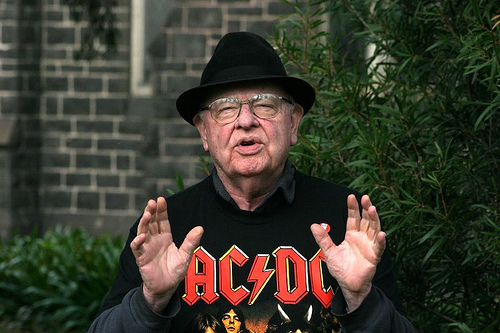
Last Sunday, Father Bob Maguire said his final mass at the church of Sts Peter and Paul’s in South Melbourne. At the age of 77, after nearly 40 years of service, he was forced to leave by the Catholic Church, which quotes canon law stating the official retirement age for priests is 75. He and his black standard poodle, Franklin, are temporarily homeless. At 77, Barry Humphries is awarded UK Australian of the Year; at the same age, Father Bob gets the boot.

Father Bob Maguire is one of the most famous and popular Catholic priests in Australia, and has devoted his life to helping others. His compassion, mischievous humour, bluntness, and eccentricities have made him loved by people from all religions, and none.

He has founded four charities, now amalgamated into the Father Bob Maguire Foundation, and inspired by a revolutionary approach to social justice. The Foundation’s workers are called The Bob Squad, and they care for the poor, the destitute, the homeless, and the mentally ill. Their catch cry is Viva la Bob!

Father has received an Order of Australia, and last year was named Victorian of the Year. Everyone thinks he’s super, except, apparently, the Catholic Church. Despite his massive popularity, Bob believes that the powers that be in the church hierarchy find him too much of a headache, because he has an unconventional approach to parish life which had him branded a maverick.

Some reasons the Church may have felt teased by Father Bob:

  • He put up a memorial on the parish front lawn to people who had died from drugs
  • He didn’t lock the church, because no matter how much stuff got stolen, he wanted it to be always available
  • People with mental illness or social problems were welcomed to church services
  • The collection plate was taken up by kids on roller skates
  • He gave the Occupy Melbourne protesters sanctuary
  • He said he would be happy to perform gay marriages in the church if that was legal
  • He publicly disagreed with the church’s ruling that secular songs not be permitted at Catholic funerals
  • Last year as an April Fool’s Day joke, he claimed that his church would be instituting “drive through confessionals” in order to keep pace with modern life
  • He has co-hosted a non-denominational religious TV programme with slightly controversial Jewish comedian John Safran
  • He finds parallel universes much more interesting to think about than life after death
  • When asked what Jesus might do if he were alive today, he quipped, “Get back in the tomb”

More than 1000 people attended Father Bob’s last mass, and many of them will not come to church again, because only Father Bob could make sense of it all for them. However, although he no longer has a church, he sees his Foundation as a “parish without borders”, and is also reaching people through his website, blog, Twitter, and his weekly radio spot on youth radio station Triple J.

I don’t presume to the theological qualifications which can judge whether Father Bob is a good Christian or not, but I do know he is a great Australian. And that (for the purposes of this blog) is more important.

Bob is a pet form of the name Robert, meaning “bright fame”. The old-fashioned nicknames for Robert were Hob, Dob and Nob, and Bob is a continuation of this trend to rhyme a name with others.

Bob is not only a palindrome, but also a vocabulary word. To bob means to “to move up and down”; it’s also the name for a short haircut, and pre-decimal slang for “a shilling” – a word still used by many older folk.

It’s well on trend as part of the vogue for 1930s nicknames, such as Bill, Joe, Sid, Dan and Jim. Knowing they will never call their child by a full form of the name, and loath to saddle them for life with a cutesy name like Billy, Joey or Danny, parents are opting for the simple monosyllabic nickname as an unpretentious choice.

As a middle name, Bob has even been used on a celebrity baby – name-fussy radio host Hayley Pearson called her son Austin Bob.

Waltzing with … Skyler

29 Sunday Jan 2012

Posted by A.O. in Waltzing with ...

≈ 5 Comments

Tags

American names, celebrity baby names, Dutch names, famous namesakes, fictional namesakes, name combinations, name history, name meaning, name popularity, name trends, nicknames, sibsets, surname names, UK name popularity, unisex names, US name popularity, US name trends

4c86fe452cad39ae2f1075e407eda5e1

This post was first published on January 29 2012, and heavily revised on February 10 2016.

Tomorrow school goes back in three different states and territories (Queensland has already been back a week), which means that the summer holidays are drawing to a close. I chose this name as suitable for the start of term, thanks to its educational meaning.

Name Information
Skyler is a variant of Schuyler; a Dutch surname of German origin meaning “scholar”, said SKIE-luh. This name was brought to what is now the United States by Dutch colonists, who settled in the east during the 17th century.

The Schuylers were a prominent New York family. Pieter Schuyler was the first mayor of Albany in New York, and a commander of the British forces at the Battle of La Prairie, near Montreal. His descendants were numerous and distinguished, including his grand-nephew Philip Schuyler, who was a general in the American Revolution and Senator for the state of New York. It is said that the first use of the names Schuyler and Skyler was in honour of this family.

Schuyler has only appeared on the US Top 1000 a smattering of times. It shows up first at the beginning of the twentieth century, and then again between the mid 1980s and mid 1990s, only charting as a male name, and never getting higher than the bottom of the Top 1000. Currently Schuyler is almost equally given to both sexes in the US – 17 girls and 15 boys last year.

Famous people with the name include Schuyler Colefax, the 17th US Vice-President, who was a distant cousin of Philip Schuyler, and Schuyler Wheeler, inventor of the electric fan. Schuyler has been chosen as a baby name by actors Michael J. Fox and Sissy Spacek – both times for daughters. The name is barely used outside the United States, and pronunciation would be a puzzle to most.

During the 1940s and 1950s there was a popular American radio and television series called Sky King, about an Arizona rancher and pilot called Schuyler “Sky” King. During the 1950s, the spelling variant Skyler begins showing up in the data. It’s tempting to imagine that people tuned into the show, and began spelling the name as it sounded, or in such a way as to make the nickname Sky more obvious.

Skyler joined the US Top 1000 in 1981 for boys, and for girls in 1990 – it began showing up in data as a girls name in the late 1970s, so it had a brisk rise as a girls name. Skyler peaked for boys in 1996 at #217, and is currently #351. For girls, it peaked in 2000 at #250, and is currently #302.

Famous Skylers include Skyler Green, a footballer who played for the Dallas Cowboys in the NFL, and actress Skyler Samuels, who played Gigi on Wizards of Waverley Place. A fictional Skyler is Skyler White from the TV series Breaking Bad, played by Anna Gunn. Fashion stylist Rachel Zoe has a son named Skyler.

In the UK, Skyler has charted for boys and girls since the late 1990s. Currently it is #406 for girls, while in 2014, there were 13 boys named Skyler. It is rising rapidly for both sexes.

Rising alongside Skyler is the variant Skylar. While it has never been higher for boys in the US than the 300s, and is currently #635, it is Top 100 for girls, being #48 and rising. A famous namesake is American singer and songwriter Skylar Grey, born Holly Hafermann – her stage name a reference to mysterious “grey skies”.

In the UK, Skylar is #212 for girls and rising steeply. It is occasionally used for boys, and in 2014 there were 5 baby boys named Skylar.

There are also spelling variants of Skyler/Skylar which are specifically feminine. Skyla is #531 in the US, #156 and rising in the UK, and in 2012 made the Top 100 in New Zealand. It is much more popular than Skylah, but that is rising rapidly as well.

Skyla and Skylah are much more common in Australia than any other spellings of Skyler, and the numbers in the UK and New Zealand suggest that this spelling makes the most sense for someone with a British/Commonwealth accent. I estimate that if Skyla and Skylah were added together, the name would be in the Australian Top 100 by now, or very close to it, while other spelling variants are extremely rare for either sex.

You can see that if all the different spellings of Skyler were added up, it would be an extremely common name in the English speaking world. So Skyla or Skylah may not be an original choice for girl, but a boy named Skyler would stand out in Australia. Some of the other spelling variants would be worth considering, although I think Schuyler will cause more problems than it is worth.

By now this name has become almost completely divorced from its true meaning, and we now connect it with such things as clear or cloudy skies, free-wheeling flight, and the wild blue yonder. The obvious nicknames are Sky and Skye, and it fits in with names like Shyla, Myla, Kayla, Kai, and Tyler. Its sound is at least part of the reason for its success.

POLL RESULTS
As a girl’s name Skyler received an approval rating of 52%. 38% of people thought it seemed okay, although only 5% of people actually loved it.

Skyler had a lower approval rating as a boy’s name, at 46%. 28% disliked Skyler on a boy, and only 4% loved it.

The favoured spelling of the name was Skyler, with 37% of the vote, although Schuyler was not far behind on 33%. The least popular was Skyla, which only one person voted for.

(Photo is of the NSW Schoolhouse Museum of Education in Sydney)

Baby Center Australia Releases Its Name List for 2011

10 Saturday Dec 2011

Posted by A.O. in Name Data

≈ 6 Comments

Tags

Baby Center Australia, Biblical names, famous namesakes, fictional namesakes, name data, name popularity, name trends, nature names, nicknames, popular culture, popular names, royal names, unique names, unisex names

There have been several stories in the press about how babycenter.au has revealed the top names of 2011. What they don’t say is that this isn’t based on birth data from registries, but just on names chosen and made public by the members of the website.

Baby Center also combines spelling of names, which in some ways gives a more accurate impression of the most popular names; on the other hand, it won’t necessarily gel with what the official data says. So yes, take notice of these trends (especially as they are the closest thing we have to a national survey) but they are not the final word on the subject by any means.

Most Popular Girls’ Names

  1. Chloe
  2. Sophie
  3. Ruby
  4. Charlotte
  5. Olivia
  6. Lily
  7. Ava
  8. Ella
  9. Emily
  10. Mia
  11. Sienna
  12. Amelia
  13. Isabella
  14. Lucy
  15. Zoe
  16. Grace
  17. Isabelle
  18. Maddison
  19. Emma
  20. Charlie (tied with Hannah)

Most Popular Boys’ Names

  1. Oliver
  2. Noah
  3. William
  4. Lachlan
  5. Ethan
  6. Jack
  7. Lucas
  8. Charlie
  9. Joshua
  10. Thomas
  11. Max
  12. Riley
  13. Jacob
  14. Aiden
  15. Liam
  16. Jackson
  17. Cooper
  18. Alexander
  19. Xavier
  20. Benjamin

Trends in Boys Names

Jack declines in popularity, and loses his position at #1 to Oliver. Old Testament names for boys continue to increase in popularity; big risers include Jacob, Noah and Joshua. William went to #3, which they attribute to the Royal Wedding, although William has been extremely popular for many years.

Dropping from the list are James, Samuel and Ryan, to be replaced by Alexander, Xavier and Benjamin. If Ryan really does drop significantly it will be interesting, as it has remained stable for around two decades.

Trends in Girls Names

Chloe moves into the #1 spot, while Lily declines in popularity. Isabella falls further down the charts, which Baby Center assures us is due to the Twilight series coming to an end. I’m not sure how they make this tally with the fact that Isabella was popular in the 1990s, while the first Twilight novel wasn’t published until 2005. Nor does this explain the increasing popularity of Jacob, which is also a name from Twilight.

Baby Center places Charlie for girls in the Top 20, because they combine it with the spellings for Charli. Although I think Charlie will be in the Girls Top 100 for 2011, I don’t think it will be Top Twenty. Baby Center also assures us most girls named Charlotte (#4) will be called Charlie in everyday life. I’m not sure where they have gained this information from.

Matilda and Georgia have dropped off the list altogether.

Unique Names

So if these are the popular names, what about the names that were given to only one baby on the website?

Boys: Audi, Brisbane, Fonzie, Harlem, Hawk, Haze, Hendrix, Hercules, Matisse, Rocky, Rome, Spirit, Toohey, Voltaire, Westin

Girls: Breeze, Clover, Deep, Halo, Justice, Lake, Oceana, Rain, Rainbow, Sailor, Serenity, Spring, Star, Storm, Vanilla, Zen

I somehow think that more than one baby received at least some of these names this year, although I expect all of them will be rare.

Famous Name: Douglas

03 Saturday Dec 2011

Posted by A.O. in Famous Names

≈ 22 Comments

Tags

aristocratic surnames, famous namesakes, locational names, name history, name meaning, name popularity, name trends, names of rivers, nicknames, Scottish names, surname names, UK name popularity, unisex names, US name popularity

doulass

This blog post was first published on December 3 2011, and substantially revised and reposted on December 10 2015.

Famous Namesake
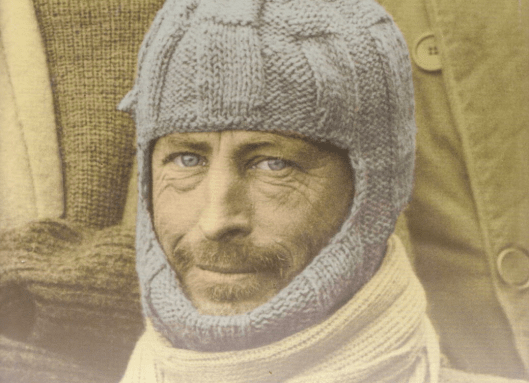
Yesterday marked one hundred years since the Australasian Antarctic Expedition set sail from Hobart in the SY Aurora on December 2, 1911. It arrived at an unexplored region of Antarctica on January 8, 1912, and set up base camp. The site proved to be unrelentingly windy, with constant blizzards that made things hellish for the intrepid explorers.

Douglas Mawson was one of the leaders on the expedition. A geologist and lecturer from the University of Adelaide, he had been asked to join Robert Scott’s British expedition to find the South Pole (Scott was famously beaten to the punch by Norwegian Roald Amundsen). Mawson turned him down, as he thought it would be better to take his own team, and lead an expedition to the unexplored bits of Antarctica, which was most of it.

Douglas was part of a three-man sledging team called the Far-Eastern Party, which included Belgrave Ninnis, the son of a British arctic explorer, and Swiss mountaineer Xavier Mertz.

The group was making excellent progress when Ninnis fell into a snow-covered crevasse that the other two men crossed without incident; he took with him six huskies, a tent, most of the food and other essential supplies, and was never seen again. The glacier they were traversing is now called Ninnis Glacier in his honour.

Mawson and Mertz continued their frozen nightmare, forced to eat their huskies to supplement their scant rations. Although both men were unwell, Mertz became seriously ill and died in less than a week. It is thought that he may have died of an overdose of Vitamin A from eating husky liver, which Mawson solicitously fed him, in the fond belief that he was giving Mertz the best of the provisions.

Other theories are that Mertz died from hypothermia, from the shock of eating meat after being a vegetarian, or from the psychological stresses of the journey – especially the death of Ninnis, as the two men had been exceptionally good friends.

In the days before he died, Mertz became weak, exhausted, dizzy and delirious, even biting off the tip of one of his own fingers. He had dysentery, nausea, and stomach pain; his skin peeled away and his hair fell out – not surprisingly, another of his symptoms was depression. Whatever he died from, his demise caused him terrible suffering.

Douglas Mawson sledged the last 100 miles alone, falling into a crevasse on the way and having to climb out using the harness, only to see the boat he was to have returned on disappearing over the horizon. He had to spend another year in Antarctica.

Douglas was knighted in 1914 and The American Geographical Society awarded him a medal in 1916. The work he did was ground-breaking, and led to Australia getting its own portion of Antarctica, from where we still do important research.

For decades Sir Douglas Mawson was regarded unquestioningly as a hero, and his image is on the snow-white Australian $100 note. More recently his part in the expedition has been scrutinised, and attracted criticism. However there is no doubting his strength, courage, and determination to survive against all odds. He is remembered as an enthusiastic and kind man who never boasted of his remarkable exploits.

Name Information
Douglas is an Anglicisation of Scottish surname Dubhghlas meaning “dark river”. It originally belonged to the Douglas Water, which is a river in South Lanarkshire in southern Scotland. On its shores is a village named Douglas after the river, and the Douglas family took the village’s name as their surname when they moved here in the 12th century.

The Clan Douglas was one of the most powerful families of Scotland in the Middle Ages, often holding the real power behind the throne. The heads of the House of Douglas held the titles of the Earl of Douglas and the Earl of Angus, sometimes known as the Black Douglas and the Red Douglas. Their family estate was Castle Douglas, which Sir Walter Scott fictionalised as Castle Dangerous in his novel of the same name.

The Douglases are said to be descended from a Flemish knight, and fought with William Wallace and Rober the Bruce in the Wars of Independence. Sir James Douglas was the first to be labelled the Black Douglas by the English for what they considered his dark deeds: it was a title taken up with pride. The Douglases intermarried with the House of Stuart, gaining a royal connection.

The Douglases became so powerful they were seen as a threat. In 1440 the teenaged William Douglas, the 16th Earl of Douglas, and his younger brother were invited to dine with the ten-year-old King James I of Scotland. While they ate, a black bull’s head – symbol of death – was placed before the young earl. The Douglas boys were then dragged outside, given a mock trial and beheaded, so Clan Douglas lay siege to Edinburgh Castle. Called the Black Dinner, it is the inspiration for the Red Wedding in Game of Thrones.

Douglas has been used as a personal name at least since the 16th century, and seemingly originates in England rather than Scotland. It was originally a unisex name, given equally to boys and girls, and by the 17th century was primarily a female name. A famous example is Douglas Sheffield, Baroness Sheffield, who had an affair with Robert Dudley, the favourite of Queen Elizabeth I, and had a son by him. In the 18th century Douglas became more common for males than females, so this is an example of a name that went from the girls to the boys.

The name is a traditional one in the Hamilton family, which married into the Douglases in the 17th century; although the Hamiltons’ surname is now Hamilton-Douglas, they are actually Douglases by descent. The head of Clan Douglas today is the Duke of Hamilton, Alexander Douglas Douglas-Hamilton.

Douglas was #59 in the 1900s, and peaked in the 1920s at #28, during the career peak of actor Douglas Fairbanks, known as The King of Hollywood in that era. It remained on the Top 100 until the 1970s, and disappeared from the charts in 2010, although returning the following year. It is apparently now in rare use.

In the US Douglas has always been on the Top 1000. It was on the Top 100 from the end of the 1920s to the end of the 1980s. It peaked in 1942 at #23 – two wartime namesakes are General Douglas Macarthur, and Douglas Fairbanks son, Douglas Fairbanks Jr, who became a highly decorated naval officer. It is currently #598 and falling.

In the UK, Douglas was on the Top 100 from the 1880s to the 1970s, peaking in the 1920s. Although it got as low as 508 in 2008, it has been climbing ever since, and is now #276. A current famous namesake is the handsome British actor Douglas Booth.

Douglas is a strong and rugged sounding classic name that is no longer in fashion, but still in use. British trends suggest that it is due for a comeback, and thanks to Douglas Booth, perhaps we can once again see Douglas as a romantic, dashing name, as it was in the 1920s because of Douglas Fairbanks. The nickname Doug seems very dated, but Dougie is cute, and even Gus seems possible.

POLL RESULTS
Douglas received an approval rating of 49%. 22% of people thought it wasn’t ready for a comeback, and 15% saw it as dorky and nerdy, although 17% saw it as strong and rugged. In contrast, 10% of people thought it was ready for a comeback, and saw it as a hip choice most parents weren’t clued into yet.

← Older posts
Newer posts →

Enter your email address to follow this blog

Categories

Archives

Recent Comments

A.O.'s avatarwaltzingmorethanmati… on Zarah Zaynab and Wolfgang…
Madelyn's avatarMadelyn on Zarah Zaynab and Wolfgang…
JD's avatardrperegrine on Can Phoebe Complete This …
A.O.'s avatarwaltzingmorethanmati… on Rua and Rhoa
redrover23's avatarredrover23 on Rua and Rhoa

Blogroll

  • Appellation Mountain
  • Baby Name Pondering
  • Babynamelover's Blog
  • British Baby Names
  • Clare's Name News
  • For Real Baby Names
  • Geek Baby Names
  • Name Candy
  • Nameberry
  • Nancy's Baby Names
  • Ren's Baby Name Blog
  • Sancta Nomina
  • Swistle: Baby Names
  • The Art of Naming
  • The Baby Name Wizard
  • The Beauty of Names
  • Tulip By Any Name

RSS Feed

  • RSS - Posts

RSS Posts

  • Celebrity Baby News: Melanie Vallejo and Matt Kingston
  • Names from the TV Show “Cleverman”
  • Can Phoebe Complete This Sibset?
  • Zarah Zaynab and Wolfgang Winter
  • Baby, How Did You Get That Name?
  • Celebrity Baby News: Media Babies
  • Celebrity Baby News: Adelaide Crows Babies
  • Celebrity Baby News: Chris and Rebecca Judd
  • Names at Work: Name News From the World of Business and Employment
  • Celebrity Baby News: Sporting Round Up

Currently Popular

  • Rare Boys Names From the 1950s
  • Girls Names of Australian Aboriginal Origin
  • The Top 100 Names of the 1900s in New South Wales
  • The Top 100 Names of the 1940s in New South Wales
  • Celebrity Baby News: Toby Allen and Darren Weller

Tags

celebrity baby names celebrity sibsets english names famous namesakes fictional namesakes honouring locational names middle names name combinations name history name meaning name popularity name trends nicknames popular names saints names sibsets surname names twin sets unisex names

Create a free website or blog at WordPress.com.

Privacy & Cookies: This site uses cookies. By continuing to use this website, you agree to their use.
To find out more, including how to control cookies, see here: Cookie Policy
  • Subscribe Subscribed
    • Waltzing More Than Matilda
    • Join 517 other subscribers
    • Already have a WordPress.com account? Log in now.
    • Waltzing More Than Matilda
    • Subscribe Subscribed
    • Sign up
    • Log in
    • Report this content
    • View site in Reader
    • Manage subscriptions
    • Collapse this bar
 

Loading Comments...