• About
  • Best Baby Names
  • Celebrity Baby Names
  • Celebrity Baby Names – Current
  • Celebrity Baby Names – Past
  • Featured Boys Names
  • Featured Girls Names
  • Featured Unisex Names
  • Links to Name Data
  • Waltzing on the Web

Waltzing More Than Matilda

~ Names with an Australian Bias of Democratic Temper

Waltzing More Than Matilda

Tag Archives: name popularity

From William to Oliver: Life Cycles of the #1 Boys Names in New South Wales

12 Sunday Jul 2015

Posted by A.O. in Naming Issues

≈ 1 Comment

Tags

celebrity baby names, famous namesakes, fictional namesakes, name data, name popularity, names from films, popular names

number-1-ribbon

William 1900s and 2009-2013
Was the #1 name of the 1900s (previous history unknown, but in the UK was #1 for the second half of the 19th century). Left the Top 10 in the 1950s, sinking to its lowest level in 1980 at #50. The name began rising after the birth of Prince William in 1982, and reached the Top 10 in 1997 (the year of Princess Diana’s death, putting her eldest son in the public eye). The name went to #1 during William’s courtship of Catherine Middleton, remaining there during the years of their engagement, wedding, and the birth of their first child. Currently #2. William is the overall #1 name of the twentieth century.

John 1910s, 1920s, 1930s and 1940s
Was #2 in the 1900s, and the #1 name of the following four decades (previous history unknown, but in the UK was stable in the Top 10 for the second half of the 19th century). Left the Top 10 in 1972, and the Top 50 in 2001. It reached its lowest level in 2010 at #100, but then rose again. Currently #93. John is the overall #1 boys’ name in Australian history.

Peter 1950s and 1960-1961
Was #64 in the 1900s, and joined the Top 50 in the 1920s. Top 10 by the 1930s, it was the #1 name of the 1950s and the beginning of the 1960s; this correlates with the career highlights of British-Australian actor Peter Finch, who starred in A Town Like Alice and The Shirralee. Left the Top 10 in 1982 and the Top 50 in 1997. Left the Top 100 in 2007. 2011 position was #125.

David 1962-1970
Was #28 in the 1900s, and joined the Top 10 in the 1940s – rise coincides with the 1935 film version of David Copperfield, with Freddie Bartholomew as the young David, and the beginning of actor David Niven’s career. The #1 boys’ name for nine years, David was the overall #1 name of the 1960s. It left the Top 10 in 1990 and the Top 50 in 2004. Currently #92.

Jason 1971-1973
First charted in the 1950s at #290, the decade that the popular Italian film Hercules was released, with Fabrizio Mioni in the role of Jason. Joined the Top 100 in 1964 at #97, the year after the release of classic fantasy film Jason and the Argonauts, starring Todd Armstrong as Jason. Reached the Top 50 in 1966, and the Top 10 in 1970 (it may amuse some readers that Kylie and Jason were #1 in the same year, 1973). Left the Top 10 in 1978, the Top 50 in 1999, and the Top 100 in 2006. 2011 position was #133.

Michael 1974-1981 and 1983
Was #44 in the 1900s and joined the Top 10 in the 1940s. Was #1 for nine years, and the overall #1 boys’ name of the 1970s. It was paired with Michelle, the #1 girls’ name of that decade, making them the most similar boy and girl #1 names until Oliver and Olivia last year. Left the Top 10 in 1997. Currently #46.

Matthew 1982-1987 and 1989-1991
Was #89 in the 1900s, falling to its lowest level in the 1940s at #161. It rose again in the 1950s, and by 1960 was #63. It joined the Top 50 in 1961 and the Top 10 in 1971, spending nine years in total at #1, and was the overall #1 boys’ name of the 1980s. Left the Top 10 in 2006. Currently #44.

Daniel 1988
Was #58 in the 1900s, falling to its lowest level in the 1930s at #116. By the 1940s it had returned to the Top 100, and by 1960 was #72. Joined the Top 50 in 1967, and the Top 10 in 1974. Left the Top 10 in 2007. Currently #25.

Joshua 1992-1996 and 1998-2003
First charted in the 1960s at #283. Joined the Top 100 in 1971 at #78, and was in the Top 50 by 1975. Joined the Top 10 in 1982, spending eleven years in total at #1. Not only the overall #1 boys’ name of the 1990s, it is the longest-serving #1 boys’ name since 1960. Left the Top 10 in 2013. Currently #17.

Jack 1997 and 2004-2008
Was #24 in the 1900s, falling to its lowest level in the 1960s at #277. Rejoined the Top 100 in 1986 at #88 (a year after rocker Ozzie Osbourne welcomed his son Jack) and was in the Top 50 by 1989. Joined the Top 10 in 1994, and spent six years in total at #1, the overall #1 boy’s name of the 2000s. Currently #4.

Oliver 2014
Was #83 in the 1900s, falling to its lowest level in the 1960s at #418. It began rising in the 1970s – surge in popularity corresponds with the 1968 release of the award-winning musical film Oliver!, with Mark Lester as Oliver Twist. Rejoined the Top 100 in 1986 at #100, and was Top 50 by 2000. Joined the Top 10 in 2008, and reached #1 last year.

You only need a quick glance at the post to see how it differs from the one on the #1 girls’ names. For a start, it is much shorter, with just 11 #1 boys’ names as opposed to 18 for girls. And although different types of boys’ names got to the top of the charts, nearly all of them are classic names. Jason and Joshua stand out as the only #1 names which were new to the charts before their rise.

Not only are nine of the names classics that have never left the charts, nine of them were Top 100 names in the 1900s, and six of them were in the Top 50 of the 1900s! That extreme conservatism in popular boys’ names tempts one to look at the 1900s Top 100 to see if any more of the popular names of that era could become future #1 names. Could names such as George, Alexander, Harry, Patrick, Edward, Henry, or Samuel be destined for the top spot?

The main trait that #1 boys’ names tended to share with #1 girls’ names is the speed with which they got into the Top 50 (although this is made more difficult due to the fact so many boys’ name started out already in the Top 50). This would make names such as Hudson and Flynn look like possibilities for future #1 names.

The notable exception to this is Oliver, which took 14 years to get from the bottom half of the Top 100 into the top half. Interestingly, Olivia was the exception amongst the girls, taking 12 years to get into the Top 50 once in the Top 100. Both these names made #1 in 2014, which may be a sign that things are changing.

There was a very definite break in the pattern in the girls’ name, which became evident around the mid-2000s. That there is no such obvious break in the pattern of the boys’ names may mean that boys’ name popularity is so much more conservative than girls that they will continue on as they have done so far – or it may mean that change is just slower coming. It may even have already started. We will just have to wait and see!

POLL RESULTS
People’s favourite #1 boy’s name was William, gaining 21% of the vote, and Jack was very close behind on 20%. The least favourite was Michael, which only one person voted for.

From Mary to Olivia: Life Cycles of the #1 Girls Names in New South Wales

05 Sunday Jul 2015

Posted by A.O. in Naming Issues

≈ 8 Comments

Tags

Appellation Mountain, brand names, celebrity baby names, classic names, dated names, famous namesakes, fictional namesakes, modern classics, name data, name popularity, names from films, names from songs, nicknames, popular names, retro names, royal names, UK name popularity

pink_first_prize_ribbon_oval_decal

Recently Abby from Appellation Mountain had a great article on the #1 girls names in the United States – such a good idea that I had to steal it! As we don’t have national data stretching back to the turn of the century, I’ve looked at the #1 girls names in New South Wales, since it is the most populous state, and has the best data. Annual data is only available from 1960, so until then the #1 names are for the decade only.

Mary 1900s and 1910s
The #1 name of the 1900s and 1910s (previous history unknown, but in the UK was #1 for the second half of the 19th century). Left the Top 10 in the 1940s, and the Top 100 in 2009. 2011 position was #101. Mary was the overall #1 girls’ name of the twentieth century.

Betty 1920s
Was #276 in the 1900s. Joined the Top 100 in the 1910s at #62 – sudden increase in popularity correlates with matinee idol Betty Blythe starting her film career. Shot up to #1 in the 1920s, the peak era for Blythe. Left the Top 10 in 1940, and the Top 100 in 1950. Left the charts in the 1990s.

Margaret 1930s and 1940s
Was #6 in the 1900s (previous history unknown, but in the UK had been stable in the Top 10 for the second half of the 19th century). Made #1 for both the 1930s and 1940s, coinciding with the early life of Princess Margaret. Left the Top 10 in the 1960s, and the Top 100 in 1970s; Princess Margaret attracted some controversy at this time. Failed to chart in 2010, but in 2011 was #428 – higher than before the drop. Margaret is the overall #1 girls’ name in Australian history.

Susan 1950s
Was #149 in the 1900s. Joined the Top 100 in the 1940s at #14 – sudden increase in popularity correlates with actress Susan Hayward starting her career. The #1 name of the 1950s, the peak of Susan Hayward’s career. Left the Top 10 in the 1970s, and the Top 100 in the 1980s. Although in steady use for many years, it failed to chart in 2011.

Jennifer 1960-62
Joined the charts and Top 100 in the 1930s at #75. Surged in popularity during the 1940s, correlating to career success of actress Jennifer Jones. Was #1 in the late 1950s and early 1960s. Left the Top 10 in 1970, and the Top 50 in 1995. Left the Top 100 in 2005. 2011 position was 260 and stable.

Karen 1963 to 1966
Joined the charts in the 1940s at #104 and the Top 100 in the 1950s at #13. By 1960 it was Top 10, and overall Karen was the most popular girls’ name of the 1960s. Left the Top 10 in 1977, and the Top 50 in 1983, leaving the Top 100 in 1987. Sudden drop in popularity correlates with the death of singer Karen Carpenter from anorexia nervosa, and the death of Karen Ann Quinlan, who had been in a long-term coma after a radical starvation diet. Left the charts in 2009, but made a slight recovery in 2011, ranking #631.

Michelle 1967-72 and 1974-75
First charted in the 1940s at #248 and joined the Top 100 in the 1950s at #52. By 1960 it had reached #18, and was in the Top 10 by 1961. Reached #1 in 1967, when The Beatles song Michelle won the Grammy Award for Song of the Year. Michelle reached #1 again in the mid 1970s, the most popular girls’ name of that decade. Left the Top 10 in 1985, the Top 50 in 1995, and the Top 100 in 2003. 2011 position was 233 and stable.

Kylie 1973
Joined the charts and Top 100 in 1965 at #93. Reached the Top 50 in 1968, and the Top 10 in 1970. Left the Top 10 in 1982, but managed to get back into it in 1987, the year of Kylie Minogue’s onscreen wedding to Jason Donovan in soap opera Neighbours. Left the Top 50 in 1989 and the Top 100 in 1990 – sudden fall in popularity correlates with Mary-Anne Fahey appearing as grouchy schoolgirl Kylie Mole in The Comedy Company television show. Left the charts in the late 2000s.

Rebecca 1976 to 1982
Was #179 in the 1900s, and left the charts in the 1930s. Made a comeback in the 1940s at #366, the same decade that Alfred Hitchcock’s film Rebecca was released. Joined the Top 100 in 1966 at #93, and the Top 50 in 1969. Joined the Top 10 in 1972, and was #1 four years later, staying in the top spot for eight years. Left the Top 10 in 1998, and the Top 50 in 2004. Left the Top 100 in 2008 – sudden fall in popularity correlates with actress Rebecca “Bec” Cartright leaving soap opera Home and Away. 2011 position was 188 and stable.

Sarah 1983
Has been on the charts since the 1900s, falling to its lowest level in the 1940s at #284. Began rising in the 1950s, and joined the Top 100 in 1964 at #98. Joined the Top 50 in 1970, and the Top 10 in 1976. Despite only being #1 for one year, Sarah was overall the most popular girls’ name of the 1980s. Left the Top 10 in 2005. Currently #44.

Jessica 1984-97 and 2000-01
Joined the charts in the 1960s at #437; similarity to Jennifer probably a major factor. Joined the Top 100 in 1976 at #97, and the Top 50 in 1979. Joined the Top 10 in 1982, spending thirteen consecutive years at #1 and managing to get there again at the start of the 2000s. Overall Jessica was the most popular girls’ name of the 1990s. Left the Top 10 in 2008. Currently #40.

Emily 1998-99 and 2002-2004
Has been on the charts since the 1900s, falling to its lowest level in the 1950s at #455. Began rising in the 1960s, and joined the Top 100 in 1977 at #77. Joined the Top 50 in 1981, and the Top 10 in 1989. Made #1 twice for a total of five years between 1998 and 2004, and was overall the most popular girls’ name of the 2000s. Currently #6.

Olivia 2005 and 2014
Joined the charts and Top 100 in 1978 at #65, the year that Newton-John starred as as Sandy in the movie Grease. Joined the Top 50 in 1990, and Top 10 in 1998. Currently #1 again, correlating with a busy period for actress Olivia Wilde.

Chloe 2006 and 2011
Joined the charts in the 1970s at #674, the decade when French fashion house Chloé was at its peak. Joined the Top 100 in 1985 at #98, the same year that actress Candice Bergen welcomed a daughter named Chloe. Joined the Top 50 in 1986 – sudden rise in popularity correlates with the birth of Olivia Newton-John’s daughter, Chloe Lattanzi. Joined the Top 10 in 1996 and was #1 ten years later. Made #1 again in 2011, a key year for young actress Chloe Moretz. Currently #7.

Isabella 2007 and 2009-10
Has been on the charts since the 1900s, dropping off in the 1950s and the 1970s. Came back in the 1980s at #499, after actress Isabella Rossellini began her career in American films. Joined the Top 100 in 1993 at #78 and the Top 50 in 1994 – sudden surge in popularity correlates with actress Nicole Kidman welcoming a daughter named Isabella by adoption. Joined the Top 10 in 1998. Reaching #1 in 2007, it was back again in 2009, the year after the first Twilight film, with Kristen Stewart as Isabella “Bella” Swan. Currently #9.

Mia 2008
Joined the charts in the 1960s at #464 for the decade, the era when Maria “Mia” Farrow, daughter of Australian director John Farrow, began her career on soap opera Peyton Place. It joined the Top 100 in 1997 and the Top 50 in 2003 – sudden massive surge in popularity correlates with The Princess Diaries being released on DVD, with Anne Hathaway as Princess Mia. Joined the Top 10 in 2005, and was #1 for one year. Currently #2.

Ruby 2012
Was #21 in the 1900s and left the charts in the 1950s. Came back in the 1980s, at 548, the decade comedian Ruby Wax began her career on British TV. Joined the Top 100 in 1996 at #100, and the Top 50 in 1998 – sudden surge in popularity correlates with Ruby Wax getting her own interview show. Joined the Top 10 in 2010, just after the name Ruby was chosen for a baby on hit drama series, Packed to the Rafters. Two years later it was #1. Currently #8.

Charlotte 2013
Was #96 in the 1900s, and left the charts in the 1940s. Came back in the 1960s at #513, just as actress Charlotte Rampling began her career. Joined the Top 100 in 1989 at #86, and the Top 50 in 1998. Joined the Top 10 in 2003, and was #1 a decade later. Charlotte is currently #3.

What do the #1 names have in common? They include classics and retro names, but many had never appeared on the charts before they began their ascent to the top.

The amount of time it took to go from obscurity to popularity varied. Some leaped straight from nowhere into the Top 100, while others took decades – Mia had around 30 years between appearing on the charts and joining the Top 100. The average was 13 years.

One thing that nearly all the names had in common was the swiftness with which they went from the bottom half of the Top 100 into the Top 50: the average amount of time it took was just four years, and some managed it in a single year. The longest was Olivia, which took 12 years to get into the Top 50.

Once in the Top 10, the longest any names took to reach #1 was ten years. It took them at least two years before they reached the #1 spot, with the fastest being Jessica and Ruby. The average was six years.

Having made #1, names tended to stay in the Top 10 for a while, an average of twelve years. It took Kylie 17 years to finally leave the Top 10 for good, while Jessica was gone in just seven.

After they left the Top 10, most names were fairly quick to depart the Top 100, except Jennifer, which had 35 years of further popularity. Kylie had just three. Most of the names remained in reasonable use, so #1 names don’t usually become horribly dated, unless they become associated with something unpleasant or comical.

Can we draw any inferences for the future? It’s apparent that the nature of the #1 name has changed – the days of one name being at the top for several years are over. The change set in around the mid-2000s, which is when we all became a lot more conscious about name popularity. Since then, it seems as if being #1 is a job-sharing position, with several Top 10 names taking it in turns to wear the crown.

Could other current Top 10 names get to #1? Ava reached the Top 10 in 2008 and Amelia in 2009, so they still have until 2018 and 2019 to make the ten year deadline. However, Sophie joined in 2004, so time has run out – she should have been #1 last year if we accept a ten-year time-frame.

Speed of rising is a predictor of potential #1 success. If we look at names currently rising, Aria and Evelyn look like possibilities for the future, taking just 2 years to go from the bottom of the Top 100 to the Top 50. Harper, Isla and Ivy seem even more likely, as they took only one year.

Maybe that’s making parents of Arias and Islas feel a little nervous, but there’s one thing to remember: out of all the names given to babies in New South Wales since 1900, most didn’t get to #1. In other words, whatever name you love, the odds are on your side that it will never become the most popular name of the year.

POLL RESULTS
People’s favourite #1 girl’s name was Charlotte, gaining 20% of the vote. The least favourite was Michelle, which nobody voted for.

Famous Name: Atlas

01 Wednesday Jul 2015

Posted by A.O. in Famous Names

≈ 1 Comment

Tags

astronomical names, Berber names, famous namesakes, Greek names, historical records, locational names, mythological names, name history, name meaning, name popularity, names of mountains, scientific names, UK name popularity, US name popularity

961765-1c41258c-1892-11e5-8706-97259cdfe878

Name in the News
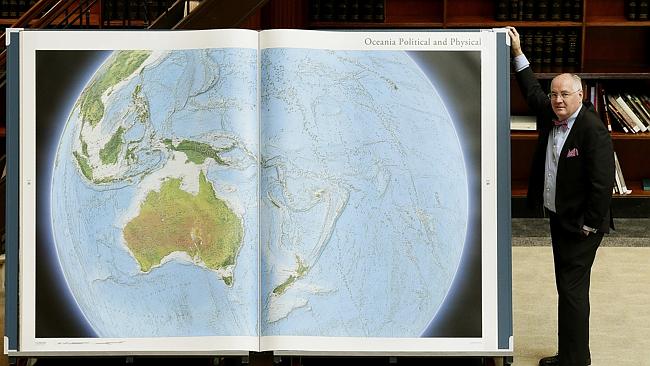
A Sydney publisher has put Australia (and the rest of the world) on the map after bringing out the world’s largest atlas. The happily-named Gordon Cheers first dreamed up the atlas 25 years ago, after seeing the huge Klencke Atlas at the British Library, presented to King Charles II in 1660.

The Earth Platinum atlas weighs 150 kg, is 1.8 metres tall and 2.7 metres across when it is open; it is 128 pages long, and each page needs two people to turn it. There are 61 pages of maps compiled by a team of 88 cartographers, showing maps of the continents and oceans, and very detailed regional maps.

As well as a double-page layout of the world’s flags, there are 27 photographic image of famous locations. One of them also broke the record for the world’s largest image in a book – it’s a picture of the Shanghai skyline made from over 12 000 photos. Last year the Earth Platinum atlas was recognised by the International Map Industry Association, and it has also entered the Guinness Book of World Records.

Only 31 copies of the limited edition atlas were produced, each one costing $100 000. One copy belongs to the British Library, who plans to exhibit it for six days each year. Officially launched on June 26, the only copy of Earth Platinum in Australia can be seen at the State Library of New South Wales until July 19.

Name Information
In Greek mythology, Atlas was one of the Titans, the ancient gods who preceded the Olympians, and who were the children and grandchildren of the earth goddess Gaia, and the sky god Uranus. The younger generation of gods, led by Zeus, waged war against their elders, and eventually prevailed, gaining dominion over the world.

Atlas was one of the leaders of the Titans during the war, and was given a special punishment – for all eternity, he was condemned to stand at the western edge of the earth (Gaia) and hold up the heavens (Uranus) on his shoulders, so that the twain should never meet.

Once the sky was able to lie upon the earth each night and mate with her, and from these couplings were born the Titans: now Zeus demanded that Atlas keep them separated forever, so that they could conceive no further gods. In other words, Atlas was to be used as a contraceptive device for deities.

Another tale tells of a giant named Atlas who tried to drive away the hero Perseus, fearing that he would steal the golden apples from Atlas’ garden. For this he was turned to stone by the head of the Medusa, becoming the Atlas Mountains in northern Africa.

This contradicts another story, where the hero Heracles had to fetch the golden apples from Hera’s garden, which was tended by Atlas’ daughters, the nymphs called the Hesperides. Heracles asked Atlas to fetch him the apples, offering to hold the sky up while he ran the errand. Atlas tried to trick Heracles into taking on the job permanently, but Heracles asked Atlas if he could just hold up the sky for a few minutes while he arranged his cloak as padding for his shoulders. Once Atlas took the heavens again, Heracles grabbed the golden apples and hoofed it, leaving Atlas holding the baby.

There is a nicer ending to the story, where Heracles built the Pillars of Hercules, the peaks flanking the Strait of Gibraltar near Spain; one of the pillars is the Rock of Gibraltar. Heracles told Atlas that from now on, the Pillars would hold up the heavens, liberating Atlas from his burdensome task.

It is not certain what the name Atlas means. The Roman poet Virgil translated it as related to “enduring”, possibly because he knew that a local name for the Atlas Mountains was Douris. Etymologists tend to interpret it as meaning “uphold, support”, although the name may actually be pre-Greek. The name of the Atlas Mountains is thought to be derived from a Berber word simply meaning “mountain”.

The Atlantic Ocean is named after Atlas, because it was seen as the western edge of the world. The mythical doomed Atlantis, vaguely located beyond the Pillars of Hercules in the Atlantic Ocean, means “island of Atlas”.

Plato says that the first king of Atlantis was named Atlas (not the Titan, but a son of Poseidon), and some believe that he based him on a legendary North African king named Atlas, a skilled astronomer and inventor of the first celestial globe, which mapped the constellations. The connection with North Africa and the heavens suggests the legendary king was inspired by the Titan.

It was 16th century geographer and cartographer Gerardus Mercator who first used the word atlas to mean a collection of maps, dedicating his own atlas to honour King Atlas, the legendary African astronomer. However, he conflated the king with the Titan Atlas, and even before that it had become traditional to show Atlas holding up the celestial spehere on early maps. Because of the connection with maps, we sometimes think of Atlas as holding up a globe of the world, although it is a puzzle how Atlas could stand on the earth while holding up the world.

Atlas has further connections to the heavens, because it is a star system in the constellation of the Pleiades, which is often called the Seven Sisters. The Titan Atlas was the father of seven sea-nymphs, and after he was sent off to carry the heavens, there was nobody around to take care of his daughters. The girls were pursued by the hunter Orion, so Zeus first turned them into doves, and then into stars so their father might see them in the sky and be comforted.

Another story is that the sisters committed suicide in despair at their father’s fate, and were immortalised as stars. Because astronomy places Atlas in the constellation as well, it seems he truly was liberated by Heracles, and can now be with his daughters for all time, protecting them from Orion, who you may still see pursuing the sisters across the night sky.

One of Saturn’s moons is named Atlas, because it appears to hold up the rings of Saturn, as if carrying them on its shoulders. It was decided that the major moons of Saturn would be given the names of Titans, as Saturn is the Roman name for Cronos, the head of the Titans. The name Atlas has also been given to one of the craters on our own moon (it’s right near Hercules).

Atlas has been used as a personal name since the 18th century, and became more common in the 19th century, especially in the United States. There are quite a few Atlases in Australian records, both male and female, and used as a first and middle name fairly equally.

Atlas made a couple of appearances on the US Top 1000 in the 19th century, and began charting again in 2013; it is currently #646 and rising. Actress Anne Heche welcomed a son Atlas in 2009, which seems to have increased interest in the name. In 2013, 12 baby boys were named Atlas in the UK, the name rising steeply since 2011. There is evidence that the name Atlas is growing in popularity in Australia too, although like the UK, still in rare use.

Atlas is a powerful, indeed a Titanic name, reminding us of famous strongman Charles Atlas. It suggests the brawn to hold up the heavens, and the fortitude to carry a load on his shoulders without complaining. However, not only are mythological names on trend, we are more comfortable now bestowing big names on little babies, and giving them something to aspire to.

And Atlas isn’t just a dumb muscle man – he’s a philosopher king who studied the cosmos, and glittering stars in one of the most familiar of our summer constellations. The name Atlas has also been chosen for several comic book and video game characters, giving it a bit of geek chic.

In short, if you are among the growing number of parents who are drawn to Atlas, you will be getting a strong yet simple name with a mountain of history, a world of legend, and an ocean of science behind it. Not to mention one heck of a lot of geography!

POLL RESULTS
Atlas received a decent approval rating of 65%. 17% of people thought it was too closely associated with the book of maps, but 16% saw it as strong and powerful, and another 16% as cool and different.

Famous Names: Jedda and Rosalie

24 Wednesday Jun 2015

Posted by A.O. in Famous Names

≈ 7 Comments

Tags

animal names, Australian Aboriginal names, bird names, celebrity baby names, ethnonyms, European name popularity, famous namesakes, fictional namesakes, flower names, French names, historical records, international name trends, Latin names, locational names, name history, name meaning, name popularity, names from movies, nature names, nicknames, plant names, saints names, screen names, UK name popularity, US name popularity

JEDDA

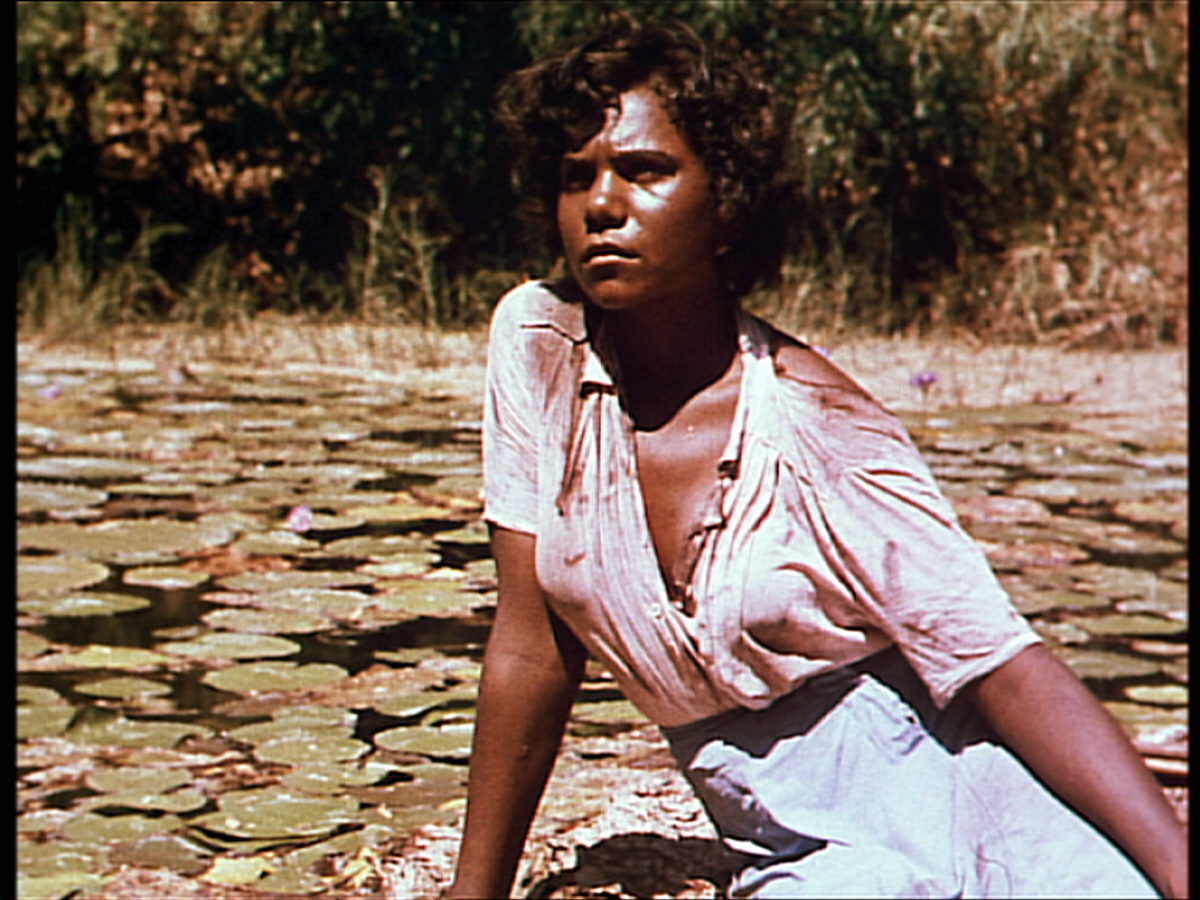
Last month the Australian film Jedda returned to the Cannes film festival, sixty years after it was first shown there in 1955. Jedda was the work of distinguished film-makers Charles and Elsa Chauvel; the first Australian feature film to be shot in colour, and the first to have Aboriginal actors in lead roles.

In the film, Jedda is an Aboriginal girl who is brought up by a white couple on a cattle station after her mother dies. She is raised in European ways, and forbidden to learn about her own culture, kept separated from the other Aborigines on the station.

When she gets older, Jedda finds herself strangely drawn to an Aboriginal man living in the bush, and following the traditional ways of his people. He abducts her, but when they come to his tribal lands, Jedda discovers that their relationship is forbidden by Aboriginal law. It’s a Romeo and Juliet scenario, and as with Shakespeare’s tale, it ends in tragedy for the star-crossed lovers.

The role of Jedda was given to Rosalie Kunoth, an Aboriginal teenager from the Northern Territory, who was studying in Alice Springs. The Chauvels gave her the screen name Ngarla for the film, which they thought looked more “authentic”. Ngarla was the name of Rosalie’s mother’s people – the Ngarla are from the Pilbara region of Western Australia. This was distressing to Rosalie, as it was culturally inappropriate.

The filming was challenging for Rosalie in many ways, and when she attended the premiere (sitting in the white section of a segregated cinema), was horrified by the film’s eroticism. Rosalie was an Anglican nun for ten years; she then left the order, married, and eventually returned to the Northern Territory. Now a respected Aboriginal elder, Rosalie Kunoth-Monks has spent her life working as an Indigenous activist, taking on leadership roles in her community. She has a daughter named Ngarla.

Jedda was a groundbreaking film in Australian cinema history, especially significant as it gained international attention and respect at a time when Australian cinema was practically nonexistent. As well as its other “firsts”, it was the first Australian film to be shown at Cannes, and nominated for the Palme d’Or.

Although it has dated in some ways, it remains a powerful and heartbreaking story. Jedda was created in opposition to the assimilationist policies of the 1950s, and the film is still relevant in light of the Stolen Generations. It helped inspire Indigenous film-maker Tracey Moffatt, whose Night Cries is a re-imagined “what might have been” sequel to Jedda.

JEDDA
In the movie Jedda, Aboriginal servants name the baby Jedda when she arrives, because she “flies in” like a “jedda bird”. Jedda appears to be from the Noongar word djida or jida, meaning “bird” (more specifically a wren), even though Noongar people are from south-west Western Australia, and the film is set in the Northern Territory. In the film, the identification with Jedda as a bird connects her to flight, to freedom and capture, and also to the spirit world.

Australian records show the name Jedda in sporadic use as far back as the 19th century, including by Indigenous Australians. I can only speculate as to where their names might have come from; in the case of Europeans, maybe as a variant of the name Jetta. It is possible that Indigenous women born before the film was made took (or were given) the name Jedda after its release. In addition, I have seen Indigenous women named Djida and Jida.

Jedda is also a plant name, as the jedda bush is native to the Cape York Peninsula region of far north Queensland. It is named after Jedda Creek, which is where it was first found, but I have not been able to discover the origin of the creek’s name – it may even have been named after the film.

Jedda is in use as a personal name for both Indigenous and non-Indigenous Australians, and is a popular name for homes, businesses, and streets. It is often used as a name for animals too, and in particular I have encountered quite a few horses named Jedda. This may be why in the children’s novel, Hating Alison Ashley by Robin Klein, the heroine’s sister Jedda pretends she is a horse. I’ve seen the name given to a boy, and it does have a bit of a unisex vibe, as it shortens to Jed.

Jedda is an Australian name made famous by a classic film, and appealing to both Indigenous and non-Indigenous parents. Although traditionally female, it could even be used for both sexes. It tends to be seen as slightly dated, yet it has never been common and is similar to Gemma, Jenna, Jed, and Jett.

ROSALIE
French form of the Latin name Rosalia, derived from rosa, meaning “rose”. Saint Rosalia was a medieval hermit who tradition says was a Norman noblewoman led by angels to live in a cave in Sicily. The saint became known in 1624, when she is supposed to have miraculously cured a plague. The saint’s name Rosalie was given to a young nun named Jeanne-Marie Rendu, and she became Blessed Sister Rosalie, who performed a lifetime of charity in the slums of 19th century Paris, and was mourned by the city when she died.

The name Rosalie came into common use in the 18th century, and was especially used in France, Germany, and Central Europe. It only became common in the English-speaking world in the 19th century, possibly because of the French courtesan Rosalie Duthé, who became the mistress of French kings and aristocrats. As a young woman she moved to London to escape the French Revolution, and gained the immensely rich George Wyndham, 3rd Earl of Egremont, as a lover. Beautiful and golden-tressed, Rosalie was apparently not overburdened with brains, and it is theorised that she is the originator of the “dumb blonde” stereotype.

The name Rosalie first joined the charts in the 1910s, debuting at #268. The name peaked in the 1940s at #141, probably because of the 1937 movie Rosalie, starring Eleanor Powell as a princess in disguise: Cole Porter’s song Rosalie is from the movie. Rosalie dropped off the charts in the early 2000s, but returned in 2009 at #519, the year after the first Twilight film was released, with Nikki Reed in the role of Rosalie Hale. Rosalie is described as being “the most beautiful person in the world”, which must have been a drawcard. The name Rosalie is apparently now in rare use again.

In the US, Rosalie returned to the Top 1000 in 2009, under the influence of Twilight. It is now #310 and rising. In the UK, the name Rosalie suddenly began rising steeply in 2009, and is now #394. Rosalie is also in the 300s in France, and is a popular name in The Netherlands, at #79.

Rosalie is a pretty, charming, European-style name with that touch of fairy-tale magic which has seen it chosen in films for a student princess and a vampire beauty. As Rose- names are becoming increasingly fashionable, it is a bit surprising that Australia seems to to be lagging behind the international trends – although it might just be that our data-collection is lagging.

I have seen quite a few birth notices for baby girls named Rosalee, Rosaleigh, Rosa-Lee and so on, and wonder if the spelling is an issue for some parents. Perhaps they worry that Rosalie will be said with the end rhyming with Lorelei, or just don’t like the idea of a name that ends in -lie. This makes me wonder if there are more Rosalies out there than meets the eye. A fantastic underused traditional choice, in any case.

POLL RESULTS
Jedda received an approval rating of 53%. 39% of people weren’t keen on the name Jedda, while 16% loved it.

Rosalie received a very good approval rating of 76%, making it one of the highest-rated names of 2015. 39% of people loved the name Rosalie, and only 4% thought it was a terrible name.


Uncommon Boys Names from the Birth Announcements of 2011-12

21 Sunday Jun 2015

Posted by A.O. in Name Themes and Lists, Requested Names

≈ 4 Comments

Tags

aliases, aristocratic surnames, Australian slang terms, Biblical names, english names, epithets and titles, famous namesakes, fictional namesakes, food names, fruit names, germanic names, hebrew names, honouring, imperial titles, Irish names, Italian names, Latin names, locational names, mythological names, name history, name meanings, name popularity, name trends, names from movies, names of bands, Old Norse names, plant names, Polish names, rare names, royal names, saints names, Scottish names, Slavic names, surname names, unisex names, US name popularity, US name trends, weaponry terms

Billy-Slater-5941649Augustus
The Emperor Augustus was the founder of the Roman Empire and its first emperor; the month of August was named after him. His reign initiated the Pax Romana, a relatively conflict-free period which lasted for more than two centuries. Born Gaius Octavius, he was granted the title of Imperator Caesar Divi Filius Augustus, meaning “Military Commander and Caesar, the Son of God, the Venerable”, with the Augustus part meaning “venerable”, from the Latin augeo, meaning “increase, growth, honour”. Before it became an imperial title, Augustus was an epithet used to signal something that was sacred, and the title was adopted by the Holy Roman Emperors in the Middle Ages. Augustus has been a favourite name amongst European royalty, and traditionally used by the Hanoverians in the British monarchy. Hazel has shot into the Top 100 since The Fault in Our Stars, and I wonder if it could also boost regal Augustus, as this is the name of Hazel’s love interest? The name is already rising in the US, so maybe. Gus is a popular short form, although I have seen a lot of interest in Augie because of the Australian rock band Augie March, named for a character in a Saul Bellow novel.

Brasco
Scottish surname referring to someone from the village of Brisco in Cumbria, once part of the Strathclyde kingdom of Scotland. The place name comes from the Old Norse for “wood of the Britons”. Also an extremely rare Italian surname which is probably from the Germanic brakia, meaning “struggle”, used as a nickname. The name is well known because of the undercover alias Donnie Brasco used by FBI agent Joseph Pistone during the 1970s: his autobiography inspired the movie Donnie Brasco, with Johnny Depp in the title role. It has an unfortunate meaning in Australia, as brasco is slang for “toilet”, from the manufacturer Brass Co. Brasco is an extremely cool-sounding name, and as for the toilet association – better tell everyone to just forget about it!

Casimir
Latinised form of the Polish name Kazimierz, from the Slavic for “to destroy fame”, referring to someone who annihilates their opponent in battle so completely that they lose all honour. Four medieval rulers of Poland have been named Casimir, and St Casimir, the son of Casimir IV, is the patron saint of Poland and Lithuania. Kazimierz is a reasonably popular name in Poland, but Casimir is rare around the world, even in countries with high immigration from Poland. However, this is a handsome heritage choice, not so different from fashionable Casper and hip Caspian, with Caz as the obvious nickname, although Cass and even Cash seem possible.

Fintan
Irish name thought to mean “white fire”. In Irish mythology, Fintan mac Bóchra was a seer who accompanied Noah’s granddaughter to Ireland before the Great Flood. When the floodwaters hit, his family were all drowned, but Fintan managed to survive under the sea in the form of a salmon for a year; he also lived as an eagle and a hawk before returning to human form. He lived for more than 5000 years after the Deluge, becoming the repository of all wisdom. Once Christianity arrived in Ireland, Fintan decided to leave the world of mortals with a magical hawk who was born at the same time as he. There are a staggering 74 Irish saints named Fintan, which shows what a common name it must have been, and it is still in regular use in Ireland. The popular boy’s name Finn, and all the similar names, such as Finlay and Finnian, make this seem on trend.

Gage
English surname which can be related to the word gauge, meaning “measure”, and would have started as an occupational surname for someone who checked weights and measures. It can also be an occupational surname for a moneylender, as gage meant “pledge” – that which the person would put up as surety against the money loaned (as when objects are pawned). Its related to the words wage and mortgage, and also to the word engage: when you get engaged to someone, you make a pledge to them. Gage is an aristocratic surname; Sir William Gage first introduced the plum-like greengage into England in the 18th century, which is where its English name comes from. Gage has been used as a personal name since the 18th century, originating in the west country. It first joined the US charts in 1989, the same year that Stephen King’s Pet Sematary was made into a horror film; the protagonist’s toddler son is named Gage, played by Miko Hughes (from Full House). Although Gage takes on a particularly macabre role in the story, the cuteness of little blond Miko must have had an effect. Still in fairly common use in the US, Gage is a rare name in Australia and the UK – its similarity to the word gauge, used in the context of guns, makes this an on-trend weaponry name.

Loki
In Norse mythology, Loki is a mysterious figure, sometimes depicted as a trickster or god of deceit. Other times he is a troublemaker, or commits outright evil. Although said to be one of the giant folk, he is sometimes numbered amongst the gods, and seems to have been on friendly terms with them at some point. However, after many acts of mischief and malice, they punished him by having him bound by the entrails of one of his sons, with a serpent dripping venom on him, making him writhe in pain, which causes earthquakes. It is foretold that at the end of the world, he will slip free from his bonds and fight against the gods on the side of the giants, and be slain. Fittingly for such an enigmatic character, the meaning of Loki isn’t known. However, he is also called Lopt, meaning “air”, suggesting he was associated with that element. In Scandinavian folklore, the phenomenon where the air shimmers on a hot day is said to be caused by Loki. The name has been used more often since the Marvel comics world was brought to life on film, with Loki as a super-villain played by Tom Hiddleston. Hiddleston portrays a complex, vulnerable, intelligent character whose charisma and style has won him legions of fans. Not only a cute-sounding mischievous name, Loki is quite similar to popular names like Luca and Lachlan, so it doesn’t seem strange.

Nazareth
Biblical place name; in the New Testament it is described as the home town of Jesus and his family. It’s also a title, because Jesus is often called Jesus of Nazareth. In early times, Christians were called Nazarenes (“people of Nazareth”) by non-Christians, and the modern Jewish word for Christians is notzrim, while in the Quran Christians are known as naṣārā – all coming from the name Nazareth. Archaeologists think that Nazareth would have been a small, insignificant village at the time of Jesus; today it is a city in northern Israel with most of its citizens Arabs, both Muslim and Christian. A place of Christian pilgrimage, it also has several sites of Islamic significance. The meaning of the city’s name is uncertain – it may come from the Hebrew for “branch”, or “watch, guard, keep”, implying it was originally on a hill, or protected in a secluded spot. Nazareth has been used as a personal name since at least the 16th century, and is of Puritan origin. Originally used mostly for girls, overall it has been given fairly evenly to both sexes, and has never been very common. An unusual Biblical name which is overtly Christian.

Roland
Derived from the Germanic name Hruodland, translated as “famous land”, or perhaps “fame of his country”. Roland was an 8th century Frankish military leader under Charlemagne, responsible for defending France against the Bretons. It is recorded that he was killed at the Battle of Roncevaux Pass in northern Spain by a group of rebel Basques. He became a major figure in medieval legend, and his death an epic tale of a Christian hero slain in battle against Muslims (the real Roland was killed by Christians, although Charlemagne was engaged in a war against Islamic forces in Spain). The 11th century La Chanson de Roland (The Song of Roland) describes Roland fighting a rearguard action against thousands of Muslims with a magical sword given to Charlemagne by an angel. Against the sensible advice of his best friend Oliver, Roland proudly refuses to call for reinforcements until it is too late, then dies a martyr’s death before angels take his soul to Paradise. In an English fairy tale based on a Scottish ballad, Childe Rowland is a prince who rescues his sister from the Dark Tower of the King of Elfland; the story is mentioned in Shakespeare’s King Lear. It helped inspire the poem Childe Roland to the Dark Tower Came by Robert Browning, and in turn this informed Stephen King’s fantasy series, The Dark Tower, with Roland Deschain as the flawed hero. Roland was #107 in the 1900s and continued falling until it left the charts altogether in the 1990s. This is a traditional underused name which is heroic and noble.

Slater
English surname referring to someone who worked with slate, especially in laying slate roof tiles. The surname comes from Derbyshire, and although it is of Norman-French origin, possibly existed before the Conquest. It has been used as a personal name since the 17th century, and from the beginning was associated with Derbyshire and the Midlands, which has a long history as a centre for slate quarrying. An unfortunate association in Australia is that slater is another word for a wood louse. The surname has several sporting namesakes, including former cricketer and media personality Michael Slater, rugby league star Billy Slater, and American surfing champion Kelly Slater. That probably helps explain use of the name Slater at present, and it seems like a tougher, edgier version of Tyler.

Willoughby
English surname after a village in Lincolnshire, meaning “homestead by the willows, settlement by the willows”. Willoughby’s main claim to fame is that it was the birthplace of John Smith, who was one of the leaders of the Virginia Colony in early colonial America, and connected with the Native American girl known as Pocahontas. Willoughby is an aristocratic surname connected with several baronies; the family trace their lineage to a Norman knight who was granted land in Lincolnshire by William the Conqueror. Since the 17th century, the Barony of Willoughby de Eresby has been associated with the office of the Lord Great Chamberlain, who has charge of the royal apartments and hall at Westminster Palace, and plays a major role at coronations: the current baroness was one of the maids of honour at Queen Elizabeth’s coronation. Willoughby is also a suburb of Sydney on the Lower North Shore, first settled as farmland under Captain Arthur Phillip. Some people believe Surveyor-General Sir Thomas Mitchell chose the suburb’s name in honour of Sir James Willoughby Gordon, whom he had served under during the Peninsular War. In use as a personal name since the 17th century, Willoughby is a hip boy’s name which seems like a spin on popular William, while also boosted by looking like a masculine form of Willow. Will is the obvious nickname.

Thank you to Leah for suggesting the name Willoughby be featured on Waltzing More Than Matilda.

POLL RESULTS
People’s favourite names were Augustus, Willoughby and Fintan, and their least favourite were Nazareth, Brasco and Slater.

(Photo of Billy Slater from the Herald Sun)

Famous Names: Guy and Vienna

27 Wednesday May 2015

Posted by A.O. in Famous Names

≈ 1 Comment

Tags

aristocratic names, Celtic names, famous namesakes, fictional namesakes, French names, germanic names, Italian names, Latin names, locational names, name history, name meaning, name popularity, Norman-French names, saints names, surnames names, UK name popularity, US name popularity

AUSTRIA EUROVISION SONG CONTEST 2015

This year was the 60th anniversary of Eurovision, hosted by last year’s winner, Austria, and the finals held in Vienna on May 23. The contest was won by Sweden, with heavily favourited Måns Zelmerlöw’s Heroes storming to victory, the sixth time Sweden has been the winner. Austria was the wooden spooner this time, with not a single point – the first time a host country has received zero points. (Seriously what happened, the song wasn’t that bad?).

The big excitement for Australia was that we were finally allowed to compete, chosen as a wildcard entrant, and being given an automatic slot in the final (if you’re wondering how you receive this honour, you pay for it, with SBS stumping up the costs). We sent pop star (and twice-time celebrity dad) Guy Sebastian, performing Tonight Again, written especially for Eurovision. We came a creditable fifth, and Tonight Again is tearing up the iTunes chart in Europe, predicted to be one of the biggest hits of the northern summer.

In fact, Australia impressed enough that they haven’t ruled out asking us back next year. The theme of Eurovision 2015 was “Building Bridges”, and maybe they can build a bridge all the way to Oz.

GUY
Guy is the Norman-French form of the Germanic name Wido, a short form of names such as Witold and Widukind, based on the word witu, meaning “wood”. It was introduced to England by the Normans, and was a fairly popular name. There are a couple of saints named Guy, and the name was also used to Anglicise the name of Saint Vitus, whose Latin name means “life”.

Another influence may have been the legendary medieval hero Guy of Warwick. In the story, Guy falls in love with a fair lady named Felice, who is much posher than him. In order to win her, he must prove his worth by battling dragons, giants, huge wild boars, and a particularly savage cow. After marrying Felice, he soon feels remorseful for his acts of violence, and goes on pilgrimage to the Holy Land, eventually ending his long life as a hermit in a cave. It all sounds a bit pointless to us cynical moderns, but Guy was greatly admired, and the name Guy became traditional in the Beauchamp family, the earls of Warwick.

The name had already become relatively uncommon when it was chosen for Guy Fawkes in the 16th century, and it is conjectured that the name was slightly more popular in Yorkshire because of a famous local judge named Sir Guy Fairfax (records show Guy was still getting some use in Warwick, because of the legendary hero, and was a particular favourite in Gloucestershire, where there was a noble family named Guy – whose surname came, not from the personal name, but from the French place name Guise).

Guy Fawkes is infamous for his role in the Gunpowder Plot, where a small group of Catholics planned to assassinate the Protestant King James I and his government by blowing up Parliament House with gunpoweder. They would then kidnap King James’ nine-year-old daughter, Princess Elizabeth, and place her on the throne as a Catholic monarch (Elizabeth Stuart was a Protestant, but the conspirators planned to raise her as a Catholic and marry her to a Catholic when she was old enough).

It was an outrageous plan, fortunately foiled by the Plotters themselves, when they sent out letters to Catholic parliamentarians, telling them to stay away lest they get blown sky high. The letters were thought to be a hoax, but the king ordered the cellars under the parliament to be searched just in case, and Guy Fawkes was discovered there shortly after midnight on November 5 in 1605, along with enough gunpowder to reduce the House of Lords to rubble, and a fuse ready for lighting.

At first Fawkes was steadfast in his refusal to name his co-conspirators, or to reveal his identity, earning the king’s admiration. However he didn’t admire him enough not to have him tortured, and after several days of it Fawkes was eventually broken. The Plotters were all found guilty of high treason and sentenced to be hung, drawn, and quartered. Fawkes asked forgiveness of the king and the state before breaking his neck on the noose before he could be hung.

The first Guy Fawkes Night was held on November 5, when the people were encouraged to light bonfires to celebrate the king’s escape from assassination, and it went swimmingly enough that it was officially designated a day of thanksgiving until the mid 19th century. Bonfires were later supplemented by fireworks, and the custom was to burn an effigy (often of the pope). In modern times, effigies have included unpopular public figures, such as Margaret Thatcher, but the classic “guy” is of Guy Fawkes himself.

You would think that would-be domestic terrorist Guy Fawkes would have doomed the name Guy for good and all, but in fact the name became more popular after his death. It received a boost from William Harrison Ainsworth’s popular 1841 historical novel Guy Fawkes, which showed Fawkes in a sympathetic light, and urged toleration of faith at a time of anti-Catholic sentiment.

After this, Guy Fawkes often appeared as an action hero in pulp fiction, and the Fawkes mask has become a symbol of protest against tyranny, used by the Occupy movement, Anonymous, and WikiLeaks, amongst others. In Ray Bradbury’s Fahrenheit 451, the protagonist is named Guy, a state book-burner who eventually rebels. In the Harry Potter series, Fawkes was a phoenix, the pet of Dumbledore, and extremely loyal; the Order of the Phoenix is a secret organisation headed by Dumbledore intended to fight the tyrannical reign of Voldemort.

Guy’s name has entered the English language – originally a bizarrely-dressed person was called a guy, after the effigies on Guy Fawkes Day, dressed in old clothes. Now a guy just means any man, a bloke, a dude, a feller. More generally, it can just mean a person, because it’s possible to address a group of people of either or both genders as “you guys”.

The name Guy was #201 in the 1900s, and left the charts in the 1920s, not returning until the 1940s, at #224; perhaps British World War II hero Guy Gibson, of “dam busters” fame, was a help. Guy peaked in the 1970s at #113, and then steadily fell. It hasn’t charted since the late 2000s. Guy has similarly fallen out of fashion in the UK and US; it was #560 in England/Wales in 2013, while last year 156 boys were named Guy in the US.

Guy is a handsome name, but the word guy to mean a man or a person has not been a help to its dwindling use. However, this is an underused traditional name, connected with heroes and antiheroes alike, and has a rebellious, even bad boy, link. Give your son this name, and he might just consider himself the luckiest Guy in the world.

VIENNA
Vienna is the capital of Austria, and one of the great cities of Europe. Vienna is called The City of Music, for many great composers have lived and worked here, including Mozart, Haydn, Beethoven, Schubert, Brahms, and Mahler. It is also called The City of Dreams, as the home of pioneering psychoanalyst Sigmund Freud. A beautiful baroque city and major cultural centre, it has been ranked as the city with the world’s best quality of life.

The name English-speakers use for the city is Vienna, the Italian form of the official German name Wien. As the site of Vienna was settled by Celts, it is thought to come from the Celtic root windo, meaning “white, fair” (the basis for the Irish Fionn and the Welsh Gwyn). Another theory is that it comes from the Celtic Vedunia, meaning “forest stream” – the stream would presumably be the River Wien which runs through Vienna. Others believe that it comes from the Roman settlement, fortified in 15 BC and given the Celtic name Vindobona, which might mean something like “white land, fair land”.

The name Vienna must have been in some use in the Middle Ages, for St Francis of Paola’s mother was named Vienna da Fuscaldo. It’s been in use as an English name since the 18th century, and can be found in Italy at the same time, probably because of the saintly connection. Modern namesakes include Joan Crawford’s gutsy saloon-keeper character in the 1950s western, Johnny Guitar, and American indie singer-songwriter Vienna Teng (real name Cynthia Shih).

Vienna is around the 600s in Australia. In 2013, Vienna ranked #882 in England/Wales, while in the US, 253 girls were named Vienna last year – not too far removed from the Top 1000.

While Vienna is by no means common, there’s a feeling that it is on its way up – and you can see why. Pretty and elegant, this is a modern-sounding multicultural name that actually has a long history. Fitting in with the trend for V names, it sounds like an updated version of Sienna, and seems like a choice that might be widely admired. Could Eurovision give it a boost?

POLL RESULTS
Guy received an approval rating of 42%. 47% of people weren’t keen on the name Guy, while 15% loved it.

Vienna received a slightly higher approval rating of 48%. 39% of people weren’t keen on the name Vienna, while 13% loved it.

(Photo of Guy Sebastian at Eurovision from SBS)

Waltzing With … Ignatius

24 Sunday May 2015

Posted by A.O. in Waltzing with ...

≈ 3 Comments

Tags

celebrity baby names, famous namesakes, name history, name meaning, name popularity, nicknames, Roman names, saints names, Spanish names, UK name popularity, US name popularity

BC-Flame-Photo

Today is Pentecost, which marks the end of the Easter season – its name means “the fiftieth”, because it is 50 days after Easter Sunday. It is the Greek name for the Hebrew festival of Shavuot, or the Feast of Weeks, a harvest festival which also commemorates the traditional anniversary of Moses receiving the Ten Commandments from God. In this case, the name comes from being 50 days after Passover.

Pentecost became a key date in Christianity because of an event related in the New Testament. The Acts of the Apostles states that about 120 of the disciples of Jesus were gathered together to celebrate the Feast of Weeks, 50 days after the Resurrection of Christ, and ten days after he ascended into Heaven. By tradition, it was the large upper room in which the Last Supper took place, and which the disciples continued to use as a place for meeting and prayer.

The Bible records that suddenly there came a noise like a mighty wind which filled the entire house, and upon each of them sat something which looked like a tongue of fire. They were all filled with the Holy Spirit, and were able to speak in different languages. This drew a large crowd, to whom the Apostles preached, and which was so impressed by the demonstration that about three thousand people were baptised, forming the beginnings of the Christian church.

A major feast day from the very earliest times, Pentecost is celebrated as a joyous occasion, and can be seen as the “birthday” of the church. The colour red is used to symbolise the Holy Spirit descending as fire, and there may be red banners, flowers, candles, balloons, and other decorations. Doves are also a prominent motif in reference to the Holy Spirit. Pentecost is a popular day to be baptised or confirmed, and as it occurs during spring in the northern hemisphere, this affirmation of youth and new life seems very appropriate.

In Britain, Pentecost became known as Whitsun, perhaps because of the white clothes worn by those preparing for baptism or confirmation (another interpretation is that it is from the “wit” given to the disciples by the Holy Spirit). In England, Whitsun was historically a major holiday, incorporating some of the traditions of the pagan summer festival, Beltane; there might be parades, music and singing, morris dancing, sports and games, and village fairs. The time around Pentecost is still often celebrated by pagans.

In the southern hemisphere, Pentecost arrives during late autumn or early winter, but this ties in quite well with the original idea of a harvest festival, as there are often food and fresh produce fairs at this time of year. Autumn is also the breeding season for several species of native doves, giving another connection to the day. Bright red autumn leaves and red poinsettia flowers can be used as decorations, and to feel a mighty wind, there are freezing gusts in some areas, freshened with snow!

So we say farewell to Easter, which ends with a bang, not a whimper, and look forward to the cold days and nights of winter.

Name Information
Ignatius is derived from the Roman family Egnatius, of unknown meaning, and presumed to be of Etruscan origin, although the Egnatia were Samnites from southern Italy, so may be Oscan instead. From early on, folk etymology connected it to the Latin word ignis, meaning “fire”, which makes it a good choice to cover for Pentecost.

There were quite a number of prominent Romans with the name Egnatius, and it rather amuses me that the first ever fire fighting service was organised in ancient Rome by Egnatius Rufus – Rufus means “red”, of course. Publius Licinius Egnatius Gallienus was the Emperor Gallienus, the son of the Emperor Valerian. A father and son of the Egnatii were killed with a single blow as enemies of the state, and died locked together, each trying to shield the other from harm.

There are a number of saints named Ignatius, with the earliest being Ignatius of Antioch, a first century bishop believed to be a disciple of St John the Apostle. He was one of the church’s earliest theologians, and is important to Catholicism, as he was the first known writer to use to word catholic, meaning, “universal” to describe Christianity (although from his phrasing, it would seem to have been a term already widely in use).

One of the most famous of saints of this name is Ignatius of Loyola, a 16th century Spanish knight who was converted while recovering from battle. He founded the Society of Jesus (the Jesuits), and was a church leader during the Counter-Reformation. Known for his zeal and complete devotion to the church, he was brought before the Inquisition a couple of times due to concerns he might be overdoing it (being too religious was one of the many things the Inquisition tried to stamp out). He wrote a book of simple prayers and meditations that is still used for spiritual retreats by both Catholics and non-Catholics.

Ignatius of Loyola is the main influence on the use of the name Ignatius, which is somewhat ironic, as his name wasn’t really Ignatius. He was named Íñigo, a Spanish name recently covered on the blog meaning “my dear one”, but used the Roman name Ignatius instead as he thought it would be more widely understood. Writers on Ignatius of Loyola often connect the “fiery” meaning of his name with the saint’s “fiery” zeal, overlooking the fact that Ignatius wasn’t his real name, and “fiery” isn’t the real meaning of Ignatius.

Ignatius (said ig-NAY-shus) has been used as an English name since at least the 16th century, in honour of St Ignatius of Loyola. A few Australian examples are Depression-era politician Ignatius Boyle, headmaster Ignatius O’Connor, rugby player Ignatius “Iggy” O’Donnell, and former pop singer and events director Ignatius Jones (born Juan Ignacio Trápaga, the brother of childrens’ presenter Monica Trapaga). Actress Cate Blanchett has a son named Ignatius.

Ignatius is around the 400s and is more popular in Australia than in the UK or the US, allowing for differences in population size. In 2013, 4 boys were named Ignatius in England/Wales, while last year 40 boys were given the name Ignatius in the US.

Ignatius isn’t a common name, but isn’t rare enough to seem strange or outrageous either. Australia’s strong Irish heritage gives the name plenty of recognition, and being chosen as a celebrity baby name certainly hasn’t hurt. Once seen as a Catholic name, Ignatius is beginning to be appreciated by a wider variety of parents, just as happened with Xavier, and now makes a rather hip choice. Iggy is the obvious nickname, but Nate and Ace are also possibilities.

POLL RESULT
Ignatius received a very good approval rating of 79%, making it one of the highest-rated names of 2015. 35% of people thought the name Ignatius was okay, and only 5% hated it.

Famous Name: Diana

20 Wednesday May 2015

Posted by A.O. in Famous Names

≈ Comments Off on Famous Name: Diana

Tags

aristocratic names, Biblical names, European name popularity, famous namesakes, honouring, Latin names, modern classics, mythological names, name history, name meaning, name popularity, rare names, Roman names, royal names, Shakespearean names, UK name popularity, US name popularity

168

Famous Namesake
The birth of Princess Charlotte Elizabeth Diana has many people wondering if Charlotte can get to #1 – it would be an easy feat in Australia, as its just been deposed by Olivia, and could regain its throne by going up just one spot in the rankings. It feels as if I am already seeing more Charlottes in birth notices, so who knows!

The princess’ name also invites the question of whether her middle name, Diana, may become more popular as either a first or a middle name. It is well known that the name Diana honours Princess Charlotte’s grandmother Diana, Princess of Wales – Lady Diana Spencer before her marriage, and dubbed “Lady Di” by the press.

Famous for her beauty and charisma, Diana gained respect for her charity work, and sympathy for her unhappy marriage and divorce. Her life, lived under intense scrutiny, ended shockingly in a car crash, leading to an outpouring of public grief. Years later, her memory is still fresh, and she continues to be a subject of fascination for the media.

Diana’s name is a traditional one in the Spencer family, and she was named after a distant 18th century ancestor, who was also Lady Diana Spencer. Tall, fair, charismatic, and attractive, it was hoped this earlier Lady Diana would marry the Prince of Wales, Frederick, the son of King George II. These plans came to naught, and she married a future Duke of Bedford instead.

The parallels between these two namesakes are striking: both grew up at the stately home of Althorp, both socialised with the royal family, both were intended brides of a Prince of Wales, and both unexpectedly died young – the earlier Lady Diana of TB at 25.

Another Lady Diana Spencer born in the 18th century was known as Lady Di, and a Lady of the Bedchamber to Queen Charlotte. A talented artist, she was most famous for the unhappiness of her first marriage, which was marked by infidelity, and ended in divorce. Days later, she married again, to a celebrated wit who was a great-grandson of King Charles II. It was out of the frying pan and into the fire, as her second husband was evil-tempered, a drug fiend, and extremely filthy in his habits. He died begging her pardon for the life of misery he had given her.

While Princess Charlotte’s first two names connect her equally to her royal and commoner families, her third name is a link to her famous grandmother, not just a style icon and People’s Princess, but a beloved mother still deeply missed by her sons. It’s also a connection to her aristocratic Spencer line. Diana has already been used as a middle name twice to honour Diana, Princess of Wales – for Princess Charlotte, and for Diana’s niece, Charlotte Diana Spencer – and perhaps there will be more family namesakes in the future.

Name Information
In Roman mythology, Diana is the goddess of the hunt, having power over wild animals. Associated with countryside and woodlands, oak groves are sacred to her. She is a goddess of the moon, the twin sister of the sun god Apollo. Diana is also a goddess of women, childbirth and midwifery, although a maiden goddess. She is the Roman equivalent of Artemis.

On the one hand, Diana is inaccessible like the chill light of the moon, ever virgin, dwelling far away on sacred mountains, deep in the woods. On the other, she bestowed divine authority onto kings, with her own priest taking the role of King of the Grove. Women worshipped her when they wished to become pregnant, and during pregnancy, as they prayed to her for an easy delivery. Thus this seemingly cold distant goddess helped the survival of humanity.

Diana was one of the most widely worshipped and ancient of the Roman gods, pre-dating the city, and originating amongst the Latin tribes of the Alban Hills. She was the especial patron of the lower classes, with slaves being able to claim asylum in her temples. Diana is portrayed as young and beautiful, often dressed for the hunt in a short tunic and boots, carrying her bows and arrows, and accompanied by a deer or hunting dogs.

The name Diana is believed to come from the Latin dius, meaning “sky”, from an ancient root meaning “bright sky, daylight”. Related to it are the Latin words deus, meaning “god”, die, meaning “day, daylight”, and diurnal, meaning “day time”. The name is usually translated as “divine, deity”.

The goddess Diana is mentioned in the New Testament, because of Ephesus in present-day Turkey, the location of The Temple of Diana. It was one of the Seven Wonders of the Ancient World, and the man who compiled the list considered the Temple of Diana to be the greatest of them all, outstripping the pyramids of Egypt and the hanging gardens of Babylon in its beauty and brilliance.

In the Acts of the Apostles, the Ephesian craftsmen who earned their living making shrines of the goddess felt their livelihoods threatened by St Paul’s preaching of Christianity, and organised a spirited protest march, shouting the catchy slogan, Great is Diana of the Ephesians! In the short term, the situation by was smoothed over by a city bureaucrat.

In the long term, Christianity didn’t do the worship of Diana any favours, although when the Temple of Diana was eventually destroyed, it was by pagan Goths, not Christians. However, worship of the goddess Diana is alive and well, and still practised in various strains of modern Wicca and witchcraft.

Diana has been a favourite in the arts for centuries, featured in many paintings and sculptures. Referenced numerous times in Shakespeare, she actually appears in both Pericles and All’s Well That Ends Well. Neither has her fame diminished. Her myth was the basis for Wonder Woman, and she is a character in the Sailor Moon series, as well as featuring in several video games.

Diana has been used as an English name since at least the 16th century. It has been something of a favourite amongst the English aristocracy, with a famous example being Lady Diana Cooper (nee Manners). Beautiful, witty, and glamorous, her parents hoped that she would one day marry the Prince of Wales (later Edward VIII) – what is it with Dianas being matched up with Princes of Wales? Instead she married a future ambassador to France. Lady Diana had a glittering career as a socialite, writer, and actress, and was often referenced in Jazz Age literature.

The name Diana first charted in the 1910s, debuting at #301; this was the decade when Lady Diana Cooper first came to prominence as a member a group of aristocrats and intellectuals, and coincides with the publication of Anne of Green Gables, where Diana Barry is Anne’s pretty and loyal best friend. It rose steadily, and joined the Top 100 in the 1930s, peaking the following decade at #59 – the time when Lady Diana Cooper became a celebrated hostess in postwar France.

The name remained stable through the 1950s and ’60s, under the influence of sexy British actresses, Diana Dors and Diana Rigg, but left the Top 100 in the 1970s, and continued falling – Diana, Princess of Wales, did not halt its downward progress. The name had a slight boost in 2009, the year after Diana’s inquest found there was no evidence of foul play in her death, but hasn’t charted since 2011.

Diana is still only #297 in the US, although falling, while in the UK it is #358, and rose in 2013. A popular name in Spain and Poland, it is most popular in Hungary, at #75.

Diana is a beautiful, elegant name, with a history that is divine, noble, and even royal. It seems to have become prematurely dated in Australia, as the name remains in use in other countries, and is popular in Europe. I wonder if the name has become too firmly attached to Diana, Princess of Wales, with her luminous fame and life tragically cut short. Will the baby princess help give Diana a boost, or will it merely underline it as a name reserved for Diana’s family?

POLL RESULTS
Diana received a decent approval rating of 60%. 19% of people thought the name Diana was beautiful and elegant, but 15% believed it was too strongly associated with Diana, Princess of Wales. Nobody thought the name Diana was ugly and frumpy.

Boys Names from the British Royal Family

17 Sunday May 2015

Posted by A.O. in Name Themes and Lists

≈ 4 Comments

Tags

animal names, Basque names, bird names, Castilian names, Disney names, ethnonyms, famous namesakes, fictional namesakes, German names, germanic names, honouring, Italian names, Latin names, Maori names, middle names, mythological names, name history, name meaning, name popularity, name trends, Native American names, New Zealand names, nicknames, popular names, retro names, royal names, saints names, Spanish names, surname names, UK name trends, unisex names, vintage names

850145ee0e54efe11041a453f7acdfec

Christian
Christian Mowatt is the younger brother of Zenouska Mowatt, grandson of Princess Alexandra, and great-great-grandson of King George V; born in 1993, he is 51st in line to the throne. Christian is one of the most common names in the British royal family, especially in the middle. Prince Christian of Schleswig-Holstein, a member of the Danish royal family, was the husband of Princess Helena, the daughter of Queen Victoria. Their son was also called Prince Christian, and he was Queen Victoria’s favourite grandson, a British army officer who fell in the Boer War. Christian is from the Latin name Christianus, meaning “follower of Christ”. It has been used as a personal name since the Middle Ages, and was originally more common for girls amongst English-speakers. It became seen as a boy’s name after John Bunyan’s highly popular The Pilgrim’s Progress (1678), where the hero is a man named Christian. Christian has been a traditional name for Danish kings since the 15th century, and Prince Christian of Denmark, the son of Prince Frederik and Princess Mary, is second in line to the Danish throne. Christian was #178 in the 1900s, and disappeared from the charts the following decade. It returned in the 1950s at #280, perhaps inspired by French fashion designer Christian Dior, or Danish fairy tale writer Hans Christian Anderson, both popular at the time. It rose in the 1960s, and reached the Top 100 in 1971. Its progress has been up and down, and it’s currently #85. It’s a retro name that feels like a modern classic, popular for decades without feeling overused.

Columbus
Columbus Taylor is the eldest son of Lady Helen Taylor, a grandson of Prince Edward, Duke of Kent, and a great-great-grandson of King George V; born in 1994, he is 38th in line to the throne. The name Columbus is best known as the surname of Christopher Columbus, the 15th century Italian explorer and navigator under the patronage of the Spanish monarchy. In his efforts to find a safe passage to Asia by sailing west, he initiated the Spanish colonisation of the New World, leading to lasting European contact with the Americas that changed the world forever. The explorer’s Italian name was Cristoforo Colombo; Colombo is the Italian form of the saint’s name Columba, Latin for “dove”, and used by Christians in reference to the Holy Spirit, often symbolised as a dove. A name with Transatlantic appeal, nearly always given in honour of the explorer, and a more eyebrow-raising form of Callum.

Guelph
Guelph is one of the middle names of Leopold Windsor, the son of Nicholas Windsor, who has been featured on the blog as a royal dad. A grandson of Prince Edward, Duke of Kent, and great-great-grandson of King George V, Leopold was born in 2009, and as a Roman Catholic, is not in the line of succession to the throne. The House of Guelph was a European dynasty which played a major role in the politics of medieval Italy, but whose territories moved towards Germany early on, and was eventually succeeded by the Kingdom of Hanover – thus giving strong ties to the British royal family. The current head of the House of Guelph is Ernest August, Prince of Hanover, a descendant of King George II, and husband of Princess Caroline of Monaco. The House of Guelph was founded by Welf IV, Duke of Bavaria, of Italian and German heritage; his name is a Germanic one meaning “young dog”, and thus the equivalent of the English word whelp. A very noble name – perhaps even too aristocratic for most.

Hubert
Hubert was one of the middle names of George Lascelles, the 7th Earl of Harewood, who was the son of Princess Mary, and grandson of King George V, cousin to Elizabeth II. He passed his middle name down to his son, Mark Hubert Lascelles, born 1964, and not in line to the throne due to being born out of wedlock. Hubert is a Germanic name meaning “bright mind”, and became well known because of St Hubert, an 8th century Bishop of Liege. A French nobleman, he became addicted to hunting after his wife died in childbirth, until he had a vision of a crucifix between the antlers of the stag he was pursuing. Even though this legend was taken from the story of St Eustace, St Hubert is honoured as the patron of ethical hunting, having compassion for animals as God’s creatures. Widely venerated during the Middle Ages, St Hubert’s noble ancestry made him a favourite with chivalric and military orders. Hubert has been used in two Disney films – King Hubert is the father of Sleeping Beauty, while in Brave, Hubert is one of Princess Merida’s three brothers. Hubert was #102 in the 1900s, and had left the charts by the 1940s, so this vintage name may appear dated, although it is rising in the UK, and fits in with Hugh and Hugo.

Inigo
Inigo is one of the middle names of Charles Armstrong-Jones, the son of Viscount Linley, grandson of Princess Margaret, and great-grandson of King George VI; Queen Elizabeth II is his great aunt. Born in 1999, he is 19th in line to the throne, and his middle name is in honour of Inigo Jones, a personal hero of his father. Inigo Jones was a 17th century British architect and stage designer, a royal Surveyor-General, and hugely influential. Some of his many works include the Queen’s House in Greenwich, now used to house the art collection of the National Maritime Museum, the Banqueting House in the Palace of Whitehall, now a museum, and the Queen’s Chapel at St James’ Palace. He also designed Covent Garden square, and undertook repair and remodelling of St Paul’s Cathedral. Inigo is a British form of Íñigo, a Castilian form of the Basque name Eneko, translated as “my little love, my little dear one”. It may go back to Roman times, but from the Middle Ages was traditional amongst Spanish royalty and nobility. Pronounced IN-i-go, this was first used as an English name in Cornwall, but became traditional amongst descendants of Inigo Jones. Those descendants in Australia include meteorologist Inigo Owen Jones, and wealthy grazier Arthur Triggs, whose brother was named Inigo. A sweet yet solid choice, Inigo has been given further dash and a famous catchphrase by Inigo Montoya from The Princess Bride.

Maximilian
Maximilian Lascelles is the son of Henry Lascelles, the great-grandson of Princess Mary, and great-great-grandson of King George V; born in 1991, he is 66th in line to the throne. The name Maximilian is from the Roman name Maxmilianus, derived from Maximus, meaning “greatest”. There are a few saints named Maximilian, with the 3rd century martyr St Maximilian of Tebessa regarded as the first conscientious objector, because he believed that as a Christian, he could not serve in the Roman army. He has been a hero to the anti-war movement ever since. Maximilian I was a 15th century Holy Roman Emperor, named for one of the St Maximilians – probably Germanic missionary and martyr Maximilian of Celeia – and the name has been traditional amongst European monarchy ever since (the tradition that his name was a cross between two Roman emperors is just folklore). Maximilian is around the 400s here, but significantly higher in the UK. Handsome and regal, Maximilian sounds very imposing – but shortens to popular, friendly Max.

Otis
Otis Shard is the son of Lady Emily Shard, and the great-great-grandson of King George V; born in 2011, he is not in the line of succession because his mother was born out of wedlock. Otis is a surname derived from an English form of the medieval Germanic name Ode or Odo, an earlier form of the German name Otto. The surname is very well known in the United States, as the Otises are a prominent family influential in early American politics; aviation pioneer Amelia Earhart was one of their members. Famous musical namesakes include Otis Redding, Otis Rush, Otis Span, rapper Otis Jackson Jr, and Otis Williams, from The Temptations, and another musical connection is the song Otis by Kanye West and Jay-Z, sampling Otis Redding. A rising name in the UK, Otis is around the 300s here, and a very fashionable choice.

Tane
Tane Lewis is the brother of Senna Lewis, and great-great-grandson of King George V; born in 2012, he is 30th in line to the throne. As earlier discussed, Tane’s father is New Zealander Gary Lewis, the only Maori to have married into the British royal family, and Tane has a name to honour his heritage. Tane is the god of trees and birds in Maori mythology, the son of the sky father and the earth mother, who clothed his father in the stars and his mother with vegetation. In some legends, he made the first man, and in others he made the first woman, moulding her from soil so she could be his wife. The word tāne means “man” in Maori, and it is pronounced TAH-neh, although I have met boys in New Zealand and Australia called Tane who say their name TAYN. A strong, simple yet evocative name which is a wonderful heritage choice, fitting in with familiar names such as Tanner, Tate, and Talon.

Tewa
Tewa Lascelles is the brother of Tanit Lascelles, a great-grandson of Princess Mary, and great-great-grandson of King George V; born in 1985, he is 58th in line to the throne. Tewa’s mother was Lori Lee, known as “Shadow”, of Native American descent, and his name was chosen to honour his heritage. The Tewa people are from New Mexico, and the name Tewa comes from a Keres word meaning “moccasins”; it is pronounced TAY-wuh, rather like Taylor with a W instead of an L. Tewa Lascelles, an American citizen, was born in New Mexico, and perhaps the name reflects his birthplace as well. Tewa is in a progressive punk band, following in his family’s musical footsteps, as James Lascelles is a keyboardist with an interest in world music, and grandfather George Lascelles devoted most of his career to opera.

Xan
Xan Windsor, Lord Culloden, is the brother of Lady Cosima Windsor, son of the Earl of Ulster, and great-great-grandson of King George V; born in 2007, he is 26th in line to the throne. Xan is named in honour of his father, Major Alex Ulster, and this snappy short form of Alexander seems very versatile. Fresh and futuristic, Xan could belong to either gender, and is of ambiguous cultural background, making it the perfect choice for the modern age.

POLL RESULTS
People’s favourite names were Otis, Christian and Tane, and their least favourite were Columbus, Tewa and Guelph.

(Picture shows Tane Lewis, accompanied by his mother, Lady Davina Lewis; photo from The Daily Mail)

Girls Names from the British Royal Family

10 Sunday May 2015

Posted by A.O. in Name Themes and Lists

≈ 1 Comment

Tags

Arabic names, British names, celebrity baby names, classic names, created names, epithets and titles, famous namesakes, fictional namesakes, French names, germanic names, Greek names, honouring, Italian names, locational names, middle names, mythological names, name history, name meaning, name popularity, names from songs, nature names, nicknames, Old Irish names, plant names, popular names, royal names, saints names, Scottish names, Shakespearean names, UK name trends, virtue names

1893042-embijoutee

I hope everyone had a very happy Mother’s Day! It’s expected that the new princess will increase the current trend for baby names inspired by royal traditions, so here are some names for girls from the House of Windsor. I’ve focused particularly on the names of some of the younger royals.

Alexandra
Alexandra is one of the most common girls’ names in the British royal family. It was introduced to it by Queen Alexandra, the wife of King Edward VII. A Danish royal, she was extremely popular with the British public, and much admired as a setter of fashion. After her, the name became a favourite to pass down, including to Queen Alexandra’s granddaughter, Lady Alexandra Duff, and her great-granddaughter, Princess Alexandra, the queen’s cousin; Alexandra is one of the queen’s middle names. Alexandra is the feminine form of Alexander, and unlike many other feminisations of masculine names, Alexandra seems to have come first. It was an epithet of the Greek goddess Hera in her role as protector, and can be understood as “she who saves warriors”. St Alexandra was a legendary martyr, and the name is traditional amongst European royalty. Alexandra was #239 in the 1900s, and dropped off the charts in the 1910s and ’20s. Returning in the 1930s, its popularity jumped in the 1950s, and it was Top 100 by the early 1970s. It peaked in 1995 at #14, and is currently #75. A dignified classic with a host of nickname options, including popular Lexi.

Cosima
Lady Cosima Windsor is the daughter of the Earl of Ulster, and a great-granddaughter of King George V; born in 2010, she is 27th in line to the throne. Cosima is the feminine form of the Cosimo, the Italian form of Greek Cosmas, meaning “order” (related to the British name Cosmo). A famous musical namesake is Cosima Wagner, the daughter of Franz Liszt and wife of Richard Wagner. British socialite Countess Cosima von Bülow Pavoncelli has given the name a very fashionable air, and the name has been chosen for their daughters by celebrities Nigella Lawson, Sofia Coppola, and Claudia Schiffer. You may also remember young actress Cosima Littlewood, who played Adele in the mini-series Jane Eyre, while Australians will be reminded of Cosima De Vito, singer and Australian Idol contestant. Elegant and sophisticated, Cosima is an upper-class choice that works well multiculturally.

Eloise
Eloise Taylor is the eldest daughter of Lady Helen Taylor, a granddaughter of Prince Edward, Duke of Kent, and great-granddaughter of King George V; born in 2003, she is 39th in line to the throne. Eloise is the English form of Éloïse, from the Old French Héloïse. It’s thought to be from the Germanic Helewidis, from name elements meaning “healthy, whole”, and “wood, forest”. The name became famous because of Héloïse, a brilliant medieval scholar and feminist, famous for her scandalous affair and secret marriage to her distinguished teacher, Pierre Abélard, who was castrated in punishment. Their tragic romance has captured people’s imaginations for centuries, and it is a tradition for lovers and the lovelorn to leave letters on their reputed grave in Paris. Eloise entered the charts in the 1970s, making #498. It was the same decade that 8-year-old Eloise Worledge was abducted from her home in Melbourne, with the case still unsolved. Eloise rose steeply in the 1990s, when the song Eloise featured at Eurovision, and joined the Top 100 in 2011. One of the fastest risers of 2013, this pretty, stylish name is currently #71 and still rising. I picked this name to be in the Top 10 by 2028.

Imogen
Imogen Lascelles is a daughter of Mark Lascelles, and a great-great-granddaughter of George V; born in 1998, she is not in line to the throne as her father was born out of wedlock. Imogen is a name created by William Shakespeare for his romance Cymbeline: in the play, Imogen is a princess of ancient Britain, and a virtuous wife who is falsely accused of infidelity. The name is a variation of Innogen, which comes from the Old Irish Ingen, meaning “maiden, daughter”; Innogen was a legendary British queen. Modern scholars consider that the substitution of Imogen for Innogen was a misprint, especially as Shakespeare already used the name Innogen in Much Ado About Nothing, so this would be a rare example of a name created from a printing error. Imogen first entered the charts in the 1970s, debuting at #724 for the decade, perhaps inspired by sexy English pin-up and actress Imogen Hassall. The name Imogen rose steeply during the 1990s, and entered the Top 100 in 2001. Currently Imogen is #34 and stable, and was one of the fastest-rising names in New South Wales for 2013. Chic and British with a superior literary heritage – not too shabby for a “made up” name!

Isla
Isla Phillips is the daughter of Mark Phillips, a granddaughter of Princess Anne, and great-granddaughter of Queen Elizabeth; born in 2012, she is 15th in line to the throne. Isla is a Scottish name taken from an archaic spelling of the island of Islay in the Hebrides, which is said IE-luh, not IZ-lay. The island’s name is of unknown origin and meaning. Islay began as a male name in the 18th century, and Isla gradually became seen as a specifically feminine spelling of the name which overtook the male form in the 19th century (Islay is more commonly given to girls now too). Isla first entered in the charts in the 1990s, debuting at #891 for the decade – propelled there by actress Isla Fisher, who was then in popular soap opera Home and Away. The name zoomed up the charts during the 2000s when Fisher became a gossip mag staple as aspiring Hollywood actress and partner of British comedian Sacha Baron Cohen. Isla entered the Top 100 in 2008 at #74 and is currently #13 and rising. I picked this name to be in the Top 5 by 2028.

Ophelia
Ophelia is one of the middle names of Lady Gabriella Windsor, a writer known professionally as Ella Windsor. She is the sister of Lord Frederick Windsor, who has been featured on the blog as a royal dad. Lady Gabriella is the daughter of Prince Michael of Kent, and a great-granddaughter of King George V; born in 1981, she is 45th in line to the throne. Ophelia is well known as the title character’s tragic love interest in William Shakespeare’s Hamlet. Shakespeare did not create the name, but took it from the Italian form Ofelia in Jacopo Sannazaro’s 1504 pastoral romance, Arcadia – Sannazaro was a huge influence on 16th century literature. The name Ophelia looks to be taken from the ancient Greek ophelus, meaning “help”, to suggest “assistant”. Sannazaro may have invented the name, but there are examples of men in ancient Greece with male forms of the name, such as Ophelion, so it seems plausible that the ancient Greeks could have used Ophelia as a female name. Beautiful and elaborate, Ophelia is rising in the UK, and this seems like a very hip alternative to popular Olivia.

Senna
Senna Lewis is the daughter of Lady Davina Lewis; she has received quite a bit of press in the Antipodes, because her father is a New Zealander, the first Maori to marry into the British royal family. Senna is a granddaughter of Prince Richard, Duke of Gloucester, and a great-great-granddaughter of King George V; born in 2010, she is 29th in line to the throne. Senna can be a variant of the Arabic name Sana, meaning “brilliance, radiance, splendour”; it is one of the five daily prayers in Islam. It can also be a nature name after the flowering senna plants, whose name has the same Arabic source and meaning. There are numerous varieties of senna, some of which are grown as ornamental trees and shrubs, but widely familiar as a herbal laxative. The name Senna was used for a minor character in the Twilight series, sparking recent interest in the name, but the name had been used several times previously in science-fiction and fantasy. It’s also associated with the Brazilian Formula 1 champion, Ayrton Senna, often considered the best of all time. Similar to popular Sienna, this unusual botanical name has potential.

Sophia
Sophia is one of the middle names of Lady Amelia Windsor, a daughter of George Windsor, granddaughter of Prince Edward, Duke of Kent, and great-great-granddaughter of King George V; born in 1995, she is 36th in line to the throne. Sophia of Hanover was the heiress to the throne of Great Britain, and mother of King George I, and only her descendants can be in the line of succession. It was a very popular name amongst Hanoverian royalty. Sophia is from the Greek for “wisdom”, a cardinal virtue of Greek philosophy that was taken up by Christian theologians, who have seen Holy Wisdom as a divine energy, and in Orthodox Christianity especially, the second person in the Trinity. In Christian legend, St Sophia was a martyr who had daughters named Faith, Hope, and Love – personifications of the chief Christian virtues. Sophia was #181 in the 1900s, and dropped off the charts in the 1930s and ’40s. It came back in the 1950s, the same decade Sophia Loren became an international film star, at #414. It charged up the charts in the 1980s and joined the Top 100 in 1997. Currently it is #16 and rising; when combined with the variant Sofia (climbing faster than Sophia), it is in the Top Ten at #7. Lovely and gracious with a wonderful meaning and history, expect Sophia to keep climbing.

Tanit
Tanit Lascelles is a daughter of James Lascelles, and a great-granddaughter of King George V; born in 1981, she is not in the line of succession because she was born out of wedlock. Tanit is the name of a Punic and Phoenician goddess who was the chief deity of ancient Carthage, the equivalent of the goddess Astarte. She was a goddess of the sun, moon and stars, a goddess of war and civic protector, a mother goddess, patron of sailors, good luck figure, and fertility symbol. The meaning of her name is disputed – one theory is that it comes from the word for lament, and should be translated as “she who weeps”, perhaps to indicate that she mourns for a dying god, such as Adonis. Others translate her name as “serpent lady”, linking her with Tannin, the dragon-like sea monster of Near Eastern mythology (sometimes called Leviathan), and believe her name is one of the titles of Asherah, from the Bible. Pronounced TAN-it, this is an exotic and unusual name that fits in with Australian name trends.

Zenouska
Zenouska Mowatt is the daughter of Marina Ogilvy, a granddaughter of Princess Alexandra, and great-great-granddaughter of King George V. Born in 1990, she works for a luxury gifts company, and is 52nd in line to the throne. Zenouska is a name her parents created from putting sounds together – she uses Zen as a nickname, and it seems plausible that the inspiration was the Buddhist school of Zen. However, it sounds like a genuine Russian nickname, in the style of Anouska, and seems very suitable for someone of Russian heritage. Zenouska Mowatt is a great-granddaughter of Princess Marina of Greece and Denmark, who was a granddaughter of Tsar Alexander II of Russia. It just shows that a “made up” name can sometimes work very well.

POLL RESULTS
People’s favourite names were Eloise, Imogen and Isla, and their least favourite were Senna, Tanit, and Zenouska.

(Picture shows Lady Amelia Sophia Theodora Mary Margaret Windsor, who made her début into society in Paris, 2013; photo from Le Journal des Femmes)

← Older posts
Newer posts →

Enter your email address to follow this blog

Categories

Archives

Recent Comments

A.O.'s avatarwaltzingmorethanmati… on Zarah Zaynab and Wolfgang…
Madelyn's avatarMadelyn on Zarah Zaynab and Wolfgang…
JD's avatardrperegrine on Can Phoebe Complete This …
A.O.'s avatarwaltzingmorethanmati… on Rua and Rhoa
redrover23's avatarredrover23 on Rua and Rhoa

Blogroll

  • Appellation Mountain
  • Baby Name Pondering
  • Babynamelover's Blog
  • British Baby Names
  • Clare's Name News
  • For Real Baby Names
  • Geek Baby Names
  • Name Candy
  • Nameberry
  • Nancy's Baby Names
  • Ren's Baby Name Blog
  • Sancta Nomina
  • Swistle: Baby Names
  • The Art of Naming
  • The Baby Name Wizard
  • The Beauty of Names
  • Tulip By Any Name

RSS Feed

  • RSS - Posts

RSS Posts

  • Celebrity Baby News: Melanie Vallejo and Matt Kingston
  • Names from the TV Show “Cleverman”
  • Can Phoebe Complete This Sibset?
  • Zarah Zaynab and Wolfgang Winter
  • Baby, How Did You Get That Name?
  • Celebrity Baby News: Media Babies
  • Celebrity Baby News: Adelaide Crows Babies
  • Celebrity Baby News: Chris and Rebecca Judd
  • Names at Work: Name News From the World of Business and Employment
  • Celebrity Baby News: Sporting Round Up

Currently Popular

  • Girls Names From Native Australian Flowers
  • Girls Names of Australian Aboriginal Origin
  • Celebrity Baby News: Katie Underwood and Darren McCoy
  • Celebrity Baby News: Victoria Samba and Mitch Hoare
  • Girls Names From Stars and Constellations

Tags

celebrity baby names celebrity sibsets english names famous namesakes fictional namesakes honouring locational names middle names name combinations name history name meaning name popularity name trends nicknames popular names saints names sibsets surname names twin sets unisex names

Blog at WordPress.com.

Privacy & Cookies: This site uses cookies. By continuing to use this website, you agree to their use.
To find out more, including how to control cookies, see here: Cookie Policy
  • Subscribe Subscribed
    • Waltzing More Than Matilda
    • Join 517 other subscribers
    • Already have a WordPress.com account? Log in now.
    • Waltzing More Than Matilda
    • Subscribe Subscribed
    • Sign up
    • Log in
    • Report this content
    • View site in Reader
    • Manage subscriptions
    • Collapse this bar
 

Loading Comments...