• About
  • Best Baby Names
  • Celebrity Baby Names
  • Celebrity Baby Names – Current
  • Celebrity Baby Names – Past
  • Featured Boys Names
  • Featured Girls Names
  • Featured Unisex Names
  • Links to Name Data
  • Waltzing on the Web

Waltzing More Than Matilda

~ Names with an Australian Bias of Democratic Temper

Waltzing More Than Matilda

Tag Archives: name history

Waltzing With … Paris

22 Sunday Nov 2015

Posted by A.O. in Waltzing with ...

≈ 1 Comment

Tags

Celtic names, english names, ethnonyms, famous namesakes, fictional namesakes, French names, Greek names, locational names, Luwian names, mythological names, name history, name meaning, names from television, saints names, Shakespearean names, surname names, UK name popularity, unisex names, US name popularity

_86800302_paris1

Like everyone else, I watched in horror and disbelief as the news unfolded in Paris last week. A place where I had briefly lived as a student, my heart went out to my Parisian friends, and to all those in this beautiful but troubled city.

Abby from Appellation Mountain wrote how it sometimes feels almost wrong to write about baby names when the world is torn by tragedy. How can I keep blogging about celebrity babies, birth announcements, birth data, and so on in the face of human suffering?

Not only would it fail to help anyone if I gave up blogging, I believe it is our duty to continue our normal routine as much as possible during dark times. This goes for my own private tragedies as well, having lost a loved one just days before the Paris attacks.

Babies will keep being born, and named, and I will keep writing about it as my small effort towards hope and healing. As memorials all over Paris say – la vie continue. Life goes on.

Paris – The Legend
Before Paris was the name of a city, it was the name of a person. In Greek legend, Paris was a prince of Troy, infamous for starting the Trojan War by abducting the beautiful Helen away from the king of Sparta. There was plenty of warning, because before Paris was born, his mother was told in a dream that he would cause the downfall of Troy.

He was supposed to be killed to avoid this fate, but the king and queen were unable to do it, and handed the job over to their cowherd. Rather like the plot of Snow White, the cowherd reared him as his own, and Paris became an organiser of bull-fights (bulls fighting other bulls, not people).

He impressed the gods with his sporting honesty enough that he was asked to judge a beauty contest between Hera, Athena, and Aphrodite. Paris chose Aphrodite, and his prize was the most beautiful woman in the world, Helen. Aphrodite neglected to mention that Helen was already married, and that’s when all the trouble began.

The meaning of Paris‘ name isn’t known. It’s thought to be a Greek rendition of the Luwian name Pari-zitis, which has been found as the name of a scribe. The meaning of the first part isn’t understood, but the –zitis part means “man”.

Legend gives Paris the nickname of Alexander, meaning “defender of men” – he gained this while still a child, by saving his foster-father’s cattle from thieves. It’s tempting to wonder if Pari-zitis has a similar meaning to Alexander, such as “protecting man” or “guardian man”, and the Greek authors looked for a name which was a close equivalent.

The Greeks explained Paris’ name as being from the backpack that the cowherd brought him home in – the Greek word for the bag is pḗra. However, this is just folk etymology.

The Paris of legend is described as intelligent and extremely handsome, but he isn’t a very attractive character. He seduced another man’s wife, brought about the destruction of his homeland, and wasn’t a gallant or skilful warrior. Mind you, he was tricked by Aphrodite, and as he was doomed to die by his city you can’t blame him for his lack of patriotism, while being brought up by a cowherd would hardly equip him with courtly manners or battle skills. Nonetheless, he’s generally thought of as rather weak and selfish.

This did not stop people from naming their sons Paris, and there is even a Saint Paris listed as a 4th century bishop of Teano, near Naples. According to legend, he was born in Greece and performed that well known saintly show-stopper of killing a dragon. Another famous Paris was a 1st century actor in Rome who became enormously popular and influential. Unfortunately he followed the legendary Paris too closely by having an affair with the emperor’s wife: he was murdered, and the emperor killed anyone who mourned his death, and even someone who looked like Paris.

Paris is a Shakespearean name, as Count Paris is Juliet’s unwanted fiance in Romeo and Juliet. Handsome, wealthy, and well-connected, Paris is an eminently suitable husband, and little wonder Juliet’s parents are thrilled at this opportunity. Of course any audience member worth their salt is barracking for Juliet’s choice of romantic Romeo, and almost no one sheds a tear for poor Paris at the end.

Paris – The City
The place where Paris is today was settled by a Gaulish people called the Parisii – it is their tribe that the city is named for. The city’s original Latin name was Lutetia Parisiorum, which probably means “swamp or marshland of the Parisii”. The tribal name Parisii could be from the ancient Celtic word par, meaning “boat” – as the Parisii lived on the River Seine, it would make sense for them to be skilled in using boats. Other ideas are that their name means “commanders”, “”fighters”, “workers, artisans”, or “cauldron, kettle”. In other words, nobody really knows.

Interestingly, there was a British tribe with the similar name of the Parisi in Yorkshire. It is unclear whether there was any connection with the Parisii in Gaul, but there is just enough vague evidence to support it that it can’t be ruled out.

Situated between trade routes on land and water, the Parisii had a thriving town on one of the islands of the Seine. After being conquered by the Romans, Lutetia Parisiorum became a prosperous Roman city with a military camp on the island, but the main part of the city where the Left Bank is now. The city became known as Parisius, and in French, Paris.

Paris was claimed as their centre of operations by both the Frankish kings, and the first king of France (the islands were good for defence), and by the Middle Ages Paris was not only the capital of France, but the largest city in the western world. Now we know it as the City of Light, the City of Love; famous for art, fashion and food, its monuments become icons. A cultural centre which remains, even after tragedy, a beacon of light.

The city of Paris provided another inspiration for the name. It is generally felt that when Paris is a boy’s name it is after the legendary character, while girls called Paris are named after the city connected with romance and fashion. However, in practice it is not possible to be so cut-and-dried (the surname Paris makes it even more complicated).

Girls have been named Paris since at least the 18th century, and although Paris was already a fashion capital by then, the French Revolution may have been an inspiration for American parents in particular.

In the US, Paris has charted as a boys name on the Top 1000 intermittently since the late 19th century. Its longest continuous stretch was from 1979 to 2000, and its highest peak in the 20th century was in 1991 at #592. It hasn’t charted as a boys name this century, but last year 96 boys were named Paris in the US, with numbers continuing to fall.

Paris has been on the US Top 1000 as a girls name since 1985. It peaked in 2004 at #157 when socialite Paris Hilton was in the reality TV show, The Simple Life. Paris Hilton’s own name was just ahead of the curve, as she was born in 1981 – although the name Paris had been gradually rising for girls for some time. Incidentally, Paris Hilton was once engaged to a man named Paris – Greek shipping heir Paris Latsis. Currently the name Paris is #269 and relatively stable.

In the UK, Paris has charted for both sexes since the mid-1990s, peaking for boys and girls in 2004 during The Simple Life. At that point, it was #119 for girls, and #717 for boys. Currently it is #463 for girls, while last year just 3 baby boys in the UK were given the name Paris.

Paris has been a Top 100 name for girls in Australia and New Zealand, the only countries where the name has ever been popular. The name was on the Top 100 from 2002 to 2004, peaking in 2003 at #58 when The Simple Life was first on air. In New Zealand it peaked in that fateful year of 2004 at #35, making it the most Paris-loving place on earth. Currently Paris is around the 500s for girls in Australia, while it doesn’t chart for boys.

It is a strange fact that tragedy can help inspire baby names – I reflect on this knowing that the name Boston became more popular outside the US after the bombings at the Boston Marathon. Could an even larger set of terror attacks in another beloved city cause an uptick in the number of babies named Paris?

POLL RESULTS
As a boy’s name, Paris received an approval rating of 52%. 32% of people disliked it, and 11% loved it.

It did slightly better as a girl’s name, receiving an approval rating of 55%. 27% of people thought it was okay, while only 6% loved it.

(Photo of Paris street memorial from the BBC)

Famous Name: Martin

11 Wednesday Nov 2015

Posted by A.O. in Famous Names

≈ 2 Comments

Tags

classic names, European name popularity, famous nameksakes, French names, honouring, international name popularity, locational names, mythological names, name history, name meaning, name popularity, Roman names, saints names, surname names, UK name popularity, US name popularity

GPO-1

Famous Location
Today is Remembrance Day, when we remember all those in the armed forces who have laid down their lives in the line of duty. It marks the end of hostilities of World War I, when by the terms of an armistice, fighting formally ceased at the eleventh hour on the eleventh day of the eleventh month. Remembrance Day takes place on same day as the feast of Saint Martin, a patron of soldiers, so it seemed like a good opportunity to look at the name connected with this day.

If you would like to see the Anzac Cenotaph in Sydney honouring those who fell in World War I, you must go to Martin Place in the heart of the city, named for three-times New South Wales Premier and Chief Justice of the Supreme Court, Sir James Martin. It is here that Anzac Day parades and commemorations are traditionally held in Sydney.

The reason this spot was chosen for the Cenotaph was because conscription rallies were held here during World War I, and it was at the old General Post Office across from the Cenotaph that so many soldiers enlisted. As the GPO’s telegraph office was where important news first arrived, people gathered here to learn of significant events, and where the Cenotaph now stands, crowds formed waiting for the end of World War I to be announced.

The General Post Office was really the beginning of Martin Place, its Victorian-era neo-classical grandeur making it the largest building in Sydney when it was first built, and its granite and sandstone arcade providing a link between George and Pitt Streets. It demanded a public space around it, and by the 1970s Martin Place had become a major pedestrian mall.

Martin Place is the centre of the city’s business and finance sector, with the head offices of major banks and insurance corporations, and the Reserve Bank. Still a centre for news distribution, it is where Channel Seven’s Sydney news station is located.

Crowds continue to gather in Martin Place, for the annual Christmas tree concert, for festivals and performances, for major sporting events shown on huge screens, for political protests such as the Occupy Sydney movement, and as a backdrop in television programs and films, including The Matrix series.

Its very centrality and importance made it a target for violence during the hostage siege crisis last year, and a focus for remembrance and healing afterwards when Martin Place was transformed into a “field of flowers”. Martin Place is a place to remember, to celebrate, to mourn, and to heal.

Name Information
Martin is from the Roman name Martinus, derived from Martis, which means “belonging to Mars”. In Roman mythology Mars was the god of war, and etymologists dispute the origin of his name. It must come from some older god, but quite who it was, whether they were Oscan or Etruscan, and what their name signified, is something lost in the mists of time.

The name Martin has become well known to us because of Saint Martin of Tours, a Christian soldier conscripted into the Roman army who felt that a military life was incompatible with his faith and turned conscientious objector. He became a disciple of St Hilary in France, and then a hermit before he was elected bishop of Tours by popular acclaim.

There are many stories about Saint Martin. One is that he was so reluctant to become bishop that he hid in a barn full of geese, but their cackling gave him away (this legend shows that the mythology of the god Mars may have got involved here, because geese were sacred to Mars in pagan Gaul). Another famous story is while still a soldier he used his military sword to cut his cloak in half to give to a ragged beggar shivering in the depths of winter. That night he dreamed of Jesus wearing the half cloak, which convinced him he was on the right path by following the Christian faith.

Saint Martin was enormously popular in France during the Middle Ages, and was adopted by the royal houses of France. Saint Martin is not only a patron of soldiers, but of France itself, and Martin is the most common French surname. Saint Martin has been called upon during many modern conflicts in France, including World War I, and when his feast day of November 11 was chosen as the day to sign the Armistice, the French saw it as a sign of his intercession.

Saint Martin’s Day was widely celebrated in Europe, and in Britain was known as Martinmas. Occuring at the beginning of the coldest months, it was the traditional day to slaughter animals for the winter, with a feast naturally following – goose was often served, and wine drunk liberally, as Saint Martin is also the patron of the grape harvest and winemaking. Martinmas was a Christian successor to the pagan feast of Samhain, which took place on October 31/November 1. It was formerly seen as the beginning of the lead-up to Christmas.

There are several other saints named Martin in his honour, and popes as well. The famous theologian Martin Luther was named after the saint, and he was baptised on November 11, Saint Martin’s Day. The great Civil Rights leader Rev. Martin Luther King Jr gained his name from Martin Luther – his father had been a pastor named Michael King, but changed his name to Martin Luther King after becoming inspired by the life of Martin Luther on a trip to Germany. One way or another, the name wields a powerful spiritual clout.

Martin is a classic name which has never left the charts. It was #93 in the 1900s, and left the Top 100 the following decade. It began climbing during the 1940s (perhaps the war brought this military name to the fore). By the 1950s Martin was in the Top 100 again, peaking in 1967 at #41 (around the time of the Rev. Martin Luther King Jr’s greatest publicity). It left the Top 100 in the 1900s, and is now around the 200s.

In the US, Martin was a Top 100 name from the late 19th century until 1970, and reached its peak in 1880 at #44. Its highest point in the twentieth century was #63 in 1964, the year after Martin Luther King’s famous I Have a Dream speech. It is now #261 and very stable, even rising slightly last year – in 2014 the film Selma was released, with David Oyelowo as Martin Luther King Jr.

In the UK, Martin was in the Top 100 from the mid 19th century until the 1990s, peaking in the 1960s at #18. It is now #247 and stable, and as in the US, numbers went up last year. Martin is still a popular name in Europe, including Ireland, and is a particular favourite in Spain and Latin America. It is rising in Spain, where it is #8, and in France, where it is #46, so the French are still backing their patron saint.

With Martin you get a classic name seems both strong and gentle – a warrior under Mars, and a man of firm principles and the power of his convictions, like Saint Martin, Martin Luther and Martin Luther King Jr. It’s a traditional name that isn’t common, and yet isn’t disappearing into obscurity either: it’s stable and even had a small boost. A surprisingly safe choice that’s possibly just a little cooler than you might think.

POLL RESULTS
Martin received an approval rating of 57%. 21% of people believed it was old-fashioned and dated, while 16% saw it as geeky or dorky. However, 13% thought it was a strong yet gentle name for a boy. The tease names of Martian or Fartin’ Martin each bothered 2% of people, while only one person thought it was too closely connected to alcohol because of Remy Martin cognac or the martini cocktail.

(Photo shows the GPO at 1 Martin Place)

Fresh Surname Names For Boys

08 Sunday Nov 2015

Posted by A.O. in Name Themes and Lists

≈ 3 Comments

Tags

Anglo-Saxon names, celebrity baby names, Dutch names, European name popularity, famous namesakes, fictional namesakes, French names, Gaelic names, Harry Potter names, honouring, locational names, name history, name meaning, name popularity, name trends, names from comics, names from movies, nicknames, Old English names, Old Norse names, saints names, Scottish names, surname names, UK name popularity, unisex names, US name popularity

Calvin-Hobbes-calvin-and-hobbes-23762782-1280-800

Surname names for boys that aren’t popular in Australia and have never charted here, yet are rising internationally. These names only chart for boys at present, giving them a solidly masculine feel.

Beckett
English surname with several possible origins. It could be after a place name – Beckett in Berkshire means “bee cottage” in Old English, while Beckett in Devonshire means “Bicca’s cottage”; the Anglo-Saxon name Bicca means “pick axe”. It could also refer to someone who lived near a stream, because the word beck means stream. Finally, it could be derived from the surname Beake, a nickname for someone with a big nose. Beckett has been used as a first name since at least the 16th century, and may have been inspired by St Thomas Becket (also known as Thomas à Becket), the famous medieval archbishop murdered in Canterbury Cathedral by supporters of Henry II. You can find it in early records as a middle name for people called Thomas A. Beckett and so on. In the Artemis Fowl books, Beckett is the younger brother of Artemis, blessed with strength and dexterity. Although rare in Australia, Beckett is storming up the charts in both the US and the UK. The obvious nickname is Beck.

Calvin
From the French surname Cauvin, derived from chauve, French for “bald”. It has been in use as a first name since the late 16th century, inspired by the French theologian Jehan Cauvin, known as John Calvin by English-speakers (Calvin is the Latinised form of his name, from calvus, “bald”). He was a leader of the Protestant Reformation, and his thoughts on the value of hard work as part of a pious Christian life one of the factors in the rise of capitalism. Famous namesakes include former US president (John) Calvin Coolidge, fashion designer Calvin Klein, and rapper Calvin Broadus Jr, otherwise known as Snoop Dogg. However, many will be reminded of the mischievous little boy in the Calvin and Hobbes comic books, who lives in a fantasy world with his imaginary friend Hobbes, a tiger – both Calvin and Hobbes are named after famous philosophers. Around the 300s in Australia, Calvin is fairly stable in the US, UK, and France, and rose in all three countries last year, while Top 100 in Scotland. Similar in sound to familiar Callum, this also has the nickname Cal.

Emmett
May be derived from Emmot, a medieval pet form of the name Emma. There are several surnames derived from male names that we think suitable for girls (eg Addison, Mackenzie) so it makes sense that a surname derived from a female name is suitable for boys! It could also be a variant of Emmott, a place name in Lancashire meaning “junction of streams”. Emmett was originally a name for girls, but by the 19th century had become overwhelmingly a boy’s name, and much more common in the United States. The name Emmett was already rising in the US when Twilight was published in 2005, but had a definite surge after the release of the movie, with Kellan Lutz in the role of strong-man vampire Emmett Cullen. Still rising, it is now in the mid 100s in the US, while rising steeply in the UK since 2005. It’s around the 200s in Australia. Famous namesakes include outlaw Emmett Dalton, clown Emmett Kelly, and teenager Emmett Till, whose murder helped inspire the Civil Rights movement. And who could forget Dr Emmet Brown from Back to the Future?

Grayson
When Scottish, a corruption of Grierson, meaning “son of Grier”, with Grier a pet form of Gregory. When English, it might be from “son of the greyve” – greyve was the medieval word for “a steward”. The Scottish usage is supposedly older. Any connection with the word grey is apparently a coincidence, although Grayson might almost be considered a colour name. Grayson has been used as a boy’s name since the 18th century, and originates from the north of England on the border with Scotland, possibly lending some weight to the Scottish theory. Grayson has been in the US Top 1000 since 1984, a sound-alike successor to Jason. The name is now Top 100 in the US, and still climbing. In the UK, Grayson has charted since 2005 and is now in the 200s and climbing steeply. Although Grayson doesn’t chart here, the name is being seen more often, and is already popular in New Zealand. International trends suggest that Grayson is climbing in Australia too. A famous namesake is Dick Grayson, otherwise known as Batman’s junior sidekick, Robin.

Hendrix
Variant of the Dutch surname Hendriks, derived from Hendrik, a form of Henry. Although Hendrix has been used as a personal name since the 17th century, originating in The Netherlands, its current inspiration is 1960s rock star Jimi Hendrix, considered one of the greatest electric guitarists of all time. A pioneer and innovator of psychedelic rock, he is a guitar legend who has influenced many since. The name Hendrix joined the US 1000 in 2011, the year after Hendrix’s album Valleys of Neptune was posthumously released, reaching #1 on the US charts; Hendrix is now in the 500s in the US. In the UK, Hendrix has charted since 2004, and has been climbing steeply since 2011; it’s now in the 700s. Hendrix is around the 500s in Australia, and has been chosen for their sons’ names by Madeleine West and Natalie Bassingthwaighte. A musical name that’s a cool spin on popular Henry.

Jamison
Variant of Jameson, a Scottish surname meaning “son of James”. There is a famous father and son with this surname in Australian history. Thomas Jamison came here as a naval surgeon on the First Fleet; he was an Irishman of Scottish descent. He was surgeon to the Norfolk Island colony who published Australia’s first medical paper. Granted land, he became wealthy but got mixed up in the Rum Rebellion and returned to Britain. His son Sir John Jamison was also a naval surgeon appointed to Norfolk Island, and became Surgeon-General. As the first titled free settler, he immediately became the head of Australian society. There are a number of places named after one or other of these Jamisons. In use as a personal name since the 18th century, Jamison has a particular connection to Scotland. Jamison is around the 400s in Australia, and is in the 400s and climbing in the US, although in rare use in the UK. A possible way to honour a James, with a wealth of potential nicknames, including Jay and Jamie.

Kingsley
English surname from the village of Kingsley in Cheshire, whose name means “king’s meadow”. Famous people with the surname include novelist Charles Kingsley, and actor Sir Ben Kingsley (born Krishna Bhanji). Kingsley has been used as a personal name since the 18th century, and was a particular favourite in America. Famous namesakes include the satirical novelist Sir Kingsley Amis, and the YouTube comedy star Kingsley, whose real name is King. A famous fictional namesake is the cool, powerful wizard Kingsley Shacklebolt from the Harry Potter series, played by George Harris in the films. The name Kingsley has been on the US Top 1000 since 2010, the year after Kingsley first went viral on YouTube. It climbed last year and is now in the 700s. In the UK, Kingsley is in the 500s and climbing, while in Australia it is around the 300s. King- names are on trend, along with other nods towards royalty.

Knox
Scottish surname, perhaps after the place name Knock, which comes from the Gaelic An Cnoc, meaning “the hillock”; there is a village named Knock on the Isle of Lewis in the Hebrides of Scotland. It could also be given to someone who lived near a small hill. One of its most famous namesakes is 16th century theologian John Knox, who led the Protestant Reformation in Scotland; posh private schools are sometimes named after him. Another notable namesake is Henry Knox, who was the first US Secretary of War in the late 18th century – the famous Fort Knox in Kentucky is named in his honour, along with many other places. Knox has been used as a personal name since the 18th century. Knox rejoined the US Top 1000 in 2009, a year after Brad Pitt and Angelina Jolie named their son Knox (twin to Vivienne) – Knox was the middle name of Pitt’s grandfather. Since then it has screamed up the charts and is now in the 200s. Although rare in the UK, it has appeared on the England/Wales charts since 2009. In Australia, it is around the 600s. Apart from the Hollywood star factor, this is a smart name ending with a fashionable X, in line with names such as Max and Fox.

Marshall
An occupational surname. The English word marshal comes from the Old French word mareschal, which literally means “horse servant”, and originally referred someone who was in charge of taking care of horses. Later it came to mean both a blacksmith, and a high-ranking officer who was in charge of a medieval prince or lord’s cavalry, and later still, of his military forces – what we might call a general or field marshal. This duality in the name’s meaning meant that some Marshalls were of the nobility, especially in Scotland, and others had a more humble origin. Marshall has been used as a personal name since at least the 16th century, and even from its earliest days was sometimes given to girls, although it is now overwhelmingly considered male (perhaps partly because it sounds like the word martial, meaning “war-like, warrior-like”). Marshall Amplication is a famous English music company, while Marshall and Sons was a pioneering music retailer in Adelaide. Marshall was Jimi Hendrix’s middle name, and there’s also Marshall Mathers III, otherwise known as Eminem. Marshall is around the 300s in Australia, similar to its position in the US and UK: the name rose in both countries last year.

Tate
Derived from the Old English name Tata, of obscure meaning. There were a number of Anglo-Saxon kings called Tata as a nickname – just to make it slightly more confusing, Tate seems to be the feminine form, which was what a Queen Ethelburga was known as. It is conjectured that it might come from the Old English toetan, meaning “to caress”, so it could be an affectionate nickname like Sweetie or Cuddles. There is an identical sounding Scottish surname Tait, and this comes from the Old Norse name Teitr, meaning “glad” – it is not impossible that the Old English nickname Tata came from the same source, so might be a nickname along the lines of Happy or Merry. The two different surnames have probably become meshed, in any case. Tate is around the 200s in Australia, and in the 300s in the US and UK. In the US it has been generally on the rise since around the time of the 1991 film Little Man Tate (about a child genius named Fred Tate), and in the UK has been rising steeply since 2012 – the year after former Spice Girl Emma Bunton welcomed a son named Tate.

POLL RESULTS
People’s favourite names were Emmett, Beckett and Calvin, and their least favourite were Jamison, Knox and Kingsley.

Famous Name: Michelle

05 Thursday Nov 2015

Posted by A.O. in Famous Names

≈ 3 Comments

Tags

celebrity sibsets, famous nameksakes, French names, hebrew names, international name popularity, modern classics, name history, name meaning, name popularity, UK name popularity, US name popularity

a1d750383c0098d953e5c4c6056de19d

Famous Namesake
It was the Melbourne Cup on Tuesday, and the surprise winner was New Zealand-bred bay Prince of Penzance, whose odds were 100 to 1. Only four horses have ever won the Melbourne Cup at such long odds; the other three were The Pearl in 1871, Wotan in 1936, and Old Rowley in 1940. A great race for those punters who always put a bet on the outsider.

Prince of Penzance was ridden by Michelle Payne, the first female jockey to ever win the Melbourne Cup. As the Melbourne Cup has been going for 155 years this looks a bit slack on the part of women, but Michelle is only the fourth female jockey to ever compete in the Cup, giving women riders a 25% success rate so far. Of course it would be even more encouraging to see women chosen to ride the favourites, rather than outsiders with long odds ….

Michelle’s background story is one which has gained a lot of interest, because she is from country Victoria and has nine older siblings. Michelle lost her mother when she was only six months old, and was raised as the “baby” of the family by her father and older sisters.

Seven of the Paynes have gone on to work in the racing industry, and for those interested in large sibsets, Michelle’s siblings are Andrew, Cathy, Stephen, Brigid, Margaret, Bernadette, Maree, Patrick, and Therese (Brigid passed away suddenly a few years ago). Michelle’s brother Stevie, who has Downs Syndrome and works as a strapper, has also proved a crowd favourite for his support of his sister.

A girl from the country made good, a single dad with ten children, a big close family touched by tragedy, an inspirational brother who kept believing, the race that stops a nation, a win against the odds, and a photogenic heroine who cheerfully tells everyone that didn’t think she was good enough to “get stuffed” … it’s surely only a matter of time before this becomes an Aussie battler movie evoking laughter and tears, in the style of The Castle or Red Dog.

Name Information
Michelle is a variant of Michèle, the feminine form of Michel, the French form of Michael, a Hebrew name meaning “who is like God?”. In use in medieval France, by at least the 17th century the name had been brought to England by French Protestant refugees. Michelle didn’t become common for English-speakers until the 20th century, so that although this is an old name, we tend to think of it as very modern.

Michelle first joined the charts in the 1940s, debuting at #248 – part of the post-war trend for French girls names. It rose swiftly, and was a Top 100 name by the 1950s, making #52 for that decade. By 1960 it was #18, and was in the Top 10 by 1961. Michelle reached #1 in 1967, which was the same year that the Beatles song Michelle won the Grammy Award for Song of the Year. It also coincides with the period that (Holly) Michelle Phillips was in The Mamas and the Papas.

Overall, Michelle was the #2 name of the 1960s, and it made #1 again in 1974 and 1975, coinciding with Michelle Phillips’ success as a solo artist, and her foray into acting. Michelle was the overall #1 girls name of the 1970s, while Michael was the #1 boys names of the 1970s – the only time that male and female versions of the same name have been #1 at the same time. Michelle left the Top 100 in 2003, after half a century as a popular name. Currently it’s around the 200s, so it is still in reasonable use and comfortably positioned as a modern classic.

In the US, Michelle has been a Top 1000 name since the late 1930s, and was in the Top 100 from the 1950s until the late 2000s. It peaked at #2 during the late 1960s and early 1970s, so that although its popularity is very similar to that in Australia, it never quite managed to make it to #1 in the US. Currently it is #187 and falling. In the UK, Michelle was a Top 100 name from the 1960s until the 1980s, and Top 10 during the 1970s; it is currently #289 and steadily falling. Michelle is still popular in Switzerland and Latin America, but considered very dated in France.

The name has been kept in the public eye by all the now grown-up Michelles who have gone on to succeed in various fields. These include singers Michelle Branch and Michelle Featherstone, Michelle Williams from Destiny’s Child, actresses Michelle Pfeiffer and Michelle Williams, Michelle Dockery from Downton Abbey, and figure skater Michelle Kwan. One of the most famous is American First Lady Michelle Obama, who was serenaded by Paul McCartney with the song Michelle after he received the 2010 Gershwin Prize for Popular Song.

Peaking in the 1960s and ’70s, pretty French Michelle may seem like a dated name – a mum name, or even a grandma name. However this modern classic is still getting reasonable use, and could appeal to parents wanting a name that seems “normal”, with many successful namesakes. It also works very well as a middle name.

POLL RESULTS
Michelle received an approval rating of 41%. 34% of people thought the name was too dated for a baby, but 10% saw it as a nice normal name that’s easy to wear. Only one person thought Michelle seemed evil because it contained the word hell, and just one thought it was only suitable as a middle name.

(Photo of Michelle Payne on Prince of Penzance from The Australian)

Fresh Names For Boys

01 Sunday Nov 2015

Posted by A.O. in Name Themes and Lists

≈ 5 Comments

Tags

American names, angel names, Aramaic names, Biblical names, celebrity baby names, english names, European name popularity, famous namesakes, fictional namesakes, Greek names, hebrew names, imperial names, Latin names, literary names, locational names, modern names, mythological names, name history, name meaning, name popularity, name trends, names from films, names from television, names of bands, New Zealand name popularity, nicknames, papal names, Puritan names, Romani names, saints names, Spanish names, surname names, UK name popularity, US name popularity

DjangoUnchained_poster2

An audit of Featured Names on the site has revealed there are less boys names than girls, so I’m going to cover two lots of boys names this month to give them a chance to catch up. These names seem “fresh” because they don’t have a history of charting in Australia, aren’t popular, and are rising in other countries. They are ones to keep an eye on!

Arlo
May be a variant of the surname Arlow, a corruption of Harlow. Arlo is the Anglicised form of Aherlow, and the Glen of Aherlow is a picture-postcard valley in Ireland. Its name comes from the Irish eathralach, meaning “between two highlands”, as the valley is nestled between major peaks in the Galtee Mountains. The name became part of English literature when Edmund Spenser used Arlo Hill as a place name in his poem The Faerie Queene; Spenser’s estate in Ireland was near the Glen of Aherlow. Arlo has been used as a boy’s name since the 18th century, and originated in the United States: I think probably from Arlow, used at the same time, and in a couple of records the person is listed as both Arlow and Arlo. One of the its most famous namesakes is folk singer Arlo Guthrie, although you may also think of street skater Arlo Eisenberg, and agent Arlo Glass from TV series 24. Around the 200s in Australia, Arlo is climbing steeply in both the US and UK, and is already popular in New Zealand. Arlo fits in with the trends for an AR sound and O-ending, and being chosen for their sons by both Toni Colette and Kasey Chambers can only have helped.

Bodhi
In Buddhism, bodhi is the deep understanding gained about the true nature of reality; this understanding is part of the Buddha’s liberation on the path to Nirvana. It literally means “awakened” in Sanskrit and Pali, but is often translated as “enlightenment”. The great spiritual teacher Gautama Buddha is said to have attained bodhi while sitting under a sacred fig tree in India, now known as the Bodhi Tree, and Bodhi Day is celebrated by Buddhists on December 8. Bodhi has been used as a personal name since the 20th century, with a surge of interest in the 1970s, when all things Eastern became trendy. The name received a notable outing in the 1991 cult film Point Break, with Patrick Swayve as a rebel surf leader named Bodhi. The film ends at Bells Beach in Victoria, which may help explain why Bodhi is such a favourite in Australia, and around the 200s. It is much rarer in other countries, but climbing steeply in both the UK and US. Apart from the spiritual meaning, Bodhi fits in with names like Beau and Brody. Chosen for his son by actor Cameron Daddo, this is a relaxed surf-friendly name.

Casper
A form of the name Jasper, which has a huge number of European spelling variants. It’s been in use since the Middle Ages, when it was most common in Central Europe. Today Casper is a popular name in The Netherlands and Scandinavia, and rising briskly in the UK, where it is in the 200s. It is around the 400s here, and would make a great alternative to popular Jasper – especially as Casper the Friendly Ghost is no longer much of an issue.

Djanjo
Nickname of the great French jazz guitarist, born Jean Reinhardt. Reinhardt was of Romani descent, and his nickname means “I awake” in the Romani language”: it is pronounced JANG-go. There was a revival of interest in his “gypsy jazz”sound in the 1960s, and Django’s musical influence can barely be overstated; he has been an inspiration to generations of guitarists. His music has been used in movie soundtracks, and Djanjo himself is a character in Martin Scorcese’s Hugo, while being referenced in other films. Djanjo is the main character in a popular series of spaghetti Westerns, and got a reboot in Quentin Tarantino’s Django Unchained, with Jamie Foxx as freed slave Djanjo Freeman. Django isn’t common in any country, but has been rising in the UK since Tarantino’s 2012 film. Cool and on trend, this is a musical name with a cowboy vibe.

Ezra
In the Old Testament, Ezra was a scribe and priest, and according to Jewish tradition is credited with introducing several of the main aspects of Jewish law and teachings. This makes him a greatly respected figure in Judaism, and also in Islam and Christianity. His name is translated as “help”, although it may be a contraction of the Hebrew name Azaryahu, meaning “God helps”. Ezra has been in use as an English name since since at least the 16th century, and has been more common in the US; a famous namesake is the American poet Ezra Pound, and it’s referenced in the name of rock band Better Than Ezra. Ezra is around the 300s here, but is rising steeply in the US and UK; it is only just outside the US Top 100. This is becoming an increasingly hip choice.

Micah
In the Old Testament, Micah was a prophet of Israel. His name looks a lot like Michael, and has a similar meaning: “who is like Yahweh?”, while Michael means “who is like God?” (in both cases, it it is rhetorical, as nobody is God’s equal). Micah’s prophecies became especially relevant to Christians, as one was interpreted as meaning the Messiah would be born in Bethlehem, and Jesus referred to the Book of Micah several times in his teachings. Because of this, the prophet is regarded as a saint, and the name Micah has been used since the 17th century, introduced by the Puritans. Micah is around the 100s here, and is even more popular in the US, although not so common in the UK. The name has become a favourite in horror and fantasy works, and will appeal to people who like Michael, but want something with a more contemporary feel.

Rafael
From the Hebrew name Rafa’el meaning “God heals”; the name is often spelled Raphael, with Rafael most common in Spanish-speaking countries. In Jewish tradition, Raphael is one of the seven archangels, and mentioned in the Old Testament. He is an angel of healing and protection from demons, and venerated in Christianity and Islam as well as Judaism. Regarded as a saint in Catholicism, St Raphael is the patron of pilgrims and travellers, as well as of medical workers. The name Rafael has been in use since the Middle Ages and was common in Spain. A well-known contemporary namesake is Spanish tennis champion Rafael Nadal. Rafael is around the 100s here, and in the 200s in the US and UK. It is a popular name in Europe, especially in Portugal, and is rising in France and Switzerland. Romantic and with strong, positive associations, this comes with the obvious nicknames Raf and Rafe.

Roman
Derived from the Latin name Romanus, which simply means “a Roman” to signify a man from Rome or a citizen of the Roman Empire. There are a number of saints named Romanus, including an early martyr, as well as a pope and several Byzantine emperors. The name is particularly associated with Russia and Eastern Europe, as there were quite a few Russian, Romanian, and Bulgarian leaders named Roman. However use of the name was internationally quite widespread, and can be found in Spain, Germany, and England from early on. There are two famous film directors with this name: Roman Polanski and Roman Coppola, the son of Francis Ford Coppola. Roman is around the 200s here, and is rising very steeply in the US and UK, only just outside the Top 100 in both countries. Rom- names are on trend, and this is a stylish multicultural choice which was selected for her middle son by Cate Blanchett.

Silas
In the New Testament, Silas was an early Christian leader chosen to be a companion of St Paul. The pair were briefly imprisoned together, until a convenient earthquake broke their chains and burst the prison doors open. Paul refers to him by the Roman name Silvanus, which is from the Latin silva meaning “forest”; in Roman mythology, Silvanus was the god of forests. This would identify Silas as the same person as Saint Silvanus, who was one of the disciples of Jesus; tradition says he became a bishop and died a martyr. If so, Silas could be a nickname, or understood as a Greek form of Silvanus. However, Silas is a Greek form of the Hebrew name Saul, meaning “asked for, prayed for”, which was also Saint Paul’s birth name. Whether Silas was two people or one is a question for the scholars, but Silas became an English name by at least the 16th century because of this character. Here the name Silas is around the 500s, but it is far more popular in the US, and rising in the UK. In popular culture, it has become associated with villains – the creepy albino monk from The Da Vinci Code, and serial killer Silas Blisset in British soap Hollyoaks. The wicked factor has actually boosted the name’s popularity.

Thaddeus
In the New Testament, the Apostle Jude is usually identified as being the same person as the Apostle Judas Thaddeus, called so to differentiate him from Judas Iscariot. Thaddeus (said THAD-ee-us) seems to be derived from tadda, the Aramaic word for “breast, heart”, perhaps an affectionate nickname in the same way we might say dear heart or bosom buddy. It could also mean “hearty”, to suggest someone strong-hearted or warm-hearted. Perhaps the closest thing in English is the familiar piratical address my hearty, which has connotations of strength and courage, but also loyalty and camaraderie. Sometimes the name is given as Lebbeus, which could come from leb, the Hebrew word for “heart”, and thus be a translation of Thaddeus. Another theory is that it is from Todos, an Aramaic form of the name Theodore, although this fails to explain why the Bible also translates it as Lebbeus. It is unclear whether Judas Thaddeus is the same person as St Thaddeus, said to be one of the disciples of Jesus who was a missionary in Syria. In use as an English name since the 17th century, and given impetus by American Puritans, Thaddeus has a strong history in the United States. It is in the US Top 1000 and rising, and has been rising steeply in the UK since 2013. It’s very rare in Australia, but this is a handsome traditional name with a great meaning – Thad, Tad, Ted, and Teddy are obvious nicknames.

POLL RESULTS
People’s favourite names were Arlo, Rafael and Casper, and their least favourite were Bodhi, Thaddeus and Djanjo.

(Picture shows a poster for the movie Django Unchained, with helpful pronunciation guide)

Famous Name: Errol Flynn

22 Thursday Oct 2015

Posted by A.O. in Famous Names

≈ 2 Comments

Tags

aristocratic titles, Disney names, Disney princes, famous namesakes, Irish names, locational names, name history, name meaning, name popularity, names from films, Old English names, popular names, Scottish names, surname names, Turkish names, Welsh names

Errol-Flynn

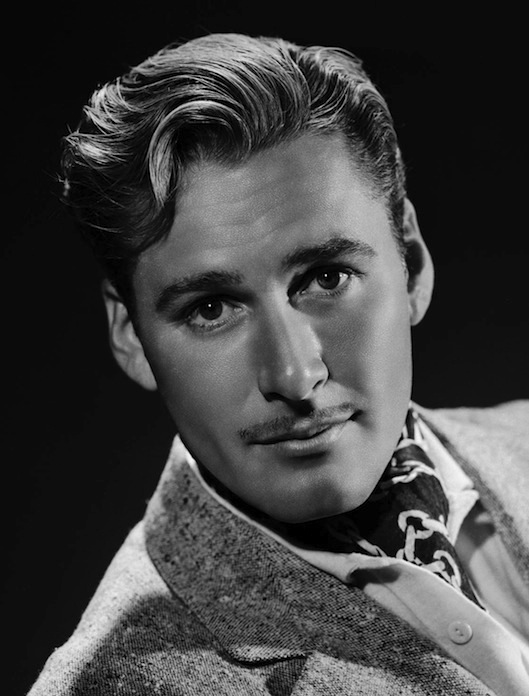
Errol Flynn is one of Australia’s most famous actors, even though he died more than 50 years ago, on October 14 1959. Born in Hobart in 1909, he is seen as a particularly Tasmanian export, although in Hollywood he passed himself off as Irish before he became an American citizen (he also said he was a descendant of a Bounty mutineer, which wasn’t true either).

Flynn became an immediate sensation in Hollywood from his very first role – a 17th century pirate in the 1935 film Captain Blood, although other stand out roles were as Fletcher Christian and Robin Hood. He was typecast as a derring-do swashbuckling action hero, famous for his well-choreographed sword fighting scenes. At the height of his career he was one of the most popular actors in America, and was roguishly handsome, with a dashing, debonair, devil-may-care image.

His reputation was as a womaniser, a highly-sexed, caddish, unscrupulous seducer. The expression in like Flynn is said to have been inspired by the ease at which Flynn was able to obtain women, and dates to 1942, when Flynn was up on charges of statutory rape. Accused of raping two 17-year-old girls, Flynn was acquitted by a jury made of mostly of women: during the trial he flirted with a teenager who he went on to respectably marry, after carefully verifying she was over 18.

Flynn was blunt about his proclivities, saying I like my scotch old and my women young. He was tickled enough by the slang expression that he tried to call his autobiography In Like Me, but the publishers changed it to My Wicked, Wicked Ways.

The rape trial didn’t seriously damage Flynn’s reputation, earning a round of backslaps and you-rascal-yous. He did face criticism for not serving in the US military during World War II. The studio kept secret that he had failed his medical, as their supposedly athletic star was in terrible physical shape. He had multiple heart problems, recurrent malaria, chronic back pain, chronic tuberculosis, and a dizzying array of sexually transmitted diseases.

To self-medicate these various ills, he drank heavily, and sometimes used morphine and heroin. When his career went downhill and he lost most of his money, he became old and bloated, sailing around on his yacht developing hepatitis and cirrhosis of the liver. However, he still managed to get a 15-year-old mistress to sail around with (Orry-Kelly had been their go-between), and planned to marry her except that she was barely 17 when he died. She never stopped loving him.

Whatever he had – charm, charisma, sex appeal – he never lost it. Controversial to the end, he became a figure of which almost anything could be believed, and biographies have variously suggested that he was a closet bisexual, a Nazi, a Communist, a sexual predator, a paedophile, a murderer, and a drug-runner (the Nazi claim is definitely debunked; the others are unsubstantiated).

Flynn was one of the original Hollywood bad boys, celebrated in film and song, and still making headlines today. Love him or loathe him, he was unforgettable.

ERROL
Scottish surname, usually said to be from the village of Errol in Perthshire, the meaning of whose name is lost in the mists of time. However, the surname came into use late enough as to cast some doubt on this theory, and it may be a corruption of an earlier surname.

Errol has been used as a first name since the 18th century, originating in Scotland. One of the factors helping its use was probably the aristocratic title the Earl of Erroll, in the Scottish peerage since the Middle Ages. Erroll is the older spelling of the village of Errol, and the first Earl was William Hay, who was born in Errol. The title is still in the Hay family.

Errol was #160 in the 1900s when Errol Flynn was born, and peaked in the 1940s at the height of his career – just outside the Top 100 at #103. After the rape trial, the name fell sharply, and left the charts in the 1970s.

The name has been a favourite in the Caribbean, with a famous example being British singer Errol Brown, who was born in Jamaica. The first prime minister of Barbados was Errol Barrow, an enormously popular leader regarded as a hero of his country, although Errol Flynn lived in Jamaica in the 1950s and was a great boost to the island’s tourism.

Errol joined the US Top 1000 in 1936, the year after Errol Flynn’s Hollywood career began. It peaked in 1941 at #355 – the 1942 rape charges may not have killed off his career, but it did damage his brand as a namesake for babies. It hasn’t been in the Top 1000 since 1985, and last year 20 baby boys were named Errol. In the UK, there were 11 baby boys named Errol in 2014, and numbers are actually rising.

Errol is well known to Harry Potter fans as the name of the Weasley family’s owl. J.K. Rowling may have had in mind the Latin word erro, meaning “to go astray, to wander about, to go amiss”, as Errol is a feeble old owl who often gets lost while delivering the Weasley’s mail. It’s the basis for the English word error.

Errol seems rather vintage and cool, while still lovably eccentric. It could work well cross-culturally, as its similar to the Old English name Eorl, meaning “earl”, the Welsh name Eryl, meaning “a look out post”, and the Turkish name Erol, meaning “brave”.

FLYNN
Irish surname which is an Anglicised form of Ó Floinn, meaning “son of Flann”; the name Flann means “reddish, ruddy of complexion”.

Flann Fína mac Ossu was a 7th century king of Northumbria who was the son of an Anglo-Saxon king and an Irish princess – his English name was Aldfrith. Flann Sinna was a 9th century High King of Ireland, and there are also medieval Irish poets with the name. Flynn has been used as a personal name since the 18th century, mostly for boys: from the beginning the name was used in Ireland as well as other English-speaking countries.

The name Flynn began charting in the 1990s, and was #342 for the decade, although it made the Top 100 in 1997 at #93. This was the year after Flynn was released, a film about the early life of Errol Flynn with Guy Pearce in the title role. Coincidentally, it was also the year that Sean Flynn, the grandson of Errol Flynn, began his acting career.

In 2001 Flynn was back in the Top 100 at #98 – this was the year after David Bret published a salacious biography about Errol Flynn called Satan’s Angel. It had a burst of popularity in 2004, getting to #73: the year before, Flynn’s 1959 autobiography My Wicked Wicked Ways was republished, and the 1938 film The Adventures of Robin Hood was released on DVD.

The next jump for the name was in 2011, when it got to #51: this was the year after the Disney film Tangled, with the Disney prince Flynn Rider based on Errol Flynn himself, and named in his honour. It was also the same year that model Miranda Kerr chose the name Flynn for her son. The name peaked in 2013 at #32 (the same year that Kerr separated from her husband, British actor Orlando Bloom).

Last year Flynn was #45 nationally, #40 in New South Wales, #38 in Victoria, #34 in Queensland, #40 in Western Australia, #37 in Tasmania, and #42 in the Australian Capital Territory.

Flynn is only popular in Australia and New Zealand – it is #48 and stable across the Tasman. It is #137 in the UK, and has been rising steadily since Tangled and the birth of Flynn Bloom, while in the US it joined the Top 1000 in 2011, and is currently #659 and still rising. It will be interesting to see how it fares in other countries since reaching its peak here.

Flynn is a popular name with a strong Australian connection. Unlike Errol, it has gained a cool Disney namesake and become a celebrity baby name, giving it a significant boost. No longer rising in Australia, Flynn seems to have settled in, perhaps on its way to becoming a modern classic. Handsome, Irish, Australian, on trend, and stable, Flynn seems like a popular yet safe choice.

POLL RESULTS
Errol received an approval rating of 27%. 53% of people weren’t keen on Errol, and 8% loved it.

Flynn did much better, receiving an excellent approval rating of 82%, making it one of the top-rated names of 2015. 44% of people thought Flynn was a good name, while only 4% thought it was a terrible one.

Waltzing With …. Lucinda

11 Sunday Oct 2015

Posted by A.O. in Waltzing with ...

≈ 4 Comments

Tags

anagram names, choosing character names, created names, famous namesakes, fictional namesakes, locational names, name history, name meaning, name popularity, names from movies, names of boats, names of dolls, nicknames, pen names, Roman names, Spanish names, UK name popularity, underused modern classics, US name popularity

91yXs7juaPL._SL1500_

Famous Fictional Namesake
I’ve been away on holiday, hence the lack of posts. Whenever we go somewhere, I always take tons of books with me, in the fond belief that I will have lots of free time. I rarely get much reading done, as holidays take up more of your time and energy than you think they will, but in the spirit of my good intentions I’m covering a name from a modern Australian classic.

Peter Carey’s Oscar and Lucinda won the 1989 Miles Franklin Award and the 1988 Booker Prize. Set in the nineteenth century, Lucinda is a young orphaned heiress who forms an unlikely and intense relationship with an Anglican priest named Oscar.

These eccentric redheaded soulmates are bound together by their mutual passion for gambling. Lucinda is the owner of a glass factory on Sydney’s Darling Harbour, and she and Oscar make a crazy wager that he will transport a glass church by river to the town of Bellingen in New South Wales; Lucinda stakes her entire fortune on the bet.

Peter Carey’s first idea for his heroine’s name was Hermione; however he went off the idea as he realised how difficult Hermione was for him to say. Not fancying the idea of constantly talking about Hermione at book festivals and so on, and thinking how awkward Oscar and Hermione sounded as a title, he cast about for something else. His wife at the time suggested Lucinda, and he immediately liked it, as it felt both modern and Victorian.

Only later did he realise that Lucinda had a connection with light, which fit the themes of the novel. Lucinda is obsessed with glass, while Oscar has a deadly fear of water, which makes his transporting of the glass church upriver a nightmare on many levels. The novel brings together the imagery of glass and water very beautifully: as Lucinda knows, both are liquids. There is a great shimmer of light on this novel which constantly plays with the idea of chance.

Oscar and Lucinda was made into a film in 1997, with Cate Blanchett and Ralph Fiennes in the title roles. The film is beautiful, and Blanchett suitably luminous as Lucinda, but readers (especially ones trying to cheat their way through book club) should be aware that the novel’s ending has been altered for the film.

Name Information
Lucinda is an elaboration of the Roman name Lucia, the feminine form of Lucius, meaning “light”. The name appears to have been the invention of Spanish author Miguel de Cervantes, in his masterwork Don Quixote. In a farcical subplot, Lucinda is in love with one man, but forced to marry another; she manages to escape her husband and be with her true love.

Cervantes may have gotten the name from another 17th Spanish writer, the poet Lope de Vega. Lope de Vega used the name Camila Lucinda as a pseudonym for some of his most romantic and passionate poems – a near anagram of Micaela de Luján, an actress who was de Vega’s mistress. Their relationship began in 1599, and his first poems written to “Luzinda” were published in 1602.

Although Cervantes had been an admirer of de Vega, they became rivals enough that Don Quixote contains verses which satirise de Vega. It is even possible that the foolishly romantic Don Quixote himself is a sly allusion to ardent ladies man Lope de Vega. Could it be that Cervantes “stole” the name Lucinda for his novel as a sarcastic in-joke?

Don Quixote was published in two volumes, in 1605 and 1615, and these were translated into English in 1612 and 1620. The name Lucinda begins to appear in 17th century records after the publication of Don Quixote, both in Spain and English-speaking countries.

Lucinda became something of a literary favourite. English poet Henry Glapthorne wrote a series of romantic poems addressed to “Lucinda” in 1639. French playwright Moliere included a character named Lucinde in his 1666 farce, The Doctor in Spite of Himself, and English playwright Samuel Foote’s 1782 farce The Englishman in Paris had a Lucinda. German poet Karl von Schegel published an autobiographical romance named Lucinde in 1799 – considered scandalously erotic in the 19th and early 20th centuries, but tame by today’s standards.

In all these works Lucinda is attractive, and involved in romantic situations that generally work out to her advantage. In von Schegel’s work, Lucinda stands for the ideal woman who is passionate and intellectual in equal measure. Even in Glapthorne’s poems, where the relationship between he and Lucinda doesn’t last, it seems to be by her own choice that she leaves.

Martin Boyd’s classic Australian novel Lucinda Brayford is rather less upbeat. Set mainly in the first half of the 20th century, Lucinda is a beautiful woman of the Melbourne upper class who marries a dashing English aristocrat and moves to Britain. Disillusionment swiftly follows. (Peter Carey has been quick to correct reviewers who imagine he had in mind any connection with Lucinda Brayford when writing Oscar and Lucinda).

In contemporary fiction, Lucinda is often used in fairy tale and fantasy works: she is the well-meaning fairy godmother in Ella Enchanted, the good little witch in Sofia the First, a stepsister of Cinderella in Into the Woods, an elderly lady who finds her own personal fairyland in The Spiderwick Chronicles, and the heroine of the young adult fantasy romance series Fallen by Lauren Kate. Princess Lucinda is both a Groovy Girls doll and a powerfully magical comic book character.

Lucinda first charted in the 1960s, debuting at #342, and peaked in the late 2000s at #126. It is currently around the middle of the 100s, making it an attractive choice for someone wanting a name that has never been popular, but isn’t too far off popularity either.

Lucinda is more popular in Australia than anywhere else. In the United States, Lucinda was in the Top 1000 until the late 1980s, and peaked at #153 in 1881. Last year, 143 baby girls were named Lucinda in the US, and numbers seem to be still falling. In the UK in 2014, 29 baby girls were named Lucinda, with numbers in decline after a peak in the 200s during the late 1990s.

Famous Australian namesakes include ballerina Lucinda Dunn, principal dancer at the Australian Ballet for 23 years; sailor Lucinda “Lu” Whitty, who won silver at the 2012 Olympics; equestrian eventer Lucinda Fredericks, who also competed at the 2012 Olympics; actress Lucinda Cowden, who was on Neighbours; Lucinda “Cindy” McLeish, Liberal politician in the Victorian parliament; and Lucinda “Lucy” Turnbull, former Lord Mayor of Sydney, and wife of the current Prime Minister.

There is also a small coastal town in Queensland called Lucinda, named after a paddle steamer. The Lucinda was named after Lady (Jeannie) Lucinda Musgrave, daughter of prominent American lawyer and law reformer David Dudley Field II, and the wife of Sir Anthony Musgrave, a governor of Queensland. The little town of Lucindale in South Australia is also named after her, as Sir Anthony was previously a governor of that state.

Lucinda is a pretty and elegant literary name linked to love and romance, and with a fairy tale feel to it. In Australia it is an underused modern classic, often thought of here as having a rather upper class image. Among its attractions are nickname options, such as Lucy, Lucie, Lu, and Lulu, with Lux and Lucky as fun possibilities. While Cindy might recently have been thought of as too dated, I’m seeing an increasing number of babies named or nicknamed Cindy, so this cute retro name may be coming back into style.

POLL RESULT
Lucinda received an outstanding approval rating of 96%, making it one of the highest-rated names of 2015. 40% of people loved the name Lucinda, and nobody hated it.

Boys Names from International Destinations

04 Sunday Oct 2015

Posted by A.O. in Name Themes and Lists

≈ 2 Comments

Tags

animal names, Biblical names, Dutch names, english names, European name popularity, famous namesakes, honouring, Irish names, locational names, mythological names, name history, name meaning, name popularity, name trends, names from songs, names from video games, names of businesses, nicknames, saints names, Shakespearean names, slave names, superhero names, surname names, UK name popularity, unisex names, US name popularity

Ikuta Shrine

Arden
A region of Warwickshire in England, once thickly covered in trees and known as the Forest of Arden. It has strong Shakespearean connections, as William Shakespeare’s home town of Stratford-upon-Avon is one of the region’s main attractions. Furthermore, the Arden family were prominent in the area for centuries – they are one of the few landed families in England who can trace their lineage back to before the Norman Conquest. William Shakespeare’s mother, Mary Arden, was one of this family. Shakespeare’s comedy As You Like It is set in the Forest of Arden, a creative mixture of the real forest, a romanticised version of it, and the Ardennes Forest in central Europe. The name Arden is thought to come from the Ancient British word ardu, meaning “high land”; it has been used as a personal name since the 17th century, and had strong ties with Warwickshire. Arden is more popular for girls in the US (perhaps because of cosmetics company Elizabeth Arden), but is fairly even in the UK, and rising for both sexes. This matches my own observations in Australia, and it fits with both male and female name trends.

Boston
The capital of Massachusetts, one of the oldest and largest cities in the United States. Founded by Puritans in the 17th century, it was the scene of many of the key events in the American Revolution – perhaps most famously, the Boston Tea Party. Boston is one of the most economically powerful cities in the world, and a major educational centre, the home of top universities such as Harvard. It has been called “The Athens of America” for its contribution towards literature, art, music, and high culture in general. It is also known for its strong Irish history and culture: former President John F. Kennedy was from a Boston family of Irish Catholic heritage. The city is called after the town of Boston in Lincolnshire, whose name is said to be a contraction of “St Botolph’s town” – St Botolph was an obscure yet strangely popular Anglo-Saxon saint, and his name is believed to be an Old English one meaning “messenger wolf, herald wolf”. Also a surname, Boston has been in use since the 18th century. I saw this name more frequently after the Boston Marathon terrorist attacks in 2013, which matches the situation in the UK, although the name remained stable in the US.

Cairo
The capital of Egypt, and one of the largest cities in the world. Founded in the 10th century, it is close to several ancient sites, including the Pyramids, so that despite being a busy metropolis, it is often associated with the romance of Ancient Egypt. Cairo is a transliteration of the Arabic name for the city: al-Qāhirah, meaning “the victorious”. The reason for the name is because the planet Mars (in Arabic, Al Najm Al Qahir) was rising at the time of the city’s founding. The Egyptian name for the city is Khere-Ohe, meaning “place of combat”, referring to a battle which is supposed to have occurred here between the gods Set and Horus. Not only a strong, war-like name, Egyptian-themed names are very cool at present, and this might appeal to someone wanting a nod to African or Arabic culture. It fits very well with current trends in boys names and can be shortened to Cai.

Cuba
The largest island in the Caribbean, which was claimed for Spain by Christopher Columbus in 1492. It is an ethnically diverse nation with a tumultuous history, and has been under Communist rule since 1965. The island’s name comes from the indigenous Taino language, but the meaning is not certain: it may be from cubao, meaning “where fertile land is abundant”, or coabana, meaning “great place”. Cuba has become well known as a boy’s name due to Hollywood actor Cuba Gooding Jr. As his name tells you, Cuba was named after his father Cuba Gooding Sr, lead singer of the group The Main Ingredient. Cuba Sr’s father Dudley was from Barbados, but fled to Cuba, and met and married a woman there. After she was murdered because of their involvement in the Pan-African movement, Dudley promised her on her deathbed that he would name his first son Cuba. That is a very powerful name story for the name Cuba, and let’s face it, yours won’t be able to compete. However, Cuba has been used as a name since the 18th century, and in the US had strong ties to the African-American community: it may have originally been given as a slave name.

Denver
The capital of Colorado, and one of the largest cities in the American south-west. Set high in the Rocky Mountains, it has the distinction of being exactly one mile above sea level. The city was named after a 19th century politician, James W. Denver, in hopes of currying favour. The surname Denver is after a village in Norfolk, meaning “the passage of the Danes” in Old English – it’s a place on the River Ouse once crossed by Danish invaders. Famous people with the surname include Bob Denver from Gilligan’s Island, and singer John Denver (born Henry Deutchendorf). Denver Pyle played Jesse Duke in The Dukes of Hazzard, while a famous Australian namesake is Denver Beanland, a former Liberal politician from Queensland. The name isn’t particularly strongly tied to the city and can be seen just as easily as a surname name. In use in Australia since the 19th century, it has a reasonable history, so that it doesn’t seem too modern and trendy, despite having a fashionable letter V. Little wonder that it seems to be in quiet but steady use.

Harlem
An area of Manhattan in New York City which has been known as a major centre for African-American culture since the “Harlem Renaissance”of the 1920s. Originally a village settled by Dutch immigrants, it is named after the city of Haarlem in the Netherlands. Haarlem is the capital of North Holland, and historically the centre of the famous tulip industry. Its name probably means something like, “home on the forested dunes”, as it lies on a thin strip of land near the North Sea. It is also a surname; one example is former Norwegian prime minister Gro Harlem. I see this name fairly regularly, and that’s probably because it fits in so well with the strong trend for Har- sounds in boy’s names, such as Harvey, Harley, Harland, and so on. Not only similar to these, Harlem celebrates a place with a cool, and perhaps slightly dangerous image. The Harlem Shake memes could even be a contributing factor!

Jericho
A city in Palestine on the River Jordan. It is believed to be one of the oldest inhabited cities in the world, and the oldest walled city; archaeologists have found remains in Jericho dated to 9000 BC. Jericho features in a famous Bible story, which tells how Joshua, the general of Moses, took the city of Jericho. The Israelites marched around the city perimeter for six days with the Ark of the Covenant. On the seventh day, they marched around seven times, then the priests blew a ram’s horn and the Israelites raised a great shout. The walls of the city fell down, and the Israelites slaughtered almost all the inhabitants. There is a very rousing African-American spiritual about the incident, where the “walls came tumbling down” – an inspiration for the Thatcher era pop song. Archaeologists tell us that although Jericho’s famous walls have been brought down during various conflicts, Jericho was temporarily abandoned during the time that Joshua was supposed to have lived. Perhaps more importantly for the name, it fits in with the current fashion for names with an -o ending, and joined the US Top 1000 in 2013, as it has recently become known as one of the Teen Titan superheroes, and a common name in video games.

Kobe
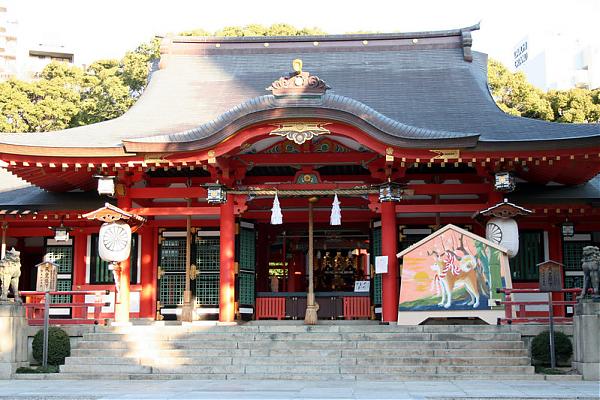
A busy port in Japan, and one of the country’s largest cities. It is famous for its hot springs, which provide a tranquil retreat and have been in use since at least the 8th century, making them amongst Japan’s oldest. The city’s name is connected to its Ikuta Shrine, a Shinto shrine founded in the early 3rd century to venerate Wakahirume, the Japanese goddess of the rising sun and weaving. The city’s name is derived from kamube, an old name for the people who supported the shrine. It is also a Japanese surname, after the city. The name has been popularised by American basketballer Kobe Bryant, whose parents named him after Kobe beef, a very high quality meat from Japan, that they saw on a restaurant menu. Although the Japanese pronunciation is more like KO-BEH, English-speakers generally say it as a homophone of the name Coby, which is one of the name’s attractions. In fact, it is also a Dutch pet form of Jakob. Kobe is around the 100s in Australia, significantly more popular than in either the US or the UK, although it is a Top 50 name in Belgium.

Memphis
The largest city in the state of Tennessee. It is famous as a centre for popular music; because of this, almost a thousand songs are about Memphis, or mention it in some way, and Graceland, Elvis Presley’s famous estate, is a major tourist attraction of the city. Memphis is named after a a capital of ancient Egypt because the American city is situated on the Mississippi, just as the Egyptian one was situated on the River Nile. The Egyptian city is now in ruins, but was once a port and busy commercial centre. Memphis is the Greek transliteration of the Egyptian name Men-nefer, meaning “enduring and beautiful”, and Greek mythology personified it as a nymph named Memphis who founded the city along with her husband, a king and son of Zeus. Despite this feminine history for the name, Memphis is much more common as a male name than a female one, most likely because of Elvis. It is around the 600s for boys in Australia, more popular than in either the US or UK.

Tyrone
The largest county in Northern Ireland. Its name comes from Tir Eoghain, meaning “land of Eoghan”; according to Irish legend, Eoghan was a son of a great medieval king who claimed this land for himself. Eoghan may be derived from Eugene, and thus an Irish form of the Welsh name Owen; others say it is from the Old Irish, and means “born under the protection of the sacred yew tree”. Tyrone has been used as a personal name since the 18th century, and originated in the United States, presumably as an Irish heritage name. It later became used in Ireland too. The name was popularised by Hollywood actor Tyrone Power Jr; part of a long line of actors, the name Tyrone was traditional in his family. The original Tyrone Power, the great-great-grandfather of the Hollywood actor, was from a landed family in Ireland. Tyrone entered the charts in the 1960s at #413, and peaked in the late 2000s at #181. Currently around the 300s, it has never become popular, yet never gone out of use, pioneering, and still fitting in with, the well-worn trend for Ty- names for boys, such as Tyler and Tyson.

POLL RESULTS
People’s favourite names were Arden, Jericho and Boston, and their least favourite were Cairo, Harlem and Cuba.

(Photo of the Ikuta Shrine in Kobe, Japan by Suguri F)

Girls Names from International Destinations

27 Sunday Sep 2015

Posted by A.O. in Name Themes and Lists

≈ 2 Comments

Tags

Arabic names, car names, Celtic names, Dutch names, english names, ethnonyms, fabric names, famous namesakes, fictional namesakes, gemstone names, honouring, locational names, mythological names, name history, name meaning, name popularity, names of deserts, names of rivers, names of US states, Native American names, nicknames, Sanskrit names, Scottish names, slave names, stage names, surname names, unisex names, vocabulary names

alaska-mountains

Aberdeen
The third largest city in Scotland, often called The Energy Capital of Europe because of its North Sea oil reserves, and Scotland’s most important city economically. Another of its claims to fame is that it is the coldest city in the UK. The original name for Aberdeen was Aberdon, a Celtic name meaning “mouth of the Don” – the River Don empties into the North Sea north of Aberdeen’s original site. The river’s name may be derived from Devona, a Celtic deity whose name means “river goddess”. I saw a baby girl named Aberdeen in the newspaper, and her mother emailed me to explain that her name is in honour of Kurt Cobain, lead singer for the rock band Nirvana, who was born in Aberdeen, Washington (Aberdeen’s father is a great admirer). The American city’s name is after a salmon cannery which was named for the Scottish city, because it is also situated on a rivermouth. A rare name with a possible feminine origin which can be shortened to Abby or Deeni.

Alaska
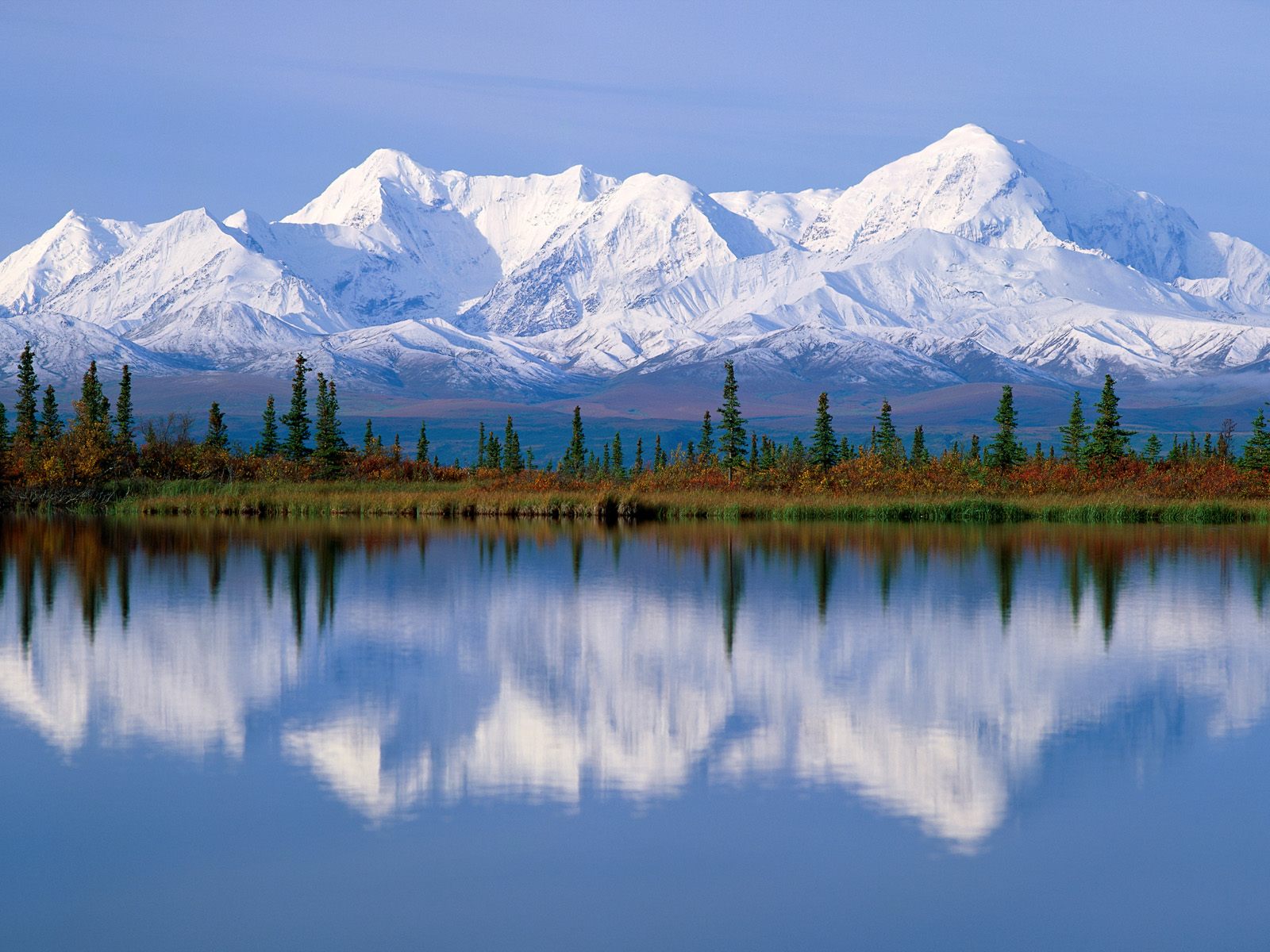
The most northern state of the USA, separated from the continental US by Canada. First colonised by Russia, it was purchased by the United States in the 19th century, and eventually became a state in 1959. Once famous as a gold rush area and wild frontier, it is now known for its vast gas and oil reserves, and stunning natural beauty. The state’s name was adopted during the Russian colonial period, derived from an Aleut word meaning “mainland” (literally “that which the sea breaks against”). The name has become better known since the 2005 publication of John Green’s first young adult novel, Looking for Alaska, with the character of Alaska Young a beautiful but unstable teenage girl who is the hero’s love interest.

Calais
A town and major seaport in northern France and a major trading centre since the Middle Ages. It is famously located at the narrowest point of the English Channel, and a popular place to make for when swimming the Channel (or crossing by ferry). It was once a territory of England, and called “the brightest jewel in the English crown” for its rich commercial opportunities. The Romans called it Caletum, apparently in reference to the local Celtic tribespeople; it was from Calais that Caesar launched his invasion of Britain. Pronounced kal-ay, Calais sounds similar to names such as Callie and Carly while having the fashionable AY sound. Calais is also a boy’s name – in Greek mythology, Calaïs was a son of the North Wind, and one of the Argonauts. The name means “turquoise” or “chrysolithe” (another blue-green jewel), so is a rare masculine gemstone name. It is pronounced KAL-uh-ees. I’ve seen several boys in Australia named Calais, but more likely because of the car, the Holden Commodore Calais, than after the Greek hero.

Havana
The capital of Cuba, and a popular tourist destination that’s almost instantly recognisable from its colourful architecture and vintage cars. Under American occupation before the revolution, it was a playground for the middle classes, a sort of offshore Las Vegas with an exciting tinge of corruption and decadence. The city was founded by the Spanish in the early 16th century and named San Cristóbal de la Habana. Saint Christopher is the city’s patron, but the meaning of Habana isn’t certain. It may come from Habaguanex, the name of a Native American chief who controlled the region. The name has become fairly well known in Australia because of the DJ, singer, and dancer Havana Brown. Born in Melbourne to parents from Mauritius, Havana’s birth name is Angelique Meunier. The name Havana was #339 in Victoria in 2012. Pronounced huh-VAH-nuh, it fits in with the trend for names with a strong V sound, and looks like a natural successor to Ava and Harper.

Holland
A historic region of the Netherlands, sometimes informally used to refer to the country itself (Dutch people outside North and South Holland may not appreciate this, just as Scots don’t care for being told they’re from England). The name comes from the Middle Dutch holtland, meaning “wooded land”, but folk etymology connects it to the modern Dutch hol land, meaning “hollow land”, because the Netherlands is famously low-lying. Holland is also an area of Lincolnshire, similarly flat and famous for tulips, but its name comes from the Old English for “hill spur land, ridge land”. It is from this area that the English surname Holland comes, and you can see Holland as a surname name too. Both Holland Park in London and the Holland Tunnel in New York are from the Lincolnshire connection. Holland is also a fabric; this heavy linen was in the past often imported from the Netherlands. Long in use for both sexes, on a girl this name easily shortens to Holly.

India
India is named for the Indus River, one of the longest rivers of Asia, which flows from Tibet into the Arabian Sea; the Sanskrit name for the river is Sindhu, which means “body of trembling water”. Alexander the Great crossed the Indus, and the ancient Greeks called the people of present-day Pakistan and India Indoi, meaning “people of the Indus” – it’s the origin of the word for the Hindu religion as well. The Indus Valley was the birthplace for an ancient civilisation, the oldest urban culture in South Asia. In Britain, India was often given as a name in reference to the British Raj, and still has a rather upper class image in the UK. In the US, India had steady use in Indiana, but overall was more common in the south – a famous fictional namesake is India Wilkes from Gone With the Wind, the sister of Ashley. India was also given as a slave name in colonial America, perhaps because it was associated with a dark complexion. It’s always been a name which symbolises exoticism to Europeans, and is around the 200s in Australia, a natural successor to popular Indiana and sharing the nickname Indi.

Mississippi
An American state in the south, named for the Mississippi River, another inspiration for the name. The Mississippi is the chief river of North America, and one of the largest in the world, rising in Minnesota and meandering to the Gulf of Mexico. The Mississippi River Valley is one of the country’s most fertile areas, and was the focus for the steamboat era, brought to life in the works of Mark Twain. It features in songs such as Johnny Cash’s Big River, Creedence Clearwater Revival’s Proud Mary, and Charley Pride’s Roll on Mississippi. The river’s name comes from Misi-ziibi, the Objibwe or Algonquin for “great river”. Lengthy, and a spelling minefield for the unwary, this comes with two snappy nicknames: Missi and Sippi.

Odessa
A city in the Ukraine founded by Catherine the Great. It was named thus because of a belief that it was the site of an ancient Greek city called Odessos – Odessos is now thought to have been where Varna, in modern Bulgaria, is today. The name is probably pre-Greek, and its meaning and origin unknown. A free port, Odessa was a city where people of many cultures and languages mingled; its cosmopolitan nature made it a place for freethinkers to congregate, and Mark Twain predicted it would become one of the great cities of the world. The first tremors of the Russian Revolution could be felt here in 1905, after a workers’ uprising was put down with a brutal massacre. Odessa looks as if it could be related to all kinds of familiar names, and is sometimes even touted as a feminine form of Odysseus, so it feels like a “real name”. It’s right on trend and would make a great alternative to popular Olivia.

Sahara
The largest desert in Africa, and the largest hot desert of the world, the Sahara stretches right across northern Africa, often very beautiful in its shifting sandscapes. Its name is an intensifier of ṣaḥrā , the Arabic word for desert, to suggest “great desert”. The singer-songwriter Sahara Smith received her name because her father hiccuped while suggesting the name Sara, and liked the result. This is a pretty name which is so similar to names like Sara, Sarah, Zara and Zahara that its main issue is probably being confused with them.

Venice
A city in northern Italy built on a series of islands separated by a maze of canals and linked by bridges. It is seen as one of the most beautiful cities in the world and a very romantic destination, thanks to its ornate architecture and the gondolas providing transport through its waterways. A wealthy city for most of its history, it has a particularly strong connection with the arts and music, and has featured in many plays, novels, and films. The city’s name comes from the Veneti, the tribespeople who populated the area in ancient times. Etymologists believe their name comes from an ancient root meaning “strive, wish for, love” (to suggest strong kinship bonds), giving it a very attractive meaning as well. The name seems to have been used since the 16th century, although in at least some records, may have been confused with the related names Venus or Venetia. This artistic name would make a good alternative to rising Florence.

POLL RESULTS
People’s favourite names were Odessa, India and Holland, and their least favourite were Havana, Venice and Mississippi.

(Photo is of Denali National Park in Alaska)

Famous Name: David

23 Wednesday Sep 2015

Posted by A.O. in Famous Names

≈ 4 Comments

Tags

Biblical names, classic names, famous namesakes, hebrew names, international name popularity, mythological names, name history, name meaning, name popularity, popular names, royal names, saints names, Semitic names, US name popularity

David_Unaipon

Famous Namesake
Next week it will be the 143rd birthday of David Unaipon, who was born September 28 1872 – Unaipon is an Anglicised form of the name Ngunaitponi. David was a writer, mythologist, inventor, motivational speaker, lecturer, religious leader, and political activist; in his lifetime he was hailed as a genius. Yet he was given no schooling after the age of 13, and was often denied service because of the colour of his skin.

Born on a South Australian mission, his high intelligence was obvious even as a child. Frustrated by the scarcity of career paths open to him, and almost complete lack of educational ones, after work he would devour books on literature, science and philosophy until the early hours of the morning. He became obsessed with the idea of inventing a perpetual motion machine (a hot topic of the day), and this led to his first patented invention: an innovative design for shearing machines which is the basis for modern mechanical shears.

In all, David took out 19 provisional patents on his inventions, but could not afford to fully patent them: he made no money from his inventions, and received no credit apart from one newspaper article. His other inventions include a centrifugal motor, a multi-radial wheel, and a mechanical propulsion device. One of his ideas was a basic design for a helicopter in 1914, based on the spinning motion of a boomerang; this earned him the title of “Australia’s Leonardo”. A recognised authority on ballistics, he also had a great interest in lasers which he foresaw might one day have military applications – this was some years before Einstein’s pioneering work on lasers.

David worked as a lay preacher and missionary, but was also keen to educate white people on Indigenous mythology and culture. David compiled his versions of Aboriginal legends, influenced by his study of classical and Egyptian mythology, and written in a style reminiscent of John Milton. They were published in a series of booklets and articles, and eventually commissioned as Myths and Legends of the Australian Aboriginals in 1930: David was paid $150 for his work, but received no credit. He was the first Indigenous Australian writer to be published.

Urbane and cultured, dignified in bearing, formal of manner, and fastidious in speech, David defied the stereotypes then held about Aboriginal Australians, and confounded expectations. Even when sympathetic, the newspapers spoke of him in ways which now make us squirm.

He was not just a genius: he was a “black genius” or “Australia’s cleverest darkie”. One journalist calls him “a remarkably intelligent specimen of primitive man”, and writes that people can barely believe he is a “full blooded Aborigine”. “An outstanding representative of the primitive race”, and “remarkably able … even amongst superior whites”, it was made clear that he was an exception to every rule, and one fine shining hour for a people who were inevitably dying out.

David lived to the age of 94, packing many lifetimes into his generous span of years; he continued working on his inventions into old age, and right to the end remained determined to discover the secret of perpetual motion.

He had lobbied the government on Aboriginal rights, been the first Aboriginal person to attend a royal levee, and received a Coronation Medal. The David Unaipon Literary Award is given to an unpublished Indigenous author each year, and the David Unaipon College of Indigenous Education And Research at the University of South Australia is named after him. You may also have David in your wallet – he is on the $50 note.

An extraordinary Australian with an original mind, he was neither mute nor inglorious, yet his story is one of undeveloped potential. Howard Florey was sent to Oxford University as a Rhodes Scholar, and he changed the world: what might David Unaipon have done if given similar opportunities and advantages?

Name Information
David is derived from the Hebrew name Dawid, from the Semitic root dwd, meaning “to love”. It is usually translated as “beloved” or “my darling”. There were a number of Semitic deities with names from the same source, and it is possible the name David was originally given in honour of these gods, or came to be understood as “beloved of God”.

The name has come into common use because of the character from the Bible. In the Old Testament, David was an armour-bearer to Saul, the first king of Israel. David was a talented musician, and whenever Saul was feeling particularly wretched, David would play the lyre to him until he felt better. David was a great warrior, and Saul made him commander over his armies: eventually he became so popular that after Saul’s death David was anointed king.

A popular story from the Bible is about David’s youth. Saul’s armies were facing those of the Philistines, and their opponents sent their largest warrior to fight someone in single combat – a huge giant named Goliath (around six foot nine, or just over 2 metres tall). Everyone was afraid to take on the big boy, until David stepped forward and accepted the challenge. He brought Goliath down with a slingshot, then cut off his head using the giant’s own sword. In modern parlance, a David and Goliath battle is one where the underdog wins, and we all love a story where the “little guy” is victorious over someone more powerful.

King David is a central figure in Judaism, a symbol of Jewish kingship. According to the Hebrew canon, a descendant of King David will one day sit on the throne of Israel, heralding an era of global peace. Christianity views David as a divinely appointed king, and the ancestor of Jesus Christ. In Islam, David (Dāwūd) is revered as one of the great prophets.

David has been a popular figure in art and literature, most notably Michelangelo’s statue of him as a young man, the epitome of masculine strength and beauty. In the Bible, David is described as a handsome youth with beautiful eyes, and ruddy in colour. This has often been taken to mean David was red-haired (Jewish tradition makes David a redhead), but the word used refers to the same coppery-brown skin tone assigned to Adam. There is another connection between these two characters: Adam is the first name in the Bible, while David is the last.

David has been used as an English name since the Middle Ages; in medieval Europe, David was seen as the ideal chivalrous hero, and a model for kingship. Saint David is the patron saint of Wales, and his icons include the leek, a Welsh national symbol. A Welsh short form of his name, Taffy, was used to refer to a Welshman (often insultingly) for many years, just as a Paddy meant an Irishman. King Edward VIII went by David, which was his final middle name, given in honour of the national saint.

The name David also has a strong history in Scotland, as David I was a powerful medieval Scottish king who supported his niece, the Empress Matilda, in her claim to the English throne. A defender of the Scottish church’s independence from the English church, contemporary historians describe him as pious and just. He is regarded as a saint in Roman Catholicism.

David is a solid classic which has never left the Top 100. It was #28 in the 1900s, and peaked at #1 through most of the 1960s, making it the most popular boy’s name for that decade. Currently it is #91 nationally, #92 in New South Wales, #76 in Queensland (where it was one of the fastest rising names of last year), #98 in Tasmania, and #83 in the Australian Capital Territory.

Thanks to the fame of King David, David is a popular name around the world, including in eastern and western Europe, Scandinavia, and Latin America. It is most popular in Croatia, at #4. It is popular in all English-speaking countries, and most popular in the United States, at #18. It is still a popular name in Israel, and seems a patriotic choice as the national flag has a Star of David on it.

David is an attractive classic name with a beautiful meaning. An ancient name with a heroic royal namesake, it has never gone out of style and remains popular. Widely recognised around the world, it travels well and can work cross-culturally. A beloved name for thousands of years, it would not be surprising if this name was perfect for your darling son.

POLL RESULTS
David received a creditable approval rating of 70%. People saw the name David as a timeless classic which would never go out of style (27%), clean and wholesome (19%), and handsome or attractive (16%). However, 21% thought it was too common and boring. Only person thought David seemed too mature to give to a little boy, and just one thought it was too biblical.

(The photo of David Unaipon is the same one used for the bank note).

← Older posts
Newer posts →

Enter your email address to follow this blog

Categories

Archives

Recent Comments

A.O.'s avatarwaltzingmorethanmati… on Zarah Zaynab and Wolfgang…
Madelyn's avatarMadelyn on Zarah Zaynab and Wolfgang…
JD's avatardrperegrine on Can Phoebe Complete This …
A.O.'s avatarwaltzingmorethanmati… on Rua and Rhoa
redrover23's avatarredrover23 on Rua and Rhoa

Blogroll

  • Appellation Mountain
  • Baby Name Pondering
  • Babynamelover's Blog
  • British Baby Names
  • Clare's Name News
  • For Real Baby Names
  • Geek Baby Names
  • Name Candy
  • Nameberry
  • Nancy's Baby Names
  • Ren's Baby Name Blog
  • Sancta Nomina
  • Swistle: Baby Names
  • The Art of Naming
  • The Baby Name Wizard
  • The Beauty of Names
  • Tulip By Any Name

RSS Feed

  • RSS - Posts

RSS Posts

  • Celebrity Baby News: Melanie Vallejo and Matt Kingston
  • Names from the TV Show “Cleverman”
  • Can Phoebe Complete This Sibset?
  • Zarah Zaynab and Wolfgang Winter
  • Baby, How Did You Get That Name?
  • Celebrity Baby News: Media Babies
  • Celebrity Baby News: Adelaide Crows Babies
  • Celebrity Baby News: Chris and Rebecca Judd
  • Names at Work: Name News From the World of Business and Employment
  • Celebrity Baby News: Sporting Round Up

Currently Popular

  • Rare Boys Names From the 1950s
  • Celebrity Baby News: Toby Allen and Darren Weller
  • The Top 100 Names of the 1900s in New South Wales
  • Girls Names of Australian Aboriginal Origin
  • The Top 100 Names of the 1940s in New South Wales

Tags

celebrity baby names celebrity sibsets english names famous namesakes fictional namesakes honouring locational names middle names name combinations name history name meaning name popularity name trends nicknames popular names saints names sibsets surname names twin sets unisex names

Blog at WordPress.com.

Privacy & Cookies: This site uses cookies. By continuing to use this website, you agree to their use.
To find out more, including how to control cookies, see here: Cookie Policy
  • Subscribe Subscribed
    • Waltzing More Than Matilda
    • Join 517 other subscribers
    • Already have a WordPress.com account? Log in now.
    • Waltzing More Than Matilda
    • Subscribe Subscribed
    • Sign up
    • Log in
    • Report this content
    • View site in Reader
    • Manage subscriptions
    • Collapse this bar
 

Loading Comments...