• About
  • Best Baby Names
  • Celebrity Baby Names
  • Celebrity Baby Names – Current
  • Celebrity Baby Names – Past
  • Featured Boys Names
  • Featured Girls Names
  • Featured Unisex Names
  • Links to Name Data
  • Waltzing on the Web

Waltzing More Than Matilda

~ Names with an Australian Bias of Democratic Temper

Waltzing More Than Matilda

Tag Archives: middle names

Can His Name Just Be Ted?

09 Saturday Aug 2014

Posted by A.O. in Naming Assistance

≈ 6 Comments

Tags

choosing baby names, honouring, middle names, nicknames, sibsets

20

This is the first time we have had “repeat customers” on the blog, because Kate and Steve were featured on Waltzing More Than Matilda almost exactly two years ago.

Kate wrote in because she and Steve couldn’t agree on a name for their second child, and were getting more and more frustrated with the situation. They were having particular problems reaching agreement on a girl’s name, with Kate preferring something traditional like Clara, and Steve fancying something more modern, like Zara.

In the end, they had a boy instead. Kate chose the name Lewis, and after some thought, Steve decided he liked it; it makes a nice match with their daughter Madeline.

Now Kate and Steve are expecting their third child in a few months. Having already named two children, they are much more relaxed about the whole thing this time, but are still interested in hearing other people’s opinions.

If the baby is a boy, the name chosen for him is Ted William. They don’t want a long form for his name, because while Kate loves the name Theodore, Steve hates it, and though Steve doesn’t mind Edward, Kate detests all Ed- names. However, both of them love the name Ted.

When Kate told her mother that their son’s name will be Ted, grandma’s opinion was that the baby needed a “proper” first name, in order him to give him “options” in the future. Kate wonders what people think of Ted as a stand-alone name – is it okay, or is her mum right?

Once again however, they are finding girls names a bit trickier. I thought that Kate and Steve would be sorted for girls’ names in the future, because if Lewis had been a girl, Kate wanted the name Annabeth, and at the time, Steve liked it. However, since then, Steve has decided that Annabeth sounds “made up”, so that’s off the table now.

Originally, Kate wanted to name the baby Nell after her grandmother, but Steve couldn’t get on board with the idea. Their daughter Madeline calls the baby “Rosie“, which is rather interesting, because Rose was Steve’s first choice for Madeline’s own name, until he decided he loved Madeline instead. This has reminded Kate that she loves the name Rose too, and Steve seems okay with the idea.

However, Kate can’t find a middle name to go with it. Madeline and Lewis both have family names in the middle, but Kate can’t think of any more female family members she would like to honour. She considered Nell, after grandma, but Rose Nell doesn’t sound right to her. She’s racked her brain to think of a middle name that has some significance to her, and she can’t think of anything. Kate wonders, what middle name would sound nice with Rose?

* * * * * * * * * *

We’ll start off with the Ted-as-the-whole-name issue. Yes, I think Ted is perfectly fine as a name all on its own. It’s becoming quite a fashionable choice as a baby name, and although it’s not a common name, it’s by no means unusual either. It’s even a celebrity baby name, as Livinia Nixon has a little boy named Ted. I think Ted is already a “proper’ name, and a very nice one.

Besides, what other choice is there? Steve hates Theodore, you hate Edward: you can’t give a child a name that one of his parents loathes. It almost sounds as if your mum is saying that even though one of you hates a certain name, the one who draws the short straw should just suck it up for the good of the child and put it on the birth certificate anyway. Or does she mean you should make up a name that could be used as a long form of Ted, like Tedric or Teddington? Because I’m not sure those are “options” most kids want …

Just ask yourself which you would rather tell your son:

  1. We chose Ted as your name because it was a name both Dad and I loved.
  2. We chose Theodore as your name, even though Dad hates it, but Grandma said we needed a proper name for you, but don’t worry, we’ll call you Ted anyway so it’s not a problem and I expect Dad will get over it eventually. And you can always go by Theodore any time you want to make Dad cross and unhappy, so it’s nice that you’ve got that option.

To re-cap. You love Ted, Steve loves Ted, I love Ted, many people love Ted, and I bet anything that your mum ends up loving Ted too, once she meets her adorable grandson. Ergo, Ted is perfectly fine to put on the birth certificate all by itself. And I think Ted William does have options, because he can always use his middle name if he chooses.

I must say I just love the name Rose for you, and it seems like a perfect match with Madeline and Lewis, as names which are English, but with French origins. The story of it being chosen by Madeline is really charming, and has that “meant to be” quality which is so satisfying in a name.

For middle names, I wondered how you felt about using a name which is related to Nell, as a little nod to your grandmother? I know it’s not the same as using her exact name, but it does provide a link of some kind. I was thinking of Rose Eleanor or Rose Helena, or Rose Elena if you wanted something more modern-sounding – I remember Steve was quite keen on Eleni at one point.

I also thought, if Steve originally liked Annabeth but then thought it was too contrived, what about similar names? Maybe Annabel/Annabelle, or Elizabeth/Elisabeth. Or what about a middle name similar to your own name, such as Rose Katherine or Rose Catherine – if there’s no one left to honour in the family, why not honour yourself?

You could also use Nell as a second middle name, if you weren’t keen on Rose Nell. For example, maybe Rose Katherine Nell or Rose Elisabeth Nell, as a way to break it up. Although I seem to recall that Steve hates the name Nell anyway, so perhaps he wouldn’t like it even as a middle name.

And if none of those ideas appeal to you and Steve, there’s nothing wrong with just picking a middle name that sounds nice with Rose, such as Rose Amelia, Rose Evangeline, Rose Lucinda, Rose Matilda, Rose Olivia, or Rose Victoria, for example. With a short name like Rose, a longer name would sound attractive, and make a nice rhythm with your two-syllable surname. Although Rose is so pretty I can’t imagine how you could mess it up – almost anything would sound nice as a middle name to Rose.

Good luck, Kate and Steve – I think once again you are going to come up with a lovely baby name, whether you have a second son or a second daughter.

UPDATE: The baby was a boy, and his name is Ted!

POLL RESULTS
Is Ted acceptable as a full name?
91% of people polled thought that Ted was acceptable as a full name. 42% said of course it was okay, as Ted was a great name, 29% admitted that they would prefer Ted to have a long form, but could see that wasn’t possible in this instance, while 20% thought Ted was just fine. That left 9% of people in grandma’s corner, and adamant that Ted could only be used as a nickname.

Best Middle Name for Rose
A name similar to Nell eg Eleanor or Helena 51%
Any name that sounds nice with Rose 22%
Rose Nell 11%
Rose ___ Nell 11%
A name similar to Kate, such as Catherine 3%
A name similar to Annabeth, such as Annabelle or Elizabeth 2%

(Picture shows the cover of Big Ted and Friends, starring Playschool‘s Big Ted)

Is the Name Duke Legal or Not?

02 Saturday Aug 2014

Posted by A.O. in Naming Assistance

≈ 4 Comments

Tags

aristocratic titles, birth registries, choosing baby names, famous namesakes, fictional namesakes, historical records, illegal names, middle names, Nameberry, names from movies, Queensland Births Deaths and Marriages, sibsets, surname names, Suzi Catchpole

channing-tatum-duke-gi-joe13-featured

Ashleigh and her husband Dylan are expecting a boy next month, but are having trouble picking names.

The first hurdle they hit is that Ash really likes the name Duke, but from reading this blog, she found that titles are not permitted as names in Australia. However, she also read that the name was cleared for use by Births, Deaths, and Marriages in New South Wales a few years ago, so now she’s confused as to whether it’s permitted in other states. Ash and Dylan are from Queensland, so the first thing Ash wants to know is: can be they use the name Duke if they want to?

They would like a baby name that isn’t too common and plain, but on the other hand, not too crazy either. Ash and Dylan both like the name Huxley, which they think is very cute for a little kid, but they are not sure if it’s a good name for an adult.

Top names on Ash and Dylan’s baby list
Madden
Presley
Jarvis
Reid
Lennon
Ezra
Nixon
Jensen

Ash likes the names Nelson, Walker, Samson, and Rome, but Dylan has vetoed these. Meanwhile, Dylan likes Hunter and Parker, but Ash has said no to them.

The baby’s middle name will be Corey, and Ash and Dylan already have a daughter named Imogen, so they would like something that sounds nice with that. They have a one-syllable surname that ends with an N.

* * * * * * * * * *

I have some good news for you. I wrote to Queensland Births, Deaths, Marriages and Divorces in regard to the name Duke, and they were kind enough to reply. They said the name Duke has been registered in Queensland before, and that most of the baby Dukes were named after a particular movie character. I wonder if this is Duke from the GI Joe movies, recently played by Channing Tatum?

I thought this might be a little hint that these babies were named after a person named Duke, not the title, and if you were queried, it might be helpful to say that baby Duke’s name was inspired by a particular person (real or fictional) called Duke that made you like the name.

You’re lucky to live in Queensland, which has a very relaxed attitude towards names, and it is rare for names to get rejected. So that puts Duke back on your name list.

I think Huxley is a great name, and I like the way it sounds with your surname. Huxley has that cool X sound in it, and the Huxley family gives it a bit of intellectual glamour. There’s even an Australian connection to the name because of the physicist Leonard Huxley, and T.H. Huxley did some valuable work here, too. I love Imogen and Huxley together, but Huxley Corey is perhaps not the greatest-sounding. It does remind me of another brainy name – Edison, and Edison Corey sounds quite nice.

Probably the only reason you have trouble picturing the name on an adult is because you don’t know any grown ups named Huxley. If you look through the Australian birth records, there were men named Huxley in the past, and most of them lived long lives, and worked and got married and had children, and did all the usual things. Once the babies named Huxley grow into adults, it will seem completely normal.

I love the name Jarvis, and I think this sounds nice with Imogen, and works with the middle name and surname as well. Australian writer Suzi Catchpole has an article up at Nameberry on names with “swagger and sass”, and Jarvis is on that. I wonder if any other of her hip baby names appeal to you?

Ezra really stands out to me on your list, because it’s the only one that isn’t originally a surname. If I had to pick the one name that sounds best with Imogen, it would be Ezra. Imogen and Ezra sound very cool, to my ears.

There’s only one name on your name list that I really don’t think works, and that’s Lennon. It just doesn’t sound right with your surname at all, and every time I try to say it, I end up saying “lemonade”. It also sounds a little bit like a Beatles song …. Another musical name that could work would be Hendrix.

So that’s basically my thoughts – yes you can use Duke, I love Huxley, I think Jarvis sounds best with your surname and chosen middle name, and I think Ezra is the best match with Imogen. All the other names sound fine to me, except Lennon, which unfortunately doesn’t go with your surname. That’s the only one that I would definitely cross off your list.

But how are you feeling about your name list, now that Duke is up for discussion? Could it be your top choice? Or maybe you can see yourselves using Huxley after all?

UPDATE: The baby’s name was Vincent!

POLL RESULTS: The public’s choice for the baby’s name was Ezra.

Names Spotted at Home and Abroad (Winter 2014)

28 Monday Jul 2014

Posted by A.O. in Names Spotted at Home and Abroad

≈ 4 Comments

Tags

birth notices, famous namesakes, fictional namesakes, holiday names, illegal names, Irish names, metal names, middle names, mythological names, name meaning, name trends, names from television, names of pets, nature names, rare names, surname names, twin sets, urban legends, virtue names, vocabulary names

image-tools

Anzac Day for Baby Anzac
After I covered the name Anzac on the blog, I received several e-mails from people insisting that it was illegal for babies to be named Anzac in Australia, and that my post should be altered to reflect that. I have seen babies in birth notices with this name, but my correspondents refused to believe me, as I had no proof of this (which is fair enough – imagine if I believed all the people who said they knew twins called Lemonjello and Orangejello).

Because of this healthy scepticism, I am posting a story about a baby named Anzac Judd from Bowraville, near Nambucca Heads in northern New South Wales. Unfortunately, it’s a sad story, because Anzac passed away from a spinal disease when only a few months old. On Anzac Day this year, Bowraville held a golfing and bowls day in Anzac’s memory, and even though the circumstances are heartbreaking, it shows that Anzac Day can mean more to you when you have a baby Anzac.

Danger is His Middle Name for a Reason
Robbie Danger Russell of Darwin was born with an extremely rare and little-understood genetic condition that meant doctors held out little hope of him surviving birth. Robbie did survive, despite multiple medical conditions, and at one year of age, still has the eyesight doctors expected him to have lost by now, although his prognosis is still very poor. Robbie’s mother Jennifer seems to have chosen the middle name Danger as a sign of the hazards that lay ahead of him, and that he lives with every day.

Quick Silver
I know readers love to know what fashionable people are naming their children, so here’s a quick profile of interior stylist Sibella Court who has a little shop in Paddington, and a daughter named Silver with her partner Ben Harper. Silver is pretty, and very much like mum’s name, but Silver Harper is a little race-horsey for my tastes.

And if you’d like to know what is in style, Sibella recommends vases of fruit and foliage, black walls, random surfboards, painter’s ladders, 1950s seashell collections, Union Jacks, vintage life-vests, and subway tiles. But for goodness sakes, don’t do any of this, because the story is from March, and that’s all TOTALLY LAST SEASON.

Sibella also had a pet pig named Wilbur, but pigs either went out of style, or now it’s bacon, the story didn’t really explain. Love the name Wilbur though!

Is it Just Hype?
I read a story about one of the many families who were victims of financial fraud committed by the Commonwealth Bank, and who were able to win their case in court, under the most difficult of circumstances.

One of the family, Tegan Couper of Shellharbour, is pictured with her baby son Hype. It’s a very unusual name, almost a virtue name really. I kept wondering if it was short for something, but could only think of Hyperion, which seemed even less likely, in a way.

Supposedly Seen – Sheen
Brisbane comedienne Mel Buttle wrote a piece about her childhood pet, a beloved dog named Benny, which she named after a boy named Ben she liked at school. In case we don’t think that’s an impressive naming story, she said she knows a baby who was named Sheen, after Charlie Sheen.

Not sure if that’s just a joke, but Sheen doesn’t seem that bad (if you put aside the Charlie Sheen part for a moment). The Irish surname Sheen is derived from a personal name which meant “peaceful”, and it almost sounds like a masculine form of Sheena, or a variant of Shane, as well as the appeal of English word sheen, meaning “lustre”.

Mel’s new dog is named Molly.

The Gods on Television
There was a new television program on ABC1 this autumn called The Gods of Wheat Street. Set in Casino in New South Wales, it’s about an Aboriginal family named Freeburn who have to let go of the past after their mother Eden‘s death, with the help of a bit of magic. Head of the family is Odin, and his siblings are Ares, Isolde, and Tristan, while Odin’s daughters are named Electra and Athena. The names may possibly help the trend for mythological names (and seem informed by said trend).

Perth Suburbs That Could Be Used As Boys Names

20 Sunday Jul 2014

Posted by A.O. in Name Themes and Lists

≈ 4 Comments

Tags

animal names, aristocratic names, aristocratic titles, Australian slang terms, Biblical names, bird names, birth notices, British names, car names, celebrity baby names, Celtic names, english names, famous namesakes, fictional namesakes, Gaelic names, germanic names, hebrew names, historical records, Latin names, locational names, middle names, mythological names, name history, name meaning, name popularity, names from television, names of boats, nature names, nicknames, Puritan names, saints names, Scottish names, surname names, unisex names, US name popularity, US name trends

2725210-01

Ashby
Ashby is a residential northern suburb, first developed in the late 1990s. It is named after the original landowner, Mr E.E. Ashby, who lived here before World War I. Ashby is a surname which means “farm among the ash trees” in a mixture of Old English and Old Norse; it is more common in Lincolnshire, Leicestershire and the East Midlands, which have a history of Scandinavian influence. Ashby has been used as a name for boys since the 17th century, and seems to have been especially popular amongst Puritan families. The town of Ashby-de-la-Zouch in Leicestershire was an important centre for Puritan preaching and education, which may be an inspiration for the name. Ashby isn’t rare in Australian records, although more common as a middle name, and has occasionally been given to girls. I saw this is a boy’s middle name in a birth notice, and thought this might make an appealing Ash- name for boys, which seems more obviously masculine than Ashley. Unfortunately, it could easily be confused with Ashley too.

Bentley
Bentley is 8 km south of the city, and is the location of the main campus of Curtin University. The area has been settled since 1830, and was developed in the post-war period with government housing, including homes for returned servicemen. Today Bentley is very varied: it has a light industrial area, but part of it is still used for grazing. The suburb is named after John Bentley, a veteran of the Crimean War who arrived in the Swan River Colony as a pensioner guard, and supervised convicts building what is now the Albany Highway. Bentley is a surname after the common English place name, meaning “bent-grass meadow”; bent-grass refers to rushes or reeds. Bentley has been used as a boy’s name since the 17th century, and has recently leaped up the charts in the United States to become a Top 100 name. Its jump in popularity is attributed to a baby named Bentley on reality show 16 and Pregnant. In Australia, Bentley is around the high 100s, which is still a lot more popular than it is in the UK. People often connect the name to the luxury car company, founded in 1919 by W.O. Bentley.

Bertram
Bertram is a new suburb of the City of Kwinana, in Perth’s south (for more information, see Leda in Perth Suburbs That Could Be Used As Girls Names). It is named after an assisted migrant from the 1920s, who came here under the group settlement scheme. Bertram is a Germanic name which means “bright raven”; it was introduced to Britain by the Normans. A famous Australian namesake is Sir Bertram Stevens, who was Premier of New South Wales in the years before the Second World War. Bertram has been quite a popular name in fiction, including the main character of Shakespeare’s All’s Well That Ends Well. Unfortunately, Bertram is not, on the face of it, a very sympathetic character, although he gets his regulation happy ending anyway. Another fictional Bertram is Bertie Wooster, from P.G. Wodehouse’s Jeeves books; a good-natured idler, this Bertram is not without charm, although perhaps not the most sturdy namesake. The short form Bertie would be very cute though.

Carlisle
Carlisle is south of the CBD, and close enough to offer views of the city. Originally farmland, it was developed in the late 19th century, and is a fairly typical older suburb. The name Carlisle was chosen by the suburb’s ratepayers, who called it after the northern English city of Carlisle in Cumbria. Their logic was that just as Cumbrian Carlisle is famously near the border between England and Scotland, so was Australian Carlisle right on the border between the city of Perth and its suburbs. However, it is interesting to note that one of the landowners at the time was named Carlisle; it is possible his surname put the idea in the ratepayers’ minds. Carlisle is an ancient city which was one of the most heavily fortified towns of pre-Roman Briton: its name means “stronghold of the god Lugus”. Lugus was one of the most prominent of the Celtic gods, and the Romans identified him with Mercury, as he was known as a god of trade and skill. Carlisle has been used as a boy’s name since the 18th century, and was originally used most often in Cumbria. It has recently received some interest since the name was chosen for one of the more sympathetic vampires in the Twilight series.

Falcon
Falcon is one of the suburbs of Mandurah, a coastal city 45 km from Perth, within the metropolitan area. It is popular with tourists and retirees, making it the least affordable city in Australia. Falcon has a number of beaches, and is named after Falcon Bay, which is pronounced FAWL-kin, rather than FAL-kin – an earlier English pronunciation of the word. Falcon was a yacht whose crew won a silver medal at the 1956 Olympics in Melbourne, and many of Falcon’s streets are named for yachts. Falcon has been used as a boy’s name since medieval times – there is even an obscure St. Falcon, and Falcon was the middle name of Antarctic explorer Robert Scott. The name may be from the Latin Falco, meaning “falcon”, or derived from the Germanic name Fulco, meaning “people”. I did find a few Falcons born in Australia, and for some reason they were nearly all South Australian. In Australia, this name will remind people strongly of the car, the Ford Falcon, and perhaps also the slang term in rugby league for being accidentally hit in the head by the ball. I’m not sure whether the pronunciation will make any difference.

Murdoch
Murdoch is in the south, and the home of Murdoch University. The university is named in honour of Sir Walter Murdoch, a former chancellor of the University of Western Australia, and its founding Professor of English. Sir Walter was a essayist famous for his wit and intelligence, and an active proponent of international peace and justice, political freedom, women’s rights, and affordable childcare. His great-nephew is the media mogul Rupert Murdoch. The surname Murdoch is the Anglicised form of two Gaelic personal names that became conflated with one another, and were written as Muireadhach. One name was Muiredach, meaning “mariner”, and the other was Murchad, meaning “sea warrior”. Muireadhach was a traditional name amongst the Earls of Monteith, and Murdoch has seen particular use in their seat of Perthshire. Murdoch is commonly found in Australian records amongst Scottish families, but although we have enthusiastically embraced Lachlan, Murdoch has been less successful. Fun fact: Murdoch was an early name crush for a particular Australian blogger, which makes you wonder if this could have been a contender without the prominent Murdoch family.

Samson
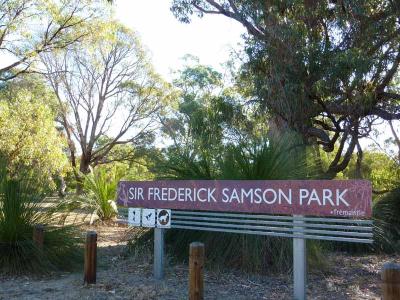
Samson is a small suburb of Fremantle, a southern port city in the Perth metropolitan area. The suburb was only developed in the 1970s, as before this it had belonged to the army, and was a military camp during World War II. The suburb is named after the Samson family, who have been prominent in the Fremantle area for nearly two centuries. Sir Frederick Samson was mayor of Fremantle for twenty years, from the 1950s to the 1970s, and his home, Samson House, is one of Fremantle’s landmarks. The suburb of Samson contains Sir Frederick Samson Park, Fremantle’s only bush reserve. Sir Frederick was the grandson of Lionel Samson, a wealthy Jewish merchant who settled in the Swan River Colony in 1829 and became one of its most successful pioneers. Popular for his charm and wit, respected for his integrity, the business he founded is still run by the Samson family, making it Western Australia’s oldest family business. Samson is one of the most famous characters in the Old Testament, a judge of the Israelites known for his superhuman strength. His name is from the Hebrew for “man of the sun”, leading some scholars to suspect he was originally a sun god, or demi-god. Samson was in use as an English name during the Middle Ages, and there is a Welsh St Samson, one of the Apostles of Brittany. This is a very masculine name which provides another way to get the popular short form Sam.

Sawyer
Sawyers Valley is on the eastern fringe of Perth’s outer suburbs, and 40 km from the city. Its name came about because it was originally a saw mill and timber processing area. It’s now a semi-rural suburb in the bush-covered hills surrounding Perth. Sawyer is an occupational surname for someone who sawed wood for a living – and in the days when most things were made of wood, an important trade. Sawyer has been used as a personal name since the 17th century, mostly as a male name. In Australian records, I can only find it as a man’s first name, although not unusual as a female middle name. Sawyer doesn’t chart in Australia, but has been in the US Top since 1991; it had a huge jump up the charts after Steven Spielberg chose the name for his son in 1992. In America, it is a unisex name, but more common for boys. Although it is in rare use here, I have seen it a few times, on both sexes. Its most famous namesake is Tom Sawyer, the young scamp from the stories by Mark Twain, while it has also been alias for Josh Holloway’s character on Lost.

Stirling
Stirling is a residential suburb 10 km north of the city. The area has a multicultural history, because in the 1920s it attracted retired Chinese miners from the goldfields, returned servicemen from the First World War, and many Italian migrant. It became a successful market gardening region producing almost every vegetable possible, some for export. Even after development in the 1960s and ’70s, the suburb remains one of Perth’s most ethnically diverse, with a third of the population having Italian heritage, and many from Macedonian, Greek and Asian backgrounds. The suburb is named after James Stirling, who was the first governor of Western Australia, and who lobbied for a colony to be founded on the Swan River. Stirling is a Scottish Clan name which comes from the city of that name in central Scotland; it is known as the “Gateway to the Highlands”. The meaning of its name is not known, although folk etymology says that it is from the Gaelic for “place of battle”. Another theory is that it is British, and means “dwelling place of Melyn”; the name Melyn is said to mean “yellow-skinned, sallow-skinned”. Stirling has been used as a boy’s name since the 18th century, and was first used this way in Stirlingshire. I have seen this name quite a few times in birth notices, and it’s one with a great deal of dignity.

Warwick
Warwick is in the northern suburbs of Perth, and a large section of it is still native bushland. It originally belonged to a railway company, and is named after Warwick Road, the major road which goes through it, and pre-dates the suburb’s development. It may have been inspired by Warwick Road in London. The name Warwick comes from the English city of Warwick in the Midlands; its name means “dwellings by the weir” in Old English, as the River Avon flows through it. It’s pronounced WOR-ik. The Earl of Warwick is one of the most prestigious titles in the British peerage, and Guy of Warwick a legendary English hero, which may help explain why Warwick has been used as a boy’s name since at least the 16th century. However, it seems to have originated in Devon, in the seat of a family named Warwick who belonged to the minor nobility. Warwick first charted in the 1910s at #203, joining the Top 100 in the 1940s, where it peaked at #80. It left the Top 100 in the 1960s, and hasn’t charted since the 1990s. Famous Australians with this name include the racing driver Warwick Brown, and flamboyant former AFL star, Warwick Capper.

POLL RESULTS
The public’s favourite names were Sawyer, Samson and Ashby, and their least favourite were Stirling, Warwick and Murdoch.

(Photo shows the entrance to Sir Frederick Samson Park, in Samson)

Celebrity Baby News: Louise Momber and Rob Scott

14 Monday Jul 2014

Posted by A.O. in Celebrity Baby News

≈ 4 Comments

Tags

celebrity baby names, choosing baby names, honouring, middle names

305635-44dcd694-07f9-11e4-a925-5ea9e614477c

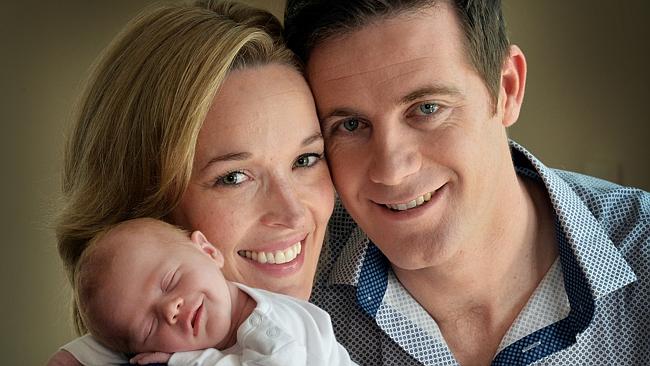
Journalists Louise Momber and Rob Scott welcomed their first child on June 24, and have named their daughter Ivy Elizabeth. Ivy Scott was born at St John of God Hospital in Subiaco, Perth.

Louise is a weekend news presenter for Channel Nine, and Rob is a news reporter for Channel Seven. The couple were married in 2012, and spent their honeymoon in Mauritius.

Ivy is a name that Louise and Rob had on their shortlist, and when their daughter was born, it suited her at once. The middle name Elizabeth is in honour of Louise’s mother, who passed away in 2012. Sadly, Louise lost both her parents to cancer within months of her wedding.

Perth Suburbs That Could Be Used As Girls Names

13 Sunday Jul 2014

Posted by A.O. in Name Themes and Lists

≈ 5 Comments

Tags

Anglo-Norman names, Anglo-Saxon names, Australian Aboriginal names, controversial names, english names, famous namesakes, French names, Gaelic names, historical records, Irish names, Italian names, Latin names, locational names, Lycian names, middle names, mottos, mythological names, name history, name meaning, name popularity, name trends, names of rivers, nicknames, Old English names, royal names, surname names, unisex names

quinns rocks beach

Aveley
Aveley is a neighbourhood of the town of Ellenbrook – an outer suburb in the north-east which is projected to be a future satellite city. Avely is named after a small town in Essex, where the Belhus estate was located: this stately home was once visited by Queen Elizabeth I, and had grounds landscaped in the 18th century by the famous Capability Brown. One of the early settlers to the Swan River Colony in 1829 was Edward Pomeroy Barrett-Lennard, the grandson of Lord Dacre, who owned Belhus. Edward Barrett-Lennard was assigned more than 13 000 acres in the Swan Valley, and his eldest son George purchased a large tract of land which he named Belhus after the family estate: it is this which eventually became Aveley. The name Aveley is Old English and means “Aelfgyth’s meadow”; Aelfgyth is an Anglo-Saxon woman’s name meaning “elf battle”. Avely is also a surname, and has been in rare use as a personal name since at least the 16th century. Historically more common for males, Aveley fits so well with current trends in female names that it seems more suitable for girls. Pronounced AV-uh-lee, this is a pretty, modern-sounding name with a feminine meaning and interesting history.

Carine
Carine is an affluent suburb 14 km north of the city. The area was once owned by the wealthy Hamsersley family, who came to the Swan River Colony in 1837, and before being developed in the 1960s, it was primarily used for farms and market gardens. The suburb’s name comes from the local wetlands, which are now known as Big Carine Swamp and Small Carine Swamp. Their names are a corruption of Careniup, the Noongar name for the wetlands, which means “the place where bush kangaroos graze”; it has the same origin as nearby Lake Karrinyup. The tranquil wetlands provide a home for rare water-birds and other native wildlife. Carine is already used as a girl’s name, the French form of Carina; it can be said in several different ways, but the Australian Carine is kuh-REEN. You would be hard pressed to find anything more Australian than “kangaroo” as part of a name’s meaning, and this is attractive, although perhaps slightly dated-sounding, due to its similarity to Karen, Caroline, and Corinne.

Floreat
Floreat is an exclusive suburb 8 km north-west of the city, close to beaches and filled with parkland. As well as swanky boutiques, it is also well known for its sporting facilities, including Perry Lakes Stadium, which was used for the 1962 Empire and Commonwealth Games, and has now been replaced with the Western Australian Athletics Stadium. The suburb’s name is Latin for “let it flourish, let it prosper”, which is the official motto for the City of Perth (and has been fulfilled, for the city has grown rich on the back of the mining boom). Floreat has been occasionally used as a unisex name since the 18th century. In Australian records, it has mostly been used as a middle name, and examples from Perth may have been named for the city’s motto. In Australia, Floreat has been more commonly used as a girl’s name, due to its similarity to Florence, which has the same Latin origins and meaning. With Florence now fashionable, and girl’s names ending with a T sound, like Charlotte and Violet, popular, Floreat seems a surprising choice as a name, but not an outrageous one.

Jindalee
Jindalee is a new outer suburb in Perth’s far north. Because development has only just begun, the beaches are almost untouched, and it is surrounded by bush, scrub, and heathland. The name Jindalee is believed to mean “a bare hill” in an unknown Aboriginal language of New South Wales; there is a town of Jindalee in New South Wales, and a suburb of the same name in Brisbane. The name may refer to Eglinton Hill in Jindalee, which provides views of the sea. I only found one person in Australian records with the name Jindalee, and it was in the middle; although he was a man, to me Jindalee seems feminine, and could be shortened to Jinny or Jindy. This is a lively name which seems quintessentially Australian in its flavour.

Kiara
Kiara is a quiet leafy suburb in Perth’s northern suburbs. Its name is from an Aboriginal word for “white cockatoo”, and it is not a Western Australian word, but one recorded in the Coffs Harbour region of New South Wales. The “white cockatoo” in question is probably the sulphur-crested cockatoo, a large, handsome, intelligent, curious, and very loud bird, native to the eastern states and far north of Australia. Australian parents seem to have a great fondness for girls’ names beginning with K, and this name sounds much like Italian Chiara, but with a distinctive Australian meaning. The name Kiara has charted since the 1980s, and first joined the Top 100 in 1999 at #67, peaking in 2005 at #49. It left the Top 100 in 2011, and is currently in the low 100s. It’s no longer popular, but still getting plenty of use.

Leda
Leda is one of the suburbs of the City of Kwinana, a coastal centre in Perth’s far south known as a working-class industrial area. Several of Kwinana’s suburbs are named for ships, and the brig Leda brought settlers to the Swan River Colony in 1830. The name was appropriate, because in Greek mythology, Leda was a queen of Sparta whose beauty attracted the attention of the god Zeus, who seduced her in the guise of a swan. Queen Leda didn’t have any unnatural interest in swans – the god-swan fell into her arms for protection while escaping from an eagle. Swans are one of the few birds which have a penis outside their body, like mammals do, and after this the specifics are left to our imaginations. Some artists and poets have depicted the act as a rape, while others show Leda as not just consenting, but positively enthusiastic. The same night, Leda lay with her husband, and from these biologically confused couplings, she gave birth to two eggs – one of which contained the ravishing Helen of Troy. Helen’s birth was commemorated by her father Zeus, who placed the constellation Cygnus, the Swan, in the sky. The meaning of the name Leda is not known for sure; it may be from the Lycian for “woman, wife”, and is pronounced LEE-duh. Simple and elegant, this is a name from Western Australian history which also references Perth’s Swan River.

Myaree
Myaree is a light industrial suburb 11 km south of the city. Its name is said to come from an Australian Aboriginal word meaning “plant leaves, foliage, greenery” (rather inaptly, given the suburb’s purpose). Myaree has been used as a baby name, although not apparently in Australia: it may have been an Anglicisation of an Arabic girl’s name, or a name created from other name elements. Apart from the pleasant meaning of Myaree, and its multicultural possibilities, in many ways it seems quite on trend, because of popular Maya, trendy Marley, and fashionable Myra. In other ways, it seems slightly dated, because of its similarity to names such as Maree and Nyree. To me it’s rather appealing and contemporary, while not unfamiliar in sound.

Quinn
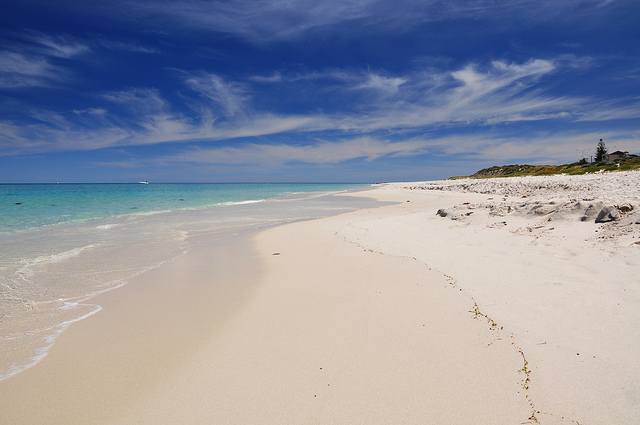
Quinns Rocks is in the outer northern suburbs of Perth. It was first settled in the 19th century by a family of sheep farmers called the Clarksons, who used it as pasturage. In the 1930s it was a place for seaside holidays, with many people building beach shacks along the coast. It began to be developed as a residential area in the late 1950s, and was declared a town in the 1960s. The beautiful white beach is the suburb’s major feature, and still attracts holidaymakers. The suburb gets its name from an offshore reef, and is believed to have been called after Robert Quin, a 19th century government surveyor who made the first records of the area. Another theory is that it is named after Mick Quinn, one of the Clarksons’ shepherds who had a shack in the area. Why it should be named after this shepherd in particular is not related, and the congruence of names seems most likely. Quinn is a common Irish surname, an Anglicised form of the Gaelic mac Cuinn, meaning “son of Cuinn”. Cuinn (which is Anglicised to Conn) means “head, chief”. The surname’s originator is Art mac Cuinn, a High King of Ireland; according to legend, he and his father Conn of the Hundred Battles, also a High King, had dealings with a fairy woman. The Quins were one of the noble families of Ireland, but the line came to an end a few years ago. Quinn is rising rapidly as a unisex name, and currently seems to be almost equal between the genders, while also performing well as a middle name. Expect to see more Quinns in the future.

Serpentine
Serpentine is a small town on the very fringes of the metropolitan area, 55 km south-east of the city, on the railway line between Perth and Bunbury. The town is named after the nearby Serpentine River, so called because of its meandering course. Serpentine has been used sparingly as a name since the 19th century, and in Australian records is found mostly as a middle name, divided fairly evenly between males and females. Most of the Serpentines were from the Perth area, making me think they were named after the river. Serpentine is a problematic name, because while serpentine means “winding, curving” (like a serpent), it can also mean “crafty, deceitful”. The second meaning is an obvious allusion to the serpent in Genesis, who leads Eve into temptation. While this may give some people the jitters, serpents are also ancient symbols of wisdom and healing, and are often depicted guarding sacred places; a serpent holding its tail in its mouth is a symbol of eternity. In Australian Aboriginal myths, the Rainbow Serpent is a significant deity, symbolising life and fertility. Strong and mysterious, sinuous Serpentine may be easier to bear as a middle name.

Viveash
Viveash is a secluded riverside suburb in the city’s north-west. It is named after Dr Samuel Waterman Viveash, a prominent pioneer who arrived in the Swan River Colony in 1838, and took up farming. Viveash is an English surname whose origins are disputed; it may be Anglo-Norman, and come from the French vivace, meaning “lively, vigorous”. However, because it is pronounced like “five ash” with a V instead of an F at the start, it is often linked to places in southern England called Five Ash Trees. Viveash has been used as a personal name for both sexes, almost exclusively found in the middle position. Examples from Australian records are all from Western Australia, and nearly all from the Perth area, making it likely they were named in honour of Dr Viveash. Viveash is a very unusual name, but is vaguely similar to Vivian and Ashley, while having a distinct sound and feel of its own.

POLL RESULTS
The public’s favourite names were Quinn, Aveley and Leda, and their least favourite were Jindalee, Serpentine and Viveash.

(Photo is of the beach at Quinns Rocks)

Famous Name: June

25 Wednesday Jun 2014

Posted by A.O. in Famous Names

≈ 1 Comment

Tags

Biblical names, english names, famous namesakes, Latin names, middle names, mythological names, name history, name meaning, name organisations, name popularity, names from songs, names of months, nicknames, Roman names, saints names, unisex names, US name popularity, US name trends

art-353-june-300x0

Here we are at the end of June, and our last chance to cover the name of this month. On Sunday, I covered the winter solstice, where I said how mild it was – June was all blue skies and sunshine then. Little did I know the very next day a blizzard would hit, with massive snowfalls in the mountains, and freezing, gale-force winds and heavy rain elsewhere. So winter has definitely started now.

June Wright was once Australia’s queen of crime fiction; her first novel, Murder in the Telephone Exchange, was the best-selling mystery novel of 1948 in Australia, outselling the latest Agatha Christie. It featured feisty telephonist-turned-amateur-detective Maggie Byrnes, and was set during a blazing hot February in post-war Melbourne. These were the days when young working ladies lived in boarding houses where gentleman callers were not permitted, and leaving your bedroom clad only in pyjamas and dressing gown was an absolute no-no.

June went on to write five more novels, including a second Maggie Byrne mystery where the post-war housing shortage leads her into another interesting case to solve. The Devil’s Caress, which has a female doctor as the detective, was described as making Murder in the Telephone Exchange look like a bedtime story, and her last three novels featured Mother Mary St. Paul, an unassuming yet strong-willed Catholic nun detective that June Wright based on the head of the maternity ward where she gave birth to twins.

While June’s wartime experience as a telephone operator was the inspiration for Murder in the Telephone Exchange, it was her career as housewife and mother to six children, one severely intellectually disabled, that was seized upon by the women’s magazines of the day, who brought out articles with titles like “Wrote Thriller With Baby on Her Knee” and “Books Between Babies”. The writer of dark, gory murder mysteries with strong female protagonists was careful to present herself as charming and and feminine, and pointed out that both housewives and writers had to be practical, disciplined, and used to monotony.

June’s last novel was published in 1966. Her husband had a nervous breakdown, and June went back to work as a telephonist to support the family, before she and her husband started a cleaning business together. Although there are no hints she regretted having to abandon her literary career, she lived a long life (she only passed away recently), and it’s hard not to think of the many years she could have kept writing under different circumstances.

June lapsed into literary obscurity, and her works have been out of print for many years. However, in February this year Murder in the Telephone Exchange was re-issued by Dark Passage, an imprint of US publisher Verse Chorus Press. They will be bringing out all her novels, including previously unpublished Duck Season Death.

I haven’t bought my own copy yet, but this is welcome news for lovers of vintage fiction, women’s fiction, and Australian crime fiction. I think the books would be especially interesting for Melburnians from a historical perspective.

The name June is after the sixth month of the year. The Romans called the month Junius, commonly believed to be named in honour of the goddess Juno, the wife of Jupiter and queen of the gods. Do you remember the Happy June group, who celebrated June Day on June 1 every day? Well, on the first day of June, the ancient Romans had a festival dedicated to Juno’s “birthday”, in her role as goddess of war and protector of the state. So in a way, there is a “June Day” just as much as a “May Day”.

Because Juno was the goddess of marriage, the month of June was thought an auspicious time for weddings. This makes a lot of sense in the northern hemisphere, where it is early summer: in the United States, June is the most popular month for weddings, and in Italy, June is still a popular month to be married. In Australia, November is the most popular month for weddings (just to confuse things, in the United Kingdom August is the traditional wedding month – in Italy this is considered incredibly bad luck and very unhealthy).

As June is the start of summer in the northern hemisphere, there the name June may seem ripe and womanly, full of vitality and promise – as the song says, June is Bustin’ Out All Over. Here June is the start of winter, and to me it seems cool and fresh as a mountain breeze, and pure as snow.

June has been commonly used as a girl’s name since the 19th century, and part of its appeal must have been that it sounded similar to popular names such as Joan and Jane. It would have also seemed like a “real name” because of Latin names such as Junia – Saint Junia is venerated in the Orthodox tradition, and is mentioned in the New Testament as having a leadership role in the early Christian church. In the US, June has also been used as a male name, derived from Junius.

In Australia, June began charting in the 1910s, debuting at #162, and climbing so steeply that it was #15 for the 1920s. It peaked in the 1930s at #10, fell until it left the Top 100 in the 1950s, and last charted in the 1970s.

June does not chart in either Australia or the UK, but in the US June is already in the 300s and rising very briskly after only re-joining the Top 1000 in 2008. The United States is leading the way, and I think this is an American name trend well worth considering.

June is sweet and charming, and has the fashionable OO sound in it, like Ruby and Lulu. This is a hip vintage choice, and also a simple nature name, like Wren or Rain. Not only can it be used to honour a relative named June, or for cases where June is a special month for you, this would make a great name for someone who wanted something that was traditional and “old-fashioned”, while still seeming fresh and underused.

June could be used as a short form of names such as Juniper, Junia or Juno, and is getting some use as a middle name, but it would be lovely to see it up front as the full name. Junie is the usual pet form.

POLL RESULTS
June received an excellent approval rating of 80%, making it one of the highest-rated names of 2014. People saw the name June as vintage and hip (26%), sweet and charming (23%), traditional yet fresh (15%), and pretty or cute (10%). However, 9% saw it as only a middle name. Only one person thought the name June was too trendy.

Waltzing With … Winter

22 Sunday Jun 2014

Posted by A.O. in Waltzing with ...

≈ 6 Comments

Tags

birth notices, english names, Gaelic names, German-Jewish names, historical records, Irish names, middle names, name history, name meaning, name popularity, nature names, season names, surname names, UK name trends, unisex names, US name trends, vocabulary names

flat,550x550,075,f (1)

Yesterday was the winter solstice, so we are now embarking on the coldest part of the year. In Hobart they celebrated the winter solstice with an icy nude swim at sunrise, and declared that being half frozen to death was quite exhilarating.

It’s been a fairly mild winter so far (hopefully in Hobart too), although winter still came as a shock to me as we’d had such a warm autumn. There’s lots to enjoy about winter: the grass which was dry and brown in summer is now a lush green; the sunshine is warm, but doesn’t burn; the clear blue skies of winter are more beautiful than in summer.

I look forward to making soup, walking for miles without getting hot and sweaty, footy season, weekends ski-ing, and cold nights at home by the fire. I love the eerie look of trees looming through fog, waking up to find a glitter of ice on the lawn, snow capping the mountains, or falling softly on the house like icing sugar.

Of course, I also hate going to work in the pitch dark, finding the frost has killed all the vegetables in the garden, everyone tracking mud and dead leaf mush into the house, and miserable grey days where the sun doesn’t appear until 3.30 pm, then sets at 4. But on a sunny winter Sunday, it’s easy to forget all that.

I planned to do the name Winter today back in January, but yesterday a blog reader considered the name Winter for one of her twin daughters, and on Friday there was a boy with Winter as one of his middle names, so what with the winter solstice, this does seem like the weekend for Winter.

Winter is an English word derived from Ancient Germanic. The original meaning is not known for sure: it may come from an ancient word for “water”, possibly to denote “wet season”.

The English surname Winter started out as a nickname for someone who was of a cold or miserable “wintry” temperament – not very flattering! As an Irish surname, Winter can be an Anglicisation of the Gaelic Mac Giolla Gheimhridh, meaning “son of the servant of Gheimhridh”, with the personal name Gheimhridh meaning “winter”. Winter can also be a German-Jewish surname after the season. The surname is frequently spelled Wynter, making this a variant spelling with a long history.

Winter has been used as a first name since at least the 16th century, and according to early records, most people named Winter were born during the winter months. Later records don’t seem to show much correlation between the name Winter being chosen and the season of birth.

Winter is historically much more common as a male name, suggesting that the surname was more influential than the season. These days, Winter is more often thought of as a female name, and it charts in the United States as a girl’s name only, where it is rising. In the UK, Winter is more common for girls (more than three times as many Winters are girls), but is rising steeply for both sexes. Interestingly, the less common spelling Wynter has been much more evenly given to both sexes through history (although still more common for males).

Winter was in the 200s in Victoria in 2012 – there were almost as many baby girls named Winter just in this state as in the whole of the UK. I see Winter used mostly as a girl’s name in Australian birth notices, but it seems more common as a boy’s name in the middle position, showing its great versatility.

Even though Winter is currently more common as a girl’s name, it still seems very usable for boys. It sounds similar to Winston, is a surname, and the season of winter isn’t generally thought of as particularly feminine. It is sometimes personalised as Old Man Winter or Father Winter, and another “winter character” of folklore is Jack Frost. This always reminds me of the Australian bird, the Jacky Winter – another boyish-sounding winter connection.

I can think of two famous female characters connected to winter, and they are both from the fairy tales of Hans Christian Anderson. One of them is the beautiful yet deadly Ice-Maiden, and the other is the Snow Queen. Although the Snow Queen is a seemingly malevolent character, she is an attractive one: beautiful, strong, and intelligent, she is a “queen bee”. Because of these two characters, we call an alluring yet frosty woman an “ice maiden” or “snow queen”, and rumour has it that Anderson based both these characters on the opera singer Jenny Lind, and her rejection of him.

The Snow Queen recently received a reboot in the Disney film Frozen, with a completely different plot and characters from Anderson’s fairy tale. The stranger-danger theme of a beautiful cold woman in a sleigh seducing, abducting, and imprisoning a little boy had already been co-opted by C.S. Lewis for The Lion, the Witch and the Wardrobe, so something different was necessary.

Frozen has been a huge hit, with its appealing characters, fun dialogue, heart-warming coming-of-age story, and catchy songs. As Ebony from Babynameobsessed has pointed out, that has had an effect on the naming world. The name Elsa is becoming more popular, Arendelle suddenly seems usable as a baby name, and perhaps we can expect more winter-inspired names such as Snow, Frost, Ivy, June … and Winter.

Winter is a clean-sounding name that conjures up the purity of virgin snow, mysterious fog descending on the earth like a white blanket, the crisp sparkle of morning frost. Or maybe it reminds you of invigorating hikes in the cold air, and the thrill of downhill ski-ing, or of hot cocoa drunk before a blazing fire, and snuggling under the quilts at night while listening to a storm roaring outside.

When I think of stories connected with winter, apart from ice maidens, snow queens, white witches and frost fairies, I think of the white bear in the tale East o’ the Sun and West o’ the Moon, of the frost giants of Norse legend, of William Shakespeare’s comedy The Winter’s Tale, with its frozen queen, and Mark Helprin’s New York fantasy, Winter’s Tale.

There are so many fantasy stories about winter, perfect for recounting before the fire on cold nights, that there seems something magical it. Anything is possible in a winter wonderland – it’s a season of miracles.

POLL RESULT
Winter received an extremely good approval rating of 78%. 28% of people loved the name, while a further 24% liked it. Less than 10% of people hated the name.

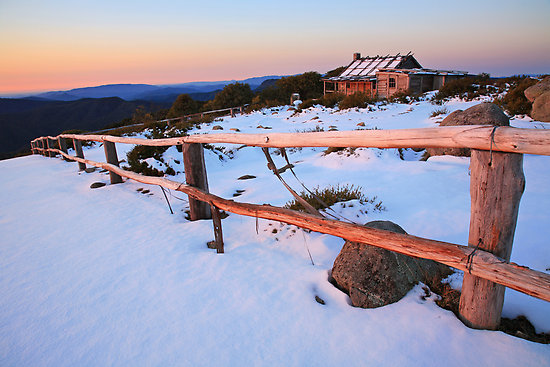
(Picture shows Craig’s Hut at Thredbo, New South Wales; photo from Red Bubble)

What Do You Think of These Names for Twin Girls?

21 Saturday Jun 2014

Posted by A.O. in Naming Assistance

≈ 43 Comments

Tags

choosing baby names, middle names, name combinations, sibsets, twin sets

1239206772_73d2cd57f8

Constance is obsessed with names, and now she is living out many a name nerd’s fantasy – she and her partner Sean are expecting twin girls next month.However, she’s finding the reality is a lot more stressful than you might think!

Connie and Sean have different name preferences, which is proving tricky to co-ordinate with twin’ names. Sean’s favourite name for a girl is Martha, which Connie thinks is lovely, but has found that other people aren’t so welcoming towards it.

Her own favourite for a girl is Winter – nice and straightforward, yet being a name nerd, she can’t help dreaming up lists of other possible twin combinations. She feels that she has lost sight of which names she really loves, and which are just passing name crushes. (Any of this sounding familiar???)

What Constance and Sean would like in a name:

  • universally recognised, if possible
  • an established name which isn’t too common, or too faddish
  • easy to pronounce
  • has a positive meaning and name history
  • possess some character, such as being strong even though feminine

Connie and Sean already have a son named Christian, and they like that his name is well known, established, but not too common. However, they aren’t fussed if the twins’ names don’t “match” with Christian.

Some twin combinations Constance is considering:

  • Ursula and Wilhelmina (nn Ursi and Willa)
  • Alexandra and Raphaelle
  • Olivia and Winter
  • Olive and Winter
  • Posie and Martha
  • Isis and Olive
  • Frances and Sophia
  • Bridget and Anabel
  • Delphi and Sophia
  • Theodora and Aurora (nn Teddy and Rory)
  • Noa and Isa
  • Violet and Mabel

Connie finds middle names a lot easier, and she likes them to be a little more flamboyant than the first name eg Winter Raphaelle, Martha Primrose. The surname ends an EE sound eg Raleigh, so Connie doesn’t want a name that ends with that sound.

Connie feels as if she is going around in circles, while Sean has had enough of it all and has simply given up.

* * * * * * * * * *

I don’t blame you both for feeling overwhelmed – naming even one child is a challenge, and having to do two at once is exponentially harder. I wonder if being a name nerd is making you feel even more pressured than usual, as if you must come up with twin names that are perfect in every way. I think that’s how I might feel in your position, at least.

I admire both the name Sean likes best, and the one you like best, and there’s a part of me that would like to be able to say, Well why not have twin girls called Martha and Winter? They are both lovely names, and would be given with love. And yet …. that might be being too idealistic.

People have a horrible tendency to judge twins against each other, especially female twins. The tiniest differences will be remarked on, so that a twin 2 inches smaller than her sister can be called the “short twin”, or one preferring to read while her sister loves sports will be called the “nerdy twin”.

I’m labouring this point because I notice that in several of your twin pairings, one twin has a name which is noticeably more clunky, or less popular, or less feminine, or less “cute” than the other. Part of me isn’t bothered by it, and would like to live in a world where one twin having a clunkier name, or one twin being shorter or more freckled or thinner or sportier, just doesn’t matter. Both are equally good, both are equally precious and loved.

Then there’s the part of me of that worries how the world will judge things. I know it’s not possible to ensure your children’s’ names are equal in every way (and if they are too even, then they seem “matchy”), but I think it’s worth keeping in mind.

Ursula and Wilhelmina (nn Ursi and Willa)
I really love this – these names are both quite substantial, but also elegant and sophisticated. I just wish there was a better nickname for Ursula: Willa is quite fashionable as a name in its own right, while Ursi seems more obviously “just a nickname”.

Alexandra and Raphaelle
Very pretty combination, although Raphaelle is a bit more exotic than popular Alexandra. I wonder if giving if it a little twist, such as Alessandra or Alexandria, might even things up a bit?

Olivia and Winter
I think this is a real crowd-pleaser: I can imagine very few people disliking this set of twin names. Because Olivia is a name from Shakespeare, and The Winter’s Tale is one of his plays, it even seems quite literary. Olivia is a very popular name, which does break one of your “rules”, but perhaps that won’t seem as important as you thought.

Olive and Winter
I can see you’ve gone for a less popular form of Olivia, and I do like these as twin names, but somehow I keep thinking Olivia seems like a more natural fit.

Posie and Martha
This is absolutely charming, although Martha seems a much sturdier choice than pretty Posie, and Posie also seems more nicknamey. To me it works though; they seem to balance each other without being too much of a clash. Posie does end with an EE sound like your surname – would a formal name like Josephine help?

Isis and Olive
To me it seems unfair for one twin to be named after a goddess, and the other after a tree.

Frances and Sophia
I love the way these two names sound together, with one beginning and the other ending with a S. Sophia is obviously a lot more popular than Frances though.

Bridget and Annabel
These are both very attractive vaguely Celtic names, although Bridget probably does fall under the “clunkier name than the other twin” category. I’m not sure it matters though.

Delphi and Sophia
I love the shared PH sound in the middle and the Greek origin of these names: both very meaningful as well. There’s quite a difference in popularity of course.

Theodora and Aurora (nn Teddy and Rory)
Love the tomboy nicknames for these elaborate formal names, but Theodora and Aurora do actually rhyme with each other. Not that it’s as noticeable as Fay and May, or Sallie and Hallie.

Noa and Isa
These seem very different from the other names you’ve chosen, so neat and simple, and even unisex. However, to me Noa seems like a name, while Isa is “just a nickname”.

Violet and Mabel
I like this pairing of retro names very much, they seem perfectly matched without being matchy. And they are pretty without being fluffy – they’ve got some sass to them.

I can why you keep going round in circles, because you like a wide variety of names, from rare to the Top 5, from frilly and feminine to sturdy and clunky, from long and elaborate to short and snappy. It’s one of the perils of name nerdism.

I wonder if it would help if you focused on those names and styles you like best, and concentrated on those. You did say that Winter was your favourite name, so what about if you tried to find a match for it, rather than thinking of all the possible name combinations?

What about:

  • Winter and Annabel
  • Winter and Sophia
  • Winter and Elodie
  • Winter and Scarlett (both surnames, a white/red combo)
  • Winter and Clementine (clementines are a winter fruit)
  • Winter and Posie (an allusion to winter and spring)
  • Winter and Violet (another winter/spring combination)
  • Winter and Lark (another winter/spring combination)
  • Winter and Aurora (an allusion to darkness and dawn)
  • Winter and Eden (another beginning/end combo, both unisex names)

I know poor Sean has become exhausted by it all and retreated, but once he’s had a good rest I hope you can persuade him to start talking names again. It’s a big task to name two babies all on your own, and I think you need his input and feedback. He might find it less overwhelming to discuss something specific, like, What name sounds nicest with Winter?, rather than What possible combinations could we think up for the twins?

Both you and Sean have got fantastic taste in names, even if your tastes don’t always synchronise, and I know you are going to pick beautiful names for your girls.

Readers, what do you think would be good names for the twin girls?

UPDATE: The twins names are Martha Primrose “Posie” and Winter Raphaelle!

POLL RESULT: The public’s choice for the twins’ names was Mabel and Violet.

What Would You Name a Sister for Allegra?

14 Saturday Jun 2014

Posted by A.O. in Naming Assistance

≈ 6 Comments

Tags

celebrity baby names, choosing baby names, flower names, honouring, Italian names, middle names, rare names, sibsets, underused names

IRISES-SAINT-REMY-C-1889_03

Imogen and Charles are expecting their second child later this year, and while they have had no difficulty choosing a boy’s name, they are struggling with girls’ names.

The couple already have a daughter named Allegra, and her name was always such a stand out for them that nothing else ever had a chance. Now they wish they could find that perfect name again: one that is strong, but still feminine, and not in the Top 100. It also has to be something that isn’t overshadowed by Allegra. Allegra has two family names as her middle names, one of which is Claire.

Imogen and Charles’ Short List

  • Iris
  • Clara
  • Margot
  • Greta
  • Greer

Other names they like (as an idea of their tastes):

  • Celine
  • Viola
  • Virginie
  • Sloane
  • Inneka

Charles favours the name Margot, while Imogen prefers Clara, Greta, and Greer. However, they have recently come up with Iris together, and at the moment this is their front runner.

Claire is a middle name which all the women in Imogen’s family carry, and they will use it again, unless they choose Clara as the first name. Their surname begins with H and ends with an -ee sound eg Hillary, Hardesty.

Imogen would love to know what people think of their name list, and if they have suggestions for other names they might like.

* * * * * * * * * *

This is such a common problem with a second baby – the name you chose for your first child was so utterly perfect it didn’t need to be thought about, but the name for the second doesn’t come as easily. Of course you want your second daughter to have a name as equally beautiful, distinctive and loved as her elder sister, and it will happen, even if it takes a bit more work to get there.

Iris
I went for a walk this morning, and saw a garden where there were some winter-blooming blue irises; I thought what beautiful flowers irises are, and what a lovely name Iris makes. I know Iris is your front-runner at the moment , and it’s probably my favourite on your list too. It does seem both strong and feminine, and I don’t believe it’s overshadowed by Allegra – it has its own style, and a beauty all it own. I also like that it’s a name you both chose together.

Clara
This is one of my favourite names, but I’m not sure about it with Allegra. You probably know that Allegra was the daughter of the poet Lord Byron, and her name was actually Clara Allegra – she went by her middle name. To me the two names seem a bit too much as sisters, especially as poor little Clara Allegra didn’t have a long life.

Margot
This is interesting, because just a few weeks ago a couple wrote in to the blog considering the name Margot for their second daughter. Margot suddenly feels like a name of the moment! No wonder, as it’s such a beautiful, stylish choice, and a great favourite with the public too, if the poll attached to the earlier post is anything to go by. I do like the way Margot sounds with your surname, and Allegra and Margot are gorgeous together.

Greta
Greta is definitely a strong name, and isn’t overshadowed by Allegra. Somehow when I say the two names together, they sound rather alike to me … They both have a strong GR and short e sound in them, and end with an -a sound. Some people really like similar-sounding sibling names like this, but I must admit to preferring them to sound more distinctive.

Greer
You seem to really like the GR sound in names! In theory, Greer should be the best match with Allegra as neither of them have ever charted, but to me this has the same issue as Greta, but even more so. Allegra and Greer almost seem to run into each other, as if Greer is the final syllable in Allegra given a little twist.

Other names you might like

  • Beatrice or Beatrix
  • Celia or Cecilia
  • Cora (a little like Clara)
  • Cosima (another Italian name, like Allegra)
  • Dahlia (another flower name like Iris)
  • Genevieve
  • Ingrid or Sigrid (other GR names)
  • Isadora
  • Marguerite (as you seem to like “Margaret” names)
  • Miriam
  • Pearl (literal meaning of Margaret)
  • Saskia
  • Seraphina or Sapphira
  • Theodora or Thea
  • Vivian or Vivienne

To me, all these names are very feminine, but still have strength to them, and they don’t seem mis-matched as sisters to Allegra. None of them are any more popular than the 200s; most are lower than that, and many don’t chart at all or have never charted.

However, I wonder if you have already picked out the perfect name? Good luck with your name search, and do let us know what name you eventually choose.

Readers, what do you think of the names Imogen and Charles are considering, and do you have any suggestions of names they might like?

UPDATE
The baby was a boy, and his name is Fitzpatrick!

POLL RESULTS
People’s favourite choice for a girl’s name to go with Allegra was Iris, with 39% of the vote, and Margot was close behind at 35% of the vote.

(Painting shown is Irises by Vincent Van Gogh, 1889)

← Older posts
Newer posts →

Enter your email address to follow this blog

Categories

Archives

Recent Comments

A.O.'s avatarwaltzingmorethanmati… on Zarah Zaynab and Wolfgang…
Madelyn's avatarMadelyn on Zarah Zaynab and Wolfgang…
JD's avatardrperegrine on Can Phoebe Complete This …
A.O.'s avatarwaltzingmorethanmati… on Rua and Rhoa
redrover23's avatarredrover23 on Rua and Rhoa

Blogroll

  • Appellation Mountain
  • Baby Name Pondering
  • Babynamelover's Blog
  • British Baby Names
  • Clare's Name News
  • For Real Baby Names
  • Geek Baby Names
  • Name Candy
  • Nameberry
  • Nancy's Baby Names
  • Ren's Baby Name Blog
  • Sancta Nomina
  • Swistle: Baby Names
  • The Art of Naming
  • The Baby Name Wizard
  • The Beauty of Names
  • Tulip By Any Name

RSS Feed

  • RSS - Posts

RSS Posts

  • Celebrity Baby News: Melanie Vallejo and Matt Kingston
  • Names from the TV Show “Cleverman”
  • Can Phoebe Complete This Sibset?
  • Zarah Zaynab and Wolfgang Winter
  • Baby, How Did You Get That Name?
  • Celebrity Baby News: Media Babies
  • Celebrity Baby News: Adelaide Crows Babies
  • Celebrity Baby News: Chris and Rebecca Judd
  • Names at Work: Name News From the World of Business and Employment
  • Celebrity Baby News: Sporting Round Up

Currently Popular

  • Celebrity Baby News: Alisa Camplin and Oliver Warner
  • Rare Boys Names From the 1950s
  • Sad Celebrity Baby News (contents may cause distress)
  • The Top 100 Names of the 1930s in New South Wales
  • The Top 100 Names of the 1940s in New South Wales

Tags

celebrity baby names celebrity sibsets english names famous namesakes fictional namesakes honouring locational names middle names name combinations name history name meaning name popularity name trends nicknames popular names saints names sibsets surname names twin sets unisex names

Create a free website or blog at WordPress.com.

Privacy & Cookies: This site uses cookies. By continuing to use this website, you agree to their use.
To find out more, including how to control cookies, see here: Cookie Policy
  • Subscribe Subscribed
    • Waltzing More Than Matilda
    • Join 517 other subscribers
    • Already have a WordPress.com account? Log in now.
    • Waltzing More Than Matilda
    • Subscribe Subscribed
    • Sign up
    • Log in
    • Report this content
    • View site in Reader
    • Manage subscriptions
    • Collapse this bar
 

Loading Comments...