• About
  • Best Baby Names
  • Celebrity Baby Names
  • Celebrity Baby Names – Current
  • Celebrity Baby Names – Past
  • Featured Boys Names
  • Featured Girls Names
  • Featured Unisex Names
  • Links to Name Data
  • Waltzing on the Web

Waltzing More Than Matilda

~ Names with an Australian Bias of Democratic Temper

Waltzing More Than Matilda

Tag Archives: honouring

Celebrity Baby News: Isla Fisher and Sacha Baron Cohen

18 Saturday Apr 2015

Posted by A.O. in Celebrity Baby News

≈ 1 Comment

Tags

adult name changes, celebrity baby names, celebrity sibsets, hebrew names, honouring, name meaning

1429261628362

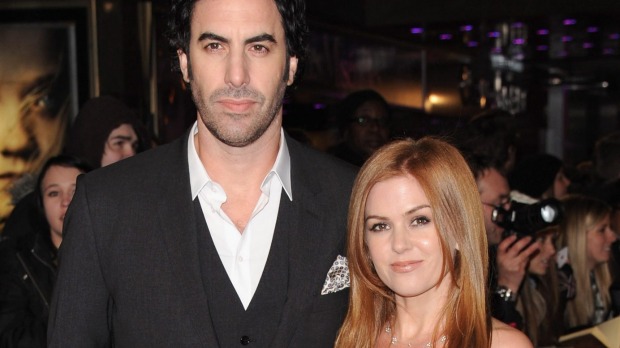
Actress Isla Fisher, and her husband Sacha Baron Cohen, reportedly welcomed their third child on March 17, with their son’s name on the birth certificate given as Montgomery Moses Brian. Brian seems to be in honour of Isla’s father, Brian Fisher. Montgomery joins big sisters Olive, aged 7, and Eulula, aged 4.

Isla was born in Oman to Scottish parents, and after an early childhood in Scotland, moved to Australia at the age of six. Her acting career began in TV commercials at the age of nine, and continued with roles on children’s television programs such as Paradise Beach. She was a regular on Home and Away for three years, before attending a drama school in Paris, and taking on roles in theatre. Early films roles included parts in a German horror movie The Pool, Scooby-Doo, and Australian film The Wannabees. Her breakthrough Hollywood role was in The Wedding Crashers, and she has appeared in Wedding Daze, Definitely, Maybe, Confessions of a Shopaholic, Bachelorette, and The Great Gatsby, as well as several episodes of Arrested Development. Isla published two YA novels as a teenager, and has also co-written film scripts. After converting to Judaism before her marriage, she took the Hebrew name Ayala, meaning “doe”.

Sacha is an English actor, comedian and writer. He is best known for creating and playing four comic characters – Ali G, Borat Sagdiyev, Brüno Gehard, Admiral General Aladeen – who have appeared in televison shows and films. He has also made film appearances in Talladega Nights, Sweeney Todd, Hugo, Les Misérables, and Anchorman 2, and been in episodes of Curb Your Enthusiasm, and The Simpsons. Sacha and Isla met at a party in Sydney in 2002, and they were married in Paris in 2010.

Rare Boys Names from the 1940s

12 Sunday Apr 2015

Posted by A.O. in Name Themes and Lists

≈ 7 Comments

Tags

animal names, aristocratic names, car names, Cornish names, english names, famous namesakes, fictional namesakes, flower names, French names, germanic names, Greek names, honouring, Italian names, locational name, musical names, mythological names, name history, name meaning, names from comics, nature names, nicknames, Old English names, Old Norse names, papal names, plant names, rare names, saints names, scientific names, Scottish names, surname names, twin sets, unisex names, vintage names

P01022.021

The most popular boys names of the 1940s were John, Peter, Robert, and David, but what were the least popular names? Here are ten names which were only chosen once in any year between 1944 and 1949 in South Australia, making them unique names for their time and place. Still rare, some feel surprisingly contemporary, while one or two have perhaps had their day.

Aston
English surname of multiple origins. It can be from a common place name meaning “east settlement”, to indicate a village to the east of a larger town, although occasionally it seems to be a corruption or variant of Ashton, meaning “settlement near the ash trees”. It can also mean “at the stone”, to indicate someone who lived near a prominent stone. Finally, it can be a contraction of a personal name such as Aethelstan, meaning “noble stone”, and there are examples of men with Aston as a first name in the Middle Ages from this derivation. Sir Aston Cockayne, 1st Baronet, was a 17th century writer who was on the Royalist side during the English Civil War, and a close friend of the future Charles II. The name might remind you of Aston Villa Football Club, in the English Premier League, or Aston Martin luxury cars – both familiar in the 1940s as well. I see the name Aston name sometimes in birth notices, perhaps inspired by Aston Merrygold from English boy band JLS.

Bramwell
English surname from an unknown place name meaning “stream surrounded by broom” – broom is a hardy European shrub with yellow flowers. The name has a strong connection with the Salvation Army, because Bramwell Booth was the second General of the Salvation Army who served during World War I, the eldest son of its founder, William Booth. We know the name was used by Salvationists, because Bramwell Tillsley, a Canadian who was the son of British Salvationists, was the 14th General of the Salvation Army. The Salvation Army has a strong history in South Australia, with the first official Salvation Army corps formed in Adelaide in 1880. Booth was also used as a baby name during the 1940s, with the Salvation Army’s support of the troops being greatly appreciated. Bramwell is an attractive, little-used surname that has the appealing nickname Bram.

Cosmo
Form of the Greek name Kosmas, meaning “order”, and thus the opposite of “chaos”. The Greeks also used the word to mean “the world”, because they believed the world was perfectly put in order. We use the word cosmos to mean “the universe, all of creation”. According to tradition, Saint Cosmas was a skilled doctor; along with his twin brother Damian, he performed many miraculous cures before his martyrdom. The name Cosmo was introduced to Britain by the Scottish peer Alexander Gordon, 2nd Duke of Gordon, when he named his son Cosmo in 1720. Cosmo’s name was in honour of his father’s close friend Cosimo di Medici – Cosimo is the Italian form of Kosmas. The name has always had a rather exotic and aristocratic image, and Scottish associations. There were several famous Cosmos that could have inspired the name in the 1940s, including popular British playwright Cosmo Hamilton, and Archbishop of Canterbury Cosmo Lang. Cosmos is also a type of daisy, whose name comes from the same Greek origin, so with some imagination, the name Cosmo could honour someone named Daisy.

Denzil
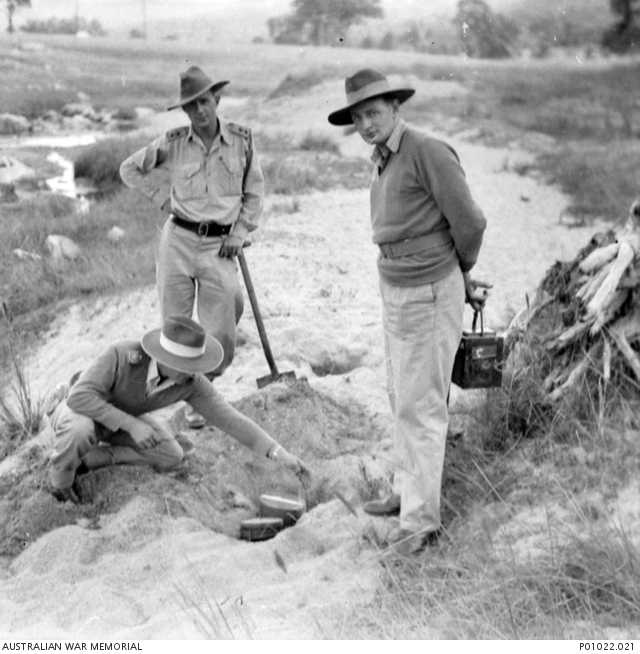
Variant of Denzel, a Cornish surname. The name was traditional in the aristocratic Holles family, with one of the earliest and most famous of their number to bear the name Denzil Holles, 1st Baron Holles, a 17th century statesman who is best known for being part of a group who attempted to arrest King Charles I, sparking the Civil War, but also took a leading role in bringing about the Restoration. The Denzel spelling came first, as Denzil Holles’ grandfather was Denzel Holles. These Denzils and Denzels were named in honour of their ancestor John Denzel, who had large estates in Cornwall in the 16th century and was Attorney-General to Elizabeth of York, queen of Henry VII. John Denzel took his surname from the Denzell manor house in St Mawgan, Cornwall, and the meaning of its name is not known for sure, although perhaps from the Celtic for “hill fortress in open view”. A 1940s Australian namesake is Sir Denzil Macarthur-Onslow, a World War II general regarded as a “cracker of a bloke”. Denzil still seems contemporary because of American actor Denzel Washington, and is very usable.

Everard
Derived from the ancient Germanic name Eberhard, often translated as “brave as a wild boar”. The name was introduced by the Normans to Britain, where there was already an Old English form of the name, Eoforheard. A famous namesake is Sir Everard Digby, who was executed for his part in the failed Gunpowder Plot, and another was Everard Calthrop, a railway engineer who helped develop the modern parachute. Although in use since the Middle Ages, modern usage has probably been influenced by the surname, as the Everards are an aristocratic family who have been created baronets in both Ireland and England. Everard Park is a suburb of Adelaide, named after the prominent pioneer Sir Charles Everard, said to have the best orchard in the colony, giving this a strong South Australian feel. Everard is an interesting twist on classic Evan, and the trend for girls’ names starting with Ev- may also be a help.

Garfield
English surname referring to someone living near a triangular field; the word gar means spear in Old English, and a gar field is one that is shaped like the point of a spearhead. The surname is well known in the United States, as their 20th president was James A. Garfield, and his sons also went on to have illustrious public careers – there is a town in Victoria named Garfield in honour of the American president. A namesake from the 1940s was Hollywood  actor John Garfield, while one with Garfield as his first name is Garfield “Gar” Wood, an American inventor, showman, and record-breaking motorboat racer – the first to travel over 100 miles an hour on water. An Australian namesake from this era is Sir Garfield Barwick, a barrister who came to prominence during a 1943 court case involving the Archibald Prize. He later became a Liberal MP, Attorney-General, and Chief Justice of the High Court of Australia. He was the legal advisor to Sir John Kerr during the controversial dismissal of Prime Minister Gough Whitlam (an old enemy of Barwick’s), so he well and truly made history. Garfield would be a charming and unusual vintage name, except for one thing – the obese cartoon cat!

Linus
In Greek mythology, Linus was a Thracian prince who was so musically talented that he was said to have been the son of Apollo, god of music, and Calliope, the muse of epic poetry. According to legend, Linus invented melody and rhythm, and taught music to his brothers Orpheus and Heracles. Unfortunately, Heracles didn’t appreciate the music lessons, and killed Linus with his own lyre after he tried to give Heracles some constructive criticism. Although the meaning of the name is not certain, there was a type of dirge in classical Greece called a linos, and it’s possible that the mythological character was a personification of this song of mourning. The name has a Christian association because Linus is said to have been a Bishop of Rome in the early church, and is listed as the second pope. The name Linus is especially popular in Scandinavia, although many people will connect it to Linus Pauling, the American scientist who won both the Nobel Chemistry Prize and the Nobel Peace Prize, and whose work was aleady known by the 1940s. The name might also remind you of security blanket-hugging philosopher Linus from the Peanuts comics. A sweet, smart name with a mythological musical connection.

Neon
Greek name meaning “new”. It wasn’t an unusual name in ancient Greece, and there are several prominent men named Neon from history. However, in modern times the name is strongly associated with neon lighting – bright electrified glass tubes often used for signs. They are named after neon gas, which is used to give off a bright orange light, but other gases provide different colours. Neon has has the same meaning as the name Neon. Neon lighting was invented in 1910, and was in its heyday between 1920 and 1940, the bright colours suddenly bringing dark streets to life. It’s probably not a coincidence that the name Neon peaked in the 1940s and ’50s, usually given to boys. Neon feel both space age and vintage, and has been used as a comic book hero name, for both a male and female character. As neon is often used in an artistic context today, you might think of this as an arty name, and it’s otherwise bright and energetic.

Revel
A revel is a festive celebration, while to revel is to make merry. The word comes from Old French, and is directly related to the Latin rebello, from which our word (and name) Rebel is derived. This is probably because we think of celebrations as tending to be rather unruly or disorderly, and sometimes they can even get out of hand! This fun-loving word has been used as a personal name since the Middle Ages in both England and France, and was also given as a nickname to people who were known for partying particularly hard. It is from this that the surname derives, and it is especially associated with Yorkshire. A famous Australian namesake is Western Australian Indigenous artist Revel Cooper, whose career began in the 1940s. Although he was just a child then, he was one of a number of children in state care who were given specialised art training, and their artwork exhibited in Perth, New Zealand, India, and Europe. Unlike many of the children, Revel continued his art career into adulthood. Revel is a boisterous medieval boys’ name that still sounds contemporary.

Rollo
Rollo was a powerful 9th century Viking leader who was the founder and first ruler of the area of France now known as Normandy. He was the great-great-great grandfather of William the Conqueror, and through William, is the ancestor of the present day British royal family, as well as all current European monarchs. His name is a Latinised form of the Old Norse name Hrólfr, which in modern times is known as Rolf. It’s a shortened form of Hrodulf, now known as Rudolf, meaning “famous wolf”. Rollo is also a Scottish surname, the Clan Rollo being descended from the Normans, and in particular the nephew of William the Conqueror, Erik Rollo. Because the Lords Rollo is a title in the Scottish peerage, the name gains further aristocratic credentials. Rollo fitted in well with 1940s name trends, when Rolf and Roland were fashionable, and Australian artist Rollo Thompson flourished in this decade. Like Cosmo, it fits in with current trends for boys names ending in -o, and this is a fun yet blue-blooded choice.

POLL RESULTS
People’s favourite names were Linus, Aston and Bramwell, and their least favourite were Neon, Denzil and Garfield.

(Picture shows Denzil Macarthur-Onslow, on the right, supervising a training exercise in Queensland in 1942; photo from the Australian War Memorial)

Famous Names: Rocket Zot

08 Wednesday Apr 2015

Posted by A.O. in Famous Names

≈ 3 Comments

Tags

celebrity baby names, english names, flower names, food names, Greek names, honouring, name history, name meaning, name popularity, names from comics, names from songs, names of weapons, nature names, nicknames, plant names, rare names, Russian names, scientific names, UK name popularity, unisex names, US name popularity, vegetable names, vocabulary names

July-2012-2-062

Names in the News
There are some celebrities whose baby names the media looks forward to learning with barely-disguised impatience. It might be a big star or a royal, in which case we all want to know what the baby is called, even if it’s quite boring. On the other hand, there are certain celebrities where we yearn to know the baby name they choose, because we can feel “a crazy celebrity baby name” coming up.

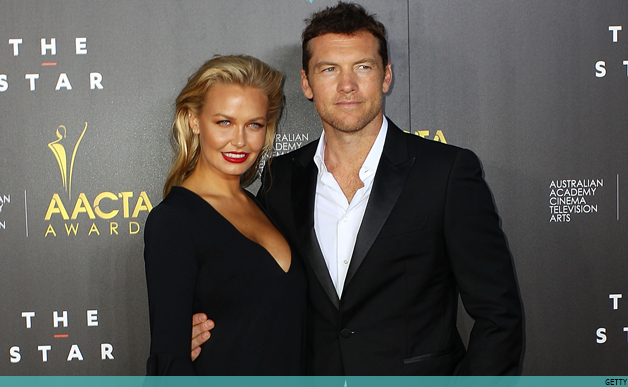
Recently it has been Lara Bingle and her husband Sam Worthington grabbing the baby name headlines, although the whole process began months ago, during what has been described as “the world’s longest pregnancy“. This was only increased by the Bingle-Worthingtons requesting privacy and not immediately announcing their baby name, which sent the rumour mill into overdrive.

I always think that if you’re going to be coy about announcing the baby’s name, it had better be something pretty epic, because I hate waiting for weeks, only to find out the baby is named Charlie. In this case, I was not disappointed because the baby’s name was reported as Rocket Zot.

Predictably, some sections of the media responded with outrage, denouncing the name. Was this a clever attempt to force Rocket’s cagey parents to confirm or deny the baby name? If so, it worked, because Lara Bingle immediately took to social media to defend their choice of name.

Public comments have generally been quite harsh, and on this blog, more than 84% of people have given it the thumbs down. But is Rocket Zot really such a bizarre name?

ROCKET
A rocket is any missile or vehicle propelled by a rocket engine. Although we may think of rockets as being quite space age, they have been existence since the Middle Ages, when they were used as weapons by the Chinese. Europeans found out about rocket technology when they were conquered by the Mongols, who themselves made the interesting discovery by conquering parts of China first.

It wasn’t until the twentieth century that anybody began serious research into using rockets for travelling through space. The Germans made the most progress in this area, and there was devastating proof of Germany’s proficiency in rocket use when they rained down V-2 rockets upon Allied countries in World War II, killing and wounding thousands in the process.

The United States was to benefit the most from Germany’s rocketry, because after the war they scooped up the majority of the German rocket scientists. The first American space rockets evolved directly from the V2, which just shows how important it is to conquer the right people during a war, and nick all their best technological innovations.

The word rocket comes from the Italian rochetta, meaning “little fuse”, a small firecracker developed by an Italian inventor in the 14th century. It is notable that for many years, the history of rockets and that of fireworks was virtually one and the same, as they both relied on gunpowder.

If all of this sounds a bit too violent, rocket is also a leafy green vegetable commonly added to salads, and a favourite since Roman times (maybe partly because it was believed to be an aphrodisiac). In this case, the name has nothing to do with rockets or fireworks, but is derived from Eruca, the Latin name for the plant, which means “caterpillar”.

London rocket is a wildflower whose common name was given because it grew in such profusion after the Great Fire of London in 1666. Another plant is called sweet rocket or dame’s rocket, abundantly blossomed with pretty fragrant mauve flowers. The attractive but toxic aconite, or wolfsbane, is sometimes called blue rocket, and the Chinese used its poison in warfare, just as they did explosive rockets.

Rocket has been used as a name since the 19th century, when it was much more common in North America. The United States national anthem, The Star Spangled Banner, with its mention of the “rockets’ red glare”, may have made the name seem particularly patriotic (the rockets in the song were from the British attacking Fort McHenry in Baltimore during the War of 1812). Independence Day fireworks also help to make rockets seem patriotically American. Rocket has been given to both sexes, but more commonly to boys.

In 2013, 16 boys were given the name Rocket in the US, while in the UK, less than 3 babies in any year have been named Rocket since 1996. In South Australia last year, there was just one baby boy named Rocket.

Although Rocket is rare, it has become quite prominent as a celebrity baby name. Douglas Adams named his daughter Polly Jane Rocket in 1994, a fitting tribute for the author of the Hitchhikers Guide to the Galaxy series. Director Robert Rodriguez has a son named Rocket Valentino born in 1995 (Rocket’s siblings include Rogue, Rebel, and Racer). Tom DeLonge from Blink-182 had a son named Jonas Rocket in 2006, and Pharrell Williams welcomed a son named Rocket Ayer in 2008, honouring the Rocket songs of Stevie Wonder, Elton John and Herbie Hancock, as well as Roy Ayers. Last year Beau Bokan from Blessthefall welcomed a baby girl named Rocket Wild. It’s not unknown as an Australian celebrity name, because fashion designer Yasmin Sewell had a son named Knox Rocket in 2011.

The name Rocket has been criticised for trying too hard to be a “cool” celebrity baby name, a name which no decent baby name book has listed. (I’m happy to be amongst the indecent baby name blogs to include Rocket). And yet is it really that outrageous? It’s very much like modern classic Rocco, and when Jett is a popular boy’s name, Rocket isn’t such a stretch. Weapon-related names such as Archer and Hunter are also on trend.

Depending on your point of view, Rocket might be too cool for the schoolyard, or fine for the famous but out for ordinary folk, or you might think this is an energetic, rocking firecracker of a name that fits in with current trends while still being a rare choice. Rock or Rocky are the obvious nicknames.

ZOT
If Rocket got a good going-over, Zot went down even less well, with the headline, Lara Bingle Doesn’t Give a Zot For Baby Name Traditions (since changed). Urban dictionaries were consulted, to discover that zot meant “kill, destroy”, or “spitball”. Of course you can also consult dictionaries to find that Bob is a woman’s haircut, John refers to a prostitute’s client, and Amelia means to be born without a limb, but the dictionary meanings are not usually applied to these personal names.

Lara Bingle was angered and upset by the journalist’s comments on Zot, since it was given in honour of her father Graham, who passed away from cancer a few years ago. Zot was apparently the nickname he went by.

Zot is actually a “real” name – it’s a short form of Izot, the Russian form of Greek Zotikos, meaning “full of life” (a masculine spin on Zoe). I think that makes it an exciting addition to Rocket, which is already quite a lively-sounding name.

Zot is also a comic book hero name, in this case, a contraction of the character’s real name of Zachary T. Paleozogt. A cheery blond teenager from a utopian world, Zot zips around on rocket boots with a laser gun to sort out the problems of our own rather more flawed planet.

It has been conjectured that the name Rocket is a nod to Sam Worthington’s father, Ronald Worthington, so that Rocket Zot may actually honour both fathers. The Herald Sun suggests that Ronny Graham, nicknamed “Rocket”, would have been a better honouring name. Given the choice, I think I prefer the more distinctive, affectionate, and personalised Rocket Zot.

POLL RESULTS
The name Rocket received an approval rating of 16%. 44% of people thought that Rocket was a terrible name, while 6% loved it.

Zot received a slightly higher approval rating of 20%. 61% of people thought that Zot was a terrible name, while 5% loved it.

53% of people preferred Ronny Graham as a name to honour Ronald Worthington and Graeme “Zot” Bingle, while 47% thought Rocket Zot had more zip.

(Photo shows Fourth of July fireworks to accompany the US national anthem)

Rare Girls Names From the 1940s

05 Sunday Apr 2015

Posted by A.O. in Name Themes and Lists

≈ 1 Comment

Tags

animal names, controversial names, created names, Easter names, english names, fictional namesakes, flower names, French names, germanic names, Greek names, honouring, Irish names, Latin names, locational names, middle names, name history, name meaning, name trends, names from films, names from songs, nature names, nicknames, plant names, rare names, Roman names, saints names, Scottish names, Spanish names, surname names, unisex names, vintage names, virtue names, vocabulary words

Dymphna_Cusack,_1947

The most popular girls names of the 1940s were Margaret, Patricia, Judith, and Helen, but what were the least popular names? Here are ten names which were only chosen once in any year between 1944 and 1949 in South Australia, making them unique names for their time and place. They continue to be rare, and some parents will still find them appealing.

Avis
Thought to be a Latinised form of the Germanic name Aveza, most likely a long form or elaboration of the familiar Ava. Introduced to England by the Normans, it was reasonably common in the Middle Ages, and quickly became associated with the Latin word avis, meaning “bird”. Avis Rent a Car was founded in the 1940s by Warren Avis, but did not become big in Australia for some time – it’s now quite difficult to disassociate the name Avis from the rental company, although it’s very much on trend and still seems contemporary and pretty. It was also a good fit in the 1940s, when names such as Avril and Averil were fashionable.

Bunty
An old British term of endearment, dating back to perhaps the 17th century. In Scotland, buntin means “short and plump”, while in Wales, bontin means “the bottom, the rump” (a part of the body usually seen as quite plump). It’s interesting that in both Scottish and English dialect, bunt and bun refer to a rabbit’s tail, which recalls the bottom meaning. You probably remember the nursery rhyme, Bye Baby Bunting, where bunting meant “a plump little child”, and it’s amusing that they have “a rabbit skin to wrap the Baby Bunting in”, given the etymological connection between chubby babies and bunnies’ bottoms. By the 19th century, bunty was a country word for a lamb, because they bunt (or butt) with their heads, giving bunty another adorable baby-related association. The name Bunty was popularised by the Scottish comedy Bunty Pulls the Strings, which was a hit in 1911 in the West End and on Broadway (Bunty was a canny Highland lass). However, even before this, Bunty was used as a nickname, especially by the aristocracy. It was occasionally given to boys, and in Seven Little Australians, young John is called Bunty, because he is prone to be greedy and a bit overweight. In his case, the nickname literally meant “little fatty”, but Bunty can be understood as “cute wee bairn, bonny babe”. This could be a charming vintage-style nickname, and if you’re worried it’s too infantile, Babe and Baby were both used as names in the 1940s!

Cosette
Cosette is one of the main characters in Victor Hugo’s Les Misérables, considered one of the greatest novels of the 19th century. In the novel, Cosette is the daughter of Fantine, a poor girl who must leave her child in the care of some innkeepers, while she works to provide for her. Cosette is badly treated by her guardians, and becomes a Cinderella-like figure, but is rescued by the ex-convict Jean Valjean. They take refuge in a convent, where Cosette develops into a beautiful young girl, and eventually finds her happy ending. Cosette’s real name is Euphrasie (meaning “good cheer”), but her mother’s pet name for her is the one which sticks – Cosette is from the French word chosette, meaning “little thing”. Les Misérables was made into a successful film in 1935, with child star Marilyn Knowlden in the role of the young Cosette; this would have increased interest in the name. Les Misérables was made into an award-winning musical film in 2012, this time with British actress Isabelle Allen playing young Cosette. Her face was used for the publicity posters, and with her arresting blue eyes, this may bring Cosette into the baby name spotlight again.

Dymphna
Anglicised form of the Irish name Damhnait, meaning “fawn”. Saint Dymphna is a 7th century Irish saint with a truly disturbing story, because legend has it that when she was fourteen, her father went mad and developed an unnatural desire for her. She ran away and devoted herself to helping the sick and the poor, but her father discovered her whereabouts, and killed her in a rage. Called the Lily of Eire, Saint Dymphna is the patron of the mentally ill, as well as vctims of incest, and many miraculous cures have been claimed on her behalf. A famous namesake is the author Dymphna Cusack, and another is Dymphna Clark, married to the historian Manning Clark, so the name has strong Australian credentials. Despite this, and the pretty meaning, Saint Dymphna’s tragic life has probably not been a help. Said DIMF-na, Dymphna has a lovely sound though, like a quirkier Daphne.

Jinx
According to superstition, a jinx is something, or someone, who brings bad luck, often without meaning to. The word is American English, first used in the context of baseball, and its origins are obscure. One suggestion is that it comes from the 1887 musical comedy Little Puck, which had a character named Jinks Hoodoo, who is a curse to everyone he meets, as well as to himself. Although Hoodoo is fairly obviously a “bad luck” word, Jinks is just a surname based on the name John, and not too unusual as a first name. Perhaps it was given with the phrase high jinks in mind, meaning “boisterous fun”. After the popular musical comedy, jinks and jinx seem to have rapidly come into use as slang terms to describe an unlucky person or object. Jinx was known as a girl’s name in the 1940s because of Jinx Falkenburg, one of the highest-paid cover-girls of the 1930s and ’40s – an early example of a supermodel. Considered one of the most beautiful and glamorous women of her time, she was also a talented sportswoman and Hollywood actress, and went on to have successful chat shows on radio and TV. Born Eugenia, her mother nicknamed her Jinx in the belief that it would bring her good luck – I’m not sure how that was meant to work, but Jinx did indeed have a fortunate life. Jinx has quite often been used as a name for (mostly female) fictional characters, from L’il Jinx from the Archie comics to Jinx Johnson in the James Bond film, played by Halle Berry. This is a playful modern nickname for the non-superstitious.

Marigold
The flower name marigold is attached to several plants with yellow blooms, but usually refers to the Calendula or pot marigold – although sometimes called English marigold, the plant probably originated in southern Europe, but became widely naturalised elsewhere from an early date. The name seems to have been first used for the wildflower Caltha palustris, also known as marsh marigold and kingcup. Marigold literally means “Mary gold”, and the name came about because the spring wildflower was a favourite in medieval churches at Easter, a tribute to the Virgin Mary. Shakespeare refers to the “golden eyes” of “Marybuds” in his play Cymbeline, and the marsh marigold is one of the UK’s most ancient plants, being an Ice Age survivor. Marigold has been used as a name since the 19th century, when flower names were fashionable, and is a hip underused floral choice which could honour a Mary.

Rilla
Rilla Blythe is the main character in L.M. Montgomery’s Rilla of Ingleside; the daughter of the famous Anne Shirley (later Anne Blythe), she is a carefree teenager who must grow up fast when World War I is declared. Rilla’s full name is Bertha Marilla, with her middle name in honour of Anne’s strict but loving adoptive mother, Marilla Cuthbert. Marilla may be a short form of Amaryllis or an elaboration of Mary, and it’s notable that the name Marilla was used more than once during the 1940s. Perhaps the wartime courage of Rilla Blythe struck a chord during World War II, or maybe the 1939 publication of Anne of Ingleside played a role, where Rilla is said to be sweetest baby of all, and shown as an adorably pretty and plump lisping toddler. Rilla is a trendy name from the wartime era that still seems cute, especially knowing Rilla Blythe was affectionately known as “Rilla, my Rilla”. One for Montgomery fans!

Thais
Thaïs of Athens was a famous Greek hetaera who accompanied Alexander the Great on his campaigns. Hetaera were high status courtesans; educated, influential, and sophisticated women who were paid companions to men – not just in the bedroom, but as stimulating conversationalists and talented musicians and dancers. Thaïs was the lover of Ptolemy I Soter, one of Alexander’s generals, and she is said to have been witty and entertaining company. After Alexander’s death, Ptolemy became the king of Egypt, and Thaïs was his wife, or at least a high ranking concubine, and mother of his children (he had other wives to provide him with heirs to the throne). Saint Thaïs was from 4th century Egypt, a beautiful and wealthy courtesan who repented of her life and converted to Christianity. It is hard not to wonder if her story was influenced by Thaïs of Athens, who also lived in Egypt during the 4th century. The saint inspired a novel by Anataloe France, and an opera by Massenet; as a result, Thaïs is a popular name in France. The Greek name Thaïs means “head band”, referring to the plain cloth bands that women in ancient Greece commonly wore to keep their hair in place. Like the hair covering, this name is both simple and sophisticated, with a fascinating historical namesake, and fits in with Australian name trends. The French pronunciation is rather like tah-EES, while English speakers may prefer TAY-is or ty-EES.

Unity
The word unity means “oneness”, familiar in both religious and political contexts, and used as a virtue name since at least the 17th century. It seems a rather strange choice for the 1940s, because Unity Mitford was an aristocratic English girl who was a rabid supporter of the Nazis and fervent devotee of Adolf Hitler, her close personal friend. When Britain declared war on Germany, Unity tried to commit suicide by shooting herself in the head, but survived, although permanently affected by her brain injuries. She died from an infection caused by the bullet in 1948, a controversial figure to the end. Unity Mitford was the inspiration behind evil Bellatrix Lestrange in the Harry Potter series, and it’s interesting that J.K. Rowling named her eldest daughter after Jessica Mitford, a staunch Communist and Unity’s sister. If you can get over the connection to Unity Mitford, Unity is a rather attractive name, and similar in sound to Una, which still charted in the 1940s.

Valencia
A large port city in Spain, famous for its vibrant culture and delicious cuisine. Founded as a Roman colony in the 2nd century, its name was originally Valentia, meaning “strength, valour”, in recognition of the bravery of former Roman soldiers who settled there. The name is closely related to the familiar Valentine. During the period of Muslim rule, Valencia was nicknamed Medina bu-Tarab, “City of Joy”. The name might remind you of Valencia oranges, grown in California but named after the Spanish city, which had a reputation for very sweet oranges. Valencia has long been used as a personal name in Spanish-speaking countries, but is not common in English-speaking ones. It may have got a boost from the 1926 romantic film Valencia, where the title character is an exotic Spanish dancer, played by Mae Murray. A box office success, its title song was one of the biggest hits of that year. Valencia fitted in with popular names of the 1940s such as Valerie, and still seems rather glamorous.

POLL RESULTS
People’s favourite names were Marigold, Cosette and Rilla, and their least favourite were Unity, Dymphna and Bunty.

(Photo shows Australian author Dymphna Cusack in 1945: her play Red Sky At Morning was one of few produced during the war years, and was made into film in 1944)

Celebrity Baby News: Lara Bingle and Sam Worthington

03 Friday Apr 2015

Posted by A.O. in Celebrity Baby News

≈ 1 Comment

Tags

celebrity baby names, honouring

Sam-Lara

Model Lara Bingle, and her husband, actor Sam Worthington, welcomed their first child around March 21, and have reportedly named their son Rocket Zot. Zot is in honour of Lara’s father, Graham Bingle, who passed away in 2008 and was known by this affectionate nickname. Rocket was born at Cedars-Sinai Hospital in Los Angeles.

Lara has been a cover girl for Elle, Grazia, Oyster, Cleo, and New Idea, and is signed with Elite Models. She is best known for appearing in the 2006 Tourism Australia campaign, So where the bloody hell are you? Lara has appeared in episodes of Home and Away, and other TV shows, such as Celebrity Apprentice Australia. She was runner up on Channel Nine’s Torvill and Dean’s Dancing on Ice, and competed on Dancing with the Stars. In 2011, she had her own reality TV series called Being Lara Bingle.

Sam is originally from England, coming to Australia as an infant. A NIDA graduate, Sam began his career on TV, in drama series such as Blue Heelers and Love My Way. He had a major role in Somersault, and took the title role in a modern Australian version of Macbeth. After a role in Terminator Salvation, Sam became well known for playing Jake Sully in James Cameron’s hit movie, Avatar. Since then he has been in several other films, including Clash of the Titans and Wrath of the Titans, and done voice overs for the Call of Duty video game series. Sam and Lara began dating in 2012, and were privately married in the Maldives around New Year.

Celebrity Baby News: Sporting Babies

22 Sunday Mar 2015

Posted by A.O. in Celebrity Baby News

≈ Comments Off on Celebrity Baby News: Sporting Babies

Tags

celebrity baby names, celebrity sibsets, honouring, middle names, twin sets

886754-2cbddbb0-c385-11e4-bdbb-25549bb81a95

Champion jockey Tommy Berry, and his fiancée Sharni Nisbet, welcomed their first child in February, and named their son Kaiden Nathan [pictured]. Kaiden’s middle name is in honour of Tommy’s twin brother Nathan, who died last year from an acute form of epilepsy.

NRL star Johnathan Thurston, and his fiancée Samantha Lynch, welcomed their daughter Charlie Grace on March 16. Charlie joins big sister Frankie, who will be 2 this year; Frankie’s birth was featured on the blog. Johnathan is co-captain of the North Queensland Cowboys, and is the all-time scorer for the State of Origin series.

Rugby league footballer Nathan Peats, and his partner Jade, welcomed their first child on March 4, and named their son Leyton Winiata. Nathan started his career with South Sydney in 2011, and signed with the Parramatta Eels last year. He has also been named for the Indigenous All Stars, and City Origin. He is the son of Geordi Peats, who played for the Canterbury Bulldogs.

Celebrity Baby News: ALP Babies

22 Sunday Mar 2015

Posted by A.O. in Celebrity Baby News

≈ Comments Off on Celebrity Baby News: ALP Babies

Tags

celebrity baby names, honouring, middle names

18505_10152836380926559_3133307150953141714_n

Labor MP Amanda Rishworth, and her husband Timothy Walker, recently welcomed their son Percy James [pictured]. Amanda has represented the seat of Kingston in Adelaide since 2007, which she turned around from the most marginal Labor seat in South Australia to the second safest. Last year she was promoted to the Opposition’s front bench when she was appointed Shadow Assistant Minister for Education. Before entering politics, Amanda was a clinical psychologist, and she has been a volunteer surf life saver since high school.

Labor MP Jim Chalmers, and his wife Laura, welcomed their son Leo James on March 13; Leo’s middle name seems to be after his dad. Jim has represented the seat of Rankin in Brisbane since 2013. He was formerly chief of staff to Wayne Swan when he was Treasurer, and was then Executive Director of the Chifley Research Centre, a Labor Party think tank. Laura is a journalist, and a former press secretary for Julia Gillard and Penny Wong.

Famous Name: Quentin Bryce

11 Wednesday Mar 2015

Posted by A.O. in Famous Names, Requested Names

≈ 3 Comments

Tags

adult name changes, Celtic names, english names, famous namesakes, French name popularity, French names, Gaulish names, historical records, honouring, Latin names, locational names, middle names, modern classics, name popularity, Roman names, saints names, Scottish names, stage names, surname names, UK name popularity, unisex names, US name popularity

Defence_of_Darwin_18_Feb_2012crop_Brice__MG_5761

Famous Namesake
It was International Women’s Day on Sunday, so this seems like a good chance to cover the name of a prominent and ground-breaking Australian woman.

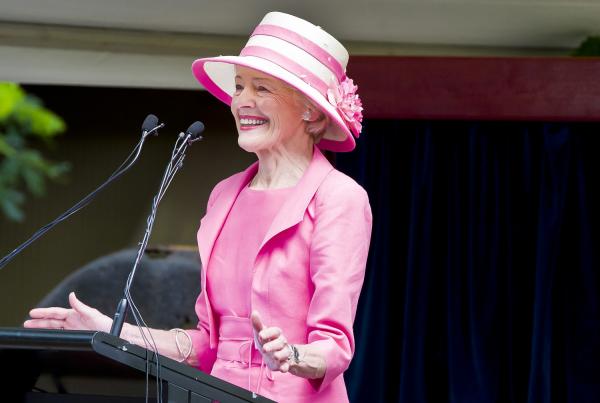
Quentin Bryce (nee Strachan) was one of the first women admitted to the Queensland Bar, and became the first woman appointed as a faculty member of the law school where she had studied, at the University of Queensland. As well as her teaching role, she was appointed to the new National Women’s Advisory Council in 1978, becoming its convenor a few years later.

She went on to take up other key roles in women’s issues, such as becoming the first Director of the Queensland Women’s Information Service, and Queensland Director of the Human Rights and Equal Opportunity Commission. She served as Federal Sex Discrimination Commissioner for five years, then became founding chair and CEO of the National Childcare Accreditation Council. A surprise move saw her become principal and CEO of the Women’s College at the University of Sydney, where she was able to combine her academic interests with her skills in administration.

In 2003 she was appointed Governor of Queensland by Premier Peter Beattie, only the second woman to take the role (the first was Leneen Forde, in the 1990s). Peter Beattie’s successor offered her an extension of her five-year term, but by then Dame Quentin had another appointment, and so she was succeeded as Governor of Queensland by Penelope Wensley – the first time a female governor of the state made way for another woman.

In 2008, the Queen approved Quentin’s appointment as Governor-General, on the recommendation of Prime Minister Kevin Rudd, and so she became the 25th Governor-General of Australia, and the first female Governor-General of this country. The decision gained approval on all sides of politics, and was seen as a positive move by commentators. Towards the end of her term, she made headlines after giving the annual Boyer Lecture, when she implied that she looked forward to Australia becoming a republic, and legalising gay marriage.

When her term was completed last year, Quentin Bryce was made a Dame of the Order of Australia, on the recommendation of the current prime minister. Shortly afterwards, Dame Quentin was announced as the chair of a new task force to combat domestic violence in Queensland, so she continues her valuable work on behalf of Australian women.

QUENTIN
French form of the Roman name Quintinus, derived from Quintus, meaning “fifth” in Latin, and traditionally given to a fifth child.

Saint Quentin is a 3rd century saint, and according to legend he was a Roman citizen who went to Gaul as a missionary, where he settled in Amiens in northern France. After performing many miracles, he was tortured and martyred before his body was thrown into the marshes of the Somme. By miraculous means, his body was later discovered and a shrine erected in his honour.

The cult of Saint Quentin was an important one in the Middle Ages, and Saint Quentin’s tomb was a major pilgrimage site, much favoured by the Carolingians. There are many places named after the saint in northern France. Because of the saint, the Normans introduced the name Quentin to England, where it may have contributed to the surname Quentin, although that could also come from Quinton in Warwickshire, meaning “the queen’s settlement” in Old English.

The name Quentin has been in use since medieval times, overwhelmingly as a male name. It is in the Top 500 in the United States, while in England/Wales, 17 baby boys were named Quentin in 2013. The name is most popular in France, where it is in the Top 50. There are not many Quentins in Australian historical records, and they are all male.

Besides Quentin Bryce, there are many famous Australians named Quentin in the media. Quentin Spedding was a journalist in the 1920s and 1930s, while ABC journalists include Quentin Dempster, Quentin McDermott, and Quentin Hull. There’s also film-maker and producer Quentin Kenihan, who first rose to fame as a little boy being interviewed on television.

You might also be reminded of American film director Quentin Tarantino, or British illustrator Quentin Blake. Homosexual author and performer Quentin Crisp changed his name to Quentin (born Denis Pratt), while Quentin Cook changed his name to Norman, and performed under the stage name Fatboy Slim.

These are all men named Quentin, but as a surname, Quentin refers to a queen, and even as a first name, Quentin could be used as a form of the female Roman name Quintina. I only know two people named Quentin, and they are both female, so the name seems very usable for girls to me, in addition to being a splendid choice for a boy.

BRYCE
Surname derived from the male name Brice. Saint Brice was a Bishop of Tours during the Dark Ages. Acccording to legend, he was an orphan rescued by Saint Martin and raised in an monastery as St Martin’s pupil. He took over as bishop from St Martin, but proved rather worldly, so he was exiled to Rome for seven years to have his sins absolved by the pope. When he returned, he was a changed man, and served with such humility that he was venerated as a saint.

He is remembered in England because his feast day is November 13, and on that day in 1002 there was a mass killing of the Danes living in England ordered by King Ethelred the Unready, who was fed up with England being ravaged in Viking raids each year. It is known as the St Brice’s Day Massacre.

The meaning of Brice is not known for sure, although it is assumed to be Celtic. It may come from the Gaulish word briccus, meaning “speckled”. As a surname, Bryce is particularly associated with Scotland, and is understood as meaning “follower of Saint Brice”.

The name is very well known in Australia because of best-selling author Bryce Courtenay, who was born in South Africa – his name was Arthur, but went by his middle name. Before becoming a published writer, Bryce worked in advertising, and headed many award-winning campaigns, including Louie the Fly, The Milkybar Kid, and It’s Time, on behalf of Gough Whitlam. His most famous work is his first novel, The Power of One, which has been made into a film.

Bryce entered the charts in the 1960s, debuting at #274 – its similarity to Bruce is so striking that you might suspect it was a replacement for the name, which was still popular in the ’60s, but falling steeply. Bryce rose into the Top 100 by the 1990s, just as Bryce Courtenay began his career as an author, and left the Top 100 in 2000. It is now around the 200s, so still fairly common.

It’s more popular in the US, where it has fallen much more slowly, and is not far out of the Top 100. It is least common in England/Wales, where 19 boys and 3 girls were named Bryce in 2013 (the second time that Bryce has charted as a female name in the UK, probably because of American actress Bryce Dallas Howard, who has recently been in the Twilight series and The Help).

Modern classic Bryce is still getting reasonable use, along with old favourites like Brock and Brody, and is also on trend, fitting in with fashionable rising choices like Byron. It’s a great way to honour a Bruce and a Bryan simultaneously, and I see this name more commonly in the middle, as it goes well with so many first names.

Two medieval French saints names – but which one do you like best?

POLL RESULTS
Quentin received an approval rating of 51%. 40% of people weren’t keen on the name Quentin, but 21% thought it was a good name.

Bryce received an approval rating of 37%. 53% of people weren’t keen on the name Bryce, although 10% loved it.

Thank you to Brooke for requesting that the name Quentin be featured on Waltzing More Than Matilda, and Dame Quentin Bryce be featured as part of the Famous Name series

(Picture shows Dame Quentin Bryce opening the Defence Museum in Darwin)

Historical Naming Patterns in the House of Windsor – Part 2: Sisters for Prince George

22 Sunday Feb 2015

Posted by A.O. in Naming Issues

≈ 6 Comments

Tags

famous namesakes, honouring, middle names, popular names, royal names, saints names, sibsets, UK name popularity

queen1

Last week I examined how babies have been named in the House of Windsor, with a look at the factors common to the names of those close to the throne. By following those methods used in the past, I looked at names that could be considered for a brother for Prince George.

In case you can’t be bothered reading the whole post, the basic thing to keep in mind is: names of royals (kings, queens, princes, and princesses) that are currently popular. Now it’s time to look at what a possible sister to Prince George could be called.

Elizabeth #39
There have been several princesses named Elizabeth, five British queens, and one queen of Scotland named Elizabeth; of course Elizabeth II is the current monarch, and her mother’s name was Elizabeth too. Elizabeth is also the middle name of the duchess. Current gossip says that Elizabeth is the name that the Duke and Duchess have already chosen for their baby, should they have a girl, and gained permission from the queen. As 2015 is the year that Queen Elizabeth is set to become the longest-reigning monarch in British history, it would seem like the perfect gesture, especially if the baby arrives on Queen Elizabeth’s birthday. A cute connection is that Lily could be used as the nickname, which is one of Catherine’s favourite flowers.
My rating: nine coronets

Alice #27
A name introduced to the royal family by Queen Victoria, there have been four princesses named Alice. The most recent was an aunt of Queen Elizabeth, who was married to the Governor-General of Australia, and lived here for two years after World War II. She reached the greatest age of anyone yet in the British royal family, passing away at the age of 102. Another was Alice of Battenberg, a great-granddaughter of Queen Victoria who married into the Greek royal family, and became the mother of Prince Philip. Alice is one of Princess Anne’s middle names, and it is also a prominent name in the Spencer family, as Alice Spencer was a patron of the arts. And don’t George and Alice sound adorable together? No wonder this has often been tipped as a possibility.
My rating: eight and a half coronets

Victoria #88
This only became a British royal name with the accession of the teenaged Alexandrina, who used her middle name to rule as Queen Victoria. The last of the Hanoverians, the longest-reigning British monarch so far, and a powerful symbol of the British Empire, Victoria is an eminently suitable royal name which has been handed down to seven princesses – Queen Victoria’s mother was another Princess Victoria. In fact, Alice of Battenberg’s first name was Victoria, making this another possibility to honour the mother of Prince Philip. A popular choice with the bookies, Victoria is said to be one of Catherine’s favourite names (more gossip!). The timing is perhaps not as good as for Elizabeth, with the queen set to overtake Queen Victoria’s record reign next year.
My rating: eight coronets

Eleanor #57
This name was introduced to English royalty by Eleanor of Aquitaine, a wealthy, powerful French duchess who married Henry II, and was the mother of two kings – Richard I, and King John. Other medieval Eleanors married English kings, and the name was handed down to multiple princesses.  This seems a very suitable name for a princess; elegant and restrained with an impeccable royal pedigree. It’s the name of one of Prince William’s Spencer cousins, which isn’t necessarily a drawback – all three of Prince George’s names are shared with Spencer cousins.
My rating: seven and a half coronets

Amelia #1
There have been two British princesses named Amelia – one a daughter of George II, and the other a daughter of George III. The latter Amelia (called Emily) was beautiful and charming, and great hopes for held for her future, but unfortunately she died of measles, and her death devastated the royal family, helping to precipitate her father into madness. There is an Amelia in the Windsor family, a grand-daughter of Prince Edward, Duke of Kent, and one in the Spencer family as well, a cousin of Princes William and Harry, who is considered rather “wild”. There is no historical reason a #1 name would be rejected (the queen’s sister Princess Margaret had the #1 name of her era), and Amelia is in with a genuine chance, although it may come with some baggage.
My rating: six coronets

Sophia #15
This is a truly royal name, because Sophia of Hanover was the mother of King George I, and to be in the line of succession to the British throne, you must be a direct descendant of Sophia. There has been a queen named Sophia (George I’s wife), and three princesses, with the most recent being born in the 18th century. Sophia has been used as a middle name in the royal family fairly often, although I think George and Sophia as royal siblings are a bit much.
My rating: five coronets

Alexandra #102
Queen Alexandra was the wife of Edward VIII; a Danish princess by birth, she was elegant, fashionable, and extremely popular with the British public. There have been a number of princesses named Alexandra, including ones still living – a notable example is Princess Alexandra, who is a cousin of the queen, and one of the most active members of the royal family. It’s a popular royal middle name, and the queen herself has Alexandra as one of her middle names. To me this would be a slightly odd choice, as Alexander is one of Prince George’s middle names
My rating: four coronets

Sophie #9
This is a name from Prince Philip’s family, because Princess Sophie of Greece and Denmark was the Duke of Edinburgh’s sister. Another family connection is that Prince Edward’s wife is named Sophie, and she has reportedly been a good friend to Catherine, as well as a favourite of Queen Elizabeth. Despite not being a name of a British queen or princess, I don’t think Sophie can be entirely ruled out.
My rating: three coronets

Charlotte #21
Queen Charlotte was the wife of George III, and there have been two Princess Charlottes in the British royal family named after her. The last one was Princess Charlotte of Wales, who died young in childbirth, deeply mourned by the public, who had hoped she would one day be queen. Although not used for a princess since, Charlotte is in use as a middle name in the current royal family. Charles Spencer, brother to Diana, Princess of Wales, has a very young daughter named Charlotte Diana, so a bit awkward to use it if the duke and duchess also want Diana as the middle name. Although the name could seem like a nod to Prince Charles, so far the royal family has not used feminised forms of male names to honour men. Charlotte is also the middle name of Pippa Middleton, sister to the duchess; although some people think this makes the name more likely, to me it makes it less likely, because the royals probably don’t want the name to seem as if it is honouring a commoner in-law.
My rating: two coronets

Isabella #8
This was a reasonably common royal name in the Middle Ages, introduced by a beautiful French countess who married King John. Another beautiful queen was the Isabella who married King Edward III; a French princess, she became known as The She-Wolf of France for her intrigues against her husband, which led to him being deposed, and their son Edward III becoming king. For ever after, she has been viewed as a femme fatale figure. This name has also been used in the Spencer family, but its wolfish image is problematic. I think it’s too ornate for a British princess, and the Twilight connection probably isn’t a help.
My rating: one coronet

Matilda #36
This name goes right back the beginning of English royalty, because Matilda of Flanders was the wife of William the Conqueror. There have been three other medieval English queens named Matilda, and one princess who became the Empress Matilda and claimed the English throne during a period of anarchy – she was never proclaimed queen, but rather Lady of the English, and her son was made king when he was old enough. In more modern times, Matilda has been used as a middle name within the royal family. This name would greatly please the royal family’s Australian subjects, although I can’t think of any reason why they would particularly want to please us, unless that toy bilby we gave Prince George was a bigger hit than it seemed at the time. I can’t say this is impossible, but it doesn’t seem at all likely.
My rating: one coronet

Emma #55
This royal name pre-dates the Norman Conquest, because Emma of Normandy married both Ethelred the Unready and Cnut the Great, and was the mother of Edward the Confessor, once regarded as a patron saint of England. She was the first English queen to have a portrait, and was both rich and influential. Despite being way, way back, she is an ancestor of the current royal family. However, I do think this is just too mists-of-timey.
My rating: half a coronet

Edith #164
Edith was a common royal name in Anglo-Saxon times, and one princess named Edith was a saint. Edith of Essex was the wife of Edward the Confessor, and highly influential. While this is very ancient history, Matilda of Scotland, who married Henry II and was the mother of the Empress Matilda, was baptised Edith, only receiving the Norman name Matilda upon her marriage to a Norman king. Although she was a stand-out queen, and the link between modern royalty and the Anglo-Saxon kings, this is a pretty flimsy connection, and regrettably it seems most unlikely, although personally I would love it. So English, so regal, so refined, and quite a fashionable name to boot.
My rating: half a coronet

Maria #83
Maria d’Este was an Italian princess who became queen through marrying James II, but she was known as Queen Mary in England until her husband fled to France during the Glorious Revolution. Too foreign.
My rating: zero coronets

Beatrice #95
This has a long, if sparing, use as a royal name. Beatrice of England was the daughter of Henry III, while Queen Victoria had both a daughter and a grand-daughter called Princess Beatrice. It’s currently in use by Princess Beatrice of York, Prince William’s cousin, and her name was considered an unusual choice at the time. As she is the daughter of the controversial Prince Andrew, I don’t think this is in with any sort of chance.
My rating: zero coronets

Unlike the potential princely names, which had no glaringly obvious choice, there are some very clear winners for a princess. I am tipping Elizabeth, Alice, or Victoria, with some chance of Eleanor or Amelia, and Sophia as an outsider. With solid options on the girls’ list, I can’t see any reason why the royals would need to look beyond it, and feel pretty confident one of the names in this post will be used.

UPDATE: The royal baby was a princess named Charlotte!

POLL RESULTS
People’s favourite choices for a princess were Alice, Victoria, and Eleanor. 10% of people voted for Elizabeth, and 9% voted for Charlotte, the next two most popular choices. Nobody voted for the names Sophie or Maria. 3% of people felt that the royal couple would start a new trend in baby names, which was very far from happening – the chosen name fits in well with all the historical naming patterns identified in the articles.

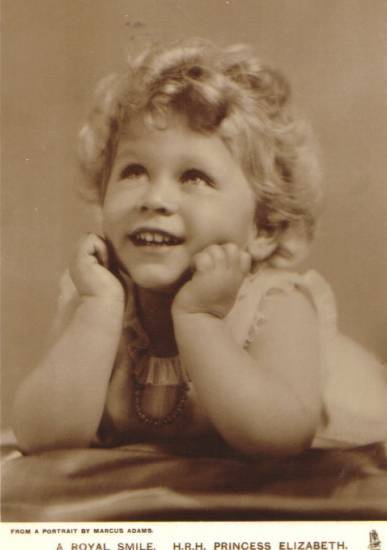
(Picture shows a photo of Queen Elizabeth II as a very young child – could there soon be another Princess Elizabeth in the House of Windsor?)

Famous Name: Georgina

18 Wednesday Feb 2015

Posted by A.O. in Famous Names

≈ 3 Comments

Tags

aristocratic names, birth notices, classic names, famous namesakes, fictional namesakes, honouring, middle names, names from television, nicknames, royal names, UK name popularity, underused classics, US name popularity

708662-gina-rinehart

Famous Namesake
The Channel 9 mini-series House of Hancock has just come to an end, having enjoyed a certain amount of notoriety and controversy. The series is based on one of Australia’s real life soap operas: the family of wealthy Western Australian mining magnate Lang Hancock.

The main focus of the mini-series is on the relationship between Lang and his daughter Georgina (called Gina), brought under pressure when the teenaged Gina married a man old enough to be her father, which is increased when freshly-widowed Lang married his Filipina maid, who was young enough to be his daughter. The story then follows Gina’s relentless rise to wealth and power as Lang’s heiress, accompanied by family ructions.

Gina Rinehart is the chair of Hancock Prospecting, founded by her father Lang. She is the richest person in Australia, and a few years ago was the world’s richest woman, but is now only the sixth-richest. She was named after her father, who has George as one of his middle names, while her middle name Hope is her mother’s name.

Mrs Rinehart took legal action against the makers of House of Hancock, with her lawyer calling the program “almost entirely fiction”, “replete with falsehoods”, and its depiction of true events as “twisted.” Part of her legal team’s argument was that actors in House of Hancock breached consumer law against misleading and deceptive conduct by pretending to be someone else. I can only think a lot of actors, if not all of them at some time or another, have similarly breached consumer law.

Her lawyers were successful: Gina was granted access to the second episode before it went to air, and certain cuts were hastily made to key scenes before the show went to air, leading to a very abrupt ending. Despite all the cuts, House of Hancock was a hit, attracting more than 25% of the audience, or nearly 2 million viewers per episode. Actress Mandy McElhinney (Rhonda from the AAMi commercials) has garnered praise for her outstanding performance.

Although the details haven’t been made public, apparently one of the things Gina objected to was her father’s ghost coming back to chat with her, which she assures us did not happen. I for one believe her story, and don’t need a lawyer to convince me. She also says that she never fought with her stepmother, and in fact never spoke to her at all, painting a picture of happy family life in the process.

Despite making sure that House of Hancock came with a disclaimer that it had been fictionalised for dramatic purposes and was not a documentary, Gina Rinehart is still fuming, and will now sue Channel Nine for defamation. No stranger to the courtroom, she mounted an eleven-year legal battle against her stepmother Rose Porteous, claiming that she had hastened Lang Hancock’s death (the coroner determined he had died of natural causes). In turn, Gina has been in a long-running legal feud with her children over the family trust.

So that’s Georgina Rinehart – large, in charge, rich as filth, and liable to sue you if you claim she talks to ghosts and her stepmother.

Name Information
Georgina is a feminine form of George. Like its male counterpart, it has been in use for many centuries, but only gained prominence after the House of Hanover began to rule Britain in the 18th century, with George becoming a traditional royal name.

Georgina has been used as a middle name in the royal family – an example is Princess Maud of Fife, grand-daughter of Edward VII. It’s also been used by the aristocracy: Georgina Ward, Countess of Dudley, was one of the great beauties of the Victorian era, while Georgina Gascoyne-Cecil, Marchioness of Salisbury, was the wife of British prime minister, Lord Robert Cecil.

Georgina has been rather a favourite for characters in children’s literature, with the best known perhaps Georgina Kirrin from Enid Blyton’s Famous Five series. Georgina is a tomboy who is always called “George”. In the TV series Gossip Girl, the character of Georgina Sparks has been turned into one of the show’s villains; she goes by “Georgie”.

Georgina is an underused classic name which has never left the charts, yet never been popular. It was #171 in the 1900s, and hit its peak in the 1970s at #109 – it may not be a coincidence that the Famous Five series was on TV in that decade. Currently it is around the mid-200s, and I see the name Georgina quite often in birth notices.

Georgina is more popular in the UK, where it is #173 and falling, but doesn’t chart in the US. This gives it a rather “British” feel, although it’s used internationally, including in Spain, the Netherlands, and Central and Eastern Europe.

This is a stylish yet solid choice which has all the advantages of a classic name that doesn’t feel dated, without any popularity to worry about. It has a rather upper middle class image in Australia, but has a number of breezy, carefree nicknames to go by, including George, Georgie, Gia, Gina, Ginny, Gigi, and Nina.

POLL RESULTS
Georgina received a creditable approval rating of 73%. People saw the name Georgina as familiar without being common (21%), and stylish and classy (16%). However, 10% were put off the name by Gina Rinehart.

(Photo of Gina Rinehart from news.com.au)

← Older posts
Newer posts →

Enter your email address to follow this blog

Categories

Archives

Recent Comments

A.O.'s avatarwaltzingmorethanmati… on Zarah Zaynab and Wolfgang…
Madelyn's avatarMadelyn on Zarah Zaynab and Wolfgang…
JD's avatardrperegrine on Can Phoebe Complete This …
A.O.'s avatarwaltzingmorethanmati… on Rua and Rhoa
redrover23's avatarredrover23 on Rua and Rhoa

Blogroll

  • Appellation Mountain
  • Baby Name Pondering
  • Babynamelover's Blog
  • British Baby Names
  • Clare's Name News
  • For Real Baby Names
  • Geek Baby Names
  • Name Candy
  • Nameberry
  • Nancy's Baby Names
  • Ren's Baby Name Blog
  • Sancta Nomina
  • Swistle: Baby Names
  • The Art of Naming
  • The Baby Name Wizard
  • The Beauty of Names
  • Tulip By Any Name

RSS Feed

  • RSS - Posts

RSS Posts

  • Celebrity Baby News: Melanie Vallejo and Matt Kingston
  • Names from the TV Show “Cleverman”
  • Can Phoebe Complete This Sibset?
  • Zarah Zaynab and Wolfgang Winter
  • Baby, How Did You Get That Name?
  • Celebrity Baby News: Media Babies
  • Celebrity Baby News: Adelaide Crows Babies
  • Celebrity Baby News: Chris and Rebecca Judd
  • Names at Work: Name News From the World of Business and Employment
  • Celebrity Baby News: Sporting Round Up

Currently Popular

  • Girls Names From Native Australian Flowers
  • Girls Names of Australian Aboriginal Origin
  • Celebrity Baby News: Victoria Samba and Mitch Hoare
  • Celebrity Baby News: Katie Underwood and Darren McCoy
  • Flynn Christopher Bloom: A Son for Miranda Kerr and Orlando Bloom

Tags

celebrity baby names celebrity sibsets english names famous namesakes fictional namesakes honouring locational names middle names name combinations name history name meaning name popularity name trends nicknames popular names saints names sibsets surname names twin sets unisex names

Create a free website or blog at WordPress.com.

Privacy & Cookies: This site uses cookies. By continuing to use this website, you agree to their use.
To find out more, including how to control cookies, see here: Cookie Policy
  • Subscribe Subscribed
    • Waltzing More Than Matilda
    • Join 517 other subscribers
    • Already have a WordPress.com account? Log in now.
    • Waltzing More Than Matilda
    • Subscribe Subscribed
    • Sign up
    • Log in
    • Report this content
    • View site in Reader
    • Manage subscriptions
    • Collapse this bar
 

Loading Comments...