• About
  • Best Baby Names
  • Celebrity Baby Names
  • Celebrity Baby Names – Current
  • Celebrity Baby Names – Past
  • Featured Boys Names
  • Featured Girls Names
  • Featured Unisex Names
  • Links to Name Data
  • Waltzing on the Web

Waltzing More Than Matilda

~ Names with an Australian Bias of Democratic Temper

Waltzing More Than Matilda

Tag Archives: honouring

Historical Sibset: The Children of George and Diamantina Bowen

07 Saturday Dec 2013

Posted by A.O. in Historical Records

≈ 1 Comment

Tags

historical records, honouring, sibsets

bowens_lge_01

We haven’t had a historical sibset in a while, and as we looked at Diamantina Bowen’s name on Wednesday, I thought it might be interesting to see the names of Sir George and Lady Bowen’s children.

Adelaide Diamantina “Nina” – born 1858 in the Ionian Islands, Greece

Zoe Caroline – born 1860 in Brisbane, Australia

Agnes Herbert – born 1862 in Brisbane, Australia

George William Howard – born 1864 in Brisbane, Australia

Alfreda Ernestina Albertina – born 1869 in Auckland, New Zealand

The Bowens also had a son who was born in the Ionian Islands, and died after just twelve days.

Nina Bowen married a Queensland grazier named Allan Campbell, but they lived in London, not Australia. Nina’s daughter was named Diamantina Isabella, so Lady Bowen had a granddaughter named in her honour. Isabella was the name of Allan Campbell’s mother.

Diamantina Campbell was born in 1881, twelve years before Diamantina Bowen passed away.

POLL RESULTS

People’s favourite names of the Bowen siblings were Adelaide Diamantina “Nina” and Zoe Caroline, which each got 40% of the vote. The least favourite name was Agnes Herbert, which only one person voted for.

(Picture of the Bowens from Old Government House)

Famous Name: Diamantina

04 Wednesday Dec 2013

Posted by A.O. in Famous Names

≈ 2 Comments

Tags

famous namesakes, gemstone names, Greek names, honouring, Italian names, locational names, middle names, nicknames

Ancher-Mortlock-Woolley-joins-Conrad-Gargett-Riddel-415086-xl

On December 10, it will mark 154 years since Lady Diamantina Bowen arrived in Queensland. Lady Bowen was the wife of Queensland’s first governor, Sir George Bowen, whose history and surname we looked at in Brisbane Suburbs That Could Be Used as Boys Names.

Lady Bowen was born in the beautiful Ionian Islands of Greece as the Contessa Diamantina di Roma, one of a large aristocratic family descended from Venetians who had occupied the Ionian Islands for centuries as part of the Republic of Venice. Diamantina’s father was President of the Ionian Senate, and had been appointed Poet Laureate of the islands by Queen Victoria, as the Ionian Islands were then a British Protectorate.

Diamantina grew up in a privileged world, was well-educated, and familiar with government, politics and diplomacy. She was described as pretty, slender and graceful, with an attractiveness which came from her expression rather than her features. She was softly-spoken, and had a slight accent when speaking in English; in private, she spoke Italian. Despite their Italian origins, the di Roma family were members of the Greek Orthodox faith.

Diamantina married Sir George Bowen, government secretary to the islands, in 1856, and came to Brisbane three years later with her husband and baby daughter. The Bowens were met by a crowd of 4000 people, waving both the Union Jack and the Greek flag in welcome. Brisbane was enormously excited by their arrival, and there was a 21-gun salute, triumphal arch, fireworks, and days and days of speeches, proclamations, and general celebrations in their honour.

One of the ladies who presented Diamantina with a bouquet described her as a “beautiful Greek fairy princess … stepped out of a poetry book”. The poor fairy princess had endured agonising sea sickness to get there, and being pregnant, possibly morning sickness as well; it must have been an ordeal for her to stand there in the heat and humidity through all the official events.

Brisbane itself must have been something of a culture shock to Diamantina, because although it was a prosperous and thriving community, it was also a pioneering one, and would have seemed rough and dusty, with lumpy roads, and an unreliable water supply.

However, Lady Bowen fulfilled her duties as Queensland’s first lady admirably. She became a celebrated hostess,  and her balls and dinner parties were the highlight of the social scene. She held a weekly salon, and her graciousness is credited with raising the general tone of Brisbane society.

Diamantina was an accomplished pianist and singer, and her interest in music led to her to become a patroness of the arts. When their official residence was ready, the Bowens had an elegant and spacious sandstone mansion to entertain in. Diamantina personally supervised the layout of the grounds, and assisted with the development of the surrounding Royal Botanic Gardens.

Diamantina was also a tireless worker for charity. She started the first Sunday School for children, and helped found the Lady Bowen Lying-In Hospital, Brisbane’s first maternity hospital, and forerunner to the Royal Brisbane Women’s Hospital. She was also a patron of an orphanage, and of a hospital for the incurably ill. At a time marked by religious bias, Lady Bowen befriended the Sisters of Mercy, and became a patroness of their fund-raising efforts.

Diamantina was greatly admired in Brisbane, and became a great favourite. She was dignified without being aloof, and reserved without being cold, but most of all kind-hearted and compassionate, with a genuine desire to be accessible. I suspect it was because of his wife that Sir George was asked to stay on a further two years after his term of office ended.

When the Bowens finally left after eight years, 120 of Brisbane’s married women presented Diamantina with a diamond necklace, and 120 of its single women gave her a gold bracelet studded with emeralds. Diamantina must have made several close personal connections in Brisbane, because we are told that she wept bitterly as she left, becoming so distraught that she had to be carried to the ship to New Zealand, where Sir George had been appointed governor-general.

Diamantina had many namesakes in Queensland – not only Roma Street and Lady Bowen Park in Brisbane, but the town of Roma, the Diamantina River, and Diamantina Island are just a few that come to mind.

Diamantina returned to Australia when Sir George became governor of Victoria. Now in her mid-life, Diamantina’s manner had become impressively regal, and she was seen as exotic, fascinating, and elegant. A Melbourne gossip columnist noted her dazzling black eyes, flawless creamy complexion, and lovely figure. She inspired awe and respect, but never again did she seem quite so loved as she had been in Queensland, where she was a figure of poetry and romance.  

Diamantina is a variation of the Greek name Diamanto, meaning “diamond”. The name is used in both Greece and Italy, and can be pronounced dee-uh-man-TEE-nuh or dy-uh-man-TEE-nuh. The obvious nicknames are Di, Dee and Tina, although Diamond, Mandy and Monti seem possible as well. Lady Bowen’s eldest daughter had Diamantina as her middle name, and she went by Nina, which appeals to me most of all.

Diamantina is a pretty and elaborate girl’s name which belonged to one of the most charming ladies to grace our shores. Diamantina was a heroine to the Greek community in Queensland, and this could be a Greek heritage choice, or a Queensland heritage choice. If the name Diamond seems too hard or crude, Diamantina may seem softer and more elegant.

POLL RESULT: Diamantina received an approval rating of 42%. 36% of people thought it was too fussy and frilly, although 21% saw it as romantic and fairytale.

(Picture shows the governor’s official residence, now Old Government House, in the grounds of Queensland University of Technology, where it is used for functions)

Celebrity Baby News: Holly Valance and Nick Candy

25 Monday Nov 2013

Posted by A.O. in Celebrity Baby News

≈ 1 Comment

Tags

celebrity baby names, honouring, nicknames

article-2210711-15477AD4000005DC-950_634x685

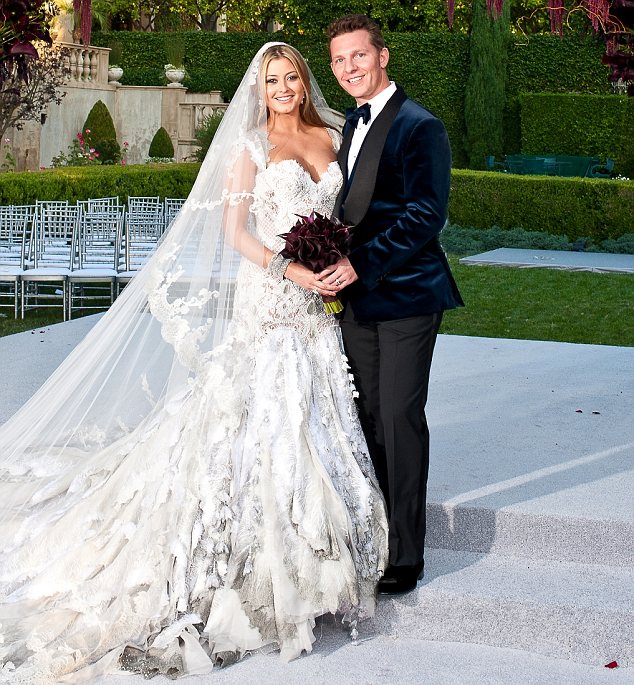
Actress Holly Valance, and her husband Nick Candy, welcomed their first child a few days ago, and have named their daughter Luka Violet Toni. The middle name Toni is in honour of Nick’s late father, who missed meeting his granddaughter by just six weeks. Luka will be known as LuLu, however they did want a long form for fear the name LuLu Candy might be seen as unprofessional in later life.

Holly was born in Australia to a Serbian father and English mother who were both models; she has dual British-Australian citizenship, and her original surname was Vukadinovic. As a teenager she was cast in soap opera Neighbours as Felicity “Flick” Scully, and left three years later to start a music career in the UK. She brought out two albums, then moved to Los Angeles to take up acting again, appearing in television series such as CSI and Prison Break. In 2009, she returned to the UK, where she has been a guest on Strictly Come Dancing, and is currently a judge on Shopaholic Showdown.

Nick Candy is a billionaire property developer, one of the richest in the United Kingdom, and is CEO of Candy & Candy. Nick and Holly were married last year in Beverley Hills.

(Photo of Holly and Nick’s wedding day from The Daily Mail)

Can Your Son be Named Barnaby if the Dog is Named Barney?

09 Saturday Nov 2013

Posted by A.O. in Naming Assistance

≈ 9 Comments

Tags

choosing baby names, dog names, honouring, middle names, nicknames

little-boy-and-dog

Louise is expecting her first child in less a month, a boy. She feels that there isn’t much time left, and she and her husband have not yet managed to settle their baby name dilemma.

Their favourite name for a boy, and the one they would very much like to use, is Barnaby. However, they have a pet dog named Barney. Although they aren’t planning to use Barney as a nickname for Barnaby, Louise is realistic enough to know that it isn’t impossible he’ll end up being a Barney, at least sometimes. In any case, she wonders whether Barnaby and Barney are too close in sound, or too closely related to each other.

If they decide not to go with Barnaby, their “back up” name is Jasper, which they both like a lot, but they don’t love it the way they love Barnaby. They would definitely feel a pang of regret or disappointment if they didn’t get to use the name Barnaby.

Louise wants to know if people think it’s possible for them to use the name Barnaby? Will others think it’s weird if their son and the dog have a similar name? Is it cruel to give their son the same name as the family pooch?

The baby’s middle name will be Ross, after his dad, and their surname begins with M and ends with N eg Macklin.

~ ~ ~ ~ ~ ~ ~ ~ ~ ~

Louise, I think most people would cross a baby name off their list if it was the same as, or even very similar to, the name of the family pet. No matter how much they liked it, it would be regretfully banished to the land of Not-to-Be.

That you are still seriously considering the name Barnaby, and in fact it is still your front-runner, tells me you are extremely attached to it. If you are still considering the name Barnaby, then I would say, yes it is a real possibility.

Will other people think it is weird? Quite likely some of them will. Are you obligated to fulfil the expectations of others in your choice of baby name? No. The most important thing is whether you think it is weird or not. (If you are writing in for opinions, and have a “back up” name, then at least part of you must think it’s a little weird).

I don’t think that it’s a great idea for your son and your dog to share very similar names, but being practical, these things are often more of a big deal in our heads before they happen than they are in real life. It’s not ideal, but it may be workable.

I think the biggest mistake you are making is thinking that you are running out of time, and need to make a decision before your son is born. Please consider taking your new baby home before choosing the name – once you have your son in the same house with the dog, using both their names, you will have a real life situation in which to make a decision, rather than a theoretical one.

I suspect that either you will find that it is actually a bit too weird and just isn’t going to work, or else that it feels more easy and natural than you feared. Although if you stick with Barnaby, I would be prepared to laugh off a few jokes from friends and family about your choice.

Please write back and let us know what you decide!

NAME UPDATE: The baby’s name is Archer!

POLL RESULTS: Almost 85% of respondents thought that the name Barnaby was acceptable for a couple who owned a dog named Barney. 44% thought it would be unusual, but would work out fine, 28% didn’t like the idea, but thought that it would probably be okay, while a relaxed 12% couldn’t even see what the problem was. Only 4% of people thought that it would be very wrong to name your son Barnaby if the dog was named Barney.

More than half of respondents preferred Jasper Ross to Barnaby Ross, with 55% choosing the first option and 38% picking the second. 7% of people couldn’t decide as they liked both names equally.

Famous Names: Henry and Navy

23 Wednesday Oct 2013

Posted by A.O. in Famous Names

≈ 3 Comments

Tags

American names, classic names, colour names, english names, famous namesakes, germanic names, historical records, honouring, military terms, name history, name meaning, name popularity, nicknames, patriotic names, popular names, royal names, saints names, unisex names, vocabulary names

5000830-3x2-940x627

Early in October, the Royal Australian Navy International Fleet Review was held, celebrating the 100th anniversary of the first Royal Australian Navy fleet in Sydney Harbour, on October 4 1913. Around 40 warships from twenty countries, and 16 tall ships took part, with seven RAN ships symbolising the 1913 entry itself. A stunning fireworks display on the Harbour used huge projections on the Sydney Opera House to tell the story of our century-old navy.

Although the Governor General Quentin Bryce reviewed the Fleet as the Queen’s Representative, it is traditional to have a member of the royal family in attendance for the Review, and Prince Henry of England, otherwise known as Captain Wales, or Prince Harry, got the gig. It was his first official visit to Australia, and although only here for 36 hours, he made himself immensely popular.

The famous names this week are in honour of the Royal Australian Navy, and our royal visitor.

Henry is from the Germanic name Heimrich, meaning “home ruler”. It has been commonly used amongst European royalty, and there are many rulers of Germany, France, Spain and Portugal named Henry, or one of its equivalents. There have also been six Holy Roman Emperors named Henry, one of them a saint. Other saints named Henry include a legendary bishop of Sweden, and Henry of Coquet, a Danish hermit who lived on an island off the coast of Northumberland.

Henry is a traditional name in the British royal family, and there have been eight English kings named Henry. Henry I was the son of William the Conqueror, and probably named after his great-uncle, King Henry I of France. The last king named Henry was Henry VIII, who is best remembered for his six wives, and for the English Reformation, which saw the Church of England break away from the Roman Catholic Church and the pope’s authority. In his prime handsome and powerful, he is considered to be one of the most charismatic of English rulers.

There have been a few British princes named Henry, and Prince Harry may have been named after his great-uncle Prince Henry, the Duke of Gloucester, who was Governor-General of Australia, and married to Princess Alice, whose middle name was covered in Rare Royal Names for Girls.

Some people find it hard to understand why Harry is a short form of Henry. In the Middle Ages, Herry or Harry was how the name Henry was pronounced in England, so anyone named Henry was automatically a Harry once their name was said aloud. Today the medieval Harry is used as a pet form of Henry.

It is sometimes forgotten that Prince Harry’s official name is Henry, so that when he was introduced as an ambassador of the 2012 Olympic Games, some viewers wondered who this “Prince Henry” chap was. Bizarrely, one online news source (now removed) even reported that Prince Harry and Prince Henry of England attended the closing ceremony together (well, I guess they did, in a way).

Henry is a classic name in Australia which has never left the charts. It was #11 in the 1900s, and gradually fell until the left the Top 100 in the 1950s, hitting its lowest point in the 1970s at #265. Since then, it has gradually climbed, and was back on the Top 100 by the 1990s, where it has continued to increase in popularity. It isn’t shooting up dramatically, but making steady gains.

Currently it is #33 nationally, #27 in New South Wales, #23 in Victoria, #35 in Queensland, #17 in South Australia, #33 in Western Australia, #15 in Tasmania, #19 in the Northern Territory, and #10 in the Australian Capital Territory.

Henry is a handsome classic that seems intelligent and solidly unpretentious. It’s a popular name, and rising in popularity, but in a sensible, steady way. It seems unlikely at this point to match Prince Harry’s brother’s name, William, in the popularity stakes, and get to #1.

Navy is an English vocabulary name; the word navy refers to a fleet of military watercraft. Although navies have been used since ancient Greek and Roman times, navy is quite a modern word in English, dating back to around the 17th century, it is from the Old French meaning “fleet of ships” – ultimately from the ancient Greek for “ship”.

You can also see Navy as a colour name, since navy blue or navy is the very dark blue named after the traditional colour of naval uniforms.

Navy has been used as a personal name since the very late 18th century, and is first found in the United States, more specifically New England. The births of the first babies named Navy coincide with the establishment of the US Navy in 1794, so it seems to be a very patriotic name, and likely to be given to children of people connected with the navy itself.

Navy is much more common in the US than anywhere else, although rare in America too, and overall it has been given to boys and girls in fairly equal numbers. It is an extremely rare name in Australian historical records, and seems to be slightly more common as a girls name here; I have only ever seen Navy on girls, but so infrequently that it seems an entirely unisex name.

Rare, unisex, and rather modern, the name Navy would honour a naval connection in the family, or a family naval tradition.

POLL RESULTS: Henry received an astonishing approval rating of 95%. Navy received a more modest approval rating of 25%.

Names Spotted at Home and Abroad: Winter Edition

02 Wednesday Oct 2013

Posted by A.O. in Names Spotted at Home and Abroad

≈ 6 Comments

Tags

Anglo-Saxon names, birth notices, english names, family history, famous namesakes, fictional namesakes, honouring, locational names, middle names, mythological names, name image, name meanings, name trends, Nameberry, Near Eastern names, retro names, surname names, twin sets

084532-baby-couture

A new trend at the moment is for a baby’s christening gown to be modelled on its mother’s wedding dress (hands up anyone who thinks it’s weird for a baby to wear a wedding dress). Mum Annie [pictured] loved her pink tulle and silk wedding dress so much that it seemed the obvious choice for a mini-me christening gown for her seven-month old daughter – and at $1200 a pop, dress designers are happy to replicate their creations in teeny-tiny mode. I know people are interested in what names the wealthy and fashionable choose for their children, and Annie’s daughter is named Pierra – which looks like a feminine form of Pierre, although it also looks like Sierra with a P.

I featured Sassafras on the blog as a girls name last year, but admit to feeling a bit doubtful at the time because I’d only ever seen the name used once – in a birth notice four or five years ago. Was it too out there to suggest as a baby name? Then after seeing a Sass Winnie in a birth announcement in August, regular commenter Sophia said that she knew a little girl named Sassafras, nn Sass. I idly asked an interstate friend over the phone if she knew a Sassafras (not thinking she would) – answer: yes, there’s a Sassafras at her son’s primary school. Now I see a toddler named Sassafras in the local paper from Bellingen on the mid-north coast of New South Wales. If nothing else, my mind has been eased about including Sassafras. It’s clearly less daring, and a lot less rare, than I thought.

A baby boy from Queensland was born very unexpectedly while his mother was taking a nap. He was born in July, on the night of the NRL State of Origin decider between Queensland and New South Wales, just as his father had left for the game. He was named Benji, after his dad’s favourite NRL player, Benji Marshall, from the Wests Tigers, who has recently changed codes and countries and gone to rugby union in New Zealand. I have noticed a lot of baby boys named Benji in the past year or so, and wonder how many of them were named after Benji Marshall – and if the numbers will dry up now that he has gone.

This website has photos of twins from around the world. WARNING: MAJOR CUTENESS ALERT! Name nerd theory states that twin names must not be “matchy”, but here’s proof tons of parents think the matchier the better. Here we have Zoe and Chloe, Jaqi and Jaqari, Xander and Xavier, Evan and Ivan, Jake and Jimi, Ruby and Rose, Jack and Daniel. I did like Reef and Eden, and Gwendoline and Jasper.

This mother of a gorgeous baby boy has the name Oriana, a medieval literary name which may mean “sunrise” or “gold”, or possibly something else. The name might remind you of the famous cruise liners, or more recently, the Bratz doll. It’s certainly a stunning name which seems very usable, with Ariana and Aurelia so fashionable at present. Oriana has a heartbreaking struggle ahead of her, so we wish a speedy recovery to her son Luca.

A story on postnatal depression, and how worryingly few people take it seriously enough, interviewed a mum, now recovered from her PND, named Cybele. Cybele is a Phrygian mother goddess whose ancient Near Eastern name possibly means “mountain”, to suggest “born from stone, born from the earth”. It is said SIB-uh-lee. I think that’s a gorgeous name, and with Sybilla so trendy, seems like a great choice for parents who want something a bit different.

Lavington Fisher of South Australia recently passed his 100th birthday, and looks absolutely amazing for his age. Lavington is a surname from place names in England meaning “Lafa’s people”; the Anglo-Saxon name Lafa may be understood as “survivor, treasure, heirloom, remnant”. Lavington is a good name for someone who has lived for more than a century! There is a place in New South Wales called Lavington, named after the English towns. It reminds me of both lavender, and lamington cakes.

The Great Australian Bake Off on Channel Nine included a contestant in her twenties named Bliss. I’ve noticed quite a few people on name forums who love the idea of Bliss, but worry that it won’t seem “name-like” enough. Having seen Bliss on a real person, I can assure them it doesn’t seem much different to Joy as a name. The trouble is that to me Bliss always seemed like a very flakey name, and the real life Bliss was actually quite ditzy and flakey, so it was rather annoying to have my name prejudice confirmed so readily.

The winner of the show was named Nancy, and I was delighted to see this name on an intelligent, attractive engineering student. I featured this name on the blog, and was pleased how well Nancy works as a young person’s name (apart from on girl detective Nancy Drew, who must be getting on a bit by now). It’s such a smart, spunky name.

Abby from Appellation Mountain did a Nameberry post about some interesting names from her family history. Most of the names from my family tree aren’t too exciting. However, when I looked way, way, way, way back, I did find a Hercules in the 17th century, a great-uncle many times over. Now I wouldn’t name a son Hercules, but it could be usable as a middle name. The thing is, is a connection from the 17th century, not even a direct ancestor, too much of a stretch as a “family name”? At what point does a name from your family tree cease to become a family name (considering that all people are related to each other at some point)?

I was chatting to some friends about the surge in popularity for retro names from the 1900s to the 1930s, such as Olive, Hazel and Florence. The general consensus was that they were over it – it’s been done to death, and so, so boring. They thought to have an interesting retro name now, you had to turn to the 1940s and ’50s – something like Linda or Valerie would seem much more hip. What staggered me is that Olive has only has just started to become popular, while Hazel and Florence aren’t even in the Top 100 yet! Yet they are already “boring”. At this rate, we will have revisited all the name trends of the 20th century by the next decade.

Celebrity Baby News: Rachael Finch and Michael Miziner

01 Tuesday Oct 2013

Posted by A.O. in Celebrity Baby News

≈ 1 Comment

Tags

celebrity baby names, honouring, middle names

finch-narrow

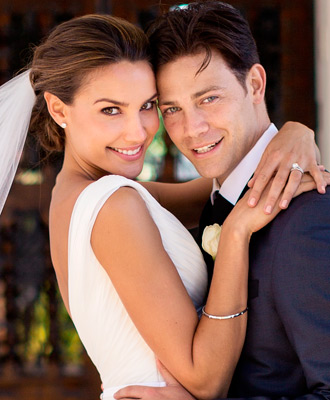
Former Miss Australia, model and media personality Rachael Finch, and her husband Michael Miziner, welcomed their first child on September 24, and have named their daughter Violet Rachael. Violet’s middle name seems to be after her mother.

Rachael won the Queensland Model of the Year contest in 2004, while she was still in high school, and signed with IMG. She received the People’s Choice Award for Miss Teen Australia in 2006, and was crowned Miss Australia in 2009; she came third runner-up in the subsequent Miss Universe pageant that year. After her pageant wins, she came third in Celebrity Masterchef 2009, and was a contestant on Dancing with the Stars in 2010. She has worked as a fill-in radio host on NovaFM, and currently does a daily weather report on Channel Seven’s Sunrise.

Michael was born in Russia and came to Australia as a child (Rachael is half-Ukrainian on her mother’s side). He is a professional ballroom dancer, and he and Rachael met when they were partnered on Dancing with the Stars in 2010. Michael and Rachael were married in January this year, and discovered they were expecting a baby while on their honeymoon in Thailand.

(Photo of Rachael and Michael from the Townsville Bulletin)

Why Your Child Will Hate Their Name

22 Sunday Sep 2013

Posted by A.O. in Your Questions Answered

≈ 21 Comments

Tags

baby name advice, baby name books, choosing baby names, classic names, created names, dated names, Google, honouring, name forums, name image, name popularity, name studies, names from television, popular names, pseudonyms

I-HATE-MY-NAME-815x1024

How can I pick a name my child won’t hate?

That’s the question somebody typed into a search bar, and Google knows how, ended up on my blog. Here’s the kicker: you can’t. There’s no name, no matter how tastefully chosen, that comes with a guarantee that your child won’t one day hate it to bits.

I know people with what I see as very nice names (nicer than mine, in my opinion) who hate them with a bewildering passion, while people who have what I consider very boring or even ugly names are deeply grateful to their parents for choosing them. We all have different tastes.

I do know quite a few people who hate their names, and if you hang out on name forums, you don’t have to look hard to find others who have become disgruntled with their names. While everyone has their own personal quirks, over the years I have noticed a few things they tended to have in common.

These are often not the things that baby name articles warn you about. For example, a popular belief is that a “weird name” is sure to be hated by the bearer, who will be teased in the playground and come to loathe their name, their parents, and probably the whole world.

I haven’t noticed this to be the case, with most owners of unusual names enjoying, or at least coming to terms with them. I have never met anyone with an unusual name who legally changed it to something more mundane, even those who professed to find it a bit of a pain sometimes. At most, they adopted a pseudonym when booking restaurants.

Another piece of advice often handed out is that a “bizarre” name spelling will be such a nuisance that the bearer will undoubtedly wish that their parents had gone with something more traditional. Again, I don’t find that to be generally true. Some people with unusually spelled names loathe them, while others are delighted by them.

I know someone with a very unintuitive name spelling (think Veeruyniiikkarh for Veronica), and she loves that every letter in her name was individually chosen by her mum, with each one having a specific personal meaning. I thought it would be the most tremendous nuisance to have to spell out every time, but she assures me that she doesn’t mind at all. “It makes me feel special that my name gets so much attention”. For her, holding up queues is an ego-massage.

As I can’t tell you how to pick a name your child won’t hate, I thought I would least explain why they may end up hating it.

They hate themselves

Research has shown that people with high self-esteem tend to like their own name, and the higher their sense of self-worth, the more they liked their name. That suggests that people who dislike their own name may suffer from self-esteem issues.

You might assume that someone who dislikes their name would arrogantly think it not good enough for them, but sometimes it seems to be the other way around – they don’t think they are good enough for their names.

“It’s a popular girl name, it’s just not me”; “It’s too pretty for me carry it off”; or the most tragic I heard, “It sounds like the name of a happy normal person”.

To give your child the best chance of liking their name, make sure that they have high self-esteem. Convince them that they are pretty, popular, happy and normal enough for their name.

Their name is going downhill

A lot of parents worry about popularity; nearly always that the name is “too popular” to use, or is going to be too popular in the future.

However, I’ve noticed that the majority of people who dislike their names were given names that were either falling in popularity when they were born, or hitting their peak, so that they had begun falling by the time they started school.

Not only that, but the level of dislike appears to correlate with how steeply the name rose and fell. Names with a very obvious peak and trough, dating them to a particular era, seem to be the most disliked.

It doesn’t necessarily seem to be the most popular names that are disliked so much as those which display this pattern. For example, Sarah was the #1 name of the 1980s, yet I rarely hear Sarahs complain bitterly about their name. Could that be because Sarah is a classic which is still in the Top 40, so we don’t think of it as a “typical 1980s name”?

I don’t often hear anyone identify the trajectory of their name’s popularity as the reason for their dissatisfaction. They all have what appear to be good reasons for their dislike: it’s unattractive, it’s boring, it doesn’t suit them. Yet somehow it seems to be names falling in popularity which are perceived as ugly, boring, and not suiting their owners.

People given names that were already dated and out of style at the time of their birth (“old people” names) usually say that they hated their name as a child, but now they’re grown up, they appreciate it’s different from the usual names of their generation.

That may because such names sometimes begin to come back into fashion when they are adults. For example, someone born in the 1980s named Florence would have had a dated name, as it peaked in the 1900s. But now it is fashionable and rising in popularity – suddenly Florence has a cool name.

I do think popularity is worth considering – but not to cross off a name because it’s hit a particular point in the charts. Of course, you can’t know how a name will perform in the future, but you can at least see how it’s doing now. Has it maintained its position over several decades? Has it suddenly “come out of nowhere”? Is it already falling steeply? This information might help you choose between different names.

They hate the reason you chose their name

If someone really loves their name, I don’t think a bad name story will seriously ruin it for them, but if someone is already lukewarm, a bad one can add insult to injury. The factors that seem to get people’s goats are a perceived randomness, casualness, or lack of thought in the way their name was selected.

When you tell your child how you chose their name, stress how important it was to you and how much you love their name. If you chose their name from a baby name book, or a TV show, for example, make sure they understand that it wasn’t just by chance you chose their name. Whatever it was that made you fall in love with the name, express it. And don’t wait until they’re a moody teen or resentful adult to share the good news – they should know from an early age how special you think their name is.

I know a lot of people who disliked their names, and were even thinking of changing them, until their parents explained how much love and care had gone into choosing it. Teenagers who thought their parents had unimaginatively picked a popular name found that they had been named after a much-loved relative. A “made up” name that seemed “random” was the result of putting together the initials of their parents’ best friends who introduced them. And sometimes just knowing it was a name their parents loved above all others was enough to reconcile someone to a name they had thought ordinary.

The bottom line: everyone wants their name to be meaningful. Show your child that theirs is.

You hate your name

In some cases, disliking names seems to run in the family. Quite a number of women I know who dislike their names tell me that their mother was also unhappy with her own name. This may be from parental modelling. Just as mothers who constantly moan about their flabby thighs tend to have daughters with body image problems, it could be that mothers who dislike their name unconsciously send the message to their children to focus on anything about their name that fails to please.

If you hate your own name, make peace with it. Don’t try to work out your own issues when choosing your child’s name. So many parents seem to think that because they hated being one of a dozen in their class their child’s name must be rare, or because they hated their nickname their child needs a “nickname proof” name.

It’s well intentioned, but the trouble is that you’ve made your child’s name story all about you. When you tell your child how you chose their name, the story shouldn’t include information about how you felt about your name. Don’t use your child’s name as an opportunity to fix the mistakes of the past.

They hate you

In rare but distressing cases, people reject their names because their relationship with their parents irretrievably breaks down. It’s not uncommon for them to change their names in order to signal a complete break from their family background, and it can also be so their parents can’t easily locate them.

I don’t think this is worth worrying about, because if it occurs, their name isn’t really the issue, and is the least of your problems.

POSTSCRIPT: I should add that most of my observations in regard to name dislike relate to women. It isn’t that I don’t know any men who dislike their names – I know a fair few who hated their name enough to legally change it, and I’ve read a lot of articles written by men on how much they dislike their name.

However, women and girls do seem to more openly express their feelings about their names, and it’s possible that they have subtler emotions toward their name, or are more likely to be analytical about them. Perhaps women are more likely to be “fussy” about their names than men. Whatever the reason, it seems to be easier to gather information about their feelings towards their names (at least for me).

POLL RESULTS
79% of people responding to the poll were generally satisfied with their name. 33% liked their name, 19% loved their name, 18% weren’t mad about their name, but could live with it, and 9% said that they used to dislike their name, but had changed their mind and now felt positive towards it.

However, 12% of people did hate their name, while 9% thought that hate was too strong a word to use, but they didn’t really like their names either.

The good news is, most of us have names that we are content with, and around 10% of people who don’t like their name will change their minds.

(Picture from Naver)

Celebrity Baby News: Daisy Turnbull-Brown and Captain James Brown

20 Friday Sep 2013

Posted by A.O. in Celebrity Baby News

≈ 1 Comment

Tags

celebrity baby names, honouring

-0584_MG_5790

Daisy Turnbull-Brown, and her husband Captain James Brown welcomed their first child on September 19, and have named their son Jack Alexander. Jack Turnbull-Brown was born in the morning, weighing 3.8 kg (8 lb 3 oz) and 55 cm long. Alexander is the name of Daisy’s brother.

Daisy is a history teacher, and James served as an officer in the Australian Army before becoming a Military Fellow at the Lowy Institute, researching military issues and defence policy. Daisy and James were married in 2010.

Daisy is the daughter of Liberal MP Malcolm Turnbull, member for the seat of Wentworth, and recently made Minister for Communications. Daisy’s mother Lucy Turnbull is a prominent businesswoman and former Mayor of Sydney.

Jack is the first grand-child for Malcolm and Lucy.

(Photo shows Daisy and James’ wedding day, with the bride and groom accompanied by their parents, and Daisy’s brother Alex)

Famous Name: Jason

18 Wednesday Sep 2013

Posted by A.O. in Famous Names

≈ 3 Comments

Tags

Beyond Jennifer & Jason, Biblical names, famous namesakes, fictional namesakes, Greek names, hebrew names, historical records, honouring, Linda Rosenkrantz, mythological names, name history, name meaning, name popularity, name trends, names from movies, names from television, Pamela Redmond Satran, royal names, saints names, US name popularity

51WNMTYA9qL

A federal election was held on September 7, and we have had a change of government. Votes are still being counted, so the election isn’t over, and we may have some names from it when the process is complete.

However, in a much more frivolous political poll held in August, Cleo magazine rated the male politicians on their sex appeal, and decided that Labor MP Jason Clare, described as the “Rob Lowe of Australian politics”, was the winner. I can’t help thinking if a men’s magazine had rated female politicians like this it would be considered very wrong.

Jason Clare represents the seat of Blaxland in western Sydney, which he won in 2007, and until recently was the Federal Home Affairs Minister. Jason grew up in the western suburbs, made dux of his class, and completed a law degree while pursuing an interest in politics. While Labor lost the election with a significant swing against it, Jason managed to increase his hold over the electorate by 6%.

To show that he is not vain about his appearance, Jason modestly joked that his wife’s preference in the Cleo poll was for the runner-up, Stephen Smith. Hello ladies – he’s a smart, handsome law graduate and his wife doesn’t appreciate him! (is the message I think we’re meant to be receiving there).

Jason is from the Greek name Iason, derived from the Greek for “to heal”. Iaso was the Greek goddess of recuperation from illness, so you could see Jason as a masculine form of her name. Although Jason is often translated as “healer” or even “physician”, to me the meaning of the name is more about the body’s natural ability to heal itself.

The name is best known from the mythological prince of Thessaly, who led a hand-picked crew of heroes on the good ship Argo, in quest of the Golden Fleece, with the aid of the goddess Hera. Jason and the Argonauts had a series of adventures, in which they didn’t behave very nobly for much of the time, then arrived in Colchis, which today is in Georgia, on the Black Sea.

The Golden Fleece was owned by King Aeetes, and to obtain it, the king gave Jason three tasks which seemed impossible to perform. Hera arranged for Aeetes’ daughter Medea to fall in love with Jason, and as she was a great sorceress, she was able to use her knowledge of magic to help him succeed, after he promised her that they would get married.

Jason and Medea then fled with the Fleece and sailed away on the Argo, because King Aeetes knew that Jason could only have completed the tasks by cheating, and wanted his property back. He pursued them until Medea came up with the horrible plan to kill her own brother and throw him into the sea, piece by piece, to distract her father.

Medea’s interest in dismembering family members continued when she and Jason returned to Greece, and she arranged for his Uncle Pelias to get chopped up into soup. Pelias had tried to drown Jason as a baby, then sent him off on the dangerous Golden Fleece quest hoping he’d die, so she had her reasons. With her penchant for murdering relatives, you’d think that Jason would have been blissfully happy with Medea, but instead he betrayed her love by becoming engaged to another woman.

When Medea tried to point out that all Jason’s luck in life was because of her, and he was being very ungrateful, he replied, “Babe, you’re the one who got lucky when the gods made you fall in love with me”. Medea wasn’t the type to take this treatment lying down, and she promptly burned her rival to death before murdering the children she and Jason had had together. Although Jason was ungallant, Medea’s tendency to see her own flesh and blood as collateral damage is disturbing.

Because Jason had broken his vow to love Medea forever, the goddess Hera abandoned him, and he wound up lonely and miserable. He was killed when the Argo, now old and rotting, broke and fell on top of him while he was asleep – a suitably ironic finish.

A king of Thessaly named Jason was a contemporary of Alexander the Great‘s father. A successful and ambitious general, it is thought that he must have been at least one of the inspirations of the great Alexander himself. It seems very likely he was named after the Thessalian hero.

There is a Jason in the New Testament, one of the Seventy Disciples of Christ, who ran a “safe house” for Christians in Thessalonica, and was once arrested for it. Saint Paul appointed him bishop of Tarsus, and he is known as Saint Jason. Unusually for an early Christian saint, Jason lived to a ripe old age. The Jewish historian Josephus tells us that Hellenised Jews used the name Jason to replace Yeshua (Joshua or Jesus), and this may apply to Saint Jason too.

Being Biblical, Jason was acceptable for use as a Christian name, and can be found in the records from at least the 16th century. The name Jason became very popular in the 1970s, and it looks as if this was due to the original Jason, because the movie Jason and the Argonauts came out in 1963 (it cut out most of the revolting parts). A special effects tour de force, it’s a cult classic, and according to Tom Hanks, the greatest film ever made. It must have made a huge impression.

Jason was already rising in popularity at the time of the film’s release, but soon zoomed up the charts to make the US Top 100 three years later. It was Top 10 in the US for all of the 1970s, which coincides with popular TV series, The Waltons, having a Jason. Even in the late 1980s, when Jason was #27, Pamela Redmond Satran and Linda Rosenkrantz were urging parents to “go beyond Jennifer and Jason”. Despite their book’s success, Jason has still not left the Top 100 in the United States, so American parents only partially heeded their call.

Jason has charted in Australia since the 1950s, when it was #290 for the decade. By the 1960s it had climbed phenomenally to make the Top 50, at #43 for the decade. It peaked in the 1970s (when Jason Clare was born) at #3, was still #18 in the 1980s, and #35 in the 1990s. Did nobody feel like going beyond Jason? It finally left the Top 100 in the mid-2000s, and is currently #133 and stable – not popular any more, but by no means plummeting into obscurity.

Jason has been a real 1960s success story, and continues to influence popular names for boys, because parents are still attracted to similar names, such as Mason, Jacob, Jayden, Jackson, Jasper and Jordan. In fact, Jason is staging a comeback under the short form Jace – already Top 100 in the United States, and no doubt rising here too.

It turns out we’re not ready to go beyond Jason yet – at least, not very far.

POLL RESULT: Jason received an approval rating of 38%. People saw the name Jason as a “dad name” (30%), and common and boring (20%). However, 12% saw it as a “nice guy” name, and 10% thought it attractive. Nobody thought the name Jason was sexy.

← Older posts
Newer posts →

Enter your email address to follow this blog

Categories

Archives

Recent Comments

A.O.'s avatarwaltzingmorethanmati… on Zarah Zaynab and Wolfgang…
Madelyn's avatarMadelyn on Zarah Zaynab and Wolfgang…
JD's avatardrperegrine on Can Phoebe Complete This …
A.O.'s avatarwaltzingmorethanmati… on Rua and Rhoa
redrover23's avatarredrover23 on Rua and Rhoa

Blogroll

  • Appellation Mountain
  • Baby Name Pondering
  • Babynamelover's Blog
  • British Baby Names
  • Clare's Name News
  • For Real Baby Names
  • Geek Baby Names
  • Name Candy
  • Nameberry
  • Nancy's Baby Names
  • Ren's Baby Name Blog
  • Sancta Nomina
  • Swistle: Baby Names
  • The Art of Naming
  • The Baby Name Wizard
  • The Beauty of Names
  • Tulip By Any Name

RSS Feed

  • RSS - Posts

RSS Posts

  • Celebrity Baby News: Melanie Vallejo and Matt Kingston
  • Names from the TV Show “Cleverman”
  • Can Phoebe Complete This Sibset?
  • Zarah Zaynab and Wolfgang Winter
  • Baby, How Did You Get That Name?
  • Celebrity Baby News: Media Babies
  • Celebrity Baby News: Adelaide Crows Babies
  • Celebrity Baby News: Chris and Rebecca Judd
  • Names at Work: Name News From the World of Business and Employment
  • Celebrity Baby News: Sporting Round Up

Currently Popular

  • Girls Names of Australian Aboriginal Origin
  • Celebrity Baby News: Virginia Trioli and Russell Skelton
  • Rare Boys Names From the 1950s
  • Celebrity Baby News: Toby Allen and Darren Weller
  • The Top 100 Names of the 1930s in New South Wales

Tags

celebrity baby names celebrity sibsets english names famous namesakes fictional namesakes honouring locational names middle names name combinations name history name meaning name popularity name trends nicknames popular names saints names sibsets surname names twin sets unisex names

Create a free website or blog at WordPress.com.

Privacy & Cookies: This site uses cookies. By continuing to use this website, you agree to their use.
To find out more, including how to control cookies, see here: Cookie Policy
  • Subscribe Subscribed
    • Waltzing More Than Matilda
    • Join 517 other subscribers
    • Already have a WordPress.com account? Log in now.
    • Waltzing More Than Matilda
    • Subscribe Subscribed
    • Sign up
    • Log in
    • Report this content
    • View site in Reader
    • Manage subscriptions
    • Collapse this bar
 

Loading Comments...