• About
  • Best Baby Names
  • Celebrity Baby Names
  • Celebrity Baby Names – Current
  • Celebrity Baby Names – Past
  • Featured Boys Names
  • Featured Girls Names
  • Featured Unisex Names
  • Links to Name Data
  • Waltzing on the Web

Waltzing More Than Matilda

~ Names with an Australian Bias of Democratic Temper

Waltzing More Than Matilda

Tag Archives: historical records

True Blue Names for Boys

26 Sunday Jan 2014

Posted by A.O. in Name Themes and Lists

≈ 10 Comments

Tags

animal names, Arabic names, Australian idioms, Biblical names, celebrity baby names, colour names, english names, fabric names, famous namesakes, fictional namesakes, fish names, geographic names, Greek names, hebrew names, historical records, metal names, modern classic names, mythological names, name history, name meaning, name popularity, names from movies, names from television, nature names, popular names, Roman names, surname names, tree names, unisex names, vocabulary names

016

Happy Australia Day! Here are ten names for boys which are associated with the colour blue, in honour of the saying, a true blue Aussie.

Bay

A bay is a scoop in the shoreline, much prized for providing safe anchorage and opportunities for fishing. Having a long coastline, Australia has many bays, including the Great Australian Bight which forms the southern edge of the continent, and Botany Bay in Sydney – there is even a Blue Bay on the Central Coast of New South Wales. Although bay also describes the colour of a horse’s coat (coppery brown with black markings), and bay tree is another word for a laurel bush, I tend to think of the name Bay as being influenced more by the geographic term, at least in Australia. Bay can also be from the surname – the first English people with the surname Bay took their name from baille, an enclosed courtyard as part of a Norman castle’s fortifications. Although Bay can be used for both sexes, I have only ever seen it on boys, perhaps because it sounds as if could be short for Bailey.

Blue

Blue is a colour of the spectrum, and a primary colour. Because it is the colour of the sky, it has often been seen as representing heaven and divinity. It has been connected to the “blue collar” working class, but also with the wealthy, and “blue blooded” nobility. Blue is a popular colour for uniforms, and the navy, air force, and police traditionally wear blue. Blue can also mean “sad, melancholy”; hence blues music, which arose out of suffering. The Australian flag and Eureka flag are both blue, blue heelers are tough, loyal Australian cattle dogs, and it is an Australian irony that a red-headed man is called Blue or Bluey – some say because of the redhead’s reputation for temper, as a blue is Australian slang for a fight. Since World War II, blue has been seen as the colour for boys (with pink for girls), giving the name Blue a boyish feel – although celebrity baby Blue Carter shows it works well for girls too.

Dean

The Blue Mountains are to the west of Sydney, part of the Great Dividing Range down the eastern side of Australia. Their name comes from the blue-grey haze which can be seen when the mountains are viewed from a distance, believed to be caused by the diffusion of eucalyptus oils from the trees. One of the most prominent is the Mountain Blue Gum (Eucalptus deanei), a tall forest tree. Its scientific name comes from Henry Deane, an Australian engineer who first collected specimens in the late 19th century. The English surname Dean or Deane comes from dene, meaning “valley” – the Mountain Blue Gum grows in sheltered valleys. Dean has been used as a boys name since the 17th century, and seems to have been initially most popular amongst non-Anglican Protestants. Dean first ranked in Australia in the 1950s, probably because of Hollywood star James Dean; it debuted at #134. By the following decade it had reached the Top 50, and peaked in the 1970s at #34. It didn’t leave the Top 100 until the early 2000s, and since then has gently declined into the mid-100s. It has recently got some exposure via Dean Winchester from the television show Supernatural, played by Jensen Ackles; the character is named after Dean Moriarty, from Jack Kerouac’s On the Road. A simple, clean modern classic, this still has a touch of Hollywood.

Drake

Drake has been used as a boys name since the late 16th history in honour of the heroic sea captain, Sir Francis Drake – the first babies with this name were born around the time of Sir Francis’ death. His surname is from the Old English nickname Draca, meaning “dragon, serpent, sea serpent”, coming from the Latin draco. The word goes back to an ancient root meaning “to see” – perhaps suggesting that dragons had a mesmerising gaze. In European mythology, dragons are serpentine rather than lizard-like, so the word drake covers a range of creatures. The name would have been given to someone who was very bold and fierce, for dragons were generally viewed as evil. They were often shown guarding a hoard of treasure with avaricious ferocity. In the post-Christian era, they became associated with Satan, but in modern fantasy stories, dragons nearly always seem to be noble and friendly. Although dragons are cool, this name reminds me of the watery Rainbow Serpent of Indigenous cultures, depicted as a blue serpent on Sydney’s coat of arms.

Levi

Levi Strauss was the German-American businessman who founded the first company to manufacture blue denim jeans, which gain their colour from indigo dye. Originally sturdy workwear for labourers, jeans became iconic fashion items, and are now essential clothing for almost everyone. In the Old Testament, Levi was the son of Jacob and Leah, and the founder of the Tribe of Levi. The Levites became the priestly caste of the Hebrews – perhaps the most famous members of the Tribe of Levi are Moses, and his siblings Aaron and Miriam. The name Levi is traditionally understood as “he will join”, because Jacob joined with Leah to produce Levi, but Biblical scholars believe it simply means “priest”, and comes from Arabic. Levi has charted in Australia since the 1970s – this was the decade that Levi jeans were first manufactured in Australia, and the brand name probably had more impact than the Biblical figure. Levi was #243 for the 1980s, and climbed steeply to make the Top 100 by the early 2000s, where it remains stable. It is #26 nationally, #31 in New South Wales, #30 in Victoria, #24 in Queensland, #40 in South Australia, #22 in Western Australia, #23 in Tasmania, #13 in the Northern Territory, and #53 in the Australian Capital Territory.

Marlin

Blue marlin are one of the world’s largest fish, blue-black with a silvery white underside, and an elongated upper jaw. They can reach more than 500 kg in weight, and have few predators, apart from humans. Because of their size, power, and elusiveness, they are considered to be one of the most highly prized targets for sports fishing. Found in many oceans of the world, blue marlin have been captured as far south as Tasmania. However, the greatest numbers have been caught off the Gold Coast in Queensland, and the largest ones in Bateman’s Bay, on the south coast of New South Wales. Blue marlin are considered be a threatened species, due to overfishing, and most anglers in Australia use the tag and release method. If you would like to use Marlin as a boy’s name, it doesn’t seem too different from Marlon in sound. The word marlin is short for marlinspike fish, as a marlinspike is a pointed tool used by sailors to separate strands of rope; it comes from the Dutch for “fasten, secure”. Like to use this as a girl’s name? What about Makaira, the Latin name for marlin?

Ocean

Australia is entirely surrounded by ocean, and more than 80% of our population live near the sea. 71% of the planet is covered by ocean, which holds most of Earth’s water. Integral to life on the planet, it is believed that life first arose in its waters. It is not known where all the water on our planet came from, but it must have played a major role in cooling it and making it possible for anything to live here. It still continues to moderate our climate and weather patterns, so we can keep living here. From space, Earth appears to be a marbled blue colour, earning it the moniker The Blue Planet. The word ocean comes from Oceanus, which the ancient Greeks and Romans believed was an enormous river encircling the world. In Greek mythology, this world-ocean was personified as a Titan, depicted as a large, muscular man with a long beard and horns, having a serpent for his lower body. He is the father of the ocean nymphs, and all the rivers, fountains and lakes of the world. Despite these masculine origins, the name Ocean is given to both boys and girls.

River

Although it has around a hundred of them, Australia cannot be said to be a land of great rivers – river beds are often dry, and even our largest rivers tend to be on the thin side. Of course, this means that every single one of them is especially precious. It seems slightly cheating to include them on a list of Blue Names, as every river I have seen here was brown or green in colour. However, rivers are marked in blue on maps, and if you saw one from a distance with a quantity of blue sky reflected in it, from the right angle it would probably look blue-ish. The word river is Anglo-Norman, from the Latin for “riverbank, shore”; it is ultimately from an ancient root meaning “scratch, tear, cut”. River has been used as a first name since the 17th century, and from the beginning seems to have been used with the geographic term in mind, since people named River Banks and River Jordan turn up quite early in the records. The name is unisex, but historically much more common for boys – in Australia, it seems to be more than twice as common for boys as for girls.

Steel

Steel is an alloy of iron and carbon. Steel production began on an experimental basis in Australia in the 19th century, but didn’t really get going until World War I, when BHP opened the first steelworks in Newcastle. Its boom years were after World War II, but since the 1980s our steel production has decreased significantly due to global competition. During its heyday, steelworks provided mass employment and were a source of great pride for workers; it was from the steelworkers that the modern working class emerged. Blue steel is steel that has been given a dark finish, in order to increase toughness. Although we often connect blue steel with guns and other weapons, it is used in many useful capacities, such as on the steel-capped toes of work boots. It gives its name to a colour – steel blue, a shade of blue-grey. Last year I saw several boys named Steel or Steele in birth notices, after the release of the Superman movie, Man of Steel.

Suede

Suede is a soft napped leather, popular for making accessories such as shoes and handbags. It was originally used for women’s gloves, and the word comes from the French gants de Suède, meaning “gloves from Sweden”, since this is where the gloves were imported from. Suede features in the Carl Perkins song, Blue Suede Shoes, considered one of the first rockabilly records, and the first million-selling country song to hit the R&B charts. Perkins wrote the song based on a suggestion from Johnny Cash, and a real life encounter with a man who didn’t want anyone stepping on his blue suede shoes. It was soon afterwards recorded by Elvis Presley, who made it a hit all over again, and the song has gone on to become a rock and roll classic. I have met a little boy named Suede, and once I got used to it, found it rather cool and rockabilly. Suede was named in honour of the song, as his parents are Elvis fans. They probably attended the recent Elvis Presley Festival in Parkes.

POLL RESULTS
The public’s favourite names were Levi, River and Bay, and their least favourite were Ocean, Steel and Suede.

Famous Names: Mitchell and Mervyn

08 Wednesday Jan 2014

Posted by A.O. in Famous Names

≈ 8 Comments

Tags

english names, famous namesakes, historical records, Irish names, locational names, modern classic names, name history, name meaning, name popularity, nicknames, popular names, Scottish names, surname names, Welsh names

Mitchell Johnson Media Session

It is a glorious summer: beautiful weather, cloudless blue skies, golden sunshine, and best of all – victory in that ancient international cricketing rivalry, the Ashes. Having lost to England during the northern summer of 2013, Australia was itching to get revenge back on home soil, and we did.

For whatever reason, England failed to perform in Australia and had already lost the Ashes 3-0 by Christmas. The series finished 5-0 to Australia, only the third time in history such a whitewash has been achieved, and England lost all 10 wickets in every innings of the Test series – the first time either side has forfeited 100 wickets in Ashes history. Little wonder we celebrated wildly at the Fan Day at the Opera House yesterday, having taken down the team which was ranked #1 in the world and were favourites to win.

Mitchell Johnson was awarded Man of the Series, the fast bowler having taken 37 wickets – the most in an Ashes series in Australia since the late 1970s. Even more remarkably, this was a comeback with a vengeance, because not so long ago, Mitchell was battling injury, his self-confidence destroyed by the jeering of England’s fan base, the Barmy Army (a jingle about Mitchell Johnson is still their most popular song, and I use the word “song” extremely loosely).

Quite apart from his Barmy Army-silencing performance (and I use the word “silencing” with great poetic licence), Mitchell’s value during the Ashes was as a psychological weapon, because he seemed to strike fear into the English batsman. His secret? Maybe it was his training, the confidence brought about by fatherhood, or a pep talk by a war hero, but nearly everyone was convinced it was his moustache. No, seriously.

Mitchell grew a moustache for Movember to raise money for men’s health, but was urged not to shave it off at the end of the month by selector Mervyn “Merv” Hughes, who sports an impressive moustache himself. A public campaign and $10 000 donation from Gillette convinced Mitchell to keep the mo, and it seemed to work.

I was following the Ashes on the BBC, and was interested to see how much that moustache affected the English: it was the “menacing mo”, “the terrifying tash”, “the malicious moustache”, “the fearsome face-fuzz”, or the “horrid horseshoe”, and Mitchell became the “pantomime villain”. Add one moustache, and suddenly this shy, quiet man had become a bowling nightmare to the English.

Unfortunately, Mitchell says the magic mo must go for now, but confirms he will be growing it back when we take on South Africa later in the summer. I just hope it hasn’t lost its mystique by then.

Mitchell is an English surname of several origins. It is said that the first people with this surname came from Mitcham in Surrey (now in the outer suburbs of London), with Mitcham meaning “big town, large settlement”. Mitchell can also be derived from the male name Michel, a Middle English nickname for a large person, meaning “big”. The Normans had the name Michel, but in their case it was a form of the name Michael.

The surname Mitchell must have moved north during the medieval period, as it became particularly associated with Scotland. The Gaelic form of the name is based on the name Michael. In Ireland, Mitchell is used to Anglicise the Irish surname Ó Maoilmhichil, from the clan name Uí Mhaoilmhichil, meaning “devotees of the Archangel Michael”.

The surname Mitchell is one very well known in Australia, for Sir Thomas Livingstone Mitchell was a 19th explorer of Australia. Originally from Scotland, he joined the British army, where he distinguished himself during the Napoleonic Wars, then became a surveyor in New South Wales. He explored New South Wales, Victoria and Queensland, and published two books which included close and sympathetic observations of the Aboriginal people he encountered.

He is also remembered for the invention of the boomerang propeller, and being the last man in Australia to challenge anyone to a duel (both marksmen missed, so nobody was hurt). Many things are named after him, including the town of Mitchell and the Mitchell River in Queensland, the Mitchell Highway between Queensland and New South Wales, and Major Mitchell’s Cockatoo, a very beautiful bird with soft pink and grey markings, much admired by Sir Thomas Mitchell.

Mitchell has been used as a boys name since at least the 16th century, and turns up early in Scotland. There are many men named Mitchell in Australian records, and lots of them emigrated from Scotland or have Scottish surnames.

The name Mitchell has charted in Australia since the 1940s. It climbed gently until the 1980s (the decade when Mitchell Johnson was born), when it suddenly shot into the Top 25 from virtually nowhere. It peaked in the 1990s at #12, and is still stable in the Top 100. Currently it is #45 nationally, #77 in New South Wales, #53 in Victoria, #51 in Queensland, #41 in South Australia, #37 in Western Australia, and #91 in Tasmania.

Australia is the only country in the world where the name Mitchell is still in the Top 100, and with the success of Mitchell Johnson, I don’t see it going anywhere soon. It’s an Australian modern classic with a lot of history, and a name we hold dear.

Mervyn is derived from the Welsh name Merfyn, of uncertain meaning. It is sometimes said to be a variation of the Welsh name Myrddin (“sea fortress”), from whence we get Merlin, but it may mean “big”, and is often translated as meaning something along the lines of “famous to the marrow”. There was a medieval Welsh king named Merfyn.

The name Mervyn was #66 in Australia in the 1900s, and peaked in the 1920s at #44 before declining and leaving the Top 100 in the 1950s. It hasn’t charted since the 1970s. It may be dated, but it is a uniquely Australian name, because in no other country (not even Wales) did it ever become popular.

Two names more Australian than you might have thought – but which one do you prefer?

POLL RESULTS
Mitchell received a respectable approval rating of 68%, while people were less enthusiastic about Mervyn, with an approval rating of 22% – not one person loved the name Mervyn.


Historical Sibset: The Children of George and Diamantina Bowen

07 Saturday Dec 2013

Posted by A.O. in Historical Records

≈ 1 Comment

Tags

historical records, honouring, sibsets

bowens_lge_01

We haven’t had a historical sibset in a while, and as we looked at Diamantina Bowen’s name on Wednesday, I thought it might be interesting to see the names of Sir George and Lady Bowen’s children.

Adelaide Diamantina “Nina” – born 1858 in the Ionian Islands, Greece

Zoe Caroline – born 1860 in Brisbane, Australia

Agnes Herbert – born 1862 in Brisbane, Australia

George William Howard – born 1864 in Brisbane, Australia

Alfreda Ernestina Albertina – born 1869 in Auckland, New Zealand

The Bowens also had a son who was born in the Ionian Islands, and died after just twelve days.

Nina Bowen married a Queensland grazier named Allan Campbell, but they lived in London, not Australia. Nina’s daughter was named Diamantina Isabella, so Lady Bowen had a granddaughter named in her honour. Isabella was the name of Allan Campbell’s mother.

Diamantina Campbell was born in 1881, twelve years before Diamantina Bowen passed away.

POLL RESULTS

People’s favourite names of the Bowen siblings were Adelaide Diamantina “Nina” and Zoe Caroline, which each got 40% of the vote. The least favourite name was Agnes Herbert, which only one person voted for.

(Picture of the Bowens from Old Government House)

Famous Name: Winsome

30 Wednesday Oct 2013

Posted by A.O. in Famous Names

≈ Comments Off on Famous Name: Winsome

Tags

Abby Sandel, American names, english names, famous namesakes, historical records, locational names, modern names, name history, name meaning, Nameberry, Nameberry Nine, nicknames, rare names, surname names, virtue names, vocabulary names

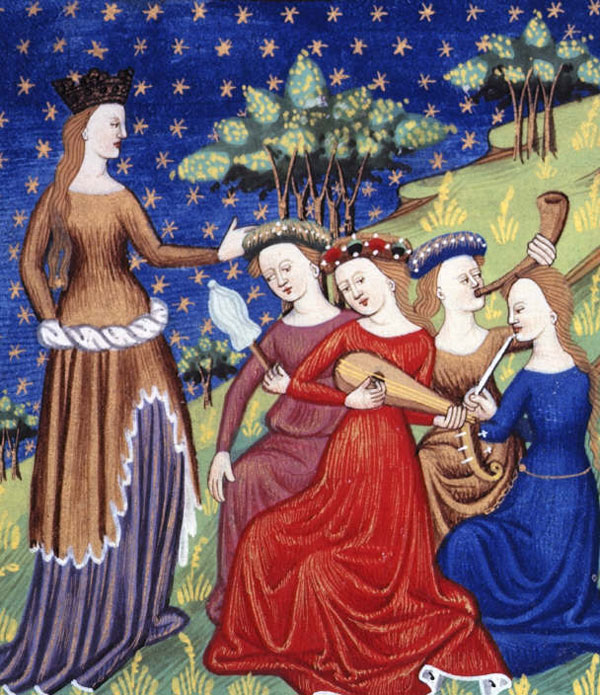
giovanni_boccaccio_women_playing

If you were in Sydney in early October, you could have attended the Royal Australian Navy International Fleet Review, celebrating one hundred years of our navy. Or, if you were of a more musical bent, you could have been there for The Renaissance Player’s 35th Runnymede Pop Festival. Held at Sydney University in its Gothic-style Great Hall, this is a unique concert of music, mime and poetry from medieval Europe, performed in brightly-coloured costumes.

The Runnymede Pop Festival has been going since 1973, and from the beginning has featured early music specialist Winsome Evans. Winsome is the director of the Renaissance Players, Australia’s oldest early music ensemble, and she is a professional harpsichordist, composer, and arranger. She conducted the first Renaissance Players concert while still a student.

Winsome is a recipient of the British Empire Medal in the Queen’s Birthday Honours List, The Order of Australia, and a NSW Jaycees Award for services to music.

Winsome is an English word meaning “charming in an innocent manner”. A winsome person is cheerful and open-hearted, engaging, and perhaps slightly naive, in a completely delightful way. The word comes from the Old English for “joy”, and is ultimately from an ancient root meaning “wish, love”.

Winsome is also an English surname, coming from the village of Winchcombe in Gloucester, or from Winscomb in Somerset. In either case, the name is Old English, and means “remote valley”. However, in some cases, the surname may have come directly from the Old English word winsom, meaning “attractive, lovely”, used as a personal name. If so, it means that the first name Winsome could date back to medieval times.

The first name Winsome can be found in records from the middle of the 19th century in North America, and seems to have been especially associated with Ontario, Canada. The reason for this may be Winsome Lake, which is one of the many thousands of smaller lakes in the Great Lakes region of Ontario, but why it inspired baby names is something of a mystery to me. I have been unable to discover how Winsome Lake received its name, because it is relatively obscure.

There are over one hundred women named Winsome in Australian records, most of them born around the turn of the twentieth century. There is another famous Winsome in Australia – Winsome McCaughey, who was Lord Mayor of Melbourne in the late 1980s. And another Australian musical connection too – Peggy Winsome Glanville-Hicks was a Melbourne-born opera composer and music critic who flourished in the middle of the 20th century.

Other successful Winsomes include British playwright Winsome Pinnock, and US Republican politician Winsome Sears. Interestingly, Sears was born in Jamaica and Pinnock’s parents were Jamaican, so there seems to be a West Indian connection. There was a grassroots playwright in Jamaica who wrote under the code name “Winsome” about 20-30 years ago. You can still find the name Winsome in use in Jamaica today, including singer Winsome Benjamin, and prize-winning cook Winsome Murphy.

Although Winsome is a secular virtue name like Felicity or Honour, the word winsome has come to have a particular meaning for evangelical Christians. The book Winsome Christianity by Henry Durbanville was published in 1952, and Winsome Evangelism by Ponder W. Gilliland came out in 1973.

I can’t pretend to be an expert on the subject, but my understanding is that the general message is to be winsome in your Christianity in order to attract more converts, and that some evangelists even use the word winsome to mean “capable of winning souls to Christ”. Author Neil Gaiman is apparently a big fan of the meaning of language changing over time, so I expect this example would be of great pleasure to him. It does give the name Winsome a special meaning for some Christians, so that it could become a religious virtue name in this context.

Winsome is a name I find very intriguing – the meaning of the word winsome seems very feminine to me, and Winsome is overwhelmingly used as a female name. Yet the name itself isn’t frilly in the least, having a similar sound to the male name Winston (which also comes from the Old English for “joy”). It’s a strong-sounding name for a girl, but with a dainty meaning.

Winsome isn’t a name I’ve ever seen on a baby or a child, and its heyday (if it can ever be said to have had one) was over many years ago. However, Winnie is becoming hip once more, and Winsome would be a rare and unusual way to reach it.

POSTSCRIPT: Abby Sandel mentioned Winsome in her Nameberry Nine column, and I was surprised and pleased at how many Berries liked or even loved the name Winsome.

POLL RESULT: Winsome received an approval rating of 61%. 21% of people thought it was an interesting modern virtue name, while 19% loved the idea of Winnie as the short form. However, 18% were reminded too strongly of the phrase win some, lose some. Only one person thought the name Winsome was too cutesy.

Famous Names: Henry and Navy

23 Wednesday Oct 2013

Posted by A.O. in Famous Names

≈ 3 Comments

Tags

American names, classic names, colour names, english names, famous namesakes, germanic names, historical records, honouring, military terms, name history, name meaning, name popularity, nicknames, patriotic names, popular names, royal names, saints names, unisex names, vocabulary names

5000830-3x2-940x627

Early in October, the Royal Australian Navy International Fleet Review was held, celebrating the 100th anniversary of the first Royal Australian Navy fleet in Sydney Harbour, on October 4 1913. Around 40 warships from twenty countries, and 16 tall ships took part, with seven RAN ships symbolising the 1913 entry itself. A stunning fireworks display on the Harbour used huge projections on the Sydney Opera House to tell the story of our century-old navy.

Although the Governor General Quentin Bryce reviewed the Fleet as the Queen’s Representative, it is traditional to have a member of the royal family in attendance for the Review, and Prince Henry of England, otherwise known as Captain Wales, or Prince Harry, got the gig. It was his first official visit to Australia, and although only here for 36 hours, he made himself immensely popular.

The famous names this week are in honour of the Royal Australian Navy, and our royal visitor.

Henry is from the Germanic name Heimrich, meaning “home ruler”. It has been commonly used amongst European royalty, and there are many rulers of Germany, France, Spain and Portugal named Henry, or one of its equivalents. There have also been six Holy Roman Emperors named Henry, one of them a saint. Other saints named Henry include a legendary bishop of Sweden, and Henry of Coquet, a Danish hermit who lived on an island off the coast of Northumberland.

Henry is a traditional name in the British royal family, and there have been eight English kings named Henry. Henry I was the son of William the Conqueror, and probably named after his great-uncle, King Henry I of France. The last king named Henry was Henry VIII, who is best remembered for his six wives, and for the English Reformation, which saw the Church of England break away from the Roman Catholic Church and the pope’s authority. In his prime handsome and powerful, he is considered to be one of the most charismatic of English rulers.

There have been a few British princes named Henry, and Prince Harry may have been named after his great-uncle Prince Henry, the Duke of Gloucester, who was Governor-General of Australia, and married to Princess Alice, whose middle name was covered in Rare Royal Names for Girls.

Some people find it hard to understand why Harry is a short form of Henry. In the Middle Ages, Herry or Harry was how the name Henry was pronounced in England, so anyone named Henry was automatically a Harry once their name was said aloud. Today the medieval Harry is used as a pet form of Henry.

It is sometimes forgotten that Prince Harry’s official name is Henry, so that when he was introduced as an ambassador of the 2012 Olympic Games, some viewers wondered who this “Prince Henry” chap was. Bizarrely, one online news source (now removed) even reported that Prince Harry and Prince Henry of England attended the closing ceremony together (well, I guess they did, in a way).

Henry is a classic name in Australia which has never left the charts. It was #11 in the 1900s, and gradually fell until the left the Top 100 in the 1950s, hitting its lowest point in the 1970s at #265. Since then, it has gradually climbed, and was back on the Top 100 by the 1990s, where it has continued to increase in popularity. It isn’t shooting up dramatically, but making steady gains.

Currently it is #33 nationally, #27 in New South Wales, #23 in Victoria, #35 in Queensland, #17 in South Australia, #33 in Western Australia, #15 in Tasmania, #19 in the Northern Territory, and #10 in the Australian Capital Territory.

Henry is a handsome classic that seems intelligent and solidly unpretentious. It’s a popular name, and rising in popularity, but in a sensible, steady way. It seems unlikely at this point to match Prince Harry’s brother’s name, William, in the popularity stakes, and get to #1.

Navy is an English vocabulary name; the word navy refers to a fleet of military watercraft. Although navies have been used since ancient Greek and Roman times, navy is quite a modern word in English, dating back to around the 17th century, it is from the Old French meaning “fleet of ships” – ultimately from the ancient Greek for “ship”.

You can also see Navy as a colour name, since navy blue or navy is the very dark blue named after the traditional colour of naval uniforms.

Navy has been used as a personal name since the very late 18th century, and is first found in the United States, more specifically New England. The births of the first babies named Navy coincide with the establishment of the US Navy in 1794, so it seems to be a very patriotic name, and likely to be given to children of people connected with the navy itself.

Navy is much more common in the US than anywhere else, although rare in America too, and overall it has been given to boys and girls in fairly equal numbers. It is an extremely rare name in Australian historical records, and seems to be slightly more common as a girls name here; I have only ever seen Navy on girls, but so infrequently that it seems an entirely unisex name.

Rare, unisex, and rather modern, the name Navy would honour a naval connection in the family, or a family naval tradition.

POLL RESULTS: Henry received an astonishing approval rating of 95%. Navy received a more modest approval rating of 25%.

Waltzing with … Eugene

20 Sunday Oct 2013

Posted by A.O. in Waltzing with ...

≈ 1 Comment

Tags

famous namesakes, Greek names, historical records, name history, name meaning, unisex names

sydney opera house

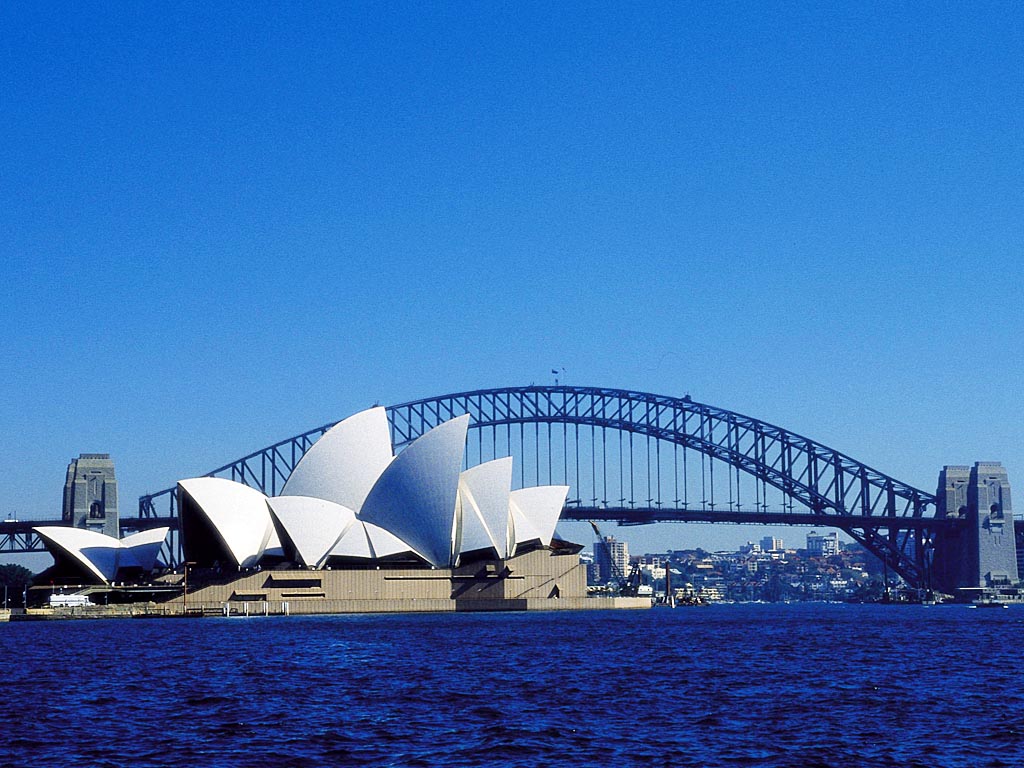
Today is the fortieth anniversary of the opening of the Sydney Opera House, officially opened by Queen Elizabeth on October 20 1973. Set on Bennelong Point, right near the Harbour Bridge, it is surrounded on three sides by the harbour, and flanked by the Royal Botanic Gardens. The Opera House’s distinctive design, featuring a roof of white “shells”, makes it an icon. It is instantly recognisable; a symbol of Sydney, and of Australia itself.

Despite its name, the Opera House isn’t just for opera, but is a performing arts complex. It was designed by Danish architect Jørn Utzon, who won the competition to design it in 1957. Unfortunately, in what seems to be a familiar story with foreign architects in Australia, Utzon was treated very badly after a change of state government, and eventually forced to resign from the project, never to return to Australia.

The project finished ten years late, and cost more than fourteen times its budget; Utzon wasn’t invited to the opening ceremony, nor was his name mentioned. The Sydney Opera House Trust later repented of its treatment of Jørn Utzon, and in the 1990s they reconciled with him, and he was appointed a design consultant for future work.

Utzon won the Pritzker Architecture Prize in 2003 for the Sydney Opera House, the Opera House’s Utzon Room was named in his honour in 2004, the Opera House was named a World Heritage Site in 2007, and after Jørn Utzon died in 2008, the Opera House held a state memorial service for him in the Concert Hall.

The story of Jørn Utzon is familiar in Australia. What many people don’t know is the name of the man who ensured we had a Sydney Opera House at all.

Eugene Goossens was an Englishman of Belgian descent, from a musical family. A prize-winning musician, he was an associate of the Royal College of Music, and had been a violinist in London before forming his own orchestra and becoming a conductor. For many years he taught and conducted in the United States, and when he left, nine American composers collaborated on a tribute in his honour.

Eugene came to Sydney in 1946, and was the first chief conductor of the Sydney Symphony Orchestra, and the director of the NSW Conservatorium of Music. It was in 1948 that he proclaimed, “Sydney must have an opera house!”. He successfully lobbied the NSW government, and controversially insisted it be located at Bennelong Point, which was being used for an ugly tram shed; the government wanted the opera house next to Wynard train station.

Eugene was a colossus of Sydney’s cultural landscape, who earned more than the Prime Minister, and used his celebrity to make classical music popular in Sydney. However, his life changed forever in the early 1950s when he met Rosaleen Norton, the “Witch of King’s Cross”. I must ask you to refresh your memory by re-reading the entry for Thorn, or if you didn’t bother reading it the first time, take a look now, otherwise the rest of this post is going to be confusing.

Eugene had a secret interest in the occult and erotica, and was fascinated by Rosaleen’s paintings, which exuded blatant sexuality while accessing pagan archetypes. The two of them embarked on a passionate affair, and Eugene was not just Rosaleen’s lover, but also a member of her coven. Together, they and other self-described witches took part in magical sex rites. Eugene wrote love letters to Rosaleen, telling her to destroy them, but she never did.

The police had been investigating Rosaleen for many years, and been collecting evidence against her, including photos of her taking part in rituals, considered pornographic at the time. It wasn’t long before they knew that Eugene was also taking part in these activities. Before they could arrest him, Eugene had left on a European concert tour, which included a visit to Buckingham Palace, where he was knighted.

When Sir Eugene returned to Australia in 1956, the police searched his luggage and found 1000 pornographic images, as well as masks and incense for rituals. Eugene now made a terrible mistake. He hadn’t been arrested or charged, and could have refused to answer any questions. Instead, he naively agreed to a police interview without a lawyer. Perhaps he thought a simple chat would clear the whole mess up – instead, they confronted him with the photographs and letters.

Rather than deny everything or pretend it had all been a silly joke, Eugene made a remarkably full and frank confession. He was now looking at a charge of scandalous conduct, which could bring a prison sentence of several years. His fall came swiftly – stood down from his positions and left to face the music alone, he was found guilty, and fined £100 for breaching the Customs Act. Although never charged for scandalous conduct, word soon got around as to what lay behind his court case.

Sir Eugene resigned, and left Australia in disgrace on his 63rd birthday, his career in ruins, and his wife on the next plane to America. He never recovered from the scandal, and died six years later, after suffering poor health. But a decade on, his vision became a reality. Although there was no reconciliation for Eugene, his portrait was hung in the Opera House library, there is a bust of him in the Opera House foyer, and the ABC named its main concert venue after him. In such ways we have tried to atone for once again taking down a foreign genius.

So when you look at the Sydney Opera House, blazing out pure and white against the brilliant blue harbour, remember that it is intimately connected with illegal sex and dark magic, and that we owe it to a man seen as a pervert and a disgrace. Thus are all things bound up strangely, one with another.

Eugene is the English form of Eugenios, from the Greek meaning “well born”, meaning born into a wealthy, noble, or highly-regarded family. The word eugenics comes from the same source, to indicate that only those of good “stock” should be permitted to reproduce.

Although there are several saints named Eugene, and four popes, the name never took off the way some other saints names have, and it wasn’t common during the Middle Ages. It received a boost in the 17th and 18th centuries, due to Prince Eugene of Savoy, one of the most successful military commanders in European history, and the greatest Austrian general of all time. However, the name was more popular in continental Europe than in Britain.

I was surprised to see from the historical records that Eugene was used as a female name much more often than I expected, and that in Australian records, numbers of male and female Eugenes were almost even. It did take me aback that Eugene was basically a unisex name in Australia.

Eugene is a name that, for many years, has had a rather dorky, uncool image. It’s a name that people seem to love bashing on blogs and forums. But I think it sounds very elegant – I see it as an intellectual name rather than a nerdy one. And the nickname Gene is pretty cool. Looking for something different, but with history and style? Maybe Eugene is the name you’ve been searching for.

Name Combinations for Eugene

Eugene Francis, Eugene Joseph, Eugene Redmond, Eugene Spencer, Eugene Victor, Eugene Walter

Brothers for Eugene

Basil, Giles, Nicholas, Quentin, Rufus, Wilfred

Sisters for Eugene

Adela, Clematis, Gertrude, Mary, Susanna, Thais

POLL RESULT: Eugene received an approval rating of 54%. 28% of people thought it was okay, but 26% disliked it.

Requested Name: Grady

16 Wednesday Oct 2013

Posted by A.O. in Requested Names

≈ 1 Comment

Tags

historical records, Irish names, name history, name meaning, Old Gaelic names, rare names, surname names, unisex names

Cliffs-of-Moher-West-Coast-Co-Clare-small-600x450

Grady is an Anglicised form of the Irish surname O’Grady, from the Old Gaelic O’Gradaigh, or “son of Gradaigh”, with Gradaeigh meaning “the illustrious one”. The O’Gradys are one of Ireland’s noble families, and a recognised Irish clan. The surname is mostly from County Clare and Kilkenny.

I can find Grady in the records from the late 18th century onward, and interestingly, the Gradys who were born in Ireland were all female, while overall the gender balance between male and female at that time was very even. However, the name Grady is overwhelmingly masculine today. In Australian records, Grady is rare as a first name, and mostly given to boys, although not uncommon as a middle name for girls.

Grady does not rank at all in Australia, and never has, although it is in the Top 500 in the United States, and has charted there since the late 19th century. I was a bit surprised to see how rare Grady is here, because it doesn’t sound rare.

It sounds like Brady, Graydon and Grayson, and like traditional Graham. Yet when I think about it, I don’t recall ever meeting a Grady, or seeing a Grady, or even hearing someone mention a Grady, although it wouldn’t have seemed even slightly unusual if I ever had.

It’s one of those handy names that other parents are hardly using, but won’t seem weird to others – and at a time when surname names for boys are booming, and in a country where Irish names are readily accepted, it’s rather strange how little used this name is.

Thank you to Brooke for suggesting the name Grady to be featured on Waltzing More Than Matilda

POLL RESULT: Grady received an approval rating of 62%. People saw the name Grady as cute for a little boy, but handsome and mature on a grown man (22%), strong and masculine (15%), and rare yet familiar-sounding (12%). However, 12% thought it was harsh or ugly-sounding, and a further 12% believed it sounded too trendy, due to its similarity to other names.

(Photo is of the Cliffs of Moher in County Clare)

Brisbane Suburbs That Could be Used as Girls Names

06 Sunday Oct 2013

Posted by A.O. in Name Themes and Lists

≈ 9 Comments

Tags

animal names, Aramaic names, Australian Aboriginal names, Biblical names, birth notices, english names, fabric names, famous namesakes, fictional namesakes, Gaelic names, Gaulish names, German names, Greek names, historical records, Latin names, locational names, name history, name meaning, name popularity, names of farms, names of ships, names of spices, nicknames, Norman-French names, saints names, Sanskrit names, Scottish names, surname names, unisex names, virtue names, vocabulary names

15517831

Amity

Amity Point is a small town on North Stradbroke Island, 30 km south-east of Brisbane. The town is named after the Amity, a brig which carried the first European settlers to Queensland in 1824. The Amity was later wrecked near Tasmania, and today you can visit a full-size replica of the brig in Albany, because the Amity also took colonists to Western Australia. Amity is an English word which means “friendship”; it comes from the same Latin root as names such as Amy and Amabel, and has been used as a girls name since the 17th century. Amity is #551 in Victoria, and I often see it in birth notices: I think this pretty virtue name is gaining in popularity, and may become a replacement for Amy.

Bethania

Bethania is in Logan City, halfway between Brisbane and the Gold Coast. The suburb was founded by Germans in the 19th century, and has a large hobby farm area. The name Bethania comes from Bethanien, the German name for the town of Bethany near Jerusalem. In the New Testament, Bethany is mentioned as the home of siblings Mary, Martha, and Lazarus, and is said to be near the place where Lazarus was raised from the dead. The Biblical Bethany may be the same place as the city of al-Eizariya in Palestine – its name means “place of Lazarus”, although others say that the original village of Bethany was slightly higher up on the Mount of Olives, and that al-Eizariya sprung up around the traditional site of Lazarus’ resurrection. The meaning of Bethany has been much debated, but it is thought the most likely derivation is from the Aramaic beth anya, meaning “house of affliction, house of suffering”, with the conclusion being that it was a place for care of the sick and destitute. Although Bethania doesn’t have any connection to Elizabeth or Anne, it might seem like a way to connect these two names, and does give both Beth and Anya as nicknames.

Cashmere

Cashmere is an outer suburb of Brisbane in the foothills of a mountain range surrounded by dense forest, with a nearby lake. Cashmere is named after an early settler, James Cash, famous for his hospitality to passing travellers. Although Cash was not wealthy and lived in a simple shanty, no tramp ever passed his door without receiving a meal or a pot of tea. Because mere means “lake”, and James Cash’s farm was near Lake Samsonvale, the suburb’s name can be understood as “Cash’s land by the lake”. Cashmere is also a fine, high quality fibre taken from Cashmere goats. The name is after the Kashmir region of India, which has been making cashmere shawls for thousands of years. Kashmir’s name comes from the great sage Kashyapa, a legendary wise man whose name is from the Sanskrit for “tortoise”. With Cash a fashionable choice for boys, luxurious Cashmere seems like a way for girls to get the nickname Cash as well. In Australian records, both men and women named Cashmere can be found.

Corinda

Corinda is an older suburb of Brisbane, first settled in the 1860s as a farming community, and with many of its homes dating back to the colonial period. The name Corinda is believed to come from a local cattle station, which was named after a pastoral station in outback Queensland. The name is of Aboriginal origin, but its meaning is not known. Corinda has been used as an English girls name since the 18th century – perhaps based on the Greek name Kore, meaning “maiden”, with an elaborated ending common in 18th century poetic names like Melinda and Dorinda. This name seems elegant and literary, and not so different from familiar names such as Lucinda.

Inala

Inala is a suburb of Brisbane near the industrial estates. It was built in the post-war period to help with the housing shortage that followed World War II, and was one of the earliest and biggest Housing Commission projects in Queensland. Young architects such as Robin Boyd helped design the housing, which features simplicity and lack of ornamentation. In other words, it isn’t pretty, but cheap and efficient to install and maintain. It has an ethnically diverse community, with many migrants from Vietnam, New Zealand, and the Pacific Islands, amongst other places, settling there. The name Inala is believed to come from an Aboriginal expression meaning “peaceful place, happy place”, but it’s possible it actually means “place of the wind”. I saw a baby girl named Inala in a birth notice early this year, and ever since have been itching to cover this as a name – said ih-NAHL-ah, it fits in with names such as Ayla, Nyla, and even Isla.

Karalee

Karalee is a suburb of Ipswich; originally dairy and farm country, it began to be developed for residential purposes in the 1970s. It is thought that Karalee comes from an Aboriginal expressing meaning “grass around a waterhole”, although the City of Ipswich prefers the translation, “pretty hill beside the water”. This looks like a portmanteau of Kara and Lee, but has its own integrity, and is said KAR-a-lee, like an elaboration of Carol.

Lacey

Laceys Creek is a rural area in the outer suburbs of Brisbane, and was first settled as timber country, soon followed by dairy farming, pineapples, bananas, and bee-keeping. Lacey is an English surname of Norman-French origin. It comes from the village of Lassy in Normandy, which means “Lascius’ place”. The meaning of the Gaulish name Lascius is of unknown meaning. The de Laci family came to England with William the Conqueror, and one of their descendants was amongst the barons who forced King John to sign the Magna Carta. Lacey has been used as a girls name since the 17th century, and part of its feminine charm is that it sounds like the word lacy. Lacey is #234 in Victoria, and I believe this is another pretty girls name which is growing in popularity.

Lucia

St Lucia is an exclusive green and leafy inner-city suburb of Brisbane. It is focused around the University of Queensland, with the university itself, and residential colleges for students, taking up a large proportion of the suburb. There are many wealthy people living in St Lucia, with riverfront houses here costing in the millions. The area was first settled in the 1860s as sugar plantations, and was given its name by William Wilson, who bought and developed one of the plantations for housing in the 1880s. Wilson was born in St Lucia in the West Indies, and he named the housing estate St Lucia because the sugar plantations reminded him of his birthplace. The island of St Lucia is in the Caribbean, part of the Lesser Antilles group. It was named in honour of Saint Lucy by the French, who were the first European settlers to the region. Saint Lucy was a 4th century martyr, and she has become a popular saint, partly because her feast day of December 13 is near Christmas and originally coincided with the (northern hemisphere) Winter Solstice. Her name’s meaning of “light”, from the Latin lux, became a very appropriate one for a Festival of Light, heralding the Light of the World. Lucia has charted since the 1940s and had a minor peak in the 1960s at #283 before dropping to #808 in the 1990s. Since then it has climbed steeply, and peaked in 2010 at #115. Currently it is #122 in New South Wales and #177 in Victoria. This is an alternative to Lucy that has never become popular, although on the charts since the end of World War II.

Ripley

Ripley is a suburb of Ipswich, which currently has only 1000 residents. However, big things are planned for Ripley’s future, and once fully developed it is expected to be a city of 120 000 – one of the country’s largest pre-planned communities. It is named after the Ripley Valley where it is located; I am not sure if this is after someone named Ripley, or one of the towns named Ripley in England. The surname Ripley is from Ripley in Yorkshire – the town’s name means “farm whose land cuts a strip through the forest”, with the forest in question being the forest of Knaresborough. One of the most famous Ripleys must be Robert Ripley, who created Ripleys Believe It or Not! trivia series for newspapers, radio and television. The name may also remind you of tough Lieutenant Ellen Ripley from the Alien film series, played by Sigourney Weaver, or suave con artist Tom Ripley, from the crime novels, turned into a film, The Talented Mr. Ripley, played by Matt Damon. I have seen this name on both sexes.

Sinnamon

Sinnamon Park is an older suburb with some heritage-listed sites; the suburb is named for the pioneering Sinnamon family who settled in the district. Sinnamon is a Scottish surname; the Clan originated in Fife, and their name comes from their seat at Kinnimonth, which was granted to them by King William of Scotland. The name Kinnimonth comes from the Gaelic for “head of the hill”. Sinnamon sounds like the sweet spice Cinnamon, but has its own meaning and history – although the Sin- at the start may be problematic for some. I did find someone named Sinnamon from Queensland in the records, but can’t be sure whether they were male or female.

POLL RESULT: People’s favourite names were Amity, Lucia, and Bethania, and their least favourite were Inala, Sinnamon, and Karalee. Not one person liked the name Karalee.

(Photo shows the University of Queensland in St Lucia)

Famous Name: Thorn

25 Wednesday Sep 2013

Posted by A.O. in Famous Names

≈ 3 Comments

Tags

botanical names, craft names, english names, famous namesakes, historical records, name history, name meaning, names of runes, nature names, Old Norse words, plant names, rare names, surname names, unisex names, vocabulary names

4978915726_62d35a67eb_o

October 2 will be the 96th birthday of Rosaleen Norton. She was originally from New Zealand, born into a middle-class English family; the Norton family emigrated to Sydney when Rosaleen was eight. She was an unconventional child who disliked other children and all authority figures, including her mother; she slept in a tent in the garden, and preferred the company of her many pets, which included a spider named Horatius. Later in life, she claimed that she had been born a witch, and bore physical proofs of this, including pointed ears and blue markings on her left knee.

From early in life, her favourite time was the night, and while still very young, she began to experience strange fantasies of mystical ghouls and spirits. She liked to draw, and the pictures she drew were inspired by her nightly fantasies. This got her into trouble, because teachers and classmates alike were disturbed by her drawings of demons and vampires, and when she was 14, she was expelled from her private Church of England girl’s school in the belief that she was a corrupting influence. It was not the last time she was to be condemned for her art.

Rosaleen went to art college, where her talent for drawing was more appreciated, and gained work here and there as a writer and illustrator. She lived at the Ship and Mermaid Inn in The Rocks, a run-down pub that attracted artistic types – Joseph Conrad and Jack London both stayed there while visiting Sydney (not together, I presume). It was here that she began reading books on Greek mythology, psychology, magic, occultism, demonology, and the Quabalah.

Rosaleen began experimenting with self-hypnosis and automatic writing as techniques to heighten her artistic perception; these methods were popular with surrealist artists like Salvador Dali and Andrew Breton. During her experiments, she received visions of supernatural figures, and from her occult studies, believed she had not merely accessed her subconscious, but an “astral plane”. She came to see the spiritual entities as having an independent reality of their own, and was able to communicate with them.

Rosaleen turned her symbolic visions into art, but attempts to exhibit or publish her work led to court cases where she was charged with obscenity, and attempting to corrupt public morals. It turned out the adult world still thought like the headmistress of a girl’s school. Rosaleen defended her work as pagan archetypes based on Greek mythology, but even when she won her case, the result was that the exhibition was cancelled, or the book censored. If you think Australia was peculiarly backward in the 1950s, her treatment was even more severe in America, where her book was banned entirely, and copies burned.

Already a notorious figure, Rosaleen settled in King’s Cross, the red light district of Sydney, which attracted many bohemians, artists, writers and poets. She became well known in the area and some of her artwork was displayed in local cafes. Curious visitors came to see the “Witch of King Cross”, who had decorated her house with occult murals, and put up a placard on the door which read: Welcome to the house of ghosts, goblins, werewolves, vampires, witches, wizards and poltergeists.

The police had her arrested for “vagrancy”, which in those days could be used against anyone not in steady employment, and a mentally ill homeless woman claimed that her life had fallen apart after taking part in a Satanic “black mass” with Rosaleen. Being a pagan, Rosaleen didn’t believe in Satan, and eventually the woman admitted she had made the whole thing up. However the tabloids went crazy and she was accused in their pages of doing everything from drinking blood to animal sacrifice – a practice she found abhorrent, for she had a very strong bond with animals.

Rosaleen had her own style of pantheistic witchcraft, based on worshipping Pan as the embodiment of natural forces, and rituals inspired by the works of Aleister Crowley. She was a practitioner of sex magic, and due to a couple of high-profile court cases where this led to further charges of obscenity by her coven, there is a public record of her religious beliefs and practices, given by herself, which make for fascinating reading for the student of comparative religion. You get the distinct impression that the courts were just slightly more interested in the sexual aspects of her magic rituals than strictly necessary.

Interestingly, Rosaleen herself said that her style of magic, called The Goat Fold Path, was not of her own devising, but what she thought was an old Welsh tradition which had existed in inner Sydney from the city’s earliest days, brought here by convicts. There is no way of proving or disproving this, but if correct, it means that European pagans have been in Australia from the beginning, along with Christians, Jews, and atheists.

Rosaleen estimated that she was in personal contact with hundreds of witches, which means that even in the socially repressive 1940s and ’50s, witchcraft was alive and well in Australia before the arrival of contemporary Wicca in the late 1960s. Witchcraft was illegal in Australia until 1971; one of the few religions to be banned in Australia. On the 2011 census, about 32 000 Australians identified themselves as Neopagan, and of those, over 8 000 identified their religion as either Wicca or Witchcraft.

Rosaleen Norton’s craft name was Thorn, perhaps a counterpoint to the Rose suggested by her birth name. The sharp name suited her, because she found spiritual energy in a dark approach to her religion, apparent in her artwork. By no means was she a “fluffy bunny” witch, and was keen on hexing people, and selling curses. She asserted the need to explore the dark parts of her psyche, and embrace them, rather than denying their power.

I think that by taking the name Thorn, she was indicating a willingness to face the pain of life unflinchingly. Even while dying from colon cancer, she said to a friend: I came into the world bravely; I’ll go out bravely.

Thorn is a nature nature which is seldom used, but one which I find very strong and attractive. In botany, a thorn is a branch or stem which ends in a sharp point; their function seems to be to protect a plant from being eaten, and also to provide shade or insulation. The English word thorn may be from an ancient root meaning “stiff”.

In Genesis, thorns are said to be one of Adam and Eve’s punishments, with the earth producing thorns and thistles in order to make food gathering more difficult, and generally ruin their day. In the New Testament, Christ was forced to wear a crown of thorns as a mocking punishment, seemingly a parody of the crown worn by the Roman emperor. In Christian tradition a crown of thorns is a symbol of great humility.

Thorn or thorn tree is also one of the many names by which hawthorn is known (see May). Hawthorn bushes are often used as hedging plants, so that their spiny thorns may protect livestock. The English surname Thorn probably denoted someone who lived near a prominent hawthorn.

Thorn is also a rune letter; despite the way it sounds, it is from the Old Norse for “giants”. However, the Anglo-Saxons do seem to have connected it to thorns, and it is often seen as a rune of warning or even misfortune, although others say that the power it represents can serve as protection – if you dare to grasp the thorn.

In the records, most people named Thorn are male, but I can imagine a girl named Thorn as well – the flipside of Rose (although strictly speaking roses don’t have thorns but prickles). I only found a couple of people named Thorn in Australian records, and they were both male, but as a middle name it was well used by both sexes.

The many associations of this name are double-edged, and some may think of pain and punishment, while others reminded of its protection and power. After all, from a plant’s point of view, thorns are healthy and necessary. It’s a glass half-full situation. Do you weep because roses have thorns, or rejoice that thorn bushes are laden with flowers?

POLL RESULT: Thorn received an approval rating of 44%. 20% of people couldn’t see the name Thorn on a real person, while 16% were reminded of the word prick, or the phrase thorn in my side. However, 15% thought it was an attractive and original nature name, and 11% saw it as strong and protective.

(Photo of thorn from Flickr)

Famous Name: Jason

18 Wednesday Sep 2013

Posted by A.O. in Famous Names

≈ 3 Comments

Tags

Beyond Jennifer & Jason, Biblical names, famous namesakes, fictional namesakes, Greek names, hebrew names, historical records, honouring, Linda Rosenkrantz, mythological names, name history, name meaning, name popularity, name trends, names from movies, names from television, Pamela Redmond Satran, royal names, saints names, US name popularity

51WNMTYA9qL

A federal election was held on September 7, and we have had a change of government. Votes are still being counted, so the election isn’t over, and we may have some names from it when the process is complete.

However, in a much more frivolous political poll held in August, Cleo magazine rated the male politicians on their sex appeal, and decided that Labor MP Jason Clare, described as the “Rob Lowe of Australian politics”, was the winner. I can’t help thinking if a men’s magazine had rated female politicians like this it would be considered very wrong.

Jason Clare represents the seat of Blaxland in western Sydney, which he won in 2007, and until recently was the Federal Home Affairs Minister. Jason grew up in the western suburbs, made dux of his class, and completed a law degree while pursuing an interest in politics. While Labor lost the election with a significant swing against it, Jason managed to increase his hold over the electorate by 6%.

To show that he is not vain about his appearance, Jason modestly joked that his wife’s preference in the Cleo poll was for the runner-up, Stephen Smith. Hello ladies – he’s a smart, handsome law graduate and his wife doesn’t appreciate him! (is the message I think we’re meant to be receiving there).

Jason is from the Greek name Iason, derived from the Greek for “to heal”. Iaso was the Greek goddess of recuperation from illness, so you could see Jason as a masculine form of her name. Although Jason is often translated as “healer” or even “physician”, to me the meaning of the name is more about the body’s natural ability to heal itself.

The name is best known from the mythological prince of Thessaly, who led a hand-picked crew of heroes on the good ship Argo, in quest of the Golden Fleece, with the aid of the goddess Hera. Jason and the Argonauts had a series of adventures, in which they didn’t behave very nobly for much of the time, then arrived in Colchis, which today is in Georgia, on the Black Sea.

The Golden Fleece was owned by King Aeetes, and to obtain it, the king gave Jason three tasks which seemed impossible to perform. Hera arranged for Aeetes’ daughter Medea to fall in love with Jason, and as she was a great sorceress, she was able to use her knowledge of magic to help him succeed, after he promised her that they would get married.

Jason and Medea then fled with the Fleece and sailed away on the Argo, because King Aeetes knew that Jason could only have completed the tasks by cheating, and wanted his property back. He pursued them until Medea came up with the horrible plan to kill her own brother and throw him into the sea, piece by piece, to distract her father.

Medea’s interest in dismembering family members continued when she and Jason returned to Greece, and she arranged for his Uncle Pelias to get chopped up into soup. Pelias had tried to drown Jason as a baby, then sent him off on the dangerous Golden Fleece quest hoping he’d die, so she had her reasons. With her penchant for murdering relatives, you’d think that Jason would have been blissfully happy with Medea, but instead he betrayed her love by becoming engaged to another woman.

When Medea tried to point out that all Jason’s luck in life was because of her, and he was being very ungrateful, he replied, “Babe, you’re the one who got lucky when the gods made you fall in love with me”. Medea wasn’t the type to take this treatment lying down, and she promptly burned her rival to death before murdering the children she and Jason had had together. Although Jason was ungallant, Medea’s tendency to see her own flesh and blood as collateral damage is disturbing.

Because Jason had broken his vow to love Medea forever, the goddess Hera abandoned him, and he wound up lonely and miserable. He was killed when the Argo, now old and rotting, broke and fell on top of him while he was asleep – a suitably ironic finish.

A king of Thessaly named Jason was a contemporary of Alexander the Great‘s father. A successful and ambitious general, it is thought that he must have been at least one of the inspirations of the great Alexander himself. It seems very likely he was named after the Thessalian hero.

There is a Jason in the New Testament, one of the Seventy Disciples of Christ, who ran a “safe house” for Christians in Thessalonica, and was once arrested for it. Saint Paul appointed him bishop of Tarsus, and he is known as Saint Jason. Unusually for an early Christian saint, Jason lived to a ripe old age. The Jewish historian Josephus tells us that Hellenised Jews used the name Jason to replace Yeshua (Joshua or Jesus), and this may apply to Saint Jason too.

Being Biblical, Jason was acceptable for use as a Christian name, and can be found in the records from at least the 16th century. The name Jason became very popular in the 1970s, and it looks as if this was due to the original Jason, because the movie Jason and the Argonauts came out in 1963 (it cut out most of the revolting parts). A special effects tour de force, it’s a cult classic, and according to Tom Hanks, the greatest film ever made. It must have made a huge impression.

Jason was already rising in popularity at the time of the film’s release, but soon zoomed up the charts to make the US Top 100 three years later. It was Top 10 in the US for all of the 1970s, which coincides with popular TV series, The Waltons, having a Jason. Even in the late 1980s, when Jason was #27, Pamela Redmond Satran and Linda Rosenkrantz were urging parents to “go beyond Jennifer and Jason”. Despite their book’s success, Jason has still not left the Top 100 in the United States, so American parents only partially heeded their call.

Jason has charted in Australia since the 1950s, when it was #290 for the decade. By the 1960s it had climbed phenomenally to make the Top 50, at #43 for the decade. It peaked in the 1970s (when Jason Clare was born) at #3, was still #18 in the 1980s, and #35 in the 1990s. Did nobody feel like going beyond Jason? It finally left the Top 100 in the mid-2000s, and is currently #133 and stable – not popular any more, but by no means plummeting into obscurity.

Jason has been a real 1960s success story, and continues to influence popular names for boys, because parents are still attracted to similar names, such as Mason, Jacob, Jayden, Jackson, Jasper and Jordan. In fact, Jason is staging a comeback under the short form Jace – already Top 100 in the United States, and no doubt rising here too.

It turns out we’re not ready to go beyond Jason yet – at least, not very far.

POLL RESULT: Jason received an approval rating of 38%. People saw the name Jason as a “dad name” (30%), and common and boring (20%). However, 12% saw it as a “nice guy” name, and 10% thought it attractive. Nobody thought the name Jason was sexy.

← Older posts
Newer posts →

Enter your email address to follow this blog

Categories

Archives

Recent Comments

A.O.'s avatarwaltzingmorethanmati… on Zarah Zaynab and Wolfgang…
Madelyn's avatarMadelyn on Zarah Zaynab and Wolfgang…
JD's avatardrperegrine on Can Phoebe Complete This …
A.O.'s avatarwaltzingmorethanmati… on Rua and Rhoa
redrover23's avatarredrover23 on Rua and Rhoa

Blogroll

  • Appellation Mountain
  • Baby Name Pondering
  • Babynamelover's Blog
  • British Baby Names
  • Clare's Name News
  • For Real Baby Names
  • Geek Baby Names
  • Name Candy
  • Nameberry
  • Nancy's Baby Names
  • Ren's Baby Name Blog
  • Sancta Nomina
  • Swistle: Baby Names
  • The Art of Naming
  • The Baby Name Wizard
  • The Beauty of Names
  • Tulip By Any Name

RSS Feed

  • RSS - Posts

RSS Posts

  • Celebrity Baby News: Melanie Vallejo and Matt Kingston
  • Names from the TV Show “Cleverman”
  • Can Phoebe Complete This Sibset?
  • Zarah Zaynab and Wolfgang Winter
  • Baby, How Did You Get That Name?
  • Celebrity Baby News: Media Babies
  • Celebrity Baby News: Adelaide Crows Babies
  • Celebrity Baby News: Chris and Rebecca Judd
  • Names at Work: Name News From the World of Business and Employment
  • Celebrity Baby News: Sporting Round Up

Currently Popular

  • Rare Boys Names From the 1950s
  • The Top 100 Names of the 1930s in New South Wales
  • Celebrity Baby News: Toby Allen and Darren Weller
  • Celebrity Baby News: Jason Morrison and Heidi Tiltins
  • Celebrity Baby News: Caroline Craig and Callum Finlayson

Tags

celebrity baby names celebrity sibsets english names famous namesakes fictional namesakes honouring locational names middle names name combinations name history name meaning name popularity name trends nicknames popular names saints names sibsets surname names twin sets unisex names

Create a free website or blog at WordPress.com.

Privacy & Cookies: This site uses cookies. By continuing to use this website, you agree to their use.
To find out more, including how to control cookies, see here: Cookie Policy
  • Subscribe Subscribed
    • Waltzing More Than Matilda
    • Join 517 other subscribers
    • Already have a WordPress.com account? Log in now.
    • Waltzing More Than Matilda
    • Subscribe Subscribed
    • Sign up
    • Log in
    • Report this content
    • View site in Reader
    • Manage subscriptions
    • Collapse this bar
 

Loading Comments...