• About
  • Best Baby Names
  • Celebrity Baby Names
  • Celebrity Baby Names – Current
  • Celebrity Baby Names – Past
  • Featured Boys Names
  • Featured Girls Names
  • Featured Unisex Names
  • Links to Name Data
  • Waltzing on the Web

Waltzing More Than Matilda

~ Names with an Australian Bias of Democratic Temper

Waltzing More Than Matilda

Tag Archives: Greek names

Unique Boys Names from Tasmania, 2010

09 Sunday Oct 2011

Posted by A.O. in Name Themes and Lists

≈ 12 Comments

Tags

astronomical names, Australian Aboriginal names, celebrity baby names, created names, Danish names, famous namesakes, fictional namesakes, German names, Greek names, hebrew names, Irish names, Latin names, Maori names, mythological names, name history, name meaning, nature names, Old English names, place names, popular culture, saints names, surname names, Tibetan names, unique names, vocabulary names
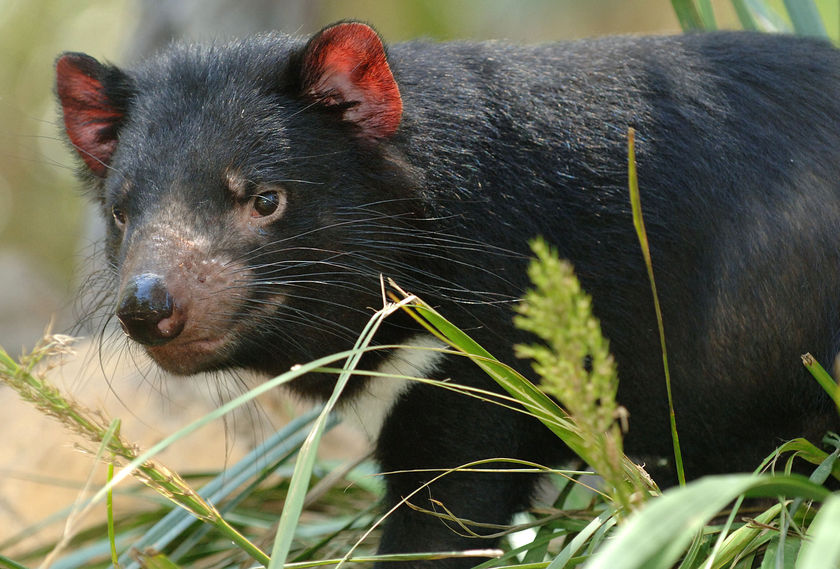
This follows on the previous list, Unique Girls Names from Tasmania, 2010. Please read the notes attached to that to see how names were chosen. Although there were fewer unique names for boys, they were much more likely to be genuine names, and not just variant spellings of common names. Whether you like these names or not, it’s nice to know that not everyone calls their children by names from the Top 100. There’s a lot of variety out there once you start looking. (If you are unsure what the animal in the photo is, it is a Tasmanian devil). 

Ambrose

This is the English form of a Latin name derived from the Greek, meaning “immortal”. It is connected linguistically to ambrosia, the food or drink of the gods in mythology, and is said to not only taste delicious, but to have a delightful aroma. In fact, it has been argued that ambrosia means “fragrant”, rather than “immortal”. If ambrosia had any basis in reality, it may be describing a honey product, although another theory is that it refers to the hallucinogenic mushroom, Amanita muscaria. The most famous namesake is probably Saint Ambrose of Milan, a 4th century Doctor of the Church who converted Saint Augustine. Interestingly, according to legend, bees swarmed on Ambrose’s face as a baby, leaving behind a drop of honey; this does seem to link the saint with the mythical ambrosia. An old-fashioned name, this fits in with the antique name revival, and the S/Z-ending for boys names. The meaning, and its associations with divine sweetness, is also hard to resist.

Other Latin names: Adrian, Augustus, Cassius, Ignatius, Maxmilian, Roman, Rufus, Silas, Sylvester

Anakin

This is the name of a Jedi knight in the Star Wars movies, father of Luke and Leia Skywalker, who crossed over to the Dark Side, and went on to become the heavy-breathing evil villain known as Darth Vader. Annikkin Starkiller was the name that George Lucas has originally chosen for Luke Skywalker, and when there was a major plot change and Darth Vader became Luke’s dad, a slight change of spelling meant that Darthy could have Luke’s old name. It’s sometimes claimed that George Lucas took Anakin’s name from his friend, Brtish film director Ken Annakin, but Lucas denies this. Although it’s tempting to give this name all number of foreboding meanings, we should remember it was originally planned as the hero’s name. It wasn’t clear in the beginning what kind of person the protagonist was going to be, and in one version it was an old man, and in another, a woman, so the name predates the character and the plot. Most likely, George Lucas just made it up.

Other sci-fi names: Auron, Draven, Grayson, Jango, Lex, Navi, Neo, Obi, Quillam

Bon

This is the name of the Scottish-born Australian rock musician, Bon Scott, who was the lyricist and lead singer for AC/DC, until his death in 1980, aged 34. AC/DC dedicated their next album, Back in Black, to him, which is the best-selling rock album of all time. Bon Scott is regarded as one of the greatest lead vocalists, has been inducted posthumously into the Rock and Roll Hall of Fame, and been honoured in both his home town of Fremantle, Western Australia, and his birthplace of Kirriemuir, Scotland. Bon was born Ronald Belford Scott, and his nickname was given to him in primary school. As there was already a classmate called Ronald, and as Scott had recently emigrated from “Bonnie Scotland”, he was dubbed Bon. The Scottish word bonnie means “beautiful, fair, fine”, and is taken from the French word bon, meaning “good”. Not only honouring a rock legend, this name seems similar to Beau in meaning and origin.

Other celebrity names: Cadel, Cassidy, Denzel, Dre, Elvis, Hammond, Joaquin, Keanu, Leland, Maddox, Makaveli, Orlando, Otis, Sylvain, Tander, Tex, Ziggie Other Scottish names: Dougal, Jock

Clancy

This is from an Irish surname meaning “son of Flannchadh”, with Flannchadh being a Gaelic name meaning “red warrior”. The name is well known in Australia, because of the poem Clancy of The Overflow, by Banjo Paterson; The Overflow is the name of a station where Clancy, a drover, works. It’s based on the true story of Paterson, a lawyer, sending a letter to Thomas Gerald Clancy of The Overflow, and imagining Clancy’s enviable life in the bush, under the “glory of the everlasting stars”. The reply that he received to his letter – “Clancy’s gone to Queensland droving and we don’t know where he are” – delighted Paterson, and was included in the poem. Clancy also appears briefly in The Man from Snowy River, and when that poem was made into a movie, the role of Clancy was played by Jack Thompson. Clancy of the Overflow is a romanticised image of bush life as dreamed of by the city dweller, and probably seems a patriotic choice as a name.

Other Irish names: Fionbharr, Niall, Rafferty, Ronan, Sullivan

Diesel

This is the name for the fuel used in diesel engines, which are named after their inventor, French-born Rudolf Diesel. His German surname is said to be based on a short form of either Matthias or Dietrich. As it sounds quite tough and butch, and has connotations of being able to keep going like a mechanical engine, it’s been a popular nickname or assumed name, for celebrities such as American actor Vin Diesel, Australian rock singer Diesel, American basketball player Shaquille “The Diesel” O’Neill, and AFL player Greg “Diesel” Williams. Diesel is also a popular name for dogs, and with “dog names” for boys in style, Diesel seems very usable. US Olympian softabller, Jennie Finch, called her second son Diesel Dean Daigle, so now it’s a celebrity baby name as well.

Other vocabulary names: Ace, Buddy, Gray, Spike Other car-related names: Holden, Jag

Esmond

An Old English name meaning “gracious protection”, this fell out of use after the Norman Conquest, and became best known as a surname. Thackery’s History of Henry Esmond is a historical novel set in the time of Queen Anne, where the hero spends the whole book in love with his foster-sister and cousin, but marries his foster-mother instead (also his cousin). This surname is part of Australian history, because James Esmond was an Irish-Australian who was one of the first people to find gold during the Victorian goldrush. He was also politically prominent in the miner’s organisation, and commanded a section of miners in the Eureka Stockade rebellion. It’s tempting to wonder if baby Esmond is a descendant of James, or whether the name was chosen in honour of this famous rebel.

Other Old English names: Bede, Edgar, Edwin, Winston

Iluka

This is a small coastal town on the Clarence River in New South Wales, and its name is derived from an Aboriginal word meaning “by the sea”. It is pronounced eye-LOO-ka. Iluka is a popular tourist destination, blessed with beaches and rainforest, and people who live in the chilly southern parts of Australia may enjoy spending their winters here. Maybe the parents of Iluka spent a happy holiday in the town? It’s easy to see the appeal of it as a name, because it is so similiar to the popular Luka, but has a distinctive Australian meaning.

Other place names: Carlisle, Clyde, Griffith, Hamilton, Maitland, Memphis, Meredith, Nelson, Preston, Ripley, Weston, Wilson, Windsor Other Aboriginal names: Wirra

Manuka

This is the name of a small tree or shrub native to New Zealand and south-east Australia – including, of course, Tasmania. It’s scientific name is Leptospermum scoparium, and it’s also called tea tree (not the same tea tree that tea tree oil is made from). The name manuka is Maori, and comes from history, where one of the sea-going canoes that brought the Maoris to New Zealand is said to have been called Mānuka. It’s pronounced mahn-OO-ka. Manuka honey is not only delicious, but recently it’s been discovered to have powerful antibacterial properties, and you can now buy medical-grade manuka honey to apply to wounds. There is a town in Tasmania near Hobart called Tea Tree, which may be named after this useful plant.

Other nature names: Aspen, Brae, Nullah, Reef, Stone, Sunny, Tiger Other Polynesian names: Loti, Kalani, Tavita

Namkha

Meaning “sky, heaven” in Tibetan, a namkha is a yarn or thread cross used in Buddhism as a sacred weaving, used in ritual or placed on an altar. “Thread” is the literal translation of the word tantra, and the threads of the mankha symbolise the warp and weft of time and space. A famous bearer is Tibetan Buddhist teacher, Rigdzin Namkha Gyatso Rinpoche.

Other Asian names: Anshuman, Arjuna, Ba, Dravid, Khan, Omita, Yang, Yasir, Zusong

Shem

One of Noah’s sons in the Old Testament, Shem is Hebrew for “name”. It can refer to someone’s fame and reputation, and also to their essential nature and being. While Noah is one of the most popular boy’s names, the names of his sons, Shem, Ham and Japeth, have had only occasional use. This may be because from early on, these three men were seen as the progenitors of the various races (as that vague and inaccurate word was understood at the time). Different writers have claimed Shem as the source of either the “Semitic” peoples, all Europeans, Germans, Greeks, Persians, or Indians; some texts even say that God made Shem brown skinned, Japeth fair skinned and Ham dark skinned. These ideas on race and ethnicity now look rather embarrassing, or even offensive; at the very least, we know them to be scientifically wrong. In the Bible, Shem is said to be an ancestor of Abram, who founded the Abrahamic religions. The name is pronounced SHAYM, and although uncommon, sounds not unlike familiar names such as Sean, Sheamus and Shane.

Other Biblical names: Abel, Amos, Elihu, Gideon, Hezekiah, Jairus, Jotham, Matthias, Raphael, Simeon

Soren

This is an anglicised form of the Danish name Søren, which is a form of the Roman name family Severinus, derived from the personal name Severus, meaning “stern” in Latin. Certain Harry Potter fans may see this as a way of using the name of grim Potions Master, Professor Snape, without actually calling their son Severus. The name has been used several times in recent popular culture; most notably the vampire Soren in the Underworld films. In the Charlie and Lola books and TV series, Soren Lorensen is little Lola’s imaginary friend. If these namesakes seem a bit lightweight, Søren Kierkegaard was a 19th century philosopher and theologian who has been enormously influential in shaping our ideas of the self and subjectivity. It’s pronounced SOH-ren.

Other Scandinavian names: Anders, Thor

Titan

According to Greek mythology, the Titans were a race of gods that ruled in the legendary Golden Age. They were the Elder Gods who were overthrown by the Olympians; this myth of a “war in heaven”, where one group of gods replaces another, exists in many cultures across Europe and the Middle East. The meaning of their name is uncertain, but is often intepreteted as “to stretch”; the Greek poet Hesiod refers to them as “the Stretchers”, because they stretched out their power. Other scholars believe it comes from the Greek for “white earth, white clay, gypsum”; they believe that this white dust was used in ancient shamanistic rituals, and it is from these almost-forgotten rites that the myth of the Titans grew. The name has been given to a moon of Saturn, and inspired the name of the element, titanium. The Titans, often imagined as gigantic figures, are part of popular culture, and you may find Titans in comic books, science fiction movies, and video games, as well as sports teams – including the Gold Coast Titans. Although the name may seem too big for a little boy, it sounds similar to names such as Tate, Tyrone and Titus.

Other Greek names: Constandinos, Eugene, Leonidas, Orion

Unique Girls Names from Tasmania, 2010

02 Sunday Oct 2011

Posted by A.O. in Name Themes and Lists

≈ 18 Comments

Tags

astronomical names, Australian Aboriginal names, english names, famous namesakes, fictional namesakes, Flemish names, Greek names, Irish names, Latin names, locational names, musical names, mythological names, name history, name meaning, name popularity, nature names, Nook of Names, Old Norse names, popular culture, royal names, Sanskrit names, surname names, unique names, virtue names, vocabulary names

Many parents say that they are looking for a “unique” name, but what they mean by that seems to differ from person to person. Some say it’s a name you don’t see every day; others define it as any name not in the Top 100; and still others refuse to say what it means to them, but will “know it when they see it”. According to the dictionary, “unique” means that only one person possesses it, and names of which the world holds but one example are few and far between. However, names do not have to be particularly strange or rare to be unique in a certain context. For example, the name Savannah is unique within the British royal family. Here are some names from baby girls born in Tasmania last year; in each case, only one child was given these names. For their state, and in the year they were born, these girls possess unique names. I usually do ten names per list, but this time there was so much choice I did twelve; I’ve also listed other unique names from the same state and year that are similar in some way to the main entry.

Bird

Not only referring to our feathered friends, a “bird” is English slang for a woman, although in the 19th century it was slang for a man, which makes it seem unisex. Another slang term is to “give someone the bird”, meaning to raise the middle finger in an obscene gesture; this has been a favoured way of insulting others since the time of the Ancient Greeks, at least. Being a bird-lover, I find this name simple and homely, and it does remind me of birdsong.

Other nature names: Acacia, Autumn, Clover, Fern, Honey, Maple, Misty, Opal, Pearl, Rosemary, Sage, Storm

Capri

This is the name of an island off the coast off Naples, famous for its stunning natural beauty. Inhabited since prehistoric times, it was a pleasure resort during the days of the Roman Empire, but the first modern tourist didn’t arrive until the 17th century. It was a popular place for artists and writers in the 19th century, and also a haven for gay men and women who formed a community where they could feel more open. A popular 1930s romantic song was The Isle of Capri, which was covered by The Gaylords, aptly enough. Capri pants were all in the rage in the 1950s as cool beachwear suitable for this resort island. No doubt the Ford Capri was also meant to suggest insouciant summer fun. The name of the island may mean either “wild boar” (from Greek) or “goats” (from Latin); there’s even a tiny possibility it means “rocky” (from Etruscan). But clearly it’s the history and associations of the name that are more important than the meaning. It’s a name that spells beauty, romance, art, fashion and freedom.

Other place names: Arizona, Baltimore, Bethany, Cheyenne, Florence, Ireland, Israel, Italia, London, Olympia, Petra, Sierra

Faithful

The virtue name Faith is familiar, but the adjective Faithful is one new to me as a name for a real person. Faithful is a (male) character in John Bunyan’s classic work, The Pilgrim’s Progress. He’s a friend of the protagonist who is executed as a martyr. He is meant to be represent those Christians who remain faithful to their beliefs, even should that lead to death. The Latin for “I am faithful” is Fido, traditionally given to dogs – apparently after Abraham Lincoln gave this name to his canine companion. As a child, I read the YA novel, Cinnamon and Nutmeg, by Anne de Roo, about a young girl growing up on a farm. The heroine wrote a story for school called “Old Faithful” about the touching death of her beloved dog. Unfortunately, she spelled “Faithful” as Fatful, and the teacher read her story mockingly to the class, with every “faithful” replaced by fatful, so that the children screamed with laughter at the tale of her dog dying. As a youngster, this struck me as the epitome of cruelty, and today makes me hope that nobody mis-spells little Faithful’s name.

Other adjective name: Innocent

Fritha

This is an Old Norse name often translated as “love, peace”, but more accurately it refers to the harmonious social order which leads to peace. It was a rare name during the Viking era, and only seems to have become commonly used in Scandinavia after the coming of Christianity – which suggests that it was connected to Christian ideals of peace and brotherhood. Fritha is a main character in the novella, The Snow Goose, by American author Paul Gallico; a sentimental tale of friendship blooming against the backdrop of World War II which was very popular in England. There was a British actress called Fritha Goodey who you may have caught a glimpse of in the movie About a Boy, starring Hugh Grant. Sadly, she died a few years ago in tragic circumstances while still quite young. There’s also a musician, Fritha Jenkins, who played with UK pagan heavy metal band, Skyclad. Because of these associations, Fritha seems like a very “English” name, despite its origins, and also quite artsy.

Other Scandinavian name: Inka

Halle

This is famous for being the name of gorgeous award-winning Hollywood actress, Halle Berry. Ms Berry’s birth name was Maria Halle Berry, but legally switched around to Halle Maria Berry when she was five. Her parents chose the name Halle from Halle Brother’s department store, a local landmark at that time in her home town of Cleveland, Ohio. Founded in the 19th century by Samuel and Salmon Halle, it became an upmarket emporium, but was liquidated in the 1980s. The brothers’ surname is originally Flemish, and is after the village of Halle in Belgium. Of Old Norse origin, Halle means “manorial hall”, and is the equivalent of the English surname Hall. Pronounced HAL-ee, it sounds the same as the girl’s name Hallie, a short form of Harriet.

Other celebrity names: Angelina, Gwyneth, Jolie, Shakira

Justice

This can either be seen as an occupational surname meaning “judge”, or an English vocabulary word. Some people see this name as a Christian virtue name, referring to God’s righteousness; others connect it with social justice; others see it as simply describing the person as fair-minded and honourable. I remember Kay at Nook of Names got rather alarmed at Australian naming laws and thought the name Justice wouldn’t be permitted here, so I wanted to reassure her that it definitely is, even though not a common name.

Other virtue names: Constance, Honor, Prudence, Temperance, Verity

Namaha

This is a Sanskrit word which is an element of sacred Vedic mantras. It means “to surrender with love”, and literally, “to bow (in a gesture of homage and respect)”. It is a negation of one’s ego, and an affirmation of the greater Self becoming one with the Cosmic Soul. It is pronounced nah-ma-hah, with unstressed syllables.

Other Asian names: Jaya, Megumi, Mika, Nilu, Palpasa, Sakura

Nerida

This Australian Aboriginal name means “waterlily”, and features in a legend from Victoria. Nerida and Berwain are two young lovers, about to marry. Wahwee, the spirit of thunder who lives in the mud pool where the couple meet to gather mussels, develops an overpowering desire for Nerida. Because she will not give herself to him, he transforms her into a waterlily, and her lover Berwain into rushes. A superstition is that if you pick a waterlily, you must also pick the rushes growing nearby so that Nerida and Berwain never be divided in death. The waterlily is used as a food source by Aborigines as a traditional bush food; the roots can be roasted, and the stem and seeds eaten raw. Nerida was used as a female name by Aborigines, and also by Europeans, who may have been charmed by the fact it is so similar to Nereida, the name of a nymph in Greek mythology (the scientific name for waterlily is Nymphaea, another pleasing coincidence). Pronounced NEHR-uh-duh, it’s a bit old-fashioned now, but clearly still in use.

Pallas

The epithet of the Greek goddess Athena, this may mean “maiden”. The original Pallas was the daughter of sea-god Triton, and foster-sister to Athena. During a friendly fight between the two goddesses, Athena received divine protection from her father Zeus, but she mortally wounded Pallas. Out of her deep sadness, she created the palladium, a statue made in the likeness of Pallas, which was given to the city of Troy to act as its protector and guardian. This sacred statue was stolen by the Greeks during the Trojan War, otherwise they could never have conquered it. Some stories say that the palladium became the property of Rome, and there are rumours that it was transferred to Constantinople. Pallas is also one of the largest asteroids, and the name of one of the Moon’s craters. Sailor Pallas is a character in the Sailor Moon manga who is named after the asteroid as well the Greek goddess, so it is an astronomical name and one from popular culture.

Other classical names: Athena, Camilla, Cassandra, Lucia, Melanie, Melissa, Octavia, Olympia, Penelope, Sylvia, Valentine, Veronica, Xanthe, Zephyr

Saoirse

This modern Irish name means “freedom”, and came into use in Northern Ireland during the 1920s as a Republican political slogan. Depending on your accent, you can pronounce it SEER-sha, SAIR-sha or SOR-sha, with SEER-sha being the Northern Irish way of saying it, and therefore (some would argue) the “correct” one. Although spelling and pronunciation may be an issue for some, the name sounds enough like names such as Sasha and Sarah to not seem out of place. Its recent use probably owes a lot to young actress Saoirse Ronan, who has impressed critics with her sensitive performances in movies such as Atonement and The Lovely Bones. Saoirse Ronan pronounces her name SUR-sha, just to confuse things further. I suspect the political and religious implications of this name have not been considered much outside Ireland.

Other Irish and British names: Arwen, Ciara, Cordelia, Fiona, Maeve, Sabrina, Shona, Sian, Una

Satanica

This is the Latinised feminine form of the word “satanic”, which can either literally mean giving veneration to Satan, or more generally, suggestive of being diabolical in nature. Satan is from the Hebrew, meaning “the adversary, the opposer, the obstructor”, and in the Hebrew portion of the Bible, Satan is an agent of God whose thankless task it is to tempt humankind and then accuse it before Heaven. In Christianity, he is seen as the Devil, the personification of all evil. Satanica is often used in black metal music as a title, and there is band with this name. There is also a manga series called La Satanica, so it can be seen as a name from popular culture. Satanica cannot help but be controversial as a baby name, and I think it is a heavy burden to place on a child; this name even made me feel depressed just thinking about it, which almost never happens.

Other Latinate names: Amanda, Clementine, Felicia, Mirabella

Tango

This is a dance which arose in the working class neighbourhoods of Buenos Aires, Argentina, in the mid-19th century. It is claimed that the tango is a mixture of South American popular dances influenced by the African community, and by European immigrants. Although the word tango could be Spanish in origin, it may very well come from Nigeria, where temgu means “to dance” in the Ibibio language. The tango arrived in Paris early in the twentieth century, and soon spread to other world capitals, where it was thought to be shockingly intimate (as nearly all new dances seem to be thought). Another tango reference is the scandalously erotic film, Last Tango in Paris, starring Marlon Brando. Even though tango, as a dance form, is dark and sensual, the name Tango isn’t – it sounds chipper and bouncy, and I’m sure has been given as a name to more animals than humans.

Other musical names: Allegra, Aria, Melody Other verb names: Cherish, Treasure Other O-enders: Indigo, Marlo

NOTE: I didn’t count variant spellings of more common names as unique, and I also disqualified double names, as well as names that had also been given to boys.

Girls Names That Only Chart in Australia

24 Sunday Jul 2011

Posted by A.O. in Name Themes and Lists

≈ 29 Comments

Tags

African names, Arabic names, Australian Aboriginal names, celebrity baby names, colour names, created names, english names, famous namesakes, fictional namesakes, Greek names, hebrew names, holiday names, Indian names, Irish names, Latin names, locational names, Mer de Noms, mythological names, name data, name history, name meaning, name popularity, nature names, nicknames, plant names, popular culture, popular names, saints names, Sanskrit names, surname names, Swahili names, unisex names, vocabulary names

Recently, Lou at Mer de Noms has had a couple of articles on names that are in the UK Top 150, but fail to make the US Top 500. It’s an interesting look at differences in name popularity between the two countries. I thought about doing the same thing from an Australian perspective, but found the list became too long for my purposes. So I made my conditions a bit tighter – these are names that are on a Top 100 list in Australia, but don’t make the Top 100 in any other country, and aren’t on the US Top 1000.

Asha

Asha has two different origins and meanings. It can be seen as an Indian name from the Sanskrit for “hope, wish, desire”, or an East African name from the Swahili word for “life”. Either way it has a beautiful meaning, and both Indian and Swahili names are becoming fashionable in Australia. It fits in well with other popular Ash- names, such as Ashley, Ash, Asher and Ashton. There’s an attractive TV presenter in Australia called Asha Kuerten (pictured), which has probably helped it gain momentum here. Asha is currently #89 in Victoria, #77 in South Australia, and #68 in the ACT. It’s never been higher than #794 on the US Top 1000 (in 1989), and hasn’t charted there since 2003.

Bridie

This is a pet form of the Irish name Brighid or its anglicised form, Bridget, which means “exalted one”. In Irish mythology, Brighid was the goddess of fire, poetry and wisdom. There was a 5th century Irish saint called Brigid, who is the patron saint of Ireland, and whose feast day on February 1 coincides with the pagan festival of Imbolc (possibly this day was sacred to the goddess of the same name). As around 30% of Australians claim Irish heritage, the name Bridie isn’t too unusual here, and there are several well-known women with this name, including Bridie Carter, a popular soap actress. Bridie is #70 in Tasmania, which has a particularly strong Irish community. It doesn’t chart in any other country.

Ebony

This is from the English word for the valuable black wood which comes from the ebony tree; different species are native to India, Sri Lanka, Indonesia, Mauritius, and West Africa. Although Ebony is often said to be used mostly by African-Americans in the United States, in Australia it is not connected to a person’s skin tone and is just seen as another colour name, like Ruby, Jade or Amber, or a plant name, like Rose or Holly. The exoticism of this name seems to have possessed a strange fascination for Australian parents, and it has been a Top 100 name since the early 1980s. Perhaps popular songs from that decade, such as Ebony Eyes and Ebony and Ivory, helped give it a boost. It’s #63 in South Australia and #55 in Tasmania. In the United States, Ebony got as high as #132 in 1982, and hasn’t been on the Top 1000 since 2005.

Indiana

The name of an American state, it means “land of the Indians”, because of the high Native American population in the area at the beginning of the 19th century (unfortunately, not to last). Indiana was used as a girl’s name (at least in fiction) before the American state was founded: Fanny Burney’s 1795 classic novel, Camilla, features a beautiful but shallow character called Indiana Lynmere. Possibly the name was intended as an elaboration of India, then part of the British Empire. French author George Sand also gave a character this name in her first novel, Indiana (1832). In this book, Indiana is a beautiful, romantic Creole from Reunion, of part-Indian descent. Here, there is a young TV actress called Indiana Rose Evans, and early this year, former NRL player Glenn Hall had a daughter named Indiana Maree. This name has only been Top 100 since last year, and it’s #98 in Victoria. Indiana has not been on the US Top 1000 since the late 19th century.

Jorja

The name Georgia, also an American state name (the state is named after King George II), is more popular in Australia than anywhere else in the world, hovering around the #20 mark on most lists, and Top 100 since the early 1980s. The phonetic spelling Jorja has also proved popular here. It’s currently #88 in Tasmania. Jorja has only been on the US Top 1000 once, in 2006, when it was at #976.

Lucinda

This is an elaboration of the Latin name Lucia, meaning “light”. Always a rather literary name, it was created by Miguel de Cervantes for his 1605 novel, Don Quixote for a character in a farcical romantic subplot. The 17th century Spanish poet Lope de Vega wrote love sonnets to a woman he called “Lucinda” to protect her identity. In more recent fiction, Lucinda is the rather silly fairy godmother in the children’s novel Ella Enchanted, later made into a movie. Australian novelist Peter Carey’s Oscar and Lucinda won the 1988 Booker Prize, and was made into a film directed by Gillian Anderson. Another Australian connection is that Lucinda is the name of a small coastal town in Queensland. As Lucy is so popular, Lucinda seems like a pretty alternative which will allow Lucy/Lucie as a nickname. It was chosen for the name of lifesaver and reality TV star Dean Gladstone’s daughter Lucinda May. It’s # 67 in Tasmania. Lucinda hasn’t been on the US Top 1000 since 1987, and peaked in 1881 at #153.

Tahlia

The name Talia can come from a range of origins. It’s a variant of the Hebrew name Talya, which means “dew from God”; it’s the Italian form of Greek Thalia, which means “to blossom” (Thalia was one of the nine Muses); and it can also be a short form of Natalia, a Latin name which means “Christmas Day”. However, In Australia, Talia is often taken as coming from an Aboriginal word meaning “near water”. Talia has become hugely popular in many parts of Australia; it has a certain patriotic flavour, and is pleasingly multicultural, suiting a variety of backgrounds. Yet it is not found consistently on the Top 100 because it has so many variant spellings. Tahlia is the most common of these variants, and is beginning to overtake Talia because it makes the favoured pronunciation more clear. It’s #47 in New South Wales, #41 in Victoria, #39 in South Australia, #35 in Western Australia, #84 in Tasmania, and #52 in the ACT. Tahlia has never charted in any other country.

Tayla

A specifically feminine form of the popular unisex name Taylor, this may have been coined in imitation of Kayla and related names. However, I can’t help thinking it’s taking off in Australia partly because it looks similar to Talia and Tahlia. It’s #68 in South Australia, #40 in Western Australia, and #94 in Tasmania. Tayla has only been on the US Top 1000 twice – in 1998 and 2006, and was never higher than #924.

Zahra

This is an Arabic name usually translated as “radiance”. The meaning is gorgeous, and Arabic names are becoming increasingly fashionable here with our growing Islamic population. However, almost certainly the reason for its popularity in Australia is due to its similarity to the name Zara. Zara has been used in Britain since the 18th century, where it is the English form of the French name Zaïre, created by the author Voltaire in 1732 for his hugely successful play of the same name, and possibly based on the name Zahra. The drama was soon translated as Zara: A Tragedy, and proved a big hit with English audiences too, being staged well into the 19th century. For some reason, Zara has been a favourite in Australia for over a century, and there are several famous women from Australian history called Zara, including the glamorous wife of former Prime Minister Harold Holt. Zara is more popular in Australia than in any other country, and Zahra is rising on the basis of its success. It’s #82 in the ACT. Zahra has never charted in the United States.

Also Qualifying

Bronte and Lara, which were covered on earlier Name Lists – Bronte in Sydney Suburbs That Can Be Used as Girls Names, and Lara in Girls Names from Video Games. Bronte is #68 in Tasmania. Lara is #43 in New South Wales, #80 in Victoria, #79 in Tasmania and #52 in the ACT. Neither has ever charted in another country.

Close But No Cigar

These names don’t make the top 1000 in the United States, but do chart in countries besides Australia

Freya – #19 in Scotland, #21 in England/Wales, #68 in Ireland, #70 in N. Ireland

Harriet – #89 in England/Wales

Imogen – #32 in England/Wales, #77 in Scotland

Maisie – #34 in England/Wales, #36 in Scotland

Milla – #48 in Norway

Poppy – #22 in England/Wales, #47 in Scotland, #60 in N. Ireland

NOTE

There are some serious statistical issues facing anyone doing comparisons between countries. Australia doesn’t produce a national Top 100, states and territories have different population sizes, not all states and territories provide their Top 100, and one has refused to divulge any of its name data. Countries don’t all release their popularity charts for the year at the same time, so we are still waiting for the ones from England/Wales, for example, and I had to use the one for 2009. I used popularity charts from Behind the Name, and sometimes they are slow in updating their data as well. Not only that, but there is no data available for many countries.

So rather than getting into a mathematical tangle, this is only intended to be of general interest and show a few broad trends.

Bonds Baby Search 2011 – Winners 0-9 Months Category

21 Thursday Jul 2011

Posted by A.O. in Baby Contests

≈ 5 Comments

Tags

Arabic names, Aramaic names, Biblical names, created names, english names, fictional namesakes, French names, Greek names, mythological names, name history, name meaning, name popularity, nicknames, popular names, saints names, surname names, unisex names

Each year, the Bonds underwear label has run a huge annual campaign to find the perfect babies to model for them. Although the prizes aren’t lavish, $250 worth of Bonds merchandise and a free photo, the fame and prestige must be enough of a drawcard, because it is the biggest baby contest in the country, attracting thousands of entrants. Bonds are careful not to identify it as a “cute baby contest”, and say any baby can win, as long as they fit into Bonds baby sizes and interact well with the camera.

I thought we’d look at the names of the winning babies, as an indication of names used recently.

Phoenix Nate

Isabelle

Xanden

Zia

Thomas James (People’s Choice)

Midweek Sibset: The Frugal Family

20 Wednesday Jul 2011

Posted by A.O. in Sibsets in the News

≈ 3 Comments

Tags

famous namesakes, Greek names, Latin names, locational names, name history, name meanings, sibsets

It’s been reported in the news a lot recently that Australians, after years of going crazy on credit, have finally started saving money.

Morning television show, Sunrise, featured a story July 15  on a Brisbane family who went on a “financial fast”. Worried by their spiralling credit card debt, Michelle Taylor and her husband, John Tweedy, decided not to use their credit card for a year, and only spent money on essential items, such as food and health needs. During that year they didn’t buy anything new, and by the end of the 12 months, had saved $12 000, which they plan to spend on a backyard swimming pool in order to enjoy more family time together.

Michelle and John have picked our rather interesting names for their three daughters. Lily, aged 12; Scotia, aged 9; and Sappho, aged 3.

While we’re all familiar with popular Lily, the names Scotia and Sappho are more unusual.

Scotia, pronounced SKOH-sha, is the Latin name for Scotland; probably best known from the name of the Canadian province Nova Scotia (Latin for “New Scotland”). It comes from the name that the Romans gave a particular Gaelic tribe who emigrated from Ireland to Scotland, the Scoti. It’s not known what the name means, but “renegade, breakaway, outcast” has been one suggestion. Another is that it comes from the Greek word for “darkness”.

Sappho, pronounced SAFF-oh, is the name of a famous lyric poet from Ancient Greece, born on the island of Lesbos. Most of her poetry has been lost, but it was greatly admired during her own time, and enough survives that her reputation as a brilliant poet continues. She wrote many poems to gods and goddesses for religious purposes, and also wedding poems and love poems which still manage to stun us with their clarity and passion. It’s possible that her name comes from the Greek for “sapphire”.

I find all three names rather beautiful in their different ways, and think this sibset sounds great. Scotia and Sappho both start with the same letter and have a strong OH sound in them, and I think Lily is just one of those names that sounds good with almost any type of sibset.

Whether you want something that sounds old-fashioned (Arthur, Lily and Constance), classic (Henry, Charles and Lily), modern (Lily, Sierra, Jett and Chase), nature-themed (River, Lily and Autumn), cutesy (Beau, Lily, Bella and Toby), or offbeat (Cosette, Blaze, Lily and Phadra), Lily just seems to naturally mix and match. She’s the Universal Sibling.

You can see a video of the family here – just click this link and then press play when the video comes up.


Sapphira Jane Sellheim-Moss: A Daughter for Tara Moss and Berndt Sellheim

17 Sunday Jul 2011

Posted by A.O. in Celebrity Baby Names

≈ 5 Comments

Tags

Biblical names, celebrity baby names, Greek names, hebrew names, name history, name meaning

Tara Moss was a 22-year old model from Victoria in British Columbia, Canada, when she arrived in Australia in 1996 with her husband, Martin Legge. According to Moss, she was on a modelling assignment to Australia and just fell in love with the people and the lifestyle. According to the gossip writers, her husband’s problems with the Canadian IRS were also a factor in their decision to remain in Australia. She has held dual Australian and Canadian citizenship since 2002.

Tara had always wanted to be an author, ever since she penned Stephen-King type stories to thrill her pals at the age of 10. She gained a diploma from the Australian College of Journalism in 1997, and the next year won the Scarlett Stiletto Young Writer’s Award for her story, Psycho Magnet. Her debut novel, Fetish, was written when she was 23, and published in 1999. It went on to win the Sassy Award for Best Novel that year, and was shortlisted for the 2000 Ned Kelly Award for Best First Novel.

The protagonist of the story is a Canadian model, who is tall, blonde and beautiful. However, modelling is just a way for her to pay her fees so she can gain a degree in forensic psychology. While on a modelling assignment in Sydney, she finds herself caught up in a terrifying hunt for a serial killer who is targeting beautiful models who wear nice shoes.

You can follow the adventures of this tall, blonde and beautiful Canadian ex-model through four more thrillers with snappy one-word titles, and all of them have ended up on the best-sellers list and gained reviews that describe them as “smart and sexy” and compare the author to Patricia Cornwell. Last year she branched into Gothic thrillers with The Blood Countess, about a naive small-town girl who works on a New York fashion magazine where everything turns spooky. It’s been described as Buffy the Vampire Slayer meets The Devil Wears Prada.

Tara takes her writing career extremely seriously, and in the process of researching her novels has been set on fire, choked unconscious, taken polygraph tests, used weapons, and conducted surveillance. She’s toured morgues, prisons, law courts, The FBI Academy at Quantico, and the Hare Psychopathy Lab. She’s a certified private investigator, has passed a firearms test with the LAPD, has a race car driving license, a motorcycle license, and a snake handling certificate (for her pet python, Thing).

As a result of this attention to detail and professional attitude, her career has been successful and even illustrious. A confident, intelligent and unpretentious speaker with a pleasantly deep voice and light accent, she often appears on TV for interviews and opinion pieces. She is a popular guest at literary festivals, has hosted televison series on criminals and crime writing, and reviews other people’s novels. She is the first writer to have a star on the Australia Walk of Fame.

Her private life has been much as you’d expect for a tall, blonde and beautiful ex-model whose beauty and glamour has never waned. She shrugged off the embarassing first husband by the end of 1996 and began dating a well-known actor. She has been romantically linked to wealthy businessmen, multimillionaires, heirs to fortunes, and high-profile athletes and performers. She managed to squeeze in a two-year marriage to a film producer who’s a good friend of Hugh Jackman.

Obviously she was never going to have any problems attracting men, but according to an interview I watched on TV a year or two ago, she said she kept attracting the wrong type of man – wealthy older men who wanted a trophy wife. Not interested in being kept as a display item, she did what any modern single woman would do, and signed up with an online dating site in 2007. (In fact, the story I saw was about how great online dating is for older people).

Well, you can guess what happens when you put up a photo of yourself looking tall, blonde, beautiful and glamorous, and write on your profile you’re an ex-model who is now a famous author. The dating site removes your profile at once, because obviously it’s a fake! Uh yeah … Tara Moss is on our dating site – like, as if!

Now what happens next becomes a bit of a mystery. I distinctly recall Tara saying in the TV interview that she got her agent to contact the dating service, and they confirmed it really was Tara Moss, and her profile was returned to the dating site, where, in the fullness of time, she met her future husband.

However, in this article, Tara is quoted as saying that it was only in the two days before the website removed her profile that she managed to make contact with her future husband, and they began to get to know each other just as she was “booted off”. And in this article, Tara says that her future husband is an old friend that she’d met many years ago through literary circles, and that their relationship had evolved naturally out of their long friendship.

However, whatever the truth, somehow or other Tara met Dr. Berndt Sellheim, an Australian poet and philosophy professor at the University of Technology, Sydney. In February 2009 they got engaged at dawn on the Pont Neuf Bridge in Paris; the city where Dr. Sellheim received his Ph.D. In December that year, they were married at a Margaret River winery, where Tara looked stunning in a scarlet dress and antique jewellery.

On February 22 this year, Tara and Berndt welcomed their first child, a daughter named Sapphira Jane who weighed 3.3 kg. Rather than selling her baby pictures to a magazine, Tara released a photo of she and Berndt cuddling their new daughter on her own website. She describes motherhood as “a blissful experience”.

“I am very content,” she said. “I can’t say how she has changed my life but she has changed everything. My life is bigger; it is full of more joy on so many levels. [Motherhood] is beautiful.”

Sapphira is a name from the Greek, meaning “sapphire”; it’s pronounced suh-FEE-ruh. Apparently, Sapphira Sellheim-Moss received her name because of her blue eyes. In the New Testament, Sapphira is an early Christian who is struck dead by the Holy Spirit for lying – a story I always felt didn’t show the Holy Spirit in a very good light, and no doubt the Holy Spirit took the blame for a harsh justice handed out by humans. It’s a chilling story of crime and punishment oddly suitable for the name of a crime-writer’s daughter.

I think this is a beautiful name – glittering, poetic, evocative, literary, and slightly eccentric. Brought down to earth and given substance by the classic, sensible middle name Jane, it takes on an almost aristocratic feel.

You would expect two writers to devise a great baby name, and Tara and Berndt have come up with a cracker. Two enthusiastic thumbs up from me!

Boys Names from the Top 100 of the 1930s

26 Sunday Jun 2011

Posted by A.O. in Name Themes and Lists

≈ 18 Comments

Tags

Anglo-Saxon names, animal names, aristocratic names, Arthurian names, Celtic names, classic names, english names, epithets, European name popularity, famous namesakes, fictional namesakes, Gaelic names, German names, germanic names, Greek names, Irish name popularity, Irish names, Latin names, mythological names, name history, name meaning, name popularity, name trends, names from films, names from television, nicknames, Old English names, Old Norse names, retro names, royal names, royal titles, saints names, Scottish names, Slavic names, Spanish names, UK name trends, US name trends, Welsh names

This post was first published on June 26 2011, and substantially revised and updated on June 25 2015.

Alfred
Anglo-Saxon name meaning “elf counsel”. The name became famous due to Alfred the Great, 9th century king of Wessex, who defended England against the Vikings, and was the first to call himself King of the Anglo-Saxons. Renowned for his love of learning, he encouraged education and reformed the legal system. Although not officially a saint, he is regarded as a Christian hero, and has a feast day in the Anglican Church. The name Alfred continued to be used even after the Norman Conquest, when many Anglo-Saxon names were discarded. It dwindled after the Middle Ages, but had a revival in the 19th century, and was chosen as the name of one of Queen Victoria’s sons – an earlier Prince Alfred was the son of King George III, and the current British family trace their ancestry back to Alfred the Great. Alfred is a classic name which has never left the charts. It was #14 in the 1900s, and #50 by the 1930s. Alfred left the Top 100 in the 1950s, and is currently around the 300s, its position apparently fairly stable. Popular in Scandinavia, Alfie, Fred, and Freddie give this venerable classic several cute nickname options.

Brian
Irish name, possibly from the Celtic bre, meaning “hill”, to suggest “high, great, exalted”. In Irish mythology, Brian is one of three brothers who are sent on a worldwide magical quest. In some versions, Brian is the clever one of the three, while his brothers are bumbling and easily pushed around. A famous namesake is Brian Boru, the first High King of Ireland, and founder of the O’Brien dynasty; he made the name common in Ireland. The name Brian was also used in Brittany, and became quite popular in East Anglia, where it was spread by Breton immigrants, and in the north of England, brought over by Scandinavian settlers who had lived in Ireland. It experienced a revival in the early 20th century. Brian is a classic name which has never left the charts. It was #169 in the 1900s, and joined the Top 100 in the 1920s. Peaking in the 1930s and ’40s at #7, Brian didn’t leave the Top 100 until the 1980s – Monty Python’s Life of Brian having turned it into a “joke name” didn’t help its fortunes. However, it’s been reasonably stable for about a decade, and is around the 300s. Brian remains a popular name in Ireland. This is a strong-sounding Irish classic still getting reasonable use.

Colin
Anglicised form of the Scottish name Cailean, meaning “whelp, pup, young dog” in Gaelic. It is also a medieval pet form of Col, short for Nicholas, so it’s an English name as well. Cuilén mac Ildulb was a 10th century King of the Scots, while Sir Colin Campbell (“Colin the Great”) was a 13th century cousin of Robert the Bruce, and one of the earliest known members of the Clan Campbell, ancestor of the Earls of Argyll. The name became traditional in the Campbell family because of him. Colin was #51 in the 1900s, and peaked in the 1930s at #14. It left the Top 100 in the 1980s, and although it stayed in use for many years afterwards, now seems to be quite rare. Colin is a traditional name which has a gentle and slightly poetic feel, and works well in the middle.

Edwin
Modern form of the Anglo-Saxon name Eadwine, meaning “rich friend”. The name was traditional amongst Anglo-Saxon royalty and nobility, with the most famous Edwin being a 7th century king of Northumbria who converted to Christianity; it was said that during his reign, the land was so peaceful that a woman with a new baby could walk across the country without being harmed (it tells you something that this was considered remarkable). He was canonised as a saint after his death. The name Edwin sunk in popularity after the Norman Conquest, but was revived in the 19th century during the Victorian enthusiasm for early English names. Edwin is a classic name which has never left the charts. It was #52 in the 1900s, and #88 by the 1930s. It left the Top 100 in the 1940s, and is currently around the 400s. A good alternative to popular Edward, while still having Eddie, Ed, Ned, and Ted as nicknames.

Frederick
English form of the Germanic name Friduric, translated as “peaceful ruler”; the modern German version is Friedrich. A favourite amongst European royalty, the name was traditional amongst the Holy Roman Emperors, with Frederick I also known as Frederick Barbarossa, meaning “red bearded” in Italian. Descended from two of Germany’s leading royal houses, he is regarded as the greatest of the medieval Holy Roman Emperors. Handsome, charismatic, and courtly, he was ambitious and skilful, greatly increasing Germany’s power base, and bringing back the Roman rule of law. According to medieval legend, he is not dead, but sleeps in a cave, waiting to return Germany to its former greatness. There are also a couple of medieval German saints named Frederick. The name was brought to England by the Normans after the Conquest, but it didn’t catch on. It was revived in the 18th century when the German House of Hanover inherited the British throne; Prince Frederick was the eldest son of King George II. Frederick is a classic name which has never left the charts. It was #8 in the 1900s, and #26 by the 1930s. It left the Top 100 in the 1960s, and sunk to its lowest level in the 1990s, at #459. Since then it has gradually increased in popularity, and is now around the low 200s. A distinguished name with friendly nicknames like Fred and Freddie, Frederick is already popular in the UK.

Ivan
Slavic form of John. A traditional Slavic name, there have been many famous Ivans in history, including six tsars of Russia, and many Croatian and Ukrainian leaders. St Ivan is a legendary hermit from Bohemia, while St Ivan of Rila is the patron saint of Bulgaria. Ivan continues to be a popular name in Eastern Europe, while the Spanish form Iván is popular in Spain and Latin America. Its long-term use in the English-speaking world may come from its similarity to the Welsh form of John, Ifan, so it can be seen as an Anglicised form of the Welsh name. Ivan is a classic name which has never left the charts. It was #117 in the 1900s, peaked in the 1910s at #97, and was #100 in the 1930s. It left the Top 100 in the 1940s and is currently around the low 300s, having been reasonably stable since the 1990s. That makes it a great cross-cultural choice which has remained both familiar and underused.

Lawrence
Variant of Laurence, and the usual surname form of the name. St Lawrence of Rome was a 3rd century Spanish saint who was archdeacon of Rome during a time of Christian persecution. There are many stories and legends about him. One is that he spirited the Holy Grail to Spain, where it remains in Valencia. Another is that the Emperor demanded that Lawrence hand over all the church’s goods. Lawrence hastily distributed everything the poor, then presented the city’s suffering, saying that these were the true treasures of the church. For this act of defiance, he was supposedly martyred by being roasted over a gridiron; after hours of pain, he remarked cheerfully: I’m well done. Turn me over! He is one of the most widely venerated saints, and his tomb a favourite pilgrimage site since the 4th century. Lawrence is a classic name which has never left the charts. It was #67 in the 1900s, peaked at #55 in the 1910s and ’20s, and was #61 in the 1930s. It left the Top 100 in the 1960s, and reached its lowest point in 2010 at #466. Since then it has risen again, and is now in the 200s, outstripping Laurence in popularity. This rugged-sounding classic comes with the nicknames Lawrie and Larry.

Lionel
Medieval pet form of Leon, a Greek name meaning “lion”; it could also be directly from Lion, which was used as a nickname in the Middle Ages. According to Arthurian legend, Sir Lionel was a Breton king, and knight of the Round Table. He features in the Grail Quest, where he is shown to be unworthy of the Grail, and more interested in fighting than the spiritual life. Lionel of Antwerp was a son of King Edward III, and reputedly a giant of a man, almost seven feet tall and of athletic build. It is through him that the House of York claimed the throne of England, and the name was a common one amongst the aristocracy. Lionel was #68 in the 1900s, peaked in the 1910s at #66, and was #73 by the 1930s. It left the Top 100 in the 1950s, and hasn’t charted since the 1980s. The name is rising in both the the UK and US, fitting in well with both popular Leo, and the trend for animal names. Definitely a worthy choice that has too often been overlooked!

Rex
The Latin word for “king”, and the title of the ancient kings of Rome (“Rex Romae“) – according to legend, the first king of Rome was Romulus. The Roman monarchs did not inherit kingship, but were elected to the role, and held absolute power. The word rex is ultimately from an ancient root meaning “to rule”, and it is related to the Sanskrit term Raja, the German word reich, and the English words rich, right, regal, royal, reign, and realm. Rex has been used as a personal name since the 17th century, but only came into common use in the 19th century. Rex was #138 in the 1900s, and entered the Top 100 in the 1920s. Peaking in the 1930s at #74, Rex left the Top 100 in the 1950s. It left the charts in the 1980s, but returned the following decade at #635. It has continued climbing, and is now around the 300s. No wonder Rex is making a comeback – it’s short and snappy, ends in the fashionable X (like Max), and sounds very masculine and confident.

Walter
English form of the ancient Germanic name Walthari, meaning “ruler of the army”. It was brought to England by the Normans and soon replaced its Old English version, Wealdhere. Mythologist Jacob Grimm theorised that the name may have originally been an epithet of one of the Germanic war gods, and be linked to the Norse god Tyr. The name was especially famous in the Middle Ages because of Walter of Aquitaine, a legendary king of the Visigoths; medieval poems tell of his military exploits, fighting one-handed against his foes. He may be based on a 5th century king of Aquitaine, Wallia – his name is probably from the Old Norse for “slaughter”. There is a 12th century English saint called Walter. Walter was #15 in the 1900s, and #46 by the 1930s. It left the Top 100 in the 1950s, and dropped off the charts in the 1990s. However, it made a comeback in 2011 after the hit TV show Breaking Bad aired in Australia, with ailing chemistry teacher turned criminal Walter White played by Bryan Cranston. His name was inspired by the American poet, Walt Whitman, and he is also often known as Walt. His teenage son is Walter White Jr, giving the name a younger image to match Walter Snr’s villainous smarts. Walter is currently around the 500s, and it is yet to be seen whether it continues rising now the show has finished. I hope so, because this retro name now seems fresh and unconventional.

POLL RESULTS
People’s favourite names were Walter, Frederick and Alfred, and their least favourites were Lionel, Ivan and Brian.

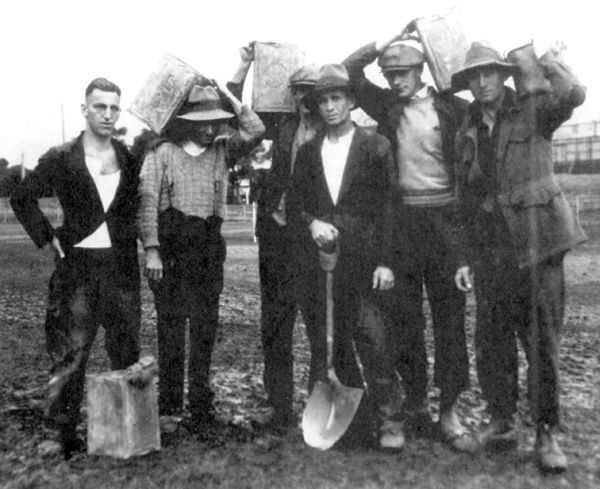
(Photo of men doing relief work during the Great Depression in 1933 from the National Library of Australia)

Girls Names from the Top 100 of the 1930s

19 Sunday Jun 2011

Posted by A.O. in Name Themes and Lists

≈ 37 Comments

Tags

Anglo-Saxon names, Biblical names, celebrity baby names, Christmas names, classic names, english names, European name popularity, famous namesakes, fictional namesakes, flower names, French names, Greek names, honouring, Italian names, Latin names, locational names, middle names, military events, mythological names, name history, name meaning, name popularity, name trends, names from movies, names from songs, nature names, nicknames, plant names, popular names, retro names, Roman names, royal names, saints names, Scottish names, Shakespearean names, Tatar names, unisex names, virtue names, vocabulary names

This blog post was first published on June 19 2011, and revised and updated on June 12 2015.

Alma
May be derived from the Latin almus, meaning “nourishing” – an epithet given to several Roman goddesses, including Ceres. Alma mater, meaning “nurturing mother”, is a Latin term often used to refer to one’s college or university: it was originally a title given to mother goddesses, and later to the Virgin Mary. The obscure 4th century Romano-British saint Alma Pompea, married to the semi-legendary King Hoel of Brittany, is an early example of the name. The name was given a boost after being used in Sir Edmund Spenser’s 1590 poem, The Faerie Queen; he seems to have been influenced by the Renaissance Italian word alma, meaning “soul”. The name became popular in the 19th century, after the Crimean War began with the Battle of Alma, when Anglo-French forces defeated the Russians near the River Alma – the river’s name is from a Tatar word meaning “wild apple”. After this date, babies of both sexes (but mostly girls) were named Alma in honour of the military victory. Alma was #24 in the 1900s, and #97 in the 1930s, leaving the Top 100 the following decade, and the charts in the 1960s. Alma made a mild comeback in 2011, and seems very contemporary, as it has been used in Brokeback Mountain and The Hunger Games. Already popular in Europe, Alma would make an interesting alternative to names such as Amelia, Anna, or Emma.

Audrey
Pet form of the Anglo-Saxon name Etheldreda, meaning “noble strength”; it was the name of a 7th century English princess and saint whose feast day is June 23. It became less common after the Middle Ages, because St Audrey Day Fairs sold low-quality necklaces that were disparagingly called tawdries – which is where we get the word for something cheap and tacky from. Audrey was revived in the 19th century when the Victorians rediscovered many Anglo-Saxon names. The name was already familiar, as Audrey is the simple but honest country girl in Shakespeare’s As You Like It. The Victorians were also in the middle of a Shakespeare revival, so Audrey was a dead cert for a comeback. Audrey was #156 in the 1900s, and peaked in the 1920s at #32. The name was #36 in the 1930s, but plummeted so that it was off the Top 100 by the following decade. It fell to a low of 0 in the 1980s, but climbed after the death of Audrey Hepburn until it reached the Top 100 again in 2008. Once tawdry Audrey now seems charming and stylish, and is currently #44 and climbing.

Elsie
Often said to be a pet form of Elizabeth, but technically a pet form of Elspeth, the Scottish form of the name, and was originally Elspie. The name Elsie can be found in songs and poems dating to the 17th century, and became a 19th century favourite. Elsie was #7 in the 1900s, #59 in the 1930s, and left the Top 100 in the 1940s. Elsie left the charts in the 1970s, but returned in the early 2000s at #731. It joined the Top 100 in 2013 at #91, and last year rose 26 places to #65 – an impressive performance. Sweet and unpretentious, Elsie is very much back in the game.

Hazel
Named for the hedgerow tree or shrub which produces edible nuts; the Celts equated hazelnuts with wisdom and poetic inspiration, and the Druids made staffs from hazel branches. It was considered to be one of the trees belonging to the fairies, and folk tales tell of its ability to protect from evil. Hazel has been used as a personal name since the 17th century, mostly for girls, and became popular in the 19th century when plant names were fashionable. Hazel was #45 in the 1900s, and peaked in the 1910s at #18; by the 1930s it was #55. Hazel left the Top 100 in the 1940s, and the charts by the 1970s, making a return in the late 2000s at #477, after Julia Roberts named her daughter Hazel. Last year Hazel had an outstanding debut as the fastest-rising name of 2014, rising #63 places to #88. One factor must surely be the romantic film The Fault in Our Stars, with its heartbreaking heroine Hazel Lancaster, although there have also been Hazels in the Heroes of Olympus series, and Gossip Girl.

Iris
Greek personification of the rainbow who served as messenger to the gods, and linked them to humanity. The name literally means “rainbow”, which is where the colourful iris flower got its name from – and the colourful irises in our eyes. Irises were used in the Middle Ages as a symbol of monarchy, as the fleur-de-lis pattern depicts. Religious pictures from the medieval period show the Virgin Mary holding an iris to symbolise purity and chastity. Filled with meaning and associations, the name was used by the 19th century British aristocracy for both females and males (because the Greeks called the iris flower a “hyacinth”, and Hyacinth was a male name), but quickly became used by all classes, and nearly always for girls. Iris was #62 in the 1900s, and peaked in the 1910s at #31; it was #72 by the 1930s. Iris left the Top 100 in the 1940s, and left the charts in the 1970s, although it returned in the 1980s at #748. Off the charts in the 1990s, Iris came back in the early 2000s at #551, and is now around the mid-200s and apparently stable. Almost always on the charts, Iris manages to be a “normal” name that is still underused. Hip and artistic, it has slightly dark or even punk undertones. It’s a floral name with a bit of bite.

Josephine
Anglicised form of Joséphine, a pet form of Joséphe, a French feminine form of Joseph; by the 19th century Joséphine had become the standard form of the name. It has been used by several of the royal houses of Europe, and is famous as the first wife of Napoleon Bonaparte, and thus the first Empress of the French. Joséphine was born Marie Joséphe, so it was the pet form of her middle name. Classic Josephine has always been on the charts. It was #86 in the 1900s, peaked in the 1910s at #76, and by the 1930s was #78. It left the Top 100 in the 1940s, and sunk to its lowest level in 2011 at #199, so it has never been out of the 200s. In 2012 it made an appearance again in the Top 100 at #93 after the birth of Princess Josephine, the daughter of Australian-born Princess Mary of Denmark, but has since stabilised into its usual place around the mid-100s. Josephine is a solid stayer with royal blood whose nicknames range from the sensible Jo to the cute Josie to the tomboy Joey to the froufrou Fifi to the cool Joss.

Joy
Refers to the emotion of extreme happiness and gladness. It was originally a Puritan virtue name dating from the 16th century, referring to rejoicing for the salvation of God – perhaps most famous from the hymn, Joy to the World, now often used as a Christmas carol. In fact, joy and Christmas have become so entwined that you could even see Joy as a name suitable for a baby born around late December. However, the name Joy has become secularised, and often linked to the joyful experience of welcoming a child into the world: babies have even been called “bundles of joy”. Joy entered the charts in the 1910s at #205, and was in the Top 100 by the following decade. It peaked in the 1930s and ’40s at #60, and left the Top 100 in the 1960s. Joy reached its lowest point in the 1990s at #802, but then increased slightly in popularity, and was stable in the 500s for some time. Its current position is not known for sure, but is in at least occasional use. Quite common in the middle position, Joy is a strong, simple name with a beautiful meaning, and the current trend for virtue names mean that it would be refreshing to see it up front.

Lillian
Most likely a pet form of Elizabeth dating to the Middle Ages: there is a medieval Scottish ballad about a lady named Lillian. The name became greatly more popular in the 19th century, to the point where it could be seen as another Victorian revival of a medieval name, and may have been understood as an elaboration of Lily, which also became fashionable in the 19th century as a flower name. Lillian is a classic name which has never left the charts. It was #35 in the 1900s, reached #86 by the 1930s, and left the Top 100 in the 1940s. It reached its lowest point in the 1970s at #562, and then climbed steeply, following in the footsteps of Lily, until it reached the Top 100 again in 2008 at #81. It is currently #86, so its position is stable. However, the high number of Lilys and Lillys (not to mention the Laylas and Lolas) mean that lovely Lillian may feel almost too on trend for some.

Marie
French form of Maria: in France it has sometimes used for males, especially as a middle name, but in English-speaking countries is almost always feminine. The name often reminds people of Queen Marie Antoinette, whose first two baptismal names were Maria Antonia – she was Austrian by birth. In the Middle Ages, Marie was commonly used in England, and predates the use of Mary. The medieval poet Marie de France lived and worked in England, possibly at the court of King Henry II – it is even thought that she may have been Henry’s own half-sister. The traditional English pronunciation of the name was MAH-ree (still used in the 20th century), but it is now usually said muh-REE. A name never out of common use for centuries, Marie was #71 in the 1900s, and peaked in the 1930s at #11 – perhaps Irving Berling’s hit song Marie, sung by Rudy Vallee, was an influence on its success at this time. Marie left the Top 100 in the 1960s, and fell off the charts in 2011. It is now only in occasional use, although a common middle name. Marie is still popular in Europe, and this is a pretty, traditional name that still seems very wearable.

Olive
English form of the Roman name Oliva, which refers to both the olive tree and its fruit. There is a legendary Italian martyr called Saint Oliva, known as Blessed Olive. The Crusaders introduced the name Olive to England in the 12th century; returning from the Holy Land, they often gave their children names of Biblical import in honour of their religious duty. Olives play a major role in the Bible, from the dove bringing an olive branch to Noah after the Flood, to Christ ascending to Heaven from the Mount of Olives. It was a name used for both males and females, and in fact I have seen a baby boy named Olive in the past few years – but overall Olive has been more common for girls. Olive became popular in the 19th century, along with other plant names. Olive was #26 in the 1900s, and was #73 by the 1930s. It left the Top 100 in the 1940s, and was off the charts by the 1960s. It returned in the late 2000s, after Australian actress Isla Fisher chose the name Olive for her eldest daughter. After a smooth rise, Olive joined the Top 100 in 2012, debuting at #94. It is currently #76, so rising sedately rather than steeply. Buoyed by the success of Olivia and Oliver, and with a V in the middle like other popular names, Olive should continue to do well.

POLL RESULTS
People’s favourite names were Hazel, Iris and Josephine, and their least favourites were Joy, Marie and Alma.

(Painting is Moira Madden, later Moira Hallenstein by Arthur Challen (1937); from the State Library of Victoria.

Sydney Suburbs That Could Be Used as Girl’s Names

15 Sunday May 2011

Posted by A.O. in Name Themes and Lists

≈ 15 Comments

Tags

animal names, aristocratic titles, astronomical names, Australian Aboriginal names, english names, famous namesakes, fruit names, Greek names, honouring, Latin names, locational names, mythological names, name history, name meaning, name popularity, names of houses, nature names, nicknames, Old English names, Old Norse names, saints names, surname names, unisex names, Welsh names

Bronte-Beach-6

This blog post was first published on May 15 2011, and revised on May 7 2015.

Arcadia
Arcadia is a semi-rural suburb in the Hornsby shire, first opened up into a settlement by timber cutters in 1817. It is named after a region of Greece that in legend was seen as an idyllic pastoral area. The name of the Greek region means “bear”, and is after a son of Zeus from Greek mythology called Arcas, whose mother Callisto was turned into a bear. He and his mother were made into the constellations of Ursa Major and Ursa Minor – the great and little bear. Because commercial development is severely restricted in the suburb of Arcadia, it has retained an image as a rustic retreat which fits its name. The name Arcadia is a feminine form of the Greek name Arcadius, meaning “from Arcadia”. There are a couple of saints named Arcadius, and there was also an Emperor Arcadius, whose daughter was named Arcadia after him. This name, which has been more often used in continental Europe and Latin American than in English-speaking countries, feels rather exotic, and quite Utopian. It is pronounced ar-KAY-dee-uh, and you could use Arkie, Kay, or Kaydee as a nickname.

Avalon
Avalon is a suburb in the Northern Beaches region famous for its surf culture. An episode of Baywatch was filmed here in the 1990s, and must have impressed, as the show’s producers decided to shoot the rest of the series at Avalon Beach. However, residents complained until Baywatch went to Hawaii instead. Woot, people power! The first land grant in the area was in 1827, but it didn’t receive its name until 1921. It is named after the paradisical island of Celtic myth, where it is said King Arthur received his final resting place. It is thought the name of the island comes from the Welsh word for “apple”, as it is pictured in myth as being blessed by an abundance of fruit. Avalon has been used as a personal name since the 19th century, when anything Arthurian was fashionable, and has more often been given to girls. Fitting in with popular names such as Ava, it seems like a more mystical version of Eden or Heaven.

Bronte
Bronte [pictured] is an upmarket beach-side suburb close to the city centre, with scenic cliff-top walking paths to popular locations such as Cooge and Bondi. This is another suburb with a keen surf culture, and the Bronte surf life saving club, founded in 1903, claims to be the oldest in the world. It has made notable residents over the years, including Peter McCormick, who wrote the national anthem. Robert Lowe, later Viscount Sherbrook, bought 42 acres here in the 1830s. His house was completed in 1845 and named Bronte House in honour of admiral Horatio Nelson, who was the Duke of Bronte. Bronte is a place in Sicily, Italy, near Mount Etna. Its name, pronounced BRON-tee, means “the thunderer”, and as it is right near a volcano, it is easy to see how it got its name. Bronte first joined the charts in the 1990s, and was in the Top 100 by 1997, making #98. It joined the very bottom of Top 100 twice more, in 2000 and 2001, never getting higher than #93, and is now around the 400s. Only in Australia has Bronte attained even mild popularity, and no doubt Bronte Beach helps explain why.

Elanora
Elanora is another Northern Beaches suburb; it is located on a hill overlooking a lagoon and the sea. The northern and south-western sides adjoin national parks, and native wildlife abounds in the area. It’s a suburb of large houses with a country club, and is popular with tourists. Originally a coal mining camp, it came into existence as a residential area in 1929, named Elanora Heights Estate. The name Elanora is derived from an Aboriginal word which means “home by the sea” or “home by the water”. It’s easy to see the appeal of this name – it sounds exactly like the elegant Eleanora, yet has an indigenous origin and pleasant meaning. You could use popular Ella or hip Nora as nicknames.

Eveleigh
Eveleigh is an inner-city suburb, and an area of of great historical importance, because it was here that the first steam locomotives were built in Australia in the railway workshops. The Eveleigh site was also used to manufacture munitions in both world wars, and is significant in the history of unionism. In 1892, unions first successfully negotiated a six-day working week in Eveleigh, and in 917 the General Strike began there. Unlike some of the other suburbs, this isn’t just a swanky address with a nice beach, but a place with working class roots that helped forge our nation. The name Eveleigh is taken from the name of an English estate. It’s a surname that is a variant of Everly, and means “wild boar’s wood”: despite the spelling, it’s pronounced EV-uh-lee, not like Eve + Lee. Similar to popular Evelyn, this spelling may seem more feminine than Everly.

Jannali
Jannali is in Sutherland shire, south of Sydney. The railway was built in 1885, but few people lived in the area until the 1910s. In 1927 the township was named Jannali after a railway signal box that had been there since the beginning. During the Depression, the population of Jannali increased dramatically as people were forced to sell up and move out of the city, and it became known as a place for “battlers” who were doing it tough during the economic hardships of the 1930s. Today Jannali is an unpretentious commuter suburb. When the name Jannali was chosen, it was reported that it was an Aboriginal name from the Northern Territory, meaning “the moon”. Indigenous Australians already used it as a name, and it does have occasional use. Pronounced juh-NAL-ee, the appeal of this name is its vague similarity to names derived from Jane, such as Jan and Janelle, while having an attractive meaning and indigenous origin. It would make a bold alternative to Selena or Luna.

Kareela
Kareela is also in Sutherland shire, and the next suburb to Jannali. Located on the banks of the Georges River, it was first established in 1968. Its name is derived from an Aboriginal word which is said to mean either “place of trees and water” or “south wind”. It was the second meaning that the Geographical Names Board probably had in mind, as the area is known for its strong southerly breezes. Pronounced kuh-RHEEL-ya, Kareela sounds feminine and begins with the popular K sound. People who like Cara and Cordelia may also like the sound of Kareela.

Rosebery
Rosebery is in south-eastern Sydney, near the city centre, and is the seat of local government. In the 1960s it was developed for industry and government housing, and became home to many migrants, especially Greeks and Italians. Rosebery was named after Archibald Primrose, Earl of Rosebery, British Prime Minister in 1894-95. The suburb was named in his honour after a visit he made to Australia in 1883-84. Rosebery is a variant of the place name Roseberry, on the Yorkshire Moors. James Cook once helped his father run a farm here, and climbing the high peaks gave him a taste for adventure which led him to become a sea captain and brought him to Australian shores. It looks like a nature name and sounds like Rose + Bree (ROZE-bree), but Roseberry is a corruption of the Old Norse for “Odin’s rock or crag”. Many of the place names of this area were given by the Vikings. Rosebery is deceptive – it has the air of a fairytale princess, yet its origins are ancient, powerful, and masculine. You may be intrigued by it if you would like an unusual girly name with a surprising amount of grunt.

Rozelle
Rozelle is an inner-city suburb to the west of Sydney’s centre; Rozelle Bay surrounds the container port Glebe Island. Once a colourful working-class district, this attractive village is now fashionable and quirky. The area where Rozelle is now was part of a 1800 land grant to colonial surgeon Dr William Balmain. The land was settled in 1836, and by 1861 was divided into the suburbs of Balmain and Balmain West. By 1900, Balmain West, now a thriving suburb in its own right, became known as Rozelle, after Rozelle Bay. Rozelle Bay (often marked as “Rozella Bay” on old maps), was called after the Australian parrot, the rosella. These beautiful crimson birds were first seen at Rose Hill, the first suburb of Sydney to be established. The parrots were commonly known as “Rose Hill parrots”, then “Rose Hillers”, and finally, “rosellas”. By coincidence, there is an Italian name Rosella, and Rozelle (roe-ZEL), gives it a twist that seems quite cool. It has occasionally been used as a girl’s name.

Sylvania
Sylvania is another southern suburb from Sutherland shire, next to Kareela. It is mostly residential, but also contains areas of native bushland. The traditional owners of this area are the Dharawal people, and their middens, burial sites and rock art remain in sheltered caves along the Georges River. After European settlement, it was acquired as a land grant by John Connell Laycock, and then shortly afterwards by politician Thomas Holt. Holt built Sutherland House on the foreshore in 1818, and a village grew here from 1881 onwards. The name Sylvania is Latin for “wooded area”, and must have been chosen because of its bush setting, but who chose it and why has been lost to history. Sylvania is already a girl’s name, a form of Silvana. However, the suburb’s name is pronounced sil-VAYN-yah and may sound too much like Pennsylvania and Transylvania for some.

POLL RESULTS
Peoples’ favourite names were Bronte, Avalon, and Elanora, and their least favourites were Kareela, Jannali, and Sylvania.

Prince Vincent and Princess Josephine: Twins for Princess Mary and Prince Frederik of Denmark, a brother and sister for Prince Christian and Princess Isabella

08 Sunday May 2011

Posted by A.O. in Celebrity Baby Names

≈ 7 Comments

Tags

celebrity baby names, Danish names, French names, germanic names, Greek names, Greenlandic names, honouring, Latin names, royal baby names

We are still recovering from the royal wedding of Prince William to Catherine Middleton (now the Duchess of Cambridge), but it only seems a few years since Australia had the excitement of seeing Mary Elizabeth Donaldson from Hobart marry Crown Prince Frederik of Denmark. I don’t think we’ve got over the thrill of that yet, and the birth of the royal twins this year has been greeted with great interest and enthusiasm.

The unlikely relationship began on September 16 2000, when Frederik was visiting Sydney with the Danish sailing team during the Summer Olympics. He and Mary met at the Slip Inn Bar, where he was enjoying a casual beer and pizza night with his royal cousins; Mary was one of the locals who had been invited to join the party through friends of friends. There must have been something about Mary, because Prince Frederik introduced himself to her at once, and they immediately bonded over sport and horses.

When the media eventually learned of this first meeting, they played up the “prince meets commoner” angle to the hilt, and the fact that the Crown Prince had hit on someone working in real estate down the pub just seemed so beautifully down-to-earth. The media made it sound as if any attractive girl with an office job and a bit of luck could become royalty. The Slip Inn now advertises itself as being fit for royalty, and apparently is still popular with mid-twenties semi-sophisticates who hang around the bar sipping cocktails in slightly desperate hopes of meeting a prince of their own. It seems unlikely that lightning will strike twice though.

Mary and Frederik were able to keep their long-distance relationship secret for over a year, until the Danish press named her as the prince’s girlfriend in November 2001. The following month, Mary moved to Paris where she was able to visit Frederik, and in 2002 she went to live in Denmark permanently. During their courtship, the women’s magazines were bristling with excitement at the prospect of an Australian-born Danish princess, and when the couple became officially engaged in October 2003, they went into hyperdrive. It all culminated in the glorious royal wedding on May 14 2004, upon which the magazines exploded in a paroxysm of frenzied delirium and the Australian public went slightly ga-ga. It was seen as a modern-day fairytale – a simple Tasmanian girl meeting her European Prince Charming and moving into her own palace.

After the thrill of the wedding, there were royal children to look forward to. Mary and Frederik obliged by producing first Prince Christian Valdemar Henri John on October 15 2005, and then Princess Isabella Henrietta Ingrid Margrethe on April 21 2007. Christian of course is Frederik’s heir, while Isabella was the first princess to be born in the Danish royal family since 1946.

In August 2010, it was announced that Mary was pregnant with twins, and on January 8 2011, she gave birth to a baby boy at 10:30 am, and then a girl 26 minutes later. By tradition, the names of royal babies are not made public until their christening ceremony, so we all had a few months to speculate what the names might be. As they were born on Elvis Presley’s birthday, Prince Frederik joked that the boy would be called Elvis, but did suggest that they might slip an Australian name in there somewhere.

Guessing the royal baby names became a national idle pastime for both countries, and some suggestions were Banjo and Matilda, Frederik and Marie, Christopher and Mathilda, and William and Mathilde. A Danish poll found Sophie, Adelaide, Caroline, Louise, Charlotte, Astrid and Alexandrine were popular choices for the baby princess, and Magnus, Erik, Harald, Sven, Knud, Axel and Christoffer for the little prince. Australians tended to make silly suggestions like Shane and Kylie, or Serenity and Grayson (not all of them were joking, I’m afraid).

At last the twins’ christening day arrived on April 14 and the long wait was over. It was revealed that Frederik and Mary’s twin son was called Prince Vincent Frederik Minik Alexander, and their twin daughter Princess Josephine Sophia Ivalo Mathilda. It seems that all the guesses that Matilda/Mathilda/Mathilde would be included were on the money, Sophia was much like the Dane’s popular choice Sophie, Alexandrine turned out to be Alexander instead, and Frederik being included was a bit of a no-brainer.

Vincent was an unusual choice, and came as a surprise to both Danes and Australians, as it is considered a rather old-fashioned name in both countries (I’m sure that will change now). Frederik after his father is a royal custom and was to be expected. The interesting name Minik is North Greenlandic, and honours the country of Greenland as part of the Kingdom of Denmark. I have seen Minik translated as “blubber”, “earwax” and “oil used for sealing skin boats”, but Professor Minik Rosing, who attended the christening, gives an alternative definition of “silent snowfall”. That is a much more attractive meaning, and very appropriate for a baby born in mid-winter. The name is pronounced meen-EEK. Alexander is a popular name in both Denmark and Australia, and has been used in the royal family, and by Mary’s family as well – Alexander is the name of her nephew.

Princess Josephine shares her name with one of her godmothers, an Australian friend of Mary’s called Josephine Rechner. However, I am unable to confirm whether Princess Josephine was named in her honour, or whether it is simply a coincidence. Sophia is another popular name, and has been used in the Danish royal family. Ivalo is a North Greenlandic name which means “tendon”, “thread” or “sinew”; it is pronounced EE-vah-lo. Mathilda has been used in the Danish royal family, and is a nod to Mary’s origins – the Australian name we were promised by Frederik.

From polling and surveying conducted online, the majority of people were approving of Vincent and Josephine as a twinset, with most liking the name Josephine more than the name Vincent. Nearly everyone agreed that they sounded great with siblings Christian and Isabella. People have generally been intrigued by the Greenlandic names, and Danish royal watchers have expressed satisfaction at their inclusion. They are two beautiful and carefully chosen royal names for the Danish royal family, which seem to have come as a pleasant surprise to everyone.

Congratulations to the Crown Prince and Princess on their twins, and happy Mother’s Day to all mothers, everywhere! Whether a royal or a commoner, I hope all mothers are treated like a princess today.

NOTES: Translations of Ivalo and Minik from Wikipedia and Behind the Name; Professor Rosing’s definition of Minik was reported in the Danish press.

If you would like to watch the royal twins being christened, you can see it here:

← Older posts
Newer posts →

Enter your email address to follow this blog

Categories

Archives

Recent Comments

A.O.'s avatarwaltzingmorethanmati… on Zarah Zaynab and Wolfgang…
Madelyn's avatarMadelyn on Zarah Zaynab and Wolfgang…
JD's avatardrperegrine on Can Phoebe Complete This …
A.O.'s avatarwaltzingmorethanmati… on Rua and Rhoa
redrover23's avatarredrover23 on Rua and Rhoa

Blogroll

  • Appellation Mountain
  • Baby Name Pondering
  • Babynamelover's Blog
  • British Baby Names
  • Clare's Name News
  • For Real Baby Names
  • Geek Baby Names
  • Name Candy
  • Nameberry
  • Nancy's Baby Names
  • Ren's Baby Name Blog
  • Sancta Nomina
  • Swistle: Baby Names
  • The Art of Naming
  • The Baby Name Wizard
  • The Beauty of Names
  • Tulip By Any Name

RSS Feed

  • RSS - Posts

RSS Posts

  • Celebrity Baby News: Melanie Vallejo and Matt Kingston
  • Names from the TV Show “Cleverman”
  • Can Phoebe Complete This Sibset?
  • Zarah Zaynab and Wolfgang Winter
  • Baby, How Did You Get That Name?
  • Celebrity Baby News: Media Babies
  • Celebrity Baby News: Adelaide Crows Babies
  • Celebrity Baby News: Chris and Rebecca Judd
  • Names at Work: Name News From the World of Business and Employment
  • Celebrity Baby News: Sporting Round Up

Currently Popular

  • Girls Names From Stars and Constellations
  • Rare Boys Names From the 1950s
  • The Top 100 Names of the 1940s in New South Wales
  • Saturday Celebrity Sibset: A Taste of Scotland - Leigh McClusky and Simon Haigh
  • Girls Names of Australian Aboriginal Origin

Tags

celebrity baby names celebrity sibsets english names famous namesakes fictional namesakes honouring locational names middle names name combinations name history name meaning name popularity name trends nicknames popular names saints names sibsets surname names twin sets unisex names

Blog at WordPress.com.

Privacy & Cookies: This site uses cookies. By continuing to use this website, you agree to their use.
To find out more, including how to control cookies, see here: Cookie Policy
  • Subscribe Subscribed
    • Waltzing More Than Matilda
    • Join 517 other subscribers
    • Already have a WordPress.com account? Log in now.
    • Waltzing More Than Matilda
    • Subscribe Subscribed
    • Sign up
    • Log in
    • Report this content
    • View site in Reader
    • Manage subscriptions
    • Collapse this bar
 

Loading Comments...