• About
  • Best Baby Names
  • Celebrity Baby Names
  • Celebrity Baby Names – Current
  • Celebrity Baby Names – Past
  • Featured Boys Names
  • Featured Girls Names
  • Featured Unisex Names
  • Links to Name Data
  • Waltzing on the Web

Waltzing More Than Matilda

~ Names with an Australian Bias of Democratic Temper

Waltzing More Than Matilda

Tag Archives: French names

Brisbane Suburbs That Could Be Used as Boys Names

13 Sunday Oct 2013

Posted by A.O. in Name Themes and Lists

≈ 7 Comments

Tags

aristocratic names, Biblical names, english names, famous namesakes, fictional namesakes, French names, Gaelic names, hebrew names, Irish names, Latin names, locational names, middle names, name history, name meaning, name popularity, names from films, names from television, nicknames, Old English names, Old Norse names, popular names, rare names, Roman names, saints names, Scottish names, surname names, unisex names, US name popularity, Welsh names
857092-121013-wap-hamilton

Augustine

Augustine Heights is a new suburb of Ipswich, and gained its name from St Augustine’s Catholic Church and College. The name Augustine is from the Roman name Augustinus, derived from Augustus, meaning “great, venerable”. Its most famous namesake is the theologian Saint Augustine of Hippo, considered one of the most important Church Fathers. He describes his conversion to Christianity in his Confessions, which has become a classic of Christian literature. The name became popular in England in the Middle Ages because of Saint Augustine of Canterbury, a 6th century founder of the English church known as the Apostle to the English. It is probably because of him that there is an English form of Augustine – the popular Austin. In France, Augustine is a girls name, the feminine form of Augustinus.

Bowen

Bowen Hills is an inner-city suburb of Brisbane. It is named after Sir George Bowen, an Irishman who was the first Governor of Queensland. Tactful and democratic, with a great love of the outdoors, he made himself popular enough to be invited to serve two more years when his term had expired. There are a few places in Queensland named after Sir Bowen, including Bowen Park, a pleasure garden in Bowen Hills. The surname Bowen can be Welsh, meaning “son of Owen“, or it can be Irish, in which case it is an Anglicised form of the Gaelic O’Buadhachain, meaning “son of Buadhach”. The name Buadhach means “victory, triumph”. This name reminds me of the Bowen Technique, an alternative massage treatment developed by Australian Tom Bowen, although Bowen is a knight and dragon-slayer in the movie Dragonheart. Rarely seen here, Bowen is in the Top 1000 and rising for boys in the US. It gives the unisex nickname Bo, and for some reason I see this as a girls name just as much as a boys.

Chandler

Chandler is a semi-rural outer suburb of Brisbane. It is named after Sir John Beals Chandler, a successful businessman with a chain of electrical goods stores, and who owned several radio stations. He was elected to the Queensland Parliament in the 1940s, and Lord Mayor of Brisbane in the 1940s and early ’50s. Chandler is an English occupational surname, which denoted someone who made and sold candles, or someone who was responsible for the wax, soap, candles and lighting in a medieval great house. This name will remind many of Chandler Bing, from popular sit-com, Friends.

Crosby

Mount Crosby is an outer suburb of Brisbane adjoining the state forest. It is named after its dominant natural feature, Mount Crosby. The first settlers to this area were from the village of Crosby-on-Eden, near the Scottish border, and it seems likely that they named their new home after their original one. The surname Crosby is after the place name, a common one in northern England and southern Scotland. The name is of Old Norse origin, and means “settlement by the cross”; as we learned from Cruz, these stone crosses were often used as markers. Famous Crosbys include entertainer Bing Crosby and musician David Crosby. The name has recently begun charting in the US, after drama series Parenthood was shown on television there. The show has a character called Crosby Braverman, played by Dax Shephard, and the name must have resonated, because it went up 69 places last year. Crosby is rare in Australia (I’ve only seen it on a child once), but maybe Parenthood will have an effect here too.

Ebenezer

Ebenezer is a suburb of Ipswich. It had been a preaching place on the Methodist Church circuit since 1863, and by 1882 a church had been built named the Wesleyan Ebenezer Church. It is from this church that the suburb gets its name. In the Old Testament, Eben-Ezer is a place mentioned as the scene of battles between the Israelites and the Philistines; its modern day location is not known, but it is probably in Palestine or Arabic Israel. Eben-Ezer is from the Hebrew for “stone of help”, and it is theorised that a stone dedicated to Yahweh may have been located here to give it its name. Its most famous namesake must be Ebenezer Scrooge from Charles Dicken’s A Christmas Carol, the cold-hearted miser redeemed by three spirits of Christmas. I think the name Ebenezer sounds pretty hip now, and an Old Testament boys name which has been overlooked for too long. Eben and Ben would make good nicknames.

Hamilton

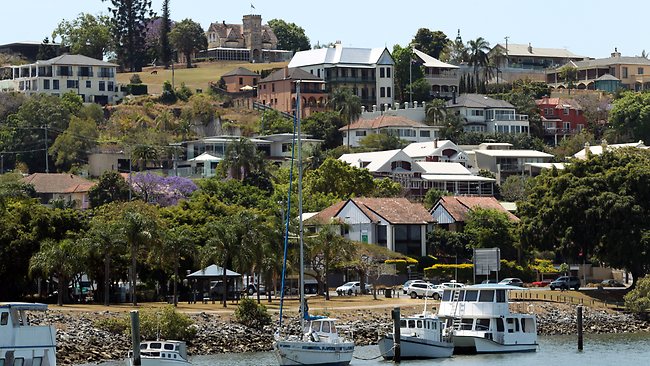
Hamilton is a hilly inner-city suburb of Brisbane on the Brisbane River which was built by convict labour. It soon became known for its upper-class country houses and estates, ornamental shade trees, picturesque location and fine views of the city. Hamilton is associated with “old money”, and has the highest mean income of any suburb in Queensland. It is named after the Hamilton Hotel, built in 1865 by Gustav Hamilton, a wealthy solicitor who owned most of the land in the area. It soon became known as a meeting place for the horse racing world, as the Turf Club is nearby, and is still popular today. Hamilton is an English and Scottish surname after the village of Hamilton in Leicestershire; its name means “crooked hill” in Old English. The aristocratic Hamilton family gained lands in Lanarkshire, Scotland, and gave their name to the town of Hamilton there. The Hamiltons married into the Scottish royal family, and the Duke of Hamilton and Brandon is the highest peer in Scotland. A famous person with the name is Hamilton Hume, an early Australian explorer of New South Wales who was a top-notch bushman and formed friendly relationship with Aboriginal peoples. This is a name with an impressive pedigree.

Logan

The city of Logan is halfway between Brisbane and the Gold Coast. It began as a penal settlement, and farming soon followed; it was developed for housing in the 1960s due to its laissez-faire planning laws. Logan is named after Captain Patrick Logan, the Scottish commandant of the original penal settlement, who had a reputation for being strict to the point of cruelty. He was a great explorer and was killed on one of his expeditions, most likely by Aborigines who had repeatedly told him to get off their land. News of his death was met with wild joy from the convicts. Logan is a Scottish surname; the Clan Logan comes from the “lands of Logan” in Ayrshire, which may be from the Gaelic for “hollow”, or even of Norman origin. In Ireland, it is considered to come from the Gaelic O’Leoghain, meaning “grandson of the warrior”. This name has many namesakes from popular culture, including the dystopian sci-fi film Logan’s Run, where Logan is played by Michael Yorke, and Logan aka Wolverine from the X-Men films, played by Hugh Jackman. Logan has charted since the 1970s (when Logan’s Run first screened), and ranked in the 1980s at #344. It climbed steeply through the 1990s and made the Top 100 by the 2000s. It is currently #38 nationally, #36 in New South Wales, #33 in Victoria, #65 in Queensland, #46 in South Australia, #28 in Western Australia, #17 in Tasmania, and #50 in the Australian Capital Territory.

Sherwood

Sherwood is a suburb on Oxley Creek. Its name comes from a farm which was named after Sherwood Forest in Nottinghamshire, England. A Royal Forest, and remnant of an older and much larger royal hunting forest, it is one of England’s most ancient, having survived since the end of the last Ice Age. It is famous for its association with legendary folk hero Robin Hood, who is supposed to have lived in Sherwood, according to some sources. Sherwood in Brisbane even made its own Sherwood Forest Park, which is now, less romantically, the Sherwood Arboretum. The name Sherwood means “shire wood”. A famous person with the name is American author Sherwood Anderson.

Tennyson

Tennyson is a riverside suburb named in honour of Alfred, Lord Tennyson. Tennyson was Poet Laureate of Great Britain and Ireland during Queen Victoria’s reign, and has the record for length of tenure as a Laureate at 42 years. Revered in his own time, he remains one of the popular English poets. One of his much-loved works is the Idylls of the King, a cycle of blank verse poems inspired by the legends of King Arthur; many of the streets in Tennyson have Arthurian names in compliment of the Idylls. For those amused by these coincidences, the Queensland Tennis Centre is located in Tennyson, and was once the Tennyson Tennis Centre. The English surname Tennyson means “son of Tenney”, with Tenney a pet form of the name Denis. Actor Russell Crowe has a son named Tennyson, after his favourite poet. This is a handsome and unusual name, with a great namesake, and would make an excellent middle name too.

Windsor

Windsor is an inner-city suburb of Brisbane, with many old homes, and containing several heritage-listed sites. It was named Windsor in 1887, most likely after Windsor Castle in Berkshire, England, as it was Queen Victoria’s Golden Jubilee Year. Windsor Castle was built by William the Conqueror, and was originally a fortification to protect the outskirts of London, with strategic views of the River Thames and access to the royal hunting forest of Windsor. Since the rule of Henry I, William’s son, it has been a royal residence, and is the largest inhabited castle and longest-occupied palace in Europe. Today it is a royal palace and weekend retreat for Elizabeth II, and state banquets and official entertainments are often held there – it is also a major tourist attraction. The castle is named after the nearby village of Windsor, once the site of a palace for the Saxon kings. Its name means “winding shores, winch shores” in Old English, because boats were pulled by windlass up the river. Famously, Windsor is the surname of the British royal family: the name was changed from Saxe-Coburg and Gotha by George V in 1917, due to anti-German sentiment during World War I. The final straw was when Germany used the Gotha G. IV aircraft to bomb London – just four months later, the Saxe-Coburg-Gothas had become the Windsors, the name taken from the royal palace. A famous person named Windsor is British actor Windsor Davies, best known as the sergeant on It Ain’t Half Hot Mum. Royal names are all the rage, and you can’t get any more royal than Windsor.

POLL RESULT: People’s favourite names were Tennyson, Augustine, and Windsor, and their least favourite were Sherwood, Hamilton, and Ebenezer.

(Photo shows the suburb of Hamilton)
Old Names Are New … And New Names Are Old News

26 Thursday Sep 2013

Posted by A.O. in Names in the News

≈ 5 Comments

Tags

Arabic names, created names, famous namesakes, fictional namesakes, French names, Latin names, locational names, name data, name trends, Polish names, retro names, Roman names, saints names, Spanish names, spellcheck software, Stars Wars, surname names, titles, Twitter, UK trends, US trends, vocabulary names

Old Fashioned Names

When it comes to baby names, the newspapers generally run with one of two stories. Either they tell us that “normal” baby names are “back in fashion” (what a relief!), or else they give us dire warnings of “bizarre” baby names which are definitely the sign of the apocalypse, or can at least make us feel all smug and superior for five minutes.

It’s not often they run with both these at once, but in a journalistic triumph, they brought forth two opposing baby name stories within two days of each other. I’m not sure whether they didn’t bother co-ordinating, or hoped nobody would notice the obvious incongruity.

The Daily Telegraph told us that in the future, baby names will no longer be odd hyphenations or spelling variants, because when they looked through the New South Wales data, most of the names popular during the 1940s and ’50s, which had almost disappeared by the early 2000s, have had a resurgence in the past decade.

Henry has almost tripled from 106 in 2002, to 276 in 2012; Evelyn is up from 17 to 112; and Matilda has skyrocketed from 68 to 265. Of the twenty traditional names they chose to look at, only Samuel and Beatrice had suffered a slight decline.

This trend, we are told, reflects a desire for individuality, substance, and “a bit of class”. It has been spearheaded by the young royals, William and Catherine, although they weren’t even engaged at the turn of the century, so I’m not sure how they managed to influence an entire decade of baby names.

Furthermore, we can be assured this signals a return to conservative values, discipline being back in vogue, school uniforms, and clearly defined gender roles (which apparently means girls wearing pink and boys wearing blue).

Generation X parents get the gong for doing their research and picking out good solid names that you can yell from the soccer match sidelines without embarrassment, and which will, it seems, affect their children’s entire destinies and even give them a good Twitter handle. Goodness. Who would thought calling your kid Mabel was so significant?

Meanwhile, over the border, the Courier Mail interviewed an anonymous schoolteacher from Logan (love the old anonymous schoolteacher as a source – can’t be proved they exist, can’t be proved they don’t), and she says names have become increasingly bizarre over the past 20 years, and now spellcheck software can’t even recognise them. I find most names aren’t recognised by spellcheck – where is this spellcheck software which can recognise all the names in the world?

Then comes a long list of names of children who we are told are enrolled at Logan schools, and are meant to be horrified by.

One of them is Romaine – a French name, the feminine of Roman. Another is Cassius, a Roman name and also a saints’s name; it’s gaining in popularity in both the US and the UK. I say thumbs up to Romaine and Cassius’ parents! Felicitas is another Roman saint’s name, with the meaning “fortunate” in Latin. How does a schoolteacher not recognise these as names? That to me is the scary part.

There are names from other cultures, such as Alareal, a Spanish surname derived from the word for “royal”; Jadzia, a Polish form of Hedwig; Santiana, a Spanish surname which means “St. Anna”; Thiery, a French form of Theodoric. Qaira is Arabic, and Zenen is Spanish, but I don’t know anything more than that.

There’s quite a few vocabulary names, including Beautiful, Bravado, Brilliance, Cherish, De Ja Vu, Freedom, Gorgeous, Heritage, Miracle, Precious, Sapphire, Styles, and Twinkle. A spellchecker will recognise them, and they’re all words with positive meanings. When you think of it, most names start out as vocabulary words anyway.

There’s two titles as names: Caesar and Marquis. I’m mentioning these since it’s said Australians can’t use titles as names, but clearly we can in some cases.

There’s real place names: Australasia, which is patriotic; Avantika, the ancient name for a city in India; Jetiis, a village in Indonesia. And a fictional place name: Ataria, an island in Star Wars.

There’s names of celebrities, such as Beyonce, and Kahu, which is a tribute to Brisbane Broncos NRL star Jordan Kahu, and Kovee, after the musician.

There’s Caylis, who is one of the Neopets, Darian, derived from Darius, Hawke, a surname, and Jezzer, a short form of Jeremy.

There’s some variant spellings, such as Bayleigh, Emmerson, Izack, Kaelani, Khaileb, Khynan, and Psalmz, which I don’t find too outrageous.

There’s some “tweaking” of names such as Leilesha, Mikaiah, Shaylani, Tanyce and Taylay, which don’t offend me. I notice there is a Congresswoman in the US named Tanyce, so it doesn’t seem to impede your progress in life.

There’s some names I don’t recognise, although that doesn’t necessarily make them “bad” names, and I can see that they are in use elsewhere: Kalaize, Millieka, Narvasha, and Shizia.

Finally, we end with Sambo, which I agree seems a bit unfortunate, but does have a number of origins, and L-Car, pronounced Ledashcar (although wouldn’t it be Eldashcar???). Anyway I have already made my views known on this subject, and won’t repeat them here.

So there you go – either names are becoming more and more conservative, or they are becoming ever more strange and confusing. You can decide for yourself which one is correct, if either is.

POLL RESULTS
29% believed that names were not becoming either more conservative or more bizarre, but were staying much the same
24% thought that names were becoming both more conservative, and more bizarre
20% thought they were becoming more conservative for the middle classes, but more diverse for the lower classes
12% didn’t know, and felt confused
7% felt that names were in fact all becoming more bizarre across the board
The remaining 8% (representing three people) chose options where they were the only person to have that opinion

Celebrity Baby News: Football Babies

24 Tuesday Sep 2013

Posted by A.O. in Celebrity Baby News

≈ 7 Comments

Tags

Australian Aboriginal names, celebrity baby names, celebrity sibsets, French names, locational names, names of wines, surname names

Riijkaard-20130921213405652201-620x349

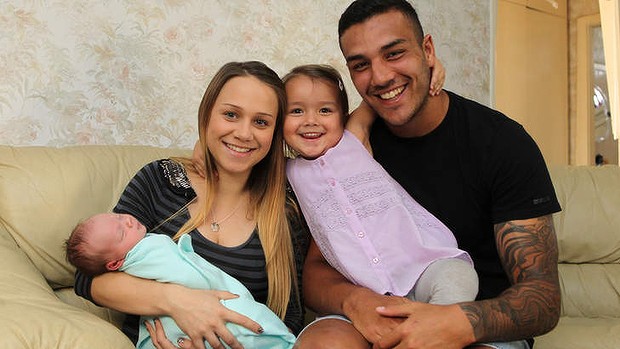
NRL player Dylan Farrell, and his partner Hayley Mundy [pictured], welcomed their son Derain about a week ago. Derain Farrell joins big sister Leilani, aged 3. Derain is a place in New South Wales, whose name is said to come from an Aboriginal language meaning “of the mountains”; Dylan grew up on an Aboriginal mission on the South Coast. Dylan has played for South Sydney Rabbitohs since 2010, and has been signed with the St. George Illawarra Dragons for next season. Souths will face Manly in the finals on Friday.

Soccer star Mark Milligan, and his wife Rhia, welcomed their daughter Audrey earlier this year. Audrey Milligan joins big sister Maya. Mark has been playing professionally since 2002, and is currently signed with Melbourne Victory; he is also a member of the national team, the Socceroos.

Local rugby league player Chris Thompson, and his wife Chrystal, welcomed their son Chandon early in the year. Chandon Thompson joins big sister Alaqua, aged 4, and big brother Mataeo, aged 2. Chris plays for CYMS in Dubbo. Chandon is a French surname, taken from a common place name in France; it is most associated with the champagne Moët & Chandon.

Rare Royal Names for Girls

01 Sunday Sep 2013

Posted by A.O. in Name Themes and Lists

≈ 11 Comments

Tags

Anglo-Saxon names, Christmas names, Danish names, english names, famous namesakes, fictional namesakes, French names, germanic names, Greek names, honouring, Latin names, locational names, middle names, mythological names, name history, name meaning, names from television, nicknames, Old English names, Old Norse names, rare names, Roman names, royal names, saints names, scandinavian names, Star Trek

Berengaria

Royal babies have been on everyone’s mind lately, and we recently saw two babies born in the royal family within less than a month of each other.

Not only have been people been doing web searches for Prince George and Maud Windsor, they’ve been searching for royal baby names in general, uncommon royal names, and royal names that nobody else is using.

So here is a list of queens and princesses connected to English royal houses by either birth or marriage, whose names aren’t popular or common in Australia (although I can’t promise nobody else will use them).

Adeliza

Adeliza of Louvain married Henry I, and became queen of England. She was considered pretty, but didn’t manage to produce any royal heirs. However, after Henry’s death she re-married, and had seven children; she is an ancestor of many of the noble English families. William the Conqueror had a daughter called Adeliza, named after his sister – the name wasn’t uncommon amongst Norman-French aristocracy. Adeliza is a medieval English form of Adelais, a short form of Adelheidis, the original old Germanic form of Adelaide. It’s pronounced ad-uh-LEE-za. Although it doesn’t have any connection to the name Elizabeth, it looks like a combination of Adele and Eliza, and might feel like a way to honour relatives who have variants of these names. It’s rare, but doesn’t seem unfamiliar.

Berengaria

Berengaria of Navarre was Queen of England through her marriage to Richard I, “the Lionheart”. She is the only English queen never to set foot in the country, since she only visited England after her husband’s death, when she was no longer queen. Richard himself spent only a few months in England during his marriage, as he was busy Crusading. Richard and Berengaria never had any children, and it is not known if their marriage was ever consummated, as they spent so much time apart. Richard’s family seem to have liked her, and there are a few other royal English Berengarias, perhaps named after her. Berengaria was a traditional name amongst Spanish royalty, and is the feminine form of Berengar, an ancient Germanic name meaning “bear spear”. It is pronounced behr-en-GAR-ee-uh, and the name has been bestowed upon a planet in the Star Trek universe inhabited by dragon-like creatures. This doesn’t sound like any currently popular names, and the nickname Berry is appealing.

Christabel

Christabel was the middle name of Princess Alice, wife of Prince Henry, Duke of Gloucester, a son of George V. Princess Alice was born into the aristocracy on both sides of her family, and was a direct descendant of Charles II, through an illegitimate line. She is related to Sarah, Duchess of York, the wife of Alice’s great-nephew, Prince Andrew. Just after the Second World War, Prince Henry was appointed Governor-General of Australia, and he and Princess Alice lived in Canberra for two years. The name Christabel is a combination of Christina with a -bel suffix, but Princess Alice was given this name because was born on December 25, and the name suggests Christmas bells. Her niece Princess Alexandra was also born on Christmas Day, and shares the middle name Christabel. Apart from the Christmas connection, this pretty name might seem like a good way to honour a Christine and an Isobel (for example) simultaneously.

Elfreda

Elfreda was one of the wives of Edgar I, and she was the first king’s wife to be crowned and anointed as Queen of England. Beautiful and powerful, she was unfortunately linked with the murder of her stepson Saint Edward the Martyr, and ever after appears in medieval history in the role of evil stepmother. Her own son, replacement to the martyred Edward, was Ethelred the Unready, only a child when he took the throne. Elfreda was a traditional name amongst Anglo-Saxon royalty, and Alfred the Great of Wessex had a daughter named Elfreda, an ancestor of Queen Matilda, the wife of William the Conqueror; through Matilda, the monarchs of England are descendants of the House of Wessex. There is a Saint Elfreda, an Anglo-Saxon princess. Elfreda is a modern spelling of the Anglo-Saxon name Ælfþryð, meaning “elf strength”. The name went out of use after the Norman Conquest, but was revived in the 19th century, although it never became popular. Freda would make a good nickname – unfortunately, sweet Elfie would probably be misheard as Alfie, leading to confusion.

Eugenie

Eugenie was the second name of Victoria Eugenie, a grand-daughter of Queen Victoria who married Alfonso XIII and became Queen of Spain. Her grandson Juan Carlos I is the current king of Spain. Unfortunately, her marriage to Alfonso wasn’t particularly happy, and she didn’t enjoy great popularity with the Spanish people – she was greeted with an assassination attempt on her wedding day. After the Republicans gained power, Victoria Eugenie went into exile with the rest of the Spanish royal family. Queen Victoria Eugenie’s middle name was in honour of her godmother, Maria Eugenia “Eugénie” de Montijo, empress consort to Napoleon III. Eugénie was a member of the Spanish nobility, and after the defeat of the Second French Empire, she lived in England, where she became friendly with the British royal family. The name remains well-known because of Princess Eugenie of York, daughter of Prince Andrew, who was named after Victoria Eugenie. Eugenie is the Anglicisation of Eugénie, the French form of Eugenia, which is the feminine form of Greek Eugenius, meaning “well born, of noble birth”. This elegant name is said yoo-JEE-nee, and Gina or Genie could be used as nicknames.

Marina

Princess Marina of Greece and Denmark was a cousin of Prince Philip. Like her cousin, she married into the British royal family when she wed Prince George, the Duke of Kent, an uncle of Queen Elizabeth II; she was the last foreign-born princess to marry into the British royal family. Princess Marina was attractive and stylish, earning her a place in the International Best Dressed List Hall of Fame, and her favourite shade of blue-green became known as “Marina blue”. Princess Marina’s mother was the grand-daughter of Tsar Alexander II of Russia, and Marina may have been named after Princess Marina of Russia. Princess Marina and the Duke of Kent were married in 1934, and a year later, Swiss water-ski champ Marina Doria was born, which looks more than coincidental. Oddly enough, Marina Doria also became Princess Marina, when she married a prince of Naples. Marina’s name has been passed down to her grand-daughter, Maud Elizabeth Daphne Marina Windsor, and I have seen a birth announcement for a Scarlett Marina this week. Marina is the feminine form of the Roman name Marinus, which may be from the Latin for “of the sea”. There are two saints named Marina, and it’s also the name Saint Margaret is known by in the Orthodox church. Marina is a very beautiful name, and familiar in Australia due to entertainer Marina Prior.

Melita

Princess Victoria Melita was a grand-daughter of both Queen Victoria and Tsar Alexander II, making her Princess Marina’s great-aunt. Her love life was one of great turmoil, because she fell in love with her cousin Kirill, Grand Duke of Russia, but was forced to marry her cousin Ernest, Grand Duke of Hesse instead. The marriage wasn’t a success, as Victoria Melita preferred Kirill, and Ernest preferred young boys. Soon after Victoria and Ernest ‘s divorce, Kirill was almost killed during the Russo-Japanese War, and this brush with death made him realise that nothing was more important than being with his true love. He defied his family, and married Victoria Melita, much to his parents’ rage and disgust. Although their marriage and family life was happy, the Russian Revolution and subsequent exile was a setback, and the couple rather naively supported the Nazi Party. More emotional pain followed for Victoria when Kirill was unfaithful to her, which she never got over. Her life contained some bitterness, but Victoria Melita’s middle name has a sweet meaning. Melita is the Latin name for the island of Malta, thought to come from its Greek name, Melite, meaning “sweet as honey”; Malta was famous for its honey production. This doesn’t sound out of place next to popular names like Mila and Layla, and would be a great way to honour Maltese ancestry; you could use Millie or Lita as nicknames.

Sibylla

Princess Sibylla (born Sibylle) was a great-granddaughter of Queen Victoria who married her second-cousin Prince Gustaf Adolf (known as “Edmund”) of Sweden; her son Carl XVI Gustaf is the current king of Sweden. The couple don’t seem to have been very popular in Sweden, being plagued by rumours of Nazi sympathising, of which there is no proof. Unfortunately, Sibylla did have quite a few relatives in the Nazi Party in Germany, who threw her a big fat Nazi wedding, and this can’t have been a help at soothing suspicions. The name Sibylla (or Sybilla) has been used amongst European royalty and nobility since the Middle Ages, and has been connected with the British royal family from early on. William the Conqueror’s son Robert was married to a Sybilla, and Henry I had an illegitimate daughter named Sybilla, who married Alexander I of Scotland. Sibylla is from the Greek word for a female prophet of the ancient world who uttered divine revelations in a state of frenzy; the word became sibyl in English. During the Middle Ages, it was thought that the Greek and Romans sybils had been precursors to Christian prophecy, and therefore gained respectability as a Christian concept and name. This name (and its variants), though uncommon, is quite trendy in Australia, being known from actress Sibylla Budd, and the heroine of My Brilliant Career, Sybylla Melvyn, whose name inspired feminist publishing house, Sybylla Press.

Sigrid

The splendidly-named Sigrid the Haughty was supposedly the wife of Sweyn Forkbeard, who ruled England before the Conquest, in the days when the Danish royal house held the throne. It’s not clear if Sigrid was her real name, because it seems that Sweyn’s wife was actually Polish rather than Scandinavian, and in fact we can’t be sure if “Sigrid the Haughty” even existed. She may well be a fictional character, but her story is compelling. Beautiful and proud, Sigrid was a woman of great political power, who tended to wreak terrible revenge on those who annoyed her, and is supposed to have burned two of her suitors to death to discourage others. It could be that this fascinating lady of legend was tacked on to a real Polish woman who married Sweyn, and became the mother of King Canute the Great. Sigrid is from the Old Norse name Sigríðr, meaning “beautiful victory”. This is another name familiar in Australia because of an actress – the very famous Sigrid Thornton. The usual nicknames are Siri and Sigi.

Thyra

Thyra was the daughter of Sigrid and Sweyn Forkbeard, the sister of Canute the Great. She was married to Godwin, the first Earl of Essex, the father of King Harold who fell at the Battle of Hastings. She didn’t live very long, and she and Godwin didn’t have any children together, so she’s rather a footnote in the history books. She may have been named after Thyra, the wife of King Gorm the Old of Denmark; they were the parents of Harald Bluetooth, the father of Sweyn Forkbeard. According to at least one source, Queen Thyra was English, the daughter of King Ethelred of Wessex. She was said to be a smart and sensible woman who led an army against the Germans, and was described as the “pride of Denmark”. According to legend, one of Thyra’s daughters was captured by trolls and carried off to their kingdom in the far north. Thyra is from the Old Norse name Þýri, derived from the name of the god Thor, and possibly meaning “Thor’s war”. The name is pronounced TEE-rah, and I think it’s attractive and contemporary-sounding, although pronunciation may be an issue, with people trying to say it THY-rah.

POLL RESULT: People’s favourite names were Marina, Adeliza, and Christabel, and their least favourite were Elfreda, Thyra, and Berengaria.

(Picture is a drawing of Queen Berengaria)

Famous Name: George Alexander Louis

31 Wednesday Jul 2013

Posted by A.O. in Famous Names

≈ 16 Comments

Tags

Biblical names, classic names, epithets, famous namesakes, French names, German names, germanic names, Greek names, honouring, middle names, name combinations, name history, name meaning, name popularity, royal names, saints names, sturdy classics, underused classics

18388_662259277118346_1655646202_n

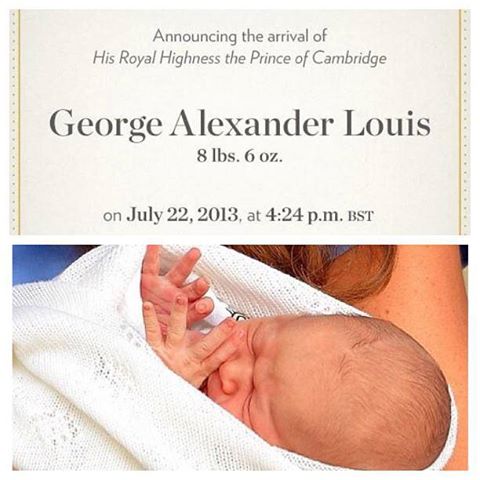
The Prince of Cambridge was born more than a week ago, and he is still big news around the globe. As future kings are born only once in a generation or so, this makes Prince George the most famous baby in the world, and it seems like an opportune time to take a look at his names.

George is derived from the Greek name Georgios, translated as “farmer”. Because it literally means “worker of the earth”, it specifically refers to the cultivation of crops.

The name George became known throughout Europe because of Saint George. According to tradition, he was a 3rd century Roman soldier from a noble Christian Greek family in Palestine. His military career went swimmingly until he was asked to sacrifice to the Roman gods, and when he refused, he was tortured and beheaded. He is venerated by Christians as a martyr.

Much later, the legend of Saint George saving a princess from a dragon was tacked on to the story. This medieval legend came from the Eastern church, and seems to be an attempt to Christianise pagan myths such as Perseus. It was brought to Europe by the Crusaders, and became a medieval romance. Saint George is the patron saint of England, and his flag, a red cross on a white background, forms part of the Union Jack.

Despite Saint George being the patron of England, his name did not become particularly common there until George I, who was German-born, took the throne of Great Britain in 1714. The name became a traditional one in the royal family, and there have been six British kings named George; the most recent the father of the present queen; he was born Albert Frederick Arthur George, and reigned under his last middle name.

George is a common name amongst many of the royal houses of Europe, and Prince Philip’s grandfather was George I of Greece, with Prince Charles having George as his last middle name. There has only been one other Prince of Cambridge, and the first one was also named George.

The name George is a sturdy classic in Australia which has never left the Top 100. It was at its peak in the 1900s and 1910s at #4, and has never been lower than #72, which it reached in the early 2000s. Currently it is #71 nationally, #64 in New South Wales,#69 in Victoria, #79 in Queensland, #48 in Tasmania and #50 in the Australian Capital Territory.

Alexander is the Romanised form of the Greek name Alexandros, translated as “defender of men, protector of men”. It first turns up in Greek mythology as the epithet of Paris, prince of Troy, who gained it while only a child, rescuing cattle from thieves while working as a cow-herd. There was a slightly earlier real life ruler of Troy named Alexander, and it’s possible the fictional Paris ended up with his name.

Just as George is a traditional name in the British royal family, Alexander was traditional in the Macedonian royal family, and the man who made the name famous for all time was Alexander III of Macedon, otherwise known as Alexander the Great. A young man of boundless ambition, Alexander conquered much of the known world, including Persia and Egypt, and invaded India before being turned back by his own men, who were getting pretty sick of his let’s-conquer-the-whole-world attitude.

Alexander was a history-maker, a great commander who never lost a battle, a role model for the empire-building Romans, and whose military strategy is still used today. He was a figure of romance, with legends being written about him even in his own lifetime. And he took power while still a teenager, dying in his early thirties, so he is always remembered as youthful, vaunting and energetic.

The name Alexander, and its many variants, spread throughout the world. There are early Christians named Alexander mentioned in the New Testament, several saints named Alexander, and many popes.

Alexander I of Scotland was named after Pope Alexander II, who gave his blessing for the Norman Conquest, and there were two more Alexanders after him in the Scottish royal family. There has never been an English king named Alexander, but the name isn’t uncommon in the royal family, and it’s especially seen use as a middle name.

In Australia, Alexander is another sturdy classic which has never left the Top 100. It was #29 in the 1900s, and sunk to its lowest level in the 1950s and ’60s at #89. It is currently enjoying some of its highest levels of popularity, being #16 nationally, #14 in New South Wales, #9 in Victoria, #20 in Queensland, #21 in South Australia, #21 in Western Australia, #26 in Tasmania and #17 in the Australian Capital Territory.

Louis is the French form of the old Germanic name Chlodowech, Latinised as Clovis, and whose modern German form is Ludwig. It means “famous warrior”. The 5th century Clovis I was the first king of the Franks to unite all the Frankish tribes under one ruler, so that they were now ruled by a single king, with kingship descending onto his heirs. He was also the first Christian ruler of Gaul.

Having created the Frankish monarchy, it’s little wonder that his name was such a big hit with French rulers, with 19 kings of France bearing the name Louis (the last one only managed a few minutes before he abdicated). The first one was Louis the Pious, son of Charlemagne, who was not only king of France but also co-ruler of the Holy Roman Empire – Louis was a traditional name amongst the Emperors as well.

Louis IX, or Saint Louis, is the only French monarch to be canonised, and Louis XIV was known as Louis the Great, or the Sun King, one of the most powerful monarchs to ever rule France. It all went wrong for Louis XVI, who was executed during the French Revolution. The other Louis the Somethings were kings in name only, as the throne had been abolished and France was no longer a monarchy.

Although so strongly associated with the French crown, Louis has been well-used as a middle name in the British royal family – in fact George I’s full name was Georg Ludwig, or George Louis. Louis is the final middle name of Prince Edward, who may have gained it from one of his godfathers, Louis, Prince of Hesse and Rhine, and Prince William, who is said to bear it in honour of Louis, Lord Mountbatten, a mentor to Prince Charles.

Louis has several pronunciations, for in French it is said loo-EE, and in English it can either be pronounced LOO-ee or LOO-is. The royal family use the LOO-ee pronunciation. Somebody recently wrote into the blog, worrying that if she called her son Louis, people might say it LOO-is by mistake, which doesn’t seem unlikely.

The name Louis is an underused classic in Australia which has never left the charts, yet never become popular. It was #101 for the 1900s, and reached its lowest point in the 1970s at #290. Since then it has continued climbing, and is currently #113 and still going strong.

George, Alexander and Louis are excellent names for a king-to-be, and great names for any boy. All classics, these are names which have stood the test of time, and been borne by men who were not just part of history, but changed history. They are names of kings and warriors and saints, defenders of the realm, and those who sought new worlds to conquer. Yet they have been borne by so many ordinary people as well that no particular expectations come with them.

These are names perfect for a prince – are any of them perfect for your little prince?

POLL RESULTS: George received an approval rating of 66% , Alexander of 88%, and Louis of 69%.

(Photo of Prince George from Facebook)

Diminutive Names for Girls

23 Sunday Jun 2013

Posted by A.O. in Name Themes and Lists

≈ 14 Comments

Tags

Australian Aboriginal names, Babyology, birth notices, english names, epithets and titles, famous namesakes, fictional namesakes, French names, German names, historical records, Indian names, locational names, mythological names, name history, name meaning, name popularity, names from songs, names from television, names of animals, names of comics, names of lions, nicknames, popular names, retro names, Scottish names, slang terms, Spanish names, Swedish names, underused names, unisex names, vintage names

6729_1302317773These short days of winter seem like the perfect time to cover names which are diminutives, nicknames, pet names, and short forms of names, but can also be used as full names.

Annika

Annika is a Swedish diminutive of the name Anna, so it’s one of those cases where the pet form of the name is longer than the name itself. The name became well known in the English-speaking world through Astrid Lindgren’s Pippi Longstocking books, because Annika is the little girl who lives next door to Pippi and is one of her friends. There are several variants of the name, such as Anneka and Anika, although while Anneka is said exactly the same way as Annika (AN-ih-ka), Anika is pronounced a-NEE-ka, and is also an Indian name. Annika has charted since the 1970s, and peaked in 2010 at #165; it’s now #196. Although in regular use, it’s never become popular. I think it’s pretty; in fact I wish this had been used as my own nickname!

Elsa

Elsa is a short form of the name Elisabeth. This name reminds me of the 1930s, as there were several prominent Elsas active during those years. One was stylish Italian fashion designer Elsa Schiaparelli, who was Coco Chanel’s greatest rival in pre-war Paris. Another was bohemian actress Elsa Lanchester, who studied under Isadora Duncan and played the “Bride of Frankenstein” on film. American hostess Elsa Maxwell threw lavish parties for the rich, including a scavenger hunt in Paris which disrupted the entire city. In fiction, Elsa is the heroine of Wagner’s opera, Lohengrin, and the pretty and fashionable young mistress in Françoise Sagan’s Bonjour Tristesse. The name may also remind you of Elsa the lioness, from the non-fiction books and movies, Born Free and Living Free. Similar to fashionable Elsie, but with a sophisticated European twist, this name has gained more attention since Chris Hemsworth married lovely Spanish actress Elsa Pataky. Elsa is #297 in Victoria.

Heidi

Heidi is a short form of the name Adelheid, the German form of Adelaide. This name became well known in the English-speaking world due to the best-selling children’s book, Heidi, by Johanna Spyri; the story of a curly-haired young orphan girl growing up in the Swiss Alps with a gruff, hermit-like grandfather. Although it was translated into English in the late 19th century, the name Heidi only became famous after the 1937 movie was released, starring Shirley Temple. Heidi first charts in Australia in the 1940s, and ranks in the 1950s, debuting at #527. The name skyrocketed to peak in the 1970s at #74. Heidi dropped out of the Top 100 in the 1980s and sunk to #213 in the 1990s – the band Killing Heidi probably didn’t help. It climbed again, and was Top 100 in 2010, then fell the next year. Last year it was one of the fastest-rising names for girls, rising to #76 nationally. It is currently #87 in New South Wales, #85 in Victoria, #72 in Queensland, #57 in Tasmania and #55 in the Australian Capital Territory. This is a spunky little name which just won’t give up – it keeps climbing up and down the charts as if they’re the Alps, but like little orphan Heidi, our hearts can’t let it go.

Jinty

Jinty is a Scottish pet form of Janet, a variation of French Jeanette. One prominent person with this name is British historian Dame Janet “Jinty” Nelson. You may also have heard of the Scottish-born Australian artist and designer, Jinty Stockings. There used to be a British girl’s comic called Jinty, much loved by readers for its bizarre storylines which dealt with dystopian futures, school bullies with mind control, mermaid mothers and the like. There is also a steam locomotive named Jinty in The Railway Series on which the kid’s TV show Thomas and Friends is based;  small tank engines were once nicknamed “jinties” by railwaymen. I saw this name in a birth notice a while ago, and was charmed by its jauntiness. Although it’s not a common name in Australia (I found only one woman named Jinty in Australian historical records and that may have been a nickname), there’s something vaguely Australian-sounding about it. Perhaps it’s partly because it sounds like Jindy, the affectionate name for the town of Jindabyne, which comes from an Aboriginal word for “valley”.

Lola

Lola is a short form of the name Dolores, taken from a Spanish title of the Virgin Mary, Maria de los Dolores, meaning “Mary of Sorrows”. The title refers to the Catholic devotion, the Seven Sorrows of Mary, reflecting on sad events during Mary’s life as the mother of Jesus. Despite this serious meaning, Lola is usually thought of a fun and even sexy name, and this can be attributed to Lola Montez. Born Eliza Gilbert in Ireland, she was beautiful and exotic-looking, and billed herself as a “Spanish” dancer. Her routines were considered salacious, and she was even more famous as a courtesan, being the mistress of Ludwig I of Bavaria. Lola toured Australia in 1855 where she enraptured audiences but attracted controversy; her beauty manual is illustrated by Australian cartoonist Kaz Cooke. After Ms Montez, Lola was a bad girl name, inspiring songs about showgirls, girls from bars in SoHo, and girls who get what they want. Lola was #203 in the 1900s, and peaked in the 1930s at #74, leaving the Top 100 the following decade. It was off the charts between the 1960s and 1990s, returning in the 2000s at #393, coinciding with the publication of the Charlie and Lola book/TV series, where the name got a new image as that of a lively little girl. Lola has been Top 100 since 2010, when it debuted at #97. It is currently #75 nationally, #86 in New South Wales, #59 in Victoria, #61 in Tasmania, #92 in Queensland, and #62 in the Australian Capital Territory. Cute yet alluring, it’s hard to resist the charms of this retro name.

Mimi

Mimi is a short form of all the Mary names – Mary, Marie, Maria, Miriam, and so on, although in practice it is used as a nickname for almost any name with an M sound in it. Some famous Mimis include Miriam “Mimi” Macpherson, actress Miriam “Mimi” Rogers, singer Mei “Mimi” Choo, and children’s author Mimi King. Mariah Carey is called Mimi by her family and close friends. Sometimes it is used as a pet form of certain male names; an example of this is Mislav “Mimi” Saric, who plays soccer for the Adelaide Raiders. The most famous fictional person of this name is Mimi from Puccini’s opera, La bohème; Mimi’s real name is Lucia, so Mimi can be used as a generic “cute” nickname. Mimi has an Australian connection, because in the Indigenous folklore of Arnhem Land, the Mimi are a race of spiritual beings who are often referred to as “Australian fairies”. Mimis are extraordinarily long and thin, and live in rock crevices. They taught humans how to hunt, cook and paint, and are usually harmless, but can be mischievous. The name Mimi is pronounced mee-mee, and seems to be rarely chosen as the name on the birth certificate. That seems unfair, when many brief, and perhaps insubstantial, names are highly popular for girls.

Nellie

Nellie is a pet form of Nell, a medieval short form of names such as Helen, Ellen and Eleanor. Australia has had two famous performers with this name. One of them is Dame Helen “Nellie” Melba, the charismatic operatic prima donna who reigned at London’s Covent Garden during its golden age. During her career, she was invited to sing for many of the royal heads of Europe, and was mobbed by fans, just like pop singers are today. The other is Eleanor “Nellie” Stewart, a beautiful singer and actress who made her name playing Nell Gwynn in Sweet Nell of Old Drury; after that she was always known as “Sweet Nell”. She starred in Sweet Nell, one of Australia’s earliest films. Nellie was #31 in the 1900s, and left the Top 100 in the 1930s. It hasn’t charted since the 1950s – coincidentally or not, that was the decade the enduring children’s song Nellie the Elephant was released. This vintage name is now a very hip choice, and I’m sure we will see more of it. It is currently #494 in Victoria.

Pippa

Pippa is a short form of the name Phillipa. It gained fame in 1841 when Robert Browning published his play-poem, Pippa Passes, which has the famous lines, God’s in His heaven/All’s right with the world! The Pippa of the poem is an innocent young silk-winder named Felippa, nicknamed Pippa. Pippa seems to be more readily accepted as a full name in Britain and Australia than elsewhere, and I used to think of it as a “soap opera” name, because there were two Pippas in Home and Away, and actress Pippa Black had a leading role on Neighbours. However, since 2011 we’ve all connected the name to Phillipa “Pippa” Middleton, who became an immediate sensation after appearing at her sister Catherine’s wedding to Prince William. The name is already Top 100 in Victoria, where it is #73, Queensland, where it is #84, and Tasmania, where it is #93. Other states to follow? Probably.

Romy

Romy is a German short form of Rosemarie, although it can also be used as a male name, possibly short for Romeo or Roman. The most famous person with this name is probably German-Austrian actress Rosemarie “Romy” Schneider, who gained fame in France during the 1960s and ’70s. In the 1990s, the name got some publicity with the release of ditzy gal-pal comedy, Romy and Michele’s High School Reunion, with the role of Romy played by Mira Sorvino. The name has been picked up by several celebrities, including cricketer Ed Cowan and his wife Virginia Lette, who welcomed their daughter Romy last year. Suzi Catchpole from Australian website Babyology lists Romy as a name with “swagger and sass” – it’s certainly very hip at the moment, a cool twist on popular Ruby and Rose. The name is pronounced RO-mee, like the first two words in the sentence, Row me to the shore.

Willa

Although Willa can be used as a short form of Wilhelmina and other names, it is actually a full name in its own right (so it’s slightly cheating to include it). It is the English form of the medieval French name Guilla, a feminine form of Guillaume – the French form of William. Famous people named Willa include novelist Wilella “Willa” Cather, New Zealand actress Willa O’Neill, and singer Willa Ford, whose real name is Amanda Modana – her stage name comes from her original surname, Williford. Another Willa is young actress Willa Holland, who has starred in The OC and Gossip Girl TV series. The Alternative Guide to Baby Names lists Willa as an Aboriginal name meaning “wife”, but the author doesn’t say which language it is from; in a language from the Melbourne region, willa means “possum”. There are so many place names here that begin with or contain Willa-, such as Willa-Willa Ridge near Adelaide, and Willa Willyong Creek near Broken Hill, that the name does have a rather Australian feel to it. Willa has been gaining in popularity, not only riding the success of its brother name, William, but providing a hip alternative to popular Willow. It is #468 in Victoria.

POLL RESULT: People’s favourite names were Elsa, Pippa, and Willa, and their least favourite were Heidi, Mimi, and Jinty.

(Picture of silver coin in commemoration of Dame Melba from Perth Mint)

Famous Name: Charlotte

19 Wednesday Jun 2013

Posted by A.O. in Famous Names

≈ 9 Comments

Tags

Banjo Paterson, birth notices, Elisabeth Wilborn, famous namesakes, fictional namesakes, food names, French names, germanic names, locational names, name history, name meaning, name popularity, names from movies, names from songs, names from television, names of bands, names of ships, nicknames, popular names, retro names, royal names, The Man from Snowy River, vintage names

Charlotte-Pass-NSW-AustraliaThe Winter Solstice is just a couple of days away, and the weather has been noticeably chillier in most places for about a month. I like lots of things about winter, but find I have to keep reminding myself of them as the weather gets colder. To convince myself it wasn’t so bad, I looked up the coldest temperature ever recorded in Australia, and found it was minus 23.4 degrees Celsius (around minus 10 Fahrenheit), on June 29 1994, at Charlotte Pass in New South Wales. That made today seem more bearable.

Charlotte Pass is in the Snowy Mountains, and nearby Charlotte Pass Village is the highest permanent settlement in Australia at 1760 m (5777 feet). It is in this region you will find the country that Banjo Paterson wrote about in The Man from Snowy River, although you are far more likely to be hurtling down a ski slope than mooning over poetry here, because Charlotte Pass is Australia’s oldest and snowiest ski resort. It can snow at any time of year, and snow may lie on the ground for days, even in the middle of summer. The pass and village are named after Charlotte Adams, who became the first European woman to climb Mount Kosciuszko in 1881.

Charlotte is a feminine form of Charles; I think technically it’s the feminine form of Charlot, a French short form of Charles (it ends in an -oh sound, like Carlo). Charles is derived from a Germanic name meaning “man”, and it is something of a puzzler whether Charlotte should be translated as meaning the same thing, or does a feminine ending on the name turn it into its opposite, so that it now means “woman”? Is a man-ette a woman, I wonder? I’m not so sure (it doesn’t seem at all flattering to women, if so), but I will leave you to figure this gender confusion out for yourselves, dear readers.

Charlotte has been commonly used amongst European royalty; one was Charlotte of Savoy, who married Louis XI of France and was the mother of Charles VIII. The name became popularised in Britain in the 18th century because of Charlotte of Mecklenberg-Strelitz, who married George III, and whose daughter was named Charlotte after her. George III’s son, George IV, had only one legitimate child who was named Charlotte, and she died young, deeply mourned by the British public. Since then, the British royal family hasn’t seemed as keen on this name for its heirs to the throne.

Princess Charlotte Bay in far north Queensland is named after this unfortunate royal, and another Australian connection is that one of the First Fleet ships was named Charlotte. Rebel convict Mary Bryant named her daughter Charlotte after the ship she came here on. The Charlotte was later lost in the Canadian Arctic, and it recently had a fictional resurrection in the adventure film National Treasure, where the first clue to the treasure is found on the Charlotte.

Famous Australians named Charlotte include Charlotte Barton, who wrote the first children’s book to be published in Australia. Charlotte “Lottie” Leal and Charlotte Austin were both community leaders and benefactors, while Charlotte Sargent was a pastry-cook and co-founder of Sargent’s Pies. Charlotte “Lottie” Lyell was Australia’s first film star, and a pioneering film-maker.

Another exciting namesake is Charlotte Badger, a convict regarded as Australia’s first female pirate. She was a member of the notorious crew who commandeered the Venus and took it to New Zealand. The bawdy drinking song, The Good Ship Venus, references this historical event, and also refers to Charlotte … born and bred a harlot. Because of this, it is often surmised that Charlotte Badger is the original “Charlotte the Harlot“. This connection to Charlotte makes some parents uneasy, but I would be chuffed to share my name with an infamous pirate.

Some other musical connections to the name are Perth band Charlotte’s Web, who named themselves after the classic children’s book about the touching friendship between a pig and a spider. Similarly, US band Good Charlotte named themselves after a children’s book about an unlucky little girl named Charlotte, whose positive qualities are not discovered for some time.

Good Charlotte’s Joel Madden is currently living in Australia and a judge on The Voice, so you’ve probably been hearing of them a lot. For some reason, the band name’s always reminds me of the thriller Hush … Hush, Sweet Charlotte, where Bette Davis plays the mentally fragile Charlotte Hollis.

Charlotte was #96 in the 1900s, and left the Top 100 in the 1910s. It disappeared from the charts completely in the 1940s and ’50s; it’s rather surprising that Charlotte isn’t strictly a classic, but rather a retro name in Australia.

In the 1960s, Charlotte made a return at #513, representing just 2 babies named Charlotte per year. The name climbed steeply during the 1980s, and by 1995 was Top 100 at #87. By 1998, Charlotte had made the Top 50 at #37. By 2001 it joined the Top 20 at #17, in 2003 it debuted in the Top 10 at #10, and in 2005 it made the Top 5 at #2. In a decade, it had risen 85 places.

Nationally, Charlotte is #1, and it is #2 in New South Wales, #2 in Victoria, #1 in Queensland, #1 in South Australia, #1 in Western Australia, #2 in Tasmania, #10 in the Northern Territory, and #1 in the Australian Capital Territory. From the birth notices I have seen so far this year, it looks likely to wear the crown again in 2013.

Charlotte is extremely popular, and no wonder. It’s pretty and elegant, yet sounds sensible and professional. It’s been worn by a tragic princess, a snowy mountain climber, a mystery ship, a coral bay, a genius spider, a pie maker, a film star, a deranged Southern belle and a saucy pirate wench.

That’s an impressive diversity of Charlottes, and I haven’t touched upon Charlotte Bronte, Charlotte Church, Charlotte Rampling, Charlotte Perkins Gilman, or the various Charlottes from Sex and the City, McLeod’s Daughters, All Saints, Rugrats or Revenge. I haven’t even mentioned the pudding named Charlotte, which has a fascinating history of its own.

Baby name style queen Elisabeth Wilborn picked Charlotte as her favourite Top 100 name, which is an impressive commendation. She can’t get past the popularity, but maybe you can, because despite its rapid ascent, Charlotte seems like a name that will wear well. The unisex nickname Charlie had a surge of popularity which now seems to be dying down, but vintage Lottie is the current fashionable short form.

POLL RESULT: Charlotte received an approval rating of 69%. 33% of people saw the name Charlotte as elegant and classy, but 23% thought it was much too popular.

(Photo shows the sun rising over Charlotte Pass)

Requested Name: Genevieve

12 Wednesday Jun 2013

Posted by A.O. in Requested Names

≈ 2 Comments

Tags

Celtic names, famous namesakes, fictional namesakes, French names, Gaulish names, Latinised names, name history, name meaning, name popularity, nicknames, saints names, underused names

T6070702123509

The name Genevieve is in common use because of one woman – Saint Genevieve, one of the patron saints of Paris. Genevieve was born in the 5th century, and embarked on a holy life at an early age, because she was only a little girl when she was consecrated to God. She became a nun while still a teenager, and after the death of her parents, went to live in Paris in a religious community. Genevieve lived an austere and pious life, with frequent visions of heavenly saints and angels, and works of charity.

In 451 Attila and his Huns were sweeping over Gaul, and the inhabitants of Paris prepared to flee in terror. Genevieve encouraged them to trust in God, and urged them to pray, telling them that if they did so, Paris would be spared. Apart from anything else, this was sensible advice, because it restored calm to the city, and of course Paris would have been taken at once if its citizens had evacuated. Attila turned his hordes towards Orléans, leaving Paris untouched. (Fortunately Orléans didn’t come to any major harm, and the Huns were eventually defeated).

Some years later, Paris was taken by the Frankish leader Childeric. During the siege, Genevieve distinguished herself through many acts of self-sacrifice, and because of her diplomatic efforts, Childeric, and his successor, Clovis I, showed unusual clemency towards the citizens of Paris. Clovis I made the city his capital, which was the start of Paris becoming one of the great capital cities of the world.

A hill on the city’s Left Bank where Saint Genevieve prayed is still known as the Montagne Sainte-Geneviève, and on top of it is the Bibliothèque Sainte-Geneviève, the main reference library for students from the nearby Sorbonne, which inherited the writings and collections of a medieval abbey where St Genevieve is said to have been buried. It has been at the heart of French culture and education from the beginning. One of the library’s directors in the 20th century was Geneviève Boisard, so the saint’s name lived on in many ways.

Another famous French namesake is the legendary Genevieve de Brabant, a noblewoman falsely accused of infidelity who lived in a cave with her young son, fed by a helpful deer, until her husband found her after discovering her accuser’s treachery. The story is based on the true story of Marie de Brabant, wife of the Duke of Bavaria, who was suspected of adultery due to a mix-up in the mail, tried, and beheaded in 1256. When it was proved that the verdict had been invalid, the duke had to do penance. The change of name from Marie to Genevieve is almost certainly due to the cult of Saint Genevieve (the deer seems to be borrowed from the legend of Saint Giles).

The meaning of the name Genevieve is obscure. In medieval times the saint’s name was recorded as Genovefa (Latinised as Genoveva), a Gaulish name which may come from the ancient word for “tribe, family”, related to the word for “born”, and thus a distant relative of the word Genesis (which comes from Latin, but from the same ancient roots). Suggestions that Genevieve is a Gaulish form of Guinevere or Jennifer are persistent but most likely fanciful (for a start, Guinevere is already a French form of a name – it doesn’t make much sense a name would two different French forms).

The French spelling of the name is Geneviève, and in English, we remove the accent mark over the name, which also changes the pronunciation to JEN-uh-veev. I won’t attempt to reproduce the French pronunciations, which differ  depending on someone’s accent – a Parisian will say Geneviève differently to a French-speaker from Brussels or Montreal.

Genevieve has charted in Australia since the 1930s, entering the charts at the same time as Jennifer. I suspect that Genevieve was seen as a slightly more exotic version of Jennifer, but while Jennifer went straight into the Top 100 from nowhere, Genevieve debuted at the more modest #306. I think in some ways Genevieve has had the advantage, because while Jennifer peaked in the 1950s and enjoyed a lengthy afterglow of popularity lasting many decades, Genevieve has never been higher than #214. Currently Genevieve is #279 in New South Wales, where it is still out-performed by Jennifer at #260. In Victoria, Genevieve is #179, and Jennifer #206.

Genevieve is an elegant French name, which has remained in constant use here for many decades, without ever becoming popular. It’s pretty and feminine, but not in the least frilly – in fact, it sounds quite intellectual because of its importance to French culture. Its saintly namesake was a woman of brains and courage, and its legendary namesake part of a romantic fairytale which corrects the cruel injustice of real life.

In the past, the most common nicknames for Genevieve were Gen, Genna or Genny (still influenced by Jennifer), but you could also use Ginny, Genie, Gigi, Neve, Eva, Eve, Evie, Viv, Viva or Vivi.

Thank you to Brooke for suggesting the name Genevieve to be featured on Waltzing More Than Matilda

POLL RESULT: Genevieve received an approval rating of 83%, making it one of the most admired names of the year. People saw Genevieve as intelligent and sophisticated (21%), beautiful and romantic (20%), pretty and elegant (18%), and not overused (10%). However, 9% preferred the French spelling and pronunciation of the name. Nobody thought that Genevieve was “too French”.

(The photo shows a view of the Montagne Sainte-Geneviève in Paris, which is
in one of the oldest parts of the city. In the distance you can see the dome of the Panthéon,which was built over a church dedicated to Saint Genevieve, and according to legend, where her relics were kept)

Boys Names from the Top 100 of the 1910s

26 Sunday May 2013

Posted by A.O. in Name Themes and Lists

≈ 14 Comments

Tags

aristocratic surnames, aristocratic titles, Arthurian legends, Biblical names, British names, celebrity baby names, Celtic names, classic names, english names, famous namesakes, fictional namesakes, French names, Gaulish names, germanic names, hebrew names, Idylls of the King, King Arthur, Latin names, locational names, Lord Tennyson, name history, name meaning, name popularity, names from movies, nicknames, Norman-French names, Old Norse names, papal names, Roman names, royal names, saints names, Scottish names, surname names, unisex names, Welsh names

awm-ez0007Arthur

Arthur‘s fame comes from the legendary King Arthur, a British hero of the Dark Ages who became much celebrated in medieval romances. The meaning of the name isn’t known; some popular theories derive it from the British for “bear king” or, less convincingly, the Welsh for “bear man”. Another theory is that it is from the Roman surname Artorius, which would make King Arthur a Romanised Briton; this does fit in with some of the earliest versions of the tales. Unfortunately, it isn’t known what Artorius means, so leaves us no wiser. It’s a name we often think of as Victorian, as the 19th century was so keen on reviving medieval names, and Lord Tennyson’s Idylls of the King made the Arthurian legends popular once more. Queen Victoria’s favourite son was named Arthur, and Arthur Wellesley, the Duke of Wellington, and detective writer Arthur Conan Doyle were two other famous Victorian namesakes. Arthur was #6 in the 1900s, and peaked in the 1910s at #5. It didn’t leave the Top 100 until the 1960s, and reached its lowest point in the early 2000s at #334. Since then it has been rising gently, and is currently #216. Handsome and noble, this is a classic which isn’t overused and the nickname Artie is a good alternative to popular Archie.

Clarence

Clarence seems to have started out as a girl’s name, presumably an elaboration of Clare or variant of Clarice. In the 19th century, although given to both sexes, it was much more common as a boy’s name, due to Queen Victoria’s son Leopold, the Earl of Clarence. The title is said to originate from the town of Clare in Suffolk, owned by the first Duke of Clarence, Lionel of Antwerp, in the 14th century. The town’s name was originally Clara, from Roman times – this was either from the Latin for “clear” because of the Chilton Stream which flows through the town, or a Latinisation of a Celtic word, but scholars seem to currently lean towards the first explanation. Clarence was #30 in the 1900s, #42 in the 1910s , and left the Top 100 in the 1940s. It hasn’t charted since the 1960s. Famous as the angel in It’s a Wonderful Life, this might seem like an “old person name”, but actor Clarence Ryan, who has starred in kid’s TV shows Lockie Leonard and Dead Gorgeous, gives us a chance to see the name on a young man. The classic nickname is Clarry, but Ren would be neat.

Ernest

Ernest is a Germanic name meaning “vigour, strife”, only very distantly related to the English word earnest. It was a name used by German royalty and nobility, and introduced to England in the 18th century when the Hanoverians inherited the British throne. Famous men named Ernest include New Zealand-born physicist Ernest Rutherford, British explorer Ernest Shackleton, American author Ernest Hemingway and Australian TV host Ernest “Ernie” Sigley. The name also reminds us of Ernest Worthing, from the Oscar Wilde play, The Importance of Being Earnest. Ernest was #16 in the 1900s, #17 in the 1910s, and left the Top 100 in the 1950s. It hasn’t charted since the 1970s. Ernest seems like one of those granddad names that could easily be used again; it’s strong and appealing, almost sounds like a virtue name, and Ernie makes a cute nickname. In a recent poll on the blog, Ernest was voted the male name from the 1900s that people most wanted to be revived.

Horace

Horace is the name by which the Roman poet Quintus Horatius Flaccus is known in English. He was a member of the Horatii, an ancient noble family of Rome. The family name Horatius is said to go back to a legendary hero named Horatus; the meaning of his name is unknown. The poet Horace used to make puns on his own name and its similarity to the Latin hora, meaning “hour”, and from this exhorting to “seize the day” and make the most of time. The elegant and witty poetry of Horace was a great influence on English literature from the Middle Ages onwards, but to modern eyes his love poetry appears brutally unromantic (he seized the day with an awful lot of people). The name Horace was #45 in the 1900s, #57 in the 1910s, and had left the Top 100 by the 1930s. It hasn’t charted since the 1940s. Unfortunately for the name, Horace always seems to be used for comic characters in fiction, often overweight ones, such as barrister Horace Rumpole of the Bailey and Horace Slughorn from Harry Potter. Indeed, the Roman poet himself was short and rotund, giving this name a portly sound. However, it also seems sturdy and reliable – and you could use Ace as a contemporary nickname.

Joseph

Joseph is a form of the Hebrew name Yosef. In the Old Testament, Joseph was the son of Jacob and his favourite wife Rachel. The meaning of the name appears to be “Yahweh shall add (a son)”, but the Bible makes a pun about Joseph also “taking away” his mother’s shame of being barren – a little mathematical joke. Jacob spoiled Joseph terribly, gave him some fancy duds, and his jealous brothers sold him into slavery after he unwisely shared a dream he had about being way better than them. Through a series of adventures where his dream skills were more appreciated, he became the most powerful man in Egypt after the Pharaoh, and was reunited with his family, who he received with love and forgiveness. In the New Testament, Joseph was the husband of Mary, and the earthly father of Jesus; he is regarded as a saint. Joseph was #17 in the 1900s, and #23 in the 1910s. A sturdy classic which has never left the Top 100, the lowest it’s ever been is #68 during the 1940s. Currently it is #52 in New South Wales. Although last year it fell somewhat, Joseph is an extremely safe choice with Joe as the standard and popular nickname.

Laurence

Laurence is the English form of the Roman surname Laurentius, meaning “from Laurentum”. Laurentum was an ancient city near Rome whose name may mean “laurel tree”. The Romans wore laurel wreaths to symbolise victory, so it’s a very positive meaning. (In France, Laurence is the feminine form of Laurentius). Laurence became well known because of Saint Lawrence, a 3rd century martyr put to death for not handing over the church’s money to the Emperor. According to legend, he was roasted on a gridiron, cheekily saying, “I’m done – turn me over!”. He is one of the most popular saints, and widely venerated. Laurence was #87 in the 1900s and #72 in the 1910s; it peaked in the 1920s at #62, and didn’t leave the Top 100 until the 1960s. Laurence hasn’t charted in New South Wales since 2009, but in Victoria it is #494. This name is sleek and handsome, but presently much more popular in the middle than up front.

Maxwell

Maxwell is a Scottish surname which comes from a place named Maccus Well or Maxwell on the Scottish Borders. The name came about when a Norman lord named Maccus obtained land on the River Tweed, with a salmon pool soon known as Maccus’ Wiel – Maccus’ pool. Maccus is from the Old Norse name Makkr, a form of Magnus, meaning “great”. A grandson of Maccus became chamberlain of Scotland, and through him many branches of the family grew through south-west Scotland. Clan Maxwell was a very powerful Lowland clan who operated as one of the great noble houses of Scotland, holding titles of high esteem. Maxwell has been used as a first name since the 17th century, and in Scotland was sometimes given to girls. Entertainer Jessica Simpson raised eyebrows when she named her daughter Maxwell last year. Maxwell was #118 in the 1900s and #79 in the 1910s. It peaked at #29 in the 1930s, and left the Top 100 in the 1960s. Maxwell hit its lowest point in the 1970s and ’80s, when it plateaued at #318. After that it climbed, and was just outside the Top 100 when it fell to #139 in 2011. The retro nickname Max makes this a very attractive choice.

Percy

Percy is an aristocratic surname used as a first name. William de Percy was a Norman who arrived in England in 1067; he may have lived in England before the Conquest, but been expelled and returned when it was safe. He was granted large tracts of land, and it is from him that the House of Percy descends. The Percys were the most powerful noble family in the north of England during the Middle Ages, and rivals to the Nevilles. Various Percys did all the usual noble things – signed the Magna Carta, took leading roles in wars and battles, governed Virginia. George Percy, Earl Percy, the current heir to the Dukedom of Northumbria, was Pippa Middleton’s housemate, and is close friends with her. The name Percy comes from the manor of Perci-en-Auge in Normandy; it’s derived from the Roman personal name Persius, of unknown meaning, and may be a Latinisation of a Gaulish name. Percy was #41 in the 1900s, #48 in the 1910s and had left the Top 100 by the 1930s. It hasn’t charted since the 1940s. Because Percy can be used as a nickname for Percival or Perseus, it fits in well with the trend for old-fashioned nicknames like Ned or Ollie.

Ronald

Ronald is a Scottish form of Ragnvaldr or Rognvaldr, an Old Norse name meaning something like “well-advised ruler, decisive ruler”. The Gaelic form of the name is Ragnall, and this was Anglicised as either Ranald or Ronald (the Latinised form is Reginald). The Norse name was introduced to Scotland by settlers from Scandinavia, and there were several powerful Norse rulers of northern England and Scotland named Ragnall. Ronald was #34 in the 1900s, #10 in the 1910s, and peaked in the 1920s at #3. It didn’t leave the Top 100 until the 1970s, and only stopped charting in the late 2000s. There are two likeable fictional sidekicks which remind me of this this name – Ron Weasley, red-headed best mate of wizard Harry Potter, and Ron Stoppable, bestie of crime fighter Kim Possible. Both are played for laughs, yet are brave, loyal, and manage to get the girl. I have seen a few babies in birth notices called Ron or Ronnie, but so far I haven’t seen a full-blown Ronald. I suspect the familiar hamburger clown Ronald McDonald might hamper it – the name Ronald took a definite dive after McDonalds became established in Australia.

Victor

Victor is a Roman name meaning “victor” in Latin, which is easy enough to understand. It was a very popular name amongst early Christians, symbolising victory over sin and death. There are several saints named Victor, and three popes with the name – Saint Pope Victor I was the first African pope. Victor was commonly used as a name amongst Continental European nobility and royalty, and in the 19th century received a boost in England due to Queen Victoria. There are quite a few Victors in fiction, but the most widely-known often has his first name forgotten – Victor Frankenstein, the young Swiss scientist who brings a nameless creature to life. Writer Mary Shelley based Frankenstein on her husband Percy Shelley, who used Victor as a pen name and had been a keen science student while at university. Victor was #31 in the 1900s and #38 in the 1910s. It left the Top 100 in the 1960s, and reached its lowest point in the charts in 2009, when it dipped to #478. Currently it is #333. This is a strong, honest-sounding classic which seems rather hip.

POLL RESULT: People’s favourite names were Arthur, Joseph, and Maxwell, and their least favourite were Clarence, Ronald, and Horace.

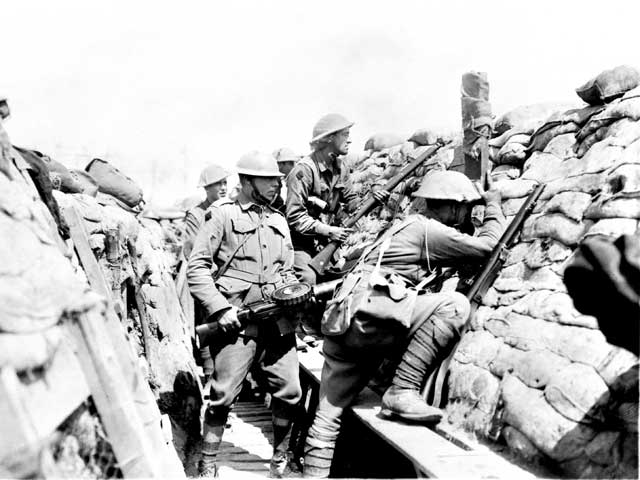
(The photo shows Australian soldiers in the trenches at Bois-Grenier near Armentières on the Western Front, 1916. Image held by the Australian War Memorial)

Names Spotted at Home and Abroad (Summer Edition)

25 Monday Mar 2013

Posted by A.O. in Names Spotted at Home and Abroad

≈ 3 Comments

Tags

animal names, Australian Aboriginal names, changing names, culinary names, english names, ethnonyms, famous namesakes, fictional namesakes, fish names, floral emblems, flower names, food names, French names, German names, honouring, initials, Japanese names, Latin names, locational names, makes of cars, name combinations, name meaning, names of horses, names of spices, names of weapons, Native American names, nature names, nicknames, Persian names, plant names, rare names, rose varities, sibsets, surname names, types of boats, unisex names, vocabulary names

297602-baby-namesThe first baby born in Wollongong for 2013 was Rumi Vassilakoglou; he is named after the medieval mystical Persian poet, whose moniker means “from Rome” (this name for him is not used in Muslim countries, by the way). Rumi’s mum is named Leila, and his younger sibling is Mahli.

Your baby disappearing is every parent’s worst nightmare, but little Minowa Worthington’s story ended happily. Minowa is the name of a Japanese town, and a Japanese surname, but baby name books tell me it also Native American for “one with a moving voice”. They don’t say which language it is from, but I have seen Native Americans online with Minowa as their surname.

A Gold Coast baby born in the Queensland floods was named Sabre Smith. Although his name can be after the sword, putting it in the same genre as Blade or Steel, a sabre is also a class of racing boats – which seems apt for a baby born surrounded by water.

Another water baby is Dwight Anderson, who was born in the bath. I was a tiny bit surprised to see such an old-fashioned name in use … much more surprised to see that Dwight is a girl. Dwight’s sister is named Billie-Jo.

Allegra Bluebelle from Canberra, born in the city’s centenary year, has a middle name after its floral emblem, the royal bluebell. A little girl born on the city’s birthday seven years ago has the same initials as the Australian Capital Territory – Aisha Caitlyn Truselsen. A fisherman has a daughter named Makaira Indica, which is the scientific name for the black marlin (this isn’t connected to Canberra, so not sure why they mentioned it, but there you go).

The Hallett family changed their name by deed poll to Holden, in honour of the make of car. Not content with that, they have given their children Holden-related names too. Their son is named Toree, after the Torana, and his little sister is named Elcee – after the LC generation of Toranas.

An article about “unique” names quoted brothers named Mac and Fonzii. I have no idea why Mac is supposed to be unique, but Fonzii does seem slightly out of the ordinary. He’s not named about Fonzie from Happy Days, which reminds me of the baby named Tinkabell not named after the fairy. Other unusual names of real babies mentioned were Dragon, Justus, Porch, Ever, Notorious, Cash, Lychee and Bandit.

Another article on the same subject, with much the same information, featured a baby boy named Ace Bear Johnson, which strikes me as both cute and sporty (Ace’s sister is named Esmee). There was also a baby girl named Annecy Belle Easton [pictured], named after a French town that her parents fell in love with after they stayed there. She is called Annie for short, and Annecy’s mum also has the name of a French town – Nancy. Article also mentions real babies named Batman, Blaze and Charisma.

Darwin schoolteacher Wendy Green named her racehorse Rogan Josh, after the Indian spice mix, which she saw at the supermarket. She claims that in Tennant Creek, she was asked to baptise a baby, which she did using champagne, and named the baby Rogan Josh as well. You may take this story with as many grains of salt as you wish – but Rogan Josh really isn’t too bad a name. It literally means “boiling oil” in Persian.

Friday’s birth notices included a new baby named Passion Brinessa Ajayla Quinatee Martin, who is the 12th child in her family. The rest of the family are Samantha Jayne (18), twins Shantelle Victoria and Stephanie Catherine (15), Jenaya Lee (11), Shania Kay (10), Brandon Bradley (7), Brandi Shyla Molly Robyn (6), Cruz Richard (5), Clayton Adam Logan (4) and Diammond Sparckle Zedekeyah Lilly Ann (3). Mum is named Brinessa, which is a variety of rose, and quite an unusual name too. She admits she did find it difficult to come up with original names, and turned to an iPhone application for inspiration.

Names of Adults

Lyra Benbow is a primary schoolteacher in the Melbourne suburb of Digger’s Rest who is just about to spend her Easter break doing volunteer work in Uganda. Is anyone else just loving her name? It sounds like something out of a fantasy novel.

Another awesome name from the papers: Eugenie Pepper, who runs a children’s fashion business named Plum. I feel like ringing her number to hear if she answers, “Hello, this is Pepper of Plum”.

Last year, Cressida Moneypenny attended the Anzac Day commemorations in Turkey. Originally from the Gold Coast, Ms Moneypenny was drawn to her name’s spiritual home, and moved to London. Ian Fleming never gave his Miss Moneypenny a name, but I feel sure it should have been Cressida …

The Melbourne Comedy Festival will feature eight comedians named Dave. Why so many funny guys named Dave? Dave O’Neil was a David until he started in comedy – then he became Dave, which seemed more man of the people. Dave Hughes also began as a David, but said he couldn’t make it stick – people just expect a comedian of a certain age to be a Dave, apparently. All the Daves agreed they had been stuck with an uncool name – while a David can be hip or sexy, a Dave is always daggy.

Names From Real Life

A pair of sisters named Ilse and Matine, which I thought went together really well without being in the least matchy. Ilse is a German nickname for Elizabeth, while Matine is based on the French word for “morning”.

Another cute sibset, this time a little hippyish – Lotus, Jewel and Sunny (two girls and a boy). They are names which just make you smile.

Someone I know told me they have a new niece named Berrilee, which is the name of a suburb of Sydney (and one I missed!). It is derived from an Aboriginal word meaning perhaps “mouth” or “food”, and far from being a modern innovation, baby Berrilee is named after an ancestor.

A name I saw on a class list at the start of the school year – Phonique. It’s French for “phonic”, as pertaining to sound, and is used by a (male) DJ in Europe. To me it almost seems like a portmanteau of phony and unique …. and quite technological.

In spring it was Aryan … here’s another name I saw some people find controversial – Gypsy. This is a name more common in Australia than it is in the UK and other European countries, which have significant populations of Romanis or Travellers (who sometimes refer to themselves as gypsies). Romanis are not in fact from Egypt, which is what Gypsy literally means – their origins are from the Indian subcontinent.

Names of Babies Born to People I Know or Know Of:

Girls: Florence, Harriet, Lola, Marina

Boys: Arlo, Gus, Huxley

← Older posts
Newer posts →

Enter your email address to follow this blog

Categories

Archives

Recent Comments

A.O.'s avatarwaltzingmorethanmati… on Zarah Zaynab and Wolfgang…
Madelyn's avatarMadelyn on Zarah Zaynab and Wolfgang…
JD's avatardrperegrine on Can Phoebe Complete This …
A.O.'s avatarwaltzingmorethanmati… on Rua and Rhoa
redrover23's avatarredrover23 on Rua and Rhoa

Blogroll

  • Appellation Mountain
  • Baby Name Pondering
  • Babynamelover's Blog
  • British Baby Names
  • Clare's Name News
  • For Real Baby Names
  • Geek Baby Names
  • Name Candy
  • Nameberry
  • Nancy's Baby Names
  • Ren's Baby Name Blog
  • Sancta Nomina
  • Swistle: Baby Names
  • The Art of Naming
  • The Baby Name Wizard
  • The Beauty of Names
  • Tulip By Any Name

RSS Feed

  • RSS - Posts

RSS Posts

  • Celebrity Baby News: Melanie Vallejo and Matt Kingston
  • Names from the TV Show “Cleverman”
  • Can Phoebe Complete This Sibset?
  • Zarah Zaynab and Wolfgang Winter
  • Baby, How Did You Get That Name?
  • Celebrity Baby News: Media Babies
  • Celebrity Baby News: Adelaide Crows Babies
  • Celebrity Baby News: Chris and Rebecca Judd
  • Names at Work: Name News From the World of Business and Employment
  • Celebrity Baby News: Sporting Round Up

Currently Popular

  • Girls Names From Native Australian Flowers
  • Girls Names of Australian Aboriginal Origin
  • Celebrity Baby News: Victoria Samba and Mitch Hoare
  • Celebrity Baby News: Katie Underwood and Darren McCoy
  • Flynn Christopher Bloom: A Son for Miranda Kerr and Orlando Bloom

Tags

celebrity baby names celebrity sibsets english names famous namesakes fictional namesakes honouring locational names middle names name combinations name history name meaning name popularity name trends nicknames popular names saints names sibsets surname names twin sets unisex names

Create a free website or blog at WordPress.com.

Privacy & Cookies: This site uses cookies. By continuing to use this website, you agree to their use.
To find out more, including how to control cookies, see here: Cookie Policy
  • Subscribe Subscribed
    • Waltzing More Than Matilda
    • Join 517 other subscribers
    • Already have a WordPress.com account? Log in now.
    • Waltzing More Than Matilda
    • Subscribe Subscribed
    • Sign up
    • Log in
    • Report this content
    • View site in Reader
    • Manage subscriptions
    • Collapse this bar
 

Loading Comments...