• About
  • Best Baby Names
  • Celebrity Baby Names
  • Celebrity Baby Names – Current
  • Celebrity Baby Names – Past
  • Featured Boys Names
  • Featured Girls Names
  • Featured Unisex Names
  • Links to Name Data
  • Waltzing on the Web

Waltzing More Than Matilda

~ Names with an Australian Bias of Democratic Temper

Waltzing More Than Matilda

Tag Archives: fictional namesakes

Famous Names: Bronwyn and Dolores

05 Wednesday Aug 2015

Posted by A.O. in Famous Names

≈ 5 Comments

Tags

controversial names, dated names, famous namesakes, fictional namesakes, Harry Potter names, Marian titles, modern names, name history, name meaning, name popularity, name trends, names from films, nicknames, Spanish names, UK name popularity, US name popularity, Welsh names
BronwynBishopDolores

Famous Namesake
Bronwyn Bishop resigned as Speaker of the House two days ago, after a furore over her use of travel allowances. Usually when someone is caught out abusing the system they quickly hand in their notice and quietly slip away before too many questions can be raised. However Ms Bishop refused to admit she had done anything wrong and resisted all pressure to resign for three weeks, which meant we had plenty of time to hear about her extravagant travel expenses.

They included a $6000 private flight from Sydney to Nowra for a Liberal party fundraiser, and more than $1000 on a limo so she could attend a theatre premiere in her home city. There was also the $600 return flight to attend colleague Sophie Mirabella’s wedding in Albury, and $130 000 spent on overseas travel to Europe and Asia, including $1000 a day on private limos.

The one that really left people gobsmacked was a $5000 chartered helicopter to take her from Melbourne to a Liberal party fundraiser in Geelong and back – a trip which takes only about an hour each way by road. Referred to as Choppergate, this was the scandal that brought Ms Bishop down. She wasn’t a first-timer at this: in the 1980s she once hired a helicopter at taxpayer’s expense to transport her from a fete to a dog show.

Ironically, back in the 1990s Bronwyn Bishop rose to fame as the face of public accountability when she was on the Senate estimates and joint public accounts committee. This sounds dull and usually was – an assessment of government departments and where they spent their appropriations. Under Bishop, committee meetings became virtual show trials where senior public servants were routinely interrogated, hectored, and taunted for their spending habits.

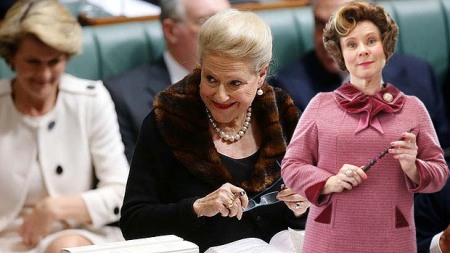
When Bronwyn Bishop was appointed Speaker in 2013, the Opposition described her as Dolores Umbridge, after the infamous headmistress from the Harry Potter series. This didn’t refer to a penchant for hair ribbons or interest in fluffy kittens, but indicated a fear she was to be a corrupt tool of government. This turned out to be not unfounded, for in her term of office Ms Bishop showed considerable bias, ejecting 393 Opposition members from the house, but only 7 of her own party.

Bronwyn Bishop was appointed to the role of Speaker by the Prime Minister, who describes her as a close personal friend, and himself as her ideological love child. This has turned out to be yet another damaging captain’s call, and no doubt the next Speaker will be the choice of his party.

It’s been a spectacular fall from grace for the longest-serving woman in Parliament, who once boasted she would be a future Prime Minister. Now the Prime Minister admits her parliamentary career is at an end.

BRONWYN
Bronwyn is a variant of Bronwen, a modern Welsh name meaning “white breasted, fair breasted”. The meaning is possibly less important than the fact it is very similar to the medieval Welsh name Branwen, meaning “fair raven”; in Welsh legend, Branwen was the sister of Brân the Blessed. Both Bronwen and Bronwyn have been used since the 19th century.

There is a popular notion that Bronwyn is the masculine form of Bronwen, since in Welsh the suffix -wyn is usually attached to masculine names. In fact, you can get into some quite nasty arguments about it on baby name forums, with angry people telling you that you have ignorantly given your daughter Bronwyn a specifically male name.

However if you look at the records, Bronwyn was always used as a girl’s name in Wales right from the start, with the -wyn spelling just a variant, not an indication of gender. Interestingly, the few examples of men named Bronwyn I found, dating from the 20th century, were all from outside Wales. I suspect their parents read up on the Welsh language and “corrected” Bronwyn from feminine to masculine, possibly being a bit too clever in the process and giving their sons a traditionally female name.

While Bronwen was originally by far the more common spelling in the 19th century, Bronwyn overtook it in the 20th. It was popularised by the 1941 film How Green Was My Valley, with Anna Lee in the role of Bronwyn, the narrator’s sister-in-law that he loves. The film is based on the 1939 novel by author Richard Llewellyn, and is set in a Welsh mining village. In the book the sister-in-law’s name is Bronwen, and I’m not sure why Hollywood decided to spell her name with a Y. Perhaps they thought it looked more feminine.

The name Bronwyn first joined the charts in the 1940s, coinciding with the release of the film; it made its debut at #143. (Bronwyn Bishop was born in 1942, the year after the film came out). By the 1950s it had joined the Top 100 and peaked in 1964 at #53. It left the Top 100 in 1980, and hasn’t charted since the late 2000s.

For some reason, Bronwyn has only been popular in Australia: it doesn’t seem to have ever been a Top 100 name in the UK, and has never even charted in the US. In 2013, there were 23 baby girls named Bronwyn in England/Wales, and last year there were 49 baby girls named Bronwyn in the US. Numbers of Bronwyns seem fairly stable in both countries.

Bronwen has never charted in Australia. In the UK in 2013 Bronwens and Bronwyns were roughly equal (21 babies named Bronwen), while in the US there were 6 Bronwens, a lot less popular than Bronwyn.

Although Bronwyn is now a dated name, the sound of it seems to have led to the popularity of similar-sounding Bronte, which joined the Top 100 just as Bronwyn slipped off the charts. Perhaps even the rise of Bonnie owe something to Bronwyn, since a common nickname for Bronwyn is Bronnie.

DOLORES
Dolores is a Spanish name meaning “pain, sorrow”. It is taken from one of the titles of the Virgin Mary, Nuestra Senora de Dolores, or Our Lady of Sorrows. The title refers to the Seven Sorrows of Mary, which are seven sad events in Mary’s life connected with her son Jesus. They begin with his Presentation in the Temple, and the prophecies made about him, and end with his body being placed in the tomb.

The feast day for Our Lady of Sorrows began in the Middle Ages, and was originally the third Sunday after Easter; today it is September 15. It’s possible that the name Dolores was first given to girls born around this feast day, although I can’t find any evidence for this.

The feast was rarely celebrated until the 16th century, and by the 17th century Dolores had become a common name in Spanish-speaking countries, although occasionally also used by Catholics in other countries. It came into common use in the English-speaking world in the 19th century, and was a particular favourite with Irish Catholics.

Dolores has never charted in Australia. In the United States, Dolores joined the Top 100 during the 1920s, the era when Mexican actress Dolores del Rio flourished as a Hollywood star. The first Latin American actress to become famous internationally, Dolores was exquisite, elegant, and gracious.

The name left the US Top 100 in the 1940s, after Dolores de Rio was accused of Communism during the McCarthy era, and continued her career in her homeland. The name left the charts in the 1980s, after Dolores del Rio’s death, but Dolores is still remembered as one of the classic Hollywood beauties, and a great lady.

During Ms del Rio’s heyday this name must have been exotic and glamorous, but now seems dated and frumpy. The evil Dolores Umbridge from Harry Potter has not helped its image: her name was chosen because it sounds similar to the English word dolorous, which can be understood as “causing pain or grief” (it has the same Latin source as the name Dolores). However, Lola is a popular pet form of Dolores, and I can see Lolita, Dolly and Lolly becoming fashionable in the future.

Two names connected with Hollywood beauties which have fallen from favour, but are probably more influential on current trends that we give them credit for. Which one will score higher, I wonder?

POLL RESULTS
Bronwyn received an approval rating of 44%. 39% of people weren’t keen on the name Bronwyn, while 18% loved it.

Dolores received an even lower approval rating of 28%. 40% of people weren’t keen on the name Dolores, while 10% loved it.

(Photo from the ABC website)
Waltzing With … Felix

02 Sunday Aug 2015

Posted by A.O. in Waltzing with ...

≈ 3 Comments

Tags

Biblical names, European name popularity, famous namesakes, fictional namesakes, Greek names, historical records, imperial titles, Latin names, middle names, mythological names, name history, name meaning, name popularity, names of cats, New Zealand name popularity, nicknames, papal names, patriotic names, popular names, retro names, saints names, UK name popularity, US name popularity

3092894-6735042798-Knml3

Famous Namesake
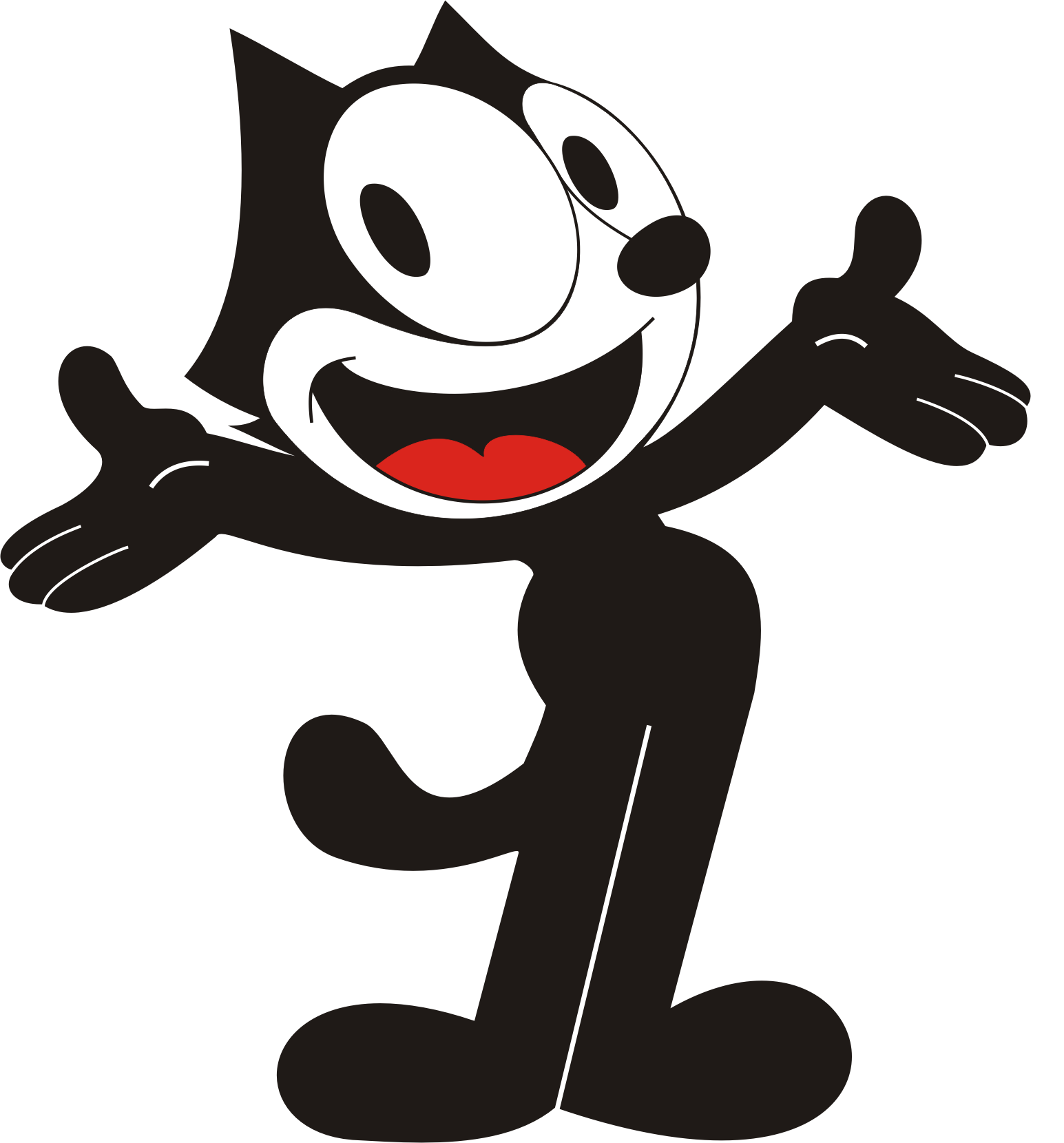
I think many Australians would readily associate this name with Felix the Cat, the silent film era cartoon. One of the most recognisable cartoon characters in film history, he was the first animated character to become popular enough to attract a cinema audience.

Felix the Cat was created by Sydney-born Pat O’Sullivan, who arrived in the United States in 1910 and began working as a cartoonist. By 1916, he had opened his own cartoon studio, and around 1917 he created Felix the Cat, inspired by a cat his wife Marjorie brought into the office. Under contract to provide one cartoon a month to cinemas, by 1921 Felix was in sixty percent of North American cinemas.

Pat O’Sullivan was fiercely protective of his creation, successfully gained royalties from pirated merchandise, and took action when Walt Disney made a Felix carbon-copy called Julius. Unfortunately for Felix, Disney then went on to create a certain Mickey Mouse, who starred in early talkie Steamboat Willie in 1928. This spelled the beginning of the end for Felix, and by 1931 it was obvious that Walt Disney was going to be the big success story of cartooning.

After Pat O’Sullivan’s death in 1933, his lead animator Otto Messmer took credit for the creation of Felix. Messmer’s claim is still accepted in the United States, even though O’Sullivan was acknowledged as Felix’s creator during his lifetime. Australian film curators have pointed out that it is O’Sullivan’s handwriting on the early Felix sketches, and that kittens in an early film are given Australian accents, saying ‘lo, Mum! ‘lo Ma!

The cartoon cat that Felix was based on was called Thomas or Tom (a fairly obviously cat-related name), but Pat O’Sullivan changed his name to Felix. Apparently this was after the Australian boxer Peter Felix, who was born in the West Indies, and won the heavyweight title in the 1890s – he often wore black and was a flashy dresser. Pat had seen Peter Felix in his last big fight in 1908, shortly before he left Australia. O’Sullivan had a strong interest in boxing, and when he first arrived in New York he himself boxed for prize money.

The name Felix was a very Australian choice, because in 1836 Scottish explorer Thomas Mitchell called the lush pastureland of western Victoria Australia Felix, meaning “happy Australia, fortunate Australia”. In 1845 English travel writer Richard Howitt’s lively Impressions of Australia Felix was published, and in 1849 the Australia Felix magazine was founded.

After the colony was named Victoria in 1850, the name Australia Felix gradually dropped out of use. However, 19th century Victorian politician Jonas Australia Felix Levien provides an example of it being used as a name, and he wasn’t born until the 1870s. (I have also found someone named Australia Felix Drake in historical records).

Despite all these Australian references, I can’t help wondering if Pat O’Sullivan was also thinking of Felis, the scientific name for the cat genus, from the Latin word feles, meaning “cat”.

Pat O’Sullivan gave Felix a lucky name, and the cat brought Pat luck and success. He did not have a very happy end to his life though. His marriage became increasingly strained (it probably got off to a rocky start, as they wed while he was on bail for raping a teenage girl; he was subsequently imprisoned for 9 months), and Marjorie fell to her death from their second floor apartment in 1932. O’Sullivan’s mental faculties deteriorated due to syphilis, and he died of alcoholism a year after his wife’s death.

Name Information
Felix is a Latin name meaning “lucky, fortunate”. It was first given as a nickname to the 1st century BC Roman general and statesman Lucius Cornelius Sulla, a free translation of the Greek nickname he acquired during his military campaigns – Epaphroditos, meaning “beloved of Aphrodite”.

Whether the goddess Aphrodite was taking care of him or not, Sulla was very successful, holding the position of consul twice, and being awarded the Grass Crown, the rarest and most prestigious Roman military honour, given only to those whose actions saved an entire legion or the whole army. Like Alexander the Great, he achieved many of his victories before his thirtieth birthday, and provided the model for later Roman leaders to gain power by force.

After him, the nickname became a common one for Roman leaders to take, and several emperors adopted it as a title. The Roman procurator Marcus Antonius Felix is mentioned in the New Testament, although not in a positive way – he imprisoned Saint Paul.

Felix was a favourite name amongst early Christians, as the name can imply being in the favour of God, or blessed by God. There are masses of saints named Felix, including quite a few martyrs, and three popes with the name. Saint Felix of Burgundy was sent as a missionary to East Anglia in the 7th century, and there are several churches dedicated to him in Yorkshire and East Anglia. The village of Felixkirk in Yorkshire is named after him, and so might be Felixstowe in Suffolk.

Although more common in Continental Europe, Felix has been in use as an English name since the Middle Ages, in honour of these various saints. It is particularly associated with East Anglia and south-eastern England in general, showing the legacy of Felix of Burgundy.

Felix was #172 in the 1900s, and left the charts in the 1920s (Felix the Cat didn’t do it any good). It returned in the 1980s at #396 and climbed steadily; it’s been on and off the Top 100 since 2011. Currently it is #89 nationally, #86 in New South Wales, #78 in Victoria, #36 in Tasmania, and #54 in the Australian Capital Territory. It was one of the fastest-rising names in Tasmania and Victoria last year, and one of the nationally fastest-rising names of 2013.

In the US, Felix is #267 and rising steeply, while the UK has a similar popularity to Australia, at #91 and rising. Felix is #66 in New Zealand and fairly stable – the highest popularity of any English-speaking country. Felix is well used in Western Europe and Scandinavia, and is most popular in Austria at #4.

Handsome, intelligent, and upbeat, Felix is a name with an irresistibly positive meaning and strong Australian associations. Once seen as rather hipster, this retro name is growing in popularity, and fittingly it’s rather a favourite in the state of Victoria.

POLL RESULT
Felix received an outstanding approval rating of 93%, making it the highest-rated boys name in the Waltzing With … category for 2015. 45% of people loved the name Felix, and only 3% hated it.

Suburbs of Adelaide and Hobart Which Could Be Used as Boys Names

26 Sunday Jul 2015

Posted by A.O. in Name Themes and Lists

≈ 2 Comments

Tags

Anglo-Saxon names, aristocratic names, aristocratic surnames, astronomical names, car names, colour names, dated names, english names, famous namesakes, fictional namesakes, gemstone names, germanic names, honouring, locational names, middle names, mythological names, name history, name meaning, name popularity, names from movies, names of animals, names of ships, nature names, nicknames, Old French names, plant names, popular names, rare names, retro names, Roman names, royal names, saints names, Scottish names, surname names, tree names, unisex names, vocabulary names


OLYMPUS DIGITAL CAMERAAustin
Austins Ferry is a suburb of Hobart, named after convict James Austin. Austin and his cousin was transported to Australia in 1803, and after their sentences expired, were given small land grants on the River Derwent near Hobart. In 1818 they established a ferry service across the river, and became very wealthy. You can still visit James Austin’s original cottage. Austin is an Old French shortening of the name Agustin, the equivalent of the English Augustine, and the surname Austin has the same source. Austin was #108 in the 1900s, and left the charts in the 1950s. It returned in the 1990s at #196, the decade of the Austin Powers spy comedies with Mike Myers in the title role. Groovy, baby! It climbed steeply and joined the Top 100 in 2011. It is currently #61, and was the fastest-rising name in Queensland and a fast-rising name in South Australia last year. It was a fast-rising name in New South Wales in 2013 too, so this retro name is doing very well for itself, and is now more popular than it has ever been before.

Cornelian
Cornelian Bay is a suburb of Hobart, whose bay on the River Derwent provides anchorage for yachts; there are boathouses and a waterside restaurant along its foreshore. The first English navigator to explore the Derwent was Lieutenant John Hayes; he came ashore here in 1793, and named the bay after the semi-precious cornelian stones which he found on the beach. Cornelian (also known as carnelian) is a dark red mineral whose name is from the Latin for the cornel cherry, a flowering dogwood tree which has small dark red fruit just the colour of the gemstone. Cornelian was used in Roman times for signet rings used to seal important documents, as hot wax doesn’t stick to it. It was a gemstone often associated with courage and good luck. Cornelian has been in very rare use as a personal name since the 17th century, and overall has been given fairly evenly to both boys and girls. Not many gemstones work well as boys’ names, but this sounds very similar to Cornelius, yet seems much more up-to-date. This would also make a great middle name, and is suitable for both sexes.

Fitzroy
Fitzroy is an inner-city suburb of Adelaide, and an exclusive area overlooking the North Adelaide Parklands. The houses are mostly 19th century mansions along a few tree-lined streets, as this is where the upper class settlers lived in the city’s early days. It may have been named after Fitzroy in Melbourne, which is named after Sir Charles FitzRoy, the governor of New South Wales in the mid 19th century. Another suggestion is that it was named for historic Fitzroy Square in London, whose name comes from Charles FitzRoy, 2nd Duke of Grafton, an 18th century politician who was a distant ancestor of Diana, Princess of Wales. The English surname Fitzroy (or FitzRoy) comes from the Old French for “son of the king”, and was traditionally given to illegitimate sons and daughters of a monarch, and could be inherited as a surname by their descendants. For example, the father of the 2nd Duke of Grafton was an illegitimate son of King Charles II by his mistress Barbara Villiers. Fitzroy has been used as a personal name since the 18th century, and was sometimes used to indicate a family relationship with illegitimate royalty. Roy- (and royal) names are on trend, and this is one you could consider that has Fitz or Fitzy as the nickname.

Hobart
Hobart is the capital of Tasmania; it is Australia’s second-oldest capital city after Sydney, and is our most southern capital city, serving as a hub for Australian and French Antarctic operations. It is located on an estuary of the Derwent River at the foot of Mount Wellington, and more than half of the city is taken up with bushland, so it contains much natural beauty. A small city with many historical buildings from its colonial past, Hobart has a great deal of charm. Hobart was named after Robert Hobart, 4th Earl of Buckinghamshire: Lord Hobart was the Colonial Secretary at the beginning of the 19th century. The surname Hobart is derived from the personal name Hubert, meaning “bright mind”. Hobart has long use as a personal name, and can be found often in historical records, with it being a bit of a favourite in Tasmania – indeed one example I found was Tasman Hobart. The Ho- at the beginning is rousing yet problematic, but you could use Bart or Barty as a nickname. A patriotic choice that may work better as a middle name.

Holden
Holden Hill is an inner-city suburb of Adelaide. It was named after a road extension called Halden’s Hill in the mid 19th century, as the land the road ran through was owned by a Mr Halden. The name was corrupted into Holden Hill. Holden is an English surname after a small village in Lancashire; it comes from the Anglo-Saxon meaning “deep valley”. Its most famous literary namesake is Holden Caulfield from J.D. Salinger’s Catcher in the Rye. It’s quite likely that Salinger named the character after a friend called Holden Bowler he met while they were both working on a ship. Mr Bowler went on to run his own advertising business and was godfather to singer Judy Collins. In Australia Holden will remind people of the car company, its name coming from South Australian manufacturer Sir Edward Holden (although it is owned by General Motors). Sadly, Holden will cease production in Australia in 2017. A very uncommon name in Australia because of the car.

Jupiter
Jupiter Creek is a semi-rural suburb of Adelaide which was once part of a gold-mining area, and still a place to go fossicking. Its name was given by gold-miners, possibly after a bull named Jupiter who was fond of running away to graze there. In Roman mythology, Jupiter is king of the gods, and the god of the sky and thunder, the equivalent of the Greek god Zeus. Ruler of the heavens, he was a divine witness to oaths and the protector of the state and justice; his symbols were the oak tree, the eagle, and the thunder bolt. His name is from an ancient root meaning “O Father Sky-god”, so his name is an invocation: to speak the name of Jupiter aloud is to call upon the god. The Romans named the largest planet in the solar system after Jupiter, and believed those born under its influence to be especially fortunate. As Juno is a hip name for girls, and so is Juniper, Jupiter for boys doesn’t seem too strange. A possible issue is the movie Jupiter Ascending, which has Mila Kunis as a heroine named Jupiter.

Linden
Linden Park is an affluent suburb of Adelaide. It was named after a house and estate which was built by Sir Alexander Hay in 1861. Linden trees (Tilia) are also called lime trees, although they are not closely related to the tree which produces lime fruit. They are tall, shady trees that have great significance in Germany and Eastern Europe, where they were seen as sacred; in German folklore, the linden is said to be the tree of lovers. Lindens have often featured in stories and poems, often as a symbol of love, protection, or resurrection. In Marcel Proust’s Swann’s Way, the narrator dips his madeleine cake into a cup of lime-flower tea, which opens up a flood of memories. The word linden is from an ancient Germanic root which may mean “mild, soft”: the timber of the linden tree is soft and easily worked, making it ideal for carving. Linden has been used as a name since the 18th century, overwhelmingly for boys, and is found in Australian records quite often, mostly from around the late 19th and early 20th centuries, although I know a few men around my age named Linden. I haven’t seen it on a young child, but this is a handsome, soft-sounding tree name, not so different in sound from popular Lincoln.

Montrose
Montrose is a northern suburb of Hobart. It is named after Montrose House which was built in 1813 by a Scottish settler named Robert Littlejohn, a renowned painter, botanist and teacher. It is the third oldest house in the state, and is named after Montrose, on Scotland’s east coast. A picturesque resort town, it is regarded as a cultural centre, and known for its sculpture. The town’s name is usually thought to be from the Gaelic monadh, meaning “moor”, and ros, meaning “peninsula”. Folk etymology understands it as “mount of roses”, and the town’s Latin motto is Mare Didat, Rosa Decorat, meaning “the sea enriches, the rose adorns”. Montrose is also a surname, and the Duke of Montrose is a title in the Scottish peerage, held by the Graham family. Montrose has been used as personal name since the 18th century, and first used by the Grahams. It has been used for both sexes, but is more common as a male name. Scottish and aristocratic, this is like a cross between Montgomery and Ambrose, and has Monty as the obvious nickname.

Sorell
Sorell is a historic market town north-east of Hobart, now a dormitory suburb of the city. It is named after William Sorell, the state’s third Lieutenant-Governor. William Sorell did a good job of cleaning up the colony, which he had found in a fairly lawless and untidy position. The English surname Sorell is from the Old French nickname Sorel, meaning “chestnut”, and given to someone with reddish-brown hair. It has been in rare use since the 19th century, and is given to both sexes, although more common overall as a male name. It may be known from Sir Julian Sorell Huxley, biologist and brother of Aldous Huxley. An interesting, intelligent name that may sound too close to the word sorrow for some parents.

Stuart
Mount Stuart is a suburb of Hobart on a ridge with the wonderful name of Knocklofty. The suburb is named because of Mountstuart Elphinstone, a Scottish statesman and historian who was Governor of Bombay (now Mumbai). A ship named in the governor’s honour as the Mountstuart Elphinstone visited Hobart in 1836, bringing the welcome news that the cruel and unpopular Lieutenant-Governor George Arthur was ordered to return to London. In celebration of getting rid of him, two roads were named Mount Stuart Road and Elphinstone Road, and eventually the area became known as Mount Stuart. Mountstuart Elphinstone was probably named after Mount Stuart House on the Isle of Bute in Scotland, the seat of the Stuarts of Bute. They are descended from Robert II of Scotland, the first of the Stuart kings (the Elphinstones are related to the Stuarts). The name of the Stuart dynasty comes from Stewart, the Scottish form of steward, meaning a governor. The first of this surname was Walter Stewart of Dundonald, High Steward of Scotland. The Stuart dynasty ended up ruling Great Britain for more than a century, and it’s because of them that Stuart was used as a personal name. Stuart was #135 in the 1900s, joined the Top 100 in the 1940s and peaked in 1969 at #31. It left the Top 100 in the 1990s and hasn’t charted since 2010. Stewart was less popular, never reached the Top 100, and hasn’t charted since the early 2000s.

POLL RESULTS
People’s favourite names were Linden, Austin and Holden, and their least favourite were Montrose, Jupiter and Hobart.

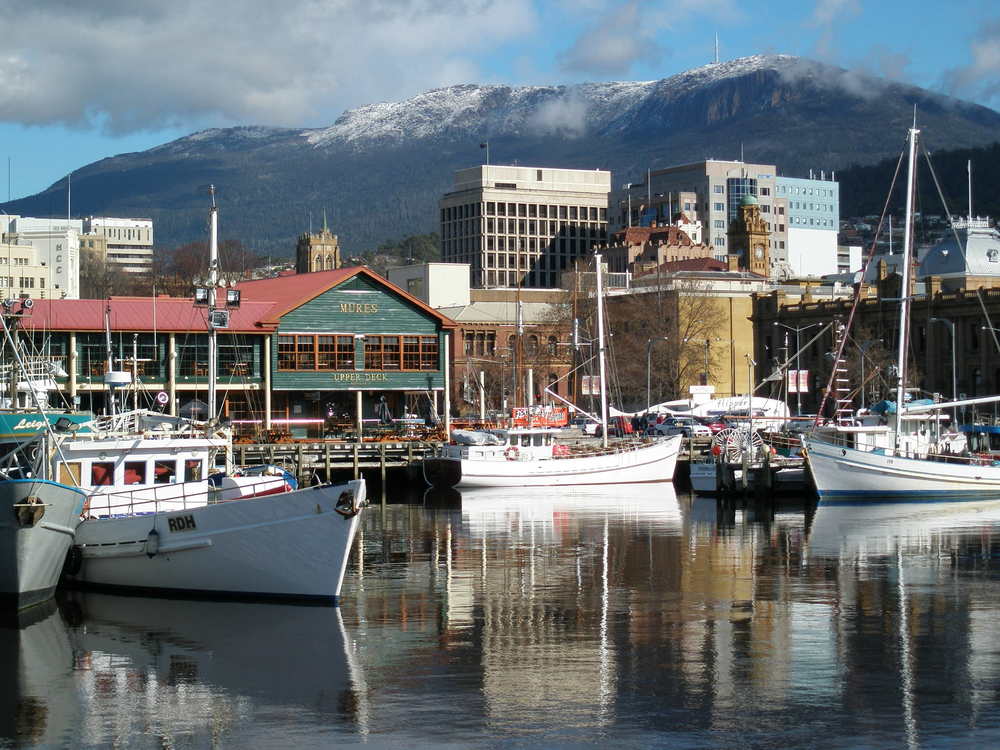
(Photo shows Hobart)

Requested Name: Beau

22 Wednesday Jul 2015

Posted by A.O. in Requested Names

≈ 15 Comments

Tags

english names, famous namesakes, fictional namesakes, name history, name meaning, name popularity, names from films, names from television, names of bands, New Zealand name popularity, nicknames, popular names, slang terms, surname names, UK name popularity, unisex names, US name popularity

tumblr_m9gx02m0KS1qld6eho1_1280

Beau is a French word meaning handsome or attractive: it is the masculine form of belle, and both of these words are from the Latin bellus, meaning “beautiful, pretty, agreeable”. It is directly related to the English word beautiful, and is part of English surnames such as Beauregard (“beautiful view”) or Beaumont (“beautiful mountain”).

You can see Beau as a short form of such surnames, or as directly from the English word beau, which is old-fashioned slang for a man who is a well-dressed dandy, or for a woman’s lover or sweetheart. Both senses of the word go back to the Middle Ages, but it is rare to hear people using these slang terms in everyday modern life.

Some of the most famous namesakes were called Beau as a nickname, to indicate that they were at the very height of fashion. Richard “Beau” Nash was Master of Ceremonies in Bath and Tunbridge Wells in the 18th century, while George “Beau” Brummel was an arbiter of men’s fashions in Regency England, a friend of the future King George IV.

Beau Brummel was famous for his charisma and wit, and his name is synomous with style and masculine good looks. He changed men’s fashions from the wearing of bright colours, lace, jewels, and spangles to elegantly tailored dark clothing with a white shirt – it’s because of him that we consider it “good taste” for a man to dress in an expensively discreet suit.

Both the famous Beaus were middle-class men who had the confidence and personality to mix with the cream of society, and as a direct result, both died in debt (Beau Brummell died raving mad from syphilis, but this has not tarnished his image, just added a tinge of poignancy).

Beau Brummell has inspired several literary portraits, including as a character in Arthur Conan Doyle’s historical novel Rodney Stone. He was also in Georgette Heyer’s Regency Buck, and it became almost de rigeur to include him as a character in regency romances. Recently Beau Brummell has turned detective in a series by Rosemary Stevens, and taken part in homoerotic fiction written by Cecilia Ryan. Beau Brummel has also appeared on stage, radio plays, TV dramas, movies, and an operetta. The latest outing was probably on UK TV in This Charming Man, with James Purefoy as Beau.

The name Beau has been in use since the late 18th century, not long after the death of Beau Nash. Beau Nash was so severely mourned by his former mistress when he died that she supposedly lived in a hollowed out tree on a bale of straw for thirty or forty years: I haven’t the foggiest how that made her feel better, but presume the straw was changed from time to time.

Originally Beau was given fairly equally to boys and girls in Britain, but soon became overwhelmingly male as the name became more common in the United States. Interestingly, this pattern still holds true, as Beau is evenly unisex in the UK, but only charts for boys in the US. In Australia, Beau is usually considered a boy’s name, but you can still encounter the occasional girl named Beau.

In the US, Beau has been in the Top 1000 since the late 1960s. Its appearance then may have been because of the actor Lloyd “Beau” Bridges, the son of Lloyd Bridges. Beau Bridges received his nickname after Ashley Wilkes’ son in Gone With the Wind. During the 1960s Beau Bridges often appeared on his father’s TV show, The Lloyd Bridges Show, and gained parts in TV series such as The Fugitive and Bonanza.

Other 1960s influences were the rock band The Beau Brummells, Roger Moore playing Beau Maverick on the TV show Maverick, and the film Beau Geste, with Guy Stockwell in the title role as an American hero fighting for the French Foreign Legion – his nickname is from the French phrase beau geste, meaning “noble gesture”. In the US, the name Beau is currently #228 and rising.

In the UK, Beau has been in the Top 1000 for boys since at least 1996, and for girls since 2002. Currently Beau is #175 for boys and #169 for girls in the UK, but it is screeching up the charts for girls while staying stable for boys. Furthermore, if you include names like Bo, and double names like Beau-Lily, there are even more girls called Beau in the UK, so this seems to be in pink territory in Britain.

In Australia, Beau joined the charts in the 1970s at #261, and first joined the Top 100 in 1986 at #85. It made the Top 50 in 2011 and 2012 (at #50 and #40), but other than that has been steadily in the bottom half of the Top 100, or just below the Top 100. That makes it a good choice for someone who wants a name that is common, without ever having been highly popular.

Currently Beau is #80 nationally, #61 in New South Wales, #70 in Queensland, #88 in Tasmania, and #48 in the Australian Capital Territory. It has just dropped off the Top 100 in Victoria, and the Top 50 in Western Australia.

The name Beau is more popular in Australia than anywhere else in the world, although it is also Top 100 in New Zealand. Once of the factors in its success is probably the number of sportsmen named Beau, such as cricketer Beau Casson, AFL footballers Beau Maister and Beau Waters, and rugby union footballer Beau Robinson, who plays for the Queensland Reds.

However it is in rugby league that the name Beau really shines, boasting Beau Champion from the Parramatta Eels, Beau Falloon from the Gold Coast Titans, Beau Henry who has just left the Titans to play in the NSW Cup, Beau Scott from the Newcastle Knights, and Beau Ryan, who has retired from the Cronulla Sharks and become a comedian – his segment Beau Knows on the NRL Footy Show a reference to Nike’s Bo Knows ad campaign with American footballer Vincent “Bo” Jackson.

Non-sporting Australian Beaus include actor Beau Brady, who was on Home and Away for several years, and Beau Brooks, from online comedy group The Janoskians.

With Beau you get a simple no-fuss name with a very attractive meaning that is cute on a little boy and rather romantic or even sexy on a grown man. For centuries the name has been associated with masculine taste and style, and it sounds handsome and charming. Although unisex in other places, it is solidly masculine and even sporty in Australia, and has been in the Top 100 for decades without ever becoming highly popular. There is plenty to love about sweetheart Beau!

Thank you to Renee for suggesting Beau be featured on Waltzing More Than Matilda, a name she is considering using.

POLL RESULTS
Beau received an approval rating of 72%. People saw the name Beau as adorable on a little boy and charming on a grown man (18%), and either cute or handsome (15%). However, 13% thought it was too nicknamey for a formal name. 5% found the connection to the old slang meanings of beau a turn off. Only one person thought the name Beau was too popular.

(Picture shows James Purefoy as Beau Brummell in This Charming Man)

From William to Oliver: Life Cycles of the #1 Boys Names in New South Wales

12 Sunday Jul 2015

Posted by A.O. in Naming Issues

≈ 1 Comment

Tags

celebrity baby names, famous namesakes, fictional namesakes, name data, name popularity, names from films, popular names

number-1-ribbon

William 1900s and 2009-2013
Was the #1 name of the 1900s (previous history unknown, but in the UK was #1 for the second half of the 19th century). Left the Top 10 in the 1950s, sinking to its lowest level in 1980 at #50. The name began rising after the birth of Prince William in 1982, and reached the Top 10 in 1997 (the year of Princess Diana’s death, putting her eldest son in the public eye). The name went to #1 during William’s courtship of Catherine Middleton, remaining there during the years of their engagement, wedding, and the birth of their first child. Currently #2. William is the overall #1 name of the twentieth century.

John 1910s, 1920s, 1930s and 1940s
Was #2 in the 1900s, and the #1 name of the following four decades (previous history unknown, but in the UK was stable in the Top 10 for the second half of the 19th century). Left the Top 10 in 1972, and the Top 50 in 2001. It reached its lowest level in 2010 at #100, but then rose again. Currently #93. John is the overall #1 boys’ name in Australian history.

Peter 1950s and 1960-1961
Was #64 in the 1900s, and joined the Top 50 in the 1920s. Top 10 by the 1930s, it was the #1 name of the 1950s and the beginning of the 1960s; this correlates with the career highlights of British-Australian actor Peter Finch, who starred in A Town Like Alice and The Shirralee. Left the Top 10 in 1982 and the Top 50 in 1997. Left the Top 100 in 2007. 2011 position was #125.

David 1962-1970
Was #28 in the 1900s, and joined the Top 10 in the 1940s – rise coincides with the 1935 film version of David Copperfield, with Freddie Bartholomew as the young David, and the beginning of actor David Niven’s career. The #1 boys’ name for nine years, David was the overall #1 name of the 1960s. It left the Top 10 in 1990 and the Top 50 in 2004. Currently #92.

Jason 1971-1973
First charted in the 1950s at #290, the decade that the popular Italian film Hercules was released, with Fabrizio Mioni in the role of Jason. Joined the Top 100 in 1964 at #97, the year after the release of classic fantasy film Jason and the Argonauts, starring Todd Armstrong as Jason. Reached the Top 50 in 1966, and the Top 10 in 1970 (it may amuse some readers that Kylie and Jason were #1 in the same year, 1973). Left the Top 10 in 1978, the Top 50 in 1999, and the Top 100 in 2006. 2011 position was #133.

Michael 1974-1981 and 1983
Was #44 in the 1900s and joined the Top 10 in the 1940s. Was #1 for nine years, and the overall #1 boys’ name of the 1970s. It was paired with Michelle, the #1 girls’ name of that decade, making them the most similar boy and girl #1 names until Oliver and Olivia last year. Left the Top 10 in 1997. Currently #46.

Matthew 1982-1987 and 1989-1991
Was #89 in the 1900s, falling to its lowest level in the 1940s at #161. It rose again in the 1950s, and by 1960 was #63. It joined the Top 50 in 1961 and the Top 10 in 1971, spending nine years in total at #1, and was the overall #1 boys’ name of the 1980s. Left the Top 10 in 2006. Currently #44.

Daniel 1988
Was #58 in the 1900s, falling to its lowest level in the 1930s at #116. By the 1940s it had returned to the Top 100, and by 1960 was #72. Joined the Top 50 in 1967, and the Top 10 in 1974. Left the Top 10 in 2007. Currently #25.

Joshua 1992-1996 and 1998-2003
First charted in the 1960s at #283. Joined the Top 100 in 1971 at #78, and was in the Top 50 by 1975. Joined the Top 10 in 1982, spending eleven years in total at #1. Not only the overall #1 boys’ name of the 1990s, it is the longest-serving #1 boys’ name since 1960. Left the Top 10 in 2013. Currently #17.

Jack 1997 and 2004-2008
Was #24 in the 1900s, falling to its lowest level in the 1960s at #277. Rejoined the Top 100 in 1986 at #88 (a year after rocker Ozzie Osbourne welcomed his son Jack) and was in the Top 50 by 1989. Joined the Top 10 in 1994, and spent six years in total at #1, the overall #1 boy’s name of the 2000s. Currently #4.

Oliver 2014
Was #83 in the 1900s, falling to its lowest level in the 1960s at #418. It began rising in the 1970s – surge in popularity corresponds with the 1968 release of the award-winning musical film Oliver!, with Mark Lester as Oliver Twist. Rejoined the Top 100 in 1986 at #100, and was Top 50 by 2000. Joined the Top 10 in 2008, and reached #1 last year.

You only need a quick glance at the post to see how it differs from the one on the #1 girls’ names. For a start, it is much shorter, with just 11 #1 boys’ names as opposed to 18 for girls. And although different types of boys’ names got to the top of the charts, nearly all of them are classic names. Jason and Joshua stand out as the only #1 names which were new to the charts before their rise.

Not only are nine of the names classics that have never left the charts, nine of them were Top 100 names in the 1900s, and six of them were in the Top 50 of the 1900s! That extreme conservatism in popular boys’ names tempts one to look at the 1900s Top 100 to see if any more of the popular names of that era could become future #1 names. Could names such as George, Alexander, Harry, Patrick, Edward, Henry, or Samuel be destined for the top spot?

The main trait that #1 boys’ names tended to share with #1 girls’ names is the speed with which they got into the Top 50 (although this is made more difficult due to the fact so many boys’ name started out already in the Top 50). This would make names such as Hudson and Flynn look like possibilities for future #1 names.

The notable exception to this is Oliver, which took 14 years to get from the bottom half of the Top 100 into the top half. Interestingly, Olivia was the exception amongst the girls, taking 12 years to get into the Top 50 once in the Top 100. Both these names made #1 in 2014, which may be a sign that things are changing.

There was a very definite break in the pattern in the girls’ name, which became evident around the mid-2000s. That there is no such obvious break in the pattern of the boys’ names may mean that boys’ name popularity is so much more conservative than girls that they will continue on as they have done so far – or it may mean that change is just slower coming. It may even have already started. We will just have to wait and see!

POLL RESULTS
People’s favourite #1 boy’s name was William, gaining 21% of the vote, and Jack was very close behind on 20%. The least favourite was Michael, which only one person voted for.

From Mary to Olivia: Life Cycles of the #1 Girls Names in New South Wales

05 Sunday Jul 2015

Posted by A.O. in Naming Issues

≈ 8 Comments

Tags

Appellation Mountain, brand names, celebrity baby names, classic names, dated names, famous namesakes, fictional namesakes, modern classics, name data, name popularity, names from films, names from songs, nicknames, popular names, retro names, royal names, UK name popularity

pink_first_prize_ribbon_oval_decal

Recently Abby from Appellation Mountain had a great article on the #1 girls names in the United States – such a good idea that I had to steal it! As we don’t have national data stretching back to the turn of the century, I’ve looked at the #1 girls names in New South Wales, since it is the most populous state, and has the best data. Annual data is only available from 1960, so until then the #1 names are for the decade only.

Mary 1900s and 1910s
The #1 name of the 1900s and 1910s (previous history unknown, but in the UK was #1 for the second half of the 19th century). Left the Top 10 in the 1940s, and the Top 100 in 2009. 2011 position was #101. Mary was the overall #1 girls’ name of the twentieth century.

Betty 1920s
Was #276 in the 1900s. Joined the Top 100 in the 1910s at #62 – sudden increase in popularity correlates with matinee idol Betty Blythe starting her film career. Shot up to #1 in the 1920s, the peak era for Blythe. Left the Top 10 in 1940, and the Top 100 in 1950. Left the charts in the 1990s.

Margaret 1930s and 1940s
Was #6 in the 1900s (previous history unknown, but in the UK had been stable in the Top 10 for the second half of the 19th century). Made #1 for both the 1930s and 1940s, coinciding with the early life of Princess Margaret. Left the Top 10 in the 1960s, and the Top 100 in 1970s; Princess Margaret attracted some controversy at this time. Failed to chart in 2010, but in 2011 was #428 – higher than before the drop. Margaret is the overall #1 girls’ name in Australian history.

Susan 1950s
Was #149 in the 1900s. Joined the Top 100 in the 1940s at #14 – sudden increase in popularity correlates with actress Susan Hayward starting her career. The #1 name of the 1950s, the peak of Susan Hayward’s career. Left the Top 10 in the 1970s, and the Top 100 in the 1980s. Although in steady use for many years, it failed to chart in 2011.

Jennifer 1960-62
Joined the charts and Top 100 in the 1930s at #75. Surged in popularity during the 1940s, correlating to career success of actress Jennifer Jones. Was #1 in the late 1950s and early 1960s. Left the Top 10 in 1970, and the Top 50 in 1995. Left the Top 100 in 2005. 2011 position was 260 and stable.

Karen 1963 to 1966
Joined the charts in the 1940s at #104 and the Top 100 in the 1950s at #13. By 1960 it was Top 10, and overall Karen was the most popular girls’ name of the 1960s. Left the Top 10 in 1977, and the Top 50 in 1983, leaving the Top 100 in 1987. Sudden drop in popularity correlates with the death of singer Karen Carpenter from anorexia nervosa, and the death of Karen Ann Quinlan, who had been in a long-term coma after a radical starvation diet. Left the charts in 2009, but made a slight recovery in 2011, ranking #631.

Michelle 1967-72 and 1974-75
First charted in the 1940s at #248 and joined the Top 100 in the 1950s at #52. By 1960 it had reached #18, and was in the Top 10 by 1961. Reached #1 in 1967, when The Beatles song Michelle won the Grammy Award for Song of the Year. Michelle reached #1 again in the mid 1970s, the most popular girls’ name of that decade. Left the Top 10 in 1985, the Top 50 in 1995, and the Top 100 in 2003. 2011 position was 233 and stable.

Kylie 1973
Joined the charts and Top 100 in 1965 at #93. Reached the Top 50 in 1968, and the Top 10 in 1970. Left the Top 10 in 1982, but managed to get back into it in 1987, the year of Kylie Minogue’s onscreen wedding to Jason Donovan in soap opera Neighbours. Left the Top 50 in 1989 and the Top 100 in 1990 – sudden fall in popularity correlates with Mary-Anne Fahey appearing as grouchy schoolgirl Kylie Mole in The Comedy Company television show. Left the charts in the late 2000s.

Rebecca 1976 to 1982
Was #179 in the 1900s, and left the charts in the 1930s. Made a comeback in the 1940s at #366, the same decade that Alfred Hitchcock’s film Rebecca was released. Joined the Top 100 in 1966 at #93, and the Top 50 in 1969. Joined the Top 10 in 1972, and was #1 four years later, staying in the top spot for eight years. Left the Top 10 in 1998, and the Top 50 in 2004. Left the Top 100 in 2008 – sudden fall in popularity correlates with actress Rebecca “Bec” Cartright leaving soap opera Home and Away. 2011 position was 188 and stable.

Sarah 1983
Has been on the charts since the 1900s, falling to its lowest level in the 1940s at #284. Began rising in the 1950s, and joined the Top 100 in 1964 at #98. Joined the Top 50 in 1970, and the Top 10 in 1976. Despite only being #1 for one year, Sarah was overall the most popular girls’ name of the 1980s. Left the Top 10 in 2005. Currently #44.

Jessica 1984-97 and 2000-01
Joined the charts in the 1960s at #437; similarity to Jennifer probably a major factor. Joined the Top 100 in 1976 at #97, and the Top 50 in 1979. Joined the Top 10 in 1982, spending thirteen consecutive years at #1 and managing to get there again at the start of the 2000s. Overall Jessica was the most popular girls’ name of the 1990s. Left the Top 10 in 2008. Currently #40.

Emily 1998-99 and 2002-2004
Has been on the charts since the 1900s, falling to its lowest level in the 1950s at #455. Began rising in the 1960s, and joined the Top 100 in 1977 at #77. Joined the Top 50 in 1981, and the Top 10 in 1989. Made #1 twice for a total of five years between 1998 and 2004, and was overall the most popular girls’ name of the 2000s. Currently #6.

Olivia 2005 and 2014
Joined the charts and Top 100 in 1978 at #65, the year that Newton-John starred as as Sandy in the movie Grease. Joined the Top 50 in 1990, and Top 10 in 1998. Currently #1 again, correlating with a busy period for actress Olivia Wilde.

Chloe 2006 and 2011
Joined the charts in the 1970s at #674, the decade when French fashion house Chloé was at its peak. Joined the Top 100 in 1985 at #98, the same year that actress Candice Bergen welcomed a daughter named Chloe. Joined the Top 50 in 1986 – sudden rise in popularity correlates with the birth of Olivia Newton-John’s daughter, Chloe Lattanzi. Joined the Top 10 in 1996 and was #1 ten years later. Made #1 again in 2011, a key year for young actress Chloe Moretz. Currently #7.

Isabella 2007 and 2009-10
Has been on the charts since the 1900s, dropping off in the 1950s and the 1970s. Came back in the 1980s at #499, after actress Isabella Rossellini began her career in American films. Joined the Top 100 in 1993 at #78 and the Top 50 in 1994 – sudden surge in popularity correlates with actress Nicole Kidman welcoming a daughter named Isabella by adoption. Joined the Top 10 in 1998. Reaching #1 in 2007, it was back again in 2009, the year after the first Twilight film, with Kristen Stewart as Isabella “Bella” Swan. Currently #9.

Mia 2008
Joined the charts in the 1960s at #464 for the decade, the era when Maria “Mia” Farrow, daughter of Australian director John Farrow, began her career on soap opera Peyton Place. It joined the Top 100 in 1997 and the Top 50 in 2003 – sudden massive surge in popularity correlates with The Princess Diaries being released on DVD, with Anne Hathaway as Princess Mia. Joined the Top 10 in 2005, and was #1 for one year. Currently #2.

Ruby 2012
Was #21 in the 1900s and left the charts in the 1950s. Came back in the 1980s, at 548, the decade comedian Ruby Wax began her career on British TV. Joined the Top 100 in 1996 at #100, and the Top 50 in 1998 – sudden surge in popularity correlates with Ruby Wax getting her own interview show. Joined the Top 10 in 2010, just after the name Ruby was chosen for a baby on hit drama series, Packed to the Rafters. Two years later it was #1. Currently #8.

Charlotte 2013
Was #96 in the 1900s, and left the charts in the 1940s. Came back in the 1960s at #513, just as actress Charlotte Rampling began her career. Joined the Top 100 in 1989 at #86, and the Top 50 in 1998. Joined the Top 10 in 2003, and was #1 a decade later. Charlotte is currently #3.

What do the #1 names have in common? They include classics and retro names, but many had never appeared on the charts before they began their ascent to the top.

The amount of time it took to go from obscurity to popularity varied. Some leaped straight from nowhere into the Top 100, while others took decades – Mia had around 30 years between appearing on the charts and joining the Top 100. The average was 13 years.

One thing that nearly all the names had in common was the swiftness with which they went from the bottom half of the Top 100 into the Top 50: the average amount of time it took was just four years, and some managed it in a single year. The longest was Olivia, which took 12 years to get into the Top 50.

Once in the Top 10, the longest any names took to reach #1 was ten years. It took them at least two years before they reached the #1 spot, with the fastest being Jessica and Ruby. The average was six years.

Having made #1, names tended to stay in the Top 10 for a while, an average of twelve years. It took Kylie 17 years to finally leave the Top 10 for good, while Jessica was gone in just seven.

After they left the Top 10, most names were fairly quick to depart the Top 100, except Jennifer, which had 35 years of further popularity. Kylie had just three. Most of the names remained in reasonable use, so #1 names don’t usually become horribly dated, unless they become associated with something unpleasant or comical.

Can we draw any inferences for the future? It’s apparent that the nature of the #1 name has changed – the days of one name being at the top for several years are over. The change set in around the mid-2000s, which is when we all became a lot more conscious about name popularity. Since then, it seems as if being #1 is a job-sharing position, with several Top 10 names taking it in turns to wear the crown.

Could other current Top 10 names get to #1? Ava reached the Top 10 in 2008 and Amelia in 2009, so they still have until 2018 and 2019 to make the ten year deadline. However, Sophie joined in 2004, so time has run out – she should have been #1 last year if we accept a ten-year time-frame.

Speed of rising is a predictor of potential #1 success. If we look at names currently rising, Aria and Evelyn look like possibilities for the future, taking just 2 years to go from the bottom of the Top 100 to the Top 50. Harper, Isla and Ivy seem even more likely, as they took only one year.

Maybe that’s making parents of Arias and Islas feel a little nervous, but there’s one thing to remember: out of all the names given to babies in New South Wales since 1900, most didn’t get to #1. In other words, whatever name you love, the odds are on your side that it will never become the most popular name of the year.

POLL RESULTS
People’s favourite #1 girl’s name was Charlotte, gaining 20% of the vote. The least favourite was Michelle, which nobody voted for.

Famous Names: Jedda and Rosalie

24 Wednesday Jun 2015

Posted by A.O. in Famous Names

≈ 7 Comments

Tags

animal names, Australian Aboriginal names, bird names, celebrity baby names, ethnonyms, European name popularity, famous namesakes, fictional namesakes, flower names, French names, historical records, international name trends, Latin names, locational names, name history, name meaning, name popularity, names from movies, nature names, nicknames, plant names, saints names, screen names, UK name popularity, US name popularity

JEDDA

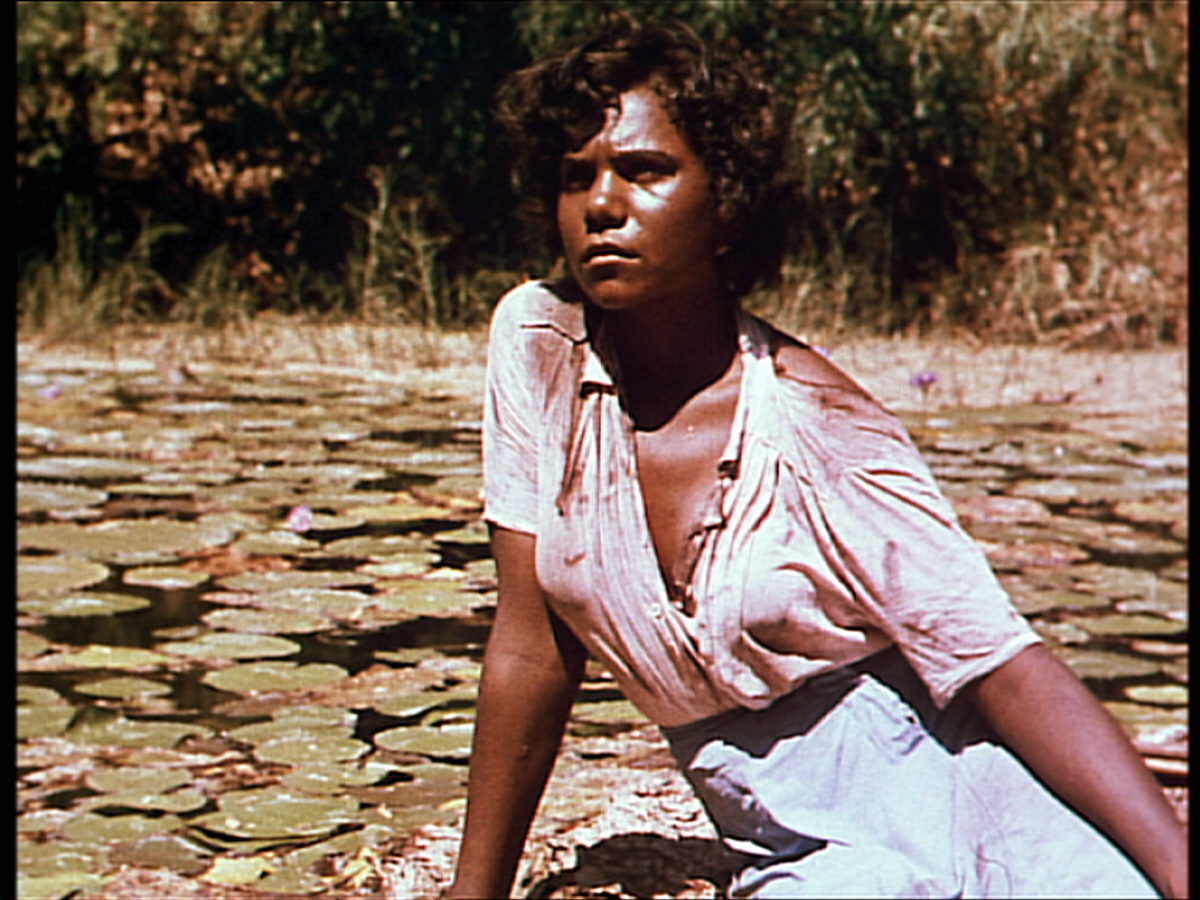
Last month the Australian film Jedda returned to the Cannes film festival, sixty years after it was first shown there in 1955. Jedda was the work of distinguished film-makers Charles and Elsa Chauvel; the first Australian feature film to be shot in colour, and the first to have Aboriginal actors in lead roles.

In the film, Jedda is an Aboriginal girl who is brought up by a white couple on a cattle station after her mother dies. She is raised in European ways, and forbidden to learn about her own culture, kept separated from the other Aborigines on the station.

When she gets older, Jedda finds herself strangely drawn to an Aboriginal man living in the bush, and following the traditional ways of his people. He abducts her, but when they come to his tribal lands, Jedda discovers that their relationship is forbidden by Aboriginal law. It’s a Romeo and Juliet scenario, and as with Shakespeare’s tale, it ends in tragedy for the star-crossed lovers.

The role of Jedda was given to Rosalie Kunoth, an Aboriginal teenager from the Northern Territory, who was studying in Alice Springs. The Chauvels gave her the screen name Ngarla for the film, which they thought looked more “authentic”. Ngarla was the name of Rosalie’s mother’s people – the Ngarla are from the Pilbara region of Western Australia. This was distressing to Rosalie, as it was culturally inappropriate.

The filming was challenging for Rosalie in many ways, and when she attended the premiere (sitting in the white section of a segregated cinema), was horrified by the film’s eroticism. Rosalie was an Anglican nun for ten years; she then left the order, married, and eventually returned to the Northern Territory. Now a respected Aboriginal elder, Rosalie Kunoth-Monks has spent her life working as an Indigenous activist, taking on leadership roles in her community. She has a daughter named Ngarla.

Jedda was a groundbreaking film in Australian cinema history, especially significant as it gained international attention and respect at a time when Australian cinema was practically nonexistent. As well as its other “firsts”, it was the first Australian film to be shown at Cannes, and nominated for the Palme d’Or.

Although it has dated in some ways, it remains a powerful and heartbreaking story. Jedda was created in opposition to the assimilationist policies of the 1950s, and the film is still relevant in light of the Stolen Generations. It helped inspire Indigenous film-maker Tracey Moffatt, whose Night Cries is a re-imagined “what might have been” sequel to Jedda.

JEDDA
In the movie Jedda, Aboriginal servants name the baby Jedda when she arrives, because she “flies in” like a “jedda bird”. Jedda appears to be from the Noongar word djida or jida, meaning “bird” (more specifically a wren), even though Noongar people are from south-west Western Australia, and the film is set in the Northern Territory. In the film, the identification with Jedda as a bird connects her to flight, to freedom and capture, and also to the spirit world.

Australian records show the name Jedda in sporadic use as far back as the 19th century, including by Indigenous Australians. I can only speculate as to where their names might have come from; in the case of Europeans, maybe as a variant of the name Jetta. It is possible that Indigenous women born before the film was made took (or were given) the name Jedda after its release. In addition, I have seen Indigenous women named Djida and Jida.

Jedda is also a plant name, as the jedda bush is native to the Cape York Peninsula region of far north Queensland. It is named after Jedda Creek, which is where it was first found, but I have not been able to discover the origin of the creek’s name – it may even have been named after the film.

Jedda is in use as a personal name for both Indigenous and non-Indigenous Australians, and is a popular name for homes, businesses, and streets. It is often used as a name for animals too, and in particular I have encountered quite a few horses named Jedda. This may be why in the children’s novel, Hating Alison Ashley by Robin Klein, the heroine’s sister Jedda pretends she is a horse. I’ve seen the name given to a boy, and it does have a bit of a unisex vibe, as it shortens to Jed.

Jedda is an Australian name made famous by a classic film, and appealing to both Indigenous and non-Indigenous parents. Although traditionally female, it could even be used for both sexes. It tends to be seen as slightly dated, yet it has never been common and is similar to Gemma, Jenna, Jed, and Jett.

ROSALIE
French form of the Latin name Rosalia, derived from rosa, meaning “rose”. Saint Rosalia was a medieval hermit who tradition says was a Norman noblewoman led by angels to live in a cave in Sicily. The saint became known in 1624, when she is supposed to have miraculously cured a plague. The saint’s name Rosalie was given to a young nun named Jeanne-Marie Rendu, and she became Blessed Sister Rosalie, who performed a lifetime of charity in the slums of 19th century Paris, and was mourned by the city when she died.

The name Rosalie came into common use in the 18th century, and was especially used in France, Germany, and Central Europe. It only became common in the English-speaking world in the 19th century, possibly because of the French courtesan Rosalie Duthé, who became the mistress of French kings and aristocrats. As a young woman she moved to London to escape the French Revolution, and gained the immensely rich George Wyndham, 3rd Earl of Egremont, as a lover. Beautiful and golden-tressed, Rosalie was apparently not overburdened with brains, and it is theorised that she is the originator of the “dumb blonde” stereotype.

The name Rosalie first joined the charts in the 1910s, debuting at #268. The name peaked in the 1940s at #141, probably because of the 1937 movie Rosalie, starring Eleanor Powell as a princess in disguise: Cole Porter’s song Rosalie is from the movie. Rosalie dropped off the charts in the early 2000s, but returned in 2009 at #519, the year after the first Twilight film was released, with Nikki Reed in the role of Rosalie Hale. Rosalie is described as being “the most beautiful person in the world”, which must have been a drawcard. The name Rosalie is apparently now in rare use again.

In the US, Rosalie returned to the Top 1000 in 2009, under the influence of Twilight. It is now #310 and rising. In the UK, the name Rosalie suddenly began rising steeply in 2009, and is now #394. Rosalie is also in the 300s in France, and is a popular name in The Netherlands, at #79.

Rosalie is a pretty, charming, European-style name with that touch of fairy-tale magic which has seen it chosen in films for a student princess and a vampire beauty. As Rose- names are becoming increasingly fashionable, it is a bit surprising that Australia seems to to be lagging behind the international trends – although it might just be that our data-collection is lagging.

I have seen quite a few birth notices for baby girls named Rosalee, Rosaleigh, Rosa-Lee and so on, and wonder if the spelling is an issue for some parents. Perhaps they worry that Rosalie will be said with the end rhyming with Lorelei, or just don’t like the idea of a name that ends in -lie. This makes me wonder if there are more Rosalies out there than meets the eye. A fantastic underused traditional choice, in any case.

POLL RESULTS
Jedda received an approval rating of 53%. 39% of people weren’t keen on the name Jedda, while 16% loved it.

Rosalie received a very good approval rating of 76%, making it one of the highest-rated names of 2015. 39% of people loved the name Rosalie, and only 4% thought it was a terrible name.


Uncommon Boys Names from the Birth Announcements of 2011-12

21 Sunday Jun 2015

Posted by A.O. in Name Themes and Lists, Requested Names

≈ 4 Comments

Tags

aliases, aristocratic surnames, Australian slang terms, Biblical names, english names, epithets and titles, famous namesakes, fictional namesakes, food names, fruit names, germanic names, hebrew names, honouring, imperial titles, Irish names, Italian names, Latin names, locational names, mythological names, name history, name meanings, name popularity, name trends, names from movies, names of bands, Old Norse names, plant names, Polish names, rare names, royal names, saints names, Scottish names, Slavic names, surname names, unisex names, US name popularity, US name trends, weaponry terms

Billy-Slater-5941649Augustus
The Emperor Augustus was the founder of the Roman Empire and its first emperor; the month of August was named after him. His reign initiated the Pax Romana, a relatively conflict-free period which lasted for more than two centuries. Born Gaius Octavius, he was granted the title of Imperator Caesar Divi Filius Augustus, meaning “Military Commander and Caesar, the Son of God, the Venerable”, with the Augustus part meaning “venerable”, from the Latin augeo, meaning “increase, growth, honour”. Before it became an imperial title, Augustus was an epithet used to signal something that was sacred, and the title was adopted by the Holy Roman Emperors in the Middle Ages. Augustus has been a favourite name amongst European royalty, and traditionally used by the Hanoverians in the British monarchy. Hazel has shot into the Top 100 since The Fault in Our Stars, and I wonder if it could also boost regal Augustus, as this is the name of Hazel’s love interest? The name is already rising in the US, so maybe. Gus is a popular short form, although I have seen a lot of interest in Augie because of the Australian rock band Augie March, named for a character in a Saul Bellow novel.

Brasco
Scottish surname referring to someone from the village of Brisco in Cumbria, once part of the Strathclyde kingdom of Scotland. The place name comes from the Old Norse for “wood of the Britons”. Also an extremely rare Italian surname which is probably from the Germanic brakia, meaning “struggle”, used as a nickname. The name is well known because of the undercover alias Donnie Brasco used by FBI agent Joseph Pistone during the 1970s: his autobiography inspired the movie Donnie Brasco, with Johnny Depp in the title role. It has an unfortunate meaning in Australia, as brasco is slang for “toilet”, from the manufacturer Brass Co. Brasco is an extremely cool-sounding name, and as for the toilet association – better tell everyone to just forget about it!

Casimir
Latinised form of the Polish name Kazimierz, from the Slavic for “to destroy fame”, referring to someone who annihilates their opponent in battle so completely that they lose all honour. Four medieval rulers of Poland have been named Casimir, and St Casimir, the son of Casimir IV, is the patron saint of Poland and Lithuania. Kazimierz is a reasonably popular name in Poland, but Casimir is rare around the world, even in countries with high immigration from Poland. However, this is a handsome heritage choice, not so different from fashionable Casper and hip Caspian, with Caz as the obvious nickname, although Cass and even Cash seem possible.

Fintan
Irish name thought to mean “white fire”. In Irish mythology, Fintan mac Bóchra was a seer who accompanied Noah’s granddaughter to Ireland before the Great Flood. When the floodwaters hit, his family were all drowned, but Fintan managed to survive under the sea in the form of a salmon for a year; he also lived as an eagle and a hawk before returning to human form. He lived for more than 5000 years after the Deluge, becoming the repository of all wisdom. Once Christianity arrived in Ireland, Fintan decided to leave the world of mortals with a magical hawk who was born at the same time as he. There are a staggering 74 Irish saints named Fintan, which shows what a common name it must have been, and it is still in regular use in Ireland. The popular boy’s name Finn, and all the similar names, such as Finlay and Finnian, make this seem on trend.

Gage
English surname which can be related to the word gauge, meaning “measure”, and would have started as an occupational surname for someone who checked weights and measures. It can also be an occupational surname for a moneylender, as gage meant “pledge” – that which the person would put up as surety against the money loaned (as when objects are pawned). Its related to the words wage and mortgage, and also to the word engage: when you get engaged to someone, you make a pledge to them. Gage is an aristocratic surname; Sir William Gage first introduced the plum-like greengage into England in the 18th century, which is where its English name comes from. Gage has been used as a personal name since the 18th century, originating in the west country. It first joined the US charts in 1989, the same year that Stephen King’s Pet Sematary was made into a horror film; the protagonist’s toddler son is named Gage, played by Miko Hughes (from Full House). Although Gage takes on a particularly macabre role in the story, the cuteness of little blond Miko must have had an effect. Still in fairly common use in the US, Gage is a rare name in Australia and the UK – its similarity to the word gauge, used in the context of guns, makes this an on-trend weaponry name.

Loki
In Norse mythology, Loki is a mysterious figure, sometimes depicted as a trickster or god of deceit. Other times he is a troublemaker, or commits outright evil. Although said to be one of the giant folk, he is sometimes numbered amongst the gods, and seems to have been on friendly terms with them at some point. However, after many acts of mischief and malice, they punished him by having him bound by the entrails of one of his sons, with a serpent dripping venom on him, making him writhe in pain, which causes earthquakes. It is foretold that at the end of the world, he will slip free from his bonds and fight against the gods on the side of the giants, and be slain. Fittingly for such an enigmatic character, the meaning of Loki isn’t known. However, he is also called Lopt, meaning “air”, suggesting he was associated with that element. In Scandinavian folklore, the phenomenon where the air shimmers on a hot day is said to be caused by Loki. The name has been used more often since the Marvel comics world was brought to life on film, with Loki as a super-villain played by Tom Hiddleston. Hiddleston portrays a complex, vulnerable, intelligent character whose charisma and style has won him legions of fans. Not only a cute-sounding mischievous name, Loki is quite similar to popular names like Luca and Lachlan, so it doesn’t seem strange.

Nazareth
Biblical place name; in the New Testament it is described as the home town of Jesus and his family. It’s also a title, because Jesus is often called Jesus of Nazareth. In early times, Christians were called Nazarenes (“people of Nazareth”) by non-Christians, and the modern Jewish word for Christians is notzrim, while in the Quran Christians are known as naṣārā – all coming from the name Nazareth. Archaeologists think that Nazareth would have been a small, insignificant village at the time of Jesus; today it is a city in northern Israel with most of its citizens Arabs, both Muslim and Christian. A place of Christian pilgrimage, it also has several sites of Islamic significance. The meaning of the city’s name is uncertain – it may come from the Hebrew for “branch”, or “watch, guard, keep”, implying it was originally on a hill, or protected in a secluded spot. Nazareth has been used as a personal name since at least the 16th century, and is of Puritan origin. Originally used mostly for girls, overall it has been given fairly evenly to both sexes, and has never been very common. An unusual Biblical name which is overtly Christian.

Roland
Derived from the Germanic name Hruodland, translated as “famous land”, or perhaps “fame of his country”. Roland was an 8th century Frankish military leader under Charlemagne, responsible for defending France against the Bretons. It is recorded that he was killed at the Battle of Roncevaux Pass in northern Spain by a group of rebel Basques. He became a major figure in medieval legend, and his death an epic tale of a Christian hero slain in battle against Muslims (the real Roland was killed by Christians, although Charlemagne was engaged in a war against Islamic forces in Spain). The 11th century La Chanson de Roland (The Song of Roland) describes Roland fighting a rearguard action against thousands of Muslims with a magical sword given to Charlemagne by an angel. Against the sensible advice of his best friend Oliver, Roland proudly refuses to call for reinforcements until it is too late, then dies a martyr’s death before angels take his soul to Paradise. In an English fairy tale based on a Scottish ballad, Childe Rowland is a prince who rescues his sister from the Dark Tower of the King of Elfland; the story is mentioned in Shakespeare’s King Lear. It helped inspire the poem Childe Roland to the Dark Tower Came by Robert Browning, and in turn this informed Stephen King’s fantasy series, The Dark Tower, with Roland Deschain as the flawed hero. Roland was #107 in the 1900s and continued falling until it left the charts altogether in the 1990s. This is a traditional underused name which is heroic and noble.

Slater
English surname referring to someone who worked with slate, especially in laying slate roof tiles. The surname comes from Derbyshire, and although it is of Norman-French origin, possibly existed before the Conquest. It has been used as a personal name since the 17th century, and from the beginning was associated with Derbyshire and the Midlands, which has a long history as a centre for slate quarrying. An unfortunate association in Australia is that slater is another word for a wood louse. The surname has several sporting namesakes, including former cricketer and media personality Michael Slater, rugby league star Billy Slater, and American surfing champion Kelly Slater. That probably helps explain use of the name Slater at present, and it seems like a tougher, edgier version of Tyler.

Willoughby
English surname after a village in Lincolnshire, meaning “homestead by the willows, settlement by the willows”. Willoughby’s main claim to fame is that it was the birthplace of John Smith, who was one of the leaders of the Virginia Colony in early colonial America, and connected with the Native American girl known as Pocahontas. Willoughby is an aristocratic surname connected with several baronies; the family trace their lineage to a Norman knight who was granted land in Lincolnshire by William the Conqueror. Since the 17th century, the Barony of Willoughby de Eresby has been associated with the office of the Lord Great Chamberlain, who has charge of the royal apartments and hall at Westminster Palace, and plays a major role at coronations: the current baroness was one of the maids of honour at Queen Elizabeth’s coronation. Willoughby is also a suburb of Sydney on the Lower North Shore, first settled as farmland under Captain Arthur Phillip. Some people believe Surveyor-General Sir Thomas Mitchell chose the suburb’s name in honour of Sir James Willoughby Gordon, whom he had served under during the Peninsular War. In use as a personal name since the 17th century, Willoughby is a hip boy’s name which seems like a spin on popular William, while also boosted by looking like a masculine form of Willow. Will is the obvious nickname.

Thank you to Leah for suggesting the name Willoughby be featured on Waltzing More Than Matilda.

POLL RESULTS
People’s favourite names were Augustus, Willoughby and Fintan, and their least favourite were Nazareth, Brasco and Slater.

(Photo of Billy Slater from the Herald Sun)

Uncommon Girls Names from the Birth Announcements of 2011-12

14 Sunday Jun 2015

Posted by A.O. in Name Themes and Lists

≈ 3 Comments

Tags

animal names, Arabic names, Australian Aboriginal names, birth notices, celebrity baby names, Celtic names, Chinese names, Cornish names, created names, english names, famous namesakes, fictional namesakes, French names, Gaelic names, German names, Greek names, honouring, Irish names, Japanese names, Latin names, literary names, locational names, middle names, mythological names, name history, name meaning, names from films, names from video games, names of businesses, nicknames, rare names, surname names, UK name popularity, unisex names, vocabulary names, Welsh names

satine (1)

Althea
Variant of the ancient Greek name Althaea, perhaps derived from the Greek word althos, meaning “healing”. In mythology, Althaea was a queen with a son named Melager. When Melager was a baby, the Three Fates turned up, rather like the fairy godmothers in a certain tale. One said he would be noble, the second that he would be brave, but the third did the usual grumpy godmother routine, and said his life would last only as long as a certain piece of wood burning on the fire. Althaea immediately took the wood and blew it out, burying it secretly so that none should ever find it again. When Melager was grown into the brave and noble prince predicted by The Fates, he got into a quarrel while hunting, and killed his uncles. When Althaea discovered Melager had murdered her brothers, she took revenge by setting fire to the piece of wood, so that her son died. Afterwards she committed suicide. This isn’t the happiest name story ever, but the poet Richard Lovelace wrote To Althea, From Prison while imprisoned for a political protest. The famous poem is very romantic, and the name Althea has been used since the 17th century because of it, while never being very common. One attraction of this literary name is the potential to use fashionable Thea as a nickname.

Carys
Modern Welsh name derived from caru, meaning “to love”, and given the common -ys ending found in Welsh names, such as Gladys and Glenys. It has been in use since the early 20th century, and is currently #328 in England/Wales, although falling in popularity. The name gained interest as a celebrity baby name, when Welsh-born actress Catherine Zeta Jones chose it for her daughter. It is meant to be pronounced KAH-ris, but the few people called Carys I know in Australia all say their name to rhyme with Paris, and this pronunciation is even used in Wales sometimes (kuh-REES is really pushing it though). Leaving aside possible pronunciation pitfalls, this is a modern name that is feminine without being frilly.

Isolde
In medieval romance, Isolde the Fair is a stunningly beautiful golden-haired Irish princess with a gift for healing, who is married off to King Mark of Cornwall. Due to a mix-up with a love potion, Isolde falls passionately in love with Tristan, her husband’s nephew and adopted son, with tragic consequences. Tristan actually ends up married to a different Isolde, a Breton princess called Isolde of the White Hands, who he weds for the curious reason that she has the same name as his true love. Their marriage is never consummated, and fed up and jealous, Isolde of the White Hands eventually takes her revenge. The stories originally had nothing to do with Arthurian legends, but became part of them. Adapted by Gottfried von Strassberg in the 12th century, Isolde is a German translation of Iseult, used in French versions of the tale. The Welsh form of the name is Esyllt, and although there are many arguments over the name’s meaning, the most convincing theory is that it is from the Celtic for “she who is gazed upon”, to suggest an overwhelming beauty. The name Isolde has been used since the Middle Ages due to the Tristan and Isolde legend, without ever becoming common: the composer Richard Wagner, who wrote the opera Tristan and Isolde, had an illegitimate daughter named Isolde. A romantic literary name fit for a fairytale princess, you can say Isolde almost any way you like, but common pronunciations would be i-SOL-duh or i-ZOL-duh.

Jamilla
Variant of the Arabic name Jamila, the feminine form of Jamil, meaning “beautiful”. The name became better known in the English-speaking world in 1944 through the romantic fantasy film Kismet, starring Marlene Dietrich as Lady Jamilla, a captive queen who falls in love with a rascally beggar. Set in an Arabian Nightsy type world, at one point, Dietrich does an erotic dance with her legs painted gold, so the name got a rather sexy image. Jamilla works well cross-culturally, and is easy to explain to people, as it is said like Camilla with a J. The popular short form Milla is an added attraction.

Lowenna
Modern Cornish name meaning “joy”, used since the early 20th century, and in rare but fairly steady use in England/Wales. The name is something of a favourite in fiction, even being chosen for historical novels set in Cornwall hundreds of years ago, when it is unlikely the name was in use. Lowenna can be found in the US in the 19th century, where it may be a variant of Louanna, or other names based on Louisa. It was used in the stage version of Rip Van Winkle, written in 1859 (Lowenna is Rip’s daughter; in the original story, his daughter was called Judith). A drawcard is that the name is very similar to the Indigenous name Lowanna, meaning “girl, woman”, giving this name a rather Australian feel.

Lux
Latin for “light”. Lux was used as a male name in medieval Germany, as a short form of Lukas, or a corruption of the German nickname Luchs, meaning “lynx” – this is the origin of the Lux surname. Lux began to be used as an English name by the 17th century, when it was used for girls: in general, English-speakers have preferred it as a female name, although it has been used as a male name too, particularly in North America, which has a history of high immigration from central Europe. The name may be used in a Christian sense, as Fiat lux means “Let there be light”, a famous quote from Genesis to show the beginnings of creation, or even a specifically Catholic context as Lux Aeterna (“eternal light”) is used in Latin prayers to refer to heaven. However, the meaning of light is positive to almost everyone, and the name also has a science-fiction feel to it, because lux is a scientific measurement of luminosity (there is a video game character named Lux, Lady of Luminosity). The name has had publicity from the film The Virgin Suicides, with Kristen Dunst as Lux Lisbon, and from the daughter of One Direction’s stylist – once known in the press as Baby Lux, and almost a celebrity in her own right. A short, cool, luxurious-sounding name that also works well in the middle.

Posy
Can be used as a short form of other names, or with the meaning “a small bouquet of flowers” in mind. The word posy comes from poesy, meaning “poetry”, and has been used to mean a bunch of flowers since the late 16th century – a slightly earlier definition of the word was a motto inscribed inside a ring. Posy has been used as a personal name since the 18th century, and although it sounds very dainty and feminine, it has quite often been given to boys. The reason is because Posy is also a surname, after the town of Pusey in Oxfordshire, meaning “pea island”. Although the name Posy has never been very common, there are a few Posys in fiction to give it some publicity. Posy Fossil is one of the main characters in Noel Streatfeild’s Ballet Shoes, a brilliant young dancer filled with ambition. More recently, Posy Hawthorne is a sweet little sister in The Hunger Games, and in the romantic comedy About Time, Posy Lake is the protagonist’s eldest daughter. Although Posy began as a short form of Josephine, you could use it for a wide variety of names, including Sophia and Penelope – British cartoonist Posy Simmonds, from The Guardian, is named Rosemary.

Satine
In the 2001 movie Moulin Rouge!, Nicole Kidman plays the role of Satine, a Parisian cabaret star and courtesan who has never known love until she falls for a poor English writer. Satine, which is presumably a professional or stage name, is French for satin, the familiar glossy fabric – its name comes from the Chinese city of Quanzhou (once a major shipping port for silk), which was called by the Arabic name of Zayton during the Middle Ages. Zayton is the Arabic word for “olive”, to symbolise peace, perhaps due to the mix of cultures living and working in the city. This makes Satin or Satine a possible honour name for Olive, weirdly enough. Satine has been used as a name since the 19th century, and although it is not a traditional French name, it has sometimes been used as a baby name in France since the film came out. A soft, exotic-sounding name with an Australian connection.

Shiseido
The name of a highly successful Japanese cosmetics company, and one of the oldest in the world, being founded in 1872. The company’s name is taken from the classic Chinese text, the I Ching (Book of Changes), and can be translated as “How wonderful is the virtue of the earth, from which all things are born!”. The company believes that this embodies its resolve to create new products that will enhance clients’ well being, and also helps to promote an image which is healthy and environmentally sound. Although there are many brand names used as personal names (such as Chanel and Armani), and some existing personal names used for brands (such as Mercedes and Nike), I have only ever seen one baby given the name Shiseido. That makes it very unusual, but it’s rather attractive, and has a lovely, carefully-crafted meaning. Pronounced shi-SAY-doh, you could use Sadie as a short form, although the baby I saw had Sass as her nickname.

Sorcha
Gaelic name meaning “brightness, radiance”. It can be found in medieval Irish documents, so it has a long history. In Ireland it is sometimes Anglicised as Sarah, because of the similar sound, while in Scotland it is more often Anglicised as Clara, which has the same meaning. The Irish actress Sorcha Cusack, who came to prominence in the 1970s as Jane Eyre, and is still on TV now as the housekeeper in Father Brown, has given it publicity in recent decades, and the name isn’t uncommon in Ireland. The correct pronunciation is SAWR-kuh or SAWR-i-kuh, but in practice a wide variety of pronunciations is tolerated in Ireland and Scotland, including SAWR-sha, which is probably easier for English-speakers, and sounds like familiar Sasha (although liable to be confused with another Irish name, Saoirse). An unusual yet very usable name.

POLL RESULTS
People’s favourite names were Carys, Isolde and Posy, and their least favourite were Lowenna, Jamilla and Shiseido.

(Picture shows Nicole Kidman as Satine in Moulin Rouge!)

Famous Name: Humphrey

10 Wednesday Jun 2015

Posted by A.O. in Famous Names

≈ Comments Off on Famous Name: Humphrey

Tags

animal names, aristocratic names, Disney names, famous namesakes, fictional bears, fictional namesakes, germanic names, honouring, Irish names, name history, name meaning, names from television, nicknames, Old English names, rare names, royal names, saints names, Shakespearean names, surname names, UK name popularity, US name popularity, vintage names

PH_greenguideJAN2_wide_networking-20140101124709427910-620x349

Famous Namesake
May 24 marked the 50th anniversary of Humphrey B. Bear‘s first television appearance, on the Channel Nine’s children’s program, Here’s Humphrey in 1965. I cannot say it was Humphrey’s birthday, because he is eternally four years old, and can never age.

He was originally named Bear Bear, but feeling that this perhaps lacked some imagination, the makers of the show ran a competition, and he was renamed Humphrey B. Bear, with his middle initial standing for Bear. I’m not sure whether the contest winner had ever heard of Walt Disney’s Humphrey Bear (who debuted in 1950), but the coincidence is remarkable.

In the show, the honey-loving Humphrey lives in a tree-house in the middle of the magic forest, and loves to explore, play, dance, spend time with friends, and use his imagination. Humphrey is prone to accidents and often makes mistakes – as the theme song says, He’s a funny old fellow who gets in all manner of strife. Humphrey never speaks, but has a companion and assistant who serves as narrator.

Here’s Humphrey is one of the most successful programs for preschoolers in Australia, and is second only to Playschool for longevity. It won Logies for Best Children’s Series, and Humphrey himself has won a number of awards, including Citizen of the Year in 1994. He still makes frequent public appearances, including to sick children in hospitals, and to promote road safety.

Humphrey made generations of children smile, but there was an inner sadness to the outwardly happy bear. The first performer to play Humphrey, often considered the best of all time, was a talented actor, dancer and playwright named Edwin Duryea – aptly nicknamed “Teddy”.

Constrained by the anonymity of the role, he came to resent it, and led a lonely life. Teddy died a few years ago, and with no known family, was given a pauper’s funeral (Channel Nine wouldn’t pay to bury the actor who had made Humphrey a star). There are no photos of Edwin as Humphrey, as it is considered sacrilege to dispel the illusion that Humphrey isn’t “real”.

There is no doubt that playing Humphrey could be challenging: the bear suit is very hot, just for a start. That may not be a problem in Humphrey’s future, as discussions are underway to turn Humphrey B. Bear into an animated series – and if it goes ahead, he will have a voice at last!

Name Information
Humphrey is derived from the ancient Germanic name Hunfrid, which probably means “to grant peace”, but is often translated as “peaceful warrior”.

There is a 9th century French saint called St Hunfrid, and because of him the name Humphrey was introduced to England by the Normans, where it quickly overtook the Old English form, Hunfrith. In Ireland, it was used to Anglicise Amhlaoibh, which is the Irish form of Olaf.

The name Humphrey was a common one amongst the Norman aristocracy, and one of the first bearers to come to England was the strikingly named Humphrey with the Beard, who fought at the Battle of Hastings. His nickname came about because it was unusual for Normans to have a beard at that time – the fashion was for a clean-shaven look. Bearded Humphrey was the founder of the noble de Bohun family, and his name became traditional amongst the Bohuns.

One of their line was Humphrey of Lancaster, called the “son, brother, and uncle of kings”. He was the son of King Henry IV by his wife Mary de Bohun, the brother of Henry V, and the uncle of Henry VI. Romantic and chivalrous, he was a successful military strategist and diplomat, and a scholarly patron of the arts. Popular with the public, he was disgraced when his second wife was found guilty of witchcraft (she consulted an astrologer and sought herbal fertility treatment). He appears as a character in Shakespeare’s Henry VI – one of the few historical people to be shown in an almost completely positive light.

A famous namesake of modern times is American film star Humphrey Bogart, an iconic leading man of the 1940s who appeared in such classics as The Maltese Falcon and Casablanca. He usually played a cynical tough-guy character, who would prove in the end to have his heart generally in the right place. A true screen legend, he is often regarded as the greatest Hollywood actor of all time. Humphrey Bogart was named for his mother’s maiden name – he was the son of artist Maud Humphrey.

The name Humphrey is a favourite for all kinds of animals, both in real life and in fiction. One example is the cat Humphrey, who was chief mouser at Number 10 Downing Street for many years, until apparently ousted by the Blairs. Cat Humphrey was named after Sir Humphrey Appleby, the urbanely Machiavellian bureaucrat from Yes, Minister and Yes, Prime Minister. The name has also been given to a real life humpback whale, and a camel on The Simpsons, because the name starts with the word hump.

Although never going out of use, the name Humphrey peaked in the 19th century, and isn’t very common. It has never charted in Australia, and is rarely seen today, although there are many examples in historical records. In England/Wales, Humphrey peaked in the 1860s in the mid-100s; in 2013, 20 baby boys were named Humphrey. In the US, Humphrey peaked in 1893 at #650, leaving the Top 1000 a year or two later. Last year less than 5 babies received the name Humphrey in the US.

Humphrey is a rare vintage name, and one that seems rather cuddly and lovable – which is probably why it’s often been chosen for animals, such as friendly bears! It’s an interesting, upper class, and somehow quite a sweet name, but I’m not sure if Humphrey B. Bear is much help to it. Apart from the familiar song about the “funny old fellow”, there has been a rather mean tendency to poke fun at the iconic bear, and even to make lewd jokes at his expense. With the possibility of Humphrey returning in animated form, will this help give the name more publicity, or make it less appealing?

POLL RESULTS
Humphrey received an approval rating of 32%. People saw the name Humphrey as old-fashioned and comical (19%) and too strongly associated with Humphrey B. Bear (15%), while 18% found the “hump” in the name off-putting. However 8% of people thought it was a vintage charmer.

← Older posts
Newer posts →

Enter your email address to follow this blog

Categories

Archives

Recent Comments

A.O.'s avatarwaltzingmorethanmati… on Zarah Zaynab and Wolfgang…
Madelyn's avatarMadelyn on Zarah Zaynab and Wolfgang…
JD's avatardrperegrine on Can Phoebe Complete This …
A.O.'s avatarwaltzingmorethanmati… on Rua and Rhoa
redrover23's avatarredrover23 on Rua and Rhoa

Blogroll

  • Appellation Mountain
  • Baby Name Pondering
  • Babynamelover's Blog
  • British Baby Names
  • Clare's Name News
  • For Real Baby Names
  • Geek Baby Names
  • Name Candy
  • Nameberry
  • Nancy's Baby Names
  • Ren's Baby Name Blog
  • Sancta Nomina
  • Swistle: Baby Names
  • The Art of Naming
  • The Baby Name Wizard
  • The Beauty of Names
  • Tulip By Any Name

RSS Feed

  • RSS - Posts

RSS Posts

  • Celebrity Baby News: Melanie Vallejo and Matt Kingston
  • Names from the TV Show “Cleverman”
  • Can Phoebe Complete This Sibset?
  • Zarah Zaynab and Wolfgang Winter
  • Baby, How Did You Get That Name?
  • Celebrity Baby News: Media Babies
  • Celebrity Baby News: Adelaide Crows Babies
  • Celebrity Baby News: Chris and Rebecca Judd
  • Names at Work: Name News From the World of Business and Employment
  • Celebrity Baby News: Sporting Round Up

Currently Popular

  • Celebrity Baby News: Alisa Camplin and Oliver Warner
  • Rare Boys Names From the 1950s
  • Sad Celebrity Baby News (contents may cause distress)
  • Celebrity Baby News: Jacinta Allan and Yorick Piper
  • Celebrity Baby News: Nicki Gemmell and Andrew Sholl

Tags

celebrity baby names celebrity sibsets english names famous namesakes fictional namesakes honouring locational names middle names name combinations name history name meaning name popularity name trends nicknames popular names saints names sibsets surname names twin sets unisex names

Blog at WordPress.com.

Privacy & Cookies: This site uses cookies. By continuing to use this website, you agree to their use.
To find out more, including how to control cookies, see here: Cookie Policy
  • Subscribe Subscribed
    • Waltzing More Than Matilda
    • Join 517 other subscribers
    • Already have a WordPress.com account? Log in now.
    • Waltzing More Than Matilda
    • Subscribe Subscribed
    • Sign up
    • Log in
    • Report this content
    • View site in Reader
    • Manage subscriptions
    • Collapse this bar
 

Loading Comments...