• About
  • Best Baby Names
  • Celebrity Baby Names
  • Celebrity Baby Names – Current
  • Celebrity Baby Names – Past
  • Featured Boys Names
  • Featured Girls Names
  • Featured Unisex Names
  • Links to Name Data
  • Waltzing on the Web

Waltzing More Than Matilda

~ Names with an Australian Bias of Democratic Temper

Waltzing More Than Matilda

Tag Archives: famous namesakes

Family Criticism Has Made Her Anxious About Baby Names

15 Saturday Aug 2015

Posted by A.O. in Naming Assistance

≈ 7 Comments

Tags

changing names, choosing baby names, Clare's Name News, family interference, famous namesakes, Irish names, middle names, sibsets

brace-yourselves-criticism-is-coming

Sinead and William have two small daughters named Orla and Freya, and would love another child. Although they aren’t expecting yet, Sinead is already anxious about choosing baby names due to the reactions they got from William’s family with the first two names.

Criticisms of the names Orla and Freya have ranged from ignorant (the names are “masculine” or “old lady” names), to ridiculous (“It sounds fat”), to vulgar (fancied similarities between the names and obscene words). The criticism is ongoing even after a year or two, and they always gleefully pass on any silly or mean comments they receive about the names from others (“Mrs Tenby mixed Orla up with orca!”).

When they’re not name bullying their own flesh and blood, William’s family are nice, sane, ordinary country people, the salt of the earth and pillars of their community. They don’t have much of a filter, and distrust anything unfamiliar. They kept pointing out to Sinead and William how all the nice girls’ names were in the Top 10, and wouldn’t they prefer Chloe and Georgia?

Sinead has tried to express how she feels to her in laws, and explain why they chose the names, but the response is always along the lines of: You shouldn’t have picked ugly, weird names for your children if you didn’t want people to say that they’re ugly and weird.

William loves their daughters’ names, and is proud of them. When Sinead almost gave in to the name nagging and chose a Top 50 name for their first daughter, William insisted they go with the name they actually loved. However, he feels that his family have their hearts in the right place, and are only being honest. He thinks Sinead shouldn’t be too sensitive about a bit of family teasing.

Sinead’s background is slightly different to William’s. Her parents are Irish immigrants, and she grew up in the suburbs of a large city. She loved that her mum and dad named her Sinead Euphemia, a name that stood out amongst her friends and classmates. Growing up, Sinead was confident enough to correct children and adults on the pronunciation of her name, and enjoyed discussing her name with others.

However her little sister Aoife Catherine had a very different experience. Shy and reserved by nature, she felt humiliated whenever her name got mangled, and readily submitted to being called Eva to avoid any fuss. By the time she was in kindergarten, she insisted on being known by her middle name, and now goes by Kate. Her sister’s experience also makes Sinead wary of choosing anything too unusual, and fearful she may have burdened her daughters with names that could likewise cause them problems.

Sinead has a nice list of possible names that she loves, but almost every one of them makes her pause and wonder if it will be dragged through the mud by her in laws, or end up being more drama than its worth. She has already cut Saoirse, Cillian, Saskia, and Ceridwen for fear they will be “too weird” for people to cope with.

GIRLS
Maeve (her first choice, but their surname is similar to Grove – is Maeve Grove too much?)
Inez (has been told it sounds like a rude word)
Isobel
Astrid
Thea
Marion
Gwen (is Gwen Grove too alliterative?)
Sian
Carys

Middle name would almost certainly be Elizabeth, but Eleanor is a strong contender (both family names). Neither of these names sound right with Isobel, which would probably eliminate it.

BOYS
Alasdair (but feels in laws will only accept Alistair or Alastair)
Euan
Leon
Leo
Theo
Sebastian
Samuel
Lewis
Louis
Dominic
Henry
Anthony
Rowan

The middle name would be John, William, or Gordon.

Sinead feels a bit silly writing in about names for a baby who doesn’t exist yet, but she would love to get some feedback on names which isn’t from her in laws and to feel less anxiety about choosing another baby name.

* * * * * * * * * *

Sinead, I think it would be foolish for you to choose baby names based on the opinions of your in laws. As you know, their tastes are very conservative, and they are highly resistant to learning anything new. It’s a big wide world outside the cow paddock, but they don’t seem to want to know about it.

I think their comments have been appalling and unacceptable. Yet I can’t help feeling a bit sorry for your in laws. You’re a bright, highly educated, very successful woman, and without meaning to, I’m sure a hundred times you have made them feel like stupid, unsophisticated bumpkins.

You’re from the big smoke with fancy ways and book learning, and you make them look pretty small pond in comparison. I do think that they use your children’s names as a way to cut you down to size, and put you in your place.

It’s something a lot of families do, and look at this article I found on Clare’s Name News with daft reactions to baby names – even standard names like Poppy and Sebastian get absolutely hammered. I know plenty of people who’ve chosen popular names for their children, and they’re still too “weird” for the older generation.

I hope your inlaws plan to cut this out once your daughters are old enough to understand what they’re saying. However, I’m not too worried about your girls if they don’t. Because look at their parents – a mum who was a feisty little girl ready to stand up for her name, and a thick-skinned dad who says, “We love your names, and we don’t give a hoot what grandma thinks”. Not to mention some very outspoken relatives, so your inlaws might get a taste of their own medicine one day!

Another reason it would be crazy to make name decisions based on what your in laws think is that they are quite simply wrong. There’s nothing bad about the names Orla and Freya, and they don’t seem particularly burdensome. They’re pretty names with an interesting history, and they’re fairly easy to spell and pronounce.

Freya is not far out of the Top 100, so it’s not at all rare – in fact, parents often fret about using it, because “it’s getting too common” (Australian actresses Freya Stafford and Freya Tingley have given it a boost). Orla is much less common, but it’s one of those names you see often enough that it doesn’t seem outrageous: so far this year I have seen one baby named Orla. There’s also the foreign affairs journalist Orla Guerin from the BBC – have your in laws ever seen her on the news?

I wonder if you have been too busy to attend a playgroup or mother’s group in your community, because I would be surprised if you received any rude comments from other parents about Freya and Orla, or that they would have any problems with them. I’m sure they will fit in just fine with the kids in their area – I see baby names from your region quite often, and they have a pretty broad range, with several hip vintage and nature names. Freya and Orla may well have classmates called Elva, Lucian, and Fox!

Your sister’s experience with her name should give you courage rather than add to your fears, because it shows that even if someone doesn’t care for their name, it’s not a big problem. Your smart little sister was able to solve her name woes by the age of five by simply using her middle name. Mind you, I think the name Aoife would have been much harder to cope with when she was a child than it would be today: we’ve moved on so much since then. Okay, not where your inlaws live – but most other places!

I think you should make a list of names that you and William like, and not bother with what your inlaws will think of them. Clearly they’re not going to be happy unless you choose something like Jack or Sophie, and are probably going to make unpleasant comments no matter what name you pick. Besides, they’ve already got to choose their own childrens’ names – why should they get to help choose yours as well?

I feel a bit sad you’ve eliminated Saskia based on some silly comments from your inlaws. It’s such a pretty name, and it’s rather fashionable at the moment. Actress Saskia Burmeister has given it a boost, and there’s also been a popular kid’s TV series featuring a teenager named Saskia. Saoirse isn’t that uncommon either – there’s a couple of young actresses with this name, including Saoirse Ronan. It would probably have a couple of pronunciation issues though.

Maeve seems like a wonderful choice – fashionable, Irish, goes well with Orla and Freya, and easy to cope with. Maeve Grove is a bit awkward, but I don’t think it’s necessarily a dealbreaker. I do think Gwen Grove is too much though: it’s a real tongue-twister, and sounds like Glengrove with a lisp. Inez doesn’t sound like a rude word to me, unless I’m either mispronouncing the name or the rude word! However, I’m never sure how to pronounce this name, as everyone seems to say it differently. All your other choices are great, and I think Carys is a fantastic match with Orla and Freya.

Your boys’ choices are all really handsome, but quite conservative compared to the names you have picked for girls. Is that your natural name style, or have you been scared out of anything more unusual by family? Alasdair, Euan and Rowan all seem like natural matches with Orla and Freya, but any name you love will be fine.

I really think you are worrying too much, and it’s a shame that other people have spoiled what should be a joyful, exciting pastime – dreaming up names for your future baby! Don’t let them spoil it any longer.

Readers, have family or friends criticised your baby names, and if so, how did you deal with it? And what do you think of Sinead’s name choices?
Famous Name: Darcy

12 Wednesday Aug 2015

Posted by A.O. in Famous Names

≈ 3 Comments

Tags

animal names, aristocratic surnames, english names, famous namesakes, Gaelic names, Irish names, locational names, name history, name meaning, name popularity, names from songs, popular names, scientific names, surname names, UK name popularity, unisex names, US name popularity

colin

Famous Namesakes
This month it will be the 95th birthday of Darcy Dugan, who was born in Sydney on August 29 1920. Although Darcy was a career criminal who committed many armed hold-ups, he gained folk hero status as the most notorious prison escape artist in New South Wales.

Darcy spent 44 years in prison, with a death sentence commuted to life imprisonment, and made six escapes from custody in all. Legend has it that his trademark was to scrawl Gone to Gowings on his cell wall before each escape – Gowings was a popular department store, and in the slang of the time, to go to Gowings meant “to leave in haste”.

Dugan’s experience of prison brutality and police corruption led him to become a campaigner for prison reform: after being released he worked towards the rehabilitation of ex-prisoners. Darcy died in 1991, and his memoir Bloodhouse was published a few years ago, the manuscript only to be released once he and all his enemies were dead.

Another literary namesake is the author D’Arcy Niland, who wrote numerous short stories, and several successful novels, including The Shiralee, about a swagman on the road with his little girl, Buster. Niland knew this subject well, for he had wandered around rural New South Wales with his father during the Great Depression.

The writer was born Darcy Niland in 1917, and named after the Australian boxer Les Darcy, who had died the year Niland was born. D’Arcy Niland, a keen boxer himself, began researching a book about Les Darcy, which was eventually completed by his widow Ruth Park, and son-in-law Rafe Champion, both successful writers. As Darcy Dugan was only a few years younger than Niland, I suspect he was probably named after the boxer as well.

Name Information
Darcy can be a variant of D’Arcy, an English surname of French origin: it comes from the village of Arcy in Normandy, which means “bear town”. In Ireland, the name Darcy is usually from the same source, brought over by the Normans. Occasionally it is an anglicisation of the Gaelic name O’Dorchaidhe, meaning “son of the dark one”, although this is generally anglicised to Dorsey.

Darcy is an aristocratic name, with the Darcy family of Yorkshire holding noble titles since the 17th century, although the family had been prominent since the Middle Ages. The 4th and final Earl of Holdernesse was Robert Darcy, an 18th century diplomat: he was said to have been the last direct descendant of the Norman barons still in the Peerage.

His daughter Lady Amelia married “Mad Jack” Byron, the father of poet Lord Byron. Their daughter Augusta Leigh is supposed to have been in a relationship with her half-brother, and bore him a child called by her middle name Medora, after a character in one of Byron’s poems.

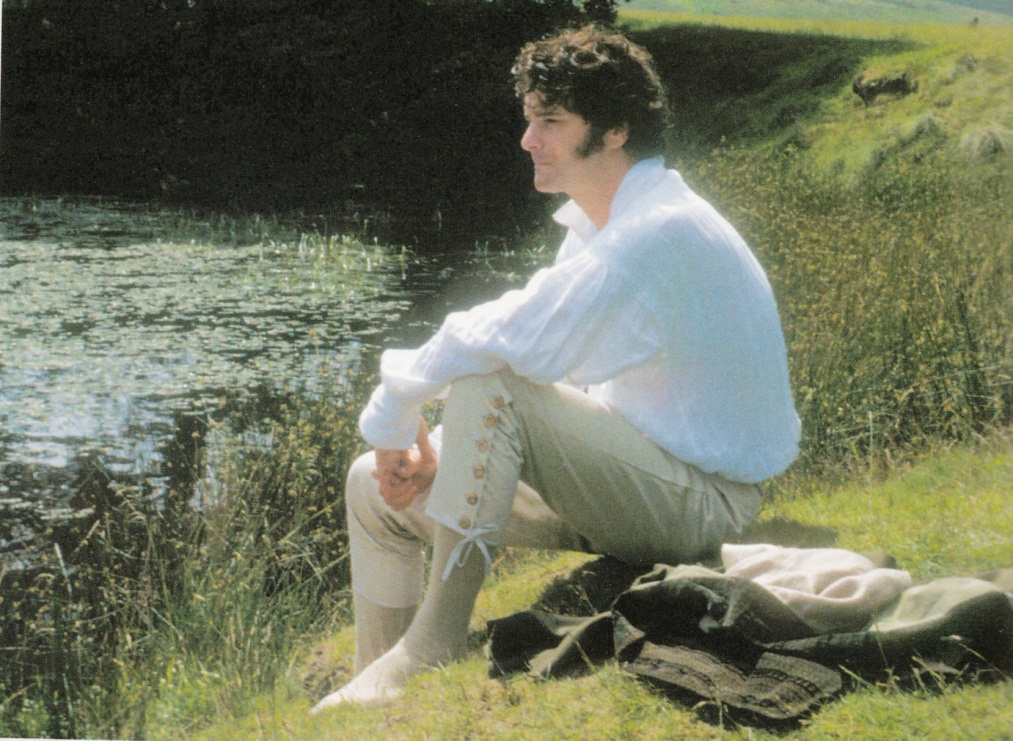
Many readers will be reminded of a purely fictional aristocrat: Mr Fitzwilliam Darcy from Jane Austen’s Pride and Prejudice. Tall, dark, handsome, rich, and aloof, he both attracts and irritates the spirited heroine Elizabeth Bennet, but she learns that Darcy can be generous and noble-spirited (and has a gorgeous estate).

Mr Darcy has entranced generations of women, been depicted on screen by actors such as Sir Laurence Olivier and Colin Firth, and inspired modern works of fiction, including Lost in Austen and Bridget Jones’ Diary. Scientists have even named a male sex pheromone Darcin in honour of the romantic hero (it attracts female mice, not witty damsels).

Jane Austen is believed to have named Fitzwilliam Darcy after both Robert Darcy and William Fitzwilliam, 4th Earl of Fitzwilliam, an important 18th century statesman and one of the richest people in Britain. Perhaps she saw her hero as continuing the line of Norman barons, while also claiming some distant share of royal blood through his Fitzwilliam ancestry.

She was presumably not to know the scandalous direction the Darcy connection would take: it may amuse some readers to know that when Medora Leigh was born a year after Pride and Prejudice was published, she was baptised Elizabeth. This is just possibly not a coincidence – Augusta Leigh was a Jane Austen fan, and Lord Byron owned a copy of Pride and Prejudice.

Darcy has been used as a personal name at least since the 17th century, and originated in Yorkshire, influenced by the aristocratic Darcy family. It was originally nearly always given to boys, but overall, Darcy has more often been a girls’ name.

Australia is apparently the only country where Darcy is primarily a male name. From the 1900s, it is listed on the charts as a unisex name, and first charted as a boys’ name in the 1950s at #319 – around the time Darcy Dugan became famous.

It went off the charts altogether in the 1960s and ’70s, returning in the 1980s at #434, when Darcy Dugan was released from prison, and D’Arcy Niland’s The Shiralee was made into a mini-series. It then climbed steeply, making the Top 100 for the first time in 1997 at #77 (not long after the Pride and Prejudice mini-series). It never got any higher than its initial position, remaining in the bottom quarter of the Top 100.

Last year it dropped off the national Top 100, and the Top 100 in Victoria, Queensland and the Australian Capital Territory. It is currently #97 in New South Wales and #87 in Tasmania. Darcy is around the 400s as a girls’ name, but if you included variants such as Darci and Darcie would be somewhat higher.

Darcy joined the UK Top 100 for the first time in 2013; it is #93 for girls and rising. In the UK, 28 baby boys were named Darcy as opposed to 588 baby girls. Darcey is even more popular for girls in the UK, at #84 and rising – the ballerina Darcey Bussell (born Marnie Crittle) has been a major influence on the name. Darcey is one of her middle names, while Bussell is the surname of her Australian adoptive stepfather – her biological father was the Australian designer John Crittle, descended from the first free settler to Australia. Spelling variants make this name even more common for girls in Britain.

In the US, Darcy has not charted since the mid 1990s. It peaked for girls at #349 and for boys at #869, both in 1968 (the song Darcy Farrow was released in 1967 by George Hamilton IV, about a girl named Darcy; the same year the sci-fi novel Too Many Magicians was published, featuring a detective named Lord Darcy, so it was on the radar for both genders). Last year in the US there were 183 baby girls named Darcy and 12 boys, but if you include spelling variants it is even more overwhelmingly a female name.

With such manly namesakes as Les Darcy, Darcy Dugan, and D’Arcy Niland, you can see how this unisex name became all-boy in Australia. But is it possible for it to follow international trends and become a girls’ name in the future? In a word, yes. It is currently falling in use for boys while climbing for girls, and has never peaked higher than #77. Ashley peaked at #60 for boys, and became far more common as a girls’ name, so it’s happened before. In the meantime, this is a name that seems just right for either a Mister Darcy or a Miss Darcy.

POLL RESULTS
Darcy received a creditable approval rating of 70%. People saw Darcy as cute and spunky (15%), cool and classy (12%), and romantic and dreamy (10%). However, 7% thought it seemed downmarket and lower class – as opposed to the 6% who saw it as yuppy and snobbish!

72% of people thought Darcy was better as a boy’s name, while 28% preferred it as a name for girls.

(Photo shows Colin Firth as Mr Darcy in the 1995 TV mini-series of Pride and Prejudice)

Celebrity Baby News: Pretty Polly and Sweet Sunday

09 Sunday Aug 2015

Posted by A.O. in Celebrity Baby News

≈ 5 Comments

Tags

celebrity baby names, celebrity sibsets, famous namesakes, honouring

b8839622z.1_20150802102744_000_ge59pt2e.2_0-1arr0cq

Actress Lucy Durack, and her husband Christopher Horsey, welcomed their first child on June 11 and have named their daughter Polly Gladys [pictured]. Lucy is a stage actress most famous for playing the role of Glinda the Good in Wicked, and Elle Woods in the musical theatre version of Legally Blonde, for which she won Best Actress at both the Sydney Theatre Awards and the Helpmann Awards. She has often appeared in other stage productions, films, and television, and has created a number of audio books, including for her own pioneering family story, Kings in Grass Castles, by famous West Australian author Mary Durack (no confirmation if the name Polly is a nod to Dame Mary Durack). Christopher is a choreographer.

Businessman and professional gambler David Walsh, and his wife Kirsha Kaechele, welcomed their first child on July 20 and have named their daughter Sunday. Sunday is named after the famous arts patron Sunday Reed, whose name has been covered on the blog. David and Kirsha shared a special moment at the Heide Museum of Modern Art co-founded by Sunday Reed, which seems to be the inspiration for her name. David is the founder and owner of the acclaimed Museum of Old and New Art in Hobart, affectionately known as MONA. Kirsha is originally from the United States, and is an artist, art curator, and founder of the Life is Art Foundation. David has two adult daughters named Jamie and Grace from previous relationships, who are Sunday’s sisters.

These are two lovely fashionable names that may appeal to artistic souls and free spirits. I note that this is the second celebrity baby on the blog who was named for Sunday Reed after a special moment at the Heide (Kate Langbroek had an epiphany with a rockmelon there, and doesn’t appreciate other celebrities or other parents using the name Sunday for their children). The Heide is clearly one of those places with a spot of baby naming magic!

Famous Names: Bronwyn and Dolores

05 Wednesday Aug 2015

Posted by A.O. in Famous Names

≈ 5 Comments

Tags

controversial names, dated names, famous namesakes, fictional namesakes, Harry Potter names, Marian titles, modern names, name history, name meaning, name popularity, name trends, names from films, nicknames, Spanish names, UK name popularity, US name popularity, Welsh names

BronwynBishopDolores

Famous Namesake
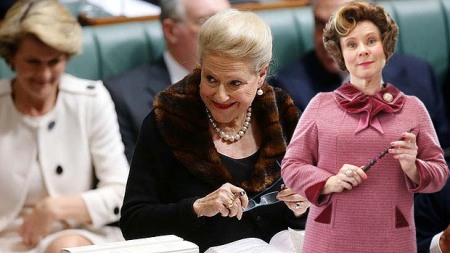
Bronwyn Bishop resigned as Speaker of the House two days ago, after a furore over her use of travel allowances. Usually when someone is caught out abusing the system they quickly hand in their notice and quietly slip away before too many questions can be raised. However Ms Bishop refused to admit she had done anything wrong and resisted all pressure to resign for three weeks, which meant we had plenty of time to hear about her extravagant travel expenses.

They included a $6000 private flight from Sydney to Nowra for a Liberal party fundraiser, and more than $1000 on a limo so she could attend a theatre premiere in her home city. There was also the $600 return flight to attend colleague Sophie Mirabella’s wedding in Albury, and $130 000 spent on overseas travel to Europe and Asia, including $1000 a day on private limos.

The one that really left people gobsmacked was a $5000 chartered helicopter to take her from Melbourne to a Liberal party fundraiser in Geelong and back – a trip which takes only about an hour each way by road. Referred to as Choppergate, this was the scandal that brought Ms Bishop down. She wasn’t a first-timer at this: in the 1980s she once hired a helicopter at taxpayer’s expense to transport her from a fete to a dog show.

Ironically, back in the 1990s Bronwyn Bishop rose to fame as the face of public accountability when she was on the Senate estimates and joint public accounts committee. This sounds dull and usually was – an assessment of government departments and where they spent their appropriations. Under Bishop, committee meetings became virtual show trials where senior public servants were routinely interrogated, hectored, and taunted for their spending habits.

When Bronwyn Bishop was appointed Speaker in 2013, the Opposition described her as Dolores Umbridge, after the infamous headmistress from the Harry Potter series. This didn’t refer to a penchant for hair ribbons or interest in fluffy kittens, but indicated a fear she was to be a corrupt tool of government. This turned out to be not unfounded, for in her term of office Ms Bishop showed considerable bias, ejecting 393 Opposition members from the house, but only 7 of her own party.

Bronwyn Bishop was appointed to the role of Speaker by the Prime Minister, who describes her as a close personal friend, and himself as her ideological love child. This has turned out to be yet another damaging captain’s call, and no doubt the next Speaker will be the choice of his party.

It’s been a spectacular fall from grace for the longest-serving woman in Parliament, who once boasted she would be a future Prime Minister. Now the Prime Minister admits her parliamentary career is at an end.

BRONWYN
Bronwyn is a variant of Bronwen, a modern Welsh name meaning “white breasted, fair breasted”. The meaning is possibly less important than the fact it is very similar to the medieval Welsh name Branwen, meaning “fair raven”; in Welsh legend, Branwen was the sister of Brân the Blessed. Both Bronwen and Bronwyn have been used since the 19th century.

There is a popular notion that Bronwyn is the masculine form of Bronwen, since in Welsh the suffix -wyn is usually attached to masculine names. In fact, you can get into some quite nasty arguments about it on baby name forums, with angry people telling you that you have ignorantly given your daughter Bronwyn a specifically male name.

However if you look at the records, Bronwyn was always used as a girl’s name in Wales right from the start, with the -wyn spelling just a variant, not an indication of gender. Interestingly, the few examples of men named Bronwyn I found, dating from the 20th century, were all from outside Wales. I suspect their parents read up on the Welsh language and “corrected” Bronwyn from feminine to masculine, possibly being a bit too clever in the process and giving their sons a traditionally female name.

While Bronwen was originally by far the more common spelling in the 19th century, Bronwyn overtook it in the 20th. It was popularised by the 1941 film How Green Was My Valley, with Anna Lee in the role of Bronwyn, the narrator’s sister-in-law that he loves. The film is based on the 1939 novel by author Richard Llewellyn, and is set in a Welsh mining village. In the book the sister-in-law’s name is Bronwen, and I’m not sure why Hollywood decided to spell her name with a Y. Perhaps they thought it looked more feminine.

The name Bronwyn first joined the charts in the 1940s, coinciding with the release of the film; it made its debut at #143. (Bronwyn Bishop was born in 1942, the year after the film came out). By the 1950s it had joined the Top 100 and peaked in 1964 at #53. It left the Top 100 in 1980, and hasn’t charted since the late 2000s.

For some reason, Bronwyn has only been popular in Australia: it doesn’t seem to have ever been a Top 100 name in the UK, and has never even charted in the US. In 2013, there were 23 baby girls named Bronwyn in England/Wales, and last year there were 49 baby girls named Bronwyn in the US. Numbers of Bronwyns seem fairly stable in both countries.

Bronwen has never charted in Australia. In the UK in 2013 Bronwens and Bronwyns were roughly equal (21 babies named Bronwen), while in the US there were 6 Bronwens, a lot less popular than Bronwyn.

Although Bronwyn is now a dated name, the sound of it seems to have led to the popularity of similar-sounding Bronte, which joined the Top 100 just as Bronwyn slipped off the charts. Perhaps even the rise of Bonnie owe something to Bronwyn, since a common nickname for Bronwyn is Bronnie.

DOLORES
Dolores is a Spanish name meaning “pain, sorrow”. It is taken from one of the titles of the Virgin Mary, Nuestra Senora de Dolores, or Our Lady of Sorrows. The title refers to the Seven Sorrows of Mary, which are seven sad events in Mary’s life connected with her son Jesus. They begin with his Presentation in the Temple, and the prophecies made about him, and end with his body being placed in the tomb.

The feast day for Our Lady of Sorrows began in the Middle Ages, and was originally the third Sunday after Easter; today it is September 15. It’s possible that the name Dolores was first given to girls born around this feast day, although I can’t find any evidence for this.

The feast was rarely celebrated until the 16th century, and by the 17th century Dolores had become a common name in Spanish-speaking countries, although occasionally also used by Catholics in other countries. It came into common use in the English-speaking world in the 19th century, and was a particular favourite with Irish Catholics.

Dolores has never charted in Australia. In the United States, Dolores joined the Top 100 during the 1920s, the era when Mexican actress Dolores del Rio flourished as a Hollywood star. The first Latin American actress to become famous internationally, Dolores was exquisite, elegant, and gracious.

The name left the US Top 100 in the 1940s, after Dolores de Rio was accused of Communism during the McCarthy era, and continued her career in her homeland. The name left the charts in the 1980s, after Dolores del Rio’s death, but Dolores is still remembered as one of the classic Hollywood beauties, and a great lady.

During Ms del Rio’s heyday this name must have been exotic and glamorous, but now seems dated and frumpy. The evil Dolores Umbridge from Harry Potter has not helped its image: her name was chosen because it sounds similar to the English word dolorous, which can be understood as “causing pain or grief” (it has the same Latin source as the name Dolores). However, Lola is a popular pet form of Dolores, and I can see Lolita, Dolly and Lolly becoming fashionable in the future.

Two names connected with Hollywood beauties which have fallen from favour, but are probably more influential on current trends that we give them credit for. Which one will score higher, I wonder?

POLL RESULTS
Bronwyn received an approval rating of 44%. 39% of people weren’t keen on the name Bronwyn, while 18% loved it.

Dolores received an even lower approval rating of 28%. 40% of people weren’t keen on the name Dolores, while 10% loved it.

(Photo from the ABC website)

Waltzing With … Felix

02 Sunday Aug 2015

Posted by A.O. in Waltzing with ...

≈ 3 Comments

Tags

Biblical names, European name popularity, famous namesakes, fictional namesakes, Greek names, historical records, imperial titles, Latin names, middle names, mythological names, name history, name meaning, name popularity, names of cats, New Zealand name popularity, nicknames, papal names, patriotic names, popular names, retro names, saints names, UK name popularity, US name popularity

3092894-6735042798-Knml3

Famous Namesake
I think many Australians would readily associate this name with Felix the Cat, the silent film era cartoon. One of the most recognisable cartoon characters in film history, he was the first animated character to become popular enough to attract a cinema audience.

Felix the Cat was created by Sydney-born Pat O’Sullivan, who arrived in the United States in 1910 and began working as a cartoonist. By 1916, he had opened his own cartoon studio, and around 1917 he created Felix the Cat, inspired by a cat his wife Marjorie brought into the office. Under contract to provide one cartoon a month to cinemas, by 1921 Felix was in sixty percent of North American cinemas.

Pat O’Sullivan was fiercely protective of his creation, successfully gained royalties from pirated merchandise, and took action when Walt Disney made a Felix carbon-copy called Julius. Unfortunately for Felix, Disney then went on to create a certain Mickey Mouse, who starred in early talkie Steamboat Willie in 1928. This spelled the beginning of the end for Felix, and by 1931 it was obvious that Walt Disney was going to be the big success story of cartooning.

After Pat O’Sullivan’s death in 1933, his lead animator Otto Messmer took credit for the creation of Felix. Messmer’s claim is still accepted in the United States, even though O’Sullivan was acknowledged as Felix’s creator during his lifetime. Australian film curators have pointed out that it is O’Sullivan’s handwriting on the early Felix sketches, and that kittens in an early film are given Australian accents, saying ‘lo, Mum! ‘lo Ma!

The cartoon cat that Felix was based on was called Thomas or Tom (a fairly obviously cat-related name), but Pat O’Sullivan changed his name to Felix. Apparently this was after the Australian boxer Peter Felix, who was born in the West Indies, and won the heavyweight title in the 1890s – he often wore black and was a flashy dresser. Pat had seen Peter Felix in his last big fight in 1908, shortly before he left Australia. O’Sullivan had a strong interest in boxing, and when he first arrived in New York he himself boxed for prize money.

The name Felix was a very Australian choice, because in 1836 Scottish explorer Thomas Mitchell called the lush pastureland of western Victoria Australia Felix, meaning “happy Australia, fortunate Australia”. In 1845 English travel writer Richard Howitt’s lively Impressions of Australia Felix was published, and in 1849 the Australia Felix magazine was founded.

After the colony was named Victoria in 1850, the name Australia Felix gradually dropped out of use. However, 19th century Victorian politician Jonas Australia Felix Levien provides an example of it being used as a name, and he wasn’t born until the 1870s. (I have also found someone named Australia Felix Drake in historical records).

Despite all these Australian references, I can’t help wondering if Pat O’Sullivan was also thinking of Felis, the scientific name for the cat genus, from the Latin word feles, meaning “cat”.

Pat O’Sullivan gave Felix a lucky name, and the cat brought Pat luck and success. He did not have a very happy end to his life though. His marriage became increasingly strained (it probably got off to a rocky start, as they wed while he was on bail for raping a teenage girl; he was subsequently imprisoned for 9 months), and Marjorie fell to her death from their second floor apartment in 1932. O’Sullivan’s mental faculties deteriorated due to syphilis, and he died of alcoholism a year after his wife’s death.

Name Information
Felix is a Latin name meaning “lucky, fortunate”. It was first given as a nickname to the 1st century BC Roman general and statesman Lucius Cornelius Sulla, a free translation of the Greek nickname he acquired during his military campaigns – Epaphroditos, meaning “beloved of Aphrodite”.

Whether the goddess Aphrodite was taking care of him or not, Sulla was very successful, holding the position of consul twice, and being awarded the Grass Crown, the rarest and most prestigious Roman military honour, given only to those whose actions saved an entire legion or the whole army. Like Alexander the Great, he achieved many of his victories before his thirtieth birthday, and provided the model for later Roman leaders to gain power by force.

After him, the nickname became a common one for Roman leaders to take, and several emperors adopted it as a title. The Roman procurator Marcus Antonius Felix is mentioned in the New Testament, although not in a positive way – he imprisoned Saint Paul.

Felix was a favourite name amongst early Christians, as the name can imply being in the favour of God, or blessed by God. There are masses of saints named Felix, including quite a few martyrs, and three popes with the name. Saint Felix of Burgundy was sent as a missionary to East Anglia in the 7th century, and there are several churches dedicated to him in Yorkshire and East Anglia. The village of Felixkirk in Yorkshire is named after him, and so might be Felixstowe in Suffolk.

Although more common in Continental Europe, Felix has been in use as an English name since the Middle Ages, in honour of these various saints. It is particularly associated with East Anglia and south-eastern England in general, showing the legacy of Felix of Burgundy.

Felix was #172 in the 1900s, and left the charts in the 1920s (Felix the Cat didn’t do it any good). It returned in the 1980s at #396 and climbed steadily; it’s been on and off the Top 100 since 2011. Currently it is #89 nationally, #86 in New South Wales, #78 in Victoria, #36 in Tasmania, and #54 in the Australian Capital Territory. It was one of the fastest-rising names in Tasmania and Victoria last year, and one of the nationally fastest-rising names of 2013.

In the US, Felix is #267 and rising steeply, while the UK has a similar popularity to Australia, at #91 and rising. Felix is #66 in New Zealand and fairly stable – the highest popularity of any English-speaking country. Felix is well used in Western Europe and Scandinavia, and is most popular in Austria at #4.

Handsome, intelligent, and upbeat, Felix is a name with an irresistibly positive meaning and strong Australian associations. Once seen as rather hipster, this retro name is growing in popularity, and fittingly it’s rather a favourite in the state of Victoria.

POLL RESULT
Felix received an outstanding approval rating of 93%, making it the highest-rated boys name in the Waltzing With … category for 2015. 45% of people loved the name Felix, and only 3% hated it.

Famous Name: Winifred

29 Wednesday Jul 2015

Posted by A.O. in Famous Names

≈ 8 Comments

Tags

Anglo-Saxon names, famous namesakes, middle names, name history, name meaning, name popularity, nicknames, pen names, saints names, UK popularity, vintage names, Welsh names

mp_mecca_1

Famous Namesake
Ramadan finished on July 18, and recently we saw a story in the news mentioning converts to Islam. That gave me the idea to cover one of Australia’s early Muslim converts. Her name was Jane Winifred Oaten, but she always went by her middle name.

Winifred came to Australia from London as a child around 1890, her father making a desperate attempt to break the poverty cycle through migration. Life in Australia got off to rough start before she even left, as her mother walked off the ship prior to sailing. Winifred and her father lived in severe hardship trying to wrest a miserable living from a block of land in Queensland infested with prickly pear. At an early age she was sent out to low-paid domestic service as her father succumbed to alcoholism and depression.

When barely 17 Winifred married an itinerant shearer named Charles Steger. It was an unhappy partnership, and she was forced to desert her husband and their four children after he threatened to shoot her. She worked as a barmaid, then married an “Afghan” cameleer named Ali Nuby (although Muslin cameleers were collectively known as Afghans in Australia, Winifred’s husband was actually Indian).

A kind and decent man, Ali was the great love of Winifred’s life, and she took her husband’s religion to become a Muslim; the marriage would not have been legal, as her first husband was still alive. After Ali’s death, she supported herself and their three children by working as a washerwoman in Oodnadatta, South Australia.

Winifred entered an arranged marriage to another Indian cameleer named Karum Bux, and she and her husband made a pilgrimage to Mecca, through India, in 1927. This was to prove a turning point for her. When she returned, she wrote a series of articles for a newspaper called Arabian Days: The Wanderings of Winifred the Washerwoman, under the pen name of Bebe Zatoom.

According to the articles, Winifred the Washerwoman had a most exciting time on the way to Mecca. She met Mahatma Ghandi and King Ibn Sa’ud of Arabia, and in Bombay (Mumbai), she stayed in the palace of the Khalifat, the supreme Muslim body in India, which appointed her their Australasian secretary. Pretty heady stuff for an Oodnadatta washerwoman.

She soon separated from her third husband, and the very next year after her pilgrimage was asked to become governess to the royal family of Afghanistan. By the time she got there, the king had unfortunately been overthrown, but she travelled to the Afghanistan border to find the king, and escort his queen back to Bombay. Once again, on her return she supplied a newspaper with her “reliable first-hand impressions” of these events.

Winifred the Washerwoman was soon turning out weekly serial stories called Star Dust and Soap Bubbles, and another series in a different paper as a man named Sapphire Bill from the Northern Territory. Winifred wrote 14 unpublished novels based on her life in the outback: three of them were later serialised in newspapers without payment.

In her 1969 autobiography, Winifred claimed she was born in China to unknown parents, and had been raised in a convent where she met her husband Ali. The pilgrimage to Mecca was undertaken with Ali, conveniently deleting two husbands from her life story. Winifred kept writing into her nineties, and died at the ripe old age of 98. However, as she had lied about her age, she received a telegram from the queen commemorating her 100th birthday a year before her death.

At a time when women had few choices, and poor uneducated working class women had even less, Winifred managed to lead the life that she wanted through her writing. Living in poverty and drudgery, Winifred’s make believe helped her survive a harsh environment, and it’s little wonder she preferred fantasy and fiction. Her conversion to Islam brought her romance and adventure, giving her an exoticism and glamour that no other washerwoman has ever matched.

Name Information
Winifred is the Anglicised form of the Welsh name Gwenfrewi, meaning “blessed reconciliation”; the name has become known because of a Welsh saint. According to legend, Saint Winifred was the daughter of a Welsh nobleman, while her mother was the sister of Saint Beuno, and related to royalty.

The story goes that as a teenager she was attacked in a fit of drunken lust by a local prince named Caradoc, who began to tear off her clothes. When Winifred fought back, Caradoc became so infuriated that he cut her head off. The head rolled downhill, and where it stopped, a healing spring appeared. Good old Uncle Beuno put her head back on her body, and restored her to life. Seeing Caradoc still lounging around with a “like whatever” attitude, Saint Beuno called on Heaven to punish him, and the ground promptly opened up and swallowed the would-be murderer.

Saint Beuno sat on a particular stone in the pool which had formed around the spring that had opened up from Saint Winifred’s head. Here Saint Beuno made an oath in the name of God that whoever should be in that spot and ask for something three times in the name of Saint Winifred should have their prayer granted, as long as it was good for their soul.

Saint Winifred’s Well is located in the town of Holywell, in the north-east of Wales. It has been known since Roman times, and after Winifred’s supposed decapitation in 660 was a place of pilgrimage. It is called the Lourdes of Wales, as so many remarkable cures have occurred there, and has long been named as one of the Seven Wonders of Wales. It features in the medieval poem Sir Gawain and the Green Knight.

Richard the Lionheart prayed here for the success of his crusade, while Henry V gave thanks at the well for his great victory at Agincourt. James II visited the well with his wife Mary of Modena, after several attempts in producing an heir. Shortly afterwards, Mary became pregnant with James, Prince of Wales. Queen Victoria visited the well as a child.

People of all faiths, or none, are welcome here, whether to pray for help, or to see a place of great historical interest, as it is only site in Britain to be a place of continuous pilgrimage for thirteen centuries.

Although the legend cannot be true, Saint Winifred was a real person who was a nun and abbess. Historical records pay great attention to a prominent scar on her neck, so perhaps Caradoc really did have a go at her. His brother Owain is said to have killed Caradoc in revenge for some hideous crime, and that might be it.

If you are wondering how Gwenfrewi turned into Winifred, when the name became used in England in the 16th century, Gwenfrewi was altered to look like the male name Winfred, which is Anglo-Saxon and means “friend of peace”.

Winifred was #39 in the 1900s, and left the Top 100 in the 1930s. It hasn’t charted since the 1950s. However, this seems like a name which is due for a comeback. It was voted the popular name of the 1900s that blog readers most wanted to be revived, and the short form Winnie is very hip at the moment. I do see an occasional baby named Winifred, and the fashionable Winter must be of help.

International trends suggest that Winifred, although rare, is growing in usage. There were 35 baby girls named Winifred in the UK in 2013, which is only just outside the Top 1000. The numbers of Winifreds are rising briskly in Britain. In the US there were 99 girls named Winifred (about the same number as Cleo, Rosalind and Priscilla), and the numbers are rising there too.

The name Winifred commemorates a saint connected with healing waters and prayers granted. It also recalls one of the outback’s colourful eccentrics who became the heroine of her own adventure story. I think this vintage name is adorable, seeming soft and innocent on a little girl, but mature and intellectual on a grown woman. It deserves serious consideration. Besides Winnie, nicknames include Win or Wynne, Freda, Fred, and Freddie.

POLL RESULTS
Winifred received a decent approval rating of 68%. People saw the name Winifred as strong yet whimsical (18%), a vintage name deserving of a comeback (18%), and hip and different (13%). However, 12% thought it was dated and old-fashioned, and not ready for a comeback (too late!). Only one person thought the name Winifred sounded creepy and evil.

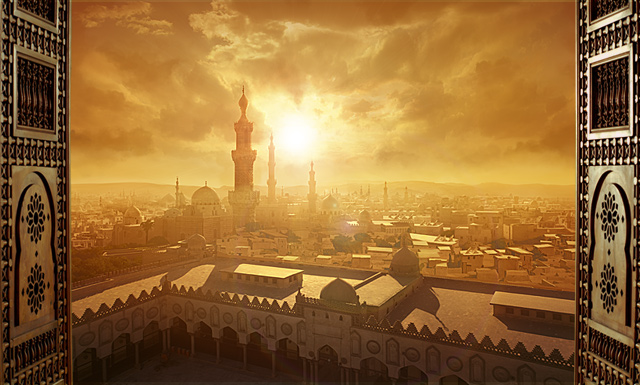
(Picture is of the city of Mecca, where Winifred Steger’s life changed direction)

Suburbs of Adelaide and Hobart Which Could Be Used as Boys Names

26 Sunday Jul 2015

Posted by A.O. in Name Themes and Lists

≈ 2 Comments

Tags

Anglo-Saxon names, aristocratic names, aristocratic surnames, astronomical names, car names, colour names, dated names, english names, famous namesakes, fictional namesakes, gemstone names, germanic names, honouring, locational names, middle names, mythological names, name history, name meaning, name popularity, names from movies, names of animals, names of ships, nature names, nicknames, Old French names, plant names, popular names, rare names, retro names, Roman names, royal names, saints names, Scottish names, surname names, tree names, unisex names, vocabulary names


OLYMPUS DIGITAL CAMERAAustin
Austins Ferry is a suburb of Hobart, named after convict James Austin. Austin and his cousin was transported to Australia in 1803, and after their sentences expired, were given small land grants on the River Derwent near Hobart. In 1818 they established a ferry service across the river, and became very wealthy. You can still visit James Austin’s original cottage. Austin is an Old French shortening of the name Agustin, the equivalent of the English Augustine, and the surname Austin has the same source. Austin was #108 in the 1900s, and left the charts in the 1950s. It returned in the 1990s at #196, the decade of the Austin Powers spy comedies with Mike Myers in the title role. Groovy, baby! It climbed steeply and joined the Top 100 in 2011. It is currently #61, and was the fastest-rising name in Queensland and a fast-rising name in South Australia last year. It was a fast-rising name in New South Wales in 2013 too, so this retro name is doing very well for itself, and is now more popular than it has ever been before.

Cornelian
Cornelian Bay is a suburb of Hobart, whose bay on the River Derwent provides anchorage for yachts; there are boathouses and a waterside restaurant along its foreshore. The first English navigator to explore the Derwent was Lieutenant John Hayes; he came ashore here in 1793, and named the bay after the semi-precious cornelian stones which he found on the beach. Cornelian (also known as carnelian) is a dark red mineral whose name is from the Latin for the cornel cherry, a flowering dogwood tree which has small dark red fruit just the colour of the gemstone. Cornelian was used in Roman times for signet rings used to seal important documents, as hot wax doesn’t stick to it. It was a gemstone often associated with courage and good luck. Cornelian has been in very rare use as a personal name since the 17th century, and overall has been given fairly evenly to both boys and girls. Not many gemstones work well as boys’ names, but this sounds very similar to Cornelius, yet seems much more up-to-date. This would also make a great middle name, and is suitable for both sexes.

Fitzroy
Fitzroy is an inner-city suburb of Adelaide, and an exclusive area overlooking the North Adelaide Parklands. The houses are mostly 19th century mansions along a few tree-lined streets, as this is where the upper class settlers lived in the city’s early days. It may have been named after Fitzroy in Melbourne, which is named after Sir Charles FitzRoy, the governor of New South Wales in the mid 19th century. Another suggestion is that it was named for historic Fitzroy Square in London, whose name comes from Charles FitzRoy, 2nd Duke of Grafton, an 18th century politician who was a distant ancestor of Diana, Princess of Wales. The English surname Fitzroy (or FitzRoy) comes from the Old French for “son of the king”, and was traditionally given to illegitimate sons and daughters of a monarch, and could be inherited as a surname by their descendants. For example, the father of the 2nd Duke of Grafton was an illegitimate son of King Charles II by his mistress Barbara Villiers. Fitzroy has been used as a personal name since the 18th century, and was sometimes used to indicate a family relationship with illegitimate royalty. Roy- (and royal) names are on trend, and this is one you could consider that has Fitz or Fitzy as the nickname.

Hobart
Hobart is the capital of Tasmania; it is Australia’s second-oldest capital city after Sydney, and is our most southern capital city, serving as a hub for Australian and French Antarctic operations. It is located on an estuary of the Derwent River at the foot of Mount Wellington, and more than half of the city is taken up with bushland, so it contains much natural beauty. A small city with many historical buildings from its colonial past, Hobart has a great deal of charm. Hobart was named after Robert Hobart, 4th Earl of Buckinghamshire: Lord Hobart was the Colonial Secretary at the beginning of the 19th century. The surname Hobart is derived from the personal name Hubert, meaning “bright mind”. Hobart has long use as a personal name, and can be found often in historical records, with it being a bit of a favourite in Tasmania – indeed one example I found was Tasman Hobart. The Ho- at the beginning is rousing yet problematic, but you could use Bart or Barty as a nickname. A patriotic choice that may work better as a middle name.

Holden
Holden Hill is an inner-city suburb of Adelaide. It was named after a road extension called Halden’s Hill in the mid 19th century, as the land the road ran through was owned by a Mr Halden. The name was corrupted into Holden Hill. Holden is an English surname after a small village in Lancashire; it comes from the Anglo-Saxon meaning “deep valley”. Its most famous literary namesake is Holden Caulfield from J.D. Salinger’s Catcher in the Rye. It’s quite likely that Salinger named the character after a friend called Holden Bowler he met while they were both working on a ship. Mr Bowler went on to run his own advertising business and was godfather to singer Judy Collins. In Australia Holden will remind people of the car company, its name coming from South Australian manufacturer Sir Edward Holden (although it is owned by General Motors). Sadly, Holden will cease production in Australia in 2017. A very uncommon name in Australia because of the car.

Jupiter
Jupiter Creek is a semi-rural suburb of Adelaide which was once part of a gold-mining area, and still a place to go fossicking. Its name was given by gold-miners, possibly after a bull named Jupiter who was fond of running away to graze there. In Roman mythology, Jupiter is king of the gods, and the god of the sky and thunder, the equivalent of the Greek god Zeus. Ruler of the heavens, he was a divine witness to oaths and the protector of the state and justice; his symbols were the oak tree, the eagle, and the thunder bolt. His name is from an ancient root meaning “O Father Sky-god”, so his name is an invocation: to speak the name of Jupiter aloud is to call upon the god. The Romans named the largest planet in the solar system after Jupiter, and believed those born under its influence to be especially fortunate. As Juno is a hip name for girls, and so is Juniper, Jupiter for boys doesn’t seem too strange. A possible issue is the movie Jupiter Ascending, which has Mila Kunis as a heroine named Jupiter.

Linden
Linden Park is an affluent suburb of Adelaide. It was named after a house and estate which was built by Sir Alexander Hay in 1861. Linden trees (Tilia) are also called lime trees, although they are not closely related to the tree which produces lime fruit. They are tall, shady trees that have great significance in Germany and Eastern Europe, where they were seen as sacred; in German folklore, the linden is said to be the tree of lovers. Lindens have often featured in stories and poems, often as a symbol of love, protection, or resurrection. In Marcel Proust’s Swann’s Way, the narrator dips his madeleine cake into a cup of lime-flower tea, which opens up a flood of memories. The word linden is from an ancient Germanic root which may mean “mild, soft”: the timber of the linden tree is soft and easily worked, making it ideal for carving. Linden has been used as a name since the 18th century, overwhelmingly for boys, and is found in Australian records quite often, mostly from around the late 19th and early 20th centuries, although I know a few men around my age named Linden. I haven’t seen it on a young child, but this is a handsome, soft-sounding tree name, not so different in sound from popular Lincoln.

Montrose
Montrose is a northern suburb of Hobart. It is named after Montrose House which was built in 1813 by a Scottish settler named Robert Littlejohn, a renowned painter, botanist and teacher. It is the third oldest house in the state, and is named after Montrose, on Scotland’s east coast. A picturesque resort town, it is regarded as a cultural centre, and known for its sculpture. The town’s name is usually thought to be from the Gaelic monadh, meaning “moor”, and ros, meaning “peninsula”. Folk etymology understands it as “mount of roses”, and the town’s Latin motto is Mare Didat, Rosa Decorat, meaning “the sea enriches, the rose adorns”. Montrose is also a surname, and the Duke of Montrose is a title in the Scottish peerage, held by the Graham family. Montrose has been used as personal name since the 18th century, and first used by the Grahams. It has been used for both sexes, but is more common as a male name. Scottish and aristocratic, this is like a cross between Montgomery and Ambrose, and has Monty as the obvious nickname.

Sorell
Sorell is a historic market town north-east of Hobart, now a dormitory suburb of the city. It is named after William Sorell, the state’s third Lieutenant-Governor. William Sorell did a good job of cleaning up the colony, which he had found in a fairly lawless and untidy position. The English surname Sorell is from the Old French nickname Sorel, meaning “chestnut”, and given to someone with reddish-brown hair. It has been in rare use since the 19th century, and is given to both sexes, although more common overall as a male name. It may be known from Sir Julian Sorell Huxley, biologist and brother of Aldous Huxley. An interesting, intelligent name that may sound too close to the word sorrow for some parents.

Stuart
Mount Stuart is a suburb of Hobart on a ridge with the wonderful name of Knocklofty. The suburb is named because of Mountstuart Elphinstone, a Scottish statesman and historian who was Governor of Bombay (now Mumbai). A ship named in the governor’s honour as the Mountstuart Elphinstone visited Hobart in 1836, bringing the welcome news that the cruel and unpopular Lieutenant-Governor George Arthur was ordered to return to London. In celebration of getting rid of him, two roads were named Mount Stuart Road and Elphinstone Road, and eventually the area became known as Mount Stuart. Mountstuart Elphinstone was probably named after Mount Stuart House on the Isle of Bute in Scotland, the seat of the Stuarts of Bute. They are descended from Robert II of Scotland, the first of the Stuart kings (the Elphinstones are related to the Stuarts). The name of the Stuart dynasty comes from Stewart, the Scottish form of steward, meaning a governor. The first of this surname was Walter Stewart of Dundonald, High Steward of Scotland. The Stuart dynasty ended up ruling Great Britain for more than a century, and it’s because of them that Stuart was used as a personal name. Stuart was #135 in the 1900s, joined the Top 100 in the 1940s and peaked in 1969 at #31. It left the Top 100 in the 1990s and hasn’t charted since 2010. Stewart was less popular, never reached the Top 100, and hasn’t charted since the early 2000s.

POLL RESULTS
People’s favourite names were Linden, Austin and Holden, and their least favourite were Montrose, Jupiter and Hobart.

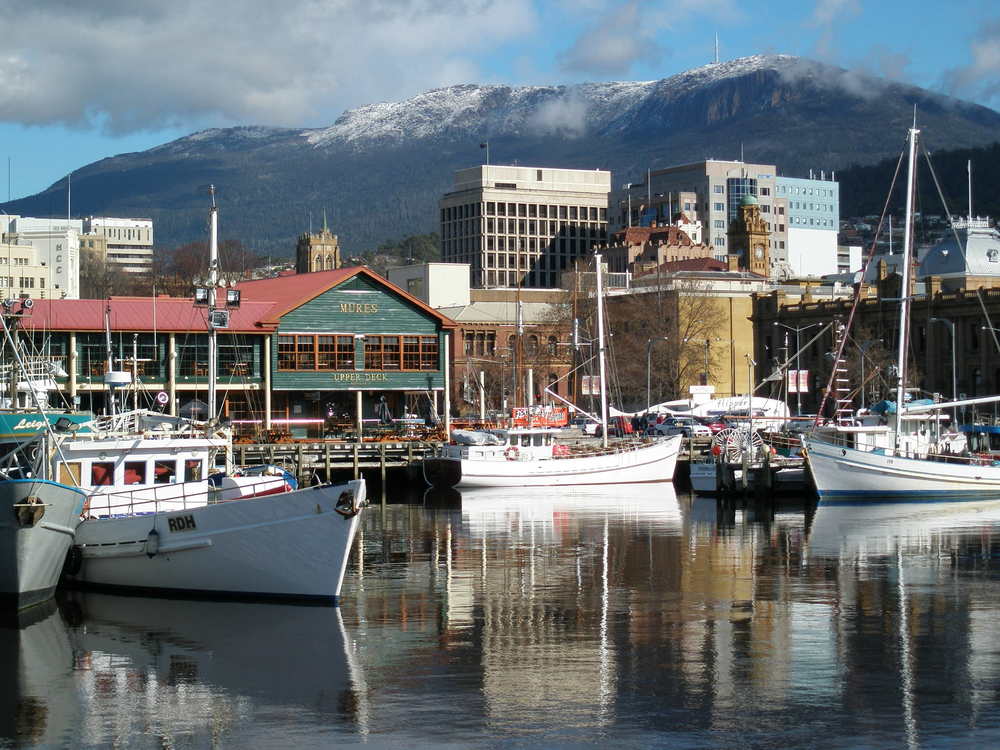
(Photo shows Hobart)

Requested Name: Beau

22 Wednesday Jul 2015

Posted by A.O. in Requested Names

≈ 15 Comments

Tags

english names, famous namesakes, fictional namesakes, name history, name meaning, name popularity, names from films, names from television, names of bands, New Zealand name popularity, nicknames, popular names, slang terms, surname names, UK name popularity, unisex names, US name popularity

tumblr_m9gx02m0KS1qld6eho1_1280

Beau is a French word meaning handsome or attractive: it is the masculine form of belle, and both of these words are from the Latin bellus, meaning “beautiful, pretty, agreeable”. It is directly related to the English word beautiful, and is part of English surnames such as Beauregard (“beautiful view”) or Beaumont (“beautiful mountain”).

You can see Beau as a short form of such surnames, or as directly from the English word beau, which is old-fashioned slang for a man who is a well-dressed dandy, or for a woman’s lover or sweetheart. Both senses of the word go back to the Middle Ages, but it is rare to hear people using these slang terms in everyday modern life.

Some of the most famous namesakes were called Beau as a nickname, to indicate that they were at the very height of fashion. Richard “Beau” Nash was Master of Ceremonies in Bath and Tunbridge Wells in the 18th century, while George “Beau” Brummel was an arbiter of men’s fashions in Regency England, a friend of the future King George IV.

Beau Brummel was famous for his charisma and wit, and his name is synomous with style and masculine good looks. He changed men’s fashions from the wearing of bright colours, lace, jewels, and spangles to elegantly tailored dark clothing with a white shirt – it’s because of him that we consider it “good taste” for a man to dress in an expensively discreet suit.

Both the famous Beaus were middle-class men who had the confidence and personality to mix with the cream of society, and as a direct result, both died in debt (Beau Brummell died raving mad from syphilis, but this has not tarnished his image, just added a tinge of poignancy).

Beau Brummell has inspired several literary portraits, including as a character in Arthur Conan Doyle’s historical novel Rodney Stone. He was also in Georgette Heyer’s Regency Buck, and it became almost de rigeur to include him as a character in regency romances. Recently Beau Brummell has turned detective in a series by Rosemary Stevens, and taken part in homoerotic fiction written by Cecilia Ryan. Beau Brummel has also appeared on stage, radio plays, TV dramas, movies, and an operetta. The latest outing was probably on UK TV in This Charming Man, with James Purefoy as Beau.

The name Beau has been in use since the late 18th century, not long after the death of Beau Nash. Beau Nash was so severely mourned by his former mistress when he died that she supposedly lived in a hollowed out tree on a bale of straw for thirty or forty years: I haven’t the foggiest how that made her feel better, but presume the straw was changed from time to time.

Originally Beau was given fairly equally to boys and girls in Britain, but soon became overwhelmingly male as the name became more common in the United States. Interestingly, this pattern still holds true, as Beau is evenly unisex in the UK, but only charts for boys in the US. In Australia, Beau is usually considered a boy’s name, but you can still encounter the occasional girl named Beau.

In the US, Beau has been in the Top 1000 since the late 1960s. Its appearance then may have been because of the actor Lloyd “Beau” Bridges, the son of Lloyd Bridges. Beau Bridges received his nickname after Ashley Wilkes’ son in Gone With the Wind. During the 1960s Beau Bridges often appeared on his father’s TV show, The Lloyd Bridges Show, and gained parts in TV series such as The Fugitive and Bonanza.

Other 1960s influences were the rock band The Beau Brummells, Roger Moore playing Beau Maverick on the TV show Maverick, and the film Beau Geste, with Guy Stockwell in the title role as an American hero fighting for the French Foreign Legion – his nickname is from the French phrase beau geste, meaning “noble gesture”. In the US, the name Beau is currently #228 and rising.

In the UK, Beau has been in the Top 1000 for boys since at least 1996, and for girls since 2002. Currently Beau is #175 for boys and #169 for girls in the UK, but it is screeching up the charts for girls while staying stable for boys. Furthermore, if you include names like Bo, and double names like Beau-Lily, there are even more girls called Beau in the UK, so this seems to be in pink territory in Britain.

In Australia, Beau joined the charts in the 1970s at #261, and first joined the Top 100 in 1986 at #85. It made the Top 50 in 2011 and 2012 (at #50 and #40), but other than that has been steadily in the bottom half of the Top 100, or just below the Top 100. That makes it a good choice for someone who wants a name that is common, without ever having been highly popular.

Currently Beau is #80 nationally, #61 in New South Wales, #70 in Queensland, #88 in Tasmania, and #48 in the Australian Capital Territory. It has just dropped off the Top 100 in Victoria, and the Top 50 in Western Australia.

The name Beau is more popular in Australia than anywhere else in the world, although it is also Top 100 in New Zealand. Once of the factors in its success is probably the number of sportsmen named Beau, such as cricketer Beau Casson, AFL footballers Beau Maister and Beau Waters, and rugby union footballer Beau Robinson, who plays for the Queensland Reds.

However it is in rugby league that the name Beau really shines, boasting Beau Champion from the Parramatta Eels, Beau Falloon from the Gold Coast Titans, Beau Henry who has just left the Titans to play in the NSW Cup, Beau Scott from the Newcastle Knights, and Beau Ryan, who has retired from the Cronulla Sharks and become a comedian – his segment Beau Knows on the NRL Footy Show a reference to Nike’s Bo Knows ad campaign with American footballer Vincent “Bo” Jackson.

Non-sporting Australian Beaus include actor Beau Brady, who was on Home and Away for several years, and Beau Brooks, from online comedy group The Janoskians.

With Beau you get a simple no-fuss name with a very attractive meaning that is cute on a little boy and rather romantic or even sexy on a grown man. For centuries the name has been associated with masculine taste and style, and it sounds handsome and charming. Although unisex in other places, it is solidly masculine and even sporty in Australia, and has been in the Top 100 for decades without ever becoming highly popular. There is plenty to love about sweetheart Beau!

Thank you to Renee for suggesting Beau be featured on Waltzing More Than Matilda, a name she is considering using.

POLL RESULTS
Beau received an approval rating of 72%. People saw the name Beau as adorable on a little boy and charming on a grown man (18%), and either cute or handsome (15%). However, 13% thought it was too nicknamey for a formal name. 5% found the connection to the old slang meanings of beau a turn off. Only one person thought the name Beau was too popular.

(Picture shows James Purefoy as Beau Brummell in This Charming Man)

Suburbs of Adelaide and Hobart Which Could Be Used as Girls Names

19 Sunday Jul 2015

Posted by A.O. in Name Themes and Lists

≈ 2 Comments

Tags

American names, Anglo-Saxon names, aristocratic surnames, Australian Aboriginal names, Biblical names, celebrity baby names, Cornish names, Dutch names, english names, famous namesakes, Finnish names, food names, French names, fruit names, hebrew names, Italian names, Latin names, locational names, name history, name meaning, name popularity, names from songs, names from television, names of ships, names of sporting teams, nature names, nicknames, plant names, popular names, surname names, tree names, unisex names, vintage names

OLYMPUS DIGITAL CAMERA

Beulah
Beulah Park is an affluent suburb of Adelaide, named after a village in Wales. The name Beulah is from a Hebrew word translated as “married (woman)”. In the Old Testament, the prophet Isaiah prophesies that the land of Israel shall be known as Beulah, because it shall be as if “married” to God, to indicate an especially close and loving relationship. Because of this, Beulah was used by John Bunyan and William Blake to mean a mystical place from which Heaven can be seen; it’s also used this way in the hymn Beulah Land. Beulah has been used as an English name since at least the 17th century, and was taken up by the Puritans. It has been much more popular in the United States, and was Top 100 in the late 19th and early 20th centuries; however it hasn’t charted there since the 1950s. Poor Beulah has come to exemplify the “ugly old lady” name, even though it doesn’t sound much different to Bella or Ruby (put the OO sound from Ruby into Bella, and you’ve got Beulah!). Can vintage Beulah ever be pretty again?

Brooklyn
Brooklyn Park is in Adelaide’s western suburbs, and was probably named after the borough of New York City. Brooklyn was settled by the Dutch, and originally called Breukelen, after a town in the Netherlands, whose name means “broken land”. Apparently this is because both the Breukelens were built on marshes, where the land is broken up with little streams, and I have also seen Brooklyn translated as “marshland”. Brooklyn has been used as a personal name since the 19th century, and originated in the United States. It was at first more common as a male name, but today Brooklyn only charts as a girls name in the US. In the UK it is more common for boys, thanks to David Beckham’s son Brooklyn – the name has charted for boys in the UK since 1999, when Brooklyn Beckham was born. In Australia, the name Brooklyn is fairly evenly used for both genders, although not very common for either. An attractive underused modern name suitable for either sex, although international trends suggest it is turning pink again.

Cherry
Cherry Gardens is a semi-rural suburb of Adelaide named for the native cherry trees which once grew there in profusion. The name Cherry can be from the cherry tree, or its delicious red fruit, although I think many people would be reminded of cherry blossom, which is enchantingly pink and lovely. In Australia, cherries are especially connected with the town of Young in New South Wales, which promotes itself as the Cherry Capital of of Australia, and holds a Cherry Festival every year. It also recalls the popular Cherry Ripe, which is Australia’s oldest chocolate bar. Cherry can be given as a nickname for names such as Charity, and can also be from the surname Cherry, which might refer to someone who grew or sold cherries: this probably explains boys given the name Cherry. Cherry has been used as a name since the 17th century (perhaps influenced by the popular poem and song Cherry Ripe), but it only became common in the 19th. It has a 1950s vibe, and seems “ripe” for teasing, but also bright and irrepressibly cheery. It’s a name that makes you smile when you say it aloud.

Eden
Eden Hills is a suburb of Adelaide, and well suits its name, as it in the city’s foot hills, and contains bushland, parks, and a botanic garden. The first landowner in the area was William Cook, who settled here in 1839. He was the master of a vessel called the Eden, and it is believed that’s where the suburb got its name. The name Eden is usually given in reference to the Garden of Eden in the Bible. The name has been translated as if derived from the Akkadian edinnu, meaning “steppe, plain”. It’s now thought to be related to an Aramaic root meaning “fruitful, well-watered” – this fits in better with the biblical description, as the Garden of Eden was said to be irrigated by rivers and filled with fruit trees (of course fruit was to prove a real problem). In Hebrew, the word is understood as meaning “pleasure”, and Eden is recorded in the Old Testament as a personal name. It has been used as an English name since the Middle Ages as a variant or pet form of the Anglo-Saxon Ed- names, such as Eadhun, meaning “rich bear cub” (the source of the aristocratic Eden surname). The biblical meaning came into use around the 16th century, and the name has always been given to both sexes, but is more common as a feminine one. Eden has charted since the 1980s at #757 (the decade of popular TV drama series, Return to Eden – in this case, Eden was the name of an estate in the Northern Territory). It joined the Top 100 in 2011 and is now #68. Although it has only ever charted as a girl’s name, it is quietly but steadily given to boys too, and seems rather distinguished as a male name. A clean attractive name suitable for both sexes.

Fern
Fern Tree is an outer suburb of Hobart, named so because of the Tasmanian Tree Ferns which grow abundantly in the area. It’s a popular place for bushwalking. Ferns are ancient plants which have remained unchanged for more than a hundred million years, and are extremely hardy and easy to grow. Because ferns don’t have flowers or seeds, people didn’t know how they reproduced for a long time (now we know – it’s from spores). This enigma gave it a magical air, and it has long been associated with fairies and spells. Ferns have a special connection with New Zealand, used as an emblem by sporting teams, especially the netball team, the Silver Ferns. Fern has been used as a person’s name since at least the 17th century, but it became quite popular in the 19th century. Not only were plant names very fashionable then, but the Victorians went fern-crazy, and there was a real fad for collecting the plants. This is a vintage nature name which doesn’t seem old-fashioned in the least, but rather off-beat and artistic.

Lenah
Lenah Valley is in the foothills of Mount Wellington in Hobart, and was settled in the 19th century. There are several bushland reserves here, and it is the home of the Lady Franklin Museum, a classical temple built by pioneer Jane Franklin, wife of the explorer John Franklin; it now houses the Art Society of Tasmania. Lenah is the local Aboriginal word for “kangaroo”. It looks like the name Lena, but is said LEN-uh, not LEEN-uh. This would work well cross-culturally, while having a very Australian meaning.

Lutana
Lutana in Hobart’s north was originally built by the Electrolytic Zinc company as housing for its workers. A competition was held to name it in the 1920s, and the name Lutana was selected; it’s the local Aboriginal word for “moon”. A famous namesake is Lutana Spotswood, an Indigenous language worker who gave a eulogy in the Palawa language at the funeral of Tasmanian premier Jim Bacon. Lutana is pronounced loo-TAN-uh. This is quite similar to the familiar Luna in sound and meaning, but is purely Australian and avoids any concern over loony or lunatic. Not only can you use Lulu as a nickname, but I have seen quite a few baby girls lately named Tanna, so the sound must appeal to Australian parents.

Marion
Marion is in Adelaide’s south-west, and was named after a young daughter of James Fisher, the Resident Commissioner in the 1830s, who was responsible for disposing of public land. Miss Fisher’s name was actually Marianne, not Marion, and she lived to be one hundred years old. Marion is a medieval French pet form of the name Marie. During the Middle Ages, one of the most popular type of French folk song revolved around a shepherdess named Marion, and her lover, a knight named Robin. This all sounds very familiar, but strangely enough there doesn’t seem to be any proven link between these songs and the English tales of Robin Hood and Maid Marian. There is also a surname Marion, taken directly from the woman’s name, and this has been quite often been given as a boy’s name – most famously to the actor John Wayne, born Marion Morrison. Perhaps people thought it was the masculine form of Mary. In the US, Marion has charted as a unisex name fairly evenly given to both sexes, but it has only charted as a female name in Australia. Marion was #89 in the 1900s, and peaked in the 1930s at #47. It left the Top 100 in the 1960s, and hasn’t charted since the 1980s. Although this name is dated, there is something rather glamorous about it, thanks to French actress and singer Marion Cotillard. If you’re worried about Margot becoming too popular, why not consider this other French charmer?

Penna
Penna is in the outer suburbs of Hobart, and is sometimes listed as a village or a commuter town. It’s name is most likely from the Cornish surname Penna, meaning “headland”, as it is faces onto a peninsula. Penna as a personal name can be from the Latin word penna, meaning “feather, wing”. This is where our word pen comes from, as we once wrote with feathered quills, but even in English, the word penna means a contour feather on a bird. There’s also the Italian surname Penna, which comes from the Latin pinnus, meaning “pointed”, and refers to someone who lived on a hill. In Finland, Penna can be given to boys as a variant of the name Ben. Penna has been used as a personal name since the 18th century, and when you look through the records, it’s clear that it is a multicultural choice, used all over the world, including Hungary, Italy, Greece, Norway, Persia and Brazil, as well as English-speaking countries. Recently it was chosen by actor Ian Ziering for his daughter, giving this rare name some much needed publicity. The rise of Penelope makes Penna seem more usable.

Rosetta
Rosetta is a small suburb of Hobart thought to be named after Rosetta Cottage. This was built in the early 19th century by John Beresford, who came to Australia as a convict on the First Fleet, and took up land in Tasmania to become a prosperous farmer. Rosetta Cottage later became a private girls’ school, and then the Undine Hotel – it is now a B&B. It seems likely the cottage was named after the Rosetta Stone, a 2nd century BC stone slab discovered in Egypt in 1799 which had the text in Egyptian hieroglyphics, Egyptian script, and ancient Greek. This allowed Egyptian hieroglyphics to be translated for the first time, and even now, Rosetta Stone is used to mean a crucial key in decoding information. The Rosetta Stone is so named because it was found in the Egyptian town of Rosetta. Rosetta, meaning “little rose”, is the western version of the town’s Arabic name Rashid, meaning “guide” – both are corruptions of the Coptic name Trashit, which I think just describes it as a mouth of the Nile. This is a pretty vintage name, very much on trend, which has a wealth of meaning and history behind it. Rosie or Etta could be used as the nickname.

POLL RESULTS
People’s favourite names were Fern, Eden and Lenah, and their least favourite were Lutana, Brooklyn and Beulah.

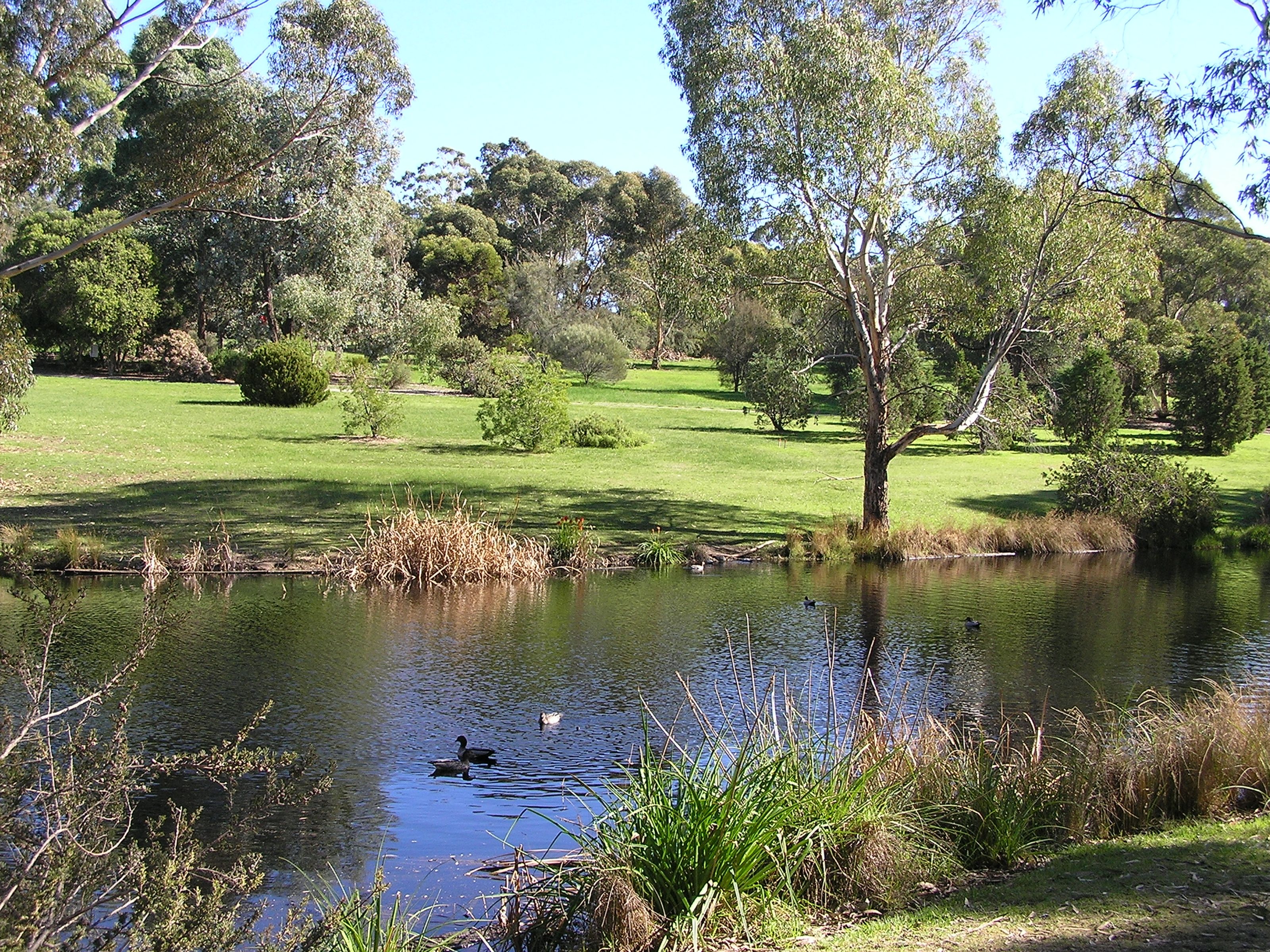
(Photo shows Wittunga Botanic Garden in Eden Hills, Adelaide)

From William to Oliver: Life Cycles of the #1 Boys Names in New South Wales

12 Sunday Jul 2015

Posted by A.O. in Naming Issues

≈ 1 Comment

Tags

celebrity baby names, famous namesakes, fictional namesakes, name data, name popularity, names from films, popular names

number-1-ribbon

William 1900s and 2009-2013
Was the #1 name of the 1900s (previous history unknown, but in the UK was #1 for the second half of the 19th century). Left the Top 10 in the 1950s, sinking to its lowest level in 1980 at #50. The name began rising after the birth of Prince William in 1982, and reached the Top 10 in 1997 (the year of Princess Diana’s death, putting her eldest son in the public eye). The name went to #1 during William’s courtship of Catherine Middleton, remaining there during the years of their engagement, wedding, and the birth of their first child. Currently #2. William is the overall #1 name of the twentieth century.

John 1910s, 1920s, 1930s and 1940s
Was #2 in the 1900s, and the #1 name of the following four decades (previous history unknown, but in the UK was stable in the Top 10 for the second half of the 19th century). Left the Top 10 in 1972, and the Top 50 in 2001. It reached its lowest level in 2010 at #100, but then rose again. Currently #93. John is the overall #1 boys’ name in Australian history.

Peter 1950s and 1960-1961
Was #64 in the 1900s, and joined the Top 50 in the 1920s. Top 10 by the 1930s, it was the #1 name of the 1950s and the beginning of the 1960s; this correlates with the career highlights of British-Australian actor Peter Finch, who starred in A Town Like Alice and The Shirralee. Left the Top 10 in 1982 and the Top 50 in 1997. Left the Top 100 in 2007. 2011 position was #125.

David 1962-1970
Was #28 in the 1900s, and joined the Top 10 in the 1940s – rise coincides with the 1935 film version of David Copperfield, with Freddie Bartholomew as the young David, and the beginning of actor David Niven’s career. The #1 boys’ name for nine years, David was the overall #1 name of the 1960s. It left the Top 10 in 1990 and the Top 50 in 2004. Currently #92.

Jason 1971-1973
First charted in the 1950s at #290, the decade that the popular Italian film Hercules was released, with Fabrizio Mioni in the role of Jason. Joined the Top 100 in 1964 at #97, the year after the release of classic fantasy film Jason and the Argonauts, starring Todd Armstrong as Jason. Reached the Top 50 in 1966, and the Top 10 in 1970 (it may amuse some readers that Kylie and Jason were #1 in the same year, 1973). Left the Top 10 in 1978, the Top 50 in 1999, and the Top 100 in 2006. 2011 position was #133.

Michael 1974-1981 and 1983
Was #44 in the 1900s and joined the Top 10 in the 1940s. Was #1 for nine years, and the overall #1 boys’ name of the 1970s. It was paired with Michelle, the #1 girls’ name of that decade, making them the most similar boy and girl #1 names until Oliver and Olivia last year. Left the Top 10 in 1997. Currently #46.

Matthew 1982-1987 and 1989-1991
Was #89 in the 1900s, falling to its lowest level in the 1940s at #161. It rose again in the 1950s, and by 1960 was #63. It joined the Top 50 in 1961 and the Top 10 in 1971, spending nine years in total at #1, and was the overall #1 boys’ name of the 1980s. Left the Top 10 in 2006. Currently #44.

Daniel 1988
Was #58 in the 1900s, falling to its lowest level in the 1930s at #116. By the 1940s it had returned to the Top 100, and by 1960 was #72. Joined the Top 50 in 1967, and the Top 10 in 1974. Left the Top 10 in 2007. Currently #25.

Joshua 1992-1996 and 1998-2003
First charted in the 1960s at #283. Joined the Top 100 in 1971 at #78, and was in the Top 50 by 1975. Joined the Top 10 in 1982, spending eleven years in total at #1. Not only the overall #1 boys’ name of the 1990s, it is the longest-serving #1 boys’ name since 1960. Left the Top 10 in 2013. Currently #17.

Jack 1997 and 2004-2008
Was #24 in the 1900s, falling to its lowest level in the 1960s at #277. Rejoined the Top 100 in 1986 at #88 (a year after rocker Ozzie Osbourne welcomed his son Jack) and was in the Top 50 by 1989. Joined the Top 10 in 1994, and spent six years in total at #1, the overall #1 boy’s name of the 2000s. Currently #4.

Oliver 2014
Was #83 in the 1900s, falling to its lowest level in the 1960s at #418. It began rising in the 1970s – surge in popularity corresponds with the 1968 release of the award-winning musical film Oliver!, with Mark Lester as Oliver Twist. Rejoined the Top 100 in 1986 at #100, and was Top 50 by 2000. Joined the Top 10 in 2008, and reached #1 last year.

You only need a quick glance at the post to see how it differs from the one on the #1 girls’ names. For a start, it is much shorter, with just 11 #1 boys’ names as opposed to 18 for girls. And although different types of boys’ names got to the top of the charts, nearly all of them are classic names. Jason and Joshua stand out as the only #1 names which were new to the charts before their rise.

Not only are nine of the names classics that have never left the charts, nine of them were Top 100 names in the 1900s, and six of them were in the Top 50 of the 1900s! That extreme conservatism in popular boys’ names tempts one to look at the 1900s Top 100 to see if any more of the popular names of that era could become future #1 names. Could names such as George, Alexander, Harry, Patrick, Edward, Henry, or Samuel be destined for the top spot?

The main trait that #1 boys’ names tended to share with #1 girls’ names is the speed with which they got into the Top 50 (although this is made more difficult due to the fact so many boys’ name started out already in the Top 50). This would make names such as Hudson and Flynn look like possibilities for future #1 names.

The notable exception to this is Oliver, which took 14 years to get from the bottom half of the Top 100 into the top half. Interestingly, Olivia was the exception amongst the girls, taking 12 years to get into the Top 50 once in the Top 100. Both these names made #1 in 2014, which may be a sign that things are changing.

There was a very definite break in the pattern in the girls’ name, which became evident around the mid-2000s. That there is no such obvious break in the pattern of the boys’ names may mean that boys’ name popularity is so much more conservative than girls that they will continue on as they have done so far – or it may mean that change is just slower coming. It may even have already started. We will just have to wait and see!

POLL RESULTS
People’s favourite #1 boy’s name was William, gaining 21% of the vote, and Jack was very close behind on 20%. The least favourite was Michael, which only one person voted for.

← Older posts
Newer posts →

Enter your email address to follow this blog

Categories

Archives

Recent Comments

A.O.'s avatarwaltzingmorethanmati… on Zarah Zaynab and Wolfgang…
Madelyn's avatarMadelyn on Zarah Zaynab and Wolfgang…
JD's avatardrperegrine on Can Phoebe Complete This …
A.O.'s avatarwaltzingmorethanmati… on Rua and Rhoa
redrover23's avatarredrover23 on Rua and Rhoa

Blogroll

  • Appellation Mountain
  • Baby Name Pondering
  • Babynamelover's Blog
  • British Baby Names
  • Clare's Name News
  • For Real Baby Names
  • Geek Baby Names
  • Name Candy
  • Nameberry
  • Nancy's Baby Names
  • Ren's Baby Name Blog
  • Sancta Nomina
  • Swistle: Baby Names
  • The Art of Naming
  • The Baby Name Wizard
  • The Beauty of Names
  • Tulip By Any Name

RSS Feed

  • RSS - Posts

RSS Posts

  • Celebrity Baby News: Melanie Vallejo and Matt Kingston
  • Names from the TV Show “Cleverman”
  • Can Phoebe Complete This Sibset?
  • Zarah Zaynab and Wolfgang Winter
  • Baby, How Did You Get That Name?
  • Celebrity Baby News: Media Babies
  • Celebrity Baby News: Adelaide Crows Babies
  • Celebrity Baby News: Chris and Rebecca Judd
  • Names at Work: Name News From the World of Business and Employment
  • Celebrity Baby News: Sporting Round Up

Currently Popular

  • Rare Boys Names From the 1950s
  • The Top 100 Names of the 1930s in New South Wales
  • Celebrity Baby News: Toby Allen and Darren Weller
  • Celebrity Baby News: Jason Morrison and Heidi Tiltins
  • Celebrity Baby News: Jacinta Allan and Yorick Piper

Tags

celebrity baby names celebrity sibsets english names famous namesakes fictional namesakes honouring locational names middle names name combinations name history name meaning name popularity name trends nicknames popular names saints names sibsets surname names twin sets unisex names

Blog at WordPress.com.

Privacy & Cookies: This site uses cookies. By continuing to use this website, you agree to their use.
To find out more, including how to control cookies, see here: Cookie Policy
  • Subscribe Subscribed
    • Waltzing More Than Matilda
    • Join 517 other subscribers
    • Already have a WordPress.com account? Log in now.
    • Waltzing More Than Matilda
    • Subscribe Subscribed
    • Sign up
    • Log in
    • Report this content
    • View site in Reader
    • Manage subscriptions
    • Collapse this bar
 

Loading Comments...