• About
  • Best Baby Names
  • Celebrity Baby Names
  • Celebrity Baby Names – Current
  • Celebrity Baby Names – Past
  • Featured Boys Names
  • Featured Girls Names
  • Featured Unisex Names
  • Links to Name Data
  • Waltzing on the Web

Waltzing More Than Matilda

~ Names with an Australian Bias of Democratic Temper

Waltzing More Than Matilda

Tag Archives: European name popularity

Waltzing With … Felix

02 Sunday Aug 2015

Posted by A.O. in Waltzing with ...

≈ 3 Comments

Tags

Biblical names, European name popularity, famous namesakes, fictional namesakes, Greek names, historical records, imperial titles, Latin names, middle names, mythological names, name history, name meaning, name popularity, names of cats, New Zealand name popularity, nicknames, papal names, patriotic names, popular names, retro names, saints names, UK name popularity, US name popularity

3092894-6735042798-Knml3

Famous Namesake
I think many Australians would readily associate this name with Felix the Cat, the silent film era cartoon. One of the most recognisable cartoon characters in film history, he was the first animated character to become popular enough to attract a cinema audience.

Felix the Cat was created by Sydney-born Pat O’Sullivan, who arrived in the United States in 1910 and began working as a cartoonist. By 1916, he had opened his own cartoon studio, and around 1917 he created Felix the Cat, inspired by a cat his wife Marjorie brought into the office. Under contract to provide one cartoon a month to cinemas, by 1921 Felix was in sixty percent of North American cinemas.

Pat O’Sullivan was fiercely protective of his creation, successfully gained royalties from pirated merchandise, and took action when Walt Disney made a Felix carbon-copy called Julius. Unfortunately for Felix, Disney then went on to create a certain Mickey Mouse, who starred in early talkie Steamboat Willie in 1928. This spelled the beginning of the end for Felix, and by 1931 it was obvious that Walt Disney was going to be the big success story of cartooning.

After Pat O’Sullivan’s death in 1933, his lead animator Otto Messmer took credit for the creation of Felix. Messmer’s claim is still accepted in the United States, even though O’Sullivan was acknowledged as Felix’s creator during his lifetime. Australian film curators have pointed out that it is O’Sullivan’s handwriting on the early Felix sketches, and that kittens in an early film are given Australian accents, saying ‘lo, Mum! ‘lo Ma!

The cartoon cat that Felix was based on was called Thomas or Tom (a fairly obviously cat-related name), but Pat O’Sullivan changed his name to Felix. Apparently this was after the Australian boxer Peter Felix, who was born in the West Indies, and won the heavyweight title in the 1890s – he often wore black and was a flashy dresser. Pat had seen Peter Felix in his last big fight in 1908, shortly before he left Australia. O’Sullivan had a strong interest in boxing, and when he first arrived in New York he himself boxed for prize money.

The name Felix was a very Australian choice, because in 1836 Scottish explorer Thomas Mitchell called the lush pastureland of western Victoria Australia Felix, meaning “happy Australia, fortunate Australia”. In 1845 English travel writer Richard Howitt’s lively Impressions of Australia Felix was published, and in 1849 the Australia Felix magazine was founded.

After the colony was named Victoria in 1850, the name Australia Felix gradually dropped out of use. However, 19th century Victorian politician Jonas Australia Felix Levien provides an example of it being used as a name, and he wasn’t born until the 1870s. (I have also found someone named Australia Felix Drake in historical records).

Despite all these Australian references, I can’t help wondering if Pat O’Sullivan was also thinking of Felis, the scientific name for the cat genus, from the Latin word feles, meaning “cat”.

Pat O’Sullivan gave Felix a lucky name, and the cat brought Pat luck and success. He did not have a very happy end to his life though. His marriage became increasingly strained (it probably got off to a rocky start, as they wed while he was on bail for raping a teenage girl; he was subsequently imprisoned for 9 months), and Marjorie fell to her death from their second floor apartment in 1932. O’Sullivan’s mental faculties deteriorated due to syphilis, and he died of alcoholism a year after his wife’s death.

Name Information
Felix is a Latin name meaning “lucky, fortunate”. It was first given as a nickname to the 1st century BC Roman general and statesman Lucius Cornelius Sulla, a free translation of the Greek nickname he acquired during his military campaigns – Epaphroditos, meaning “beloved of Aphrodite”.

Whether the goddess Aphrodite was taking care of him or not, Sulla was very successful, holding the position of consul twice, and being awarded the Grass Crown, the rarest and most prestigious Roman military honour, given only to those whose actions saved an entire legion or the whole army. Like Alexander the Great, he achieved many of his victories before his thirtieth birthday, and provided the model for later Roman leaders to gain power by force.

After him, the nickname became a common one for Roman leaders to take, and several emperors adopted it as a title. The Roman procurator Marcus Antonius Felix is mentioned in the New Testament, although not in a positive way – he imprisoned Saint Paul.

Felix was a favourite name amongst early Christians, as the name can imply being in the favour of God, or blessed by God. There are masses of saints named Felix, including quite a few martyrs, and three popes with the name. Saint Felix of Burgundy was sent as a missionary to East Anglia in the 7th century, and there are several churches dedicated to him in Yorkshire and East Anglia. The village of Felixkirk in Yorkshire is named after him, and so might be Felixstowe in Suffolk.

Although more common in Continental Europe, Felix has been in use as an English name since the Middle Ages, in honour of these various saints. It is particularly associated with East Anglia and south-eastern England in general, showing the legacy of Felix of Burgundy.

Felix was #172 in the 1900s, and left the charts in the 1920s (Felix the Cat didn’t do it any good). It returned in the 1980s at #396 and climbed steadily; it’s been on and off the Top 100 since 2011. Currently it is #89 nationally, #86 in New South Wales, #78 in Victoria, #36 in Tasmania, and #54 in the Australian Capital Territory. It was one of the fastest-rising names in Tasmania and Victoria last year, and one of the nationally fastest-rising names of 2013.

In the US, Felix is #267 and rising steeply, while the UK has a similar popularity to Australia, at #91 and rising. Felix is #66 in New Zealand and fairly stable – the highest popularity of any English-speaking country. Felix is well used in Western Europe and Scandinavia, and is most popular in Austria at #4.

Handsome, intelligent, and upbeat, Felix is a name with an irresistibly positive meaning and strong Australian associations. Once seen as rather hipster, this retro name is growing in popularity, and fittingly it’s rather a favourite in the state of Victoria.

POLL RESULT
Felix received an outstanding approval rating of 93%, making it the highest-rated boys name in the Waltzing With … category for 2015. 45% of people loved the name Felix, and only 3% hated it.
Waltzing With … Victoria

28 Sunday Jun 2015

Posted by A.O. in Waltzing with ...

≈ Comments Off on Waltzing With … Victoria

Tags

classic names, European name popularity, famous namesakes, Latin names, locational names, Marian titles, mythological names, name history, name meaning, names of businesses, popular names, royal names, saints names, Spanish names, UK name popularity, US name popularity

portland

Famous Namesake
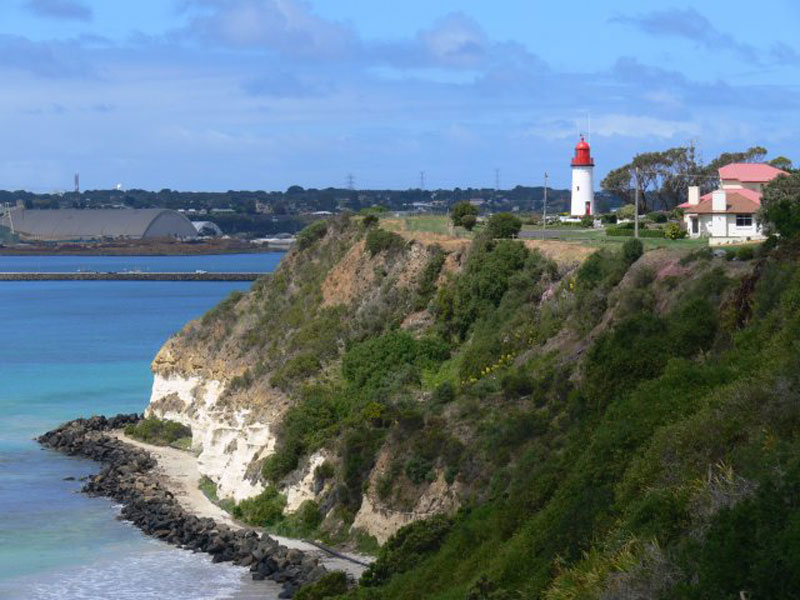
July 1 will mark the 164th anniversary of the independence of Victoria. When the British settled Australia in 1788, they claimed the entire eastern side of Australia as the Colony of New South Wales. The area now known as Victoria was first settled in 1803, partly due to French explorer Nicolas Baudin, who had spent several weeks surveying Bass Strait.

Governor Philip Gidley King got nervous that the French could be planning to establish their own settlement and challenge the British claim to Australia. Rather than risk a future where we might say Bonjour over a croissant or ride clean, efficient trains, the British formed a settlement at Port Phillip. It didn’t work out, and a year later they all nicked off to Tasmania. They tried again in 1826 (after another French explorer started hovering around), but that only lasted a year as well.

Paranoid government had failed, so it was capitalism’s turn to give it a go. Entrepreneurs arrived from Tasmania in 1834-35 to form settlements at Portland and Port Phillip (later Melbourne), which soon became prosperous, thriving communities, although at a devastating cost to the Indigenous inhabitants. Wealthy pastoralists took possession of vast tracts of fertile land, and soon Melbourne was the centre of Australia’s wool trade.

With such power and influence behind it, the Port Phillip District began lobbying for independence by 1840. In 1850 the colony was separated from New South Wales, and named Victoria, after Queen Victoria, and officially founded on July 1 1851. That same year, gold was discovered around Ballarat and Bendigo, sparking one of the largest gold rushes the world has ever seen. Wealth was about to begin pouring into its coffers, and Melbourne to become one of the great cities of the world.

The colony was off to a flying start, soon to to become the state we all know and love. The most beautiful state in Australia, ranging from lush pasture to snowy mountain ranges to golden beaches, it has charming country towns and a sophisticated, quirky capital. You can even get excellent croissants there. Viva la Victoria!

Name Information
Victoria was the Roman personification of victory in battle; her name is the Latin word for “victory”. In her older form, she was known as the goddess Vica Pota, translated by the Romans as meaning “conquering and gaining mastery”.

Victoria symbolised victory over death, and she chose who would be successful on the battlefield, so it was very important to get on her good side. Because of this, she was a popular goddess with many temples in her honour, worshipped by those who returned from war in triumph. She can often be seen on Roman coins and jewellery, and it is common to depict Victoria driving a chariot, probably because Nike, the Greek goddess of victory, was the charioteer for Zeus when he went into battle.

Victoria (or Nike) was depicted as a beautiful woman in flowing garments with large wings sprouting from her shoulders, so that she could fly over battlefields, giving encouragement to the conqueror and proclaiming messages of glory from on high. Statues of her in this mode are called winged victories, such as the Winged Victory of Samothrace. Later this image became Christianised, as it became the rule to portray angels, especially in church architecture, as graceful women with wings, a direct inspiration from the winged victories.

Victoria is also the feminine form of the Roman name Victor, meaning “victor, conqueror”. Like Victor, it was a popular choice for early Christians, symbolising victory over sin and death, and there are quite a few Christian martyrs named Victoria. Some are identified as women of the nobility, and others as servants, so it seems to have been used by all classes in the Roman Empire.

The name Victoria has long had a particular association with Spain, because it also one of the titles of the Virgin Mary: Nuestra Señora de Victoria, or Our Lady of Victory. In 1571, Pope Pius V instituted a feast day for Our Lady of Victory, after a coalition of southern European forces, led by Spain, defeated the fleet of the Ottoman Empire at the Battle of Lepanto.

Although well used in Continental Europe and popular in Spain, Victoria didn’t become common in Britain until the 19th century, when Queen Victoria took the throne in 1937 – there was an enormous jump in use between the 1820s and the 1840s, although it still wasn’t a popular name in England during Victoria’s reign.

Victoria is a classic name which has never left the charts. It was #124 in the 1900s, and sunk until it reached its lowest level ever in the 1930s, at #0. Victoria came back strongly, and was already #155 in the 1940s – perhaps the war era made the idea of commemorating victory very appealing. Victoria made the Top 100 in 1960 at #97, but for most of the 1960s and ’70s was just outside the Top 100. It made good headway in the 1980s, and peaked in 1991 at #49. It left the Top 100 in 2008, but remained within close reach, and was back again in 2010.

Currently it is #80 nationally, #59 in New South Wales, #74 in Victoria, and #85 in the Australian Capital Territory. It appears very stable – it hasn’t been far outside since the Top 100 since the 1950s, and has only once made it into the Top 50. That makes it a safe choice which has never been highly popular, yet has remained common for more than half a century.

Victoria is a popular name around the world, but is most popular in the US at #19. Its popularity in the UK is similar to that in Australia. Not just popular in English-speaking countries, Victoria is a Top 100 name in Western Europe, Eastern Europe, and Scandinavia; still a favourite in Spain, it is also popular in Latin America. Meanwhile international variants such as Viktoria, Victorija, Victorie, Victoire, Vitoria, and Vittoria are popular in a host of countries. That makes Victoria an internationally recognised name that works cross-culturally.

Victoria is a classic traditional girl’s name that’s popular, but not too popular. It’s a long, feminine name that doesn’t seem frilly or elaborate, but clean and professional. It’s well known internationally without seeming exotic. It has a strong meaning connecting it to power and success, which is quite unusual for a girl’s name.

Victoria is a goddess, an angel, a saint, and a winner of battles. Many people will connect her with a queen, and there’s no doubt that Victoria is royal to her fingertips. She’s classy, and every inch a lady, but Victoria’s Secret makes her seem rather sexy too. A fun nickname would be Plum, from the Victoria Plum, like the writer Plum Sykes. My preference is for the lively Vita, inspired by another author from Kent, Vita Sackville-West.

POLL RESULT
Victoria received an outstanding approval rating of 91%, making it one of the highest-rated names of 2015. 33% of people thought the name Victoria was okay, and only 3% hated it.

(Photo shows Portland, the first permanent European settlement in Victoria)

Famous Names: Jedda and Rosalie

24 Wednesday Jun 2015

Posted by A.O. in Famous Names

≈ 7 Comments

Tags

animal names, Australian Aboriginal names, bird names, celebrity baby names, ethnonyms, European name popularity, famous namesakes, fictional namesakes, flower names, French names, historical records, international name trends, Latin names, locational names, name history, name meaning, name popularity, names from movies, nature names, nicknames, plant names, saints names, screen names, UK name popularity, US name popularity

JEDDA

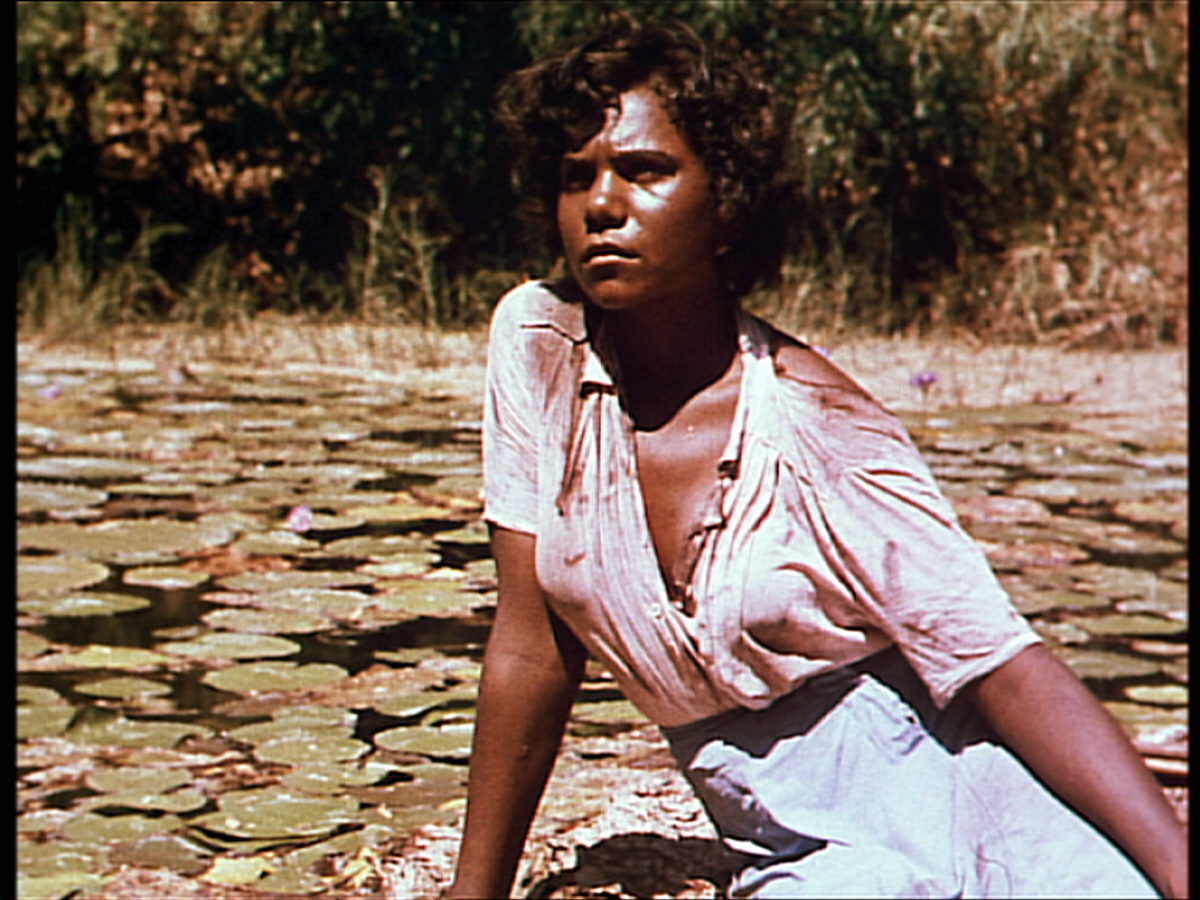
Last month the Australian film Jedda returned to the Cannes film festival, sixty years after it was first shown there in 1955. Jedda was the work of distinguished film-makers Charles and Elsa Chauvel; the first Australian feature film to be shot in colour, and the first to have Aboriginal actors in lead roles.

In the film, Jedda is an Aboriginal girl who is brought up by a white couple on a cattle station after her mother dies. She is raised in European ways, and forbidden to learn about her own culture, kept separated from the other Aborigines on the station.

When she gets older, Jedda finds herself strangely drawn to an Aboriginal man living in the bush, and following the traditional ways of his people. He abducts her, but when they come to his tribal lands, Jedda discovers that their relationship is forbidden by Aboriginal law. It’s a Romeo and Juliet scenario, and as with Shakespeare’s tale, it ends in tragedy for the star-crossed lovers.

The role of Jedda was given to Rosalie Kunoth, an Aboriginal teenager from the Northern Territory, who was studying in Alice Springs. The Chauvels gave her the screen name Ngarla for the film, which they thought looked more “authentic”. Ngarla was the name of Rosalie’s mother’s people – the Ngarla are from the Pilbara region of Western Australia. This was distressing to Rosalie, as it was culturally inappropriate.

The filming was challenging for Rosalie in many ways, and when she attended the premiere (sitting in the white section of a segregated cinema), was horrified by the film’s eroticism. Rosalie was an Anglican nun for ten years; she then left the order, married, and eventually returned to the Northern Territory. Now a respected Aboriginal elder, Rosalie Kunoth-Monks has spent her life working as an Indigenous activist, taking on leadership roles in her community. She has a daughter named Ngarla.

Jedda was a groundbreaking film in Australian cinema history, especially significant as it gained international attention and respect at a time when Australian cinema was practically nonexistent. As well as its other “firsts”, it was the first Australian film to be shown at Cannes, and nominated for the Palme d’Or.

Although it has dated in some ways, it remains a powerful and heartbreaking story. Jedda was created in opposition to the assimilationist policies of the 1950s, and the film is still relevant in light of the Stolen Generations. It helped inspire Indigenous film-maker Tracey Moffatt, whose Night Cries is a re-imagined “what might have been” sequel to Jedda.

JEDDA
In the movie Jedda, Aboriginal servants name the baby Jedda when she arrives, because she “flies in” like a “jedda bird”. Jedda appears to be from the Noongar word djida or jida, meaning “bird” (more specifically a wren), even though Noongar people are from south-west Western Australia, and the film is set in the Northern Territory. In the film, the identification with Jedda as a bird connects her to flight, to freedom and capture, and also to the spirit world.

Australian records show the name Jedda in sporadic use as far back as the 19th century, including by Indigenous Australians. I can only speculate as to where their names might have come from; in the case of Europeans, maybe as a variant of the name Jetta. It is possible that Indigenous women born before the film was made took (or were given) the name Jedda after its release. In addition, I have seen Indigenous women named Djida and Jida.

Jedda is also a plant name, as the jedda bush is native to the Cape York Peninsula region of far north Queensland. It is named after Jedda Creek, which is where it was first found, but I have not been able to discover the origin of the creek’s name – it may even have been named after the film.

Jedda is in use as a personal name for both Indigenous and non-Indigenous Australians, and is a popular name for homes, businesses, and streets. It is often used as a name for animals too, and in particular I have encountered quite a few horses named Jedda. This may be why in the children’s novel, Hating Alison Ashley by Robin Klein, the heroine’s sister Jedda pretends she is a horse. I’ve seen the name given to a boy, and it does have a bit of a unisex vibe, as it shortens to Jed.

Jedda is an Australian name made famous by a classic film, and appealing to both Indigenous and non-Indigenous parents. Although traditionally female, it could even be used for both sexes. It tends to be seen as slightly dated, yet it has never been common and is similar to Gemma, Jenna, Jed, and Jett.

ROSALIE
French form of the Latin name Rosalia, derived from rosa, meaning “rose”. Saint Rosalia was a medieval hermit who tradition says was a Norman noblewoman led by angels to live in a cave in Sicily. The saint became known in 1624, when she is supposed to have miraculously cured a plague. The saint’s name Rosalie was given to a young nun named Jeanne-Marie Rendu, and she became Blessed Sister Rosalie, who performed a lifetime of charity in the slums of 19th century Paris, and was mourned by the city when she died.

The name Rosalie came into common use in the 18th century, and was especially used in France, Germany, and Central Europe. It only became common in the English-speaking world in the 19th century, possibly because of the French courtesan Rosalie Duthé, who became the mistress of French kings and aristocrats. As a young woman she moved to London to escape the French Revolution, and gained the immensely rich George Wyndham, 3rd Earl of Egremont, as a lover. Beautiful and golden-tressed, Rosalie was apparently not overburdened with brains, and it is theorised that she is the originator of the “dumb blonde” stereotype.

The name Rosalie first joined the charts in the 1910s, debuting at #268. The name peaked in the 1940s at #141, probably because of the 1937 movie Rosalie, starring Eleanor Powell as a princess in disguise: Cole Porter’s song Rosalie is from the movie. Rosalie dropped off the charts in the early 2000s, but returned in 2009 at #519, the year after the first Twilight film was released, with Nikki Reed in the role of Rosalie Hale. Rosalie is described as being “the most beautiful person in the world”, which must have been a drawcard. The name Rosalie is apparently now in rare use again.

In the US, Rosalie returned to the Top 1000 in 2009, under the influence of Twilight. It is now #310 and rising. In the UK, the name Rosalie suddenly began rising steeply in 2009, and is now #394. Rosalie is also in the 300s in France, and is a popular name in The Netherlands, at #79.

Rosalie is a pretty, charming, European-style name with that touch of fairy-tale magic which has seen it chosen in films for a student princess and a vampire beauty. As Rose- names are becoming increasingly fashionable, it is a bit surprising that Australia seems to to be lagging behind the international trends – although it might just be that our data-collection is lagging.

I have seen quite a few birth notices for baby girls named Rosalee, Rosaleigh, Rosa-Lee and so on, and wonder if the spelling is an issue for some parents. Perhaps they worry that Rosalie will be said with the end rhyming with Lorelei, or just don’t like the idea of a name that ends in -lie. This makes me wonder if there are more Rosalies out there than meets the eye. A fantastic underused traditional choice, in any case.

POLL RESULTS
Jedda received an approval rating of 53%. 39% of people weren’t keen on the name Jedda, while 16% loved it.

Rosalie received a very good approval rating of 76%, making it one of the highest-rated names of 2015. 39% of people loved the name Rosalie, and only 4% thought it was a terrible name.


Famous Name: Milo

17 Wednesday Jun 2015

Posted by A.O. in Famous Names

≈ 6 Comments

Tags

animal names, brand names, European name popularity, famous namesakes, food names, germanic names, Greek names, locational names, name history, name meaning, names from films, rare names, UK name popularity, US name popularity

10432144_888450784521840_5322624102103057321_n

Famous Namesake
The formula for Milo was changed recently, leading to an outpouring of complaints to the company – but only in New Zealand. Apparently they’ve had the vanilla removed, and this doesn’t affect Australia, as we didn’t have any vanilla to start with. I knew that Milo was sold all over the world (it’s very big in Malaysia, I’ve heard), but didn’t realise that every country gets their own formulation of Milo.

Milo is a cocoa powder and malt drink sold in a bright green tin. It was created by Australian inventor Thomas Mayne and launched at the 1934 Royal Easter Show, in an attempt to improve the diets of Australian children. Rich in carbohydrates and an easy way to add calories, Milo has a host of vitamins added to it – a boon to Depression-era parents worried about their malnourished tots.

Even though our diets are no longer very deficient in calories, carbohydrates and vitamins, Milo is still popular, and marketed as a nutritious energy drink. You can also buy Milo chocolate bars and Milo breakfast cereal, rather less convincingly flogged to parents as a healthy option that will fill your kids with the sort of powerful energy needed to win sporting events sponsored by Milo.

Milo has an appealing crunchy texture which Thomas Mayne tried very hard to eradicate, until he discovered that people liked it. Instead of dissolving completely in milk, Milo will sit on top, forming a crust that can be eaten – in Australia, chocolate milkshakes are already crunchy …. You can use Milo to cook with (Milo banana bread is pretty good), although a favourite way to enjoy Milo is sprinkled on top of vanilla ice cream.

Milo is named after Milo of Croton, an ancient Greek wrestling champion who won six times at the Olympic Games, and numerous other titles. His hometown of Croton, in Sicily, was famous for producing great athletes. A legend in his own lifetime, he was said to be of superhuman strength, and likened to the demigod Hercules – he supposedly took part in a great military victory dressed in a lion-skin.

Just as Milo of Croton was a sporting hero who performed mighty feats of endurance, so too are you supposed to become strong and athletic by drinking Milo. However, its real strength is as a cultural icon that generations of us have grown up drinking. Rather than shuffling into slippers and becoming a nostalgic comfort food, 81-year-old Milo continues to pull on its running shoes and go and go and go!

Name Information
The ancient Greek name Milo, as held by Milo of Croton, and the inspiration for the chocolate drink, is believed to be from milou, a pre-Hellenic word for “sheep”. Could you get a name meaning more appropriate for an Australian or New Zealand child, as sheep farming has been so important to both countries? In modern Greek, Milo means “apple”, and you will sometimes see the name translated that way.

Even if you haven’t heard of Milo of Croton, you must surely have heard of the Venus de Milo, the 2nd century marble statue of Aphrodite which was found on the island of Milos (also called Milo and Melos) in the 19th century. It is now in the Louvre in Paris, admired as the height of feminine grace and beauty, although without any arms.

There are many folk tales as to how the Greek island received its name. One is that it was named after Milos, the son of a river god, who colonised the island under the direction of the goddess Aphrodite. He was so handsome that three goddesses vied for his affection, and he was eventually rewarded with the apple that Paris of Troy awarded to Aphrodite as the most beautiful of all. Another is that he was a handsome young man who was a close friend of the god Adonis: when Adonis died, he hung himself on an apple tree in despair. These both sound like the modern “apple” meaning has influenced the stories.

Another has a feminine source for the name, telling of a Cretan maiden named Melis who threw herself into the sea to escape an unwanted lover. She drowned, but the waves carried her to the island of Milos, where she was worshipped as a nymph. Her name comes from the ancient Greek for “bee”, the source of Melissa: bee goddesses were worshipped on Crete.

Despite these romantic etymologies offered for the island, sheep were a vital part of the island’s economy even in prehistoric times, and a ram was the island’s symbol, used on coins. It is far more likely that the island was named after these important animals. It is unclear to me if people named Milo were named after the island, but given the apparent antiquity of its name, it doesn’t seem implausible.

Milo is also a Germanic name, of uncertain meaning. It may come from an ancient Germanic root meaning “mild, gentle”, or is possibly even related to those Slavic names formed from the root milu, meaning “grace, favour”, or “dear”. The name was introduced to England by the Normans in the form Miles, which was Latinised back to Milo – although a person documented as Milo would presumably have been known as Miles in everyday life.

Milo is #311 and rising in the US, and #159 and rising in the UK. Also rising in France and the Netherlands, it is a popular name in Sweden at #58.

The name Milo is rare in Australia because of the chocolate-flavoured drink, even though there’s nothing negative about the drink Milo, and Coco is a hip name which sounds exactly like cocoa. A straw poll I conducted suggested that many people still connect it with the classic children’s movie, Milo and Otis – not only was that a long time ago now, but Otis is in reasonable use, and very fashionable!

Milo is a boy’s name that sounds rather cute, but has a powerfully masculine namesake, suggesting it could work well on both a little boy and a grown man. I think it makes a hip choice, and suspect that if it wasn’t for the drink in the familiar green tin, it would be rising in line with international trends. Anyone worried about the drink might prefer to give it a more European pronunciation – MEE-lo.

POLL RESULTS
Milo received a decent approval rating of 66%. 24% of people thought Milo was hip and cool, and 21% saw it as a name that was adorable on a little boy and handsome on a grown man. However, 15% believed it was too closely associated with the chocolate drink and associated products. Only one person thought it was strong and sexy, only one thought it was nerdy, and just one thought it didn’t seem masculine enough for a boy’s name.

(Photo from Milo’s Facebook page)

Famous Name: Diana

20 Wednesday May 2015

Posted by A.O. in Famous Names

≈ Comments Off on Famous Name: Diana

Tags

aristocratic names, Biblical names, European name popularity, famous namesakes, honouring, Latin names, modern classics, mythological names, name history, name meaning, name popularity, rare names, Roman names, royal names, Shakespearean names, UK name popularity, US name popularity

168

Famous Namesake
The birth of Princess Charlotte Elizabeth Diana has many people wondering if Charlotte can get to #1 – it would be an easy feat in Australia, as its just been deposed by Olivia, and could regain its throne by going up just one spot in the rankings. It feels as if I am already seeing more Charlottes in birth notices, so who knows!

The princess’ name also invites the question of whether her middle name, Diana, may become more popular as either a first or a middle name. It is well known that the name Diana honours Princess Charlotte’s grandmother Diana, Princess of Wales – Lady Diana Spencer before her marriage, and dubbed “Lady Di” by the press.

Famous for her beauty and charisma, Diana gained respect for her charity work, and sympathy for her unhappy marriage and divorce. Her life, lived under intense scrutiny, ended shockingly in a car crash, leading to an outpouring of public grief. Years later, her memory is still fresh, and she continues to be a subject of fascination for the media.

Diana’s name is a traditional one in the Spencer family, and she was named after a distant 18th century ancestor, who was also Lady Diana Spencer. Tall, fair, charismatic, and attractive, it was hoped this earlier Lady Diana would marry the Prince of Wales, Frederick, the son of King George II. These plans came to naught, and she married a future Duke of Bedford instead.

The parallels between these two namesakes are striking: both grew up at the stately home of Althorp, both socialised with the royal family, both were intended brides of a Prince of Wales, and both unexpectedly died young – the earlier Lady Diana of TB at 25.

Another Lady Diana Spencer born in the 18th century was known as Lady Di, and a Lady of the Bedchamber to Queen Charlotte. A talented artist, she was most famous for the unhappiness of her first marriage, which was marked by infidelity, and ended in divorce. Days later, she married again, to a celebrated wit who was a great-grandson of King Charles II. It was out of the frying pan and into the fire, as her second husband was evil-tempered, a drug fiend, and extremely filthy in his habits. He died begging her pardon for the life of misery he had given her.

While Princess Charlotte’s first two names connect her equally to her royal and commoner families, her third name is a link to her famous grandmother, not just a style icon and People’s Princess, but a beloved mother still deeply missed by her sons. It’s also a connection to her aristocratic Spencer line. Diana has already been used as a middle name twice to honour Diana, Princess of Wales – for Princess Charlotte, and for Diana’s niece, Charlotte Diana Spencer – and perhaps there will be more family namesakes in the future.

Name Information
In Roman mythology, Diana is the goddess of the hunt, having power over wild animals. Associated with countryside and woodlands, oak groves are sacred to her. She is a goddess of the moon, the twin sister of the sun god Apollo. Diana is also a goddess of women, childbirth and midwifery, although a maiden goddess. She is the Roman equivalent of Artemis.

On the one hand, Diana is inaccessible like the chill light of the moon, ever virgin, dwelling far away on sacred mountains, deep in the woods. On the other, she bestowed divine authority onto kings, with her own priest taking the role of King of the Grove. Women worshipped her when they wished to become pregnant, and during pregnancy, as they prayed to her for an easy delivery. Thus this seemingly cold distant goddess helped the survival of humanity.

Diana was one of the most widely worshipped and ancient of the Roman gods, pre-dating the city, and originating amongst the Latin tribes of the Alban Hills. She was the especial patron of the lower classes, with slaves being able to claim asylum in her temples. Diana is portrayed as young and beautiful, often dressed for the hunt in a short tunic and boots, carrying her bows and arrows, and accompanied by a deer or hunting dogs.

The name Diana is believed to come from the Latin dius, meaning “sky”, from an ancient root meaning “bright sky, daylight”. Related to it are the Latin words deus, meaning “god”, die, meaning “day, daylight”, and diurnal, meaning “day time”. The name is usually translated as “divine, deity”.

The goddess Diana is mentioned in the New Testament, because of Ephesus in present-day Turkey, the location of The Temple of Diana. It was one of the Seven Wonders of the Ancient World, and the man who compiled the list considered the Temple of Diana to be the greatest of them all, outstripping the pyramids of Egypt and the hanging gardens of Babylon in its beauty and brilliance.

In the Acts of the Apostles, the Ephesian craftsmen who earned their living making shrines of the goddess felt their livelihoods threatened by St Paul’s preaching of Christianity, and organised a spirited protest march, shouting the catchy slogan, Great is Diana of the Ephesians! In the short term, the situation by was smoothed over by a city bureaucrat.

In the long term, Christianity didn’t do the worship of Diana any favours, although when the Temple of Diana was eventually destroyed, it was by pagan Goths, not Christians. However, worship of the goddess Diana is alive and well, and still practised in various strains of modern Wicca and witchcraft.

Diana has been a favourite in the arts for centuries, featured in many paintings and sculptures. Referenced numerous times in Shakespeare, she actually appears in both Pericles and All’s Well That Ends Well. Neither has her fame diminished. Her myth was the basis for Wonder Woman, and she is a character in the Sailor Moon series, as well as featuring in several video games.

Diana has been used as an English name since at least the 16th century. It has been something of a favourite amongst the English aristocracy, with a famous example being Lady Diana Cooper (nee Manners). Beautiful, witty, and glamorous, her parents hoped that she would one day marry the Prince of Wales (later Edward VIII) – what is it with Dianas being matched up with Princes of Wales? Instead she married a future ambassador to France. Lady Diana had a glittering career as a socialite, writer, and actress, and was often referenced in Jazz Age literature.

The name Diana first charted in the 1910s, debuting at #301; this was the decade when Lady Diana Cooper first came to prominence as a member a group of aristocrats and intellectuals, and coincides with the publication of Anne of Green Gables, where Diana Barry is Anne’s pretty and loyal best friend. It rose steadily, and joined the Top 100 in the 1930s, peaking the following decade at #59 – the time when Lady Diana Cooper became a celebrated hostess in postwar France.

The name remained stable through the 1950s and ’60s, under the influence of sexy British actresses, Diana Dors and Diana Rigg, but left the Top 100 in the 1970s, and continued falling – Diana, Princess of Wales, did not halt its downward progress. The name had a slight boost in 2009, the year after Diana’s inquest found there was no evidence of foul play in her death, but hasn’t charted since 2011.

Diana is still only #297 in the US, although falling, while in the UK it is #358, and rose in 2013. A popular name in Spain and Poland, it is most popular in Hungary, at #75.

Diana is a beautiful, elegant name, with a history that is divine, noble, and even royal. It seems to have become prematurely dated in Australia, as the name remains in use in other countries, and is popular in Europe. I wonder if the name has become too firmly attached to Diana, Princess of Wales, with her luminous fame and life tragically cut short. Will the baby princess help give Diana a boost, or will it merely underline it as a name reserved for Diana’s family?

POLL RESULTS
Diana received a decent approval rating of 60%. 19% of people thought the name Diana was beautiful and elegant, but 15% believed it was too strongly associated with Diana, Princess of Wales. Nobody thought the name Diana was ugly and frumpy.

Famous Name: Aurora

25 Wednesday Mar 2015

Posted by A.O. in Famous Names

≈ 8 Comments

Tags

code names, Disney names, Disney princesses, European name popularity, Latin names, locational names, meteorological names, mythological names, name history, name meaning, name popularity, names from ballet, names from fairy tales, names of businesses, nature names, New Zealand name popularity, Roman names, scientific names, UK name popularity, US name popularity

w1200_h678_fmax

Name in the News
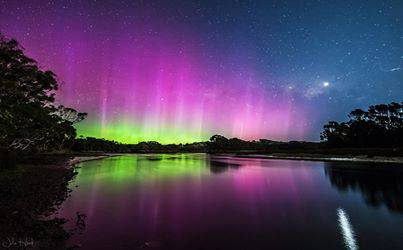
On March 17, a rare aurora australis was seen over New Zealand and Australia, swirling across the late night skies in patterns of red, green, blue, and purple. Aurora australis is also known as the Southern Lights, the southern hemisphere equivalent of the aurora borealis, or Northern Lights.

An aurora event occurs when rapidly moving particles that originated from the sun come in and strike the upper atmosphere, more than 100 kilometres above the earth. The energy from the particles striking molecules in the atmosphere are released as light, and the colours that you see depend on which molecules are struck – green and red come from oxygen, while blue and purple are from nitrogen.

Aurora events sometimes happen when large solar flares and explosions of material come off the sun, which is what occurred this week, setting off a geomagnetic storm. An aurora australis is usually best viewed from Antarctica, but moderate ones can be seen from Tasmania. However, this week’s aurora was so bright that it was visible as far north as Canberra, and Goulburn and Kiama in New South Wales, while even in Brisbane there was a red tinge to the sky.

In Aboriginal mythology, the aurora australis was often seen as fire in the sky, and conjectured to be bushfires in the spirit world, campfires glowing in the land of the dead, or fires lit by evil spirits. It seems to have been generally seen as an ill omen, or a sign of a god’s displeasure. In south-west Queensland, where aurorae are uncommon and less spectacular, it was thought that the spirits were able to transmit messages through an aurora, allowing communication with the ancestors.

Rare, awe-inspiring, and staggeringly beautiful, an aurora is a celestial phenomenon not to be missed. Little wonder that in the past it was seen as something mysterious and otherworldly.

Name Information
Aurora was the Roman goddess of the dawn, and her name literally means “dawn, sunrise, daybreak”. She is the equivalent of the Greek goddess Eos, and the Hindu goddess Ushas. The name comes from an ancient root meaning “shining one”, and is related to the English word east, as well as the Latin aurum, meaning “gold”. It has connotations of springtime, and the new year – all symbols of rebirth and new beginnings.

In Roman mythology, Aurora renews herself each morning and flies across the sky to announce the arrival of the sun, her brother. She often appears in poetry (Virgil describes her as having a “saffron bed”), and her beauty and desirability are such an important part of her image that it is thought she must originally have been a goddess of love, with the different aspects of dawn and eroticism becoming separated into Aurora and Venus.

One of her key myths involves her love affair with a Trojan prince named Tithonus. Wanting to be with Tithonus for all eternity, she asked Jupiter to make him immortal. He granted her request, but because Aurora did not ask for him to remain eternally youthful, he was doomed to be old forever. Aurora saved him from this fate by turning him into a grasshopper.

Although you may read of the goddess Aurora in Tennyson and Shakespeare, see paintings of her, and even hear of her from Bjork, the name is probably best known from the 1959 Disney film Sleeping Beauty, where the comatose princess is called Aurora. In the movie, the king and queen choose the name because their daughter has “filled their lives with sunshine”.

In Charles Perrault’s version of the fairy tale, the Sleeping Beauty was not given a name, but she bears the Prince two children named L’Aurore (“the dawn”) and Le Jour (“the day”). Tchaikovsky’s ballet gives the daughter’s name to the mother, so the Sleeping Beauty is called Princess Aurora, and Disney followed this, as well as the TV series Once Upon a Time. (In the German version of the tale, she is called Briar Rose, which Disney used as Aurora’s code name, and in the earliest Italian one, Talia, who had children named Sun and Moon).

Aurora has been used as a name since the 17th century, and from the beginning was an international choice, showing up in records in England, Italy, and Scandinavia, and by the following century was used in countries all over the world, but especially in Europe.

Currently, Aurora is popular in Norway and most popular in Italy, where it is #3. In the United States, Aurora has been almost constantly on the Top 1000, and is now #145. It has been rising steadily since 1995 – the same year that Disney’s Sleeping Beauty was re-released in cinemas. In England/Wales, Aurora has been on the charts since 2011, and is rising steeply at #257. Amongst English-speaking countries, Aurora is most popular in New Zealand, where it has been Top 100 since 2013 and was #77 last year.

In Australia, Aurora is around the mid-100s, so has a similar popularity to that in the US. As it is rising in other countries, it is most likely rising here too. Around the world, Aurora is often given as a name in scientific contexts, and in Australia it is well known as an energy company. Aurora Point on Macquarie Island is named after the SY Aurora used on Douglas Mawson’s Antarctic expedition, with the yacht itself named after the aurora australis.

Aurora is an internationally recognised name with a poetic meaning and many attractive associations – an alluring dawn goddess, a sunshiney fairy tale princess, an iridiscent light in the heavens. It’s elegant and enchanting, rich and frothy, a name that seems to shimmer with colour, shot through with the rosy pink and gold of daybreak. One drawback is that it not particularly easy to say, which is why Auroras nearly always seem to have a nickname, such as Aura, Auri, Rora, Rory, Ro, or Roo, adding a cute or tomboyish option to a flouncingly feminine name.

POLL RESULTS
Aurora received a decent approval rating of 66%. 21% of people saw the name Aurora as pretty or beautiful, but 16% found it too difficult to pronounce.

(Picture is of Aurora australis seen over the Forth River in Tasmania; photo taken by Julie Head and published in The Advocate).

Waltzing With … Anna

08 Sunday Feb 2015

Posted by A.O. in Waltzing with ...

≈ 1 Comment

Tags

Anglo-Saxon names, aristocratic names, Biblical names, British names, classic names, Disney names, Disney princesses, Etruscan names, European name popularity, famous namesakes, fictional namesakes, Greek names, hebrew names, Irish names, Latin names, mythological names, name days, name history, name meaning, name popularity, names from films, names of cakes, popular names, Roman names, royal names, unisex names

Pavlova RM90_01

Famous Namesake
On Thursday February 12, it will be the 134th birthday of the Russian prima ballerina Anna Pavlova. At a time when the rules of classical ballet were rigidly enforced, the dainty Anna performed in a graceful, romantic style, with less emphasis on precision and acrobatics. The principal artist with the Imperial Ballet and the Ballets Russes, she formed her own company and became the first ballerina to tour as an international star.

It was during one of her tours to Australia and New Zealand in the 1920s that Anna Pavlova would be honoured with the creation of an iconic Australasian dish, and in the process spark a rivalry between the two Trans-Tasman nations, who both claim it as their national dessert.

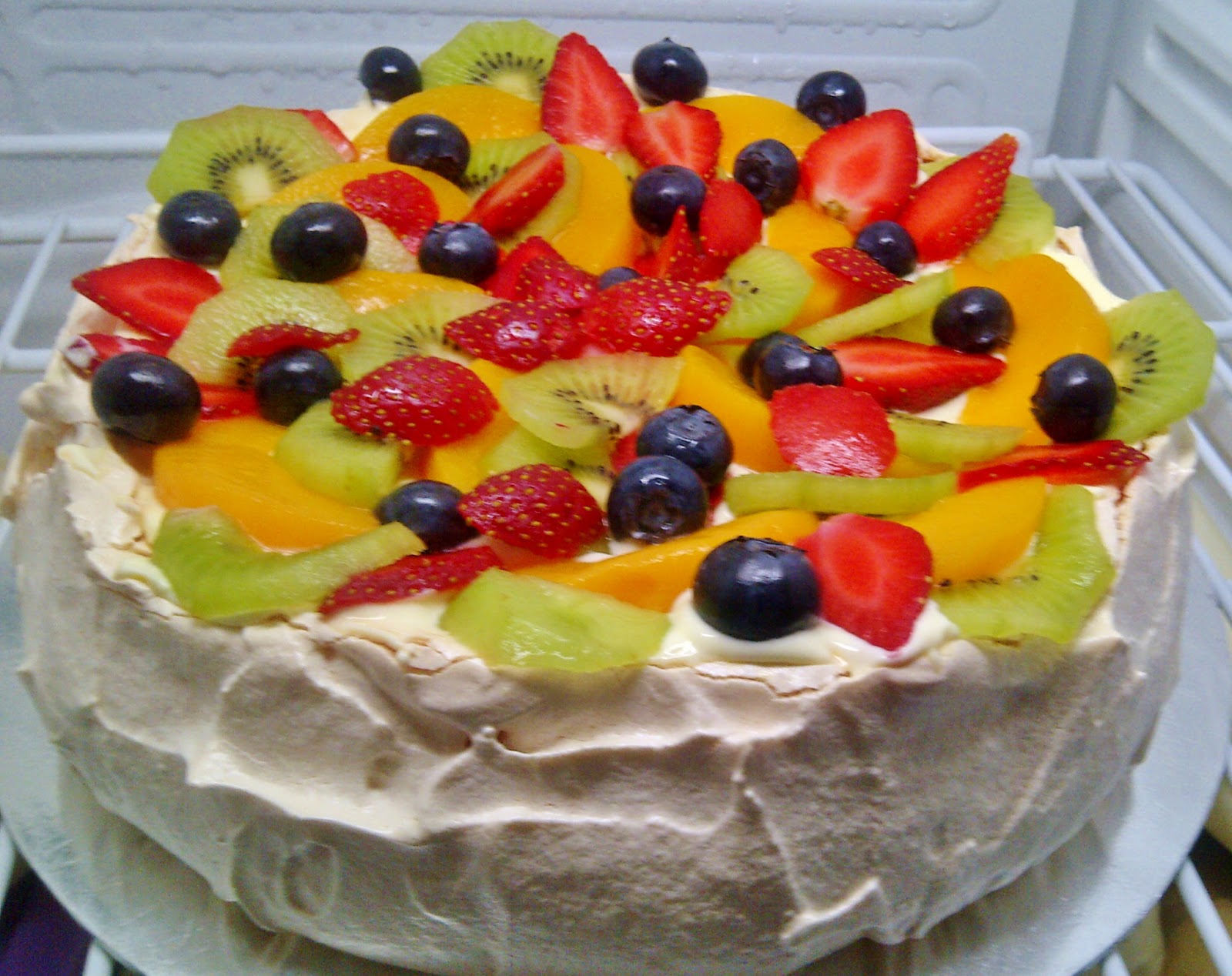
A pavlova is a meringue cake which has a crisp outer shell, and a soft marshmallow-y filling; a delectable, sweet, melt-in-your-mouth treat which is traditionally smothered in whipped cream and fresh summer fruit. Supposedly, the fragile pavlova was inspired by light-as-air Anna Pavlova, with its meringue casing designed to emulate the soft folds of her white ballet skirt.

Both New Zealand and Australia have some rather dubious stories as to how the pavlova first came to be made and named, but indefatigable research by a New Zealand food historian shows that it definitely originated in New Zealand, with a 1929 recipe being found in a New Zealand magazine. Meanwhile, it didn’t make an appearance in Australia until the early 1930s. So New Zealand gets the honours for inventing the pavlova, although it really does feel as if Australia has embraced the pavlova more heartily – it is a favourite choice to celebrate Australia Day.

I always have a pavlova for my Name Day cake: it not only reflects my name, Anna, but is perfect for a hot summery February Name Day. It’s also very appropriate, because my dad is from New Zealand and my mum born in Australia, so it symbolises the two countries coming together.

Name Information
Anna is the Latinised Greek form of the Hebrew name Hannah, meaning “favour, grace, graciousness”, sometimes translated more freely as “God has favoured me”, or “the grace of God”. The New Testament uses the Greek form Anna, in contrast to the Old Testament Hannah.

The Gospel of Luke tells of Anna the Prophetess, an old widow perhaps more than a century in age, who was very devout, and spent all her time fasting and praying. At the Presentation of Jesus in the Temple, celebrated as Candlemas in early February, she immediately recognised the infant Jesus as the redeemer, and gave thanks to God for having been allowed to see Jesus in her lifetime. Despite having a walk-on role in the Gospels, Anna is recognised as a saint.

According to Christian legend, the mother of the Virgin Mary was also named Anna (or Hannah), but she is usually referred to as Saint Anne in order to avoid confusion with Anna the Prophetess. The use of the name Anna was inspired by Saint Anne rather than the aged prophetess.

In classical mythology, Anna was the sister of Dido, Queen of Carthage; she appears in Virgil’s Aeneid. According to the poet Ovid, this Anna was the same being as the Roman goddess Anna Perenna, whose name refers to the “circle of the year” (per annum, in Latin). Her feast day marked the first full moon of the year, and people offered sacrifices so that the year should be successful.

Ovid relates that Anna escaped from Carthage to Italy, where she accidentally drowned and became a river nymph – he translated her name as meaning “perennial stream” (amnis perennis). Ovid says that the goddess was a tiny old woman who baked cakes, and that crude jokes and songs were sung at her festivals. She may have been a mother goddess, and originally Etruscan – if so, her name might be from the Etruscan nanas, meaning “to bear, to beget (a child)”.

Another mythological Anna is the half-sister of King Arthur, usually referred to as Morgause; in many stories she bears Arthur a son, to his downfall. Morgause seems to be a title, meaning “of the Orkneys”, so Anna would have been her personal name.

It may be that she is based on the Irish goddess Anu, sometimes called Ana or Annan. One possibility is that Anu is another name for the mother goddess Danu/Dana, while the war goddess the Morrigan was sometimes called Anand. The British had a winter storm goddess that they referred to as Gentle Annie or Annis, apparently from terror of her hideous powers (this is another link with the name Agnes in Britain). The name is speculated to come from the ancient Celtic anon, meaning “deity, spirit”.

While we’re looking at the name Anna in different cultures, it is worth mentioning that it is also a man’s name, because Anna (or Onna) was an Anglo-Saxon king. One theory is that his name was a nickname for Ethelmund, meaning “noble protection”, or one of the other Ethel- names. Don’t ask me how Anna is short for Ethelmund!

The name Anna has been in common use in the west since the Middle Ages, and has historically been more popular in Eastern Europe and Scandinavia, where it was used by the nobility. It was traditional in the Russian royal family, and the 18th century Empress Anna of Russia was a nasty piece of work. Apart from Anna Pavlova, another famous Russian Anna is the beautiful Anna Karenina, title character of the tragic novel by Leo Tolstoy, considered one of the greatest works of fiction ever written.

Anna is a classic name which has never left the charts. It was #208 in the 1900s, and sunk to its lowest level in the 1920s at #353. After that, it began climbing and joined the Top 100 in the 1950s at #89. The rise into popularity may have been influenced by the 1948 film version of Anna Karenina, starring Vivien Leigh, and helped along by the 1956 film The King and I, with Deborah Kerr in the role of Anna. These movies probably helped give Anna a touch of exoticism.

The King and I was based on the Broadway musical of the same name, in turn based on the book Anna and the King of Siam by Margaret Landon, from the memoirs of Anna Leonowens about her experiences as a royal teacher in Bangkok in the 1860s (Anna Leonowens lived for a few years in Western Australia). Anna and the King was made into a TV show in 1972, and although it flopped in the US, had a decent lifespan on Australian television as re-runs, giving the name Anna a fair amount of exposure during the 1970s.

Anna peaked at the start of the 1980s at #34, then gradually sank into the bottom half of the Top 100. It has not shown any signs of serious decline, but remained relatively stable. In 2013, Anna was #64 nationally, #60 in New South Wales, #81 in Victoria, #87 in Queensland, where it rejoined the Top 100 and was one of its fastest-rising names, #47 in Western Australia, and #71 in the Australian Capital Territory. Preliminary results for 2014 suggest Anna may have improved its position, and is one of Victoria’s fastest-rising names of last year.

One of the factors helping the name along must surely be Princess Anna from the 2013 hit Disney film Frozen, the younger sister of “snow queen” Elsa. Anna is an attractive heroine who is brave and hopeful, with a strong, loving heart. I know many little girls – and even some not so little ones – who adore Anna for being sweet and genuine, with an endearing awkwardness. I wonder how many baby Annas have had their name suggested by an older sister?

Anna is still popular and stable after many decades, and even shows signs of a recent boost. It is a popular name all over the world, but tends to be most popular in central and Eastern Europe, and is the #1 name in Austria. Last year blog readers voted Anna their favourite internationally recognisable girls’ name.

I have found Anna a very easy name to wear. It’s a common name never out of use, but has never been highly popular, so I don’t actually know many people with my name, although everyone has heard of it. Nobody has had any problems spelling it (I learned to write my name as a toddler in about a minute!), and everyone can pronounce it to my satisfaction, even those who don’t speak English. The biggest issue is that it sounds similar to other names, such as Hannah and Emma, which can cause a slight hold-up over the phone.

I can’t pretend that Anna is a very exciting name, but for such a short and simple one, I don’t think it is completely boring either. It’s a palindrome, which tickled me as a child, and it has quite an interesting history – it fascinates me that so many Annas from legend have been elderly women, sometimes with quite a dark side! Its “foreignness” made it popular in the mid twentieth century, and even now I think it has a slight touch of European exoticism: Disney chose it for a Scandinavian princess, after all.

POLL RESULT
Anna received a frankly unbelievable approval rating of 100%, making it the highest-rated girls name in the Waltzing With … category, the highest-rated girls name overall, and the highest-rated overall name of 2015. 46% of people loved the name Anna, and nobody disliked or hated it. I have trouble accepting that I have the perfect name, and can’t help thinking that everyone was too polite to say they didn’t like it!

(Picture shows a pavlova; photo from Just LilDaisy)

Famous Name: Philip

04 Wednesday Feb 2015

Posted by A.O. in Famous Names

≈ 3 Comments

Tags

animal names, Biblical names, classic names, Disney names, Disney princes, english names, European name popularity, famous namesakes, fictional namesakes, Greek names, honouring, locational names, middle names, name history, name meaning, name popularity, nicknames, royal names, surname names, UK name popularity, US name popularity

159088

Famous Namesake
Australia Day is a day not just to celebrate, but to honour Australians for their achievements and service to the community. However, this year even the Australian of the Year was almost completely forgotten as everyone was swept up in a media maelstrom when Prince Philip was named a Knight of Australia.

Former Prime Minister Gough Whitlam replaced the British honours system in 1975 with the Order of Australia, and Knights and Dames were added to it in 1976 by former prime minister Malcolm Fraser. Knights and Dames were then dumped by the Hawke government in 1986.

Last year Knights and Dames were re-instated by the current prime minister, who declared that they would celebrate pre-eminent Australians such as Governors-Generals, chief justices and the like. The prime minister didn’t consult his senior colleagues over the decision, which many felt to be a mistake which could come back to bite him. This is the moment it bit.

There are several reasons why declaring Prince Philip a Knight of Australia went down badly. For one thing, the prime minister didn’t consult any of his colleagues over the decision, which re-ignited fears of an arrogant leader making “captain’s calls” which could alienate his own cabinet. For another, Prince Philip wasn’t a pre-eminent Australian, so the appointment was outside the stated brief.

The prime minister’s decision has been widely criticised, and had scorn poured upon it. The decision has been described as “a time warp” and “ludicrous … cultural cringe” by some in the Opposition, while those on the prime minister’s own side labelled it “April Fool’s Day”, “total craziness”, and “a joke”. High profile supporters of the prime minister, such as conservative commentator Andrew Bolt and media baron Rupert Murdoch thought it was “pathetically stupid” and “an embarrassment”. No wonder the newspapers have dubbed it a “Knightmare“.

Comedian Adams Hills commented that, “Giving a Knighthood to Prince Philip is like giving a Beyonce CD to Jay-Z. Surely he could just pick one up at home”. In fact, Prince Philip, the Duke of Edinburgh, already has three British knighthoods, and has had knighthoods bestowed upon him numerous times by various countries, including Nepal, Peru, and a whole bunch of others you never knew cared.

So an Australian knighthood isn’t completely bizarre, and Prince Charles is already a Knight of Australia, while Prince Philip is a Companion of the Order of Australia. In fact, in Vanuatu Prince Philip is worshipped as a god, which makes a knighthood look pretty low-key in a “least we could do” sort of way.

The problem is that the prime minister was already floundering in a sea of unpopularity, and when you are in dangerous waters, you cannot afford to make a mistake. The knighthood to Prince Philip was the equivalent of a drowning swimmer cutting his leg open, and now (to continue this laboured metaphor), the sharks have the scent of blood and are circling in a menacing sort of way.

The Coalition have already lost the Victorian state election after only one term, and after the Prince Philip debacle, it performed so dismally in the Queensland state election that it is predicted to have lost its majority from a seemingly unassailable 78 seats, and former premier Campbell Newman has lost his seat and left politics. Many pundits are now predicting a federal leadership spill.

Name Information
Philip is the English form of the Greek name Philippos, meaning “friend of horses”. The name isn’t just about being an animal-lover – in ancient Greece, only the wealthiest people could afford to own horses, so the name proclaims a high status. (In the same way, knights are also high-status and connected with horses). Aptly, Prince Philip is a keen equestrian who still participates in carriage driving, a sport which he helped develop.

The name Philip was traditional in the Macedonian royal family, and Alexander the Great‘s father was named Philip. Because of this, it was a highly popular name in Macedonia, although common in the rest of the Hellenic world. Prince Philip was born in Greece to a prince of Greece and Denmark, so his royal Greek name is very suitable.

There are two saints named Philip from the New Testament. One is the Apostle Philip, who seems to have been a friend of Peter and Andrew; according to tradition, he was martyred by being crucified upside down. The other is Saint Philip the Evangelist, mentioned as being one of the deacons chosen to help care for the poor.

The name Philip came into common use in western Europe by the Middle Ages, and was a traditional name in several royal houses, including France, Spain, and Portugal. Philip was used in England from medieval times too, with a notable example being the Elizabethan courtier Sir Philip Sidney, who created the name Stella for a poem.

However, the name became less common for a time because of King Philip II of Spain, who tried to invade England, and whose Spanish Armada was famously defeated by the English in 1588. Philip had actually been king of England for a short time, due to his marriage to Mary I, and they hadn’t been a popular couple. However, under Philip’s rule Spain reached the peak of its power, and was called “the empire on which the sun never sets”. The Philippines is named after him.

By the 19th century, everyone was over the whole Spanish Armada thing, and Philip was completely rehabilitated, no doubt assisted by Phillip, the surname form of the name – which has an Australian link, thanks to Captain Arthur Phillip, the founder of Sydney (Phillip Island in Melbourne, and the suburb of Phillip in Canberra are named after him).

It’s not hard to think of famous Philips and Phillips, including poet Philip Larkin composer Philip Glass, self-help guru Dr Phil McGraw, novelist Philip Pullman, singer Phillip Everly from The Everly Brothers, actor Philip Seymour-Hoffman, and record producer Phil Spector, to name a few. Funnily enough, when I think of fictional Philips, most of them seem to be cartoons, such as Philip J. Fry from Futurama, Phillip Argyle from South Park, and Prince Phillip (!) from Sleeping Beauty.

Philip was #69 in the 1900s and Phillip was #95; they both peaked in the 1950s at #33 and #19 respectively. Philip left the Top 100 in 1989, while Phillip managed to last slightly longer, until 1996. Philip has fallen more dramatically, with not enough births since 2009 to show up in the records, while Phillip is around the 400s.

Philip is still getting reasonable use in the UK and US, but while Phillip has a similar popularity to Philip in the United States, in the 300s, Phillip (#709) is far less common in the UK than Philip (#288). One can only speculate why we all have taken a different position in regard to Philip and Phillip. Philip is most popular in Denmark and Norway.

As I already covered my brother Edward’s name, I will mention that Philip was the name my dad chose for my youngest brother, named for his cousin and best friend. Philip’s middle name is Andrew, after my mother’s favourite great-uncle, who was from the Scottish Highlands.

However, both these choices turned out to be superfluous, because almost as soon as Philip was brought home and settled into his cot, my dad said admiringly, “He’s so brown – like a little brown bear”, and from then on he was Little Brown Bear, and eventually just Bear. He never goes by Philip.

(I should probably add that my family are otherwise very fair skinned with light hair, so Philip’s handsome olive skin and dark hair seemed like an exciting novelty to us. This colouring turns up in many families of Cornish heritage, and legend has it that they are descendants of the Spanish Armada, or Moorish pirates, which is almost certainly complete fiction).

Philip is a classic name with ancient roots, a royal history, and a biblical heritage. It has become less common than its surname twin Phillip, although neither is used extensively. It has some great nicknames – if you’re not excited about Phil, there’s always Pip, the hero of Charles Dickens’ Great Expectations, while Philo, Flip and Pippin would also be possibilities.

POLL RESULTS
Philip received an approval rating of 57%. 21% of people saw Philip as too dated and old-fashioned, but 19% thought it was sensible and honest. 10% were put off the name by Prince Philip, while nobody thought the name was snobbish or stuck-up.

(Picture shows Prince Philip with a friend at the Royal Windsor Horse Show last year; photo from The Express).

Famous Name: Richard

21 Wednesday Jan 2015

Posted by A.O. in Famous Names

≈ 3 Comments

Tags

aristocratic names, classic names, European name popularity, famous namesakes, fictional namesakes, germanic names, medieval nicknames, name history, name meaning, name popularity, nicknames, royal names, saints names, Shakespearean names, surnames, UK name popularity, US name popularity

450245-1b3cb7a2-9613-11e4-9bd9-740a91fb6db7

Famous Namesake
I seem to end up doing names connected with cricket every January, and this year my choice was inspired by seeing The Richies in the stands on Day 2 of the Sydney test against India early in the month – otherwise known as known as Richie Day, which takes place the day before Jane McGrath Day.

The Richies are a group of cricket enthusiasts who dress up as iconic cricket commentator Richard “Richie” Benaud, complete with trademark silver hair, cream jacket, sunglasses, and oversized Channel Nine microphone (it is law that a Richie can only speak on Richie Day if they talk into their microphone).

The Richies were founded in 2010 by Michael Hennessy as a homage to Richie Benaud, who had just announced his retirement from full-time commentating. The first year there were ten Richies, this year there were 350; next year they hope to fill a whole bay, which means 680 Richies.

The group were inspired by comedian Billy Birmingham, who has gained fame for his cricket parodies under the name The Twelfth Man, where he often impersonated Richie Benaud’s distinctive voice. This year Billy Birmingham put The Richies through their paces, and revealed his own sons had dressed as Richie Benaud for the 2013 Test.

As for Richie Benaud himself? He wasn’t just a much-loved commentator, but a great all-rounder who debuted in the 1950s, and was captain for 28 tests between 1958 and 1962 without losing a series. He was the first player to complete the test double of 200 wickets and 2000 runs, and has been inducted into the Australian Cricket Hall of Fame and the ICC Cricket Hall of Fame.

Now 84 and battling skin cancer, Richie Benaud will appear with Billy Birmingham in advertisements for Australia Day this year – but don’t expect Richie to fully endorse his comedy double.

Name Information
Richard is a Germanic name which comes from ric (“power, rule”) and hard (“brave, hardy”), usually translated as “brave ruler”. It was introduced to Britain by the Normans, and has become one of the stock of standard English names, while also well known in other European countries.

Richard has been commonly used by English royalty and aristocracy. One of the best known is Richard I, known as Richard the Lionheart. Said to be tall, elegant, and extremely handsome with red-gold hair, he had a reputation as a great military leader, and remains an enduring figure of romance.

The last English king with the name was Richard III, whose reputation was so tarnished after his death that the name has never been used for a British monarch since (the child who would have been Richard IV was one of the “princes in the Tower” who disappeared in a sinister way, which didn’t help its fortunes as a royal name).

Richard III is infamous from Shakespeare’s play of the same name, where he is portrayed as a deformed, murderous, power-hungry villain. Recently, Richard III has been back in the news after his skeleton was dug up in a Leicester car park, with signs of many injuries from his death at the Battle of Bosworth Fields. Although the skeleton did have scoliosis, so that one shoulder would have been higher than the other, facial reconstruction shows him as looking young and quite pleasant rather than a hideous monster, and modern historians have been kinder towards him.

There are a number of British saints named Richard, including Saint Richard of Chichester, the patron saint of Sussex. There is a Saxon saint named Saint Richard the Pilgrim, but details of his life are sketchy, and Richard doesn’t seem to have been his real name. There are also several Saint Richards who were martyred for their faith in the 16th century.

Because the name has remained in common use for so many years, it is easy to think of famous men named Richard. You might think of composers Richard Strauss and Richard Wagner, singers “Little Richard” (Richard Penniman) and Richard Ashcroft, Beatles drummer Richard Starkey “Ringo Starr”, comedians Richard Pryor and Rich Hall, actors Richard Burton, Richard Attenborough, Richard Gere, Richard Harris, Richard E. Grant, Richard Wilson, and Richard Dean Anderson, presenter Richard Hammond, scientist Richard Dawkins, charismatic entrepreneur Richard Branson, and disgraced former US President Richard Nixon, who was named after Richard the Lionheart.

Richard is a classic name which has never left the charts. It was #26 in the 1900s, and reached its peak in the 1940s at #15. It didn’t leave the Top 100 until the early 2000s, and has gently declined so it is now around the mid-200s. Despite being at its lowest point so far, the name is still in reasonable use and relatively stable. Its popularity is about the same in the UK, and in the US is around the mid 100s. Richard is most popular in the Czech Republic.

Richard has many nicknames, but one thing not helpful to the name is that most of them seem rather dated. Dick, once so common that we could say every Tom, Dick and Harry to mean “every man”, is now frowned upon as an embarrassment, while Dicky reminds older people of “Tricky Dicky” Nixon. Rick and Ricky both peaked in the 1960s, and while I quite like Rich, Richie and Ritchie, Richie Rich, Richie Cunningham, and Ritchie Valens might give them a 1950-ish feel.

You can find medieval short forms of Richard through the English surnames they have inspired. Hick and Hitch led to Hitchens, Higg to Higgins, while Ditch led to Deek and Deex. Dickon was King Richard III’s nickname – also a character in The Secret Garden. Dickon was transformed into names such as Diggin and Diggle, which are quite a lot like fashionable Digby, and make Digger or Digs seem like reasonable vintage-style short forms of Richard. Dix is also a possibility, in line with names such as Max.

With Richard, you get a solid classic name that has never been out of the 200s; a name good enough for kings and saints and celebrities, as well as all manner of ordinary men. It’s a name which matures well, and looks professional on a CV. In fact, as Richie Benaud would say, you might think this name is perfectly “marvellous”!

POLL RESULTS
Richard received an approval rating of 44%. 22% of people were really bothered by the possibility of Dick being given as the nickname for Richard, while 19% saw the name as dated and old-fashioned. However, 14% thought Richard was a name with a solid meaning and history behind it. 3% disagreed with the majority, and thought it was silly and immature to believe there was anything wrong with the nickname Dick.

Famous Name: Jasper

07 Wednesday Jan 2015

Posted by A.O. in Famous Names

≈ 5 Comments

Tags

American slang terms, Banjo Paterson, Chaldean names, Christmas names, english names, English slang terms, European name popularity, gemstone names, locational names, name history, name meaning, name popularity, New Zealand, Pashto names, popular names, royal names, saints names, unisex names, William Shakespeare

1024px-Edward_Burne-Jones_-_The_Adoration_of_the_Magi_-_Google_Art_Project

Name Story
Yesterday was Epiphany, which commemorates the Adoration of the Magi in western Christianity. According to The Gospel of Matthew, the magi were learned men from the East who followed a mysterious star to kneel before the baby Jesus, bearing gifts of gold, frankincense, and myrrh.

Although the Bible does not specify a number, it is usually assumed there were three, because there were three gifts. The Magi were Zoroastrian priests from Persia, and the word magi has been traditionally translated as “wise men”, although modern translations of the Bible use the word “astrologers”, as Zoroastrians studied the stars.

Christian legend sometimes calls them the “three kings”, due to a Psalm which says May all kings fall before him. In some countries, January 6 is known as the Feast of Kings, and it is most famous from the Epiphany carol, We Three Kings of Orient Are.

The date of January 6 is purely symbolic – the Magi are supposed to have arrived some time in the two years after the birth of Jesus, and although they are often included in Nativity scenes, the Bible says they visited Mary at her house, not in the stable. Tradition says that after the Magi returned home, they became Christians and were martyred: they are thus regarded as saints.

The Bible being so short on details, legend has filled in the blanks with imaginative flair. The Magi are given names, usually said to be Gaspar, Melchior, and Balthasar. Gaspar is identified as a middle-aged brown-skinned Indian who brings the frankincense; Melchior as an elderly white-skinned Persian who carries the gold; and Balthasar as a young black-skinned Arabian who bears the gift of myrrh.

Perhaps you think it is far-fetched that a group of men would cross the desert (a difficult journey of many months) in order to worship a foreigner of a religion that isn’t even theirs. However, history records that it did happen, at least once.

King Tiridates of Armenia, a Zoroastrian priest of Armenian, Greek, and Persian ancestry, travelled to Rome in 66 AD on a visit to the Emperor Nero with a huge retinue of followers, including his magi. As his tribute king, Tiridates knelt before Nero, proclaiming that he worshipped him as a god (this was mere diplomacy; Tiribates was apparently disgusted by Nero). Unlike the Bible story, it was Nero who gave gifts to Tiridates, and paid for all his travel expenses.

It has been suggested that this state visit may have provided the inspiration for the Adoration of the Magi in the Gospel of Matthew. However, it’s also evidence that the journey of the Magi as described in the Bible has some degree of plausibility.

Epiphany is the traditional date for the end of the Twelve Days of Christmas, and in the past, its eve was celebrated as Twelfth Night, with much feasting and tomfoolery. William Shakespeare wrote his comedy Twelfth Night as an entertainment for the end of the Christmas season: its theme of cross-dressing is appropriate, for it was the rule that everything had to be topsy-turvy. If you went to a Christmas pantomime, you’ll know this tradition continues.

Most people say your Christmas decorations have to come down by Epiphany, and many people will go back to work by this date. I’m not back at work yet – but I am back at blogging! Hope you had a great Christmas and New Year.

Name Meaning, History and Popularity
Jasper is the English form of Gaspar, derived from the ancient Chaldean word gizbar, meaning “treasurer”; the modern Hebrew word for treasurer is still gizbar. These days the word treasurer doesn’t sound too glamorous (if you’ve ever been treasurer of your local tennis club or something, you’ll know it’s essentially a boring, thankless job), so the name is sometimes translated as “master of the treasure house”.

The traditional names for the three Magi date back to at least the 6th century, and Gaspar is the only one whose name may be inspired by a real person. The apocryphal Acts of Thomas mentions a Zoroastrian king named Gudnaphar, and Gondophares was a traditional name and title in the House of Suren – they were kings of Iranian background who ruled in the area around northern India.

According to tradition, Saint Thomas the Apostle travelled to India as a missionary. Gondophares was identified in medieval texts as the Indian king who brought incense to the baby Jesus as one of the Magi, and was converted to Christianity by Saint Thomas. Gondophares is the Greek form of the Pashto name Gandapur, meaning “may he find glory”.

Jasper is also the word for a gemstone which is usually red, yellow, brown or green in colour. The word comes from the Old French for “spotted stone, speckled stone”, and may be Semitic in origin. It was a favourite gemstone in ancient times, especially the green variety, although the ancients probably called many different minerals “jasper”; it is mentioned in the Bible. Because of the gemstone, Jasper has occasionally been used as a name for girls.

Jasper has been used as an English name since the Middle Ages, in honour of the saint, although it was never highly popular. It has also been used as a slang term – in England, it is an old country term for a wasp (because it sounds a bit similar), and in America, it has been used as slang for a simpleton or hick (perhaps because it sounded a backwoodsy sort of name there).

There is a Lake Jasper in south-west Western Australia; it has very clear fresh water and is popular for picnics. It’s named in honour of Jasper Bussell, who died in infacy, and was the brother of the famous Grace Bussell, who we met earlier. Its use by the wealthy and prominent Bussells suggests a rather upper class image in the 19th century.

There is also a small village in the mountains of New South Wales named Wee Jasper, where Banjo Paterson once had a country home. Folklore relates the village got its name due a Scottish settler who came home with a “wee jasper” in his pocket, the gemstone found in some stream amongst the hills.

Jasper has ranked in Australia since the 1990s, when it debuted at #237. It joined the Top 100 in 2009, at #98, and since then has remained around the bottom of the Top 100. Currently it is #82 nationally, #87 in New South Wales, #77 in Victoria, #87 in Queensland, #22 in Tasmania, and #80 in the Australian Capital Territory.

In the English-speaking world, Jasper is most popular in Australia, as it is not yet Top 100 in the US or UK, although rising, and has just joined the New Zealand Top 100 at #85. It isn’t popular in many other countries, but ranks highest in Belgium, at #55.

Jasper is a handsome and sophisticated choice related to gifts, gems, and treasure that will please many parents for not being overused. It isn’t highly popular anywhere in the world, and in Australia has never been higher than the bottom quarter of the Top 100; nor does it show signs of rising alarmingly. The name has its detractors, due to some image problems from popular culture, but no doubt that’s one of the factors keeping use down. I think it helps make Jasper seem a bit quirkier.

And the name commemorates one of the most beautiful Christmas stories – who could resist the magic of a star guiding your way?

POLL RESULTS
Jasper received an excellent approval rating of 89%, making it the most highly-rated boy’s name in the Famous Name category for 2015. People saw the name Jasper as hip and quirky (29%), handsome or cute (22%), and cool and sophisticated (19%). However, 3% thought the name seemed creepy and evil. Only one person thought Jasper was too old-fashioned, and just one thought it was too posh.

(Picture shows The Adoration of the Magi, an 1890 tapestry by Edward Burne-Jones)

← Older posts
Newer posts →

Enter your email address to follow this blog

Categories

Archives

Recent Comments

A.O.'s avatarwaltzingmorethanmati… on Zarah Zaynab and Wolfgang…
Madelyn's avatarMadelyn on Zarah Zaynab and Wolfgang…
JD's avatardrperegrine on Can Phoebe Complete This …
A.O.'s avatarwaltzingmorethanmati… on Rua and Rhoa
redrover23's avatarredrover23 on Rua and Rhoa

Blogroll

  • Appellation Mountain
  • Baby Name Pondering
  • Babynamelover's Blog
  • British Baby Names
  • Clare's Name News
  • For Real Baby Names
  • Geek Baby Names
  • Name Candy
  • Nameberry
  • Nancy's Baby Names
  • Ren's Baby Name Blog
  • Sancta Nomina
  • Swistle: Baby Names
  • The Art of Naming
  • The Baby Name Wizard
  • The Beauty of Names
  • Tulip By Any Name

RSS Feed

  • RSS - Posts

RSS Posts

  • Celebrity Baby News: Melanie Vallejo and Matt Kingston
  • Names from the TV Show “Cleverman”
  • Can Phoebe Complete This Sibset?
  • Zarah Zaynab and Wolfgang Winter
  • Baby, How Did You Get That Name?
  • Celebrity Baby News: Media Babies
  • Celebrity Baby News: Adelaide Crows Babies
  • Celebrity Baby News: Chris and Rebecca Judd
  • Names at Work: Name News From the World of Business and Employment
  • Celebrity Baby News: Sporting Round Up

Currently Popular

  • Celebrity Baby News: Jacinta Allan and Yorick Piper
  • Celebrity Baby News: Jacinta Allan and Yorick Piper
  • Celebrity Baby News: Craig Thomson and Zoe Arnold
  • Celebrity Baby News: Ed Husic and Bridget Tilley
  • The Top 100 Names of the 1940s in New South Wales

Tags

celebrity baby names celebrity sibsets english names famous namesakes fictional namesakes honouring locational names middle names name combinations name history name meaning name popularity name trends nicknames popular names saints names sibsets surname names twin sets unisex names

Create a free website or blog at WordPress.com.

Privacy & Cookies: This site uses cookies. By continuing to use this website, you agree to their use.
To find out more, including how to control cookies, see here: Cookie Policy
  • Subscribe Subscribed
    • Waltzing More Than Matilda
    • Join 517 other subscribers
    • Already have a WordPress.com account? Log in now.
    • Waltzing More Than Matilda
    • Subscribe Subscribed
    • Sign up
    • Log in
    • Report this content
    • View site in Reader
    • Manage subscriptions
    • Collapse this bar
 

Loading Comments...