• About
  • Best Baby Names
  • Celebrity Baby Names
  • Celebrity Baby Names – Current
  • Celebrity Baby Names – Past
  • Featured Boys Names
  • Featured Girls Names
  • Featured Unisex Names
  • Links to Name Data
  • Waltzing on the Web

Waltzing More Than Matilda

~ Names with an Australian Bias of Democratic Temper

Waltzing More Than Matilda

Tag Archives: english names

Famous Names: Blake

09 Wednesday May 2012

Posted by A.O. in Famous Names

≈ 9 Comments

Tags

english names, famous namesakes, fictional namesakes, name history, name meaning, name popularity, nicknames, Old English names, popular names, surname names, unisex names

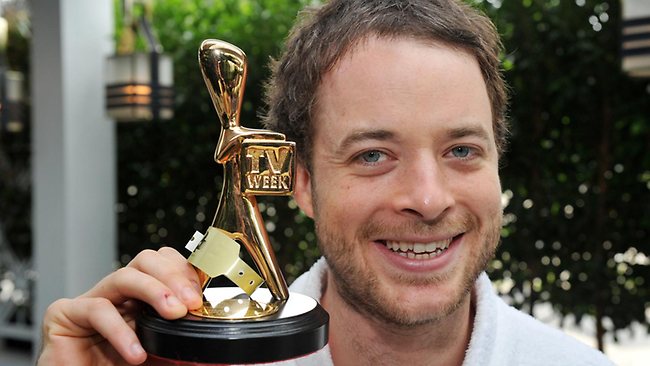
Comedian Hamish Blake has cropped up several times on the blog. His name was included in the post Boys Names That Only Chart in Australia, and we also took a look at how successful his name is. He’s had a dream run in the not-usually-lucrative field of comedy ever since he dropped out of a double degree in Science and Commerce to buddy up with Andy Lee as a comedic duo. Together they have had a ratings winning drivetime radio show filled with prank calls and the like, and several successful TV shows, most recently, Hamish and Andy’s Gap Year. Eventually it all paid off for at least one of them when Hamish won the Gold Logie for being the Most Popular Personality on Australian Television at this year’s Logie Awards.

Blake is an English surname which has two different origins of opposing meanings. Both of them began as nicknames. One is the Old English blæc, meaning “black”, referring to someone with black hair or a dark complexion. The other is from blāc, meaning “pale”, referring to someone with very blond hair or a fair complexion. One theory is that the two nicknames were ethnically based, with the first denoting the dark Celts, and the second denoting the fairer Jutes, who were from Jutland (today it’s Denmark, and the bits of Germany that join on to Denmark).

Although you’ve no doubt twigged that blæc became our English word black, it may not have immediately occurred to you that blāc is related to our English word bleak. Late in the Middle Ages, the two words were merged into blake, moving us closer toward the modern word black, but somehow immersing in it a word meaning the opposite. However, if you consider black and bleak together, they don’t seem quite so contradictory.

The Blakes are an Irish aristocratic family, dating back to the Norman Conquest of Ireland, so you could see the first name Blake as derived from this aristocratic surname. However, those of a literary bent are more likely to see it as honouring William Blake, the visionary English poet and painter who was a seminal influence on the Romantics. If you are something of a sci-fi fan, the name may remind you of Roj Blake, from the popular 1970s and ’80s TV series, Blake’s 7.

Blake reminds me of the much-loved illustrator Quentin Blake, as I was raised reading Roald Dahl‘s books, with the enchanting Mr Blake’s humorous drawings, which convey life and movement so effortlessly. My childish desire was to look as cheerfully plain and lank as the children that Quentin Blake drew; however to my disgust, my parents insisted on lots of fresh air, exercise and home grown produce, so that I remained obstinately tanned, rosy-cheeked and sturdy. Luckily I didn’t know enough about genetics to realise it was also their fault I wasn’t plain!

Another Blake from the era of the 1980s was Blake Carrington from American soap opera, Dynasty. This ruthlessly wealthy oil tycoon, whose life revolved around kidnappings, comas and the search for Nazi gold, seems to have given the name a rather “preppy” image in the United States. We don’t have the word preppy here, but as far as I can work out, it means “offensively middle-class”. Perhaps someone more knowledgeable can enlighten me on this one? I suspect that here its image is a bit more relaxed (although rebel Blake Dean from Home and Away managed to have a rather tortured time in Summer Bay, even without any Nazi gold).

Blake is often listed as a unisex name on international sites, although it is Top 100 for boys, and the only female Blake ever mentioned is actress Blake Lively from Gossip Girl. There is nothing especially boyish about the meaning of the name Blake, but its consonant-vowel-K sound has the same pattern as names such as Jack, Luke and Jake, giving it a masculine intonation (although it is a bit like Brooke, too). Although I could accept it as unisex, it’s seen as a male name in Australia, and you may get some resistance to using it for a girl. The similarity between Blake and the word bloke could well be keeping it in the boy’s club.

Blake first entered the charts in the 1950s, and took off in the 1970s (hmm, Blake’s 7, anyone?), so that it was Top 100 by the 1980s. It reached its peak in the 1990s, just outside the Top 20. Since then, it has fallen in popularity, although it is still in the Top 50 (and more popular in Australia than anywhere else in the world). Perhaps surprisingly, Hamish Blake doesn’t seem to have helped the popularity of the name, even though the name Hamish is doing pretty well for itself in the charts.

Although statistically Blake has passed its prime, to many it fits into that handy category of Popular But Not Too Popular Names, and has many namesakes from popular culture which have garnered it affection. It’s a nice, short, simple name which sounds sporty, surfer and skater, but still has some room for art and poetry. I tend to think its real strength is as a middle name, however.

Popular Names for Boys

06 Sunday May 2012

Posted by A.O. in Name Themes and Lists

≈ 23 Comments

Tags

Aramaic names, band names, Biblical names, car names, celebrity baby names, classic names, english names, famous namesakes, fictional namesakes, French names, germanic names, Greek names, hebrew names, honouring, Latin names, locational names, name history, name meaning, name popularity, nicknames, Old Norse names, popular culture, popular names, royal names, saints names, Scottish names, surname names

Follows on from Popular Names for Girls.

William

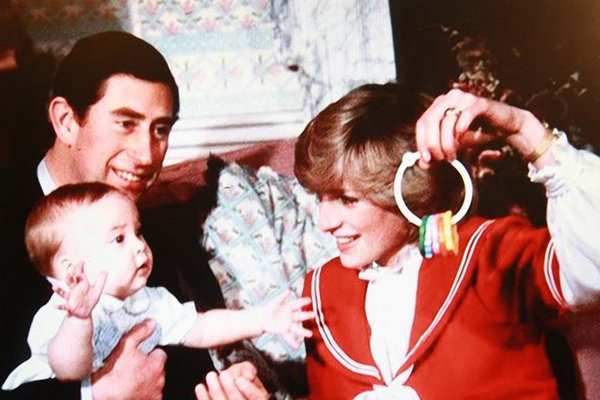
William is a solidly classic name which has never left the Top 50. It was the #1 name of the 1900s, and gradually decreased in popularity, hitting its lowest point during the 1970s, at #48. However, its fortunes were soon to recover, because in 1982, heir to the British throne Prince Philip, and his then wife, Diana, Princess of Wales, welcomed their first child and eldest son, William Arthur Philip Louis. Prince William was named after his father’s cousin and personal hero, Prince William of Gloucester, who died in an air crash ten years earlier. Prince William made his first visit to Australia as a baby, and this was an immediate help to the name’s popularity. By the time Prince William began university in 2001, the name was already in the NSW Top 10. It reached #1 in 2009, the year after Catherine Middleton began accompanying Prince William to official functions, and there it has remained. In 2011, Prince William made a much-appreciated visit to flood-affected areas of Australia, and shortly afterwards treated the world to a slap-up royal wedding. It’s likely this princely name will remain at the top for at least another year.

Jack

Jack is a classic name which has never left the charts. Top 100 during the 1900s-30s, it sunk to its lowest point in the 1970s, at #269. However, so rapid was its growth that it joined the Top 100 again during the 1980s – the same decade that pop singer John Farnham released his Whispering Jack album. Whispering Jack went to #1, and is the highest-selling album ever in Australia, having gone platinum 24 times over. By the 1990s, Jack was already Top 10, a decade when Leonardo di Caprio played water-logged lover Jack Dawson in the romantic movie Titanic, and teen heartthrob Daniel Amalam played bad boy Jack Wilson in soapie Home and Away. By the start of the 2000s, Jack was #2. It made #1 by 2004, the year that the TV show LOST began, with its hero Dr. Jack Shephard, and the year after Johnny Depp played Captain Jack Sparrow in the first Pirates of the Caribbean film. Jack remained in first place until 2008, the year that AC/DC released their single Big Jack. Jack the Lad may have had his day, but won’t be going anywhere fast, and is still the #1 name in some states.

Ethan

Ethan is a name from Hebrew which means “solid, enduring”. In the Old Testament, Ethan is said to have been a very wise man who wrote Psalm 89. Ethan first entered the charts in the 1970s, and took off during the 1980s, as film-maker Ethan Coen began his career, working in tandem with his brother Joel. At the end of the 1980s, actor Ethan Hawke got his big break in Dead Poets’ Society. By the 1990s, Ethan was a Top 100 name, and it was in this decade that Tom Cruise first played Ethan Hunt, the hero of the Mission Impossible films, Ethan Philips joined the cast of TV show Star Trek, and Ethan Rayne was introduced as a character on Buffy the Vampire Slayer. It was also during the 1990s that surfing champ Wendy Botha welcomed a son named Ethan. In 2006, Ethan joined the Top 10 – the year after the Ethan Group, an Australian IT company, won the BRW Fast 100. Singer Dannii Minogue, Kylie’s sister, welcomed a son named Ethan in 2010, and that probably won’t hurt the chances of this strong yet gentle-sounding name going higher still.

Oliver

Oliver is the English form of French name Olivier, but it’s unclear whether it’s the Norman form of Germanic Alfher, meaning “elf warrior”, or Old Norse Aleifr, meaning “ancestor’s descendant” (related to Olaf). The spelling was altered to make it seem as if the name came from the Latin oliva, meaning “olive tree”. A classic which has never left the charts, Oliver was Top 100 in the 1900s, but then sank into rare use. It recovered during the 1970s, the decade after the release of Oliver!, the musical based on Dickens’ novel, Oliver Twist. In this decade, actress Goldie Hawn welcomed a son named Oliver. The name gained ground during the 1980s, and was Top 100 during the 1990s. Late in the ’90s, the first Harry Potter book was published, featuring Harry’s Quidditch captain, Oliver Wood. In the 2000s, the books were turned into films, with Oliver Phelps playing the role of George Weasley. By 2006, the debut of TV show Hannah Montana, where Oliver Oken is the best guy-friend of the heroine, it was Top 20, and by 2008 it was Top 10. By 2010 it was Top 5; Oliver may go higher if you want some more.

Lucas

Lucas is the Latin form of Greek Loukas, on which English Luke is based. Lucas first entered the charts in the 1950s. There was noticeable growth during the 1970s, the decade that George Lucas made the first Star Wars movie, and then it remained stable for several decades in the very low 100s. However, in the 2000s it made the Top 100, and at this point it fairly raced up the charts. A possible help to the name was the television drama series, One Tree Hill, in which Chad Michael Murray plays the main protagonist, Lucas Scott. This brooding, blue-eyed, sporty yet bookish hero proved something of a hit with the female demographic. Meanwhile, Lucas Holden on Australian soap Home and Away was also a literary teenager, who ended up having a controversially steamy scene with his onscreen girlfriend. By 2006, the year that soccer star Lucas Neill played for Australia in the World Cup, it was in the Top 50. By 2007 it was Top 20, and by 2010 it was Top 10. The 2000s were kind to Lucas, and at this point, lucky Lucas seems almost certain to go to #1.

Noah

Noah is derived from the Hebrew name Noach, meaning “rest, comfort”. Noah is well known from the Old Testament story, where he builds an ark which saves his family and the animals of all species to survive the Great Flood, sent by God as a one-off punishment to wicked humanity. The name Noah entered the charts in the 1980s, the decade when Noah Hathaway gave an award-winning performance as boy-warrior Atreyu, in the fantasy film, The Neverending Story. Also in the 1980s, Australian actor Noah Taylor made his film debut as the main character in the critically acclaimed The Year My Voice Broke. Noah climbed steadily, then suddenly shot up during the 1990s, the decade that Boris Becker welcomed a son named Noah, so that it was in the Top 50 by the 2000s. Noah joined the Top 20 in 20005, the year after Ryan Gosling played the young version of Noah Calhoun, the devoted lover from romantic film, The Notebook. In 2006, Noah was in the Top 10. However, Noah has remained reasonably stable, with no signs of moving significantly up or down, and we must wait to see whether it sinks or swims.

Lachlan

Lachlan is a Scottish name which began as a nickname for someone from Norway. In Scotland, Norway was known as the “the land of the lochs”, or Lochlann. Lachlan Macquarie was born in the Hebrides, and became Governor of New South Wales in 1809. To the British government of the time, Australia was a penal colony for offloading the dregs of their society; convicts must be treated cruelly, former convicts exploited, and little money spent. The government fretted as Macquarie pardoned convicts, employed freed convicts in important positions, put up beautiful Georgian buildings, and spent lavishly on public works. Eventually the British booted him, but for giving us a future and sticking up for us, he is considered the father of our nation. Lachlan has been almost continuously in the charts, only dropping out in the 1930s, but was in rare use until it began rising in the 1960s. In 1971, media magnate Rupert Murdoch chose this name for his eldest son, and the name rose significantly. It was Top 100 by the 1980s, Top 20 by the 1990s, and Top 5 by the early 2000s. The position of this patriotic favourite has been stable for more than a decade.

Cooper

Cooper is an English surname which means “barrel-maker”. One of the most famous rivers in Australia is Cooper Creek, where doomed explorers Burke and Wills met their end, and Australian racing car driver Jack Brabham drove for the Cooper Car Company. Cooper first entered the charts in the 1980s, and made good ground during the 1990s, a decade when Bill Murray and Hugh Hefner both welcomed sons named Cooper. By the 2001, the name was in the Top 50, and then it soared. It got some serious sporting muscle as Quade Cooper joined the national men’s rugby union team, the Wallabies, and Cooper Cronk joined the national rugby league team. Cronk was also part of the Melbourne Storm team which won five Premierships or Minor Premierships within four years. Originally from Brisbane, he plays for the Queensland state side, which insists on winning the State of Origin series every year. Handsome, athletic and an extremely talented player, Mr Cronk seems like a big part of the reason the name Cooper is #1 in Queensland. Cooper made the Top 10 in 2007, and the Top 5 the following year, but now seems to be falling without reaching the top spot.

Thomas

Thomas is from an Aramaic word meaning “twin”, and in the New Testament, Saint Thomas was one of the Twelve Apostles. Thomas was his nickname; his real name was Judas. Presumably he was the twin of someone in the Biblical stories, or just a lookalike or kindred soul, but frustratingly, the Bible neglects to explain whose “twin” he was. People who like logical explanations for things often cite Thomas as their favourite Apostle, because when he heard that Jesus had been resurrected, he refused to believe it until he could see and touch Jesus for himself – hence the phrase, Doubting Thomas for a sceptical person. Thomas is a classic which has never left the Top 100. In the Top 5 of the 1900s, it gradually declined, and reached its lowest point in the 1970s, at #68. It climbed smoothly through the 1980s, the decade that saw Tom Cruise and Tom Hanks become stars. By the 1990s, it was in the Top 5, and maintained position in the 2000s as Tom Felton played Draco in the Harry Potter films, making many a teen girl switch to Team Slytherin. However, it may be very gradually going down now.

James

James is the Latinised form of Jacob, and must be one of the most successful names from the New Testament. The name of two of the apostles, this doubly saintly name is also a royal one in Britain, where there have been seven Scottish kings called James. The King James Version of the Bible was commissioned by King James I of England (James VI of Scotland), giving it yet another tie to this sacred book. In Australia, the most famous James is Captain James Cook, the explorer who discovered our continent. A classic which has never left the Top 20, James reached its lowest point in the 1960s and ’70s at #19. Recovery was so swift that it was Top 10 in the 1980s, and Top 5 in the 1990s. Since the 1970s, there have been many Jameses in the public eye, real and fictional. Actors James Woods, James Spader, James Marsters, and James Phelps; singers James Blundell, James Morrison and James Blunt (not to mention the band James); Captain James Kirk from Star Trek; and the inimitable James Bond. James is the name of Harry Potter’s father – his mum’s name Lily is also Top 10. Cool James is falling again, at glacial speed.

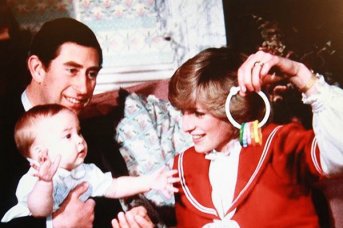
(Picture shows Prince William as a baby with his parents, Prince Philip and Diana, Princess of Wales; image from Royal Wedding)

Famous Name: Molly

02 Wednesday May 2012

Posted by A.O. in Famous Names

≈ 4 Comments

Tags

english names, famous namesakes, fictional namesakes, name history, name meaning, name popularity, nicknames, popular names

Early in his career, music guru Ian Meldrum was dubbed “Molly” by a DJ who enjoyed giving men female nicknames. Oddly enough, Ian comes from the Mallee district of country Victoria, and his nickname at school had been Malleeroot (a malleeroot is the underground trunk of a mallee tree). He seems to have found the nickname familiar enough to keep, or been too good-natured to reject it.

Shortly before Christmas last year, Australia was shocked to learn that Molly Meldrum had fallen from a ladder while putting up decorations, and been found unconscious. He was taken to Alfred Hospital, where his life hung in the balance. He lay in an induced coma with serious head injuries, a broken shoulder, broken ribs, a punctured lung, and cracked vertebrae.

While Molly lay unconscious in intensive care, there was an outpouring of concern for him – not just from stars like Kylie Minogue, Elton John, Darren Hayes, Russell Morris, Michael Buble, Cher and Madonna, but from thousands of his fans in Australia.

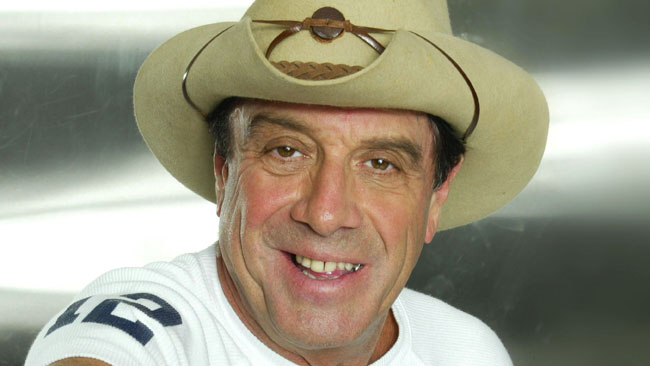
For almost half a century, Molly has been a key figure in the Australian music industry, and for decades, the key figure in the industry. A music journalist, band manager and music producer, he went on to host a seminal and wildly popular music show called Countdown, which a generation grew up watching. He became instantly known for his cowboy hat, rambling discourse, and his catchphrase, “Do yourself a favour”. For viewers, he felt like one of the family – maybe a slightly eccentric uncle whose visits were always fun, if unpredictable.

The wonderful thing about Molly’s career is that he is the epitome of the passionate amateur, who started at the bottom as a roadie, and, being a natural networker, built up a worldwide list of contacts that saw him working at Abbey Road, becoming a media icon, making friends with some of the biggest pop stars in the world, and winning many awards, including an Order of Australia.

As I read through the tributes pouring in on Twitter or to the newspapers, it struck me that he is a person who had touched many people’s lives, and a person with a remarkable talent for engendering love and respect from others. People remembered him from years ago – some of them had only had a single telephone conversation with him, or once sat next to him on a plane, but he had won them over with his unpretentious friendliness. He treated everyone, not just as an equal, but as his best mate.

Others had worked with Molly decades earlier, and recalled with great fondness how kind he had been to them. For someone to charm the rich and famous is no great feat – I’m sure most of us could suck up to celebrities if our careers depended on it. But to consistently show courtesy to everyone, to chat for hours with an elderly lady he would never see again and who had no idea who he was, to be solicitous to people who could not possibly aid his rise to the top – that is something much rarer and more extraordinary.

Molly was moved to a rehabilitation centre just prior to Australia Day, and in March was allowed to go home, while continuing daily rehab as an outpatient. Not long before ANZAC Day, he felt well enough to give his first interview. He appeared hospital-pale, and had the slight slur in his voice common to the brain-injured, but strangely, intensive speech therapy had removed his characteristic umming and aahing in conversation! Thank goodness he still had the hat.

He expressed enormous surprise and gratitude that so many people, friends and strangers alike, had cared for his safety and well-being, and announced that he was giving up drinking. Molly is now convalescing in Thailand, where his partner is from, and hopefully going from strength to strength.

Molly is a pet form of the name Mary which developed from the medieval diminutives Malle and Molle. Molly seems to have existed as an independent name since the 16th century. People often think of it as a very Irish name, because of the folk song Molly Malone, where Molly is a fishmonger from “Dublin’s fair city”. Although Dublin does have a statue of a rather bosomy Molly Malone in honour of this mythical lady, the song seems to have been written in Scotland. Nonetheless, the name Molly is currently more popular in Ireland and Northern Ireland than anywhere else in the British Isles (although not as popular as in Sweden, for some reason).

Molly was in use in the 1900s, although it wasn’t a very common name, and only dropped off the charts completely during the 1960s. The name took off in popularity during the 1990s, and was Top 100 in the early 2000s. It’s currently #53 in New South Wales, and fairly stable.

I can’t help noticing that Molly only became a popular girl’s name once the TV show Countdown had finished, in 1987. Perhaps a weekly reminder that a man could be called Molly was not helpful to the parents of baby girls.

However, if you were going to name your little girl after an elderly gentleman, you really couldn’t find a nicer one than Molly.

Popular Names for Girls

29 Sunday Apr 2012

Posted by A.O. in Name Themes and Lists

≈ 29 Comments

Tags

acronyms, Appellation Mountain, band names, Biblical names, celebrity baby names, created names, english names, Etruscan names, famous namesakes, fictional namesakes, flower names, French names, gemstone names, germanic names, Greek names, Italian names, Latin names, Linda Rosenkrantz, locational names, mythological names, name data, name history, name meaning, name popularity, name trends, Nameberry, nature names, nicknames, Norman names, popular culture, popular names, retro names, royal names, Shakespearean names, ship names, tribal names, vocabulary names

In honour of the name data being released, I thought I’d do lists of the most popular names in Australia for last year. I admit this was something of a last-minute decision, but it seemed like a good opportunity to cover some of the best-loved names.

People often ask how popular names got to be popular. I’m not sure there’s really a good answer to that – clearly people like the sound of them, and they fit in with current trends. Yet there must be many names, equally as nice-sounding and trend-friendly, that lurk around the 200s and don’t seem as if they are going anywhere much.

Although I cannot tell you what events caused these names to become popular, I can tell you some of the events which accompanied their rise. I’m definitely not trying to say that they were the cause of a name’s popularity, just that they coincide with it (and really sometimes it seems more than merely coincidental). Feel free to add other events you can think of, or any theories of your own!

Note: I’ve used data from New South Wales, but it must be broadly accurate for the rest of the nation too.

Lily

Lily seems to have begun as a pet form of Lilian, but must soon have become thought of as a flower name. The lily is sacred to the Virgin Mary, and Jesus urged his followers to “consider the lilies of the field” as a model in trusting Divine Providence. Lily has been almost continuously in the charts, only dropping out during the 1960s. It began rising in the 1980s – a decade when Princess Lily was the main female character in fantasy film Legend, and when Phil Collins and Kevin Costner welcomed daughters named Lily. A Top 100 name in the 1990s, it continued climbing, as Kate Beckinsale welcomed a daughter named Lily, while Johnny Depp named his baby girl Lily-Rose. By the early 2000s, Lily was already a Top 20 name, and during this decade, Lilly was the main character’s best friend in The Princess Diaries movie, Lily Potter was Harry’s mum in the Harry Potter movies, and pop singer Lily Allen released her first hit. Last year Lily was the most popular name for girls, once combined with the spelling Lilly. Delicate and pure, yet with several spunky namesakes, pretty Lily became a favourite.

Ruby

Ruby is named after the precious gemstone, whose name from Latin simply means “red”. Retro Ruby was popular during the 1900s, then dropped out completely during the 1960s and ’70s, despite being a popular name in songs; notably Ruby Tuesday and Ruby Don’t Take Your Love to Town. It began rising in the 1980s, as comedienne Ruby Wax barged her way onto our TV screens, and singer Rod Stewart welcomed a daughter named Ruby. The name climbed steeply during the 1990s, and turned up in more songs: Ruby Soho by Rancid, Thru’ the Eyes of Ruby, by The Smashing Pumpkins, and Ruby Wednesday by Eskimo Joe. By the early 2000s, Ruby was a Top 50 name, and by the late 2000s, it was Top 20. During this decade, the song Ruby was a hit for The Kaiser Chiefs, Renee Zellweger played Ruby in the movie Cold Mountain, and Ruby Buckton was a free spirited teen on popular soap, Home and Away. Charlotte Church, Tobey Maguire, and Harry Kewell all welcomed daughters named Ruby. Last year it was #2 for girls, once combined with the spelling Rubi. Flaunting Ruby sparkles, and is a name worth singing about.

Chloe

Chloe means “young green shoot” in Greek, and was one of the epithets of the earth goddess Demeter. From early on, it was a favoured literary name; Chloe is the heroine of the pastoral romance Daphne and Chloe, by the Ancient Greek writer Longus. The name was also considered suitable for use by the Puritans, because Chloe is an early Christian mentioned in the New Testament. Chloe first appeared on the charts in the 1970s; a decade when an arty French film, re-titled Chloe in the Afternoon, was released to English-speaking audiences. Chloe stormed up the charts and was Top 100 by the 1980s. During this decade, actress Candice Bergen and singer Olivia Newton-John both welcomed daughters named Chloe, and Chloe Jones was one of the characters in long-running soap, A Country Practice. By the 1990s it was Top 20, and Logie-winning actress Kristy Wright played the tragically troubled Chloe Richards on popular soap, Home and Away. Chloe was Top 5 by the early 2000s; it reached #1 in 2006. Fresh and spring-like, Chloe has been recommended at Appellation Mountain, and Linda Rosenkrantz from Nameberry named her daughter Chloe – some serious name-guru approval.

Mia

Mia seems to have become popularly known through actress Mia Farrow, the daughter of Australian film director John Farrow, and Irish actress Maureen O’Sullivan. Mia is short for Ms Farrow’s real name, Maria. Mia first appeared on the charts in the 1960s, after Mia Farrow began her career, but rose in popularity very gradually. An interesting link with another name on the list is that Princess Lily in Legend was played by actress Mia Sara; is it a coincidence that both names began climbing at the same time? It started making significant gains in the 1990s, a decade when Uma Thurman played Mia Wallace in Pulp Fiction. Although not yet Top 100 in the 1990s, by the early 2000s it was already Top 20. In this decade, we met Amelia “Mia” Thermopolis, heroine of The Princess Diaries movie, and Mia Toretto from The Fast and the Furious films. It was chosen as the name for their daughter by actress Bec Cartwright and tennis champion Lleyton Hewitt. Top 10 by the late 2000s, it reached #1 in 2008. Simple and cute, Mia has another Australian connection – it is an acronym for Made in Australia.

Olivia

Olivia is a name invented by William Shakespeare for a character in Twelfth Night. Olivia is a beautiful noble lady in mourning for her brother; through an amusing misunderstanding, she falls in love with a woman named Viola disguised as a man. Through another amusing misunderstanding, she marries Viola’s twin brother Sebastian by mistake, but fortunately he is so much like his sister in looks and personality that she is happy with the outcome. Famous Olivias include actress Olivia de Havilland and Olivia Arias, the widow of Beatle George Harrison. Olivia first appeared on the charts in the 1960s, just as singer Olivia Newton-John began her career, and rose steadily. Her popularity took off in the 1980s (perhaps by coincidence, the era when Ms Newton-John enjoyed her greatest success), and by the 1990s she was already a Top 20 name. During the 1990s, Denzel Washington and Lance Armstrong welcomed daughters named Olivia. In the early 2000s, Mariska Hargitay was playing Olivia Benson on Law and Order: SVU, and by 2005 Olivia had reached #1. Shakespeare had a knack with names, and this one is elegant; I picked it to be the Jessica of our time, and equally resilient.

Isabella

Isabella is a Latinate form of the name Isabel; it was a favourite amongst European royalty from the Middle Ages onwards. Isabella is a stock character in the Italian commedia dell’arte, the flirtatious and alluring female lover that men make fools of themselves over. She is named in honour of the actress, playwright and poet Isabella Andreini, who became famous in the role. Isabella has been on the charts almost continuously, although her last time in the Top 100 was in the 1900s. She dropped out completely during the 1950s, and then again in the 1970s. She made a recovery in the 1980s just as Italian actress Isabella Rosselini became internationally known, and then skyrocketed. Nicole Kidman and Tom Cruise adopted a daughter in the early 1990s and named her Isabella, and the name was comfortably Top 50 for that decade. When Stephenie Meyer’s novel Twilight was published in 2005, its heroine named Isabella “Bella” Swan, Isabella was already #7; Isabella reached #1 in 2009, the year after the Twilight film was released. Ornate and ultra-feminine, it is an Australian royal baby name, as Prince Frederik and Princess Mary of Denmark named their first daughter Isabella.

Charlotte

Charlotte is a French feminine form of Charles; a common name amongst European royalty, it was introduced to Britain in the 17th century by the Hanoverians. The Charlotte was one of the ships of the First Fleet, who reached Australia in 1788. Charlotte has been almost continuously on the charts, only disappearing in the 1950s. She began climbing gradually in the 1960s, a decade when English actress Charlotte Rampling’s film career began. The name grew steeply in the 1980s, a decade in which Charlotte “Charlie” Blackwood, played by Kelly McGillis, is the love interest to Tom Cruise’s Maverick in the movie Top Gun. It made the Top 100 by the 1990s, when actress Sigourney Weaver welcomed a daughter named Charlotte, and when the band Good Charlotte began their career. It was Top 20 in the early 2000s, while we got to know the romantically optimistic Charlotte York in Sex and the City, played by Kristin Davis; by the end of the decade it was Top 10, as as singer Charlotte Church progressed her career from classical to pop. Sophisticated yet sensible, with the option of a tomboy nickname, Charlotte has yet to make #1.

Sophie

Sophie is the French form of Sophia; the name was used in several European royal families. Sophie first entered the charts in the 1950s, and through steady growth, made the Top 100 by the 1980s. It was during this decade that William Styron’s Sophie’s Choice was made into a film; Meryl Streep won an Oscar for her performance as Zofia “Sophie” Zawistowski, the beautiful Polish immigrant with a tragic secret. The same year the film came out, Roald Dahl‘s book, The Big Friendly Giant was published; the heroine is called Sophie, named after Roald Dahl’s grand-daughter (later fashion model Sophie Dahl). During the 1990s Sophie took off, and was a Top 20 name during that decade. It was during the ’90s that the best-selling novel, Sophie’s World, was published, and actress Sophie Lee and singer-actress Sophie Monk both began their careers this decade. At the end of the 1990s, Sophie Rhys-Jones joined the British Royal Family when she married Prince Edward. Sophie was Top 10 by the early 2000s, and many are tipping sweet and simple Sophie to become the #1 name within the next few years.

Sienna

Sienna is the English name for the Italian city of Siena,in Tuscany. As a word, it refers to a type of clay used to make oil paints, and a shade of yellow-brown, after the hue of said clay. The city’s name comes from the Etruscan tribe who originally inhabited the area, the Saina, but the Romans derived it from the Latin for “old” (the same Latin root which gives us the word senile). Sienna first entered the charts in the 1980s, and climbed steeply during the ’90s. I think the name suited the aspirational nature of that era. Italy was very “big”; pizza was becoming a mainstream food, and the adults around me were guzzling Chianti and buying time-shares in Tuscan villas. British model-actress Sienna Miller is not responsible for the name’s popularity, because it had been climbing for some time, but can it be purely coincidental that it first joined the NSW Top 100 in 2002, the year after Ms Miller’s career began? From that point, its climb was so vertiginous that it was Top 10 by 2006. Smooth, modern Sienna seems certain to go higher still.

Ella

Ella is the Norman form of the Germanic name Alia, a short form of names with the element ali, meaning “other”. However, it can also be used as a short form for Eleanor, Ellen, Elizabeth or any name starting with El, and also the many names ending with -ella. It’s hard not to connect this name with jazz great, Ella Fitzgerald. Ella has been on the charts almost continuously, with her last time in the Top 100 in the 1900-10s. She was soon in rare use, although she only disappeared completely during the 1960s. She climbed slowly during the 1980s, and steeply during the 1990s. It was during the ’90s that Ella got a new singing namesake – Ella Hooper from rock band Killing Heidi. Ella was Top 20 by the early 2000s. She received several boosts around this time, for the movie Ella Enchanted was released, a re-telling of the Cinderella story. Warren Beatty, John Travolta, Mark Wahlberg and Ben Stiller all welcomed daughters named Ella, giving the name a distinct celebrity flavour. Top 5 in the second half of last decade, Ella feels as if she may have peaked, and is possibly on her way down again.

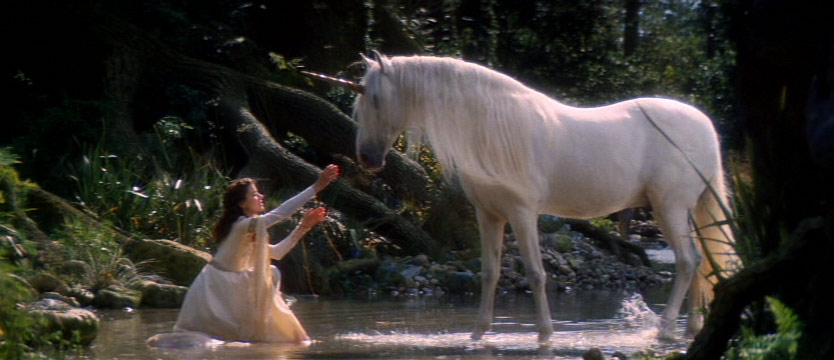
(Picture shows Princess Lily and unicorn, from Ridley Scott’s 1985 cult fantasy film Legend)

Waltzing With … Billy

08 Sunday Apr 2012

Posted by A.O. in Waltzing with ...

≈ 5 Comments

Tags

Easter names, english names, famous namesakes, fictional namesakes, Irish name popularity, name history, name meaning, name popularity, nicknames, rhyming slang, slang terms, UK name popularity, unisex names, US name popularity, vocabulary words

This article was first published on April 8 2012, and revised and re-posted on March 9 2016.

Fictional Namesake
The blog entry for Pasco looked at a religious side to Easter, so this one will be about a secular aspect of the holiday.

One of the most popular symbols of the season is the Easter Bunny; this was an old German custom, and originally a hare rather than a rabbit (which is why the word bunny is used, to cover both creatures). Hares and rabbits are famous for being prolific breeders, so they make obvious fertility symbols for a festival which occurs in the northern spring and celebrates new life.

However in Australia, this prolificness of the rabbit has made it an invasive pest and an environmental disaster. Rabbits first arrived on the First Fleet and were bred for food in hutches, but don’t seem to have become a problem in mainland Australia until 1859.

In this fateful year, some bright spark named Thomas Austin thought it would be utterly spiffing to release 24 English rabbits onto his country property in Victoria so that he could continue the rabbit hunting lifestyle he had enjoyed in England. Austin opined the rabbits would do little harm, and might provide a touch of “home”.

Austin released both wild grey rabbits and domestic rabbits; the two varieties intermingled to become an extremely hardy and resilient Super Rabbit. Even then it might not have been such a mess, except that all the landowners living around Austin got in on this new fad, and released stacks of rabbits onto their own farms.

Within a decade, there were so many rabbits that 2 million could be killed each year without making the slightest difference to their numbers. By Federation in 1901, they were already holding a Royal Commission to see how the “rabbit problem” could be brought under control.

Rabbits are thought to be the most significant factor in loss of native species. They kill young trees, compete with native animals for resources, and cause horrific soil erosion which takes centuries to recover. They cost the agricultural sector millions of dollars in damages each year.

During the 1980s and ’90s, the environmental movement in Australia made a stand by using a new Easter symbol – the Easter Bilby. Bilbies (pictured) are cute native marsupials with a long muzzle and long ears, and they are an endangered species. The Foundation for a Rabbit-Free Australia used the Easter Bilby to educate people about the damage that feral rabbits do to our delicate ecology.

Haigh’s Chocolates got on board by stopping making chocolate bunnies, and making the very first chocolate bilbies. Darrell Lea also make chocolate bilbies, with part of the profits going to the Save the Bilby Fund. You can buy cheap chocolate bilbies from supermarkets as well, but it’s probably a toss-up whether any of the money you spend will go towards helping real bilbies.

The campaign has been successful, because thirty years ago there was no such thing as a chocolate bilby, and now they are an established part of Easter. Schools and school holiday programs often use the Easter Bilby for egg hunts and other activities, as an opportunity to teach kids about the environment as they play games and munch chocolate. Buying a bilby instead of a bunny feels patriotic and environmentally responsible.

There have been many picture books about the Easter Bilby, but the first one, and the first mention of the Easter Bilby, was Billy the Aussie Easter Bilby, by Queensland children’s author Rose-Marie Dusting, in 1979. Rose-Marie’s first version of the story was written in 1968, when she was only nine years old. Most likely, Rose-Marie chose the name Billy because it sounds like the word bilby.

Name Information
Billy is a pet form of Bill, which is short for William; it has been used an an independent name since the 18th century. People often ask how Bill became short for William (which doesn’t start with a B), but nobody seems to know for sure. It is presumed to be part of that medieval initial letter swapping which saw Richard become Dick, and Robert become Bob.

Billy is also a vocabulary word which has a particular resonance in Australia – a billy is a cooking pot used to boil water on a campfire. It’s thought that the word billycan comes from the large cans used to transport bully beef (corned beef) on ships sent to Australia or during exploration in the outback.

It’s a word which reminds us of the outback and our history, and even now some older Australians will say they are going to put the billy on for tea, when they just mean the kettle. Billy Tea is a brand of strong tea which has been sold since the late 19th century, and many arcane methods are suggested for making the perfect brew of tea over a campfire. You can read of billies in the poems of Henry Lawson and Banjo Paterson, the most famous reference being the jolly swagman in Waltzing Matilda, who sang as he watched and waited ’til his billy boiled.

A billy lid is not just a lid for a billy, but also affectionate rhyming slang for “kid” (child). There’s also the Puffing Billy steam train network near Melbourne, a major tourist attraction, and billy buttons, a type of native daisy.

One of the most famous Australian men who went by the name was Billy Blue, the first Australian convict to become a celebrity. Described in the records as a “Jamaican Negro”, Billy claimed to be a freed slave with some Native American heritage who had fought with the British during the War of Independence. When convicted, he was living in London, and had stolen sugar to use in his chocolate-making business.

In Australia, he became popular with the government and the public for his whimsical personality and witty banter. When he completed his sentence, he became a ferryman, and was granted 80 acres of land in the North Sydney area – Blues Point and William Street are two of several local landmarks named after him.

Other namesakes include Billy the Native, a bushranger who passed into folklore as “the traveller’s friend”; Billy Lynch, an Aboriginal community leader in the Katoomba area with hundreds of proud descendants; Billy Sing, a Chinese-Australian soldier who served with distinction in the Gallipoli Campaign; Billy Thorpe, rock singer from the 1960s and 70s; Billy Elliot, the jockey who rode Phar Lap to victory seven times; and NRL star Billy Slater.

Billy entered the Australian charts in the 1970s at #427, and began climbing steeply. It hasn’t reached the national Top 100, but is often seen around the bottom of popularity charts in certain states, and would not be far off. William is a very popular name, and it is possible that some of those Williams also go by Billy.

In the US (home of Billy the Kid and fictional sailor Billy Budd), Billy has been almost continually on the charts, and was a Top 100 name from the early 1920s until the end of the 1970s, peaking in the 1930s at #20. After that very impressive run, it has been on the decline and is now #794. It also charted as a girl’s name (a variant of Billie) from the 1920s until the 1940s, peaking in 1930 at #527.

In the UK (home of Billy Idol and fictional schoolboy Billy Bunter), Billy was a Top 100 name in the 1990s; it left the Top 100 in 2009 and is currently #122, and has been occasionally used for girls. Billy is still a popular name in Ireland. In Australia, Billy has never had a long run of popularity as in other English-speaking countries, so feels a bit fresher here.

Billly is an environmentally-friendly Easter creation; a name from history; a name from poetry; a name from the landscape; the name of a host of colourful Australian characters. Billy is a name which says, “I’m coming at you world, ready or not!” He’s a true blue wild colonial boy who is cute as a button, and sweet as a chocolate bilby.

POLL RESULTS
Billy received an approval rating of 78%, making it one of the highest-rated names of 2012. 42% of people thought the name Billy was okay, while 11% hated it.

Names That Reach Beyond the Worldly from the Bonds Baby Search

05 Thursday Apr 2012

Posted by A.O. in Baby Contests

≈ 1 Comment

Tags

created names, english names, hebrew names, Indian names, mythological names, virtue names, vocabulary names

I’ve included names of Gods and Goddesses, mythological beings, religious and spiritual terms, and virtue names. I’m sure there are many I have missed, but please attribute this to my ignorance, and not to any wish to offend.

GIRLS

Amity

Angel

Aurora

Avalon

Bliss

Carmen

Chai

Charity

Cherish

Destiny

Durga

Eden

Ever

Faith

Felicity

Fidelia

Halo

Haroseta

Honor

Hope

Isis

Juno

Kali

Lorelei

Lucina

Luna

Nevaeh

Nirvana

Patience

Piata

Pixie

Selena

Serana

Serenity

Shiloh

Soham

Taufa

Temperance

Torah

Trinity

Uma

Veda

Venus

Verity

Vrinda

Zaria


BOYS

Apollo

Ares

Bodhi

Creed

Daemon

Deacon

Dios

Gryphon

Infinity

Justice

Kesh

Loki

Maxim

Odin

Orion

Phoenix

Soul

Thor

Talisyn

Tao

Titan

Zen

Zephyr

Zeus

Zion

Luscious and Rusty: Vocabulary Names from the Bonds Baby Search

31 Saturday Mar 2012

Posted by A.O. in Baby Contests

≈ 5 Comments

Tags

Bonds Baby Search, days of the week names, english names, month names, title names, unisex names, vocabulary names

GIRLS

Aria

Belle

Cadence

Calix

Calliope

Caprice

Chance

Envy

Gypsy

Harmony

Honour

June

Kustom

Lady

Liberty

Luscious

Lyric

Maniah

May

Melody

Paisley

Remedy

Sass

Sovereign

Steele

Stellar

Story

Sunday

Tiara


BOYS
Ace

Aeon

Arrow

Aryan

Astro

Axis

Axle

Banjo

Baron

Beau

Blade

Blaze

Breh

Buddy

Caesar

Cash

Cleaver

Coda

Dash

Deacon

Deja

Diesel

Duke

Juke

Link

Lucky

Maverick

Nytro

Patch

Rhythm

Rock

Rowdy

Rusty

Saxon

Sonny

Spike

Styles

Urban

Zenith

Zheppelin

Only Natural – Nature Names from the Bonds Baby Search

22 Thursday Mar 2012

Posted by A.O. in Baby Contests

≈ 3 Comments

Tags

animal names, astronomical names, Australian Aboriginal names, colour names, english names, flower names, food names, French names, fruit names, gemstone names, geographic names, nature names, plant names, season names, Thai names, tree names, vocabulary names, weather names

GIRLS

Acacia

Anise

Autumn

Azalea

Berry

Briar

Cedar

Cherry

Clover

Crystal

Cypress

Dahlia

Dawn

Dusty

Ember

Emerald

Honey

Indigo

Ivory

Jacaranda (this South American tree is so popular, it is often assumed to be native)

Jewel

Juniper

Mallee (a native tree; name of Australian Aboriginal origin)

Magenta

Misty

Ocean

Opal

Peaches

Pearl

Pepper

Rain

Raven

Saffron

Sage

Sapphire

Scarlet

Season

Soleil (French word for the sun)

Star

Sunshine

Swai (Thai word for the iridescent shark)

Tigerlily

Tulip

Winter


BOYS

Ash

Aspen

Baye

Bear

Bryne

Clay

Cove

Fin

Flint

Fox

Heath

Jarrah (a very tall and strong native tree; name of Australian Aboriginal origin)

Layke

Onyx

Reed

Reef

River

Rock

Rowan

Rye

Silvan

Sky

Storm

Sunny

Talon

Teal

Tiger

Tyde

Wolf

(Photo of Mother Cummings Peak Track, Tasmania from There’s Nothing Like Australia website).

Famous Names: Sebastian and Jenson

21 Wednesday Mar 2012

Posted by A.O. in Famous Names

≈ 8 Comments

Tags

Disney names, english names, fictional namesakes, Google, honouring, Latin names Greek names, locational names, Mer de Noms, name history, name meaning, name popularity, nicknames, popular names, pseudonyms, royal names, saints names, Shakespearean names, surname names, UK popularity

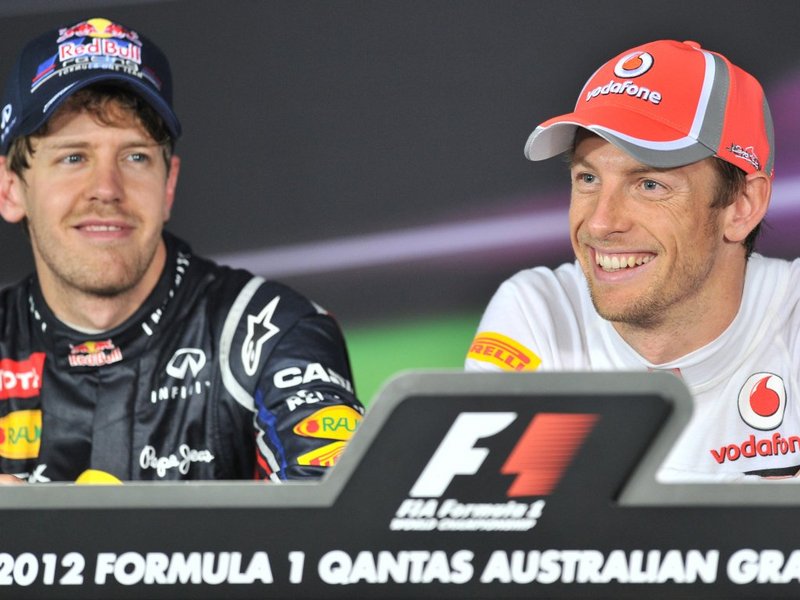
The Australian Grand Prix was held in Melbourne on the weekend, and before the event there was plenty of buzz in the media around German Sebastian Vettel, and British Jenson Button. These glamorous visitors from Europe always get a lot of attention, for both are handsome and charming; Vettel amusing and slightly mysterious, Button affable and quietly confident. In the end, Button opened the F1 season with a victory, winning comfortably against Vettel with a 2.2 second margin. It is his third Australian Grand Prix victory. (Picture has Vettel on the left in black).

I thought we’d take a look at the names of both these Formula One champions, because Sebastian and Jenson are Googled often to reach my blog, and so far I haven’t added any requested boys names to the Featured Names list, while I’ve been quite conscientious about adding the girls.

Sebastian is from the Latin name Sebastianus, which means “from Sebaste”. There were several places called Sebaste, because it is the Greek form of Augusta, named in honour of the Emperor Augustus. His adopted name meant “great, majestic, venerable”. There are towns in modern-day Turkey and Palestine with this name (or a version of it), still with ancient Roman ruins which can be visited.

The name became well known because of Saint Sebastian, a 3rd century Roman soldier originally from southern France. Skilled at converting people, according to legend he was shot through with arrows, yet did not die, so had to be martyred twice. He became popular in the Middle Ages because he was said to protect people from the plague, and also began to be depicted as a beautiful, semi-nude young man. (In early pictures, he looks like an ordinary bearded fully-clothed saint).

The name was popular amongst Continental royalty and nobility, and still retains a slightly upper-class image. Sebastian is Viola’s twin brother in Shakespeare’s gender-switching romantic comedy, Twelfth Night. Lord Sebastian Flyte is one of the main characters in Evelyn Waugh’s novel, Brideshead Revisited; beautiful and rather fey, the TV series and film makes it clear Sebastian is homosexual, although this is left ambiguous in the novel. Indeed, Saint Sebastian himself is considered a gay icon (for pretty flimsy reasons), and the name was a code for homosexuality; Oscar Wilde’s pseudonym was Sebastian Melmoth. So far, so androgynous.

However, the name got a watery overhaul when the name Sebastian was given to a Jamaican lobster in the Disney film, The Little Mermaid. Sebastian is a court composer, and a good friend and adviser to Ariel, the mermaid of the title. A Rastafarian who can lay down a reggae beat, he has given the name a new level of cool. The choice of his name seems like a deliberate reference to another famous composer: Johann Sebastian Bach. Incidentally, Sebastian is the lobster’s surname – his first name is Horatio (maybe after the American composer, Horatio Parker).

Sebastian first entered the charts in the 1960s and began steadily climbing, to become Top 100 by the 2000s. At #38 it still seems to be gaining in popularity – an elegant name that belongs to many people’s favourite Disney character.

Jenson is a lot more straightforward. It’s a surname which is basically a form of Johnson, being based on the name Jens, a short form of Johannes. According to Lou at Mer de Noms (rather a Jenson Button fan), the name Jenson has edged itself into the UK Top 100, and its growing popularity can be attributed almost solely to Mr Button himself. As to how he got his name, he was named after a family friend, Erling Jensen (father of F1 driver Steven Jensen). The spelling was altered so that it didn’t reference Jensen Motors, who made British sports cars until the 1970s.

It’s an attractive name, and one I think we’d be using in spades if Jenson Button was Australian. As it is, it’s one many parents are at least putting on their lists, although my personal feeling is that Jensen is slightly more popular, thanks to handsome American actor Jensen Ackles, from Supernatural. As I’ve said before, with female Jennifer become less popular, it gives male names starting with Jen- more of a chance.

When I try to decide which name I like best, Sebastian or Jenson, I find myself in private debate. If I take the side of Sebastian, it seems more sophisticated than Jenson, complex and multi-syllabled, romantic and princely. On the other hand, if I take the side of Jenson, it seems more laddish and chipper, down-to-earth and unpretentious, with oodles of cheeky British charm.

So I am content to say these are both very nice names, and I won’t force them to compete against each other in some Baby Name Grand Prix. When it comes to nicknames for them, I think of Seb and Bastian, and Jens and Sonny, respectively.

Names Spotted Over the Summer, at Home and Abroad

28 Tuesday Feb 2012

Posted by A.O. in Names Spotted at Home and Abroad

≈ 14 Comments

Tags

Buddhist names, english names, famous namesakes, fictional namesakes, Hindu names, Indian names, Irish names, mythological names, name trends, nicknames, popular culture, popular names, Romani names, Sanskrit names, Tibetan names, virtue names, vocabulary names

Interesting names of babies I spotted in the papers over the summer:

When the popular name lists came out, newspapers also liked to dwell on the less popular names (more coming on that score). One of the babies with an uncommon name was the splendidly Arthurian Lancelot Palmer, from Wagga Wagga in New South Wales. Lancelot is named after his mother’s grandfather, who passed away a few years ago.

To publicise Australia Day events in Tasmania, The Examiner had a photo of an eight-month-old baby girl named Uma Paech, from Lauceston (pictured). It’s a celebrity name, because of Hollywood actress Uma Thurman, but also shows the growing popularity of names from Asia. Uma Thurman was raised in a Buddhist household, and her father was the first Westerner to become a Tibetan Buddhist monk. Her name is taken from the Tibetan phrase Dbuma Chenpo, meaning “Great Middle Way”; one of the guiding principles of Buddhist practice. (The Db is silent). Uma is also one of the titles of the Hindu goddess Parvati.

In early February, an official report on publicly funded home births was prepared by the Homebirth Advisory Group from the Northern Rivers district of New South Wales. The story interviewed Jade Trapp of Lismore, who gave birth to her son Django at home with a midwife two years ago. This is another name which comes from a famous person. It was the nickname of Belgian jazz guitarist Jean Baptiste Reinhardt, and it is Romani for “I awake”. Although Django died in the 1950s, his gypsy jazz is still hot, and he has been portrayed or alluded to in several films, including The Triplets of Belleville and Martin’s Scorscese’s Hugo. His music has been used for the soundtrack of movies such as The Matrix, Chocolat, Kate and Leopold and Stardust Memories. This is a hyper-hipster name oft suggested on Nameberry, and one with a cheery sound to it.

Meme and Soemyint Theloep are recent refugees from Burma who live in the Illawarra region surrounding the city of Wollongong in New South Wales. This month, they were caught in the floodwaters that flowed into their flat, and Soemyint had to carry his three-week-old daughter to safety in a baby sling. Although their English is still only basic, they knew enough to give their baby an English name – Blessing. What a beautiful tribute to their new home and refuge (despite the occasional flood). It’s a name that makes me smile and smile.

Monica Carduff Gonzalez, professionally known as DJ Monski Mouse, has been playing classic vinyl tracks at events such as the Edinburgh Fringe Festival for ten years now. She is now starting up an event called Baby Disco Dance Hall, which plays funky tunes suitable for the under-five crowd. Monica’s own daughter is named Monalisa (didn’t you just somehow guess her baby wouldn’t be named Emily or Mia?). Apart from the famous painting by da Vinci, Mona Lisa is also an award-winning Nat King Cole song, and it was playing while Monica and her husband, magician Tony Roberts, were choosing baby names; the new baby smiled, and they took that as her seal of approval. I love this cool name and the story attached to it (which I got off her website).

And an interesting name attached to an adult:

I read a short article on parenting about the myths of motherhood. It’s good advice telling us not to worry so much about being perfect. What interested me more was the author’s name, which was Benison O’Reilly. Her name is a vocabulary word which means “blessing, benediction”. According to her website, it’s a favourite name amongst the O’Reilly family. I think it’s a great name and obviously has a very positive meaning.

Names of babies encountered over the summer in real life:

Annabel: the original form looks crisp, classic and very English after so many Frenchified Annabelles.

Cael: I always thought this Irish name was said like the word keel, but Cael’s family say his name like the word kale.

Lacey: I feel as if the long-term popularity of Lucy is helping the rise of pretty Lacey.

Purity: this name reminded me of purity rings, but her name was chosen with the idea of purity in the sense of “pure and natural, uncontaminated by the artificial”. Purely herself!

Zeke: not short for Ezekiel, just plain Zeke. Very cowboy.

Names of new babies welcomed by people I know (family/friends/colleagues/neighbours etc) over the summer:

Bethany

Brock

Eleanor

Finn

Isla

Laila

Leilani

Stella

According to a new article Abby has at Appellation Mountain, the baby names chosen by the people around you will likely tend to be similar, and also not unlike the names you are apt to choose yourself (leading to much angst and accusations of name stealing and so forth – see Lou at Mer de Noms, as to whether to “call dibs” or not).

I think some of these names do “go together”, as in I can imagine Finn and Isla as siblings, and also Eleanor and Stella. There’s a strong L sound in all of them except Bethany, Brock and Finn, who thus also seem to be matched. Laila and Leilani are particularly similar.

← Older posts
Newer posts →

Enter your email address to follow this blog

Categories

Archives

Recent Comments

A.O.'s avatarwaltzingmorethanmati… on Zarah Zaynab and Wolfgang…
Madelyn's avatarMadelyn on Zarah Zaynab and Wolfgang…
JD's avatardrperegrine on Can Phoebe Complete This …
A.O.'s avatarwaltzingmorethanmati… on Rua and Rhoa
redrover23's avatarredrover23 on Rua and Rhoa

Blogroll

  • Appellation Mountain
  • Baby Name Pondering
  • Babynamelover's Blog
  • British Baby Names
  • Clare's Name News
  • For Real Baby Names
  • Geek Baby Names
  • Name Candy
  • Nameberry
  • Nancy's Baby Names
  • Ren's Baby Name Blog
  • Sancta Nomina
  • Swistle: Baby Names
  • The Art of Naming
  • The Baby Name Wizard
  • The Beauty of Names
  • Tulip By Any Name

RSS Feed

  • RSS - Posts

RSS Posts

  • Celebrity Baby News: Melanie Vallejo and Matt Kingston
  • Names from the TV Show “Cleverman”
  • Can Phoebe Complete This Sibset?
  • Zarah Zaynab and Wolfgang Winter
  • Baby, How Did You Get That Name?
  • Celebrity Baby News: Media Babies
  • Celebrity Baby News: Adelaide Crows Babies
  • Celebrity Baby News: Chris and Rebecca Judd
  • Names at Work: Name News From the World of Business and Employment
  • Celebrity Baby News: Sporting Round Up

Currently Popular

  • Celebrity Baby News: Radio Babies
  • Rare Boys Names From the 1950s
  • Saturday Celebrity Sibset: A Taste of Scotland - Leigh McClusky and Simon Haigh
  • Girls Names From Stars and Constellations
  • Ruby Anne Susie Murch: A Daughter for Cathy Freeman and James Murch

Tags

celebrity baby names celebrity sibsets english names famous namesakes fictional namesakes honouring locational names middle names name combinations name history name meaning name popularity name trends nicknames popular names saints names sibsets surname names twin sets unisex names

Blog at WordPress.com.

Privacy & Cookies: This site uses cookies. By continuing to use this website, you agree to their use.
To find out more, including how to control cookies, see here: Cookie Policy
  • Subscribe Subscribed
    • Waltzing More Than Matilda
    • Join 517 other subscribers
    • Already have a WordPress.com account? Log in now.
    • Waltzing More Than Matilda
    • Subscribe Subscribed
    • Sign up
    • Log in
    • Report this content
    • View site in Reader
    • Manage subscriptions
    • Collapse this bar
 

Loading Comments...