• About
  • Best Baby Names
  • Celebrity Baby Names
  • Celebrity Baby Names – Current
  • Celebrity Baby Names – Past
  • Featured Boys Names
  • Featured Girls Names
  • Featured Unisex Names
  • Links to Name Data
  • Waltzing on the Web

Waltzing More Than Matilda

~ Names with an Australian Bias of Democratic Temper

Waltzing More Than Matilda

Tag Archives: celebrity baby names

Happy Second Birthday, Waltzing More Than Matilda!

13 Wednesday Feb 2013

Posted by A.O. in Blog News

≈ 14 Comments

Tags

Appellation Mountain, Babble, Baby Name Ponderings, Babynameobsessed, celebrity baby names, Facebook, Matilda magazine, Mer de Noms, Nameberry, Once Upon a Time Baby Names, Twitter, Upswing Baby Names, Waltzing More Than Matilda, web searches

2nd-birthdayMy blog turns two years old today. I have to admit, I didn’t think very deeply about what I was doing when I started the blog, and didn’t know any more about blogging than what I’d read in a few articles with titles like Any Idiot Can Blog, or Get Blogging, Stupid! I had finished one part of my life and hadn’t started on the next bit, so a blog seemed like a good idea at the time.

When my account came up for renewal at the end of the first twelve months, I didn’t think twice about it. Of course I had to continue the blog; I’d only been doing it for a year, and felt I had barely started. When I received my second renewal notice at the end of last year, for the first time I actually sat down and asked myself if I wanted to keep going. I pondered deeply for over a month, and some days I seriously considered cancelling my account.

At last I decided that the blog was still growing, and I still had a lot to learn, so for the first time I made a conscious choice to continue Waltzing More Than Matilda. It’s taken me two years, but I have finally begun to think about what I’m doing. It will be interesting to see if this makes any difference!

Thank You, Thank You, to You and You and You

No blogger is an island, and many thanks go to these people for their help and support.

  • To Abby at Appellation Mountain, who for another year has sent me more views than any other blog. Abby’s generosity to others is inspiring, and it’s wonderful to see her go from strength to strength.
  • To Linda at Nameberry for giving me the opportunity to contribute my article, Aussie Names – Big there, not here. Thanks also to Angie at Upswing Baby Names, who was kind enough to provide an American perspective on the names I selected.
  • To Kate at Matilda magazine for inviting me to write an article on The Best Baby Name Blogs. Matilda magazine has been a very exciting innovation in the world of baby names.
  • To Michelle Horton from parenting website Babble for including Waltzing More Than Matilda in her article 20 Favorite Blogs for Baby Names. It came as a genuine, but very welcome, surprise to be mentioned alongside such great name blogs.
  • To Cristina at Once Upon a Time Baby Names for interviewing me about my name. Cristina has recently given her blog a complete reboot, and it looks amazing.
  • To Ebony at Babynameobsessed for being my most loyal commenter, and also reblogging several of my blog entries. Ebony is another Aussie name blogger.
  • To Lou at Mer de Noms for reblogging Boys Names of Australian Aboriginal Origin. Even after a big lifestyle change, Lou’s blog is still going strong.
  • To Brooke at Baby Name Ponderings for turning the 2012 Victorian name data into a fantastic spreadsheet. Brooke is another Australian name blogger, with very creative name ideas.
  • To my 140-odd subscribers, and my 50-odd Twitter followers, and to everyone who reads and comments and sends nice e-mails, and just all round makes blogging worth it!

Nerdy Number-Crunching

  • I have almost half a million views. The country which sent me the most views was Australia, which is good – it would be embarrassing to have a blog on Australian baby names that Australians didn’t read!
  • The most views I ever got were on June 21, when thousands of people suddenly all wanted to read about Jude Bolton’s daughter Siarra at the same time for some reason. As a result, this article was my most popular for the year.
  • The article which has gained the most comments is Girls Names of Australian Aboriginal Origin.
  • The most common search term was waltzing more than matilda, so I guess by now people do know about the blog.
  • The name most often searched for was Ruby, which reflects this name’s high popularity.
  • By posting this, I will have brought my number of posts up to 764. I have 23 categories and 618 tags. The most popular category was Name Themes and Lists.
  • There are 196 featured boys names, 192 featured girls names, and 119 featured unisex names, making over 500 names in total. About a hundred additions to the name database were made based on web searches people made to the blog, looking for baby names as familiar as Rose or Archer, and as unexpected as Australia or Zephyr.
  • The photo which was clicked on the most was the christening of Lauren Newton’s baby daughter Lola, which showed the entire Newton family together.
  • The most popular newspaper article linked to was the one announcing the birth of Addison, the son of ABC presenter Virginia Trioli.
  • The most popular website link was to ABC presenter Leigh Sales’ blog, Well Redhead, at The Punch.
  • The most popular document accessed was Australian Celebrity Baby Names 2011.
  • The most popular YouTube video was this one – basically my version of Rickrolling!
  • The blog on my Blog Roll most often clicked is Upswing Baby Names. Angie has a very professional-looking and practical name blog, and I’m glad to see it gaining such well-deserved interest.

Birthday Present

My present to Waltzing More Than Matilda is her own Facebook page. There are two main reasons I got one: (1) I promised myself I would once I got over 100 subscribers and (2) despite having a Twitter account, I get more views via Facebook than Twitter, so it makes sense. It seems much more complicated and scary than Twitter, but I’m sure I’ll get used to it in time.

Many happy returns, Waltzing More Than Matilda, and here’s to another year blogging together!

Late Celebrity Baby News: Alexander and Zorica Gavrylyuk

12 Tuesday Feb 2013

Posted by A.O. in Celebrity Baby News

≈ Comments Off on Late Celebrity Baby News: Alexander and Zorica Gavrylyuk

Tags

celebrity baby names

464086-alexander-gavrylyukClassical pianist Alexander Gavrylyuk, and his wife Zorica, welcomed their daughter Anna Emilia thirteen months ago.

Alexander is originally from the Ukraine, and came to Australia as a teenager to study before becoming an Australian citizen. He won the Vladimir Horowitz Competition in 1999, the Hamamatsu Competition in 2000, and the Arthur Rubinstein Competition in 2005. Alexander has played with major orchestras all over the world, including Russia, Australia, New Zealand, Japan, Israel, Portugal, Mexico, Britain, Germany, Italy, Belgium, Switzerland, France, South Korea, Poland, Taipei, the Netherlands, Canada and the United States. Now living in Berlin, he visits Australia every year, and this year will be performing at the Melbourne Recital Centre.

Alexander and Zorica met when they were both in high school in Sydney, and he was tutoring her for her piano exams. Zorica now has her Masters in Cultural Administration and is Alexander’s manager; they were married in 2008.

Celebrity Baby News: Melissa Barbieri and Geoff Hudson

12 Tuesday Feb 2013

Posted by A.O. in Celebrity Baby News

≈ Comments Off on Celebrity Baby News: Melissa Barbieri and Geoff Hudson

Tags

celebrity baby names

Melissa-BarbieriSoccer star Melissa Barbieri, and her husband Geoff Hudson, welcomed their first child on January 30, and have named their daughter Holly Marie.

Melissa began her career with Richmond FC, becoming the first woman to play in the professional men’s league. She joined the national women’s team, the Matildas, in 2002; on her début, Australia beat Canada 1-0. She signed with Melbourne Victory in 2008, and currently plays for the Newcastle Jets. Melissa has a scholarship with the Victorian Institute of Sport, and is captain of the Matildas as well as their goalkeeper.

Melissa and Geoff have been married for about five years.

Underused Names for Boys

10 Sunday Feb 2013

Posted by A.O. in Name Themes and Lists

≈ 14 Comments

Tags

Anglo-Saxon names, Arthurian legends, Arthurian names, band names, Biblical names, British names, celebrity baby names, Celtic names, Cornish names, english names, famous namesakes, fictional namesakes, French names, German names, Gothic names, Greek names, hebrew names, Jakob Grimm, Latin names, locational names, mythological names, name history, name meaning, nicknames, Old English names, Old French names, Roman names, royal names, Sabine names, saints names, Scottish names, Shakespearean names, Sir Walter Scott, surname names, unisex names, William Shakespeare

Time-For-Bed-Said-ZebedeeThis follows on from last week’s Underused Names for Girls; to briefly recap, they are names which aren’t common here (used less than six times in the 2012 Victorian data, have never charted in Australia), but still have a history of use in Australia (can be found in historical records).

Alaric

Alaric is from the Gothic name Alareiks, meaning “ruler over all”. Alaric I was the king of the Visigoths who sacked Rome in 410, and his great-grandson, Alaric II, was ruler of the Visigothic kingdom, covering most of Spain and the south of France. Another Alaric was a legendary king of Sweden, skilled in battle and sport, and a masterful horseman. He had a brother Eric, and for some unknown reason, the pair of them killed each other with their horses’ bridles, which seems an awfully strange choice of weapon. The name Alaric is far commoner in fiction than in real life, where it tends to be either chosen for comedies, in the belief that the name Alaric sounds amusingly high-faluting, or science-fiction/fantasy, in the belief that it sounds geekily exotic. In the TV series, The Vampire Diaries, there is a character named Alaric; he says his name uh-LAHR-ik, although most sources say the name is pronounced AL-uh-rik. Powerful and commanding, this is unusual, but sounds similar to familiar names like Alan and Eric.

Blaise

In Arthurian legend, Blaise was the priest who baptised the wizard Merlin, became his tutor and friend, then took the trouble to write down all Merlin’s deeds for posterity. There is a Saint Blaise, who is a saint of healing, as he cures sore throats (the saint was a doctor as well as a bishop). He seems to have been quite popular in England, perhaps because his feast day of February 3 is right after the Celtic festival of Imbolc and the Christian feast of Candlemas, and often marked by bonfires. Blaise sounds like the word blaze, so a pleasing coincidence for fire-lovers. The most famous namesake is Blaise Pascal, the French theologian and philosopher. The meaning could be from either Latin or Greek. If Latin, it means “stuttering, lisping”; if Greek it means “bow-legged”, so either way it’s not flattering. Saint Blaise was Greek, but the Blaise of Arthurian legend is probably meant to be Roman or Romanised, so you can take your pick. It’s a name loved for its sound, namesakes and associations rather than its meaning.

Corin

Corin is a French surname derived from Quirinus; Saint Quirinus was part of a Roman missionary group sent to convert Gaul, and legend has attached to this popular saint all the standard saintly stories, such as killing a dragon and going for a stroll after getting his head chopped off. The original Quirinus was an early Roman god, probably a Sabine war deity. The Sabines had an altar to Quirinus on the Quirinal Hill, one of the Seven Hills of Rome. The Romans considered him to be a deified Romulus, and in the early days he was a major god, although they gradually lost interest in worshipping him. However, even after the fall of Rome, the Quirinal Hill remained a place of power, so that it was chosen as the seat of royalty, and later the residence of the Presidents of the Italian Republic. The name is linked to the name of the Sabine town Cures, and may come from the Sabine word for “spear”. There is a shepherd named Corin in Shakespeare’s As You Like It, and a Prince Corin in C.S. Lewis’ The Horse and His Boy. You can also see this name from another perspective, for in British legend, Corineus was a great warrior and giant-killer who founded Cornwall; his name may be an echo of Cernunnos, the Celtic god, whose name is usually translated as “horn”, or “horned one”. There are several place names in Cornwall apparently derived from Cernunnos (including Cornwall itself), and the name Corin enjoyed early popularity in Cornwall and Devon – so you can see this as a British name just as much as a French one. This packs a double mythological punch, and doesn’t seem much different than names such as Corey or Colin.

Edgar

Edgar is an Old English name meaning “rich spear”. Saint Edgar the Peaceful was a king of England; a Scottish King Edgar was a son of Saint Margaret. The name became rare after the Norman Conquest, but had a revival in the 19th century, after Sir Walter Scott’s historical novel, The Bride of Lammermoor, told the story of tragic lovers Lucy and Edgar – a tale which ends in madness, murder and quicksand. Edgar is also a character in William Shakespeare’s King Lear; disinherited by his father, he wanders the heath disguised as a babbling madman. Noble and clever, he is also enigmatic with a touch of darkness; he enjoys playing the crazy beggar just a little too much. The most famous person named Edgar is probably the American writer, Edgar Allen Poe, said to have been named after Shakespeare’s character. Poe’s works are also quite dark and enigmatic, dealing with topics such as grief, guilt, mystery, murder, madness, doom, death, drugs, and being buried alive. Edgar is related to the other Ed- names, such as Edward and Edwin, but seems more vintage, a bit edgier, and a touch more Gothic. This name might be uncommon, but it’s also traditional and comes with all the usual Ed and Eddie nicknames.

Giles

This is based on the Latin name Aegidius, derived from the Greek for “young goat”. Aegidius was a 7th century hermit from Athens who lived in the south of France with a tame deer; in Old French his name became Gidie, then Gide, and finally Gilles; when the Normans took his name to Britain, it became Giles. A noted miracle worker, Saint Giles was very popular in the Middle Ages, and his name became common; it was also given quietly but steadily to girls (even into the 20th century). Although we often think of Giles as a terribly “English” name, Saint Giles is the patron saint of Edinburgh, and the name Giles is traditional in Scotland; many Gileses in Australian records have Scottish surnames. The English haven’t done this name many favours, as it’s a favourite in English books and TV shows for good-natured upper class twits. However, this doesn’t reflect the reality of the name, or the Australian experience of it, and I think it’s possible to see Giles in quite a different light. I can see Giles as a solid country-style name, a brother to Archie and Will, or slightly hipster, a brother to Hugo and Barnaby. If you crossed Gus with Miles, you might end up with something that looks a little like Giles …

Huxley

Huxley is an English surname. The Huxley family were Normans who came to Britain after the Conquest and settled in Cheshire, taking their name from a village near Chester, which was originally named Holdesieia, and corrupted into Huxley. The original name may be from the Anglo-Saxon for “sloping land”, and Huxley is believed to mean’s “Hucc’s wood”, with Hucc being an Anglo-Saxon nickname meaning “insult, taunt”. Huxley has been used as a personal name since the 18th century, and early examples are from the Cheshire area, suggesting they may have been named directly after the village. The Huxley family have produced an astonishing number of brilliant thinkers, from the biologist T.H. Huxley, supporter of Charles Darwin, to the author Aldous Huxley, who wrote Brave New World. T.H. Huxley came to Australia as a young man, and did such excellent work in natural history that he was made an immediate Fellow of the Royal Society on his return (Mount Huxley in Tasmania is named in his honour). T.H. Huxley’s distant cousin, Sir Leonard Huxley, migrated to Australia in childhood, and became one of our most distinguished physicists. With its fashionable X and intellectual pedigree, this name seems very hip, and comes with the nicknames Huck or Hux.

Jethro

Jethro is translated as “excellence, abundance” in Hebrew, and in the Old Testament, Jethro is the father-in-law of Moses, and a priest (it is never made clear in what religion he was a priest, but by the end he accepted Yahweh as his God). Jethro is revered as a prophet in Islam, and is held in the highest regard by the Druzes. The most famous person with this name is Jethro Tull, an English agricultural pioneer who helped bring about the British Agricultural Revolution which formed the basis of modern farming practices. The rock band Jethro Tull is named after him. You may also remember the dull-witted Jethro Bodine from The Beverly Hillbillies. Jethro is a little bit hick and a whole lot hip – it’s hickster.

Rufus

Rufus started life as a Roman nickname, but afterwards became a family name; it’s from the Latin for “red haired”. There are many famous men with the surname Rufus, including the Stoic philosopher Gaius Musonius Rufus. His views on philosophy were moderate and practical, encouraging all men and women to follow a philosophical life, and giving advice on all manner of topics, including diet (vegetarian, raw) and hairstyles (long, beardy). He was so highly-regarded that when all other philosophers were expelled from Rome by the Emperor Vespasian, Rufus was allowed to stay. There are at least ten saints named Rufus, one of whom is mentioned in the New Testament as a disciple of St. Paul; his father was the man who carried the cross for Jesus on the way to Calvary. There is also the Gaelic saint Mael Ruba, whose name is Anglicised as either Maree or Rufus. King William II of England was nicknamed “Rufus” for his ruddy complexion. Famous people named Rufus include the Canadian-American singer Rufus Wainwright, and the British actor Rufus Sewell; Roger Taylor from Queen has a son named Rufus Tiger. With names ending in -us becoming fashionable, Rufus looks set to become the new Atticus.

Wolfgang

Wolfgang is a German name meaning “wolf path, wolf journey”, and interpreted by folklorist Jakob Grimm as being the name of a hero who follows in the wake of the “wolf of victory”. It has two heavy-duty namesakes: composer Wolfgang Amadeus Mozart, and writer Johann Wolfgang von Goethe; there is also a Saint Wolfgang, one of the patrons of Germany. Eddie Van Halen chose this name for his son. Nearly all Wolfgangs in Australian records have German surnames, and although this would make a striking heritage choice, it could work even if you don’t have a scrap of German ancestry. Wolfgang is one of those names that people seem to either love or loathe, so it attracts some extreme reactions. The usual nicknames are Wolf or Wolfie.

Zebedee

In the New Testament, Zebedee was a fisherman, and the father of the Apostles John and James. He is mentioned as being left behind in the boat when Jesus called the brothers to “become fishers of men”; we never learn whether he was supportive of his sons’ career change, or thought they should have remained fishers of fish. Zebedee’s wife was one of the women present at the crucifixion. The name Zebedee is the Greek form of the Hebrew name Zebadiah, meaning “Yahweh has bestowed”, and nearly always interpreted as “gift of God”. There is an English painter named Zebedee Jones and an English newsreader named Zebedee Soanes; both these Zebedees were born in the 1970s, when the cult children’s show, The Magic Roundabout, was first on television. In the show, Zebedee was a jack-in-the-box who is popularly recalled as ended the show by bouncing down out of nowhere and intoning, “Time for bed, children” (although I’m not sure how often this occurred). With Old Testament names for boys becoming a bit old hat, it could be time to consider some of the more unusual New Testament names. This one is full of zest, and the nickname Zeb is as cowboy cool as Zeke and Jed.

POLL RESULT: People’s favourite names were Huxley, Alaric, and Corin, and their least favourite were Wolfgang, Zebedee, and Giles.

(Picture shows Zebedee from The Magic Roundabout)

Celebrity Sibset: Nicola Charles

09 Saturday Feb 2013

Posted by A.O. in Sibsets in the News

≈ Comments Off on Celebrity Sibset: Nicola Charles

Tags

celebrity baby names, celebrity sibsets

133717-nicola-charlesNicola Charles is a British-born actress who first became famous on Australian television. After working as a model, Nicola came to Australia in the mid-1990s, and scored her first acting job on the soapie Neighbours. She was on Neighbours for three years, playing brunette beauty Sarah Beaumont, the too-tempting receptionist of Dr Karl Kennedy. During these years she became well known in both Australia and the UK as a sex symbol.

Nicola returned to Britain after her stint on Neighbours, and later relocated to Los Angeles, where she and her husband set up their own production company. Last year, Nicola returned to live in Australia. At the moment, she is back on Neighbours for six weeks, reprising her role of Sarah Beaumont, and revealing further details of her relationship with Karl.

Nicola signed a two-book deal with New Holland Publishing, and is also working on her first novel.

Nicola had two daughters with her second husband, Irish actor Jason Barry:

Freya Lola Sky (b. 2005)

and

Nova Ingrid Maggie (b. 2007)

and a son with her present husband, British DJ Mark Tabberner:

Archie (b. 2010)

Celebrity Baby News: Dave and Kara Gruber

05 Tuesday Feb 2013

Posted by A.O. in Celebrity Baby News

≈ Comments Off on Celebrity Baby News: Dave and Kara Gruber

Tags

celebrity baby names

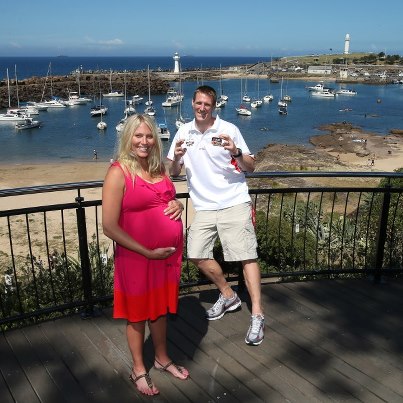
558347_10151185004996237_1455285472_nBasketball player Dave Gruber, and his wife Kara, welcomed their first child on January 31 and have named their daughter Grace Nicole. Grace Gruber was born at 5.30 pm at Figtree Private Hospital, weighed 3.97 kg (8lb 8 oz), and measured 52 cm long.

Dave plays for the Wollongong Hawks. Dave and Kara are both originally from Iowa in the United States, and became Australian citizens almost two years ago.

Underused Names for Girls

03 Sunday Feb 2013

Posted by A.O. in Name Themes and Lists

≈ 20 Comments

Tags

Arabic names, Arthurian legends, celebrity baby names, Disney names, english names, ethnonyms, famous namesakes, fictional namesakes, flower names, French name popularity, French names, German names, germanic names, Greek names, historical records, How Green Was My Valley, Italian names, Latin names, mythological names, name data, name history, name meaning, name popuarity, names from movies, nature names, nicknames, Old French names, Old Welsh names, Oz: The Great and Powerful, plant names, Poldark, popular culture, Puritan names, rare names, royal names, saints names, Shakespearean names, surname names, The Iliad, The Wizard of Oz, tribal names, unisex names, virtue names, vocabulary names, Welsh names, William Shakespeare

sabine women detailLast week we had names from Victoria which were used less than ten times in 2012. Those names are uncommon – but what if you wanted something even rarer? These are names which don’t appear even once in the Victorian data from last year, and have never charted in Australia. However, they are not strange or obscure, and all of them can be found in Australian historical records.

Angharad

Angharad is an Old Welsh name meaning “greatly loved”. It was reasonably common in medieval times, and there are several Angharads in Welsh history. In Welsh mythology, Angharad Golden-Hand is the lover of Peredur, one of King Arthur’s knights. Angharad Morgan is a main character in How Green Was My Valley, and in the film version was played by Maureen O’Hara. Actress Angharad Rees became well known in the 1970s for playing the role of Demelza in the TV series Poldark. Lots of famous Angharads, yet I could find only one woman named Angharad in Australian records. The pronunciation, ang-HAH-rad, may have caused some concern. This is a strong and unusual name with a lovely meaning. It would definitely stand out.

Beatrix

Beatrix is based on the name Viatrix, the feminine form of the Latin name Viator, meaning “voyager, traveller”. Early on, the spelling was altered to associate it with the Latin word beatus, meaning “blessed”, and it was common amongst early Christians. Some baby name books sandwich these two meanings together and interpret it as “blessed traveller”. Saint Beatrix was an early Roman martyr; according to legend, she was strangled by her servants. The name became less common in England after the Middle Ages, but was revived in the 19th century. One of the most famous people with this name is Beatrix Potter, the children’s writer and illustrator, who gave us such delightful characters as Peter Rabbit, Jemima Puddleduck, Squirrel Nutkin and Mrs. Tiggy-Winkle. As well as these talents, she was also a scientific researcher, conservationist, farmer, and sheep breeder. Queen Beatrix of the Netherlands helps give this name a royal touch, and a famous literary character is Beatrix “Trixie” Belden, girl detective. To me, this charming name seems spunkier and more eccentric than her sister Beatrice.

Cressida

In Greek mythology, Chryseis was the daughter of a Trojan priest named Chryses, and she was captured by the Greek champion Agamemnon as part of the spoils of war; he refused to give her back even after being asked nicely. Chryseis’ dad prayed like blazes to the god Apollo, who obligingly sent a plague through the Greek soldiers until Chryseis was returned. A later legend says that she bore Agamemnon a son. Her name given in the Iliad simply means “daughter of Chryses”; appropriately for a priest of Apollo, Chryses’ name means “golden”, perhaps in reference to sunlight. Some writers say Chryseis’ real name was Astynome, meaning “possessor of the city”. When medieval authors retold the tale of the Trojan War, this story had a complete rewrite. Chryseis became Cressida (KRES-ih-duh), and one corner of a tragic love triangle; she is made the epitome of the false woman and the whore. Some authors were sympathetic to Cressida’s plight, and in Shakespeare’s version, Cressida is complex, highly intelligent and witty. A famous Australian with this name is the artist Cressida Campbell. I find this literary name quite bewitching.

Emmeline

Emmeline is the Old French form of the Germanic name Amelina, based on the word for “work”; it is therefore related to the name Amelia, and not to Emily. The name was introduced to Britain by the Normans, and many people prefer to give it a slightly French pronunciation as EM-uh-leen, while others seek to Anglicise the way it is said as EM-uh-line (like Caroline). My experience is that the British tend to say leen, Americans tend to say line, and Australians have a bob each way and can usually cope with either. There were several prominent suffragists named Emmeline, including Emmeline Pankhurst, Emmeline Pethick-Lawrence and Emmeline Wells. Australia mountaineer Emmeline Du Faur was the first woman to climb Mount Cook (in record time), and the first person to climb several peaks – always dressed in a skirt. Emmeline Pethick-Lawrence was a keen hiker and woodcrafter, and to me the name Emmeline sounds vigorous, healthy, and practical. Emmeline has a solid history of use in Australia, being commonly found in old records, and today its nickname Emmie means it fits in with popular names such as Emily, Emma and Emmerson.

Isadora

Isadora is a variant of the name Isidora, the feminine form of Isidore, from the Greek for “gift of Isis”; the Egyptian goddess Isis was worshipped widely in the ancient world, and she was also important to the Greeks and Romans. Saint Isidora was a 4th century Egyptian nun, considered to be a “holy fool”, and treated with contempt by the other nuns for her eccentric ways, such as wearing a dirty dishrag on her head instead of a veil, and eating only leftovers instead of proper meals. When a visiting saint came to the nunnery, he immediately picked out Isidora as the only person holier than himself; upset by the praise and attention, Isidora ran away into the desert to be a hermit, and nothing more is known of her. The most famous Isadora is the American dancer Isadora Duncan, who developed her own unique style of dance, based on the natural movements of the human body. Like the saint, she was considered eccentric and radical, and danced to the beat of her own drum. Isadora is a beautiful, glamorous and individualistic name!

Lavender

Lavender has been used as a personal name since the 17th century, and was given to both sexes. It may have originally been derived from the surname, which is Norman-French and based on the word lavandier, referring to a worker in the wool industry who washed the raw wool (this is an occupation that both men and women had). Even in the middle of the 20th century, you can still find boys named Lavender. By now, however, it is almost entirely thought of as a girl’s name, and considered to be from the flower. The flower name comes from the Old French lavendre, possibly from the Latin for “blue-coloured”, lividius, but also influenced by lavare, meaning “wash”, because lavender was used in washing clothes. Lavender is often used to scent soaps and beauty products, and has been used as a relaxation aid for thousands of years. The colour lavender is associated with sensuality and decadence, and at one time, was considered symbolic of homosexuality. Like Rose, this is a pretty old-fashioned flower name that is more complex that it first appears.

Sabine

Sabine is a French and German form of Sabina, the feminine form of the Latin name Sabinus, meaning “Sabine”. The Sabines were an Italian tribe who inhabited the region where the city of Rome stands today, and some of them fought against Rome for their independence. According to legend, the Romans abducted Sabine women to populate the city of Rome; the war between the Romans and Sabines ended when the women threw themselves and their children between the armies of their fathers and those of their husbands. The history behind the legend is that the conquered Sabines assimilated with the Romans, beginning a new line of inheritance. Many of the noble Roman families traced their ancestry to Sabine origins, and at least some of the deities and rituals of Rome came from the Sabines. The Sabines were said to have taken their name from the hero Sabus, who was worshipped as a deity. Although it is too long ago to be sure, one theory is that the tribal name Sabine meant “us, ourselves, our own people”. You can either say this name the French way, sa-BEEN, or the German way, za-BEE-nuh; most English-speakers use the French pronunciation. There is at least one famous man named Sabine – the writer Sabine Baring-Gould, whose name was after the surname (derived from the personal name). You can find both men and women named Sabine in Australian records. Sabine is smooth and sophisticated, but comes with a cute nickname – Bean.

Theodora

Theodora is the feminine form of the Greek name Theodoros, meaning “gift of God”. The name pre-dates Christianity, but its meaning appealed to early Christians, and there are a few saints with this name. One of them was Saint Theodora, who as punishment for her pious celibacy, was dragged into a brothel. Her first “customer” was a Christian man, who had came to save her; they were both martyred, but their virtue remained intact. This story is probably fictional, and may have been inspired by sacred prostitution, of which Christians obviously disapproved. An Eastern Orthodox Saint Theodora disguised herself as a man and joined a monastery. Her identity as a woman was only discovered after her death. The name was a very popular one for Byzantine empresses, and Theodora I is also regarded as a saint. A Roman Theodora was a senator, and supposedly the lover of one of the early popes. She was harshly condemned for daring to “exercise power like a man”. The hussy! The image you get from these historical Theodoras is of very strong, independent, determined women – which might explain why Disney has chosen this name for the Wicked Witch of the West in Oz: The Great and Powerful. Pop star Robbie William welcomed a daughter named Theodora Rose last year, called Teddy; he wanted a dignified full name for the cuddly nickname, and Theodora fit the bill perfectly.

Verity

Verity is an English word meaning “truth”, especially in regard to religious truth or doctrine. It has been used as a personal name since the 17th century, and would have been given as a virtue name by the Puritans. However, it was most likely also given in honour of the surname, for births of Veritys in Yorkshire are suggestive, given that the Verity family is a prominent one in that county. The surname is Anglo-Norman, and has the same meaning as the personal name. Originally, Verity was a unisex name, and in early records is given equally to boys and girls. The first Verity I can find born in the United States was a boy, and his family were Puritans in Massachusetts. You can find the name Verity given to both sexes in Australian records, but only as a middle name for boys, and it has never been very common here. Famous Australian women named Verity include the politicians Verity Barton and Verity Firth, the ABC presenter Verity James, and the actress Verity Hunt-Ballard, who played Mary Poppins in the Australian version of the musical. This is a crisp, clean name which sounds intelligent and upper-class to me.

Zia

Zia is a variant of the Arabic name Ziya, meaning “light, shine, splendour” – more specifically, it refers to light which shines by its own illumination, and is connected to the sun and sunlight. Traditionally, Zia is a male name, but Arabic baby name sites usually list it as female, and the name charts in France only for girls. There are quite a few people called Zia in Australian records, and they are not all Arabic men. There are women called Zia from different cultures, including Italian, where Zia may be short for a name such as Annunzia (zia means “aunt” in Italian, but this doesn’t seem to have been a hindrance to its use by Italians). Most women called Zia in the records seem to be of British descent, and I’m guessing either it was seen as a short form of other names, or parents just liked the sound of it. I can imagine parents today also liking the sound of it, because it is so similar to popular names such as Zara and Mia – indeed, it almost seems like a cross between these names. This is a zippy name which sounds a bit different, but won’t seem out of place in the playground.

POLL RESULT: People’s favourite names were Beatrix, Emmeline, and Isadora, and their least favourite were Lavender, Zia, and Angharad.

(Picture shows a detail from The Intervention of the Sabine Women (1799) by Jacques-Louis David)

Late Celebrity Baby News: Vince and Barbara Grella

31 Thursday Jan 2013

Posted by A.O. in Celebrity Baby News

≈ 1 Comment

Tags

celebrity baby names, celebrity sibsets, twinsets

al-grella-20130129155521579989-620x349Soccer player Vince Grella, and his wife Barbara, welcomed their son Eduardo almost a year ago. Eduardo Grella has twin sisters named Victoria and Sophia, aged 11. Vincenzo, or “Vince”, began his senior career in Australia in the mid-1990s, before moving to Italy, where he spent more than ten years playing for clubs in the professional league. He spent four seasons with the Blackburn Rovers in the English Premier League before returning to Australia last year to play for Melbourne Heart. Vince has represented the Australia national team on 46 occasions, and has played for Australia in the 2006 and 2010 World Cups. He has just retired from professional soccer, after battling persistent injuries. Vince met his Italian wife Barbara in Empoli, Italy. Next month he will return to his home in Florence, where Barbara and the children live, and plans to remain in Italy, which is where his parents were born. He wants to continue working in soccer, but isn’t yet sure in what capacity.

Celebrity Baby News: NRL Babies

29 Tuesday Jan 2013

Posted by A.O. in Celebrity Baby News

≈ Comments Off on Celebrity Baby News: NRL Babies

Tags

celebrity baby names, celebrity sibsets, famous namesakes

555992-brett-white-cassie-adland-melbourne-storm-wedddingBrett White from the Canberra Raiders, and his wife Cassie, welcomed their fourth child on January 17, and have named their son Joey Brett. Joey White was born at 4.45 pm, and joins older siblings Georgia, Jake and Colt.

Gerard Beale from the St George Illawarra Dragons, and his fiancee Roimata Ransfield, welcomed their son Nixon six weeks ago. Gerard notes that he is often asked (perhaps teasingly?) whether Nixon’s name has any reference to disgraced former US president Richard “Tricky Dicky” Nixon, but says he and Roimata just chose the name because they liked it. The name Nixon seems set to become another celebrity favourite.

(Picture shows Brett and Cassie White with their two eldest children)

Celebrity Baby News: Dave Hughes and Holly Ife

23 Wednesday Jan 2013

Posted by A.O. in Celebrity Baby News

≈ 6 Comments

Tags

celebrity baby names, celebrity sibsets

975682-dave-hughes-and-wife-holly-ifeComedian Dave Hughes, and his wife Holly Ife, welcomed their third child on January 22, and have named their daughter Tess Clementine. Tess Hughes was born at 5.45 am, and weighed 3.62 kg (8lb). She joins big brother Rafferty, aged 3, and sister Sadie, aged 1 (Sadie and Rafferty were featured as a celebrity sibset on the blog last year).

Dave and Holly did not pick out a name until the baby arrived, and according to Dave, Holly felt so nauseated after giving birth that every name he suggested just made her feel sick (I read this on Radio Info, who have now edited that page). Nonetheless, they seem to have done an awesome job yet again.


← Older posts
Newer posts →

Enter your email address to follow this blog

Categories

Archives

Recent Comments

A.O.'s avatarwaltzingmorethanmati… on Zarah Zaynab and Wolfgang…
Madelyn's avatarMadelyn on Zarah Zaynab and Wolfgang…
JD's avatardrperegrine on Can Phoebe Complete This …
A.O.'s avatarwaltzingmorethanmati… on Rua and Rhoa
redrover23's avatarredrover23 on Rua and Rhoa

Blogroll

  • Appellation Mountain
  • Baby Name Pondering
  • Babynamelover's Blog
  • British Baby Names
  • Clare's Name News
  • For Real Baby Names
  • Geek Baby Names
  • Name Candy
  • Nameberry
  • Nancy's Baby Names
  • Ren's Baby Name Blog
  • Sancta Nomina
  • Swistle: Baby Names
  • The Art of Naming
  • The Baby Name Wizard
  • The Beauty of Names
  • Tulip By Any Name

RSS Feed

  • RSS - Posts

RSS Posts

  • Celebrity Baby News: Melanie Vallejo and Matt Kingston
  • Names from the TV Show “Cleverman”
  • Can Phoebe Complete This Sibset?
  • Zarah Zaynab and Wolfgang Winter
  • Baby, How Did You Get That Name?
  • Celebrity Baby News: Media Babies
  • Celebrity Baby News: Adelaide Crows Babies
  • Celebrity Baby News: Chris and Rebecca Judd
  • Names at Work: Name News From the World of Business and Employment
  • Celebrity Baby News: Sporting Round Up

Currently Popular

  • Celebrity Baby News: Bernard Fanning and Andrea Moreno
  • Celebrity Baby News: Toby Allen and Darren Weller
  • Celebrity Baby News: NRL Babies
  • Famous Name: Humphrey
  • Celebrity Baby News: Hayley Pearson and Jimmy Worthington

Tags

celebrity baby names celebrity sibsets english names famous namesakes fictional namesakes honouring locational names middle names name combinations name history name meaning name popularity name trends nicknames popular names saints names sibsets surname names twin sets unisex names

Create a free website or blog at WordPress.com.

Privacy & Cookies: This site uses cookies. By continuing to use this website, you agree to their use.
To find out more, including how to control cookies, see here: Cookie Policy
  • Subscribe Subscribed
    • Waltzing More Than Matilda
    • Join 517 other subscribers
    • Already have a WordPress.com account? Log in now.
    • Waltzing More Than Matilda
    • Subscribe Subscribed
    • Sign up
    • Log in
    • Report this content
    • View site in Reader
    • Manage subscriptions
    • Collapse this bar
 

Loading Comments...