• About
  • Best Baby Names
  • Celebrity Baby Names
  • Celebrity Baby Names – Current
  • Celebrity Baby Names – Past
  • Featured Boys Names
  • Featured Girls Names
  • Featured Unisex Names
  • Links to Name Data
  • Waltzing on the Web

Waltzing More Than Matilda

~ Names with an Australian Bias of Democratic Temper

Waltzing More Than Matilda

Tag Archives: Biblical names

True Blue Names for Girls

19 Sunday Jan 2014

Posted by A.O. in Name Themes and Lists

≈ 6 Comments

Tags

animal names, Australian idioms, Biblical names, bird names, celebrity baby names, colour names, english names, fictional namesakes, flower names, French names, gemstone names, German names, Greek names, middle names, modern classic names, name history, name meaning, name popularity, name trends, names from movies, nature names, nicknames, Norman-French names, Persian names, plant names, popular names, surname names, unisex names

bluewren-male

It will be Australia Day in a week’s time, and rather than cover just one name, I am suggesting names with a “blue” theme, in honour of Australia, where the phrase “true blue” has taken on its own patriotic meaning.

Azura

The name Azura is an elaboration of the colour name Azure. Azure is an intense light blue, the colour of a clear sky on a hot summer’s day. In the patriotic Song of Australia, the lyrics describe how all about is azure bright, and the bird called the azure kingfisher is native to Australia. The English word azure comes from French azur, and is taken from the blue mineral lapis lazuli – lapis means “stone” in Latin, while lazuli is from lāžaward: the Persian name for the mineral, derived from Lazhward, a place where it was mined. According to Jewish tradition, Azura was one of the daughters of Adam and Eve, and the wife of her brother Seth. Azura is a popular name in science fiction and fantasy, most notably in Skyrim, where Azura is the Lady of Twilight who rules over the realm of Moonshadow. Last year, NRL star Anthony Minichiello, and designer Terry Biviano, welcomed their daughter Azura. This is pretty and exotic while still similar to names like Arya and Zara.

Bluebell

The bluebell is a type of hyacinth; a spring bulb which grows wild in the woodlands of Europe and is also a popular garden plant. Its name comes from its violet-blue colour, and mass of bell-like petals. Several other unrelated flowers around the world are named bluebell, and in Australia we have the Royal Bluebell (Wahlenbergia gloriosa). This deep violet wildflower grows abundantly in the Australian Alps, and is the floral emblem of the Australian Capital Territory. Summer flowering, it is hardy and easily grown in the garden; however, it is protected in the wild, and cannot be picked or collected. Bluebell came into use as a girls name during the 19th century, along with other flower names, but doesn’t have a Victorian vintage vibe – it seems hip and funky. I have seen this a few times as a middle name, but would love to see it boldly upfront.

Delphine

Delphine is the French form of Delphina, which can be understood as meaning “from Delphi”. However, the name reminds me of dolphins, whose scientific family name is Delphinidae, from the Greek delphus, meaning “womb”, to indicate that although they look fish-like, as mammals, they bear live young. The Greek town of Delphi, the home of the famous Delphic Oracle in ancient times, is also said to mean “womb”, as it was meant to be the navel of the earth goddess Gaia. The grey-blue colouring of the dolphin suggested this name to me, and there are several species of dolphin which live in, or migrate to, the waters surrounding Australia. Since ancient times, people have been fascinated by dolphins, and there are many stories of wild dolphins rescuing people, helping surfers and swimmers in trouble, or even protecting humans from shark attacks. Their high intelligence and playful behaviour make them appealing companions, and there are several places in Australia where you can swim with and interact with wild dolphins. Delphine is a pretty dolphin-related name for anyone who loves these free-spirited sea creatures, and has Dell and Fifi as potential nicknames.

Indigo

Indigo is one of the seven colours of the rainbow, a dark shade of blue. It was Sir Isaac Newton who introduced indigo as one of the colours of the spectrum, because in the mid-17th century, when he began his work with prisms, the East India Company had begun importing indigo dye to Britain, where it was used to colour clothing a deep blue. Indigo dye comes from the plant Indigofera tinctoria, native to tropical Asia, and the word indigo comes from the Greek, meaning “Indian dye”. Indigo is a rather controversial colour, because Sir Isaac Newton decided there had to be seven colours to match the seven notes of a scale and seven days of the week, and scientists question whether indigo is really a colour of the spectrum, or just the point where blue deepens. Even more confusingly, Sir Isaac Newton seems to have used the word indigo to mean the colour we call blue. Indigo has strong New Age associations, because it is seen as a particularly spiritual colour connected to psychic power. Indigo is a rather trendy girls name in Australia, a favourite choice of celebrities; rising with other Ind- names, it is #137 in Victoria.

Jasmine

I would not have considered this for a list of Blue Names, except that while writing it, Australian actress Cate Blanchett won a Golden Globe for her role in the film Blue Jasmine. There are about twelve species of jasmine native to Australia; these climbing vines come from tropical and subtropical areas of Queensland and northern New South Wales. The flowers are delicate and white, and have a sweet, intoxicating scent; they are both fragile and strong. The word jasmine comes from the Latinised Persian yasamen, meaning “gift from God” – there really is something quite heavenly about jasmine. The name Jasmine is a modern classic which has charted here since the 1960s, and soared during the 1970s to make the Top 100 for the 1980s. It peaked in the early 2000s at #14, and is still stable in the Top 100. It is #36 nationally, #33 in New South Wales, #28 in Victoria, #41 in Queensland, #31 in South Australia, #24 in Western Australia, #59 in Tasmania, #15 in the Northern Territory and #20 in the Australian Capital Territory.

Sailor

This name occurred to me because the Royal Australian Navy winter uniform is dark blue (and the summer uniform has dark blue trim); Sailor could be used as a name to honour a family naval tradition. Sailor has been used as a first name since at least the 19th century, and was used for both sexes, although more common for boys. It received greater recognition in the 1990s, when American model Christie Brinkley gave the name to her daughter, and since then has been overwhelmingly seen as a girls name – perhaps partly because it fits in so well with the trend for names such as Kayla, Layla and Tayla. Weatherman Grant Denyer named his daughter Sailor in 2011, his wife Cheryl a fan of the name ever since Christie Brinkley’s choice. The name Sailor probably came originally from the occupational surname, in which case it can be from the German seiler, and mean “ropemaker”, or English, where it means “dancer, acrobat”, from the Norman French sailleor, meaning “dancer, leaper”. The German origin seems to be more common, and as sailors once worked with ropes, still seems to fit as a sailing name.

Sapphira

A Greek name meaning “sapphire”, which simply means “blue stone”. However, it is likely that the ancient Greeks were referring to lapis lazuli when they used the word – it comes from the Hebrew sappir, meaning “lapis lazuli”. In the New Testament, Sapphira was an early Christian who, along with her husband, was struck dead for concealing money from the church and lying about it. It’s hard not to think that they were executed, although the Biblical account is vague on the details. It’s one of the creepier and more troubling parts of the Bible, and doesn’t really show the early church in a good light. A more pleasant connection is the intelligent and loyal blue dragon named Saphira in Christopher Paolini’s Inheritance series of fantasy novels. Crime novelist Tara Moss chose the name Sapphira for her baby daughter in 2011, apparently because she had blue eyes. Sapphira is an exceptionally beautiful and elegant name which can also reference the sapphire mining trade in Australia.

Sky

The atmosphere as it appears from Earth; the word comes from the Norse word for “cloud” (you can see our ancestors came from a place where skies tended to be cloudy!). On a clear day the sky appears blue because air scatters blue sunlight more than it scatters red. Because of this, we give as a truism that the sky is blue, even though it appears in a range of colours depending on the conditions, and there is a colour named sky blue because of that. Blue skies are symbolic of happiness and good times ahead, and blue skying is to think creatively – to think that the sky is the limit, to reach for the sky. Although there are blue skies all over the world, in Australia the strong sunlight and lack of cloudiness mean we see a lot of blue sky, and intensely blue skies – the patriotic song Awake! Awake, Australia! mentions our “bright blue skies”. Sky is a unisex name which has never charted in Australia, but its similarity to Skye and Skyla will make it seem feminine here.

True

An English word which can be understood as meaning “genuine, trusty, faithful”, ultimately from an ancient root meaning “steady, firm”. A common saying in Australia is to describe someone as a true blue Aussie, as featured in the John Williamson song, True Blue. The phrase true blue goes back to medieval times, when the colour blue symbolised faith and constancy. Although theories abound as why this was so, the most likely explanation is that it’s from the blue-dyed cloth produced in the town of Coventry, famous for not fading with washing, and thus remaining “true”. Later on, the phrase became associated with the Presybterian Church, and later still, the Tory Party, and their “true blue supporters”. In Australia, far from “true blue” having these conservative associations, in the 19th century it was used to describe those working class men who remained true to their labour principles, and was thus a left-wing term. Gradually, true blue came to mean anyone loyal to Australia and its values. True can be used as a name for either sex; on a girl, it seems as if it could be short for Trudy and similar names.

Wren

Australian wrens are similar in appearance, but unrelated to the wrens of Europe and the Americas. In some species, such as the Superb Fairywren and Splendid Fairywren, the breeding male has a very distinctive and beautiful blue plumage in contrast to the grey-brown tones of the females and juniors. In other species and subspecies, both males and females are bright blue, or have blue patches. Because they are tiny, pretty, and have an attractive range of birdsongs, we love it when fairywrens visit our gardens. Seeing a group of colourful wrens flutter through the bushes is the closest thing to having fairies in the garden that most people will experience. Another charming fairywren fact is that the male will present brightly coloured flower petals when courting a female, which to human eyes looks like bringing a bouquet of flowers. Wren has been used as a first name since the 17th century, and from the beginning was unisex, given roughly equally to both sexes, and possibly influenced by the surname, which comes directly from the bird. Today it is usually thought of a girls name, and although I can see it on a boy, the fairywren seems to render it more feminine than masculine. Elsewhere Wren might seem a humble choice as a name, while here I think it’s much brighter and more cheerful.

POLL RESULTS
The public’s favourite names were Wren, Indigo and Delphine, and their least favourite were Sailor, True and Sky.

The 2013 Matilda Awards

16 Thursday Jan 2014

Posted by A.O. in Blog News

≈ 4 Comments

Tags

Arabic names, Biblical names, celebrity baby names, celebrity sibsets, classic names, German names, germanic names, Irish names, name combinations, nicknames, popular names, rare names, royal names, sibsets, surname names, twin sets, underused classics

165256Welcome to the Matilda Awards, where we discover which names featured on the blog proved most popular with the public during 2013.

Waltzing With … Category

The most popular names featured in the Waltzing With … Category were LAYLA, which scored a 94% approval rating, and SULLIVAN, which scored a 96% approval rating – not just the highest-rated name for the category, but the highest-rated for the whole year.

Layla is an Arabic name with a romantic history, both in Muslim literature and popular culture; it is comfortably established in the Top 50. Sullivan is an Irish surname used as a first name; it was #306 in Victoria for 2012, and is rising in both the US and UK.

Layla and Sullivan did well not because they were deeply loved by the public, but because so few people hated them – in fact not a single respondent said they disliked the name Sullivan.

Famous Names Category

The most popular names featured in the Famous Names Category were MIRIAM, which scored an approval rating of 91%, and HENRY, which scored an approval rating of 95%.

Miriam is an ancient Biblical name, the name of one of the strongest and most interesting Old Testament heroines; it is an underused classic which has never left the charts yet never reached the Top 100. Henry is an English name of Germanic origin, long known as a royal name (and was featured as the name of a visiting prince); it is a popular classic which is gently rising in the Top 50.

Miriam was praised for being both strong and intelligent, and pretty and feminine; people also noted its many nickname options. Almost nobody disliked the name Henry.

Name Themes and Lists Category

The most popular names which were featured in the Names Themes and Lists Category were ALICE and AUGUST. Alice won convincingly, and also managed to win the original poll, while August received almost twice as many votes as its nearest opponent.

Alice is an English name of Germanic origin which has been used by royalty and aristocracy; it is currently rising in the Top 50, and was one of the fastest-rising names of 2012. August is a German short form of Augustus which featured as a rare royal name from history; it does not chart in Australia, but is currently rising in the US and UK.

Celebrity Babies

The most popular names for celebrity twins were HARVEY AND ROXANNE WELLER ALLEN, the son and daughter of singer Toby Allen and actor Darren Weller. They were the only celebrity twin names to be judged “adorable” by a majority of people – quite an achievement as there were an unusually high number of celebrity twins last year.

The most popular celebrity baby girl name was TESS CLEMENTINE HUGHES, the daughter of comedian and broadcaster Dave Hughes, and journalist Holly Ife. She was picked as favourite by 20% of respondents, who loved her hip name. Tess has a big sister named Sadie, and a big brother named Rafferty – what a cool sibset.

The most popular celebrity baby boy name was SEBASTIAN TANDER, the son of champion racing drivers Leanne and Garth Tander. He was picked as favourite by 30% of respondents, who found his smooth, stylish name appealing. Sebastian has a big sister named Scarlett – a sleek modern sibset.

From the Baby Name Round-Ups, the winning baby names were FREYA ROSE GOWER and SAMUEL ELLIOT. Freya is the daughter of NRL player Craig Gower, and model Amanda Flynn, and the name Freya has recently become a favoured choice for sporting celebrities. Samuel is the son of national women’s team cricketer Sarah Elliot, and cricket coach Rob Elliot.

Birth Announcements

The most popular names for multiples were MAGNOLIA MARY AND HENRY JOSEPH, who had a narrow win. Readers of Waltzing More Than Matilda are a broad-minded lot, and don’t believe Mary and Joseph are “too matchy” for twins. Or maybe they couldn’t resist voting for Henry once more.

In the girls name section, ETTA JUNE had a very comfortable win. Vintage, hip and extremely cute, Etta fits in with popular names such as Ella.

In the boys name section, JUDE WINTER absolutely trounced the opposition, gaining a massive 40% of the vote. This is a very stylish name combination, with Winter working just as well on a boy as it does on girls. Etta and Jude came from the same set of birth announcements in July – both their middle names seem inspired by the winter season, and both have a JOO sound in their names. Magnolia and Henry came from another set of July birth announcements – a victory for midwinter babies!

The most popular names in a sibset were ELSIE, NED, TILLY AND GUS, which just scraped through by a couple of votes. A very charming vintage short form sibset, these sisters and brothers were featured the day after Anzac Day.

What type of names did people like? Quite a variety, but royal names, vintage names, classic names, short form names, popular and rising names seem like the big winners.

Review of The Baby Name Wizard

08 Sunday Dec 2013

Posted by A.O. in Blog Reviews

≈ 1 Comment

Tags

baby name blogs, baby name books, Biblical names, celebrity baby names, celebrity names, Hispanic names, Laura Wattenberg, name trends, Nameberry, rare names, Swistle, The Baby Name Wizard, UK name trends, US name trends

BabyNameWizardLogo

Laura Wattenberg is the author of The Baby Name Wizard: A Magical Method for Finding the Perfect Name for Your Baby, first published in 2005. If you recall, this is Swistle’s favourite baby naming book, which is a very high recommendation. The Baby Name Wizard is described as a “field guide to American baby names”, in that it doesn’t give definitions or histories of names, but provides lists of names by style, has a popularity graph, and also makes sibset suggestions.

The Baby Name Wizard website was started in 2004 – I guess to promote the book, and create a place where its readers could discuss names.

There is a weekly blog entry from Laura, where she discusses name trends and often does some interesting things with name data and statistics. For example, last month she looked at the name Cressida, and concluded that it already seemed dated, because of the SS sound in the middle, shared with Vanessa and Melissa. Earlier she examined which were the most American and most British names of 2012, noting that the British Alfie and Archie were cuter than the American Landon and Gavin, while American girls Harper and Addison were more androgynous than the British Imogen and Florence.

This seems like a good moment to mention that The Baby Name Wizard is very much about American name trends, and American perceptions of names. For example, she categorises Jenson (a fast-rising name in Britain thanks to Jenson Button), as a “semi-androgynous name”. Yep, Jenson is apparently half-ready to hand over to the girls. Or maybe all-ready to hand over to half of the girls? Or maybe just the Jen half of it is androgynous? (I confess to not really knowing what a semi-androgynous name is).

Another rather glaring example that I hope will suitably rile up my Australian readers is one of Laura’s early blog entries, where she very sensibly defended the celebrity baby name Apple, and pointed out that other celebrities had much sillier baby names … among them, Rachel Griffiths, who had chosen the name Banjo for her child. Pause for patriotic display of righteous indignation.

The entries on statistics are probably my favourites, but I also love her name myth examination and debunking, such as looking at the massive popularity of celebrity name Shirley in the 1930s, how Biblical names are in steep decline, where the name Bree came from, and how there aren’t really twins named Lemonjello and Orangejello.

The Baby Name Wizard is essential for anyone even slightly interested in name trends – and most of these are international trends. Learn about trends such as the “Biblical-sounding” names, the “raindrop names“, and the “huggable names“. But also listen to Laura’s sage baby naming advice not to be a slave to trends. This might sound slightly contradictory, but you have to identify trends in order to not follow them.

The Baby Name Wizard got a forum last year so you can ask questions about baby names, including taking part in baby name games and asking about character names. You will get helpful advice for your naming dilemmas, given with candour but not meanness. In my opinion, the forum was very much needed, as people were using the blog comments to ask for baby name help. (Some still haven’t got the memo).

There are other cool tools as well. The Name Voyager is an excellent popularity graph of names in the United States, which has been copied by England/Wales and New South Wales. There is also a Namipedia to look for more information on a particular name, and a Name Finder to help you find names that suit your requirements. I’ve had a go using this, and found it brings up quite a few names that didn’t fit my requirements.

For example, I asked it to exclude anything very unusual, and it suggested Lovely – a name which has never ranked in the US. It was also quite insistent about me using Hispanic boys’ names, for some reason. However, it did offer some good names too, although I felt that if it was up to the Name Finder, my next child’s name would be either Vorgell or Lorenzo. Lots of fun if you don’t take it too seriously.

You can also sign up and pay for the Expert Name Tools, which are reasonably priced. As these are based on American popularity rankings and perceptions, I really don’t think these are worth it for Australians, except for interest, or if you are doing name research (or moving to America).

The Baby Name Wizard and Nameberry are both websites set up by the authors of baby name books, and I’m guessing most name enthusiasts would belong to both sites, even if they prefer one over the other. It would be insulting to compare them, except to say that they are different enough that you can follow and enjoy both of them, and never feel that you are covering the same ground.

Brisbane Suburbs That Could Be Used as Boys Names

13 Sunday Oct 2013

Posted by A.O. in Name Themes and Lists

≈ 7 Comments

Tags

aristocratic names, Biblical names, english names, famous namesakes, fictional namesakes, French names, Gaelic names, hebrew names, Irish names, Latin names, locational names, middle names, name history, name meaning, name popularity, names from films, names from television, nicknames, Old English names, Old Norse names, popular names, rare names, Roman names, saints names, Scottish names, surname names, unisex names, US name popularity, Welsh names

857092-121013-wap-hamilton

Augustine

Augustine Heights is a new suburb of Ipswich, and gained its name from St Augustine’s Catholic Church and College. The name Augustine is from the Roman name Augustinus, derived from Augustus, meaning “great, venerable”. Its most famous namesake is the theologian Saint Augustine of Hippo, considered one of the most important Church Fathers. He describes his conversion to Christianity in his Confessions, which has become a classic of Christian literature. The name became popular in England in the Middle Ages because of Saint Augustine of Canterbury, a 6th century founder of the English church known as the Apostle to the English. It is probably because of him that there is an English form of Augustine – the popular Austin. In France, Augustine is a girls name, the feminine form of Augustinus.

Bowen

Bowen Hills is an inner-city suburb of Brisbane. It is named after Sir George Bowen, an Irishman who was the first Governor of Queensland. Tactful and democratic, with a great love of the outdoors, he made himself popular enough to be invited to serve two more years when his term had expired. There are a few places in Queensland named after Sir Bowen, including Bowen Park, a pleasure garden in Bowen Hills. The surname Bowen can be Welsh, meaning “son of Owen“, or it can be Irish, in which case it is an Anglicised form of the Gaelic O’Buadhachain, meaning “son of Buadhach”. The name Buadhach means “victory, triumph”. This name reminds me of the Bowen Technique, an alternative massage treatment developed by Australian Tom Bowen, although Bowen is a knight and dragon-slayer in the movie Dragonheart. Rarely seen here, Bowen is in the Top 1000 and rising for boys in the US. It gives the unisex nickname Bo, and for some reason I see this as a girls name just as much as a boys.

Chandler

Chandler is a semi-rural outer suburb of Brisbane. It is named after Sir John Beals Chandler, a successful businessman with a chain of electrical goods stores, and who owned several radio stations. He was elected to the Queensland Parliament in the 1940s, and Lord Mayor of Brisbane in the 1940s and early ’50s. Chandler is an English occupational surname, which denoted someone who made and sold candles, or someone who was responsible for the wax, soap, candles and lighting in a medieval great house. This name will remind many of Chandler Bing, from popular sit-com, Friends.

Crosby

Mount Crosby is an outer suburb of Brisbane adjoining the state forest. It is named after its dominant natural feature, Mount Crosby. The first settlers to this area were from the village of Crosby-on-Eden, near the Scottish border, and it seems likely that they named their new home after their original one. The surname Crosby is after the place name, a common one in northern England and southern Scotland. The name is of Old Norse origin, and means “settlement by the cross”; as we learned from Cruz, these stone crosses were often used as markers. Famous Crosbys include entertainer Bing Crosby and musician David Crosby. The name has recently begun charting in the US, after drama series Parenthood was shown on television there. The show has a character called Crosby Braverman, played by Dax Shephard, and the name must have resonated, because it went up 69 places last year. Crosby is rare in Australia (I’ve only seen it on a child once), but maybe Parenthood will have an effect here too.

Ebenezer

Ebenezer is a suburb of Ipswich. It had been a preaching place on the Methodist Church circuit since 1863, and by 1882 a church had been built named the Wesleyan Ebenezer Church. It is from this church that the suburb gets its name. In the Old Testament, Eben-Ezer is a place mentioned as the scene of battles between the Israelites and the Philistines; its modern day location is not known, but it is probably in Palestine or Arabic Israel. Eben-Ezer is from the Hebrew for “stone of help”, and it is theorised that a stone dedicated to Yahweh may have been located here to give it its name. Its most famous namesake must be Ebenezer Scrooge from Charles Dicken’s A Christmas Carol, the cold-hearted miser redeemed by three spirits of Christmas. I think the name Ebenezer sounds pretty hip now, and an Old Testament boys name which has been overlooked for too long. Eben and Ben would make good nicknames.

Hamilton

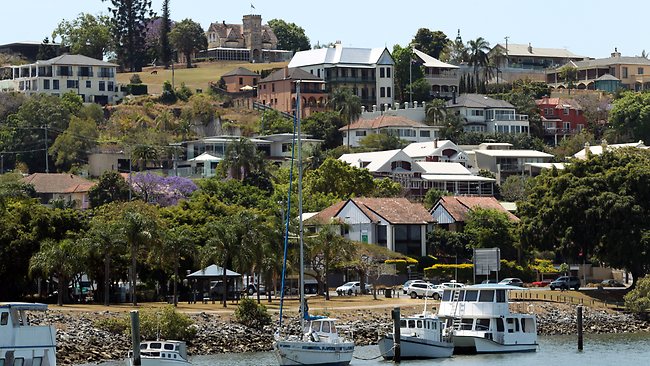
Hamilton is a hilly inner-city suburb of Brisbane on the Brisbane River which was built by convict labour. It soon became known for its upper-class country houses and estates, ornamental shade trees, picturesque location and fine views of the city. Hamilton is associated with “old money”, and has the highest mean income of any suburb in Queensland. It is named after the Hamilton Hotel, built in 1865 by Gustav Hamilton, a wealthy solicitor who owned most of the land in the area. It soon became known as a meeting place for the horse racing world, as the Turf Club is nearby, and is still popular today. Hamilton is an English and Scottish surname after the village of Hamilton in Leicestershire; its name means “crooked hill” in Old English. The aristocratic Hamilton family gained lands in Lanarkshire, Scotland, and gave their name to the town of Hamilton there. The Hamiltons married into the Scottish royal family, and the Duke of Hamilton and Brandon is the highest peer in Scotland. A famous person with the name is Hamilton Hume, an early Australian explorer of New South Wales who was a top-notch bushman and formed friendly relationship with Aboriginal peoples. This is a name with an impressive pedigree.

Logan

The city of Logan is halfway between Brisbane and the Gold Coast. It began as a penal settlement, and farming soon followed; it was developed for housing in the 1960s due to its laissez-faire planning laws. Logan is named after Captain Patrick Logan, the Scottish commandant of the original penal settlement, who had a reputation for being strict to the point of cruelty. He was a great explorer and was killed on one of his expeditions, most likely by Aborigines who had repeatedly told him to get off their land. News of his death was met with wild joy from the convicts. Logan is a Scottish surname; the Clan Logan comes from the “lands of Logan” in Ayrshire, which may be from the Gaelic for “hollow”, or even of Norman origin. In Ireland, it is considered to come from the Gaelic O’Leoghain, meaning “grandson of the warrior”. This name has many namesakes from popular culture, including the dystopian sci-fi film Logan’s Run, where Logan is played by Michael Yorke, and Logan aka Wolverine from the X-Men films, played by Hugh Jackman. Logan has charted since the 1970s (when Logan’s Run first screened), and ranked in the 1980s at #344. It climbed steeply through the 1990s and made the Top 100 by the 2000s. It is currently #38 nationally, #36 in New South Wales, #33 in Victoria, #65 in Queensland, #46 in South Australia, #28 in Western Australia, #17 in Tasmania, and #50 in the Australian Capital Territory.

Sherwood

Sherwood is a suburb on Oxley Creek. Its name comes from a farm which was named after Sherwood Forest in Nottinghamshire, England. A Royal Forest, and remnant of an older and much larger royal hunting forest, it is one of England’s most ancient, having survived since the end of the last Ice Age. It is famous for its association with legendary folk hero Robin Hood, who is supposed to have lived in Sherwood, according to some sources. Sherwood in Brisbane even made its own Sherwood Forest Park, which is now, less romantically, the Sherwood Arboretum. The name Sherwood means “shire wood”. A famous person with the name is American author Sherwood Anderson.

Tennyson

Tennyson is a riverside suburb named in honour of Alfred, Lord Tennyson. Tennyson was Poet Laureate of Great Britain and Ireland during Queen Victoria’s reign, and has the record for length of tenure as a Laureate at 42 years. Revered in his own time, he remains one of the popular English poets. One of his much-loved works is the Idylls of the King, a cycle of blank verse poems inspired by the legends of King Arthur; many of the streets in Tennyson have Arthurian names in compliment of the Idylls. For those amused by these coincidences, the Queensland Tennis Centre is located in Tennyson, and was once the Tennyson Tennis Centre. The English surname Tennyson means “son of Tenney”, with Tenney a pet form of the name Denis. Actor Russell Crowe has a son named Tennyson, after his favourite poet. This is a handsome and unusual name, with a great namesake, and would make an excellent middle name too.

Windsor

Windsor is an inner-city suburb of Brisbane, with many old homes, and containing several heritage-listed sites. It was named Windsor in 1887, most likely after Windsor Castle in Berkshire, England, as it was Queen Victoria’s Golden Jubilee Year. Windsor Castle was built by William the Conqueror, and was originally a fortification to protect the outskirts of London, with strategic views of the River Thames and access to the royal hunting forest of Windsor. Since the rule of Henry I, William’s son, it has been a royal residence, and is the largest inhabited castle and longest-occupied palace in Europe. Today it is a royal palace and weekend retreat for Elizabeth II, and state banquets and official entertainments are often held there – it is also a major tourist attraction. The castle is named after the nearby village of Windsor, once the site of a palace for the Saxon kings. Its name means “winding shores, winch shores” in Old English, because boats were pulled by windlass up the river. Famously, Windsor is the surname of the British royal family: the name was changed from Saxe-Coburg and Gotha by George V in 1917, due to anti-German sentiment during World War I. The final straw was when Germany used the Gotha G. IV aircraft to bomb London – just four months later, the Saxe-Coburg-Gothas had become the Windsors, the name taken from the royal palace. A famous person named Windsor is British actor Windsor Davies, best known as the sergeant on It Ain’t Half Hot Mum. Royal names are all the rage, and you can’t get any more royal than Windsor.

POLL RESULT: People’s favourite names were Tennyson, Augustine, and Windsor, and their least favourite were Sherwood, Hamilton, and Ebenezer.

(Photo shows the suburb of Hamilton)

Brisbane Suburbs That Could be Used as Girls Names

06 Sunday Oct 2013

Posted by A.O. in Name Themes and Lists

≈ 9 Comments

Tags

animal names, Aramaic names, Australian Aboriginal names, Biblical names, birth notices, english names, fabric names, famous namesakes, fictional namesakes, Gaelic names, Gaulish names, German names, Greek names, historical records, Latin names, locational names, name history, name meaning, name popularity, names of farms, names of ships, names of spices, nicknames, Norman-French names, saints names, Sanskrit names, Scottish names, surname names, unisex names, virtue names, vocabulary names

15517831

Amity

Amity Point is a small town on North Stradbroke Island, 30 km south-east of Brisbane. The town is named after the Amity, a brig which carried the first European settlers to Queensland in 1824. The Amity was later wrecked near Tasmania, and today you can visit a full-size replica of the brig in Albany, because the Amity also took colonists to Western Australia. Amity is an English word which means “friendship”; it comes from the same Latin root as names such as Amy and Amabel, and has been used as a girls name since the 17th century. Amity is #551 in Victoria, and I often see it in birth notices: I think this pretty virtue name is gaining in popularity, and may become a replacement for Amy.

Bethania

Bethania is in Logan City, halfway between Brisbane and the Gold Coast. The suburb was founded by Germans in the 19th century, and has a large hobby farm area. The name Bethania comes from Bethanien, the German name for the town of Bethany near Jerusalem. In the New Testament, Bethany is mentioned as the home of siblings Mary, Martha, and Lazarus, and is said to be near the place where Lazarus was raised from the dead. The Biblical Bethany may be the same place as the city of al-Eizariya in Palestine – its name means “place of Lazarus”, although others say that the original village of Bethany was slightly higher up on the Mount of Olives, and that al-Eizariya sprung up around the traditional site of Lazarus’ resurrection. The meaning of Bethany has been much debated, but it is thought the most likely derivation is from the Aramaic beth anya, meaning “house of affliction, house of suffering”, with the conclusion being that it was a place for care of the sick and destitute. Although Bethania doesn’t have any connection to Elizabeth or Anne, it might seem like a way to connect these two names, and does give both Beth and Anya as nicknames.

Cashmere

Cashmere is an outer suburb of Brisbane in the foothills of a mountain range surrounded by dense forest, with a nearby lake. Cashmere is named after an early settler, James Cash, famous for his hospitality to passing travellers. Although Cash was not wealthy and lived in a simple shanty, no tramp ever passed his door without receiving a meal or a pot of tea. Because mere means “lake”, and James Cash’s farm was near Lake Samsonvale, the suburb’s name can be understood as “Cash’s land by the lake”. Cashmere is also a fine, high quality fibre taken from Cashmere goats. The name is after the Kashmir region of India, which has been making cashmere shawls for thousands of years. Kashmir’s name comes from the great sage Kashyapa, a legendary wise man whose name is from the Sanskrit for “tortoise”. With Cash a fashionable choice for boys, luxurious Cashmere seems like a way for girls to get the nickname Cash as well. In Australian records, both men and women named Cashmere can be found.

Corinda

Corinda is an older suburb of Brisbane, first settled in the 1860s as a farming community, and with many of its homes dating back to the colonial period. The name Corinda is believed to come from a local cattle station, which was named after a pastoral station in outback Queensland. The name is of Aboriginal origin, but its meaning is not known. Corinda has been used as an English girls name since the 18th century – perhaps based on the Greek name Kore, meaning “maiden”, with an elaborated ending common in 18th century poetic names like Melinda and Dorinda. This name seems elegant and literary, and not so different from familiar names such as Lucinda.

Inala

Inala is a suburb of Brisbane near the industrial estates. It was built in the post-war period to help with the housing shortage that followed World War II, and was one of the earliest and biggest Housing Commission projects in Queensland. Young architects such as Robin Boyd helped design the housing, which features simplicity and lack of ornamentation. In other words, it isn’t pretty, but cheap and efficient to install and maintain. It has an ethnically diverse community, with many migrants from Vietnam, New Zealand, and the Pacific Islands, amongst other places, settling there. The name Inala is believed to come from an Aboriginal expression meaning “peaceful place, happy place”, but it’s possible it actually means “place of the wind”. I saw a baby girl named Inala in a birth notice early this year, and ever since have been itching to cover this as a name – said ih-NAHL-ah, it fits in with names such as Ayla, Nyla, and even Isla.

Karalee

Karalee is a suburb of Ipswich; originally dairy and farm country, it began to be developed for residential purposes in the 1970s. It is thought that Karalee comes from an Aboriginal expressing meaning “grass around a waterhole”, although the City of Ipswich prefers the translation, “pretty hill beside the water”. This looks like a portmanteau of Kara and Lee, but has its own integrity, and is said KAR-a-lee, like an elaboration of Carol.

Lacey

Laceys Creek is a rural area in the outer suburbs of Brisbane, and was first settled as timber country, soon followed by dairy farming, pineapples, bananas, and bee-keeping. Lacey is an English surname of Norman-French origin. It comes from the village of Lassy in Normandy, which means “Lascius’ place”. The meaning of the Gaulish name Lascius is of unknown meaning. The de Laci family came to England with William the Conqueror, and one of their descendants was amongst the barons who forced King John to sign the Magna Carta. Lacey has been used as a girls name since the 17th century, and part of its feminine charm is that it sounds like the word lacy. Lacey is #234 in Victoria, and I believe this is another pretty girls name which is growing in popularity.

Lucia

St Lucia is an exclusive green and leafy inner-city suburb of Brisbane. It is focused around the University of Queensland, with the university itself, and residential colleges for students, taking up a large proportion of the suburb. There are many wealthy people living in St Lucia, with riverfront houses here costing in the millions. The area was first settled in the 1860s as sugar plantations, and was given its name by William Wilson, who bought and developed one of the plantations for housing in the 1880s. Wilson was born in St Lucia in the West Indies, and he named the housing estate St Lucia because the sugar plantations reminded him of his birthplace. The island of St Lucia is in the Caribbean, part of the Lesser Antilles group. It was named in honour of Saint Lucy by the French, who were the first European settlers to the region. Saint Lucy was a 4th century martyr, and she has become a popular saint, partly because her feast day of December 13 is near Christmas and originally coincided with the (northern hemisphere) Winter Solstice. Her name’s meaning of “light”, from the Latin lux, became a very appropriate one for a Festival of Light, heralding the Light of the World. Lucia has charted since the 1940s and had a minor peak in the 1960s at #283 before dropping to #808 in the 1990s. Since then it has climbed steeply, and peaked in 2010 at #115. Currently it is #122 in New South Wales and #177 in Victoria. This is an alternative to Lucy that has never become popular, although on the charts since the end of World War II.

Ripley

Ripley is a suburb of Ipswich, which currently has only 1000 residents. However, big things are planned for Ripley’s future, and once fully developed it is expected to be a city of 120 000 – one of the country’s largest pre-planned communities. It is named after the Ripley Valley where it is located; I am not sure if this is after someone named Ripley, or one of the towns named Ripley in England. The surname Ripley is from Ripley in Yorkshire – the town’s name means “farm whose land cuts a strip through the forest”, with the forest in question being the forest of Knaresborough. One of the most famous Ripleys must be Robert Ripley, who created Ripleys Believe It or Not! trivia series for newspapers, radio and television. The name may also remind you of tough Lieutenant Ellen Ripley from the Alien film series, played by Sigourney Weaver, or suave con artist Tom Ripley, from the crime novels, turned into a film, The Talented Mr. Ripley, played by Matt Damon. I have seen this name on both sexes.

Sinnamon

Sinnamon Park is an older suburb with some heritage-listed sites; the suburb is named for the pioneering Sinnamon family who settled in the district. Sinnamon is a Scottish surname; the Clan originated in Fife, and their name comes from their seat at Kinnimonth, which was granted to them by King William of Scotland. The name Kinnimonth comes from the Gaelic for “head of the hill”. Sinnamon sounds like the sweet spice Cinnamon, but has its own meaning and history – although the Sin- at the start may be problematic for some. I did find someone named Sinnamon from Queensland in the records, but can’t be sure whether they were male or female.

POLL RESULT: People’s favourite names were Amity, Lucia, and Bethania, and their least favourite were Inala, Sinnamon, and Karalee. Not one person liked the name Karalee.

(Photo shows the University of Queensland in St Lucia)

Famous Name: Jason

18 Wednesday Sep 2013

Posted by A.O. in Famous Names

≈ 3 Comments

Tags

Beyond Jennifer & Jason, Biblical names, famous namesakes, fictional namesakes, Greek names, hebrew names, historical records, honouring, Linda Rosenkrantz, mythological names, name history, name meaning, name popularity, name trends, names from movies, names from television, Pamela Redmond Satran, royal names, saints names, US name popularity

51WNMTYA9qL

A federal election was held on September 7, and we have had a change of government. Votes are still being counted, so the election isn’t over, and we may have some names from it when the process is complete.

However, in a much more frivolous political poll held in August, Cleo magazine rated the male politicians on their sex appeal, and decided that Labor MP Jason Clare, described as the “Rob Lowe of Australian politics”, was the winner. I can’t help thinking if a men’s magazine had rated female politicians like this it would be considered very wrong.

Jason Clare represents the seat of Blaxland in western Sydney, which he won in 2007, and until recently was the Federal Home Affairs Minister. Jason grew up in the western suburbs, made dux of his class, and completed a law degree while pursuing an interest in politics. While Labor lost the election with a significant swing against it, Jason managed to increase his hold over the electorate by 6%.

To show that he is not vain about his appearance, Jason modestly joked that his wife’s preference in the Cleo poll was for the runner-up, Stephen Smith. Hello ladies – he’s a smart, handsome law graduate and his wife doesn’t appreciate him! (is the message I think we’re meant to be receiving there).

Jason is from the Greek name Iason, derived from the Greek for “to heal”. Iaso was the Greek goddess of recuperation from illness, so you could see Jason as a masculine form of her name. Although Jason is often translated as “healer” or even “physician”, to me the meaning of the name is more about the body’s natural ability to heal itself.

The name is best known from the mythological prince of Thessaly, who led a hand-picked crew of heroes on the good ship Argo, in quest of the Golden Fleece, with the aid of the goddess Hera. Jason and the Argonauts had a series of adventures, in which they didn’t behave very nobly for much of the time, then arrived in Colchis, which today is in Georgia, on the Black Sea.

The Golden Fleece was owned by King Aeetes, and to obtain it, the king gave Jason three tasks which seemed impossible to perform. Hera arranged for Aeetes’ daughter Medea to fall in love with Jason, and as she was a great sorceress, she was able to use her knowledge of magic to help him succeed, after he promised her that they would get married.

Jason and Medea then fled with the Fleece and sailed away on the Argo, because King Aeetes knew that Jason could only have completed the tasks by cheating, and wanted his property back. He pursued them until Medea came up with the horrible plan to kill her own brother and throw him into the sea, piece by piece, to distract her father.

Medea’s interest in dismembering family members continued when she and Jason returned to Greece, and she arranged for his Uncle Pelias to get chopped up into soup. Pelias had tried to drown Jason as a baby, then sent him off on the dangerous Golden Fleece quest hoping he’d die, so she had her reasons. With her penchant for murdering relatives, you’d think that Jason would have been blissfully happy with Medea, but instead he betrayed her love by becoming engaged to another woman.

When Medea tried to point out that all Jason’s luck in life was because of her, and he was being very ungrateful, he replied, “Babe, you’re the one who got lucky when the gods made you fall in love with me”. Medea wasn’t the type to take this treatment lying down, and she promptly burned her rival to death before murdering the children she and Jason had had together. Although Jason was ungallant, Medea’s tendency to see her own flesh and blood as collateral damage is disturbing.

Because Jason had broken his vow to love Medea forever, the goddess Hera abandoned him, and he wound up lonely and miserable. He was killed when the Argo, now old and rotting, broke and fell on top of him while he was asleep – a suitably ironic finish.

A king of Thessaly named Jason was a contemporary of Alexander the Great‘s father. A successful and ambitious general, it is thought that he must have been at least one of the inspirations of the great Alexander himself. It seems very likely he was named after the Thessalian hero.

There is a Jason in the New Testament, one of the Seventy Disciples of Christ, who ran a “safe house” for Christians in Thessalonica, and was once arrested for it. Saint Paul appointed him bishop of Tarsus, and he is known as Saint Jason. Unusually for an early Christian saint, Jason lived to a ripe old age. The Jewish historian Josephus tells us that Hellenised Jews used the name Jason to replace Yeshua (Joshua or Jesus), and this may apply to Saint Jason too.

Being Biblical, Jason was acceptable for use as a Christian name, and can be found in the records from at least the 16th century. The name Jason became very popular in the 1970s, and it looks as if this was due to the original Jason, because the movie Jason and the Argonauts came out in 1963 (it cut out most of the revolting parts). A special effects tour de force, it’s a cult classic, and according to Tom Hanks, the greatest film ever made. It must have made a huge impression.

Jason was already rising in popularity at the time of the film’s release, but soon zoomed up the charts to make the US Top 100 three years later. It was Top 10 in the US for all of the 1970s, which coincides with popular TV series, The Waltons, having a Jason. Even in the late 1980s, when Jason was #27, Pamela Redmond Satran and Linda Rosenkrantz were urging parents to “go beyond Jennifer and Jason”. Despite their book’s success, Jason has still not left the Top 100 in the United States, so American parents only partially heeded their call.

Jason has charted in Australia since the 1950s, when it was #290 for the decade. By the 1960s it had climbed phenomenally to make the Top 50, at #43 for the decade. It peaked in the 1970s (when Jason Clare was born) at #3, was still #18 in the 1980s, and #35 in the 1990s. Did nobody feel like going beyond Jason? It finally left the Top 100 in the mid-2000s, and is currently #133 and stable – not popular any more, but by no means plummeting into obscurity.

Jason has been a real 1960s success story, and continues to influence popular names for boys, because parents are still attracted to similar names, such as Mason, Jacob, Jayden, Jackson, Jasper and Jordan. In fact, Jason is staging a comeback under the short form Jace – already Top 100 in the United States, and no doubt rising here too.

It turns out we’re not ready to go beyond Jason yet – at least, not very far.

POLL RESULT: Jason received an approval rating of 38%. People saw the name Jason as a “dad name” (30%), and common and boring (20%). However, 12% saw it as a “nice guy” name, and 10% thought it attractive. Nobody thought the name Jason was sexy.

Rare Royal Names for Boys

08 Sunday Sep 2013

Posted by A.O. in Name Themes and Lists

≈ 11 Comments

Tags

alphanumeric names, anagram names, Anglo-Saxon names, Arthurian names, Biblical names, birth notices, classic names, Danish names, english names, famous namesakes, fictional namesakes, German names, germanic names, Greek names, hebrew names, Latin names, middle names, mythological names, name history, name meaning, name popularity, names of months, nicknames, Old English names, popular names, rare names, Roman names, royal names, saints names, Scottish names, stage names, surname names, unisex names

Franz_Xaver_Winterhalter_Family_of_Queen_Victoria

Alastair

Alastair Windsor was a great-grandson of Queen Victoria through his father, and a great-great-grandson of Victoria through his mother. Although born a prince, he was stripped of his royal titles while still a toddler, after the regulations were tightened up. Alastair went into the army, and died during World War II on active service, in unconventional circumstances. He had been sent to Canada as aide-de-camp to the Governor General, who was a relation of his. Both his regiment and the Governor General had rejected him as incompetent, and he fell out of a window while drunk. It can get very cold in Canada, and Alastair succumbed to hypothermia overnight. Alastair is the Anglicised form of Alasdair, a Scottish form of Alexander. Alasdair Mòr Mac Dòmhnaill is the ancestor of the Clan MacAlister. I think Alastair very handsome, and in a country where Lachlan and Hamish are common, it doesn’t seem out of place. If the alas at the start bothers you, it can also be spelled the more common Alistair.

Athelstan

Although there had been many English kings before him, Athelstan the Glorious was the first ruler of all England, and the first who can be called king of the English. He was the grandson of Alfred the Great, and like his grandfather, had a reputation as a man of great intelligence and justice. His household was a centre for learning, he created the most centralised government England had yet had, maintained social order, encouraged literature, was an unbeaten military leader, and a key player in international affairs. He gets rave reviews from medieval historians, and even foreign writers of his time were eager to sing his praises. He is a king worthy of admiration, yet while the name Alfred was successfully revived and is still used now, Athelstan went out of use after the Norman Conquest, and remains extremely rare. Just doesn’t seem fair, does it? Athelstan is the modern form of the Anglo-Saxon name Æþelstan, meaning “noble stone”; it was very common amongst Anglo-Saxon royalty and nobility, and there are quite a few other kings with the name. I admit it does seem a little unwieldy, but it comes with the nickname Stan.

August

August was the second name of Prince Ernst August, a great-great grandson of George III and cousin of George V. As a member of the Hanoverian family, he was born a prince of Britain and Ireland, but during World War I, anti-German sentiment convinced the British royal family to strip the titles from their German relatives. However, the Hanoverians didn’t consider themselves bound by British rules, and continued to call themselves princes and princesses. To this day, the Hanoverians ask the British monarch for permission to marry, like other royals. It’s a bit of an odd situation. Prince Ernst was the last reigning monarch of the House of Hanover, and his marriage to Princess Victoria of Prussia the last large gathering of European royals before World War I broke out – he was very much the end of an era. August is the German form of Augustus, a traditional middle name in the Hanoverian royal family which continues to be handed down. You can also see August as after the month, in which case it can be given to both sexes.

Axel

Axel was the final middle name of Prince Georg Wilhelm Ernst August Friedrich Axel, the son of Prince Ernst August. He married Princess Sophie of Greece and Denmark, who was Prince Philip’s sister. The name Axel is the medieval Danish form of the Hebrew name Absalom. In the Old Testament, Absalom was a son of King David, staggeringly handsome and extremely charming. He rebelled against his father; it’s a pretty awful story involving incest, rape and murder, and not one of the most uplifting parts of the Bible. Absalom was killed when he got his head stuck in a tree, which is meant to be very ironic for some reason. To me the ironic part is his name means “my father is peace”, and he went to war against his father. Axel is not a popular name in Australia, but I feel as if it will be in a few years, based on how frequently I see it in birth notices – it is #164 in Victoria. Its use seems to be influenced by singer Axl Rose, whose stage name is famously an anagram.

Edmund

Edmund the Magnificent was half-brother to Athelstan the Glorious, and his successor to the throne. He only ruled for a few years before he was murdered, but in that short time he had important military victories in the north, established peace with Scotland, began reviving the monasteries and helped restore Louis IV to the throne of France. His great-grandson Edmund Ironsides fought valiantly against the Danes, and although ultimately defeated by King Canute, was a skilled and inspiring leader. Edmund is an Old English name meaning “rich protector”, and it was common amongst Anglo-Saxon royalty and nobility. Saint Edmund the Martyr was a King of East Anglia killed by the Danes, and was the patron saint of England until Saint George got the gig – there is a movement in East Anglia to reinstate him. Unlike many other Anglo-Saxon names, Edmund remained in use after the Conquest (probably because of the saint), and was even used in the royal family. It’s surprising how rare this name is compared to classic, popular Edward, but it’s a very handsome and noble one. Narnia fans will know it as the name of the treacherous Pevensie brother, who redeems himself and becomes a king of Narnia. Edmund “Ted” Gyngell is a recent celebrity baby, sometimes called Edmund the Magnificent after his namesake.

Emmanuel

Emmanuel was the final middle name of Francis Albert Augustus Charles Emmanuel of Saxe-Coburg and Gotha, otherwise known as Prince Albert. He married his cousin Victoria, who was the heir to the British throne at the time. Victoria had the choice of two cousins to wed, and chose Albert as the most handsome and charming. Queen Victoria was devoted to Albert, and he was a great support to her, holding quite a bit of power behind the throne. A progressive and liberal thinker, he helped bring in many reforms, set the example that monarchy must be above politics, and made a huge success of the Great Exhibition of 1851. He died while only in his early 40s, and Queen Victoria was devastated. She wore mourning for the rest of her days and withdrew from public life. Emmanuel is a Hebrew name meaning “God is with us”; the Old Testament gives the name in a prophecy, and the New Testament attached it to Jesus Christ as the Messiah. The name was common amongst European royalty, but less often used in Britain. In Australia it’s possibly best known as a surname, from guitarist Tommy Emmanuel.

Eustace

Eustace was the eldest son of King Stephen, and a great-grandson of William the Conqueror. Stephen had become king of England in a rather controversial way. After the heir to the throne had drowned in a disastrous shipwreck, Stephen had himself declared king by popular acclaim and was speedily crowned before anyone knew what was happening. The Empress Matilda had been next in line, but she was only a woman, and Stephen thought he should rule instead. Matilda didn’t agree, and their subsequent battle for power threw England into a state of anarchy for nearly two decades. Stephen had Eustace declared his co-king, but the church refused to ratify this, and nearly everyone was greatly relieved when the teenaged Eustace unexpectedly died. Generally perceived as rather a blot, his welcome demise allowed peace negotiations to go ahead. Even more conveniently, Stephen died the following year leaving Matilda’s son, Henry II, as ruler. Eustace is the English form of Greek Eustachios, meaning “rich crop”, a name chosen for himself by a 2nd century Roman general and martyr who had been born Placidus, and is known as Saint Eustace; because of him, the name was common during the Middle Ages. This is another name from The Narnia Chronicles, because Eustace Scrubb was a rather annoying character who, like the saint, was converted from his previous beliefs. Hardly anybody seems to like the name Eustace, and even C.S. Lewis made fun of Eustace Scrubb’s name.

Leopold

Prince Leopold was a son of Queen Victoria, named after his great-uncle, Leopold I of Belgium, who had helped arrange the marriage of Victoria and Albert. Leopold’s birth is famous because his mother used chloroform during labour, giving the royal seal of approval for women to seek pain relief during childbirth. Prince Leopold inherited the family condition of haemophilia and also had mild epilepsy; he became a patron of the arts, literature and chess. He knew Alice Liddell, famous as the inspiration for Lewis Carroll’s Alice books (one of which revolves around chess), and some believe he considered marrying her, although others say it was her older sister Edith who was his intended wife. Queen Victoria arranged for him to marry Princess Helena of Waldeck and Pyrmont, a distant cousin. Leopold’s marriage was happy, and he and Helena had a daughter named Alice, but he died as a result of haemophilia after only a few years. He passed away just before his son Charles was born. Alice inherited the haemophilia gene, and passed it on to her son Rupert, who also died young. Leopold is a Germanic name meaning “bold people”; it was common amongst German royalty. This rather grandiose name has popular Leo as the nickname.

Magnus

Magnus was a son of King Harold II and Edith the Fair, or Edith the Gentle Swan, sometimes (wrongly) called Edith Swan-neck. Harold and Edith were married in a traditional manner known as handfasting, and although Edith was regarded as Harold’s wife by regular people, and their children as princes and princesses, the clergy saw her only as his mistress because they hadn’t wed in a Christian ceremony. Harold did have another wife, also called Edith, but this was a marriage of political convenience, and not a love match as it was with Edith the Fair. According to legend, after Harold was killed at the Battle of Hastings, only Edith the Fair could identify his body by markings she knew, so Harold was able to have a Christian burial. Magnus is a Latin name meaning “great”; Magnus Maximus was a 4th century Western Roman Emperor who became important in British folklore and Welsh legend, and is part of the mythology of King Arthur. There are several saints named Magnus, and it was a traditional name in the royal families of Norway and Sweden. The name is often thought of as Scottish, and one of the Saints Magnus was from Scotland. This is a great name, rich in history and legend, strong and interesting, and a good alternative to Max.

Octavius

Prince Octavius was the thirteenth child of King George III, and doted upon by his adoring parents. At the age of four, he was inoculated against the smallpox virus, and as vaccination was still in its experimental stages, became ill and died, the last member of the British royal family to suffer from smallpox. The sudden death of the tiny prince caused his family immense grief, and during his later bouts of madness, King George even had hallucinations about Octavius. What made it harder for them was they had lost Octavius’ younger brother Alfred in exactly the same way six months previously. Octavius is a Roman name coming from the Latin for “eight”; Octavius was the eighth son of King George III. Octavius seems very hip – fresher than Atticus and Orlando, with a distinct feel of its own. It would be a good choice for an eighth child or grandchild, or someone born in August (the 8th month) or October.

POLL RESULT: People’s favourite names were August, Magnus, and Alastair, and their least favourite were Octavius, Athelstan and Eustace.

(Picture shows a portrait of Prince Albert and his royal family by Franz Xaver Winterhalter)

Famous Name: George Alexander Louis

31 Wednesday Jul 2013

Posted by A.O. in Famous Names

≈ 16 Comments

Tags

Biblical names, classic names, epithets, famous namesakes, French names, German names, germanic names, Greek names, honouring, middle names, name combinations, name history, name meaning, name popularity, royal names, saints names, sturdy classics, underused classics

18388_662259277118346_1655646202_n

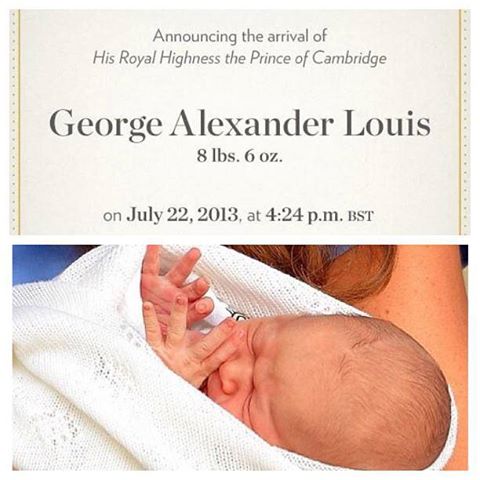
The Prince of Cambridge was born more than a week ago, and he is still big news around the globe. As future kings are born only once in a generation or so, this makes Prince George the most famous baby in the world, and it seems like an opportune time to take a look at his names.

George is derived from the Greek name Georgios, translated as “farmer”. Because it literally means “worker of the earth”, it specifically refers to the cultivation of crops.

The name George became known throughout Europe because of Saint George. According to tradition, he was a 3rd century Roman soldier from a noble Christian Greek family in Palestine. His military career went swimmingly until he was asked to sacrifice to the Roman gods, and when he refused, he was tortured and beheaded. He is venerated by Christians as a martyr.

Much later, the legend of Saint George saving a princess from a dragon was tacked on to the story. This medieval legend came from the Eastern church, and seems to be an attempt to Christianise pagan myths such as Perseus. It was brought to Europe by the Crusaders, and became a medieval romance. Saint George is the patron saint of England, and his flag, a red cross on a white background, forms part of the Union Jack.

Despite Saint George being the patron of England, his name did not become particularly common there until George I, who was German-born, took the throne of Great Britain in 1714. The name became a traditional one in the royal family, and there have been six British kings named George; the most recent the father of the present queen; he was born Albert Frederick Arthur George, and reigned under his last middle name.

George is a common name amongst many of the royal houses of Europe, and Prince Philip’s grandfather was George I of Greece, with Prince Charles having George as his last middle name. There has only been one other Prince of Cambridge, and the first one was also named George.

The name George is a sturdy classic in Australia which has never left the Top 100. It was at its peak in the 1900s and 1910s at #4, and has never been lower than #72, which it reached in the early 2000s. Currently it is #71 nationally, #64 in New South Wales,#69 in Victoria, #79 in Queensland, #48 in Tasmania and #50 in the Australian Capital Territory.

Alexander is the Romanised form of the Greek name Alexandros, translated as “defender of men, protector of men”. It first turns up in Greek mythology as the epithet of Paris, prince of Troy, who gained it while only a child, rescuing cattle from thieves while working as a cow-herd. There was a slightly earlier real life ruler of Troy named Alexander, and it’s possible the fictional Paris ended up with his name.

Just as George is a traditional name in the British royal family, Alexander was traditional in the Macedonian royal family, and the man who made the name famous for all time was Alexander III of Macedon, otherwise known as Alexander the Great. A young man of boundless ambition, Alexander conquered much of the known world, including Persia and Egypt, and invaded India before being turned back by his own men, who were getting pretty sick of his let’s-conquer-the-whole-world attitude.

Alexander was a history-maker, a great commander who never lost a battle, a role model for the empire-building Romans, and whose military strategy is still used today. He was a figure of romance, with legends being written about him even in his own lifetime. And he took power while still a teenager, dying in his early thirties, so he is always remembered as youthful, vaunting and energetic.

The name Alexander, and its many variants, spread throughout the world. There are early Christians named Alexander mentioned in the New Testament, several saints named Alexander, and many popes.

Alexander I of Scotland was named after Pope Alexander II, who gave his blessing for the Norman Conquest, and there were two more Alexanders after him in the Scottish royal family. There has never been an English king named Alexander, but the name isn’t uncommon in the royal family, and it’s especially seen use as a middle name.

In Australia, Alexander is another sturdy classic which has never left the Top 100. It was #29 in the 1900s, and sunk to its lowest level in the 1950s and ’60s at #89. It is currently enjoying some of its highest levels of popularity, being #16 nationally, #14 in New South Wales, #9 in Victoria, #20 in Queensland, #21 in South Australia, #21 in Western Australia, #26 in Tasmania and #17 in the Australian Capital Territory.

Louis is the French form of the old Germanic name Chlodowech, Latinised as Clovis, and whose modern German form is Ludwig. It means “famous warrior”. The 5th century Clovis I was the first king of the Franks to unite all the Frankish tribes under one ruler, so that they were now ruled by a single king, with kingship descending onto his heirs. He was also the first Christian ruler of Gaul.

Having created the Frankish monarchy, it’s little wonder that his name was such a big hit with French rulers, with 19 kings of France bearing the name Louis (the last one only managed a few minutes before he abdicated). The first one was Louis the Pious, son of Charlemagne, who was not only king of France but also co-ruler of the Holy Roman Empire – Louis was a traditional name amongst the Emperors as well.

Louis IX, or Saint Louis, is the only French monarch to be canonised, and Louis XIV was known as Louis the Great, or the Sun King, one of the most powerful monarchs to ever rule France. It all went wrong for Louis XVI, who was executed during the French Revolution. The other Louis the Somethings were kings in name only, as the throne had been abolished and France was no longer a monarchy.

Although so strongly associated with the French crown, Louis has been well-used as a middle name in the British royal family – in fact George I’s full name was Georg Ludwig, or George Louis. Louis is the final middle name of Prince Edward, who may have gained it from one of his godfathers, Louis, Prince of Hesse and Rhine, and Prince William, who is said to bear it in honour of Louis, Lord Mountbatten, a mentor to Prince Charles.

Louis has several pronunciations, for in French it is said loo-EE, and in English it can either be pronounced LOO-ee or LOO-is. The royal family use the LOO-ee pronunciation. Somebody recently wrote into the blog, worrying that if she called her son Louis, people might say it LOO-is by mistake, which doesn’t seem unlikely.

The name Louis is an underused classic in Australia which has never left the charts, yet never become popular. It was #101 for the 1900s, and reached its lowest point in the 1970s at #290. Since then it has continued climbing, and is currently #113 and still going strong.

George, Alexander and Louis are excellent names for a king-to-be, and great names for any boy. All classics, these are names which have stood the test of time, and been borne by men who were not just part of history, but changed history. They are names of kings and warriors and saints, defenders of the realm, and those who sought new worlds to conquer. Yet they have been borne by so many ordinary people as well that no particular expectations come with them.

These are names perfect for a prince – are any of them perfect for your little prince?

POLL RESULTS: George received an approval rating of 66% , Alexander of 88%, and Louis of 69%.

(Photo of Prince George from Facebook)

Requested Name: Susannah

24 Wednesday Jul 2013

Posted by A.O. in Requested Names

≈ 8 Comments

Tags

Biblical names, flower names, Greek names, hebrew names, honouring, name history, name meaning, name popularity, nicknames, underused names

Susanna_merleSusannah is a variant of Susanna, which is from the Greek form of the Hebrew name Shoshannah, meaning “lily”. It may be related to the Egyptian word for “lotus”, and in modern Hebrew it is also understood as “rose”. There is a lot of debate as to which lily the Old Testament means when it says shoshannah – most likely it is the water lily, but others believe it is the flower we call the Madonna lily.

The story of Susanna appears in the Old Testament. According to the story, Susanna was a beautiful Hebrew wife of Babylon, married to a rich man. One day she was secretly watched while bathing in her garden by two lecherous old men. The peeping toms then confronted her, and told her that unless she gave herself to them, they would tell everyone that she has been meeting a young man in her garden.

Despite the two men being elders and judges, Susanna refused to give in to their blackmail, and was soon arrested, to be executed for adultery. At that point, a youth named Daniel sprang forward, and demanded that Susanna receive a fair trial. Intuitively aware the men were lying, Daniel cross-examined the two men separately and found a flaw in their witness testimony – one man claimed that Susanna was meeting her lover under a small tree, while the other said it was a large oak.

Susanna was acquitted, and the two old men put to death in her place for bearing false witness. Although it was a happy result for Susanna, the point of the story is to extol the intelligence and justice of Daniel, the future prophet, who from that moment forth is seen as something out of the ordinary.

In the Bible used by Catholics, Susanna’s story is one of the chapters in The Book of Daniel, but Protestants give it its own (very short) book. They don’t accept it as genuine Bible history, because it doesn’t appear in any Hebrew texts – it was originally written in Greek. However, they leave it in because it’s a nice story; Martin Luther described it as “beautiful religious fiction”. You could even see it as Biblical fan fiction.

There is a Susanna in the New Testament as well, who is mentioned in Luke. She was one of a group of women who were disciples of Jesus, and supported his ministry from their own funds, remaining faithful through his arrest and execution. These women were called The Myrrhbearers, because it was they who prepared Jesus’ body for burial and who bore witness of his empty tomb; they are regarded as apostles to the Apostles.

The name Susanna or Susannah has been used since medieval times, in honour of the Susanna from the Old Testament, but only became common after the Protestant Reformation, probably with the New Testament Susanna in mind. It has many variants, including Susan, Susana, Susanne, Suzanne and Suzette, and is used in many countries in different forms.

Susannah has appeared only sporadically in the charts in Australia, and has never been popular. The highest it’s ever been is #218 in the 1900s, and it also had a resurgence in the 1970s at #389, and in 2009 at #521. Currently it doesn’t chart at all.

Compare that to Susan, which has been almost continually on the charts, and was the #1 name of the 1950s. The 1950s was also the peak for Suzanne, while Susanne peaked in the Top 100 of the 1940s, and Susanna in the 1960s at #376. The other Su- names can all be dated to a particular decade, while Susannah isn’t tied to one specific era.

Susannah commemorates a beautiful Biblical heroine who preferred death to sullying her virtue, and whose story had a happy ending. Despite its pure lily-like meaning, to me it seems a cheerful, sunshiney name – it makes me think of bright yellow daisies more than pale lilies. Susannah is one of those names which seems bright and bubbly for a little girl, but smart and professional for a grown woman.

The fact that it is so familiar (and even similar to popular Savannah), yet so underused, must make it an attractive prospect for parents who are searching for a name which is different, but not too different; a name which has a history, but doesn’t sound dated. It could honour a Susan or a Suzanne, and its nicknames include Sue, Susie, Sukie, Sanna, Sunny, Annie, Zannah and Zuzu.

Thank you to Jamie for suggesting the name Susannah to be featured on Waltzing More Than Matilda

POLL RESULT: Susannah received a highly creditable approval rating of 79%. People saw the name Susannah as sweet and wholesome (21%), familiar yet underused (21%), beautiful or pretty (18%), and a happy, sunshiney name (14%). However, 6% thought it was plain and boring. Only one person thought the name would get confused with Savannah.

(Painting shown is Susanna at Her Bath by Hugues Merle, 19th century)

Famous Name: Julia

03 Wednesday Jul 2013

Posted by A.O. in Famous Names

≈ 5 Comments

Tags

Biblical names, classic names, famous namesakes, Latin names, mythological names, name history, name meaning, name popularity, names of months, Old Latin names, Roman names, saints names, Shakespearean names, surname names

349237-julia-gillardJulia Gillard, who became Australia’s first female prime minister in 2010, is our prime minister no longer. Just as she became prime minister by ousting Kevin Rudd, so she was deposed in her turn when Kevin staged his long-threatened comeback and was reinstated.

Her name deserves to be covered as a “famous name” because she made Australian history by dint of her sex. As well as being the first woman prime minister, she is the first Australian PM to never be married; she is in a domestic relationship with her partner, Tim Mathieson. She is the first prime minister since Billy Hughes (1915-23) to be born overseas, because she is originally from Wales; Welsh politician Aneurin Bevan is one of her political heroes.

Much has been made of the fact that Ms Gillard is childless by choice, and an atheist, but that isn’t too unusual for an Australian prime minister. Stanley Bruce, James Scullin, Ben Chifley and John McEwen didn’t have children either, and Gough Whitlam, John Curtin, John Gorton and Bob Hawke all identified as either atheists or agnostics. She isn’t even the first redheaded prime minister – James Scullin had red hair.

Kevin Rudd also made history by returning as prime minister, because he is the first to do so since Robert Menzies in 1949, and is only the second Labor prime minister to ever do so – Andrew Fisher was the last, in 1914.

Even for those who do not agree with Julia Gillard’s politics or policies, it is admirable how hard she has worked, and what she has managed to achieve. Operating from a minority government which was tipped to do very little, she managed to get almost 500 pieces of legislation through parliament during her time in office, requiring great diplomacy and bipartisan support. (Here’s another history factoid: the last hung parliament was in 1940).

Throughout her term in office, Julia Gillard was often pilloried and treated vilely by opposition supporters. She proved to be extremely courageous and tough in the face of it, and always remained graceful under  fire. Unfortunately, her strength and dignity was probably misread by the electorate as coldness and formality, and her government failed to sell its many successes to the public.

Nevertheless, Julia Gillard has left an impressive legacy behind, including a model for other women to reach for high political office in Australia. A pity her opponents have made it unlikely any of them will want it.

The Iulia or Julia was one of the most ancient and noble families of ancient Rome, and their most famous member is Gaius Julius Caesar, the dictator who ruled the Roman Republic and helped bring about the Roman Empire. Julius Caesar gave his name to July, which makes Julia a suitable name to cover this month.

The Julii came from one of the leading houses of the Alban Hills near Rome, and gained their name from a mythical ancestor named Iulus. When it became fashionable in Rome to claim a divine origin for your noble family, the Julii decided that they were descended from Ascanius, the son of Aeneas, who according to legend founded the ancient city of Alba Longa. Aeneas was the son of a prince named Anchises, from a kingdon near Troy, and the goddess Venus. To make things easier, their ancestor Iulus was identified as being the same person as Ascanius.

The meaning of Iulus can’t be known for sure, due to its great antiquity, but it is possibly related to the name of the god Jupiter, identified as meaning “O father sky-god” in Old Latin. On the top of Monte Cavo, the dominant peak of the Alban Hills, was a very ancient shrine to Jupiter, suggesting that he had been their most important deity since time immemorial.

There are several famous women named Julia who were members of the Julia family. One was the mother of Mark Antony, another the aunt of Julius Caesar, while Julius Caesar had two older sisters named Julia, and also called his only daughter Julia, a lady renowned for great beauty and virtue.

The name Julia wasn’t uncommon in the Roman Empire, and there were many first century queens and princesses bearing the name. Saint Paul mentions an early Christian named Julia living in Rome, and there are at least two saints named Julia, who were martyrs. Julia is a character in William Shakespeare’s Two Gentlemen of Verona, another of his cross-dressing girls, and this time with a very fickle lover.

Julia is a classic name in Australia, which has never left the charts. It was #119 in the 1900s, and got as low as #205 in the 1920s before rising. It reached the top 100 in 1995 at #99, and peaked in 2000 at #64 before suddenly dropping out of the Top 100 the following year.

Since then, it has been on the decline (with a small upward blip in 2010, when Julia Gillard became the first female Prime Minister), and is currently #211, the lowest point it has ever reached. It is #153 in Victoria, the state where Julia Gillard launched her political career, and in Queensland, Mr Rudd’s home state, there are fewer babies called Julia than Kevin.

Politics rarely seems to do baby names any favours, and the name Julia appears to be rapidly losing popularity. Yet it is a classic which has never been out of the 200s, so it doesn’t seem dated. Simple and elegant, Julia travels well internationally, and on the right person, this can be a jewel of a name.

POLL RESULT: Julia received an approval rating of 72%. People saw the name Julia as classy and elegant (34%), and simple and understated (15%). However, 12% thought it was frumpy and middle-aged. 2% of people were put off the name because of Julia Gillard.

(Photo of Julia Gillard from news.com.au)

← Older posts
Newer posts →

Enter your email address to follow this blog

Categories

Archives

Recent Comments

A.O.'s avatarwaltzingmorethanmati… on Zarah Zaynab and Wolfgang…
Madelyn's avatarMadelyn on Zarah Zaynab and Wolfgang…
JD's avatardrperegrine on Can Phoebe Complete This …
A.O.'s avatarwaltzingmorethanmati… on Rua and Rhoa
redrover23's avatarredrover23 on Rua and Rhoa

Blogroll

  • Appellation Mountain
  • Baby Name Pondering
  • Babynamelover's Blog
  • British Baby Names
  • Clare's Name News
  • For Real Baby Names
  • Geek Baby Names
  • Name Candy
  • Nameberry
  • Nancy's Baby Names
  • Ren's Baby Name Blog
  • Sancta Nomina
  • Swistle: Baby Names
  • The Art of Naming
  • The Baby Name Wizard
  • The Beauty of Names
  • Tulip By Any Name

RSS Feed

  • RSS - Posts

RSS Posts

  • Celebrity Baby News: Melanie Vallejo and Matt Kingston
  • Names from the TV Show “Cleverman”
  • Can Phoebe Complete This Sibset?
  • Zarah Zaynab and Wolfgang Winter
  • Baby, How Did You Get That Name?
  • Celebrity Baby News: Media Babies
  • Celebrity Baby News: Adelaide Crows Babies
  • Celebrity Baby News: Chris and Rebecca Judd
  • Names at Work: Name News From the World of Business and Employment
  • Celebrity Baby News: Sporting Round Up

Currently Popular

  • Celebrity Baby News: Alisa Camplin and Oliver Warner
  • Rare Boys Names From the 1950s
  • Sad Celebrity Baby News (contents may cause distress)
  • Celebrity Baby News: Jacinta Allan and Yorick Piper
  • Celebrity Baby News: Nicki Gemmell and Andrew Sholl

Tags

celebrity baby names celebrity sibsets english names famous namesakes fictional namesakes honouring locational names middle names name combinations name history name meaning name popularity name trends nicknames popular names saints names sibsets surname names twin sets unisex names

Blog at WordPress.com.

Privacy & Cookies: This site uses cookies. By continuing to use this website, you agree to their use.
To find out more, including how to control cookies, see here: Cookie Policy
  • Subscribe Subscribed
    • Waltzing More Than Matilda
    • Join 517 other subscribers
    • Already have a WordPress.com account? Log in now.
    • Waltzing More Than Matilda
    • Subscribe Subscribed
    • Sign up
    • Log in
    • Report this content
    • View site in Reader
    • Manage subscriptions
    • Collapse this bar
 

Loading Comments...