• About
  • Best Baby Names
  • Celebrity Baby Names
  • Celebrity Baby Names – Current
  • Celebrity Baby Names – Past
  • Featured Boys Names
  • Featured Girls Names
  • Featured Unisex Names
  • Links to Name Data
  • Waltzing on the Web

Waltzing More Than Matilda

~ Names with an Australian Bias of Democratic Temper

Waltzing More Than Matilda

Tag Archives: aristocratic names

Brisbane Suburbs That Could Be Used as Boys Names

13 Sunday Oct 2013

Posted by A.O. in Name Themes and Lists

≈ 7 Comments

Tags

aristocratic names, Biblical names, english names, famous namesakes, fictional namesakes, French names, Gaelic names, hebrew names, Irish names, Latin names, locational names, middle names, name history, name meaning, name popularity, names from films, names from television, nicknames, Old English names, Old Norse names, popular names, rare names, Roman names, saints names, Scottish names, surname names, unisex names, US name popularity, Welsh names
857092-121013-wap-hamilton

Augustine

Augustine Heights is a new suburb of Ipswich, and gained its name from St Augustine’s Catholic Church and College. The name Augustine is from the Roman name Augustinus, derived from Augustus, meaning “great, venerable”. Its most famous namesake is the theologian Saint Augustine of Hippo, considered one of the most important Church Fathers. He describes his conversion to Christianity in his Confessions, which has become a classic of Christian literature. The name became popular in England in the Middle Ages because of Saint Augustine of Canterbury, a 6th century founder of the English church known as the Apostle to the English. It is probably because of him that there is an English form of Augustine – the popular Austin. In France, Augustine is a girls name, the feminine form of Augustinus.

Bowen

Bowen Hills is an inner-city suburb of Brisbane. It is named after Sir George Bowen, an Irishman who was the first Governor of Queensland. Tactful and democratic, with a great love of the outdoors, he made himself popular enough to be invited to serve two more years when his term had expired. There are a few places in Queensland named after Sir Bowen, including Bowen Park, a pleasure garden in Bowen Hills. The surname Bowen can be Welsh, meaning “son of Owen“, or it can be Irish, in which case it is an Anglicised form of the Gaelic O’Buadhachain, meaning “son of Buadhach”. The name Buadhach means “victory, triumph”. This name reminds me of the Bowen Technique, an alternative massage treatment developed by Australian Tom Bowen, although Bowen is a knight and dragon-slayer in the movie Dragonheart. Rarely seen here, Bowen is in the Top 1000 and rising for boys in the US. It gives the unisex nickname Bo, and for some reason I see this as a girls name just as much as a boys.

Chandler

Chandler is a semi-rural outer suburb of Brisbane. It is named after Sir John Beals Chandler, a successful businessman with a chain of electrical goods stores, and who owned several radio stations. He was elected to the Queensland Parliament in the 1940s, and Lord Mayor of Brisbane in the 1940s and early ’50s. Chandler is an English occupational surname, which denoted someone who made and sold candles, or someone who was responsible for the wax, soap, candles and lighting in a medieval great house. This name will remind many of Chandler Bing, from popular sit-com, Friends.

Crosby

Mount Crosby is an outer suburb of Brisbane adjoining the state forest. It is named after its dominant natural feature, Mount Crosby. The first settlers to this area were from the village of Crosby-on-Eden, near the Scottish border, and it seems likely that they named their new home after their original one. The surname Crosby is after the place name, a common one in northern England and southern Scotland. The name is of Old Norse origin, and means “settlement by the cross”; as we learned from Cruz, these stone crosses were often used as markers. Famous Crosbys include entertainer Bing Crosby and musician David Crosby. The name has recently begun charting in the US, after drama series Parenthood was shown on television there. The show has a character called Crosby Braverman, played by Dax Shephard, and the name must have resonated, because it went up 69 places last year. Crosby is rare in Australia (I’ve only seen it on a child once), but maybe Parenthood will have an effect here too.

Ebenezer

Ebenezer is a suburb of Ipswich. It had been a preaching place on the Methodist Church circuit since 1863, and by 1882 a church had been built named the Wesleyan Ebenezer Church. It is from this church that the suburb gets its name. In the Old Testament, Eben-Ezer is a place mentioned as the scene of battles between the Israelites and the Philistines; its modern day location is not known, but it is probably in Palestine or Arabic Israel. Eben-Ezer is from the Hebrew for “stone of help”, and it is theorised that a stone dedicated to Yahweh may have been located here to give it its name. Its most famous namesake must be Ebenezer Scrooge from Charles Dicken’s A Christmas Carol, the cold-hearted miser redeemed by three spirits of Christmas. I think the name Ebenezer sounds pretty hip now, and an Old Testament boys name which has been overlooked for too long. Eben and Ben would make good nicknames.

Hamilton

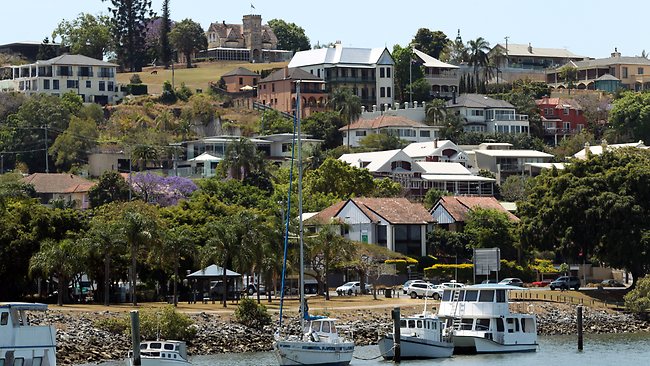
Hamilton is a hilly inner-city suburb of Brisbane on the Brisbane River which was built by convict labour. It soon became known for its upper-class country houses and estates, ornamental shade trees, picturesque location and fine views of the city. Hamilton is associated with “old money”, and has the highest mean income of any suburb in Queensland. It is named after the Hamilton Hotel, built in 1865 by Gustav Hamilton, a wealthy solicitor who owned most of the land in the area. It soon became known as a meeting place for the horse racing world, as the Turf Club is nearby, and is still popular today. Hamilton is an English and Scottish surname after the village of Hamilton in Leicestershire; its name means “crooked hill” in Old English. The aristocratic Hamilton family gained lands in Lanarkshire, Scotland, and gave their name to the town of Hamilton there. The Hamiltons married into the Scottish royal family, and the Duke of Hamilton and Brandon is the highest peer in Scotland. A famous person with the name is Hamilton Hume, an early Australian explorer of New South Wales who was a top-notch bushman and formed friendly relationship with Aboriginal peoples. This is a name with an impressive pedigree.

Logan

The city of Logan is halfway between Brisbane and the Gold Coast. It began as a penal settlement, and farming soon followed; it was developed for housing in the 1960s due to its laissez-faire planning laws. Logan is named after Captain Patrick Logan, the Scottish commandant of the original penal settlement, who had a reputation for being strict to the point of cruelty. He was a great explorer and was killed on one of his expeditions, most likely by Aborigines who had repeatedly told him to get off their land. News of his death was met with wild joy from the convicts. Logan is a Scottish surname; the Clan Logan comes from the “lands of Logan” in Ayrshire, which may be from the Gaelic for “hollow”, or even of Norman origin. In Ireland, it is considered to come from the Gaelic O’Leoghain, meaning “grandson of the warrior”. This name has many namesakes from popular culture, including the dystopian sci-fi film Logan’s Run, where Logan is played by Michael Yorke, and Logan aka Wolverine from the X-Men films, played by Hugh Jackman. Logan has charted since the 1970s (when Logan’s Run first screened), and ranked in the 1980s at #344. It climbed steeply through the 1990s and made the Top 100 by the 2000s. It is currently #38 nationally, #36 in New South Wales, #33 in Victoria, #65 in Queensland, #46 in South Australia, #28 in Western Australia, #17 in Tasmania, and #50 in the Australian Capital Territory.

Sherwood

Sherwood is a suburb on Oxley Creek. Its name comes from a farm which was named after Sherwood Forest in Nottinghamshire, England. A Royal Forest, and remnant of an older and much larger royal hunting forest, it is one of England’s most ancient, having survived since the end of the last Ice Age. It is famous for its association with legendary folk hero Robin Hood, who is supposed to have lived in Sherwood, according to some sources. Sherwood in Brisbane even made its own Sherwood Forest Park, which is now, less romantically, the Sherwood Arboretum. The name Sherwood means “shire wood”. A famous person with the name is American author Sherwood Anderson.

Tennyson

Tennyson is a riverside suburb named in honour of Alfred, Lord Tennyson. Tennyson was Poet Laureate of Great Britain and Ireland during Queen Victoria’s reign, and has the record for length of tenure as a Laureate at 42 years. Revered in his own time, he remains one of the popular English poets. One of his much-loved works is the Idylls of the King, a cycle of blank verse poems inspired by the legends of King Arthur; many of the streets in Tennyson have Arthurian names in compliment of the Idylls. For those amused by these coincidences, the Queensland Tennis Centre is located in Tennyson, and was once the Tennyson Tennis Centre. The English surname Tennyson means “son of Tenney”, with Tenney a pet form of the name Denis. Actor Russell Crowe has a son named Tennyson, after his favourite poet. This is a handsome and unusual name, with a great namesake, and would make an excellent middle name too.

Windsor

Windsor is an inner-city suburb of Brisbane, with many old homes, and containing several heritage-listed sites. It was named Windsor in 1887, most likely after Windsor Castle in Berkshire, England, as it was Queen Victoria’s Golden Jubilee Year. Windsor Castle was built by William the Conqueror, and was originally a fortification to protect the outskirts of London, with strategic views of the River Thames and access to the royal hunting forest of Windsor. Since the rule of Henry I, William’s son, it has been a royal residence, and is the largest inhabited castle and longest-occupied palace in Europe. Today it is a royal palace and weekend retreat for Elizabeth II, and state banquets and official entertainments are often held there – it is also a major tourist attraction. The castle is named after the nearby village of Windsor, once the site of a palace for the Saxon kings. Its name means “winding shores, winch shores” in Old English, because boats were pulled by windlass up the river. Famously, Windsor is the surname of the British royal family: the name was changed from Saxe-Coburg and Gotha by George V in 1917, due to anti-German sentiment during World War I. The final straw was when Germany used the Gotha G. IV aircraft to bomb London – just four months later, the Saxe-Coburg-Gothas had become the Windsors, the name taken from the royal palace. A famous person named Windsor is British actor Windsor Davies, best known as the sergeant on It Ain’t Half Hot Mum. Royal names are all the rage, and you can’t get any more royal than Windsor.

POLL RESULT: People’s favourite names were Tennyson, Augustine, and Windsor, and their least favourite were Sherwood, Hamilton, and Ebenezer.

(Photo shows the suburb of Hamilton)

Waltzing with … Neville

24 Sunday Mar 2013

Posted by A.O. in Waltzing with ...

≈ 2 Comments

Tags

aristocratic names, dated names, english names, famous namesakes, fictional namesakes, Harry Potter names, honouring, locational names, middle names, name combinations, name history, name meaning, name popularity, nicknames, Old French names, sibsets, surname names

Bonner - 700_tcm16-37336Today is Palm Sunday, which commemorates the triumphal ride into Jerusalem by Jesus about a week before the Resurrection. The people hailed him as if he were a victorious king, laying palm branches in his path. We already know that James Cook named the Whitsunday Islands and Trinity Beach after important days in Easter-tide, and on Palm Sunday 1770, he named the Palm Islands in northern Queensland after the day. After World War I Palm Island became an Aboriginal settlement, where the government maintained a repressive control over the Indigenous population.

On March 28 it will be 91 years since Aboriginal activist and Jagera elder Neville Bonner was born, and another tie-in with this time of year is that Neville once lived on Palm Island. Born on a small Aboriginal island settlement in northern New South Wales, he never knew his father and received almost no formal education. After working as a farm labourer, he moved to Palm Island with his family in 1946, and became assistant overseer of the settlement.

His time on Palm Island gave him both an interest and experience in politics, and after moving to Ipswich in 1960, he became the president of moderate indigenous rights organisation One People of Australia League, and an office holder in the Liberal Party. He was the first indigenous Australian politician, and elected senator in his own right four times.

Neville was appointed to the board of the ABC, and the council of Griffith University, which also awarded him an honorary doctorate. In 1979 he was named Australian of the Year, and in 1984 appointed as Officer of the Order of Australia. After his death, the Neville Bonner Memorial Scholarship was created for Indigenous students to take honours in political science. There is a Queensland electorate and a Canberra suburb of Bonner, named after him.

Neville is an English surname which was introduced to Britain by the Normans, and refers to a French place name in Normandy, either Neuville or Neville. Both places mean “new settlement” in Old French, and are common names of towns in France.

The House of Neville is an aristocratic English family which can trace its lineage back to Anglo-Saxon times. Although they married into the Norman nobility and assumed a Norman surname, the male line of the family had been ruling landowners in Northumbria since before the Conquest, with their ancestral seat near Durham, and were already wealthy and powerful in their own region.

The Nevilles continued to gain power, often appointed to prestigious royal offices and administrative roles. Ralph Neville was one of the founding members of the Peerage of England, being one of those summoned to sit in the House of Lords when it was established in 1294, and by the 14th century the family owned large tracts of the north of England.

They married into the royal family, but lost a great deal of power by getting involved in the War of the Roses, and also backing the wrong horse by supporting Mary, Queen of Scots instead of Elizabeth I (the Nevilles also claimed descent from one of the royal families of Scotland). Although their glory days were over, the Nevilles continued gaining earldoms and baronies through a junior line of the family, and they are still members of the peerage.

Neville can be found used as a first name from the 16th century, but remained extremely rare until the 18th century. Given that the Nevilles were so powerful in the north, you might expect to find the name greatly more common there than in the southern counties, but that doesn’t seem to be the case. It did appear to originate in Lincolnshire though, which is one of the many areas where the Nevilles owned estates and had loyal political supporters.

In Australia, Neville just squeezed onto the Top 100 of the 1900s at #99. It continued rising and peaked in the 1920s (when Neville Bonner was born) at #30; it didn’t leave the Top 100 until the 1960s, missing out by only a few places at #104. Neville hasn’t charted at all here since the 2000s.

It is sometimes suggested that the character of Neville Longbottom from the Harry Potter books could help raise the popularity of this name; however, it seems that almost as soon as the first book was published, Neville disappeared from the charts altogether.

The trouble was that Neville Longbottom, although a good person and loyal Gryffindor, was not necessarily an attractive character to parents. Chubby, unpopular and low on self-esteem, he seemed to be dogged by the chronic bad luck suffered by the self-conscious and unconfident. He lost and forgot things, had minor accidents, was bullied by both students and teachers, and was a mediocre student except in Herbology.

In the fifth book, The Order of the Phoenix, it was revealed that Neville’s parents, brave and gifted warriors in the fight against Voldemort, had been tortured to madness and permanently institutionalised. Although this evoked enormous sympathy for Neville, it didn’t help to make his name seem more usable. Nobody was saying, “Yes, I’d love to name my child after a character with insane parents, I can really relate to that”.

With Harry’s encouragement, Neville’s skills as a wizard improve and his courage grows. Once out of Harry’s shadow, he becomes the leader of the resistance group at Hogwarts, the protector of those younger and weaker, and a vital part of Voldemort’s downfall. He is the story’s alternate hero – brave, noble, kind, selfless, and pure-hearted.

Is this late blooming enough to rehabilitate Neville as a name? Or will parents continue to think of the awkward klutz that Neville is for most of the book series?

Neville is a dated name, but we have seen other old-fashioned names come back into use and even become popular. It’s a little clunky, and a tad geeky, but also solid and dignified. I often see Neville used as a middle name to honour a great-grandparent, and I wonder when someone might feel brave enough to use it up front again. Older people will find it almost irresistible to use the long-popular nickname “Nifty” Neville, but the standard Nev still sounds surprisingly dashing.

Name Combinations for Neville

Neville Anthony, Neville Charles, Neville Frederick, Neville John, Neville Peter, Neville Winston

Brothers for Neville

Edwin, George, Harold, Ralph, Stanley, Theodore

Sisters for Neville

Cecily, Emma, Flora, Isabel, Peggy, Susan

POLL RESULT: Neville received an approval rating of 69%. 26% of people liked the name Neville, and only 4% hated it.

(Photo shows Senator Neville Bonner 1979; image from the National Archives of Australia)

Australian Beaches That Could be Used as Boys Names

06 Sunday Jan 2013

Posted by A.O. in Name Themes and Lists

≈ 2 Comments

Tags

adjective names, aristocratic names, banned names, celebrity baby names, Celtic names, english names, ethnonyms, famous namesakes, fictional namesakes, Gaelic names, historical records, locational names, name history, name meaning, name popularity, names of ships, nicknames, Old English names, Old Gaelic names, Old Norse names, Scottish names, surname names, unisex names, vocabulary names

SetWidth960-Kangaroo-on-the-beach-Lucky-Bay-Esperance-Western-AustraliaCheviot

Cheviot Beach is on Melbourne’s Mornington Peninsula, and will forever be remembered in Australian history as the place where our seventeenth Prime Minister, Harold Holt, disappeared without trace on December 17 1967, presumed drowned. To the best of my knowledge, we are the only country to have had a national leader disappear in modern times. The beach is named after the SS Cheviot, which was wrecked here in 1887, 35 people losing their lives. Not surprisingly, the public is not permitted access to Cheviot Beach, because the seas are far too dangerous – Harold Holt was only allowed to swim here because he was the Prime Minister, and as we see, it wasn’t a good idea. The SS Cheviot was named after the Cheviot Hills on the border between England and Scotland. They feature in The Ballad of Chevy Chase, which tells of a medieval battle between the English and the Scottish here. The name Cheviot is almost certainly Celtic, but the meaning is not known. This seems like an interesting way to get the nickname Chevy – which I’ve seen several times on baby boys.

Elliott

Elliott Heads is a small town in Queensland, set amongst farmland and sugarcane fields. The beach at Elliott Heads is family friendly, popular for swimming, fishing, sailboarding and jet skiing. The town is at the mouth of the Elliott River, with the river supposedly named after Gilbert Eliott, who was the first Speaker of the Queensland Parliament. If so, I’m not sure why it is spelled differently. Eliott came from a long line of Scottish barons and baronets, and being calm, courteous and dignified, avoided nearly all political controversy, and was extremely popular. The surname Elliott can be derived from a number of different personal names. One is Ellis, a medieval English form of the name Elijah. It can be from the Old English Athelgeat, a male name meaning “noble Geat” (the Geats were a tribe who inhabited what is now Sweden). Another source is Old English Athelgyth, a female name meaning “noble battle”. It can be from Old English Aelfwald, meaning “elf ruler”. Finally, in Scotland it can be from the Gaelic surname Elloch, meaning “dweller by the mound”. Elliott has never charted in Australia, with parents preferring the spelling Elliot for their sons, currently #181.

Henley

Henley Beach is a pleasant suburb of Adelaide, and its white sandy beach has gentle water for swimming and a jetty for fishing. The public square next to the beach is lined with shops, hotels and restaurants. A well-established older suburb, it was first advertised in 1860 as being “free of noxious smells”, but as you can see, it’s got a lot more going for it than that. Henley was named after Henley-on-Thames in Oxfordshire, a famous centre for rowing, with the Henley Royal Regatta held each summer. Sir Ninian Stephen, former Governor-General of Australia, was born in Henley, and came to Australia during his childhood. The name Henley means “high wood” in Old English, because the town is in the Chiltern Hills. Henley was in use as a boy’s name in the 19th century, and it is found in some rather aristocratic-sounding name combinations in Australian records (and the less inspired Henry Henley). It was a classy name choice 150 years ago – could it be again?

Kingston

Kingston is a commuter town just south of Hobart in Tasmania; Kingston Beach is one of its suburbs. The area was settled in the 19th century by a family who were evacuated from Norfolk Island. Norfolk Island was at first a convict settlement like Sydney, but it ran into such difficulties that settlers were eventually forced to relocate to Tasmania. Being sent from a balmy subtropical island to freezing Tasmania must have come as a shock, but the pioneers obviously flourished. After World War II, many Dutch immigrants moved to Kingston, and it is a sister city to Grootegast in The Netherlands. Kingston Beach is the first swimming beach south of Hobart. Kingston was nostalgically named after the capital of Norfolk Island, which gained its appellation from its founder, Lieutenant Philip King. As we know, it’s not possible to name your child King in Australia, but you can call a baby Kingston, and it’s reasonably well-used in the records – one girl from Tasmania was even named Revie Josephine Kingston Beach. Quite common as a middle name for girls, only boys seem to have received it as a first name, including Kingston Rainbow, who managed to get two beachy names from my lists.

Lennox

Lennox Head is a village in the Northern Rivers district of New South Wales near the town of Ballina. Lennox Head Beach is more popularly known as Seven Mile Beach, although technically it’s only 5.3 miles long. The head, often called Lennox Point, provides panoramic views and a world-class point break, which makes this a famous surfing destination. Young surfers can look forward to the Rusty Gromfest in Lennox Head, known as the original and best youth surfing event in the country, and boasting alumni such as Stephanie Gilmore and Joel Parkinson. People also use Lennox Point for hang-gliding, and dolphin and whale watching. Lennox Head was named after Charles Gordon-Lennox, Duke of Lennox and Richmond, a soldier and politician. The dukedom is named for the district of Lennox in Scotland, near Glasgow; its name comes from the Old Gaelic for “field of elm trees”. Lennox is a very cool name for boys at the moment, which not only has the fashionable X, but also gives the trendy nickname Lenny; it was chosen as a baby name by racing driver Jason Bright. Handsome and aristocratic, it’s a great choice, and one I’m sure we’ll be seeing more of in the future.

Lorne

Lorne is a seaside town on the stunning Great Ocean Road in Victoria. Settled in the mid 19th century, it was visited by Rudyard Kipling in 1891, who mentions it in his poem The Flowers. Kipling was obviously ahead of the trends, because the town only opened up to tourists in the 1930s. Lorne is one of Victoria’s most popular tourist destinations, and its beach one of the main attractions, offering good swimming, surfing and fishing. In January, the town holds the Pier to Pub swim, which, with a 1.2 km course, attracts thousands of entrants, and is listed in the Guinness Book of Records as the largest organised ocean swim in the world (Kieren Perkins won in 1992). Lorne is named in honour of the Marquess of Lorne, to commemorate his marriage to Princess Louise, daughter of Queen Victoria. The Marquess became a very popular Governor-General of Canada; the Candian press feared he and his princess bride would be horribly snooty, but the young couple turned out to be sociable, relaxed, and flatteringly enchanted by Canada’s natural beauty. The district of Lorne in Scotland may have gained its name from Loarn mac Eirc, a Dark Ages ruler of a kingdom in Argyllshire. The Celtic name Loarn is said to mean “fox”, a clan totem animal. Lorne is a name comparatively well-used in Canada, which has close ties to the Marquess, and probably best known for many years as the screen name of Canadian actor, Lorne Greene. Others may remember it as Andy Hallett’s character’s name on the TV series, Angel – the joke is that his demonic face is green.

Lucky

Lucky Bay is in Cape Le Grand National Park, not far from Esperance on the Southern Ocean coast of Western Australia. Australia has more than its fair share of beautiful beaches, but Lucky Bay must be one of the most magnificent – over five kilometres long, it is a perfect crescent of white sand lapped by clear, sparkling turquoise water. Surrounded by bushland inhabited by pygmy possums and bandicoots, you may have to share the beach with kangaroos, who enjoy lazing on the sands. Lucky Bay received its name from the navigator Matthew Flinders, who discovered it in 1802. He had been sailing in the hazardous Archipelago of the Recherche, the place where Australia’s only pirate operated from, in the 1830s. Although Flinders didn’t have to negotiate wth pirates, he had trouble enough to deal with. Sailing through the labyrinth of islets and rocks, and with night falling, Flinders took the risky step of sailing straight to the coast, in the hope that he could find safe anchorage on a beach. All was well, and he dubbed his welcome haven Lucky Bay. Most explorers in Australia haven’t been as fortunate, and therefore it is littered with forbidding place names such as Mount Disappointment, Misery Creek, Mount Hopeless, Miserable Island, Starvation Lake, Point Torment, Dismal Swamp, and Mount Destruction. Lucky Bay is unusually upbeat for an Australian place name chosen by an explorer. Lucky is a rare unisex name, and a very happy one – well suited to a baby whose birth circumstances seem particularly auspicious.

Preston

Preston Beach is a hamlet in the south of Western Australia, between Mandurah and Bunbury. It was developed in the late 1950s as a private estate, and its beach is known locally for being a good fishing spot. It was named after nearby Lake Preston, in Yalgorup National Park; the lake is named after Lieutenant William Preston, who discovered it in 1829. The surname Preston is from a very common place name in England, and means “priest town”. It may have either denoted a village which had its own priest, or one which belonged to the Church. Preston is well-known in Ireland as an aristocratic surname, and it is fairly common in Australian records from the 19th and early 20th centuries. It strikes me as a rather sleek, understated surname name for boys, in a similar mould to Parker and Spencer.

Tallow

Tallow Beach is near Byron Bay in northern New South Wales. Once a hard-working and rather environment-destroying centre for logging, sand-mining, dairying, slaughtering, fishing and whaling, in the 1960s Byron began attracting surfers to its beaches. This began its new life as a tourist destination, and in the early 1970s the counter-culture Aquarius Festival was held in nearby Nimbin. From then on, it was known as a hippy, alternative town. Today in Byron, barely a weekend goes by when they are not holding a yoga or meditation retreat, pagan gathering, music festival, film festival, writers festival, surf festival, triathlon, underwater photo festival or art fair. Tallow Beach, in Bouddi National Park is a long stretch of wild, windswept shoreline with huge waves. It got its name when the Volunteer was wrecked there in 1864, and 120 casks of tallow were washed ashore. Tallow is rendered meat fat, once used to make candles, and still used today for biodiesel, soap and skincare products. I have occasionally seen Tallow used as a unisex name – it has the fashionable -oh sound ending with homespun appeal, and is  similar to names such as Talon, Tallis, Talia and Tully. Because Tallow was used for candles, it seems like another name with an association of “light”.

Trigg

Trigg is a northern suburb of Perth in Western Australia, and Trigg Beach one of the city’s most popular beaches for surfing and bodyboarding. The suburb is named after Henry Trigg, who was the Superintendent of Public Works in the 1830-1850s. A wealthy builder, Henry was able to emigrate to Australia and take up a large land grant. His son, also named Henry, was his partner in the building trade, and an architect who designed many of the buildings in Perth city. The surname Trigg is from the Old Norse surname Triggr, meaning “trustworthy, faithful, true”, and the personal name Trig has been used in England since medieval times. The American politician Sarah Palin has a son named Trig, which brought this very old name to new public attention. It has an attractive meaning, and is part of Western Australian history. I think it might appeal to people who like short, unusual names for boys, such as Kip, Dex or Zed.

(Picture shows kangaroo relaxing on the beach at Lucky Bay)

The People’s Choice of Boy’s Names

23 Sunday Sep 2012

Posted by A.O. in Name Themes and Lists

≈ 15 Comments

Tags

African-American names, alphanumeric names, American slang, anagram names, Anglo-Saxon names, animal names, aristocratic names, Australian Aboriginal names, Australian slang terms, banned names, bird names, birth notices, Bonds Baby Search, celebrity baby names, computer hacker names, controversial names, created names, english names, famous namesakes, germanic names, Google, Greek names, historical records, Indian names, J.R.R. Tolkien, locational names, Maori names, meteorological names, middle names, mythological names, name history, name meaning, nature names, nicknames, Old English names, Old Norse, polynesian names, popular culture, royal names, saints names, scandinavian names, slang terms, Spanish dialect words, surname names, tree names, unisex names, US name popularity, vintage names, vocabulary words, Welsh names

Adolf

A form of the Germanic name Adalwolf, meaning “noble wolf”. The Old English form is Æthelwulf, and there are a few famous men of this name in English history, most notably the father of Alfred the Great. The name was often used amongst the royal houses of northern Europe, and the Latinised form Adolphus turns up in the monarchy of the United Kingdom. There is a saint called Adolf of Osnabrück, a 9th century German monk. Up until the mid-twentieth century, the name was common in central and northern Europe, and can be found in Australia due to immigration from Germany and Scandinavia. The reason this name has been included is because barely a day goes by without someone Googling: “Is it legal to call your child Adolf?”, to which I can say, yes, it is legal here, and you can find quite a few Australians in the records with this name – including ones born during and shortly after World War II. I have met a man named Adolf (born around the early 1960s), and I believe he was named after his grandfather. The other chestnut is, “Is it legal to call your child Adolf Hitler in Australia?” to which I reply, Why would you want to do that? Seriously, why? As the name Ned Kelly is banned because he is considered too wicked, I’m pretty sure Adolf Hitler would also be illegal here.

Buster

This spunky name has more history than you might think. In England, it was first used in the middle position; Buster is a variant of the surname Bustard, after the bird. In 18th century America, it seems to have been more common for African-Americans, and may have started as a pet name in the sense of “breaker”. Later it took on the meaning of “unusual, prodigious, amazing”. Buster is used to address males in the same way as pal or fella (“Now listen up, buster”). This comes from the Spanish dialect busté, meaning “you”. It’s gone on to have negative connotations. One of the most famous men with this name is actor Joseph “Buster” Keaton, who started his career in vaudeville as a small child. He claimed to have received his nickname as a toddler from Harry Houdini, after falling down a flight of stairs unhurt. Houdini allegedly remarked, “That was a real buster!”, meaning “a fall with the potential to cause injury”. So Keaton’s name indicated he was tough enough to take a tumble. Buster Brown was a cartoon strip boy who was an angelic-looking blond prankster. In Australian slang, come a buster means to fall or fail by misfortune, while buster is a term for a strong wind – especially the Southerly Buster. This is a name Sydneysiders give to the abrupt cool change that sometimes blows in from the south during the warmer months. Vintage name Buster has recently become rather an Australian favourite for boys, although in the novel, The Shiralee, by D’arcy Niland, Buster is a little girl.

Chester

Chester is a city in Cheshire, England, founded by the Romans as a fortress in 79; its size has led some historians to speculate that the Romans intended it to be the capital, rather than London. Its current name comes from the Old English Ceaster, meaning “Roman fort”, and its early history was very military, with wars seemingly constant. Even King Arthur is supposed to have won a major battle here, and it was the last city to fall to the Normans during the Conquest. Today it’s a thriving modern city which still tries to preserve its historic buildings. Chester has been used as a personal name since the 16th century, probably after the surname, although early births in Cheshire suggest they may have been named directly for the city itself. Although it’s been a popular name in the US in its time, and only left the Top 1000 in the mid-1990s, for some reason it never caught on in a big way here. I was surprised to see it on a baby in the Bonds Baby Search Competition this year. For some reason, this baby name is often Googled, although the slang term chester is an impediment to its use.

Digby

An English surname from a place name meaning “settlement by the ditch”, derived from a combination of Old English and Old Norse. The name seems to have been first given in honour of the aristocratic Digby family, Anglo-Irish peers whose family seat in Coleshill, Warwickshire was granted to them by Henry VII. It is from the town of Coleshill that the personal name originates in the 17th century. One of the most famous of this clan was Sir Kenelm Digby, a Catholic philosopher considered a great eccentric for his exuberant personality and fascination with science, which extended to studying alchemy, astrology and magic (not considered incompatible with science then); he was the first person to note the importance of oxygen to plants. A man of action as well as thought, he became a privateer, and killed a man in a duel; he also wrote several cookbooks, invented the modern wine bottle and managed to fit in a secret romance to a famous beauty which led to their marriage. A true all-rounder. This name regularly appears in birth notices here, especially from Victoria, and may be encouraged by comedienne Cal Wilson, who welcomed a son named Digby a few years ago. People seem to either loathe this name or find it irresistibly cute; I must confess to being in the second category.

Elfyn

This is the Welsh form of the Old English name Ælfwine, meaning “elf friend”; it went out of use after the Norman Conquest. J.R.R. Tolkien liked to think of the name as meaning “friend of the elves”, and invented two fictional characters with this name who formed close bonds with elves. Modern forms include Alvin and Elvin, both taken from the surname form of the name. There are several famous people in Wales with Elfyn as either their first name or surname, including young rally driver Elfyn Evans and poet Menna Elfyn. For reasons I cannot explain, it is Googled several times a week.

Jharal

Jharal Yow Yeh is an NRL star who plays for the Brisbane Broncos. An Aboriginal Australian from the Margany people of Queensland, he also has Torres Straits Islander, Vanuatuan and Chinese heritage. Now aged 22, he has been playing for the Broncos since 2009, for the Indigenous All-Stars since 2010, and for both the Queensland state team, the Maroons, and the Australian national side, the Kangaroos, since last year. Early this season he sustained a serious leg injury, and is still recovering. People Google Jharal’s name all the time, asking for its meaning, and often querying whether it’s of Indigenous origin. In fact, his name was created for him by his grandmother. His mother couldn’t decide what to call him, so she asked nana Iris to name him. Iris cleverly arranged the letters of all the strongest men in her family into a name, and came up with Jharal. It is taken from the initials of James, Harold, Anthony, Reece, Arthur and Linc. The name is pronounced JHUH-rahl, and Iris says that most people think it is an Indian name. In fact, by coincidence, a jharal is a mountain goat from India. Names created for celebrities often seem too unique for others to use, but I have seen Jharal a few times in birth notices recently. Looking for a nickname? Jharal is known to his family as Joe.

Koa

This unisex name has several different origins. There is a Hawaiian male name Koa meaning “strong, brave, fearless”, and it’s also the name of a Hawaiian tree, the Acacia koa. The wood was traditionally used to make dug-out canoes and certain types of surfboards. In Maori, the word koa means “happiness”. In the Kaurna language of South Australia, the word koa means “crow”, and the Koa people come from south-east Queensland, so it’s also a tribal name. There has been a sudden proliferation of this name in Australian birth notices, and that might be because Tom Dumont from No Doubt welcomed a son named Koa last year. However, I am beginning to see far more girls named Koa in birth notices than boys. This may be because of model and actress Koa Whelan, a contestant on this year’s dating show, Please Marry My Boy. I think this works equally well for boys and girls, although the first meaning is male only.

Neo

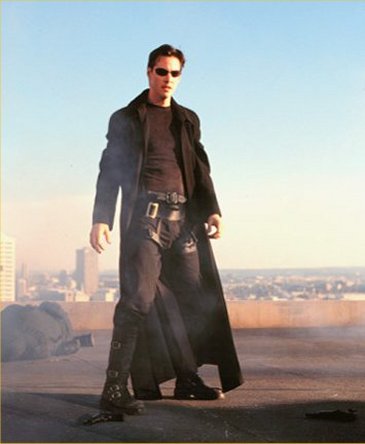
This is from an Ancient Greek prefix meaning “new, young, fresh”. It turns up in words such as neonatal, meaning “pertaining to the newborn”, or neologism, meaning “a freshly coined word”. The name has become well-known since 1999 because Neo is the protagonist of the cyberpunk Matrix film series. In the films, the character’s name is Thomas Anderson, and Neo is his computer hacker identity (Anderson does have the letters N, E and O in it). Neo is also an anagram of One, and the films seek to discover whether Neo is “The One”, a Messiah-like figure who will be able to rescue humanity. The films have become cult classics, and intermingle a range of philosophical and spiritual ideals from the East and the West – it’s even spawned its own religion, Matrixism. From the amount of times that people have Googled neo baby name or neo for a boy, there are quite a few parents considering using this name. Neo fits right in with current trends, and doesn’t sound any stranger than Leo. It is very strongly associated with the film character though. However, Australians have a solid history of gaining name inspiration from the movies, and most of The Matrix series was filmed in Sydney, giving it an Australian connection.

Rune

A Scandinavian name derived from Old Norse meaning “secret”. The runes are the letters of the runic alphabets, which were used to write different Germanic languages, dating from at least the first or second century AD. Runic inscriptions seem to have been for magical and divinatory use, and perhaps their knowledge was restricted to an elite in early times. According to Norse mythology, the runes were originally stolen from the god Odin. They are part of English history, because the Anglo-Saxons had their own runic alphabet. If you have read The Hobbit, you will have seen Anglo-Saxon runes used on a dwarven map; Tolkien later invented his own runic alphabet which appears in The Lord of the Rings. Rune stones are  used for divination today, often in a similar way to tarot cards. The name isn’t unusual in Scandinavia, and you may know the name from the Polish speedway rider Rune Holta, born in Norway. I think this is a simple, attractive name with layers of history and meaning.

Zephyr

A zephyr is a light, warm wind. It comes from the name Zephyrus, who was the Greek god of the west wind – the gentlest of breezes, which served as a harbinger of spring. He married both Iris, the goddess of the rainbow, and Chloris, the goddess of flowers – who is also seen as a deity of spring (and named Flora by the Romans). Children may know the name as that of a bat in the Silverwing book series, and, in the form Zephir, as the monkey in the Babar the Elephant stories. Grown ups may be reminded of The Zephyr Song by the Red Hot Chilli Peppers. If you take the name as derived directly from the god, then it is male, but if you accept it as a nature name and vocabulary name, it is unisex. It only seems to be Googled to my blog as a male name however. Pronounced ZEF-uhr, this name is unsual but not outrageous; it seems like a breezy alternative to popular Z names like Zachary, Zeke or Zane. The obvious nickname is Zeff or Zeffy.

(Picture shows actor Keanu Reeves in his role of Neo from The Matrix; Sydney skyline in background)

Names Spotted at Home and Abroad (Winter Edition)

04 Tuesday Sep 2012

Posted by A.O. in Names Spotted at Home and Abroad

≈ 4 Comments

Tags

aristocratic names, Armenian names, band names, cartoon names, created names, english names, famous namesakes, fictional namesakes, Fijian names, French names, Greek names, hebrew names, honouring, Indian namaes, Japanese names, Latin names, locational name, middle names, modern names, mythological names, name history, name meaning, nicknames, Norman names, Norman-French names, polynesian names, popular culture, saints names, Sanskrit names, sibsets, Spanish names, stage names, surname names, Tibetan names

International Names

Kalden Edwards (Qld) – son of Korinna and Doug, brother of Indigo. Kalden is a traditional Tibetan name meaning “from the Golden Age”, and there are several men of this name from Tibetan history.

Savvas Stergos (NT) – son of Afrodite, brother to Maria, Irene and Michael. The Greek name Savvas is from the Hebrew for “old man” (I’m guessing intended as a title of respect), and there are several saints bearing this name.

Vaishvi Jani (NSW) – daughter of Monalisa. Vaishvi is an Indian name connected to the worship of the goddess Parvati and the god Vishnu. Interestingly, we had a baby called Monalisa mentioned this year, and now we have an adult one.

Xevi Campisi (Qld) – son of Rene Flanagan and Zac Campisi. His name is a common Spanish pet form of Xavier.

Surnames as-First Names

Abbeney Manning (Qld) – daughter of Luise. As far as I know, this aristocratic Norman surname is another form of Albany, based on French place names such as Aubigne, meaning “Albinius’ town”, with the Latin name Albinius meaning “white”. It was used by sci-fi writer Ursula Le Guin as a place name in her fictional universe depicted in The Hainish Cycle. Although historically more often male, today it does sound like an ornate version of Abby.

Kasabian Sentance (NSW) – son of Jodi. Kasabian are a British rock band; the band’s name is from Linda Kasabian, a member of the Charles Manson cult, famous as his getaway driver. She did not participate in any violence, was the star witness for the prosecution, and expressed great remorse for her part in the group’s crimes. Her married surname is a common Armenian one, meaning, “butcher”.

Vaokakala Nevaeh Mara Tere-Vave (NSW) – daughter of Glory Mara Tere and Tevita Vave. Her name is a Fijian surname, but I don’t know what it means. I had never seen Nevaeh on a real person before, but wasn’t surprised to see it used in the Pacific Islander community, as not only does it have strong Christian associations, but the pronunciation (nuh-VAY-uh) is vaguely Polynesian-sounding.

Wiley Huber (NSW) – son of Nicole and Tim. This English surname is from a common place name meaning “willow wood”. It’s the stage name of English rapper Richard Cowie; he took it from a cartoon character named Wiley Kat. It reminds me of the cartoon critter Wile E. Coyote.

Middle Names

I saw a number of babies with intriguing middle names in the papers over the winter.

Archie Elvis Lincard (Qld) – son of Gemma Hall and Chris Lincard.

Austin Kelly Beadle (Qld) – son of Leah and David. Austin’s middle name is in honour of his aunt – one of the handy things about unisex names is their versatility. His first name is after his American-born father’s cousin.

Jake Tiger Gow (Qld) – son of Wendi Leggatt and Bede Gow.

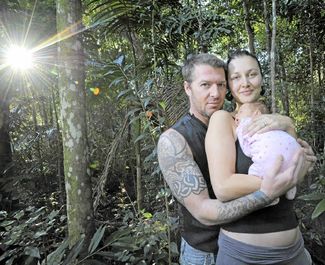
Lily Pepper Van Veen (NSW) – daughter of Xan and Adam [pictured]

Sabine Mirah Thiedeman (Qld) – daughter of Leanne and Nick. Her middle name is a form of the Arabic Amira, meaning “princess, female ruler”.

Adult Names

There was a story in the paper about a construction worker who was awarded more than $100 000 damages named Ark Tribe. His lawyer was named Stephen Dolphin.

The family has rebelled against the slightly brain-sapping entertainment of The Price is Right, and have opted for a noisy educational TV show before dinner instead. I think they became suspicious I had it on to do some clandestine name-spotting (I blame educational shows for making them brainy enough to figure this out!).

So no more names from TPIR – the only one I can remember is a forty-ish lady named Blondie who was indeed blonde-ish. Was this her legal name, or a nickname? I have no idea, as the host did not ask her. It seemed a bit of an odd name to give a child (it reminds me of Blondie Bumstead from the newspaper cartoons). On the other hand, it seemed a slightly odd nickname to retain into middle age as well (although Mrs Bumstead managed to pull it off, at least).

Names Seen in Real Life

We went to the speedway a few times over the winter – my fashion tip is to wear every jumper, jacket and coat you possess, and then cover yourself in gloves, hats and scarves until no skin is in contact with the icy air.

The speedway is the place to go if you want to hear some hardcore-type boys names – over the winter, I heard the names Ajax, Axel, Blade, Cruz, Diesel, Harlem, Hendrix, Hunter, Jagger, Jett, Nash, Taj, Tosh and Zayd. I remember someone saying on Twitter that you mostly hear boy’s names in public places, as they are the ones getting called or yelled at by anxious or petulant mamas, and it’s so true. The only girl I can remember getting yelled at the same place was a non-harmonious Harmony.

Two tots entered in a local kids photo contest were called Sai (boy) and Leto (girl). Sai is a Japanese name that can be translated as “genius”, and Leto was the mother of Apollo and Artemis in Greek mythology. Her name may mean “the hidden one”, or more prosaically, “woman, wife”.

Names of Babies Born to People I Know or Know Of:

Girls: Aoife, Beatrix, Cynthia, Jemima, Tallulah

Boys: Julian and Miles (twins), Emmett, Ronan

Names of Australian Male Olympic Medalists

19 Sunday Aug 2012

Posted by A.O. in Name Themes and Lists

≈ 9 Comments

Tags

American slang terms, aristocratic names, Arthurian names, Australian slang terms, Babylonian names, Biblical names, epithets and titles, famous namesakes, French names, Gaelic names, Greek names, hebrew names, Indian names, Irish names, Italian names, Korean names, Latin names, locational names, meteorological names, mythological names, name history, name meaning, name popularity, nicknames, Norman names, Norman-French names, Old Irish names, Old Norse names, Pictish names, popular culture, popular names, royal names, saints names, Scottish names, surname names, tribal names, unisex names, Welsh names

Bevan (George)

Bevan George is a hockey player who won gold at the Olympics in 2004, and bronze in 2008. Bevan is a Welsh surname meaning “son of Evan”; as Evan is a Welsh form of John, this is the Welsh form of Johnson. One of the most prominent people with this surname was Aneurin Bevan, a Welsh Labour Party politician most active in the 1950s. Recognised as one of the leaders of the party’s left-wing, he was a champion of social justice and the rights of working people. As Minister of Health, he was responsible for bringing in the National Health Service – that wonderful institution celebrated so effusively in the opening ceremony of the 2012 Olympics. For reasons unclear to me, this name seems to have been used more often in Australasia than anywhere else, and unfortunately, familiarity seems to have bred a certain amount of contempt, for in Queensland especially, Bevan is seen much in the same way that Kevin is perceived in the United Kingdom, the word bevan used to denote a lower-class person. As such, parents would rather use the name Evan.

Deveraux (Mytton)

Deveraux “Dev” Mytton won a bronze medal in sailing at the 1956 Olympics. The surname Deveraux is a variant of Devereux, and it’s Norman-French, meaning “from Évreux” in Normandy. The city of Évreux gained its present name from the Gallic tribe the Eburovici, whose name may be related to the word for “yew tree”, so the French city could have a similar meaning to that of York in northern England. According to the BBC, so many of the gold medal-winners from Team GB were from Yorkshire that if this historic county was its own nation, it would have finished 15th on the Olympics medal tally – ahead of South Africa and Brazil. The city of Évreux has its own Olympic champion – Didier Courrèges, who won gold as an equestrian in 2004. The surname is one with an aristocratic air to it, and in the early twentieth century would have been considered a very upmarket, perhaps even pretentious, name to bestow upon your son (a 1920s version of a “preppy” name). Pronounced DEV-er-oh, I cannot see this name coming into use, despite the fashionable ending, but Dev has a brisk sound to it.

Eli (Matheson)

Eli Matheson is a hockey player who won bronze at the 2008 Olympics. Eli is a Hebrew name which means “ascension”, and in the Old Testament, Eli is a judge and high priest of Israel who is the teacher and mentor of the prophet Samuel. Eli himself is regarded as a prophet also in Judaism. According to how it is written in Hebrew, Eli can also be a separate name which means “my God”. In Hebrew, it is said EH-lee, but English-speakers tend to pronounce the name EE-lie (probably so it doesn’t get confused with the girl’s name Ellie). One well known person with this name is Hollywood actor Eli Wallach, who starred in the westerns, The Good, the Bad and the Ugly, and The Magnificent Seven. As Old Testament names for boys gain increasing momentum, Eli continues to rise and rise. It first entered the charts in the 1970s, and joined the Top 100 in 2009. It’s already #45 and still forging ahead.

Fergus (Kavanagh)

Fergus Kavanagh is a member of the men’s hockey team, and won bronze medals in 2008 and 2012. Fergus is the Anglicised and Old Irish form of Fearghas, a Gaelic name meaning “man of vigour, strong virile man” – very apt for an Olympian. It was a name common amongst royalty in both ancient Ireland and Scotland, and is still often used amongst Scottish nobility. One of Queen Elizabeth II’s uncles was named Fergus, and another royal connection is Fergus Boyd, a friend and former flatmate of Prince William. There is a Saint Fergus, an 8th century Irish bishop who was a missionary in Scotland. King Arthur also had Sir Fergus as one of his knights, and he appears in a witty 13th century romance in which he appears valiant but lacking in sophistication. The name Fergus is currently gaining favour with the sort of parents who love Angus and Hamish, but are dismayed by their popularity. Aristocratic Fergus seems so much more select.

Hector (Hogan)

Hector “Hec” Hogan was a sprinter who was Australian champion seven times over in the 100 metres, and was able to equal the world record in this event. He attended the 1956 Olympics, and although he was already feeling strangely fatigued, still managed to win bronze. He was afterwards diagnosed with leukaemia, and died in hospital a few years later, while listening to the 100 metre sprint race at the Rome Olympics. In Greek mythology, Hector is a Trojan prince, and the greatest warrior of Troy, who slays Achilles in battle. A leader noted for his brave and noble nature, he is seen as far more worthy than his younger brother Paris, who caused the war. In Greek, Hector means “to hold”, and is interpreted as “holding firm, holding everything together”. It may be an epithet or title rather than a real name. In Scotland, Hector is used to Anglicise the Gaelic name Eachann, meaning “horse lord” or “brown horse”. Sir Hector is one of King Arthur’s knights in the legends, and is the brother of Sir Lancelot, while Arthur’s foster-father Sir Ector shows another form of the name. In Australia, Hector is the name of a cloud which forms each afternoon in the Tiwi Islands during certain months. This name is fast becoming seen as hip and quirky.

Ji (Wallace)

Ji Wallace is a gymnast who won a silver medal for trampolining at the 2000 Sydney Olympics. He later came out as gay, and was the first Australian to be an ambassador for the Gay Games; while attending the 2012 Olympics, he revealed that he is HIV-positive. Ji is a unisex Korean name which means “wisdom”; it’s also the word for an ancient Korean flute. This name sounds similar to the Indian name Jai, but manages to use even fewer letters, and is suitable for both boys and girls.

Kenneth (Wallace)

Kenneth “Ken” Wallace started out competing in Ironman, and switched to sprint canoeing while still in his teens. He won gold and bronze medals at the 2008 Olympics, and last year took part in Channel 7’s Australia’s Greatest Athlete. He came third, with Shannon Eckstein beating him to second place. Kenneth is the Anglicised form of two separate names. One is the Pictish Coinneach, meaning “handsome”; the other is Gaelic Cináed, meaning perhaps “born from fire” or “fire-head”, possibly to denote someone red-haired or hot-headed. According to tradition, the 9th century Kenneth MacAlpin was the first king of Scotland, and is known as Kenneth I (during his lifetime, he would only have been known as king of the Picts, however). There also two legendary saints named Kenneth, one Irish, one Welsh. For some reason, Kenneth became a “funny name” – perhaps because of uber-camp comic actor Kenneth Williams, from the Carry On movies. Kenneth was #38 for the 1900s, and peaked in the 1920s at #6. It left the Top 100 in the 1980s, and is currently #409. It rose last year, so things may be looking up for this attractive name.

Nimrod (Greenwood)

Nimrod Greenwood won bronze for rowing at the 1952 Olympics. In the Old Testament, Nimrod is a great-grandson of Noah, and king of several Mesopotamian cities. He is depicted as a man wielding great political power, a warrior, and a mighty hunter. Although the Bible never states this, according to tradition, he is the king for whom the Tower of Babel was constructed. This hubristic piece of engineering sought to build a tower into heaven itself, and so alarmed God that He scattered humanity over the globe, and made them speak different languages, to prevent further outbreaks of co-operation and harmony. It’s obviously a story to explain cultural differences, and there are similar myths around the world. The name Nimrod is traced to the Hebrew for “rebel”, but as he was Sumerian, this seems unlikely. The most convincing theory is that he is based on the Babylonian god Bel Marduk, one of whose titles was Bel-Nimrod, meaning “to pursue, to make someone flee before him”. Nimrod has entered our language to mean either a tyrant, a warrior, or a huntsman; however, in the United States it is slang for “idiot” – perhaps due to a 19th century play with a character called Nimrod Wildfire. It is still an Olympian name, for one of the Israeli swimmers at this year’s Olympics was Nimrod Shapira-Bar-Or.

Ralph (Doubell)

Ralph Doubell had a brief career in athletics, but was lucky enough to peak just as an Olympics came around. He won gold in 1968 in the 800 metres, and set a world record of 1:44.3. No other Australian has ever managed to equal this, and it’s stood as the Australian record for more than 40 years. Ralph is a contraction of the Old Norse name Ráðúlfr, meaning “wolf counsel”, which was introduced to England by Scandinavian settlers. When the Normans arrived, they brought with them their own form of the name, Radulf, and English Ralph can be seen as a continuation of both these names. Ráðúlfr is pronounced ra-THOOL-fer, and Radulf is said RAD-oolf; in the beginning Ralph was spelled Ralf and pronounced RAYF. By the 17th century the spelling had been changed to Rafe to reflect the pronunciation, and the Ralph spelling appeared in the 18th century. You are now free to pronounce this name either RAYF or RALF, but as far as I know, only one Ralph seems to say his name like Rafe, and that’s English actor Ralph Fiennes. The name was favoured by the ruling classes during the Middle Ages, but American pop culture has not been kind to it, often assigning it to comic or dim-witted characters. In American slang, ralph means “to vomit”, which can’t have done its image any good. Ralph was #91 in the 1900s, and peaked in the 1920s at #89. It left the Top 100 by the 1950s, and hasn’t ranked since the 1980s.

Verdi (Barberis)

Verdi “Vern” Barberis was a seven times Australian champion in weight-lifting, and took the bronze medal in the Lightweight category at the 1952 Olympics. He was the first Australian lightweight to clean and jerk over 300 lb (140 kg), which at that time exceeded his state’s heavyweight record. The name Verdi is an Italian surname, common in the north of Italy, and best known as that of the composer, Giuseppe Verdi. One of the most influential composers of the 19th century, he is famous for such operas as Rigoletto, Aida and La Traviata. The name means “green”, from the Latin viridis, related to the word virere, meaning “to bloom and flourish”. In the same way, the English word verdant, from the same Latin root, means “green”, but also has connotations of lush vegetation. It’s very much a name of freshness, spring time and new life. I think this rare unisex name is very appealing, and also begins with the fashionable V.

(Photo shows Ken Wallace after winning gold at the 2008 Olympics)

Boys Names from the Top 100 of the 1930s

26 Sunday Jun 2011

Posted by A.O. in Name Themes and Lists

≈ 18 Comments

Tags

Anglo-Saxon names, animal names, aristocratic names, Arthurian names, Celtic names, classic names, english names, epithets, European name popularity, famous namesakes, fictional namesakes, Gaelic names, German names, germanic names, Greek names, Irish name popularity, Irish names, Latin names, mythological names, name history, name meaning, name popularity, name trends, names from films, names from television, nicknames, Old English names, Old Norse names, retro names, royal names, royal titles, saints names, Scottish names, Slavic names, Spanish names, UK name trends, US name trends, Welsh names

This post was first published on June 26 2011, and substantially revised and updated on June 25 2015.

Alfred
Anglo-Saxon name meaning “elf counsel”. The name became famous due to Alfred the Great, 9th century king of Wessex, who defended England against the Vikings, and was the first to call himself King of the Anglo-Saxons. Renowned for his love of learning, he encouraged education and reformed the legal system. Although not officially a saint, he is regarded as a Christian hero, and has a feast day in the Anglican Church. The name Alfred continued to be used even after the Norman Conquest, when many Anglo-Saxon names were discarded. It dwindled after the Middle Ages, but had a revival in the 19th century, and was chosen as the name of one of Queen Victoria’s sons – an earlier Prince Alfred was the son of King George III, and the current British family trace their ancestry back to Alfred the Great. Alfred is a classic name which has never left the charts. It was #14 in the 1900s, and #50 by the 1930s. Alfred left the Top 100 in the 1950s, and is currently around the 300s, its position apparently fairly stable. Popular in Scandinavia, Alfie, Fred, and Freddie give this venerable classic several cute nickname options.

Brian
Irish name, possibly from the Celtic bre, meaning “hill”, to suggest “high, great, exalted”. In Irish mythology, Brian is one of three brothers who are sent on a worldwide magical quest. In some versions, Brian is the clever one of the three, while his brothers are bumbling and easily pushed around. A famous namesake is Brian Boru, the first High King of Ireland, and founder of the O’Brien dynasty; he made the name common in Ireland. The name Brian was also used in Brittany, and became quite popular in East Anglia, where it was spread by Breton immigrants, and in the north of England, brought over by Scandinavian settlers who had lived in Ireland. It experienced a revival in the early 20th century. Brian is a classic name which has never left the charts. It was #169 in the 1900s, and joined the Top 100 in the 1920s. Peaking in the 1930s and ’40s at #7, Brian didn’t leave the Top 100 until the 1980s – Monty Python’s Life of Brian having turned it into a “joke name” didn’t help its fortunes. However, it’s been reasonably stable for about a decade, and is around the 300s. Brian remains a popular name in Ireland. This is a strong-sounding Irish classic still getting reasonable use.

Colin
Anglicised form of the Scottish name Cailean, meaning “whelp, pup, young dog” in Gaelic. It is also a medieval pet form of Col, short for Nicholas, so it’s an English name as well. Cuilén mac Ildulb was a 10th century King of the Scots, while Sir Colin Campbell (“Colin the Great”) was a 13th century cousin of Robert the Bruce, and one of the earliest known members of the Clan Campbell, ancestor of the Earls of Argyll. The name became traditional in the Campbell family because of him. Colin was #51 in the 1900s, and peaked in the 1930s at #14. It left the Top 100 in the 1980s, and although it stayed in use for many years afterwards, now seems to be quite rare. Colin is a traditional name which has a gentle and slightly poetic feel, and works well in the middle.

Edwin
Modern form of the Anglo-Saxon name Eadwine, meaning “rich friend”. The name was traditional amongst Anglo-Saxon royalty and nobility, with the most famous Edwin being a 7th century king of Northumbria who converted to Christianity; it was said that during his reign, the land was so peaceful that a woman with a new baby could walk across the country without being harmed (it tells you something that this was considered remarkable). He was canonised as a saint after his death. The name Edwin sunk in popularity after the Norman Conquest, but was revived in the 19th century during the Victorian enthusiasm for early English names. Edwin is a classic name which has never left the charts. It was #52 in the 1900s, and #88 by the 1930s. It left the Top 100 in the 1940s, and is currently around the 400s. A good alternative to popular Edward, while still having Eddie, Ed, Ned, and Ted as nicknames.

Frederick
English form of the Germanic name Friduric, translated as “peaceful ruler”; the modern German version is Friedrich. A favourite amongst European royalty, the name was traditional amongst the Holy Roman Emperors, with Frederick I also known as Frederick Barbarossa, meaning “red bearded” in Italian. Descended from two of Germany’s leading royal houses, he is regarded as the greatest of the medieval Holy Roman Emperors. Handsome, charismatic, and courtly, he was ambitious and skilful, greatly increasing Germany’s power base, and bringing back the Roman rule of law. According to medieval legend, he is not dead, but sleeps in a cave, waiting to return Germany to its former greatness. There are also a couple of medieval German saints named Frederick. The name was brought to England by the Normans after the Conquest, but it didn’t catch on. It was revived in the 18th century when the German House of Hanover inherited the British throne; Prince Frederick was the eldest son of King George II. Frederick is a classic name which has never left the charts. It was #8 in the 1900s, and #26 by the 1930s. It left the Top 100 in the 1960s, and sunk to its lowest level in the 1990s, at #459. Since then it has gradually increased in popularity, and is now around the low 200s. A distinguished name with friendly nicknames like Fred and Freddie, Frederick is already popular in the UK.

Ivan
Slavic form of John. A traditional Slavic name, there have been many famous Ivans in history, including six tsars of Russia, and many Croatian and Ukrainian leaders. St Ivan is a legendary hermit from Bohemia, while St Ivan of Rila is the patron saint of Bulgaria. Ivan continues to be a popular name in Eastern Europe, while the Spanish form Iván is popular in Spain and Latin America. Its long-term use in the English-speaking world may come from its similarity to the Welsh form of John, Ifan, so it can be seen as an Anglicised form of the Welsh name. Ivan is a classic name which has never left the charts. It was #117 in the 1900s, peaked in the 1910s at #97, and was #100 in the 1930s. It left the Top 100 in the 1940s and is currently around the low 300s, having been reasonably stable since the 1990s. That makes it a great cross-cultural choice which has remained both familiar and underused.

Lawrence
Variant of Laurence, and the usual surname form of the name. St Lawrence of Rome was a 3rd century Spanish saint who was archdeacon of Rome during a time of Christian persecution. There are many stories and legends about him. One is that he spirited the Holy Grail to Spain, where it remains in Valencia. Another is that the Emperor demanded that Lawrence hand over all the church’s goods. Lawrence hastily distributed everything the poor, then presented the city’s suffering, saying that these were the true treasures of the church. For this act of defiance, he was supposedly martyred by being roasted over a gridiron; after hours of pain, he remarked cheerfully: I’m well done. Turn me over! He is one of the most widely venerated saints, and his tomb a favourite pilgrimage site since the 4th century. Lawrence is a classic name which has never left the charts. It was #67 in the 1900s, peaked at #55 in the 1910s and ’20s, and was #61 in the 1930s. It left the Top 100 in the 1960s, and reached its lowest point in 2010 at #466. Since then it has risen again, and is now in the 200s, outstripping Laurence in popularity. This rugged-sounding classic comes with the nicknames Lawrie and Larry.

Lionel
Medieval pet form of Leon, a Greek name meaning “lion”; it could also be directly from Lion, which was used as a nickname in the Middle Ages. According to Arthurian legend, Sir Lionel was a Breton king, and knight of the Round Table. He features in the Grail Quest, where he is shown to be unworthy of the Grail, and more interested in fighting than the spiritual life. Lionel of Antwerp was a son of King Edward III, and reputedly a giant of a man, almost seven feet tall and of athletic build. It is through him that the House of York claimed the throne of England, and the name was a common one amongst the aristocracy. Lionel was #68 in the 1900s, peaked in the 1910s at #66, and was #73 by the 1930s. It left the Top 100 in the 1950s, and hasn’t charted since the 1980s. The name is rising in both the the UK and US, fitting in well with both popular Leo, and the trend for animal names. Definitely a worthy choice that has too often been overlooked!

Rex
The Latin word for “king”, and the title of the ancient kings of Rome (“Rex Romae“) – according to legend, the first king of Rome was Romulus. The Roman monarchs did not inherit kingship, but were elected to the role, and held absolute power. The word rex is ultimately from an ancient root meaning “to rule”, and it is related to the Sanskrit term Raja, the German word reich, and the English words rich, right, regal, royal, reign, and realm. Rex has been used as a personal name since the 17th century, but only came into common use in the 19th century. Rex was #138 in the 1900s, and entered the Top 100 in the 1920s. Peaking in the 1930s at #74, Rex left the Top 100 in the 1950s. It left the charts in the 1980s, but returned the following decade at #635. It has continued climbing, and is now around the 300s. No wonder Rex is making a comeback – it’s short and snappy, ends in the fashionable X (like Max), and sounds very masculine and confident.

Walter
English form of the ancient Germanic name Walthari, meaning “ruler of the army”. It was brought to England by the Normans and soon replaced its Old English version, Wealdhere. Mythologist Jacob Grimm theorised that the name may have originally been an epithet of one of the Germanic war gods, and be linked to the Norse god Tyr. The name was especially famous in the Middle Ages because of Walter of Aquitaine, a legendary king of the Visigoths; medieval poems tell of his military exploits, fighting one-handed against his foes. He may be based on a 5th century king of Aquitaine, Wallia – his name is probably from the Old Norse for “slaughter”. There is a 12th century English saint called Walter. Walter was #15 in the 1900s, and #46 by the 1930s. It left the Top 100 in the 1950s, and dropped off the charts in the 1990s. However, it made a comeback in 2011 after the hit TV show Breaking Bad aired in Australia, with ailing chemistry teacher turned criminal Walter White played by Bryan Cranston. His name was inspired by the American poet, Walt Whitman, and he is also often known as Walt. His teenage son is Walter White Jr, giving the name a younger image to match Walter Snr’s villainous smarts. Walter is currently around the 500s, and it is yet to be seen whether it continues rising now the show has finished. I hope so, because this retro name now seems fresh and unconventional.

POLL RESULTS
People’s favourite names were Walter, Frederick and Alfred, and their least favourites were Lionel, Ivan and Brian.

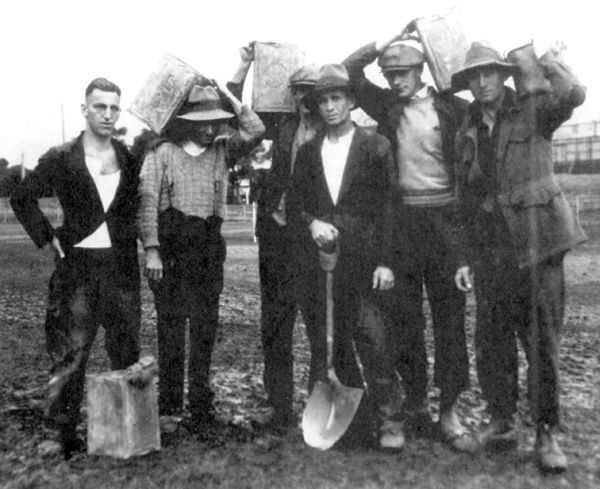
(Photo of men doing relief work during the Great Depression in 1933 from the National Library of Australia)

Girls Names from Songs

06 Sunday Mar 2011

Posted by A.O. in Name Themes and Lists

≈ 39 Comments

Tags

American names, aristocratic names, Australian slang terms, British name trends, created names, famous namesakes, fictional namesakes, food names, French names, fruit names, gemstone names, germanic names, Hawaiian names, hebrew names, Latin names, name history, name meaning, name trends, names from films, names from songs, nature names, nicknames, Old Norse names, patriotic names, plant names, polynesian names, popular names, retro names, royal names, saints names, scandinavian names, Turkish names, UK name popularity, unisex names, vintage names, Yiddish slang


This list was first published on March 6 2011, and substantially revised and updated on March 12 2015.

Astrid
Goodbye (Astrid Goodbye) was a 1979 single for popular rock band Cold Chisel, written as an energetic set finisher. Songwriter Don Walker didn’t know anyone named Astrid, and thinks he probably heard of the name because of Bill Wyman’s partner, Astrid Lundstrom. Astrid is the modern form of Ástríðr, an Old Norse name which can be translated as “beloved of God”, or more freely as “divine beauty”. A traditional name amongst Scandinavian royalty since medieval times, it was the name of Canute the Great’s sister, giving it a slender English connection. It became well known in the English-speaking world because of popular Swedish children’s novelist Astrid Lindgren, the author of the Pippi Longstocking books, and has received fresh attention from Astrid Hofferson in the film How to Train Your Dragon. The name is often understood as being related to the word “star”, because it sounds like the Greek aster, which was exploited in a Dr Who special where Kylie Minogue played star-loving Astrid Peth. This attractive name is currently around the 500s.

Ayla
Ayla was a 1987 single for New Wave duo Flash and the Pan, comprised of music industry powerhouses and ex-Easybeats, Harry Vanda and George Young. The name Ayla has several possible origins. It can be a variant of the Hebrew name Elah, meaning “terebinth tree”, pronounced eh-LAH, or a Turkish name meaning “halo of light around the moon”, and often translated as “moonlight”. In Turkey, it is pronounced to sound like the name Isla. The name Ayla was also used for a beautiful, inventive, and spiritually gifted palaeolithic superwoman in the popular Earth Children  novel series by Jean M. Auel. In the books, Ayla is a Neanderthal attempt at the character’s real name, which isn’t given, but much longer; it is said like Kayla without the K. The name Ayla first joined the US Top 1000 in 1987, a year after Auel’s Clan of the Cave Bear was made into a film, starring Daryl Hannah. Despite being a flop, it seems to have catapulted Ayla to #593, and to have helped inspire the Flash and the Pan song. In Australia, Ayla joined the Top 100 in 2013, fitting in with popular names like Layla and Ava.

Clementine
Col Joye’s 1959 #1 hit single (Rockin’ Rollin’) Clementine is a hip retelling of the folk ballad, My Darling Clementine. In this version, the miner’s daughter Clementine is a jeep-driving “real down chick” who meets up with a “cat from the city” in a jumping joint where she hops, bops, and “digs that crazy rhythm”. Clementine is a French form of Clementina, the feminine form of Clement, from the Latin name Clemens, meaning “merciful, gentle”. Clement is a saint’s name, so Clementine would originally have been given with this in mind, and the name dates to the Middle Ages. It has a rather aristocratic image, with several French princesses named Clémentine, and Sir Winston Churchill’s wife was also called Clementine. A clementine is a small citrus fruit, but that isn’t an issue in Australia, where they are nearly always sold as mandarins. Clementine was quite a popular name in Australia in the 19th century, but has never been in the charts since Federation. There has been renewed interest in the name recently, with the quirky Clementine children’s book series by Sara Pennypacker, Clementine the moral compass in The Walking Dead video game, and free spirit Clementine in the film, Eternal Sunshine of the Spotless Mind. Expect to see more of this elegant vintage name in the future.

Evie
Stevie Wright is the former lead singer of legendary 1960s rock band The Easybeats. Australia’s first international pop star, he was the first forced to deal with the pressures of being famous and beautiful at a very young age, and the first to blaze, burn out, and come crashing down in spectacular fashion. Evie is his 1974 rock ballad of young love and new life blossoming, blooming, and then going appallingly wrong, and is the only 11-minute song to become a #1 hit. Evie is a pet form of Eve, or a short form of names like Evelyn. It’s been used as an independent name since the 18th century in America, and may have a Dutch influence. Evie first joined the charts in the early 2000s, after the song was covered by one-off supergroup The Wrights in 2004. It climbed so steeply that it was in the Top 100 by the late 2000s, and was #22 in 2013. It’s even more popular in the UK, so you can see this as part of the British nicknamey trend, as much as a tribute to an Australian classic.

Georgy
The Seekers were a folk group, and the first Australian band to achieve major success in the UK and US. Georgy Girl was the title song to the 1966 British movie of the same name, a Swinging Sixties coming-of-age tale about a naïve, frumpy young girl and her unconventional love affairs. The song went to #1 in Australia, and was The Seekers’ highest-charting single in the US, where it got to #2 and was used to advertise mineral water. Georgy can be used as a pet form of either the male name George, or the female names Georgia, Georgette, or Georgiana – the “Georgy Girl”in the song is named Georgina. Although Georgy has a long history of use for both sexes, it is far less common that the variant Georgie, which has charted for girls since the 1990s and is rising steeply in the 200s.

Leilani
Leilani, released 1982, was the début single by quirky rock group Le Hoodoo Gurus (later Hoodoo Gurus). The song’s narrative is loosely based on the plot of 1951 B-grade movie Bird of Paradise, and combines an exotic South Pacific setting with an oddly suburban mindset, and a fun faux-Polynesian chorus filled with Australian place names. Leilani is a Hawaiian name meaning “heavenly garland of flowers”, but often understood as “heavenly child”, pronounced lay-LAH-nee. It fits in with the trend for L-l names, such as Lillian, and is currently around the 300s. A very pretty Polynesian heritage choice which has the fashionable nickname Lani.

Matilda
Waltzing Matilda was written by Banjo Paterson in 1895. The Matilda in the song isn’t a dancing girl, but is what swagmen called the bundle that they carried; to “waltz Matilda” is to walk while carrying a bundle. It is said that the swagman in the song was a real person called Samuel Hoffmeister who was involved in the Shearer’s Strike of that year, so it’s a political protest song (unintentionally). Waltzing Matilda is our unofficial national song and the lyrics are written on every Australian passport. Matilda is a Germanic name meaning “mighty in battle”. A traditional name amongst European royalty, it was literally brought over with the Conqueror to England, as it was the name of William I’s wife, the mother of William II and Henry I. Her grand-daughter was named after her, and she was married to a Holy Roman Emperor, so was the Empress Matilda. She tried to claim the throne of England as her father’s heir, but was never crowned queen, being named Lady of the English – her son instead became King Henry II. Saint Matilda was a medieval German queen whose son became a Holy Roman Emperor; she is the patron saint of large families. Matilda was #144 in the 1900s, and disappeared from the charts in the 1930s. It made a comeback in the 1980s, after Matilda the Kangaroo was chosen as the mascot for the 1982 Commonwealth Games, held in Brisbane and won by Australia. Matilda joined the Top 100 in the early 2000s, peaked in 2009 at #16, and by 2013 had only fallen to #18. A patriotic retro name choice that is extremely stable in the charts.

Rosie
Founded by the brothers of one of the Easybeats, AC/DC is Australia’s most successful rock band, and one of the most successful world-wide. Whole Lotta Rosie is their cheeky 1978 single, allegedly based on Bon Scott’s real life encounter with an obese Tasmanian woman. Rosie is a pet form of Rose which has a long history as an independent name; it can be used as a short form of any Rose- name, such as Rosalie, Rosamund, Rosetta, or Rosemary. Rosie was #229 in the 1900s, and left the charts in the 1930s. It made a come-back in the 1980s, reaching #749 and climbing steeply. It was in the mid-100s in Victoria in 2012. A sweet, fresh-faced retro name that is already Top 100 in Britain.

Ruby
Ruby Wednesday is an early song by rock band Eskimo Joe, released in 1999. A whimsical re-take on the Rolling Stones’ Ruby Tuesday, it made the Triple J Hottest 100 the year it came out. Ruby is a precious gemstone, whose name comes from the Latin for “red”. It’s been used as a girl’s name since the 17th century, but became popular in the 19th, when gemstone names became fashionable. Ruby was #21 in the 1900s, and had left the Top 100 by the 1930s. It disappeared from the charts in the 1950s, but came back in the 1980s at #548. It reached the Top 100 in 1996, peaked at #1 in 2012, and and by 2013 was #2. A spunky retro choice which has already reached maximum popularity, and is therefore expected to gradually fall.

Sadie
Sadie (The Cleaning Lady) was a 1967 novelty song and the first solo single for pop idol Johnny Farnham; it hit #1 and was the biggest-selling single by an Australian artist in the 1960s. Sadie is a pet form of Sarah, which seems to have originated in 18th century America. The name gained an especially Jewish image in 19th century England, where in Yiddish slang, a Sadie was a low status Jewish girl, sometimes with connotations of prostitution. It’s interesting how often Sadie is linked with that profession, such as Sadie Thompson in the W. Somerset Maughan’s Rain, while The Beatles’ Sadie adds another “sexy” image to the name. Sadie was #145 in the 1900s, and left the charts in the 1940s. It returned in the late 2000s at #566, and in Victoria is in the mid-100s, a similar popularity to that in the UK, while it is already a Top 100 name in the US. This sassy retro name looks set to go places.

POLL RESULTS
People’s favourite names were Evie, Matilda, and Clementine, and their least favourite were Ayla, Leilani, and Georgy.

Newer posts →

Enter your email address to follow this blog

Categories

Archives

Recent Comments

A.O.'s avatarwaltzingmorethanmati… on Zarah Zaynab and Wolfgang…
Madelyn's avatarMadelyn on Zarah Zaynab and Wolfgang…
JD's avatardrperegrine on Can Phoebe Complete This …
A.O.'s avatarwaltzingmorethanmati… on Rua and Rhoa
redrover23's avatarredrover23 on Rua and Rhoa

Blogroll

  • Appellation Mountain
  • Baby Name Pondering
  • Babynamelover's Blog
  • British Baby Names
  • Clare's Name News
  • For Real Baby Names
  • Geek Baby Names
  • Name Candy
  • Nameberry
  • Nancy's Baby Names
  • Ren's Baby Name Blog
  • Sancta Nomina
  • Swistle: Baby Names
  • The Art of Naming
  • The Baby Name Wizard
  • The Beauty of Names
  • Tulip By Any Name

RSS Feed

  • RSS - Posts

RSS Posts

  • Celebrity Baby News: Melanie Vallejo and Matt Kingston
  • Names from the TV Show “Cleverman”
  • Can Phoebe Complete This Sibset?
  • Zarah Zaynab and Wolfgang Winter
  • Baby, How Did You Get That Name?
  • Celebrity Baby News: Media Babies
  • Celebrity Baby News: Adelaide Crows Babies
  • Celebrity Baby News: Chris and Rebecca Judd
  • Names at Work: Name News From the World of Business and Employment
  • Celebrity Baby News: Sporting Round Up

Currently Popular

  • Celebrity Baby News: Alisa Camplin and Oliver Warner
  • Rare Boys Names From the 1950s
  • Sad Celebrity Baby News (contents may cause distress)
  • Celebrity Baby News: Jacinta Allan and Yorick Piper
  • Celebrity Baby News: Nicki Gemmell and Andrew Sholl

Tags

celebrity baby names celebrity sibsets english names famous namesakes fictional namesakes honouring locational names middle names name combinations name history name meaning name popularity name trends nicknames popular names saints names sibsets surname names twin sets unisex names

Blog at WordPress.com.

Privacy & Cookies: This site uses cookies. By continuing to use this website, you agree to their use.
To find out more, including how to control cookies, see here: Cookie Policy
  • Subscribe Subscribed
    • Waltzing More Than Matilda
    • Join 517 other subscribers
    • Already have a WordPress.com account? Log in now.
    • Waltzing More Than Matilda
    • Subscribe Subscribed
    • Sign up
    • Log in
    • Report this content
    • View site in Reader
    • Manage subscriptions
    • Collapse this bar
 

Loading Comments...