Interview with Elisabeth from You Can’t Call It “It”!

Tags

, , , , , , , , , , , , , , , , , , , , , ,

mothersday

Elisabeth Wilborn is the stylish blogger at long-time favourite amongst name nerds, You Can’t Call it “It”! Elisabeth’s blog is very popular (I bet you’ve been there already!), and I think it’s because she not only has great taste in names, she has a wonderful sense of fun. After years of blogging, Elisabeth has tons of name information to draw upon, all neatly catalogued, and a very lively following who are eager to discuss, debate, suggest, and furiously disagree with each other on the subject of names. This is a blog you will absolutely love if you are passionate about name trends but don’t take yourself too seriously.

What is your name?

Elisabeth Wilborn

Have you ever wished you had a different name?

I used to want to be Olivia, when the name was rarely heard. I thought my parents really missed the boat on Olivia Wilborn, doesn’t that have a nice rhythm? I also tried to go by Libby and Betsy at various points – but they never stuck. It’s funny, because one of the reason my parents chose Elisabeth was because it has so many nicknames.

At what age did you first begin getting interested in names?

From the time I could read I think I was interested in names. They always painted their own portrait to me, and I was astounded, even as a little girl, how certain names seemed to “go together.” Even as a child I could be found in the baby name books section, sandwiched between the preggos. My parents also encouraged a love of language and etymology, which naturally translates to names.

What inspired you to begin a name blog?

After having my first child and doing so much research on names, I felt I could have named a village. I was so overflowing with information at that point, a blog seemed like a natural progression. Abby Sandel’s wonderful Appellation Mountain, which began a few months before YCCII, definitely helped light a fire to create my own space.

You have been successfully blogging for several years now. How have your ideas about names changed during that time?

I just celebrated my fifth blogging anniversary! I can hardly believe it. My tastes have definitely grown to include more genres, and now that my children are school-aged, I’m less likely to come down so harsh on certain names.

You Can’t Call It “It” has its own website now, which looks really stylish. How difficult was it to do that?

Why thank you! Getting off WordPress was a bit of a challenge, and I hired help to transfer data and find hosting. The design I did myself using a template program.

What other blogs do you have, or write for?

I have a child style blog called The Itsy Factor (get it?), which is a little sleepy at the moment. I am also a regular contributor to Apartment Therapy and Nameberry. The blog has been featured online at Babble, Making It Lovely, Design Mom, in print at Pregnancy and Newborn Magazine, and I was even on television as the baby name consultant for Bravo TV’s Pregnant in Heels. I do the Facebook and Twitter thing, and I also have a very active Pinterest following. I’m kind of an addict.

Do you have a favourite blog entry on You Can’t Call It “It”!?

7 Deadly Trends is probably what I’m best known for. It was written in 2008, and I can think of a few that I’d like to add! One of the most fun entries ever was when I asked people their children’s names, and then I would tell them my first instincts about their family, soothsayer style. What shocked all of us is that it was pretty dead-on.

What has been the highlight of your name-blogging career so far?

The people I’ve been able to connect with through blogging. Getting an email from Pamela Redmond Satran out of the blue complimenting me on the blog, and subsequently having lunch and becoming friends with her was pretty cool. She and Linda Rosenkrantz wrote the first books on baby names that really honed in on style, and definitely help shape some perspective for me as a young girl. It was also pretty thrilling to be on television!

Do you have a pet naming peeve?

Tacking unnecessary endings onto a normal name is one of my current annoyances.

What are some of your favourite names?

I love so many! I tend to like underused names with a lot of history – Cecily, Leopold. Things like that.

What names do you dislike, despite your best efforts at being broad minded?

I have an irrational dislike for the etch sound. Gretchen and Fletcher are perfectly respectable names, but all I hear is wretch.

Are there any names you love, but could never use?

Most of my favourites have been vetoed. It’s tragic, really. But the art of naming is also inextricably intertwined with the art of compromise. I feel lucky that I got to use two names that I find exciting and meaningful.

What are your favourite names in the US Top 100?

Charlotte (#19) is a true-love name for me, and one that my other half obsesses over, but my own vanity couldn’t get over its popularity. Sebastian (#64) is also gorgeous, I’m glad to see people pick up on it.

What are your favourite names in the rest of the US Top 1000?

There are so many! People are discovering some great names, and using them. There’s Rosemary (#603), Theodore (#197), Adelaide (#343). Do Australians call their daughters Adelaide? Answer: Yes! Adelaide is #232 in New South Wales and #598 in Victoria.

What is your favourite name that has never charted in the US?

Melisande. Shhh!

What are your children’s names?

Beatrix and Eulalie.

If you found out you were pregnant right now, what would be the first names you would think about using for the baby?

Currently loving Marguerite and Arthur.

Have you and your husband ever disagreed while choosing baby names together? How compatible are your tastes in names?

When haven’t we disagreed? He loves names like Domino and Alabama. I want names that would wear well on a queen.

What is something we don’t know about you?

When I was born, my fourth toe was longer than my middle toe. They look pretty normal now, but I still get teased about it.

What advice would you give to someone who was choosing a baby name?

Envision your 16-year-old asking one day why you chose their name. What will you answer?

(The photo is of Elisabeth with her girls, from You Can’t Call It “It”!)

Heinrich Jaeger and Maximus Steele

Tags

, , ,

Steelworks-defMultiples

Margaret and Elizabeth

Indica, Tywin and Phoenix


Girls

Ariana Erminia (Vitalia)

Candice Yiyu

Danica Jenna

Felicity Brooke (Lucy, Rebekah)

Gillian Daisy (Tia)

Harriet Alexandra

Koa Mia (Jaiden)

Lila Goban (Bruce, Ivy)

Marilyn Ivy Jean

Miriam Jayne (Gregor)

Olivia Puti

Poppy Pip Niamh Adelaide (Lily)

Rori Mae

Sylvie Angelica Teresa (Massimo)

Talitha Emma


Boys

Colby Darren (Brooke)

Elisha Nate (Phoebe, Holly)

Harley Reef

Heinrich Jaeger “Ricky”

Jakob Jim Rudolf

Jackson Branco

Lucius Jonathan (Jennifer, Nathan, Cody)

Maximus Steele “Max”

Mojtba Gafar Mohamed Abbas

Ned Archer (Jack, Abe)

Orlando John Livio (Arabella)

Oscar Jan

Sebastian Levi (Xavier, Willow)

Soren Jack (Tily, Emmett)

Xavier Gray


Most popular names this week

Girls: Isabella, Lucy and Zoe

Boys: Mitchell

(Photo shows the Port Kembla steelworks in Wollongong)

Requested Name: Genevieve

Tags

, , , , , , , , , , ,

T6070702123509

The name Genevieve is in common use because of one woman – Saint Genevieve, one of the patron saints of Paris. Genevieve was born in the 5th century, and embarked on a holy life at an early age, because she was only a little girl when she was consecrated to God. She became a nun while still a teenager, and after the death of her parents, went to live in Paris in a religious community. Genevieve lived an austere and pious life, with frequent visions of heavenly saints and angels, and works of charity.

In 451 Attila and his Huns were sweeping over Gaul, and the inhabitants of Paris prepared to flee in terror. Genevieve encouraged them to trust in God, and urged them to pray, telling them that if they did so, Paris would be spared. Apart from anything else, this was sensible advice, because it restored calm to the city, and of course Paris would have been taken at once if its citizens had evacuated. Attila turned his hordes towards Orléans, leaving Paris untouched. (Fortunately Orléans didn’t come to any major harm, and the Huns were eventually defeated).

Some years later, Paris was taken by the Frankish leader Childeric. During the siege, Genevieve distinguished herself through many acts of self-sacrifice, and because of her diplomatic efforts, Childeric, and his successor, Clovis I, showed unusual clemency towards the citizens of Paris. Clovis I made the city his capital, which was the start of Paris becoming one of the great capital cities of the world.

A hill on the city’s Left Bank where Saint Genevieve prayed is still known as the Montagne Sainte-Geneviève, and on top of it is the Bibliothèque Sainte-Geneviève, the main reference library for students from the nearby Sorbonne, which inherited the writings and collections of a medieval abbey where St Genevieve is said to have been buried. It has been at the heart of French culture and education from the beginning. One of the library’s directors in the 20th century was Geneviève Boisard, so the saint’s name lived on in many ways.

Another famous French namesake is the legendary Genevieve de Brabant, a noblewoman falsely accused of infidelity who lived in a cave with her young son, fed by a helpful deer, until her husband found her after discovering her accuser’s treachery. The story is based on the true story of Marie de Brabant, wife of the Duke of Bavaria, who was suspected of adultery due to a mix-up in the mail, tried, and beheaded in 1256. When it was proved that the verdict had been invalid, the duke had to do penance. The change of name from Marie to Genevieve is almost certainly due to the cult of Saint Genevieve (the deer seems to be borrowed from the legend of Saint Giles).

The meaning of the name Genevieve is obscure. In medieval times the saint’s name was recorded as Genovefa (Latinised as Genoveva), a Gaulish name which may come from the ancient word for “tribe, family”, related to the word for “born”, and thus a distant relative of the word Genesis (which comes from Latin, but from the same ancient roots). Suggestions that Genevieve is a Gaulish form of Guinevere or Jennifer are persistent but most likely fanciful (for a start, Guinevere is already a French form of a name – it doesn’t make much sense a name would two different French forms).

The French spelling of the name is Geneviève, and in English, we remove the accent mark over the name, which also changes the pronunciation to JEN-uh-veev. I won’t attempt to reproduce the French pronunciations, which differ  depending on someone’s accent – a Parisian will say Geneviève differently to a French-speaker from Brussels or Montreal.

Genevieve has charted in Australia since the 1930s, entering the charts at the same time as Jennifer. I suspect that Genevieve was seen as a slightly more exotic version of Jennifer, but while Jennifer went straight into the Top 100 from nowhere, Genevieve debuted at the more modest #306. I think in some ways Genevieve has had the advantage, because while Jennifer peaked in the 1950s and enjoyed a lengthy afterglow of popularity lasting many decades, Genevieve has never been higher than #214. Currently Genevieve is #279 in New South Wales, where it is still out-performed by Jennifer at #260. In Victoria, Genevieve is #179, and Jennifer #206.

Genevieve is an elegant French name, which has remained in constant use here for many decades, without ever becoming popular. It’s pretty and feminine, but not in the least frilly – in fact, it sounds quite intellectual because of its importance to French culture. Its saintly namesake was a woman of brains and courage, and its legendary namesake part of a romantic fairytale which corrects the cruel injustice of real life.

In the past, the most common nicknames for Genevieve were Gen, Genna or Genny (still influenced by Jennifer), but you could also use Ginny, Genie, Gigi, Neve, Eva, Eve, Evie, Viv, Viva or Vivi.

Thank you to Brooke for suggesting the name Genevieve to be featured on Waltzing More Than Matilda

POLL RESULT: Genevieve received an approval rating of 83%, making it one of the most admired names of the year. People saw Genevieve as intelligent and sophisticated (21%), beautiful and romantic (20%), pretty and elegant (18%), and not overused (10%). However, 9% preferred the French spelling and pronunciation of the name. Nobody thought that Genevieve was “too French”.

(The photo shows a view of the Montagne Sainte-Geneviève in Paris, which is
in one of the oldest parts of the city. In the distance you can see the dome of the Panthéon,which was built over a church dedicated to Saint Genevieve, and according to legend, where her relics were kept)

Celebrity Baby News: State of Origin Babies

Tags

jtagainThe NRL State of Origin series opened with its first match on June 5, won by the New South Wales Blues against the Queensland Maroons. Two more matches will be played to decide the overall winner. Both sides contained players who became new dads around the same time as the first  game.

From the Queensland team, Johnathan Thurston and his fiancee Samantha Lynch welcomed their daughter Frankie Louise on June 7.

Johnathan has played for the North Queensland Cowboys since 2005, and is their co-captain. He has played for Queensland since 2005, the Australian team since 2006, and the Indigenous All-Stars since 2010. He has won the Dally M Medal six times, received three awards from the Rugby League International Federation, and named Player of the Year at the Cowboys twice. He received the Wally Lewis Medal for State of Origin player of the series in 2008, the Preston Campbell Medal as man of the match in the All-Stars game of 2010, and named man of the match four times at Origin games. Two years ago he received the Golden Boot Award as the world’s best rugby league player, and he is also a member of the Australian Aboriginal rugby league team of the century. He has never missed a game of Origin since his 2005 début, and has played 21 consecutive Origin matches. Since 2005, Queensland has not yet lost a State of Origin series.

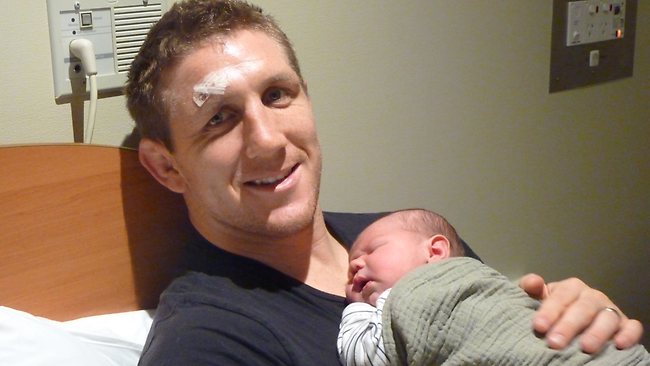
From the New South Wales team, Ryan Hoffman and his wife Mel welcomed their son Zach on May 22.

Ryan has played for the Melbourne Storm since 2003, and spent 2011 in the English Super League with Wigan Warriors. He has played for the City Origin side since 2006, New South Wales since 2007, and Australia since 2007. Ryan is the son of Jay Hoffman, who played for the Canberra Raiders.

557097-ryan-hoffman

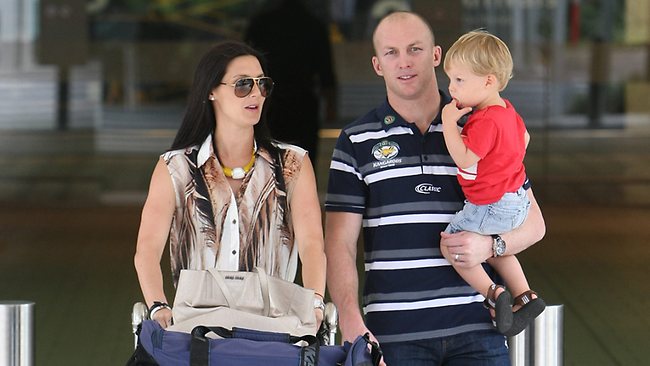
(Photo of Johnathan and Sam at top from the Townsville Bulletin; photo of Ryan and Zach at bottom from The Telegraph)

Choosing Between Two Baby Names

Tags

, , , , , , , , ,

k-bigpicA lot of times, parents end up with two front-runners on their baby name list – both equally good choices, both equally loved. They’re usually fairly similar in style and popularity, which makes it harder to decide.

One of the most common questions used to search for the blog is choosing between two different names, so today I thought we would take one of these questions as an example of different ways you could use to make the choice between names. Not all of them will work for you, but hopefully at least one of them will make sense.

The names I’ve chosen are Sophia nn “Sophie” and Matilda nn “Tilly“, which are only four places apart in the 2012 NSW 100. For the purposes of the exercise, I’ve picked the surname Conway out of the phone book, and we will imagine that the middle name has to be Jane, after grandma. The baby’s siblings are named Audrey and William nn “Will“.

Check how each name sounds with the middle name and surname

Take your names on a road test by trying all possible combinations of each name, including nicknames and initials.

Sophia Jane, Sophia Conway, Sophia Jane Conway, Sophie Conway, S Conway, SJ Conway, SJC

OR

Matilda Jane, Matilda Conway, Matilda Jane Conway, Tilly Conway, M Conway, MJ Conway, MJC

Don’t just write them down on a piece of paper, say them aloud. Put them into sentences. Sophie, please set the table for dinner Tilly, where were you? I was so worried! This road test from Baby Name Genie is quite good.

Call them out – Sophia, are you ready for school? Matilda Jane Conway, get in here this instant! (The usual advice seems to be to do this in a supermarket or playground, but where I live, this will get you called “the crazy woman who yelled at an imaginary person in the supermarket/playground” for the next forty years. Everyone else must have more open-minded supermarkets, or else they drive to another town to do it or something.)

Does one name appeal more than another when you say it out aloud? Do you prefer the smooth sound of Sophia Conway, or the perky lilt of Tilly Conway? Does Matilda Jane seem “right” to you, in a way that Sophia Jane doesn’t? Do the initials MJ bug you for some indefinable reason?

Check how each name sounds with the siblings

Audrey, William and Sophia

OR

Audrey, William and Matilda

Which one can you best imagine as Audrey and William’s baby sister? Can you see yourself saying, These are my children – Audrey, William and Sophia or My kids are called Audrey, Will and Tilly? Do Will and Tilly sound too much alike to your ears?

Popularity

If you care about popularity even a little (and let’s face it, most of us do), have a quick check of each name’s popularity. Not just how popular it is now, but whether it is becoming more or less popular.

Sophia is still climbing in popularity, while Matilda has begun to descend in the charts, although both names are fairly stable – Sophia rose only 1 place last year, while Matilda didn’t move.

While both names have a similar popularity, Sophia is likely to become more popular, and perhaps even reach #1, as it has in the United States. Matilda is unlikely to overtake its peak of #16, but will probably remain fairly popular for some time.

A lot of parents have a great anxiety about their baby’s name becoming “too popular” and reject names on an upward trajectory, but I think names rising in popularity are nothing to be afraid of. For girls especially, having a rising name seems to correlate with liking their own name a great deal.

In this case, they may not have too many years to have a rising name, as Sophia could peak fairly soon. You may want to take the nickname into account and consider the popularity of Sophie too.

In practice, parents are going to be more concerned about local popularity – if they know ten Matildas and no Sophias in their neighbourhood, Sophia is going to be more attractive to them, no matter what the charts say.

As we don’t have crystal balls or the ability to control other parents’ names choices, I think it’s wisest to educate ourselves about popularity, but not to fret over it.

Wait until the baby is born before deciding

This must be the most common piece of advice handed out to indecisive parents, and with good reason: a lot of the time it seems to work. Many parents seem able to instinctively feel that their baby looks like a particular name, and no other can be considered. They look at their daughter, and know at once she is a Matilda, and not a Sophia, and the question is settled.

It doesn’t work for everyone, or for every baby, so I would consider this a technique you would hope to work, rather than expect it to.

Flip a coin

This is another common piece of advice handed out when you need to make a decision. It’s not as silly as it sounds, because the important part is not whether you get heads or tails, but how the outcome makes you feel. In other words, the coin toss is just a way to gauge your gut reaction. You toss a coin, and you get heads, which means the name is Matilda. Do you feel a pang of loss that it isn’t Sophia? Were you secretly hoping it would be tails? Maybe your gut is telling you something.

Choose a third option

If you get all the way through this and you still can’t decide between Sophia and Matilda, chances are neither name is right. Maybe the perfect name has been staring you in the face the whole time, and you’ve been too distracted obsessing over Sophia and Matilda to notice it. Stop obsessing, and the right name might make itself known to you.

Things to consider

  • It’s fine to ask other people for their opinions, but don’t follow them blindly. Asking too many people may end up confusing you more, so it’s best to limit how many people you ask, and choose them wisely. The best people to talk to are those that ask you questions to help you understand your own feelings better, rather than people who just tell you their own opinions, and those who can share their own experiences, so you can learn what techniques worked for other people.
  • If you are hesitating about a name because of the middle name or the nickname, that’s something that might be easily fixed. For example, if Sophie as a nn for Sophia seems too common, you could always use Fia. If you think Tilly sounds odd next to a brother named Will, maybe Tilda or Matti is more pleasing to you (or you might just choose to be glad you didn’t nickname William “Billy”). If you don’t love Sophia Jane, perhaps you could add another middle and call her Sophia Violet Jane instead. Think about whether a particular issue can be changed to suit you better before you cross it off.
  • Trust your instincts. There’s no right or wrong answer, so go with what feels right to you. A name doesn’t have to tick every box to be the right one.
  • Don’t stress over the decision or over-think it. In the grander scheme of things, it doesn’t make a huge difference whether you pick Sophia or Matilda – they are both nice names. Since there isn’t a wrong choice to make, you might as well relax about it!

Have you ever had to choose between two names which both seemed perfect? How did you make a choice?

Name Update: Bugsy Has a Brother!

Tags

, , , , , ,

jem finchMia wrote in to the blog a couple of months ago, wondering what kind of name would suit a sibling to her son Bugsy, whose name was chosen by his dad, Lachlan.

Mia wrote in again to say that she was considering the name Marlon for the baby if it was a boy. However, she set her heart on a girl’s name which starts with Mar-, so she abandoned the idea of calling her son Marlon.

Mia and Lachlan’s second son was born on May 22 weighing 5 lb 3oz, and at first the name Thatcher (nicknamed Ted) seemed like the right one for him. But somehow Mia was not 100% convinced that he looked like a Thatcher, and when she talked it over with Lachlan, he confessed he didn’t really love the name.

It took a couple more weeks to make the final decision, but now Mia and Lachlan are absolutely sure of his name, and he is called

JEM RICHMOND,

little brother to Bugsy.

Mia and Lachlan like that it is short and nicknamey, easy to spell, and a regular name that won’t be a hassle, while still being just unusual enough to not stand out next to Bugsy. James is an important name on both sides of the family, so they feel that it is honouring the Jameses, although they didn’t set out to do that. Everyone loves Jem’s name, so it’s been a complete success.

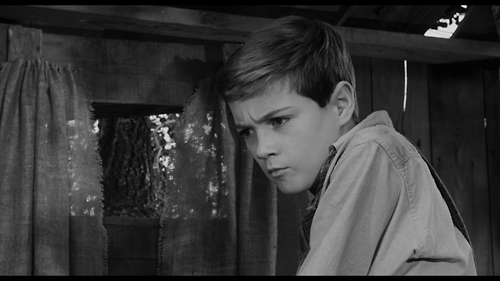
Interestingly, Bugsy is a name from a movie (Bugsy Malone), while Jem is also from a movie (Jem Finch in To Kill a Mockingbird), so they seem a very well-matched pair of brothers. They’re both vintage names, and both quite boyishly cute and casual as well.

Another interesting snippet is that when readers were polled on what kind of name would go best with Bugsy, most respondents picked “A name from the 1920s/30s” – To Kill a Mockingbird is set in the 1930s.

Not only is Jem gorgeous, the rise of hip Atticus and Scout make Jem seem like an undiscovered Mockingbird name – I think people will really “get” Jem, and a couple are going to be kicking themselves they didn’t think of it first.

I love the middle name Richmond too – very sleek and handsome. It made its way onto a name list two years ago – oddly enough, it was published May 22. Spooky!

Congratulations Mia and Lachlan for choosing the perfect name for your son, and putting so much love and thought into the choice. Thanks also for showing people it’s okay to have a change of heart about your baby name, even after the baby is born.

(Photo shows Philip Alford as Jem Finch in To Kill a Mockingbird)

Sunday Betty and Leon Morpheus

Tags

, ,

261755-kids-splahshing-in-puddlesmnTwins

Charlotte India and Elise Phillipa

Quinn Ruby and Brooklyn Louise (Logan, Bailee)


Girls

Anne Priscilla

Azalea HenniBeth

Bo Harla

Bridget Joyce

Chevota Laura-Anne Rose (Hannah)

Clementine Daisy Patience (Sadie, Spencer)

Coral Lidia (Billy)

Elsie Ruth (Isla)

Ivy Constance

Kirra Paige (Dylan)

La-Toya Zahara

Lola Nell

Mahlia Celeste (Saxon, Jarvis)

Pia Charlotte

Sunday Betty


Boys

Angus Lovell

Arlie Francis (Arden, Quinn)

Asher Myles (Halle, Beau, Lewis)

Brax Gabriel (Mace, Cruze)

Darcy Sage

Dorian James

Fletcher Morris (Lucy)

Harley Rossie

Henrik Gilbert (Haakon, Edvin)

Hugo Oiva

Isaiah James Kaima

Leon Morpheus

Max Addison

Naish Peter (Eliza)

Rocklan David (Abigail)


Most popular names this week:

Girls: Amelia

Boys: Lachlan

(Picture shows friends India and Frank playing in puddles in Adelaide; photo from The Advertiser)

Requested Name: Fia

Tags

, , , , , , , , , , , , ,

12Dec14-2934

Fia is one of those names whose origin is difficult to ascertain, or which may have multiple origins. This isn’t uncommon with names that are exceptionally short and simple, but it does make it difficult to research, and my findings are going to involve a certain amount of supposition.

The earliest I can find Fia in historical records is around the 18th century, across central and eastern Europe, later moving north to Scandinavia. The most likely explanation is that Fia was used as a short form of a longer name, and, considering names common to all the countries involved, my guess would be that it is short for Sofia (in fact I have seen quite a few Europeans online named Sofia with Fia as their user name).

Fia isn’t often found in the English-speaking world until the late 19th century, and  turns up in the United States amongst immigrants from the aforesaid European countries.

In Australian records, Fia is found very rarely, and associated with both Italian and Samoan immigrants. The Italian is interesting, because the most common explanation of Fia is that it is short for the medieval Italian name Fiammetta, which comes from the Italian word for “fire”. From the records of Italian immigrants to the US, I see Fia used as an abbreviation of Fiorella, meaning “little flower”, although Fia could still be short for Sofia in Italy (it is currently #1 there).

In Samoa, Fia is a common unisex short form of any name beginning or ending with fia. An example is AFL footballer Fia Tootoo, whose entire name is Fiatupu To’oto’o. A Samoan girls name that ends with -fia is Tausa’afia, which means “pleasant, lovable”; Fia can be used as the nickname.

There are two other theories I have read about the origin of Fia that are worth mentioning. One is that it is Scottish Gaelic, and originates from the medieval name Duibhshíth, which has been translated as “black fairy”. The other is that it is short for the medieval Irish name Fiachna, meaning “raven”, or related to fiadh, the Old Irish word for “deer” (originally any game animal).

I don’t find these theories very convincing, mostly because Duibhshíth and Fiachna are male names, and fiadh is also a masculine noun. I wasn’t able to find many women named Fia in Scotland or Ireland in historical records, and the very few I found may have been transcription errors, or abbreviations for longer names, such as Fionnuala. It would be strange for a genuinely Gaelic name to be so absent from Scotland or Ireland.

It would seem that in the English-speaking world, Fia is a modern name, and most likely began as a short form of Sofia. We may have lost touch with its origins due to the vagaries of immigration, and the name’s rarity.

If you are wondering how rare Fia is: there were 28 baby girls named Fia in the United States in 2012, 10 baby girls with the name born in the UK in 2010, and Fia doesn’t show up in Australian data at all. That’s very rare.

Fia is a neat, simple little name which would make a great alternative to popular Sofia and Mia, is a handy nickname for anything from Safiyah to Fiorella to Fiona to Seraphina, and which seems very multicultural. Its dearth of history and namesakes mean that it’s a baggage-free name, with few issues attached, and its rarity ensures that people don’t have a ready image to attach to its bearers.

However, if you are looking for an authentic Gaelic name to honour your Scottish or Irish heritage, I suggest you keep looking. I don’t think this is it.

Thank you to Celia for suggesting the name Fia to be featured on Waltzing More Than Matilda.

POLL RESULT: Fia received an approval rating of 68%. 19% of people thought the name Fia was pretty and unusual, but 15% preferred it as a nickname for a longer name only.

(Photo shows Swedish model Fia Ljungstrom)

Celebrity Name News: Darren and Loren Lockyer

Tags

,

445893-darren-lockyerRetired NRL football star and commentator Darren Lockyer, and his wife Loren, welcomed their son Hugo David on May 29. Hugo Lockyer joins big brothers Sunny, aged 2, and Flynn, aged 1. The Lockyers now have three boys under the age of three.

Darren announced Hugo’s birth while commentating a game yesterday, and indicated that Loren would rather like a girl, so perhaps we can expect more little Lockyers in the future.

(Photo of the Lockyer family from The Courier Mail)

Waltzing with … Fletcher

Tags

, , , , , , , , , , , ,

Bounty-paintingBounty Day is on June 8th, and this year the festivities will be held on the 10th because it’s a weekend. Bounty Day is a major holiday on Norfolk Island, and celebrates the day that the descendants of the mutineers on the Bounty arrived on the island. The mutiny on the Bounty in 1789 is a tale which has often been told in books, movies, songs and TV shows, yet continues to be a subject of debate, with the relationship between Captain William Bligh and head mutineer Fletcher Christian at its centre.

There has been a tendency to portray Captain Bligh as a cruel tyrant who flogged his men into mutiny, but records show that his rule was generally mild and enlightened. For whatever reason, he and his master’s mate, Fletcher Christian, failed to get along. During the voyage, the ship’s crew enjoyed a lengthy stay on Tahiti, and its relaxed lifestyle seem to have made a return to naval discipline appear intolerable to the men; Bligh’s acid tongue, quick temper and insulting manner probably didn’t help.

Fletcher led the mutiny against Bligh while the ship was near Tonga, and took control of the Bounty, while Bligh and his loyalists were set afloat. The mutineers spent time in Tahiti, where Fletcher married Maimiti, the daughter of a local chief. From there, they kidnapped several of the locals and took them to Pitcairn Island, at that time uninhabited and incorrectly mapped. Once there, they sunk and burned the Bounty so that nobody could leave.

Perhaps they thought they had found an island paradise, but Pitcairn Island became plagued by murder, rape, slavery, alcoholism and insurrection. During one conflict, Fletcher Christian was reportedly killed, leaving behind his pregnant wife and their sons, Thursday October and Charles; his daughter Mary Ann was born after his death. Thursday and Charles are the ancestors of almost everyone with the surname Christian on Pitcairn and Norfolk Island, and the Christians are one of Norfolk Islands first families.

Norfolk Island was once a penal colony, and after the convicts had been repatriated to Tasmania, it was resettled in 1856 by people from Pitcairn Island, whose population (the descendants of mutineers and their Tahitian wives) had grown too large for it. Norfolk Island became part of the Commonwealth of Australia in 1901.

[If you have been worried about Captain Bligh all this time – don’t be. That capable seaman navigated his way to Timor across 3618 nautical miles of sea in 47 days, and made his way back to England, where he reported the mutiny to the Admiralty. Later he was appointed Governor of New South Wales, where he must have rubbed people up the wrong way again, as the Rum Rebellion saw him arrested and imprisoned by the rebels. Once all that mess had been sorted out, he was promoted].

Fletcher is an English surname which is an occupational name for an arrowsmith, someone who makes arrows. The word is derived from the Old French fleche, meaning “arrow”. It takes a great deal of skill to make arrows correctly, and during medieval times, the role of the fletcher became highly respected and well-paid.

The Fletchers trace their descent from Jean de la Fleche, a Norman noble who was granted lands in Yorkshire by William the Conqueror. Jean’s descendant, Sir Bernard Fletcher, moved to Scotland, where he was granted lands by King David I. The Fletchers forged strong relationships with the Campbells, the Stewarts and the McGregors; one of the Fletchers is said to have saved the life of Rob Roy McGregor when he was wounded. The Fletcher line continued their involvement in arrowsmithing for royalty and the nobility for several centuries.

The most famous Australian with the first name Fletcher is probably Sir (David) Fletcher Jones, the son of a Cornish miner who started his own highly successful menswear business in the 1920s. Fletcher Jones is credited with transforming men’s fashion in Australia, which gives this name a conservative, yet stylish, feel.

Fletcher began charting in New South Wales in the 1990s, when it debuted at #365. It peaked in 2009 at #156, and is currently stable at #178. Fletcher is #152 in Victoria, and is significantly more popular in Tasmania, where it is in the Top 100 at #56.

Given the connection between the islands of Pitcairn, Norfolk and Tasmania, it seems apt that Fletcher Christian’s forename should be most popular there. Another Tasmanian connection to the name is that Errol Flynn’s first film role was playing Fletcher Christian in In the Wake of the Bounty.

The name Fletcher is more popular in Australia than elsewhere – in the US, Fletcher is #790 and rising, and in the UK it is #253 and rising.

As surnames for boys become ever more popular, Fletcher is another which seems as if it has plenty of room for growth. The flipside to Archer, it connects us to an enigmatic adventurer who founded an island dynasty, and continues to haunt our imaginations.

POLL RESULT: Fletcher received an approval rating of 88%. 32% of people liked it, and 28% loved it.