The #1 Names in Regional Australia

Tags

First, a quick reminder of the top names in Australia:

  • National – Charlotte and Jack
  • New South Wales – Ruby and William
  • Victoria – Olivia and Jack
  • Queensland – Charlotte and Jack
  • South Australia – Charlotte and Jack
  • Western Australia – Charlotte and Noah
  • Tasmania – Ruby and Jack
  • Australian Capital Territory – Charlotte and Jack
  • Northern Territory – Chloe and William

And these are the top names in different regions, reported by several local newspapers

Newcastle and the Hunter Valley, New South Wales

  • Girls: Evie and Sophie
  • Boys: Max

Orange and the Central West, New South Wales

  • Girls: Lily/Lilly
  • Boys: Lachlan and Noah

Tamworth, New South Wales

  • Girls: Charlotte, Ella, Isabelle, Lily and Kate
  • Boys: Bailey, Connor, Cooper, Harrison and Hunter

Albury-Wodonga, New South Wales/Victoria

  • Girls: Zoe
  • Boys: Patrick

Bacchus Marsh and Melton, Victoria

  • Girls: Ruby
  • Boys: Jaxon and Levi

Ballarat, Victoria

  • Girls: Amelia
  • Boys: Jack

Sunshine Coast, Queensland

  • Girls: Ava
  • Boys: Jack

Warwick and the Southern Downs, Queensland

  • Girls: Alayna, Grace and Willow
  • Boys: Declan

Caboolture, Queensland

  • Girls: Ruby
  • Boys: William

Cairns, Queensland

  • Girls: Ella, Ava and Sophie
  • Boys: Thomas, George and Liam

Hobart and the Southern Coast, Tasmania

  • Girls: Charlotte and Ruby
  • Boys: Oliver and William

Devonport and the North-West Coast, Tasmania

  • Girls: Ruby
  • Boys: Lucas and Oliver

Neko and Nikola

Tags

,

rockhampton-heritageGirls

Airlie Harper

Alexis Ezra

Amity May

Claudia Isobel (Nicholas)

Cleo Ann (Bofton, Freeman)

Eloise Josephine

Nausica

Neko Mahli

Nell Florence

Phoebe Alexandra

Prudence Ethel Annie

Sophia Angelica

Tanika Dawn

Tigerlily Elizabeth Margaret (Wolfgang)

Zara Rylan (Oliver, Lachlan)


Boys

Abel Thomas

Alby Jack

Angus Baxter

Axel David Tommy (Sixten)

Egan Robert (Cohen)

Jamar Scott

Koby Charlie (Zaviiah)

Nikola Georgios

Otto Leonard (Freya, Leo)

Otty Brian

Quillan Fox

Seth Isaac (Lucas, Levi)

Stirling Horace

William Francisco

Zane Oscar (Axel, Arielle, Shaya)


Most popular names this week

Girls: Sophia

Boys: Harrison

(Photo is of the heritage village in Rockhampton, Queensland)

Celebrity Baby News: Celebrity Baby Round-Up (Boys)

Tags

, ,

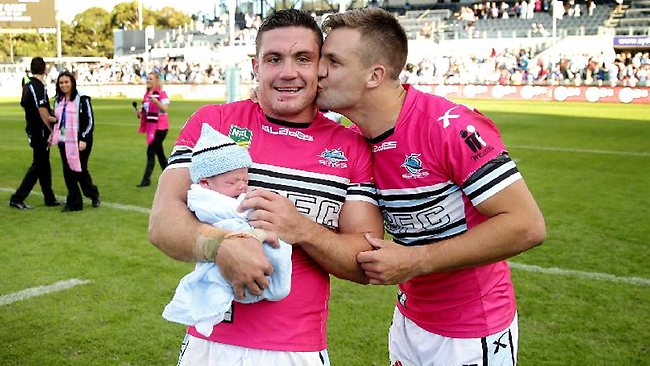
369007-chris-heighington-beau-ryanRugby league footballer Chris Heighington, and his partner Sonya, welcomed their son Rocco a few weeks ago. Chris plays for the Cronulla Sharks, and the picture shows him receiving a congratulatory kiss from team mate Beau Ryan, who became a father himself only a few months ago, when his daughter Remi was born.

Rugby union footballer Brett Sheehan, and his fiancee Laura Field, welcomed their son Brody around the start of the year. Brody was struck down with meningococcal meningitis over the Easter period, and although he is now well on his way to recovery, Brett and Laura urge other parents to be vigilant about the symptoms of the disease. Brett plays for the Western Force as well as for the Australian national team, the Wallabies.

Scientist Dr Kate Graham, and her husband Tim Madden, recently welcomed their son Harrison, who joins big brother Hamish. Dr Graham researches diabetes at the St Vincent’s Institute; she is a recipient of the Susan Alberti Women in Research Award.

Sports reporter Angela Pippos, and her partner Simon Dutton, welcomed their son Francis James in late January. Angela has been a sports commentator for many years on television and radio, and currently has a regular spot on 3AW.

Jockey Talia Rodder, and her husband Josh, who is the media executive at Melbourne Racing Club, welcomed their son Matan several months ago. Matan is a Hebrew name which means “gift”. Talia is originally from Israel, and started her career in Western Australia before moving to Melbourne. This month she went back to racing after finishing maternity leave.

Radio host Jenny Marchant and her husband welcomed their son Hugo in November last year. Jenny is the host of Treasure Hunt on 1233 ABC Newcastle, where contestants strive to discover where a “treasure” in the Newcastle area can be found by following a series of cryptic clues.

Fashion designer Kadime Mehmet, and her husband Shannan, welcomed their son Caleb last year. Kadime made her name designing a dress for the Brownlow Medals in 2011, and ever since then her Shepparton business has been booming.

Celebrity Baby News: Celebrity Baby Round-Up (Girls)

Tags

,

908835-ashleigh-gillion-babyHip-hop artist Urthboy, otherwise known as Tim Levinson, and his wife Anna, welcomed their second child in mid-May, and have named their daughter Jetta Joanie. Urthboy released a well-received album named Smokey’s Haunt last year; he is also a member of hip-hop outfit The Herd, and has his own award-winning music label, Elefant Traks.

Singer Alex Lloyd, born Alex Wasiliev, and his wife Amelia, recently welcomed their fourth child, and have named their daughter Belle. Belle joins big brothers Jake, Isaac and Elvis. Alex is currently working on his upcoming album, which will be called Urban Wilderness.

Local rugby union footballer Nigel Staniforth, and his wife Gabrielle, welcomed their daughter Mila a couple of weeks ago. Nigel plays for the Orange Emus.

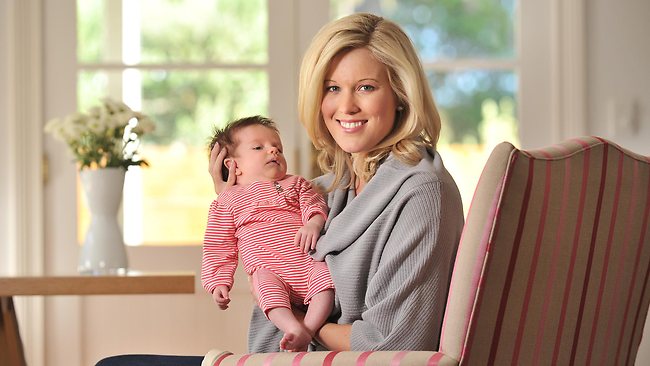
News presenter Ashleigh Gillon and her husband Aaron Hood, welcomed their daughter Phoebe Rose on Anzac Day, April 25 [pictured]. Ashleigh is on Sky News, and her pregnancy was made public by National Party Senator Barnaby Joyce, who congratulated her while she was interviewing him. Senator Joyce also made her engagement two years ago public in the same way.

Famous Name: Ruby

Tags

, , , , , , , , , , , , , , , , , ,

6da7f547404dd4d8481fbb78ea9b6745Yesterday was the birthday of Ruby Payne-Scott, who was born 101 years ago in 1912, and a pioneer in radio physics and radio astronomy, as well as an advocate for women’s rights. Her extraordinary scientific mind became obvious early in life, when she entered the University of Sydney aged just 16, where she graduated with double first-class honours in mathematics and physics, and won the mathematics prize, as well as gaining a scholarship in physics. She was the third female graduate in physics at the university.

The Depression wasn’t a good time to be job-searching, but Ruby found work at the Cancer Research Institute where she completed her masters thesis on radiation. After a brief stint of teaching, she applied to Australian Wireless Amalgamated, a huge company that ran all the wireless services, and was the first woman they hired in a research capacity. AWA weren’t keen on hiring women at all, even as cleaners or typists, but they took Ruby on as librarian; she was soon a full-time research physicist.

During World War II, she was one of a group of young engineers from AWA hired by the government to conduct research on a secret new defensive weapons system – radar. She came into close contact with group leader Joseph Pawsey, and both became fascinated with reports of extra-terrestrial radio signals; they conducted the first experiment in radio astronomy in the southern hemisphere in 1944. After the war, she was one of a team at the CSIR (later the CSIRO) formed to survey “cosmic static” from astronomical objects. As a result, Australia became a global leader in radio astronomy, with Ruby the first female radio astronomer in the world.

Ruby was feisty and self-confident, very outspoken about her political views, which were that women should be equal to men, and scientific research should be independent. This got her labelled a communist, and “loud and unstable”, but she continued to press for equal treatment.

One thing she kept quiet was that she had married a telephone mechanic named Bill Hall in 1944, because until 1966, married women were expected to resign from the public service, and could not be employed on a permanent basis. When news of her marriage got out in 1950, she was reduced to temporary status and lost her pension and other benefits. She was forced to resign in 1951 when she became pregnant with her first child, and with no maternity leave or childcare, her brilliant career ended at the age of 39.

By the standards of her day, Ruby had it all. A highly-paid and rewarding scientific career, outside interests which included bushwalking and home renovation, a happy marriage, two children (who grew up to be a renowned mathematician and a distinguished artist), and, when her children were older, a return to teaching, where she was greatly admired by students who had no idea of her earlier achievements.

In her honour, the CSIRO initiated the Payne-Scott Awards to support researchers who need to take time off after the birth of a child. She was a bright star in her field, and because of Ruby and women like her, it’s possible to want equal pay, and the choice to work and have a family without being called a loud, unstable communist.

Ruby is a precious gemstone which is a variety of the mineral corundum, and comes in a range of red colours (when corundum is blue, it is called Sapphire). Its name comes from ruber, the Latin for “red”, and the most valuable rubies have the deepest red colour with a hint of blue. For centuries the main source of rubies was Myanmar (Burma), and today most rubies are either from Burma or Thailand. Rubies have always been especially valued in Asia, where they are seen as bringing good fortune.

Ruby has been used as a girl’s name since at least the 17th century, but was used as a pet form of Reuben since the Middle Ages. When Ruby was established as a girl’s name, it was sometimes given to boys, perhaps after the surname, which can come from the town of Roubaix in Normandy; its name means “stream on the plain”. Another possibility for the surname is that it is from the town of Roby in Lancashire, meaning “settlement by the boundary marker” in Old Norse. Ruby became popular for girls in the 19th century, when other gemstone names were fashionable.

Ruby was #21 in the 1900s, and had left the Top 100 by the 1930s. It disappeared from the charts between the 1950s and the 1970s, but came back in the 1980s at #548. One of the 1980s-born Rubys is model and TV host Ruby Rose, born Ruby Rose Lagenheim.

Ruby zoomed up the charts at such a dizzying speed that by 1996 it was already in the Top 100, debuting at #75. By 1998 it was in the Top 50 at #44, and by 2003 it was #20. Ruby made her Top 10 début in 2010, at #2, and last year she was #1. According to this article, Ruby is particularly popular on the Central Coast and in Newcastle.

Currently Ruby is #1 in New South Wales, #3 in Victoria, #3 in Queensland, #2 in South Australia, #3 in Western Australia, #1 in Tasmania, #4 in the Northern Territory and #2 in the Australian Capital Territory. Nationally Ruby is #2.

When a new baby was added to the Rafter family on popular family drama, Packed to the Rafters, she was named Ruby, and one of the babies portraying the character is also named Ruby. In fiction and real life, Ruby is big news.

Last year, Ruby was the name most commonly searched for to reach my blog, and no wonder people love it, because it’s a warm, vibrant name that is womanly yet spunky. However, it’s certainly had some detractors along the road to massive popularity.

It’s been called an old lady name, a hooker name, a trashy name … but the one that irritates me the most is when people refer to Ruby as a “dumb girl” name. I even saw one online pundit prophesy that your daughter would not get a degree if she was named Ruby!

Ruby Scott-Payne is proof that you can be named Ruby, and get as many degrees as you want. A Ruby can be brainy, bright, brilliant, strong, smart, sassy … and she can reach for the stars.

More information on Ruby Payne-Scott can be gained by reading her in-depth biography – Under the Radar: The First Woman in Radio Astronomy, Ruby Payne-Scott by William Miller Goss and Richard X. McGee

POLL RESULT: Ruby received an approval rating of 66%. People saw the name Ruby as cute and spunky (25%), but also thought it was too popular (20%). Nobody thought the name Ruby sounded like a “stripper name”.

(Picture is a detail from a poster featuring Ruby Payne-Scott designed by Amy Blue; by clicking on this link, you can “appreciate” the picture, or “like” it on Facebook etc)

Boys Names from the Top 100 of the 1910s

Tags

, , , , , , , , , , , , , , , , , , , , , , , , , , , , , , , , , ,

awm-ez0007Arthur

Arthur‘s fame comes from the legendary King Arthur, a British hero of the Dark Ages who became much celebrated in medieval romances. The meaning of the name isn’t known; some popular theories derive it from the British for “bear king” or, less convincingly, the Welsh for “bear man”. Another theory is that it is from the Roman surname Artorius, which would make King Arthur a Romanised Briton; this does fit in with some of the earliest versions of the tales. Unfortunately, it isn’t known what Artorius means, so leaves us no wiser. It’s a name we often think of as Victorian, as the 19th century was so keen on reviving medieval names, and Lord Tennyson’s Idylls of the King made the Arthurian legends popular once more. Queen Victoria’s favourite son was named Arthur, and Arthur Wellesley, the Duke of Wellington, and detective writer Arthur Conan Doyle were two other famous Victorian namesakes. Arthur was #6 in the 1900s, and peaked in the 1910s at #5. It didn’t leave the Top 100 until the 1960s, and reached its lowest point in the early 2000s at #334. Since then it has been rising gently, and is currently #216. Handsome and noble, this is a classic which isn’t overused and the nickname Artie is a good alternative to popular Archie.

Clarence

Clarence seems to have started out as a girl’s name, presumably an elaboration of Clare or variant of Clarice. In the 19th century, although given to both sexes, it was much more common as a boy’s name, due to Queen Victoria’s son Leopold, the Earl of Clarence. The title is said to originate from the town of Clare in Suffolk, owned by the first Duke of Clarence, Lionel of Antwerp, in the 14th century. The town’s name was originally Clara, from Roman times – this was either from the Latin for “clear” because of the Chilton Stream which flows through the town, or a Latinisation of a Celtic word, but scholars seem to currently lean towards the first explanation. Clarence was #30 in the 1900s, #42 in the 1910s , and left the Top 100 in the 1940s. It hasn’t charted since the 1960s. Famous as the angel in It’s a Wonderful Life, this might seem like an “old person name”, but actor Clarence Ryan, who has starred in kid’s TV shows Lockie Leonard and Dead Gorgeous, gives us a chance to see the name on a young man. The classic nickname is Clarry, but Ren would be neat.

Ernest

Ernest is a Germanic name meaning “vigour, strife”, only very distantly related to the English word earnest. It was a name used by German royalty and nobility, and introduced to England in the 18th century when the Hanoverians inherited the British throne. Famous men named Ernest include New Zealand-born physicist Ernest Rutherford, British explorer Ernest Shackleton, American author Ernest Hemingway and Australian TV host Ernest “Ernie” Sigley. The name also reminds us of Ernest Worthing, from the Oscar Wilde play, The Importance of Being Earnest. Ernest was #16 in the 1900s, #17 in the 1910s, and left the Top 100 in the 1950s. It hasn’t charted since the 1970s. Ernest seems like one of those granddad names that could easily be used again; it’s strong and appealing, almost sounds like a virtue name, and Ernie makes a cute nickname. In a recent poll on the blog, Ernest was voted the male name from the 1900s that people most wanted to be revived.

Horace

Horace is the name by which the Roman poet Quintus Horatius Flaccus is known in English. He was a member of the Horatii, an ancient noble family of Rome. The family name Horatius is said to go back to a legendary hero named Horatus; the meaning of his name is unknown. The poet Horace used to make puns on his own name and its similarity to the Latin hora, meaning “hour”, and from this exhorting to “seize the day” and make the most of time. The elegant and witty poetry of Horace was a great influence on English literature from the Middle Ages onwards, but to modern eyes his love poetry appears brutally unromantic (he seized the day with an awful lot of people). The name Horace was #45 in the 1900s, #57 in the 1910s, and had left the Top 100 by the 1930s. It hasn’t charted since the 1940s. Unfortunately for the name, Horace always seems to be used for comic characters in fiction, often overweight ones, such as barrister Horace Rumpole of the Bailey and Horace Slughorn from Harry Potter. Indeed, the Roman poet himself was short and rotund, giving this name a portly sound. However, it also seems sturdy and reliable – and you could use Ace as a contemporary nickname.

Joseph

Joseph is a form of the Hebrew name Yosef. In the Old Testament, Joseph was the son of Jacob and his favourite wife Rachel. The meaning of the name appears to be “Yahweh shall add (a son)”, but the Bible makes a pun about Joseph also “taking away” his mother’s shame of being barren – a little mathematical joke. Jacob spoiled Joseph terribly, gave him some fancy duds, and his jealous brothers sold him into slavery after he unwisely shared a dream he had about being way better than them. Through a series of adventures where his dream skills were more appreciated, he became the most powerful man in Egypt after the Pharaoh, and was reunited with his family, who he received with love and forgiveness. In the New Testament, Joseph was the husband of Mary, and the earthly father of Jesus; he is regarded as a saint. Joseph was #17 in the 1900s, and #23 in the 1910s. A sturdy classic which has never left the Top 100, the lowest it’s ever been is #68 during the 1940s. Currently it is #52 in New South Wales. Although last year it fell somewhat, Joseph is an extremely safe choice with Joe as the standard and popular nickname.

Laurence

Laurence is the English form of the Roman surname Laurentius, meaning “from Laurentum”. Laurentum was an ancient city near Rome whose name may mean “laurel tree”. The Romans wore laurel wreaths to symbolise victory, so it’s a very positive meaning. (In France, Laurence is the feminine form of Laurentius). Laurence became well known because of Saint Lawrence, a 3rd century martyr put to death for not handing over the church’s money to the Emperor. According to legend, he was roasted on a gridiron, cheekily saying, “I’m done – turn me over!”. He is one of the most popular saints, and widely venerated. Laurence was #87 in the 1900s and #72 in the 1910s; it peaked in the 1920s at #62, and didn’t leave the Top 100 until the 1960s. Laurence hasn’t charted in New South Wales since 2009, but in Victoria it is #494. This name is sleek and handsome, but presently much more popular in the middle than up front.

Maxwell

Maxwell is a Scottish surname which comes from a place named Maccus Well or Maxwell on the Scottish Borders. The name came about when a Norman lord named Maccus obtained land on the River Tweed, with a salmon pool soon known as Maccus’ Wiel – Maccus’ pool. Maccus is from the Old Norse name Makkr, a form of Magnus, meaning “great”. A grandson of Maccus became chamberlain of Scotland, and through him many branches of the family grew through south-west Scotland. Clan Maxwell was a very powerful Lowland clan who operated as one of the great noble houses of Scotland, holding titles of high esteem. Maxwell has been used as a first name since the 17th century, and in Scotland was sometimes given to girls. Entertainer Jessica Simpson raised eyebrows when she named her daughter Maxwell last year. Maxwell was #118 in the 1900s and #79 in the 1910s. It peaked at #29 in the 1930s, and left the Top 100 in the 1960s. Maxwell hit its lowest point in the 1970s and ’80s, when it plateaued at #318. After that it climbed, and was just outside the Top 100 when it fell to #139 in 2011. The retro nickname Max makes this a very attractive choice.

Percy

Percy is an aristocratic surname used as a first name. William de Percy was a Norman who arrived in England in 1067; he may have lived in England before the Conquest, but been expelled and returned when it was safe. He was granted large tracts of land, and it is from him that the House of Percy descends. The Percys were the most powerful noble family in the north of England during the Middle Ages, and rivals to the Nevilles. Various Percys did all the usual noble things – signed the Magna Carta, took leading roles in wars and battles, governed Virginia. George Percy, Earl Percy, the current heir to the Dukedom of Northumbria, was Pippa Middleton’s housemate, and is close friends with her. The name Percy comes from the manor of Perci-en-Auge in Normandy; it’s derived from the Roman personal name Persius, of unknown meaning, and may be a Latinisation of a Gaulish name. Percy was #41 in the 1900s, #48 in the 1910s and had left the Top 100 by the 1930s. It hasn’t charted since the 1940s. Because Percy can be used as a nickname for Percival or Perseus, it fits in well with the trend for old-fashioned nicknames like Ned or Ollie.

Ronald

Ronald is a Scottish form of Ragnvaldr or Rognvaldr, an Old Norse name meaning something like “well-advised ruler, decisive ruler”. The Gaelic form of the name is Ragnall, and this was Anglicised as either Ranald or Ronald (the Latinised form is Reginald). The Norse name was introduced to Scotland by settlers from Scandinavia, and there were several powerful Norse rulers of northern England and Scotland named Ragnall. Ronald was #34 in the 1900s, #10 in the 1910s, and peaked in the 1920s at #3. It didn’t leave the Top 100 until the 1970s, and only stopped charting in the late 2000s. There are two likeable fictional sidekicks which remind me of this this name – Ron Weasley, red-headed best mate of wizard Harry Potter, and Ron Stoppable, bestie of crime fighter Kim Possible. Both are played for laughs, yet are brave, loyal, and manage to get the girl. I have seen a few babies in birth notices called Ron or Ronnie, but so far I haven’t seen a full-blown Ronald. I suspect the familiar hamburger clown Ronald McDonald might hamper it – the name Ronald took a definite dive after McDonalds became established in Australia.

Victor

Victor is a Roman name meaning “victor” in Latin, which is easy enough to understand. It was a very popular name amongst early Christians, symbolising victory over sin and death. There are several saints named Victor, and three popes with the name – Saint Pope Victor I was the first African pope. Victor was commonly used as a name amongst Continental European nobility and royalty, and in the 19th century received a boost in England due to Queen Victoria. There are quite a few Victors in fiction, but the most widely-known often has his first name forgotten – Victor Frankenstein, the young Swiss scientist who brings a nameless creature to life. Writer Mary Shelley based Frankenstein on her husband Percy Shelley, who used Victor as a pen name and had been a keen science student while at university. Victor was #31 in the 1900s and #38 in the 1910s. It left the Top 100 in the 1960s, and reached its lowest point in the charts in 2009, when it dipped to #478. Currently it is #333. This is a strong, honest-sounding classic which seems rather hip.

POLL RESULT: People’s favourite names were Arthur, Joseph, and Maxwell, and their least favourite were Clarence, Ronald, and Horace.

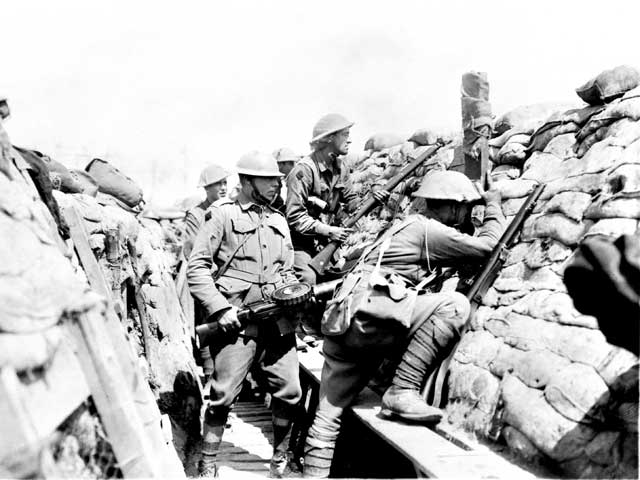
(The photo shows Australian soldiers in the trenches at Bois-Grenier near Armentières on the Western Front, 1916. Image held by the Australian War Memorial)

Celebrity Sibset: Kate Langbroek

Tags

, , , , , , , ,

blogimport_ahabxp-15ilmslDave Hughes and his family have been on the blog twice now, so I thought we should look at his radio partner, Kate Langbroek (surname sounds like Langbrook). Kate and Dave do the breakfast shift together on Nova, and their show is called Hughesy and Kate.

According to their website, Dave has a segment on the show called The Name Nazi, where he tells you the correct spelling of names, and woe betide anyone called Alivia or Phelissitie. I have come to realise that radio hosts have a whole hive of bees in their bonnet when it comes to baby names, which makes them such fascinating subjects as baby namers themselves.

Kate is married to Peter Allen Lewis, an electrical engineer who now owns a bar, where he works two days a week. They have been married for ten years and have four children together.

Lewis Jan (b. 2003)

If you’re thinking, Hmm … am I reading that right? It looks as if that kid’s name must be Lewis Lewis, then yes you’re reading it right. It was a real fad in the 18th century to have your surname as your first name, and Kate and Peter seem to have brought it back. Lewis’ middle name is after Kate’s father, who is Dutch-Australian. You probably know the name is said YAHN.

Sunday Lil (b. 2005)

Sunday was named after Sunday Reed, who founded the Heide Museum of Modern Art in Melbourne with her husband John. Sunday Reed grew a rockmelon plant at the Heide, from which, many years later, Kate ate its fruit while she was pregnant. Kate thought it was so magical that it inspired their choice of baby name. She was horrified when Nicole Kidman “stole” her baby name three years later, when she named her daughter Sunday Rose. She worried that everyone would start naming their children Sunday, but last year Sunday did not chart in Victoria.

Art Honore “Artie” (b. 2007)

I feel as if Art should have been named after the Heide Museum of Modern Art, but he may not have been … Honore is a French name meaning “honour”, and it’s pronounced on-eh-RAY.

Jan Allen (b. 2009)

Jan is also named Kate’s father (such a great name they used it twice), and Allen is after Peter’s grandfather.

(Photo of Kate, Peter and their children from New Idea)

Misty Lee and Saffron Autumn

Tags

, ,

Autumn-mistTwins

Jieze Jamie and Juzzi Jason (Jysen, Jaith, Jodin)


Girls

Aluka Kadek (Koa)

Amelia Winsome

Anya Helia (Zak)

Betsy Rose (Lily, Fern, Alice)

Etta Jane (Opal, Declan)

Greta Lucy (Annabel)

Indii Elle Gigi (Cooper)

Kerry Patricia (Brooke, Micka, Jack)

Lydie Louise

Marlow Elise (Warner)

Maud Queenie Joyce Elva May (Jaya, Kael, Lila)

Misty Lee (Willow)

Saffron Autumn (Clover)

Saraid Kate

Violet Amabel (Findlay, Archer)


Boys

Billy Archer

Dougie Christopher (Mitchell, Elisha, Nicholas)

Campbell Stuart (Jasmine, Patrick)

George Miroljub

Gordon John Douglas

Harry Romuald (Evelyn)

James Roland

Jensen Johannes (Poppy)

Marcello Peter

Monty William (Florence)

Ned Robert (Banjo)

Quinn Thomas (Liam, Reegan)

Stirling Claude Alexander (Izabella)

Theodore Louis

Tory David (Millar, Bryn)


Most popular names this week

Girls: Mia

Boys: Harrison

(Photo shows autumn mist in Armidale, New South Wales)

Famous Name: Chelsea

Tags

, , , , , , , , , , , , , ,

article-2327391-19E40B7A000005DC-627_964x610Australian horticultural team, Flemings, have made history by taking out the top prize at the prestigious Chelsea Flower Show this year. It is the first time anyone from Australia has ever won Best in Show.

The winning garden is a landscape showing a gorge with giant boulders, ferns, wildflowers, and a billabong fed by a series of waterfalls. Overlooking it is a studio in the shape of a giant waratah flower, and the accompanying soundtrack is a chorus of Australian frogs. The garden promotes sustainability by collecting rainwater run-off and being powered by solar panels.

The judges were unanimous in voting for Flemings’ Trailfinders Australian Garden, designed by Phillip Johnson, and it was praised for its lush greenery, exuberant spirit and environmental message. Flemings will go out on a high, as this is their last year at Chelsea.

2013 is the centenary year of the Royal Horticultural Society Chelsea Flower Show (although the Society have been holding spring flower shows since the 1830s). More than a hundred thousand people visit the Chelsea Flower Show each year, with many chances of celebrity-spotting, and royal-spotting, as the royal family are patrons of the Show.

Chelsea is a district of West London which began as a Saxon village some miles from the town of London. The name of the area is from the Old English for “chalk wharf”, indicating a landing place for boats on the River Thames, and suggesting that it was used for the shipment of chalk.

The Manor of Chelsea is first mentioned in the Domesday Book as being a gift to the Abbot of Westminster during Anglo-Saxon times. King Henry VIII acquired the manor, and two of his wives lived at the manor house, as well as his daughter Elizabeth, destined to be Queen Elizabeth I. By the 17th century, it was a popular locale for the ultra-wealthy, and called “a village of palaces”, but still rural in nature, serving London as a market garden until the 19th century.

Chelsea gained a bohemian reputation in the 19th century, when it was an artist’s colony for painters such as Dante Gabriel Rossetti and poets such as Leigh Hunt. The area around around Cheyne Walk was the heart of the Pre-Raphaelite movement. Right into the first decades of the twentieth century, it was a place for radicals, artists, poets and bohemians.

Oscar Wilde began his career living in an artistic boarding house in Chelsea and feminist activist Sylvia Pankhurst had a house on Cheyne Walk. The occult Order of the Golden Dawn had members active in the area, including Pamela Colman Smith, who painted the designs for the Rider-Waite tarot cards.

However, it was the era of Swinging London in the 1960s and 1970s that really put Chelsea in the public consciousness as a cool place to be. This was centred around the King’s Road, where you could find groovy psychedelic fashion boutiques that catered to super-slim model Twiggy and the Rolling Stones.

The Chelsea Drugstore was a hip hangout that combined a pharmacy with a record store and a soda fountain; it features in the lyrics of Rolling Stones hit, You Can’t Always Get What You Want. In the 1970s, Vivienne Westwood and Malcolm McLaren ran their boutique SEX, which became a focal point for the punk movement; habitués of the store were formed by McLaren into punk band The Sex Pistols.

The hipness of Chelsea rapidly faded. Today it is inhabited by more investment bankers than avant-garde painters, you’re more likely to shop at The Gap in the King’s Road than a crazy boutique, and The Chelsea Drugstore has been replaced by a McDonalds.

Chelsea is first found as a personal name in the United States during the late 18th century, and was given equally to boys and girls. There is a city near Boston named Chelsea (named after the place in London), and the Battle of Chelsea Creek was fought here in 1775 during the American Revolution. American forces made one of their first captures of a British ship, which was a great boost to their morale. Perhaps Chelsea was originally given as a name in honour of this battle.

During the 19th century, Chelsea was much more commonly given to boys and in the first half of the 20th century, numbers of boys and girls named Chelsea became more even. It was in the 1960s, at the height of (London) Chelsea’s chicness, that the pendulum swung and Chelsea became overwhelmingly feminine.

In 1969, Chelsea made the US charts, debuting at #707. This was the same year that Joni Mitchell released Chelsea Morning – this time inspired by Chelsea in New York City, also named after Chelsea in London.

The song describes Mitchell’s room in Chelsea, with light filtering through a stained glass mobile. As the song has the phrase Wake up pretty baby in it, it probably helped cement Chelsea as feminine, although the name had been heading there anyway. Bill and Hillary Clinton named their daughter Chelsea after Mitchell’s song.

Chelsea first charted in Australia in the 1970s, debuting at #337. By the 1990s it was in the Top 100, where it remains to this day. Chelsea peaked in 2009 at #26, and since then has been gradually declining. Currently it is #34 in New South Wales, #47 in Victoria, #29 in Queensland, #42 in South Australia, #33 in Western Australia, #42 in Tasmania and #48 in the Australian Capital Territory, so it has yet to move out of the Top 50 in any state.

Australians have had an enduring affection for Chelsea unmatched by any other country, for it left the US Top 100 in 1999, and the UK Top 100 in 2005. (In both countries, it quickly fell, and is now around the #200 mark).

I’m not sure why, but for some reason, Chelsea seems to suit Australian conditions. Perhaps the -sea on the end subconsciously reminds us of the beach? There is a Chelsea in Australia too – a seaside suburb of Melbourne which does happen to have a beach.

Like the district of London, the name Chelsea has moved firmly into the mainstream and become a modern classic. It’s a simple, friendly and unpretentious choice which isn’t frilly or fussy.

POLL RESULT: Chelsea received an approval rating of 41%. People saw Chelsea as downmarket (21%), but also pretty or cute (15%). 13% of people could not shake the association with Chelsea Football Club and/or Chelsea buns. Only one person thought Chelsea could still be used as a boys name.

(Picture shows the winning garden at the Chelsea Flower Show; photo from The Daily Mail)

Celebrity Baby News: Natalie Bassingthwaighte and Cam McGlinchey

Tags

, , ,

NatBassArticleMainSinger and actress Natalie Bassingthwaighte, and her husband Cam McGlinchey, welcomed their second child yesterday, May 21, and have named their son Hendrix John Hickson. Hendrix McGlinchey was born in a Melbourne hospital, and joins big sister Harper, aged 2.

Natalie was the lead singer of pop band Rogue Traders until she went solo in 2008. Rogue Traders had many successful singles, and their album Here Comes the Drums went platinum four times over. After leaving Rogue Traders, Natalie performed songs and duets for several compilation albums, then released her first solo album, 1000 Stars. It debuted at #1 and was certified gold; her single Love Like This was used to raise awareness by the Aids Council of New South Wales. Natalie has also had a successful career as an actress, appearing in TV shows such as All Saints, Neighbours and Stupid, Stupid Man. She has hosted So You Think You Can Dance Australia, and is currently a judge on The X Factor. Natalie has also co-written a book with her sister for young girls on self-esteem issues: Sistahood: A Journal of Self-Discovery. Natalie is often known to fans as Nat Bass.

Cameron or “Cam” was the drummer for Rogue Traders until he left in 2008. Since then, he has become involved with White Lion ROAR, an early intervention program working with at risk young people. He and Natalie started dating in 2006, and were married in 2011.

Hendrix seems like a great music-related choice for a singer and a musician, and a good match with music-themed sister, Harper.

(Photo of Nat, Cam and Harper from OK Magazine)