Names of Australian Birds for Girls

Tags

, , , , , , , , , , , , , , , , , , , , , , , ,


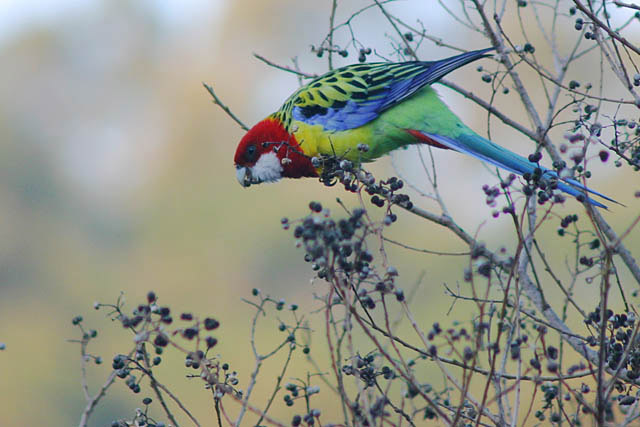
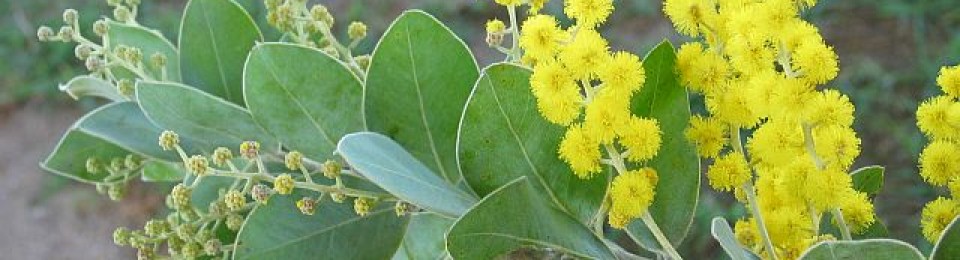
Eastern Rosella #40I seem to have covered several bird names on the blog recently, and that might be because our family was watching light-hearted bird documentary series, Hello Birdy, on the ABC, or maybe just because I love birds. Australia is lucky enough to have a staggering array of birds, many of them colourful, beautiful, intelligent, or unusual, and sadly, often under-appreciated. Here are some names that bring to mind a few of our feathered friends. Click on a likely link, and you will be taken to a YouTube video of each bird – there’s at least one for every entry.

Brahminy
The Brahminy Kite is a bird of prey and scavenger native to Australasia and Asia; in Australia they are found in coastal regions in the north. They are chestnut brown with a white head, breast, and tail tip, and typically nest in trees in mangrove swamps. The name Brahminy is due to their being found in India; it alludes to the Hindu Brahmin priestly caste, and is said BRAH-min-ee. The Brahminy Kite is the official mascot of Jakarta, in Indonesia, and in India is regarded as a representation of Garuda, the sacred bird of the supreme god Vishnu. I would not have considered this as a person’s name if I hadn’t seen a baby girl named Brahminy. It’s a bold choice, and its connection with a sacred bird is fascinating.

Corella
The Corella is a small, white cockatoo with a pink blush to its plumage. They are found from the central deserts to the eastern coastal plains, and are a familiar sight on farms and in cities. In some areas, Corellas have become so numerous they are considered a pest, being particularly destructive to trees and cereal crops. They congregate in large flocks, even up to several thousand, and make a high-pitched screeching noise which is ear-piercing when a flock all calls together, and can be heard for miles. Although they are noisy birds, they are very playful and have the joie de vivre that all parrots are blessed with. They are popular as pets, because they are good talkers, and excellent mimics. The word corella comes from the Wiradjuri language of central New South Wales. Corella has been used as a girl’s name since the 18th century, and is probably part of the Cor- group which is based on the Greek Kore, meaning “maiden”. The bird gives it a uniquely Australian flavour.

Dove
Here’s the dirty little secret about Doves: they’re just pigeons! Not only that, it’s unclear what makes some species of pigeons “doves”, because while we generally call smaller pigeons doves, that isn’t always the case. The confusion arises because the word pigeon is from Latin, and dove from Ancient Germanic, so they are two different words for the same thing (like autumn and fall). Nonetheless, their images are completely different: doves are symbols of peace, while pigeons are seen as disease-ridden pests (in fact, pigeons are no more disease-ridden than any other animal and pose no general health risk). Australia has a number of species identified as doves, and although we often think of doves as modest and grey, the Emerald Dove has striking green colouring, and the many varieties of Fruit Dove are likewise very colourful. There are also introduced species of dove, including those kept as pets. Dove has been used as a first name since the 17th century, and has been far more common for girls; a contemporary example is Disney actress Dove Cameron. Dove not only rhymes with love, but doves are used as symbols of love, since pigeons mate for life; the word dove can mean “sweetheart”. Perhaps because of this, doves were considered sacred to goddesses such as Venus. Another religious connection is that in Christian iconography, the Holy Spirit is often depicted as a dove.

Halcyon
Halcyon is the Latin name for the Tree Kingfishers, a large genus of birds found in Africa, Asia and Australasia, with Australasia having the most species. They are recognisable by their large heads and long pointed bills, and many are brightly coloured, often in iridescent blues and greens. The Laughing Kookaburra is a type of tree kingfisher, an iconic Australian bird with a raucous cackle that seems to epitomise the spirit of the bush. Halcyon is from the Greek for “kingfisher”, and is connected to a character from Greek mythology named Alcyone; the daughter of the winds, she married Ceyx, the son of the morning star. The pair were very much in love, and after Ceyx was lost at sea in a terrible storm, the unhappy Alcyone threw herself into the waves to end her life. The gods took pity on them, and changed both into kingfishers. According to legend, the “halcyon days” of midwinter, when storms cease, was when Alcyone laid her eggs, and her father restrained the winds so that she could do so safely. Because of this, the word halcyon (pronounced HAL-see-uhn) has come to mean “calm, serene, peaceful”, with our halcyon days those happy times we look back on with nostalgia. Halcyon has been used as a girl’s name since the 19th century: pretty and unusual, it gives Hallie as the nickname.

Lalage
Lalage is the scientific name for the Trillers, native to Asia and Australasia; they are small birds, usually coloured black, white and grey. They are called Trillers because during the breeding season, the males make a cheerful, almost continuous, trilling call. Lalage is derived from Greek, and means “to babble, to prattle”, or, in the case of birds, “to chirp”. The name became known from an ode by Roman poet Horace, where he speaks of his love for a young girl, his “sweetly laughing, sweet talking Lalage”. It has been used a few times since as a literary name, most notably in Kipling’s Rimini. Lalage has had occasional use, and in Britain seems to have a fairly upper-class image: contemporary examples are photjournalist Lalage Snow, and fashion designer Lalage Beaumont. In English, this name is usually pronounced LAL-a-gee or LA-la-ghee – just remember it’s three syllables, emphasis on the first, hard g like girl, not soft like germ. This fascinating name fits in with L-L names like Lillian, and as Lalage was a very young courtesan, almost seems like a posh version of Lolita! Lallie, Lollie, and Lala could be nicknames.

Lark
Larks are plain brown birds to look at, but their great beauty is in their voices, for they are famous for their melodious singing. This has made them a favourite subject for poets, such as Percy Bysshe Shelley’s, To a Skylark, and to say someone sings “like a lark” is a great compliment to the range and joyousness of their notes. Traditionally, larks are a symbol for dawn and daybreak, as in “getting up with the lark”, and this has given them religious overtones, for just as dawn is the passage between night and day, it can also be seen as that between heaven and earth. In Renaissance paintings, larks were sometimes used as a symbol of Christ. Although Australia has many birds with lark as part of their name, our only true lark is Horsfield’s Bushlark, widely found in grasslands and open woodlands. It is much smaller than larks in the northern hemisphere, and doesn’t have quite such an impressive voice, although its songs are still rich and varied, and it is a good mimic as well. The Eurasian Skylark which features in Shelley’s verse has been introduced here. Lark has been used as a name since the 18th century, and is historically more common for boys, but is often now thought of as more feminine than masculine. It’s a simple, non-frilly nature name laden with symbolism, and is more often found in the middle.

Maggie
Maggie is the affectionate name for the Australian Magpie. Although they look similar, it isn’t closely related to the European Magpie. Easily recognisable from their black and white plumage, magpies are very familiar in suburban life. Magpies are one of Australia’s favourite songbirds, because they have a complex, melodious warble, and will carol in chorus at dusk and dawn. They can also mimic other birds and animals, including human speech. Bold and sturdy, they are not typically wary of humans, and will happily accept (demand!) free food from us. They become unpopular in spring, as males can be so aggressive during breeding season that they swoop or even attack humans to warn them away. This is when feeding them pays off, as they can tell individual people apart, and won’t scare their buddies. The Magpie was a totem animal for the Indigenous people of the Illawarra, and is an official emblem of South Australia, appearing on the state flag. Magpies is a common name for sporting teams, and the cocky attitude of the Magpie is seen as indicative of the national character. Maggie is also a short form of Margaret. It was #174 in the 1900s, and was off the charts by the 1940s, returning in the 1970s. It has climbed steadily, and is currently in the 100s.

Oriole
Orioles are a large family of birds found throughout the world, which come in a variety of colours. Australian Orioles are green, perfect for blending in with the trees. They are fruit-eating birds, and the Figbird is one of the Orioles, although it doesn’t only eat figs. Orioles and Figbirds are attracted to backyards with small fruit trees and bushes, and which have native trees such as eucalypti and wattle; they are a fairly common sight in suburbia. The word oriole is derived from the Latin for “gold”, because the Eurasian Golden Oriole is a bright yellow. Oriole is related to names like Aurelia and Auriol, which are from the same derivation, and looks a lot like Oriel, which may be seen as a variant of Auriol, but also has Irish and Germanic origins. Oriole seems like a way to retain the golden meaning, while also referencing the bird.

Rainbird
The Rainbird is the colloquial name for the Pacific Koel, a species of migratory cuckoo which arrives here in spring from Papua New Guinea and Indonesia, and is found in north and eastern Australia. It’s called a Rainbird because of the belief that its rather mournful “whooping” call is a harbinger of wet weather. Males call for a mate during their breeding season, which coincides with the spring rains and the summer “wet season”, and are so loud they can be considered a nuisance. Like all cuckoos, Rainbirds lay their eggs in the nests of other species so that they can be raised by the unsuspecting hosts; however, unlike most other cuckoos, the baby Rainbird doesn’t kill the host chicks. Rainbirds are rather goofy-looking birds; the males have glossy black plumage and bright red eyes. I have seen Rainbird used as a girl’s middle name, and think it makes a wonderful name for a spring or summer baby. It would work equally well for boys.

Rosella
Rosellas are colourful parrots which are very familiar in suburbia. I think we might take them for granted, because they really are pretty, with a more pleasing range of calls than most parrots. Rosellas will be attracted to any garden that provides them with water, seeds and fruit, and can become so tame that they will eat out of your hand. This has led them to become common as pets, but in captivity they can become bored and aggressive, so I think it’s nicer to have them as backyard visitors. European settlers first saw Eastern Rosellas at Rose Hill (now called Parramatta), and called them Rosehill Parakeets; this evolved into Rosehillers, and eventually became Rosella. The Sydney suburb of Rozelle is named after them. Rosella is also a popular brand of tomato sauce, which sports an Eastern Rosella as its logo. By coincidence, Rosella is also an Italian name, an elaboration of Rosa, and looks like a combination of popular Rose and Ella.

POLL RESULTS
The public’s favourite names were Lark, Maggie and Rosella, and their least favourite were Brahminy, Oriole and Lalage.

(Photo shows an Eastern Rosella)
Elvis and Memphis

Tags

, ,

elvis-kids

Twins

Duke and Valentina
Gabriel and Rafaela
Koa and Leilani
Mila-Giselle and Allegra-Paris
Rosa and Anjali
Zander and Stellan

Girls
Anthea Jayne
Avery Jewell (Austin, River)
Azaria Kahurangi Rose
Charis
Cleo Alice (Evie, Jack, Lola)
Corleigha Shakiya Gay
Daisy Evelyn (Phoenix, Jett)
Delilah June
Edith Ruth Wilma “Edie”
Eloise Angela Mary (William, Samuel)
Everly Violet
Florence Gretel (Elsie)
Hadley Honour
Harriet Emily Mabel
Juno Rose
Lily Evangeline (Jayden, Jack)
Louanna Cynthia
Morgan Paige (Zoey)
Nirvana
Ripley Temperance
Rochelle Lucy
Seraphina Catherine
Sorayah Verchanti
Starlett
Zarlie Gwen

Boys
Ace Jesus
Adrian Berry
Arden Blair Von
Austin Mio (Ariella)
Eli James Addison
Elvis Liam (Maggie)
Gerald Eric Steven
Hermes
Ike Albert Danger
Jadon Feta
Jali John
Jamieson Vernon (Dasha)
Jarrah Indie
Jarvis Arthur James
Kamdyn Nash (Brayth)
Memphis Colt (Diva)
Orion Gabriel
Rafael De Shan (Solomon)
Samson Spencer (Roly, Felix)
Sheldon Paul Ross
Sydney Paul
Tex Leo Clarence
Vaughn Edward Rolf (Lincoln, Evie)
Windsor Breeze
Wyatt Joe

Note: Some names from Bonds Baby Search 2014.

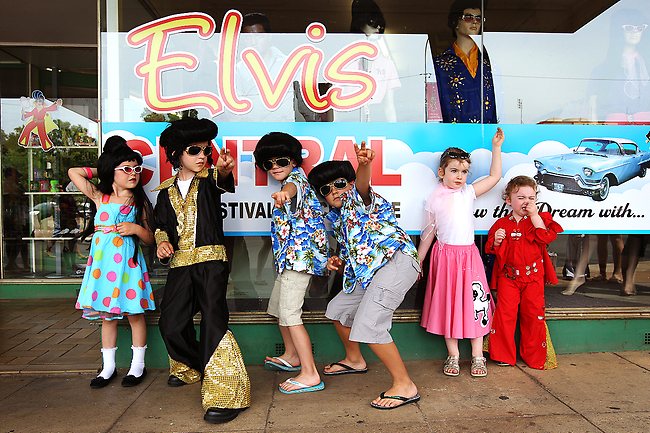
(Picture shows children celebrating at the Parkes Elvis Festival in New South Wales)


Famous Name: Clarice

Tags

, , , , , , ,

Clarice_Beckett_-_Punt_Road_Bridge,_Yarra_River

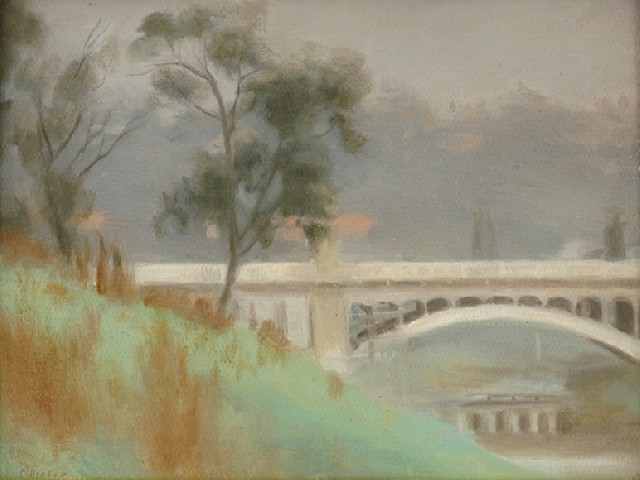
As we move into misty autumn, we will look at an Australian artist who worked in obscurity, and whose 127th birthday was on this year’s Equinox, March 21. Clarice Beckett was born into a comfortably-off Victorian family – her grandfather was the master builder who designed and built Como House.

Her father’s only ambition for his daughter seems to have been that she would marry into wealth, but her mother, a hobbyist painter, encouraged her artistic talents. Clarice studied art in Melbourne, including three years under Frederick McCubbin, and was a student of the controversial artist Max Meldrum, who argued that painting was a pure science, most reliant on tone, and with colour the least important component.

In 1918, Clarice’s father retired, moving his family to the Melbourne bayside suburb of Beaumaris. Her parents were ill and demanding, so that Clarice took responsibility for most of the household chores. Mr Beckett seems to have been disappointed in his career, and to have been a very difficult man. He wouldn’t allow Clarice to have a studio, telling her that the kitchen table was good enough.

Clarice built herself a little cart filled with painting equipment, which she used as a portable studio. She tended to go out very early and late, the only times she was free from domestic duties, to paint scenes from her local area, finding endless inspiration in the sea, beaches and suburban streets, bathed in the soft light of dawn and dusk. Her style was simple and original, and her paintings strongly atmospheric, often set on misty days.

Clarice was never taken seriously as an artist in her lifetime, with critics occasionally sneering at her “continual state of fog”, but most ignoring her completely. Sales of her work were pitifully small. Even her mentor Max Meldrum, who was supportive of her work, made it known that there would never be a great female artist, as women lacked the necessary capacity to be alone. Yet he praised Clarice for “working like a man”, and defended her fiercely. Her artist friends saw her as beautiful, unassuming and intelligent; sharply witty, but with the aloofness of extreme shyness.

In 1934, Mrs Beckett died from a stroke, and Clarice was severely affected by her mother’s death. The two had become very close, and Clarice was left alone with her invalid father, who became jealous of anything which might take his daughter away from him. She stopped attending art classes or social events, and when friends came to the house, Mr Beckett ordered them to leave. Clarice was now completely isolated, and she admitted to feeling a failure.

Clarice still painted whenever she could and one night, a year after her mother’s death, she continued working outdoors even though a storm had set in. She caught a chill which developed into pneumonia; her heart was already weak, and she died five days later, aged 48. The doctor believed that she might have survived, had her will to live been stronger.

It was not until 1971 that an exhibition of Clarice Beckett’s paintings were held, after more than 2000 of her canvases were found rotting away in a country barn. A leading critic hailed her as “a remarkable modernist”, and the Australian National Gallery purchased 14 of her paintings. The public were so enthusiastic that viewing hours were extended and the exhibition sold out. Since then, there have been several more public exhibitions of her work; she is regarded as one of Australia’s finest artists, and it is promised that she will never be forgotten again.

Clarice is a medieval form of the name Clara, a Roman name which comes from the Latin meaning “clear, bright”. Clarice is thought to be based on the Old French form, Claritia – just as the medieval name Lettice was based on Letitia. It was brought over by the Norman aristocracy, who were big fans of “Clare” names, and it can be found by the early 12th century, sometimes spelled Claris. Clara itself doesn’t seem to have been used in Britain until slightly later.

The name Clarice became well known in 1991 with the release of the Oscar-winning movie, The Silence of the Lambs, whose heroine is the beautifully named Clarice Starling, an FBI trainee on the trail of a serial killer. Clarice Starling was listed by the American Film Institute as one of the Top 100 movie heroes, and is the highest female on the list.

A rather different fictional Clarice is the equally delightfully named Clarice Bean Tuesday, from the children’s books by English author Lauren Child, who also penned the popular Charlie and Lola series. Clarice Bean is the middle child in her family, who longs for space and privacy, but instead finds herself in all kinds of amusingly chaotic situations.

If you like a name that has a song attached to it, you can sing along to Clarice, by Transatlantic folk-rockers, America. Like all songs by this band, I find it pleasant enough, but have little idea what it is about, although the lyrics don’t seem negative at all.

There are two pronunciations of Clarice. It can be said KLA-ris, to rhyme with Paris, which is a more British pronunciation, or it can be said kluh-REES, to rhyme with Denise, which is far more common in the United States. You’re welcome to choose either pronunciation, but to my mind, the first one sounds far more stylish and contemporary, while the second one reminds me of those pseudo-French names like Shanice and Fonice, which seem a bit daggy and dated.

Clarice is a strong yet elegant name which seems intelligent and dignified. It’s a very old name, but to me doesn’t seem “old-fashioned”. I can imagine it sounding adorable on a little girl, like Clarice Bean, but also perfect for an adult, like Clarice Beckett. It would make a great alternative to popular-yet-falling Claire, or fashionable-and-rising Clara for anyone who would like a traditional name which is still a little out of the ordinary.

POLL RESULT
Clarice received an approval rating of 54%. The name reminded 23% of people too strongly of Silence of the Lambs, but 15% thought the name was pretty and feminine. Nobody thought the name Clarice was tacky and tasteless.

(Picture is Punt Road Bridge, Yarra River by Clarice Beckett)

Celebrity Baby News: Chris Hemsworth and Elsa Pataky

Tags

, ,

blog21032014_elsa

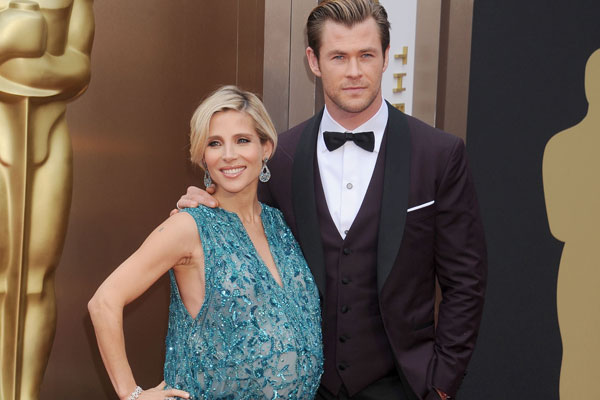
Actor Chris Hemsworth, and his actress wife Elsa Pataky, welcomed twin boys on March 18, and have named their sons Tristan and Sasha. Tristan and Sasha Hemsworth join big sister India, nearly 2; India’s birth was announced on the blog.

The twins are the first members of the family to be born in America, as they arrived at Cedars Sinai Medical Center in West Hollywood, Los Angeles. India was born in London, while Elsa is Spanish, and of course Chris is Australian.

Interview with Alexia Mae at Baby Names from the Bible

Tags

, , , , , , , , , , , , , , ,

Interview-PhotoAlexia Mae is the warm and enthusiastic blogger behind Baby Names from the Bible, devoted to all the great names in the Good Book, whether familiar or unusual. I usually allow blog readers to decide which blogger is interviewed, but last month Alexia Mae was kind enough to invite me to be interviewed at Baby Names from the Bible, so this is a return visit – although she would have been chosen next time anyway. Alexia Mae passed her 100th post a month ago, so let’s hope there are many more.

What is your name?

Alexia Mae. I’m the “Dear Abby” of baby names, as Alexia Mae is my pen name.

Have you ever wished you had a different name?

My real one? Oh, yes. It’s not too common a name; it’s only ever made it to #30. But the spelling of it is unique, which catapults it outside the Top 1000 for all time. Add a filler family middle, and the annoyance of people misunderstanding my name, and I begged to be called Alexia as a kid. Fast forward to me needing a pen name … Bob’s your uncle, I had one. Mae is in honour of my grandma. Now that I’m an adult I appreciate my given name more. I was almost a Kasia, which I would have loved, too.

How did you become interested in names?

I blame my name craziness on Shane, my kindergarten crush. He was the ruddy-haired Irish kid with the leather necklace, the dude everyone wanted to be friends with. In a classroom of boring names from the ’80s, Shane stuck out. I suddenly became very aware of people’s names.

When I was thirteen, my mom got pregnant. My brother Aaron and I were close in age, but now I was way older for this new brother, and boy, was I ready to help name the kid! Shot down, but kept on trying. Their choice? Another A name, Andrew. A perfect recipe for my mom to never get our names right. But, after stealing (I mean permanently borrowing) a name book my mom picked up, I came down with full blown name-nuttiness. It’s been downhill ever since.

How did you become interested in biblical names?

That first baby name book I got my hands on happened to be about biblical names. And it was literally four pieces of paper. (Maybe that’s why my parents never got out of the As.) It was small. But it had a big impact. To see the meaning of names, and to be able to go to the Bible and see them used, just blew me away. It was my own “sawdust trail moment” for names. They have proved themselves to be real gems, and have a power in their age and timelessness.

Do you have a favourite baby name book?

The Holy Bible 😉 My email inbox is also swarmed with name people I’m subscribed to, and I rely on Clare’s Scoop for everything else. (That gal needs an award.) [WMTM: She got one! She has a gold ribbon saying her page is one of the most highly-recommended in the Society topic on Scoop].

What inspired you to begin a name blog?

My husband Josiah and I both love the idea of using biblical names for our children. When I was first married I searched for biblical baby name books, and couldn’t find any. Zilch. Zip. Nada. Not even the one that I originally had. Then I began to think about that original name book, and thought it was awfully small compared to the actual Bible. I mean, the Book of Numbers wouldn’t even fit in there, and it’s practically nothing but names.

I kept asking myself, if I can’t find them, who else will? Why is no one celebrating the biblical names I know must exist? So I began logging the names I was coming across for my own use, and I really wanted to share them … and Baby Names from the Bible was born.

Do you have a favourite blog entry on Baby Names from the Bible?

The post that I’m the most proud of is one I wrote a couple of years ago, Why Name Your Baby a Biblical Name? I take a moment to stand on my soap box and talk about why people, even those who aren’t religious, should take another look at baby names from the Bible. Forget about Zerubbabel. How about Junia? Rissah? Ardon? There are names galore for anyone thirsty for a good name.

Are there any other ways to stay in touch with you online?

I’m @NamesDaily on Instagram, and I post names every day, both biblical and not. Instagram has been an amazing experience. I have a growing following of over 2000 people. I’m getting the opportunity first hand to see names that knock your socks off, and some, that well, just don’t. I’m also on YouTube.

Do you have a pet peeve in regard to names?

Yhess. Yoonique namez. If I have to read it more than once to get what name you’re actually trying to say, I’ve got to stand up and get a cup of coffee. It literally makes my skin crawl. Jaycein? I am somebody who has zero adrenaline tolerance for awkwardness in any way, so I have to get up and walk it off. True stuff.

In the name community, I feel sometimes it’s like Eskimos marketing ice to fellow Eskimos who live in the same igloo. I want to find ways to branch out and actually talk to parents who have never even owned a baby name book. I think that’s why I love being on Instagram so much, because it’s exactly that. I enjoy so many people in the baby name community, but I want to find ways to branch out, too. (We need an annual name conference.)

What are some of your favourite names?

Boys: Judah and Josiah, of course. Abel.

Girls: Juniper. Ellowyn. Cassia. Maewyn. I really love Naphtali for a girl, but can’t bring myself to use it because no one would be able to pronounce it or spell it. It’s like Natalie with an F. I’m drawn to biblical names, but I enjoy other names, too.

What names do you dislike?

Delilah. I see the appeal, but I would never use it. The same with Jezebel. That one makes my skin crawl when I hear someone nonchalantly talking about using it. Whether you believe in the Bible or not, the connotation still exists. Jezebel was a murderer, and it would be like naming your child Hitler. I just don’t think you should do it.

What are your favourite names in the US Top 100?

Girls: Biblical – Leah (#33). Other – Harper (#24) and Lillian (#25)

Boys: Biblical – Josiah (#79). Other – Landon (#34)

What are your favourite names in the rest of the US Top 1000?

Margaret (#178) and Judah (#273)

What are your favourite names that don’t currently chart?

Blythe (never charted) and Clive (hasn’t charted since 1935)

What is your son’s name?

Judah David. Our story of Judah’s name is a fun and interesting one, and you can read about it at So There’s This Name ….

If you found out you were pregnant right now, what names would you be considering?

I would be trying to convince Josiah to like Blythe Salomae. We have boys names we like, but like we did with Judah, we’re not telling anyone.

What is something we don’t know about you that you would like to share?

I love the Anne of Green Gables series and have read them probably too much. Tell me Lucy Maud Montgomery wasn’t a name nut. Ludovic Speed? Gilbert ❤ Is this why I love the name Blythe? I will never tell.

What advice would you give someone choosing a baby name?

If you can’t use the one you love, use it anyway. Never, ever settle. Unless it’s Jezebel or Kidneigh Bean, and then I’d say maybe keep looking. Valuable life lessons also apply to names. You are giving your babies the first impression they will have on people. Give them something that makes them proud. Something that makes you proud. And like weak coffee, name regret stinks. I’ll brew down some Starbucks, and you can come over and we can talk more about names!

(Picture shows Alexia Mae with her son Judah; photo supplied by Baby Names from the Bible)

Soleil and Vesper

Tags

, , , ,

57400_orig_1280_0

Multiples

Boston and Phoenix

Edison Brave and Spencer Ace

Gypsy and Lulu

London and Cairo

Thor and Storm

Ziggy and Soul

Amethyst, Sapphire and Emerald


Girls

Acacia Violet

Arden Glow Marsh

Azalea Pearl (Havana)

Bijou

Camilla Elisabeth

Capri Amour

Cataleya Rose

Dru Magenta

Emily Beatrice (Madeleine)

Esha Viola Lorraine

Indiah Berry

Iolanthe Marceau Louwon (Siddy)

Kinga Florence

Lola Starr

Lucy Elsa

Marina Anne (Clancy)

Mila Danica

Mystique Bella Rose

Nevaeh-Dolly

Opal Jane

Sage Harper (Mason, Ruby)

Soleil Nova Minnie May

Tamsin Annabelle (Tessa)

Velicity

Vesper Lucia


Boys

Akira Cheema

Arlo Breeze Wilson (Taylah)

Bowen Christopher

Eli Samuel (Tate, Asher)

Finlan Joshua (Fletcher)

Fortune

Henry Nigel Gregory

Huon Lawson Mac (Lachlan)

Hurley Adam

Jarryd Usher

Jasper Fox

Jaxon Friend

Josiah Gideon (Jessie, Phoebe, Rebekah, Esther, David, Jonathan)

Kai Ringin

Kingston Blu

Ned Raymond (Olive, Henry, Edie)

Oliver Flannery

Quinn Ollie (Keeble)

Riordan Kade

Roc Roberts (Aina) – surname Storm

Shayden James

Sonny Jai

Ted Bradshaw

Vincent Tom

Zeke Noel (Joshua, Trent)

Note: Some of these names are from Bonds Baby Search 2014

(Picture shows Saint Matthew’s Anglican Church at Poonindie, near Port Lincoln in South Australia, at evening – the church was once part of an Aboriginal mission; photo by Jacqui Barker at Open ABC)

Top Baby Names in Tasmania for 2013

Tags

, , , , ,

GIRLS

  1. Charlotte
  2. Ruby
  3. Amelia
  4. Ella
  5. Mia
  6. Lucy
  7. Sophie
  8. Zoe
  9. Grace
  10. Matilda
  11. Chloe
  12. Isla
  13. Isabella
  14. Olivia
  15. Ivy
  16. Lily
  17. Ava
  18. Emily
  19. Willow
  20. Stella
  21. Layla
  22. Sophia
  23. Evelyn
  24. Bella
  25. Evie
  26. Isabelle
  27. Maddison
  28. Sienna
  29. Violet
  30. Alice
  31. Ellie
  32. Addison
  33. Esther
  34. Savannah
  35. Scarlett
  36. Amber
  37. Phoebe
  38. Emma
  39. Imogen
  40. Bonnie
  41. Mackenzie
  42. Molly
  43. Paige
  44. Harper
  45. Heidi
  46. Holly
  47. Madison
  48. Maggie
  49. Millie
  50. Alexis
  51. Audrey
  52. Elsie
  53. Lacey
  54. Poppy
  55. Stephanie
  56. Summer
  57. Chelsea
  58. Florence
  59. Hannah
  60. Maya
  61. Annabelle
  62. April
  63. Brooke
  64. Eleanor
  65. Elizabeth
  66. Eva
  67. Georgia
  68. Jasmine
  69. Lillian
  70. Lilly
  71. Madeleine
  72. Madeline
  73. Mila
  74. Abigail
  75. Bronte
  76. Daisy
  77. Eden
  78. Eliza
  79. Harriet
  80. Hayley
  81. Mabel
  82. Nevaeh
  83. Olive
  84. Piper
  85. Rubi
  86. Sarah
  87. Zara
  88. Charli
  89. Claire
  90. Ebony
  91. Indy
  92. Jessica
  93. Kaylee
  94. Lola
  95. Abbie
  96. Abby
  97. Amy
  98. Annabel
  99. Charlie
  100. Dakota
  101. Eloise
  102. Estelle
  103. Eve
  104. Gabrielle
  105. Indiana
  106. Indianna
  107. Isabel
  108. Josie
  109. Lauren
  110. Macey
  111. Nina
  112. Peyton
  113. Tilly
  114. Trinity
BOYS

  1. Oliver
  2. Jack
  3. William
  4. Noah
  5. Thomas
  6. Hunter
  7. Charlie
  8. Mason
  9. Cooper
  10. Lucas
  11. Hamish
  12. Henry
  13. Lachlan
  14. Alexander
  15. Archie
  16. Harrison
  17. James
  18. Xavier
  19. Oscar
  20. Riley
  21. Hudson
  22. Jasper
  23. Logan
  24. Max
  25. Samuel
  26. Elijah
  27. Benjamin
  28. Ethan
  29. Flynn
  30. Edward
  31. Toby
  32. Jacob
  33. Joshua
  34. Liam
  35. Tyler
  36. Eli
  37. Harry
  38. Ryan
  39. Angus
  40. Connor
  41. Isaac
  42. Lewis
  43. George
  44. Jackson
  45. Levi
  46. Nate
  47. Owen
  48. Louis
  49. Daniel
  50. Fletcher
  51. Joseph
  52. Bentley
  53. Charles
  54. Jaxon
  55. Lincoln
  56. Luke
  57. Alex
  58. Archer
  59. Beau
  60. Blake
  61. Caleb
  62. Chase
  63. Jobe
  64. Jordan
  65. Michael
  66. Ryder
  67. Sebastian
  68. Tyson
  69. Zachary
  70. Hayden
  71. Jayden
  72. Mitchell
  73. Parker
  74. Ari
  75. Bailey
  76. Braxton
  77. Darcy
  78. Dylan
  79. Jake
  80. Jett
  81. Joel
  82. Koby
  83. Matthew
  84. Adam
  85. Campbell
  86. Declan
  87. Felix
  88. Jesse
  89. Leo
  90. Nicholas
  91. Reuben
  92. Seth
  93. Zane
  94. Elliot
  95. Heath
  96. Hugo
  97. Kai
  98. Kaiden
  99. Louie
  100. Luca
  101. Malachi
  102. Marcus
  103. Maxwell
  104. Nathaniel
  105. Rocco
  106. Spencer
  107. Theo

GIRLS NAME TRENDS

Biggest Risers

Violet (+86), Paige (+66), Evelyn (+63), Maggie and Savannah (+60)

Biggest Fallers

Jessica (-60), Hannah (-44), Zara (-38)

New: Abby, Annabel, Bronte, Daisy, Dakota, Elsie, Estelle, Florence, Indy, Josie, Kaylee, Lauren, Mabel, Macey, Nevaeh, Nina, Peyton, Rubi, Stephanie, Summer, Tilly, Trinity

Gone: Adele, Anna, Ayla, Faith, Freya, Gracie, Hailey, Indie, Isobel, Josephine, Kate, Leah, Lydia, Macy, Milla, Pippa, Rose, Rosie, Sofia, Tayla, Victoria, Zoey

Comment: Tasmania seems to embrace both the new and the retro with equal warmth. Where else can you see Mabel and Nevaeh side by side, or Maggie and Savannah growing at the same rate?

BOYS NAME TRENDS

Biggest Risers

Owen (+53), Hudson (+46), Lewis (+39), Ryder (+36), Caleb (+35)

Biggest Fallers

Seth (-54), Leo (-46), Jake and Jett (-38)

New: Ari, Charles, Heath, Jobe, Joel, Kai, Kaiden, Koby, Louie, Malachi, Marcus, Michael, Parker, Zane

Gone: Aaron, Aiden, Andrew, Ashton, Billy, Brax, Brock, Callum, Cameron, Finn, Gabriel, Jax, Patrick, Saxon, Vincent, Zac

Comments: Fun royal baby name fact – George, Alexander and Louis all rose in popularity in 2013!

NOTE: Because of its small population size, Tasmania’s top names are its complete name data. For the same reason, its charts are highly volatile.

Celebrity Baby News: Nikki Webster and Matthew McMah

Tags

nikki_webster_baby_womans_day_640x360

Former pop singer Nikki Webster, and her husband Matthew McMah, welcomed their first child early this year and have named their daughter Skylah.

Nicole, or “Nikki” started out in show business at the age of five, performing in pantomimes, musicals, and commercials. She came to prominence at the age of 13, when she was chosen for a starring role in the opening ceremony of the 2000 Sydney Olympics. She then signed a recording contract with BMG, and released her first single, Strawberry Kisses, in 2001. Her début album, Follow Your Heart, went platinum, and she received a John O’Keefe Encouragement Award at the 2001 Mo Awards. Her second album was also a success, and she was chosen as the face of a cosmetics line for young teens, and designed her own range of children’s clothing. She competed in Dancing With The Stars at the age of 17. As an adult, Nikki tried to give herself a more mature image, controversially appearing on the front cover of FHM magazine on her 18th birthday, and making #7 on their 100 Sexiest Women of 2005 list. She also performed at the Sydney gay and lesbian dace party, Sleaze Ball in 2007. Since 2008, she and her brother Scott have managed performing arts schools to help children get into the entertainment industry, where she teaches dancing.

Matthew works in the aviation industry. He and Nikki met on a blind date on Australia Day in 2010, and were married in 2012.

Famous Name: Harmony

Tags

, , , , , , , , , , ,

harmony-day

This Friday, March 21, it will be Harmony Day. Harmony Day is a government initiative which began in 1999, inspired by the United Nation’s International Day for the Elimination of Racial Discrimination, which takes place every March 21 around the world. It is a public holiday in South Africa, commemorating those who lost their lives in the struggle against apartheid.

On Harmony Day, primary schools, workplaces and communities come together to celebrate diversity and learn respect for each other. The message of Harmony Day is Everyone Belongs, and people are encouraged to dress in orange or wear orange ribbons to show their support. Harmony Day is managed by the Department of Social Services, and is part of Diversity Week.

Australia is one of the most multicultural countries in the world, with people from more than 200 countries and more than 150 languages represented. More than a quarter of the population are migrants, and clearly we all need to learn to get along. Although studies find that Australia is a generally tolerant society, and most migrants feel that they are accepted as part of the community, that isn’t the same as a society where diversity is welcomed, and more needs to be done.

The English word harmony can mean either “agreement, accord” (as Our views on child rearing were in complete harmony), or “a pleasing combination of elements” (as in The harmony of colours in her decorating scheme gave the house a relaxed feel). It is especially connected with music, where harmony is the use of simultaneous notes or chords.

The word is from Old French harmonie, from the Latin harmonia, based on the Ancient Greek harmozo, meaning “to fit together, to join”. In former times, the word harmony was used to mean music itself.

Harmonia was the Greek goddess of harmony and concord. She was seen as the personification of harmonious love between all people, of social order and civic unity. She was married to the Phoenician prince Cadmus, the founder of the city Thebes, and is famous because of a magic gold necklace she received as a wedding present, in the shape of two serpents. Although the necklace made any woman who wore it eternally beautiful and youthful, it had the unpleasant feature of bringing grave misfortune to its owners.

The necklace was wrought by Hephaestus, the god of metalwork, who became enraged when he discovered his wife Aphrodite having an affair with Ares, the god of war. He vowed to wreak revenge by cursing the lineage of any children arising from the affair: Harmonia was the result, and so she was given the jewellery of doom. Harmonia and Cadmus were transformed into dragons as part of the curse, and all Harmonia’s female descendants had horrible times because of the necklace. One of her descendants was Queen Jocasta, the mother of Oedipus – a famous example of family life going terribly wrong.

Eventually, after generations of misery, someone stole the necklace to give to his mistress, upon which her son went mad and set fire to her house, killing her and mercifully burning all that she had possessed, including the necklace. Why no one thought to destroy the thing earlier is a mystery – I suppose looking eternally young and beautiful was too hard to give up.

Harmony has been used as a girls name since the 18th century; although originating in England, it quickly gained more use in the American colonies, and to this day is more popular in the United States than elsewhere. An American connection to the name is the Harmony Society, an esoteric Christian sect which came to the United States from Germany in the early 19th century, named their first commune Harmonie, and built several towns with the name Harmony.

A statue of the goddess Harmonia is in the Harmony Society Gardens in the Old Economy Village in Pennsylvania, showing the high esteem they held for the virtue of harmony – as I think all communes must do, otherwise communal life would soon become intolerable. However, when they built New Harmony in Indiana, they included a shrubbery maze, to indicate that the path to harmony was not easy.

Harmony is a misunderstood virtue: it is perhaps too easy to dismiss those aiming for harmony as submissive, or passive-aggressive, or to see harmony as stifling, controlling, dull, or even totalitarian. Maybe when we think of harmony, we imagine everyone repressing their individuality to conform, being insincerely “nice” to each other, and minimising differences between people.

But in a truly harmonious society, people would recognise and value each other’s individuality, taking pleasure in their differences. Harmony isn’t about us all shutting up so we can fit in, but allowing each other to express ourselves, so that the entire range of the notes of the human chord can be heard together.

In music, harmony occurs when there is a balance between tense moments and relaxed moments – and that’s good in harmonious relationships too. Harmony doesn’t mean that things are always mild, pleasant and bland: it means that there is a healthy balance between dissonance and concurrence, between conflict and peace. Of course, harmony is very subjective, with each of us having our own idea of what this healthy balance looks like: no wonder harmony is so difficult to attain!

Harmony is a pretty name, and extols an unusual virtue, which is secular rather than spiritual, and communal rather than personal in nature. It’s also a musical name, more fashionable than Melody, but less trendy than Cadence, and so a nice harmonious balance between them. It fits in with choices such as Harper and Harlow, and in Victoria is a similar popularity to Harlow, in the 200s.

POLL RESULT
Harmony received an excellent approval rating of 75%, making it one of the highest-rated names of 2014. People saw the name Harmony as pretty and sweet (29%), and a beautiful musical name (25%). However, 16% thought the name seemed unprofessional or lower class.

Celebrity Baby News: Queensland Babies

896976-mal-meninga-and-his-wife-amandaRugby league legend Mal Meninga, coach of the Queensland Maroons, and his wife Amanda [pictured], recently welcomed their second son, who they have named Zach. Zach Meninga joins big brother Elijah, who hadn’t had his first birthday at the time, so for a while the Meningas had two boys under the age of one. Elijah’s birth was announced on the blog last year.

Liberal National Party MP Saxon Rice, and her husband Thomas, welcomed their first child on February 6 and have named their daughter Imogen Anderson. Imogen Rice was born at 4.05 pm weighing 4.2 kg (9lb 5oz), and her birth was announced on Facebook. Saxon is the Member for Mount Coot-tha in Brisbane, winning the seat at the 2012 state election.

Radio host Jess Eva, and her partner Norm Hogan, welcomed their first child on March 4 and have named their son Fred Hayden. Jess is the co-host of BarRat & Jess at 919 SEA FM on the Sunshine Coast, and her pregnancy was announced on air by a psychic, which seems to be a spooky new celebrity baby trend.