Late Celebrity Baby News: Dialectrix and Camilla

Tags

Hip-hop artist Dialectrix, and his partner, known only as Camilla, welcomed a baby boy named Lucius last winter. It was never reported in the press, and I came across the birth notice in a newsletter put out by his record company, Obese Records.

Dialectrix, born Ryan Leaf, is originally from the Blue Mountains region of New South Wales, and was introduced to hip-hop via skate culture. He was part of the first hip-hop crew to win a Triple J Unearthed competition in 2004. Since 2008 he has been a member of Gully Platoon, described as a “hip-hop supergroup”, and has recorded two solo albums. When not emceeing, he works as a tradesman, and keeps his musical alter ego a secret from his workmates.

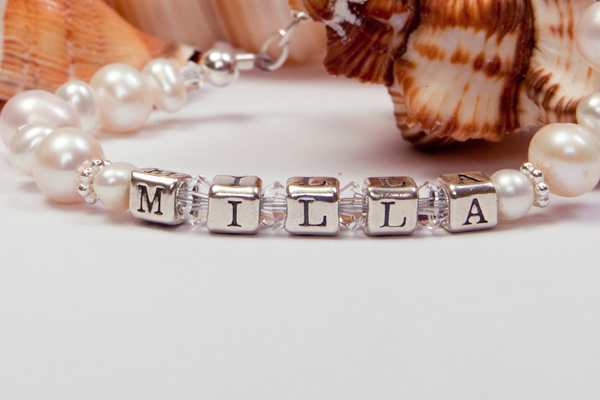
Update: Miss Milla Waltzes In!

Tags

,

Jools wrote in to the blog because she couldn’t decide between the names Scarlett, Milla and Harlow. She just welcomed a baby girl, and in the end chose the name Mill@ H@rlow, little sister to J@sper.

Tree left a comment and liked both these names the best, so well done Tree.

Congratulations to Jools and her husband on their new daughter! They’ve picked a pretty, modern name that manages to use two of their choices, and matches nicely with big brother.

Update: Baby Name Dilemma Solved!

Tags

, , , ,

Kate and Steve couldn’t agree on a baby name, as she liked old-fashioned retro names, and he preferred something more modern.

After reading my response, Kate realised she did want something that matched with their daughter’s name, scrapped all her name lists, and went back to the drawing board.

She chose a girl’s name from Appellation Mountain, where it was featured as a “Name of the Day”, and she picked a boy’s name that she saw on Waltzing More Than Matilda. However, Kate is almost certain that she is having a boy this time.

Steve needed a little bit of time to think it over, but within a week or two he had warmed up to them and decided he liked both! He especially likes the nickname for the girl’s name.

I won’t spoil the surprise, but the names have that perfect blend of sounding old-fashioned, yet contemporary, and are a wonderful match with their daughter’s name.

The good news is: yes you can find a name when each person has different tastes, and it can be something you both love.

Oleara and Zois: Birth Announcements from Melbourne (August)

Tags

, ,

Twins

Fred and Hugh

Ginger and Ripley – both girls

Hamish Fraser and Oliver Charles

Isabel Charlotte and Eloise Paige (Allegra)


Girls

Carla Frances Annette

Claire Saoirse (Jordy, Caoilainn)

Hermione Talullah (Sigourney)

Indiana Matisse

Isla Jasmyn Meika (Mia, Ava, Breannan, Zach)

Josi Scarlette Juli (Jena)

Koa Belle

Leni Shy (Ky, Percy)

Madyson Giselle Taylor (Mayson)

Mattea Frankie

Misa (Kira)

Oleara Taylor

Tarli Rose Irene

Taylah Yolani

Zara Victoria Frances


Boys

Angus Alexander Jiaxian (Violet, Robert)

Archie Michael John (Scarlett)

Benedict Thomas (Theodora)

Cameron David Speirs

Frederick Harry Facundo (Phoebe, Bill)

Jim Phillip (Tom, Ned)

Luke Kevin Mauricio (Eve)

Max Kevin Ross

Milan Jack Raffoul

Nate Jacques (Levi)

Reeve Tucker (Harvie, Kobi)

Samuel Michael David (Henry, Kathleen)

Seve (Carla)

Tyce Sonny

Zois Nondas (Silas)

(Picture shows the Melbourne Art Fair, which took place during August; photo from Time Out)

They’re Running Out of Time to Find a Baby Name

Tags

, , , , ,

Claire and Liam are expecting a baby in less than two weeks, and Claire is starting to feel slightly worried that they haven’t picked a baby name yet. In fact, they haven’t even got a short-list of names they both agree on. Claire has picked several names for both genders, but unfortunately, Liam doesn’t like any of them. However, he hasn’t made any suggestions of his own, and says he doesn’t have time to spend on the matter. In the meantime, time is running out ….

The couple already have three children:

  • M@rty – he was named by Liam after his own father, and Claire eventually agreed, with some reluctance
  • J@sper – this was the name Claire had picked out for a boy from the beginning, and Liam agreed as he also liked the name
  • Bes$ie – Claire named her after her great-grandmother, who was always known by her nickname; this was the name they had picked out if either of their sons had happened to be girls

All the children have family names in the middle, and their fourth child will too.

Names Claire likes for girls:

  • Mable
  • Poppy
  • Tilda
  • Harper
  • Sage
  • Eeda
  • May
  • Harlow
  • Eden
  • Hatley
  • Ayla

Names Claire likes for boys:

  • Isaiah
  • Angus
  • Finn
  • Arlo
  • Ezra
  • Jagger

Claire’s favourite names are Mable, Poppy and Tilda, and she is struggling to find a boy’s name that she really loves. Isaiah would have been their daughter’s name if she had been a boy, however Claire isn’t so keen on it any more. Claire would love some suggestions of baby names that aren’t too common, or too way out.

Claire and Liam’s surname is three syllables, begins with B and ends in N; eg Barrington.

~~~~~~~~~~~~~~~~~

I do advise people not to panic or feel pressured about finding a baby name, but with less than two weeks to go, you are getting to the pointy end of things, and I think it is time to gain a certain level of urgency. I don’t think you need to pick the perfect baby name right now, but I do think you need at least three choices for each gender that you can consider using – even if you don’t make the final decision until after the birth.

Girls Names

I’m finding it very hard to remain neutral on this one, because I love your three favourite girl’s names. Tilda in particular strikes me as a perfect match with your daughter’s name (which I adore), and sounds great with your surname.

As Liam hasn’t come up with any suggestions, I’m wondering whether you could broker a deal whereby you get to pick the name if it’s a girl, and perhaps the middle name (or one of the middle names) comes from Liam’s side of the family as a sweetener.

Liam did get to choose the first child’s name, and you were gracious enough to agree, even though you weren’t keen on it, so it would be a nice gesture if Liam were to be equally gracious in allowing you to choose a girl’s name that he isn’t so keen on.

I know you asked for suggestions, but I actually can’t think of anything nicer than Tilda. I do think that a retro nickname-type name to match your daughter’s name would be ideal. Some names in that mould would include:

  • Edie
  • Lottie
  • Nell
  • Peggy
  • Polly

Boys Names

This one’s quite hard, because you don’t have any names that you really love, and Liam hasn’t come up with any names at all. As you aren’t particularly attached to any name, perhaps you could ask Liam if he would like to choose the name if it’s a boy. Liam has picked one name, and you’ve picked two, so it does almost seem like it’s his turn again. I know he hasn’t seemed greatly interested so far, but if he’s given the task of choosing a name on his own, he may discover there is a name that he’d really like to use after all.

If this doesn’t happen, then I guess you always have Isaiah as a fall-back name, and this is a name you’ve already agreed upon.

I think if you’re absolutely stuck for names, and you genuinely have no preferences, names from the Bible are often a good choice that blend well with a wide range of middle names, and sibling names. Out of the names you’ve considered, although they’re all really nice, my favourite would be Ezra. The only one I don’t think is workable is Jagger, as it’s so similar to your second son’s name.

These would be my picks for a boy’s name:

  • Amos
  • Ezra
  • Felix
  • Tobias/Toby
  • Zeke

Good luck in your quest; you already have a track record of being able to compromise on baby names, and I’m sure the two of you will be pull it off again.

Please write in and let us know what name you ended up choosing!

NOTE: The baby’s name was Angus Jeremy!

Famous Name: London

Tags

, , , , , , , , , , , , , , , , ,

The Olympics and Paralympics have come to a triumphant end, climaxing with a a concert, grand parade and a spectacular fireworks display which lit up the sky over the Thames and Tower Bridge. The sporting festival has been a golden summer for the city of London, which has gained new confidence after putting on a fantastic Olympic Games, followed by the most successful Paralympics Games ever. The city of London itself looked richly alluring, with its parks and gardens in leaf under the sun, or its historic buildings looking grand yet discreet in the grey drizzle.

I know many people who couldn’t wait to visit London, or visit it again, after watching the coverage of the Olympic Games, and it’s a city which has drawn many Australians to it, for holidays, to work, and sometimes to live permanently. Since the post-war era, it seems as if we have been sending Australians to Britain in droves, and most of them seem to end up in London. They give us a bunch of convicts, and in return they get Barry Humphries, Kylie Minogue and a ton of drunk Aussie backpackers. Whether this is a fair trade or not only history can decide.

London was first established as a town around 47 AD by the Romans, who called it Londinium. It is almost certain that they based it on a local name for the area, which may be Celtic, or perhaps even older. What that name may have signified has taxed the brains of etymologists for many years, with none of them coming up with a theory that has gained widespread acceptance.

The very first theory put forward was by medieval chronicler Geoffrey Monmouth in his History of the Kings of Britain. He asserted that the name is derived from the name of King Lud, who once ruled the area. It would thus mean “Lud’s fortress”, although there is no evidence of Londinium ever being fortified, and in fact seems to have been built as a civic and mercantile centre; perhaps “Lud’s valley” would be more accurate. The name Lud may be connected to a mythological figure named Llud Llaw Eraint, who is the Welsh version of a British god named Nodens.

Nodens was a Celtic god of the sea, hunting, dogs, and healing, and a patron of amputees, and there is a ruined temple complex in his honour in Gloucestershire, while other artefacts connected to him have been found in Lancashire and on Hadrian’s Wall. He is sometimes identified with the Fisher King of medieval myth, who features so enigmatically in Arthurian legend.

J.R.R. Tolkien derived the name Nodens from a Germanic root meaning “acquire, own, utilise” from an earlier word with connotations of “catch, entrap”. This would certainly fit in with Nodens as a god of hunting, and at this point most scholars seem to be in general agreement with the meaning proposed by Tolkien.

Several places in Britain and Ireland derive their names from Nodens, and it doesn’t seem too far-fetched that London might too. The reason Geoffrey of Monmouth’s theory has been given short shrift is that like many medieval chroniclers, his work is quite fanciful, and riddled with errors in etymology. For example, he latched onto Lud as the origin of London because of Ludgate in the London Wall; most likely it’s a corruption of the Old English for “swing gate”. However, even though Geoffrey of Monmouth got a lot of things wrong, he may have been drawing on genuine traditions of London being sacred to Nodens in ancient times.

According to Geoffrey of Monmouth, the Romans built a temple to Lud, but if so, it remains elusive. There are statues of Lud and his sons, once adorning Ludgate, which are now on a church porch in Fleet Street, while a pub at Ludate Circus was once called Old King Lud. Although the building now houses a Leon restaurant, medallions commemorating King Lud can still be seen on its roofline and over its doors. So King Lud aka Nodens still maintains a presence in London town.

If I may stick my own ignorant oar into the debate, I can’t help noticing that names of places near a river nearly always have a meaning connected to it. As Nodens was a god of the sea, and the part of the Thames near London is a tidal river, this notion of mine does not cancel out the idea that it was connected to Nodens in some way. The Museum of London tells us that finds of prehistoric artefacts dredged from the Thames provide copious evidence that they were placed there as votive offerings, and that the deity presiding over the river was worshipped.

Could this hypothetical deity have been Nodens? Possibly, but it’s all getting very speculative, so I think we have reached the end of our investigations for now. In my uneducated opinion, London’s name is probably connected to its river, and quite possibly to the deity presiding over it, who may very well be Nodens. Apart from that I can say no more, except that Britain’s capital is a vital part of its ancient and rich mythology.

London has been used as a first name since at least the 17th century, and was first given to boys, most likely from the surname London, after the city. It’s possible that even early Londons were named directly in honour of the city, as many were born in London districts.

From very early on, London was used for both genders, and although I can easily understand it as a unisex name, I have slightly more trouble comprehending why it has become so much more popular for girls. While cities such as Paris and Florence have a certain “feminine” vibe, to me, London has quite a “masculine” feel – solid, serious, the seat of business and government. The name London also fits the pattern for many of our popular male names – two syllables, ending with an -n, such as Aidan, Mason, Logan or Nathan. In fact it’s only one letter different from a male name – Landon, while its last three letters form a male nickname – Don.

I have been told that the reason for this is the character of London Tipton, from the Disney TV series, The Suite Life of Zack & Cody. However in the US the name was always more popular for girls, even before the show came on air – although its popularity as a girl’s name certainly increased markedly after the show started. I suspect that for many parents, London seemed like a more “classy” version of the name Paris, whose image had become slightly tarnished. Intriguingly, Miss Paris Hilton apparently plans to name her first-born daughter London; I wonder what effects that might have, if it ever happened?

London has charted as a baby name for both sexes in the US for over ten years, and currently it’s #560 for boys and #94 for girls. Although it’s not such a popular name in Australia (although it’s seen more use than you might expect), I wouldn’t be surprised if a similar gender disparity wasn’t apparent here too. Early this year we welcomed celebrity baby London Joy Polak, partly named in honour of the city, where her grandfather was from.

Despite its long history, London still seems a very “modern” name, and one that would be especially suitable for anyone who has a connection to the city. I think it works well as a name for both boys and girls, and matches nicely with a wide variety of middle names. Although the thought of your child sharing their name with Paris Hilton’s future offspring might give some people second thoughts.

NOTE: Not all Australian backpackers in London are drunk, at least not all the time, but that is the not totally undeserved reputation they carry.


Celebrity Baby News: Ned and Tina Mannoun

Tags

,

Newly-elected mayor of Liverpool, Ned Mannoun, and his wife Tina, welcomed their son Jacob on September 7. Jacob Mannoun joins big brother Solomon, aged nearly 1. Solomon was born with kidney failure, and is currently waiting for a kidney transplant; we hope he is matched with a suitable donor very soon.

Ned was born in Boston in the United States, and conceived in Sierra Leone to a Lebanese mother and a Sierra Leone-born father. He describes himself as a proud Australian/American/Arab/African, and a moderate Shi’a Muslim. He is also a small business owner. Ned was swept to victory in Sydney’s local elections on the weekend; he is the first Liberal Party mayor that Liverpool has ever had, and at 30 years old, the youngest mayor ever elected in Liverpool. There was a strong swing in favour of the Liberal Party, who managed to gain several traditionally Labor seats in the western suburbs.

Names of Australian Male Paralympians

Tags

Aaron (2)

Abebe

Adam (2)

Adrian

Ahmed

Andrew (4)

Andy

Antonio

Ashley

Bart

Ben (5)

Bill

Blake

Brad (2)

Bradley

Brendan (2)

Brett (2)

Bryce (2)

Cameron (3)

Carl

Chris (3)

Cody

Damien

Daniel (3)

Darren (3)

David

Dean

Dennis

Dominic

Dylan

Eric

Erik

Evan

Gabriel

Gavin

Gerrard

Grant (2)

Greg (2)

Guy

Hamish

Heath

Ian

Jack

Jake

James

Jannik

Jason (2)

Jay

Jeremy (2)

John (2)

Jon (2)

Jonathan

Josh

Justin

Kieran

Kurt

Leigh

Lindsay

Luke

Mark

Marty

Matthew (5)

Michael (7)

Mitchell (3)

Nathan (2)

Nazim

Nicholas

Nick

Nigel

Patrick

Paul

Peter

Reagan

Rheed

Richard (3)

Rick

Rob

Robbie

Rod

Roy

Russell

Ryan (2)

Ryley

Sam (5)

Scott (2)

Sean (2)

Sebastian

Shannon

Shaun (2)

Shawn

Simon

Stephen (2)

Steve

Steven

Stuart

Thomas

Tige

Tim

Timothy

Toby

Todd

Tristan

Troy

Tyson

Wade

There will be more Olympian and Paralympian name stories coming during 2012

Names of Australian Female Paralympians

Tags

Congratulations to all our athletes and coaches at the London Paralympics Games – the most successful paralympic team in Australian history!

Alexandra

Amanda (3)

Amber

Angelique

Angie

Annabelle

Brandie

Bridie

Brydee

Carlee

Carol

Charlotte

Christie

Christine

Claire

Clare

Cobi

Courtney

Daniela

Deahnne

Elise

Ellie

Erinn

Esther

Felicity

Gemma

Georgia (2)

Grace

Hannah

Jacqueline

Jamie

Jane

Janel

Jayme

Jemima

Jenni

Jennifer

Jessica

Joann

Joany

Jodi (2)

Julie

Kara

Kate

Kath

Katherine

Kathleen

Kathryn

Katie

Katrina

Katy

Kayla

Kelly

Kerry

Kirrilee

Kristy

Kylie

Leanne

Libby

Liesl

Lindy

Lisa

Louise

Madeleine

Madison

Maddison

Marayke

Meica

Mel

Melanie (2)

Melissa (2)

Michelle (3)

Morgan

Natalie

Nerice

Nicole (3)

Noni

Prue

Rachael (2)

Rachel

Rebecca

Rosemary

Sarah (4)

Sharon

Shelley (2)

Simone

Stephanie (2)

Susan

Tahlia

Tanya

Taylor

Teigan

Tina

Torita

Tyan

MYTH: Australian Baby Names Follow English Trends More Closely Than American Ones

Tags

, , , , , , , , , , , , , ,

Last time we went mythbusting, we looked at whether Australian names are becoming increasingly Americanised, and didn’t find a lot of evidence. This is the flip side to that myth – the one that comforts us that we are essentially more British in our ways than American, and so are our baby names. That despite an increasing tendency to call our children Jett and Harlow, most of us will trustingly follow dear old Mother England, and choose something like Archie, Evie, Callum or Isla.

Again, this myth sounded quite plausible to me. But we have to look and make sure, so once more I prepared myself to examine the Top 100 from each nation. The first hurdle is that both of us are slightly data-challenged, so I was forced to rely on data from Victoria only (the only state with stats going back to 1929), while the data from the UK would include both England and Wales, but not Scotland or Northern Ireland. I did feel that already the waters were getting slightly muddied, only to find that England/Wales doesn’t publicise historical Top 100s.

I express my heartfelt gratitude to Elea at British Baby Names, who has provided on her blog, through her own labours, Top 100s for England/Wales for each decade from 1904 to 1984. Upon e-mailing her to enquire where I might find the one for 1994, she very kindly sent me a copy of her own personal spreadsheets so I could have that one as well.

Now I acknowledge this leaves me with some flaws in my methodology before even starting. I only had data from one state of Australia; furthermore this state has a reputation of being slightly more “English” than average. I only had data from England/Wales, and only had access to years ending in a 4. As I had already examined the earlier myth using data from the United States in years ending with a 0, it was possible I wasn’t going to be comparing apples to oranges so much as bananas to hedgehogs to timeshare villas in Spain.

However, we won’t get too gloomy, but show a bit of British pluck and press on. No, this won’t be the most statistically persuasive thing you’ll read all year, but we’re not doing a study, not trying to prove anything, just having a keen yet amateurish look around us to see if anything obvious shows up. And after all, if the myth is clearly and inarguably true, then broad trends should be pretty obvious even through a fog of slightly dodgy data.

1934

Boys – 82% the same (17% higher than US)

Girls – 69% the same (18% higher than US)

1954

Boys – 75% the same (16% higher than US) – down 7% overall, down 1% relative to US

Girls – 68% the same (21% higher than US) – down 1% overall, up 3% relative to US

1974

Boys – 72% the same (16% higher than US) – down 3% overall, no change relative to US

Girls – 62% the same (11% higher than US) – down 6% overall, down 10% relative to US

1994

Boys – 67% the same (11% higher than US) – down 10% overall, down 3% relative to US

Girls – 61% the same (5% higher than US) – down 1% overall, down 6% relative to US

2011

Boys – 63% the same (4% higher than US) – down 4% overall, down 7% relative to US

Girls – 63% the same (16% higher than US) – up 2% overall, up 11% relative to US

Based on these numbers, I would say that’s a MYTH CONFIRMED – at no time in history did the the amount of popular names shared with the US overtake the amount of popular names shared with England/Wales.

However, you can clearly see that while the number of shared girls names went down only very slightly between 1934 and 2011, the number of shared boys names sunk by almost 20%. In fact, yes, we still share more boys names with England/Wales than with the United States, but only by 4% – four names! Statistically, that’s what I call a big-whooping-deal difference, and if this trend continues, future Australian boy’s names are going to look much more like those in the US than the Top 100 for England/Wales.

Girl’s name did not show this steady decline, and in fact last year had a slight increase since the 1990s, while also showing a significant gain relative to the US data. This makes me think that when we say that our names are more English than American, we are primarily thinking of our names for girls.

GENTLE MUSINGS

Last time I ended the article with “conclusions”; this now seems far too definite and perhaps arrogant considering that we are left with far more questions than answers. So I will not reach any conclusions, but merely gently muse on some of the issues that have been raised.

Questions

  • Many names are shared by the Top 100s of all three countries. Therefore, can you really label names such as Olivia, Jacob, Ella and Liam as “English” or “American”, or are they more properly “international trends”?
  • If determined to designate a name as “English” or “American”, do you rely upon the place which provided the cultural impetus for the name, or the place where it became popular first, or the place where it reached the highest levels of popularity? If the first, then many popular names could be classed as American; if the second or third, a large number would be classed as Australian more than anything else.
  • I used the example of Scarlett as an “American-style” name in the preceding article (I admit without much forethought), and Sebastiane from Legitimate Baby Names quite correctly pointed out that Scarlett was more popular in England than in the United States. Now, it cannot be disputed that Scarlett hails from the United States, because the name became known through Margaret Mitchell’s novel, Gone with the Wind, and was popularised by American actress, Scarlett Johansson. However, the name is #19 in Victoria, #25 in England/Wales, and #80 in the USA. It reached the Top 100 of both Victoria and England/Wales in the same year, 2004, New South Wales in 2005, but only became Top 100 in the USA last year. So which country, if any, claims it?
  • Sometimes my blog entries end up being copied and discussed in some odd places, so my Referrer stats tell me; occasionally they end up somewhere rather disturbing. I found the Mythbuster on Australian and US trends on a not-very-nice forum (not baby name or parenting related), where the poster claimed that supposedly “trashy” American names that were popular in Australia but not the USA (eg Beau) were in fact, not American, but “Southern” names. Did the Civil War not end? I wondered. Is the lower portion of America not part of the United States, but a separate nation? It does raise the issue, what qualifies as an “American” name? Must it be in the Top 100 of every state in the USA to be called American? In which case, I have a feeling that “American” names would end up being those that are popular internationally, like Michael and Emily.

Observations

  • Immigration made a difference between the Top 100s of England/Wales and Victoria. Mohammed and Abdul have been popular names since the 1930s in the UK, while post-war immigration saw names such as Antonio and Ioannis reach the Top 100 in Victoria during the 1970s.
  • Although Australia has a history of being very keen on Welsh-inspired names such as Mervyn and Gweneth, I was amused to notice that not only were these not popular in England/Wales, but they had Welsh names, presumably used by actual Welsh people, which we didn’t, such as Ivor and Glynis.
  • While we all are influenced by each other’s name trends, each country had its names that the others were seemingly oblivious to. The name Gillian seems to be a quintessentially English name, appearing decade after decade on their Top 100, whilst never making the Top 100 in Australia, or the Top 1000 of the US. Meanwhile the US had quite a thing for Melvin – a name which still ranks on their Top 1000. In turn, we had a long-standing fascination with the name Bronwyn.
  • Each country also had their own favourite names. Adrian was a name we took to early – it was Top 100 by the 1930s and stayed there until quite recently. In England/Wales, it took a bit longer to reach the Top 100 and they tired of it sooner. In the US, Adrian only reached the Top 100 in 1989. England/Wales had an inordinate passion for the name Derek, which continued for decades – a name that has never been Top 100 in Australia, and only reached the Top 100 of the USA in 1970, a good half-century after England/Wales. In the US, Douglas seemed to enjoy favour much longer than elsewhere, being still Top 100 as late as the 1980s.
  • In other words, we might all be influenced by international trends, but we also have our own tastes in names, and don’t necessarily abandon a favoured name just because everyone else is doing so.
  • I have noticed that some people, amongst them many Australians I’m sorry to say, assume that a name which becomes popular in England/Wales is somehow more “classy” or “stylish” that one whose popularity originated in the United States or Australia. Granted, whether a name is stylish or not is completely subjective, but I did not feel that this assumption stood up to even casual investigation. From my perusal of popular names from three places across seven decades, it seemed to me that all were capable of being inspired by names that have been considered stylish, and its opposite.
  • For example, the name Isabella became popular in Australia much earlier than elsewhere, and I think most people would say Isabella is a pretty, stylish name. Yet we were also the first (by many years) to jump aboard the Hayden/Aidan/Jayden/Brayden craze. While I don’t consider this the black hole of name taste that others do, I acknowledge it’s not generally thought of as a stylish trend. While England has some lovely aristocratic names on its Top 100s, such as Constance and Daphne, can a land which adored the name Derek really take the title of Stylemeister? America has brought us no end of cool names, from glamourpuss Marilyn to zippy Jett. There’s a freshness and vigour to American name trends which I love, and a world without their names would be a far less interesting one. However, sometimes they’re a trifle overenthusiastic – and besides, Derek was on their Top 100 for 15 years, so they forfeit the style crown too.
  • Oh, and Barry and Sheila? Barry was Top 100 in England/Wales for longer than it was here, and Sheila, although popular in both England/Wales and the United States, didn’t show up in the Australian data, because by the 1930s it had already peaked and dropped off our Top 100. Who’d have thunk it?