• About
  • Best Baby Names
  • Celebrity Baby Names
  • Celebrity Baby Names – Current
  • Celebrity Baby Names – Past
  • Featured Boys Names
  • Featured Girls Names
  • Featured Unisex Names
  • Links to Name Data
  • Waltzing on the Web

Waltzing More Than Matilda

~ Names with an Australian Bias of Democratic Temper

Waltzing More Than Matilda

Tag Archives: US name popularity

Waltzing With … Lawson

17 Sunday Jun 2012

Posted by A.O. in Waltzing with ...

≈ 3 Comments

Tags

english names, famous namesakes, locational names, name history, name meaning, names of bands, nicknames, Norwegian names, surname names, UK name popularity, US name popularity

This blog entry was first posted on June 17 2012, and revised and re-published on April 6 2012.

Today is the birthday of the Australian poet Henry Lawson, who was born June 17 1867. Public celebrations to mark this event were held last weekend, to coincide with the Queen’s Birthday long weekend.

There are two festivals in his honour in the Western Plains region of New South Wales. The town of Grenfell has one because that’s where Henry Lawson was born, and so does the town of Gulgong because Henry’s parents moved there when he was just six weeks old, and spent his first five or six years there.

Willoughby council in Sydney holds a bush poetry reading every two years at Henry Lawson’s Cave, and this year it fell on Henry Lawson’s actual birthday. Henry Lawson’s Cave is a small cavern which the author used as an occasional refuge, and perhaps wrote some of his work there. Another site for Lawson-lovers to visit in Sydney is the statue of Henry Lawson near the Domain, an area that Lawson enjoyed walking in, and perhaps sometimes slept out in.

Henry Lawson is said to one of our three national poets, the other two being Banjo Paterson and C.J. Dennis, yet it is as a writer of short fiction that he really shone. His style is quite modern, being spare and unflinching, with plot being less important than powerful imagery. He has sometimes been compared to Hemingway and Chekhov in terms of a lean, raw writing style. His mother was the feminist Louisa Lawson, and the political bent of his work was greatly influenced by her and her radical friends.

His importance as an Australian bush writer is that he wrote of the realities of the Australian bush, rather than the romanticised version you get from Banjo Paterson. Henry Lawson was born to a struggling family on the goldfields, and his parents’ marriage broke up; as a man who greatly admired his mother, he had a deep appreciation of how hard bush life could be for women, and how strong they needed to be just to survive, let alone thrive. The outback frequently appalled Lawson, and he saw it as a place of suffering.

Yet his perceptions of the bush have helped to shape our identity, and he had a gift for capturing and evoking the national character in just a few words. He stressed the egalitarianism and mateship of the Australian psyche, and championed the underdog and the urban poor. He understood the laconic Australian sense of humour, with its sharp sense of irony.

Lawson’s life was a sad one; he was bullied as a child and never felt that he fit in, his little sister died, his parents split up, he went deaf early in life which increased his sense of isolation, he struggled to gain recognition and find steady work, his marriage was unhappy and mirrored his parents’ by ending in separation, and he drank to ease his sadness which made things worse. He spent time in gaols, convalescent homes, and mental asylums.

It’s tempting to think that he inherited a strain of Nordic gloom from his Scandinavian father, and that depression was at the back of many of his misfortunes. Because of this, last year two men did the Henry Lawson Walk, which re-enacted a walk Lawson took with a friend from Bourke in outback New South Wales to Hungerford in outback Queensland – a trip of around 450 km (280 miles).

They did it to raise awareness and funds for Beyond Blue, the national depression initiative. Beyond Blue has programs which focus on men’s health, alcoholism, and those facing isolation in rural areas – in fact many of the problems suffered by Lawson in the late 19th and early 20th centuries are still being battled today. He is truly one of the moderns, both in life and art.

Name Information
Lawson is an English surname meaning “son of Law”, with Law a popular medieval nickname for the name Lawrence. The name was especially associated with Yorkshire, as the Lawson family was prominent during the War of the Roses. Lawson has been used as a personal name since the 17th century, with use concentrated in the north of England – an apparent legacy of its Yorkshire origins.

It should be noted that Henry Lawson’s father Anglicised his surname from the Norwegian form of the name, Larsen. There is a suburb of Canberra named after Henry Lawson – not to be confused with the town of Lawson in the Blue Mountains. Although Henry Lawson did live in the Blue Mountains at one point, the town is named after the explorer, William Lawson.

In the US, Lawson was especially associated with the southern states: John Lawson explored North Carolina in the 18th century, and Gaines Lawson was a Confederate captain in the American Civil War. Alfred Lawson was a popular philosopher in the Midwest, promoting vegetarianism, the end of banking, and racially integrated baseball; an aviation pioneer, he is cited as the inventor of the airliner, although it immediately crashed.

The name Lawson charted in the US Top 1000 from the late 19th century until World War II, then had a long break from 1950 to 2000. Since then, the name has been steadily going up the charts and is now #485 – the highest the name has been since the early 20th century.

In the UK, the name Lawson has been in the Top 1000 since 2003, and has been climbing since 2010, when the British band Lawson formed. Since their first album came out in 2012, the name has gone up even more steeply, and is now #409.

In Australia, Lawson is in steady use, and perhaps also around the 400s here. It’s a name which pays tribute to the first Australian writer to be given a state funeral, and is less popular and more modern-sounding than his first name, Henry, and fits in with popular names such as Lincoln and Logan.

Historian Manning Clark wrote that Australia was “Lawson writ large”, and this patriotic name honours the man who who been called “the people’s poet”, “our poet-prophet”, and “the real voice of Australia”. It’s a voice that is not always comfortable to hear, but this is a great name for anyone who loves the real Australia, and not an idyllic vision of it.

POLL RESULTS
Lawson received an approval rating of 89%, making it one of the highest rated names of 2012. 39% of people loved the name Lawson, and nobody hated it.

Less Commonly Used Boys Names

10 Sunday Jun 2012

Posted by A.O. in Name Themes and Lists

≈ 9 Comments

Tags

Anglo-Norman names, Apache names, Australian vocabulary words, celebrity baby names, english names, fabric names, famous namesakes, fictional namesakes, germanic names, Hindi names, Indian names, Italian names, Latin names, locational names, mythological names, name data, name history, name meaning, name popularity, Native American names, nicknames, popular culture, Roman names, saints names, slang terms, surname names, unisex names, US name popularity, vocabulary names, Welsh names, Yorkshire dialect names

This follows on from Less Commonly Used Girls Names. The names are from the bottom of the popularity charts in New South Wales, Victoria, Queensland and Tasmania, and in each case, the name was used less than ten times in 2011.

There seems to be a lot of musical references in this entry, so I’ve linked relevant names to YouTube videos of the person performing.

Atticus

This Roman name means “man from Attica” – Attica being the area of Greece surrounding the city of Athens. This name wasn’t uncommon in the ancient world; there is a Platonist philosopher called Atticus, and there is also a Saint Atticus, a soldier who died a martyr by being burned at the stake. However, today it is most associated with Atticus Finch, the principled lawyer and loving single father in Harper Lee’s novel, To Kill a Mockingbird. Atticus Finch, who defends a black man on a rape charge in a small Southern town during the 1930s, is considered a folk hero in legal circles. In the 1962 film adaptation, Atticus is played by Gregory Peck, who was a civil rights activist; Peck won an Academy Award for his performance, and in 2003 the American Film Institute voted his character the greatest hero in American film. It is that decent, understated heroism of Atticus Finch that makes him such a beloved character in literature and film. The character has inspired the names of both a clothing line run by musicians and an alternative rock band. It’s a hip choice which has been burning up the US popularity charts since 2004.

Bryn

Bryn is a modern Welsh name which means “hill”; as well as being a man’s name, it is also a common place name in Wales and England. A famous person with this name is Welsh opera star Bryn Terfel, a bass-baritone best known for his roles in the works of Mozart and Wagner. Apparently he applied to study music in Cardiff, but was so annoyed when they assumed he was a woman that he ended up studying in London instead. Bryn Terfel, whose first language is Welsh, is a patron of Welsh language and culture, and hopefully by now everyone in Wales recognises his name as male. Even though Bryn isn’t a common name in Australia, I don’t think it would seem too out of place either, as there are several boy’s name beginning with Br-, such as Brent and Brody. It looks rather like a cooler version of Irish Brian, which may have a similar meaning.

Corbin

Corbin is an English surname which started as a nickname based on the Anglo-Norman word for “raven”. It may have been given to someone who had raven-black hair, although less flattering possibilities also come to mind. Corbinus, the Latinised form, is found as a first name in the Domesday Book, so it has a long history of use. Despite being an old English name, this tends to be thought of as a modern American one, because it’s been solidly Top 500 in the US since the late 1980s. This may be because of television actor Corbin Bernsen, who began playing lawyer Arnold Becker on LA Law in 1986 and remained on the show until it finished in 1994. Another famous namesake is Corbin Harney, an elder and shaman of the West Shoshone people. He devoted his life to spreading a message about the dangers of nuclear energy, and the environmental issues facing the world. You may also know the name from Corbin Bleu, who was in High School Musical. This name is apparently so unusual in Australia that the article the information came from described it as a “bizarre” choice, although it seems a perfectly nice, normal name to me.

Denim

The fabric denim was originally called serge de Nîmes, after the French city where the tough cotton material was originally made by the Andre family. This was eventually shortened to denim. Denim is inextricably linked with jeans, which began life as sturdy clothing for workers, and then became fashion icons which symbolised teen rebellion. Today they are worn by pretty well everybody. Denim is an interesting name choice; it’s not really a “bad boy baby name” like Axe or Vandal, because while denim is worn by rebel icons like rock stars and bikers, it’s also worn by suburban mums and little kids. Also fabrics are usually thought of as girls names, like Velvet and Paisley, but denim is tough and hard-wearing. It’s definitely an ambiguous sort of name – one that, like the fabric, may grow with the person better than you’d expect. It’s also a soundalike with the surname and place name Denham.

Jagger

This English surname originated in Yorkshire, and means “hawker, carrier”, the word jagger being Yorkshire dialect for someone who carries a pack or load. It is claimed that most people with this surname are descended from a single family who came from Staniland, near Halifax. There was a high concentration of people named Jagger in Yorkshire, compared to the rest of England. The most famous person with this surname is undoubtedly Sir Michael “Mick” Jagger from The Rolling Stones, whose mother was born in Australia. I don’t know if this is correct, but Mick Jagger is said to be distantly related to Joseph Jagger, the 19th century British engineer famous for being “the man who broke the bank at Monte Carlo”. Joseph Jagger was indeed from Halifax in Yorkshire. The name Jagger is almost always given in relation to The Rolling Stones frontman, and may have been given a boost in 2011 from the Maroon 5 song, Moves Like Jagger, which is a tribute to Sir Mick. The number of baby boys named Jagger went from 5 to 8 in Queensland last year.

Naiche

Naiche was the last hereditary chief of the Chiricahua band of Apache Native Americans. He was an ally, protege and relative by marriage of Geronimo, the famous Apache leader and war chief. Naiche and Geronimo successfully went to war together in the 1880s, but Naiche ended up being imprisoned. Although he had resisted the process of being moved onto an “Indian Reservation”, eventually he was forced to give in, and ended his days on an Apache reservation in New Mexico. He lived only six years after moving there, and his descendants are still on the reservation. The name Naiche means “meddlesome one, mischief-maker” and it can apparently be pronounced NAY-chee, but I’m not sure if that’s the correct Apache pronunciation, or even whether it depends on which Apache accent you’re using. Naiche is for sure a very unusual name in Australia, but it has a fascinating namesake, and actually sounds slightly like Nate and Nathan. Pronunciation and spelling seem like they would be an issue.

Occy

Occy is the nickname of Australian surfer Marco “Mark” Occhilupo. Occy is short for his Italian surname, which means “eyes of the wolf”. At the same time, it is a play on the Australian word occy straps, short for octopus straps – those stretchy cords which are used by surfers to tie their surfboards onto their car’s roof rack. Mark Occhilupo was a precocious teenage surf god of the 1980s who lost his way for several years as his life spiralled out of control. In the mid-1990s, he made a comeback, and stunned everyone when he won a world title in 1999 at the age of 33. He considered retiring in 2005, but realised he still had a lot left in him. Now aged 45, he only competes part-time, but this year he made it into the final four of the Telstra Drug Aware Pro semi-finals, defeating top-ranked surfers to do so. Mark, also dubbed The Raging Bull, is an inspirational sporting icon who teaches us that mature experience can be more important than youthful talent, and that things are never over until you give up. Although Occy is a nickname and a slang term, it means so much more.

Pax

Pax is the Latin word for “peace”, and the Romans recognised a goddess of this name who symbolised peace, and was associated with the spring. The word pax also means “treaty, accord”, and the Pax Romana is the name given to the two-century period (approximately 27 BC to 180 AD) of stability and minimal military expansion in the Roman Empire. For the Romans, peace wasn’t about everyone holding hands and singing Imagine together in a field of daisies – it described that period during war when all your opponents had been thoroughly beaten and were no longer able to resist. It denoted ultimate military victory, rather than co-operation and unity. Today we see peace rather differently, and the name is probably given with the modern concept in mind rather than the ancient Roman one. In 2007, Angelina Jolie adopted a son from Vietnam and named him Pax Thien. Pax may be the name of a goddess, but this one has very much gone to the boys, as it fits so well with popular male names such as Max and Jax.

Veer

Veer is an Indian name meaning “bravest of the brave” in Hindi. Veer (“valour”) is one of the nine rasas of ancient Hindu philosophy. These emotional states are repositories of energy drawn from our life force, and by learning to master these energies, we gain emotional balance. The rasa of Veer stops us from running away from our problems, and instead face them head on; it also gives us the courage to not allow adversity to defeat us, but to get up after a fall, and continue on. It also allows us to have the healthy confidence and self-esteem needed to achieve in life. Veer Teja Ji is an Indian folk hero and saint, and the highly successful 2004 Bollywood film Veer-Zaara is about the star-crossed romance between Indian Air Force Squadron Leader, Veer Pratap Singh, and a wealthy Pakistani woman, Zaara Haayat Khan. Veer has a very positive meaning, and looks the same as the English word veer, meaning “to swerve”. It’s also a homonym of the English name Vere, so both sound and spelling are familiar to English-speakers, and it seems a very usable heritage choice.

Ziggy

Ziggy is a nickname for Germanic names such as Sigmund, but in practice is used for a variety of names starting with Z. It is famous as the name of pop star David Bowie’s alter ego, Ziggy Stardust. Bowie based the name on a London tailor’s shop called Ziggy’s that he saw from a train one day. The surname Stardust was taken from American country and western singer Norman Carol Odom, a weird novelty act billed as The Legendary Stardust Cowboy. Norman appealed to Bowie because he had a crazy band of misfits who barely understood music, and was unconsciously hilarious. The character of Ziggy was based on pioneering English rocker Vince Taylor, who modelled himself on Elvis Presley. Like so many after him, drugs proved his downfall, and he ended up believing he was the son of God, and existing solely on eggs. Bowie got to know him, and was impressed by his magnificent repertoire of dottiness. So Ziggy Stardust was a mixture of fashion, madness, outsider art, and rock and roll excess. Ziggy is also the nickname of Bob Marley’s son David, although in his case it was a drug reference. Cute name, with a solid musical background.

(Photo shows David Bowie’s final performance as Ziggy Stardust at the Hammersmith Odeon in London, 1973)

Famous Name: Diamond

06 Wednesday Jun 2012

Posted by A.O. in Famous Names

≈ 11 Comments

Tags

British Baby Names, english names, famous namesakes, fictional namesakes, gemstone names, Greek names, honouring, Mer de Noms, name history, name meaning, nature names, surname names, US name popularity, vocabulary names

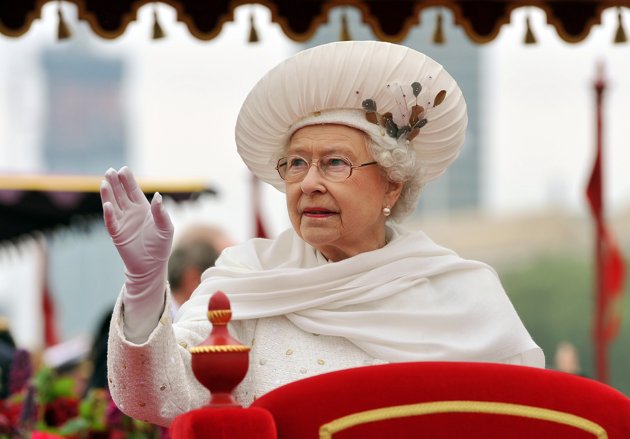
Queen Elizabeth II is only the second monarch since Queen Victoria to reign for sixty years. Last weekend, it was the Queen’s Diamond Jubilee celebration, where the British enjoyed four days of triumphant pageantry, horse-drawn carriages, royal barges, processions, church services, street parties, luncheons, concerts, festivities and general revelry. Naturally the Brits didn’t allow a bit of very British rain to stop the fun.

We also celebrated here, in a more humble and low-key sort of way, and even managed to have wet weather, in a meteorological show of sympathy. We sent a detachment of the New South Wales Mounted Police to represent us at the pageant, and Indigenous performer Gurrumul came on stage for Sing, a song written especially for the Jubilee featuring 200 artists from the Commonwealth; Kylie Minogue and Rolf Harris also performed at the concert (not together).

Australia has another connection to the Queen’s Jubilee: earlier this year, the largest pink diamond ever mined in Australia was found at Rio Tinto’s Argyle mine in the north-west of Western Australia (which is the source of most of the world’s supply of pink diamonds). The diamond is 12.76 carat, and, in honour of the Diamond Jubilee, has been dubbed the Argyle Pink Jubilee diamond. It was cut and polished in Perth, and will be sold later this year; pink diamonds cost about 20 times more than equivalent white diamonds.

The name Diamond is ultimately from the Greek adamas, meaning “unbreakable, invincible” (although the Greeks probably used the word to refer to other gemstones). It is from this that we get the words adamant, meaning “determined, unyielding”, and adamantine, meaning “as hard as diamond”. Diamonds are famous for their hardness, as well as their clarity and fiery white lustre.

It is thought that diamonds were first recognised and mined in India, where they have been used in Hindu religious icons for thousands of years. India remained the only source of diamonds until the 18th century, when they were discovered in Brazil, and today most of the world’s diamonds are cut and polished in India.

Diamonds have been used for jewellery since ancient times, and one of the most famous of their uses is for engagement rings. Medieval Italians called the diamond the “stone of reconciliation”, saying that it would maintain harmony between husband and wife. Diamonds were therefore recommended for betrothal rings, although they could only be afforded by royalty and aristocracy. It was the marketing campaign of De Beers begun in 1938 that sold us the idea that everyone needed to have a diamond engagement ring; such a campaign was necessary because of the large quantities of diamonds being brought in, especially from South Africa.

Mention of Africa brings up a grim factor of the diamond industry: the blood diamonds. In politically unstable countries of central and west Africa, revolutionary groups have taken over control of diamond mines, using the proceeds to fund their operations. Processes are in place to prevent blood diamonds from entering the mainstream market, and although they aren’t perfect, your chance of actually buying a “blood diamond” from a reputable jeweller is probably fairly remote.

However, the ethics of diamond mining are still pretty murky in many areas. Mines in India and South Africa not infrequently use child labour, working conditions can be cruel, and miners and gemstone cutters earn a pittance in relation to the value of the stones they help produce. De Beers have built mines in areas where they have forcefully displaced the indigenous people of the region, so even an “ethical diamond” may not be as ethical as you hoped.

For some reason, the name Diamond seems to get more negative reactions than other gemstone names, like Ruby or Pearl. The very hardness and sparkle which makes real diamonds so valuable, somehow makes the name Diamond appear “cheap” or “rough”. When diamonds symbolise so many positive things – strength, beauty, eternal love – that seems a foolish distinction to make.

Diamond is a gemstone name that works equally well for boys. For a start, the English surname Diamond is specifically masculine, and comes from an Anglo-Saxon personal name Dayman, meaning “man who takes care of livestock”. In Ireland, the surname is based on the personal male name Dermot, while the surname taken directly from the gemstone was adopted by some Jewish families from Eastern and Central Europe.

George McDonald’s enchanting fairy tale At the Back of the North Wind has a little boy named Diamond as its hero, and the movie I Am Sam has Dakota Fanning playing a girl named Lucy Diamond Dawson, her name a direct reference to the Beatle’s song, Lucy in the Sky with Diamonds.

Another connection with diamonds and royalty is a little girl named Diamond Ann Marshall, who was chosen to meet Catherine, Duchess of Cambridge on the royal tour of Canada. Diamond wrote the duchess a nice letter, and when she met her, gave her a big hug. Diamond was a cancer patient at the time, but is now in remission. Diamond’s name was given to her in honour of Princess Diana – I’m guessing Diamond Ann sounded like the name Diana to her parents.

Diamond as a girl’s name has been on the US Top 1000 since 1986, and peaked at #150 in 1999. It’s currently #760 and falling. It may be on the wane in America, but I hope that the Jubilee year inspires a spike of baby Diamonds in Commonwealth countries.

Looking for some more baby names for the Diamond Jubilee? Go check out these blogs from Elea at British baby Names, and Lou at Mer de Noms.

The Top Ten Boys Names of 2028

27 Sunday May 2012

Posted by A.O. in Your Questions Answered

≈ 16 Comments

Tags

name data, name popularity, name predictions, name trends, nicknames, popular culture, popular names, surname names, UK name popularity, UK name trends, Upswing Baby Names, US name data, US name popularity, vocabulary names

This follows on from The Top Ten Girls Names of 2028, so if you want to know the methods used, and what this is all about, and whether it’s really the Top 10 of 2028, then go read that first. If you’ve read it, you’ll know I ran into a few frustrations doing the girls names, and if anything, the boys names ended up being even more of a headache.

Angie, the discerning blogger behind Upswing Baby Names, was kind enough to leave me a long and thoughtful comment, which in part wondered whether posting predictions itself could change the future.

For example, a parent worried about a name they like gaining popularity may avoid it, even if the name is currently under-used. Therefore, names tipped to become popular are less likely to actually become popular. (Hmm, if this is true, pick a name that is touted as being popular in the future, because that will scare everyone else off!)

Angie herself, in her article Warning: Your Baby’s Name Could Become #1, notes that the number of popular names is shrinking markedly each decade, and that in effect, the popularity of names is virtually meaningless today. Yet somehow, we worry about it more than ever. Pretty crazy, huh?

Now I didn’t fret myself too much over Angie’s concerns, because I didn’t really imagine many people would read my blog entry, and didn’t think those that did would pay any attention. So I was somewhat disconcerted to see that it had been posted on a parenting forum, in part as an alert that the name a woman had chosen for her daughter, Freya, had been pegged for potential eventual #1 status by yours truly.

Fortunately, at least one of my predictions was proved right, because nobody appeared to pay much attention to me, and several flat-out said I was wrong. (These tended to be the type of people who didn’t think Olivia was popular, because they hardly knew anyone of that name, so their views on name popularity may not be particularly au courant).

The overwhelming advice given was exactly what I would have said myself: Don’t worry about whether a name will be popular in the future, that isn’t something you are able to control, and it would be foolish to avoid using a name you love for fear of what may happen later.

Sage, sane and sensible advice. Follow it!

Current Top Ten

  • William #24 in ’95 and #37 for the 1980s (gradual rise up the Top 50)
  • Lucas #87 in ’95 and #105 for the 1980s (steady rise into the Top 100)
  • Lachlan #26 in ’95 and #75 for the 1980s (steady rise up the Top 100)
  • Ethan #61 in ’95 and #323 for the 1980s (precipitious rise into the Top 100)
  • Oliver #75 in ’95 and #140 for the 1980s (steep rise into the Top 100)
  • Jack #7 in ’95 and #91 for the 1980s (steady rise up the Top 100)
  • Noah #161 for the 1990s and in rare use for the 1980s (new name that skyrockets)
  • Thomas #6 in ’95 and #27 for the 1980s (gradual rise into the Top 10)
  • Joshua #1 in ’95 and #11 for the 1980s (gradual rise to #1)
  • Cooper #125 for the 1990s, in rare use in the 1980s (new name that skyrockets)

1. ISAAC

Isaac is currently #19, and in 2001 he was #40. This is pretty close to William’s stately progress through the Top 50, and as such, I am picking him as the #1 name of the future. It did come as a bit of surprise to me, but it’s the only name that even comes near to matching William’s pattern. When I checked the Top 100 for the US and England/Wales, both of them still have Isaac around where he was for us ten years ago, but making similar progress. The popularity of Isaac may become apparent here earlier due to our smaller population size.

2. KAI

Kai is #83 right now, and he was #105 for the early 2000s. This is an extremely good match with Lucas, almost perfect in fact. Now the question is, will Kai shoot up the Top 100 the way Lucas did? I’m a bit sceptical, because I can’t help feeling that Lucas got quite a big boost from popular culture. I think someone is going to have to produce a TV show with a likeable main character named Kai. Even without such a TV show, it’s clear that Kai is doing very well for himself.

3. LOGAN

Logan is currently #34, and in 2001 he was #78. That’s not quite a good enough match to please me, but it’s the best I could get. Although the two names sound a bit alike, I don’t think Logan is going to be the next Lachlan, because Logan simply doesn’t mean as much in Australia as Lachlan does; it doesn’t have the same history and resonance. As you can see, it hasn’t climbed as high in the same space of time either. However, Logan is a common place name in Australia, and I’m still tipping it to continue rising.

4. CHASE

Chase is currently #85, and he was #407 for the early 2000s. I couldn’t find a name which mimicked Ethan very closely, and Chase was the best I could do. As you can see, he has actually climbed faster than Ethan did, and Ethan was no slouch. If Chase continues at his current rate, he will be Top Ten sooner than 2028. We’ll have to wait and see.

5. HUGO

Hugo is currently #90, and he was #143 for the early 2000s. This is a similar pattern to Oliver, but Hugo hasn’t climbed quite as high as Oliver did in the same space of time. However, you can see that he is still making good progress, and looks set to continue. He also has the fashionable OH sound we saw on the girls’ list – although can anyone really believe in a Top Ten which contains both a Harlow for girls and a Hugo for boys? It boggles the mind.

6. LUCAS

Lucas is currently #2, and ten years ago he was #82. This looks quite similar to Jack’s climb from the bottom of the Top 100 into the Top 10. Jack has of course proved himself a real stayer, and we’ll have to see whether Lucas has similar powers of endurance. I was going to say I doubted it, and then I looked back through the blog and saw I had earlier tipped Lucas to be only just outside the Top 10 in thirty years, based on comparisons with the Top Ten of 1982. So for reasons of consistency, I now feel compelled to say that yes, Lucas will still be in the Top Ten seventeen years later.

7. BENTLEY OR GRAYSON (???)

I knew I was going to hit a horrible snag at some point, and this was the point where that occurred. I needed to find a name that, like Noah in 1995, is around #160 at the moment, but ten years ago, did not even chart. The trouble is, it’s not possible to find that on the present chart, because it’s too new to show up yet. Left struggling in the dark, all I could think of was that since Noah was a name that became popular in the United States before it did here, I would see where Noah was on the US charts in 1995. It had just scraped its way onto the very bottom of the Top 100, after climbing a very brisk 59 places. I had a look at the 2011 US chart to see if there were any names that looked similar to that, which might possibly be around #160 here, and drew a blank. The names on the US Top 100 which climbed the highest last year were Bentley and Grayson, but only 25 places – not even half what Noah managed. Are Bentley and Grayson in the mid-100s here at the moment? I have no idea. If I go down just outside the Top 100, Easton (#102) climbed 43 places, and Jace (#106) climbed 40 places, which comes closer to Noah, but I can’t really see either of them in the mid-100s. I don’t think there is an equivalent to Noah, but without any solid data to draw on, I’m left dangling. Your guess is very much as good (or bad) as mine – and that is all this is, complete guesswork.

8. ETHAN

Ethan is currently #4, and in 2001 he was #17. That isn’t a perfect match with Thomas, but it does show Ethan moving up the Top 50 into the Top 10, like Thomas. I could have chosen either Oliver or Noah, but the idea of having both Olive and Oliver in the Top 10 seemed ludicrous, and I was quite out of patience with poor Noah by this stage. I also saw that I had earlier tipped Ethan to be a real stayer, so once more felt that I had little choice but to choose him again.

9. WILLIAM

William is currently the #1 name, and in 2001 he was #10. This is virtually a perfect match with long-lasting Joshua, who was #1 in 1995, and #11 for the 1980s. Basically if trends in boys’ names continue as they have been, 30% of the Top 10 in seventeen years will consist of names that are in the present Top 10. I feel as if boys’ names are becoming less conservative and there will be greater change coming in the future, but that may just be wishful thinking on my part.

10. ARCHER

With finding an equivalent for Cooper, I was in a similar position to finding an equivalent to Noah (ie there would be no data available at this early stage). However, I felt I had more freedom to choose, because Cooper seems to be a name which is much more popular in Australia than anywhere else. Therefore, there was no need to look through overseas data, or do any number crunching – it was just a matter of thinking of a new name which has grown wildly in popularity over the past few years, yet isn’t in the Top 100 yet. I was also hoping it would be an English surname/vocabulary name like Cooper. It really didn’t take much thought to light upon Archer; after reading birth announcements for months, I can see Archer is a name taking off like wildfire, and anyone can see it will be in the Top 100 within a few years or so. Can I see it reaching the Top 10? Yes, easily. It has better nickname options than Cooper, and a more romantic meaning, so I wouldn’t be surprised if it does better than Cooper.

My Tips for Coming Trends

  • IE sounds, as in Isaac and Kai
  • OH sounds, as in Logan and Hugo
  • Hard K sounds, as in Isaac, Kai and Lucas
  • S-enders, like Chase and Lucas
  • The rise and rise of the surname name for boys
  • Stronger influence from the US than from the UK
  • The names that are popular now still hanging on and becoming standards

Can You Suggest an Australian-Themed Name for the Third Triplet?

18 Friday May 2012

Posted by A.O. in Naming Assistance

≈ 28 Comments

Tags

angel names, constellation names, famous namesakes, fictional namesakes, Greek names, holiday names, mythological names, name history, name meaning, name popularity, name trends, nature names, nicknames, patriotic names, plant names, Spanish names, surname names, themes for triplets, tree names, triplet sets, unisex names, US name popularity, vocabulary names

Gabbi is an ex-pat Aussie originally from Perth, in Western Australia; she lives in the United States with her husband and six children. The family will be welcoming children 7, 8 and 9 in a few months, because they are expecting fraternal triplets – two boys and a girl.

Now if Gabbi had been having boy-girl twins, there would be no naming problem, because they have already chosen gorgeous names for the girl and one boy baby: Clover and Jasper.

The names fit together perfectly, because both reference the number three (Jasper was one of the three wise men, and clovers usually have three leaves), and both are associated with luck or gifts. They both bring to mind particular colours as well, because jasper stones are red, and clover is of course green; furthermore, they are both connected to special days of the year (Epiphany on January 6, and St Patrick’s Day on March 17).

Gabbi is now very concerned that the third triplet receives a name which has a special meaning of its own: even if it doesn’t fit in exactly with Clover and Jasper, it needs to be meaningful and have its own significance, rather than just being an afterthought. She would love it if the third triplet receive a name which is connected to Australian culture and celebrates Gabbi’s heritage, without being anything too obvious, like Sydney or Jack.

Other name preferences

  • Nothing too popular – one of Gabbi’s sons has a name which became very popular, and she doesn’t want that to happen again. (Gabbi actually stipulated that the name had to be outside the 300s, but I thought that was too strict, especially considering Jasper is in the 200s, so I restricted myself to names outside the Top 250).
  • Nothing too unusual that will really stick out in America – no Bluegum or Gallipoli
  • Nothing too obviously political, he’s not a bumper sticker
  • The family has a long, complicated surname, so the name needs to be simple to spell and pronounce

Names that have already been considered and rejected

  • Alister (dislikes nn Al)
  • Archer (too trendy, dislikes nn Archie)
  • Asher (too popular)
  • Finn (too popular)
  • Flynn (too connected to its namesake, Erroll Flynn)
  • Jonah (too popular)
  • Micah (too popular)
  • Miller (loves the name, but not the beer connection in the US)
  • Sawyer (too popular, too often used as a girl’s name)
  • Sayer (worries it looks “made up”)
  • Zephyr (Gabbi’s husband has vetoed as “too weird”)

The other children in the family tend to have names which are fairly popular in Australia, but underused in the United States. They are quite “cute” sounding, and even if unisex, used far more by one gender than the other.

Although Gabbi is interested to see what names I come up with, she would also love blog-readers to contribute any thoughts or ideas they have.

MY SUGGESTIONS

Felix

I think this goes with Jasper and Clover rather nicely, and is by far my top choice for Triplet Number Three. Felix means “lucky”, and Australia Felix is the name given to lush pastureland; there’s also a Great Australian Novel called Australia Felix, by Henry Handel Richardson (like George Eliot, Henry was a woman). It also reminds me of Felix the Cat, which was an Australian-American creation, and in LA, Felix the Cat is used on a three-sided sign. Although Top 100 in Australia, Felix is only #311 in the US.

Phoenix

A similar sound to Felix, but it references the colour red, which fits with Jasper. In China, the phoenix is a symbol of luck, and has great significance in terms of immortality and resurrection. The Phoenix is one of the constellations of the Southern Hemisphere, and is most visible around Christmas time – I thought this fitted in rather nicely with Jasper’s Christmassy meaning. Although quite popular in Australia, it is only #388 in the United States. However, you may be bothered by the fact that it also charts for girls in America, and possibly Phoenix the city in Arizona is also an issue for you.

Orion

This is another constellation name, one which references the number 3, because Orion is famous for having three stars in his belt, and even the absolute beginner (or a small child) can locate them easily in the night sky. Like the Phoenix, Orion is another constellation which is most visible around Christmas time. The RAAF have a plane called the Orion, while in the USA, it is the name of a ship, and a rocket. Orion seemed like a name from Greek mythology which might be less “weird” than Zephyr. It is #471 in the US.

Finlay

This seemed like an obvious alternative to Flynn and Finn, with a similar sound and origin, yet not even on the Top 1000 in the US. Because Finlay is connected to the colour white, it also seems a nice match with Jasper and Clover. There’s a rather nice connection to Gabbi’s home state as well, because Garfield Finlay was a World War I flying ace who lived in Perth, Western Australia, before the war.

Rafael

Names starting with Raf- are very much on trend in Australia, yet not over-used in the United States. This is the Spanish form of Raphael, the name of a healing archangel, and seems just as special as Jasper and Clover to me. An Australian connection is that Raphael Aimbari was an Ori man who helped Australian soldiers on the Kokoda Campaign during World War II; there is a statue of him in Brisbane. I think Rafe makes a very dashing nickname. Rafael is #274 in the US, but has been stable for some time and isn’t climbing up the way Jasper is. Raphael is #668, but seems harder to spell than Rafael.

Lawson

There are said to be three great Australian poets – Banjo Paterson, C.J. Dennis, and Henry Lawson. Banjo seems too out-there for you, and Dennis is a bit old-fashioned, but Lawson seems like a nice Australian replacement for Sawyer (both surnames, similar vowel-sounds). The surname means “son of Laurence”, and the name Laurence is connected by meaning to the bay tree, a symbol of success. It’s a subtle nature-themed name which again makes me think of a colour. It’s #580 in the US.

Shepherd

Another surname; this one reminds me of the conservation organisation, Sea Shepherd, which operates in Australia and the US. Interestingly, Sea Shepherd has three ships in its main fleet. It is a subtle environmental name, reminding us that we are all guardians of life on earth. At the same time, it’s another “Christmas-themed” name to go with Jasper. This name hasn’t been on the US Top 1000 since the 19th century.

Franklin

Another environmental namesake, because the successful fight against the proposal to dam the Franklin River in the Tasmanian wilderness was a landmark in Australian environmental activism. Aptly, the surname Franklin means “free man”, and the call of the activists was to let the Franklin River run free. This has a wonderful American connection too, because of Benjamin Franklin. It also reminds me of the word frankincense, as brought by the Three Wise Men. The name is #504 in the US, but I somehow feel the nickname Frank isn’t going to appeal to you.

Ash

This is another nature name which references a colour, and seems like a replacement for Asher. In Australia, it reminds me of the Ash Wednesday bushfires, which like the Phoenix, became another symbol of resurrection, of rising from the ashes. It also reminds me of the mountain ash, the tallest of all eucalypt trees, and one of the tallest trees in the world. Ash isn’t on the US Top 1000, but may be too unisex for you. You might consider it for a middle name though.

Talon

This is another nature name which is on trend in Australia, but underused in the United States. The main reason it occurred to me is because an eagle’s claw has three talons which are used to hold prey (the fourth is used for balance). The Wedgetail Eagle is very important in Aboriginal mythology, as Bunjil the Wedgetail Eagle is a creator deity. Of course, the Bald Eagle is the national bird of the United States, making it an important symbol for both countries. Talon is #516 in the US.

Which of these names do you think is the best match with Jasper and Clover? Or maybe you have your own suggestion for Jasper and Clover’s brother. If so, let’s hear it! All ideas are welcome.

NOTE: The triplets’ names are Clover, Jasper and Ash!

Bold Baby Names

15 Tuesday May 2012

Posted by A.O. in Name Resources

≈ 2 Comments

Tags

birth announcements, Bold Baby Names, celebrity baby names, e-books, For Real Baby Names, middle names, Sarah Douglas, US name popularity

We all love visiting Sarah’s blog, For Real Baby Names. In fact, I’ve even admitted being a little envious of her site, which is filled with the juiciest bits from birth announcements around the globe. (Mind you, now I collect my own BAs, on a much more modest scale, my envy has worn off quite a bit as I’ve realised the enormous amount of work involved).

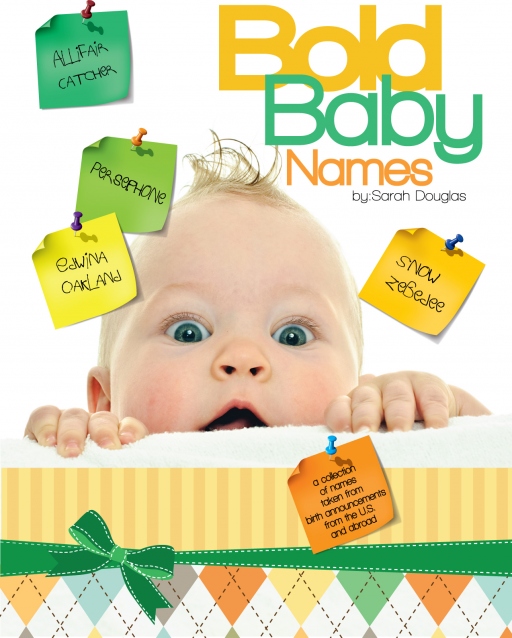
Now Sarah has brought out her own e-book: Bold Baby Names: A Collection of Unusual Names. These are all baby names which don’t make the US Top 1000, and which have been found in recent birth notices.

So often you see names recommended on baby name sites, and you begin to doubt whether anyone even uses them. Would anyone really call their baby Aladdin or Frodo? Or Omega or Vixen? Well now you know that someone definitely did. On the other hand, there are plenty of “normal” names as well, like Cecil and Myrtle, but they’re so unusual today as to seem quite bold too.

Bold Baby Names is arranged alphabetically, and sorted into whether the name was given to a boy or a girl (although many of these names seem suitable for either gender). There are bold middle names to consider, intriguing celebrity baby names, and lists from different countries around the world.

Australia gets its own section, and I think Australian readers will find that a few of the names in this part will seem quite familiar. You may well find yourself saying, “But Lachie‘s my nephew’s name!”, or “I went to school with a girl called Jacinta!”. It just goes to show that we must all share our names with each other, because a fairly standard old name in one country may seem shockingly exotic in another.

For that matter, Sarah also includes the US Top 1000, and there’s some pretty unusual names even on this list. Precious, Clarence, Kimber, Cortez, Meadow and Legend seem reasonably far-out to me, yet there’s enough of them in the United States to make the country’s top name list.

If you are a big fan of For Real Baby Names, you will find yourself entranced by Bold Baby Names. It couldn’t be easier to get your hands on a copy – if you have PayPal, just click the BUY NOW button on Sarah’s site, and you will be able to instantly download it in handy PDF format.

It’s currently on special for US$2.99, so for the price of some small change, you can find out how to be a bold baby namer!

Waltzing With … Billy

08 Sunday Apr 2012

Posted by A.O. in Waltzing with ...

≈ 5 Comments

Tags

Easter names, english names, famous namesakes, fictional namesakes, Irish name popularity, name history, name meaning, name popularity, nicknames, rhyming slang, slang terms, UK name popularity, unisex names, US name popularity, vocabulary words

This article was first published on April 8 2012, and revised and re-posted on March 9 2016.

Fictional Namesake
The blog entry for Pasco looked at a religious side to Easter, so this one will be about a secular aspect of the holiday.

One of the most popular symbols of the season is the Easter Bunny; this was an old German custom, and originally a hare rather than a rabbit (which is why the word bunny is used, to cover both creatures). Hares and rabbits are famous for being prolific breeders, so they make obvious fertility symbols for a festival which occurs in the northern spring and celebrates new life.

However in Australia, this prolificness of the rabbit has made it an invasive pest and an environmental disaster. Rabbits first arrived on the First Fleet and were bred for food in hutches, but don’t seem to have become a problem in mainland Australia until 1859.

In this fateful year, some bright spark named Thomas Austin thought it would be utterly spiffing to release 24 English rabbits onto his country property in Victoria so that he could continue the rabbit hunting lifestyle he had enjoyed in England. Austin opined the rabbits would do little harm, and might provide a touch of “home”.

Austin released both wild grey rabbits and domestic rabbits; the two varieties intermingled to become an extremely hardy and resilient Super Rabbit. Even then it might not have been such a mess, except that all the landowners living around Austin got in on this new fad, and released stacks of rabbits onto their own farms.

Within a decade, there were so many rabbits that 2 million could be killed each year without making the slightest difference to their numbers. By Federation in 1901, they were already holding a Royal Commission to see how the “rabbit problem” could be brought under control.

Rabbits are thought to be the most significant factor in loss of native species. They kill young trees, compete with native animals for resources, and cause horrific soil erosion which takes centuries to recover. They cost the agricultural sector millions of dollars in damages each year.

During the 1980s and ’90s, the environmental movement in Australia made a stand by using a new Easter symbol – the Easter Bilby. Bilbies (pictured) are cute native marsupials with a long muzzle and long ears, and they are an endangered species. The Foundation for a Rabbit-Free Australia used the Easter Bilby to educate people about the damage that feral rabbits do to our delicate ecology.

Haigh’s Chocolates got on board by stopping making chocolate bunnies, and making the very first chocolate bilbies. Darrell Lea also make chocolate bilbies, with part of the profits going to the Save the Bilby Fund. You can buy cheap chocolate bilbies from supermarkets as well, but it’s probably a toss-up whether any of the money you spend will go towards helping real bilbies.

The campaign has been successful, because thirty years ago there was no such thing as a chocolate bilby, and now they are an established part of Easter. Schools and school holiday programs often use the Easter Bilby for egg hunts and other activities, as an opportunity to teach kids about the environment as they play games and munch chocolate. Buying a bilby instead of a bunny feels patriotic and environmentally responsible.

There have been many picture books about the Easter Bilby, but the first one, and the first mention of the Easter Bilby, was Billy the Aussie Easter Bilby, by Queensland children’s author Rose-Marie Dusting, in 1979. Rose-Marie’s first version of the story was written in 1968, when she was only nine years old. Most likely, Rose-Marie chose the name Billy because it sounds like the word bilby.

Name Information
Billy is a pet form of Bill, which is short for William; it has been used an an independent name since the 18th century. People often ask how Bill became short for William (which doesn’t start with a B), but nobody seems to know for sure. It is presumed to be part of that medieval initial letter swapping which saw Richard become Dick, and Robert become Bob.

Billy is also a vocabulary word which has a particular resonance in Australia – a billy is a cooking pot used to boil water on a campfire. It’s thought that the word billycan comes from the large cans used to transport bully beef (corned beef) on ships sent to Australia or during exploration in the outback.

It’s a word which reminds us of the outback and our history, and even now some older Australians will say they are going to put the billy on for tea, when they just mean the kettle. Billy Tea is a brand of strong tea which has been sold since the late 19th century, and many arcane methods are suggested for making the perfect brew of tea over a campfire. You can read of billies in the poems of Henry Lawson and Banjo Paterson, the most famous reference being the jolly swagman in Waltzing Matilda, who sang as he watched and waited ’til his billy boiled.

A billy lid is not just a lid for a billy, but also affectionate rhyming slang for “kid” (child). There’s also the Puffing Billy steam train network near Melbourne, a major tourist attraction, and billy buttons, a type of native daisy.

One of the most famous Australian men who went by the name was Billy Blue, the first Australian convict to become a celebrity. Described in the records as a “Jamaican Negro”, Billy claimed to be a freed slave with some Native American heritage who had fought with the British during the War of Independence. When convicted, he was living in London, and had stolen sugar to use in his chocolate-making business.

In Australia, he became popular with the government and the public for his whimsical personality and witty banter. When he completed his sentence, he became a ferryman, and was granted 80 acres of land in the North Sydney area – Blues Point and William Street are two of several local landmarks named after him.

Other namesakes include Billy the Native, a bushranger who passed into folklore as “the traveller’s friend”; Billy Lynch, an Aboriginal community leader in the Katoomba area with hundreds of proud descendants; Billy Sing, a Chinese-Australian soldier who served with distinction in the Gallipoli Campaign; Billy Thorpe, rock singer from the 1960s and 70s; Billy Elliot, the jockey who rode Phar Lap to victory seven times; and NRL star Billy Slater.

Billy entered the Australian charts in the 1970s at #427, and began climbing steeply. It hasn’t reached the national Top 100, but is often seen around the bottom of popularity charts in certain states, and would not be far off. William is a very popular name, and it is possible that some of those Williams also go by Billy.

In the US (home of Billy the Kid and fictional sailor Billy Budd), Billy has been almost continually on the charts, and was a Top 100 name from the early 1920s until the end of the 1970s, peaking in the 1930s at #20. After that very impressive run, it has been on the decline and is now #794. It also charted as a girl’s name (a variant of Billie) from the 1920s until the 1940s, peaking in 1930 at #527.

In the UK (home of Billy Idol and fictional schoolboy Billy Bunter), Billy was a Top 100 name in the 1990s; it left the Top 100 in 2009 and is currently #122, and has been occasionally used for girls. Billy is still a popular name in Ireland. In Australia, Billy has never had a long run of popularity as in other English-speaking countries, so feels a bit fresher here.

Billly is an environmentally-friendly Easter creation; a name from history; a name from poetry; a name from the landscape; the name of a host of colourful Australian characters. Billy is a name which says, “I’m coming at you world, ready or not!” He’s a true blue wild colonial boy who is cute as a button, and sweet as a chocolate bilby.

POLL RESULTS
Billy received an approval rating of 78%, making it one of the highest-rated names of 2012. 42% of people thought the name Billy was okay, while 11% hated it.

Waltzing with … Skyler

29 Sunday Jan 2012

Posted by A.O. in Waltzing with ...

≈ 5 Comments

Tags

American names, celebrity baby names, Dutch names, famous namesakes, fictional namesakes, name combinations, name history, name meaning, name popularity, name trends, nicknames, sibsets, surname names, UK name popularity, unisex names, US name popularity, US name trends

4c86fe452cad39ae2f1075e407eda5e1

This post was first published on January 29 2012, and heavily revised on February 10 2016.

Tomorrow school goes back in three different states and territories (Queensland has already been back a week), which means that the summer holidays are drawing to a close. I chose this name as suitable for the start of term, thanks to its educational meaning.

Name Information
Skyler is a variant of Schuyler; a Dutch surname of German origin meaning “scholar”, said SKIE-luh. This name was brought to what is now the United States by Dutch colonists, who settled in the east during the 17th century.

The Schuylers were a prominent New York family. Pieter Schuyler was the first mayor of Albany in New York, and a commander of the British forces at the Battle of La Prairie, near Montreal. His descendants were numerous and distinguished, including his grand-nephew Philip Schuyler, who was a general in the American Revolution and Senator for the state of New York. It is said that the first use of the names Schuyler and Skyler was in honour of this family.

Schuyler has only appeared on the US Top 1000 a smattering of times. It shows up first at the beginning of the twentieth century, and then again between the mid 1980s and mid 1990s, only charting as a male name, and never getting higher than the bottom of the Top 1000. Currently Schuyler is almost equally given to both sexes in the US – 17 girls and 15 boys last year.

Famous people with the name include Schuyler Colefax, the 17th US Vice-President, who was a distant cousin of Philip Schuyler, and Schuyler Wheeler, inventor of the electric fan. Schuyler has been chosen as a baby name by actors Michael J. Fox and Sissy Spacek – both times for daughters. The name is barely used outside the United States, and pronunciation would be a puzzle to most.

During the 1940s and 1950s there was a popular American radio and television series called Sky King, about an Arizona rancher and pilot called Schuyler “Sky” King. During the 1950s, the spelling variant Skyler begins showing up in the data. It’s tempting to imagine that people tuned into the show, and began spelling the name as it sounded, or in such a way as to make the nickname Sky more obvious.

Skyler joined the US Top 1000 in 1981 for boys, and for girls in 1990 – it began showing up in data as a girls name in the late 1970s, so it had a brisk rise as a girls name. Skyler peaked for boys in 1996 at #217, and is currently #351. For girls, it peaked in 2000 at #250, and is currently #302.

Famous Skylers include Skyler Green, a footballer who played for the Dallas Cowboys in the NFL, and actress Skyler Samuels, who played Gigi on Wizards of Waverley Place. A fictional Skyler is Skyler White from the TV series Breaking Bad, played by Anna Gunn. Fashion stylist Rachel Zoe has a son named Skyler.

In the UK, Skyler has charted for boys and girls since the late 1990s. Currently it is #406 for girls, while in 2014, there were 13 boys named Skyler. It is rising rapidly for both sexes.

Rising alongside Skyler is the variant Skylar. While it has never been higher for boys in the US than the 300s, and is currently #635, it is Top 100 for girls, being #48 and rising. A famous namesake is American singer and songwriter Skylar Grey, born Holly Hafermann – her stage name a reference to mysterious “grey skies”.

In the UK, Skylar is #212 for girls and rising steeply. It is occasionally used for boys, and in 2014 there were 5 baby boys named Skylar.

There are also spelling variants of Skyler/Skylar which are specifically feminine. Skyla is #531 in the US, #156 and rising in the UK, and in 2012 made the Top 100 in New Zealand. It is much more popular than Skylah, but that is rising rapidly as well.

Skyla and Skylah are much more common in Australia than any other spellings of Skyler, and the numbers in the UK and New Zealand suggest that this spelling makes the most sense for someone with a British/Commonwealth accent. I estimate that if Skyla and Skylah were added together, the name would be in the Australian Top 100 by now, or very close to it, while other spelling variants are extremely rare for either sex.

You can see that if all the different spellings of Skyler were added up, it would be an extremely common name in the English speaking world. So Skyla or Skylah may not be an original choice for girl, but a boy named Skyler would stand out in Australia. Some of the other spelling variants would be worth considering, although I think Schuyler will cause more problems than it is worth.

By now this name has become almost completely divorced from its true meaning, and we now connect it with such things as clear or cloudy skies, free-wheeling flight, and the wild blue yonder. The obvious nicknames are Sky and Skye, and it fits in with names like Shyla, Myla, Kayla, Kai, and Tyler. Its sound is at least part of the reason for its success.

POLL RESULTS
As a girl’s name Skyler received an approval rating of 52%. 38% of people thought it seemed okay, although only 5% of people actually loved it.

Skyler had a lower approval rating as a boy’s name, at 46%. 28% disliked Skyler on a boy, and only 4% loved it.

The favoured spelling of the name was Skyler, with 37% of the vote, although Schuyler was not far behind on 33%. The least popular was Skyla, which only one person voted for.

(Photo is of the NSW Schoolhouse Museum of Education in Sydney)

Famous Name: Beyoncé

21 Saturday Jan 2012

Posted by A.O. in Famous Names

≈ 1 Comment

Tags

American names, celebrity baby names, created names, Creole names, French names, honouring, Louisiana names, popular culture, surname names, UK name popularity, unique names, US name popularity, virtue names

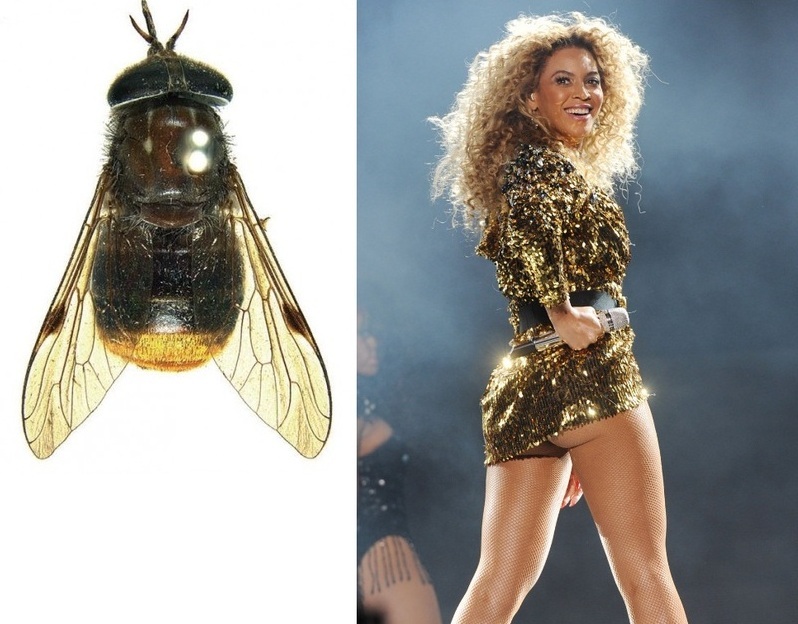
Pop diva Beyoncé has been in the news a lot recently, since the birth of her first child, Blue Ivy Carter. However, her name has hit the headlines for a different reason, after inspiring an Australian taxonomist to name a horse fly after her.

Bryan Lessard, from the CSIRO’s Australian National Insect Collection in Canberra, named the fly Scaptia (Plinthina) beyonceae because it has a prominent golden lower abdomen. To Bryan, who admits to being something of a fan, the unique dense gold hairs on the fly reminded him of Beyoncé’s flashy golden stage outfits.

The rare fly was collected in 1981, the same year Beyoncé was born, from eucalypt forests in the Atherton Tablelands of Queensland.

I’m not sure whether this is the most flattering thing that’s ever happened to Beyoncé, but I love that it shows scientists are just normal people who listen to R&B in their labs while they work, and find themselves as captivated by a gold frock as the next person. And perhaps are human enough to want to see their names in the gossip magazines, and maybe even get a personal response from their idol (she hasn’t made one).

BEYONCE

Beyoncé’s name is as unique as the horse fly, being created especially for her. Her mother Tina’s maiden name is Beyincé, a Creole surname from Louisiana. When she discovered that the Beyincé name was dying out, Tina decided to call her daughter Beyoncé, her own version of the surname. Apparently Tina’s parents were not impressed at first, because “that’s a last name”.

Beyincé is a form of the French surname Boyancé, related to the Old French word for “wood”. It’s an equivalent of English surnames such as Woodward or Forrester.

While the names of celebrities often become popular baby names (think Scarlett and Ashton, for example), Beyoncé’s name remains in very rare use. It belongs so completely to herself, and no other.

DESTINY

Destiny’s Child was the successful girl group of which Beyoncé was a founding member, prior to her embarking on her solo career.

The English word destiny comes from French, and ultimately from the Latin destino, the source of the word destination, meaning “appoint, establish”. It comes from an ancient root meaning “to stand, to place” (also the source of the word obstinate). Destiny is used as a synonym for the word fate, although technically fate is the divine agency or power which brings about the predetermined future events which are our destiny.

Destiny has been used as a girl’s name since the 19th century, and originated in the United States. It has been on the US Top 1000 since 1975, and reached the Top 100 in 1994, leaving it in 2012. It is currently #203.

In the UK, Destiny peaked in 2001 at #211 , and is currently #412. It is also in use in The Netherlands, and is a fairly uncommon name in Australia, although certainly not unknown.

Apart from Destiny’s Child, the name may remind you of Destiny Cyrus, the birth name of actress and singer Miley Cyrus (born just after the name reached the Top 100). It’s a slightly dated virtue name which still has a spiritual or philosophical feel to it, but also suggests the strength to forge your own path in life, to make your own destiny.

POLL RESULTS

Beyoncé gained an approval rating of 15% from the public. Only one person liked the name Beyoncé, while 68% thought it was terrible.

Destiny did rather better, with an approval rating of 32%. However, once again only one person liked the name, and 48% thought it was terrible.


Famous Name: Elvis

14 Saturday Jan 2012

Posted by A.O. in Famous Names

≈ 12 Comments

Tags

famous namesakes, honouring, Irish names, Latin names, mythological names, name history, name meaning, saints names, surname names, UK name popularity, unisex names, US name popularity

This article was first published on January 14 2012, and substantially revised and re-posted on September 14 2016.

Famous Festival
On January 11, the 20th annual Elvis Festival kicked off in the country town of Parkes, west of Sydney – an annual celebration of Elvis Presley’s life and music. For five days in the second week of January, the population of Parkes is swelled by Elvis impersonators, women with big hair, and people wearing blue suede shoes. There are parades, contests, dancing, singing, hip swivelling, and a mass renewal of wedding vows performed by a celebrant in an Elvis costume.

The festival began in 1992, when a small group of local Elvis fans decided to hold a festival on the day of the star’s birthday, January 8.  The next year the festival attracted 200 people from around the country; by 2005 they came in their thousands, by 2007 it had been extended to five days, and now there are more than a hundred events, and the town’s population of 10 000 more than doubles during the Elvis Festival.

The townspeople were originally lukewarm on the Elvis Festival idea. Parkes is the proud owner of an observatory, which has at times assisted NASA on space missions (as fictionalised in the movie The Dish), and had always seen itself as devoted to science and research. An Elvis Festival seemed a bit frivolous.

However by now Parkes has fully embraced the festival, and the whole town gets into the fun by dressing up and decorating the buildings. It’s one of the mayor’s roles to dress as an Elvis impersonator and meet the train from Sydney, where all the similarly-attired fans have travelled together.

People flock here from all over the globe to come to the self-proclaimed Elvis Capital of the World. It injects millions into the economy of the town, and in 2007 they set a record for the most number of Elvis impersonators in one place.

In 2017 the Festival will celebrate its 25th birthday and the theme will be Viva Las Vegas.

Name Information
Elvis Presley was one of those performers lucky enough to have been given such a distinctive name that he had no need to choose a stage name. He was named for his father Vernon, whose middle name was Elvis.

Elvis is an Anglicisation of the Irish name Ailbhe, said like Alva: the meaning is not known for sure, but may derive from the Gaelic albho, meaning “white” – it is also Anglicised as Albus, the Latin for “white”. The name Ailbhe could be given to either sex, and in Irish legend there is a female warrior and follower of Finn McCool named Ailbhe.

A male example of the name is Saint Ailbhe, nearly always known as Saint Elvis. He was a 6th century bishop venerated as one of the four great patron saints of Ireland. Saint Ailbe’s legend is quite fairy-tale – cast out by his royal father (like Oedipus), he was raised by a she-wolf (like Romulus and Remus), and at the end of his life voyaged by ship to the Otherworld (like King Arthur going to Avalon). There is a Welsh village named St Elvis in the saint’s honour, as he is said to have baptised Saint David, the patron of Wales, in this area.

The English surname Elvis does not seem to be derived from the Irish name, and is probably a variant of the surname Elwes, which comes from the female name Heloise or Eloise.

Elvis has been used as a name since perhaps the 18th century, and in Ireland seems to have been used as a female name, although it wasn’t common (today Ailbhe is a popular name for girls in Ireland). However in England the name was mostly masculine, suggesting that there the surname was the primary influence.

The name Elvis went on to become most commonly used in the United States, and was usually a boy’s name. Despite the feminine origin of the surname, it probably sounded like male names such as Alvis and Alvin, giving it a masculine feel.

In Australian records Elvis was nearly always given to girls in the late 19th and early 20th centuries which makes sense considering our strong Irish heritage. It also fit in with turn-of-the-century name trends for girls, such as Alva and Elva. Once Elvis Presley became famous in the 1950s, the name virtually disappeared from records as a girl’s name.

In the US, the name Elvis has charted on and off in the Top 1000 for boys since the late 19th century, becoming more established there around 1910. Before Elvis Presley became famous, its highest peak was #584 in 1919, and it was #900 in 1935, the year Elvis Presley was born.

The name Elvis went off the charts around the time Elvis Presley began his career in 1954, but returned in 1955, so the star did affect the name’s popularity. Elvis peaked in 1957 at #312, the year after Presley released number one hits such as Heartbreak Hotel and made his film debut in Love Me Tender – female fans screamed with excitement non-stop during the movie, even though it had quite a serious plot and a sad ending.

The name Elvis last charted in the US Top 1000 in 2011. Last year in the US there were 180 baby boys given the name Elvis, and numbers are fairly stable.

In the UK, the name Elvis has charted since the 1990s, and the name made the Top 1000 in the early 2000s, peaking at #761 in 2003, and again in 2008 when it made #943. It rose steeply last year, and was back on the Top 1000 at #873.

In Australia, Elvis is not a common name, but I generally see two or three examples of it as a baby name per year – enough to convince me it isn’t a rare name either, and probably has a similar popularity to the UK. A famous Australian with the name is former mixed martial artist Elvis Sinosic.

Elvis has two other musical namesakes. One is British star Elvis Costello, who was born Declan MacManus, and the other is American folk singer Elvis Perkins, the son of actor Anthony Perkins (Elvis Perkins was born the year before Elvis Presley died). Costello’s manager chose the stage name Elvis in reference to Presley, while Anthony Perkins was an Elvis fan.

Elvis, if you forget about its most famous namesake for a moment, sounds like a vintage name ready for revival, complete with fashionable V. And yet it never can be separated from Mr Elvis Aaron Presley. The name will always conjure images of white satin bodysuits covered in rhinestones, brilliantined dark hair, and a heart-stopping smile.

Even though Elvis is not a rare or unusual name, it’s still something of a bold choice as it’s likely to elicit some strong opinions. But you’ll have to tell the naysayers you’d like a little less conversation about it, because you can’t help falling in love with the name Elvis. It’s a truly royal name because it belongs to the one and only king, baby!

POLL RESULTS
Elvis received an approval rating of 42%. 35% of people thought the name was too closely associated with Elvis Presley, although 9% thought it was either handsome or cute. Only one person thought the name Elvis sounded redneck.

(Picture shows Elvis impersonators at the Parkes Elvis Festival, with the Observatory in the background)

← Older posts
Newer posts →

Enter your email address to follow this blog

Categories

Archives

Recent Comments

A.O.'s avatarwaltzingmorethanmati… on Zarah Zaynab and Wolfgang…
Madelyn's avatarMadelyn on Zarah Zaynab and Wolfgang…
JD's avatardrperegrine on Can Phoebe Complete This …
A.O.'s avatarwaltzingmorethanmati… on Rua and Rhoa
redrover23's avatarredrover23 on Rua and Rhoa

Blogroll

  • Appellation Mountain
  • Baby Name Pondering
  • Babynamelover's Blog
  • British Baby Names
  • Clare's Name News
  • For Real Baby Names
  • Geek Baby Names
  • Name Candy
  • Nameberry
  • Nancy's Baby Names
  • Ren's Baby Name Blog
  • Sancta Nomina
  • Swistle: Baby Names
  • The Art of Naming
  • The Baby Name Wizard
  • The Beauty of Names
  • Tulip By Any Name

RSS Feed

  • RSS - Posts

RSS Posts

  • Celebrity Baby News: Melanie Vallejo and Matt Kingston
  • Names from the TV Show “Cleverman”
  • Can Phoebe Complete This Sibset?
  • Zarah Zaynab and Wolfgang Winter
  • Baby, How Did You Get That Name?
  • Celebrity Baby News: Media Babies
  • Celebrity Baby News: Adelaide Crows Babies
  • Celebrity Baby News: Chris and Rebecca Judd
  • Names at Work: Name News From the World of Business and Employment
  • Celebrity Baby News: Sporting Round Up

Currently Popular

  • Celebrity Baby News: Alisa Camplin and Oliver Warner
  • Rare Boys Names From the 1950s
  • The Top 100 Names of the 1930s in New South Wales
  • Sad Celebrity Baby News (contents may cause distress)
  • Girls Names From Stars and Constellations

Tags

celebrity baby names celebrity sibsets english names famous namesakes fictional namesakes honouring locational names middle names name combinations name history name meaning name popularity name trends nicknames popular names saints names sibsets surname names twin sets unisex names

Create a free website or blog at WordPress.com.

Privacy & Cookies: This site uses cookies. By continuing to use this website, you agree to their use.
To find out more, including how to control cookies, see here: Cookie Policy
  • Subscribe Subscribed
    • Waltzing More Than Matilda
    • Join 517 other subscribers
    • Already have a WordPress.com account? Log in now.
    • Waltzing More Than Matilda
    • Subscribe Subscribed
    • Sign up
    • Log in
    • Report this content
    • View site in Reader
    • Manage subscriptions
    • Collapse this bar
 

Loading Comments...