• About
  • Best Baby Names
  • Celebrity Baby Names
  • Celebrity Baby Names – Current
  • Celebrity Baby Names – Past
  • Featured Boys Names
  • Featured Girls Names
  • Featured Unisex Names
  • Links to Name Data
  • Waltzing on the Web

Waltzing More Than Matilda

~ Names with an Australian Bias of Democratic Temper

Waltzing More Than Matilda

Tag Archives: stage names

Famous Names: Azalea and Amethyst

04 Wednesday Jun 2014

Posted by A.O. in Famous Names

≈ 16 Comments

Tags

Anne of Green Gables, birth notices, dog names, english names, famous namesakes, flower names, gemstone names, Greek names, locational names, name history, name meaning, nature names, pet names, plant names, rap names, screen names, stage names, street names, US name trends

May-purpleazalea

Australian rapper and model Iggy Azalea has been in the news recently, as she performed at the Billboard Music Awards last month. Her song Fancy recently reached #1 on the Billboard Top 100 in the same week that Ariana Grande’s Problem, which features Azalea, made #2. This makes Iggy Azalea the first act to reach #1 and #2 simultaneously since the Beatles did it in 1964 with I Wanna Hold Your Hand, and She Loves You.

Iggy grew up in the hippie town of Mullumbimby in northern New South Wales, and began rapping at the age of fourteen after developing an obsession with Tupac when she was eleven. Unsuccessful and unpopular at school, Iggy dropped out. Shortly before her sixteenth birthday, she left for a “holiday” in the United States, during which she phoned her parents and broke it to them that she wasn’t coming home, but going to seek her fortune as a professional rapper. She lived in the southern states, and developed a southern American accent for professional purposes.

As a rapper in America, Iggy was at first unsuccessful and unpopular, but Mullumbimby had accustomed her to this, and it didn’t faze her. Later she moved to Los Angeles, and began uploading her own videos to YouTube: her career began to grow when her first official music video, for her song Pu$$y, went viral. Her first studio album, The New Classic, was released in April this year and debuted at #3 on the Billboard charts, also making #1 on Billboard’s Top R&B/Hip-Hop albums, and Top Rap Albums. She is the first non-American female rapper to reach the summit of these charts.

We are told that screen names are no longer necessary in Hollywood, but stage names are still common in the world of rap and hip-hop. Iggy Azalea invented hers using the old chestnut of combining her pet dog’s name with the name of the street she grew up on (her family still lives on Azalea Street in Mullumbimby). While some people might use this method and end up with something uninspiring, like Pickles Main or Mr. Bunny Wunny Commercial Estate, Iggy Azalea got pretty lucky with hers, although her real name of Amethyst Kelly seems marketable enough.

I have been seeing quite a few Azaleas and Amethysts in birth notices in the past few years, and wonder whether Amethyst Kelly aka Iggy Azalea has had an effect? I haven’t seen any girls named Iggy though.

The azalea is a flowering ornamental shrub native to Asia, Europe and North America; it is a member of the rhododendron family. Azaleas bloom in the spring, and have beautiful frilly flowers in shades of pink, purple, and white.

Its name comes from the Greek for “dry”, because it grows in dry soil and is tough enough to thrive in harsh conditions. In Chinese culture, azaleas are a symbol of womanhood and love for the home. Azalea festivals are held in Japan, China, Korea, and in many cities of the United States; the azalea is the state wildflower of Georgia in the US.

Azalea has been used as a girl’s name since the 18th century, originating in both Britain and the US. Although there is some dispute as to when azaleas were introduced to England from the Americas, they were definitely imported by the early 18th century. Azalea first turns up in Ohio in the US, where there is a small town named Azalea, so it can be seen as a place name. The name Azalea is currently rising in popularity in the United States.

As a name, Azalea seems flouncy and feminine, and also quite tough – the “dry” meaning seems very appropriate in Australia. It can be pronounced either uh-ZAY-lee-uh or uh-ZAYL-yuh, and fits in with trendy names such as Zalia and Zahlia, so that it seems a little exotic but doesn’t sound particularly strange. Zay or Zaylie could be used as short forms.

An amethyst is a semi-precious gemstone which is a violet-shaded quartz, ranging from a pinkish colour to a deep purple. The name comes from Greek, and means “not intoxicated”, due to a belief that amethysts were a protection against drunkenness.

The ancient Greeks and Romans drank wine from cups made from amethyst, thinking this would stop them being affected by alcohol. In medieval times, amethyst amulets were worn in battle, in the belief that they had healing properties, and kept the wearer cool-headed; they are supposed to have the ability to dispel illusions.

Amethysts are mined all over the world, with the highest quality coming from Brazil and Sri Lanka. You can fossick for amethysts yourself in Australia, with the most promising locations being in northern Queensland. You can also find “desert amethysts” – very old glass bottles which have baked in the sun until they turn a pretty violet colour.

Amethysts seem to capture the imagination of writers, and there are many stories and poems about them, even in ancient times. If you have read the Anne of Green Gables books by L.M. Montgomery, you will remember that as a child, Anne thought that diamonds would be “purply-sparkling” like amethysts and was disappointed to find they were colourless. One of her fancies was that amethysts were the souls of good violets.

Amethyst has been used as a personal name since the 19th century, when other gemstone names were fashionable; it can be shortened to Amy. Although amethysts are not rare or valuable, there is something pure and wholesome about them, even spiritual. As Anne says: “I think amethysts are just sweet”.

Two pretty nature names starting with A, both belonging to the same person. Which one do you prefer?

POLL RESULT
Azalea received a very good approval rating of 74%, but people were less enthusiastic about Amethyst, which had an approval rating of 43%.

azalea-st

(Top photo shows purple azalea flowers; bottom photo shows Azalea Street in Mullumbimby)

Rare Royal Names for Boys

08 Sunday Sep 2013

Posted by A.O. in Name Themes and Lists

≈ 11 Comments

Tags

alphanumeric names, anagram names, Anglo-Saxon names, Arthurian names, Biblical names, birth notices, classic names, Danish names, english names, famous namesakes, fictional namesakes, German names, germanic names, Greek names, hebrew names, Latin names, middle names, mythological names, name history, name meaning, name popularity, names of months, nicknames, Old English names, popular names, rare names, Roman names, royal names, saints names, Scottish names, stage names, surname names, unisex names

Franz_Xaver_Winterhalter_Family_of_Queen_Victoria

Alastair

Alastair Windsor was a great-grandson of Queen Victoria through his father, and a great-great-grandson of Victoria through his mother. Although born a prince, he was stripped of his royal titles while still a toddler, after the regulations were tightened up. Alastair went into the army, and died during World War II on active service, in unconventional circumstances. He had been sent to Canada as aide-de-camp to the Governor General, who was a relation of his. Both his regiment and the Governor General had rejected him as incompetent, and he fell out of a window while drunk. It can get very cold in Canada, and Alastair succumbed to hypothermia overnight. Alastair is the Anglicised form of Alasdair, a Scottish form of Alexander. Alasdair Mòr Mac Dòmhnaill is the ancestor of the Clan MacAlister. I think Alastair very handsome, and in a country where Lachlan and Hamish are common, it doesn’t seem out of place. If the alas at the start bothers you, it can also be spelled the more common Alistair.

Athelstan

Although there had been many English kings before him, Athelstan the Glorious was the first ruler of all England, and the first who can be called king of the English. He was the grandson of Alfred the Great, and like his grandfather, had a reputation as a man of great intelligence and justice. His household was a centre for learning, he created the most centralised government England had yet had, maintained social order, encouraged literature, was an unbeaten military leader, and a key player in international affairs. He gets rave reviews from medieval historians, and even foreign writers of his time were eager to sing his praises. He is a king worthy of admiration, yet while the name Alfred was successfully revived and is still used now, Athelstan went out of use after the Norman Conquest, and remains extremely rare. Just doesn’t seem fair, does it? Athelstan is the modern form of the Anglo-Saxon name Æþelstan, meaning “noble stone”; it was very common amongst Anglo-Saxon royalty and nobility, and there are quite a few other kings with the name. I admit it does seem a little unwieldy, but it comes with the nickname Stan.

August

August was the second name of Prince Ernst August, a great-great grandson of George III and cousin of George V. As a member of the Hanoverian family, he was born a prince of Britain and Ireland, but during World War I, anti-German sentiment convinced the British royal family to strip the titles from their German relatives. However, the Hanoverians didn’t consider themselves bound by British rules, and continued to call themselves princes and princesses. To this day, the Hanoverians ask the British monarch for permission to marry, like other royals. It’s a bit of an odd situation. Prince Ernst was the last reigning monarch of the House of Hanover, and his marriage to Princess Victoria of Prussia the last large gathering of European royals before World War I broke out – he was very much the end of an era. August is the German form of Augustus, a traditional middle name in the Hanoverian royal family which continues to be handed down. You can also see August as after the month, in which case it can be given to both sexes.

Axel

Axel was the final middle name of Prince Georg Wilhelm Ernst August Friedrich Axel, the son of Prince Ernst August. He married Princess Sophie of Greece and Denmark, who was Prince Philip’s sister. The name Axel is the medieval Danish form of the Hebrew name Absalom. In the Old Testament, Absalom was a son of King David, staggeringly handsome and extremely charming. He rebelled against his father; it’s a pretty awful story involving incest, rape and murder, and not one of the most uplifting parts of the Bible. Absalom was killed when he got his head stuck in a tree, which is meant to be very ironic for some reason. To me the ironic part is his name means “my father is peace”, and he went to war against his father. Axel is not a popular name in Australia, but I feel as if it will be in a few years, based on how frequently I see it in birth notices – it is #164 in Victoria. Its use seems to be influenced by singer Axl Rose, whose stage name is famously an anagram.

Edmund

Edmund the Magnificent was half-brother to Athelstan the Glorious, and his successor to the throne. He only ruled for a few years before he was murdered, but in that short time he had important military victories in the north, established peace with Scotland, began reviving the monasteries and helped restore Louis IV to the throne of France. His great-grandson Edmund Ironsides fought valiantly against the Danes, and although ultimately defeated by King Canute, was a skilled and inspiring leader. Edmund is an Old English name meaning “rich protector”, and it was common amongst Anglo-Saxon royalty and nobility. Saint Edmund the Martyr was a King of East Anglia killed by the Danes, and was the patron saint of England until Saint George got the gig – there is a movement in East Anglia to reinstate him. Unlike many other Anglo-Saxon names, Edmund remained in use after the Conquest (probably because of the saint), and was even used in the royal family. It’s surprising how rare this name is compared to classic, popular Edward, but it’s a very handsome and noble one. Narnia fans will know it as the name of the treacherous Pevensie brother, who redeems himself and becomes a king of Narnia. Edmund “Ted” Gyngell is a recent celebrity baby, sometimes called Edmund the Magnificent after his namesake.

Emmanuel

Emmanuel was the final middle name of Francis Albert Augustus Charles Emmanuel of Saxe-Coburg and Gotha, otherwise known as Prince Albert. He married his cousin Victoria, who was the heir to the British throne at the time. Victoria had the choice of two cousins to wed, and chose Albert as the most handsome and charming. Queen Victoria was devoted to Albert, and he was a great support to her, holding quite a bit of power behind the throne. A progressive and liberal thinker, he helped bring in many reforms, set the example that monarchy must be above politics, and made a huge success of the Great Exhibition of 1851. He died while only in his early 40s, and Queen Victoria was devastated. She wore mourning for the rest of her days and withdrew from public life. Emmanuel is a Hebrew name meaning “God is with us”; the Old Testament gives the name in a prophecy, and the New Testament attached it to Jesus Christ as the Messiah. The name was common amongst European royalty, but less often used in Britain. In Australia it’s possibly best known as a surname, from guitarist Tommy Emmanuel.

Eustace

Eustace was the eldest son of King Stephen, and a great-grandson of William the Conqueror. Stephen had become king of England in a rather controversial way. After the heir to the throne had drowned in a disastrous shipwreck, Stephen had himself declared king by popular acclaim and was speedily crowned before anyone knew what was happening. The Empress Matilda had been next in line, but she was only a woman, and Stephen thought he should rule instead. Matilda didn’t agree, and their subsequent battle for power threw England into a state of anarchy for nearly two decades. Stephen had Eustace declared his co-king, but the church refused to ratify this, and nearly everyone was greatly relieved when the teenaged Eustace unexpectedly died. Generally perceived as rather a blot, his welcome demise allowed peace negotiations to go ahead. Even more conveniently, Stephen died the following year leaving Matilda’s son, Henry II, as ruler. Eustace is the English form of Greek Eustachios, meaning “rich crop”, a name chosen for himself by a 2nd century Roman general and martyr who had been born Placidus, and is known as Saint Eustace; because of him, the name was common during the Middle Ages. This is another name from The Narnia Chronicles, because Eustace Scrubb was a rather annoying character who, like the saint, was converted from his previous beliefs. Hardly anybody seems to like the name Eustace, and even C.S. Lewis made fun of Eustace Scrubb’s name.

Leopold

Prince Leopold was a son of Queen Victoria, named after his great-uncle, Leopold I of Belgium, who had helped arrange the marriage of Victoria and Albert. Leopold’s birth is famous because his mother used chloroform during labour, giving the royal seal of approval for women to seek pain relief during childbirth. Prince Leopold inherited the family condition of haemophilia and also had mild epilepsy; he became a patron of the arts, literature and chess. He knew Alice Liddell, famous as the inspiration for Lewis Carroll’s Alice books (one of which revolves around chess), and some believe he considered marrying her, although others say it was her older sister Edith who was his intended wife. Queen Victoria arranged for him to marry Princess Helena of Waldeck and Pyrmont, a distant cousin. Leopold’s marriage was happy, and he and Helena had a daughter named Alice, but he died as a result of haemophilia after only a few years. He passed away just before his son Charles was born. Alice inherited the haemophilia gene, and passed it on to her son Rupert, who also died young. Leopold is a Germanic name meaning “bold people”; it was common amongst German royalty. This rather grandiose name has popular Leo as the nickname.

Magnus

Magnus was a son of King Harold II and Edith the Fair, or Edith the Gentle Swan, sometimes (wrongly) called Edith Swan-neck. Harold and Edith were married in a traditional manner known as handfasting, and although Edith was regarded as Harold’s wife by regular people, and their children as princes and princesses, the clergy saw her only as his mistress because they hadn’t wed in a Christian ceremony. Harold did have another wife, also called Edith, but this was a marriage of political convenience, and not a love match as it was with Edith the Fair. According to legend, after Harold was killed at the Battle of Hastings, only Edith the Fair could identify his body by markings she knew, so Harold was able to have a Christian burial. Magnus is a Latin name meaning “great”; Magnus Maximus was a 4th century Western Roman Emperor who became important in British folklore and Welsh legend, and is part of the mythology of King Arthur. There are several saints named Magnus, and it was a traditional name in the royal families of Norway and Sweden. The name is often thought of as Scottish, and one of the Saints Magnus was from Scotland. This is a great name, rich in history and legend, strong and interesting, and a good alternative to Max.

Octavius

Prince Octavius was the thirteenth child of King George III, and doted upon by his adoring parents. At the age of four, he was inoculated against the smallpox virus, and as vaccination was still in its experimental stages, became ill and died, the last member of the British royal family to suffer from smallpox. The sudden death of the tiny prince caused his family immense grief, and during his later bouts of madness, King George even had hallucinations about Octavius. What made it harder for them was they had lost Octavius’ younger brother Alfred in exactly the same way six months previously. Octavius is a Roman name coming from the Latin for “eight”; Octavius was the eighth son of King George III. Octavius seems very hip – fresher than Atticus and Orlando, with a distinct feel of its own. It would be a good choice for an eighth child or grandchild, or someone born in August (the 8th month) or October.

POLL RESULT: People’s favourite names were August, Magnus, and Alastair, and their least favourite were Octavius, Athelstan and Eustace.

(Picture shows a portrait of Prince Albert and his royal family by Franz Xaver Winterhalter)

Names Spotted at Home and Abroad (Autum Edition)

27 Thursday Jun 2013

Posted by A.O. in Names Spotted at Home and Abroad

≈ 7 Comments

Tags

Arabic names, Arthurian names, Biblical names, Cornish names, english names, hebrew names, Japanese names, locational names, Maori names, name meaning, names from movies, names from television, portmanteau names, rare names, Scottish names, Slavic names, Spanish names, stage names, surname names, terms of endearment, unisex names, vocabulary names, Welsh names

982951-130420-twam-honeyNames of Babies and Children

The winners of the 2013 Bonds Baby Search were announced during the autumn, and some of the interesting names I saw amongst them were Ramsey, Cielo and Azriel. Ramsey is a Scottish surname from an English town meaning “wild garlic island” – at last, it’s an anti-vampire name! Cielo means “sky”, in Spanish, but it’s also a term of affection, meaning “my heaven”. Azriel is a Hebrew Biblical name which means “help of God”. Although male in the Bible, its similarity to Azaria and Ariel probably makes it seem unisex, or even female.

A baby girl born rather suddenly in a hospital car park in Adelaide was named Lowenek, a Cornish name said to mean “joyfulness”. South Australia has a strong Cornish heritage, and I wonder if little Lowenek was named with this in mind?

A poor little baby had a rather awful time in hospital. Her name is Venice, which I think is really pretty. We just saw a Verona in a birth announcement, and I saw a Vienna at For Real Baby Names – Valencia must be just around the corner.

This story on a mum who went all out to lose her baby weight, getting super fit in the process, says that she has a toddler son named Jatticus, and a baby daughter named Atlantis. I’ve seen people use Jatticus as a user name online, but never seen it on a baby before, and Atlantis is pretty wow.

A story on a Sydney family with a dozen children did not give all their names, but did mention one boy named Taiawhio, which is a Maori name meaning “go around, encircle”.

An article on baby naming laws in Australia from Lifehacker mentioned a few rare baby names that were registered last year – Hurricane, J’Adore, Couture, Excel, Burger, Google, Tron, Hippo. Are these unique baby names? Nope, they were each registered more than once. Remember, no matter how unusual you think your baby name is, someone else has probably thought of it.

Names of Adults

A story on a baby’s difficult birth mentioned the midwife as being named Oki Rose. Oki is a Japanese name which means “offing” – the offing is the distant sea which is still visible from the shoreline. It’s a surname in Japan, as well as a place name, the Oki Islands. It’s a name which strangely appeals to me, and as parents sometimes call their babies after the midwife in gratitude, I wonder if there are any little Okis in her area?

There was a profile on a novelist named Honey Brown. People always ask her if it’s a pen name, but it’s the name she was given at birth. Her dad was driving down a country road when he saw a sign advertising honey painted on a roadside shed, and he went home and told his pregnant wife that if they had a girl, her name had to be Honey. If that isn’t sweet enough, for her 40th birthday, Honey’s sister tracked down the original sign and took a photo of it. I love a name with a story behind it.

Another writer, this time a teenage fashion blogger from Perth named Willabelle Ong. She’s been blogging since she was 15, has more than 60 000 subscribers, racks up over 115 000 views a month, and has been featured in Teen Vogue and the New York Times. I’m not usually a fan of portmanteau names, but Willabelle is really quirky and charming.

There was a story on a young rapper whose stage name is Iggy Azalea, which is pretty cool. Her real name is Amethyst Kelly, which is cool too. Would you prefer to be called Iggy or Amethyst?

A story on new Australian citizens in Queensland mentioned one with the intriguing name of Ginny Lovelady. It puts an interesting picture in your mind. Other names of new Australians were Craig, Manjula, Marriette, Brigette, Albert, Melissa and Almari.

While watching RPA, I saw a young man, still in his teens, having a tumour removed from his leg. Luckily, his limb was able to be saved. He had the romantically Arthurian name Galahad, which some interpret as being from the Welsh for “hawk of summer”. Galahad is the only knight who is pure enough to find the Holy Grail, and some see him as a Christ-figure. Guinevere is becoming accepted as a “normal” name now, so how about Galahad for the guys?

On the news, there was a brief interview with the father of an unsuccessful criminal who was foiled by a quick-thinking young lady. The dad’s name was Trampas, which seemed to me very unusual (okay, utterly bizarre). Turns out the name had quite a vogue in its day, because Trampas was one of the main characters in the 1960s TV cowboy series, The Virginian. It’s from a place name meaning “traps” in Spanish, and there’s some famous Americans with this name, who were born while the TV show was on. There’s also several Australians with the name in historical records. Perhaps in 50 years a name blogger will exclaim over a stout middle-aged lady named Katniss, and wonder where on earth she got her “weird” name from.

Speaking of names from books, a friend complained that she couldn’t finish the novel she’d started because of the heroine’s name – Ava. She found it ridiculous that a grown woman should have a “little girl” name – sooo unbelievable. The funny thing is, I know an Ava who’s 32, not to mention a Ruby who’s 28 , a Keeley who’s 29, and an Oliver and a Tyson in their mid-forties. These popular baby names had to start out somewhere! The grown-up Ava I know has a toddler named Jessica – I wonder how many people get their names confused?

Interesting Names Spotted in Real Life

Akira – a Japanese name meaning “bright, clear”. It can be unisex, but I saw it on a boy.

Ebenezer – I was so rapt to see this on a little boy! It really doesn’t seem any different to Biblical names like Ethan, Elijah, Ezra etc.

Malik – an Arabic name meaning “chieftain, king”. Does it remind you of Slumdog Millionaire or One Direction?

Riven – a girl’s name from the online game, League of Legends. Literally it means “split asunder” in English, which kind of freaks me out, but I can see it sounds a lot like River and Rivendell. Maybe her parents think riven means “full of rivers”?

Zora – a Slavic name meaning “dawn”. A nice alternative to popular Zara.

Names of Babies Born to People I Know or Know Of:

Girls: Autumn, Mabel, Xanthe

Boys: Calvin, Lennon, Theo, Wyatt

(Picture shows the original sign which inspired Honey Brown’s name)

Famous Name: Ruby

29 Wednesday May 2013

Posted by A.O. in Famous Names

≈ 7 Comments

Tags

english names, famous namesakes, fictional namesakes, gemstone names, Latin names, locational names, name history, name meaning, name popularity, names from television, nature names, nicknames, Norman-French names, Old Norse names, popular names, retro names, stage names, surname names, unisex names

6da7f547404dd4d8481fbb78ea9b6745Yesterday was the birthday of Ruby Payne-Scott, who was born 101 years ago in 1912, and a pioneer in radio physics and radio astronomy, as well as an advocate for women’s rights. Her extraordinary scientific mind became obvious early in life, when she entered the University of Sydney aged just 16, where she graduated with double first-class honours in mathematics and physics, and won the mathematics prize, as well as gaining a scholarship in physics. She was the third female graduate in physics at the university.

The Depression wasn’t a good time to be job-searching, but Ruby found work at the Cancer Research Institute where she completed her masters thesis on radiation. After a brief stint of teaching, she applied to Australian Wireless Amalgamated, a huge company that ran all the wireless services, and was the first woman they hired in a research capacity. AWA weren’t keen on hiring women at all, even as cleaners or typists, but they took Ruby on as librarian; she was soon a full-time research physicist.

During World War II, she was one of a group of young engineers from AWA hired by the government to conduct research on a secret new defensive weapons system – radar. She came into close contact with group leader Joseph Pawsey, and both became fascinated with reports of extra-terrestrial radio signals; they conducted the first experiment in radio astronomy in the southern hemisphere in 1944. After the war, she was one of a team at the CSIR (later the CSIRO) formed to survey “cosmic static” from astronomical objects. As a result, Australia became a global leader in radio astronomy, with Ruby the first female radio astronomer in the world.

Ruby was feisty and self-confident, very outspoken about her political views, which were that women should be equal to men, and scientific research should be independent. This got her labelled a communist, and “loud and unstable”, but she continued to press for equal treatment.

One thing she kept quiet was that she had married a telephone mechanic named Bill Hall in 1944, because until 1966, married women were expected to resign from the public service, and could not be employed on a permanent basis. When news of her marriage got out in 1950, she was reduced to temporary status and lost her pension and other benefits. She was forced to resign in 1951 when she became pregnant with her first child, and with no maternity leave or childcare, her brilliant career ended at the age of 39.

By the standards of her day, Ruby had it all. A highly-paid and rewarding scientific career, outside interests which included bushwalking and home renovation, a happy marriage, two children (who grew up to be a renowned mathematician and a distinguished artist), and, when her children were older, a return to teaching, where she was greatly admired by students who had no idea of her earlier achievements.

In her honour, the CSIRO initiated the Payne-Scott Awards to support researchers who need to take time off after the birth of a child. She was a bright star in her field, and because of Ruby and women like her, it’s possible to want equal pay, and the choice to work and have a family without being called a loud, unstable communist.

Ruby is a precious gemstone which is a variety of the mineral corundum, and comes in a range of red colours (when corundum is blue, it is called Sapphire). Its name comes from ruber, the Latin for “red”, and the most valuable rubies have the deepest red colour with a hint of blue. For centuries the main source of rubies was Myanmar (Burma), and today most rubies are either from Burma or Thailand. Rubies have always been especially valued in Asia, where they are seen as bringing good fortune.

Ruby has been used as a girl’s name since at least the 17th century, but was used as a pet form of Reuben since the Middle Ages. When Ruby was established as a girl’s name, it was sometimes given to boys, perhaps after the surname, which can come from the town of Roubaix in Normandy; its name means “stream on the plain”. Another possibility for the surname is that it is from the town of Roby in Lancashire, meaning “settlement by the boundary marker” in Old Norse. Ruby became popular for girls in the 19th century, when other gemstone names were fashionable.

Ruby was #21 in the 1900s, and had left the Top 100 by the 1930s. It disappeared from the charts between the 1950s and the 1970s, but came back in the 1980s at #548. One of the 1980s-born Rubys is model and TV host Ruby Rose, born Ruby Rose Lagenheim.

Ruby zoomed up the charts at such a dizzying speed that by 1996 it was already in the Top 100, debuting at #75. By 1998 it was in the Top 50 at #44, and by 2003 it was #20. Ruby made her Top 10 début in 2010, at #2, and last year she was #1. According to this article, Ruby is particularly popular on the Central Coast and in Newcastle.

Currently Ruby is #1 in New South Wales, #3 in Victoria, #3 in Queensland, #2 in South Australia, #3 in Western Australia, #1 in Tasmania, #4 in the Northern Territory and #2 in the Australian Capital Territory. Nationally Ruby is #2.

When a new baby was added to the Rafter family on popular family drama, Packed to the Rafters, she was named Ruby, and one of the babies portraying the character is also named Ruby. In fiction and real life, Ruby is big news.

Last year, Ruby was the name most commonly searched for to reach my blog, and no wonder people love it, because it’s a warm, vibrant name that is womanly yet spunky. However, it’s certainly had some detractors along the road to massive popularity.

It’s been called an old lady name, a hooker name, a trashy name … but the one that irritates me the most is when people refer to Ruby as a “dumb girl” name. I even saw one online pundit prophesy that your daughter would not get a degree if she was named Ruby!

Ruby Scott-Payne is proof that you can be named Ruby, and get as many degrees as you want. A Ruby can be brainy, bright, brilliant, strong, smart, sassy … and she can reach for the stars.

More information on Ruby Payne-Scott can be gained by reading her in-depth biography – Under the Radar: The First Woman in Radio Astronomy, Ruby Payne-Scott by William Miller Goss and Richard X. McGee

POLL RESULT: Ruby received an approval rating of 66%. People saw the name Ruby as cute and spunky (25%), but also thought it was too popular (20%). Nobody thought the name Ruby sounded like a “stripper name”.

(Picture is a detail from a poster featuring Ruby Payne-Scott designed by Amy Blue; by clicking on this link, you can “appreciate” the picture, or “like” it on Facebook etc)

Names Spotted at Home and Abroad (Winter Edition)

04 Tuesday Sep 2012

Posted by A.O. in Names Spotted at Home and Abroad

≈ 4 Comments

Tags

aristocratic names, Armenian names, band names, cartoon names, created names, english names, famous namesakes, fictional namesakes, Fijian names, French names, Greek names, hebrew names, honouring, Indian namaes, Japanese names, Latin names, locational name, middle names, modern names, mythological names, name history, name meaning, nicknames, Norman names, Norman-French names, polynesian names, popular culture, saints names, Sanskrit names, sibsets, Spanish names, stage names, surname names, Tibetan names

International Names

Kalden Edwards (Qld) – son of Korinna and Doug, brother of Indigo. Kalden is a traditional Tibetan name meaning “from the Golden Age”, and there are several men of this name from Tibetan history.

Savvas Stergos (NT) – son of Afrodite, brother to Maria, Irene and Michael. The Greek name Savvas is from the Hebrew for “old man” (I’m guessing intended as a title of respect), and there are several saints bearing this name.

Vaishvi Jani (NSW) – daughter of Monalisa. Vaishvi is an Indian name connected to the worship of the goddess Parvati and the god Vishnu. Interestingly, we had a baby called Monalisa mentioned this year, and now we have an adult one.

Xevi Campisi (Qld) – son of Rene Flanagan and Zac Campisi. His name is a common Spanish pet form of Xavier.

Surnames as-First Names

Abbeney Manning (Qld) – daughter of Luise. As far as I know, this aristocratic Norman surname is another form of Albany, based on French place names such as Aubigne, meaning “Albinius’ town”, with the Latin name Albinius meaning “white”. It was used by sci-fi writer Ursula Le Guin as a place name in her fictional universe depicted in The Hainish Cycle. Although historically more often male, today it does sound like an ornate version of Abby.

Kasabian Sentance (NSW) – son of Jodi. Kasabian are a British rock band; the band’s name is from Linda Kasabian, a member of the Charles Manson cult, famous as his getaway driver. She did not participate in any violence, was the star witness for the prosecution, and expressed great remorse for her part in the group’s crimes. Her married surname is a common Armenian one, meaning, “butcher”.

Vaokakala Nevaeh Mara Tere-Vave (NSW) – daughter of Glory Mara Tere and Tevita Vave. Her name is a Fijian surname, but I don’t know what it means. I had never seen Nevaeh on a real person before, but wasn’t surprised to see it used in the Pacific Islander community, as not only does it have strong Christian associations, but the pronunciation (nuh-VAY-uh) is vaguely Polynesian-sounding.

Wiley Huber (NSW) – son of Nicole and Tim. This English surname is from a common place name meaning “willow wood”. It’s the stage name of English rapper Richard Cowie; he took it from a cartoon character named Wiley Kat. It reminds me of the cartoon critter Wile E. Coyote.

Middle Names

I saw a number of babies with intriguing middle names in the papers over the winter.

Archie Elvis Lincard (Qld) – son of Gemma Hall and Chris Lincard.

Austin Kelly Beadle (Qld) – son of Leah and David. Austin’s middle name is in honour of his aunt – one of the handy things about unisex names is their versatility. His first name is after his American-born father’s cousin.

Jake Tiger Gow (Qld) – son of Wendi Leggatt and Bede Gow.

Lily Pepper Van Veen (NSW) – daughter of Xan and Adam [pictured]

Sabine Mirah Thiedeman (Qld) – daughter of Leanne and Nick. Her middle name is a form of the Arabic Amira, meaning “princess, female ruler”.

Adult Names

There was a story in the paper about a construction worker who was awarded more than $100 000 damages named Ark Tribe. His lawyer was named Stephen Dolphin.

The family has rebelled against the slightly brain-sapping entertainment of The Price is Right, and have opted for a noisy educational TV show before dinner instead. I think they became suspicious I had it on to do some clandestine name-spotting (I blame educational shows for making them brainy enough to figure this out!).

So no more names from TPIR – the only one I can remember is a forty-ish lady named Blondie who was indeed blonde-ish. Was this her legal name, or a nickname? I have no idea, as the host did not ask her. It seemed a bit of an odd name to give a child (it reminds me of Blondie Bumstead from the newspaper cartoons). On the other hand, it seemed a slightly odd nickname to retain into middle age as well (although Mrs Bumstead managed to pull it off, at least).

Names Seen in Real Life

We went to the speedway a few times over the winter – my fashion tip is to wear every jumper, jacket and coat you possess, and then cover yourself in gloves, hats and scarves until no skin is in contact with the icy air.

The speedway is the place to go if you want to hear some hardcore-type boys names – over the winter, I heard the names Ajax, Axel, Blade, Cruz, Diesel, Harlem, Hendrix, Hunter, Jagger, Jett, Nash, Taj, Tosh and Zayd. I remember someone saying on Twitter that you mostly hear boy’s names in public places, as they are the ones getting called or yelled at by anxious or petulant mamas, and it’s so true. The only girl I can remember getting yelled at the same place was a non-harmonious Harmony.

Two tots entered in a local kids photo contest were called Sai (boy) and Leto (girl). Sai is a Japanese name that can be translated as “genius”, and Leto was the mother of Apollo and Artemis in Greek mythology. Her name may mean “the hidden one”, or more prosaically, “woman, wife”.

Names of Babies Born to People I Know or Know Of:

Girls: Aoife, Beatrix, Cynthia, Jemima, Tallulah

Boys: Julian and Miles (twins), Emmett, Ronan

Less Commonly Used Girls Names

03 Sunday Jun 2012

Posted by A.O. in Name Themes and Lists

≈ 20 Comments

Tags

Abby Sandel, alphanumeric names, Arabic names, Baby Name Wizard, Bonds Baby Search, celebrity baby names, Celtic names, created names, english names, famous namesakes, fictional namesakes, French names, Greek names, hebrew names, Italian names, locational names, Mer de Noms, modern names, mythological names, name data, name history, name meaning, name popularity, Nameberry, Names from the Dustbin, nicknames, popular culture, pseudonyms, rare names, Scottish names, Semitic names, Shakespearean names, stage names, surname names, The Nameberry Nine, Turkish names, unisex names, vocabulary names

When all the name data for the most popular names was released, there were also several articles which looked at some of the names closer to the bottom of the popularity lists than the top. Dorcas at Names from the Dustbin calls these names Bottom of the Barrel – not meaning that they are necessarily of poor quality, but just low in the rankings.

Most names at the bottom of the lists are just re-spellings of common names, or short forms of names that are usually kept as nicknames rather than a full name. However, if you sift through these, there’s some interesting finds at the “bottom of the barrel”, and even some neglected gems.

These names are from the popularity charts of New South Wales, Victoria, Queensland, and Tasmania. Nearly all of them are taken from the very rarest names in their state.

Adeline

This is a pet form of the French name Adele; the French pronunciation is a-de-LEEN, but the English is AD-uh-line. The name is well known from the American ballad Sweet Adeline, which was a standard for Australian folk band, The Seekers. There’s also the piece, Ballade pour Adeline, written for the composer’s baby girl, which I had to thump out tunelessly with my chubby fingers during many a childhood music lesson. However, Adeline has got considerably cooler since then; Kasey Chambers has a song called Adeline, Green Day’s Adeline Records handles indie rock bands, and Elliot Smith released his own darker version of Sweet Adeline. I read at Abby’s Nameberry Nine that Simon Helberg from The Big Bang Theory welcomed a daughter named Adeline last month, making it an up-to-the minute celebrity baby name. Adeline has never been on the Top 100; it was #162 for the 1900s, and then sank until it was out of regular use by the 1940s. Today it fits in well with Adelaide, Addison, Madison and Madeline; however it may be difficult for short form Addie to stand out amongst the sea of Maddies and Abbies.

Allegra

Allegra means “cheerful, lively” in Italian, related to the musical term allegro, and has a long history as a celebrity baby name. Romantic poet Lord Byron re-named his illegitimate daughter Clara Allegra Byron (called by her middle name, and originally named Alba by her mother). Despite poor little Allegras’s life being brief and marked by neglect, the name seems to have been an apt one, because she was described as a vivacious child. Her story didn’t stop American poet Henry Longfellow from using it as his daughter’s middle name; in his poem The Children’s Hour, he describes her as “laughing Allegra”. The American inventor and designer, Buckminster Fuller, also gave this name to his daughter. Allegra Versace is the daughter of Italian designer Donatella Versace, and Allegra Kurer is the daughter of British radio host Vanessa Feltz. In Australia, news presenter Jessica Rowe chose it for her eldest daughter in 2007, and last year it was chosen for the daughter of Emmy Kubainski. Frothy and elegant, with a positive meaning, this fashionable favourite would also make a good Italian heritage choice.

Bonnie

Bonnie is taken from the Scottish word bonnie, meaning “pretty, beautiful”; it’s derived from the French bon, meaning “good”. Bonnie has been used as a personal name since the 19th century, and was even sometimes given to boys, but received a huge boost when it was used in Margaret Mitchell’s popular romance, Gone with the Wind. Bonnie Blue Butler is the daughter of Scarlett and Rhett, and receives her name because she has eyes the colour of the Bonnie Blue Flag – the banner of the Confederate States in the American Civil War. British rocker Billy Idol, who sang Rebel Yell, named his daughter Bonnie Blue, and we had a Bonnie Blue competing in the Bonds Baby Search. Another famous Bonnie is Bonnie Parker, one half of notorious crime duo Bonnie and Clyde. Bonnie has been on the charts almost continuously, albeit in rare use in the 1950s and ’60s. It had a peak in the 1920s at #172, then peaked again in the 1990s at #157; it’s currently climbing in the mid-100s in New South Wales, but is obviously rarer in other states. It’s a sweet old-fashioned name which is also linked to rebellion, giving it a spunkier image.

Cleopatra

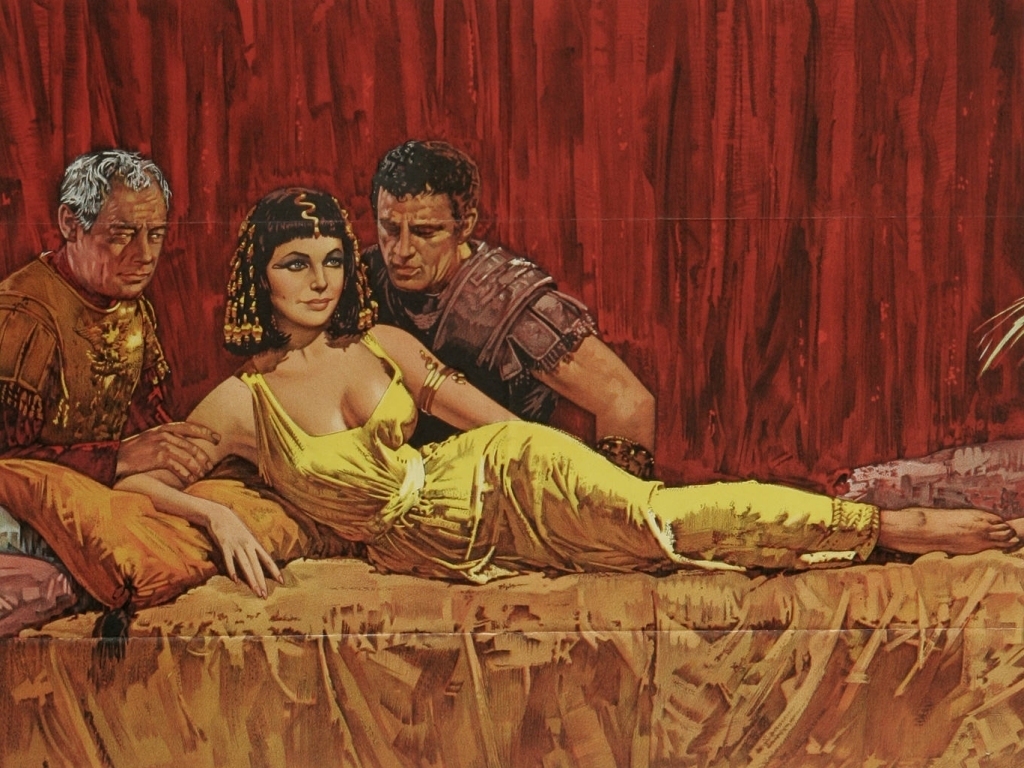
This Greek name means “glory of the father”, and is almost impossible for us to disassociate from the famous Queen of Egypt. From a dangerously inbred family of Macedonian Greek origin, she ruled Egypt alongside her father, and then her brothers (who were also her husbands), but then seized control and reigned alone for many years. She was able to align herself with Rome as both ally and lover to both Julius Caesar and Mark Antony, but after Mark Antony’s death, is said to have poisoned herself before she could be captured and humiliated. According to tradition, she killed herself with an asp. Her story captured the imagination of William Shakespeare, who based his play Antony and Cleopatra on the last part of her life, and her story has been made into several films, including the lavishly dreadful one starring Elizabeth Taylor and Richard Burton. Cleopatra is always depicted as a woman of great beauty, although early traditions suggest her attractiveness was based more on enormous charm and sex appeal. This ancient, glamorous name carries a lot of weight, but with short form Cleo becoming fashionable, some parents may wish for a long form of the name.

Elif

This Turkish name is after Alif, the first letter of the Arabic alphabet, and has connotations of “tall and slender”, as if the person is shaped like the letter, which is a long vertical line. It is pronounced ay-LEEF. You probably recall that Natalie Portman had a son named Aleph last year; Aleph is the Hebrew form of the same letter. The meaning of the letter goes back to the West Semitic word for “ox”, as the cuneiform originally represented the shape of an ox’s head. In Arabic, the word is connected via folk etymology to the word for “coy, tamed”, giving it a subtly demure feeling. It’s a common girl’s name in Turkey, and there are several Turkish celebrities with this name. There’s also a town in Turkey called Elif. I’m not sure a non-Turkish person would ever use it, but it’s certainly an attractive name that is easy enough for an English-speaker to understand and pronounce, once they’ve learned how it’s said.

Harlow

This name is inspired by Jean Harlow, a Hollywood superstar of the 1930s. With her platinum hair and vampish image, she was the forerunner to many blonde bombshells of the movies. Despite her beauty and success, Harlow’s life contained much tragedy, and she died of kidney failure while only in her twenties. Harlow took her mother’s maiden name as her stage name; her birth name was Harlean Carpenter. The surname Harlow is from several places in England. Harlow in Yorkshire means “hill of rocks” in Old English, while the meaning of Harlow in Essex is disputed. One theory is that it means “army hill”, with the idea being that local landmark Mulberry Hill was a meeting place for the local people. Another is that it means “temple mound”, as there is an Iron Age burial mound in the area which later had a Roman temple built on the site. Harlow is a unisex name, but more common for girls; the name came to public attention when Nicole Richie named her daughter Harlow in 2008. There were 20 babies named Harlow in Queensland last year, up from 12 the year before. Although numbers are still low, that’s a significant jump.

Pixie

This name is after the small mythological being of English folklore, tales of which come from Cornwall and Devon. They are usually depicted as small sprites who could be mischievous, but were often helpful to humans. A famous Australian with this name was the prolific illustrator and artist Pixie O’Harris (aunt of singer-artist Rolf Harris). Her real name was Rhona Olive Harris, but when she migrated to Australia from Wales she changed her name to Pixie because she was nicknamed “the Welsh pixie” on the boat over. A printer’s error changed her name from Pixie O. Harris to Pixie O’Harris, and she stuck with it as her pseudonym. Last year, businesswoman Roxy Jacenko named her new baby Pixie-Rose. I think some people will find the name Pixie adorably cute, and others impossibly twee; it’s bound to get some interesting reactions, and does have the fashionable X in it.

Sippie

The only person I know of named Sippie is the blues singer Sippie Wallace, who was born Beulah Thomas. Her career spanned seven decades, and although she found fame as a young woman in the 1920s, she was rediscovered in the 1960s and ’70s and was a big influence on Bonnie Raitt, who went on tour with her. Her album Sippie won the Blues Album of the Year in 1983, so her comeback was a definite success. The name Sippie is one that she gained in childhood because the gap in her teeth meant that she had to “sip” all her food and drink. Coincidentally, there is a place on the Gold Coast called Sippy Downs; its name is a corruption of an Aboriginal word meaning “winged creatures”, and interpreted as meaning “birds”. As Sippie Wallace was billed as “The Texas Nightingale”, I find this juxtaposition very charming. Sippie is an unusual name, but what a wonderful namesake. This would be very suitable for a family who loves music, especially jazz and blues.

Torah

In Australia, this name is well known as belonging to snowboarder Torah Bright, who won gold at the 2010 Winter Olympics. Her parents named her after the Torah, which is the Jewish word for the first five books of the Old Testament. The word is from the Hebrew, meaning “teaching, instruction”, however, Torah Bright’s mother believed that it meant “bearer of a great message”. Torah Bright is a member of the Church of Latter Day Saints (Mormon), and lives in Salt Lake City, Utah. There was slight disbelief at this name on The Baby Name Wizard, with a couple of people feeling that it seemed rather offensive, or at least strange. Torah’s name was reported on in Washington Jewish Week; there was no mention of it being offensive to Jews, but they did appear to find it slightly amusing. Like calling your child Bible or Gospel, many will find this name a head-scratcher. It would be given in honour of our Olympic champion, but the religious ramifications may be lost on some people. The fact that it sounds as if it could be short for Victoria is probably a help.

Zahlia

This name is pronounced ZAH-lee-uh, and as far as I’m aware, it’s a modern invention. It seems to be an elaboration of the name Zali; Zali Steggall is Australia’s most internationally successful alpine skier (now retired). Her name has proven a great success here, and spawned many variants, such as Zarly, Zahlee, Zalie etc. It’s unclear where the Stegalls got the name Zali from, and to the best of my knowledge, it’s made up. Zahlia does well in Australia, because it sounds rather exotic, while also being similar to popular names such as Zara and Tahlia (it even looks like a combination of those names). Despite being listed as a rare name, I have seen some parents dismiss Zahlia as being “too common”; perhaps it’s not rare enough to seem “unique”, or perhaps the many variants and sound-alike names make it appear to be one of the pack.

(Picture is from one of the posters for the 1963 movie Cleopatra)

Famous Name: Gunner

22 Wednesday Feb 2012

Posted by A.O. in Famous Names

≈ 8 Comments

Tags

dog names, english names, famous namesakes, military terms, scandinavian names, slang terms, stage names, vocabulary names

Sunday February 19 marked the 70th anniversary of the bombing of Darwin by the Japanese. Both the first and the single largest attack against Australia by a foreign power, it is often referred to as “Australia’s Pearl Harbor”. However, Darwin was bombed more heavily than Pearl Harbor, and almost 100 air raids were to follow. Numbers of the dead are disputed, but the official toll is just under 300, with maybe 300 to 400 injured. Amongst the casualties were men on the USS Peary, whose memorial President Obama visited in Darwin last year.

One of the lesser-known heroes of the Darwin air raids was a young black and white kelpie, who was found distressed and with a broken leg under a bombed mess hut on February 19 1942. He was taken to a field hospital, and immediately inducted into the Australian Air Force so that he could receive medical treatment. He was named Gunner, and given the serial number 0000.

Leading Aircraftman Percy Westcott, one of two men who found Gunner, became the dog’s master and handler. I think Gunner was just expected to be a pet and a mascot for the air base, and probably a much-needed distraction for the men. However, about a week after he came to live with them, Gunner began to demonstrate his remarkable hearing skills.

Time and time again, Gunner would whine and jump whenever he heard Japanese aircraft approaching. Long before the air raid siren sounded, Gunner would become agitated and head for shelter. He was able to warn Air Force personnel that the Japanese planes were coming up to 20 minutes before they appeared on the radar, and was so reliable that Percy was given permission to sound an alarm whenever Gunner gave his signal.

You’d think that living on an airbase, Gunner would soon get used to the sound of planes taking off and landing, but he only behaved like this when he heard Japanese planes – Allied ones didn’t faze him at all.

Gunner was accepted as a full member of the Air Force: he slept under Percy’s bunk, showered with the men, attended the movies with them, and regularly went up with pilots during practice flights.

Percy was posted to Melbourne 18 months later, and Gunner remained with the RAAF in Darwin, being cared for by the Air Force butcher, who had access to plenty of meat to feed Gunner. It’s not known what happened to Gunner when the war ended; I hope he lived a long happy life.

In the Air Force, the gunner is the person who operates the machine gun or cannon during air battles, although a Gunner is also any non-commissioned member of the air force in a Regiment. It’s often used as a slang term in several different ways, including in sport – for example, the word Gunner describes a certain specialist in gridiron, and the Gunners is a nickname for Arsenal Football Club. Gunners is also slang for a fans of the rock band Guns ‘n’ Roses.

Gunner has been used as a stage name in professional wrestling, such as by Gunner Scott (real name Brent Albright). It also sounds like the Scandinavian name Gunnar, which combines the elements for “war” and “warrior” together, to sound extra-warlike.

I’m not sure I would have suggested this as a possible baby name, except that I saw a baby called Gunner Phoenix in an Adelaide birth announcement last month.

I can see this as a wonderful way to honour a military connection in a family. Gunner sounds all boy … although according to some people, it sounds all dog! But we have established that the line between dog and human names has become increasingly blurred, and if you were going to give your baby the name of a dog, then what cooler canine than an Australian kelpie who became a wartime hero?

(Gunner’s story appears in the book Animal Heroes, by Anthony Hill. Photo of Gunner with Percy held by the Australian War Memorial)

Girls Names from Video Games

10 Sunday Apr 2011

Posted by A.O. in Name Themes and Lists

≈ 10 Comments

Tags

Arabic names, Australian name trends, celebrity baby names, code names, created names, dog names, english names, ethnonyms, famous namesakes, fictional namesakes, flower names, food names, French names, Greek names, hebrew names, Japanese names, locational names, mythological names, name history, name meaning, name popularity, names from movies, names from songs, names from video games, nature names, nicknames, Persian names, popular names, rare names, Russian names, saints names, scandinavian names, stage names, surname names, tree names, unisex names, vintage names, Welsh names, Yiddish names

This blog post was originally published on April 10 2011, and heavily edited and updated on April 16 2015.

Ayame
Ayame is a female ninja in the Tenchu series; she appears petite and feminine, but is possessed of a sharp tongue, and is a cunning and aggressive fighter. Her real name is Omon, so Ayame is her professional or code name. Ayame is the Japanese word for the iris flower. It is used as a girl’s name in Japan, and has a long history, for five generations of kabuki actors, beginning in the 17th century, adopted it as a stage name while playing female roles. The name has become a favourite for Japanese video games, anime, and manga. Pronounced ah-YAH-me, I have seen two girls in Australia with this name, and heard of another. The soft sound and floral meaning make this name an attractive choice which fits in with names like Aya and Ayla.

Coco
Coco is the smart, fearless younger sister of Crash Bandicoot in the Crash Bandicoot series, set in Australia. Coco is a nickname for any name with a CO sound in it, or given because of its similarity to the word cocoa. Its most famous namesake is French fashion designer Gabrielle “Coco” Chanel, who got her nickname from her days as a cabaret singer. It may have been an allusion to either one of her signature songs: Ko Ko Ri Ko (“Cock-a-doodle-doo”), or Qui qu’a vu Coco (“Who Has Seen Coco?” – Coco was a lost male dog). Another theory is that it was based on the French word coquette, used as a slang term for a kept woman or a mistress. Coco the Clown (born Nikolai Poliakoff) is one reminder of its use for males as well. Coco became a celebrity baby name when it was chosen by actress Courtney Cox for her daughter in 2004. Australian journalist Mia Freedman named her daughter Coco the next year, actress Diane Farr called one of her twin daughters Coco in 2008, and Tony Kanal from No Doubt welcomed a daughter with this name in 2011. This is a cute, flirty, yet stylish name that is still underused.

Elika
Prince of Persia is set in ancient Persia and inspired by the religion of Zoroastrianism. Elika is a runaway barefoot princess who must help the hero by systematically travelling the area, and magically healing particular sectors of ground called Fertile Lands; unfortunately each time she does this her life force becomes weaker. In appearance, Elika is beautiful with tousled dark chestnut hair, enigmatic hazel eyes, and a slender, fragile figure; her personality is guarded and serious. She is much greater than she appears, for she holds many secrets, and almost has the status of a demi-goddess. Elika is a name which is found in many different cultures, but I have seen the Persian name Elika translated as being derived from ela or ellka, the Sanskrit for “cardamon”, a fragrant spice tree. In the game Elikas’s name is pronounced ELL-eh-kuh, but eh-LAY-kuh is more traditional. This pretty name fits in with popular names like Ella and Layla, and is not too different from fashionable Elke.

Kairi
Kingdom Hearts is a collaboration between the makers of Final Fantasy and Disney, whereby Disney settings are crossed-over into a fictional universe, and characters from Final Fantasy interact with the player and popular Disney characters. Kairi is one of the hero’s best friends, and also one of the seven Princesses of Hearts – pure maidens whose hearts are free of all darkness. The name Kairi was invented for the game and according to creator Tetsuya Nomura, her name is derived from the Japanese word for “sea”, just as the other two main characters’ names mean “sky” and “land”. The name has become quite popular for use in use other Japanese video games, anime, and manga. It is pronounced KY-rhee, and is similar in sound to familiar names such as Kara, Kyra and Kylie. There is an Australian Aboriginal tribe called the Kairi, whose name has been given to a small town in Far North Queensland, so the name does not even have a particularly foreign sound to Australian ears. Kai can be used as a unisex nickname.

Lara
Lara Croft is the beautiful and intelligent heroine of the Tomb Raider series, an archaeologist travelling the world in search of adventure [pictured]. Lara is a Russian short form of Larissa. In Greek mythology, Larissa is a nymph, and it was also a common name for ancient Greek cities, as the name means “citadel”. Saint Larissa was a 4th century Goth who was martyred in the Crimea; her name is otherwise recorded as Baren or Beride. She is recognised as a saint in the Eastern Orthodox church, and the name Larissa is traditional in Russia and Slavic countries. The name Lara became known in the English-speaking world from Larissa, nicknamed Lara, in Boris Pasternak’s 1957 epic novel, Doctor Zhivago, which was banned in the Soviet Union but popular in the West. It was made into a successful Hollywood movie in 1965, with Julie Christie playing Lara; the piece Lara’s Theme from the film has become a favourite. Lara has charted in Australia since the 1960s, when the film was released, debuting at #337. It reached the Top 100 in the late 1990s, and peaked at #27 in 2002. In 2013 it was #54. Romantic and exotic, Lara is a softer alternative to names such as Laura, Laurel, and Lauren.

Rinoa
Rinoa Heartlilly is the main female character in Final Fantasy VIII, and the love interest of the hero. She is a cute friendly teenager who is member of a resistance faction seeking to liberate a small nation from occupation, and also has magical abilities which render her a “berserker” during warfare. Although it hasn’t been confirmed, game experts believe that the name Rinoa is supposed to be a Japanese rendition of Lenore, a short form of Eleanor. Lenore has a long history as a literary Gothic name, appearing in a Gothic German ballad as well as a poem by Edgar Allen Poe; it is possible that this dark side was intended as part of the character of Rinoa. As there is no spoken pronunciation of her name, you can say it however you like, but RINN-oh-uh seems to be the most commonly used. The nickname Noa gives this a unisex option.

Tira
Tira is a character in the Soulcalibur series. She is a very disturbed person who has been raised since childhood by a group of assassins, and has an uncontrollable urge to kill. A split personality, she has pledged herself to the powers of evil. Tira’s appearance reflects her madness, with rag-doll hair, tattered clothing and bizarre make-up. As her weapon of choice is a ring-blade which looks like a hula-hoop, she resembles a mental patient who has run away to join the circus. The name Tira is most likely an Anglicisation of the Scandinavian name Thyra, which means something like “strength of Thor”. It is pronounced TEE-ra, and people have told me that they love the sound of the name Thyra, but don’t like the look of it, or worry that others would pronounce it like TY-ra or THY-ra. The Tira spelling does solve that problem, and this name fits in well with Australian trends in girls names. I don’t know if it’s because of the video game (which is a slightly worrying thought), but I have seen and heard about quite a few babies called Tira. It seems to be popular to use it in a double name such as Tira-Lee or Tira-Rose.

Wynne
Wynne is a character in Dragon Age: Origins, a prominent mage and powerful spirit healer. Wise, dutiful and virtuous, she could have had a successful political career, but refuses power in order to fight demons and aid the innocent. A tall, handsome, middle-aged woman with an intelligent face, she takes a motherly role, and is blessed with common sense and a dry sense of humour. Wynne is a Welsh surname based on the male name Wyn, meaning “blessed, white, fair”. Although Wynne can be used for both sexes, it is often understood as a specifically feminine form of Wyn. It is the middle name of famous children’s fantasy author Diana Wynne Jones, which may have been a factor in the game makers choosing it. Simple and clean, this resembles the fashionable Winnie.

Zafina
Zafina is a character in the Tekken series who is born into an ancient bloodline which fights evil. The protector of a royal tomb, Zafina uses her spiritual powers to gain omens from the stars. Of Middle Eastern appearance, the game makers believe she is most likely Egyptian. Zafina is an Arabic name, which I have seen translated as “victorious, triumphant”. Pretty and usable, it makes an exotic alternative to Victoria, and sounds enough like familiar names such as Zara, Sophia and Seraphina to be easily accepted.

Zelda
The Legend of Zelda is the longest-running video game series so far. The eponymous Zelda is an elfin princess, usually slender and blonde with dark blue eyes, and often with magical powers. Zelda is a feminine form of the Yiddish name Selig, meaning “blessed, happy”, although it can be also be used as a short form of names such as Griselda. One of its most famous namesakes is Zelda Fitzgerald, wife and muse of American novelist F. Scott Fitzgerald. Beautiful, glamorous and daring, she was an icon of the Jazz Age, until her intensity and high spirits descended into obsession and mental illness. Zelda’s mother named her after characters in two romantic stories; in both of them, Zelda is a beautiful gypsy. The creator of The Legend of Zelda has said that Princess Zelda’s name was inspired by Zelda Fitzgerald. In turn, Princess Zelda has inspired a celebrity baby name, because actor Robin Williams named his daughter Zelda in 1989 because of his love for the video game series. Zelda can be found in Australian records in the late 19th and early 20th centuries, and this is a zippy vintage name that feels clunky cool and fit for a princess.

POLL RESULTS
People’s favourite names were Lara, Zelda, and Wynne, and their least favourites were Elika, Tira, and Rinoa.

Newer posts →

Enter your email address to follow this blog

Categories

Archives

Recent Comments

A.O.'s avatarwaltzingmorethanmati… on Zarah Zaynab and Wolfgang…
Madelyn's avatarMadelyn on Zarah Zaynab and Wolfgang…
JD's avatardrperegrine on Can Phoebe Complete This …
A.O.'s avatarwaltzingmorethanmati… on Rua and Rhoa
redrover23's avatarredrover23 on Rua and Rhoa

Blogroll

  • Appellation Mountain
  • Baby Name Pondering
  • Babynamelover's Blog
  • British Baby Names
  • Clare's Name News
  • For Real Baby Names
  • Geek Baby Names
  • Name Candy
  • Nameberry
  • Nancy's Baby Names
  • Ren's Baby Name Blog
  • Sancta Nomina
  • Swistle: Baby Names
  • The Art of Naming
  • The Baby Name Wizard
  • The Beauty of Names
  • Tulip By Any Name

RSS Feed

  • RSS - Posts

RSS Posts

  • Celebrity Baby News: Melanie Vallejo and Matt Kingston
  • Names from the TV Show “Cleverman”
  • Can Phoebe Complete This Sibset?
  • Zarah Zaynab and Wolfgang Winter
  • Baby, How Did You Get That Name?
  • Celebrity Baby News: Media Babies
  • Celebrity Baby News: Adelaide Crows Babies
  • Celebrity Baby News: Chris and Rebecca Judd
  • Names at Work: Name News From the World of Business and Employment
  • Celebrity Baby News: Sporting Round Up

Currently Popular

  • Celebrity Baby News: Jacinta Allan and Yorick Piper
  • Celebrity Baby News: Jacinta Allan and Yorick Piper
  • Celebrity Baby News: Josh and Amie Frydenberg
  • The Top 100 Names of the 1940s in New South Wales
  • Rare Boys Names From the 1950s

Tags

celebrity baby names celebrity sibsets english names famous namesakes fictional namesakes honouring locational names middle names name combinations name history name meaning name popularity name trends nicknames popular names saints names sibsets surname names twin sets unisex names

Create a free website or blog at WordPress.com.

Privacy & Cookies: This site uses cookies. By continuing to use this website, you agree to their use.
To find out more, including how to control cookies, see here: Cookie Policy
  • Subscribe Subscribed
    • Waltzing More Than Matilda
    • Join 517 other subscribers
    • Already have a WordPress.com account? Log in now.
    • Waltzing More Than Matilda
    • Subscribe Subscribed
    • Sign up
    • Log in
    • Report this content
    • View site in Reader
    • Manage subscriptions
    • Collapse this bar
 

Loading Comments...