• About
  • Best Baby Names
  • Celebrity Baby Names
  • Celebrity Baby Names – Current
  • Celebrity Baby Names – Past
  • Featured Boys Names
  • Featured Girls Names
  • Featured Unisex Names
  • Links to Name Data
  • Waltzing on the Web

Waltzing More Than Matilda

~ Names with an Australian Bias of Democratic Temper

Waltzing More Than Matilda

Tag Archives: saints names

Famous Name: Jasper

07 Wednesday Jan 2015

Posted by A.O. in Famous Names

≈ 5 Comments

Tags

American slang terms, Banjo Paterson, Chaldean names, Christmas names, english names, English slang terms, European name popularity, gemstone names, locational names, name history, name meaning, name popularity, New Zealand, Pashto names, popular names, royal names, saints names, unisex names, William Shakespeare

1024px-Edward_Burne-Jones_-_The_Adoration_of_the_Magi_-_Google_Art_Project

Name Story
Yesterday was Epiphany, which commemorates the Adoration of the Magi in western Christianity. According to The Gospel of Matthew, the magi were learned men from the East who followed a mysterious star to kneel before the baby Jesus, bearing gifts of gold, frankincense, and myrrh.

Although the Bible does not specify a number, it is usually assumed there were three, because there were three gifts. The Magi were Zoroastrian priests from Persia, and the word magi has been traditionally translated as “wise men”, although modern translations of the Bible use the word “astrologers”, as Zoroastrians studied the stars.

Christian legend sometimes calls them the “three kings”, due to a Psalm which says May all kings fall before him. In some countries, January 6 is known as the Feast of Kings, and it is most famous from the Epiphany carol, We Three Kings of Orient Are.

The date of January 6 is purely symbolic – the Magi are supposed to have arrived some time in the two years after the birth of Jesus, and although they are often included in Nativity scenes, the Bible says they visited Mary at her house, not in the stable. Tradition says that after the Magi returned home, they became Christians and were martyred: they are thus regarded as saints.

The Bible being so short on details, legend has filled in the blanks with imaginative flair. The Magi are given names, usually said to be Gaspar, Melchior, and Balthasar. Gaspar is identified as a middle-aged brown-skinned Indian who brings the frankincense; Melchior as an elderly white-skinned Persian who carries the gold; and Balthasar as a young black-skinned Arabian who bears the gift of myrrh.

Perhaps you think it is far-fetched that a group of men would cross the desert (a difficult journey of many months) in order to worship a foreigner of a religion that isn’t even theirs. However, history records that it did happen, at least once.

King Tiridates of Armenia, a Zoroastrian priest of Armenian, Greek, and Persian ancestry, travelled to Rome in 66 AD on a visit to the Emperor Nero with a huge retinue of followers, including his magi. As his tribute king, Tiridates knelt before Nero, proclaiming that he worshipped him as a god (this was mere diplomacy; Tiribates was apparently disgusted by Nero). Unlike the Bible story, it was Nero who gave gifts to Tiridates, and paid for all his travel expenses.

It has been suggested that this state visit may have provided the inspiration for the Adoration of the Magi in the Gospel of Matthew. However, it’s also evidence that the journey of the Magi as described in the Bible has some degree of plausibility.

Epiphany is the traditional date for the end of the Twelve Days of Christmas, and in the past, its eve was celebrated as Twelfth Night, with much feasting and tomfoolery. William Shakespeare wrote his comedy Twelfth Night as an entertainment for the end of the Christmas season: its theme of cross-dressing is appropriate, for it was the rule that everything had to be topsy-turvy. If you went to a Christmas pantomime, you’ll know this tradition continues.

Most people say your Christmas decorations have to come down by Epiphany, and many people will go back to work by this date. I’m not back at work yet – but I am back at blogging! Hope you had a great Christmas and New Year.

Name Meaning, History and Popularity
Jasper is the English form of Gaspar, derived from the ancient Chaldean word gizbar, meaning “treasurer”; the modern Hebrew word for treasurer is still gizbar. These days the word treasurer doesn’t sound too glamorous (if you’ve ever been treasurer of your local tennis club or something, you’ll know it’s essentially a boring, thankless job), so the name is sometimes translated as “master of the treasure house”.

The traditional names for the three Magi date back to at least the 6th century, and Gaspar is the only one whose name may be inspired by a real person. The apocryphal Acts of Thomas mentions a Zoroastrian king named Gudnaphar, and Gondophares was a traditional name and title in the House of Suren – they were kings of Iranian background who ruled in the area around northern India.

According to tradition, Saint Thomas the Apostle travelled to India as a missionary. Gondophares was identified in medieval texts as the Indian king who brought incense to the baby Jesus as one of the Magi, and was converted to Christianity by Saint Thomas. Gondophares is the Greek form of the Pashto name Gandapur, meaning “may he find glory”.

Jasper is also the word for a gemstone which is usually red, yellow, brown or green in colour. The word comes from the Old French for “spotted stone, speckled stone”, and may be Semitic in origin. It was a favourite gemstone in ancient times, especially the green variety, although the ancients probably called many different minerals “jasper”; it is mentioned in the Bible. Because of the gemstone, Jasper has occasionally been used as a name for girls.

Jasper has been used as an English name since the Middle Ages, in honour of the saint, although it was never highly popular. It has also been used as a slang term – in England, it is an old country term for a wasp (because it sounds a bit similar), and in America, it has been used as slang for a simpleton or hick (perhaps because it sounded a backwoodsy sort of name there).

There is a Lake Jasper in south-west Western Australia; it has very clear fresh water and is popular for picnics. It’s named in honour of Jasper Bussell, who died in infacy, and was the brother of the famous Grace Bussell, who we met earlier. Its use by the wealthy and prominent Bussells suggests a rather upper class image in the 19th century.

There is also a small village in the mountains of New South Wales named Wee Jasper, where Banjo Paterson once had a country home. Folklore relates the village got its name due a Scottish settler who came home with a “wee jasper” in his pocket, the gemstone found in some stream amongst the hills.

Jasper has ranked in Australia since the 1990s, when it debuted at #237. It joined the Top 100 in 2009, at #98, and since then has remained around the bottom of the Top 100. Currently it is #82 nationally, #87 in New South Wales, #77 in Victoria, #87 in Queensland, #22 in Tasmania, and #80 in the Australian Capital Territory.

In the English-speaking world, Jasper is most popular in Australia, as it is not yet Top 100 in the US or UK, although rising, and has just joined the New Zealand Top 100 at #85. It isn’t popular in many other countries, but ranks highest in Belgium, at #55.

Jasper is a handsome and sophisticated choice related to gifts, gems, and treasure that will please many parents for not being overused. It isn’t highly popular anywhere in the world, and in Australia has never been higher than the bottom quarter of the Top 100; nor does it show signs of rising alarmingly. The name has its detractors, due to some image problems from popular culture, but no doubt that’s one of the factors keeping use down. I think it helps make Jasper seem a bit quirkier.

And the name commemorates one of the most beautiful Christmas stories – who could resist the magic of a star guiding your way?

POLL RESULTS
Jasper received an excellent approval rating of 89%, making it the most highly-rated boy’s name in the Famous Name category for 2015. People saw the name Jasper as hip and quirky (29%), handsome or cute (22%), and cool and sophisticated (19%). However, 3% thought the name seemed creepy and evil. Only one person thought Jasper was too old-fashioned, and just one thought it was too posh.

(Picture shows The Adoration of the Magi, an 1890 tapestry by Edward Burne-Jones)
Famous Name: Ava

17 Wednesday Dec 2014

Posted by A.O. in Famous Names

≈ 3 Comments

Tags

celebrity baby names, english names, famous namesakes, germanic names, modern classics, name history, name meaning, name popularity, name trends, Persian names, royal names, saints names, US name popularity

Poster - On the Beach (1959)_11

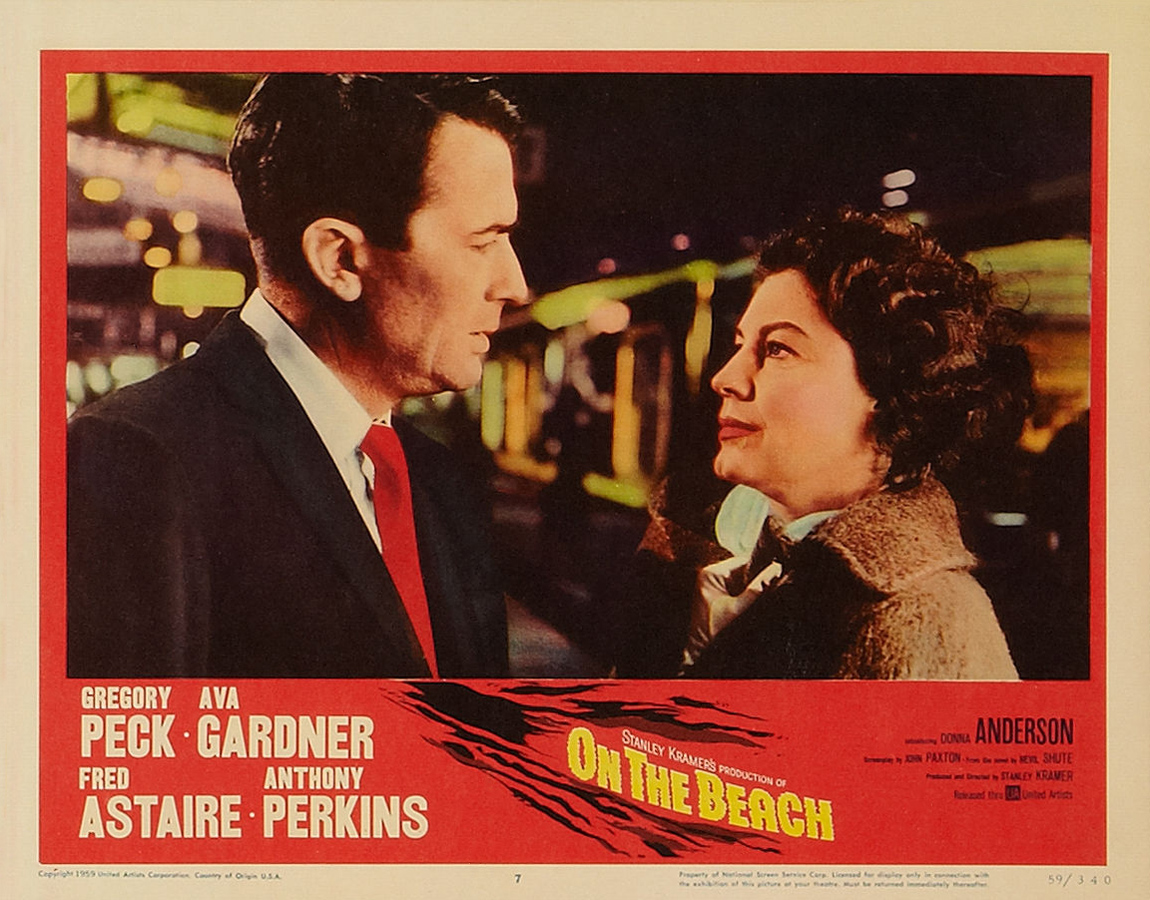
Today is the 55th anniversary of the release of Stanley Kramer’s On the Beach, starring Ava Gardner and Gregory Peck. Based on the novel by Nevil Shute, the film depicts the aftermath of a nuclear war, set in the near-future of the 1960s. With most of the world’s population dead, the film centres on a small group of people in Melbourne waiting for the lethal fallout to reach them.

Most of On the Beach was filmed on location, and a piece of local folklore is that Ava Gardner described Melbourne as “the perfect place to make a film about the end of the world”. Melbourne was a quiet little place in the 1950s, the first day of filming was abominably hot, and the media was horrible to Ava Gardner, so you could forgive her for being a bit grumpy. However, the quote was actually invented by a Sydney journalist with his tongue in cheek – whatever Ms Gardner’s thoughts about Melbourne, she was too professional to broadcast them publicly.

On the Beach made a financial loss, but was praised by critics, and has become a (slightly neglected) classic. The film created a ruckus in Melbourne, which went so crazy over seeing big Hollywood stars in their little city that they positively frightened most of the cast. Even the Australians cast as extras were mobbed as if they were A-listers. The film’s grim message was considered so traumatic that the Salvation Army, who play a small but significant role in the film, were on hand to provide counselling to people in cinemas.

Another of the film’s achievements was to bring attention to Waltzing Matilda, which is used to great effect during the closing scenes of On the Beach. It also opens the film, used to immediately signify an Australian setting. Waltzing Matilda became more popular after the film – not just in Australia, but overseas as well.

I read On the Beach as a young teenager, and found the story utterly compelling because for once the scenes of horror are set in Australia. The book has sometimes been criticised for showing the end of the world happening so quietly, and the characters going about their daily lives as calmly as possible. But I thought it made the story far more chilling, and far more real; many years later, the story is still vivid in my memory.

Ava was a medieval girl’s name, pronounced AH-vuh. It seems to have been a feminine form of the Germanic name Avo, originally a short form of names starting with Avi-. The meaning of it is much debated, but with no agreement reached. One theory is that it meant “desired”, to indicate a long wished-for child, but other ideas are that it came from aval, meaning “strength, power”, or from alfi, meaning “elf”.

In Norman English, the name produced Aveline, which evolved into Evelina, and is the basis for the surname Evelyn, also used as a first name. Another variant was Avis or Avice, which although it looks like the Latin for “bird”, is an elaboration of Ava. Av- names were quite fashionable in medieval times, thanks to Ava.

Two famous medieval Avas are Saint Ava, a Frankish princess who became a nun after being miraculously cured of blindness, and Ava of Melk, an anchorite and religious poet who was the first known female writer in the German language.

While Ava is still said AH-vuh in Germany and most European countries, in modern English it is usually pronounced AY-vuh. Some people see AY-vuh as a modern continuation of the medieval AH-vuh, while others see it as a completely separate modern English name, perhaps a variant of Eva.

While Ava may well have been understood as a form of Eva by some English-speakers, in continental Europe Ava was often understood as related to the Latin word Ave (said AH-veh), meaning “hail, greeting”, as in Ave Maria, or to similar words and names in modern languages. If we discount the English Ava (AY-vuh) on those grounds, then the European Ava (AH-vuh) must also be brought into question.

I don’t think it’s any coincidence that Ava has historically been more common in the United States than other English-speaking countries, because America has had significant immigration from Germany and Scandinavia. You could see the English pronunciation of Ava as the American pronunciation of the name. You’ve probably noticed that Americans tend to pronounce AY sounds rather than AH ones – for example, they often say the name Dana as DAY-nuh instead of DAH-nuh.

Just to add another layer, Ava is also a common Persian name for girls, meaning “voice, sound, call”, and said AH-vuh, making this a very multicultural name.

The name Ava was popularised in the United States in the 19th century by the Philadelphia socialite Ava Lowle Willing, who married John Astor IV (called Jack), from the prominent Astor family. They named their daughter Ava Alice Muriel Astor (born 1902), making this an early celebrity baby name. The Astors divorced, and not long after, Jack Astor was drowned during the Titanic disaster, making him the richest person to sail on the Titanic, and probably the richest person in the world at the time.

Ava Alice Muriel Astor married Prince Serge Obolensky (an admirer of Australian beauty Sheila Chisholm, and her husband’s cousin), and their wedding was the social event of the London season. Ava Astor went on to divorce and marry several more times in both England and the United States; pretty, supremely wealthy, and a patron of the arts, her name was well known on both sides of the Atlantic.

The actress Ava Gardner was born at the end of 1922, not long after Ava Astor had been photographed visiting Tutankhamen’s tomb in Egypt with her fiancé, Prince Obolensky. Unlike many other film stars, Ava Gardner never had to change her name to something more screen-worthy: it was already perfect – glamorous, fashionable, upper-class sounding, and not too common.

Ava Gardner’s film career did not make Ava a popular name in her lifetime. Continuously on the US Top 1000 since the late 19th century, and #751 in 1941 when Gardner first began getting parts in films, it peaked at #376 during the 1950s, at the height of Gardner’s success.

Ava left the US Top 1000 during the 1970s, when Gardner’s career had waned, but returned in the 1980s, after Ava Gardner suffered two strokes and became bedridden. Her serious health problems were widely publicised, putting her name back in the news, and no doubt there was genuine shock and sympathy for the Hollywood star’s condition.

The name Ava began rising after Ava Gardner’s death in 1990, and its popularity was further hastened by celebrities choosing it as a baby name, including Aidan Quinn, Heather Locklear, and Reese Witherspoon – in the last case at least, as a conscious tribute to the late Ava Gardner.

In Australia, the name Ava first ranked in the 1990s at #465, and rose so rapidly that it was in the Top 100 by 2003, debuting at #70. Bad luck to all those parents who called their baby girl Ava in the 1990s because they saw it an an underused name! Or maybe good luck that they jumped on the trend nice and early.

In 2005, Ava made a massive leap forward to #22, as this was the same year Hugh Jackman and his wife Deborra-Lee Furness welcomed their daughter Ava. In 2011 the name Ava joined the Top 10 at #9, the year after Lleyton Hewitt and Bec Cartright welcomed their youngest daughter and named her Ava.

Currently Ava is #3 nationally, #8 in New South Wales, #2 in Victoria, #8 in Queensland, #3 in Western Australia, #17 in Tasmania, #17 in the Northern Territory, and #2 in the Australian Capital Territory. It was one of the fastest-rising names at Baby Center Australia last year.

Ava is highly popular throughout the English-speaking world, being a Top 10 name in the United States, Canada, England/Wales, Ireland, Scotland, and New Zealand. However, it is slightly more popular in Australia than anywhere else, and has so far peaked higher here than in any other country.

Yes, Ava is very popular – so much so that some parents may be wary of choosing it. But it is also boosting the fortunes of other names, such as sound-alikes Ada, Avery, Aria, Arya and Ayla, and has risen in tandem with Eva, Evie, Evelyn and Ivy.

This modern classic has been very influential on contemporary girls’ name trends. Maybe you won’t use Ava because it is too popular, but you might use one of her style-sisters, like Isla or Maeve. Or perhaps something unusual like Alba, Avalon, Avril or Aveley now seems like a good choice, or an older name like Ida or Maida no longer seems fusty, but pretty and fresh.

The power of Ava is such that we will be hearing her echoes for many, many years to come.

POLL RESULTS
Ava received a respectable approval rating of 64%. 25% of people saw it as simple and elegant, but 19% thought it was too popular. Nobody thought the name Ava was ugly or tacky.

Interesting Boys Names from the 2014 Birth Announcements

07 Sunday Dec 2014

Posted by A.O. in Name Themes and Lists

≈ 1 Comment

Tags

Anglo-Saxon names, Arabic names, Biblical names, birth notices, car names, celebrity baby names, english names, famous namesakes, fictional namesakes, Gaelic names, Greek names, hebrew names, Irish names, Japanese names, locational names, mythological names, name history, name meaning, name trends, names of herbs, names of horses, nature names, nicknames, Old English names, Old Norse names, Oscan names, Pictish names, plant names, rare names, regnal names, Roman names, royal names, saints names, Scottish names, surname names, Swedish names, unisex names

old

Do you worry there are no interesting names left for boys, or that only girls can have unusual names? Not so! For the final list of the year, here are a dozen rare names for boys that were recently used for real babies by Australian parents. 

Arion
In Greek mythology, Arion was an immortal talking horse who was the son of the sea god Poseidon, known for being extremely swift. The horse is referenced in the Percy Jackson fantasy series, and the Mistubishi Starion is meant to be a cross between star and Arion. There was a real person named Arion in Greek history – a famous poet and singer. However, even he became legend, as a folk tale sprung up that he had been kidnapped by pirates and miraculously rescued by dolphins, who were attracted by his beautiful singing and carried him safely to shore on their backs. The name may be from the Greek for “braver”, and is pronounced AR-ee-on. This name fits in well with the trend for AR names, has fashionable Ari as the nickname, and sounds similar to Aryan and Orion.

Basil
From the Greek name Basileios, meaning “king”. Saint Basil the Great was a 4th century bishop and one of the fathers of early Christianity. A great theologian and preacher, he cared for the poor and was one of the founders of monasticism. Recognised as a Doctor of the Church, in Greek tradition he brings gifts to children on New Year’s Day, making him an eastern version of Santa Claus. A common name in the east, there are numerous other saints named Basil (including Basil the Great’s father), and a few Byzantine rulers. Brought to Britain by the Crusaders, we often think of Basil as a particularly “English” name, thanks to actor Basil Rathbone, who played Sherlock Holmes, Basil Fawlty, and Basil Brush, and it has a rather old-school gentlemanly feel. The herb basil has the same meaning as the Greek name. Basil is also an Arabic name meaning “valiant, courageous”, so this would be an unexpected cross-cultural choice with the Australian nickname Baz or Bazza.

Cassius
Roman family name. The Cassii were of great antiquity, and said to be one of the noblest families in Rome; the Via Cassia in the city is named after them. They seem to have been from southern Italy, where they owned large estates, and their name may not be Latin in origin, but Oscan; the meaning of Cassius is probably not traceable. One of the best known of the family is the Cassius who instigated the plot to assassinate Julius Caesar. Famously, William Shakespeare writes of him as having “a lean and hungry look” in his tragedy Julius Caesar, while in Dante’s Inferno, he is chewed by Satan in the centre of Hell, alongside Judas Iscariot. Despite this, the name came to be associated with those who stood up to tyranny and injustice. There are two saints of the name – Cassius of Clermont, and Cassius of Narnia (are you able to resist a saint of Narnia?). The name is strongly associated with boxer Muhammad Ali, who was named Cassius Clay after his father, and his father was named in turn after a politician who worked for the abolition of slavery. Depending on how you pronounce it, you can use either Cass or Cash as the nickname, both of which are on trend.

Fenris
Norse mythology tells of a monstrous wolf who is the son of Loki and a giantess; Odin raised the wolf himself, but the gods kept him bound in fear of his power. It is foretold that at the end of the world, one of this wolf’s sons will swallow the sun, and the other swallow the moon. All fetters will break, and the great wolf will go free, with flames burning from his eyes and nose. In a great battle, he will swallow the god Odin, killing him, but Odin’s son will in turn slay the wolf. The wolf is called Fenrir, meaning “fen-dweller” (a fen is a type of wetland), or Fenrisúlfr, translated into English as Fenris Wolf. Fenris has appeared as a character in comic books and video games, and in fantasy novels such as Arthur Quinn and the Fenris Wolf. Norse mythology names are in fashion at present, and this one is very cool.

Fyfe
Scottish surname after the historic kingdom of Fife, on a peninsula in east Scotland between the Firth of Tay and the Firth of Forth. The region is one of the country’s historic counties, and is the location of St. Andrews. Once a Pictish stronghold, Fife became a politically important area, and until the 15th century, the Earl of Fife was the highest peer in Scotland, and had the privilege of crowning the nation’s monarchs. The meaning of Fife is not known – it was originally Fib, and according to legend, Fib was one of the sons of the founder of the Picts. The name Fyfe has nothing to do with the flute known as a fife, which comes from the German for “pipe”, although this does give it a rather musical feel. Known in Australia as the surname of AFL footballer Nat Fyfe, and cartoonist Andrew Fyfe, this is a handsome Scottish choice with plenty of history.

Joachim
From the Latinised form of Yehoyaqim, a Hebrew name meaning “established by Yahweh”. In the Old Testament, there was a king of Judah with this name, and his name is transliterated as Jehoiakim; it seems to be a throne name, because he was named Eliakim by his parents. According to early Christian tradition, Joachim was the name of the Virgin Mary’s father, and he is venerated as a saint in Christianity and honoured in Islam under the name Imran. Legend states that Joachim was a wealthy, pious man married to a woman named Anne; although they loved each other dearly, they were unhappy at their childless state, believing it to be a sign of God’s displeasure. At the climax of their story, an angel tells Anne that she is pregnant, and that her child will be known throughout the world. Anne joyfully rushes to meet her husband, embracing him at the city gate to tell him the glad tidings. The name Joachim has been more common in continental Europe than in English-speaking countries, and was used amongst royalty: a contemporary example is Prince Joachim of Denmark, the younger brother of Crown Prince Frederik. Strong and distinctive, this has familiar Joe as the obvious nickname.

Lazarus
From the Greek form of Eleazar, a Hebrew name meaning “God is my help”. In the New Testament, Lazarus of Bethany was the brother of Martha and Mary, and one of the followers of Jesus. He was famously brought to life by Jesus, four days after his death, and his story contains the shortest and perhaps most quoted sentence in the Bible: “Jesus wept”. This is the biggest miracle performed by Jesus in the New Testament, and one which leads directly to his own death and resurrection, which Lazarus foreshadows. Lazarus is regarded as a saint, and according to Christian tradition, he lived another thirty years after his raising, and never smiled again. Jesus also told a parable about a beggar covered in sores named Lazarus, and because of this, the name Lazarus became associated with the care of those with leprosy, with leper hospitals called lazar houses. It’s currently in the news as the surname of Glenn Lazarus or “the brick with eyes”, rugby league star turned senator. A name that embodies a spectacular miracle of hope, Lazarus is an eye-catching choice that fits in with current trends, and has Laz, Lazar, and Lazy as nicknames.

Makoto
Japanese name meaning “truth, faith, sincerity”, and pronounced mah-ko-to. It is unisex, but more common for boys. Makoto is often used in Japanese video games and manga, so may be reasonably familiar to some English-speakers. It’s an attractive boy’s name with a very positive meaning and easy to pronounce; exotic but not too strange. The baby I saw in a birth notice had Mako as his nickname; if this sounds similar to Marco, it would make the name seem like an appealing cross-cultural name choice.

Riordan
Anglicised form of the Irish surname O’Rioghbhardain, meaning “son of Rioghbhardan”. Rioghbhardan is a Gaelic byname meaning “royal bard”. Poets and singers were held in high regard in ancient Irish society; they were not mere entertainers, but also historians, scholars and advisers to the king. The O’Riordans came from Tipperary, and are strongly associated with Cork. Ballyrearden in Cork is named for them. The surname has recently become well known because of American novelist Rick Riordan, author of the Percy Jackson fantasy series, and others. Riordan is pronounced REER-dun, or REE-uh-dun, but the surname has taken on such a variety of pronunciations, like ROAR-den, ROY-uh-dun and RYE-uh-dun, that you might feel free to say it in almost any way you like. Rio could be used as the nickname.

Royce
English surname derived from Royse, a medieval form of Rose; it is thus one of those rare surnames taken from a female name rather than a male one, and could honour someone named Rose . The name is strongly associated with the luxury car brand Rolls-Royce, co-founded by English engineer Sir Frederick Royce. A famous Australian namesake is botanist Robert Royce, for whom the genus of shrubs Roycea is named. There are several famous sporting Royces in Australia, including former AFL star Royce Hart, who played for Richmond in the 1960s and ’70s. Roy names are bang on trend at the moment, and if you’re one of those people who get all het up about girls with masculine surnames like Addison and Mackenzie, here’s your chance to even the score slightly.

Stellan
Swedish name of obscure origin. The first known person with the name came to Sweden from Germany in the 16th century, so it may be from the German language, yet the name is not used in Germany, which casts doubt on that theory. It isn’t a particularly common name in Sweden, but has become known here because of Swedish actor Stellan Skarsgård, who has been in such films as Good Will Hunting, The Girl With the Dragon Tattoo, and Thor. Stellan became a celebrity baby name when actors Paul Bettany and Jennifer Connolly named their son Stellan after their friend Stellan Skarsgård. This is a handsome heritage choice which sounds to English-speakers like a masculine form of Stella, and so may be understood as having the same meaning – “star”.

Wulfric
Anglo-Saxon name meaning “wolf power, wolf ruler”, and pronounced with the first syllable to sound like the word wolf. Wolves were numerous in Anglo-Saxon times, and it’s not surprising that wulf was a common element in Old English names. The Anglo-Saxons saw the wolf as a symbol of warrior strength, and in stories wolves were protectors of the god Woden, and of royalty. The gloriously named Wulfric Spot was chief councillor to King Ethelred the Unready; his mother was a noble lady named Wulfrun, and the city of Wolverhampton is said to be named after her. Saint Wulfric of Haselbury was a 12th century hermit who managed to wield quite a bit of influence as a prophet and healer even over royalty; he correctly predicted the death of Henry I. Despite these interesting namesakes, Wulfric is a name more common in fiction than real life, and you may know it as one of the middle names of the wizard Albus Dumbledore in Harry Potter. An English name with plenty of history but little contemporary use, this fits in well with the current fashion for animal names. Despite its ferocious meaning, it seems eccentric and lovable to me.

POLL RESULTS
The public’s favourite names were Stellan, Cassius and Riordan, and their least favourite were Joachim, Royce and Makoto.

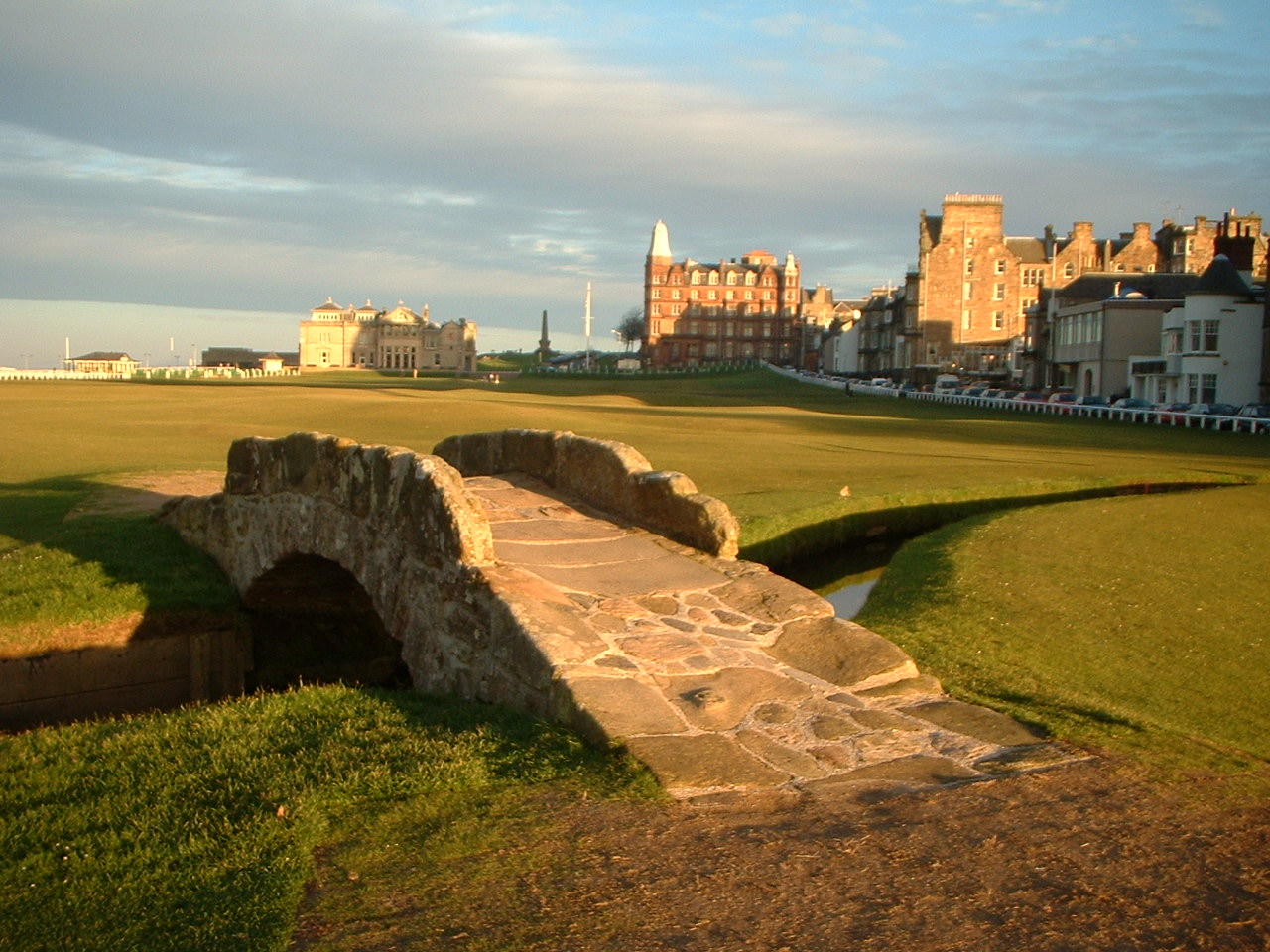
(Photo shows St Andrews golf course in Fife, recognised as the home of golf)

Interesting Girls Names From the 2014 Birth Announcements

30 Sunday Nov 2014

Posted by A.O. in Name Themes and Lists

≈ 2 Comments

Tags

Arabic names, Biblical names, birth notices, celebrity baby names, controversial names, Disney names, epithets and titles, famous namesakes, fictional namesakes, flower names, French names, German names, germanic names, Greek names, hebrew names, Indian names, Latin American names, Latin names, locational names, mythological names, name history, name meaning, names from ballet, names from films, names of businesses, names of cocktails, nature names, nicknames, plant names, rare names, Roman names, saints names, Sanskrit names, Spanish names, surname names, unisex names, yoga names

ArtworkGraphic19PurpleRobe

I’m always on the look-out for unusual names in the birth notices, and here are a dozen that are little used, but have intriguing histories. If you are looking for a rare yet genuine name, but fear choosing something too strange, you can take heart that these names have all been recently used by real life Australian parents.

Anjali
Sanskrit name meaning “divine offering”, from the word anj, meaning “to honour, to celebrate”. The Añjali Mudrā is a gesture of respect used in India as a greeting, where the palms join over the heart. If you go to yoga classes, you may greet each other with an Añjali Mudrā; it’s also part of several yoga positions. Anjali is quite a common name in India, and you may know the name as that of the wife of Indian cricket star, Sachin Tendulkar. A pretty Indian name that works very well in English-speaking countries, it is usually pronounced UN-juh-lee, although English-speakers may prefer an-JAH-lee.

Cataleya
Latin American form of cattleya, a type of South American tropical orchid with large, showy flowers. The orchid is named after English horticulturist William Cattley, who was the first European to successfully bring one into bloom. His surname comes from Catley in Herefordshire, meaning “wildcat wood”. Readers of Marcel Proust may recall that in Swann’s Way, the courtesan Odette wore a cattleya as decoration on her gown one evening, and her lover Swann removed it for her. As one thing led to another, they used cattleya as a private word between them for lovemaking. Cataleya was the highest-rising girls’ name in the United States last year, rocketing into the Top 500 from nowhere. The reason is the 2011 action film Colombiana, where the heroine is the assassin Cataleya, who leaves a cattleya as her calling card. Exotic and with a tough girl namesake, it is pronounced kah-tah-LAY-uh.

Damaris
In the New Testament, a woman named Damaris is mentioned as a convert of Saint Paul in Athens. Very little is known about her, although it is assumed she was a woman of high social status, but she is recognised as a saint in the Orthodox faith, and there is a street named after her in Athens. Her name is a matter of debate: the most popular theory is that is from the Greek word damalis, which literally means “heifer”, but is understood as “young girl”. Another is that it is derived from damar, the Greek word for “wife”. Once fashionable in 17th century England, this is a little-used biblical name that has gained modern glamour by American swimsuit model Damaris Lewis. The name is pronounced DAM-uh-ris.

Esperanza
Spanish form of the Latin name Sperantia, meaning “to hope”; esperanza is the Spanish vocabulary word for “hope”. The name got some publicity in 2010 because of Campamento Esperanza (“Camp Hope”), set up in Chile by friends and relatives after a cave-in at a mine; many weeks later their prayers were answered when all 33 miners were rescued. The following year, jazz singer Esperanza Spalding was named Best New Artist at the Grammy Awards. The name also has a motherly vibe, for Esperanza is the wife of Zorro, and mother of his beloved daughter Elena in The Mask of Zorro, while the mare who gives birth to the stallion Spirit in the animated movie is named Esperanza. Another famous mum is Oscar Wilde’s mother, who wrote under the pen name Speranza. Esperanza is a cool name that’s unusual, but not unfamiliar.

Farrah
Variant of Farah, a unisex Arabic name meaning “joy”. The name is well known because of the glamorous 1970s actress Farrah Fawcett, who passed away a few years ago. Farrah Fawcett posed for an iconic photograph wearing a red Speedo swimsuit, so there is an Australian connection to her. More recently, Farrah King from the hip hop outfit Cherish has given it fresh publicity. Soft and pretty, Farrah is an Arabic name which works well cross-culturally.

Fauve
Modern French name, which is pronounced to rhyme with the word mauve. Fauve literally means “wild beast” in French, referring to beasts of prey, and especially the big cats, such as lions and tigers. The word has a very artistic heritage, because in the early twentieth century, les Fauves were a group of modern artists who were known for their bold use of bright colours; they got their name because their work was criticised as looking like something a wild beast would produce. Henri Matisse is one of the most famous of this group. However, fauve has another meaning in French, and that is “yellowish-brown” – a tawny lion colour which would suit someone with dark blonde hair. Fauve is an uncommon name in France, and a rare one here, although not unheard of. It’s very daring, but also on trend.

Jerusha
In the Old Testament, Jerusha was the daughter of a high priest, and a queen of Judah, the wife of King Uzziah. Uzziah was considered one of the greatest rulers of the kingdom, but he became too proud, and began to usurp the role of the priests. Struck down with a disfiguring skin disease, he was replaced by his son Jotham, who is listed as one of the ancestors of Jesus in the New Testament. The name means “possession” in Hebrew, in the sense of something precious, and is said jeh-ROO-sha. A literary namesake is the teenage girl in the children’s book Daddy Long-Legs: she goes by the name Judy, although Roo would be a very Australian nickname.

Odette
French name which is a pet form of the Germanic names Oda or Odilia. These names may both be feminine forms of names which became the German name Otto, meaning “wealth”, although Odilia might instead mean “fatherland”. The name is forever associated with swans, because Princess Odette is the White Swan in the ballet Swan Lake; a sweet, gentle girl, she has been transformed into a swan, and can only take human form at night. Only true love can break the spell, but thanks to nefarious scheming by the baddies, Odette’s story ends in tragedy. Odette is a dated name in France, but to English-speakers, sounds glamorous and romantic. The Disney movie The Swan Princess, based on the ballet, makes it more accessible as well.

Persephone
In Greek mythology, Persephone was the daughter of the agriculture goddess Demeter, and she is central to one of the oldest myths. Legend says that Demeter kept her daughter hidden away from the other gods, so the two could live in companionship with nature. Hades, the god of death, fell in love with Persephone, and one day when she was gathering flowers, he kidnapped her and took her to live in the Underworld as his wife. Demeter was so grief-stricken that she neglected the earth, and nothing would grow: seeing that people were starving to death, Zeus demanded that Persephone be returned. However, Persephone had eaten a few pomegranate seeds in the Underworld, and having tasted its food, was obliged to spend several months of the year with Hades. While Persephone is underground, Demeter mourns for her, and it is winter: when she returns in spring, life is renewed. This ancient myth of death and rebirth comes from the Near East: many rituals and mystery traditions are associated with it, with special significance for girls and women. The name Persephone is interpreted as “female thresher of corn”, because she is an agricultural goddess, but another theory is that her name means “bringer of death”, as she is goddess of the Underworld. The Greeks had so many forms of her name that it would seem they had trouble pronouncing it, suggesting that her name was pre-Greek; it is said per-SEF-uh-nee. Beautiful and elaborate, primal to the human urge for life everlasting, this would be a wonderful choice for someone who thought that Penelope had become too popular to use.

Reeva
Variant of Riva, a pet form of Rivka, modern Hebrew form of the familiar name Rebecca. This comes from the Hebrew word ribhquh, which literally means “a connection”; it can thus be understood as “joining together, securing”. Reeva is also used as a name in India, a variant of Reva, which is Sanskrit for “one who moves”, and often translated as “swift, agile”. It is one of the epithets of Rati, the Hindu goddess of love. The name came into the public eye in a shocking way when South African model Reeva Steenkamp was shot and killed by her boyfriend, world renowned paralympian Oscar Pistorius, now serving a prison sentence for culpable homicide. Due to the notoriety of the high-profile legal trial, Reeva became the fastest-rising girls’ name in England and Wales last year. Reeva fits in with popular names like Ava and Eva, but the very public tragedy of Reeva Steenkamp’s death may make some parents uneasy about using it.

Sephora
Greek form of Zipporah, variant of the Hebrew name Tzipporah, meaning “bird”. In the Old Testament, Zipporah is mentioned as the daughter of the priest Jethro, and the wife of Moses. When Moses fled Egypt after killing an Egyptian man, he took refuge in the desert country of Midian, on the Arabian Peninsula. When Zipporah and her sisters went to water their flocks, they were driven off by shepherds who wanted the water for themselves, and Moses went to their defence. Moses ended up living with Jethro and working for him, and was given Zipporah in marriage. Zipporah had problems with the in-laws, because Moses’ sister Miriam criticised him for marrying a dark-skinned woman, but she was struck down with leprosy in punishment, showing that God approved of the marriage. Sephora is more popular in France than elsewhere, because of the Parisian cosmetics company of that name, but this lovely name isn’t common anywhere.

Vesper
Roman form of the Greek name Hesperus. In Greek mythology, Hesperus was the personalification of the Evening Star (the planet Venus as seen in the evening); his half-brother Phosphorus was the Morning Star. Vesper can be intepreted as “evening, supper time, west”, and Vespers is the name for the evening prayer service in the Christian church. You may know the poem Vespers by A.A. Milne, about Christopher Robin saying his nightly prayers: it was made part of the minature library collection for Queen Mary’s Doll House. Although a rare name in real life, Vesper has had several outings in the world of fiction. Vesper Lynd was James Bond’s lover in Casino Royale, played by Eva Green in the 2006 movie; her parents gave her the name because she was born on a “dark and stormy night”. The famous “shaken not stirred” martini that Bond invents is named the Vesper after her. Vesper has been picked used as a celebrity baby name – one is the daughter of American rock musician Sam Farrar, whose parents are Australian.

POLL RESULTS
The public’s favourite names were Persephone, Odette and Vesper, and their least favourite were Cataleya, Damaris and Jerusha.

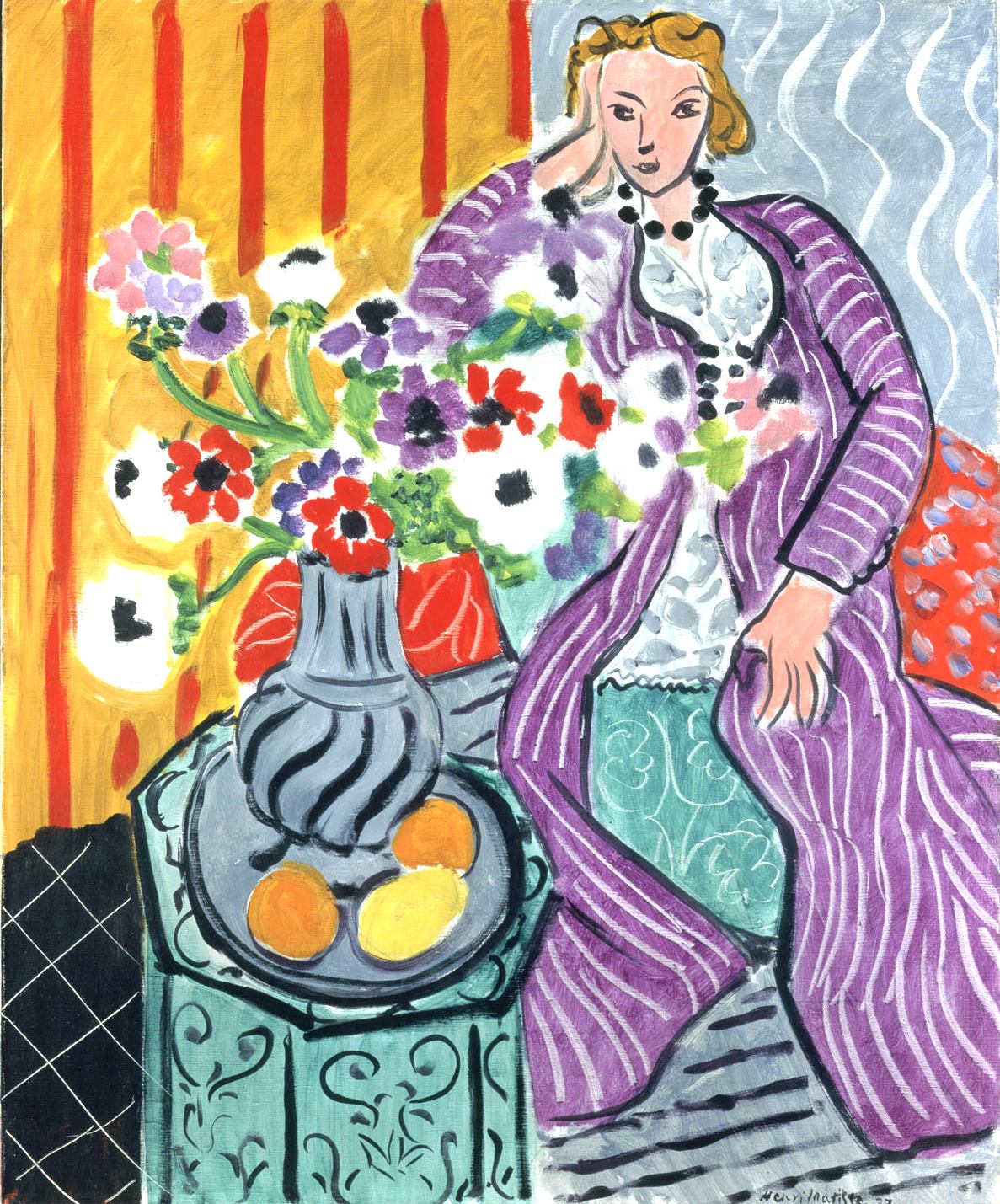
(Picture shows Purple Robe and Anemones by Fauvist Henri Matisse – 1937)

Famous Name: Owen

26 Wednesday Nov 2014

Posted by A.O. in Famous Names

≈ 6 Comments

Tags

Arthurian names, classic names, famous namesakes, Frankish names, French names, Greek names, Irish names, name history, name meaning, name popularity, popular names, royal names, saints names, Shakespearean names, Welsh names

P08567.002

Owen Glendower Howell-Price was one of a family of brothers from the greater Sydney region who served with distinction during World War I. Owen was studying agriculture when war broke out, and he was commissioned second lieutenant in the 3rd Battalion of the Australian Imperial Forces.

Appointed assistant adjutant, he was immediately promoted when the adjutant was killed on the first day of the Gallipoli landing. Promoted to captain, he won the Military Cross for his fighting at Lone Pine, and due to heavy casualties, was temporarily in charge of the whole battalion. A fine trainer and organiser, he continued fighting even when wounded.

After the evacuation from Gallipoli, Owen was sent to northern France where his courage set a magnificent example during those bloody battles, always placing himself in the most dangerous positions. He was awarded a Distinguished Service Order for his leadership abilities, and promoted to lieutenant-colonel.

In 1916 Owen was shot in the head, and died the following day; his last words were: “Give my love to the battalion”. The young officer, just 26 when he died, was perhaps too serious and responsible for real popularity, but behind his stern manner lay a deep loyalty to his men, and his final thoughts were for them.

Owen’s brothers Philip and Richmond were also killed in France, so of their six boys, five of whom served overseas during World War I, the Howell-Prices lost half.

Owen is the modern form of the medieval Welsh name Owain. One of the most famous of its namesakes is Owain mab Urien, a 6th century prince from one of the kingdoms of northern Britain who fought valiantly against the Angles, and was killed in battle, thus ending any hope that the kingdom could continue.

So celebrated were the victories of he and his father, King Urien, that they were given a place in Arthurian mythology as Knights of the Round Table, despite being more than a generation too late to be contemporaries of any historical King Arthur. In Arthurian legend, Owain is often said to be King Arthur’s nephew, and the son of Morgan le Fay.

There have been several other British and Welsh kings and princes named Owain. Owain ap Gruffudd was known as Owain the Great, and the first to be known as Prince of Wales. Owen of the Red Hand was a Welsh soldier who fought with the French against the English during the Hundred Years War, and was a claimant of the title Prince of Wales until his assassination. Like King Arthur, he is supposed to be merely sleeping until he can become king of the Britons.

Owen Glyndŵr (or Glendower) was the last native Welshman to hold the title of Prince of Wales, and instigated the Welsh revolt against Henry IV. His uprising was fiercely fought, long-running, and initially quite successful, but ultimately the Welsh were defeated. Owen Glyndŵr evaded capture, ignoring offers of a royal pardon from Henry V, and was never betrayed, despite having a large reward on his head.

He features in William Shakespeare’s Henry IV, Part 1, and is an important figure in Welsh nationalism, on par with King Arthur, and has the same familiar theme of simply waiting until Wales is threatened so that he can once again rise to its defence. It was this Welsh national hero that Owen Howell-Price was named for: his father was born in Wales, and his mother was of Welsh heritage.

Owen Tudor, a courtier of Henry IV whose father had been one of Owen Glendower’s rebels, fought for the English at Agincourt. He secretly married Queen Catherine Valois, the widow of Henry V, and became the founder of the Tudor dynasty, which included the powerhouse Henry VIII, and reached its final flowering in Elizabeth I.

There is a 7th century Saint Owen, a man of high rank who became a Benedictine monk in England, and a French Saint Owen, or more correctly Ouen, who was a Frankish bishop of Rouen. Ouen is based on the Frankish name Audoin, perhaps based on a Germanic name such as Odwin. Yvain is the usual way of transliterating Sir Owain’s name in medieval French chronicles.

The origin of the name Owain is not known for sure. It is often said to be a Welsh form of the Greek name Eugenius or Eugene, but another theory is that it is a Welsh form of the medieval Irish name Éoġan (modernised as Eoghan), which is said exactly the same as Owen. Unfortunately, it is not quite sure what this means either – some say it means “born from the yew tree”, although others are of the opinion that this is also a form of Eugenius, bringing us back full circle.

Although etymologists cannot agree among themselves, what is clear is that Owain shares a similar sound with several other names, like Eoghan and Eoin, and may have been understood as their Welsh equivalent, even if of a different origin.

Owen is a classic name which has never left the charts in Australia. It was #112 in the 1900s, and joined the Top 100 the following decade, remaining there until the 1950s. It reached its lowest point in the 1990s at #166, then began climbing steeply. It reached the Top 100 again in 1997 at #85, then returned in 2003 at the same level. Currently it is #73 nationally, #90 in New South Wales, #81 in Victoria, #86 in Queensland, #46 in Western Australia, #47 in Tasmania, where it was the fastest-rising boys’ name last year, and #67 in the Australian Capital Territory.

This is a handsome, solid classic which has never been out of the Top 200. It has a rich royal history which has become intertwined with romantic legend, yet it feels very modern. Rising gently in the charts, it is now at its highest level of popularity, and fits in perfectly with contemporary name trends. It’s a softer-sounding boys’ name that is still very masculine, and even heroic, which might make it easy for parents to agree upon it. It is certainly a very easy name to own, and if you choose it, you will be owin’ nobody an explanation. Oh, when it’s time to pick a baby name, it’s Owen for the win!

POLL RESULTS
Owen received an outstanding approval rating of 85%, making it one of the highest-rated names of 2014. People saw the name Owen as cute on a little boy but dignified on a grown man (28%), handsome and classic (23%), and strong and masculine (14%), while 12% loved its connection to Arthurian myth and Welsh legend. However, 6% thought it was too popular. Nobody thought the name Owen was cutesy or wussy.

(Picture shows the officers of the 3rd Battalion; Owen Howell-Price is second from the right in the second row from the front. Of these 26 men, 14 of them were killed in battle. Photo from the Australian War Memorial).

Famous Name: Caleb

19 Wednesday Nov 2014

Posted by A.O. in Famous Names

≈ Comments Off on Famous Name: Caleb

Tags

animal names, baby name books, Biblical names, controversial names, famous namesakes, fictional namesakes, hebrew names, modern classics, name history, name meaning, name trends, nicknames, popular names, saints names, tribal names

148170-a35f84fa-ca7d-11e3-9aee-4ab1c4ff1b91

Duckbour Caleb James Shang, known as Caleb, or by his Chinese name Lee, or the nickname “Charlie”, was one of the more unlikely heroes of World War I. Quiet, soft-spoken and shy, the slightly-built Queenslander from far north Cairns was 170 cm tall and weighed 51 kg. Furthermore, as the son of a Chinese-born father and Australian-born mother, nobody expected him to even enlist, as only those of European ancestry were considered eligible for military service at this time, and it was unusual for people of Asian ancestry to join the armed forces.

Yet both Caleb and his brother Sidney enlisted in 1916, and in 1917 Caleb joined the 47th Battalion in time to join heavy fighting in Flanders on the Western Front. He later fought on the Somme during the heaviest attack ever faced by Australian soldiers, and after his battalion was disbanded due to severe casualties, he served in the 45th Battalion during the Battle of Amiens. Here he was wounded, and evacuated to England before being sent back to Australia when the war was over.

Caleb was a runner, signaller, and scout, tirelessly running messages and bringing supplies at all hours, signalling while exposed to the enemy, constantly volunteering for dangerous missions into enemy territory, and attacking snipers in broad daylight. The runner’s job was one of the most dangerous on the Western Front, and had a terrifying casualty rate, yet for most of his war service, Caleb got through these perilous situations without a scratch.

Caleb’s outstanding endurance, contempt for danger, gallantry, skilful resourcefulness, and devotion to duty inspired those around him, and earned him the admiration of both the officers and men. The first Australian soldier of Chinese descent to be decorated, the most highly decorated Chinese Australian soldier of World War I, and the most highly decorated Queensland soldier of his time, he received the Distinguished Conduct Medal twice, and was awarded the Military Medal.

When he returned home to Cairns in 1919, Private Caleb Shang received a hero’s welcome, with 3000 people turning out to jubilantly greet him on the wharf at dawn. The mayor was there, as were the Returned Soldiers League, and the Cairns Citizen Brass Band played See the Conquering Hero Comes. The Cairns Post raised a subscription fund to start him off in civilian life, and more than £45 was raised by the townspeople.

During World War II, Caleb served with the Volunteer Defence Force in Cairns; during his service he suffered several head injuries, which may explain why he later spent time in a psychiatric hospital. In the 1940s, there was heightened anti-Asian feeling due to the war against Japan, and Caleb was sometimes the target of racist slurs, as few people knew of his distinguished war record and volunteer service. In 1943, he attended his only Anzac Day parade, apparently in response to the racism he encountered during World War II.

According to Caleb’s sister Alma, he never talked about the war to his family. In 2002, Caleb’s daughter Delta, then in her 70s, described her father as reserved, modest, understanding, kind and gentle, speaking very little about his war service. She could not guess what motivated him to enlist, but knew that her father loved a challenge.

Caleb Shang’s story is not completely unlike that of Caleb in the Bible. According to the Old Testament, Caleb was one of twelve spies sent out by Moses into the land of Canaan. Each spy was the head of one of the twelve tribes of Israel, and Caleb represented the tribe of Judah. Ten of the spies reported back that it would be impossible to conquer the land, but Joshua and Caleb brought back encouraging reports to Moses. Because of Caleb and Joshua’s courage and faith, they were the only two ancient Israelites allowed to reach the Promised Land, and Caleb was granted lands around Hebron, now in Palestine.

There is another Caleb mentioned in the Bible, the great-grandson of Judah. Jewish tradition says these two Calebs are the same person, which would explain why Caleb was the head of the tribe. However, biblical scholars find this unlikely – in fact, they are not even sure that Caleb the spy was an Israelite by birth, as the Bible indicates he was a Kenizzite, from a desert tribe. He might have been accepted into the tribe of Judah, and if so, becoming its head would have indicated someone of really superior ability. That’s more impressive than just inheriting the role from great-granddaddy.

Bible historians believe the story of Caleb represents the movement of a clan which invaded Palestine from the south, settled around Hebron, and became gradually absorbed into the tribe of Judah. According to Bible genealogies, the Calebites were descendants of Esau, twin brother to Jacob, so were closely related to the Israelites, and natural friends and allies. (Nabal, the grumpy first husband of the prophetess Abigail, was a Calebite). The Bible story is a way to explain how a non-Israelite desert people became part of the tribe of Judah.

The original Hebrew spelling of the name Caleb is identical with the Hebrew word kelev, meaning “dog”. Animal names are not unusual in the Old Testament, although nobody knows for sure why Caleb might have been called this. Considering his non-Israelite origins, it’s possible that his name was non-Hebrew, and just sounded like the Hebrew word for dog.

However, some scholars think it may have been given to indicate his original tribal totem as an ethnic signifier; if so, the totem would have referred to the Canaan dog. This is a breed of pariah dog which has existed since biblical times, and is one of the oldest breeds of dog in the world. The Old Testament makes several references to these dogs, both wild ones roaming in packs through the desert, and those which worked alongside humans. The Canaan dog is modern Israel’s national dog.

Canaan dogs are strong, athletic, agile and healthy, with a well-developed survival instinct. Highly intelligent and naturally defensive, they make excellent watch dogs, who bark readily as a warning. They are not aggressive towards humans, being cautious and even docile, and remain strongly attached and loyal to their owners. They are still used as sheep dogs by the Bedouins.

For a tribe to take the Canaan dog as their totem, they would have seen themselves as survivors in the harsh desert – not fighters ready to attack, but willing to defend their territory. Baby name books are generally reluctant to admit the meaning of “dog” to Caleb, and often gloss it as “faithful” or “devoted to God”. Although you can see the Caleb from the Bible story as having canine faithfulness, the original tribal totem seems much more likely to indicate a people tough enough to get through anything.

Caleb has a long history as a Christian name, because a 5th century king of Axum (around modern-day Ethiopia) was named Kaleb; he is considered a saint in the Orthodox tradition. Caleb has been used as an English name since at least the 16th century, and became much more common after the Protestant Reformation (Kaleb has been used almost as long by English-speakers, but not so widely).

A fictional namesake is the hero of William Godwin’s radical 18th century novel, Things as They Are, or The Adventures of Caleb Williams. A raging commercial success, the book was both condemned as dangerous anarchist propaganda, and glorified as an inspiring work of genius. Another is Caleb “Cal” Trask from John Steinbeck’s East of Eden, portrayed on film by James Dean. There have been many other Calebs in fiction, right up to the present, with Pretty Little Liars, and Divergent.

Caleb has charted since the 1970s, when it debuted at #443. It rose steeply until joining the Top 100 in 1996 at #83, but has never been higher than #50. Currently it is #72 nationally, #71 in New South Wales, #95 in Victoria, #66 in Queensland, #61 in Tasmania, where it was one of the fastest-rising boy’s names of last year, and #78 in the Australian Capital Territory.

This is a handsome modern classic – one of the Old Testament biblical names for boys which sounded fresher and more exotic than the familiar Bible classics. Despite being popular for many years, it has remained relatively stable in the bottom half of the Top 100, making it a safe choice. Perhaps the meaning has dogged its footsteps, but I can’t really see any problem as dogs are our beloved companions, known for their beautiful, faithful natures. Cal, Cale or Cabe can be used as nicknames.

POLL RESULTS
Caleb received an excellent approval rating of 84%, making it one of the highest-rated names of 2014. People saw the name Caleb as a modern classic with plenty of history (30%), strong and masculine (19%), and handsome or cute (13%). However, 9% thought it was too popular. 15% of people thought the possible meaning of “dog” wasn’t a problem, as dogs are faithful, smart, and loving, while 6% were really bothered by the canine connection. Nobody thought the name Caleb was harsh or ugly.

The Gentle Art of Discussing Baby Names

16 Sunday Nov 2014

Posted by A.O. in Naming Issues

≈ 14 Comments

Tags

Biblical names, choosing baby names, famous namesakes, fictional namesakes, Italian names, name disagreements, name meaning, Old Norse names, saints names, Spanish names

article-1047463-025C436E00000578-505_468x354

Being a life-long name-nerd, I spent a lot of my younger years dreaming up names for future children. In these daydreams, I was joined at the hip with someone who agreed enthusiastically with my name choices, or responded joyously : “But my darling! That has always been my favourite name, too!”. At the very worst, I hoped my future other half would be the type who said, “Honestly, I’m not very interested in baby names. Anything you pick you out will be fine, sweetie pie”.

These dreams did not eventuate. My husband turned out not to be the easygoing “whatever you say dear” sort of bloke, and it seemed as if every name I suggested was greeted with: No, Nope, Not that one, I don’t think so, and the occasional Absolutely not. I had a long list of names, and every single one got shot down without explanation. What was most frustrating was that he never suggested any names, so I had no idea what was wrong with all these names, or what names he would prefer.

After lots of arguments that never went anywhere, I came up with a new set of rules. He had to at least tell me what was wrong with the suggested name, or it stayed on the list. And just saying “I don’t like it” wasn’t good enough – he had to explain exactly why he didn’t like it. If his answer was something silly, like “I once worked with someone called that and I didn’t like them”, then the name stayed on the list.

There were a few false starts, as he feared as I would jump down his throat the minute he said anything. But I insisted I’d rather hear the truth, and told him I would hear him out without arguing. He started to elaborate on his Nos, and boy, did the flood gates open.

Sometimes it was hard to hear (some of these were names I loved after all), and sometimes I did break my promise and argued back, but as time went on it got easier and easier. The best part was that we were no longer deadlocked, and as he explained what was wrong with every single name I suggested, I started to get a feel for his tastes. That meant that rather than thrash out every name, I could automatically cross off those similar to ones he disliked.

Here are some of the highlights (?) of the process.

BOYS

Alistair
Him: Too posh. People will think he has a country estate and a trust fund, but instead he’ll have a swing set and a piggy bank.
Me: Perhaps that will teach people not to stereotype names.
Him: There’s breaking stereotypes, and then there’s committing fraud. This is more the second one.

Ari
Him (surprised): Oh … I like that one! What language is it from?
Me: It’s Old Norse.
Him: Awsome, I love Scandinavian names. What does it mean?
Me: Eagle.
Him (outraged): What kind of sick meaning is that? How could anyone be so twisted as to call their child evil?
Me: Not evil … eagle. Like the bird.
Him: Well, now all I can think of is evil when I hear it.
(This ended in a heated discussion about people who don’t listen versus people who don’t speak clearly enough).

Angus
Our surname starts with Wil-, so any name ending with an S sound will end up having SWILL in it. This one sounds like “Anger Swill”.
(I cross off all names ending in an S sound).

Bede
Sounds like bidet.

Dante
We’re not Italian!

Digby
Sounds like a dog’s name.

Edmund
Me: I thought maybe with Teddy as the nickname, but is it too close to Eddie?
Him: It’s too close to Narnia, if you ask me.
Me: But you said yes to Lucy!
Him: Lucy sounds sweet – Edmund sounds like a little creep who will sell you out to the White Witch for a block of Turkish Delight.

Ezekiel
It’s like someone throwing crockery down a flight of stairs. No weird Old Testament names – they’re ugly.

Felix
Too catty. And we can’t have any names ending in X, because it sounds the same as something ending in S.
(I cross off all names ending in X).

Gabriel
Too girly.

Hamish
Him: I really hate Scottish names – they’re ugly and pretentious.
Me: But Scottish names are traditional in your family.
Him: Yeah well this is one tradition coming to an end now because I hate them!
(I cross off all Scottish names, gloomily knowing my parents-in-law will blame me).

Hugo
It’s a cartoon villain name.

Jago
It will get twisted around into Gay Joe.

James
Him: That’s the most boring boy’s name in existence.
Me (enraged): It – is – my – father’s – name!
Him (aghast): What? No! Your dad’s name is Fred!
Me: His name is James – his nickname is Fred!
(This ended in a heated discussion about people who don’t bother to learn their own father-in-law’s name versus people who cause confusion because their nicknames are nothing like their actual name).

Jasper
Him: Yuk, sounds evil.
Me: It doesn’t – Jasper is a saint who brought gifts to baby Jesus.
Him: No, Jasper is a crook who stole Dalmatian puppies so a demon hag could turn them into coats!

Jarvis
“Jar of swill” – don’t you remember the whole discussion we had about Angus?
(Oops, forgot to cross it off).

Jude
Hey Jude, na na na na – aargh that song is an earworm, now I’ll never get it out of my head.

Leander
Him: For a boy or a girl?
Me: It’s a boy’s name.
Him: Well it sounds like a mix of Leanne and Miranda.
Me: What if you think of it more as a mix of Leo and Alexander?
Him: I hate Leo and Alexander.
(I secretly cross Leo and Alexander off the list).

Monty
Monty Python.

Oscar
Too grouchy.

Owen
Sounds as if he will always be owin’ money.

Rafael
We’re not Spanish!

GIRLS

Allegra
Him: What would we call her – Leggy? Where does it come from, anyway?
Me (evasively): Well, Lord Byron had a daughter named Allegra.
Him: What happened to her – did she end up famous, like that other daughter?
Me: Um, no … he took her from her mother and stuck her in a convent, and she died.
Him: That’s horrible! This name should be banned!

Clementine
She drowned!

Cordelia
Him: Her senile father didn’t love her! Why are all these names after girls abused by their dads?
Me: Clementine wasn’t abused.
Him: No, her father committed suicide!

Cressida
Him: Wasn’t she a prostitute?
Me: No.
Him: Well it reminds me of watercress anyway.

Harriet
I only like pretty girls’ names.

Esther
Me: This was my favourite teacher’s name.
Him: Too chemical-y.

Jemima
Him: Would she be named after the rag-doll, or the duck?
Me: Maybe after the beautiful daughter of Job in the Bible.
Him: So we’d be naming our daughter after a woman whose father was tortured for no reason? Can we not have any names from stories where the father has a terrible time, please?
(I cross off Keziah).

Lyra
Sounds like liar.

Madeleine
Me: I’m not sure about this one, what do you think?
Him: Nothing that starts with the word mad.

Saskia
Sounds like a snake hissing.

Sylvia
Him: No names starting with S, because look at the initial.
Me: You mean SW, south-west?
Him: No, S. Wil-, swill!
Me: Oh not this again.

Ursula
Him: Don’t you realise the joke on Friends was that Phoebe had a nice name while her evil twin Ursula had an awful one?
Me: So you like the name Phoebe?
Him: Yes.
Me: Me too, let’s add it to the list.
(Partial success!)

Virginia
It looks like virgin and sounds like vagina.

Zara
I hate names that start with Z.

As we worked through the process, it was apparent what names had to go – apart from anything Scottish, Old Testament, starting with Z, ending with X, or starting or ending with S. He didn’t like names that had negative meanings or associations, especially ones from childhood, and was exquisitely sensitive towards anything which sounded even vaguely negative or ridiculous.

Fussy and over-sensitive about names? Now that’s something a name nerd can understand. We weren’t so different after all.

POLL RESULTS
People thought the names that were most unfairly rejected by my husband were James and Harriet. However, there seemed to be sympathy for his views on Bede and Jarvis, as they received no votes to “save” them.

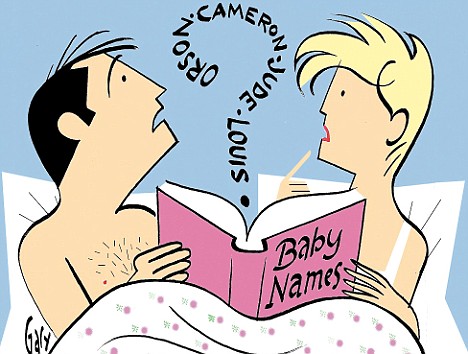
(Cartoon from the Daily Mail)

Famous Name: Edward

05 Wednesday Nov 2014

Posted by A.O. in Famous Names

≈ 16 Comments

Tags

Anglo-Saxon names, choosing baby names, classic names, english names, famous namesakes, fictional namesakes, locational names, middle names, name history, name meaning, nicknames, popular names, royal names, saints names

ART11354

This year is the centenary of World War I, and just a few days ago there were commemorative celebrations for the first Australian troops to leave for the battlefields of Gallipoli. Because of this, I have chosen the name of one of our war heroes.

Edward Picton was a shearer and drover from country New South Wales when war broke out in 1914, and by the end of that year he had embarked with the 7th Light Horse Regiment. He saw active service in Gallipoli, and distinguished himself in the campaigns of Sinai and Palestine. Twice he was decorated for capturing prisoners under heavy shelling, and his commanding officer praised him as reliable, full of dash and pluck, and cool under fire.

In early 1918, he received a severe wound which left him with a permanent limp, and was taken prisoner himself; reported as missing in action, he was taken to Turkey to endure many months as a POW, and returned to Australia after the Armistice. Despite his age and disabilities, he also signed up during World War II and served in Egypt and Syria. Although one of the the most decorated soldiers of the Australian Light Horse’s famous 1917-18 campaign, he remained modest, and lived a quiet life with his family.

The name Edward is derived from the Old English ead “wealthy” (or poetically, “blessed, happy”) and weard “guardian, watchman” (the origin of our English word warden), and is usually translated as something like “rich guardian”.

The name was a traditional one amongst Anglo-Saxon royalty and nobility, as were other Ed- names, which emphasised their inherited wealth and power. An early example is the Anglo-Saxon king Edward the Elder, the son of Alfred the Great; he was a successful ruler who is said to have been extremely handsome and intelligent.

Two other pre-Conquest English kings named Edward became saints: Edward the Martyr, whose short reign ended with his murder, and Saint Edward the Confessor, who was one of the patron saints of England until he was replaced by Saint George.

It was because of Saint Edward the Confessor that the name Edward also became traditional amongst the Norman kings, because Henry III named his eldest son Edward in honour of the country’s patron saint, and he became Edward I. Thus Edward became one of those rare Anglo-Saxon names which continued to flourish after the Conquest.

There have been eight English kings named Edward since 1066, with the last one being Edward VIII, who famously abdicated in 1936, the first year of his reign, to marry the American socialite Wallis Simpson.

The name, although perhaps not auspicious for a king any more, is still in use by the British royal family, with a notable example being Prince Edward, Earl of Wessex, the youngest child of Queen Elizabeth, who is currently visiting Australia. The queen has a cousin named Edward – Prince Edward, Duke of Kent. The Duke of Kent was born a year before Edward VIII’s abdication, and I wonder if he would have been given a different name if born a year after the abdication?

If you are a fan of the Anne of Green Gables books, you will know they are mostly set on Prince Edward Island, Canada’s smallest province. They are named after Prince Edward, Duke of Kent and Strathearn, who was Queen Victoria’s father.

Edward is a name which has been something of a favourite in romantic fiction, including the dutiful Edward Ferrars in Jane Austen’s Sense and Sensibility, and the Byronic Edward Rochester in Charlotte Bronte’s Jane Eyre. Mr Rochester was one of the models for another romantic love interest, the vampire Edward Cullen from the Twilight series. There’s also Prince Edward from the movie Enchanted, and from a very different fairy tale, the strangely gifted Edward Scissorhands.

Edward is a classic which has never been off the charts, and barely been out of the Top 100 in Australia. It was at its height in the 1900s at #10, and hit its lowest point in the late 2000s at #103 (it did rise after Twilight). Currently it is #59 nationally, #53 in New South Wales, #39 in Victoria, #83 in Queensland, #30 in Tasmania, and #32 in the Australian Capital Territory, where it was one of the fastest-rising names of 2013.

I must admit to having great affection for the name Edward, because it was the first name I ever bestowed on a human, at the age of three. It is my brother’s name, and my parents allowed me to choose his name, in the hope that this would prove a great bonding experience, as I’d been very jealous and grizzly about the whole “new baby brother” deal.

I chose the name Edward after my favourite literary character, Winnie-the-Pooh – well I was only three! As Pooh fans will know, Winnie-the-Pooh, who was named after a real bear named Winnipeg and a swan named Pooh, is identified in the poetry book When We Were Very Young as having Edward Bear as his official name.

The budding name nerd in me was thrilled at learning someone’s real name, and excited that there were such things as real names. My mum explained that Edward was the “proper name” for Teddy, so the name meant “teddy bear”. That discovery about nicknames coming from names blew my mind. No wonder I couldn’t get enough of Winnie-the-Pooh.

I may have also been drawn to the name because one of the “big boys” in our community (about eleven) was called Edward, and he had apparently impressed me as being very kind and gentle. Perhaps I saw Edward as a “nice guy” name – the kind of person I would want as a brother. If so, my wish came true, as my brother Edward is gentle and kind too, and has devoted his life to helping others. He’s definitely one of the good guys.

Of course I didn’t get things all my own way. My idea was that my brother’s whole name would be Edward Bear, like Winnie-the-Pooh, and that his nickname would be Teddy. My parents said Bear wasn’t a proper name, and the middle name was James, after my dad. Teddy was vetoed, as to my parents’ generation, it was a synonym for thug, and his nickname eventually became, without any particular forethought that I noticed, Eddie. It was an early lesson in name compromise, and that once you’ve named someone, you lose creative control of the project.

My parents’ master plan did not work, and despite naming him, I was a complete brat towards my baby brother, locked in sibling rivalry hell. However, it didn’t last long, as my mother got pregnant again almost immediately, and in an astonishingly short time, there was another baby. Either the shock of having two baby brothers pulled me up, or I had turned four and was now a lot more mature. My parents chose their youngest child’s name themselves (I didn’t get a second gig), and ironically his nickname became Bear, which had nothing to do with his name at all. Talk about name theft!

(I don’t have clear memories of being three, and have drawn on the recollections of my parents and sister for this, but I do remember Winnie-the-Pooh, and the moment of actually announcing Edward’s name. I don’t remember being a massive fangirl of older-boy-Edward, but my family assures me that I was a great admirer; I don’t remember him from the age of three, but obviously I grew up around him and have many later memories. I only recall throwing one jealous tantrum over Eddie, but I’ve been told I was a right little monster).

So there you have it – a handsome classic which is a solid, reliable choice, yet still has some dashing romance to it, as well as teddy bear huggability. Even as a toddler I could tell it was a great name, and it has served my brother well for many years. Highly recommended!

POLL RESULTS
Edward received an excellent approval rating of 83%, making it one of the highest-rated names of 2014. People saw the name Edward as a handsome and elegant classic (31%), noble and gentlemanly (18%), dashing and romantic (13%), and having great nickname options (13%). However, 7% of people thought it was too stuffy and old-fashioned. Nobody thought the name Edward seemed stuck-up or snobbish.

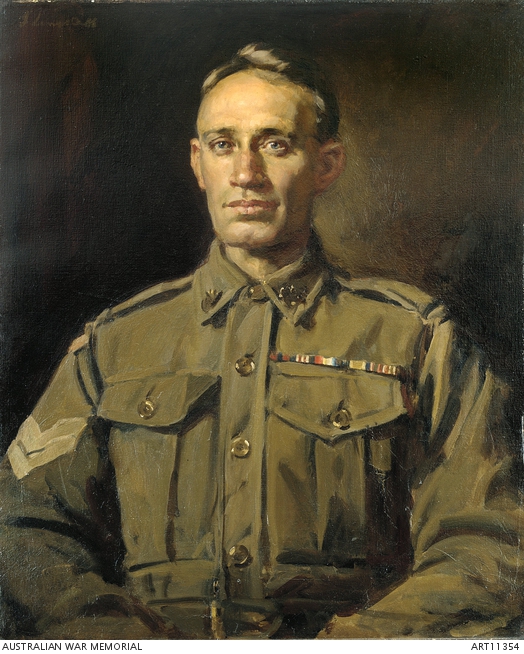
(Portrait of Corporal Edward Picton from the Australian War Memorial)

Waltzing With … Lucius

05 Sunday Oct 2014

Posted by A.O. in Waltzing with ...

≈ 3 Comments

Tags

aristocratic names, Arthurian names, Biblical names, Etruscan names, famous namesakes, fictional namesakes, Harry Potter names, imperial names, Latin names, name history, name meaning, name popularity, papal names, rare names, Roman names, royal names, royal titles, saints names, Shakespearean names, UK name popularity, US name popularity

y_Daybreak

Today is the start of Daylight Saving Time in New South Wales, Victoria, South Australia, Tasmania, and the Australian Capital Territory. Clocks went forward at 2 am this morning, so if you forgot, you are now an hour behind.

Because daylight saving becomes more pointless the closer you are to the equator, states which have tropical regions do not have daylight saving, and this means Queensland, Western Australia, and the Northern Territory. For everyone else, it’s a reminder we are moving towards summer and increasing hours of daylight, so it seems the perfect opportunity to look at a name connected with light.

Lucius was the most common name in ancient Rome times across all classes; it is usually said to be derived from the Latin word lux, meaning “light”. One theory is that it was given to children who were born at dawn, but the sheer number of people called Lucius makes this untenable. Another theory connects it to loukus, which originally meant “bright, shining”, although by the classical period it had come to mean “a cleared grove”.

Lucius is the name ascribed to an early Roman king, but it is probably a misunderstanding of Lucumo, the Etruscan word for “king”, which would be his title; the name Lucius was traditional in his family, suggesting another origin for the name. The Roman dictator Sulla, who served as an inspiration for Julius Caesar, was named Lucius Cornelius Sulla Felix. There were at least two Roman Emperors named Lucius: Lucius Dominitius Aurelianus (called Aurelian), and Lucius Aurelius Commodus (called Commodus).

Commodus was the son of the emperor Marcus Aurelius, and grandson of an emperor: he was the first emperor to be “born in the purple” (during his father’s reign). He is probably best known to us as the wicked emperor in the movie Gladiator, killed by Russell Crowe in the role of Maximus: although a fictional story, the real Commodus was eccentric and cruel, and assassinated by his wrestling partner, Narcissus.

The name Lucius was a favourite choice amongst early Christians because of the meaning of “light”, and there are several saints with the name. Saint Lucius of Cyrene is mentioned in the New Testament as a founder of the church in Antioch. There have been three popes named Lucius, and Pope Lucius I is also a saint.

Another Saint Lucius is a legendary 2nd century King of the Britons, who tradition credits with introducing Christianity to Britain by writing to the pope asking to be converted. His story became well known after it was included in the histories of Venerable Bede, and embellished by Geoffrey of Monmouth. For centuries it was an important myth of British Christianity, and although there’s no solid evidence he existed, some feel there must be a grain of truth to the legend. The church of St Peter Under Cornhill in London claims St Lucius as its founder.

The Roman philosopher and statesman known to us as Seneca had the full name Lucius Annaeus Seneca. He wrote many of his famous works while in exile, and later became an advisor to the Emperor Nero. This didn’t end well for him, as he was (probably wrongly) implicated in a plot against Nero, and forced to commit suicide. Early Christians greatly approved of him, and virtually hailed him as a humanist saint. According to medieval legend, he was converted to Christianity by Saint Paul, and is mentioned by writers such as Dante and Chaucer.

Despite all this heavy-duty Christian background, and even a British connection, Lucius has never been a common English name. It does seem to have had some history of use in Yorkshire, which has strong ties to the legendary Saint Lucius.

The name Lucius is a traditional one in the aristocratic Cary family, who bear the title Viscount Falkland. The 2nd Viscount fought on the Royalist side in the English Civil War and was killed in action. The current Viscount Falkland is named Lucius, and so is his son (a writer who goes by his middle name, Alexander), and his grandson.

Lucius has probably been used more often in America, and there are a number of famous politicians from the United States bearing this name. It’s also known from American writer and bon vivant, Lucius Beebe, and American sci-fi author Lucius Shepard.

Lucius isn’t too unusual a name in Australian historic records. Dr William Harvey, who was featured on the blog earlier this year, had a father named Lucius who was also a doctor, and it was his father’s death from tuberculosis which led Dr Harvey into specialising in thoracic medicine. A famous Australian with the name is musician Lucius Borich, the son of Kevin Borich, who was in the band The Party Boys.

Lucius doesn’t chart in Australia. 14 baby boys were named Lucius in England/Wales last year, while in the US (where Lucius peaked at #257 in the 19th century), 125 boys were named Lucius in 2013 – the same number as those called Hollis and Zephaniah.

If there seems a lack of real life Luciuses, fiction has stepped into the breach, for they abound in books, movies, TV programs, and video games. It’s no new phenomenon, for Lucius is the narrator of The Golden Ass by African author Apuleius; written in Latin in the 1st century, this comedy is sometimes regarded as the world’s first novel. Lucius is also in Arthurian legend, a fictional Emperor of Rome who King Arthur defeats, thus becoming not just King of Britain, but Emperor over all the West.

Lucius has been used as a character name twice by William Shakespeare, in Titus Andronicus and Julius Caesar. In fact, pretty much anyone who writes a story set in Roman times will include a Lucius somewhere, as it was the #1 name.

One of the best known fictional Luciuses of contemporary times is the slippery Lucius Malfoy from the Harry Potter series. Upper crust, corrupt, bigoted, and ready to slip over to the Dark Side whenever convenient, Lucius is a dyed-in-the-wool villain and general Mr Nastypants for most of the series. Only towards the end does he receive a lukewarm redemption.

His name, although suitably aristocratic, brings to mind Lucius from The Golden Ass, which is a book about witchcraft and magic – not to mention someone (literally) making an ass of themselves. However, just as Malfoy’s son’s name, Draco, means “serpent” and reminds us of the Devil, Lucius’ name is reminiscent of Lucifer, a name related to Lucius, meaning “light-bringer”, and which is often understood by Christianity as Satan’s name before his fall.

Unfortunately, some people think Lucius and Lucifer sound too similar for comfort. Stories that make the connection don’t help, such as the video game Lucius, Son of Lucifer, or the horror novel The Haunting of Sister Mary Francis, which has a character named Lucius Lucifer. On the plus side, that gives Lucius a bit of a “bad boy” edge.

An alternative is Lucian, which is derived from Lucius. Lucian is more popular in Australia than Lucius, being around the 500s, and fits in with the trend for boy’s names ending in N – Lucian almost seems like a fancier version of Lachlan.

Lucius can be pronounced either LOO-see-us, or LOO-shus. The ancient Romans said it more like LOO-ki-us, which perhaps suggests the three syllable pronunciation is more “correct”. Obvious nicknames are Lucky, Luke, Luc, Luca, Luce, Loosh, Lou, and Louie. I have seen a baby Lucius nicknamed Luci or Lucy by his family, which startled me, even though it makes perfect sense.

Handsome, intelligent, and with a rather upper-class image, Lucius does have a few issues, but seems like a name that someone could really fall in love with. It’s quite seductive – even luscious! I’ve noticed this name is often favoured by dads, suggesting that many guys appreciate the richness and power that stand behind it.

This is a rare boy’s name that is perfectly balanced between elegance and strength, brightness and darkness, history and magic, with lashings of Ancient Roman street cred and a bit of sex appeal to boot. Lucius could well be the name that lights up your life.

POLL RESULT
Lucius received a very good approval rating of 77%. 37% of people loved the name Lucius, while 25% of people didn’t mind it. Only around 5% of people hated the name.

(Photo shows daybreak at Delderfield, Marysville, in country Victoria)


Famous Name: Sheila

24 Wednesday Sep 2014

Posted by A.O. in Famous Names

≈ 4 Comments

Tags

allegorical names, Australian slang terms, dated names, Gaelic names, Irish names, Irish slang, mythological names, name history, name meaning, name popularity, saints names, UK name popularity, US name popularity

GP-cover1-20140122172117554563-496x620

September 9 marked the 119th birthday of Sheila Chisholm (named Margaret, and always known by her middle name). It was a century ago that Sheila left Sydney for her grand tour of Europe. A striking beauty with short auburn hair, lovely complexion, and big hazel eyes, she had grown up on a sheep station in country New South Wales, and was an accomplished horsewoman, and daring swimmer, popular as a good dancer with a sense of humour.

Once arrived in England, Sheila barely had time to “come out” for her first London Season before war was declared, and she headed off to Cairo to nurse wounded soldiers. During the war, she married the eldest son of a Scottish earl, Lord Loughborough (“Luffy”), and became a fixture of smart London society in the Prince of Wales set, admired for her languorous beauty, calm presence, and exotic colonial background.

Her marriage deteriorated, as Luffy was a gambling addict and unfaithful (both were considered acceptable for a man of his class). Sheila also took lovers, amongst them Prince Albert, known to his friends as Bertie. Bertie was entranced by Sheila as soon as they met, and the two became inseparable. King George V naturally wasn’t thrilled, and demanded that Bertie end it: his obedience was rewarded with a dukedom, and he soon married Lady Elizabeth Bowes-Lyon. Bertie later became King George VI, the father of the present queen.

Sheila also received attention from married Russian prince Serge Obolensky, American billionaire Vincent Astor (Serge was his brother-in-law), and film star Rudolph Valentino. However, after her divorce she married English baronet Sir John Milbanke (“Buffles”), and continued her ascent in society. She threw lavish parties, and was friends with celebrities like actor Fred Astaire, socialites Lady Diana Cooper and Wallis Simpson, and writers Noel Coward, Nancy Mitford, and Evelyn Waugh (she gave Waugh the idea for The Loved One).

In the post-war years, after being widowed, she not only became a millionaire businesswoman in the travel industry, but married an exiled Russian prince who was the cousin of her old flame, Obolensky. Sheila was very happy in her marriage to Dmitri Romanoff, so ended her amazing life as a princess.

Sheila’s biography, by journalist Robert Wainwright, is called Sheila: The Australian beauty who bewitched British society. Just published this year, the author has hinted of a possible TV deal – “It’s Downton (Abbey) meets Neighbours“. Keep an eye out!

Sheila is an Anglicised form of the Irish name Síle or Sìle, a medieval Gaelic form of the name Celia (although often understood as a form of Cecilia). It has several variant spellings, including Sheelagh and Shelagh. Rather confusingly, the name Sheila has historically been hyper-Anglicised to Julia.

The name Sheila has a special place in Ireland’s history, because in the patriotic traditions of the 17th century, it was one of the allegorical female names used to stand for Ireland (like Erin and Kathleen). In ballads, Sheelagh is a feminine personification of Ireland, a sovereignty goddess who is wasting away as she lacks a royal suitor. In political pamphlets, Sheelagh was a lady whose health suffered due to the violence inflicted on her by “Mr Bull”.

According to folklore, Sheelah was the name of St Patrick’s wife, or in other traditions, his mother. Irish communities celebrated St Sheelah’s Day on March 18: some say it was a day to sober up, while others saw it as a chance to continue the celebrations. St Sheelah’s health was to be drunk in whiskey, and the shamrock was worn on her day also. St Sheelah’s Day has been associated with snow storms, and in many stories she becomes an old crone, who quarrels with St Patrick and puts a spell of bad weather on the country out of spite. This makes St Sheelah seem more of a weather goddess than anything else – she is certainly not very saintly!

Another Irish connection to the name is the mysterious Sheela na Gig – grotesque carvings of a naked woman displaying an exaggerated vulva. They are all over Europe, but particularly in Ireland; they are often found on churches, and like gargoyles, their hideous appearance is said to drive away evil spirits. The name Sheela na Gig is usually translated as something like “Sheela showing her vagina”.

It is thought that Sheela na Gig represents a Celtic pagan goddess, perhaps a divine hag, or fertility figure. It is hard not to be struck by the coincidence of a “hag” named Sheela and the crone-like St Sheelah, and many note the similarity in sound between Sheela and the Gaelic word sidhe (pronounced SHEE), referring to a race of fairy-like beings who are the remnants of gods and goddesses. All very evocative and enigmatic.

Another riddle is how the name Sheila became Australian slang to mean “woman, girlfriend”. The first use of the slang dates to 1822, and the usual explanation is that Sheila was a common Irish name, and so widespread amongst Irish emigrants to Australia that it became a de facto term to mean “Irish woman”, the female equivalent of Paddy for an Irish man.

However Dr Dymphna Lonergen, an academic who specialises in the Irish language in Australia, notes that this makes little sense. Sheila isn’t a common Irish name, and not even a single woman called Sheila was transported to Australia in the 18th century. There were much larger numbers of Irish emigrants to Britain and America than to Australia, and Sheila never became a generic term for an Irishwoman there – in the US, the term for an Irishwoman is Biddy, short for Bridget.

She suggests that the term derives from Irish slang, where Sìle was used as a derogatory term for a man judged to be weak or effeminate, overly fond of female society and domestic pursuits, or a homosexual (this last sense is a “taboo” word, or underworld slang). Presumably the slang quickly became transferred from “womanish men” to actual women.

Whether the word remained derogatory is still up for debate! However, Robert Wainwright says that the phrase “good looking sheila” dates to the 1920s – the time when Sheila Chisholm first became well known in society. Could this stunning, vivacious Australian woman have inspired its use? If so, it seems like a great compliment.

The name Sheila was #236 in the 1900s, but joined the Top 100 in the 1910s at #83. It peaked in the 1920s at #67, and by the 1930s was already out of the Top 100. It hasn’t charted since the 1950s, and can be seen as a “trendy” name of the 1910s and ’20s (the time when Sheila Chisholm was most in the Australian society pages, and before sheila became widely used slang).

Although it’s often thought as very Australian, the name Sheila enjoyed more popularity in the United States, where it was Top 100 from the 1940s to the 1970s, and peaked higher at #50. It only left the charts in the late 2000s. In the UK, it was far more popular still, and Top 100 from the 1920s (when Sheila Chisholm entered the social scene) to the 1960s (when she died), and peaked at #6 in the 1930s. Last year 10 baby girls in England/Wales were named Sheila, a number which has held steady since 1996.

Disappointed that nobody much in Australia seems to have been named Sheila since around the ’50s? Fear not, because modern variants of Sheila abound here, such as Shayla, Shaylah, Shailah, Shyla, and Shylah, influenced by names like Kayla and Skyla. If they were all added together as one name (even though they sound different), Sheila would be somewhere in in the 100s, so not really that rare at all.

POLL RESULTS
The name Sheila received an approval rating of 31%. People saw the name Sheila as too closely associated with the slang term (27%), and too dated (17%). However, 14% thought it seemed cool, retro, and deserving of a comeback. Only one person thought Sheila made a geat Irish heritage choice.

(Portrait of Sheila Chisholm by Cecil Beaton, held by the National Portrait Gallery in London, courtesy of the Rosslyn Family Estate)

← Older posts
Newer posts →

Enter your email address to follow this blog

Categories

Archives

Recent Comments

A.O.'s avatarwaltzingmorethanmati… on Zarah Zaynab and Wolfgang…
Madelyn's avatarMadelyn on Zarah Zaynab and Wolfgang…
JD's avatardrperegrine on Can Phoebe Complete This …
A.O.'s avatarwaltzingmorethanmati… on Rua and Rhoa
redrover23's avatarredrover23 on Rua and Rhoa

Blogroll

  • Appellation Mountain
  • Baby Name Pondering
  • Babynamelover's Blog
  • British Baby Names
  • Clare's Name News
  • For Real Baby Names
  • Geek Baby Names
  • Name Candy
  • Nameberry
  • Nancy's Baby Names
  • Ren's Baby Name Blog
  • Sancta Nomina
  • Swistle: Baby Names
  • The Art of Naming
  • The Baby Name Wizard
  • The Beauty of Names
  • Tulip By Any Name

RSS Feed

  • RSS - Posts

RSS Posts

  • Celebrity Baby News: Melanie Vallejo and Matt Kingston
  • Names from the TV Show “Cleverman”
  • Can Phoebe Complete This Sibset?
  • Zarah Zaynab and Wolfgang Winter
  • Baby, How Did You Get That Name?
  • Celebrity Baby News: Media Babies
  • Celebrity Baby News: Adelaide Crows Babies
  • Celebrity Baby News: Chris and Rebecca Judd
  • Names at Work: Name News From the World of Business and Employment
  • Celebrity Baby News: Sporting Round Up

Currently Popular

  • The Top 100 Names of the 1940s in New South Wales
  • Rare Boys Names From the 1950s
  • Girls Names From Stars and Constellations
  • Celebrity Baby News: Livinia Nixon and Alistair Jack
  • Celebrity Baby News: Jacinta Allan and Yorick Piper

Tags

celebrity baby names celebrity sibsets english names famous namesakes fictional namesakes honouring locational names middle names name combinations name history name meaning name popularity name trends nicknames popular names saints names sibsets surname names twin sets unisex names

Create a free website or blog at WordPress.com.

Privacy & Cookies: This site uses cookies. By continuing to use this website, you agree to their use.
To find out more, including how to control cookies, see here: Cookie Policy
  • Subscribe Subscribed
    • Waltzing More Than Matilda
    • Join 517 other subscribers
    • Already have a WordPress.com account? Log in now.
    • Waltzing More Than Matilda
    • Subscribe Subscribed
    • Sign up
    • Log in
    • Report this content
    • View site in Reader
    • Manage subscriptions
    • Collapse this bar
 

Loading Comments...