• About
  • Best Baby Names
  • Celebrity Baby Names
  • Celebrity Baby Names – Current
  • Celebrity Baby Names – Past
  • Featured Boys Names
  • Featured Girls Names
  • Featured Unisex Names
  • Links to Name Data
  • Waltzing on the Web

Waltzing More Than Matilda

~ Names with an Australian Bias of Democratic Temper

Waltzing More Than Matilda

Tag Archives: saints names

Rare Girls Names From the 1940s

05 Sunday Apr 2015

Posted by A.O. in Name Themes and Lists

≈ 1 Comment

Tags

animal names, controversial names, created names, Easter names, english names, fictional namesakes, flower names, French names, germanic names, Greek names, honouring, Irish names, Latin names, locational names, middle names, name history, name meaning, name trends, names from films, names from songs, nature names, nicknames, plant names, rare names, Roman names, saints names, Scottish names, Spanish names, surname names, unisex names, vintage names, virtue names, vocabulary words

Dymphna_Cusack,_1947

The most popular girls names of the 1940s were Margaret, Patricia, Judith, and Helen, but what were the least popular names? Here are ten names which were only chosen once in any year between 1944 and 1949 in South Australia, making them unique names for their time and place. They continue to be rare, and some parents will still find them appealing.

Avis
Thought to be a Latinised form of the Germanic name Aveza, most likely a long form or elaboration of the familiar Ava. Introduced to England by the Normans, it was reasonably common in the Middle Ages, and quickly became associated with the Latin word avis, meaning “bird”. Avis Rent a Car was founded in the 1940s by Warren Avis, but did not become big in Australia for some time – it’s now quite difficult to disassociate the name Avis from the rental company, although it’s very much on trend and still seems contemporary and pretty. It was also a good fit in the 1940s, when names such as Avril and Averil were fashionable.

Bunty
An old British term of endearment, dating back to perhaps the 17th century. In Scotland, buntin means “short and plump”, while in Wales, bontin means “the bottom, the rump” (a part of the body usually seen as quite plump). It’s interesting that in both Scottish and English dialect, bunt and bun refer to a rabbit’s tail, which recalls the bottom meaning. You probably remember the nursery rhyme, Bye Baby Bunting, where bunting meant “a plump little child”, and it’s amusing that they have “a rabbit skin to wrap the Baby Bunting in”, given the etymological connection between chubby babies and bunnies’ bottoms. By the 19th century, bunty was a country word for a lamb, because they bunt (or butt) with their heads, giving bunty another adorable baby-related association. The name Bunty was popularised by the Scottish comedy Bunty Pulls the Strings, which was a hit in 1911 in the West End and on Broadway (Bunty was a canny Highland lass). However, even before this, Bunty was used as a nickname, especially by the aristocracy. It was occasionally given to boys, and in Seven Little Australians, young John is called Bunty, because he is prone to be greedy and a bit overweight. In his case, the nickname literally meant “little fatty”, but Bunty can be understood as “cute wee bairn, bonny babe”. This could be a charming vintage-style nickname, and if you’re worried it’s too infantile, Babe and Baby were both used as names in the 1940s!

Cosette
Cosette is one of the main characters in Victor Hugo’s Les Misérables, considered one of the greatest novels of the 19th century. In the novel, Cosette is the daughter of Fantine, a poor girl who must leave her child in the care of some innkeepers, while she works to provide for her. Cosette is badly treated by her guardians, and becomes a Cinderella-like figure, but is rescued by the ex-convict Jean Valjean. They take refuge in a convent, where Cosette develops into a beautiful young girl, and eventually finds her happy ending. Cosette’s real name is Euphrasie (meaning “good cheer”), but her mother’s pet name for her is the one which sticks – Cosette is from the French word chosette, meaning “little thing”. Les Misérables was made into a successful film in 1935, with child star Marilyn Knowlden in the role of the young Cosette; this would have increased interest in the name. Les Misérables was made into an award-winning musical film in 2012, this time with British actress Isabelle Allen playing young Cosette. Her face was used for the publicity posters, and with her arresting blue eyes, this may bring Cosette into the baby name spotlight again.

Dymphna
Anglicised form of the Irish name Damhnait, meaning “fawn”. Saint Dymphna is a 7th century Irish saint with a truly disturbing story, because legend has it that when she was fourteen, her father went mad and developed an unnatural desire for her. She ran away and devoted herself to helping the sick and the poor, but her father discovered her whereabouts, and killed her in a rage. Called the Lily of Eire, Saint Dymphna is the patron of the mentally ill, as well as vctims of incest, and many miraculous cures have been claimed on her behalf. A famous namesake is the author Dymphna Cusack, and another is Dymphna Clark, married to the historian Manning Clark, so the name has strong Australian credentials. Despite this, and the pretty meaning, Saint Dymphna’s tragic life has probably not been a help. Said DIMF-na, Dymphna has a lovely sound though, like a quirkier Daphne.

Jinx
According to superstition, a jinx is something, or someone, who brings bad luck, often without meaning to. The word is American English, first used in the context of baseball, and its origins are obscure. One suggestion is that it comes from the 1887 musical comedy Little Puck, which had a character named Jinks Hoodoo, who is a curse to everyone he meets, as well as to himself. Although Hoodoo is fairly obviously a “bad luck” word, Jinks is just a surname based on the name John, and not too unusual as a first name. Perhaps it was given with the phrase high jinks in mind, meaning “boisterous fun”. After the popular musical comedy, jinks and jinx seem to have rapidly come into use as slang terms to describe an unlucky person or object. Jinx was known as a girl’s name in the 1940s because of Jinx Falkenburg, one of the highest-paid cover-girls of the 1930s and ’40s – an early example of a supermodel. Considered one of the most beautiful and glamorous women of her time, she was also a talented sportswoman and Hollywood actress, and went on to have successful chat shows on radio and TV. Born Eugenia, her mother nicknamed her Jinx in the belief that it would bring her good luck – I’m not sure how that was meant to work, but Jinx did indeed have a fortunate life. Jinx has quite often been used as a name for (mostly female) fictional characters, from L’il Jinx from the Archie comics to Jinx Johnson in the James Bond film, played by Halle Berry. This is a playful modern nickname for the non-superstitious.

Marigold
The flower name marigold is attached to several plants with yellow blooms, but usually refers to the Calendula or pot marigold – although sometimes called English marigold, the plant probably originated in southern Europe, but became widely naturalised elsewhere from an early date. The name seems to have been first used for the wildflower Caltha palustris, also known as marsh marigold and kingcup. Marigold literally means “Mary gold”, and the name came about because the spring wildflower was a favourite in medieval churches at Easter, a tribute to the Virgin Mary. Shakespeare refers to the “golden eyes” of “Marybuds” in his play Cymbeline, and the marsh marigold is one of the UK’s most ancient plants, being an Ice Age survivor. Marigold has been used as a name since the 19th century, when flower names were fashionable, and is a hip underused floral choice which could honour a Mary.

Rilla
Rilla Blythe is the main character in L.M. Montgomery’s Rilla of Ingleside; the daughter of the famous Anne Shirley (later Anne Blythe), she is a carefree teenager who must grow up fast when World War I is declared. Rilla’s full name is Bertha Marilla, with her middle name in honour of Anne’s strict but loving adoptive mother, Marilla Cuthbert. Marilla may be a short form of Amaryllis or an elaboration of Mary, and it’s notable that the name Marilla was used more than once during the 1940s. Perhaps the wartime courage of Rilla Blythe struck a chord during World War II, or maybe the 1939 publication of Anne of Ingleside played a role, where Rilla is said to be sweetest baby of all, and shown as an adorably pretty and plump lisping toddler. Rilla is a trendy name from the wartime era that still seems cute, especially knowing Rilla Blythe was affectionately known as “Rilla, my Rilla”. One for Montgomery fans!

Thais
Thaïs of Athens was a famous Greek hetaera who accompanied Alexander the Great on his campaigns. Hetaera were high status courtesans; educated, influential, and sophisticated women who were paid companions to men – not just in the bedroom, but as stimulating conversationalists and talented musicians and dancers. Thaïs was the lover of Ptolemy I Soter, one of Alexander’s generals, and she is said to have been witty and entertaining company. After Alexander’s death, Ptolemy became the king of Egypt, and Thaïs was his wife, or at least a high ranking concubine, and mother of his children (he had other wives to provide him with heirs to the throne). Saint Thaïs was from 4th century Egypt, a beautiful and wealthy courtesan who repented of her life and converted to Christianity. It is hard not to wonder if her story was influenced by Thaïs of Athens, who also lived in Egypt during the 4th century. The saint inspired a novel by Anataloe France, and an opera by Massenet; as a result, Thaïs is a popular name in France. The Greek name Thaïs means “head band”, referring to the plain cloth bands that women in ancient Greece commonly wore to keep their hair in place. Like the hair covering, this name is both simple and sophisticated, with a fascinating historical namesake, and fits in with Australian name trends. The French pronunciation is rather like tah-EES, while English speakers may prefer TAY-is or ty-EES.

Unity
The word unity means “oneness”, familiar in both religious and political contexts, and used as a virtue name since at least the 17th century. It seems a rather strange choice for the 1940s, because Unity Mitford was an aristocratic English girl who was a rabid supporter of the Nazis and fervent devotee of Adolf Hitler, her close personal friend. When Britain declared war on Germany, Unity tried to commit suicide by shooting herself in the head, but survived, although permanently affected by her brain injuries. She died from an infection caused by the bullet in 1948, a controversial figure to the end. Unity Mitford was the inspiration behind evil Bellatrix Lestrange in the Harry Potter series, and it’s interesting that J.K. Rowling named her eldest daughter after Jessica Mitford, a staunch Communist and Unity’s sister. If you can get over the connection to Unity Mitford, Unity is a rather attractive name, and similar in sound to Una, which still charted in the 1940s.

Valencia
A large port city in Spain, famous for its vibrant culture and delicious cuisine. Founded as a Roman colony in the 2nd century, its name was originally Valentia, meaning “strength, valour”, in recognition of the bravery of former Roman soldiers who settled there. The name is closely related to the familiar Valentine. During the period of Muslim rule, Valencia was nicknamed Medina bu-Tarab, “City of Joy”. The name might remind you of Valencia oranges, grown in California but named after the Spanish city, which had a reputation for very sweet oranges. Valencia has long been used as a personal name in Spanish-speaking countries, but is not common in English-speaking ones. It may have got a boost from the 1926 romantic film Valencia, where the title character is an exotic Spanish dancer, played by Mae Murray. A box office success, its title song was one of the biggest hits of that year. Valencia fitted in with popular names of the 1940s such as Valerie, and still seems rather glamorous.

POLL RESULTS
People’s favourite names were Marigold, Cosette and Rilla, and their least favourite were Unity, Dymphna and Bunty.

(Photo shows Australian author Dymphna Cusack in 1945: her play Red Sky At Morning was one of few produced during the war years, and was made into film in 1944)

Waltzing With … Matthew

15 Sunday Mar 2015

Posted by A.O. in Waltzing with ...

≈ 2 Comments

Tags

animal names, Biblical names, classic names, famous namesakes, hebrew names, Irish names, locational names, name history, name meaning, name popularity, names of cats, names of ships, nature names, patriotic names, popular names, saints names

Flinders-with-map-72-dpi

Famous Namesake
Tomorrow it will be the 241st birthday of the English explorer Matthew Flinders, who was the first to circumnavigate Australia.

He’s a historical figure that Australia has taken to its heart, and it’s very difficult not to find him almost immediately endearing. As a schoolboy, he read Robinsoe Crusoe and became enamoured of a desire to go to sea; apparently against all advice, he joined the navy at the age of fifteen. He never lost his love for Defoe’s novel – one of the last letters he ever wrote was to order a copy of the new edition.

Matthew first came to New South Wales in 1795, as midshipman on the Reliance, where he made a good impression as navigator and cartographer, became excellent friends with the ship’s surgeon, George Bass, and gained a black and white cat. Born on the ship, the kitten fell overboard, but was able to swim back and climb a rope to safety. Matthew saw it was intelligent with a strong survival instinct, and named it Trim after the butler in Lawrence Sterne’s Tristram Shandy, because of the cat’s faithful and affectionate nature.

Flinders and Bass made expeditions to Botany Bay and up the Georges River, from Port Jackson to Lake Illawarra, and to Moreton Bay, where their arrival on Coochiemudlo Island is still celebrated each year on Flinders Day.

The daring duo were sent to find a passage from the mainland to Tasmania (then Van Diemen’s Land). The passage they found is named Bass Strait, and its largest island is Flinders Island. Matthew charted all the islands, and he and George Bass were the first to circumnavigate Tasmania.

Matthew’s work gained the attention of the great scientists of the day, especially Sir Joseph Banks, who convinced the Admiralty to send Flinders to chart the entire coastline of New Holland. Matthew was promoted to commander, and given a slightly dilapidated ship called the Investigator (England was at war with France, and the navy was saving the really good ships for fighting).

Flinders wed his childhood friend Ann Chappell while in England (he named Mount Chappell Island in Bass Strait after her). Newly married, but with an expedition to command where women were strictly forbidden, he tried to smuggle Ann onto the Investigator. Sir Joseph Banks found out, and put an immediate stop to it. Ann was left at home: however, Matthew was allowed take Trim on the voyage.

The circumnavigation of Australia started on Cape Leeuwin in Western Australia, and continued eastward across the Great Australian Bight. Flinders ran into French explorer Nicolas Baudin in South Australia; although hostilities had temporarily ceased between England and France, both men thought their countries were still at war, but peacefully exchanged discoveries with each other. Matthew named the place where they met Encounter Bay.

Although circumnavigation was completed, it was not possible for Matthew to chart the entire coast, due to problems with the ship. Once back in Sydney in 1803, the Investigator was judged unseaworthy, and as he was unable to continue his work, Matthew set sail again on a ship called the Porpoise, which only made it as far as the Great Barrier Reef: the place was named Wreck Reef as a result. Flinders made it across open seas back to Sydney in the ship’s cutter, and (still accompanied by Trim), took command of the Cumberland to get home.

The Cumberland was also in poor condition, and Flinders was forced to put in at the Isle de France (now called Mauritius), just three months after Nicolas Baudin had died there. War had broken out with France again a few months previously, but Matthew Flinders thought that being on an important scientific mission, having a French passport, and knowing Nicolas Baudin would afford him diplomatic immunity.

The French governor disagreed, and detained Matthew there for years, even after Napoleon told him to release Flinders. Trim, who proved such a comfort to him, disappeared in mysterious circumstances, and the heartbroken Matthew believed he had been killed and eaten by the island’s slaves (not the first brave explorer to have met this fate, if true).

Finally, Matthew returned to England in 1810, his wife having waited more than nine years to see him again. Now in very poor health after his harsh imprisonment on Mauritius, he worked on completing his atlas.

It was during his voyages that Matthew Flinders began to use the name Australia to refer to the continent he was exploring. He wasn’t the first to use the name, but previously geographers used it for the whole South Pacific region.

Sir Joseph Banks, who had been such an interfering nuisance by not letting Ann accompany her husband Matthew on the Investigator, now turned out to disapprove of the name Australia. Despite Matthew’s objections, his book came out under the title A Voyage to Terra Australis. The final proofs came to him on his death bed, but by then he was unconscious; he died the day after his book was published, having never regained consciousness.

A Voyage to Terra Australis was the first book to use the name Australia for our continent, as Matthew Flinders was sure that there was no other great landmass in the area it could apply to. With his gift for nomenclature, he noted that the name Australia was “more agreeable to the ear” than any other. His chosen name stuck, and it was Governor Lachlan Macquarie who recommended that it be officially adopted, which took place in 1824.

Amongst all the places in Australia which Matthew charted, he never named one after himself, but that has been well and truly remedied, with more than a hundred places bearing the name Flinders – from the Flinders Ranges to Flinders Bay to the suburb of Flinders in Canberra, not to mention Melbourne’s Flinders Street, the Flinders Highway, and Adelaide’s Flinders University. There are more statues of Matthew Flinders in Australia than of any other man, and the only person to outdo him is Queen Victoria.

Even Trim the cat has not been forgotten, as he has a bronze statue at the Mitchell Library in Sydney, while the library has a cafe named after him, and sells a wide variety of Trim-related merchandise at their gift shop. Author Bryce Courtenay wrote a novel called Matthew Flinders’ Cat, in memory of the pet that Matthew Flinders called “the best and most illustrious of his race … and best of creatures … ever the delight and pleasure of his fellow voyagers”.

Name Information
Matthew is the English form of Matthaios, the Greek form of the Hebrew name Matityahu, meaning “gift of Yahweh”, and almost always translated as “gift of God”.

The name became common because of the Apostle Matthew. Matthew was one of the first to join Jesus’ ministry, and is described in the New Testament as a publican. In Roman times, this meant a public contractor, who was responsible for collecting duties and taxes. It’s possible that Matthew collected the taxes of the Hebrews on King Herod’s behalf.

Publicans were very unpopular – not only because nobody likes paying taxes, but because they were seen as traitors collaborating with the Roman Empire. It’s significant that Jesus chose a publican as one of his followers, because it suggests he was actively seeking out people on the fringes of Hebrew society, and those despised by others.

The New Testament mentions a tax collector named Levi who was called to join Jesus, and it is tempting to think that Levi and Matthew were the same person, but this is never made explicit. If so, he may have been born Levi, and taken (or been given) the name Matthew to symbolise his new life.

According to Christian tradition, Matthew was the author of The Gospel of Matthew; as a publican, he would probably have been literate enough to have written it. However, most modern scholars believe that the Gospel was written later, by someone who strove to emphasise that Jesus was part of Jewish tradition. This makes it seem as if it may have been written for a Jewish Christian community, to ensure that their Jewish laws were not lost in a church that was gradually losing touch with its Hebrew roots. It’s possible such a community would have venerated Matthew as a leader of a former generation, and kept records of his teachings and stories.

Tradition says that Matthew preached to Jewish communities in Judea, before travelling through other countries of the Middle East and eastern Europe: so many conflicting countries are mentioned that one wonders if he ever left Judea at all. He is regarded as a martyr, although no specific martyrdom is given for him, and many doubt this belief. Saint Matthew is the patron of accountants, bankers, tax collectors, and public servants (all important jobs which still don’t make you very popular).

Matthew has been in use as a name since the Middle Ages, and in Ireland has been used to Anglicise the Irish name Mathúin, meaning “bear”.

Never out of common use in the post-medieval era, Matthew is a classic which has remained on the charts since Federation, and never been out of the Top 200. It was #89 in the 1900s, and left the Top 100 in the 1910s, reaching its lowest point in the 1940s at #161. It climbed steeply to re-join the Top 100 by the 1960s, and peaked in the 1980s as the #1 name of the decade. It has fallen very gradually since then, and is still in the Top 50. Currently it is #48 nationally, #41 in New South Wales, #56 in Victoria, #55 in Queensland, #35 in Western Australia, #83 in Tasmania, and #55 in the Australian Capital Territory.

Matthew is a popular name in all English-speaking countries, but most popular in Northern Ireland, where it is in the Top 10. Its popularity in Australia is very similar to that in New Zealand and England/Wales.

Matthew is not only a strong, handsome, timeless classic, it honours a man who was daring enough to follow a childhood dream, and courageous enough to sail through seas unknown. He had the determination and tenacity to see through painstaking, detailed scientific work, and endured shipwreck, starvation and attack on his voyage, as well as cruel imprisonment which shortened his life.

Most importantly, he was the man who named us – we could not be Australia without him, making Matthew one of the most Australian names possible for a boy.

POLL RESULT
Matthew received an outstanding approval rating of 92%, making it one of the highest-rated names of 2015. 44% of people thought the name Matthew was okay, and only one person hated it.

(Photo shows the Matthew Flinders memorial, including his cat Trim, which was unveiled at Australia House last year, and is at Euston Station in London, above where Matthew Flinders is rumoured to be buried. Flinders University helped pay for the statue.)

Famous Name: Quentin Bryce

11 Wednesday Mar 2015

Posted by A.O. in Famous Names, Requested Names

≈ 3 Comments

Tags

adult name changes, Celtic names, english names, famous namesakes, French name popularity, French names, Gaulish names, historical records, honouring, Latin names, locational names, middle names, modern classics, name popularity, Roman names, saints names, Scottish names, stage names, surname names, UK name popularity, unisex names, US name popularity

Defence_of_Darwin_18_Feb_2012crop_Brice__MG_5761

Famous Namesake
It was International Women’s Day on Sunday, so this seems like a good chance to cover the name of a prominent and ground-breaking Australian woman.

Quentin Bryce (nee Strachan) was one of the first women admitted to the Queensland Bar, and became the first woman appointed as a faculty member of the law school where she had studied, at the University of Queensland. As well as her teaching role, she was appointed to the new National Women’s Advisory Council in 1978, becoming its convenor a few years later.

She went on to take up other key roles in women’s issues, such as becoming the first Director of the Queensland Women’s Information Service, and Queensland Director of the Human Rights and Equal Opportunity Commission. She served as Federal Sex Discrimination Commissioner for five years, then became founding chair and CEO of the National Childcare Accreditation Council. A surprise move saw her become principal and CEO of the Women’s College at the University of Sydney, where she was able to combine her academic interests with her skills in administration.

In 2003 she was appointed Governor of Queensland by Premier Peter Beattie, only the second woman to take the role (the first was Leneen Forde, in the 1990s). Peter Beattie’s successor offered her an extension of her five-year term, but by then Dame Quentin had another appointment, and so she was succeeded as Governor of Queensland by Penelope Wensley – the first time a female governor of the state made way for another woman.

In 2008, the Queen approved Quentin’s appointment as Governor-General, on the recommendation of Prime Minister Kevin Rudd, and so she became the 25th Governor-General of Australia, and the first female Governor-General of this country. The decision gained approval on all sides of politics, and was seen as a positive move by commentators. Towards the end of her term, she made headlines after giving the annual Boyer Lecture, when she implied that she looked forward to Australia becoming a republic, and legalising gay marriage.

When her term was completed last year, Quentin Bryce was made a Dame of the Order of Australia, on the recommendation of the current prime minister. Shortly afterwards, Dame Quentin was announced as the chair of a new task force to combat domestic violence in Queensland, so she continues her valuable work on behalf of Australian women.

QUENTIN
French form of the Roman name Quintinus, derived from Quintus, meaning “fifth” in Latin, and traditionally given to a fifth child.

Saint Quentin is a 3rd century saint, and according to legend he was a Roman citizen who went to Gaul as a missionary, where he settled in Amiens in northern France. After performing many miracles, he was tortured and martyred before his body was thrown into the marshes of the Somme. By miraculous means, his body was later discovered and a shrine erected in his honour.

The cult of Saint Quentin was an important one in the Middle Ages, and Saint Quentin’s tomb was a major pilgrimage site, much favoured by the Carolingians. There are many places named after the saint in northern France. Because of the saint, the Normans introduced the name Quentin to England, where it may have contributed to the surname Quentin, although that could also come from Quinton in Warwickshire, meaning “the queen’s settlement” in Old English.

The name Quentin has been in use since medieval times, overwhelmingly as a male name. It is in the Top 500 in the United States, while in England/Wales, 17 baby boys were named Quentin in 2013. The name is most popular in France, where it is in the Top 50. There are not many Quentins in Australian historical records, and they are all male.

Besides Quentin Bryce, there are many famous Australians named Quentin in the media. Quentin Spedding was a journalist in the 1920s and 1930s, while ABC journalists include Quentin Dempster, Quentin McDermott, and Quentin Hull. There’s also film-maker and producer Quentin Kenihan, who first rose to fame as a little boy being interviewed on television.

You might also be reminded of American film director Quentin Tarantino, or British illustrator Quentin Blake. Homosexual author and performer Quentin Crisp changed his name to Quentin (born Denis Pratt), while Quentin Cook changed his name to Norman, and performed under the stage name Fatboy Slim.

These are all men named Quentin, but as a surname, Quentin refers to a queen, and even as a first name, Quentin could be used as a form of the female Roman name Quintina. I only know two people named Quentin, and they are both female, so the name seems very usable for girls to me, in addition to being a splendid choice for a boy.

BRYCE
Surname derived from the male name Brice. Saint Brice was a Bishop of Tours during the Dark Ages. Acccording to legend, he was an orphan rescued by Saint Martin and raised in an monastery as St Martin’s pupil. He took over as bishop from St Martin, but proved rather worldly, so he was exiled to Rome for seven years to have his sins absolved by the pope. When he returned, he was a changed man, and served with such humility that he was venerated as a saint.

He is remembered in England because his feast day is November 13, and on that day in 1002 there was a mass killing of the Danes living in England ordered by King Ethelred the Unready, who was fed up with England being ravaged in Viking raids each year. It is known as the St Brice’s Day Massacre.

The meaning of Brice is not known for sure, although it is assumed to be Celtic. It may come from the Gaulish word briccus, meaning “speckled”. As a surname, Bryce is particularly associated with Scotland, and is understood as meaning “follower of Saint Brice”.

The name is very well known in Australia because of best-selling author Bryce Courtenay, who was born in South Africa – his name was Arthur, but went by his middle name. Before becoming a published writer, Bryce worked in advertising, and headed many award-winning campaigns, including Louie the Fly, The Milkybar Kid, and It’s Time, on behalf of Gough Whitlam. His most famous work is his first novel, The Power of One, which has been made into a film.

Bryce entered the charts in the 1960s, debuting at #274 – its similarity to Bruce is so striking that you might suspect it was a replacement for the name, which was still popular in the ’60s, but falling steeply. Bryce rose into the Top 100 by the 1990s, just as Bryce Courtenay began his career as an author, and left the Top 100 in 2000. It is now around the 200s, so still fairly common.

It’s more popular in the US, where it has fallen much more slowly, and is not far out of the Top 100. It is least common in England/Wales, where 19 boys and 3 girls were named Bryce in 2013 (the second time that Bryce has charted as a female name in the UK, probably because of American actress Bryce Dallas Howard, who has recently been in the Twilight series and The Help).

Modern classic Bryce is still getting reasonable use, along with old favourites like Brock and Brody, and is also on trend, fitting in with fashionable rising choices like Byron. It’s a great way to honour a Bruce and a Bryan simultaneously, and I see this name more commonly in the middle, as it goes well with so many first names.

Two medieval French saints names – but which one do you like best?

POLL RESULTS
Quentin received an approval rating of 51%. 40% of people weren’t keen on the name Quentin, but 21% thought it was a good name.

Bryce received an approval rating of 37%. 53% of people weren’t keen on the name Bryce, although 10% loved it.

Thank you to Brooke for requesting that the name Quentin be featured on Waltzing More Than Matilda, and Dame Quentin Bryce be featured as part of the Famous Name series

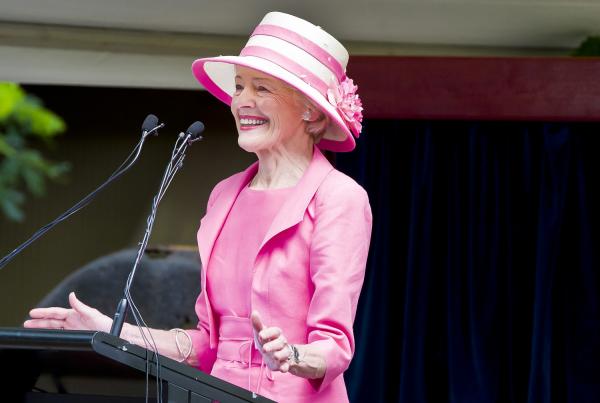
(Picture shows Dame Quentin Bryce opening the Defence Museum in Darwin)

Boys Names from the Top 100 of the 1940s

08 Sunday Mar 2015

Posted by A.O. in Name Themes and Lists

≈ 4 Comments

Tags

Anglo-Saxon names, animal names, aristocratic names, aristocratic surnames, aristocratic titles, Biblical names, Breton names, CB radio voice procedures, classic names, english names, ethnonyms, fictional namesakes, French names, Gaelic names, germanic names, Greek names, Irish names, Latin names, locational names, mythological names, name history, name meaning, name trends, names from television, names from video games, names of flags, nicknames, Norse names, papal names, Roman names, royal names, saints names, Scottish names, slang terms, surname names, US name trends, Welsh names

AUGUST-15-1945-Ern-Hill-the-Dancing-Man-in-Eliza-5741858

Alan
Breton name, common amongst aristocracy, introduced to England by the Normans, where it became one of the most popular names. The meaning is uncertain – the word alan was used in Brittany to mean “fox”, but evidence suggests it originally meant “deer”. The two meanings may both refer to someone with red hair, or to indicate speed. There is also an Irish name Ailin, meaning “little rock”, very similar to the Irish/Scots Gaelic word alainn, meaning “handsome”, while the Welsh Alun may mean either “nurturing” or “wandering”. When the Normans brought Alan with them, the name spread to Scotland as Breton lords gained lands there – perhaps partly because the Scots already had similar names. Another theory is that the name comes from the Alans, Indo-Iranian peoples who settled in parts of France and Brittany in the Middle Ages; their name has the same origin as Aryan, meaning “noble”. There are several saints named Alan. Alan is a classic name which has never left the charts. It was #55 in the 1900s, and peaked in the 1940s at #20, leaving the Top 100 in the 1980s. It has recently had a small rise in popularity, and is around the 300s. Surname variants Allan and Allen have also been popular; Allen is back on the charts, while Allan has disappeared. I have seen a few babies named Alan and Allen lately.

Cecil
English form of the Roman family Caecilius. The Caecilii traced their ancestry back to the mythical figure Caeculus, a son of the smith god Vulcan. According to legend, Caeculus had mastery over fire, and was unharmed by it, although the smoke damaged his eyes, which were smaller than usual – his name means “little blind boy” in Latin. Another story is that the Caecilii were descended from Caecas, a follower of the legendary Roman hero Aeneas: his name means “blind” as well, although it also can be translated as “dark, secret”. Of course both these tales are just folklore. The name Cecil has been used since the Middle Ages, and it was also given in honour of the noble Cecil family, whose surname comes from the name Seisyll, Welsh form of the Roman name Sextilius, from Sextus, meaning “sixth”. Cecil was #18 in the 1900s, and was #89 in the 1940s. It left the Top 100 the following decade, and dropped off the charts in the 1970s. I recently saw a baby Cecil, and I think this name seems pretty hip.

Clifford
English surname, from a village in Herefordshire meaning “ford at the cliff”. The Cliffords are a noble family who originally came over with the Normans, and were prominent in medieval England. One of their members was Rosamund Clifford, “The Fair Rosamund”, who was the mistress of Henry II. Clifford has been used as a first name since at least the 16th century. Clifford was #61 in the 1900s, peaking in the 1910s and 1920s at #59. It was #92 in the 1940s, left the Top 100 the following decade, and was off the charts by the 1990s. This name will remind many parents of the classic children’s book series, Clifford the Big Red Dog. It seems strong and solid.

Desmond
Anglicised form of the Irish surname O’Deasmhumhnaigh, meaning “son of the man from Desmond”. Desmond is the original name for South-West Munster, and means “south Munster”. Munster means “land of Muma”; Muma was a goddess associated with writing. Desmond became prominent as an aristocratic title, as the Earls of Desmond were lords of Ireland, related to royal houses in England and France. Their family name was FitzGerald, and US President J.F. Kennedy is believed to have been descended from them. Desmond has been used as a personal name since the 18th century, and originated outside Ireland. Desmond was #127 in the 1900s, joined the Top 100 in the 1920s, and peaked in the 1940s at #66. It left the Top 100 in the 1960s, and dropped off the charts in the early 2000s. This name is rising in popularity in the US, and I wonder if that could happen here too? Desmond Miles from the Assassin’s Creed video game series, and Desmond from Lost are contemporary namesakes.

Gregory
From the Greek name Gregorios, meaning “watchful”. Because the Latin for “flock” is grex, it became understood as “shepherd”, the idea being that the shepherd would keep watch over his flock. Because of this, it became a popular name for monks and bishops to adopt, and there have been dozens of saints and 16 popes with the name Gregory. Pope Gregory I was known as Gregory the Great, and he is famous for sending Christian missionaries to England to covert the Anglo-Saxons, and for the Gregorian chant, which is attributed to and named after him. Because of him, Gregory has been a common English name since the Middle Ages. Gregory is a classic name which has never left the charts. It was #143 in the 1900s, and joined the Top 100 in the 1930s. It was #34 in the 1940s, and peaked in the 1950s at #7 (when Gregory Peck was big in Hollywood). It didn’t leave the Top 100 until the 1990s, and is currently around the 600s and fairly stable. It may not be stylish, but this is a solid choice.

Maurice
French form of Roman name Mauritius, derived from Maurus, meaning “man from Mauretania”. Mauretania was a region of the Roman Empire where north Africa is today, so the name is often understood as “dark-skinned”, and sometimes translated as “a Moor” (the old name for someone from northern Africa). The name became commonly used because of St Maurice, a 3rd century Egyptian who served in the Roman army. According to legend, he was part of a Christian legion who refused to kill other Christians, and were martyred together. As a Roman soldier, St Maurice was patron of the Holy Roman Emperors and many of the royal houses of Europe, so his name became used by royalty and nobility. Prince Maurice of Battenberg was Queen Victoria’s youngest grand-child; he was killed in action during World War I. Maurice was #71 in the 1900s and peaked in the 1920s at #52. It was #82 in the 1940s, and left the Top 100 the following decade; it dropped off the charts in the 1990s. Maurice has a rather nerdy image, although AFL fans may be reminded of footballing great Maurice Rioli. It can be said muh-REES or MOR-is, with Reese or Morrie as the nicknames.

Norman
Germanic nickname or surname meaning “north man”, referring to Vikings. The Normans were descendants of Vikings who had taken over and settled the region of northern France now known as Normandy. Later a Norman duke named William conquered England, so that the Normans became an important part of British history and culture. The name Norman or Normant was used in England even before the Conquest, and became more common after 1066, although dropped off again in the late Middle Ages. It never went out of use, but became much more popular in the 19th century, due to the Victorian love of anything antique-sounding. In Scotland, it was used to Anglicise the Norse/Gaelic name Tormod, meaning “courage of Thor”. Norman was #19 in the 1900s, and peaked in the 1920s at #14. It was #46 in the 1940s, left the Top 100 in the 1960s, and disappeared from the charts in the 1990s. There are many Australian namesakes, from artist Norman Lindsay to comedian Norman Gunston to pop star Normie Rowe. Many people still remember Norm, from the Life. Be in it fitness campaign, representing a pot-bellied man as “the norm”.

Raymond
The Germanic name Raginmund is composed of ragin, meaning “advice, counsel” and mund, “protection”; it is sometimes translated as “protected by good counsel”. The Normans introduced it to England in the form Reimund, where it became very common in the Middle Ages. It was a traditional name amongst medieval nobility, and there are several medieval saints called Raymond. Never out of use, Raymond is a classic name which has always remained on the charts. It was #33 in the 1900s, and peaked in the 1940s at #9. It left the Top 100 in the 1990s, and hit its lowest point in 2009 at #326. Since then it has improved its popularity ranking, and is currently in the 200s. With Roy- names so fashionable, Ray- names cannot help getting a boost as well, and Raymond is not only a solid classic choice, but one which has recently gained some cachet. Plenty of parents love Raymond!

Roger
From a Germanic name meaning “famous spear”. The Normans introduced the name to England in the form Rogier, where it replaced the Anglo-Saxon form, Hroðgar or Hrothgar, which is found in the poem Beowulf as the name of a Danish king. The name was common in medieval England, heavily used by the aristocracy, and there are a couple of saints named Roger. It has never gone out of common use, even though roger was a slang term for “penis” – possibly because of the spear connection. More recently, roger has become understood as “to have sexual intercourse”. It has often been chosen for comic characters, such as the Beano‘s Roger the Dodger, Roger Ramjet, Roger Rabbit, Roger the alien from American Dad, and Roger the Shrubber from Monty Python’s Holy Grail (not to mention “Welease Woger” in The Life of Brian). Roger was #155 in the 1900s, joined the Top 100 in the 1930s and peaked in the 1940s at #57. It left the Top 100 in the 1970s, and dropped off the charts in the late 2000s, albeit with a sudden burst of use in 2009, when it got up to #384. Although perhaps too many jokes have been made at its expense, the pirate flag of the Jolly Roger, and radio procedure call of Roger give it a rollicking feel.

Stephen
English form of the Greek name Stephanos, meaning “wreath, crown”, to denote the laurel wreath worn by those who achieved victory in contests. In the New Testament, St Stephen was a deacon of the early church who was martyred by stoning. As the first martyr, St Stephen’s name seems apt, and he is often said to have won his martyr’s crown. There are several other saints with the name, and nine popes. The name Stephen became more popular in England after the Norman Conquest, and although it is a common name for royalty in eastern Europe, there has only ever been one English king with the name. Stephen of Blois was a grandson of William the Conqueror who took the throne in controversial circumstances; his rule marked a period of anarchy as he fought the Empress Matilda for the right to rule. In the end he failed, and his name has never been used again for a British king. Never out of common use, Stephen is a classic name which has remained on the charts. It was #72 in the 1900s, was #36 in the 1940s, and peaked in the 1950s at #5. It didn’t leave the Top 100 until the early 2000s, and is currently fairly stable around the 300s. The variant Steven, in use since the Middle Ages, is more popular than Stephen, around the 200s.

POLL RESULTS
People’s favourite names were Desmond, Stephen and Gregory, and their least favourite were Roger, Maurice and Norman.

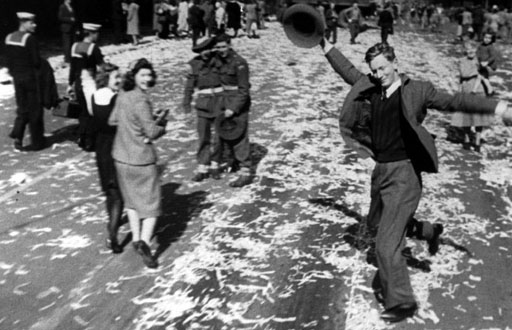
(Picture shows the famous “dancing man” from the joyous celebrations in the streets of Sydney which marked the end of World War II in August 1945)

Girls Names from the Top 100 of the 1940s

01 Sunday Mar 2015

Posted by A.O. in Name Themes and Lists

≈ 10 Comments

Tags

animal names, aristocratic names, Biblical names, classic names, colour names, controversial names, created names, dated names, english names, fictional namesakes, French names, gemstone names, German names, Greek names, hebrew names, Latin names, middle names, mythological names, name history, name meaning, name popularity, nature names, nicknames, plant names, rare names, retro names, royal names, saints names, Spanish names, underused classics, unisex names, vocabulary names

029692

These are names of babies born during World War II, and the first baby boomers, born in the years just after the war. If you are an older parent, your own mother might have been born in this decade, while young parents may see 1940s names as “grandma” names. For those wanting a name that’s ahead of the curve, there are rich pickings from this time period.

Coral
Coral is a gemstone made from the polished shells or exoskeletons of coral polyps – originally, and typically, Corallium rubrum, from the Mediterranean. Because this species has a pink or red colouring, the word coral also refers to a pinkish colour. The ancient Romans believed coral would protect children, and it was common for baby toys and teething rings to be made from coral, even in the 19th century. Coral jewellery has been worn since prehistoric times, although it was the Victorian era which made coral fashionable. Today, with greater awareness of the environmental impact of harvesting coral, many jewellers will no longer sell coral items, and consumers are urged to boycott jewellery made from coral. The name Coral was #194 in the 1900s, and joined the Top 100 in the 1930s. It peaked in the 1940s at #79, left the Top 100 the following decade, and was off the charts by the 1980s, perhaps partly due to growing environmental concerns. Leaving aside the gemstone, you could see this name as a way to celebrate our beautiful coral reefs, and marine environment.

Daphne
In Greek mythology, Daphne was a naiad; a nymph of fresh water, and daughter of a river god. Acording to legend, she was so beautiful that the god Apollo pursued her. Just as he was about to catch her, she pleaded with her father to help her, and he turned her into a laurel tree – Daphne literally means “laurel”, and it’s also the scientific name for the plant. The laurel became sacred to Apollo, and wreaths of laurel were traditionally given to those who had achieved victory. The name Daphne has been use since the 18th century, when classical names became fashionable, but only became common in the 19th, because of the interest in botanical names. Daphne was #82 in the 1900s, and peaked in the 1920s at #22. It was #76 in the 1940s, left the Top 100 the following decade, and was off the charts by the 1970s. Recently it been in the charts again, and is around the 300s. Charming retro Daphne makes a distinguished choice, not a daffy one.

Frances
Feminine form of Francis, often given in tribute to St Francis of Assisi, although St Frances of Rome provides a medieval female saintly namesake. The name was commonly used by the British aristocracy, with examples such as Frances Cobham, a close friend of Elizabeth I, and Frances Grey, the mother of queen-for-nine-days Lady Jane Grey. The great Restoration beauty Frances Stewart, Duchess of Richmond and Lennox, drove King Charles II batty with desire, but she refused to become his mistress. Her lovely face was used as the model for Brittania on coins, medals, and statues, and can still be seen today. In common use since the 16th century at least, Frances is a classic name which has never disappeared from the charts. It was #52 in the 1900s, and peaked in the 1940s at #47, leaving the Top 100 in the 1970s. It sank into obscurity in the late 2000s, but had a boost at the start of this decade which saw it move into the 500s, and is now around the 200s. More solid than Francesca, Frances is a quiet achiever which gets royal glamour from being the middle name of Diana, Princess of Wales, and offers the cool nickname Frankie.

Irene
From the Greek Eirene, meaning “peace”. In Greek mythology, Eirene was the personification of peace, depicted as a beautiful young girl carrying symbols of plenty. Another mythological Eirene was a daughter of Poisedon. The name was in use in ancient Greece, and one Eirene was a famous artist. There are a number of saints named Irene, with Irene of Thessalonica martyred with her sisters Love and Purity, so personifications of theological virtues. Originally more popular in eastern Christianity, it was the name of a Byzantine Empress, and has been used by European royalty. The name was originally pronounced e-REE-nee, but is usually said IE-reen now. Irene is a classic name which has never left the charts. It was #19 in the 1900s, and peaked the following decade at #17. It was #56 in the 1940s, and left the Top 100 in the 1960s. It reached its lowest point in the late 2000s at #684, and since then become more popular, perhaps because it’s been used for several fictional characters in the past few years. Currently it’s around the 400s. This is a hip, underused classic with a lovely meaning.

Lois
In the New Testament, Lois was the pious grandmother of Saint Timothy. It’s not known what the name means: it may be from the Greek meaning “more desirable, more agreeable”, and understood as “the most beautiful, the best”. However, as Lois was Jewish, it could be an attempt to Hellenise a Hebrew name. Lois is also a male name – an Occitan and Galician form of Louis. The female name Lois has been in use since the 16th century, and was used by Puritan families. Lois Lane, Superman’s love interest, has given the name publicity for many decades, but more recently it has become a “mum name” on TV, with Lois Wilkerson from Malcolm in the Middle, and Lois Griffin from Family Guy. Lois joined the charts in the 1910s, debuting at #181. It joined the Top 100 in the 1930s, when it peaked at #84, and was #93 in the 1940s. It left the Top 100 the following decade, and was off the charts by the 1970s. Soft sounding Lois would make an interesting alternative to popular names such as Eloise.

Marlene
German name combining Maria/Marie and Magdalene, so it commemorates Mary Magdalene from the New Testament, the chief female disciple of Jesus Christ. The German pronunciation is mahr-LE-nuh, but it is often said MAHR-leen in English. The name became well known in the English speaking world because of iconic German-American film star Marlene Dietrich, whose real name was Marie Magdalene. The name Marlene rocketed into the Top 100 from nowhere in the 1930s when Dietrich became a star after appearing as the uberdesirable Lola Lola in Josef von Sternberg’s movie The Blue Angel. It both debuted and peaked at #63 in the 1930s. The name Marlene was #68 in the 1940s, when Dietrich did valuable war work, such as performing for the troops and raising war bonds. By the 1950s, when Dietrich became a cabaret star, the name Marlene had left the Top 100. It left the the charts in the 1980s, when Dietrich’s career was over. Despite being a dated name which spiked in popularity only briefly, Marlene still seems glamorous and sexy, fitting in with modern names such as Marley and Elena.

Pamela
Created by Sir Philip Sidney for his 16th century epic, the Arcadia; in the story, Pamela is an attractive main character. It is usually thought that Sidney based the name on the Greek for “all sweetness”. The name was given publicity by Samuel Richardson’s best-selling 18th century novel, Pamela, where a lovely teenaged maidservant is threatened with rape by her employer, but she successfully resists him, and is rewarded for her virtue by being allowed to marry him. Not only are there so many things wrong with that sentence, it was apparently based on a true story. Pamela was originally pronounced pa-MEE-luh, but PAM-eh-luh is more usual now. Pamela has been used since the 17th century, and an early namesake was Lady Edward Fitzgerald; although her real name was Stephanie, she named her eldest daughter Pamela. Pamela joined the charts in the 1910s, debuting at #310, and peaked in the 1940s at #9. It left the Top 100 in the 1970s, and hasn’t been on the charts since the early 2000s. This is an elegant literary name which is dated, but still seems very usable.

Ruth
In the Old Testament, Ruth was the loyal widowed daughter-in-law of Naomi, who famously offered to follow her mother-in-law wherever she went. Naomi married Ruth to one of her relatives, who called Ruth a “noble character”; she is one of the nicest people in the Bible, blessed with a loving spirit. Her name comes from the Hebrew ru’at, meaning “friend, companion” – it seems chosen for the story, as she was such a good friend to Naomi. Ruth is also an English word meaning “mercy, compassion” – it’s one of those words which only seems to be used in its negative form, as we often describe people as ruthless, but rarely ruthful. Ruth has been in common use throughout the modern era, and is a classic name which has never left the charts. It was #66 in the 1900s, and peaked in the 1920s at #41. It was #58 in the 1940s, and left the Top 100 in the 1970s. It’s currently around the 500s. An underused classic with two lovely meanings and a sweet namesake, this is a great name. After all, you can’t spell truth without Ruth!

Thelma
Popularised by Marie Corelli’s 1887 novel Thelma; in Corelli’s romance, Thelma is an enchantingly beautiful, snow-pure Norwegian princess who marries an English nobleman. The name Thelma had been in use since at least the 18th century, but the meaning is not known. One theory is that it is based on the Greek word thelema, meaning “will”, but there is no evidence to support it. It may be a variant of Selma, since Selma is a common name in Scandinavia even today, and Thelma was used in Norway before the novel was published. The name Thelma was also used in Spanish-speaking countries before Corelli’s novel, and Anselma (the long form of Selma) is a Spanish name. Thelma was #18 in the 1900s and peaked the following decade at #9. It was #96 in the 1940s, left the Top 100 by the following decade, and was off the charts by the 1970s. With the name Selma now receiving a boost from the film, could its clunky sister Thelma be in with a chance?

Valerie
English form of the French name Valérie, from the Latin name Valeria, the feminine form of Valerius, meaning “strong, healthy”. It comes from the same source as the name Valentine. St Valerie was a legendary French saint who was martyred by beheading, then went for a walk carrying her head. This was a popular thing for French saints to do in medieval legends, so the name Valerie got quite a boost. Valerie is a classic name which has never left the charts. It was #180 in the 1900s, and joined the Top 100 the following decade. Peaking in the 1930s at #12, it was #38 in the 1940s. It left the Top 100 in the 1960s, and has remained in uncommon use. It had a small boost at the start of this decade, when it was in the 400s. Valerie is a classic with a rather luscious feel to it. It makes a great middle name too.

POLL RESULTS
People’s favourite names were Daphne, Coral and Frances, and their least favourite were Marlene, Thelma, and Pamela.

(Picture shows members of the Women’s Auxiliary Air Force working on a RAAF plane; photo from the Australian War Memorial)

Famous Name: Charles

26 Thursday Feb 2015

Posted by A.O. in Famous Names

≈ 6 Comments

Tags

Anglo-Saxon names, Australian idioms, Australian names, Australian slang, classic names, english names, famous namesakes, French names, German names, germanic names, name history, name meaning, nicknames, popular names, royal names, saints names

6126726-3x2-700x467

Famous Namesake
Fifty years ago, on February 12 1965, a bus left Sydney University on a two-week tour of rural New South Wales. Aboard was a group of 29 white and black activists, mostly students, who had been inspired by the American civil rights movement of the 1960s to protest in support of Indigenous civil rights.

The bus trip had been organised by Student Action for Aborigines, and their elected president was Charles “Charlie” Perkins, one of only two Indigenous students at Sydney University, and a huge fan of Dr Martin Luther King. The trip was later dubbed the Freedom Ride, after the famous Freedom Riders of the American civil rights movement, who took buses through the southern states in 1961 to protest racial segregation.

Some members of SAFA saw themselves as on a fact-finding mission to collect evidence of discrimination against Aborigines in rural Australia. At the time, many Australians believed racism was a problem which existed only in South Africa, or in the deep south of the United States. But the Australian Freedom Riders found that apartheid and segregation did not just happen overseas.

The SAFA were shocked to find the poor living conditions of most rural Aborigines, and that hospitals, schools, and churches separated black people from white in some country towns, as did milk bars, pubs, and cinemas. In others, Indigenous Australians were barred from entering swimming pools, clubs, or restaurants, while it was routine for them to be refused service in shops and businesses.

The students made several non-violent protests on their bus trip, and also tried to encourage Indigenous Australians to join their protests and demand better treatment. In Moree they helped Aboriginal children to go swimming at the pool in defiance of the race-based ban against them, and were greeted with hostility by white locals, who threw eggs, rotten fruit, and stones at the protesters while spitting at them. However, they were eventually able to persuade the town council to overturn the ban.

One of the students on the Freedom Ride was also an ABC journalist, and the SAFA had ensured plenty of media coverage on their bus trip – they even made the news internationally. With the events of the Freedom Ride appearing on television, radio, and in newspaper articles, and with the harsh injustice against Australian Aborigines exposed, it was no longer possible for white Australians to claim ignorance of racism in their own country.

Charles Perkins graduated from Sydney University with a Bachelor of Arts in 1966, becoming the first Indigenous Australian man to graduate from university. The following year, as manager of the Foundation for Aboriginal Affairs, he headed the campaign to advocate for a Yes vote in the Referendum which allowed Aboriginal people to be counted in censuses, and for parliament to be allowed to introduce legislation specifically for Aboriginal people. The Referendum passed, with more than 90% of Australians voting Yes.

He became a public servant with the Office of Aboriginal Affairs, and in 1981 was appointed Permanent Secretary of the Department of Aboriginal Affairs – the first Indigenous Australian to become permanent head of a federal government department. He took leadership roles in the Aboriginal community, and, being a former soccer player, was also appointed to key positions in football administration. He received many awards and honours during his lifetime.

On February 18 this year, his daughter Rachel Perkins was among those who took a bus from Sydney University in a re-enactment for the fiftieth anniversary of the Freedom Ride. Along the way, they were greeted warmly by the communities they entered, rather than having stones thrown at them or being run off the road, as a sign of how things have changed.

Although this year’s five-day bus trip could celebrate improvements in the lives of Indigenous Australians, such as being counted in the census and having access to the same education as white people, it also highlighted the disadvantages that many Aborigines continue to suffer, such as poverty, unemployment, health issues, higher rates of incarceration, and covert racism. The work of the Freedom Riders is by no means complete.

Name Information
Charles is the French form of the Germanic name Karal, which in modern German is Karl; it comes from the Germanic karlaz, meaning “a free man”. In Anglo-Saxon English karlaz became ceorl, denoting the lowest rank of freemen – a peasant who was neither a slave nor a serf. Ceorl does seem to have been used as a name in Anglo-Saxon England, even by royalty. By modern times, the word had become churl, understood as “a country person, someone of low social status”, and eventually seen as someone rude, loutish and vulgar – exhibiting what we call churlish behaviour.

The name has become widely known chiefly because of Charles Martel, a powerful Frankish military leader who never held the title of king, but nevertheless ruled Francia (modern France) as Duke and Prince, and divided the kingdom of the Franks between his sons, just as kings did. His grandson was Charles I, otherwise known as Charlemagne (Charles the Great), called “The Father of Europe”. He united western Europe and laid the foundations for modern France and Germany; his kingdom is known as the Carolingian Empire.

Little wonder the name Charles was a favourite in the French monarchy; the last one was Charles X, who ruled in the 19th century until being forced to abdicate and go into exile. This means that Charles remained a French royal name for over a thousand years.

The name Charles became used by British royalty due to the Stuart kings, who were Scottish; Scotland has long had ties with France. Charles I wasn’t a terrifically popular king, and fought against his enemies in the English Civil War. Losing that, he refused to accept the parliament’s demand for a constitutional monarchy, and was beheaded for treason. He is regarded as a martyr in Anglicanism.

England became a republic for a few years, until the monarchy was restored with the accession of Charles’ son. Charles II was known as the Merry Monarch for his decadent lifestyle, and although he couldn’t stick the parliament either, he managed to dissolve it without getting his head cut off.

We may get a King Charles III in the near future, although some are of the opinion that Charles is not a suitable name for a modern king. The first two Charleses were anti-parliament and resisted a constitutional monarchy, while Charles II is considered to have lived an “immoral” life that we now expect kings not to emulate. (Maybe the spaniels are also an issue). Prince Charles could rule under any of his names, and a popular belief is that he will choose to take the throne as George VII.

There are quite a number of saints named Charles, and several religious leaders, such as Charles Wesley, who co-founded the Methodist Church, and Charles Spurgeon, a famous Baptist preacher.

Famous people from Australian history include explorer Captain Charles Sturt; naval officer Sir Charles Fremantle, after whom the city of Fremantle is named; Charles La Trobe, first Lieutenant-Governor of Victoria; Sir Charles Menzies, founder of the city of Newcastle; astronomer and pioneering meteorologist Charles Todd; Charles Harpur, our first real poet; Sir Charles Kingsford Smith, World War I flying ace and pioneer aviator; Antarctic explorer Charles Laseron; distinguished film-maker Charles Chauvel; artist Charles Blackman; and brilliant neurosurgeon Charles “Charlie” Teo.

Charles is a classic name which has never left the charts, and barely been out of the Top 100. It was #7 in the 1900s, and reached its lowest point in the 1980s at #116. It was back on the Top 100 by the following decade, and since then its position has been fairly stable. In 2013, it was #81 nationally, #81 in New South Wales, #88 in Victoria, #85 in Queensland, #53 in Tasmania, and #86 in the Australian Capital Territory.

With Charles, you get a handsome, elegant classic and a solid, traditional name. Its history takes you back to European royalty, and Charles still feels regal and noble. However, lest the name feel too stiff and formal, it has a number of relaxed, casual nicknames.

Charlie is a popular name in its own right, while the older-style Chas is familiar from comedian Chas Licciardello. The vintage nickname Chilla, which appears to be uniquely Australian, is perhaps best known from 1950s Olympic athlete “Chilla” Porter. The American nicknames Chip and Chuck are rarely used here, probably because they mean “French fry” and “vomit” respectively in Australian English.

POLL RESULTS
Charles received an excellent approval rating of 82%, making it one of the top-rated names of 2015. People saw the name Charles as strong and handsome (18%), a name with history and substance (17%), and formal and elegant (15%). 16% of people thought the nickname Charlie was cute. However, 9% thought the name was too stuffy and old-fashioned. Only one person was bothered by the linguistic connection to the word churlish, and only one person thought the nickname Charlie was silly and childish.

(Picture shows Charles Perkins on the “Freedom Ride bus trip; photo from National Geographic)

Historical Naming Patterns in the House of Windsor – Part 2: Sisters for Prince George

22 Sunday Feb 2015

Posted by A.O. in Naming Issues

≈ 6 Comments

Tags

famous namesakes, honouring, middle names, popular names, royal names, saints names, sibsets, UK name popularity

queen1

Last week I examined how babies have been named in the House of Windsor, with a look at the factors common to the names of those close to the throne. By following those methods used in the past, I looked at names that could be considered for a brother for Prince George.

In case you can’t be bothered reading the whole post, the basic thing to keep in mind is: names of royals (kings, queens, princes, and princesses) that are currently popular. Now it’s time to look at what a possible sister to Prince George could be called.

Elizabeth #39
There have been several princesses named Elizabeth, five British queens, and one queen of Scotland named Elizabeth; of course Elizabeth II is the current monarch, and her mother’s name was Elizabeth too. Elizabeth is also the middle name of the duchess. Current gossip says that Elizabeth is the name that the Duke and Duchess have already chosen for their baby, should they have a girl, and gained permission from the queen. As 2015 is the year that Queen Elizabeth is set to become the longest-reigning monarch in British history, it would seem like the perfect gesture, especially if the baby arrives on Queen Elizabeth’s birthday. A cute connection is that Lily could be used as the nickname, which is one of Catherine’s favourite flowers.
My rating: nine coronets

Alice #27
A name introduced to the royal family by Queen Victoria, there have been four princesses named Alice. The most recent was an aunt of Queen Elizabeth, who was married to the Governor-General of Australia, and lived here for two years after World War II. She reached the greatest age of anyone yet in the British royal family, passing away at the age of 102. Another was Alice of Battenberg, a great-granddaughter of Queen Victoria who married into the Greek royal family, and became the mother of Prince Philip. Alice is one of Princess Anne’s middle names, and it is also a prominent name in the Spencer family, as Alice Spencer was a patron of the arts. And don’t George and Alice sound adorable together? No wonder this has often been tipped as a possibility.
My rating: eight and a half coronets

Victoria #88
This only became a British royal name with the accession of the teenaged Alexandrina, who used her middle name to rule as Queen Victoria. The last of the Hanoverians, the longest-reigning British monarch so far, and a powerful symbol of the British Empire, Victoria is an eminently suitable royal name which has been handed down to seven princesses – Queen Victoria’s mother was another Princess Victoria. In fact, Alice of Battenberg’s first name was Victoria, making this another possibility to honour the mother of Prince Philip. A popular choice with the bookies, Victoria is said to be one of Catherine’s favourite names (more gossip!). The timing is perhaps not as good as for Elizabeth, with the queen set to overtake Queen Victoria’s record reign next year.
My rating: eight coronets

Eleanor #57
This name was introduced to English royalty by Eleanor of Aquitaine, a wealthy, powerful French duchess who married Henry II, and was the mother of two kings – Richard I, and King John. Other medieval Eleanors married English kings, and the name was handed down to multiple princesses.  This seems a very suitable name for a princess; elegant and restrained with an impeccable royal pedigree. It’s the name of one of Prince William’s Spencer cousins, which isn’t necessarily a drawback – all three of Prince George’s names are shared with Spencer cousins.
My rating: seven and a half coronets

Amelia #1
There have been two British princesses named Amelia – one a daughter of George II, and the other a daughter of George III. The latter Amelia (called Emily) was beautiful and charming, and great hopes for held for her future, but unfortunately she died of measles, and her death devastated the royal family, helping to precipitate her father into madness. There is an Amelia in the Windsor family, a grand-daughter of Prince Edward, Duke of Kent, and one in the Spencer family as well, a cousin of Princes William and Harry, who is considered rather “wild”. There is no historical reason a #1 name would be rejected (the queen’s sister Princess Margaret had the #1 name of her era), and Amelia is in with a genuine chance, although it may come with some baggage.
My rating: six coronets

Sophia #15
This is a truly royal name, because Sophia of Hanover was the mother of King George I, and to be in the line of succession to the British throne, you must be a direct descendant of Sophia. There has been a queen named Sophia (George I’s wife), and three princesses, with the most recent being born in the 18th century. Sophia has been used as a middle name in the royal family fairly often, although I think George and Sophia as royal siblings are a bit much.
My rating: five coronets

Alexandra #102
Queen Alexandra was the wife of Edward VIII; a Danish princess by birth, she was elegant, fashionable, and extremely popular with the British public. There have been a number of princesses named Alexandra, including ones still living – a notable example is Princess Alexandra, who is a cousin of the queen, and one of the most active members of the royal family. It’s a popular royal middle name, and the queen herself has Alexandra as one of her middle names. To me this would be a slightly odd choice, as Alexander is one of Prince George’s middle names
My rating: four coronets

Sophie #9
This is a name from Prince Philip’s family, because Princess Sophie of Greece and Denmark was the Duke of Edinburgh’s sister. Another family connection is that Prince Edward’s wife is named Sophie, and she has reportedly been a good friend to Catherine, as well as a favourite of Queen Elizabeth. Despite not being a name of a British queen or princess, I don’t think Sophie can be entirely ruled out.
My rating: three coronets

Charlotte #21
Queen Charlotte was the wife of George III, and there have been two Princess Charlottes in the British royal family named after her. The last one was Princess Charlotte of Wales, who died young in childbirth, deeply mourned by the public, who had hoped she would one day be queen. Although not used for a princess since, Charlotte is in use as a middle name in the current royal family. Charles Spencer, brother to Diana, Princess of Wales, has a very young daughter named Charlotte Diana, so a bit awkward to use it if the duke and duchess also want Diana as the middle name. Although the name could seem like a nod to Prince Charles, so far the royal family has not used feminised forms of male names to honour men. Charlotte is also the middle name of Pippa Middleton, sister to the duchess; although some people think this makes the name more likely, to me it makes it less likely, because the royals probably don’t want the name to seem as if it is honouring a commoner in-law.
My rating: two coronets

Isabella #8
This was a reasonably common royal name in the Middle Ages, introduced by a beautiful French countess who married King John. Another beautiful queen was the Isabella who married King Edward III; a French princess, she became known as The She-Wolf of France for her intrigues against her husband, which led to him being deposed, and their son Edward III becoming king. For ever after, she has been viewed as a femme fatale figure. This name has also been used in the Spencer family, but its wolfish image is problematic. I think it’s too ornate for a British princess, and the Twilight connection probably isn’t a help.
My rating: one coronet

Matilda #36
This name goes right back the beginning of English royalty, because Matilda of Flanders was the wife of William the Conqueror. There have been three other medieval English queens named Matilda, and one princess who became the Empress Matilda and claimed the English throne during a period of anarchy – she was never proclaimed queen, but rather Lady of the English, and her son was made king when he was old enough. In more modern times, Matilda has been used as a middle name within the royal family. This name would greatly please the royal family’s Australian subjects, although I can’t think of any reason why they would particularly want to please us, unless that toy bilby we gave Prince George was a bigger hit than it seemed at the time. I can’t say this is impossible, but it doesn’t seem at all likely.
My rating: one coronet

Emma #55
This royal name pre-dates the Norman Conquest, because Emma of Normandy married both Ethelred the Unready and Cnut the Great, and was the mother of Edward the Confessor, once regarded as a patron saint of England. She was the first English queen to have a portrait, and was both rich and influential. Despite being way, way back, she is an ancestor of the current royal family. However, I do think this is just too mists-of-timey.
My rating: half a coronet

Edith #164
Edith was a common royal name in Anglo-Saxon times, and one princess named Edith was a saint. Edith of Essex was the wife of Edward the Confessor, and highly influential. While this is very ancient history, Matilda of Scotland, who married Henry II and was the mother of the Empress Matilda, was baptised Edith, only receiving the Norman name Matilda upon her marriage to a Norman king. Although she was a stand-out queen, and the link between modern royalty and the Anglo-Saxon kings, this is a pretty flimsy connection, and regrettably it seems most unlikely, although personally I would love it. So English, so regal, so refined, and quite a fashionable name to boot.
My rating: half a coronet

Maria #83
Maria d’Este was an Italian princess who became queen through marrying James II, but she was known as Queen Mary in England until her husband fled to France during the Glorious Revolution. Too foreign.
My rating: zero coronets

Beatrice #95
This has a long, if sparing, use as a royal name. Beatrice of England was the daughter of Henry III, while Queen Victoria had both a daughter and a grand-daughter called Princess Beatrice. It’s currently in use by Princess Beatrice of York, Prince William’s cousin, and her name was considered an unusual choice at the time. As she is the daughter of the controversial Prince Andrew, I don’t think this is in with any sort of chance.
My rating: zero coronets

Unlike the potential princely names, which had no glaringly obvious choice, there are some very clear winners for a princess. I am tipping Elizabeth, Alice, or Victoria, with some chance of Eleanor or Amelia, and Sophia as an outsider. With solid options on the girls’ list, I can’t see any reason why the royals would need to look beyond it, and feel pretty confident one of the names in this post will be used.

UPDATE: The royal baby was a princess named Charlotte!

POLL RESULTS
People’s favourite choices for a princess were Alice, Victoria, and Eleanor. 10% of people voted for Elizabeth, and 9% voted for Charlotte, the next two most popular choices. Nobody voted for the names Sophie or Maria. 3% of people felt that the royal couple would start a new trend in baby names, which was very far from happening – the chosen name fits in well with all the historical naming patterns identified in the articles.

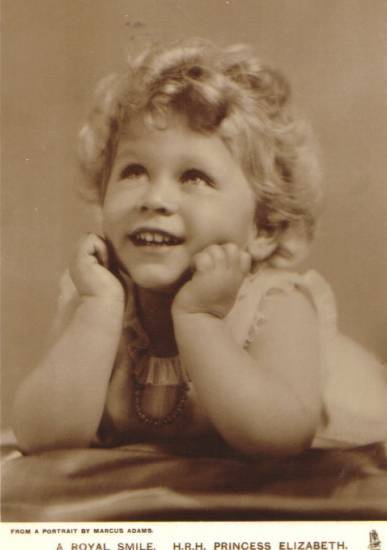
(Picture shows a photo of Queen Elizabeth II as a very young child – could there soon be another Princess Elizabeth in the House of Windsor?)

Names of Australian Prime Ministers

01 Sunday Feb 2015

Posted by A.O. in Name Themes and Lists

≈ 1 Comment

Tags

Anglo-Saxon names, aristocratic titles, Biblical names, birth notices, Christmas names, classic names, colour names, english names, famous namesakes, Gallo-Roman names, Greek names, holiday names, honouring, Italian names, Latin names, locational names, middle names, name history, name meaning, names of universities, nicknames, Occitan names, Roman names, saints names, Scottish name popularity, Scottish names, surname names, unisex names

voice-fed-r2-c1

Some people say you should give your son the kind of name that will sound good on a prime minister. Here’s ten names borne by prime ministers, as either first names, middle names, or surnames. Maybe one of them is right for your child.

Aloysius
Joseph Aloysius Lyons was the 10th prime minister, swapping from the Labor Party to lead the conservative United Australia Party. Genial and laidback, he was one of the most popular of our prime ministers, and the nation mourned when he died suddenly in 1939, becoming the first PM to die in office. He is the only Tasmanian prime minister, and his widow Dame Enid Lyons became the first woman to sit in the House of Representatives. Aloysius is the Latin form of Aloys, an old Occitan form of Louis, used to Latinise the Italian form, Luigi. Aloysius Gonzaga is a 16th century Italian saint from a noble family, who lost his life caring for plague victims not long after becoming accepted as a Jesuit. Because of the saint, Aloysius is seen as a specifically Catholic name, and is more common in the middle position. It has strong scientific credentials, as Aloysius Lilius was the first to propose the Gregorian calendar, and Dr Aloysius Alzheimer identified the first case of the disease which bears his name. Rich and flamboyant, Aloysius is usually pronounced al-uh-WISH-us in Australia.

Andrew
Andrew Fisher was the 5th prime minister, a Labor leader who served as PM three times. Originally from Scotland, he had a background working for the miner’s union. He was prime minister at the time of the Gallipoli campaign, and ultimately responsible for getting Australian troops out. Andrew is the English form of the Greek name Andreas, meaning “manly, brave”. The name came into common use because of Saint Andrew, one of the Apostles, and the brother of Saint Peter; Andrew was the first Apostle, who led the other disciples to Jesus. Tradition says Andrew preached around the Black Sea, and legend has it that he was crucified on an X-shaped cross, now called the St Andrew’s cross, or saltire. Saint Andrew is the patron of Scotland, where his relics are supposed to have been taken in the 6th century. The place of their safekeeping was renamed St Andrews, and the saltire is on the Scottish flag. Andrew is a classic which has never left the charts. It was #56 in the 1900s, and peaked in the 1970s at #4; it only left the Top 100 last year. A handsome classic with ties to Scotland, this name has had some recent bad publicity.

Christmas
Earle Christmas Grafton Page was the 11th prime minister, and leader of the Country Party, the forerunner to the National Party. He is our longest-serving federal parliamentarian, spending nearly 42 years in parliament, but was only prime minister as caretaker for three weeks after the death of Joseph Lyons. Christmas is the holiday in honour of the birth of Jesus Christ, literally meaning “Christ’s mass”. Christmas has been celebrated since the 4th century, with the December 25 date originating in Rome. While a Christian festival in origin, Christmas is commonly seen as a secular holiday that brings everyone together. Christmas has been given as a first name since at least the 16th century, and early examples were born around Christmas time. Originally Christmas was given fairly equally to boys and girls, but overall is historically much more common as a boy’s name. This may be because Christmas is also a surname, perhaps originally a nickname given to someone who organised Christmas festivities. A sweet middle name for a baby born during the Christmas season (although Earle Page was born in August), as a first name it can shorten to Chris, Christy, or Chrissie.

Deakin
Alfred Deakin was a leader in the movement towards federation who became the 2nd prime minister, serving as PM three times. The founder of the Commonwealth Liberal Party, he is honoured as a founding father by the modern Liberal Party. A man liked and admired by almost everyone, he is almost certainly Australia’s most spiritual prime minister. A sincere spiritualist, his diaries show that he prayed constantly for divine guidance, read scriptures and mystical works, and wanted his influence on the world to be one of light and truth. The surname Deakin is a variant of Deacon, an occupational surname for someone who served in the church ranking just below a priest, and whose duties included assisting the priest and carrying out parish work; the word is ultimately from the Greek for “servant”. A very old surname, it originates from Suffolk, and possibly dates to before the Norman Conquest. I have quite often seen Australian boys named Deakin (far more than ones named Deacon), and the prime minister may well be an inspiration, although Deakin University means it could be after an alma mater.

Fraser
Malcolm Fraser was the 22nd prime minister, who came to power after the controversial Dismissal of Gough Whitlam. He won three successive elections for the Liberal Party, and has had a distinguished retirement in roles for the UN and Care International. He is now estranged from the Liberal Party, and often speaks out on human rights issues. The Scottish Clan Fraser trace their origins to France, although the surname’s meaning is uncertain. One theory is that it is derived from a (now lost place name) La Frezeliere in Anjou. Another idea is that it comes from fraise, the French word for “strawberry”, and the Clan Fraser displays strawberries on its coat of arms. Although a charming notion, this is almost certainly folk etymology. Known for their skills as warriors, the Frasers fought with William Wallace and Robert the Bruce, and took part in the Battles of Bannockburn and Culloden; at the last, they were massacred in great numbers, and a great stone marks where the Frasers fell. This is a handsome name, popular in Scotland, that I quite often see in birth notices.

Grey
John Grey Gorton was the 19th prime minister and a Liberal leader, the only Senator to become PM. Although a popular man with a bit of a larrikin streak, he was a poor public speaker, and the media portrayed him as a buffoon, in contrast to the eloquent Opposition leader, Gough Whitlam. The surname Grey, a variant of Gray, could be a nickname given to someone with grey hair. It can also be a Norman name, coming from the place name Graye in Normandy; this is from the Gallo-Roman personal name Gratus, meaning “welcoming, pleasing”. This second origin seems to be the earliest, and comes from the north of England. Grey can also be given directly as a colour name – the colour grey is associated with modesty and humility, business and professional life, twilight and elves, and also ambiguity (shades of grey). The subdued Grey has been used as a personal name since at least the 16th century, and is historically more common for boys, although it works well in the middle for either sex.

Melbourne
Stanley Melbourne Bruce was the 8th prime minister, a leader of the conservative Nationalist Party. He oversaw the transfer of the national capital to Canberra, became the first PM to live at The Lodge, and modernised federal government administration. He later became an excellent ambassador and highly influential in British politics, taking a key role at the League of Nations. He was eventually raised to the peerage; the royal family attended his memorial service in London, although his ashes are scattered over Lake Burley Griffin in Canberra. Melbourne is the capital of Victoria, and considered our cultural capital. In the 19th century, it became the richest city in the world, and the second-largest after London, gaining the moniker of “Marvellous Melbourne”. Stanley Bruce was from a wealthy Melbourne family, and born in the 1880s when the city was booming and bustling, so the name was a badge of pride. Founded by John Batman from Tasmania, Melbourne was originally called Batmania, but almost immediately someone re-named it after the British prime minister William Lamb, 2nd Viscount Melbourne. A member of the Irish peerage, Lamb’s title was after his Derbyshire estate, Melbourne Hall; the nearby town of Melbourne means “mill stream”. A distinguished middle name, although Batmania has its attractions.

Paul
Paul Keating was the 24th prime minister, delivering a shock record fifth election victory for the Labor Party during the recession years of the 1990s. Cultured and intellectual with an acerbic wit and colourful range of insults, he loves Mahler and collects French antique clocks. Paul is the English form of the Roman name Paulus, meaning “small, humble” in Latin; it seems to have begun as a nickname, and gradually become accepted as a personal name. Although common in ancient Rome, the name has become widespread because of Saint Paul, the Apostle most responsible for spreading Christianity throughout the Western world. Both a Jew and a Roman citizen, the saint’s name was Saul, but his Roman name was Paulus. The New Testament tells of his dramatic conversion. A zealous persecutor of Christians, Saul had a vision on the road to Damascus where the resurrected Christ reproached him for his actions, leaving him temporarily blinded. From then on, he became an equally zealous Christian, and in the process, changed history. By tradition, Paul was martyred in Rome. Paul is a classic name which was #132 in the 1900s, and joined the Top 100 in the 1920s before peaking in 1967 at #3. It left the Top 100 in the early 2000s, and is currently in the mid-200s. A softer-sounding boy’s classic which works well as both a first and middle name.

Reid
Sir George Reid was the 4th prime minister, and leader of the conservative Free Trade Party. A humorous and entertaining orator, audiences flocked to his election meetings, although his enemies viewed him as a clown. After his term in office, he was appointed Australia’s first High Commissioner in London, where he made himself so popular that he was elected to the British House of Commons during World War I. The surname Reid is a variant of Read, Reade and Reed, and generally accepted as a Scottish form, as the reid spelling comes from Northumberland near the Scottish border. It is derived from read, the Old English word for “red”, and began as a nickname for someone with red hair or a ruddy complexion. Reid has been used as a first name since the 17th century, and was first used this way in Scotland. Strong, short and simple, I occasionally see this in birth notices, although more commonly as a middle name: I have even seen it chosen for a girl.

Winston
John Winston Howard was the 25th prime minister, winning a record number of seats for the Liberal Party at the 1996 election so that the party would have been able to govern in its own right. He served four terms as PM, spending almost twelve years in the role. The name Winston is strongly associated with inspirational wartime British prime minister, Sir Winston Churchill, who John Winston Howard is named for. Churchill was named after his 17th century ancestor Sir Winston Churchill, whose name was his mother’s maiden name: she was Sarah Winston, daughter of Sir Henry Winston of Gloucestershire. After this, the name became traditional in the Churchill family. There is an Anglo-Saxon personal name Wynstan, meaning “joy stone”, usually given as the origin of Winston. The Churchill’s Winston surname is probably from the village of Winstone in Gloucestershire, which means “Wynna’s stone”, with Wynna meaning “joy”, so having much the same meaning. However, if it ultimately comes from the village of Winston in Suffolk, it means “Wine’s settlement”, with Wine meaning “friend”, so “friend town”. Nice either way. This is fast becoming seen as a hip, sophisticated choice.

POLL RESULTS
People’s favourite names were Winston, Reid, and Fraser, and their least favourite were Paul, Melbourne and Christmas.

(Picture shows a poster for the centenary of Federation at an exhibition at Deakin University in Victoria)

Names of Australian Prime Ministers’ Wives

25 Sunday Jan 2015

Posted by A.O. in Name Themes and Lists

≈ 5 Comments

Tags

Anglo-Saxon names, Aramaic names, Biblical names, celebrity baby names, classic names, dated names, Etruscan names, famous namesakes, fictional namesakes, Finnish names, French names, gemstone names, German names, Greek names, hebrew names, Hindi names, honouring, Hungarian names, Indian names, Italian names, middle names, name history, name meaning, name popularity, names from movies, names from songs, nicknames, Old French names, rare names, Roman names, royal names, Russian names, saints names, Scottish names, Shakespearean names, UK name popularity, underused modern classics, unisex names, vintage names

a1200_l96496_tcm13-22475

It is Australia Day tomorrow, and for our patriotic lists, I thought it must be about time to have names of our prime ministers and their spouses. Ladies first!

Antonia
Antonia Watson (nee Dowlan) was the second wife of Chris Watson; she was a 23 year old waitress and he was 58. Antonia is the feminine form of the Roman family name Antonius. The Antonia was a very old family who claimed descent from Anton, a son of Hercules – Anton seems to have been invented, and the name may be Etruscan in origin. The most famous of the Antonii was Marcus Antonius (Mark Antony), made famous by Shakespeare’s play Antony and Cleopatra. Mark Antony’s first wife was his cousin Antonia, and he had three daughters, all named Antonia. The youngest Antonia was famed for her beauty and virtue, and became the mother of the Emperor Claudius, and grandmother of Caligula. There is a Saint Antonia who seems to be Saint Theodora under another name, and the name has been used amongst continental royalty – it was a middle name of Maria Antonia, otherwise known as Marie Antoinette. Antonia has charted since the 1950s, when it debuted at #346, and it peaked in the early 2000s at #279. Currently it is around the 400s, so this elegant name is an underused modern classic.

Bettina
Lady Bettina Gorton (nee Brown) was the wife of John Gorton. Bettina was an American student at the Sorbonne who met John while on holiday in Spain; he was a student at Oxford. After marrying in England, they moved to his family’s farm in Australia, and Bettina supported her husband in his political career. On an official visit to Sarawak, Bettina became interested in Asian languages and culture; she later graduated with honours in Oriental Studies from ANU and worked on the English-Malay dictionary. When John became prime minister, her knowledge of South East Asian languages made her a great asset when travelling overseas, and she established a native garden at The Lodge which is named in her honour. The name Bettina can have two possible origins. If German, it is a pet form of Elisabeth, while if Italian, it is a pet form of Benedetta, the feminine form of Benedetto, the Italian form of Benedict. One of the world’s first supermodels was Simone Bodin, who worked under the professional name “Bettina” in the 1940s and ’50s. The French model gave the name Bettina a little boost in the postwar era, but it’s never been common.

Blanche
(Josephine) Blanche d’Alpuget is the second wife of Bob Hawke; she was named after her great-aunt Blanche d’Alpuget, a pioneering journalist. Blanche lived in South East Asia for several years, and after returning to Australia, began writing about her experiences, winning a number of literary awards for both fiction and non-fiction. She later became Bob Hawke’s biographer: his wife tolerated their open relationship for many years, and after retiring from politics he divorced to marry Blanche. Blanche was originally an Old French nickname meaning “white”, to suggest “pure”. The name became common in the Middle Ages, perhaps because very fair skin was considered beautiful and aristocratic. It was popularised by Blanche of Navarre, who had a French mother; as she became Queen of Castile, the name was traditional in her royal family. A famous namesake is Blanche of Lancaster, the mother of King Henry IV, said to be pretty and fair. Blanche was #125 in the 1900s, and left the charts in the 1940s. This is a vintage name which works well in the middle; it might remind you of The Golden Girls or A Streetcar Named Desire.

Ethel
Ethel Bruce (nee Anderson) was the wife of Stanley Bruce. She and Stanley were a devoted couple, and the first to live at The Lodge. Ethel is a short form of names starting with Ethel-, such as Ethelinde. The Old English word ethel meant “noble”, and it was a common name element in royal and aristocratic names. The Victorians were mad keen on Anglo-Saxon names, and began using Ethel as a name in its own right; usually for girls, but occasionally for boys, as there were plenty of male names starting with Ethel-, such as Ethelred. The name was popularised by two 1850s novel – The Newcombes, by W.M. Thackery and The Daisy Chain by C.M. Yonge. Ethel was #14 in the 1900s, and left the top 100 in the 1940s before dropping off the charts in the 1960s. It recently became a celebrity baby name, when pop singer Lily Allen named her first child Ethel, and would appeal to someone looking for an old-fashioned alernative to the current crop of fashionable E names, such as Esther and Eloise.

Ilma
Ilma Fadden (nee Thornber) was the wife of Arthur Fadden. Ilma was a supportive political wife who campaigned for her husband and accompanied him on official visits overseas. The name Ilma can be a short form of Wilhelmina, as well as a Finnish name meaning “air”; I have also seen it listed as a Hungarian form of Amelia. I suspect that in everyday usage, it was often given as a variant of Elma – a name of obscure origin, possibly sometimes created from other names, such as Elizabeth and Mary. Ilma was #176 in the 1900s, and fell until it left the charts in the 1940s – it was a minor trend of the early twentieth century and almost a twin in popularity of Elma. Now this vintage name seems like an interesting multicultural choice not much different to Isla and Emma.

Jean
Lady Jean Page (nee Thomas) was the second wife of Earle Page, and originally his secretary. Like Joan and Jane, Jean is a medieval form of the Old French name Jehanne, introduced by the Normans, and a popular choice in both England and Scotland during the Middle Ages. In England, Jean was eventually surpassed in popularity by Jane, but continued being used in Scotland. In the 19th century, the name was re-introduced back to England, where it now seemed a Scottish name choice. Jean is also a man’s name, the French form of Old French Jehan, and thus the French equivalent of John. Jean first charted in Australia as a unisex name, peaking in the 1910s and ’20s (in the Top 50 if most of the Jeans were girls). In the 1950s, Jean joined the charts as a specifically feminine name, where it peaked at #140, and left the charts altogether in the 1990s. Never popular in the postwar era, it remains very well used as a middle name.

Margaret
Margaret Whitlam (nee Dovey) was the wife of Gough Whitlam. A former champion swimmer, Margaret was a social worker who seemed the perfect match for her husband, and the couple were deeply in love. Margaret was an outspoken advocate for women’s rights, a regular guest on radio and television, and a columnist for Woman’s Day. She died just two years before her husband, acknowledged as one of Australia’s National Treasures. Margaret is derived from the Greek for “pearl”. The name came into common use because of Saint Margaret of Antioch, a legendary saint who was tortured for her faith. She was supposedly swallowed by Satan in the form of a dragon but escaped unharmed, which made her enormously popular. Margaret has been used by European royalty since medieval times. Queen Margaret of Scotland was an Englishwoman married to Malcolm III canonised as a saint: the name has particularly strong associations with Scotland. Princess Margaret was the younger sister of Queen Elizabeth; her grandfather was a Scottish peer. Margaret is a classic name which has never left the charts. It was #6 in the 1900s, and the #1 name of the 1930s and ’40s. It left the Top 100 in the 1980s, and is currently in the 400s, where it has remained fairly stable for decades. An intelligent, dignified classic with tons of nicknames, including Daisy, Greta, Maggie, Maisie, Margot, Meg, Meta, Peggy, and Rita.

Martha
(Elizabeth) Martha “Pattie” Deakin (nee Browne) was the wife of Alfred Deakin. Alfred was a lifelong spiritualist, and Pattie shared his faith; their marriage was long and happy. Martha is the Latin form of the Aramaic name Marta, meaning “lady, mistress”. In the New Testament, Martha was the sister of Lazarus and Mary of Bethany. Many remember the story when Martha was busy in the kitchen cooking for the disciples, while her sister Mary sat listening to Jesus. Worried and distracted, Martha asked Jesus to rebuke her sister for not helping her, but Jesus said that Mary had chosen the better path (tough advice for those who wear themselves out working for others). Practical and caring, Saint Martha is a role model for those seeking an active helping role in the spiritual life. Martha was #92 in the 1900s, and left the Top 100 the following decade, dropping off the charts briefly in the 1940s, and again in the 1990s. It had a minor comeback in the late 2000s, and is already a Top 100 name in the UK, and climbing. A strong, capable, and attractive name which has never been very popular.

Sonia
Lady Sonia McMahon (nee Hopkins) was the wife of William McMahon. The grand-daughter of one of Australia’s wealthiest men, she was an occupational therapist before her marriage. Glamorous and charming, Sonia made international headlines when she wore a revealing dress to a dinner at the White House, showing more leg than was usual. Sonia is a variant of Sonya, Russian pet form of the name Sophia, from the Greek for “wisdom”; Sonja is another common variant. Sonia is also an Indian name, meaning “golden” in Hindi. The name was popularised in the English speaking world through a 1917 best-selling novel called Sonia: Between Two Worlds by Stephen McKenna. The title character is an upper class English girl with big brown eyes and a face like a Sistine Madonna. Sonia first entered the charts in the 1920s, debuting at #309. It entered the Top 100 in 1967, around the time Sonia McMahon came into the public eye, and peaked in 1971 at #52 – the year she wore “that dress”. Leaving the Top 100 in the 1980s, it hasn’t charted since the early 2000s, having been well and truly taken over by popular Sophia.

Tamara
Tamara “Tamie” Fraser (nee Beggs) is the wife of Malcolm Fraser. Ambivalent about being in the public eye, she proved an excellent political campaigner, and was the first prime ministerial wife to employ her own secretary; Tamie also oversaw extensive renovations in The Lodge. She continues to be active in community affairs. Tamara is the Russian form of Tamar, a Hebrew name meaning “date palm”. The name became better known in the English speaking world because of Russian ballerina Tamara Karsavina, who moved to London as a ballet teacher in the 1930s. Tamara first joined the charts in the 1950s, debuting at #522. Its rise in the 1950s seems to be as a formal option for the name Tammy, which became popular because of a Debbie Reynolds romantic comedy called Tammy and the Bachelor: the song Tammy from the film became a smash hit. Tamara joined the Top 100 in 1975, when Tamie Fraser came into the public eye, and peaked in 1989 at #56, leaving the Top 100 in the early 2000s. Currently it is around the 300s, and shows some signs of a slight recovery.

POLL RESULTS
People’s favourite names were Margaret, Antonia and Martha, and their least favourite were Blanche, Ethel and Ilma.

(Photo shows Sonia McMahon in the entrance hall of The Lodge, 1971)

Famous Name: Richard

21 Wednesday Jan 2015

Posted by A.O. in Famous Names

≈ 3 Comments

Tags

aristocratic names, classic names, European name popularity, famous namesakes, fictional namesakes, germanic names, medieval nicknames, name history, name meaning, name popularity, nicknames, royal names, saints names, Shakespearean names, surnames, UK name popularity, US name popularity

450245-1b3cb7a2-9613-11e4-9bd9-740a91fb6db7

Famous Namesake
I seem to end up doing names connected with cricket every January, and this year my choice was inspired by seeing The Richies in the stands on Day 2 of the Sydney test against India early in the month – otherwise known as known as Richie Day, which takes place the day before Jane McGrath Day.

The Richies are a group of cricket enthusiasts who dress up as iconic cricket commentator Richard “Richie” Benaud, complete with trademark silver hair, cream jacket, sunglasses, and oversized Channel Nine microphone (it is law that a Richie can only speak on Richie Day if they talk into their microphone).

The Richies were founded in 2010 by Michael Hennessy as a homage to Richie Benaud, who had just announced his retirement from full-time commentating. The first year there were ten Richies, this year there were 350; next year they hope to fill a whole bay, which means 680 Richies.

The group were inspired by comedian Billy Birmingham, who has gained fame for his cricket parodies under the name The Twelfth Man, where he often impersonated Richie Benaud’s distinctive voice. This year Billy Birmingham put The Richies through their paces, and revealed his own sons had dressed as Richie Benaud for the 2013 Test.

As for Richie Benaud himself? He wasn’t just a much-loved commentator, but a great all-rounder who debuted in the 1950s, and was captain for 28 tests between 1958 and 1962 without losing a series. He was the first player to complete the test double of 200 wickets and 2000 runs, and has been inducted into the Australian Cricket Hall of Fame and the ICC Cricket Hall of Fame.

Now 84 and battling skin cancer, Richie Benaud will appear with Billy Birmingham in advertisements for Australia Day this year – but don’t expect Richie to fully endorse his comedy double.

Name Information
Richard is a Germanic name which comes from ric (“power, rule”) and hard (“brave, hardy”), usually translated as “brave ruler”. It was introduced to Britain by the Normans, and has become one of the stock of standard English names, while also well known in other European countries.

Richard has been commonly used by English royalty and aristocracy. One of the best known is Richard I, known as Richard the Lionheart. Said to be tall, elegant, and extremely handsome with red-gold hair, he had a reputation as a great military leader, and remains an enduring figure of romance.

The last English king with the name was Richard III, whose reputation was so tarnished after his death that the name has never been used for a British monarch since (the child who would have been Richard IV was one of the “princes in the Tower” who disappeared in a sinister way, which didn’t help its fortunes as a royal name).

Richard III is infamous from Shakespeare’s play of the same name, where he is portrayed as a deformed, murderous, power-hungry villain. Recently, Richard III has been back in the news after his skeleton was dug up in a Leicester car park, with signs of many injuries from his death at the Battle of Bosworth Fields. Although the skeleton did have scoliosis, so that one shoulder would have been higher than the other, facial reconstruction shows him as looking young and quite pleasant rather than a hideous monster, and modern historians have been kinder towards him.

There are a number of British saints named Richard, including Saint Richard of Chichester, the patron saint of Sussex. There is a Saxon saint named Saint Richard the Pilgrim, but details of his life are sketchy, and Richard doesn’t seem to have been his real name. There are also several Saint Richards who were martyred for their faith in the 16th century.

Because the name has remained in common use for so many years, it is easy to think of famous men named Richard. You might think of composers Richard Strauss and Richard Wagner, singers “Little Richard” (Richard Penniman) and Richard Ashcroft, Beatles drummer Richard Starkey “Ringo Starr”, comedians Richard Pryor and Rich Hall, actors Richard Burton, Richard Attenborough, Richard Gere, Richard Harris, Richard E. Grant, Richard Wilson, and Richard Dean Anderson, presenter Richard Hammond, scientist Richard Dawkins, charismatic entrepreneur Richard Branson, and disgraced former US President Richard Nixon, who was named after Richard the Lionheart.

Richard is a classic name which has never left the charts. It was #26 in the 1900s, and reached its peak in the 1940s at #15. It didn’t leave the Top 100 until the early 2000s, and has gently declined so it is now around the mid-200s. Despite being at its lowest point so far, the name is still in reasonable use and relatively stable. Its popularity is about the same in the UK, and in the US is around the mid 100s. Richard is most popular in the Czech Republic.

Richard has many nicknames, but one thing not helpful to the name is that most of them seem rather dated. Dick, once so common that we could say every Tom, Dick and Harry to mean “every man”, is now frowned upon as an embarrassment, while Dicky reminds older people of “Tricky Dicky” Nixon. Rick and Ricky both peaked in the 1960s, and while I quite like Rich, Richie and Ritchie, Richie Rich, Richie Cunningham, and Ritchie Valens might give them a 1950-ish feel.

You can find medieval short forms of Richard through the English surnames they have inspired. Hick and Hitch led to Hitchens, Higg to Higgins, while Ditch led to Deek and Deex. Dickon was King Richard III’s nickname – also a character in The Secret Garden. Dickon was transformed into names such as Diggin and Diggle, which are quite a lot like fashionable Digby, and make Digger or Digs seem like reasonable vintage-style short forms of Richard. Dix is also a possibility, in line with names such as Max.

With Richard, you get a solid classic name that has never been out of the 200s; a name good enough for kings and saints and celebrities, as well as all manner of ordinary men. It’s a name which matures well, and looks professional on a CV. In fact, as Richie Benaud would say, you might think this name is perfectly “marvellous”!

POLL RESULTS
Richard received an approval rating of 44%. 22% of people were really bothered by the possibility of Dick being given as the nickname for Richard, while 19% saw the name as dated and old-fashioned. However, 14% thought Richard was a name with a solid meaning and history behind it. 3% disagreed with the majority, and thought it was silly and immature to believe there was anything wrong with the nickname Dick.

← Older posts
Newer posts →

Enter your email address to follow this blog

Categories

Archives

Recent Comments

A.O.'s avatarwaltzingmorethanmati… on Zarah Zaynab and Wolfgang…
Madelyn's avatarMadelyn on Zarah Zaynab and Wolfgang…
JD's avatardrperegrine on Can Phoebe Complete This …
A.O.'s avatarwaltzingmorethanmati… on Rua and Rhoa
redrover23's avatarredrover23 on Rua and Rhoa

Blogroll

  • Appellation Mountain
  • Baby Name Pondering
  • Babynamelover's Blog
  • British Baby Names
  • Clare's Name News
  • For Real Baby Names
  • Geek Baby Names
  • Name Candy
  • Nameberry
  • Nancy's Baby Names
  • Ren's Baby Name Blog
  • Sancta Nomina
  • Swistle: Baby Names
  • The Art of Naming
  • The Baby Name Wizard
  • The Beauty of Names
  • Tulip By Any Name

RSS Feed

  • RSS - Posts

RSS Posts

  • Celebrity Baby News: Melanie Vallejo and Matt Kingston
  • Names from the TV Show “Cleverman”
  • Can Phoebe Complete This Sibset?
  • Zarah Zaynab and Wolfgang Winter
  • Baby, How Did You Get That Name?
  • Celebrity Baby News: Media Babies
  • Celebrity Baby News: Adelaide Crows Babies
  • Celebrity Baby News: Chris and Rebecca Judd
  • Names at Work: Name News From the World of Business and Employment
  • Celebrity Baby News: Sporting Round Up

Currently Popular

  • The Top 100 Names of the 1940s in New South Wales
  • Rare Boys Names From the 1950s
  • Girls Names From Stars and Constellations
  • Celebrity Baby News: Jacinta Allan and Yorick Piper
  • Girls Names of Australian Aboriginal Origin

Tags

celebrity baby names celebrity sibsets english names famous namesakes fictional namesakes honouring locational names middle names name combinations name history name meaning name popularity name trends nicknames popular names saints names sibsets surname names twin sets unisex names

Blog at WordPress.com.

Privacy & Cookies: This site uses cookies. By continuing to use this website, you agree to their use.
To find out more, including how to control cookies, see here: Cookie Policy
  • Subscribe Subscribed
    • Waltzing More Than Matilda
    • Join 517 other subscribers
    • Already have a WordPress.com account? Log in now.
    • Waltzing More Than Matilda
    • Subscribe Subscribed
    • Sign up
    • Log in
    • Report this content
    • View site in Reader
    • Manage subscriptions
    • Collapse this bar
 

Loading Comments...