• About
  • Best Baby Names
  • Celebrity Baby Names
  • Celebrity Baby Names – Current
  • Celebrity Baby Names – Past
  • Featured Boys Names
  • Featured Girls Names
  • Featured Unisex Names
  • Links to Name Data
  • Waltzing on the Web

Waltzing More Than Matilda

~ Names with an Australian Bias of Democratic Temper

Waltzing More Than Matilda

Tag Archives: nicknames

Celebrity Baby News: Stav and Kat Davidson

17 Saturday Nov 2012

Posted by A.O. in Celebrity Baby News

≈ 3 Comments

Tags

celebrity baby names, nicknames

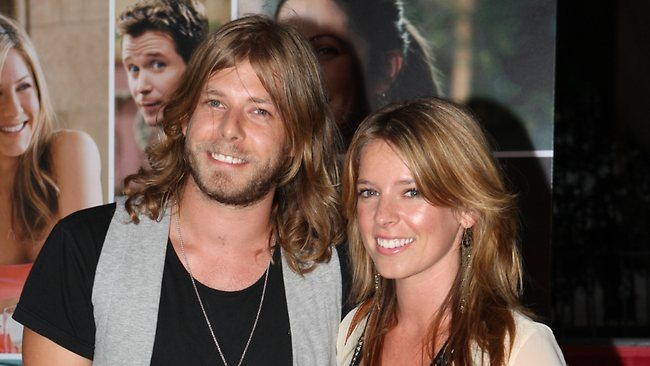
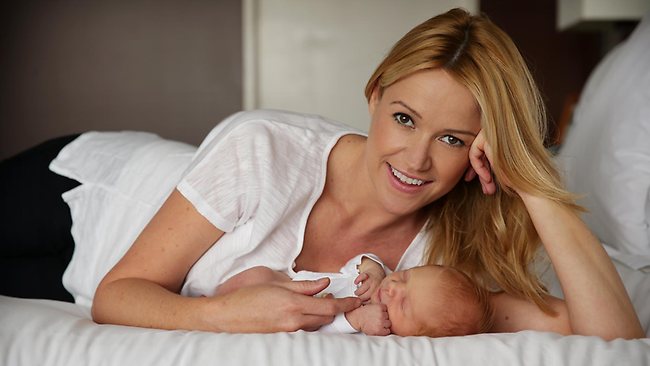
Comedy couple Stav and Kat Davidson welcomed their first child on November 16, and have named their daughter Lorelei, nicknamed Rori. Lorelei Davidson was born at 10.40 am, weighing 4.69 kg (10lb 5oz) and 58 cm long.

Stewart or “Stav” is originally from Scotland, moving here as a child, and taking out Australian citizenship last year. He started his comic career by entering the Raw Comedy Competition in 2000, and then becoming a stand-up regular, especially in Brisbane. He has appeared on The Comedy Channel’s Hahn Ice Headliners, and is heard nationally on Austereo as a member of the B105 Breakfast Crew.

Katrina or “Kat” (nee Shiels) started out in Theatresports in 1993, and has been doing stand-up since 1997. She is a regular on ABC radio, tours internationally, and is also in demand as an MC. Kat also writes her own blog on her website, where she has shared some of her thoughts on pregnancy. The Davidsons have been married for seven years.

Famous Name: Poppy

14 Wednesday Nov 2012

Posted by A.O. in Famous Names

≈ 7 Comments

Tags

english names, famous namesakes, flower names, German names, name history, name image, name meaning, name popularity, nature names, nicknames, plant names, popular names, Remembrance Day, surname names, The Wizard of Oz, UK name popularity, unisex names, US name popularity, vocabulary names

Last week I covered the name Bede for Remembrance Day, partly with the idea that it had “been in my Request file for ages”. When I went to cross if off the list, I found it wasn’t there at all – it seems I imagined it. So today I’m going to make up for it by covering a Remembrance Day name that really has been in my Request file for ages (I double checked!).

It has long been tradition to associate November 11 with poppy flowers. During the First World War, red corn poppies (Papaver rhoeas) were among the first plants to spring up on the battlefields of northern France and Belgium, blooming between the trenches and no man’s lands on the Western Front. In soldier’s folklore, the red of the poppies came from the blood of their fallen comrades soaking the ground, and were perhaps a poignant reminder that life went on regardless.

The sight of poppies on the battlefield at Ypres in 1915 inspired Lieutenant Colonel John McCrae, of Canada, to write the poem In Flanders Fields. An American woman named Moina Michael, who worked for the YMCA, read McCrae’s poem just before the Armistice, and was so moved that she wrote a poem in response, and promised to wear a red poppy as a way of keeping faith.

At an international YMCA conference in 1918, Moina spoke about the poem and the poppies, and Anna Guérin, the French YMCA secretary, took the idea further by selling poppies to raise money for widows, orphans, and needy veterans and their families.

The poppy soon became widely accepted throughout the allied nations as the flower of remembrance to be worn on Armistice Day, and the Australian Returned Soldiers and Sailors Imperial League (the forerunner to the RSL) first sold poppies for Armistice Day in 1921, with the money going to children’s charities and the League’s own welfare work. Today you can still buy a poppy pin from the RSL to help veterans of war.

At the Australian War Memorial in Canberra, it is customary on Remembrance Day to place a poppy on the Roll of Honour, as a small personal tribute to the memory of a particular person. Another ritual is to lay a single poppy flower on the Tomb of the Unknown Australian Soldier at the Memorial.

Even before World War I, poppies had a long history as symbols of sleep and death – sleep because poppy seeds have since ancient times been used as sedatives, and death because the colour of poppies reminds people of blood, or possibly because if over-prescribed, a poppy-induced sleep may become permanent. Today, poppies are still grown to obtain opium, morphine and codeine for medicinal use, with Australia being one of the major producers of poppy crops.

In Greek myths, poppies were given as offerings for the dead, with the suggestion that they were also a promise of resurrection in the life to come. The symbol of the mother goddess Demeter, she is depicted carrying both sheaves of wheat and poppies, and it has been theorised that the taking of opium was part of her worship in the sacred Mysteries.

These twin symbols of sleep and death were put to good effect in what must be one of the most famous images of poppies in literature and cinema – the field of scarlet poppies in The Wizard of Oz, the poison scent of which sends Dorothy into such a deep sleep that she is in danger of dying from it.

The English word poppy is ultimately derived from Latin, but the meaning is not known for sure; it may be from the word for “to feed”, because as anyone who has munched a poppy seed muffin or a bread roll topped with poppy seeds can tell you, poppies are yummy.

Poppy can be found as an English name as early as the 18th century, and the first examples are male, taken from the surname. This is derived from a German name Poppo or Boppo, used as a pet form of the name Bodebert, meaning “bright messenger”. However, by the 19th century, it was firmly established as a female name and associated with the flower, coming into common use along with other floral names.

Poppy only entered the Australian popularity charts in the 1980s, and in the 1990s was #602. It skyrocketed during the 2000s to reach the Top 100 by 2009, debuting at #69. Last year it was #79, and with such a brief history behind it, it is far too soon to make any predictions about its future.

Poppy is even more popular in the UK, where it has been Top 100 since the 1990s, and is currently in the Top 20. However, it has never been in the US Top 1000 at all. Last year 130 baby girls were named Poppy in the United States.

I think one of my first clues to how differently names are seen in other countries is that I kept reading in name forums from American contributors advising that Poppy might sound adorable on a little girl, but can you imagine a woman in her thirties named Poppy? Um yes, easily – Australian actress Poppy Montgomery must be in her mid-thirties by now. Poppy seems to suit her equally well as it does a toddler.

Another popular Poppy putdown is The name doesn’t sound serious enough, your daughter will never become a businesswoman, doctor or lawyer if you name her Poppy. Oh really? Then how did Poppy King manage to start her own cosmetics company? How did Doctor Poppy Sindhusake become senior lecturer in the school of medicine at the University of Western Sydney? And how did Poppy Matters start her practice in family law? By what occult means did they crash through this poppy-red ceiling to make the grade? Unless such a ceiling does not exist …

Some complain that the name, with its cheeky sound and link to a flaunting red colour, sounds too cute and flippant for a woman’s name – how will she ever be taken seriously, they fret? My own thought is that with its associations to such a solemn day, its death symbolism, and connection to drugs, it’s a jolly good thing that Poppy sounds so cheerful and light-hearted in order to offset what could otherwise seem rather gloomy.

Poppies are colourful, sturdy little flowers that bloom and blow easily in our gardens and the “pop” sound in their name makes us think of pop music, pop art and pop-up books – things that seem bright and lively and youthful. But beneath it is something dark and ancient and powerful. It stands for death, and life rising again, and the blood of heroes, and eternal flame, and rows of crosses in northern France, and keeping the faith. It is a memory in honour of those who died in foreign fields.

Do not underestimate Poppy. She is spunky and sprightly, but also strong and deep and enigmatic. She can survive almost anywhere, and, not content in being merely decorative, is useful too. She can feed the hungry, she can allay pain, she can understand sacred mysteries. Sometimes she can even be dangerous.

She can run her own business, or become a doctor, or lawyer, or politician, or anything else she wants to be. And she will sound fabulous when she is forty!

(Picture is of poppies growing in the Somme, northern France; photo from Keynsham People)

Team Pink, Team Blue, or Team Lavender?

11 Sunday Nov 2012

Posted by A.O. in Your Questions Answered

≈ 13 Comments

Tags

dog names, english names, famous namesakes, fictional namesakes, French names, Gaelic names, locational names, mythological names, name meaning, name popularity, names for budgies, nature names, nicknames, popular culture, popular names, Sanskrit names, surname names, unisex names, US name popularity, vocabulary names

I wasn’t going to do another one of these, but it turned out the list of questions on unisex names could almost be eliminated if I did just one more, so I couldn’t resist doing an end-of-year clean up.

Some names are easy for most of us to assign to Team Pink or Team Blue – for example, a straw poll would probably show strong support for Amelia as a girl’s name, and Archibald as a more masculine moniker. But there are quite a few others that we have to think about a bit more, and some seem to be both feminine and masculine in such equal measure that we could probably call them Team Lavender.

Of course, for practical purposes, all names are unisex, so this is only designating them according to linguistic meaning, historical use, and current popularity.

I. ARE THESE GIRL NAMES?

Sydney as a girl’s name

Sydney is historically a unisex name in Australia, but hasn’t charted at all since the 1960s. I think it’s up for grabs by either gender, and is a definite member of Team Lavender.

Rory girl name popularity Australia

According to the data at hand, the popularity of Rory as a girl’s name in Australia is zero. It’s charted as a boy’s name since the 1940s and is currently #159; it’s never charted as a girl’s name. This makes it (for the purposes of this question) Team Blue.

Is Indiana a girl’s name? (multiple asks)

Yes, historically it is, for the first people named Indiana in the records are female. It’s only since the Indiana Jones movies that the name has widely been seen as potentially masculine – although the movie’s protagonist is named Dr Henry Walton Jones. From Utah rather than the state of Indiana, we learn in The Last Crusade that he took his nickname from the name of the family dog. I’m not sure whether the dog was male or female. Indiana has only ever charted as a girl’s name, and is currently #78 and climbing steeply. I call Team Pink.

Bodhi as a girl’s name

Bodhi is a Sanskrit word meaning “awakened”, referring to the enlightenment of the Buddha. As men and women are equally capable of spiritual enlightenment, I think this is for both boys and girls and can join Team Lavender.

Can Russell be a female name?

The surname Russell simply means “red” or “reddish”, and there’s nothing specifically masculine about it. However, Russell has a reasonable history of acceptance as a male name. Currently it doesn’t chart for either gender, and I think it could be used for a girl’s name. You could also use the vocabulary word Rustle. Maybe a Deep Indigo?

Is Campbell a girl name?

In Australia it is accepted as a male name, and has charted for boys since the 1950s, being now at #384. In the US it is more common as a female name. The surname means “crooked mouth”, which doesn’t sound at all pretty to me, but isn’t technically masculine. In Australia, I think it’s still Team Blue.

II: ARE THESE BOY NAMES?

Marlo as a boy’s name

Marlo Hoogstraten is a Dutch-born Australian DJ; he works under the name MaRLo. Marlo Stanfield is a character in the TV show, The Wire, who is head of his own drug crew. There seem to be more references to Marlo as a male name than a female one. This may be a pale Blue-Toned Lavender.

Is Riley a boy’s name in Australia?

Yes, it’s charted as a male name only since the 1970s, and is currently #20. Team Blue.

Can Autumn be a boy’s name?

There’s no reason why not, except that it is widely accepted as a female name. In Australia, Autumn is a fairly rare name for either sex, so it might be easier to be a boy named Autumn here than elsewhere. It would be unusual though. A very pale Pink-Toned Lavender.

Boys name Kirra

The town in Queensland is nearly always given as a female name in Australia. Besides sounding similar to girl’s names Keira and Kira, part of the reason may be because in Greek mythology, there are a couple of nymphs named Kirra, giving it a distinctly feminine vibe. I’m assigning this one to Team Pink.

Tahgan boys name

I only know of Taghan as a place name in the Middle East, which sounds unisex to me. It looks similar to boy’s name Teagan and girl’s name Tegan, so I’m calling this for Team Lavender.

Bay as a boy’s name

Although this nature name could be either male or female, in practice I’ve only seen this given to boys in Australia – maybe because it sounds like it could be short for Bailey. I guess it could be seen as Blue-Toned Lavender.

III: ARE THESE BOY OR GIRL NAMES?

Is Lyndall male or female?

Historically, it’s a girl’s name. Lyndall charted as a female name only from the 1930s to the 1990s. It currently doesn’t chart for either sex. Pink, or at least Pinkish.

Jordan – boys name or girls name?

Jordan has charted as a boy’s name since the 1960s, peaked in the 1990s at #23, and is currently #63. It has charted as a girl’s name since the 1980s, peaked in the 1990s at #85, and is currently #389. So it’s both a boy’s name and a girl’s name, but more boyish, since it’s been used longer as a boy’s name, hit a higher peak as a boy’s name, and is still Top 100 for boys. Deep Blue-Toned Lavender.

Is Jagger more a boy or girl name?

I’d say it’s more of a boy name, just by usage. I have seen people use Jagga or Jaggah for girls though. Blue, at present.

Kayley “unisex name”?

I think technically Kayley is two separate names, one unisex or male, and the other one female. The surname Kayley can be from several origins, and if English or  French, it refers to place names (unisex). On the other hand, if Gaelic, it means “son of Caollaidhe” (male). It’s been overwhelmingly used as a girl’s name though, probably with the idea it’s an elaboration of Kay, a pet form of Katherine. There have been a very few men named Kayley. Confusingly, I think this is Pink, Blue and Lavender all at the same time.

IV: ADVICE NEEDED

What boy’s name can Gigi be short for?

There’s a few choices. According to Wikipedia, famous men using Gigi as their nickname have Luigi, Luigino, Gianluigi or George as their full name – although my own first thought was Giglio. Another possibility is that in the story Gigi, the protagonist’s full name was Gilberte, so maybe a boy called Gilbert could be a Gigi.

Will people automatically assume someone called Kelly is a girl?

I would probably assume an adult named Kelly to be a woman, but I could easily adjust if it turned out to be a man instead. For a new baby, I wouldn’t assume it was either a boy or girl.

Are guys put off by women with male names?

There are quite a few studies on what names men and women find sexy, but these name-image polls are useless in real life, when you are confronted with a living breathing human being. I don’t believe any man would turn down a beautiful woman because her name was John; conversely, no matter how alluring and feminine your name, if you look and smell like you’ve been living in a sewer, I don’t think you are going to be besieged by suitors. Just from my own observations, I’ve noticed a lot of guys say they are intrigued by girls who have unisex nicknames, like Jamie, Charlie or Teddie.

A good unisex name for a budgie

You could use a nickname that could be short for either a girl or boy name, such as Charlie, Joey or Sam, otherwise I think a nature name would be nice, such as Ash, Blueberry, Midnight, Sky, Sunny, or Snowflake. You could also use a cutesy sort of name such as Pippet, Peep, Peck, Pixel, Tweety, Chirp, Happy, or Fidget. Apparently budgies can’t say words with a hard G sound in them, so avoid Giggles, Goldy or anything like that if you’re hoping to teach it to talk.

Celebrity Baby News: Wes Carr and Charlotte Gregg

08 Thursday Nov 2012

Posted by A.O. in Celebrity Baby News

≈ 4 Comments

Tags

celebrity baby names, nicknames, unisex names

Singer Wes Carr, and his wife, actress Charlotte Gregg, welcomed their first child on November 5, and have named their son Willow Harrison. Willow Carr was born in Sydney at 11.49 pm, and weighed 4.2 kg (9lb 4oz).

Wes was already a professional musician with his first album just out when he won the sixth season of Australian Idol in 2008. Since then he has released another album, seen his first single, You, debut at #1, and announced his new independent music project, Buffalo.

Charlotte has appeared in many TV dramas, including Underbelly, Home and Away, Offspring and Lowdown. She met Wes at a barbecue in 2008, and the couple were married last April, honeymooning in Europe.

There’s been several celebrities this year who have used a unisex name for their son, even though it is popular for girls. This one comes with an inbuilt boyish nickname – Will.

Waltzing With … Archer

04 Sunday Nov 2012

Posted by A.O. in Waltzing with ...

≈ 8 Comments

Tags

Australian idioms, english names, famous namesakes, fictional namesakes, horse names, name combinations, name history, name meaning, New Zealand name popularity, nicknames, popular names, surname names, UK name popularity, US name popularity, vocabulary names

This article was first posted on November 4 2012, and revised and re-published on June 16 2016.

Famous Namesake
On Tuesday it is Melbourne Cup Day, which, more than any other day on the calendar, holds Australia in thrall. On the second Tuesday in November, at 3 pm, the nation collectively holds its breath while its most famous horse race, the Melbourne Cup, is run at Flemington in Melbourne.

It’s known as “the race that stops a nation”, because at 3 pm you are expected to drop whatever you’re doing to tune in and watch the Melbourne Cup. Workplaces and schools may take the afternoon off to hold Melbourne Cup lunches, or at the very least switch a TV on just before 3 pm. It’s a day when almost everyone will place a bet on the race – even if it’s just putting a dollar on the favourite, or taking part in the office sweep. In Melbourne, the day of the race is a public holiday.

American author Mark Twain went to the 1895 Melbourne Cup and commented, Nowhere in the world have I encountered a festival of people that has such a magnificent appeal to the whole nation. The Cup astonishes me. More than 110 000 people attend the race, and it’s a huge fashion-fest, with ladies frocking up, and gentlemen wearing formal suits. Others relish the opportunity to dress in outrageous costumes. It’s a day to eat, drink, gamble and be merry – a big, bright, boozy, and rather garish carnival.

The Melbourne Cup itself is the jewel in the crown of the Spring Racing Carnival, and is said to be the richest and most prestigious “two mile” handicap in the world. The prize money is over $6 million, and the trophy itself is a hand-crafted golden cup worth $125 000. It’s the biggest prize in any Australian sporting event.

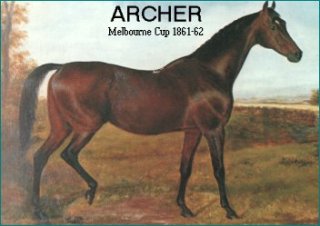
The first Melbourne Cup was run in 1861, and the winner that year was a horse named Archer. Race horses are often named quite logically, and Archer’s sire was William Tell. Born near Braidwood, in country New South Wales, he was trained near Nowra. Archer was a large horse, standing over 16 hands high with a powerful body. He ran badly in his first two races, and was rated poorly, until he won seven races in 1861, and was entered in the Melbourne Cup.

The first Melbourne Cup was action-packed. Three horses fell during the race (two of them died), two jockeys suffered broken bones, and one horse bolted off the course entirely, but the race gamely continued, and Archer won by six lengths in a time of 3 minutes and 52 seconds – the slowest in which a horse has ever won the Melbourne Cup.

He set another record the following year by winning the Melbourne Cup again; until the 1930s, he was the only horse to have won back-to-back Melbourne Cups. He was meant to enter in 1863 as well, but unfortunately there was a mix-up with telegrams and he didn’t manage to make the deadline in time.

Many legends have sprung up around Archer, such as that he had to walk all the way from Sydney to Melbourne in order to take part in the race, and that his jockey, Johnny Cutts, was an Aborigine from the Nowra area. Neither of these stories is true – Archer travelled to the race by steamship and rail, and Johnny Cutts wasn’t Aboriginal, and was from Sydney. The phrase since Archer won the Cup has entered our language, to refer to a long time distant.

Name Information
Archer is an English occupational surname referring to someone who uses a bow and arrows. The surname was introduced to Britain by the Normans, and by the end of the Middle Ages the Norman-French word archer had replaced the English bowman.

People have been hunting and fighting with bow and arrows since the Stone Age, and there are many famous archers in world mythology. During the Middle Ages, professional archers were rare, and most archers during war were recruited from the peasantry so archery was often seen as a lower-class pursuit. However, by the 14th century archers were used effectively in battle, making it a more attractive option. The use of firearms made archers obsolete, and the last recorded use of them in battle in England was in 1642.

The last known person to die from a British archer in battle was in 1940, when a German was killed during the retreat from Dunkirk by a delightfully eccentric officer named Jack Churchill, who insisted on fighting throughout World War II with bow, arrows and a sword; he also played the bagpipes while setting off grenades, to add to the effect. Incredibly brave and highly decorated, Churchill, known as Mad Jack, was later a military instructor in Australia, where he became an enthusiastic surfer. A shame we didn’t manage to keep him, as this man is now my personal hero!

Archer has been used as a personal name since the 17th century, and an early namesake was the British MP Sir Archer Croft, 2nd Baronet – Archer was his mother’s maiden name. Another who had Archer as a family name was the 18th century American politician Archer Mathews, a founder of Lewisburg in Virginia. In the 19th century, escaped slave Archer Alexander served as the model for the Emancipation Memorial in Lincoln Park, built by T.S. Eliot’s grandfather.

Archer joined the Australian Top 100 in 2012, and since then has continued rising. Currently it is #39 nationally, #49 in New South Wales, #27 in Victoria, #33 in Queensland, #29 in South Australia, #51 in Tasmania, and #38 in the Australian Capital Territory. It was one of the fastest rising names in Victoria last year.

Archer was a Top 1000 name in the US in the late 19th century, but spent many years off the charts until it returned in 2009. It has risen steeply since then, and is now #289. In the UK Archer has been in the Top 500 since 2012 and is currently #359. Archer is Top 100 in New Zealand – the only other country besides Australia where Archer is popular, although its popularity is highest in Australia.

No wonder this handsome name is so popular – it feels both vintage and contemporary, and fits in with the trend for names with an AR sound, and names connected with hunting and weaponry. One of its attractions is that it provides a way to get the popular nickname Archie without using Archibald, although Arch is another possibility.

Archer is a name from Australian history which celebrates the biggest sporting event of the year – one that almost everyone will participate in. It’s a name from the hunt and battlefield, but also referencing daring archers, from Robin Hood to the Hunger Games, and perhaps even comedy super-spy Sterling Archer from the animated show.

Could Archer follow its equine namesake and gallop to the #1 position on the charts? The odds are against it, but chances are it will continue cantering along the home stretch.

POLL RESULT
Archer received an outstanding approval rating of 93%, making it one of the most popular names of 2012. 36% of people loved the name Archer, and nobody hated it.

Is Cressida a Girl Name or a Car Name?

03 Saturday Nov 2012

Posted by A.O. in Naming Assistance

≈ 25 Comments

Tags

birth notices, car names, choosing baby names, French names, Latinate names, middle names, name meaning, name popularity, nicknames, popular culture, Scottish names, sibsets, vintage names

Emily and David are expecting a baby girl in three weeks, and still haven’t settled on a name for her. They’ve thought of lots of nice names they could use, but each one seems to have its drawbacks, and they keep crossing names off their list and changing their minds. So far, they don’t really love one name more than another; none of them seem to jump out and say, “I’m the one – stop looking!”.

When they chose their first child’s name, it was much easier. David suggested the name Clementine, Emily loved it too, and straight away it seemed perfect and they never considered anything else. This time it’s been quite different, and they’ve found the process more worrisome.

At the moment they have on their list:

  • Cressida – Emily is slightly bothered by the car called the Toyota Cressida
  • Ottilie – concerned about spelling and pronunciation issues
  • Josephine – like it a lot, but doesn’t seem very exciting
  • Isadora – worried about references to Dora the Explorer, or that she’ll be yet another Izzy in a sea of Isabellas and Isabels
  • Mathilda – David loves Mathilde, but Emily thinks it’s too French and won’t be pronounced correctly; also aware of the popularity of Matilda, which isn’t a problem if it’s the right name
  • Francesca – loved it for ages, but a friend has just used it

Their name style is for names that have been forgotten by most people, a bit quirky, and with a vintage feel. They would like a name that is interesting and offbeat, but not “made up”. They seem to be leaning towards three-syllable names ending with -a, and Emily loves names that have a European/French vibe to them but don’t sound out of place in an English-speaking country.

David and Emily have a typically Scottish surname, such as Baxter, Cameron or Ramsay.

~ ~ ~ ~ ~ ~ ~ ~ ~ ~ ~

Emily and David, I know you probably feel slightly desperate, with your baby due in only a few weeks, and still no name picked for her. However, I think you’re actually doing really great. You know what your name style is, and you have very compatible tastes in names. You’ve already drawn up a list of lovely names, and if your daughter was born tomorrow, you could probably use any of them for her.

I think you had such a dream run choosing the name for your first child that your expectations are slightly unrealistic. Sometimes the perfect name drops into your lap from the heavens, but you can’t expect that to happen every time. Finding little niggling things wrong with the names you like best is completely normal.

I’d stop trying to find the perfect name that ticks absolutely every box and has no flaws of any kind, and concentrate on finding one that you both like, and that you can imagine saying every day for the rest of your lives. A name that your daughter can grow into and grow up with, and a name that fits into your family and lifestyle. It doesn’t have to be “perfect” – it just needs to work for you.

Let’s have a look at your name list:

Cressida

I’m extremely biased, as this is one of my favourite names and has been for many years. I love the upper-class eccentric feel of the name, and the crisp sound of the first syllable. The meaning of the name – “golden” – is also beautiful.

I know you’re a bit worried about the Toyota Cressida, but they stopped making them 20 years ago, which seems like ancient history to me. The Cressida isn’t a famous or classic car, and I haven’t heard it mentioned for decades (I actually forgot this car even existed) . In Australia, the car isn’t said the same way as the name either – it’s pronounced kreh-SEE-dah, whereas the girl’s name is KREHS-ih-dah (in the US, they say the car name “correctly”). On the one hand, that makes the human name distinct from the car; on the other hand, some people may try to say your daughter’s name like the car, and would need gentle correction.

The fact that you feel a bit excited about this name is a good sign, and the way it breaks one of your “rules” is also encouraging. You didn’t want another name starting with C, so the fact you are still seriously considering it means you must be very interested. I would definitely keep this one on your list for now.

Ottilie

I love the idea of this name, but like you, I’d be concerned about the pronunciation. I’ve listened to it being said by people from around the world on forvo, and it seems to be said quite differently in each country. The only English-speaking nation to contribute is the USA, and they seem to have two pronunciations – OTT-uh-lee, and aw-TIL-ee-uh. I actually don’t know how to pronounce this name correctly, and I’m unclear as to whether there even is a correct way to say it. I’ve tried saying all the pronunciations in my standard Australian accent, and I’m not impressed with the results. I think you’d have to be really certain you knew how it was going to be said, prepared to educate people on it, and to be forgiving if they mangled it. If this doesn’t daunt you, then you obviously love the name dearly, and should keep it on your list.

Josephine

This is a great name, and a classic which has never gained high levels of popularity. However, I dislike it as a sister match to Clementine, as to me the endings of the names are too similar.

Isadora

I think this name is gorgeous, and would make a lovely match with Clementine, and with your surname. I don’t think she would be “yet another Izzy”, as most girls called Isabella go by Bella as their nickname. I think you are worrying way too much about Dora the Explorer – Dora the Explorer is a positive character! She’s smart, kind, friendly and helpful. I would definitely keep this one your list, and give it serious consideration.

Mathilda

I sympathise with David – he’s right, Clementine and Mathilde are a great match. On the other hand, you’re right about the French pronunciation. Mathilda seems like a good compromise, and I think it’s worth keeping this one on your list too.

Francesca

The fact that your friend has used the name, and you still have it on your list, shows that you have quite an attachment to it. Understandable – it’s a lovely name, and like Clementine, is fashionable without being popular. Whether you use it or not depends on how you and your friend feel about sharing your childrens’ names; whether you think that seems cute and fun and a wonderful bond between you, or whether it would cause problems in your relationship. It probably depends a lot on what kind of a friendship you have, and maybe even how often you see each other. If both of you are happy to share, then I’d keep it on your list.

You asked for more name ideas: I feel as if you have already thought of everything by now, having already crossed off a long list of possible names. However, here’s some more:

Aurelia

Like Cressida, this name means “golden”, and is a nice match with Clementine. To me it seems European, vintage and quirky. I’ve seen a few people in birth notices choose Aurelia as a middle name, so I can tell that parents like it, but haven’t quite the confidence yet to use it as a first name. I’d like to see it move out of the middle name spot.

Elodie

You considered Eloise at one point; I thought this seemed an alternative to that. It’s pretty, French, and like Clementine is fashionable and underused at present.

Lilias

You might think this is a bit corny, but I couldn’t resist matching your Scottish surname with a Scottish name. Lilith was on your reject list, and this has a very similar sound. As a clementine is a type of mandarin, Clementine and Lilias is a sweet “fruit and flower” sibset.

Miranda

This is a Latinate name like Clementine, and I think Clementine and Miranda make a pretty and romantic sibset. Miranda is a name which is currently gaining in popularity while not being heavily used yet, and I think it would meet with widespread approval.

Rosamund or Rosamond

You already rejected Rosalie and Rosalind, so I thought I’d try you with another Rose name. It’s European, aristocratic and slightly off-beat, and Clementine and Rosamund make an elegant sibset.

Sylvia or Silvia

To me, this has a similar feel to many names on your reject list. It’s European and vintage, and definitely isn’t heavily used. I like the woodsy meaning, and the silvery sound of the name. Like Clementine, it’s not a nature name, but it somehow feels like one.

Readers, when you hear the name Cressida, do you think “girl” or “car”? Which names on Emily and David’s list do you like best, or which names would you recommend to them?

NOTE: The baby’s name was Isadora Mathilde!

Famous Name: Mungo

31 Wednesday Oct 2012

Posted by A.O. in Famous Names

≈ 8 Comments

Tags

British names, famous namesakes, film references, K.M. Sheard, literary references, locational names, name history, name meaning, nicknames, popular culture, saints names, Scottish names

Blue Juniper from Baby Name Ponderings has been profiling names from horror films all October in the lead-up to Halloween, and here you can read about such fabulous finds as Amity, Romero, Dresden and Mockingbird. Perhaps this helped inspire me to do a name from an Australian horror film for October 31.

Lake Mungo came out a few years ago, but I only managed to catch it last year on DVD, after missing it on television. It’s one of those movies which is probably better to see on the small screen, because the film is made in the style of a TV documentary. This makes comparisons to The Blair Witch Project and Paranormal Activity inevitable, but I think it’s better than both of these, and avoids any annoying shaky camerawork.

It’s not a horror movie with buckets of blood, hordes of screaming teens, or bizarre demonic cults, but a supernatural mystery thriller that is extremely tense and uneasy to watch – it is definitely a “scary” film. It’s about the grieving process after death, about the secrets that people take to the grave, and about the images left behind when someone dies that haunt us. It also asks the viewer to try to decide which events in the film are “real” and which aren’t – a process made all the more difficult that the closer you look, the less sure you become.

What I loved most about Lake Mungo was its complete authenticity – it’s one of the realest films I have ever seen, and even though when I put the DVD on, I knew it was “just a movie”, during the course of watching it I even began to doubt that. Rumour has it that this film is going to be remade by Hollywood, but I urge you to watch the original instead. For starters, the distinctive Australian voice of the film would be lost.

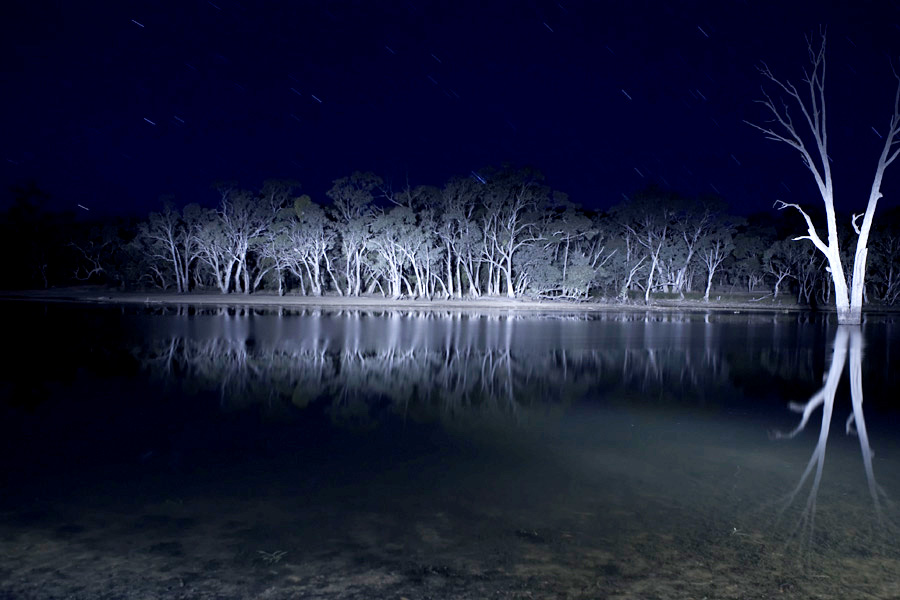
Although the movie is set in country Victoria, as the title suggests, Lake Mungo plays an important role. This is a salt lake in south-western New South Wales, which has been completely dry for several thousand years. Although geologically rich and part of the World Heritage listed Willandra Lakes region, it is most famous for the archaeological discoveries that were made there in the late 1960s and 1970s.

These were of human remains, the bones of a young woman and two men. The woman and one of the men had been ritually cremated and decorated with red ochre. The other man, of a later time period, had been carefully positioned in a shallow grave, his bones stained pink with the ochre surrounding him. The oldest archaeological site discovered in Australia, and amongst the oldest evidences of  cremation in the world, they demonstrate a culture which was sophisticated enough to have developed spiritual beliefs and elaborate funeral rites for their dead.

The dating of the remains has been difficult and controversial, but they are currently accepted as being at least 40 000 years old, and very possibly more. The bones have also been dated as being at around 68 000 thousand years. This was slightly upsetting for scientists, as it is thought that modern humans migrated from Africa around 60 000 years ago. 68 000 years would mean that the first humans to leave Africa went straight to Australia, which would involve at least some sea travel. This idea didn’t seem workable and it was revised down to 40 000 – however, some research hints that the older dating may not be as far fetched as first thought.

Even more controversially, when mitochondrial DNA testing of the bones was done, it was found that they were genetically different to Aborigines, and to all of us (although they would have looked much the same). As the theory is that modern humans came out of Africa (which explains why everyone on earth is very closely related), where did these Lake Mungo humans that weren’t closely related to us come from? Somewhere else, or is our genetic heritage more complex than first thought? This basically upset everyone, and as a result it seems to have been decided not to do any further research on them, lest we discover more upsetting things.

All in all, I think this makes Lake Mungo the most interesting place in Australia, and the remains that were found here the most fascinating things in Australia, and probably the world. There are secrets here more ancient and mysterious than anything you will see at Halloween.

Before it was declared a national park in 1979, the land Lake Mungo lies upon was part of Mungo sheep station. The station was named by the Cameron brothers who owned it, after St Mungo’s church in Scotland, of which they had seen a picture. It’s not known which St. Mungo’s church they named it after.

Mungo was the nickname of Saint Kentigern, who was born in the 6th century, in a British kingdom which is now part of Scotland. Of royal but illegitimate birth, he was brought up in Fife by Saint Serf, who was ministering to the Picts. Saint Serf is supposed to have given him his pet name Mungo, of which the meaning is unclear. It’s been suggested that it is British for “my dear one”, or “dearest”, based on similar-sounding words and phrases in Welsh.

K.M. Sheard says that the meaning of the name is linked to the saint’s real name, because Kentigern means “chief dog, lord hound” – a very common combination of words in ancient British names. She notes that Mungo looks to be derived from the British for “my dog”, which has close equivalents in Irish and Welsh. The name would thus have been an affectionate way of saying “my pet”, probably with connotations of “my dearest follower” or “my most loyal companion”.

According to legend, Saint Mungo performed four miracles, one of the most touching restoring to life Saint Serf’s pet robin. He is a patron saint of Scotland, and of the city of Glasgow, which has on its crest of arms images to represent the miracles of Saint Mungo. As such, it is a name with close ties to Scotland and the north of England, where the name was given in honour of the national saint.

You will find references to Saint Mungo in at least two works of fiction. In G.K. Chesterton’s Father Brown detective stories, Father’s Brown’s former parish was St. Mungo’s, in Essex. In the Harry Potter books by J.K. Rowling, the London hospital in the wizarding world is St. Mungo’s Hospital for Magical Maladies and Injuries. Rowling may have been influenced in her choice of saint because according to local traditions, Saint Mungo encountered the bard and prophet Merlin, cured him of madness, and converted him to Christianity.

In Australia, the MacCallums have produced four generations of intellectuals all named Mungo – the youngest a long-serving political commentator known for his staunchly pro-Labor views. The actor Mungo McKay has a horror connection, as he has been in the films Undead and Daybreakers. In Australian records, people called Mungo do mostly have Scottish surnames, and many in the 19th century seem to have been named in honour of Scottish explorer Mungo Park.

I can see that some people are going to have problems with the name Mungo, but there’s something rather endearing about the name and the saint, and it has several associations with mystery and magic. In Australia it connects us to the most ancient peoples of our land, and an enigma locked away forever. If you’re looking for a Scottish heritage choice with a fashionable O-ending, yet yearn for something out of the ordinary, Mungo may be one to consider.

(The picture is a publicity shot from the movie Lake Mungo, not a photo of the place Lake Mungo)

Names of Australian Female Paralympic Medalists

21 Sunday Oct 2012

Posted by A.O. in Name Themes and Lists

≈ 8 Comments

Tags

Arabic names, Arthurian legends, Arthurian names, astronomical names, Biblical names, english names, ethnonyms, famous namesakes, fictional namesakes, French names, gemstone names, germanic names, Greek names, hebrew names, honouring, Indian names, Irish names, Latin names, locational names, military events, mythological names, name history, name meaning, name popularity, names of dolls, nature names, nicknames, Norman-French names, Old French names, popular names, royal names, saints names, Sanskrit names, street names, surname names, unisex names, vocabulary names

Amber (Merritt)

Amber Meritt was born with a club foot, and is originally from England; she came to Australia as a child (she’s now 19). She started playing wheelchair basketball in 2007, and won silver at the London Games. Amber is fossilised tree resin, and since prehistoric times has been valued as a gemstone. The word amber is derived from Arabic, and means ambergris, the waxy substance regurgitated by the sperm whale; it was only later realised these were different substances. Amber has been used as a girl’s name since the 17th century, but wasn’t popular until the 20th. The name became notorious in 1944, when the racy historical romance, Forever Amber, was published, with its heroine the sleep-her-way-to-the-top Amber St. Clare. Despite being condemned, and even banned here until 1958, the book was a bestseller, and made into a film. Amber was in rare use in the 1950s, and during the 1960s made #647 (about one Amber per year). It absolutely skyrocketed during the 1970s up to #135, peaked in the early 2000s at #49, and is now #91. This pretty gemstone name is still popular, and it’s all thanks to a “dirty” book! If looking for a nickname, Miss Merritt goes by Bambi.

Danae (Sweetapple)

Danae Sweetapple was blind from birth, and started swimming in 1990. She won a silver and two bronzes at the 1992 Paralympics. In Greek mythology, Danaë was a Greek princess and the mother of the hero Perseus. Her father shut her up in a bronze tower due to a prophecy that he would be killed by her son, but she was impregnated by Zeus, who came to her in the form of golden rain. The king had Danaë and Perseus cast into the sea, and they washed ashore onto an island, where a kind fisherman raised Perseus as his own son (as an adult, the prophecy was fulfilled when Perseus did kill his grandfather). Getting it on with a godly shower of gold was either supremely satisfying or very traumatising for Danaë, as she had no interest in mortal men afterwards, and never married or had further children. Her name is derived from the Danaans, one of the names the Greeks used for themselves, with the idea that they were partly descended from Danaus, a mythical prince of Egypt. I’m not sure how the Greeks would have said her name (nobody seems to agree), but not like the way it is usually said in Australia, which is dan-AY.

Elaine (Schreiber)

Elaine Schreiber won a bronze in table tennis, a gold in club throw, and a silver in javelin at the 1964 Paralympics, and a silver in table tennis at the 1968 Games. Elaine is a name shared by several characters in Arthurian legend, who are occasionally confused with each other. One of the most famous is the fair Elaine of Astolat, who dies of unrequited love for Sir Lancelot. The story inspired Tennyson’s poem, The Lady of Shalott, and it was only after the popularity of his poem that Elaine became a commonly-used English name. Elaine is an Old French variant of Helen. Elaine was #254 in 1900, joined the Top 100 in the 1920s, and peaked in the 1930s at #18. It left the Top 100 in the 1960s, and reached its lowest point in the late 2000s, when it was in rare use. Since then, it has been very gently rising, and is currently #457.

Gloria (Pascoe)

Gloria Pascoe developed epilepsy at the age of 9, and became totally blind by 55. At 61, she attended the 1980 Paralympics, where she took gold in lawn bowls. Gloria is the Latin for “glory, fame, renown”, and in Christian tradition it denotes the manifestation of God’s presence, often associated with a divine light. The name Gloria has been in use since at least the 16th century, but received a boost in popularity in the 19th from two literary works. One was Gloria, a romantic novel by popular American novelist E.D.E.N. Southworth in 1891; the other was George Bernard Shaw’s 1897 comedy of errors, You Never Can Tell. Both these works feature very attractive heroines who seem to have done the name more good than all of God’s glory. Gloria was #257 in 1900, Top 100 by the 1920s, and peaked in the 1930s at #23. It left the Top 100 in the 1960s, and hit its lowest point in 2009 when it was in rare use. Since then it has risen again, and is currently #427. If you’ve been paying attention, you will see this makes it the virtual twin of Elaine in terms of popularity.

Jemima (Moore)

Jemima Moore became paraplegic at the age of 6 from a virus, and is now 20. She won a silver medal in the 100 metres relay at the 2008 Paralympics, and attended the London Games. In the Bible, Jemima was the eldest of Job’s three daughters, and she and her sisters are described as being the fairest in the land. The name Jemima literally means “warm” in Hebrew, and can be translated as “day”. The name could actually be derived from Arabic, as there is an ancient land in Arabia who had a queen called Jemama; if so, Jemima from the Bible could be inspired by the queen of Arabic folklore. This does fit in with the Biblical story, because Job and his family were said to be from an Arabic country. The name Jemama means “turtledove”. It first charted in the 1960s, the same decade children’s show Playschool first broadcast, which has a rag doll named Jemima. Never in the Top 100, it peaked at #196 in the late 2000s and is currently #254 and stable. This is a fashionable name which has never gained popularity or lost cachet.

Lorraine (Dodd)

Lorraine Dodd became paraplegic at the age of 13, after contracting transverse myelitis. She attended the 1968 Paralympic Games, where she won three golds for swimming, and a silver and a bronze in athletics. Lorraine is a region in north-eastern France; its name comes from an earlier kingdom named Lotharingia, meaning “Lothar’s kingdom. Lothar I was a Frankish king and a great-grandson of Charlemagne; his name is Germanic and means “famous army”. As a personal name, Lorraine has been used since the 18th century, a century in which Lorraine first became part of France. It’s sometimes said to be a Catholic name, since St Joan of Arc was also known as The Maid of Lorraine. There was a World War I Battle of Lorraine, which probably boosted numbers, and the area’s importance during World War II reflects a peak in popularity at this time. Lorraine was in rare use in the 1900s, and reached the Top 100 in the 1930s. Peaking in the 1940s, it left the Top 100 in the 1970s, and hasn’t charted since the 1990s. You can see how Lorraine helped Lauren appear feminine, and Lauren also seems to have replaced Lorraine.

Madison (de Rozario)

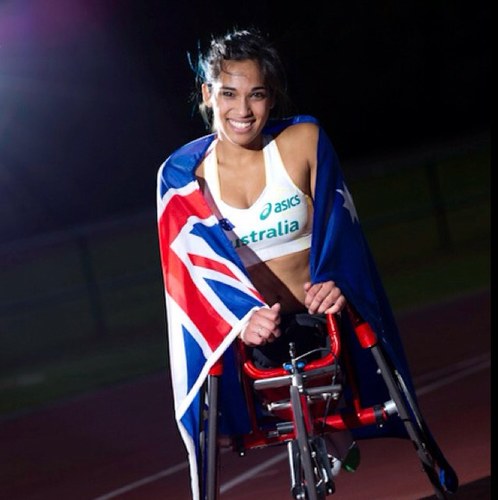
Madison de Rozario became paralysed by a rare neurological condition at the age of 3 and is now 18. She won silver in 2008 as the youngest Paralympian on the team, and was also at the London Games. Madison is a surname meaning “son of Matthew“, although in some rare cases it may be derived from “son of Maddy”, with Maddy being a pet form of Maud. It’s been used as a personal name since the 18th century, and seems to have been given almost exclusively to boys in the beginning. Although certainly used in England, it was much more common in America, where it may often have been given in honour of James Madison, the fourth president of the United States (I only found one man named Madison in Australian records). Madison is famous in baby name circles for only becoming popular, and only becoming common for girls, after the movie Splash in 1984. This romantic fantasy, a rewrite of The Little Mermaid, stars Daryl Hannah as the mermaid, who chooses her “human name” from a street sign for Madison Avenue in New York City, named after the former president – although Tom Hanks’ character tells her this isn’t a “real name”. Madison was #606 for the 1980s, with about three born each year. It then absolutely screeched up the charts to make #52 for the 1990s, and peaked in the early 2000s at #22. It sunk to #44 in 2010, then rose last year to make #41. It’s been a real success story, with its nickname Maddie fitting in with Madeline.

Priya (Cooper)

Priya Cooper was born with cerebral palsy, and spends most of her time in a wheelchair. She began swimming competitively while still at school, and is one of our greatest disabled swimmers, winning nine gold medals and breaking world records at the 1992, 1996 and 2000 Paralympics. She was twice team co-captain, and twice a flag-bearer at closing ceremonies. She has received many honours, and since retiring has become a spokesperson and fundraiser for several charities. Priya is an Indian girl’s name which means “dear, beloved” in Sanskrit. In Hindu legend, Priya was one of the daughters of King Daksha, a son of the god Brahma. The name is pronounced PREE-yuh, and has been rather a favourite in Australia for many years.

Siobhan (Paton)

Siobhan Paton is an intellectually disabled swimmer who holds thirteen world records, and won six gold medals at the 2000 Olympics. She was named Paralympian of the Year in 2000, and also received an Order of Australia. Siobhán is the Irish form of the Norman-French name Jehanne, a variant of Jeanne. There were several medieval queens named Siobhán. It is said that the twentieth century popularity of Siobhan owes a great deal to the actress Siobhán McKenna, who was born in Belfast. She was most famous as a stage actress, but also appeared in King of Kings (playing Mary), Of Human Bondage, and Dr Zhivago. Ms McKenna’s son, Donnacha O’Dea, was an Olympic swimmer for Ireland in 1968. Siobhan first charted in the 1950s, and during the 1960s was #571, which represents about one Siobhan a year. Use of the name increased sharply during the 1970s and ’80s, and it peaked in the 1990s at #211. It hasn’t charted since 2009, so this is another attractive name which has never made the Top 100. Pronunciation is an issue, because the usual Irish pronunciation is SHIV-on, but in Australia it’s usually said shi-VAWN.

Ursula (King)

Usula King was a swimmer who won a silver and two bronze at the 1984 Paralympics. The name Ursula means “little she-bear”, derived from the Latin ursa (which we know from constellations Ursa Major and Minor – the Great and Little Bears). According to legend, Saint Ursula was a Romano-British princess who was sent by her father to marry the pagan governor of Armorica (Brittany). Possibly to stall proceedings, she got all bridezilla and declared that before the wedding she must go all over Europe on a pilgrimage, taking an unbelievable 11 000 virgins with her as her handmaids. On their way to Cologne, they were besieged by Huns, who had a busy day beheading the lot of them. The story doesn’t fit with any known historic facts, and one theory is that Ursula is a Christianised form of the goddess Freya. However, Cologne has a magnificent basilica dedicated to St Ursula and her companions, and a little village in Wales also has a church in their honour, in the belief that Ursula was originally from Wales (in the legend, she is from the West Country). Because of the saint, the name came into use in medieval times, and got a little boost in the 20th century from beautiful Swedish actress Ursula Andress, who was the first Bond girl, in Dr No. It’s clunky by contemporary standards, but strangely alluring.

(Photo of Madison de Rozario from her Twitter account)

Celebrity Baby News: Leila McKinnon and David Gyngell

18 Thursday Oct 2012

Posted by A.O. in Celebrity Baby News

≈ 4 Comments

Tags

celebrity baby names, nicknames

497286-leila-mckinnonChannel 9 presenter Leila McKinnon, and her husband David Gyngell, welcomed their first child on October 17, and have named their son Edmund (who will be known as Ted). Ted Gyngell was born in the early hours of the morning at Prince of Wales Private Hospital in Randwick, weighing 3.01 kg (6 lb 10 oz), and 51 cm long.

Leila was born in Iran to an English mother and New Zealander father, and grew up in Queensland. She began her journalism career in 1993 at WIN Television, and joined the Channel Nine Network in 1995. Leila is a co-host on Weekend Today, and regularly fills in on Channel 9 News and A Current Affair. She and David were married in a beach ceremony at Byron Bay in 2004.

David is the son of Bruce Gyngell, the first man to appear on Australian television, and a second cousin of the comedian Kim Gyngell. David’s great-great grandfather did the fireworks for the wedding for Queen Victoria and Prince Albert, and his great-grandfather was the first cider-maker in Australia. David is also the best friend of James Packer, the former owner of Channel 9 (David and James first met at school, and their fathers were also best friends). David is in his second stint as CEO of Channel 9 after resigning in 2005, and relocating to Los Angeles. Ratings suffered during his absence, and he returned to the job in 2007. David was in crisis talks over debt negotiations for Channel 9 when he had to rush off to hospital to be by his wife’s side.

UPDATE: Leila reveals that Ted is a nickname they gave their baby in the womb, even before they knew it was a boy, and they wanted a name which could have Ted as its short form. Leila always wanted an old name which dated from before the Norman Conquest, and says that sometimes they call their boy Edmund the Magnificent.

Famous Name: Peter

17 Wednesday Oct 2012

Posted by A.O. in Famous Names

≈ 5 Comments

Tags

Aramaic names, Biblical names, classic names, famous namesakes, fictional namesakes, French names, Greek names, name history, name meaning, name popularity, nicknames, Old French names, saints names, surname names

On October 11, Federal Parliament voted to apologise to Olympian Peter Norman for the treatment he received at the 1968 Mexico City Games. You may think that this apology was slightly overdue; its tardiness perhaps seems even more glaring when you learn Peter passed away on October 3 2006.

Peter Norman was a sprinter who was Australian champion in the 200 metres five times over. On October 16, he won the silver medal in the 200 metres at the 1968 Summer Olympics. His time of 20.06 seconds still stands as the Australian record, and would have won gold at the 1976, 1980 and 2000 Olympics. However, Peter is more famous for what happened during the medal ceremony.

The other medal winners were American athletes Tommie Smith (gold) and John Carlos (bronze), with Tommie setting a world record time of 19.83 seconds. At the medal ceremony, as Tommie and John faced the American flag and heard The Star Spangled Banner, they raised their fists in a Black Power salute, and bowed their heads, as part of a protest on behalf of the civil rights movement.

Peter knew what his fellow athletes were planning, because they told him just after the race, and asked him if he would stand in solidarity with them on behalf of the Olympic Project for Human Rights. They asked him if he believed in human rights, if he believed in God. Peter, who was a member of the Salvation Army, and vehemently opposed to racism, said, “I’ll stand with you”.

John expected Peter to look frightened at what was about to happen, instead he says, he saw only love in his eyes. It was Peter’s own idea to wear the OPHR badge, which he had seen a white American athlete wearing.

The fallout from The Salute affected all three of the athletes. Tommie and John were deemed to have broken the code that the Olympics must remain apolitical, and expelled from the Games. Back in America, they were criticised heavily in the media, abused by the public, and their families received death threats. The athletic establishment tended to ostracise them, and both faced some tough times.

In recent years there have been some efforts to recognise them: a statue was erected in their honour at San Jose State University, where they were students, in 2005, and both received Arthur Ashe Courage Awards in 2008. (Peter asked not to have his statue at San Jose, instead requesting that his place be left empty so that any person could stand there and represent him).

In 1968, Peter was reprimanded by the Australian Olympic Committee, and vilified by the Australian press. Despite qualifying for the 1972 Olympics, he was not selected, and in fact this is the only Games in which no Australian sprinters participated. This is seen as the death knell of his athletic career. His name is omitted from Australian books and lists which compile the “100 Greatest Athletes” or “100 Greatest Sporting Moments”.

The AOC dispute this version of events vigorously. According to them, Peter received nothing more than a fatherly chat and some free tickets to a hockey game after The Salute incident. They claim that despite qualifying in 1972, and running a time faster than the eventual gold medal winner that year, he was nursing an undeclared injury which prevented his selection.

Even as late as 2000, Peter was not asked to take part in the Sydney Olympics – a major international sporting event in which practically every other former Australian athlete was invited to play some sort of role. I’m not sure what excuse the AOC has for that. Maybe his invitation got lost in the post.

Tommie, John and Peter were all martyrs for a cause, and to supporters of the civil rights movement, they were also heroes. Sadly for Peter, in his own country his gesture against racial inequality went unrecognised during his lifetime. All three men remained life-long friends, and both Tommie and John were pall-bearers at Peter’s funeral.

The US Track and Field Association named the day of his funeral, October 9 2006, as Peter Norman Day. Shamefully, Australian sporting bodies have never done anything to acknowledge him, and refused to endorse the parliamentary apology.

This year, John Carlos said, “There’s no-one in the nation of Australia that should be honoured, recognised, appreciated more than Peter Norman for his humanitarian concerns, his character, his strength and his willingness to be a sacrificial lamb for justice”.

Australia is very ready, sometimes perhaps too ready, to celebrate physical courage. It seems we are very slow to reward moral courage, and Peter Norman remains one of our forgotten heroes.

The name Peter is derived from the Greek Petros, meaning “rock”, a translation of the Aramaic Cephas in the New Testament. Peter is one of the most famous of the New Testament names, as it is the name of the most prominent apostle. It’s actually a nickname or code name given to him by Jesus, because his real name was Simon (it seems very much like calling him Rocky).

Famously, Jesus puns by addressing Peter, and saying “On this rock I build my church”, to indicate that he was giving Peter the role of leading the early Christian church. Catholics see Peter as the first pope for this reason, and the impressive St Peter’s Basilica in Vatican City was built in his honour. According to tradition, Peter was martyred in Rome by being crucified upside-down.

It is entirely due to Peter the Apostle that the name Peter spread throughout the Christian world. It was introduced to England by the Normans in the Old French form Piers; I bet you can guess that this is the basis for the French name Pierre, but I wonder if you also realised it was the origin of the English name and surname Pierce? By the 15th century, the modern day spelling of Peter was established.

Like Jack, Peter is a name which we all seem to have grown up with, reciting the tongue twister about Peter Piper who picked a peck of pickled peppers, or the nursery rhyme about Peter the Pumpkin Eater who had a wife and couldn’t keep her. We were told the stories of Peter Rabbit and Peter Pan, listened to Peter and Wolf, and may have known Peter Pevensie from The Lion, the Witch and the Wardrobe, Peter the goat-herd in Heidi, or Peter Parker from the Spiderman comics. Because of this, there is something very cosy and comforting about the name Peter to me.

Peter is a classic name in Australia which has never left the charts. It was #64 in the 1900s, and peaked as the #1 name of the 1950s. It only left the Top 100 in 2009, and is currently stable at #125. Peter isn’t an unusual name today, and it was very popular when Peter Norman was born, in 1942.

Sometimes reading name blogs I am uneasy that we (and I am very much including myself here) are often too eager to suggest an unexpected name over one that is more common. The story of Peter Norman teaches me that someone with an ordinary name may still do something extraordinary, and our name does not need to stand out in order for us to stand up for what we believe. It’s worth keeping in mind.

NOTE: Some information from Salute (2008), a critically acclaimed documentary by Matt Norman, Peter’s nephew, and highly recommended viewing. Matt is currently working on a dramatised version called 1968.

← Older posts
Newer posts →

Enter your email address to follow this blog

Categories

Archives

Recent Comments

A.O.'s avatarwaltzingmorethanmati… on Zarah Zaynab and Wolfgang…
Madelyn's avatarMadelyn on Zarah Zaynab and Wolfgang…
JD's avatardrperegrine on Can Phoebe Complete This …
A.O.'s avatarwaltzingmorethanmati… on Rua and Rhoa
redrover23's avatarredrover23 on Rua and Rhoa

Blogroll

  • Appellation Mountain
  • Baby Name Pondering
  • Babynamelover's Blog
  • British Baby Names
  • Clare's Name News
  • For Real Baby Names
  • Geek Baby Names
  • Name Candy
  • Nameberry
  • Nancy's Baby Names
  • Ren's Baby Name Blog
  • Sancta Nomina
  • Swistle: Baby Names
  • The Art of Naming
  • The Baby Name Wizard
  • The Beauty of Names
  • Tulip By Any Name

RSS Feed

  • RSS - Posts

RSS Posts

  • Celebrity Baby News: Melanie Vallejo and Matt Kingston
  • Names from the TV Show “Cleverman”
  • Can Phoebe Complete This Sibset?
  • Zarah Zaynab and Wolfgang Winter
  • Baby, How Did You Get That Name?
  • Celebrity Baby News: Media Babies
  • Celebrity Baby News: Adelaide Crows Babies
  • Celebrity Baby News: Chris and Rebecca Judd
  • Names at Work: Name News From the World of Business and Employment
  • Celebrity Baby News: Sporting Round Up

Currently Popular

  • Celebrity Baby News: Toby Allen and Darren Weller
  • Rare Boys Names From the 1950s
  • Celebrity Baby News: Bernard Fanning and Andrea Moreno
  • Celebrity Baby News: Ed Husic and Bridget Tilley
  • Why Your Child Will Hate Their Name

Tags

celebrity baby names celebrity sibsets english names famous namesakes fictional namesakes honouring locational names middle names name combinations name history name meaning name popularity name trends nicknames popular names saints names sibsets surname names twin sets unisex names

Blog at WordPress.com.

Privacy & Cookies: This site uses cookies. By continuing to use this website, you agree to their use.
To find out more, including how to control cookies, see here: Cookie Policy
  • Subscribe Subscribed
    • Waltzing More Than Matilda
    • Join 517 other subscribers
    • Already have a WordPress.com account? Log in now.
    • Waltzing More Than Matilda
    • Subscribe Subscribed
    • Sign up
    • Log in
    • Report this content
    • View site in Reader
    • Manage subscriptions
    • Collapse this bar
 

Loading Comments...