• About
  • Best Baby Names
  • Celebrity Baby Names
  • Celebrity Baby Names – Current
  • Celebrity Baby Names – Past
  • Featured Boys Names
  • Featured Girls Names
  • Featured Unisex Names
  • Links to Name Data
  • Waltzing on the Web

Waltzing More Than Matilda

~ Names with an Australian Bias of Democratic Temper

Waltzing More Than Matilda

Tag Archives: nicknames

Questions About “Waltzing Matilda” Answered

16 Sunday Mar 2014

Posted by A.O. in Your Questions Answered

≈ Comments Off on Questions About “Waltzing Matilda” Answered

Tags

Australian slang terms, Banjo Paterson, Google, Google searches, names from songs, names of boats, names of businesses, nicknames, Waltzing Matilda, Waltzing More Than Matilda

Down_on_his_luck

When I decided to call my blog Waltzing More Than Matilda, I wasn’t prepared for the number of people who would come here searching to find out more about the name Matilda. Every once in a while, the number of searches builds up to the point where I start feeling guilty that I’ve lured people to my blog under false pretenses, and I answer their questions. These are specifically about Waltzing Matilda.

What are the words to Waltzing Matilda?

That’s a harder question to answer than you might think, because there aren’t any “official” lyrics, and there are a few slightly different versions. You can see Banjo Paterson’s original version here.

Does Waltzing Matilda rhyme?

Yes – it has an ABCB rhyming pattern, so that the second and fourth lines of each stanza are exact rhymes, and all the B lines end with a word that rhymes with bee: eg tree, me, glee, three. Mostly it’s the word me, which several times rhymes with itself.

Name of the guy from Waltzing Matilda/What’s the boy’s name in Waltzing Matilda?

He’s never mentioned by name, but he’s said to be based on a real man named Samuel Hoffmeister, originally from Germany, whose nickname was “Frenchy“. Presumably by the same Australian logic whereby a red-haired man will be nicknamed “Blue“.

There’s a familiar Australian witticism that the jolly swagman’s name must have been Andy: “Andy sang as he watched, Andy waited ’til his billy boiled”. As Banjo Paterson’s real first name was Andrew, perhaps a laboured attempt to put him into the song.

Can “waltzing Matilda” mean to be hung?

No – it means to travel by foot, carrying your belongs on your back. A swagman’s rolled sleeping blanket was his “Matilda”, and to “waltz” your Matilda was to take it on a long walk.

Is “waltzing Matilda” a euphemism?

No, it’s slang.

Is there a Waltzing Matilda Hotel?

Yes, it’s not a particularly unusual name for hotels. Here’s an example.

One or more islands named Waltzing Matilda?

I don’t think there’s even one, let alone more than one.

[Did] Ansett use [the song] Waltzing Matilda?

Yes, Ansett Australia Airlines used the song in their advertisements to mark the centenary of Waltzing Matilda in 1995. They also had a scene from the song painted on their 737s the year before, and the first 737 aircraft they ordered in 1986 was named Waltzing Matilda.

Was there ever a warship named Waltzing Matilda?

No. The Royal Australian Navy usually names its vessels after Australian place names, animals, Aboriginal words, and famous people from history, rather than works of fiction. Besides, the song ends with someone drowning, which hardly seems appropriate for a ship (although it doesn’t seem to have put other people off naming their boats Waltzing Matilda).

A 1950s horror movie which has the song Waltzing Matilda in it?

It’s not strictly a horror movie, but could you be thinking of the 1959 post-apocalyptic film, On the Beach? The song is used to great effect in a particular scene.

Waltzing Matilda – the national disgrace – America owns it

That’s not quite true, but it’s a complicated story. Banjo Paterson sold the rights to Waltzing Matilda to Australian publishing house Angus & Robertson for 5 pounds. Banjo died in 1941, and under Australian copyright law, as in most of the world, once the creator has been dead for 50 years, a creative work is in the public domain, so Waltzing Matilda has been copyright-free here since 1991.

However, in the United States, Waltzing Matilda was falsely copyrighted as an original composition by Carl Fischer Music in 1941. This came as a horrible shock to Australia when they found out in the 1980s, although Carl Fischer Music claimed most of the royalty money went back to Australia, to the Australian music publisher Allans Music (they may have bought the copyright from Angus & Robertson). Since copyright in Australia expired in 1991, Carl Fischer Music obviously didn’t give any money to Australia after that.

A bitter pill for Australians to swallow was that they had to pay a licensing fee to Carl Fischer Music to have Waltzing Matilda played at the closing ceremony of the 1996 Olympics in Atlanta, since it was on American soil. It sounds rather mean and money-grubbing to have charged us for own anthem, probably because it was.

So Waltzing Matilda was never “owned by America”, but only by one American company. And as all good things come to an end, and all bad ones too, eventually copyright ran out in the US, which doesn’t happen until 70 years after the creator’s death, and Waltzing Matilda has been in the public domain worldwide since 2011.

If it was a national disgrace that it occurred, I can’t see that the disgrace is attached to our own nation. We didn’t steal it, and our shonky copyright laws didn’t allow it to happen.

Why isn’t Waltzing Matilda the [Australian] national anthem?

There was a plebiscite to choose a national anthem in 1977, and more than 43% of people voted for Advance Australia Fair, while only around 28% voted for Waltzing Matilda. (Almost 19% voted for God Save the Queen, and less than 10% for Song of Australia).

God Save the Queen is our royal anthem, to be played whenever someone royal shows up. Waltzing Matilda is an unofficial national anthem, and is a particular favourite at sporting events – especially the Olympics and Commonwealth Games.

In any case, it probably wouldn’t have been a good idea to have a national anthem under copyright in another country.

[Is] Waltzing Matilda no longer sung at AFL [Grand Finals]?

I think the 1980s was the only decade where it was sung almost every year; it didn’t start out like that in the 1970s, and seems to have become hit-and-miss in the 1990s. The last person to sing Waltzing Matilda at an AFL Grand Final was probably Guy Sebastian, about ten years ago.

Some people feel outraged that this “great tradition” has been neglected, but their memories have probably made it seem more frequent than it really was. I suspect these people were children and teens during the 1980s, so that they grew up with a general impression of Waltzing Matilda being played each year.

Why did Senator [Bob] Kerrey sing Waltzing Matilda after being elected?

Robert Kerrey was elected to the US Senate for Nebraska in 1989. He didn’t actually sing Waltzing Matilda after his election: he sang And The Band Played Waltzing Matilda, written by Australian folk singer Eric Bogle.

The song is written from the point of view of an Australian soldier who loses his legs at the Battle of Gallipoli, and sees the war he participated in as bloody and futile. Because the song was written in 1971, it can be seen as a criticism of the Vietnam War, which was similarly gruesome and pointless.

Senator Kerrey served in the United States Navy during the Vietnam War, and lost the lower half of one leg in combat. He suffered some traumatic experiences during the war, and must have identified with the narrator of And the Band Played Waltzing Matilda. He also used the first line of the song for the title of his autobiography, When I Was A Young Man.

The song has been frequently covered by folk singers in the UK and the US, and is internationally famous as an anti-war song.

(Painting shown is Down on His Luck, by Frederick McCubbin – 1889)

Names Spotted at Home and Abroad (Summer 2013/14)

15 Saturday Mar 2014

Posted by A.O. in Names Spotted at Home and Abroad

≈ 1 Comment

Tags

American names, Arabic names, Christmas names, colour names, famous namesakes, fictional namesakes, names from television, names from video games, names of businesses, nicknames, pet names, rare names, sibsets, virtue names

434407-32707c74-6464-11e3-be16-1445237cc09f

Stories in the papers on the most popular names often have a look at the other end, and tell us which names were least common in 2013. Some of them included:

BOYS: Clinchy, Jetta, Kayos, Magick, Rampage, Shanakee, Xenophon

GIRLS: Asterix, Blendin, Bonniebell, Euphemia, Lingo, Passion, Shiny, Tiger Lily, Vogue, Zipporah

A story from Ballarat focused on mothers who had “bonus babies” long after they thought their families were complete. One of the mums was named Peace, which I thought was a lovely serene virtue name. Another was parenting author Pinky McKay, who has a very colourful name (her hair matches).

‘Tis the Season

The first baby born in Wollongong Hospital on Christmas Day was Fenix Cooper Brudenell. Fenix has a very pop culture name: his first name is after Marcus Fenix from the Gears of War video games, while his second is after Sheldon Cooper, from The Big Bang Theory. Fenix’s siblings are Megan and Austin.

Jonathan Butler and Tahani Curtis, from the Tweed Heads region of New South Wales, were expecting a child on Christmas Day, and seriously considered calling him Jesus if they had a boy. Is this the ultimate Christmas name? They had a girl instead, and named her Matilda.

Saint James the Great church in Melbourne invited people to bring their pets to celebrate Christmas Mass, because baby Jesus was born in a stable amongst animals. Nick Haines and Michelle Nichol brought their three poodles, because as Nick says, “these are our children”. The poodles are named George, Poppy and Lilly – surely some are giving their “fur babies” the names they would have given human children, as this sounds like an adorable sibset … er, pupset.

Fighting Fit Families

Bec Hyatt from Brisbane took up cage fighting in order to lose 80 kg of baby weight. She is now set to become the first Australian woman in the UFC, earning more than $100 000 per fight. Bec’s two sons are Enson and Zake – Enson may be named after American MMA champ Enson Inoue, while Zake is a variant of the Arabic name Zaki, meaning “pure”. It sounds like a cousin of Jake, Zac and Zeke.

Still on the subject of competitive fighting: the children of the Metcalf family from Sutherland Shire are all boxers. Raised by a single dad, and with their trainer as a second father, three of them have fought their way to champion status, with the youngest a promising up-and-comer. Their names are Marizza, aged 18, Axx, aged 16, Lolli, aged 14, and Electra-Shenika, aged 11. If you’ve ever wondered what a sibset that can beat your kids up would sound like, this is it.

Expat Americana

Adam Preston lived in New York City for seven years, with his first apartment over a hot dog joint called Crif Dogs in the East Village [pictured], which calls itself “NYC’s  #1 Weiner”. When he married his Canadian wife Jessica two years ago, they eloped to New York, which has so many memories for Adam. Of course he took her to Crif Dogs, and when they had a baby boy soon after, they named him Crif Benjamin Klaver Preston. The name Crif Dogs came about when owner Brian Shebairo tried to say Chris, his former business partner’s name, while chewing a hot dog. Crif sounds more up-to-date as a baby name than Chris, and even a hot dog place can evoke sentimental memories to be commemorated as a baby name.

Yvette Aubusson-Foley, a former journalist from Dubbo, has been living in the US for more than 18 months, and uneasily watching her three children adapt to local conditions in Tucson, Arizona. They dress up as little pilgrims, develop a slight American accent, and (to Yvette’s horror) happily recite the Pledge of Allegiance – although one defiantly wears an Australian flag for Spirit of America Day. Yvette’s children are daughter Jett, and her sons Phoenix and Dash; names which somehow seem ready to assimilate. Would an Indi, Banjo and Taj remain more stubbornly Aussie, I wonder?

Television

Have you ever watched an episode of Australian reality television show Real Housewives of Melbourne? It tends to get people a little excitable, mostly because the women taking part in the show aren’t actually housewives, don’t have much left of themselves that’s real, and only live in a very limited part of Melbourne. One of the women, Andrea, who runs a plastic surgery clinic and is originally from New York, has three children named Budd, Kiff and Buster (who somehow require five nannies). Their names have caused predictable Internet outrage – especially Kiff, with many demanding to know “what culture” Kiff is from: it’s a short form of Christopher, and therefore a linguistic relation to Crif.

Children’s quiz show Pyramid featured a team consisting of two girls named Eugenie and Prudence. Isn’t that a fantastic pairing of gal-pal names?

Famous Name: Samuel

12 Wednesday Mar 2014

Posted by A.O. in Famous Names

≈ 2 Comments

Tags

Biblical names, celebrity sibsets, classic names, english names, famous namesakes, hebrew names, name history, name meaning, name popularity, names of personifications, nicknames, popular names, saints names, sibsets

wide-LYS13-310-620x349

Last month, on Valentine’s Day, actor Samuel Johnson broke a world record by riding a unicycle more than 15 000 km on a zig-zagging route across Australia for 364 days. How did it all start? His sister Constance set him the toughest challenge she could think of. It started as a joke, and turned into a promise.

You see, Sam’s beloved sister Connie has cancer. She has fought it three times in her life, beginning from the age of 11, but now she is dying, and doesn’t have much time left. So Samuel promised he would raise a million dollars towards breast cancer, with his unicycle challenge dubbed Love Your Sister.

So far he has raised almost 1.5 million dollars for breast cancer research through the Garvan Institute, and plans to work full time for the charity. Even better, Connie’s cancer is stable, and her oncology team are surprised and very pleased with how well her treatment is going. They say there is a good chance she still has a year left, maybe more.

The reason I chose to cover this story, apart from the chance to record a key moment in unicycling history, and because I had been looking for an opportunity to feature the name Samuel, is because of the wonderful sibsets involved. Connie has two small boys named Willoughby “Wib” and Hamilton. Samuel’s two sisters are Constance and Hilde.

Samuel is a character from the Bible whose story starts before he is even conceived. His mother Hannah was barren, and prayed for a baby in the doorway of a religious shrine, vowing that if her prayer was answered, she would dedicate the child to God. A priest of the shrine named Eli heard her, and offered a blessing, suggesting that her prayer would be answered. Hannah gave birth to a son that she named Samuel; in fulfilment of her promise, she gave Samuel to Eli once the child was weaned (about the age of three).

Eli brought Samuel up to work in the shrine, where he proved a devoted and highly intelligent assistant. While still a child, Samuel woke up in the night to hear a voice calling his name. Thinking it was Eli calling him, he went to ask him what he wanted. After this happened a few times, Eli realised that it was God calling Samuel, and instructed him in how to respond, so he could hear the word of God.

God’s first message turned out to be a piece of unwelcome news for Samuel’s mentor Eli, because it was foretold that both his sons, who were corrupt priests, would come to a bad end. During Samuel’s youth, the Israelites were defeated by the Philistines, who took control of the land and ransacked the shrine. During the conflict, both of Eli’s sons were killed, and the old man, now blind and about ninety, died of shock when he heard the report.

Samuel became publicly recognised as a great prophet and seer, and after twenty years of oppression, he organised the Israelites into an army and led them in battle against the Philistines. There was a decisive victory for the Israelites, and for many years afterwards there was peace in the land. Samuel became a judge of the Israelites, and all went well for ten years, until the people demanded a king to rule over them instead. Samuel (after warning everyone what a terrible idea having a king was) anointed both Saul and David as the first and second kings of Israel.

Samuel was the last judge and the first prophet of the Hebrews, and the founder of a kingdom. He is revered in Judaism, Christianity, and Islam, and regarded as a saint in the Catholic and Orthodox faiths.

Samuel is the English form of the Hebrew name Shemu’el. The Bible tells us that the name Samuel means “asked of God”, which Hannah chose to indicate that Samuel was an answer to her prayer. However, this is not correct, and is rather the meaning of the name Saul. It would seem that the names of the first prophet and first king have got confused, and perhaps even their narratives have too.

Samuel can be translated as either “heard by God”, or “hearer of God” – the first one to suggest that Hannah’s prayers were heard and answered by God; the last one to signify his role as prophet. It can also be understood as “son of God”, which makes sense as Samuel was raised from early childhood in God’s shrine.

Although in some use in Britain in the late Middle Ages, Samuel became far more common after the Protestant Reformation. Famous English Samuels include lexicographer Dr Samuel Johnson, satirical poet Samuel Butler, and diarist Samuel Pepys. Samuel was one of the very earliest English names to travel to the American colonies, and famous American Samuels include Samuel Adams, one of the founding fathers of the United States, Samuel Morse, the inventor of Morse code, and Samuel Langhorne Clemens, otherwise known as the beloved author Mark Twain. The United States itself even became personified as a Samuel – Uncle Sam.

Samuel is a classic name which has never left the charts. It was #46 for the 1900s, and dropped out of the Top 100 during the 1930s. It reached its lowest level in the 1960s at #164, but was back in the Top 100 by the 1970s. It was #14 for the 1990s, and since then has remained extremely stable, hovering around that position.

Currently it is #12 nationally, #20 in New South Wales, #15 in Victoria, #12 in Queensland, #18 in Western Australia, #11 in Tasmania, #16 in the Northern Territory, and #14 in the Australian Capital Territory. It is of similar popularity in the UK and the US, and is a Top 100 name in many countries, making this a very international name.

Samuel is a handsome name which has strength, but also softness. A timeless classic, it is currently at its historic height of popularity, and has been stable for decades, making it a very safe choice. It is so commonly used around the world that it has no particular image attached to it. That means that when it comes to picturing a Samuel, he could be any age, of any appearance, and be anything; an athlete, writer, doctor, traveller, builder, or prime minister. The short form Sam is commonly used as a full name for boys, and is currently only just outside the Top 100.

POLL RESULT
Samuel received an outstanding approval rating of 88%, making it one of the highest-rated names of 2014, and the highest-rated boys name of the year. People saw the name Samuel as handsome and classic (27%), strong yet gentle (17%), ageing well (16%), a “nice guy” name (15%), and suiting a variety of people (13%). However, 6% thought it was too common and boring. Nobody thought that the name Samuel wasn’t masculine enough.

Waltzing with … Bran

09 Sunday Mar 2014

Posted by A.O. in Waltzing with ...

≈ 2 Comments

Tags

animal names, Arthurian names, bird names, British names, english names, epithets and titles, fictional namesakes, Game of Throne names, germanic names, Irish names, mythological names, name combinations, name history, name meaning, nicknames, Old English names, saints names, sibsets, surname names, UK name popularity, Welsh names

360029

There always seems to be lots of crows and ravens around at the end of summer, finishing off the remains of those creatures who have not survived the blazing heat and drought – a very important job that we don’t appreciate as much as we should. This put me in mind to write about a name connected to these highly intelligent birds, who feature in many mythologies, for as carrion birds, they are often seen as harbingers of death, with mysterious knowledge of the afterlife.

Brân the Blessed is a heroic figure from Welsh mythology; a giant, probable god, and High King of Britain. Legends tell of how he travelled to Ireland with a host of warriors in order to rescue his sister Branwen, who was being mistreated by her husband, an Irish king. The battle was brutal, and only seven men from the rescue party survived: Branwen herself died of a broken heart.

Brân was mortally wounded in the foot, and told his men to cut off his head, so that it could be returned to Britain. They took the head to “White Hill”, thought to be where the Tower of London now stands. The head was buried there, facing France, because as long as it remained, Britain would be protected from invasion. King Arthur later dug the head up, declaring that only his strength was needed to protect the land. This was seen as a disastrous decision, because when Arthur had gone, the land was invaded by the Saxons.

Brân is connected to many figures from British legend. He is seen as a forerunner to King Arthur as High King of Britain, and many have noted his similarity to the mysterious Fisher King of Arthurian legend, who is sometimes identified as a man named Bron. The Fisher King had a wounded leg, and in some tales, the Grail he possessed had the power to restore the fallen – a parallel with Brân, who had a cauldron that could bring warriors back to life. Some stories report that Percivalfound a severed head in the Fisher King’s castle instead of the Grail.

Others scholars see Brân as connected to the Irish hero Bran mac Febail, who embarked on a journey to the Otherworld, and when he returned, so many years had passed that the Irish people know him only as a legend. After telling his story, he sailed away across the sea, never to return. The tale was an apparent inspiration for the Voyage of Saint Brendan, a legendary quest the saint undertook to the Isle of the Blessed, or Saint Brendan’s Isle. Although this may not immediately remind you of Brân the Blessed, in British legends, a voyage to Ireland (in the west) is often an allegory for a journey to the Otherworld – and Brân did die there.

The severed head of Brân the Blessed is important, because some believe the human head played a significant role in Celtic religion. Greek historians tell how Celtic warriors could cut off the heads of their enemies in battle, and that these heads would be embalmed and placed on display. Archeologists theorise that ownership of a head gave one power over the dead person, or that the head was venerated as the seat of the soul and a symbol of the Otherworld.

The head of Brân the Blessed possessed powers of mystical protection, and some connect this to the ravens in the Tower of London, because the name Brân means “crow, raven” in Welsh. There are seven ravens at the Tower, and according to tradition, they protect the Crown and the Tower. Superstition warns that should the ravens of the Tower be lost or fly away, the Crown will fall and Britain with it.

Supposedly the ravens have been kept at the tower since the 17th century, but historical evidence points to them being a Victorian innovation, possibly a gift from an earl with links to Druidic scholarship who consciously chose them as representations of Brân the Blessed. Another theory is that they were simply pets of the 19th century Tower staff. And alas for the superstition, the Tower records show that just after World War II, there were no ravens left (an apparent crow-napping), yet the monarchy and Britain have managed to soldier on.

The Welsh name Bran, from Brân, is said BRAHN, while the Irish Bran, of the same derivation and meaning, is said BRAN. The name Brendan, the saint whose legend was influenced by that of Bran mac Febail, comes from the Welsh word for “prince”. This is rather interesting, because another theory about Brân the Blessed was that his name was actually a title: to be understood as meaning The Raven in the sense of The Prince, The Chieftain (as King Arthur’s father was known as The Pendragon, head dragon or war leader).

A character named Bran from contemporary fiction is Bran Stark, from George R.R. Martin’s A Song of Fire and Ice; in the television drama series A Game of Thrones, he is played by Isaac Hempstead-Wright. Despite his mythologically rich name, Bran is just short for Brandon, an English surname which comes from several places named Brandon in the United Kingdom.

Most of these come from the Old English for “gorse hill”, although Brandon in Lincolnshire means “steep hill”. However, there are places in Ireland with Brandon in their name, and these are said to be connected to Saint Brendan, although they don’t seem to have contributed to the surname. The surname Brandon also exists in continental Europe, and in these cases, it may be derived from the Germanic name Brando, meaning “sword”. The English surname does seem to be older than these though, and predates the Norman Conquest.

Bran is a strong, simple name from legend and literature with layers upon layers of evocative meaning and association. It has limited use in the UK, and is elsewhere almost unknown. If you are worried that it is too much like the cereal husks, you can use the Welsh pronunciation, or even the Arthurian Bron. Another possibility is the Irish surname name Brannan or Brannon, which in some cases means “son of Bran”. The girls name Branwen (sister of Bran) means “fair raven”.

POLL RESULT
Bran received a respectable approval rating of 69%. 28% of people liked the name, while 20% loved it.

(Photo is of an Australian raven, one of several Corvid species native to Australia)

He Says Ari, She Says Arlo: Can You Help This Couple Agree on a Baby Name?

08 Saturday Mar 2014

Posted by A.O. in Naming Assistance

≈ 7 Comments

Tags

choosing baby names, Google, hebrew names, nicknames, sibsets, Upswing Baby Names

Ari

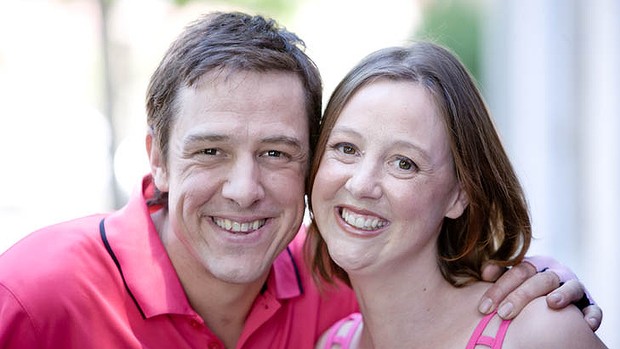
Rebecca and Daniel are expecting their second child in about a month, a brother for their son Xavier, and are having a very difficult time agreeing on a name for him. When they chose Xavier’s name, it took them the entire pregnancy to decide on a list of six names, and they picked his name after he was born.

At the moment, Rebecca’s choice for the baby’s name is Arlo, while Daniel’s is Ari. Rebecca doesn’t mind Ari, but finds it a bit nicknamey, and her cousin has a son with that name. Daniel thinks Arlo sounds good on a child, but won’t suit an adult.

They have a list of names they have made together, but they don’t love any of them, and none of them feel like Xavier’s brother:

  • Alexander (a bit boring with Xavier?)
  • Beau
  • Lucas (good name, but too popular)
  • Nash
  • Nate (maybe as a nickname for Nathaniel)
  • Oscar (Rebecca loves it, but Daniel says it’s good for a child, not an adult)
  • Quinn
  • Sebastian (too soft next to Xavier?)
  • William (too popular)

Rebecca has been passionate about baby names all her life, and has had a list of names picked out since she was about fourteen. Unfortunately, Daniel hates almost every name on that list, so their current list doesn’t really reflect her personal naming style. She would love a boy’s name that is strong and unusual, but not so obscure that nobody has ever heard of it.

It’s also hard finding a name that goes with their surname, which sounds like Gibbon, but doesn’t start with G.

Rebecca hopes that people will be able to suggest some names that provide a middle ground between Ari and Arlo, and suit both she and Daniel. Although what she’d really like is a rock-solid case for using Arlo that will convince Daniel it’s the perfect name!

* * * * * * * * * *

I don’t have a rock-solid case, but I agree with you that Arlo is a great name, and would make a fantastic match with Xavier. It’s hip, spunky, cool, and to me, happy sounding. I think it’s possible Daniel finds it hard to visualise on an adult because it’s so much more common for children at the moment, so he thinks of it as a “little kid” name – the opposite problem to names like Mildred or Herbert, that we tend to think of as “old person” names, because we know so few younger people with those names.

I think it was on Upswing Baby Names that I saw a tip from Angela about trying to visualise a name on different age groups (I can’t find the post now, so I apologise if I am getting this twisted in some way). I think she suggested using the Google Image search to look for real life examples of a particular name.

When I Googled Arlo, I did find tons of children and babies, but also some adult Arlos. There’s soccer player Arlo White, skater Arlo Eisenberg, singer Arlo McKinley, this conservationist, this managing director with a PhD from Cambridge, this computer science PhD candidate at Berkeley, and this guy photographed with his fiancée. Having a good look at them, I think the name still suits them all as adults, and that the name fits them just as much as it does an Arlo in nappies, or an Arlo on his tricycle.

But to be fair, I think Ari is an equally great name that would be an equally fantastic match with Xavier. I don’t think of it as a “nicknamey name” – I know Jewish people often use it as a short form of the Hebrew name Ariel, but it’s also a name in its own right in several different languages and cultures. And even as short for Ariel, I don’t think it’s “nicknamey” in a cutesy or child-like way. To me it seems strong and masculine, yet in an intelligent and romantic way, rather than a butch way.

I wonder if the real problem for you is that it is the name of your cousins’s son? It may be hard for you to imagine on your own child because of that.

While the easiest solution would be for one of you to magically change your minds, and say, Actually I now think Arlo is pretty perfect, or On further reflection, Ari would make a great name for our baby, if one of you isn’t keen on a name, sad to say, it can’t be the perfect name for you, no matter how much the other one loves it.

Ari and Arlo are such similar-sounding names that you’d think the perfect way to meet in the middle would be with Archer or Arthur. But reading your email, I got a feeling of deja vu, because about 18 months ago, I wrote an article called She Says Clara, He Says Zara about a couple who were having problems agreeing on a name.

In the end, they had a boy (named Lewis), but they did agree on a girls name, and although I can’t reveal it, it wasn’t Lara or Kara, but something completely different to either Clara or Zara, with a little of the feel of both those names in style.

So I wonder whether it might be an idea to think of something completely different to both Ari and Arlo, but somewhat alike in style?

From your name list, I couldn’t see much wrong with any of the names. The problem is that you say neither of you love the names, and that you can’t imagine them as your Xavier’s brother. That sounds like none of them are right for you. They might be right for another family named Gibbon, or perfect for someone else with a Xavier, but not for you.

It seemed to me that Ari and Arlo are alike in more ways than just the initial sound: they are both cool and funky, boyish and smart sounding. They are both quite fashionable names, and they’re not in the Top 100 but not too far away from it either.

Here are some names I thought of that somehow reminded me of both Ari and Arlo, and that I liked with Xavier, and with your surname:

  • Felix
  • Dashiell
  • Atticus
  • Hugo
  • August
  • Otis
  • Wyatt
  • Jude
  • Miles
  • Axel
  • Rafael
  • Rory
  • Silas
  • Jarvis

Even if none of these names are right either, perhaps they will help get the ball rolling in thinking of more names that don’t necessarily sound like Ari and Arlo, but have something in common with both of them.

Good luck Rebecca and Daniel, and do feel free to write in again when you have a name list that you feel more enthusiastic about.

UPDATE: The baby’s name was Elijah!

POLL RESULT: Most people preferred the name Arlo, with 60% of the vote, and 25% preferring the name Ari. The remaining 15% liked both names equally.

Famous Name: Henrietta

05 Wednesday Mar 2014

Posted by A.O. in Famous Names

≈ 6 Comments

Tags

birth notices, famous namesakes, French names, germanic names, honouring, name history, name popularity, name trends, nicknames, royal names, UK name popularity, US name popularity, vintage names

henrietta_dugdale-australian-feminist-suffrageThis Saturday, March 8, marks International Women’s Day. I haven’t covered a name specifically for Women’s Day before, but thought it would be a good opportunity to look at one of Australia’s early feminists.

Henrietta Dugdale was originally from London, and arrived in Melbourne in the early 1850s, becoming a pioneer of the women’s movement in Victoria in 1869, after separating from her second husband. She formed the Victorian Suffrage Society in 1884, and became its president; this was the first Australian organisation to work towards voting equality for women. By this time, women could vote on Norfolk Island, and South Australia had brought in limited female suffrage.

(It should be remembered that male suffrage was only introduced during the 1850s, so women weren’t so far behind, although obviously they didn’t want to be behind at all).

Henrietta was confident, passionate and quick-witted in her quest for an equal society, and believed in the possibility of a Utopian future which could be achieved through the use of reason, and co-operation between the sexes. She fought for female suffrage as an essential step towards female emancipation, and bitterly spoke against the Victorian courts, and their failure to protect women from violent crimes. She noted that women’s anger was compounded by the fact that those who inflicted violence on women had a share in making the laws, while their victims did not.

Henrietta believed that women’s lives could be improved through gaining access to the professions, sensible clothing, birth control, and harsh penalties for sexual assault. She was a proponent of temperance, universal education, a more equal distribution of wealth, and the eight hour day as means towards improving the lives of the working class. A member of the Secular Association, she saw Christianity as an oppressive force in women’s lives, and also opposed monarchy and imperialism.

In her private life, she was a wife, and mother to three sons. She made her own clothes, grew her own vegetables, was a skilled carpenter, and an excellent chess player. She outlived three husbands and was over 90 when she died – a good advertisement for teetotalism and fresh vegetables!

Henrietta was recognised as a pioneer of female suffrage when the Commonwealth gave women the vote in 1902, shortly after Federation. Australia was the second country in the world to grant women equal voting rights, after New Zealand, in 1893; however we were the first in the world to allow women to stand for parliament. Henrietta’s own state of Victoria was the last to grant women the vote, in 1908.

When you look at modern Australian society, there must be much of which Henrietta Dugdale would approve. Women can vote, and be elected to power; they can enter the professions, have access to birth control, and don’t have to wear corsets. Presumably she would give the thumbs up to state school education, Dry July, Family Planning clinics, the fall of the Empire, and the rise of secularism.

However, the fight against violence towards women still has a long way to go. 57% of Australian women have experienced physical or sexual violence. One in three will suffer violence in an intimate relationship. The incidence of sexual violence against women in this country is more than double the global average. In Victoria, domestic violence is the leading contributor of death, injury and illness amongst women aged 15-44. Almost every week, a woman will die at the hands of her spouse or partner.

The Dugdale Trust for Women & Girls in Victoria was set up last year to to reduce violence against women and girls, with women and men working to address the root causes of violence. It is proudly named in honour of Henrietta Dugdale, and I am sure she would applaud this initiative.

Henrietta is a feminine form of the Germanic Henry. Although a traditional name amongst European royalty, the name only became widely used in England after the marriage of Charles I to Henriette-Marie of France, the youngest sister of the future King Louis XIII. In England, her name was Anglicised to Henrietta Maria; the king called her Maria, and the English public thought of her as Queen Mary.

Henriette-Marie wasn’t a popular queen, due to her Frenchness, which included staunch Catholicism, and failure to learn English very well. Nonetheless her name made an impact, and she bestowed it on her daughter Princess Henrietta of England, who married the son of Louis XIII, Phillipe I, Duke of Orleans. Unlike her mother, Henrietta seemed popular in her adopted country, although she died young, possibly from poisoning.

Another (semi) royal Henrietta was the illegitimate daughter of King James II, an ancestor of Diana, Princess of Wales, and her sons William and Henry (Harry). The name Henrietta became commonly used amongst the English nobility, and still has a rather aristocratic air. It isn’t particularly common in English-speaking countries, and has been less popular in Australia than in either the United States, where it left the charts in the 1960s, or in England/Wales, where it has remained fairly stable since the 1990s, and is currently in the 500s.

In New South Wales, Henrietta was #158 in the 1900s, and fell in popularity so that it had left the charts altogether by the 1930s. You could call it a dated name, as it hasn’t charted for more than 80 years, but as it was never popular, I prefer to think of it as a vintage name. In Victoria, there were 7 babies named Henrietta in 2012.

Although Henrietta could never be accused of trendiness, it feels like a great time to give your daughter this name. Vintage and retro names are in style, four-syllable names for girls are popular, and there is a fresh appreciation for names associated with royalty. Princess Mary of Denmark has a daughter whose second name is Henrietta: not named for a queen or princess, but for Mary’s mother, Henrietta Donaldson.

This is a lovely dignified vintage name with a royal history and the attraction of never having become popular. The short form Etta is very fashionable (Henrietta Donaldson’s nickname), Hettie would be adorable, Hennie is sweet, and I have even seen a little girl named Henri in a birth notice.

POLL RESULT
Henrietta received an excellent approval rating of 77%, making it one of the highest-rated names of 2014. People saw the name Henrietta as strong and intelligent (21%), classy and dignified (17%), beautiful and charming (16%), and a vintage name ready for revival (16%). However, 7% of people thought it was ugly and frumpish.

Famous Name: Lincoln

26 Wednesday Feb 2014

Posted by A.O. in Famous Names

≈ 8 Comments

Tags

birth notices, British names, english names, famous namesakes, fictional namesakes, honouring, Latin names, locational names, modern classics, name history, name meaning, name popularity, names from movies, names from television, nicknames, popular names, surname names, UK name popularity, US name popularity

089717-port-lincoln

Today is the 210th anniversary of the naming of Port Lincoln, on the Eyre Peninsula in South Australia, on the shores of Boston Bay, which opens out into the Spencer Gulf. Port Lincoln is a regional city of around 15 000 people, and about 7% of the population are Indigenous, from the Nauo, Barngala, Wirangu, and Mirning peoples.

Two of Port Lincoln’s claims to fame are that it is said to have more millionaires per capita than any other place in Australia, and boasts the title of Seafood Capital of Australia, as it has the largest commercial fishing fleet in the country, which catch tuna and sardines, and a thriving aquaculture industry which farms tuna, yellowtail kingfish, abalone, mussels, oysters, seahorses, and lobsters.

Port Lincoln has produced more than its fair share of athletes and sportspeople, with many AFL footballers originally hailing from Port Lincoln. Netballer Lauren Nourse began her career in Port Lincoln, and Paralympic cyclist Kieran Modra was born there. Weightlifter Dean Lukin, who won gold at the 1984 Olympics, was a tuna fisherman, and upon his retirement returned to manage the family fishing business. Another with a connection to the fish industry is tuna farmer Tony Santic, the owner of Makybe Diva, the only horse to win the Melbourne Cup three times. There is a life-sized bronze statue of Makybe Diva on the town’s foreshore.

The scenic beauty of Port Lincoln attracts many tourists, who come here for yachting, scuba diving, and game fishing. The novel Blue Fin by Colin Thiele is set in Port Lincoln and revolves around the fishing industry; the movie was filmed in nearby Streaky Bay. Some of the scenes from Jaws and Gallipoli were filmed in Port Lincoln, and the reality television show Australian Survivor was filmed nearby.

British naval explorer Matthew Flinders discovered Boston Bay on February 26 1802, and named the body of water Port Lincoln, after his birthplace of Lincoln in England. Lincoln is believed to mean “settlement by the pool” in a blend of the British and Latin languages, with “the pool” referring to Brayford Pool, a natural lake in the city’s centre. The city of Lincoln is twinned with Port Lincoln in South Australia.

The surname Lincoln comes from the city of Lincoln, and the most famous bearer must surely be Abraham Lincoln, the 16th President of the United States. He led his nation through the American Civil War, and his Gettysburg Address became an iconic statement of American belief in the principles of liberty and democracy. His assassination in the final weeks of the Civil War made him a national martyr, and he is consistently ranked as one of the greatest US Presidents – often, the very greatest.

Lincoln has been used as a first name for boys since the 18th century, with most early bearers of the name born in Lincolnshire and surrounding districts. Although Lincoln was used as a name in the United States before Abraham Lincoln, its use soared during the years of the Civil War and just after it, and must often have been given in honour of the president.

A famous Australian with this name is actor Lincoln Lewis, the son of rugby league legend Wally Lewis. He has appeared in several television series, such as Home and Away and Neighbours, and had roles in films such as Tomorrow, When the War Began and After Earth. Lincoln is the brother of sportcaster Mitch Lewis, a celebrity dad on the blog in 2012.

The name Lincoln first charted in Australia in the 1960s, and first ranked in the 1970s, débuting at #207. It remained comfortably in the 200s for decades, then suddenly climbed at a dizzying speed during the latter half of the 2000s, and was in the Top 100 by 2009. The instigator of this surge of popularity was probably US television drama series Prison Break, starring Dominic Purcell as Lincoln Burrows. Dominic moved to Sydney from Britain as a baby, and studied acting at the Western Australian Academy of Performing Arts. He won an Australian Film Institute Award for his role in Prison Break.

Currently Lincoln is #67 nationally, #76 in New South Wales, #66 in Victoria, #40 in Queensland, #38 in Western Australia, #37 in Tasmania, and #66 in the Australian Capital Territory. Lincoln was one of the fastest-rising boys names of 2012 – the same year that the movies Lincoln, and Abraham Lincoln, Vampire Hunter were released. From the data that’s come in so far, Lincoln looks set to continue his ascent as one of the fastest-rising names of 2013.

Lincoln is a handsome, clean-sounding modern classic that may be more Aussie than you expected. It has certainly been warmly embraced in Australia, and is more popular here than in either the US or UK, where it isn’t even in the Top 100 (its similarity in sound to popular Lachlan can’t have hurt). Lincoln’s star is on the rise, and looks set to join the national Top 50 fairly soon: it’s already in my personal Top 50 for 2013.

Linc is the obvious nickname, with an attractive similarity to the word link, suggesting your little Linc could join the family together. I am spotting the short form more and more often in birth notices – perhaps because some parents are becoming reluctant to choose the popular Lincoln.

POLL RESULT
Lincoln received a respectable approval rating of 64%. People saw the name Lincoln as stylish and cool (16%), handsome and distinguished (15%), and strong and masculine (15%). However, 14% thought it was too trendy. Only one person thought the name Lincoln was too popular.

(Photo shows fishing boats in the marina at Port Lincoln)

Famous Name: Tigerlily

19 Wednesday Feb 2014

Posted by A.O. in Famous Names

≈ 3 Comments

Tags

brand names, celebrity baby names, Disney names, english names, fictional namesakes, flower names, name history, name meaning, nature names, nicknames, plant names, rare names, vocabulary names

Lilia_tygrysiaLilium_lancifoliumLilium_tigrinum

Last week we looked at the name of actor Orpheus Pledger, who was in the Channel Nine telemovie, Schapelle. As it turned out, ratings for it were only average, with almost twice as many people tuning in to watch Channel Seven’s mini-series, INXS: Never Tears Us Apart. In fact, since the screening, an INXS album has reached #1 in the charts for the first time since 1990.

Watching the mini-series reminded me of Michael Hutchence’s daughter Heavenly Hiraani Tiger Lily, who was given one of the “crazy celebrity baby names” of the 1990s. It’s interesting how much less “crazy” crazy celebrity baby names seem as the years go by: once Cruz, Maddox, River, Rocco, Banjo, Jett, Sunday and Coco were considered outrageous, but now they’re mainstream. I have to admit that the Heavenly Hiraani part still seems offbeat 17 years later, but Tiger Lily is pretty rocking – a spunky nature name combining flora and fauna.

The Tiger Lily (Lilium lancifolium) is native to China, Korea and Japan, and its common name came about because its flowers are large and bright orange with black markings – although they don’t literally have tigerish stripes, but spots. Introduced to England in the early 19th century, it became naturalised in some parts of the United States (just to confuse things, Americans refer to some native lilies as “Tiger Lilies”).

Easy to grow, the Tiger Lily is edible, and the roots used in Chinese cooking. There is a legend that a Korean hermit took an arrow from the foot of a wounded tiger, and after its death, the tiger transformed into the Tiger Lily, so that he could remain with his human friend. When the hermit died, the flower spread widely, searching for the hermit. The Tiger Lily is said to symbolise wealth, perhaps because its spots reminded people of coins. A funny superstition related to these spots is that if you smell a Tiger Lily, you will end up with freckles!

There is a graceful tiger-lily in Lewis Carroll’s Through the Looking Glass, a passionate and rather bossy bloom which tries to keep all the flowers in line (with the ferocity of a tiger). When Alice wishes to herself that the flowers could talk, the tiger-lily is the first to respond, with “We can talk, when there’s anybody worth talking to”.

The first human character in fiction named Tiger Lily I can think of is the “redskin princess” of the Piccaninny tribe in J.M. Barrie’s Peter Pan. Beautiful and brave, Tiger Lily’s life was saved by Peter Pan, so that her tribe became his allies. As a result, the flirtatious yet aloof Tiger Lily harbours (futile) romantic feelings for Peter, and refuses to marry. Barrie gives her cringe-inducing dialogue, such as “Me Tiger Lily. Peter Pan save me, me his velly nice friend”, and her tribe call Peter The Great White Father – Barrie’s preference for the book’s title, which his publishers’ fortunately didn’t think was a good idea.

In the 1953 Disney film of Peter Pan, this dialogue is embarrassing enough that Tiger Lily doesn’t speak at all, and her role was eliminated in later films, lest the stereotypes of Native Americans should give offence. Because of this, she has never become a Disney princess (in fact, calling her a “princess” would be a whole other cultural controversy).

Another exotic Tiger Lily from children’s fiction is a little girl of Chinese heritage in the Rupert Bear comic strips and television show. A rather mysterious figure of royal blood, her father is a Conjurer, and she has quite a bit of magical knowledge herself, which helps Rupert in several adventures. Not nearly as controversial as Barrie’s Tiger Lily, her role was nonetheless phased out in the 1990s, presumably for similar reasons.

In Australia, Tigerlily is a swimwear fashion label started by designer Jodhi Meares, which gives the name an expensively casual, beachy feel. If you look at the models used by Tigerlily, and at its Facebook page, the ideal “Tigerlily girl” is not some blonde beach bunny with a banging bod, but sophisticated and well-travelled, yet relaxed and confident enough to be in search of the perfect bikini.

Tigerlily is a rare name, but there is something rather magnificent about it. We usually think of lilies as pale and demure, yet here are these flamboyant tiger-cat lilies – big, bright, and bold, growing wild and untamed, or bringing a garden to life with glorious colour. Tigerlily sounds gorgeous and fierce, exotic and feminine, freckled and free-spirited, full of passion and vivacity. It could be seen as whimsical and hippie, but because of the expensive fashion label, also seems quite posh.

Worried that Tigerlily is too big a name for a little girl? Miss Hutchence Geldof goes by Tiger, but you could also use Ty, Tige, Tig, Tiggy, Tilly, Iggy, Lily, Lil, and TL.

POLL RESULT
Tigerlily received an approval rating of 56%. People saw it as a beautiful, whimsical nature name (26%), and wild and bold (19%). However, 13% believed it was still a wacky celebrity baby name, and 12% saw it as too hippy-dippy.

Interview with Zeffy from Baby Names from Yesteryear

16 Sunday Feb 2014

Posted by A.O. in Blog Reviews

≈ 3 Comments

Tags

Baby Names from Yesteryear, name history, name trends, naming advice, nicknames, popular names, rare names

Winterhalter_Eugenie_1855Zeffy is the enthusiastic blogger at Baby Names from Yesteryear, which features wonderful, winning, and sometimes slightly wacky names from history. Whether you enjoy names of English gentlemen, ladies from antiquity, or contemporary British royals, you will find many beautiful names which are elegant, elaborate and eccentric. You will also find names from South America, and names from Zeffy’s own family tree. One of my favourites of Zeffy’s posts is an extremely sweet story about one of her sentimental favourites – I dare you to read it without either smiling tenderly or getting a tear in your eye. Zeffy has been away from blogging for a year, but she’s back (hooray!!!), and this is a chance to catch up with her and find out what Zeffy is short for.

What is your name? 
Sephora. I go by Zeffy online, a nickname given to me by my loopy, but incredibly sweet, university professor.

Have you ever wished you had a different name?
Have I ever! I’ve disliked my name for most of my life. As a child, all I wanted was a nice common name, something like Jessica or Rebecca, so I could blend in. I was a bit shy as a child so I hated being different from everyone else. It was only when I got to my late teens that I realised my name was quite nice and fitted my personality very well. I would never consider changing it now – having such an unusual name is a big part of my identity.

How did you become interested in names?
It goes back to having an unusual name. I’ve always wanted to know where my name came from, what it meant, how it came to be used. My curiosity stemmed from having absolutely no clue about my name’s origins. I guess my interest in names in general dates back to when I started school and noticed that I was the only one whose name wasn’t “normal”. Since then I’ve always loved reading about names and looking up meanings. There hasn’t been a time when I haven’t been interested in names and their stories.

How did you become interested in names from the past?
I’m obsessed with history. I’ve always been interested in the history of people’s lives, particularly focusing on the social and private life of early 19th century English aristocrats. There’s something very fascinating about discovering the small details of what people 200 years ago ate for breakfast, where they bought their boots from, why they married who they did, and what they named their children. That’s what attracts me to names from the past – it’s a glimpse into the personal and private life of someone who lived hundreds of years ago.

What inspired you to begin a name blog?
I came across The Gentleman’s Magazine during my last year of university. I was meant to be researching contemporary reviews for Thomas Paine’s Rights of Man, but I kept flipping back and having a look through all the wedding announcements. Once I left university, I had a heck of a lot of time on my hands, and I really don’t deal well with boredom. I had to find a project to do before I completely lost my sanity. I thought about all the lovely names I’d read and decided to share them. I knew there had to be someone out there who was equally as interested in Georgian era names as I was. I couldn’t be the only one who oohed and ahhed over them!

Do you have a favourite blog entry on Baby Names from Yesteryear?
I really enjoyed writing about The Patronesses of Almack’s and Popular Names of the Georgian Era. They hit on my favourite time period in history so I can’t help but have a soft spot for them. Having said that, the posts I tend to like the most are those which required me to really do research, to look through a number of sources before hitting name gold. I’m such a geek, I know.

Do you have a pet peeve in regard to names? 
When people think that many of the current trends are a modern concept. People have been naming their children all sorts of weird and wonderful things for hundreds, even thousands, of years. Masculine names on girls, surnames used as first names, nature names, unusual names … it’s all been done before, so let’s not get in a tizzy about them now.

There’s also something about the word “unique” which I find unrealistic. The chance of any name being unique is truly slim, and I don’t think it’s a good idea to change spellings in search for uniqueness.

What are some of your favourite names? 
A few of my current favourites are Minerva, Emmeline, Margaux, Josephine and Magdalene. For boys, Alexander, Lucien, Mikael and Hart are long time favourites. I think Noa is absolutely darling. Tierney, Seren, Clover, Lyra, Orion and Shia are just a few that are on my favourites list.

What names do you dislike?
I’ve never been a fan of overly “cute” names, on girls or boys, for a number of reasons. Children don’t need cute names to be cute. A lot of names that fall into that category for me have really taken off in England and Wales where there is currently a trend for over-the-top cuteness, especially on the girls’ side. There’s a message behind that trend which I’m not comfortable with.

I’m also not at all keen on the Mae/May/Mai hyphenated names which are very popular over here. It feels like half the female population under the age of 5 answers to Something-Mae. Don’t get me wrong, I don’t dislike Mae or May. Just please, please stop hyphenating it!

Are there any names you love, but could never use?
So, so many. Hyacinth is always in the back of my mind, but I think of Hyacinth Bucket [from sit-com Keeping Up Appearances]and it’s over. Millicent is another. I really love how it sounds, but not how it looks. Ptolemy is probably the biggest one. Why does the P have to be silent?! I so wish it wasn’t; it would be a serious contender then.

What are your favourite names in the UK Top 100?
Eleanor (#63) and Alexander (#27).

What are your favourite names that have never charted in the UK?
Sanceline and Holland.

Do you have any names picked out for your future children? 
Not really. Children haven’t crossed my mind yet so it’s all up in the air. If, however, I were to have a baby at this exact moment, I guess it would be something like Emmeline Clover, Emmeline Jane Noa, or Noa Emmeline Jane. I adore Jane. I know it has in the past been overused in the middle spot, but it’s lovely and I can’t help myself. For a boy, it would be Alexander Lucien or Shia Alexander. I think when it comes down to it, I won’t be as tame in my choices. It’s fun having a name on the unusual side so I think I’ll go down that path. But who knows?!

What is something we don’t know about you?
I’m incapable or remaining serious for very long. Trying to answer your questions without making silly and inappropriate jokes hasn’t been easy! Also, I love exclamation marks 🙂

What advice would you give someone who was choosing a baby name?
I wouldn’t. I don’t have any children so I don’t know anything about how hard the naming process is or the pressures of it. I only wish all parents would put as much time as possible into choosing their child’s name. Your child has to live with their name every single day. That’s a big thing. Take it seriously! (Yay, got to use an exclamation mark again.)

(Painting shown is Eugenie, Empress of the French and Her Ladies by Franz Xaver Winterhalter; 1855 – one of the many lovely illustrations on Zeffy’s blog)

Famous Name: Boris

05 Wednesday Feb 2014

Posted by A.O. in Famous Names

≈ 2 Comments

Tags

Bulgar names, Bulgarian names, famous namesakes, fictional namesakes, name history, name meaning, nicknames, royal names, Russian names, saints names, Slavic names, Turkic names, UK name popularity, US name popularity

604458-23038244-860c-11e3-8f28-96b14e4a5093

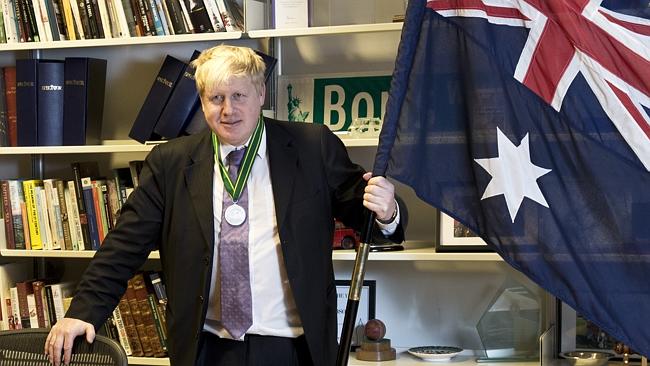
Last week we covered the name of the Australian of the Year for 2014, and here we have another name associated with the Australia Day Foundation awards. At an Australia Day dinner in London, Boris Johnson, the Mayor of London, was declared Honorary Australian of the Year for 2014.

The flamboyant mayor confessed to being a “bit baffled” by his unexpected award, which he received for promoting Australian interests, and campaigning to create visa-free labour and migration between Australia and the United Kingdom. You’ve probably heard on the news that the numbers of Antipodeans in the UK has dropped significantly, partly because of new restrictions on Australians in gaining visas and employment. It’s hard to believe that Londoners want more Australians, but Mayor Johnson will endeavour to get them more anyway.

In case you are dubious about Boris Johnson’s qualifications for being an Australian (even an honorary one), he spent a working holiday in Australia as a teenager, and seems to have had a pretty good time, and he has relatives here. He also points out that as there are more than 200 000 Australians living in London, he can be counted as mayor of the 12th largest Australian city.

Boris is a Bulgar name derived from the Turkic nickname Bogoris, usually interpreted as “short, small”, although other suggestions are “wolf” and “snow leopard, lynx, tiger”. Another theory is that the name ultimately comes from an Iranian source, and may mean “god-like”. Boris can also be used as a short form of the Slavic name Borislav, meaning “one who fights for glory”.

The first person known to history with this name is Prince Boris I, a 9th century ruler of the First Bulgarian Empire who converted to Christianity and adopted the name Mikhail. Boris seems to have converted chiefly for diplomatic and political reasons, for as a Christian ruler he could make more alliances and expand his personal power. However, his conversion also appears to be have been sincere, and at the end of his reign he abdicated to become a monk: he kept having to come out of monkish retirement to quash pagan rebellion and help out with major crises. After his death, he became known as the first Bulgarian saint.

The name Boris became particularly associated with Russia, because Boris II, the great-grandson of Boris I, formed an alliance with the Rus’ Slav prince, Sviatoslav I of Kiev. Sviatoslav’s son Vladimir the Great had a son named Boris – it is conjectured that his mother may have been Bulgarian, possibly even Boris II’s sister. The Kievan Rus’ converted to Christianity, and Boris (son of Vladimir) was later martyred and canonised, becoming one of the Russian Orthodox Church’s most revered saints. The name Boris became used in surrounding countries, and was a traditional name amongst royalty and nobility.

Boris is often seen by English-speakers as an almost comically stereotypical Russian name, and is a favourite choice for fictional villains. This may be a hangover from the Cold War, when Russians were generally portrayed as menacing “baddies”, or it may be because of the English movie star Boris Karloff (real name William Pratt), best known for playing sinister roles in Hollywood horror films such as Frankenstein and The Mummy.

Despite the name being familiar due to high profile Borises such as German former tennis champ Boris Becker, Russian author Boris Pasternak who wrote Dr Zhivago, former Russian President Boris Yeltsin, and Boris Johnson himself, Boris continues to sound rather exotic.

Boris is one of my early name loves, and I think this is because of the novels for young people by Mary Rodgers called Freaky Friday and A Billion For Boris (there’s another book in the series, but my school library didn’t have it). I liked A Billion For Boris better than Freaky Friday, probably because the idea of a psychic television which can make you rich was more appealing to me than swapping lives with my mother (an incredibly selfless workaholic whose life would be daunting for me to take on even as an adult).

Boris is (as you may remember) the tomboyish Annabel’s neighbour, childhood playmate and proto-boyfriend, and as you may also recall, during the course of Freaky Friday, it transpires that Boris’ name is actually Morris – he just has a nasally voice and says his Ms as Bs. Perhaps Mary Rodgers intended this to be a Oh thank goodness – he has a totally normal name! moment, but I was horrified.

To me, Morris was a hideous old man name, reeking of mothballs and uncoolness. Maybe in America in the early 1970s, Morris was considered an okayish name for a nerdy teenager (it only left the US Top 1000 in the 1990s), but by the time I got to read the books, it was nausea-invoking. Luckily, everyone continues to call Morris Boris for the rest of the books.

I thought then, and still tend to think now, that Boris is an awesomely hip yet huggable name, with a lot going for it. Interestingly, the name Boris has risen in popularity in the UK since the 1990s, and last year it made the Top 1000 again at #901 – it debuted there in 2004 at #999.

Political figures are not usually helpful to the popularity of their own names, yet Boris Johnson does not seem to have negatively affected the name Boris. Its rise in the UK may have more to do with the growing number of emigrants to Britain from Russia and Slavic countries though. Indeed, Boris Johnson has Russian ancestry, and describes himself as a “one man melting pot”, so melting a bit of Australian into the pot won’t be any great stretch for him.

POLL RESULT
Boris received an approval rating of 21%. 40% of people saw it as ugly and lumpy, 17% thought it was only suitable for people with Russian or Slavic heritage, and 12% preferred the name Morris. Only 5% of people thought the name Boris was handsome and exotic. 7% were put off the name by Boris Johnson.

← Older posts
Newer posts →

Enter your email address to follow this blog

Categories

Archives

Recent Comments

A.O.'s avatarwaltzingmorethanmati… on Zarah Zaynab and Wolfgang…
Madelyn's avatarMadelyn on Zarah Zaynab and Wolfgang…
JD's avatardrperegrine on Can Phoebe Complete This …
A.O.'s avatarwaltzingmorethanmati… on Rua and Rhoa
redrover23's avatarredrover23 on Rua and Rhoa

Blogroll

  • Appellation Mountain
  • Baby Name Pondering
  • Babynamelover's Blog
  • British Baby Names
  • Clare's Name News
  • For Real Baby Names
  • Geek Baby Names
  • Name Candy
  • Nameberry
  • Nancy's Baby Names
  • Ren's Baby Name Blog
  • Sancta Nomina
  • Swistle: Baby Names
  • The Art of Naming
  • The Baby Name Wizard
  • The Beauty of Names
  • Tulip By Any Name

RSS Feed

  • RSS - Posts

RSS Posts

  • Celebrity Baby News: Melanie Vallejo and Matt Kingston
  • Names from the TV Show “Cleverman”
  • Can Phoebe Complete This Sibset?
  • Zarah Zaynab and Wolfgang Winter
  • Baby, How Did You Get That Name?
  • Celebrity Baby News: Media Babies
  • Celebrity Baby News: Adelaide Crows Babies
  • Celebrity Baby News: Chris and Rebecca Judd
  • Names at Work: Name News From the World of Business and Employment
  • Celebrity Baby News: Sporting Round Up

Currently Popular

  • Celebrity Baby News: Toby Allen and Darren Weller
  • Girls Names of Australian Aboriginal Origin
  • Rare Boys Names From the 1950s
  • The Top 100 Names of the 1920s in New South Wales
  • Rare Girls Names From the 1940s

Tags

celebrity baby names celebrity sibsets english names famous namesakes fictional namesakes honouring locational names middle names name combinations name history name meaning name popularity name trends nicknames popular names saints names sibsets surname names twin sets unisex names

Blog at WordPress.com.

Privacy & Cookies: This site uses cookies. By continuing to use this website, you agree to their use.
To find out more, including how to control cookies, see here: Cookie Policy
  • Subscribe Subscribed
    • Waltzing More Than Matilda
    • Join 517 other subscribers
    • Already have a WordPress.com account? Log in now.
    • Waltzing More Than Matilda
    • Subscribe Subscribed
    • Sign up
    • Log in
    • Report this content
    • View site in Reader
    • Manage subscriptions
    • Collapse this bar
 

Loading Comments...